Why Your Living Room Feels “Off” — And It’s Probably Just the Light
You walk in, sit down, and something’s wrong. The room looks fine in photos. The furniture’s good. But it just doesn’t feel right. Nine times out of ten, it’s the lighting — and not in the way you’d expect.
—
1. The Overhead Light Lie We All Fell For
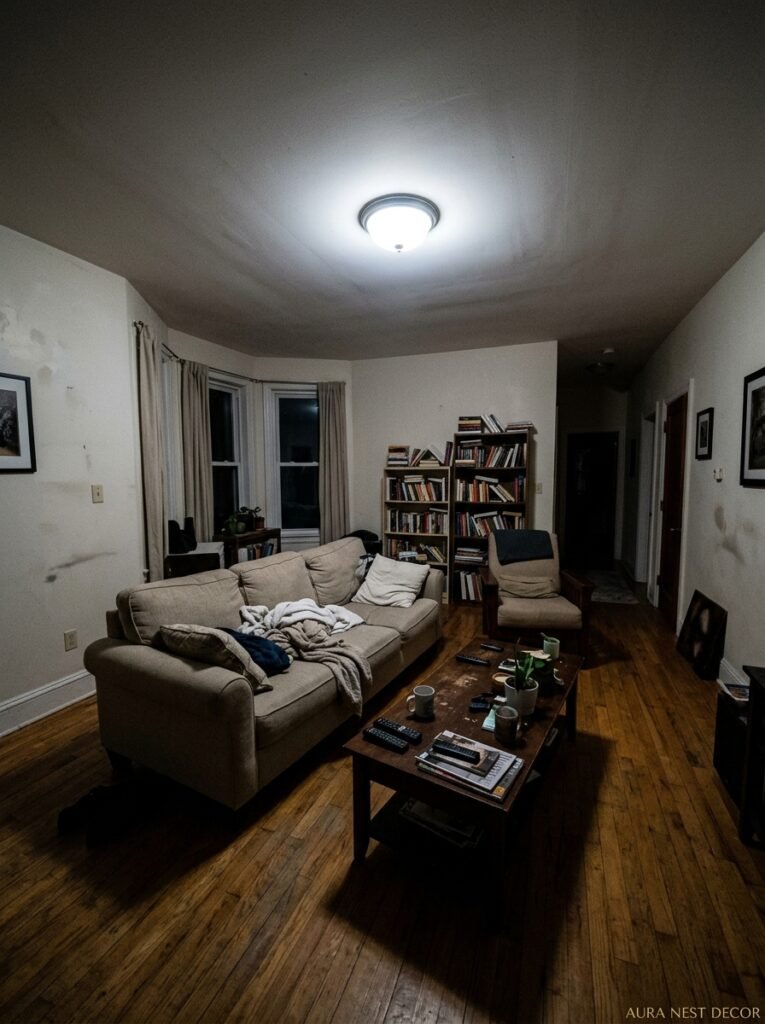
Here’s the thing nobody tells you when you move into a new place: that ceiling light in the middle of the room? It’s not actually meant to be your main source of light. I know. I used it that way for two years before someone finally said something to me.
Central ceiling fixtures — especially those flush-mount ones that come standard in most flats and suburban homes — were designed for function, not atmosphere. They light a room the way a fluorescent bulb lights a dentist’s office. Flat. Harsh. Completely shadowless in the worst possible way. And because there are no shadows, there’s no depth. Everything looks equally lit, which sounds good in theory and looks awful in practice.
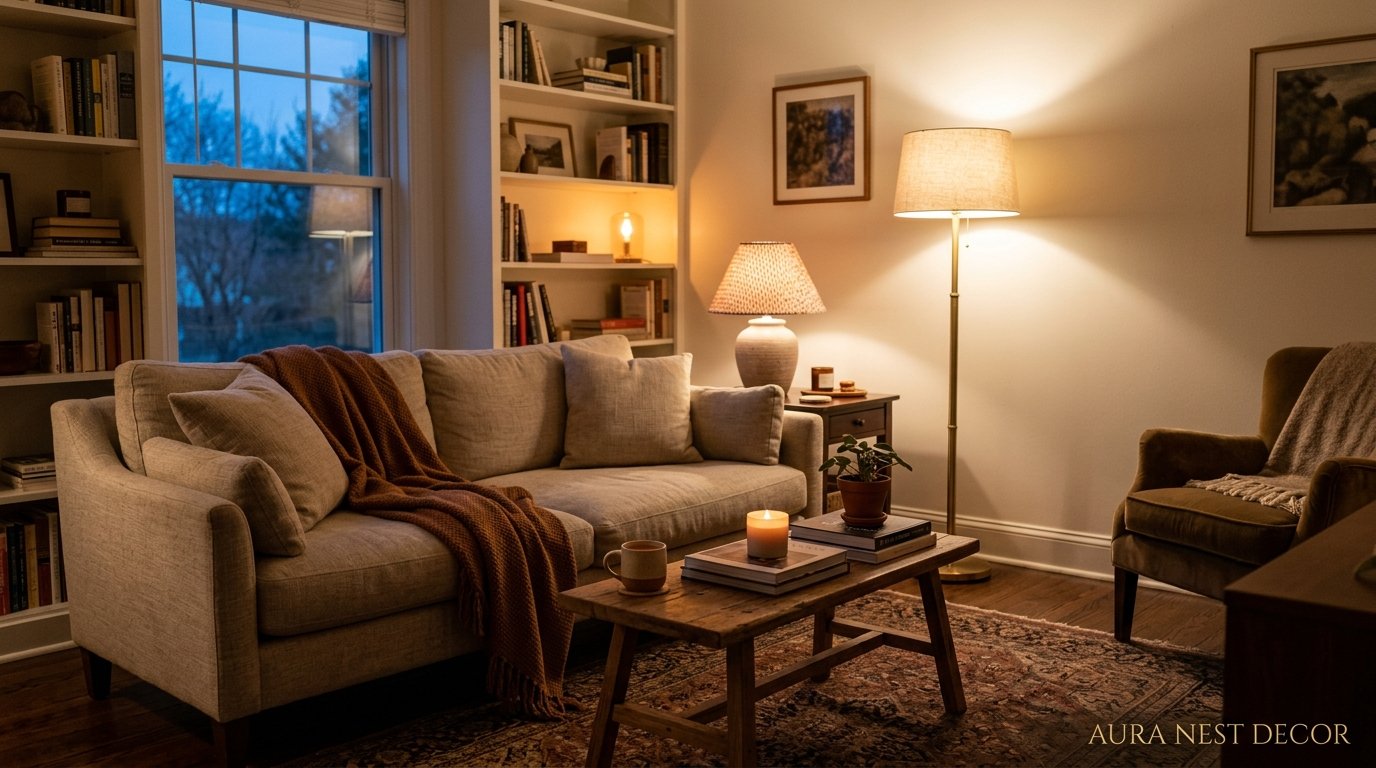
The rooms you see on Pinterest that make you physically ache with how good they look? They almost never rely on a single overhead light. They’re layered. Multiple sources, multiple heights, multiple temperatures. So the first step isn’t buying anything new — it’s just switching off that ceiling light and seeing what you’re actually working with. Honestly, the answer might surprise you.
“The ceiling light isn’t your friend. It’s just the light that was already there.”
2. The Lamp Placement Mistake That Makes Rooms Feel Smaller
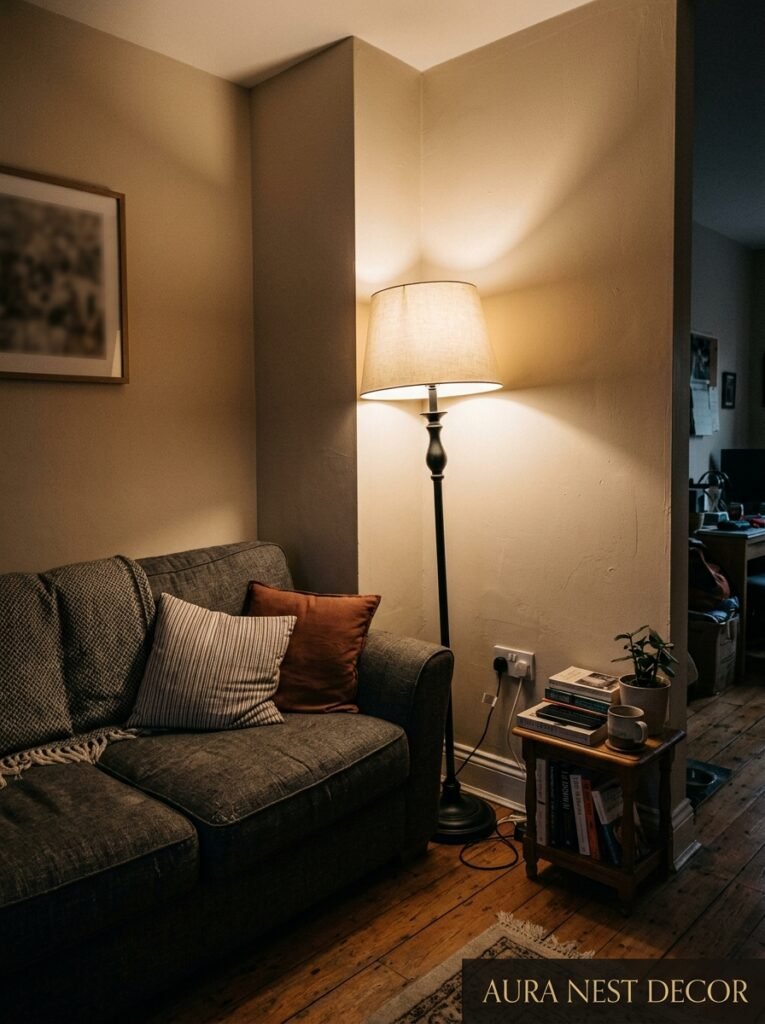
Most people push lamps into corners or onto side tables right next to the sofa, and I get it — that’s where they seem to make sense logically. But here’s what that actually does: it creates a bright spot surrounded by dark, which makes your eye stop at the lamp instead of moving around the room. And when your eye keeps stopping, the room feels cramped.
Try placing a floor lamp slightly away from the wall. Not dramatically — just pulled in maybe 12 to 18 inches. That little bit of space behind the lamp creates a kind of soft halo against the wall, and the light spreads in an arc instead of just pointing at whatever you’re reading. It’s a weird thing to notice until you’ve noticed it, and then you can’t unsee it.
Also — lamp height matters more than people realize. A lamp shade that hits around your eye level when you’re seated is different from one that towers over you. Lower light sources feel intimate. Higher ones feel more formal, a bit cooler in the emotional sense. Depends what you’re going for, but don’t just default to whatever came in the box.
3. The Color Temperature Chart You Actually Need to Understand
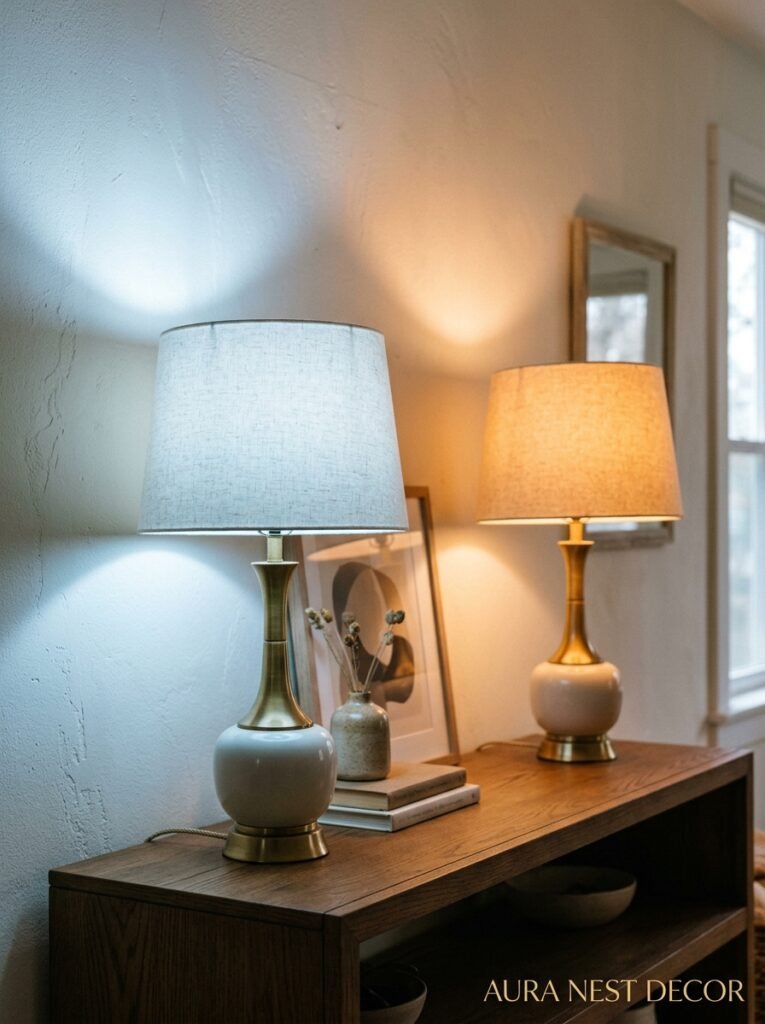
Okay, so: warm white, cool white, daylight. These are the three you’ll see on every bulb package and they’re genuinely confusing because the numbers go the wrong direction. Higher Kelvin = cooler, bluer light. Lower Kelvin = warmer, yellower light. Your brain reads warm light as “evening, cozy, safe.” It reads cool light as “morning, task, alert.”
For a living room, you almost always want to be in the 2700K–3000K range. That’s warm white. It’s the amber-ish glow that makes people look good and makes you want to stay in a room. Daylight bulbs — around 5000K or 6500K — are for garages and home offices. Not your sofa.
But here’s where it gets interesting: mixing temperatures slightly can actually work in your favor. A warm floor lamp paired with a slightly cooler task light near a bookshelf can create that “collected over time” look, like the room wasn’t decorated all at once but just accumulated the right things. Which, honestly, is the best kind of room.
4. Why Evening Light Hits Different — and How to Copy It at 2pm
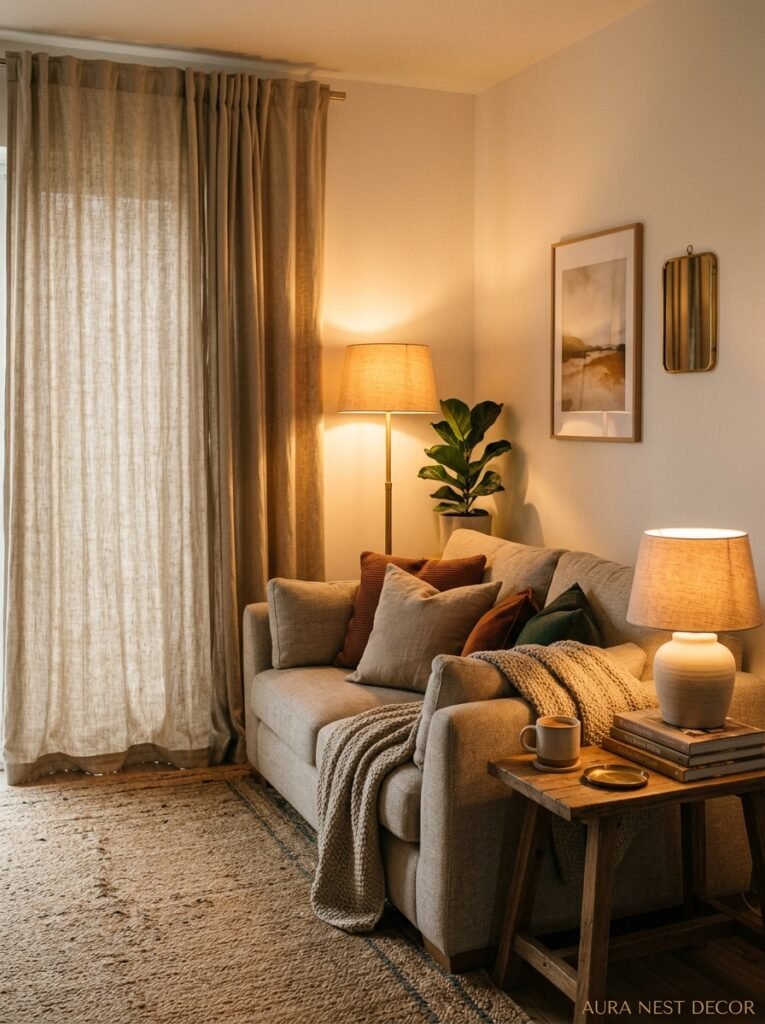
There’s a reason golden hour feels magical even inside. It’s low. It’s warm. It’s coming from the side, not the top. Photographers know this. Good interior designers know this. And you can recreate it at any time of day with the right bulbs and the right placement.
Late afternoon light, when it slants through a west-facing window, creates those long soft shadows that make a room feel alive. To fake it indoors, you want light sources set low — table lamps on lower surfaces, floor lamps that point upward but are themselves not towering above you. And warm bulbs, always warm bulbs for this effect. Around 2700K is your friend here.
Side note — if you’ve got a west-facing window, don’t cover it in the late afternoon even if the glare feels annoying sometimes. That natural light is doing your living room a favor you can’t buy. Let it come in, let it warm the space, and build your artificial lighting around the idea that you’re trying to extend that feeling into the evening. That’s really all layered lighting is: trying to hold onto golden hour a little longer.
“You’re not just lighting a room. You’re trying to hold onto golden hour a little longer.”
5. The Dimmer Switch That Will Genuinely Change Your Life
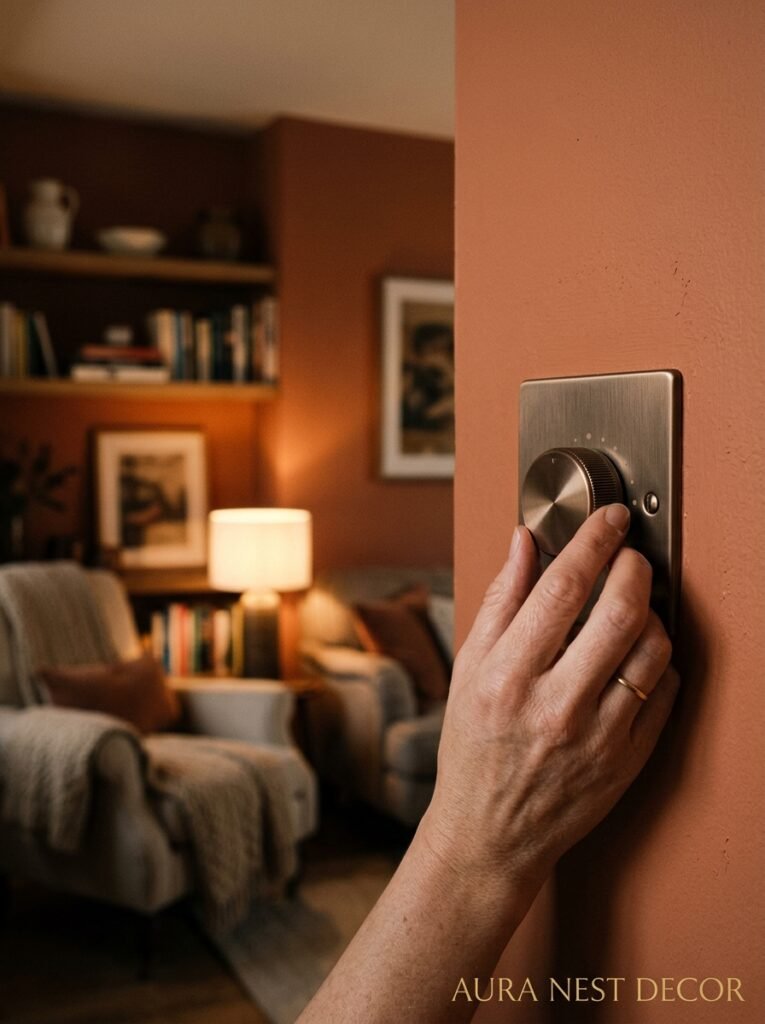
I don’t say things will change your life lightly. But installing a dimmer — or even just switching to smart bulbs you can dim from your phone — is one of those changes that you’ll notice within the first 24 hours and wonder why you waited.
The thing is, you don’t want the same amount of light at 8pm that you want at 3pm. Your body knows this. Your brain knows this. But most homes are either fully lit or fully off, and that binary is rough on both the mood of the room and, genuinely, on how you feel in it. Bright light in the evening messes with your sense of wind-down. Dim light at 3pm feels depressing.
Dimmers let you set the exact mood you want. Film night? Drop everything down to about 10%. Having people over for dinner? A warm 40-50% feels convivial without being so dim it feels like a seance. Just reading alone on a weeknight? Somewhere around 60-70% on a lamp pointed at your book. You’ll figure out your own settings fast. They end up being almost like muscle memory.
6. The Candle Conversation (Because It Still Matters)
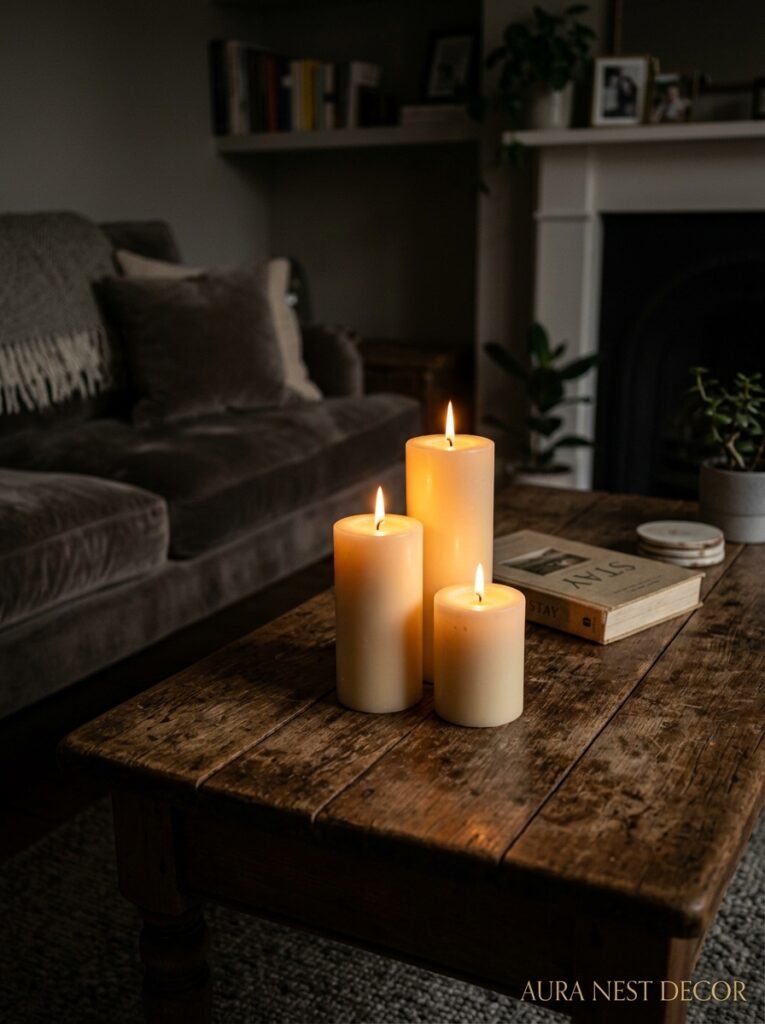
People underestimate candles in a very well-lit 2024 way, and I think we should talk about it. Not because candles are a substitute for good electrical lighting — they’re not — but because they do something that LED bulbs simply cannot: they flicker.
That micro-movement of a candle flame is deeply, weirdly calming to the human brain. It’s unpredictable in a tiny way. And our brains, which spend all day processing constant stimulation, respond to that slight randomness with something close to relief. I’m not making this up — there’s actual research behind it.
In practical terms: a few candles grouped on a coffee table or along a mantelpiece add a layer of warmth that’s in a completely different category from your floor lamp. They’re not bright enough to light the room. They’re bright enough to make the room feel alive. Use unscented ones or lightly scented — nothing headache-inducing — and let them do their quiet thing in the background.
7. The Wall You’re Probably Not Lighting (But Should Be)
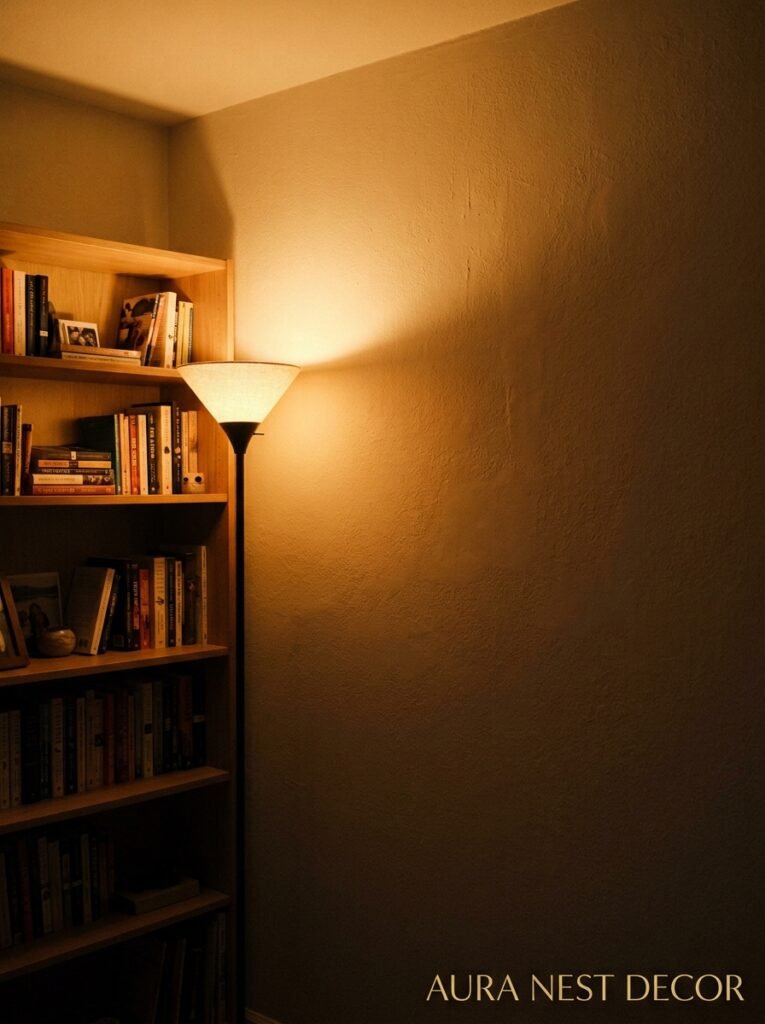
When you stand in your living room and look around, which walls are lit and which are in shadow? Most rooms have one or two bright spots and the rest just falls off into nothing. And that dead space, those walls that are just… there, in the semi-dark, are often why a room feels incomplete without you being able to pinpoint why.
Lighting a wall — not flooding it, just touching it — makes a room feel finished in a way that’s hard to explain until you’ve done it. An upward-facing floor lamp angled toward a corner does this really well. So does a picture light over a print or painting. Even a small table lamp tucked on a bookshelf, pointing vaguely wallward, changes the whole perimeter of the room.
This is called accent lighting, technically, but I prefer to just think of it as giving the walls a reason to exist in the evening. Because in daylight, natural light does that work. After dark, you have to do it yourself.
“Give your walls a reason to exist after dark.”
8. The Mirror Trick That Doubles Your Light Without Any Wiring
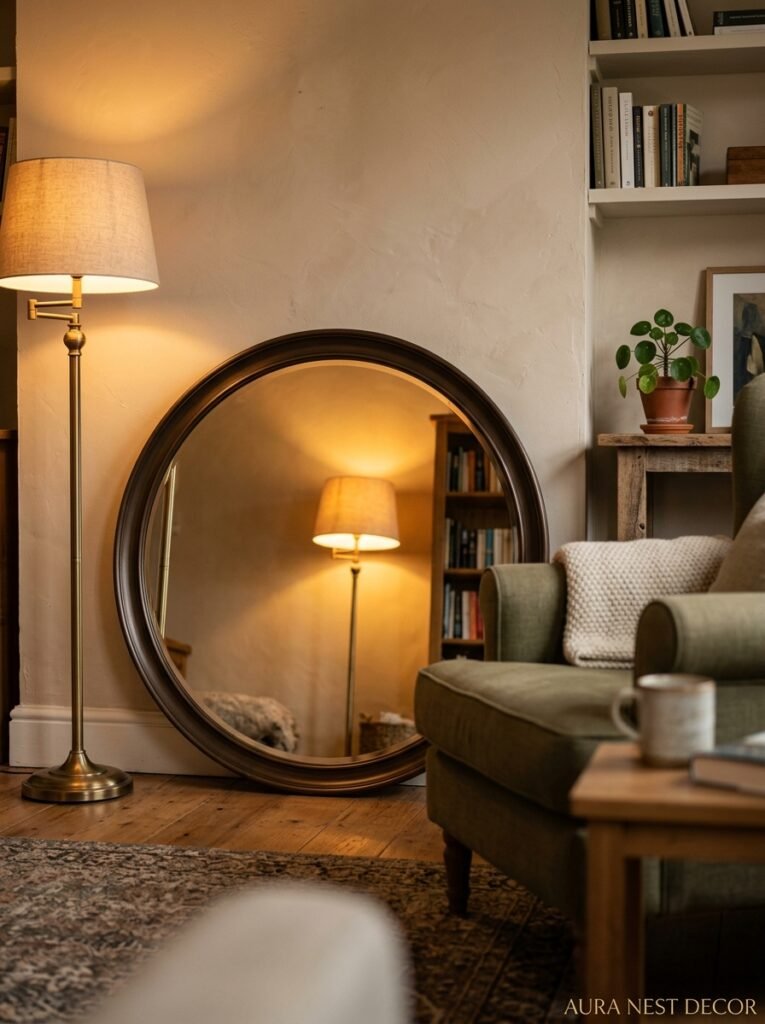
Mirrors are having a long, sustained moment in interior design and there’s a perfectly practical reason for it beyond aesthetics: they bounce light. A large mirror on the wall opposite a window will pull in natural light during the day and reflect your lamp glow back at you at night. It’s genuinely free extra light.
But placement matters. A mirror that’s reflecting a dark corner back at you isn’t helping anyone. You want it angled — even slightly — toward your main light source. The classic move is to hang it across from a window, but placing one near a floor lamp works surprisingly well too. You don’t need a huge statement mirror either, though those are beautiful if you’ve got the wall for it. Even a cluster of smaller mirrors in different frames does the trick and looks much more interesting.
The other thing mirrors do that people don’t fully credit: they reflect depth. The room inside the mirror looks like a room, which makes your actual room feel like it has more space and more layers. Good light plus a mirror is a combination that punches well above its price point.
9. What Nobody Tells You About Smart Bulbs (Honest Review Energy)
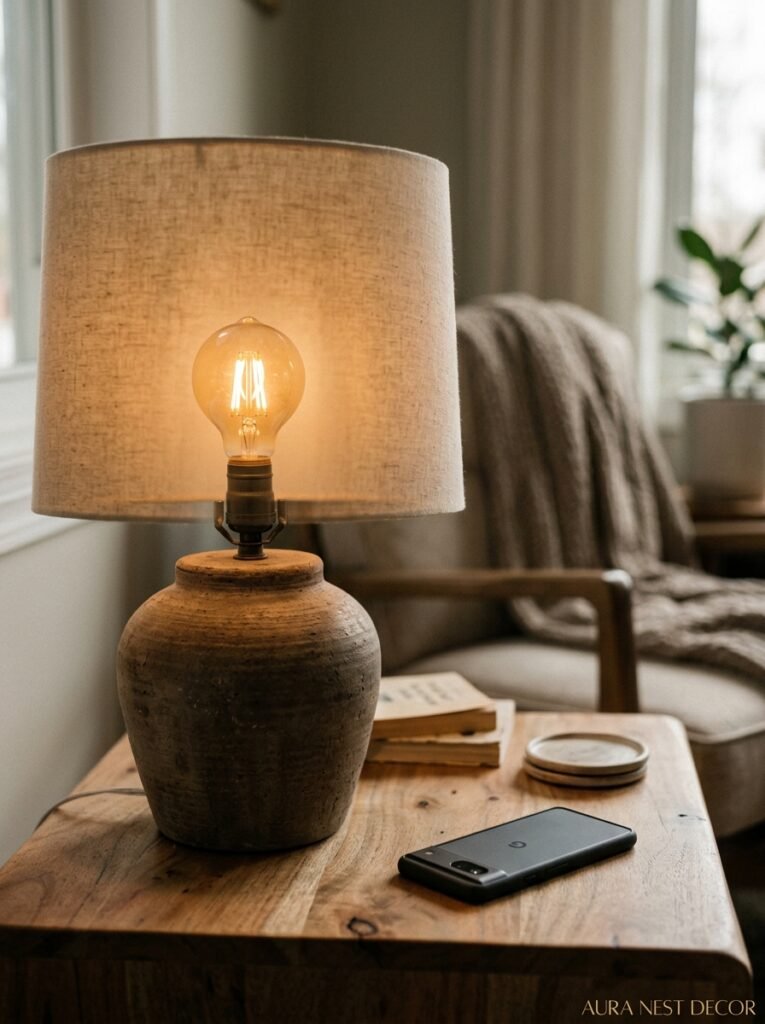
Smart bulbs are great. They’re also kind of annoying to set up, occasionally glitchy, and not all of them dim as smoothly as they claim. So here’s the honest version: they’re worth it, but go in with realistic expectations.
The best thing about them isn’t the color-changing feature, which you’ll use twice and forget about. The best thing is the scheduling. You can set your living room lamps to slowly warm and dim starting at 7pm, which means the room is doing that gentle evening thing automatically without you thinking about it. It’s the ambient equivalent of a slow cooker — you set it, it does its thing, and the result is just better.
Bulb brands I’d look at: LIFX and Philips Hue are the standards for a reason, though they’re pricier. Govee and some of the Amazon basics options are cheaper and fine for most uses, just slightly less reliable long-term. And you don’t have to replace every bulb — even one or two smart bulbs in strategic lamps makes a difference.
10. The Living Room Lighting Mistake Renters Keep Making
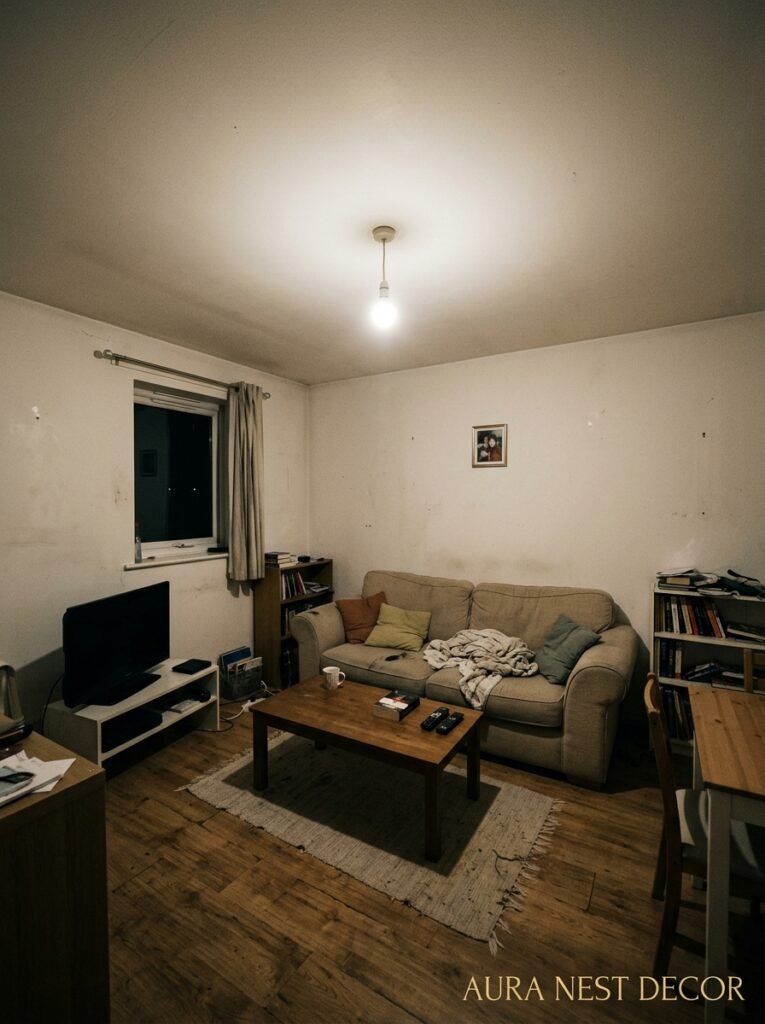
If you’re renting — whether in the US or UK — you probably can’t rewire anything, change fixtures, or install dimmers without landlord permission. Which means a lot of people just… accept the overhead light situation and live with bad lighting for years.
But there’s so much you can do without touching the walls. Plug-in wall sconces (yes, they exist — they just trail a thin cord down to the socket, which is less noticeable than you’d think with a little styling). Floor lamps. Table lamps on timers. Clip-on reading lights. Battery-powered LED puck lights stuck to the undersides of shelves.
The one genuinely transformative renter move — sorry, not supposed to use that word — okay, the one renter move that actually changes everything: buy a smart plug and attach it to your lamps. Set them on a schedule. When you walk in the door at 6pm, the room is already glowing at the right temperature. That single change makes a rented flat feel like your actual home instead of a place you’re just temporarily occupying. Can’t stress this enough.
11. The One Thing Expensive-Looking Rooms Do With Their Lampshades
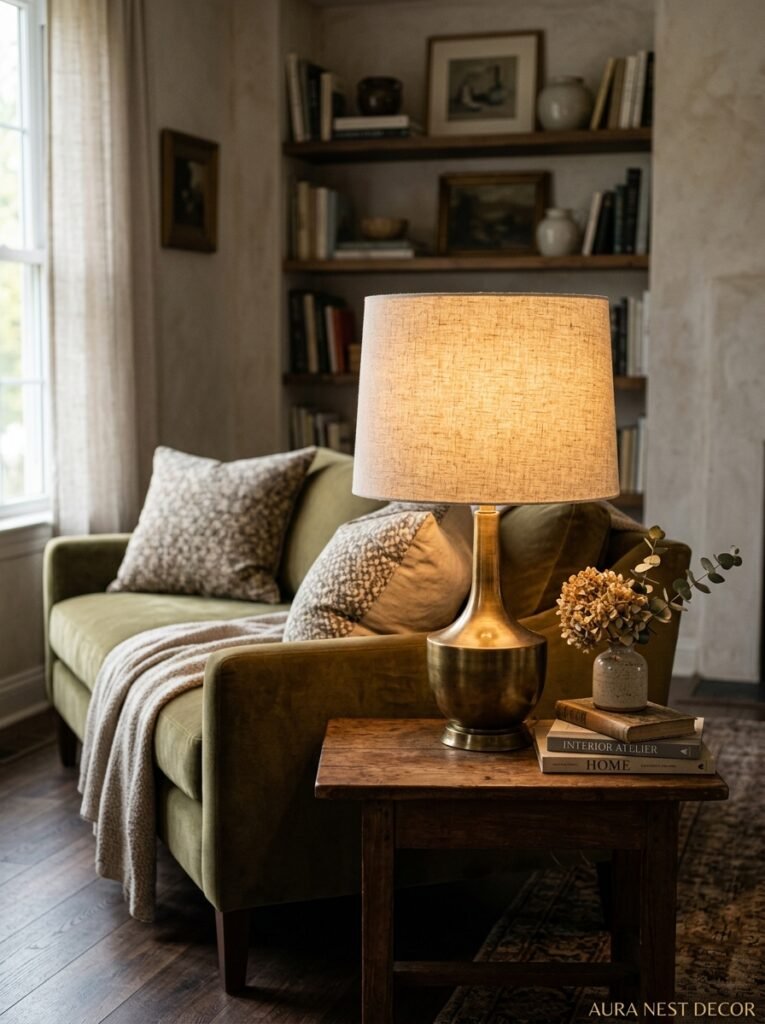
Shade material. THAT’S the thing. It sounds minor and it really isn’t.
An opaque lampshade pushes all the light out from the top and bottom. A translucent or semi-transparent shade glows from within — the whole shade becomes a soft orb of light, which is completely different and significantly warmer-feeling. White linen and pale cotton shades do this beautifully. Very dark or very thick shades don’t, but they can look architectural and intentional in the right context.
Also: the interior of the shade matters. Shades lined in warm gold or amber make the light coming through them even warmer. White-lined shades are neutral. A lot of cheaper lamps come with very white, slightly plastic-y shades that push cool light, and swapping just the shade — not the whole lamp — can completely change the feel of a fixture you already own. This is a £10–$15 fix that looks like a £100 upgrade. I’ve done it multiple times.
12. The Lighting Setup Nobody Can Agree On (But Here’s What I Think)
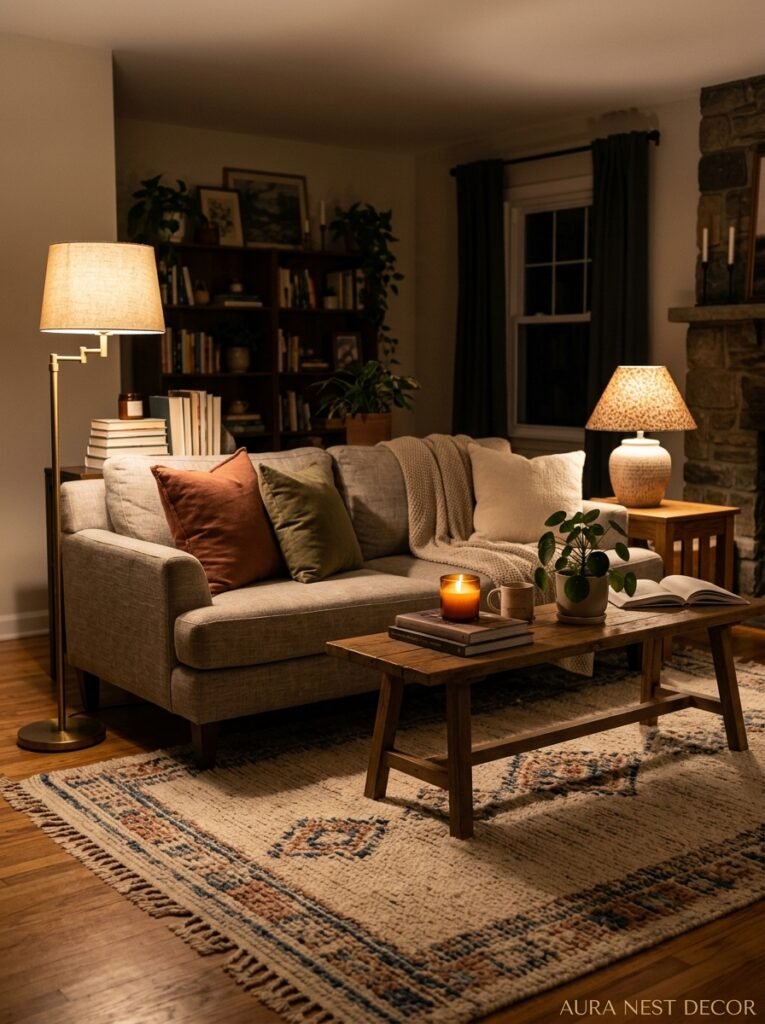
There’s this ongoing debate in interior design circles about whether you need a maximum of five light sources in a living room or whether more is always more. And honestly? Both camps are kind of right and kind of wrong.
The number isn’t the point. The variety is. You want light at different heights, at different intensities, coming from different directions. A floor lamp, a table lamp, some candles, and maybe something that hits the wall — that’s four things and it covers all the bases. You could have eight lamps all at the same height doing the same thing and the room would still feel flat.
Start with one decent floor lamp in warm white and just see how the room shifts. Then add from there. You don’t have to buy everything at once, and rooms that get built slowly, one lamp at a time, tend to end up with better lighting anyway. Because you had time to notice what was still missing.
—
❓ FAQ
Q: What’s the best light bulb color temperature for a living room? A: For most living rooms, you want to stay between 2700K and 3000K — that’s warm white, the kind that feels cozy and flattering. Anything above 3500K starts to feel more like an office than a home, so unless you’re very into the cool minimalist aesthetic, avoid daylight bulbs in here.
Q: How many lamps do I actually need in my living room? A: There’s no magic number, but a good starting point is to aim for at least three different light sources at different heights. A floor lamp, a table lamp, and something ambient — candles, a small accent light — tends to cover the basics. Add more only if a corner still feels dark or uninviting.
Q: Can I improve my living room lighting without replacing the fixtures? A: Absolutely. Swapping bulbs to a warmer temperature, adding floor and table lamps on timers or smart plugs, replacing opaque lampshades with linen ones, and placing a mirror strategically will all make a noticeable difference without touching a single fixture. Renters especially — this is your whole toolkit right here.
—
💭 Final Thoughts
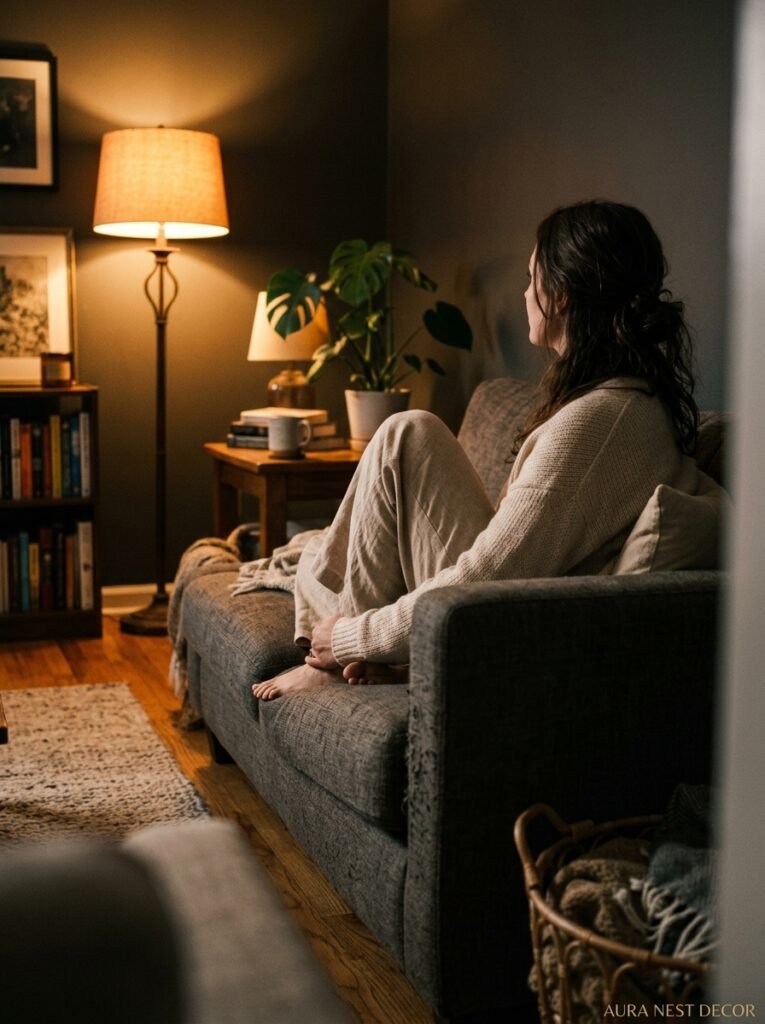
Living room lighting isn’t a one-time decision — it’s something you’ll keep tweaking, keep noticing, keep adjusting as seasons change and moods shift. The best-lit rooms I’ve ever walked into didn’t feel designed. They felt settled, like someone had spent a long time in them and figured out exactly what made them feel right.
What would your living room feel like if you switched off the overhead light right now and just… started from scratch?