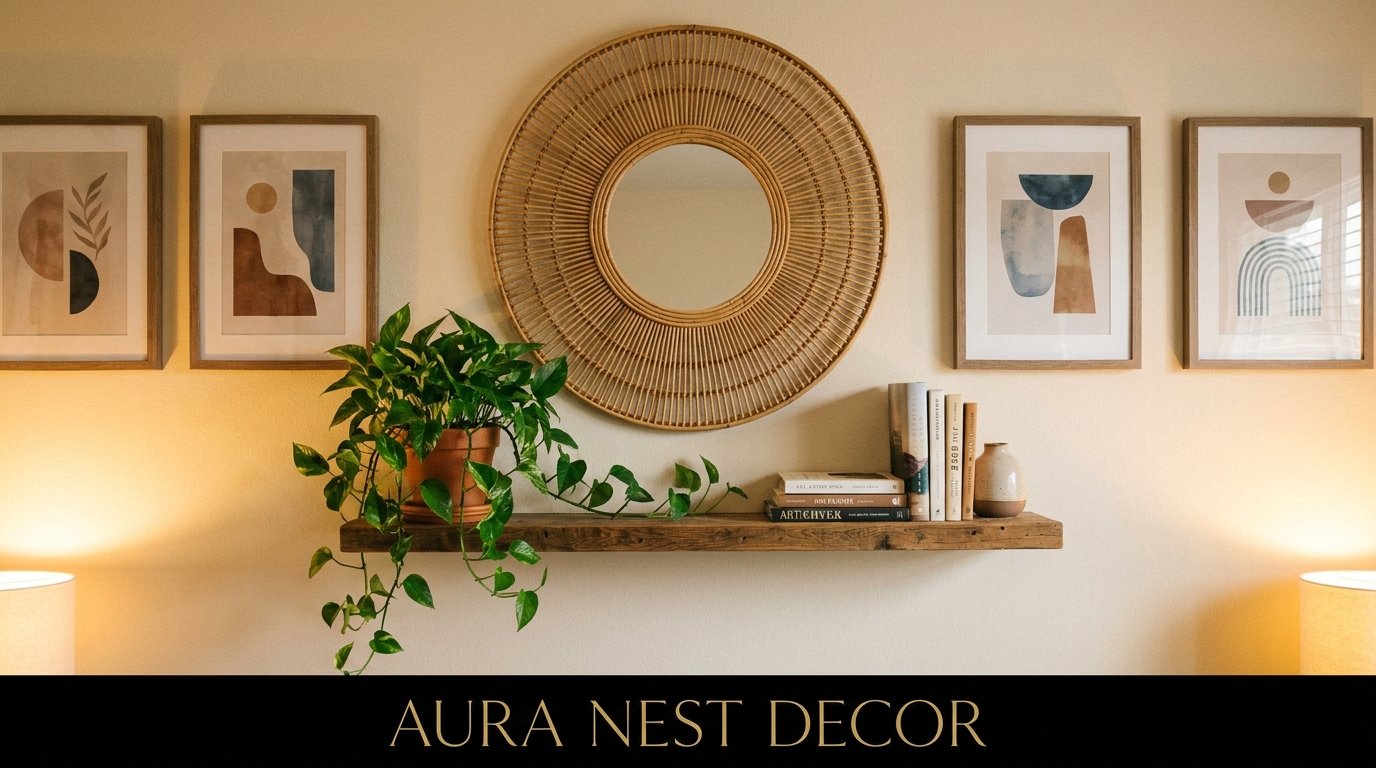
12 Living Room Wall Ideas That Actually Deserve a Second Look (Not Just a Pinterest Save)
My friend Sarah walked into my living room last spring and said, “okay, but your walls are doing NOTHING.” She wasn’t wrong. I had a single framed print from 2019, a slightly tilted mirror I kept meaning to fix, and about 400 square feet of beige possibility just… sitting there.
That was the kick I needed.
—
1. The Gallery Wall That Doesn’t Look Like Everyone Else’s Gallery Wall
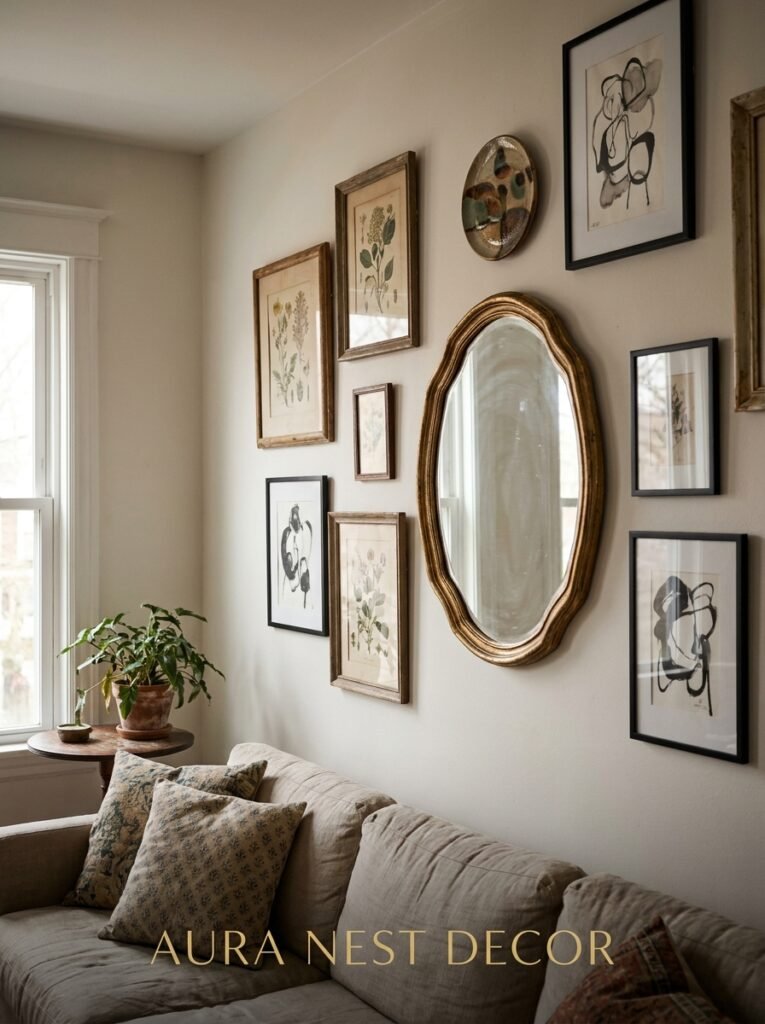
Here’s the thing about gallery walls — we’ve all seen the version where someone arranges nine identical white frames in a grid and calls it a day. It’s fine. It’s safe. It’s also completely forgettable.
What makes a gallery wall feel actually personal is mixing frame depths. Thick chunky frames alongside thin ones. A vintage wooden frame from a charity shop next to a sleek black metal one. The visual inconsistency is what makes it look curated rather than ordered from a single website in one sitting.
And don’t feel like everything has to be art. I’ve got a pressed botanicals set, an old postcard my grandmother sent in the 1970s (laminated, yes, I did that), a small mirror, and one framed piece of sheet music from a song I love. None of it “matches” and somehow that’s exactly why it works.
Start by laying everything on the floor first. Photograph it. Move pieces around until it feels balanced but not symmetrical. Because symmetry is the enemy here, honestly.
“The gallery wall that looks like no one else’s is usually the one that took the longest to get wrong first.”
—
2. One Very Large Piece of Art Instead of a Bunch of Small Ones
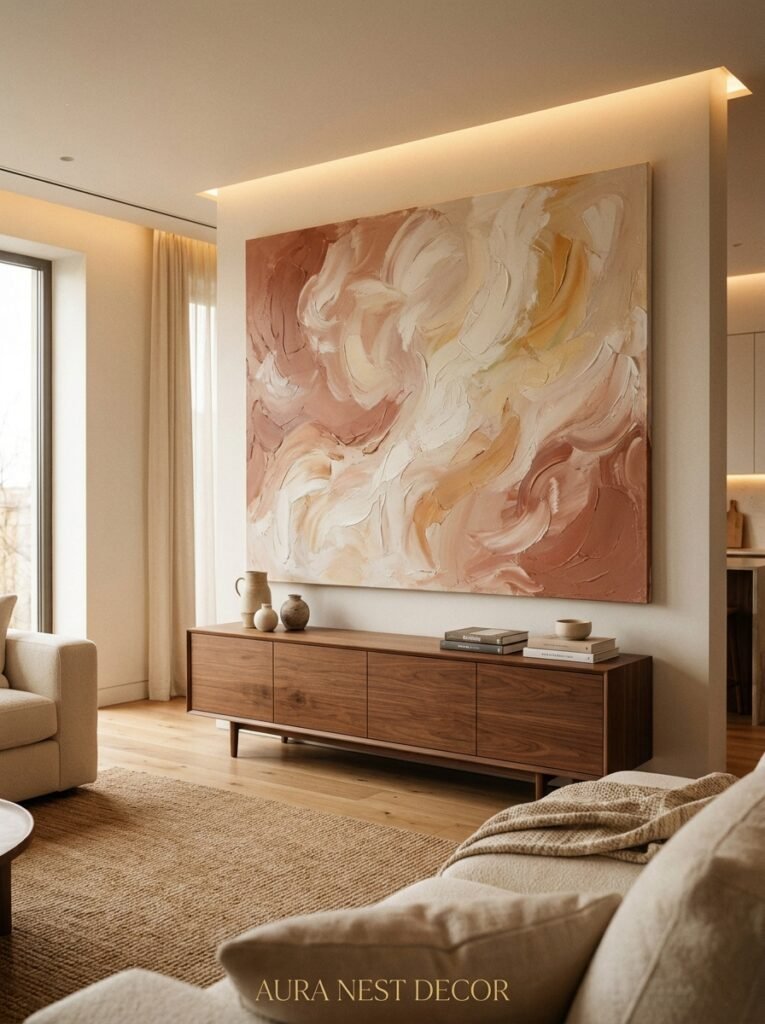
This is a take I’ve had to defend at dinner parties. People panic at the idea of committing to one BIG piece of wall art. What if I get tired of it? What if it’s too much?
But here’s what I’ve noticed — the rooms that stop you in your tracks usually have one statement piece rather than fifteen smaller ones competing for attention. A single oversized canvas, maybe 40×60 inches, hung just slightly lower than you think it should be? That’s the move.
The trick is scale. Most people hang art too high and choose pieces that are too small for the wall. Your sofa is probably 84 to 90 inches wide. The art above it should cover at least two-thirds of that width. Do the maths. It’s usually bigger than you’re comfortable with — that discomfort is a good sign.
Abstract works well here. So does large-format photography. I’d even argue a single piece of really interesting textile art hung like a painting can be more striking than anything in a frame.
—
3. The Color That Keeps Showing Up in Every Beautiful Living Room Right Now
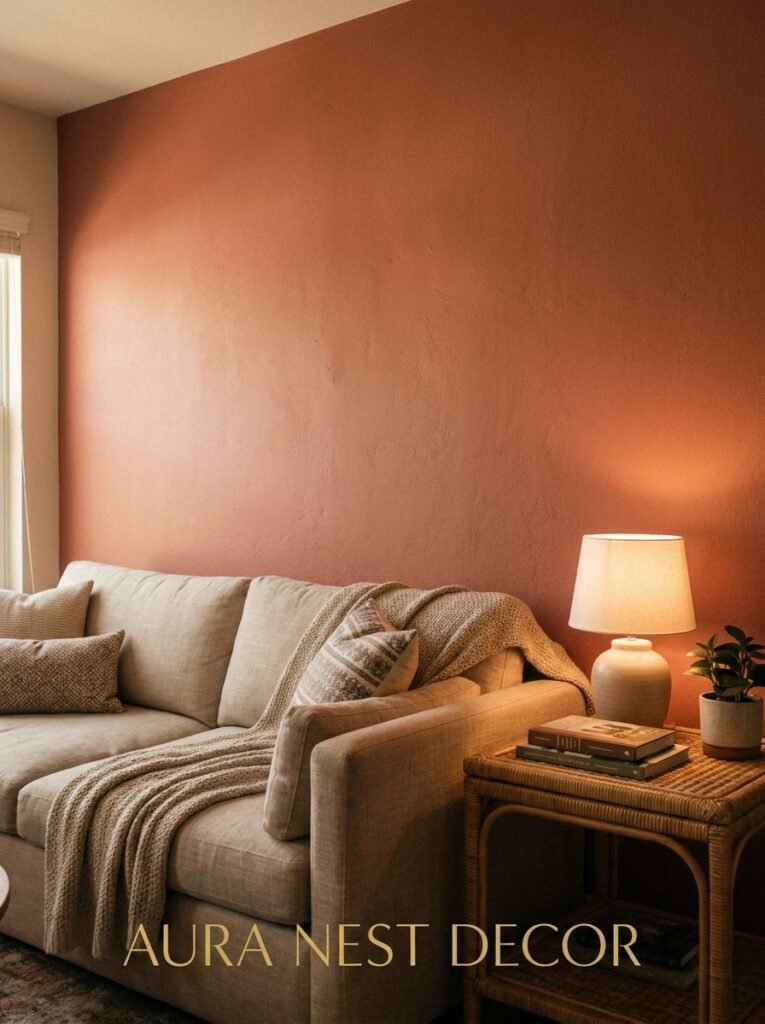
Warm terracotta. Dusty sage. Aged ochre.
Not as accent pillows. On the actual WALL.
I know, I know — painting a wall feels permanent and terrifying. But a single painted wall behind a sofa or fireplace changes the entire personality of a room. Not an accent wall in the old-school sense (a random wall painted a random color just because). More like a thoughtful choice of which wall carries the most visual weight and giving it a color that makes the whole room exhale.
In the UK especially, I keep seeing people lean into deep, moody tones — almost-black greens, tobacco browns, inky blues. Farrow & Ball’s Railings, Little Greene’s French Grey, Benjamin Moore’s Hale Navy if you’re stateside. These aren’t colors that shout. They’re colors that settle.
Pair a deep painted wall with warm brass fixtures and you’ve basically solved your whole living room in one afternoon.
—
4. Shelves That Feel Like Rooms Within a Room
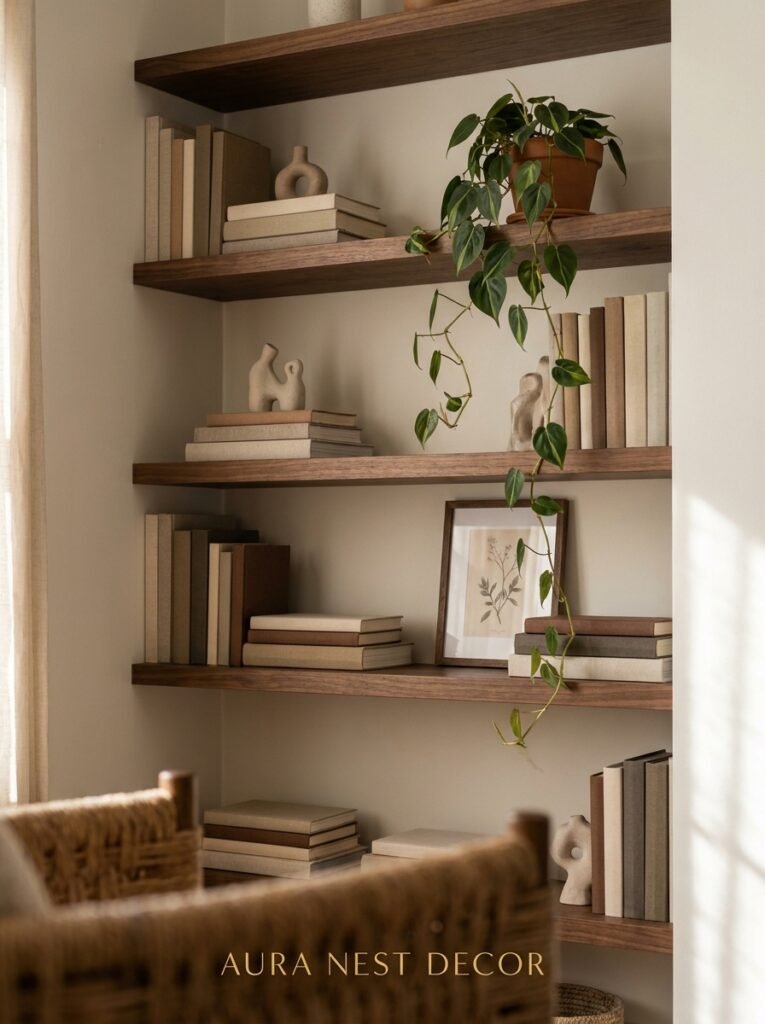
Built-in shelving used to feel like a very specific kind of house — old, British, with a lot of leather-bound books and maybe a grandfather clock. And while I’m not against any of that, floating shelves have made the whole concept accessible and genuinely fun.
The problem most people have with shelving is they fill it too much. Every inch. Every book. Every random object. It reads as clutter even if each individual thing is lovely.
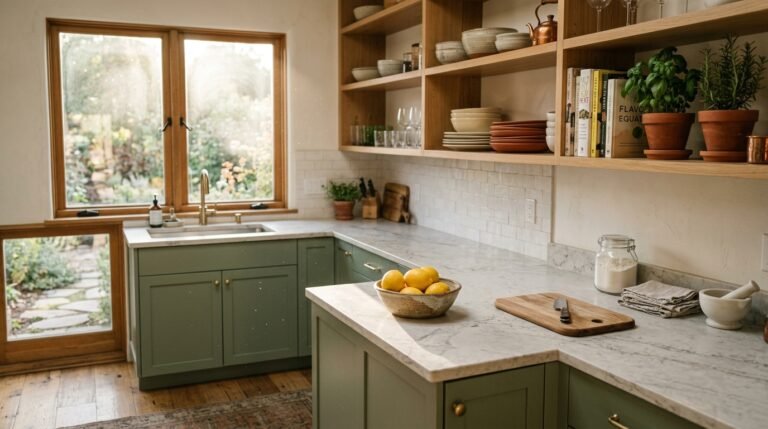
What you want is pockets of negative space. Think of each shelf like a tiny vignette — a grouping of two or three objects, then nothing, then another grouping. Books can be stacked horizontally (which also adds visual interest), objects can vary in height dramatically, and one shelf can be entirely empty and it won’t look sad. It’ll look considered.
Side note — if you’re renting and can’t commit to built-ins, a tall ladder shelf in a corner achieves something very similar without anyone asking for their deposit back.
—
5. Mirrors: The Placement Most People Get Wrong
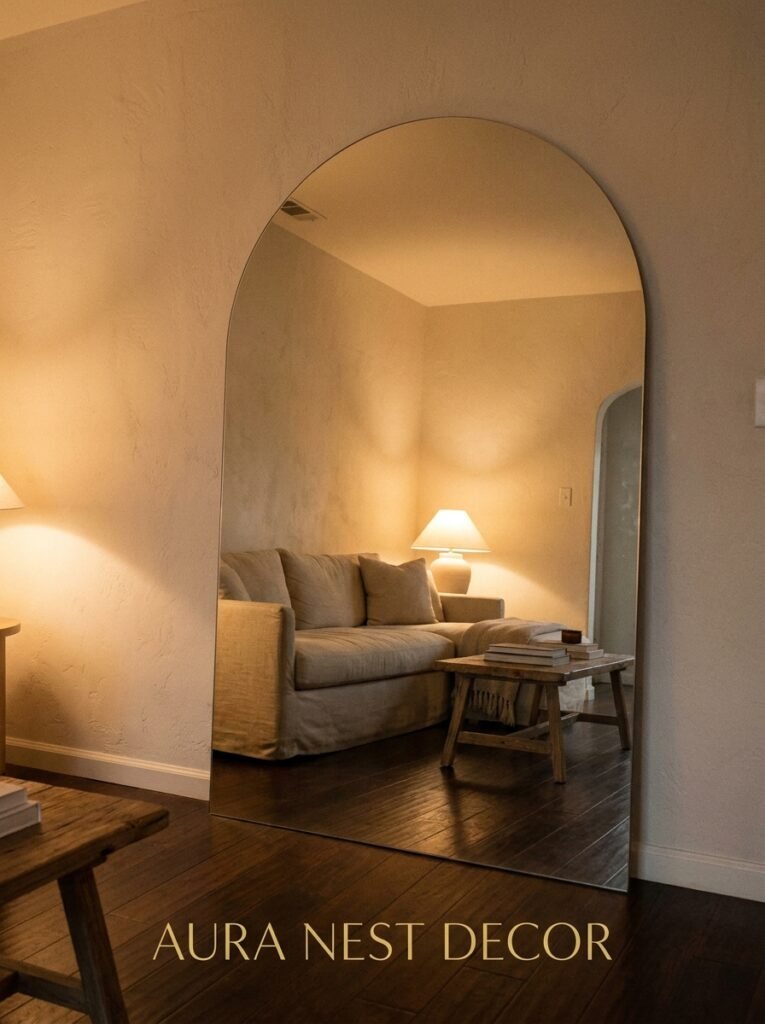
Everyone knows mirrors make a room feel bigger. That’s not the news. The news is that where you put them matters more than the mirror itself.
A mirror opposite a window doesn’t just bounce light — it essentially doubles your window. In a British terraced house or an American apartment where natural light is basically rationed, this is transformational. Hang the mirror so it catches the actual view from outside if you can. You end up with what looks like a second window and the room shifts entirely.
“A mirror isn’t decoration. It’s a decision about where you want the light to land.”
The shape matters too. Round mirrors have had their moment and they’re not going anywhere — and for good reason, because a circle on a wall full of straight lines and rectangles creates exactly the kind of visual pause a room needs. Arched mirrors are doing similar work right now. Both feel softer and less like you’re just hanging a mirror for the sake of it.
Don’t cluster mirrors together. One well-placed mirror, or two on opposite walls if the room is long and narrow. More than that and it starts feeling like a hall of mirrors situation that nobody asked for.
—
6. Wallpaper Just on One Wall (Yes, You Can Do Half a Room)
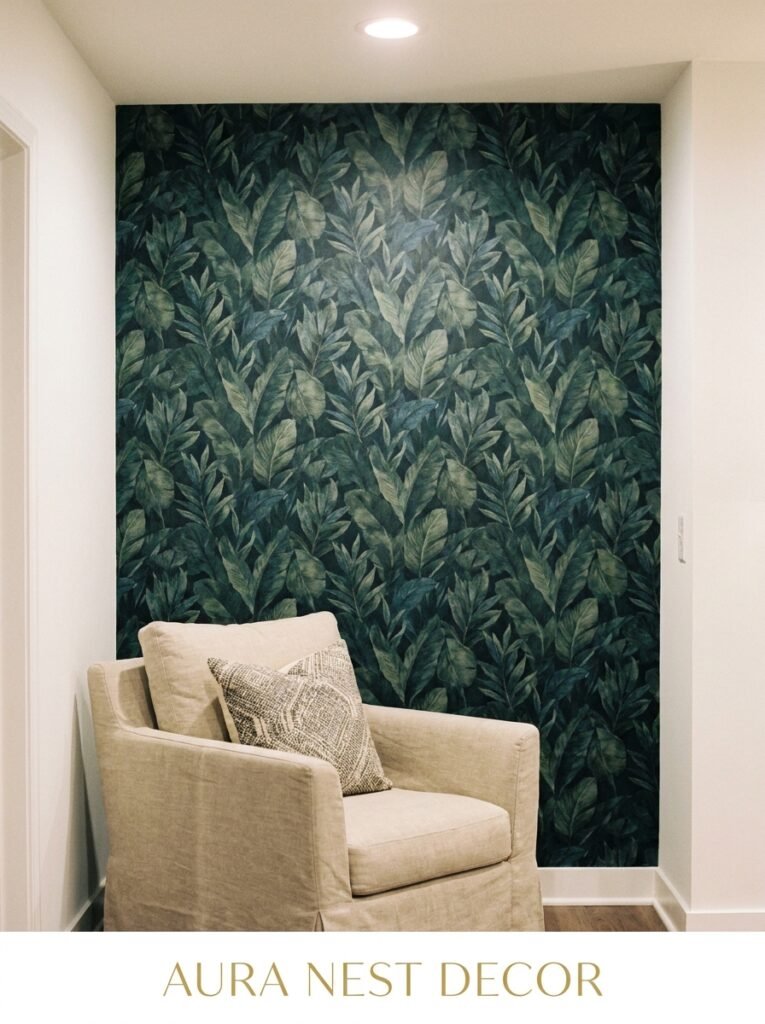
Wallpaper got a reputation for being old-fashioned and then suddenly everyone’s grandmother was actually ahead of the curve. Because patterned wallpaper — specifically on a single feature wall — is genuinely one of the best ways to add personality to a living room without redecorating everything.
The one-wall approach works because it gives the pattern room to breathe. You’re not swimming in it. You step back and it acts almost like an art installation — structured, intentional, contained.
Botanical prints are brilliant for this. So are maximalist geometric patterns if you’ve got the nerve. Even a simple grasscloth or textured neutral wallpaper on one wall adds depth in a way that paint alone can’t always manage.
And if you’re renting — peel-and-stick wallpaper has come a LONG way. It’s not the budget-looking stuff from five years ago anymore. Some of the prints from Tempaper or Chasing Paper genuinely fool people.
—
7. The Weird Thing That Works: Leaning Art Against the Wall Instead of Hanging It
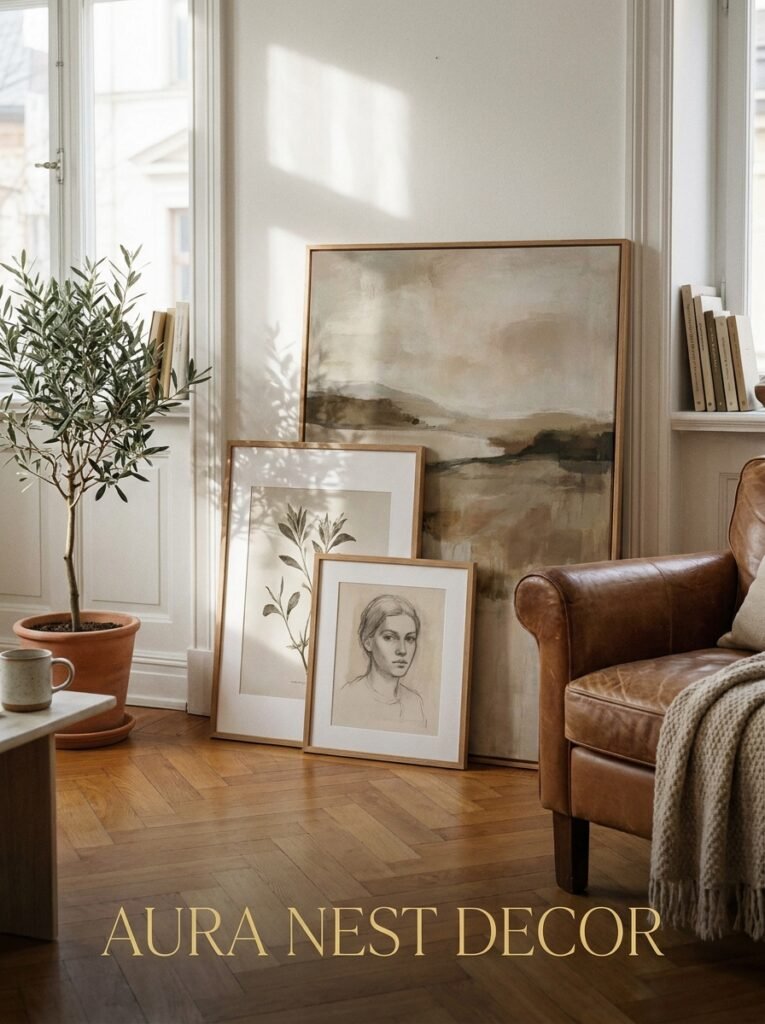
I did this accidentally while trying to figure out where to hang a new print, and I’ve never gone back.
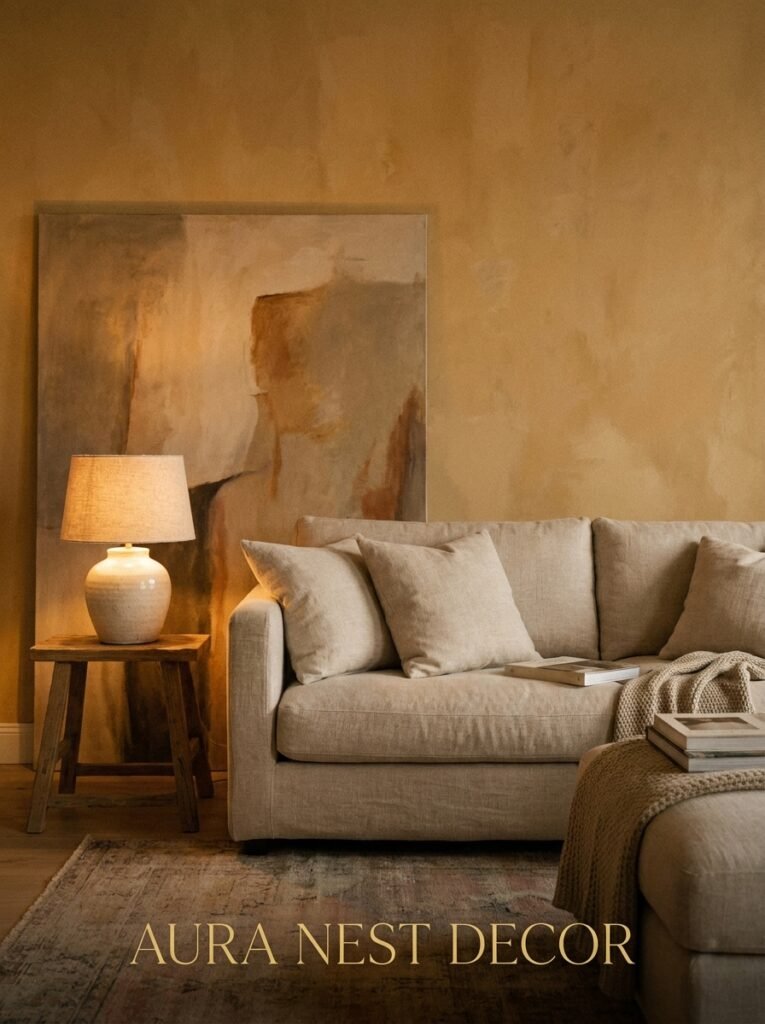
Leaning oversized art against a wall — especially behind a sofa or in an alcove — looks effortlessly undone in the best way. It suggests confidence. Like you couldn’t be bothered to get the drill out and actually you look incredible for it.
The key is leaning something genuinely large. A small frame propped against a wall just looks like you ran out of time. But a 48-inch canvas or a large framed photograph? That’s a choice. Layer a smaller framed piece in front of it, angled slightly, and now you’ve got something that feels styled without looking like it tried too hard.
You can do this on a mantelpiece too. Multiple frames and objects leaned and layered across a fireplace shelf creates that relaxed, collected-over-time feeling that’s nearly impossible to fake with rigid hanging.
—
8. Architectural Details You Can Add Without Calling a Contractor
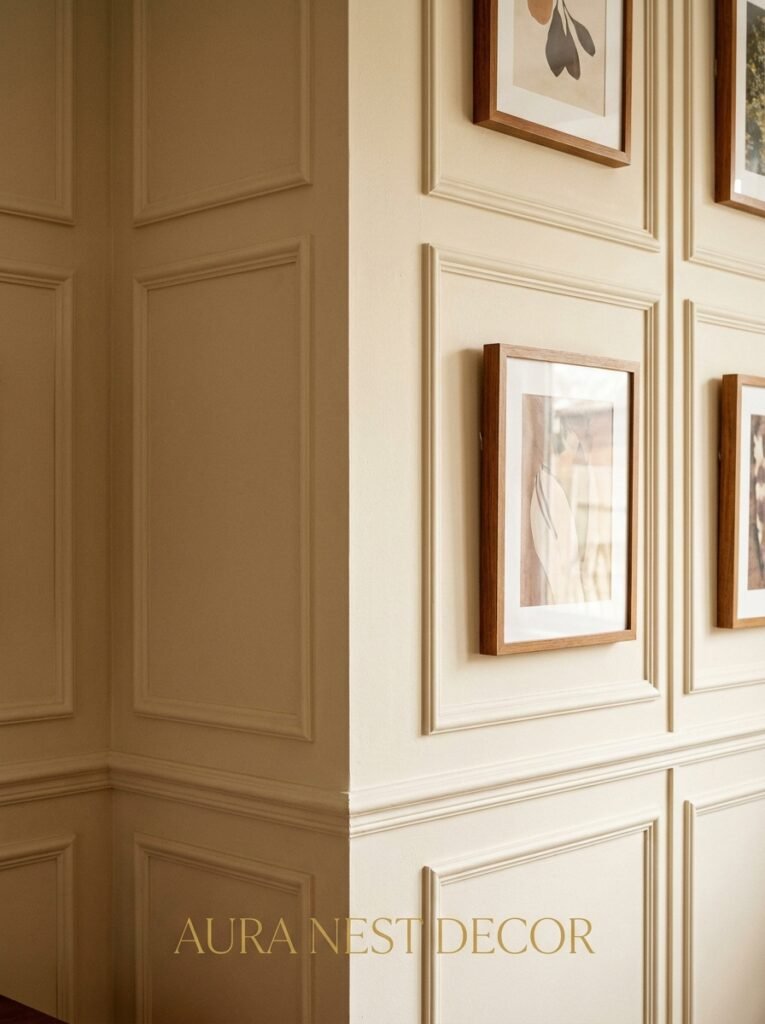
Picture rails, panel moulding, dado rails — these are the things that make an old Victorian or Edwardian British house feel rich without spending anything. But you can add similar details to any room now, even new builds, even apartments with plain flat walls.
Peel-and-stick moulding strips or MDF panel frames painted the same color as the wall (or a contrasting one) create instant architectural weight. The effect of painted wall panels — that grid of subtle rectangles across the lower half of a wall — photographs beautifully and makes even a budget rental look like it has bones.
In the US, this is sometimes called a “board and batten” look. In the UK it echoes Georgian panelling. Both achieve the same thing: your eye reads structure, history, and intention. None of which requires planning permission.
Paint the panels the same color as the wall for subtlety. Go a shade darker or lighter for drama. Or — genuinely bold move — paint the inside of the panels a completely different color, like a deep plum or forest green, while the rest of the wall stays white. That one takes commitment but it’s incredible.
—
9. Plants on Walls: The Trend That Keeps Getting Better at It
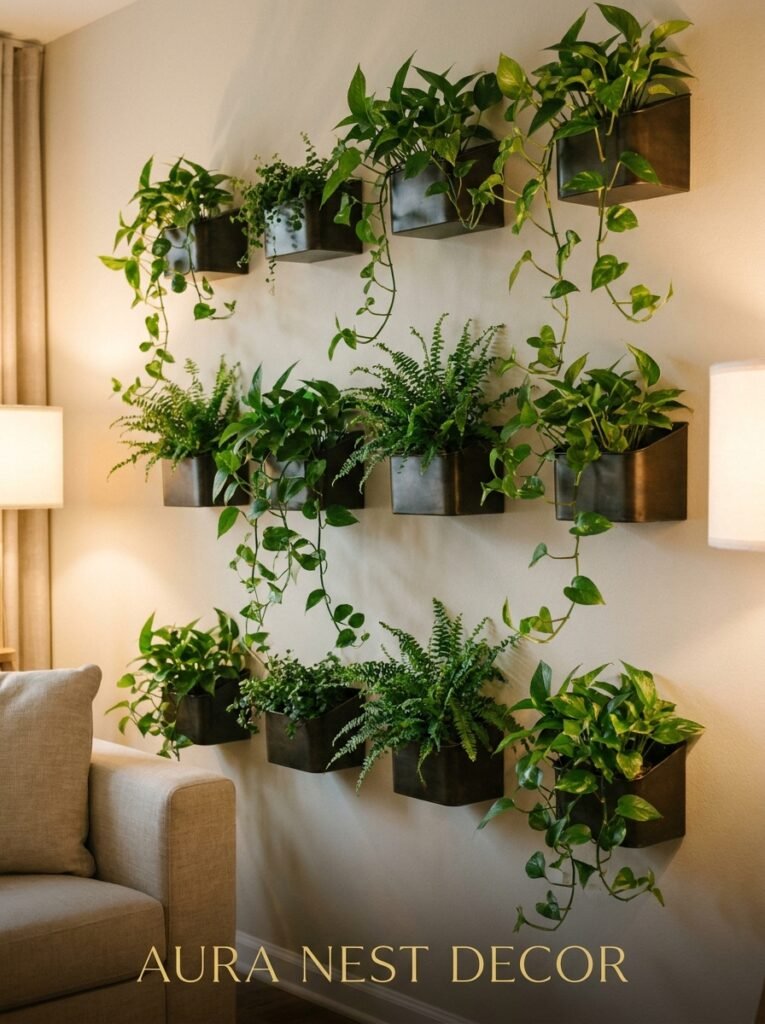
We went through a phase where every wall plant situation was a tiny succulent in a small ceramic wall pocket and honestly, it was cute but limited. What’s happening now is more interesting.
Large trailing plants — pothos, heartleaf philodendron, string of pearls — mounted high on a wall shelf or hanging planter and allowed to cascade down over two or three feet of wall. It creates a vertical living element that changes as the plant grows. No two months look identical.
For people who want something more structured, a wall-mounted planter grid with a few small herb pots or air plants feels intentional without being overwhelming. Very good in bright living rooms near south-facing windows.
The one caveat: you’ve got to actually want to keep plants alive. Don’t build your whole wall around a living installation and then quietly let everything die. Ask me how I know.
“The wrong plant on the right wall still loses. Match the plant to the light, not to the aesthetic.”
—
10. Textiles as Wall Art: The Option Most People Sleep On
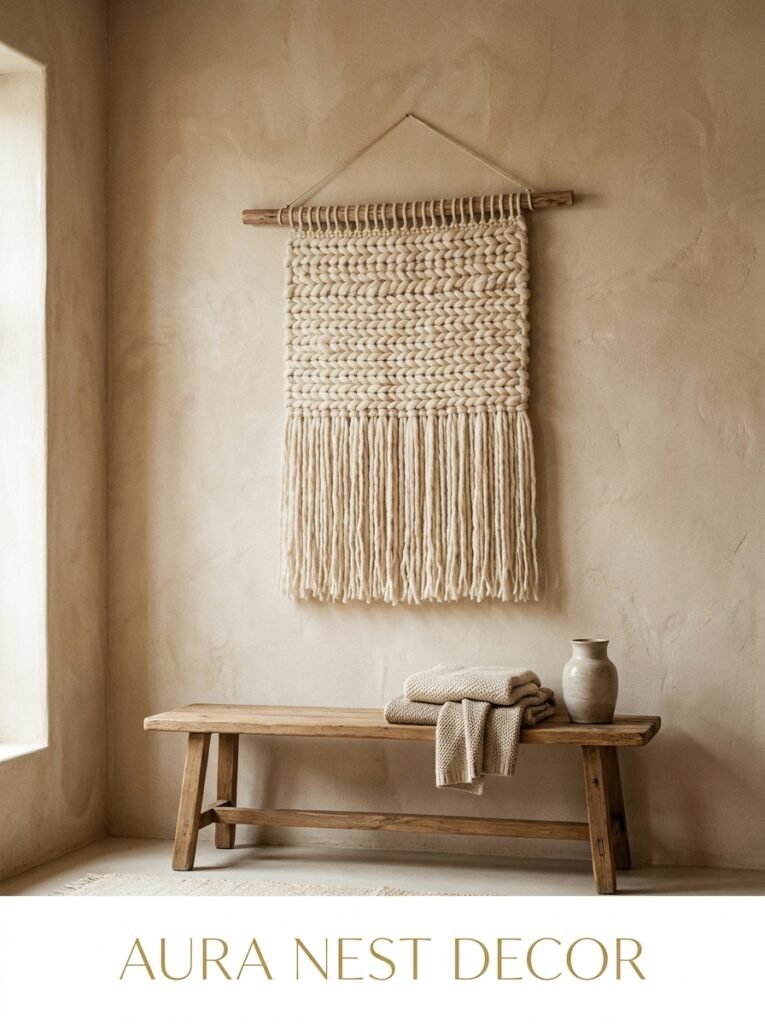
This is maybe my strongest opinion in this whole article. Woven wall hangings, vintage rugs, tapestry panels, macramé — fabric on a wall is underused, underrated, and genuinely one of the coziest things you can do to a room.
A medium-sized woven hanging in natural tones — cream, oatmeal, warm terracotta — above a sofa adds texture in a way nothing flat can replicate. It absorbs sound slightly too, which is not nothing if you’ve got a room that echoes.
Vintage rugs hung vertically as wall art are huge in interior design circles right now, and they’re practical too — a beautiful kilim or dhurrie that’s too worn for the floor? Perfect for a wall. Use a rug hanging kit (or even a simple wooden dowel and some jute twine) and hang it like you meant to all along.
It also solves a specific problem: that slightly awkward narrow wall between a door and a window where nothing framed ever quite fits. A textile that’s slightly irregular in shape doesn’t care about that space being odd. It works with it.
—
11. The One Rule That Makes Any Tiny Living Room Wall Feel Intentional
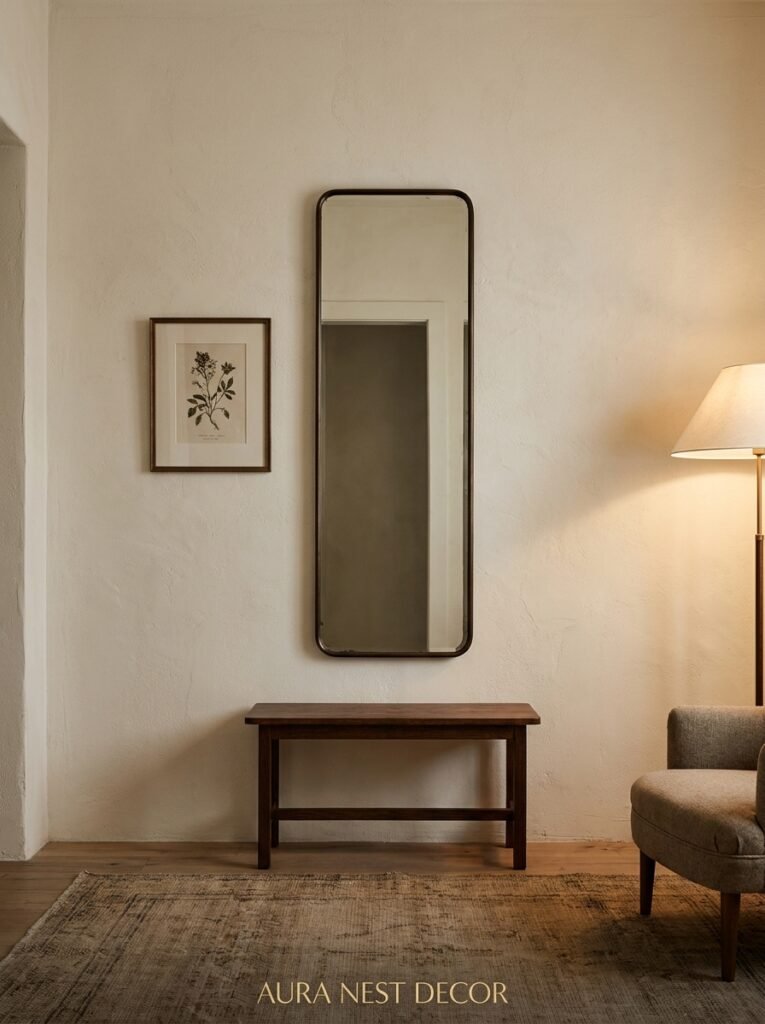
Keep your wall decor to ONE plane of depth.
What I mean is: if you’re working with a small room, choose either 2D wall decor (art, wallpaper, paint) OR 3D wall decor (shelves, hanging plants, textiles). Mixing too many depths in a small space makes the walls feel chaotic rather than layered.
A small room with one beautifully styled gallery wall and nothing else projecting from it reads as confident and spacious. That same room with a gallery wall AND shelves AND hanging plants AND a mounted lamp AND a mirror? It starts closing in.
This doesn’t mean small rooms can’t have personality — they absolutely can, often MORE personality than a big room because every choice counts harder. But restraint in small spaces isn’t settling. It’s editing, which is actually the harder skill.
—
12. When to Leave the Wall Completely Alone
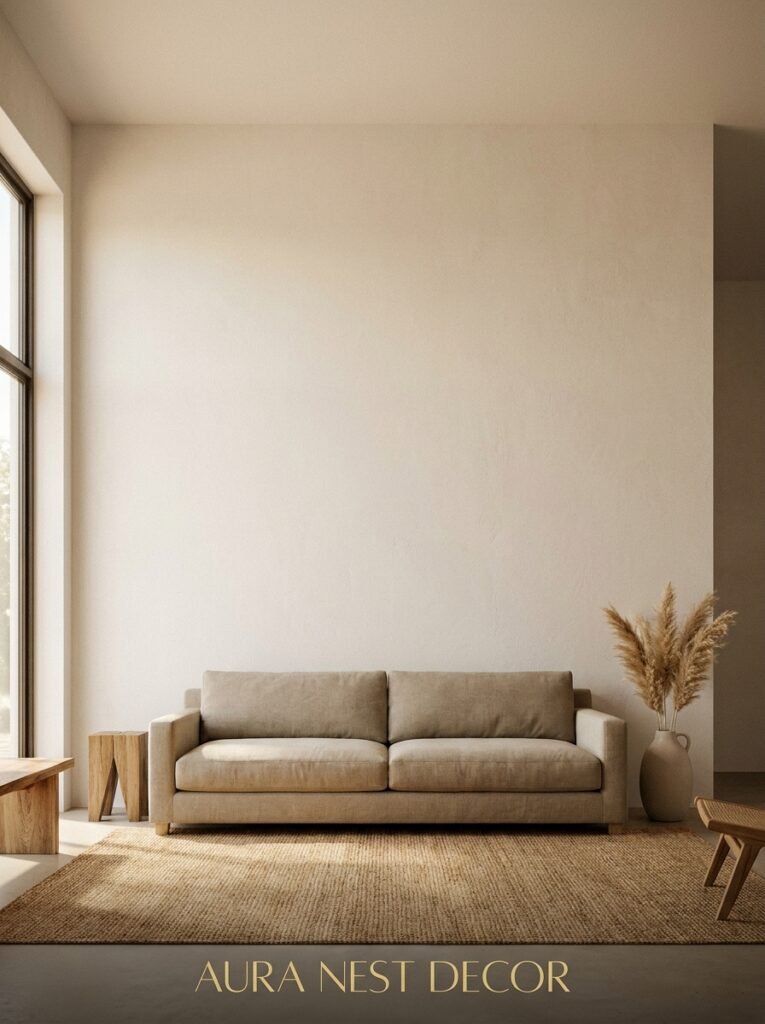
Honestly? Sometimes the answer is nothing.
There’s a version of good living room wall decor where the wall itself is the feature. A beautifully painted wall in a deep, perfect color. A wall of floor-to-ceiling curtains hung close to the ceiling that puddle slightly on the floor. A wall with a single statement light — a wall sconce or an articulating brass arm lamp — that casts the most beautiful shadow at 8pm.
None of those are “decorating the wall” in the traditional sense. But all of them make the wall feel intentional in a way that sixteen things crammed together never quite achieves.
The question isn’t what can I put on this wall. The question is what does this wall actually need. And sometimes the answer is just good bones, good light, and the confidence to stop before you’ve said too much.
—
❓ FAQ
Q: How do I arrange wall decor above a sofa without it looking random? A: The easiest rule to follow is to keep the bottom of any art or grouping 6-8 inches above the top of the sofa, and make sure the total width of your wall decor covers at least two-thirds of the sofa’s width. If you’re doing a gallery wall, lay everything out on the floor first and photograph it before you touch a single nail.
Q: What’s the best way to hang heavy art without damaging walls (especially in rentals)? A: For genuinely heavy pieces, French cleats are your best friend — they distribute weight evenly and can be patched when you leave. For lighter-to-medium art in rentals, adhesive strips like Command Large Picture Hanging Strips have gotten surprisingly reliable, as long as you follow the weight limits exactly and don’t push them.
Q: How do I make my living room walls look more expensive without spending a lot? A: Three things that don’t cost much but change everything: hang art lower than feels right (most people go too high), use fewer, larger pieces instead of many small ones, and add at least one piece that has actual texture — a woven hanging, a wooden frame, something that casts a slight shadow. Texture reads as quality even when it isn’t expensive.
—
💭 Final Thoughts
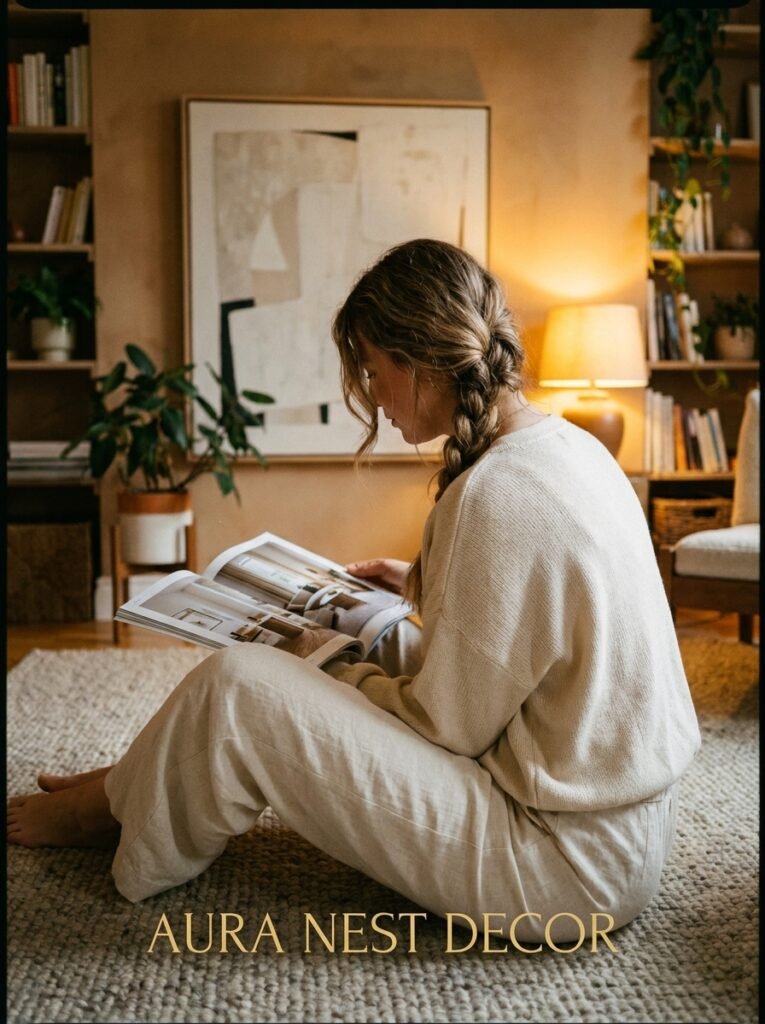
The best living room walls I’ve ever seen weren’t perfectly decorated. They were personal. They had things in them that made no design sense on paper but made complete emotional sense the moment you walked in. A random postcard. A slightly battered mirror. A plant that had gotten out of hand.
Your wall doesn’t need to be finished — it needs to feel like yours.
So what’s the one thing currently on your living room wall that you actually love?