The Living Room Wall That Changed How I Feel About Coming Home
There’s something quietly powerful about the moment you walk into a living room and the walls just speak to you — not loudly, not aggressively, but in that soft, certain way that makes your shoulders drop and your breath slow down. That’s what great living room wall decor does. It doesn’t just fill space. It tells your story.
—
1. Why Your Living Room Walls Are the Most Underestimated Design Canvas in Your Home
Most people spend weeks agonizing over sofas, rugs, and coffee tables — and then glance at their bare walls and think, “I’ll deal with that later.” But here’s what interior designers have known for decades: your walls set the emotional tone for everything else in the room. They’re the backdrop against which every memory, every conversation, every lazy Sunday morning is framed.
Think about the last time you walked into a beautifully decorated living room. Chances are, you noticed the walls before you even realized it. A gallery wall that felt warm and layered. A large-scale painting that anchored the entire space. A collection of vintage mirrors that made a small room feel twice as grand. The walls weren’t just decoration — they were the atmosphere.
“Your living room walls don’t fill space. They create the feeling you come home to every single day.”
When you understand this, everything changes. Suddenly, decorating your walls isn’t an afterthought. It’s the foundation.
—
2. The Psychology of Color on Walls — What Science and Instinct Both Know
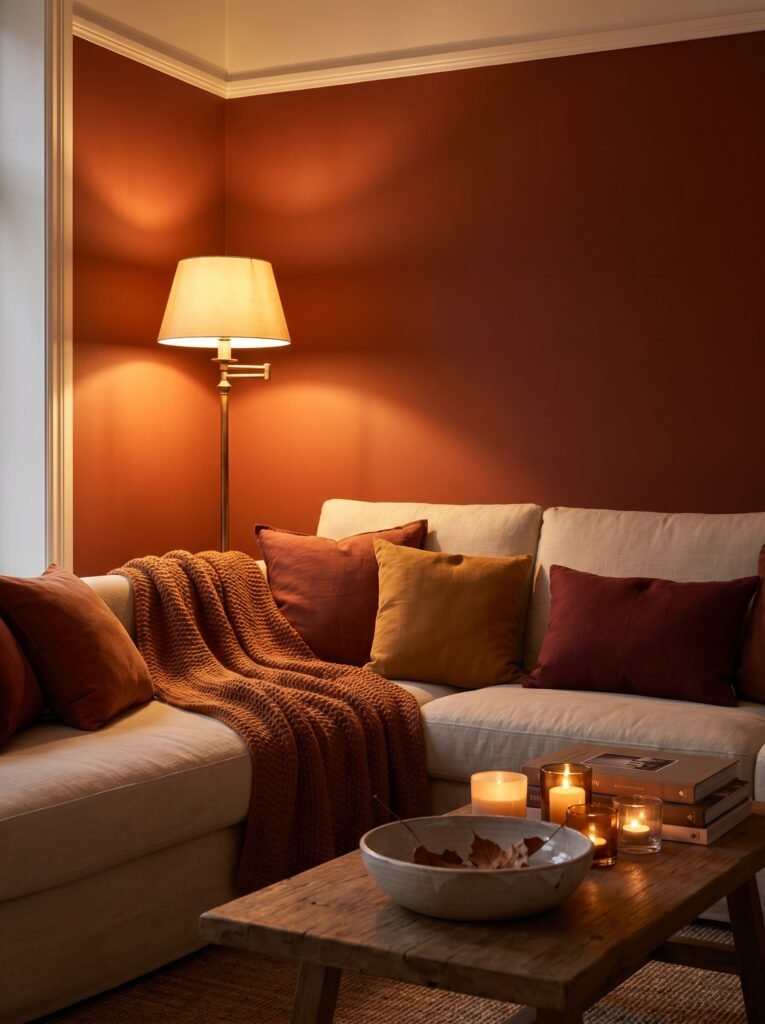
Before you hang a single frame, consider the color story your walls are already telling. Color psychology isn’t pseudoscience — it’s a well-studied field that confirms what most of us feel instinctively. Warm tones like terracotta, burnt sienna, and soft ochre create feelings of comfort, intimacy, and belonging. Cool tones like sage green, slate blue, and dusty lavender invite calm and mental clarity.
If your living room is a place where your family gathers at the end of long days — where kids do homework on the carpet and your partner falls asleep on the couch — you might want to lean into those warm, earthy tones. But if your living room is more of a retreat, a reading nook, a space for quiet evenings with tea and books, cooler, more muted tones might serve you better.
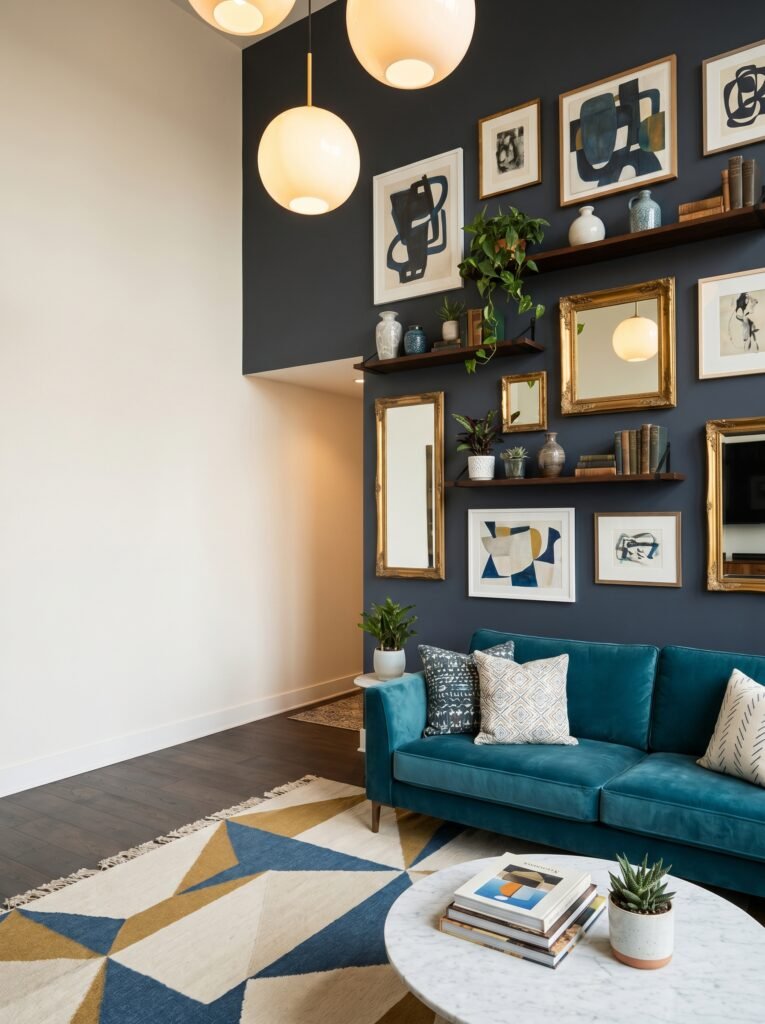
The color of your walls also changes how art and decor interact with the space. A bold, dark-toned accent wall makes framed artwork pop with gallery-like drama. A soft, light-washed wall lets texture and natural materials breathe. Neither approach is wrong. Both can be breathtaking — when chosen with intention.
—
3. Gallery Walls Done Right — How to Avoid the Chaos and Create the Magic
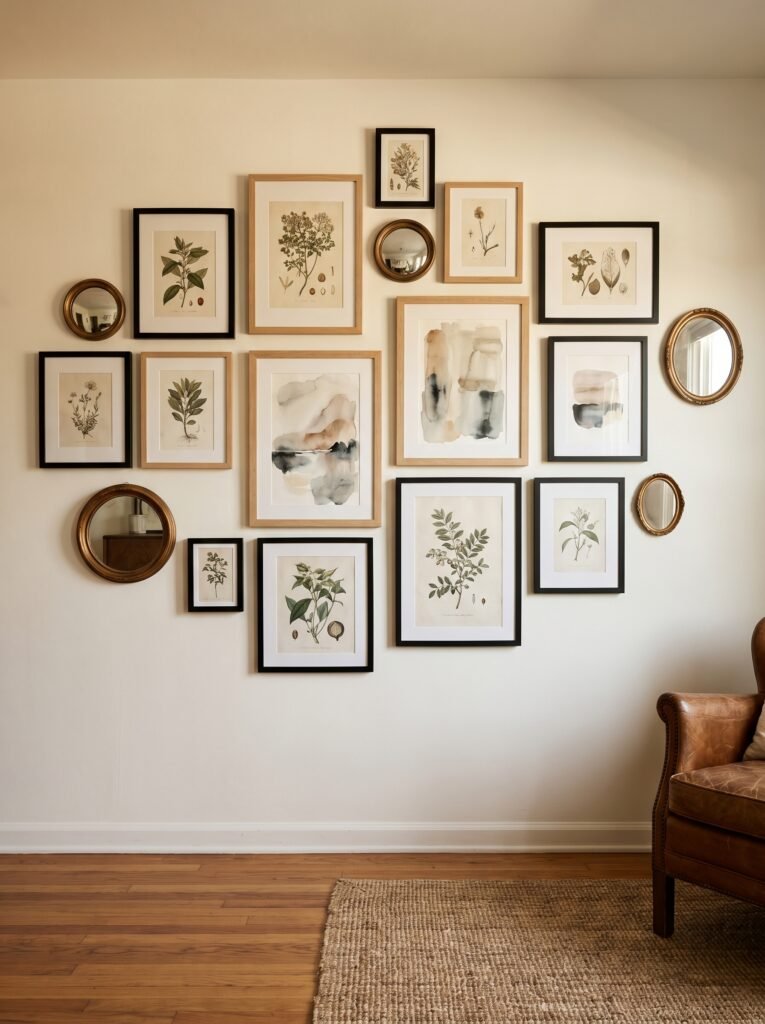
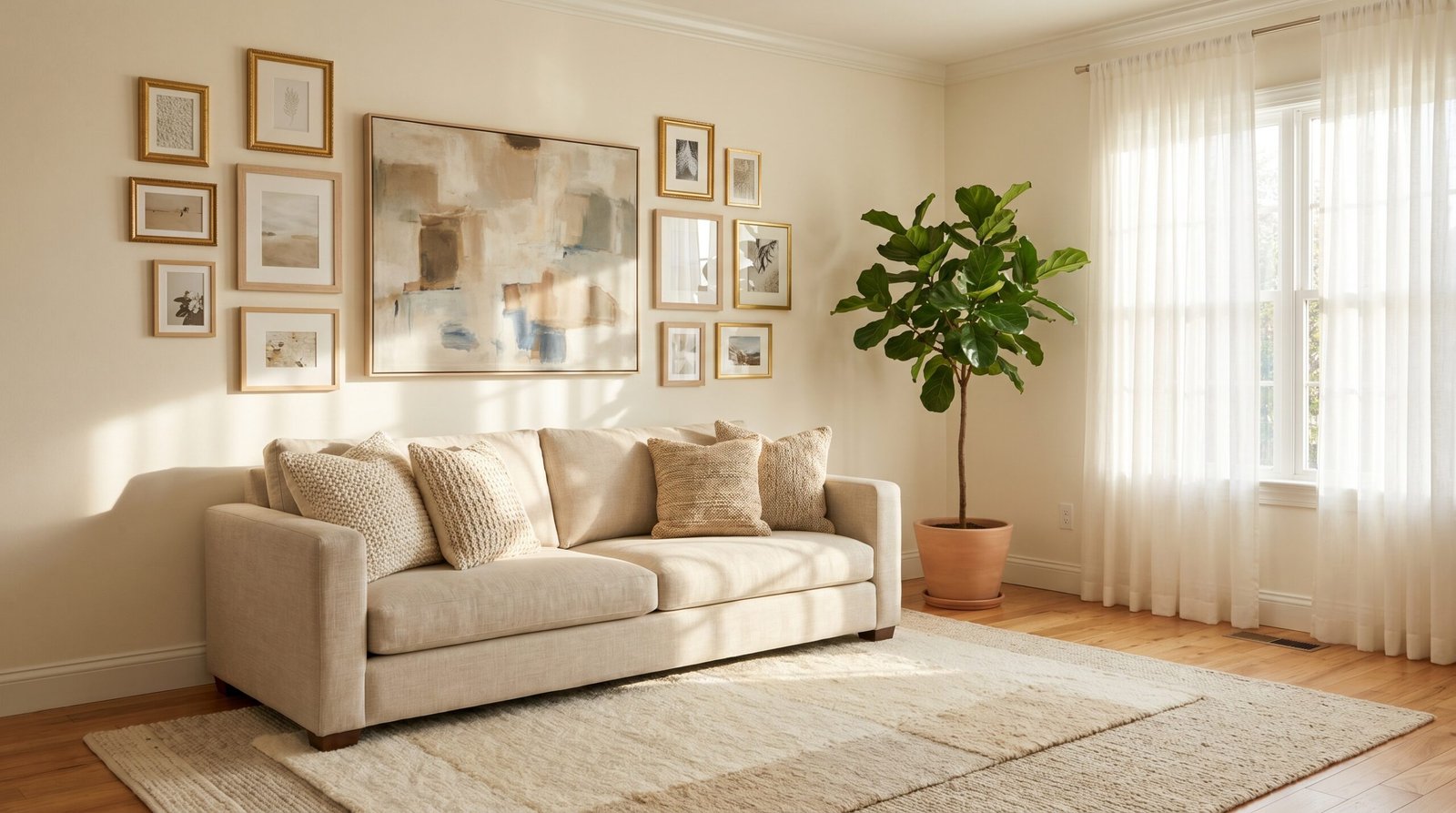
Gallery walls have a reputation for going one of two ways: effortlessly curated or completely chaotic. The difference isn’t talent — it’s strategy. A gallery wall that works has an invisible structure holding it together, even if the frames themselves are mismatched.
Start by choosing a unifying element. This could be a consistent color palette in the artwork itself, a mix of frames all in the same finish (black, brass, natural wood), or a recurring theme — botanical prints, black-and-white family photos, abstract shapes. You don’t need uniformity. You need cohesion.
Lay your arrangement out on the floor before committing a single nail to the wall. This step alone will save you hours of patching and repainting. Live with the arrangement for a day. Walk past it. Photograph it. See how it feels from the doorway, from the sofa, from across the room. The best gallery walls look like they happened naturally, but that effortless quality is almost always the result of careful, patient planning.
—
4. The Case for One Statement Piece — When Simplicity Is the Loudest Thing in the Room
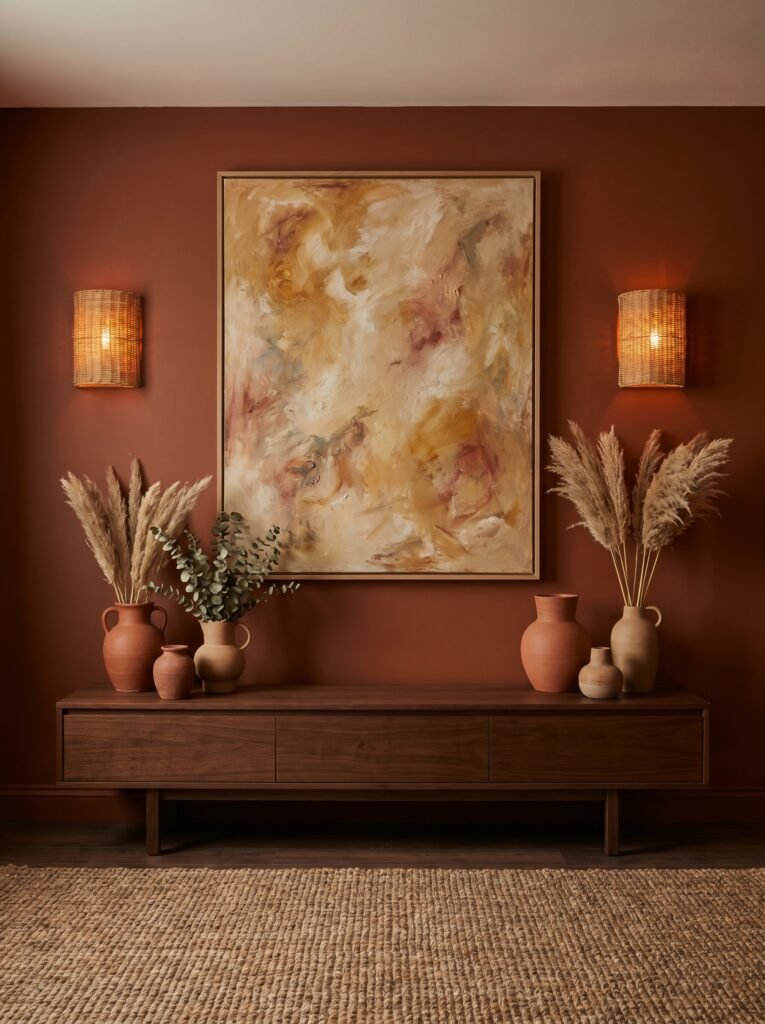
There’s a cultural pressure in interior design to layer, layer, layer — to fill every inch of wall space with something intentional. But some of the most breathtaking living rooms I’ve ever seen had one single, commanding piece of art on the main wall. And nothing else.
A large-scale canvas painting in muted abstracts. A woven textile wall hanging in natural fibers. An oversized vintage map framed in weathered wood. These singular statement pieces don’t just decorate — they define. They become the first thing guests notice and the last thing they remember.
“Sometimes one bold, beautiful thing says more than a hundred smaller details ever could.”
If the idea of choosing just one piece feels overwhelming, start by measuring your wall and looking for art that fills at least two-thirds of its width. Scale is everything. A piece that’s too small will look lost and uncertain. A piece that’s proportionate — or even slightly daring in size — will feel confident, curated, and complete.
—
5. Mixing Textures and Mediums — The Secret to a Wall That Feels Alive
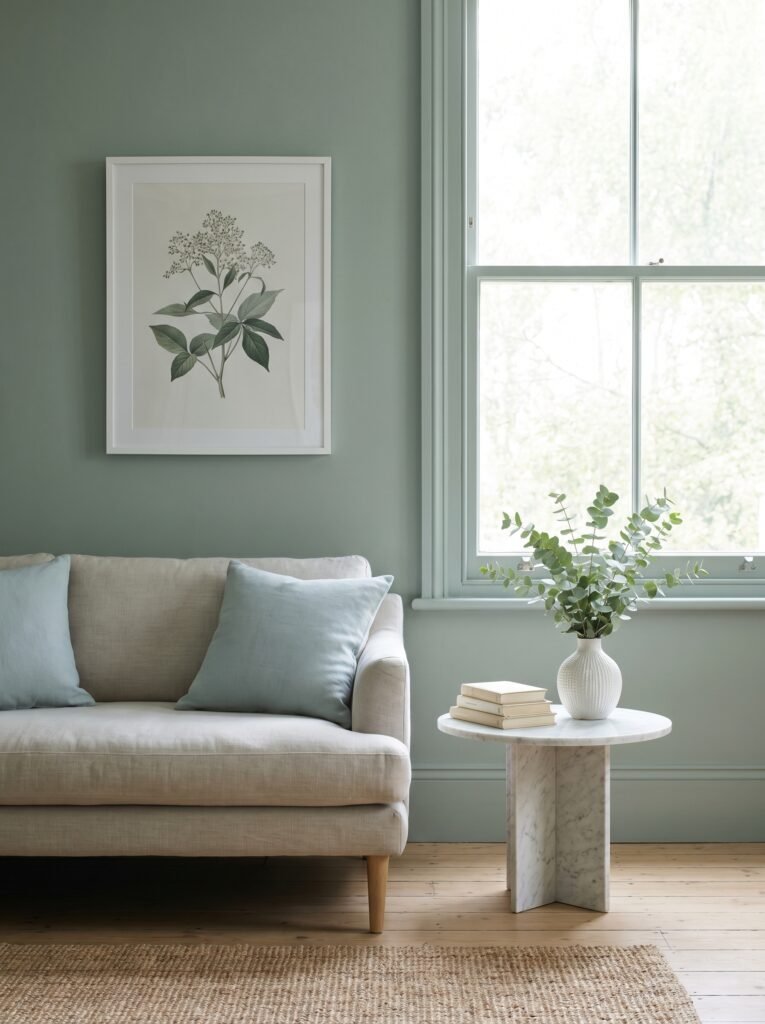
Flat art on flat walls is beautiful. But walls that incorporate texture — that mix mediums, dimensions, and materials — feel genuinely alive. This is the difference between a room that’s decorated and a room that has depth.
Consider pairing a framed canvas with a macramé wall hanging nearby. Or mounting a collection of ceramic wall discs alongside a few framed prints. Woven baskets arranged as wall art bring an organic warmth that no printed piece can replicate. Floating shelves that hold a mix of small plants, books, and framed photos create a living, changing display that evolves with you.
Natural materials — rattan, jute, raw wood, stone, clay — add sensory richness that manufactured items simply can’t match. When light moves through the room throughout the day, it hits these textured surfaces differently at 7am than it does at 7pm. Your walls essentially become a dynamic, ever-shifting element of the room’s mood.
—
6. Mirrors as Wall Decor — More Than Just a Reflective Surface
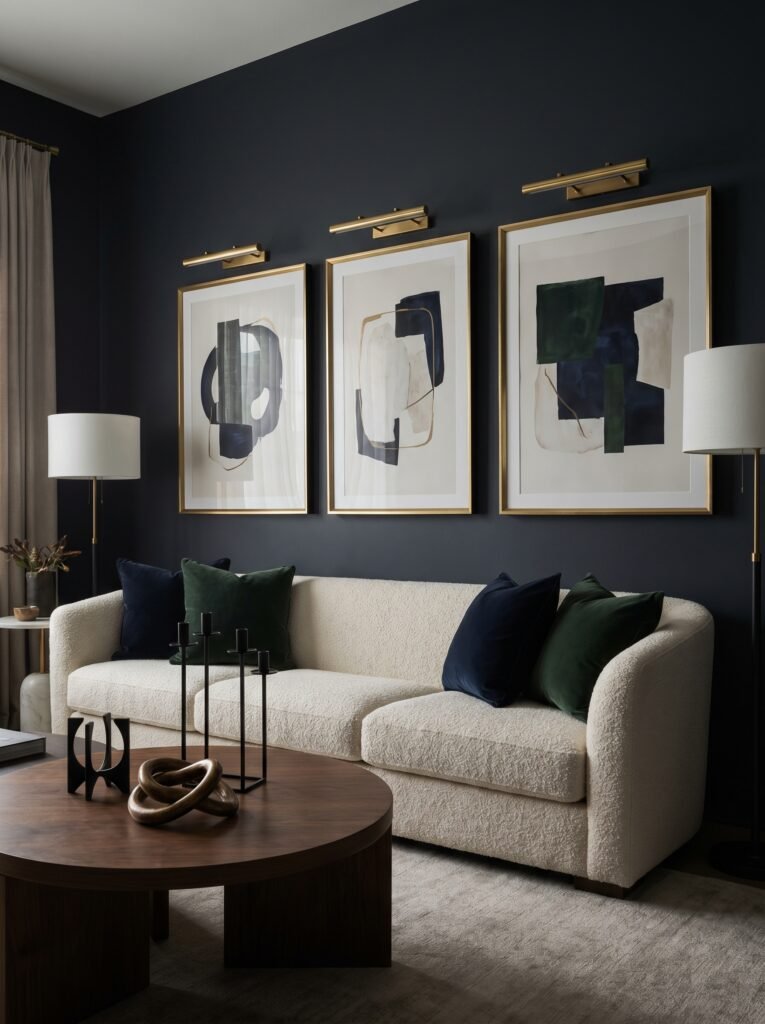
Mirrors are one of the most underutilized tools in wall decor, and interior designers will tell you this without hesitation. A well-placed mirror doesn’t just reflect light — it amplifies it, doubles the perceived depth of a room, and adds a sculptural quality that few other wall pieces can achieve.
In a smaller living room, a large mirror leaned against the main wall (rather than mounted, for a more relaxed look) can make the space feel dramatically larger. A cluster of vintage mirrors in varied shapes and sizes creates a collected, eclectic aesthetic that works beautifully in bohemian, maximalist, or transitional spaces. A single oversized round mirror above a console table or sofa has a calming, grounding presence that never goes out of style.
When choosing mirror frames, think about the rest of your room’s metal and wood tones. Gold and brass frames warm up neutral spaces. Black frames add graphic punch and modern edge. Ornate, antique frames bring a sense of history and character that contemporary rooms often desperately need.
—
7. Shelving as an Art Form — When Functional Becomes Beautiful
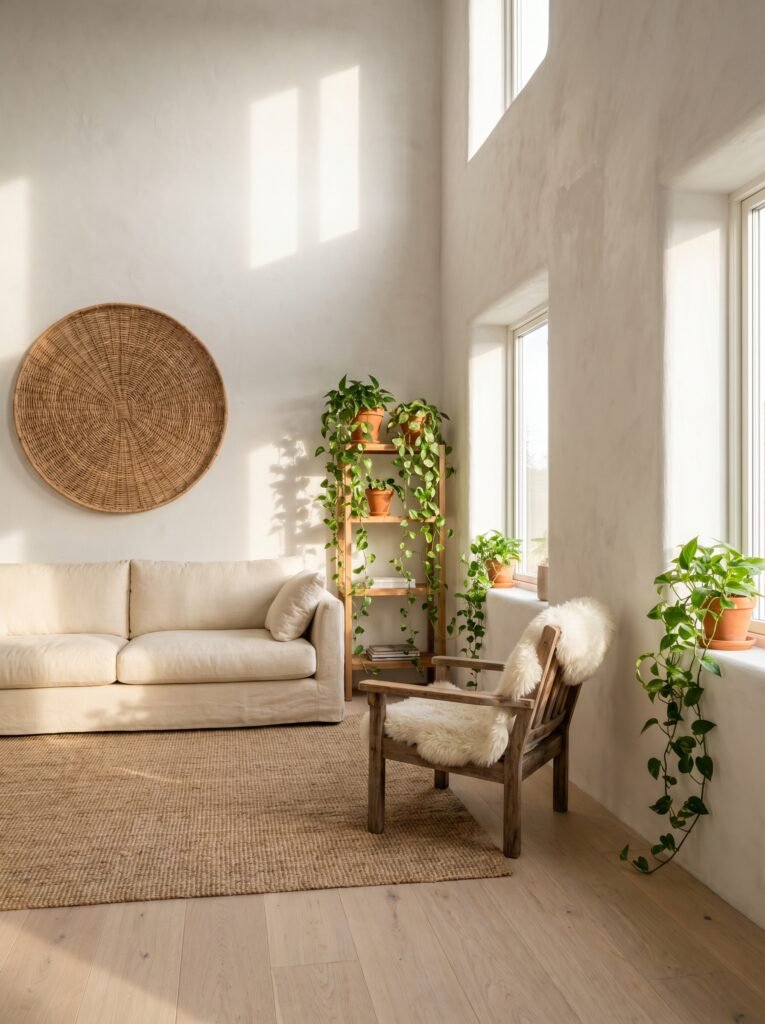
Open shelving on living room walls is having a long, well-deserved moment — and it’s not hard to understand why. When styled thoughtfully, floating shelves become a curated display of everything that makes your home yours: the travel souvenir, the stack of dog-eared novels, the small potted plant, the framed photo that makes you smile without even trying.
The key to shelves that feel intentional rather than cluttered is the rule of negative space. Not every inch needs to be filled. In fact, leaving deliberate gaps between objects lets each piece breathe and be noticed. Group items in odd numbers — threes and fives feel naturally balanced to the human eye. Vary the heights within each grouping, mixing tall with short, wide with narrow.
And don’t underestimate the power of greenery. A single trailing pothos or a small succulent on a shelf does something that no manufactured object can replicate — it brings life, literally, to your walls.
—
8. Wallpaper and Wall Murals — The Bold Move That Transforms Everything
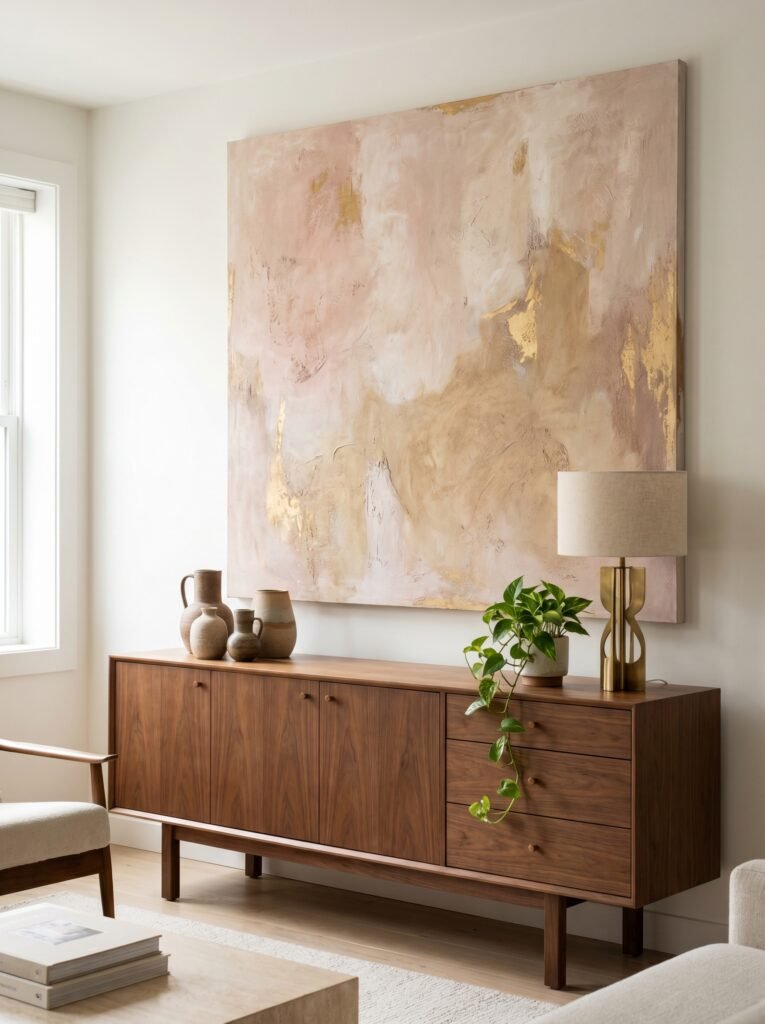
Wallpaper had a long, unfair reputation as something outdated — something your grandmother had, patterned with faded roses and peeling at the seams. But modern wallpaper is an entirely different creature, and it has transformed the possibilities of living room walls in ways that paint simply cannot.
An accent wall in a richly patterned botanical wallpaper creates instant drama and intimacy. A hand-painted mural wall — whether a soft forest scene, an abstract color wash, or a detailed cityscape — turns your living room into something genuinely singular, a space that exists nowhere else in the world. Removable wallpaper panels have made this option accessible even to renters, which means that bold, beautiful walls are no longer a homeowner’s privilege.
“A wallpapered wall isn’t just a design choice — it’s a commitment to living in a space that makes you feel something.”
If you’re nervous about going bold, start with a single wall — the one your sofa faces, or the one behind your television. Even one wall in a dramatic print or color can shift the entire energy of a room.
—
9. Budget-Friendly Wall Decor Ideas That Look Genuinely Expensive
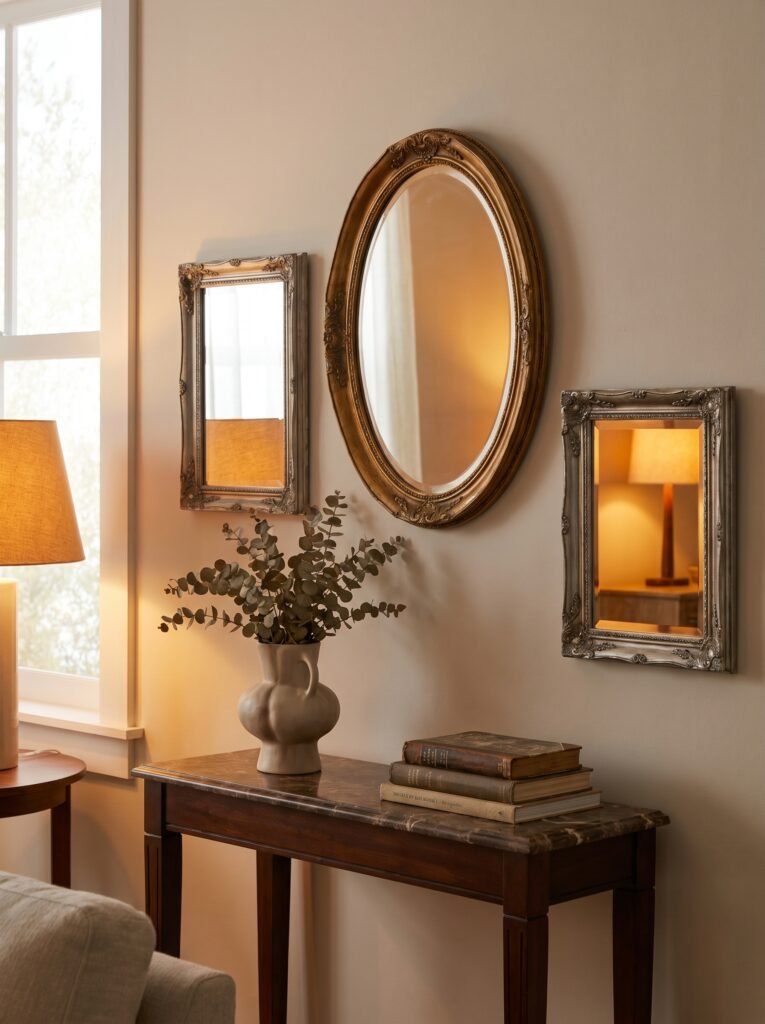
Here’s something the interior design world doesn’t always admit loudly enough: beautiful living room walls don’t require a large budget. They require creativity, patience, and an eye for what actually makes a space feel elevated — and spoiler alert, that thing is almost never price.
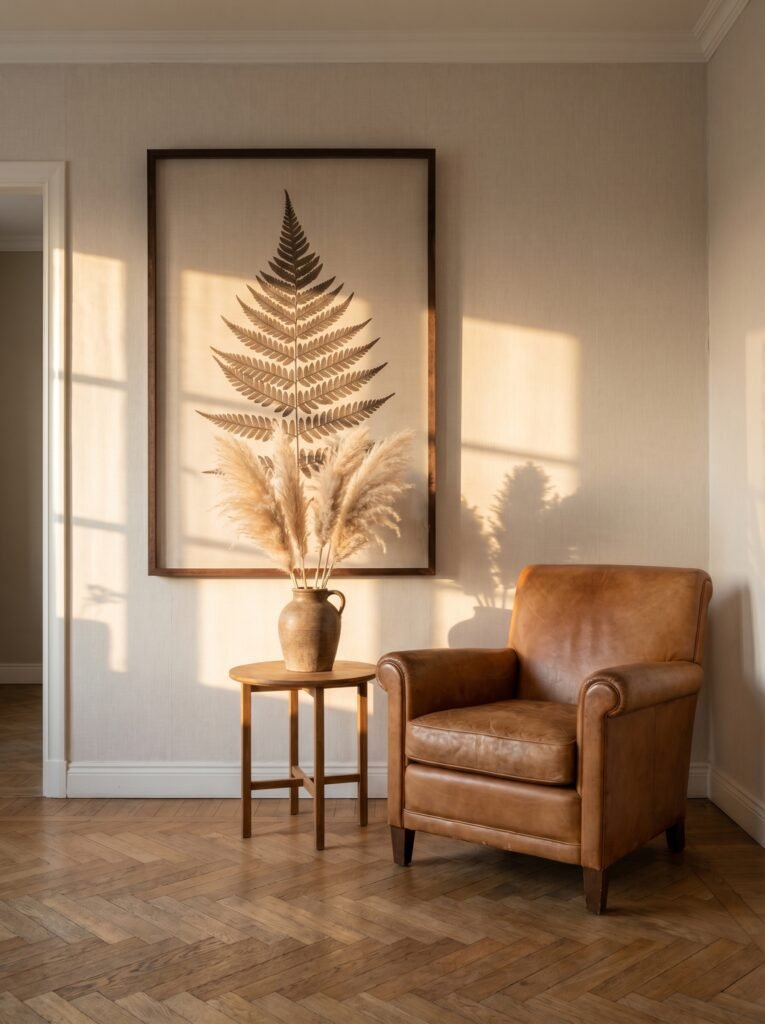
Thrift stores, estate sales, and vintage markets are goldmines for old frames, which you can paint to match any aesthetic. Print free or inexpensive digital art in large format at a local print shop and frame it yourself. Dried pampas grass or eucalyptus bundles hung on a simple wooden dowel create a bohemian wall feature that costs almost nothing. A large piece of fabric or a vintage textile, stretched over a canvas frame, becomes original art that tells a story.
The spaces that feel most designed are rarely the most expensive. They’re the most considered — filled with pieces that were chosen with genuine thought rather than purchased in a hurry to fill a gap.
—
10. Living Room Walls for Small Spaces — Big Ideas for Compact Rooms
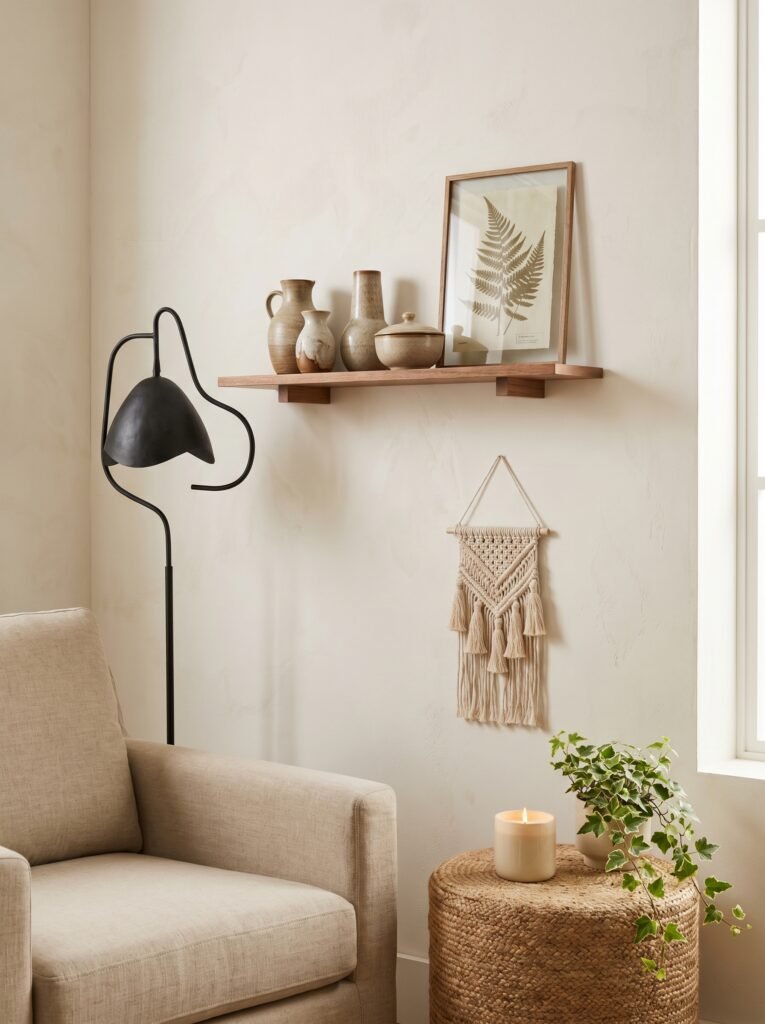
Small living rooms present a unique wall decor challenge: you want to add personality and depth without overwhelming a space that already has limited breathing room. The good news is that the right wall decor choices can actually make a small room feel significantly larger.
Vertical arrangements draw the eye upward, which makes ceilings feel higher and rooms feel taller. A tall, narrow piece of art — or a vertical gallery wall arrangement — exploits this effect beautifully. Light-reflecting elements like mirrors and metallic-framed art bounce natural light around a small room, softening its edges and expanding its perceived size.
Avoid overcrowding walls in a small space. Three well-chosen, well-spaced pieces will always feel more sophisticated than a dozen things competing for attention. In small spaces especially, restraint is a form of confidence.
—
11. Seasonal and Rotating Wall Decor — A Living Room That Evolves With You
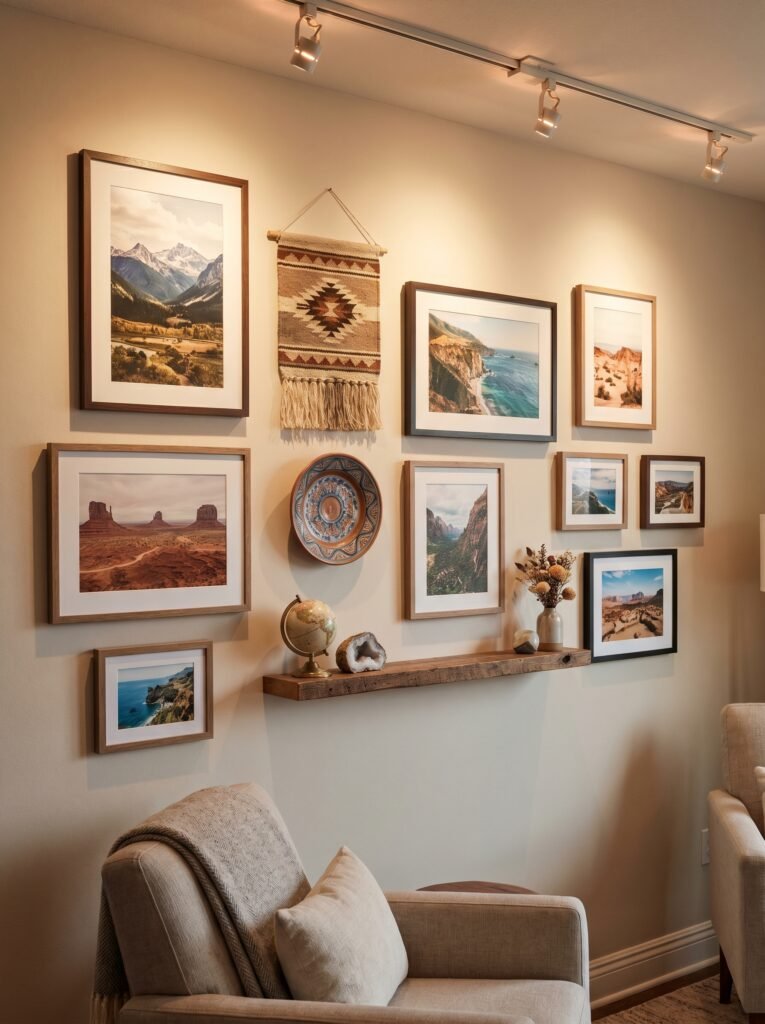
One of the most liberating ideas in interior design is this: your walls don’t have to be permanent. The most beautifully decorated living rooms are often the ones that change — slowly, seasonally, organically — as the people inside them change too.
Consider building a flexible wall system: a few permanent anchors (a large mirror, a significant piece of art, floating shelves) that stay in place, surrounded by smaller pieces that rotate. In autumn, you might add a warm, rust-toned print and a dried flower arrangement. In winter, something more cozy and minimal. In spring, something fresh and botanical. This approach keeps your living room feeling current without ever feeling like it needs a complete overhaul.
Rotating smaller wall pieces is also a wonderful way to display more of the art, photos, and objects you love — rather than keeping most of them packed away in a closet because there simply isn’t enough wall space.
—
12. The Feeling You’re Really Decorating For — And How to Find It
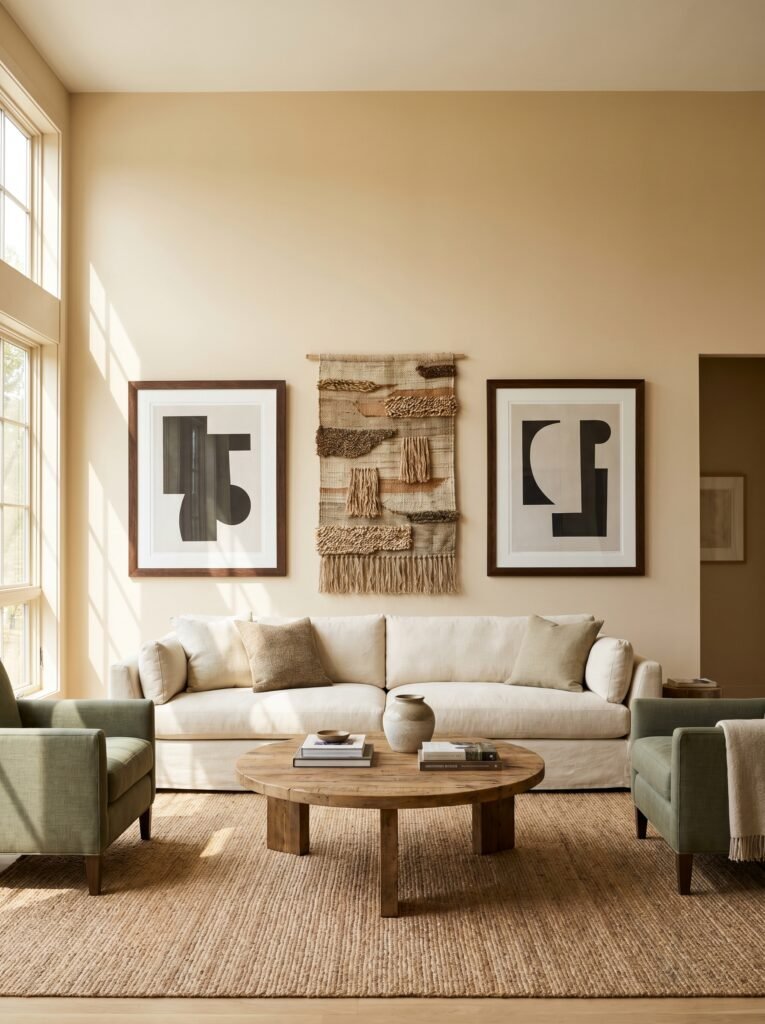
Here’s the question that most living room wall decor guides never ask, and it might be the most important one of all: how do you want to feel when you’re in this room? Not how do you want it to look — how do you want to feel?
Cozy and held? Choose warm tones, layered textures, soft lighting, and art that feels familiar and intimate. Inspired and energized? Choose bold color, graphic art, and unexpected combinations that keep your eyes moving. Calm and restored? Choose natural materials, muted colors, minimal layering, and art that has stillness in it.
Every wall decor decision — the color, the scale, the medium, the arrangement — is ultimately in service of this feeling. When you know what you’re decorating for emotionally, every choice becomes clearer, more confident, and more right. Your living room walls become less of a design problem to solve and more of a language you’re learning to speak.
—
🌿 How to Take Care of Your Living Room Wall Decor
Good wall decor isn’t just about choosing the right pieces — it’s about maintaining them so they continue to feel intentional and fresh over time.
Dust frames and wall hangings regularly with a soft microfiber cloth. Avoid using harsh sprays near framed art, as moisture and chemicals can damage prints and canvases over time. For textile pieces like macramé or woven hangings, a gentle shake outdoors every few weeks keeps them looking clean and lively. Rotate any art that hangs in direct sunlight periodically, as UV exposure fades prints faster than most people expect. And every six months or so, step back and look at your walls with fresh eyes — sometimes a small rearrangement is all it takes to make a familiar space feel entirely new again.
—
❓ FAQ
Q: How high should I hang pictures on my living room wall? A: The general rule is to hang art so its center sits at eye level, which is typically around 57–60 inches from the floor. When hanging art above a sofa, leave 6–8 inches of space between the top of the sofa and the bottom of the frame to keep the arrangement feeling connected and grounded.
Q: How do I make a small living room wall look bigger? A: Use mirrors strategically to reflect light and depth, choose vertical arrangements to draw the eye upward, and resist the urge to overcrowd the space. A few large-scale, well-spaced pieces will always make a small room feel more open than many small pieces crowded together.
Q: Can I mix different frame styles and materials on the same wall? A: Absolutely — in fact, mixing frame styles is often what gives a gallery wall its collected, personal character. The key is to find one unifying element to tie the arrangement together, whether that’s a consistent color palette within the artwork, a shared finish tone among the frames, or a cohesive theme running through the pieces you’ve chosen.
—
💭 Final Thought
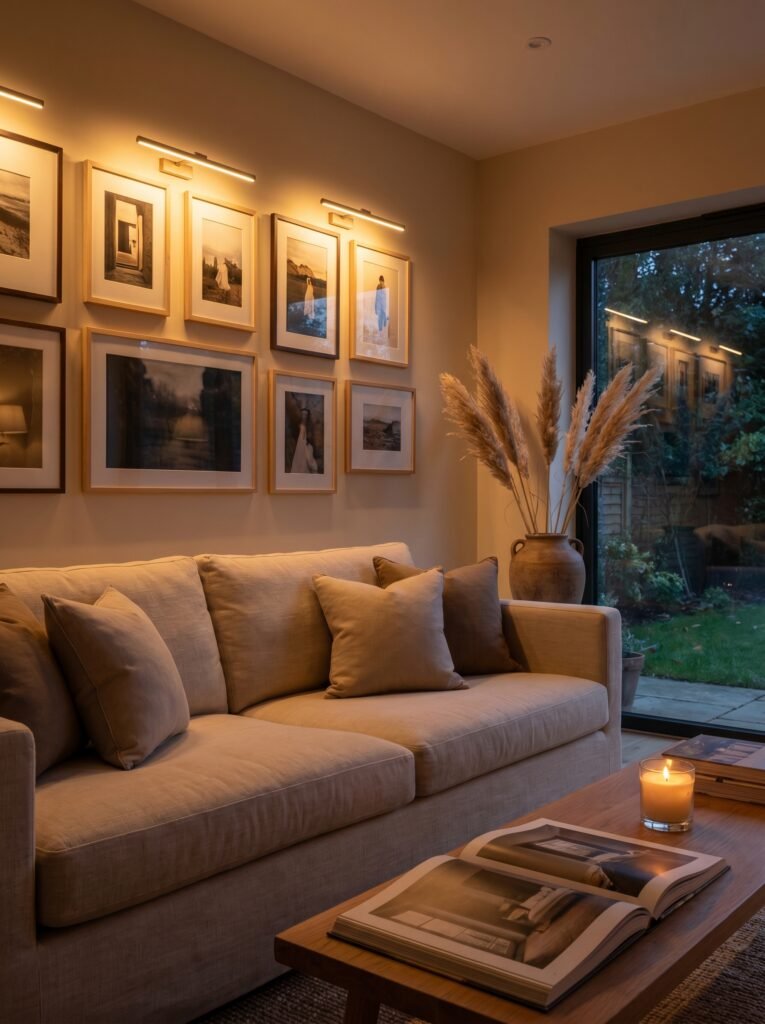
Your living room walls have been waiting — patiently, quietly — for you to decide what kind of home you want to live inside. Not the home from the magazine, not the home your neighbor has, but the one that makes you exhale the moment you walk through the door. The one that holds your story in its colors, textures, and carefully chosen frames.
Start with one wall. Start with one piece. Start with the question that matters most: how do I want to feel here?
Because when your walls finally answer that question back — what will they say?