Dark Floor Living Rooms That Feel Warm, Not Cold — And How to Get It Right
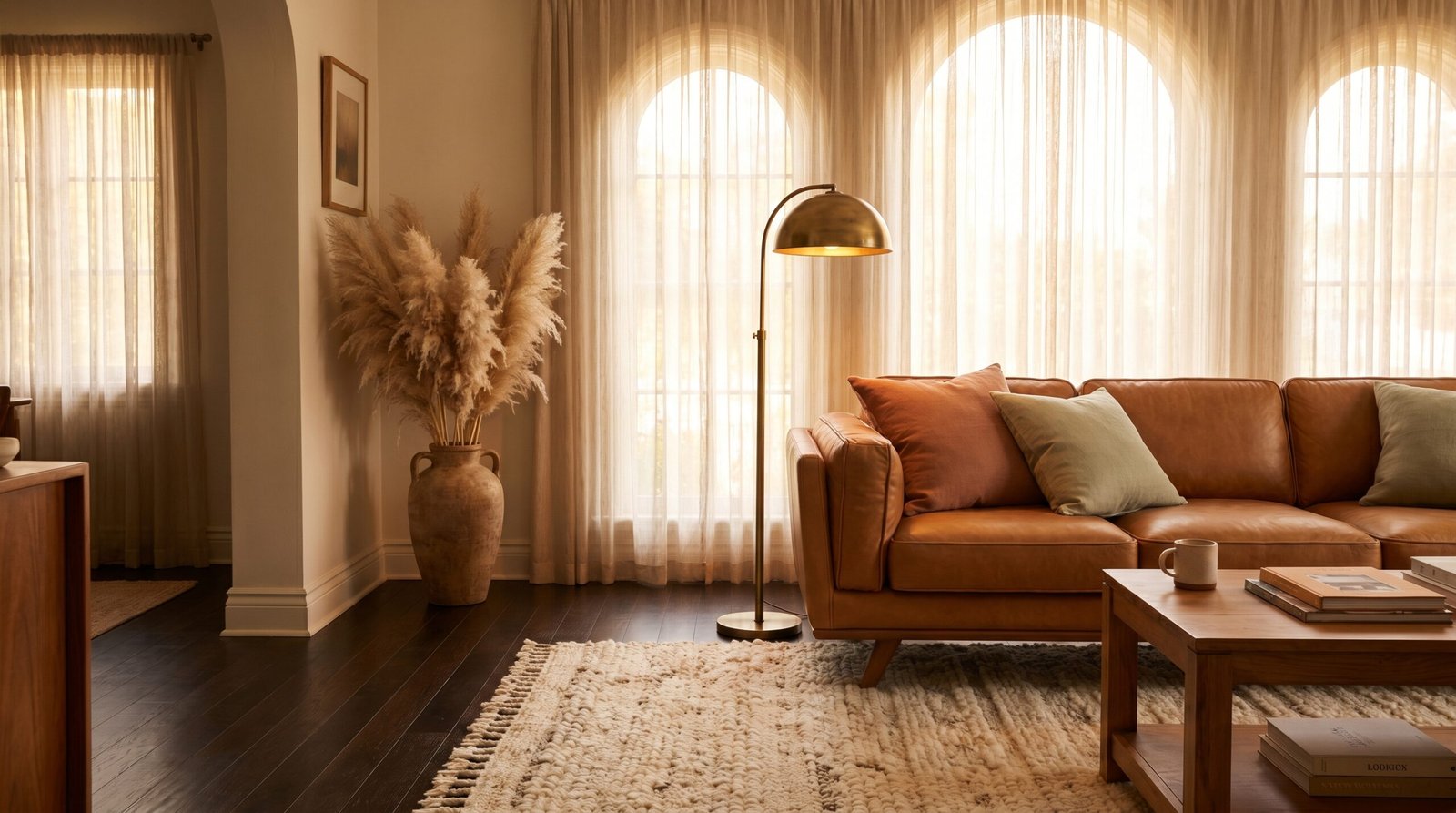
There’s something quietly magnetic about a living room with dark floors — the kind of space that wraps around you the moment you step inside, like a favorite sweater you’ve had for years. Done right, a dark floor doesn’t make a room feel heavy or gloomy; it makes it feel grounded, intentional, and deeply alive.
—
1. Why Dark Floors Are Having a Major Moment in Interior Design
Walk through any beautifully curated home on Pinterest right now, and you’ll notice something: dark floors keep appearing. Espresso hardwood, deep charcoal slate, rich walnut — they’re everywhere, and for good reason. We’ve been living in a world of bleached oak and pale grey for the better part of a decade, and as beautiful as those lighter floors are, there’s a growing hunger for something warmer, moodier, more personal.
Dark floors create what designers call a “visual anchor.” That simply means they give the eye somewhere to land — a foundation that makes everything sitting above it feel deliberate and curated rather than scattered. Think about how a painter uses a dark canvas as a backdrop to make colors pop. Your dark floor does the same thing for your furniture, your textiles, your light.
“A dark floor doesn’t compete with your decor — it elevates it.”
The shift toward dark floors also reflects a broader cultural moment. People are craving homes that feel cozy and intentional over rooms that feel staged. Dark floors deliver exactly that kind of lived-in warmth.
2. The Most Beautiful Dark Floor Colors and What Each One Brings to a Room
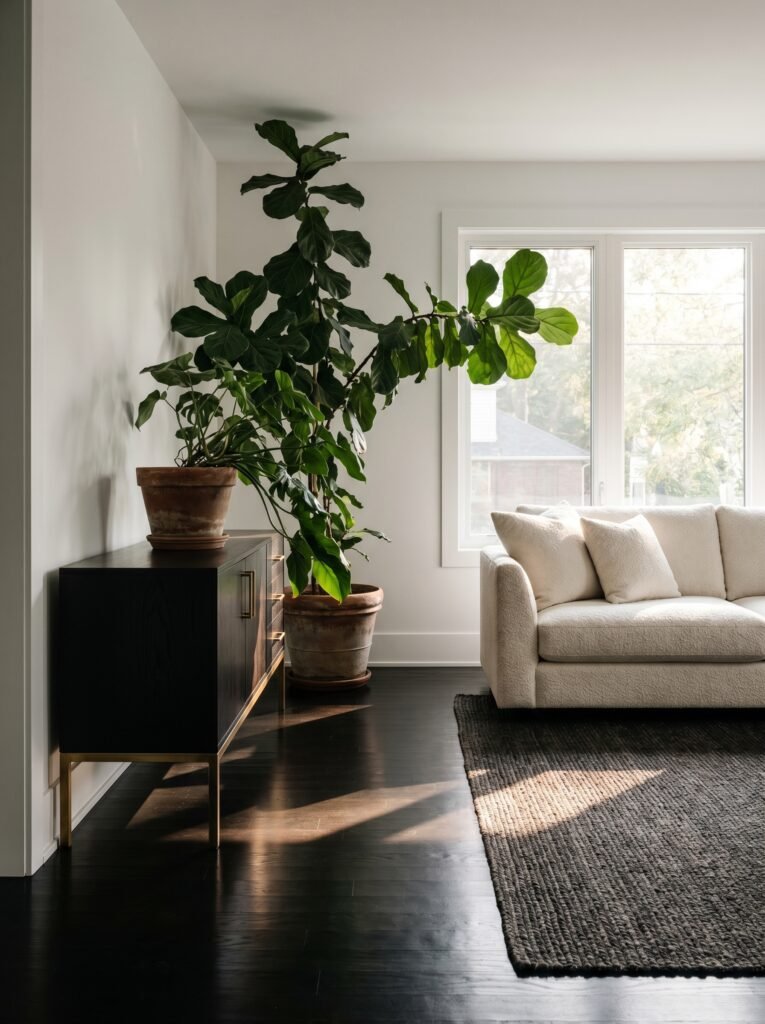
Not all dark floors are created equal. A near-black ebony floor creates a completely different atmosphere than a warm cognac-tinted walnut, even though both fall under the broad umbrella of “dark.” Knowing the undertones of your floor is the first step to building a living room that sings.
Ebony and near-black floors are the most dramatic choice. They lean cool and sophisticated, pairing beautifully with white walls, warm brass hardware, and soft linen textures. They demand confidence in the design, but when styled with care, they create some of the most stunning living rooms you’ll ever photograph.
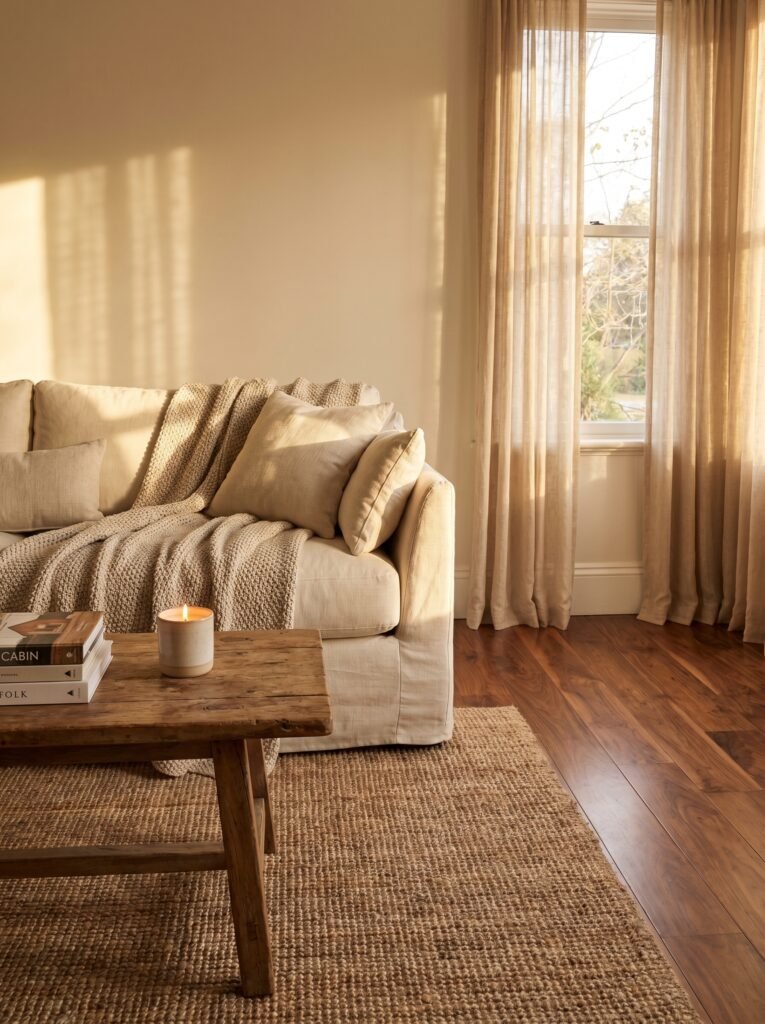
Walnut and dark brown floors with warm red or orange undertones bring an almost cottage-like richness to a space. They feel organic, earthy, and deeply welcoming — especially when paired with cream, rust, or forest green. These are the floors that make a room smell like firewood even in July.
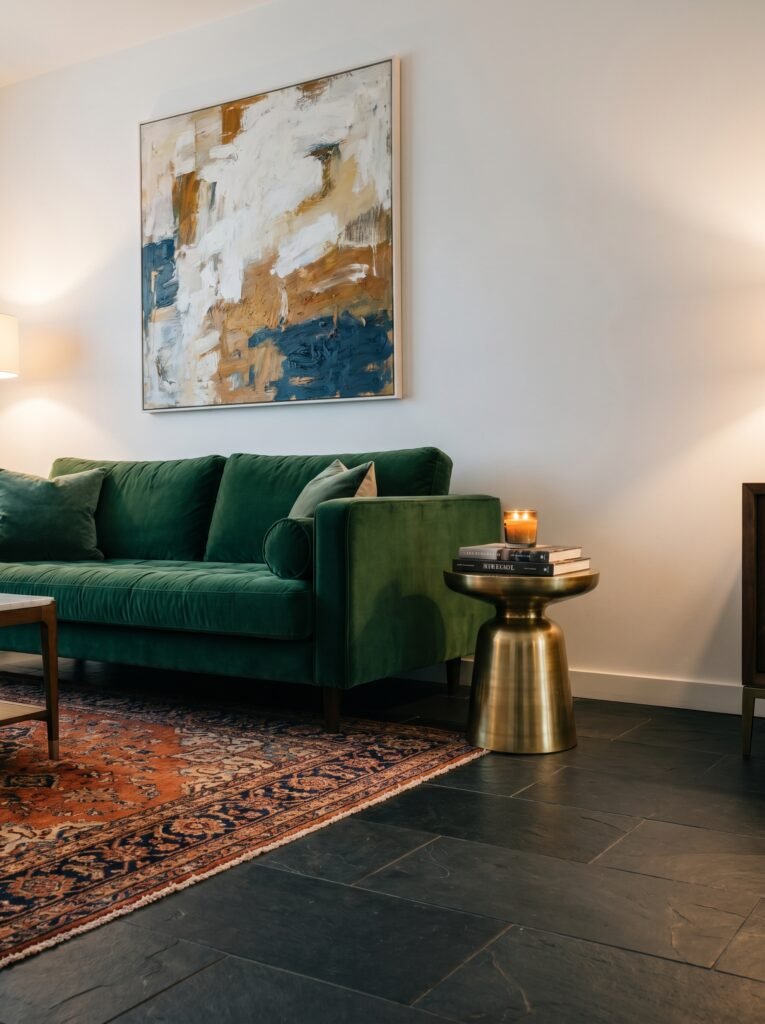
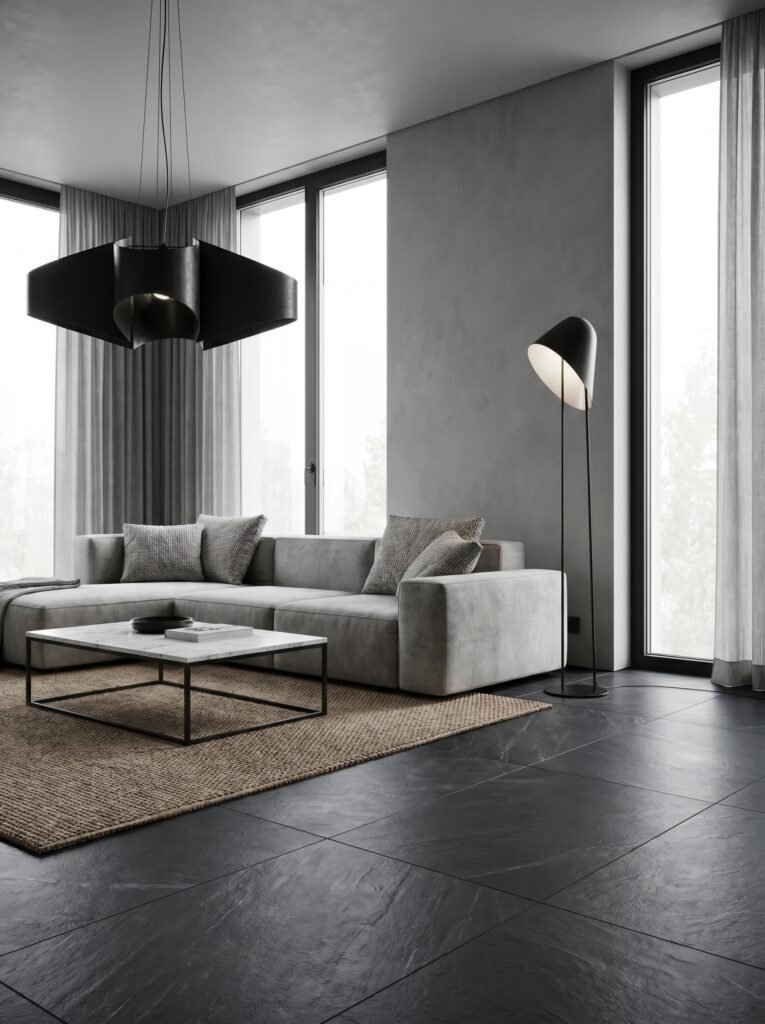
Charcoal and dark grey floors, particularly in slate or stone tile, bring an urban, editorial edge. They work brilliantly in modern minimalist spaces and pair effortlessly with concrete-look furniture, clean-lined sofas, and dramatic pendant lighting.
3. The Biggest Fear About Dark Floors — And Why It’s Almost Always Wrong
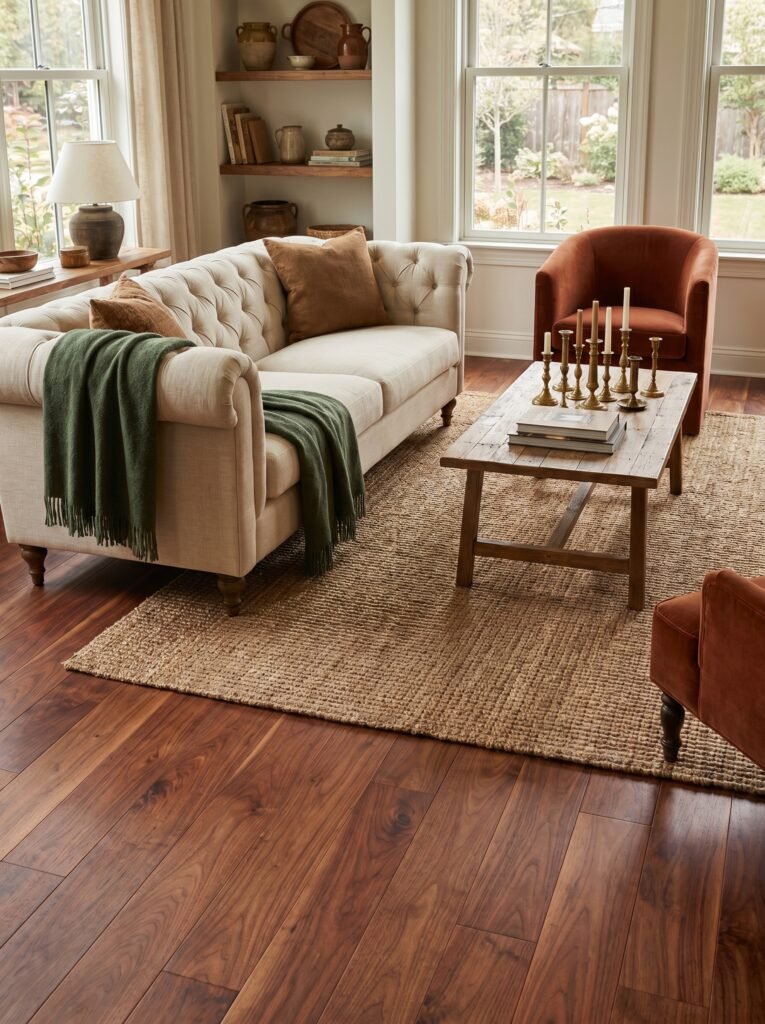
Ask anyone who hesitates before committing to dark floors and they’ll say the same thing: “Won’t it make the room feel smaller and darker?” It’s the most common concern, and it’s worth addressing head-on because the answer is more nuanced than a simple yes or no.
Dark floors do absorb light rather than reflect it. That part is true. But what matters far more than the floor color is what you do with the walls, the lighting, and the layering above it. A dark floor in a room with low ceilings, dark walls, and no natural light can absolutely feel cave-like. But a dark floor in a room with warm white walls, generous windows, and layered lighting? That’s a room that feels like a retreat — intimate without being oppressive.
The key insight is this: dark floors ground a space, but everything above them creates the mood. You control that entirely.
4. The Wall Color That Makes a Dark Floor Living Room Look Professionally Designed
If there’s a single design decision that separates a beautiful dark floor living room from one that just looks heavy, it’s the wall color. And the answer might surprise you — it’s not always white.
Warm whites and off-whites like Benjamin Moore’s White Dove or Sherwin-Williams’ Alabaster are classic pairings for dark floors because they create maximum contrast without feeling harsh. The warmth in the undertones keeps the room from feeling clinical.
Soft sage, dusty blush, and muted clay tones are even more interesting choices. These earthy mid-tones don’t fight the floor — they harmonize with it. They say “this room was put together with care” without screaming for attention. And they photograph beautifully, which matters when you’re creating content for Pinterest.
Deep jewel tones — a moody forest green, a soft navy, a dusty terracotta — can work wonderfully in dark floor living rooms if you lean all the way into the cozy, layered aesthetic. The trick is balancing depth with light through lamps, mirrors, and pale textiles.
5. Furniture Colors That Create Magic on Dark Floors
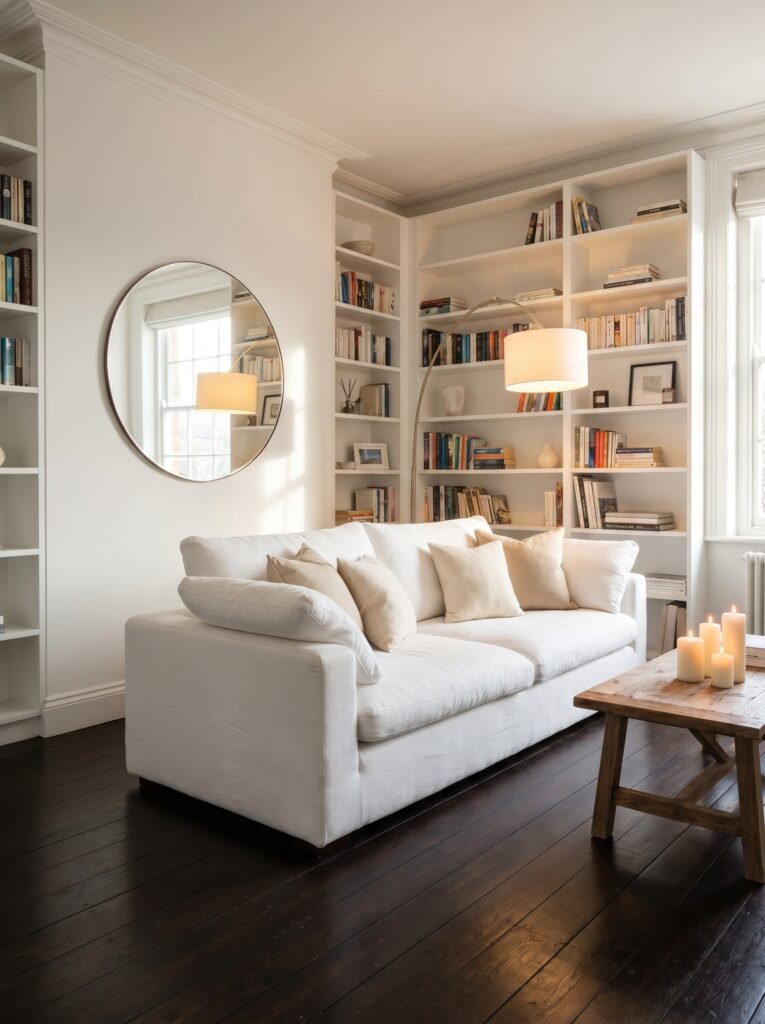
Here’s where the fun begins. Dark floors are genuinely one of the easiest foundations to furnish because the contrast they create allows almost any furniture color to look intentional. But there are combinations that go beyond “works fine” to “this looks like a magazine spread.”
Cream and camel-toned sofas on dark floors are perhaps the most timeless pairing in interior design. The warmth of a camel sofa against espresso hardwood is the visual equivalent of a good cup of coffee — familiar, comforting, and somehow always right.
Velvet furniture in deep jewel tones — forest green, burnt ochre, midnight blue — takes on an almost glowing quality when placed on dark flooring. The floor recedes, and the velvet pops forward with remarkable richness.
Natural wood furniture in a lighter tone than the floor creates beautiful tonal contrast. A blonde oak coffee table on a walnut floor reads as layered and thoughtful rather than matchy-matchy. Interior designers call this “tonal stepping” — moving between shades of the same family rather than matching exactly.
“On a dark floor, everything you place down becomes the star of the show.”
6. The Role of Rugs — Why They’re Non-Negotiable in Dark Floor Living Rooms
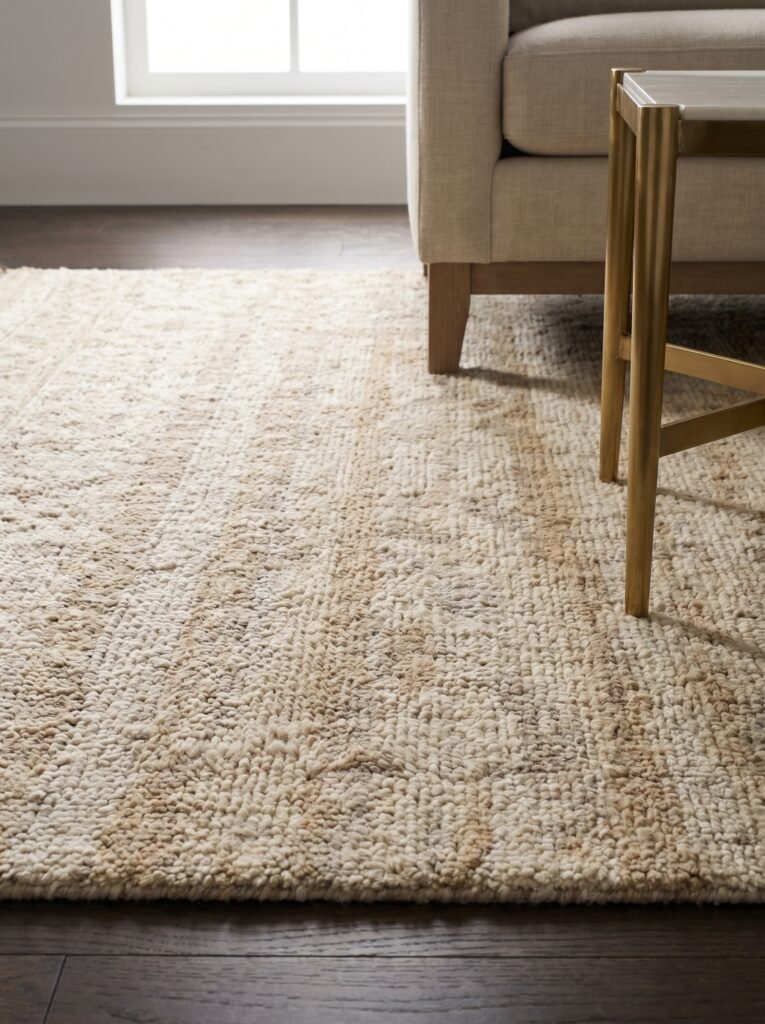
A rug isn’t just a decorative afterthought in a dark floor living room — it’s a structural design element. It defines the seating area, adds warmth underfoot, and creates a visual “room within a room” that makes large open spaces feel more intimate.
In a dark floor living room, rugs do something extra: they break up the visual weight of the floor and introduce texture, pattern, and color at eye level. A large, plush area rug in a warm neutral or a soft pattern becomes the emotional heart of the space.
Persian and oriental rugs are extraordinarily beautiful on dark floors. The deep reds, blues, and golds in a traditional rug create a layered richness that feels collected and personal rather than designed. Pair it with a linen sofa and wooden side tables and you have a room that looks like it was put together over years rather than a single shopping trip.
Jute and sisal rugs in natural tones are the casual, breezy counterpoint to a dramatic dark floor. They bring an organic texture that softens the room without competing with anything else. For a relaxed, sun-drenched aesthetic, this combination is hard to beat.
7. Lighting Is Everything — Here’s How to Use It Strategically

This is where dark floor living rooms often succeed or fail, and it comes down to one principle: layer your light. A single overhead fixture in a room with dark floors will create shadows and a flat, uninviting atmosphere. Multiple light sources at different heights will transform the same room into something warm and dimensional.
Floor lamps placed in corners create pools of light that push back against the darkness of the floor and make the room feel expansive. Table lamps on side tables and console tables bring light down to furniture level, creating intimacy. Under-shelf lighting or LED strips along skirting boards — used subtly — make the floor itself glow, creating a visual effect that is genuinely stunning in photographs.
Candlelight and the warm glow of dimmers add that final, irreplaceable human quality to a dark floor living room. There is no lighting technology that fully replaces the way a lit candle makes a room feel — especially in a space that already leans moody and intimate.
8. How to Make a Small Living Room with Dark Floors Feel Bigger
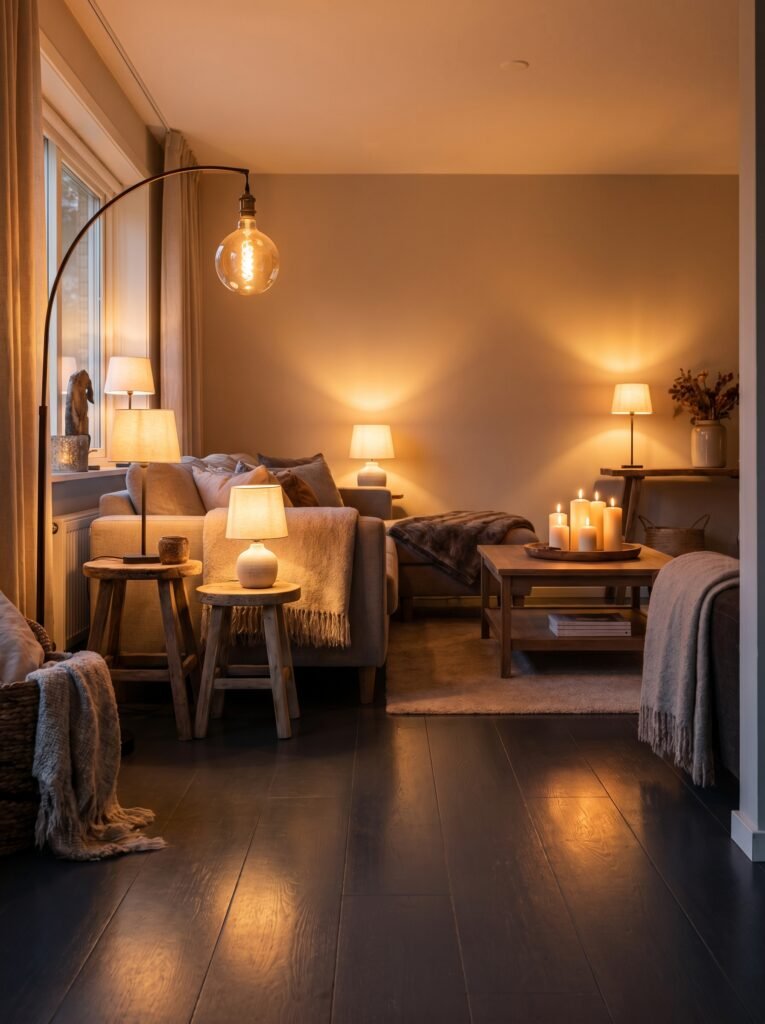
Small rooms and dark floors can absolutely coexist beautifully, but they require a more considered approach. The goal is to create the sensation of space without sacrificing the warmth and drama that made you choose dark floors in the first place.
Mirrors are your most powerful tool. A large mirror — especially one leaned casually against a wall rather than hung formally — reflects light and creates the illusion of depth. In a small dark floor living room, a well-placed mirror can visually double the perceived size of the space.
Keep furniture legs visible wherever possible. Sofas and chairs raised on slender legs allow you to see the floor beneath, which paradoxically makes the room feel larger. Skirted furniture that hides the floor creates visual weight; raised furniture lets the floor breathe.
Choose a monochromatic palette for the walls, larger textiles, and upholstery. When the colors above the floor are closely related, the eye moves through the space more smoothly, creating a sense of continuity that reads as spaciousness.
9. The Art of Styling Dark Floor Living Rooms for Pinterest Photography
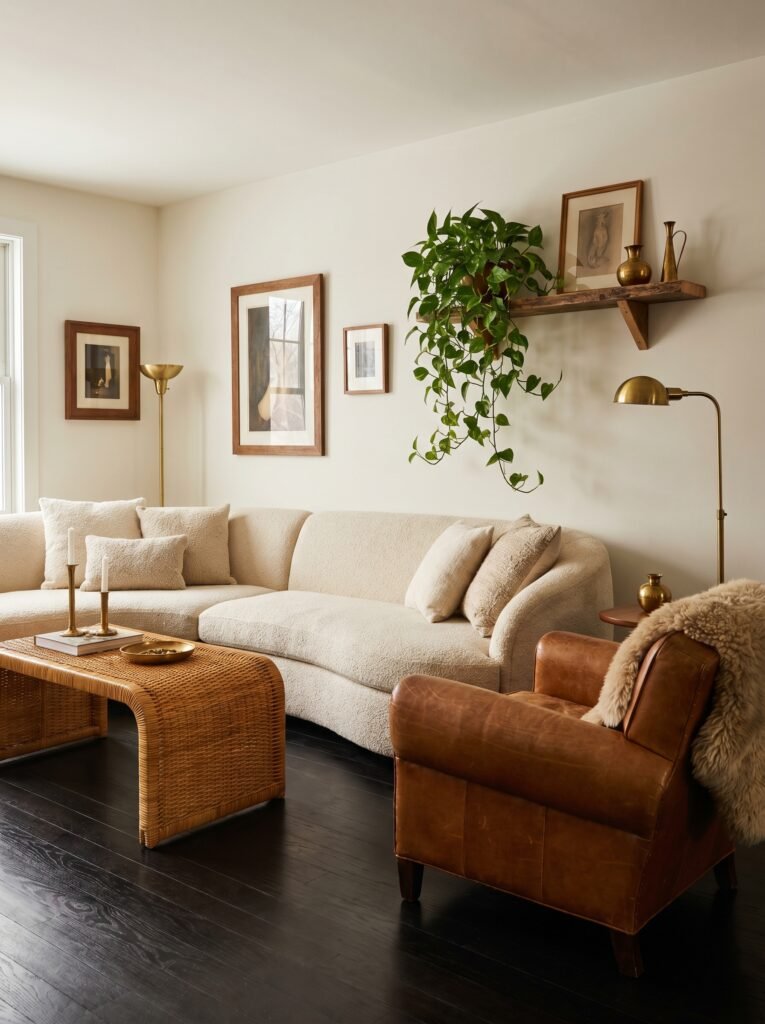
If you’re creating content for Pinterest, a dark floor living room is a genuinely extraordinary subject because it photographs with natural drama and depth. But there are specific styling choices that make the difference between a scroll-stopping image and one that disappears into the feed.
Shoot during golden hour whenever possible. The warm, angled light of early morning or late afternoon rakes across dark floors and reveals their texture in a way that feels almost painterly. That’s the quality of light that makes people stop scrolling and reach for the save button.
Use light-colored props deliberately. A stack of cream-spined books, a linen throw casually draped over a dark sofa arm, a white ceramic vase — these small pops of light against the dark floor create focal points that draw the eye through the image naturally.
“Your dark floor is the drama. Style everything else to be the poetry.”
10. Seasonal Styling: How Dark Floors Look Extraordinary All Year Round
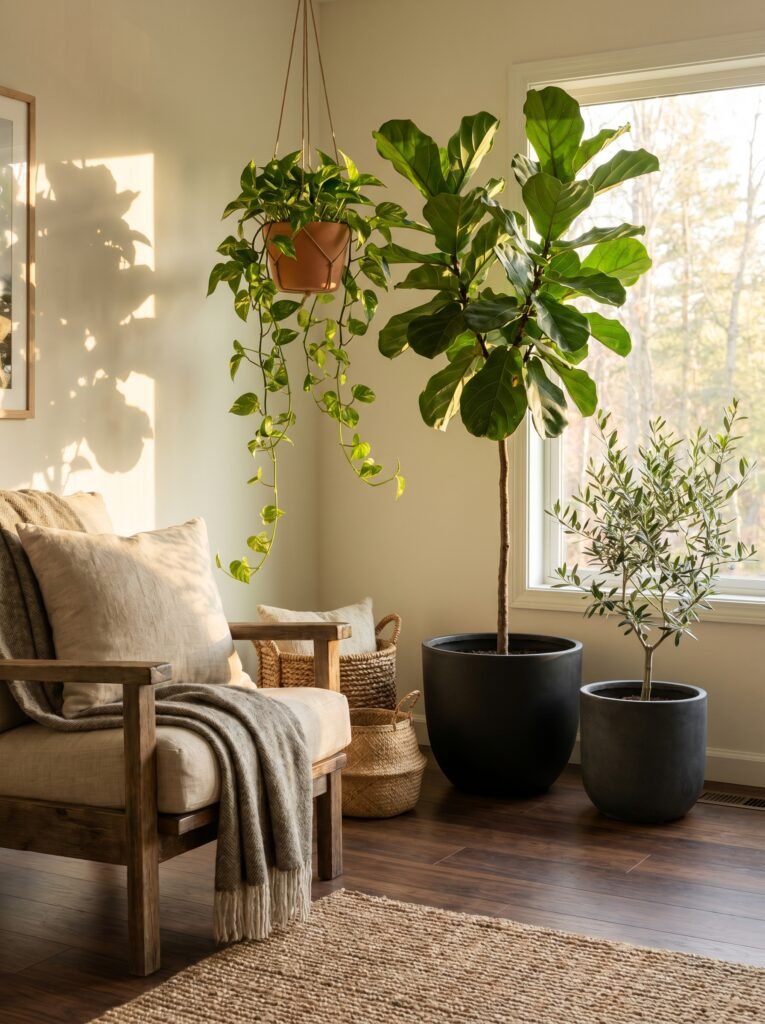
One of the quiet joys of having dark floors is how seamlessly they adapt to seasonal decor shifts. Unlike pale floors that can look cold in winter and washed-out in summer, dark floors create a consistent, warm backdrop that makes seasonal styling feel genuinely transformative.
In autumn and winter, lean into the richness of the floor with warm amber lighting, layered throw blankets in rust and ochre, dried botanicals, and candles in deep, resinous scents. The dark floor becomes the foundation for a cocoon-like interior that is almost irresistibly cozy.
In spring and summer, bring in soft linen, fresh greenery, and pastel or natural tones. Against dark floors, these light elements pop with remarkable freshness. The contrast between the grounded darkness below and the airy brightness above creates a kind of visual tension that photographs beautifully and feels genuinely uplifting to live in.
11. Common Styling Mistakes That Make Dark Floor Living Rooms Look Off
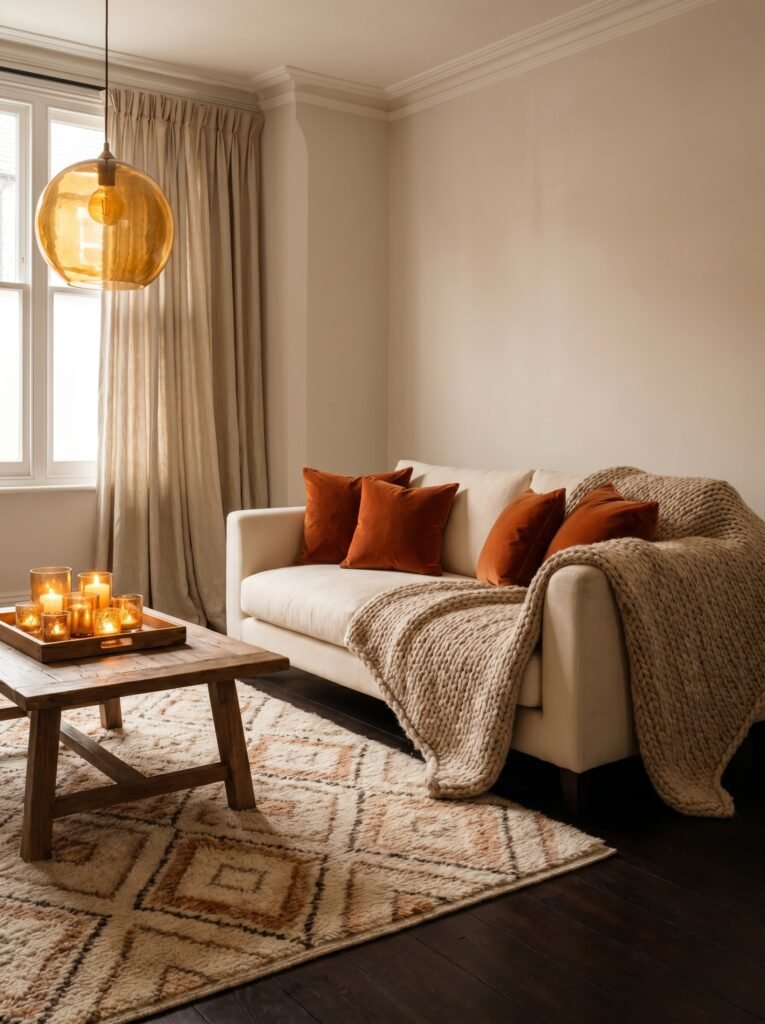
Even the most beautiful dark floor can be undermined by a few missteps — and most of them are easy to avoid once you know what to look for. The most common mistake is too much visual weight throughout the entire room. Dark floors work best when they’re the heaviest element in the space. If you pair them with dark walls, dark furniture, and dark textiles without relief, the room becomes oppressive rather than enveloping.
Another mistake is using cold-toned whites alongside warm dark floors. A stark, blue-white wall next to a warm walnut floor creates a jarring disconnect that makes both elements look worse, not better. Match the undertones — warm floor, warm white; cool grey floor, cooler neutral wall.
Finally, under-rugging is a frequent problem. A rug that’s too small floats disconnected from the furniture, making the arrangement look tentative and the floor look cluttered. Bigger rugs, placed so that at least the front legs of all seating pieces sit on them, create the cohesion that makes a room look truly finished.
12. Why Living with Dark Floors Changes the Way You Feel in Your Home
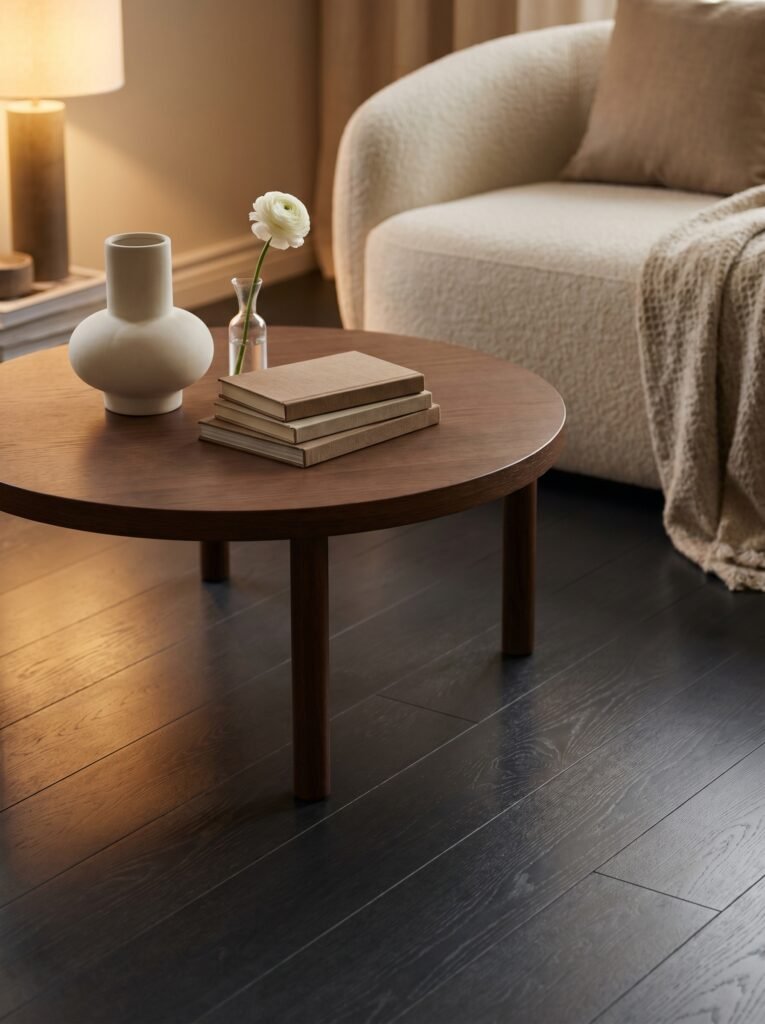
There’s something harder to quantify than color theory or lighting ratios — it’s the way a well-designed dark floor living room makes you feel over time. People who live with dark floors often describe their homes as feeling more settled, more intentional, more like themselves. There’s a groundedness that pale floors, for all their beauty, don’t quite deliver in the same way.
A dark floor says something quietly confident about the choices made in that room. It suggests that the person who lives there isn’t afraid of depth — literally or figuratively. And when you settle into a sofa above those rich, dark boards at the end of a long day, with a lamp glowing in the corner and something warm in your hands, you understand it in your body rather than just your eyes.
These are the rooms people photograph obsessively. More importantly, they’re the rooms people actually want to come home to.
—
🌿 How to Take Care of Your Dark Floors
Dark floors show dust and footprints more readily than lighter floors, which is one of the most honest things anyone will tell you about them — but maintaining them is simpler than people expect.
Sweep or dry-mop every few days with a microfiber mop rather than a broom, which can scatter fine dust rather than capture it. Microfiber picks up everything cleanly and keeps that deep, dark sheen looking intentional.
Use a pH-neutral hardwood or floor cleaner diluted in water for damp mopping — never saturate the floor, and always move in the direction of the wood grain. Excess moisture is the enemy of dark hardwood over time.
Place felt pads under all furniture legs without exception. Dark floors show scratches more visibly than light ones, and prevention takes five minutes while repair takes considerably longer.
Manage direct sunlight carefully. Prolonged UV exposure can fade and discolor dark hardwood unevenly, creating patchy lighter areas over time. Use light-filtering sheer curtains to soften but not block natural light.
Reapply a maintenance coat of floor finish every few years — your flooring retailer can advise on the right product for your specific floor type — and your dark floors will look as rich and beautiful as the day they were installed.
—
❓ FAQ
Q: Do dark floors make a living room look smaller? A: They can, but only if the rest of the room isn’t balanced thoughtfully. Dark floors with light walls, good layered lighting, and mirrors can actually feel spacious and airy. The floor is just one element — what you do above it determines the final feeling of the space.
Q: What’s the best rug color for a dark floor living room? A: Warm neutrals — cream, ivory, camel, soft terracotta — are consistently beautiful on dark floors because they create warmth and contrast simultaneously. Persian and vintage-style rugs with warm reds and golds are also exceptional choices that add character and personality.
Q: Are dark floors practical for families with kids and pets? A: They show dust and light pet hair more readily than very light floors, but they actually hide mud, darker debris, and certain stains better. The trade-off is manageable with regular microfiber mopping, and many families find the routine less demanding than they expected once they build the habit.
—
💭 Final Thought
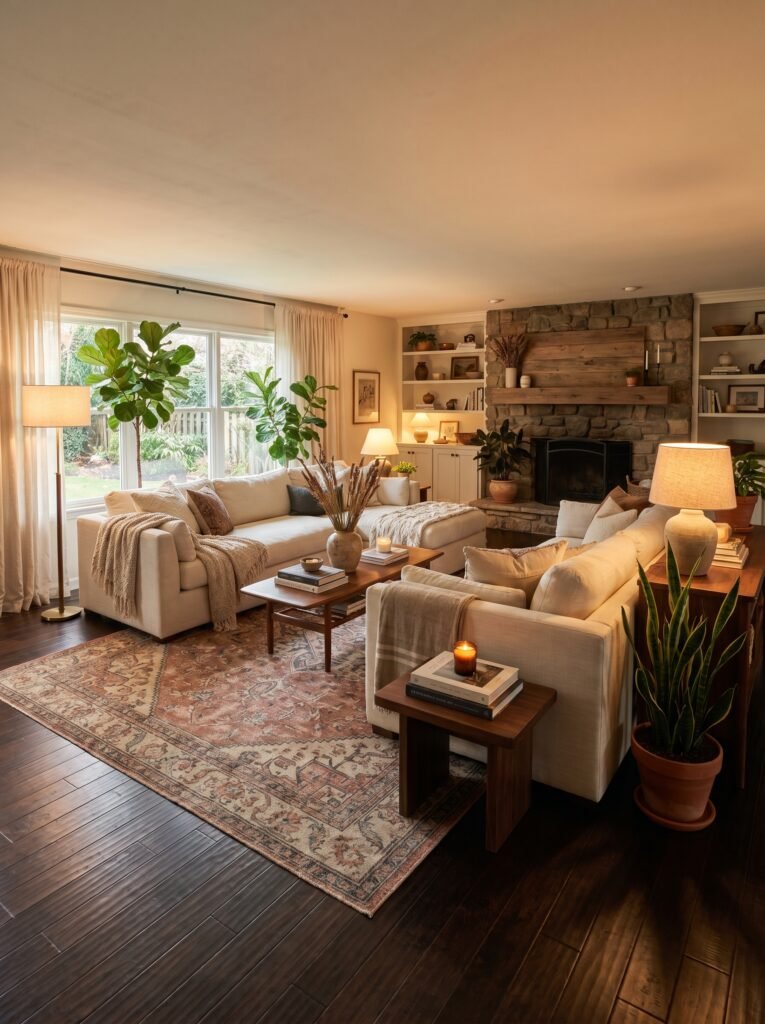
A dark floor living room isn’t just a design choice — it’s a feeling you choose to come home to every single day. It’s the decision to embrace depth, warmth, and the kind of beauty that only reveals itself slowly, in the right light, at the right hour.
Whether you’re starting from scratch or simply reconsidering the space you already have, the question worth sitting with is this: what do you want your home to feel like when the day is finally done?