The Living Room That Feels Like a Hug: Modern Rustic Ideas That Actually Work
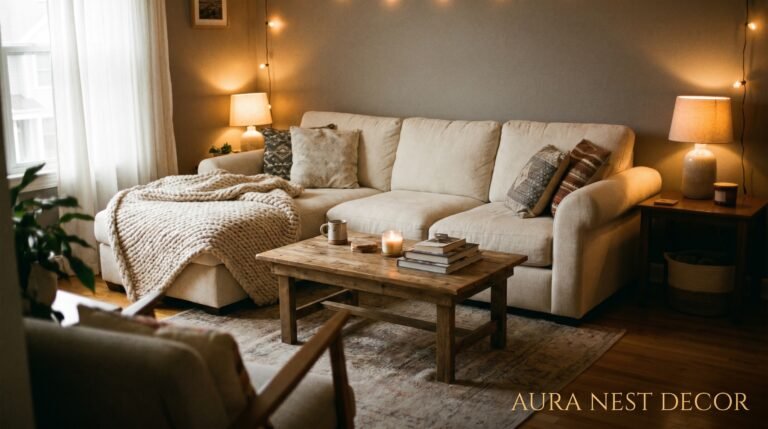
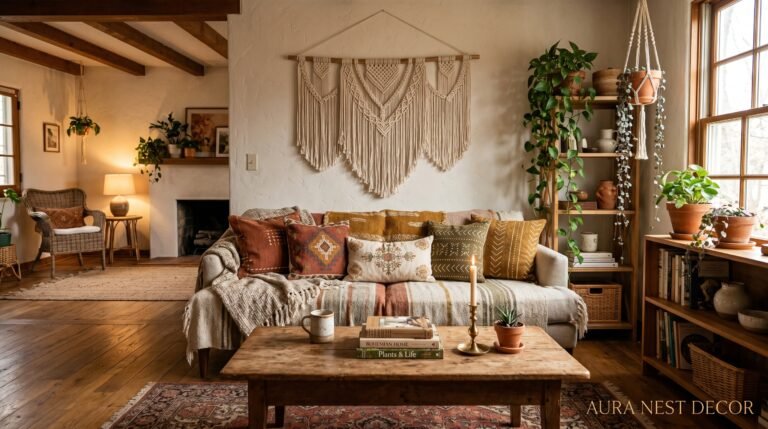
You walk in and something shifts. The tension in your shoulders loosens. There’s raw wood somewhere, probably linen, definitely a candle that’s been burned before — and yet the whole room feels considered, intentional, completely of the moment.
That’s modern rustic done right. Here’s how to get there.
—
1. Why Modern Rustic Hits Different Right Now (And It’s Not Just a Trend)
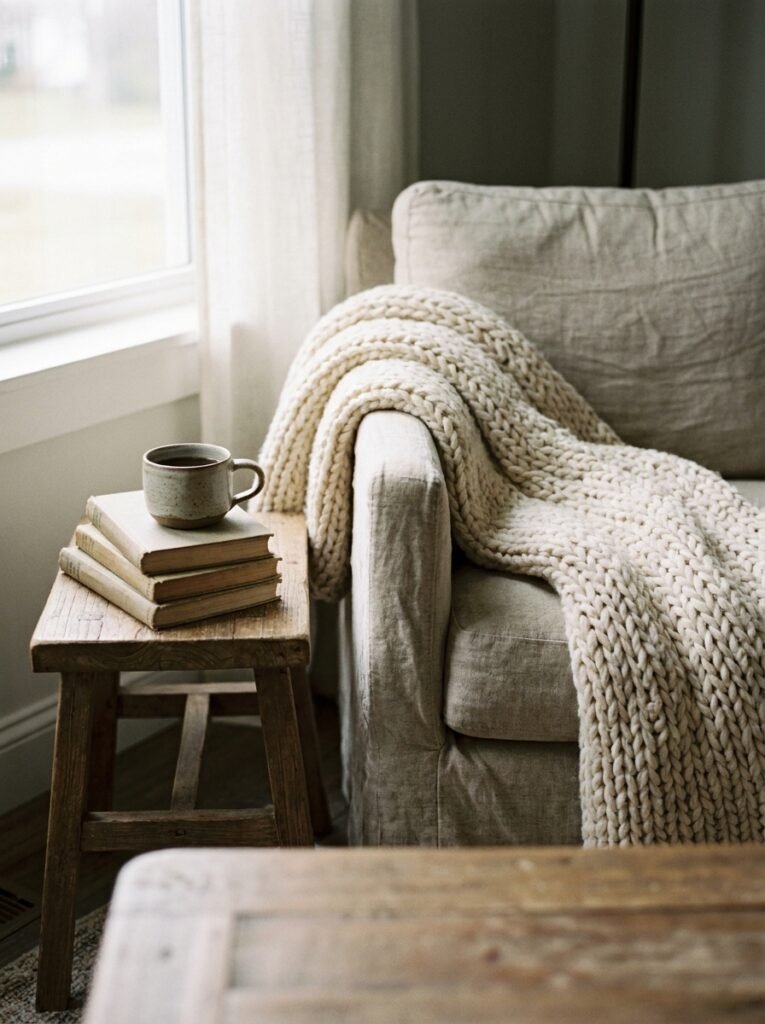
There’s something almost rebellious about wanting warmth in your home right now. Everything around us is sleek, digital, frictionless. And yet the most-saved living rooms on Pinterest — the ones that stop you mid-scroll — are the ones with texture you can practically feel through the screen.
Modern rustic isn’t farmhouse. Let’s get that out of the way immediately. It doesn’t involve shiplap on every surface or a sign that says “gather.” It’s something quieter and more grown-up than that. It’s the meeting point between the rough and the refined — a reclaimed wood coffee table sitting on a clean-lined concrete floor, a chunky knit throw folded over a sleek Scandi sofa, aged brass hardware on a cabinet that was built this decade.
The reason it works so well right now is that it feels earned. Not decorated, but lived in — and yet still beautiful. Americans are leaning into it because it pushes back against the cold minimalism that dominated the 2010s. British homeowners are drawn to it because it pairs so naturally with the older bones of their homes, the stone fireplaces, the original timber floors, the slightly imperfect walls that plaster can’t quite fix.
It says: someone thoughtful lives here. Someone who values things that last.
“Modern rustic is what happens when good taste stops trying to impress and starts trying to feel.”
2. The Wood That Does the Heavy Lifting in Any Modern Rustic Room
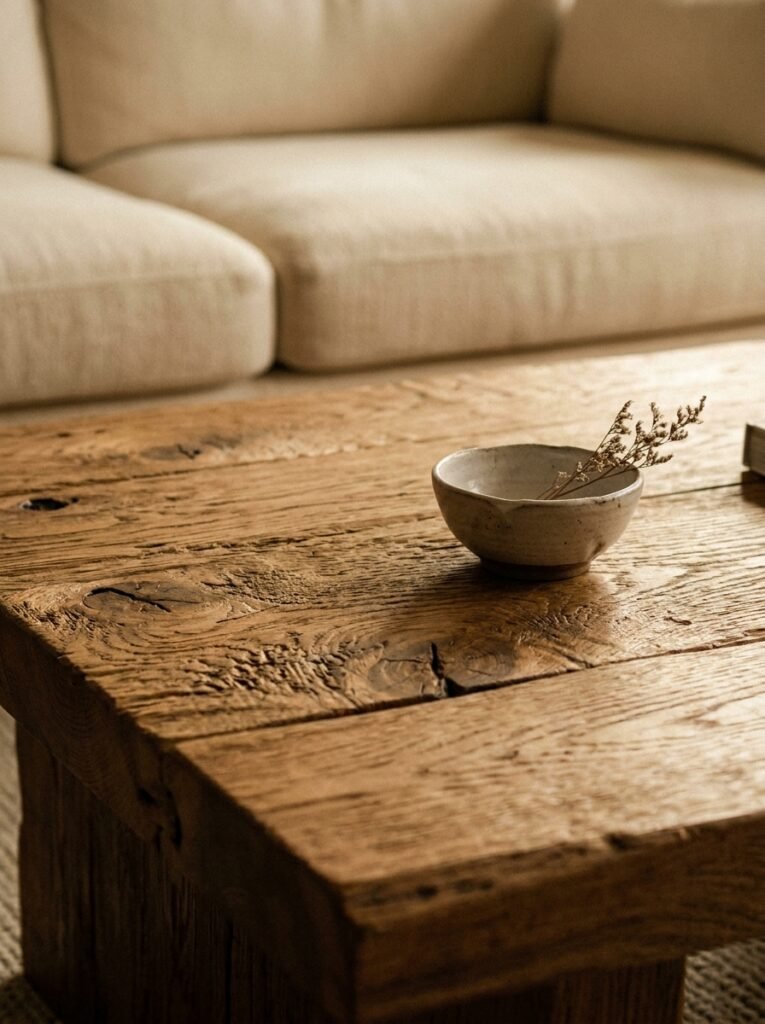
Before you choose a single cushion, think about your wood. Seriously. It’s doing more work in this aesthetic than anything else.
Reclaimed wood is the obvious choice, and it deserves its reputation. A reclaimed elm coffee table, a salvaged oak mantel, a set of floating shelves made from old scaffolding planks — each one carries a history that new furniture simply cannot fake. The knots, the grain variations, the slight unevenness where a nail was once pulled out — these are features, not flaws. They’re the whole point.
But reclaimed isn’t the only option. Wire-brushed oak has a beautiful texture that reads as rustic without being antique. White oak with a matte finish bridges the gap perfectly between the raw and the refined. Dark walnut brings drama and warmth in equal measure, especially in a room with lighter walls.
For US homeowners, barn wood beams repurposed as shelving or a mantel piece are everywhere right now and genuinely gorgeous. In the UK, look for pieces made from old pine floorboards or reclaimed railway sleepers — that dense, almost black grain is extraordinary.
The rule? Every room needs at least two different wood tones. Not matching. Not “coordinated.” Two tones that feel like they’ve both always been there, from different chapters of a house’s story.
3. The Color Palette That Every Good Modern Rustic Room Shares
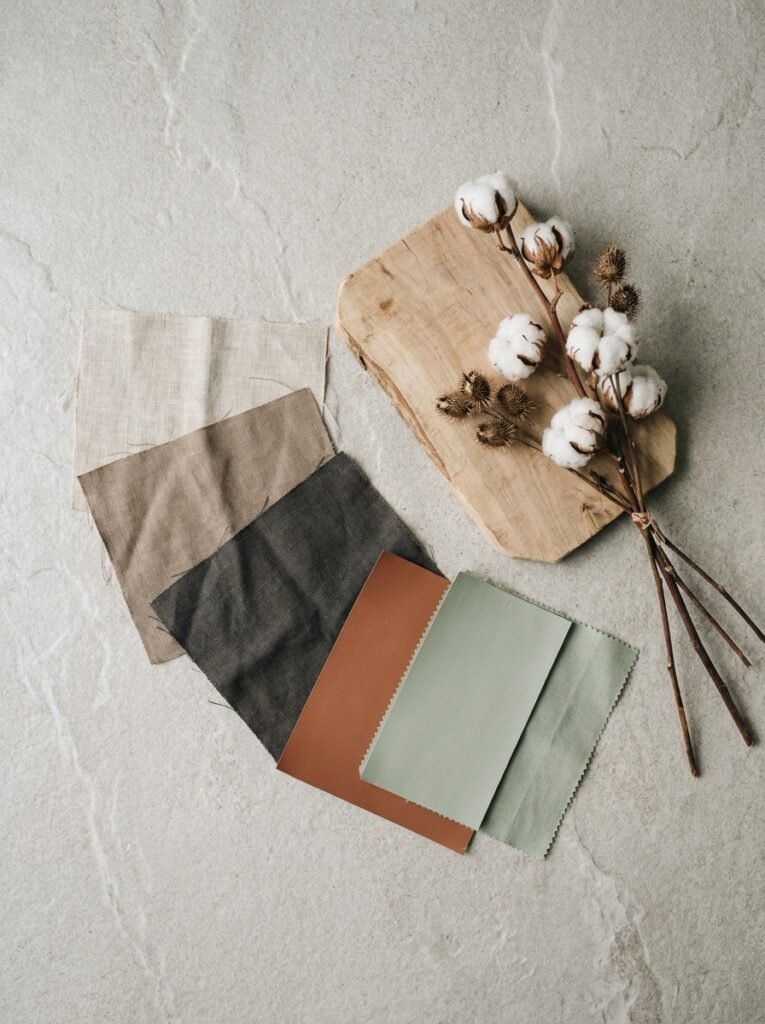
It’s not beige. It’s not grey. And it’s absolutely not “greige.”
The palette for a genuinely good modern rustic living room starts with something organic — a warm stone, a deep clay, a soft sage, a dusty terracotta. These aren’t neutrals exactly. They have personality. They shift in different light. At noon they look one way; at 7pm with the Edison bulbs glowing amber, they look entirely different. That changeability is what makes them feel alive.
The foundation is usually a mid-warm white or a soft off-white — think the inside of a seashell rather than a painted wall. Layer on top of that with one or two deeper tones. Warm charcoal is better than cold grey. Deep forest green over navy, every time. Burnt sienna over mustard.
In American homes, terracotta is having a moment that shows absolutely no signs of slowing down. It works on an accent wall, it works in soft furnishings, it works in a cluster of clay pots on a windowsill. In British interiors right now, deep earthy greens — think Farrow & Ball Mizzle or Calke Green — are appearing on everything from skirting boards to sofas, and they pair with natural wood and linen like they were made for each other.
What you’re avoiding: anything cold, anything that reads “hotel lobby,” anything that would look equally at home in a dentist’s waiting room. This palette should feel like the inside of somewhere you never want to leave.
4. The Textile Rule That Separates Good Rooms from Great Ones
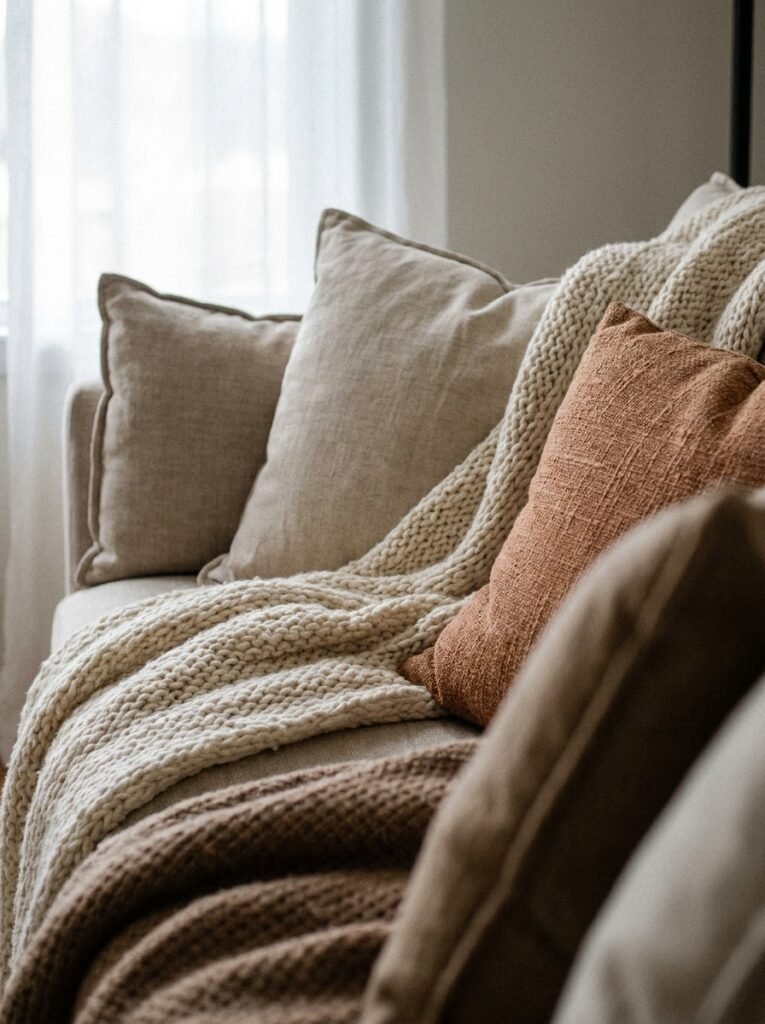
Texture is where modern rustic either succeeds spectacularly or falls completely flat.
Most rooms have one kind of texture. Maybe two. That’s fine for minimalism. For this aesthetic, you need at least five, and they should not be subtle about it.
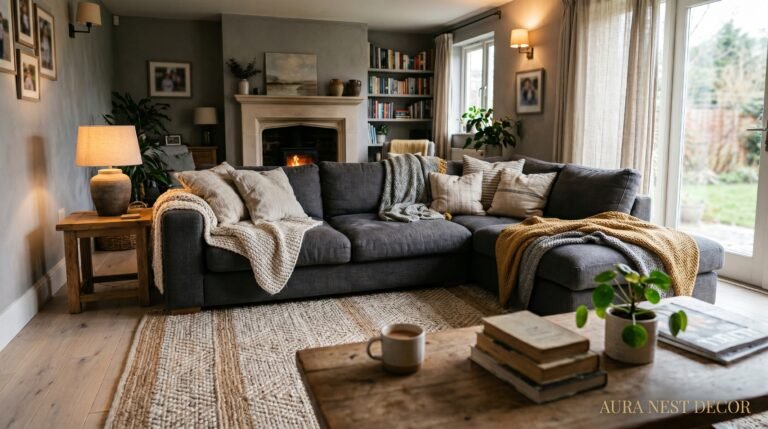
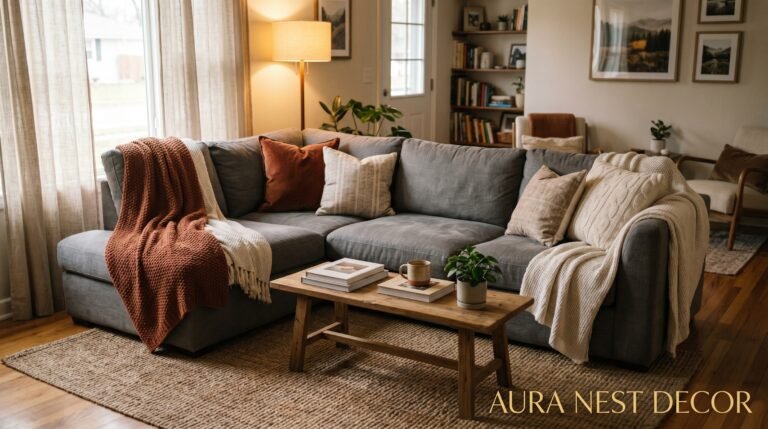
Think: a linen sofa with visible weave. A wool throw with actual weight to it — not the thin, scratchy kind, but the kind that takes two hands to fold. Jute or sisal underfoot, especially in a layered rug situation (a flat-weave jute underneath, a softer wool or cotton rug on top — this is a look that costs less than you’d expect and looks like it costs a lot). Velvet in a single cushion or two, preferably in a muted tone that catches light differently depending on which way you smooth it. Cotton canvas. Raw linen. Aged leather, if you can afford it, even as a single armchair.
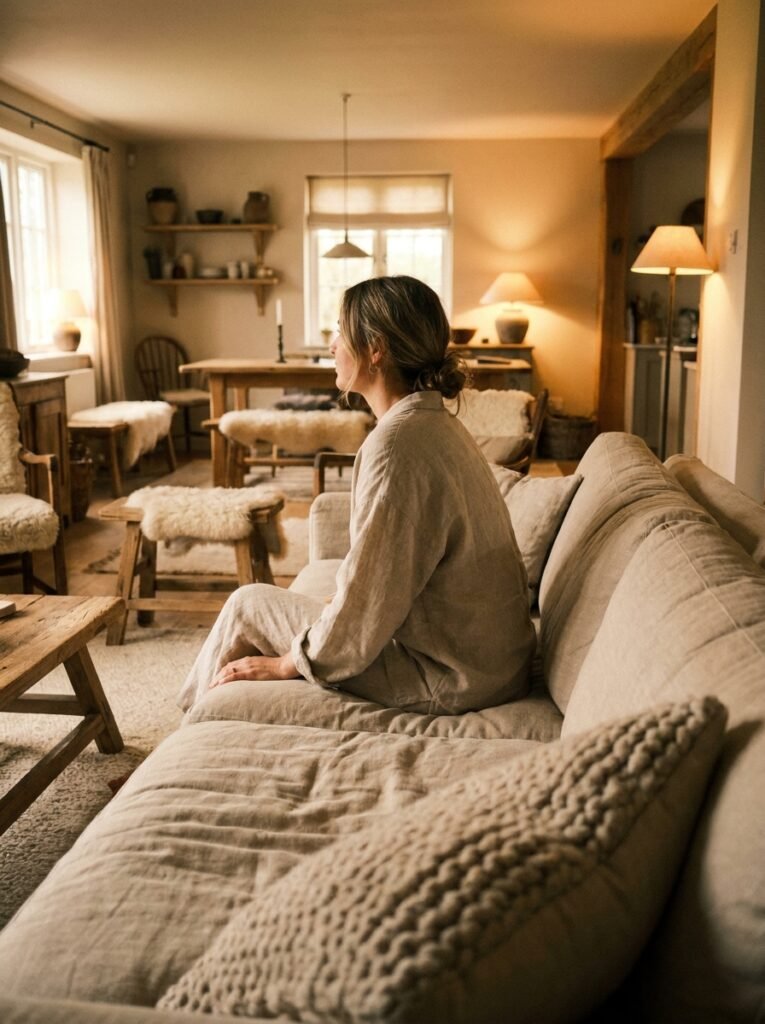
In the UK, sheepskin is a staple — draped over a wooden chair or folded over a bench at the foot of a sofa, it adds instant warmth without any effort. In American living rooms, a vintage Navajo-inspired blanket or a chunky hand-knit throw does the same job.
The key is contrast. Smooth marble against rough hemp. Polished brass against unfinished linen. A mirror in a burnished frame leaning against a wall of unpainted plaster.
“Texture is the thing you feel before you consciously see it — and it’s doing more than any paint color ever could.”
5. How to Use a Fireplace (Even a Fake One) as the Whole Story
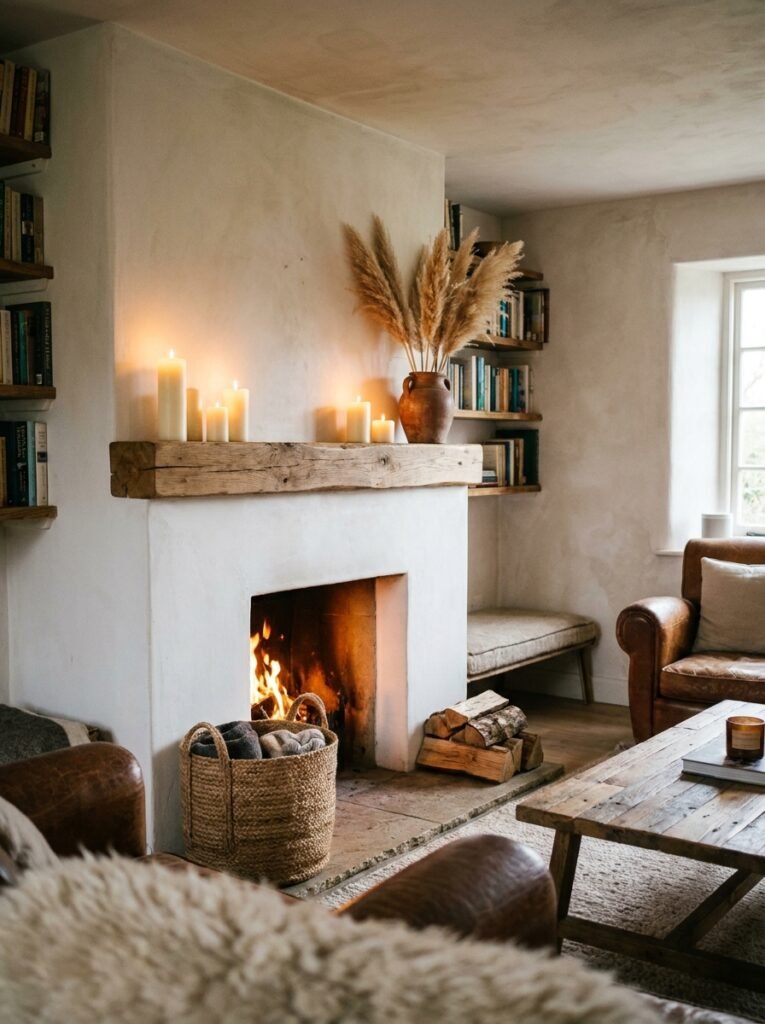
Every modern rustic living room wants a fireplace. That’s just a fact.
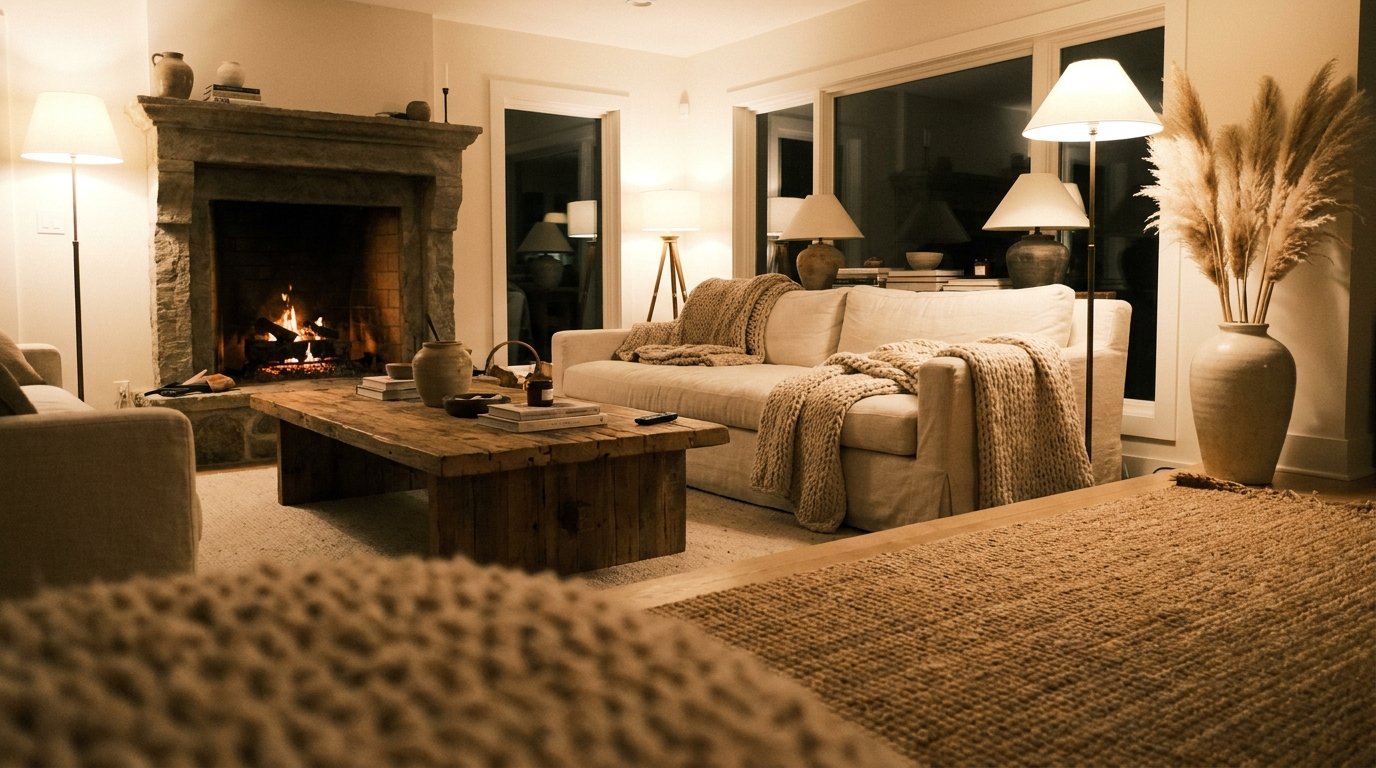
If you have one — real, working, with the actual smell of woodsmoke and the sound of crackling — you are already halfway there. Build everything around it. Give it a stone or reclaimed wood surround. Stack actual logs beside it, even in summer. Put a single piece of art or an aged mirror above it, not a gallery wall. The fireplace should speak for itself.
If you’re in a flat in London or an apartment in Chicago with no fireplace at all, don’t despair. A freestanding log burner on a slate or stone hearth pad can transform a living room completely and is legal in many areas. Electric fireplaces have come so far in the last five years that the good ones — with real flickering flame effects and a stone or plaster surround — genuinely fool people.
And even without any fire at all, you can create the same psychological effect. A cluster of chunky pillar candles on a stone tray. A candelabra on a side table. A lantern on the floor. The brain responds to the light and the implication of warmth, and that’s honestly enough.
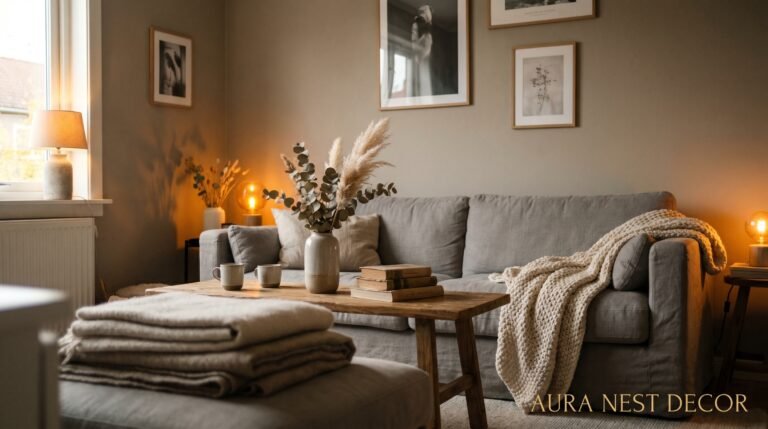
Dress the hearth area with intention. A vintage brass log basket. A terracotta pot with dried pampas or eucalyptus. A small stack of beautiful books. This is where the eye goes first, so give it something worth looking at.
6. The Plants That Actually Work in This Aesthetic (No, Not All of Them)
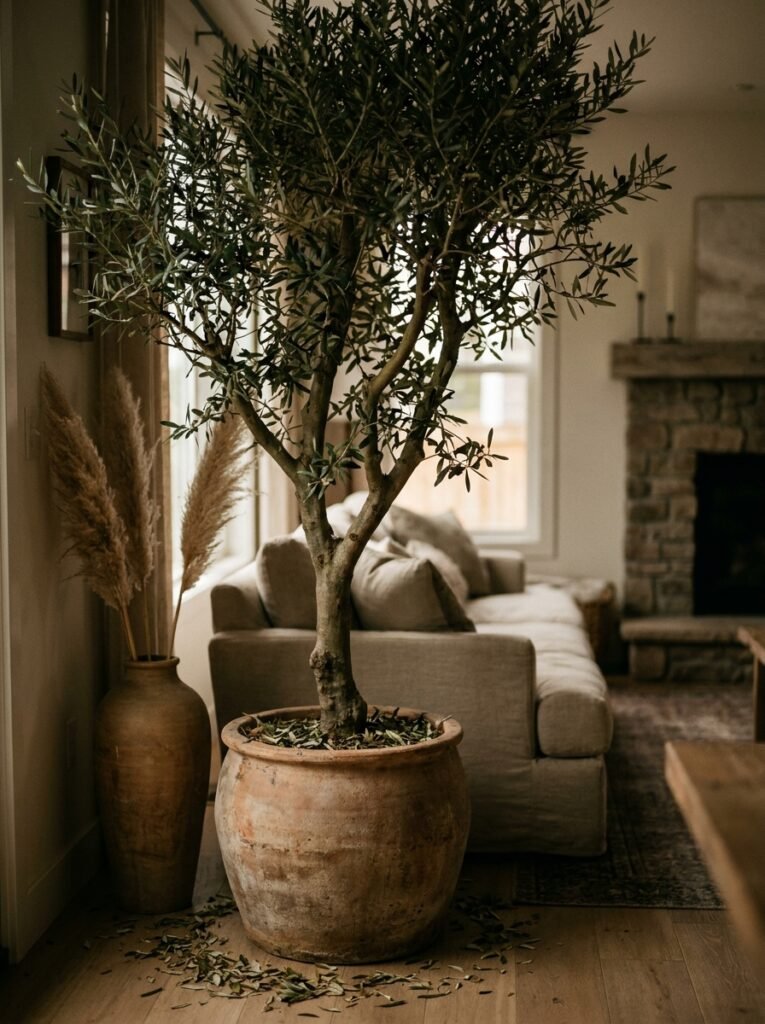
Not every plant belongs in a modern rustic living room. A fluorescent-green pothos in a plastic nursery pot? Absolutely not. A spiky cactus collection in a white ceramic tray? Wrong vibe entirely.
The plants for this aesthetic are the ones that feel like they wandered in from somewhere wilder. A large fiddle-leaf fig in a terracotta pot — classic for a reason. A trailing pothos (yes, the same one — but in an aged clay pot or a woven basket, it’s a different plant entirely). An olive tree in a textured stone planter. Dried bunches of lavender or rosemary hanging from a beam or a curtain rod. Dried pampas grass in a tall stoneware vase.
The secret weapon is the vessel, not the plant. A £3 plant in the right pot can look designer. A beautiful plant in the wrong pot looks like a waiting room.
In the US, succulents in rustic wooden crates, sage bundles tied with rough twine, and large terracotta pots with patina are the moves. In UK homes, a windowsill trailing with rosemary and thyme alongside a single large snake plant in a rough stoneware pot is quietly perfect.
Dead things, by the way, are not off-limits here. Dried flowers, seed pods, twisted branches in a tall vase — they suit the aesthetic completely. Life, in this style, includes things at every stage of it.
7. The Lighting Mistake That’s Making Your Beautiful Room Feel Wrong
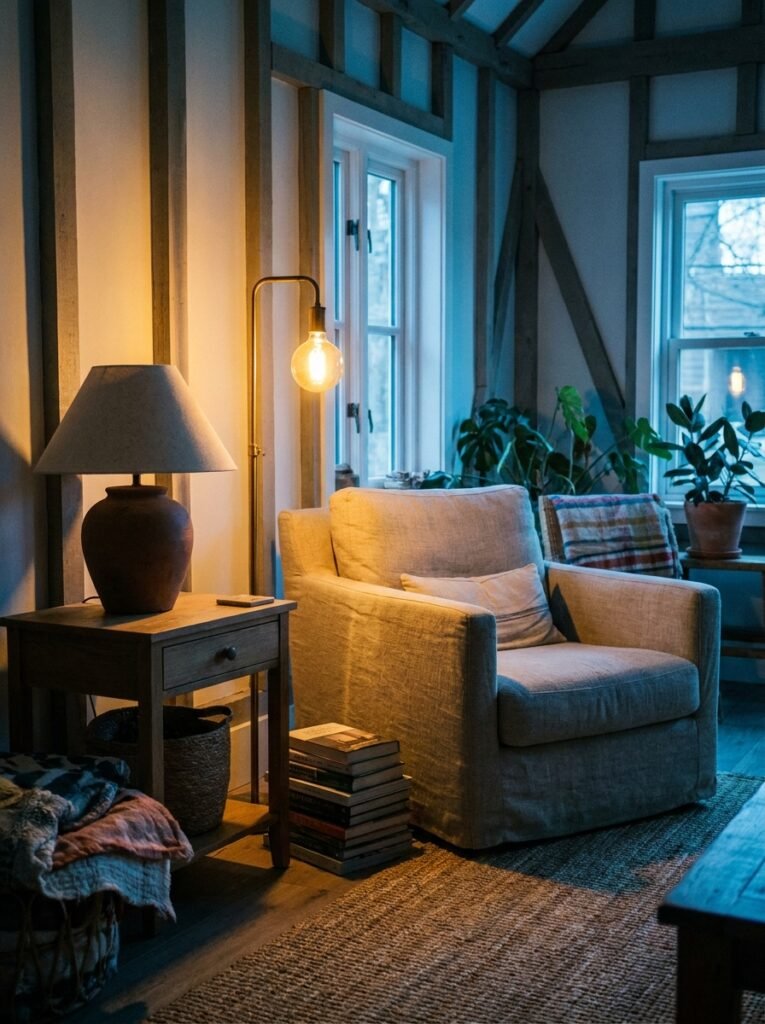
Here’s the thing most people miss: modern rustic lighting has nothing to do with the fixture itself. It’s about the temperature of the light.
Anything over 3000K — the cooler, bluer end of the spectrum — immediately makes a room feel clinical. It doesn’t matter how beautiful your pendant lamp is or how carefully you chose your woven rattan shade. Cool light kills warmth. Full stop.
You want 2200K to 2700K. This is the amber end. This is the light that makes skin look healthy and wood look richer and textiles look softer. In the evening especially, this temperature is the difference between a room that feels like a home and a room that just looks like a photo of one.
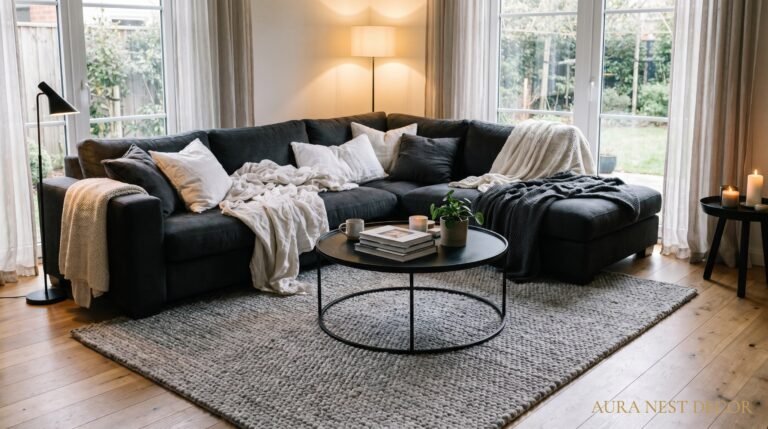
For modern rustic living rooms: layer your light. A floor lamp in the corner. A table lamp on a side table. Candles on the coffee table. A pendant over a seating area if you can manage it. You’re aiming for multiple low sources rather than one overhead light screaming at the ceiling.
Dimmer switches are non-negotiable. If you rent and can’t install them, smart bulbs are the next best thing.
“The right light temperature can make a £200 sofa look like it cost a thousand. The wrong one can make a beautiful room feel like a supermarket.”
8. Vintage Finds vs. New Pieces: The Balance That Makes It Look Real
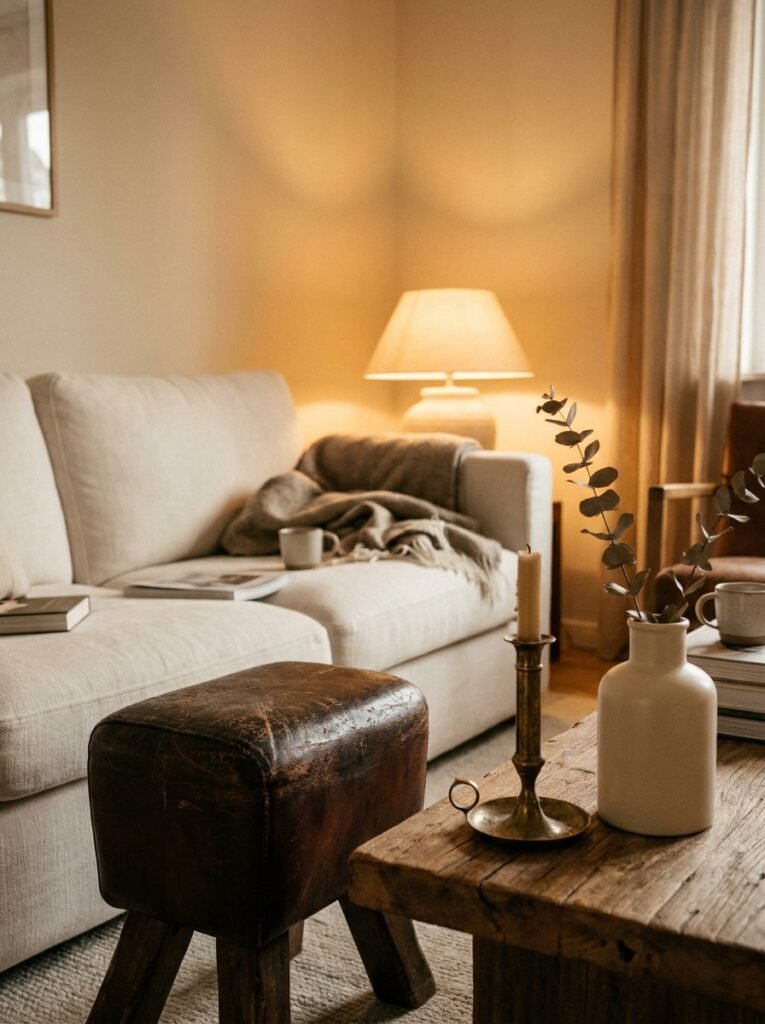
The error most people make when they try to do modern rustic is buying everything new from the same place. A full set from Pottery Barn. A complete look from Next or Dunelm. Everything matching, everything coordinated, everything arriving in the same delivery.
It looks exactly like that. Assembled, not collected.
The rooms that stop you on Pinterest are a mix. The sofa might be new — a good neutral linen one that will last fifteen years. But the coffee table came from an estate sale. The lamp was found in a charity shop in Bath or a thrift store in Vermont. The rug is vintage and slightly worn in the middle. The art was bought from an independent maker at a local market.
This mix is what gives a room character, and character is what makes it feel like no one else’s home but yours.
A practical approach: buy new for the big pieces you’ll live with for a long time (sofa, rugs, curtains). Buy vintage or secondhand for the character pieces — the lamps, the side tables, the decorative objects, the art. You’ll spend less, and the room will look more interesting.
In the US, Facebook Marketplace, estate sales, and antique shops in small towns are goldmines for this. In the UK, charity shops outside London, eBay, and local car boot sales turn up extraordinary things for almost nothing.
9. The One Layout Choice That Makes Modern Rustic Rooms Feel Intentional
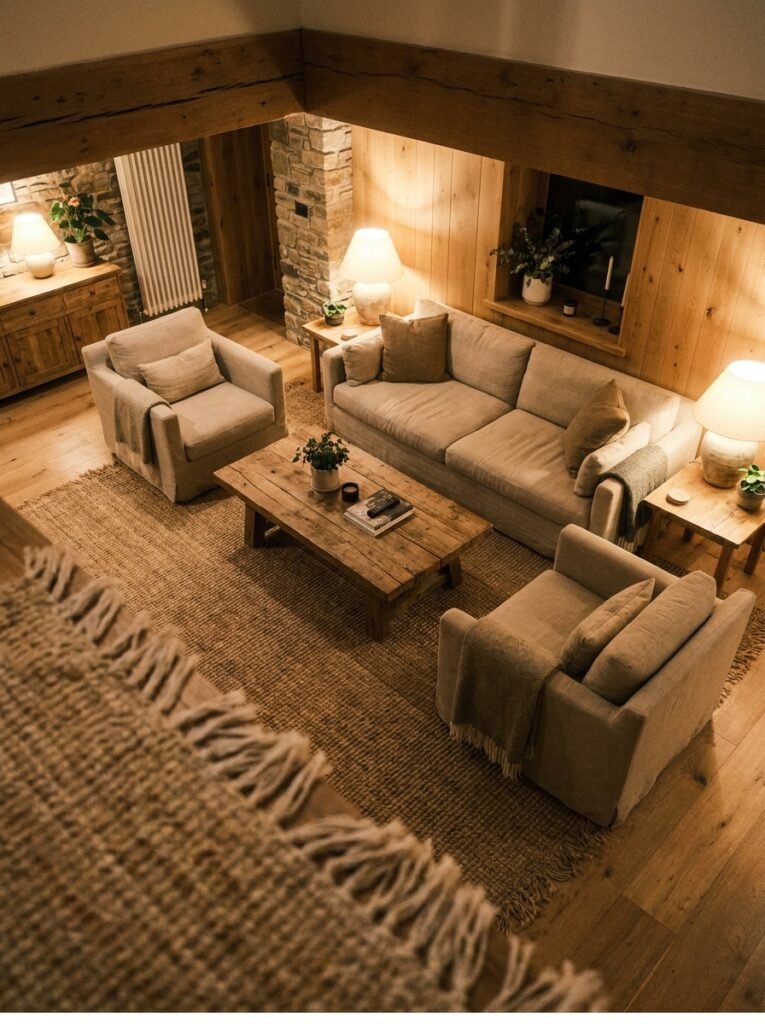
Pull everything away from the walls.
This is the single most transformative arrangement decision you can make, and it’s completely free. Most people push furniture back against walls because it feels safer, like it creates more space. It doesn’t. It creates a room that looks like it’s being stored rather than lived in.
Float your sofa. Bring it in from the wall by eighteen inches to two feet. Put a low console table or a shelf behind it if you need to fill that gap. Arrange your seating so it faces inward — toward each other, toward the fireplace, toward the center of the room.
This creates intimacy. It creates conversation. In a modern rustic room especially, it signals that this space is for gathering, for being in, not for looking at from the doorway.
A large anchor rug helps everything come together — big enough that at least the front legs of every sofa and chair sit on it. If the rug is too small (another common mistake), the whole room floats loose, like furniture scattered across a field.
10. The Shelf Styling Secret That Nobody Talks About Enough
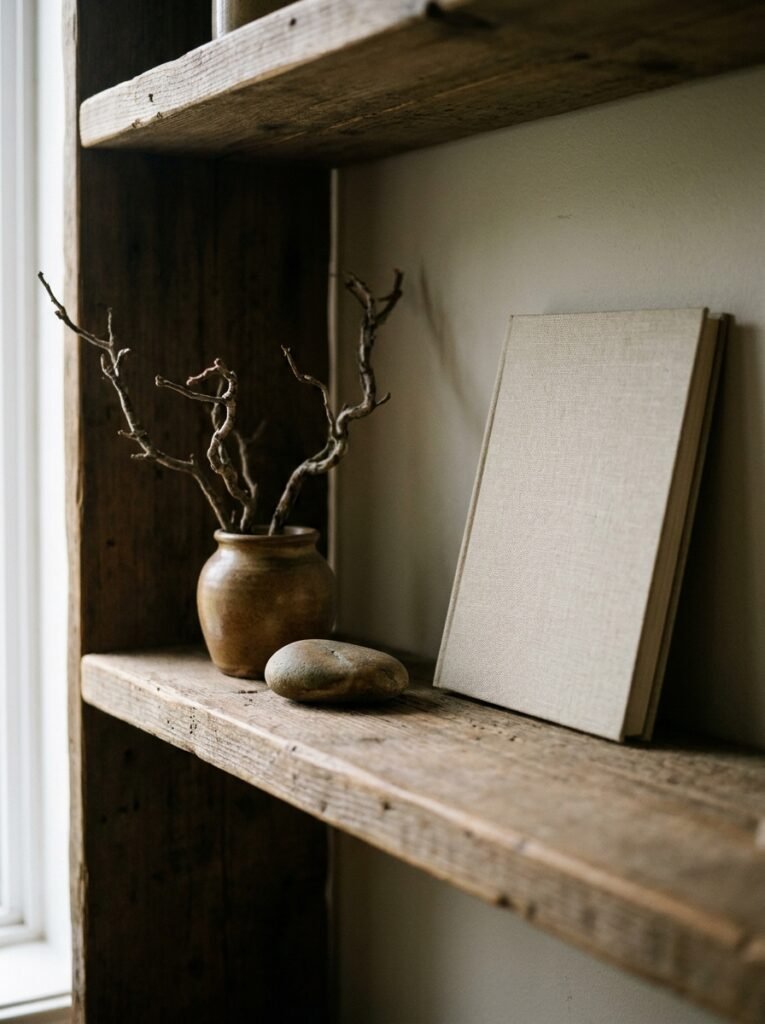
A shelf is never just storage. In a modern rustic living room, it’s one of the most powerful design elements you have — and most people style it wrong.
The mistake: filling every inch. Books spine-out, objects lined up, everything reaching edge to edge. It looks cluttered no matter how nice the individual pieces are.
The approach that works: negative space is your friend. Group things in threes. Mix heights deliberately — a tall vase, a medium object, something low. Face some books cover-out (this works especially well with beautiful art books). Leave actual gaps between groupings. Let things breathe.
For modern rustic specifically: mix materials on every shelf. A piece of rough pottery next to a stack of books next to a small framed photograph next to a single dried flower stem. A smooth stone you picked up on a beach. A small bronze or brass object. A candle. Nothing should match its neighbor too closely.
11. What British and American Modern Rustic Look Like (They’re Different)
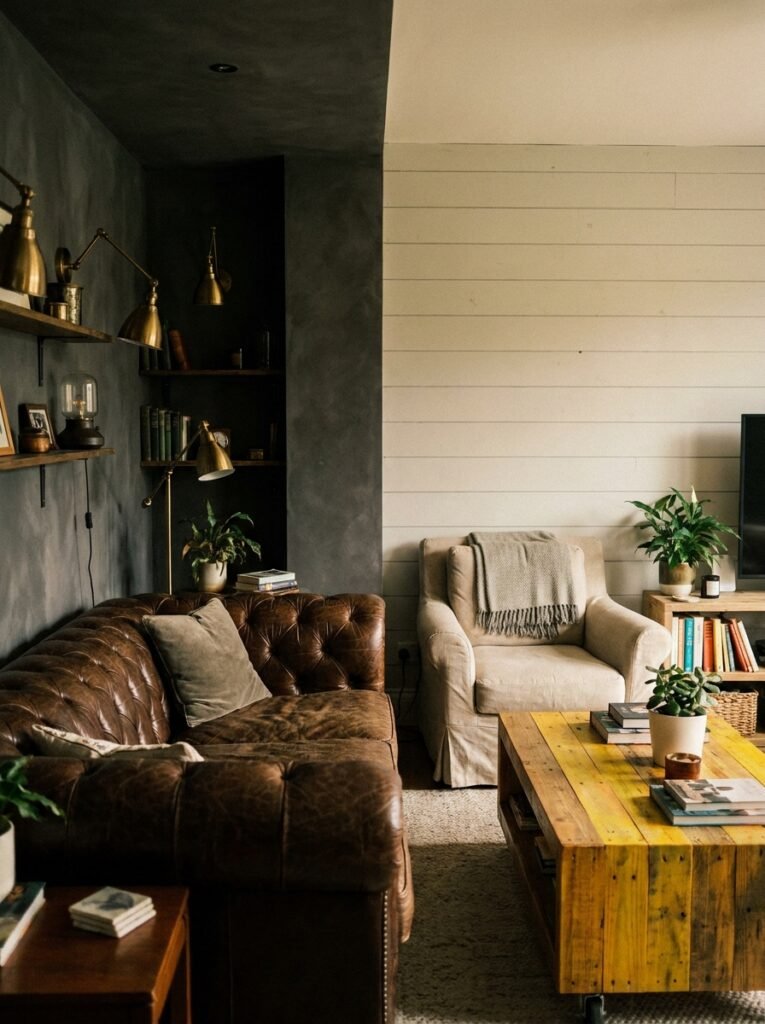
This is worth saying directly, because the aesthetic genuinely differs across the Atlantic and both versions are beautiful.
American modern rustic tends toward the expansive. Higher ceilings, wider rooms, more dramatic natural materials — stone floors, exposed wooden beams, large leather sofas. There’s often a reference to the landscape outside, whether that’s the mountains of the Pacific Northwest, the wide plains of the Midwest, or the red rock country of the Southwest. It’s confident and spacious, sometimes a little masculine in its bones.
British modern rustic is quieter and more layered. Smaller rooms with more furniture, more books, more accumulated objects. Original period features — cornicing, sash windows, tiled fireplaces — mix with contemporary pieces in a way that feels organic rather than designed. There’s more green, more grey-green, more of an awareness of the outdoors that is specifically English: muted, overcast, beautiful in a subtle way. A good British modern rustic living room looks like someone who has been buying things they love for twenty years and it all somehow ended up making sense together.
Both work. Both are pinned constantly. The thread connecting them is the same: authenticity, warmth, the sense that the room has been lived in and loved.
12. The Small Details That People Notice Without Knowing Why
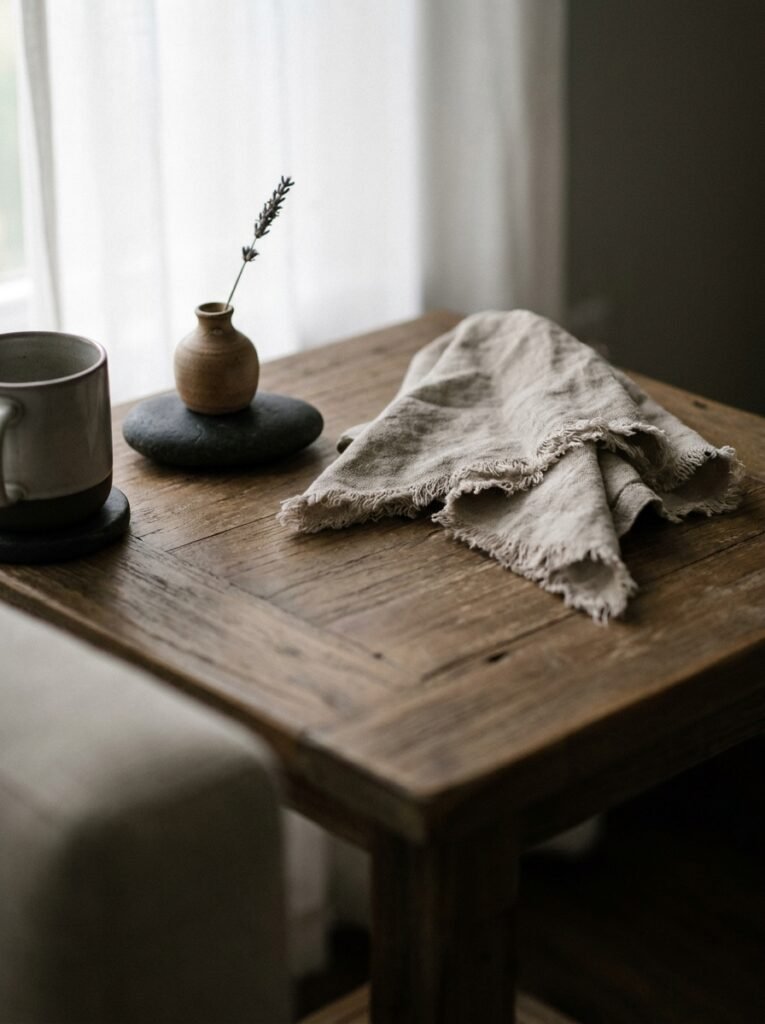
The best rooms have details that work subconsciously. You don’t necessarily clock them when you walk in — but remove them, and something would feel missing.
A stack of beautiful hardback books on the coffee table, spines not necessarily matching. A single candle that’s been burned before, with soft wax pooled at the edges. A piece of art that’s slightly larger than you’d expect — something that required a decision to hang. A vintage ceramic bowl on the sideboard that holds keys or river stones or absolutely nothing. An imperfect object: a hand-thrown mug, a wobbly clay pot, something that was clearly made by a human being.
These are the things people photograph and pin without being able to explain exactly why. It’s because they signal authenticity. They say that someone lives here who notices things and cares about them.
In a modern rustic room, perfection is slightly suspicious. A little roughness is exactly right.
—
🌿 Quick Tips
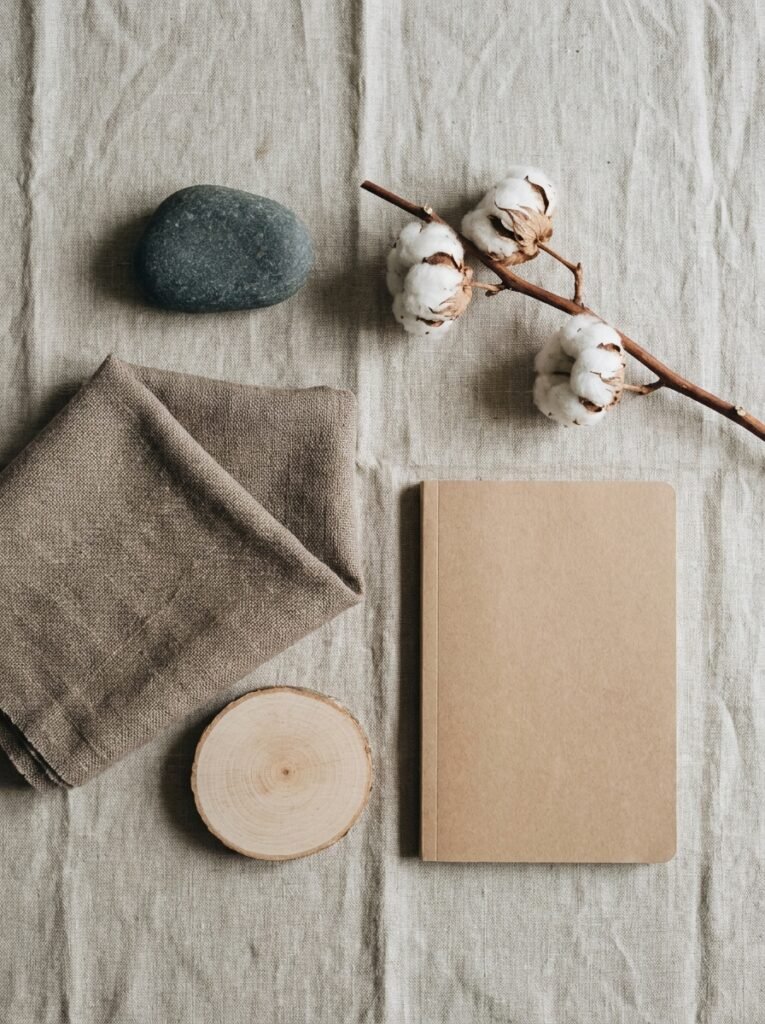
Start with wood and work outward — it’s the anchor of the whole aesthetic, and getting it right makes everything else easier. One piece of reclaimed or textured wood can set the tone for an entire room.
Swap overhead lighting for layered low lighting before doing anything else. It costs very little and will immediately make your room feel warmer and more considered.
Buy your biggest rug slightly bigger than you think you need. A rug that’s too small is one of the most common mistakes in living room styling, and it’s an expensive one to have to fix twice.
Dried botanicals cost almost nothing from markets, grocery stores, or your own garden, and they suit this aesthetic completely. A tall vase of dried pampas or bunched lavender does more work than most expensive accessories.
Resist matching. A room where every wood tone, every metal finish, and every fabric coordinates perfectly looks like a showroom, not a home. Let things be slightly mismatched on purpose.
—
❓ FAQ
Q: What’s the difference between modern rustic and farmhouse style? A: Farmhouse tends to be more literal — shiplap, distressed white paint, vintage signage, matching “rustic” collections from big box stores. Modern rustic is more edited and less themed. It mixes genuinely old pieces with contemporary design, uses richer and more complex color palettes, and avoids anything that looks like it was bought as a set. It feels more like a home that’s been collected over time than a room decorated in a single style.
Q: Can I do modern rustic in a small flat or apartment? A: Absolutely, and honestly smaller spaces often do it better because the warmth and texture feel more concentrated. Focus on one or two strong natural materials, use vertical space with shelving, choose a rug that’s as large as the space allows, and keep the color palette warm and cohesive. A small room done well in this style feels like a cocoon — which is very much the point.
Q: How do I keep modern rustic from looking messy or cluttered? A: Negative space is the answer. For every grouping of objects, leave an equivalent area of emptiness nearby. Edit ruthlessly — if something doesn’t have a strong material quality (beautiful texture, interesting form, emotional significance), it probably doesn’t need to be out. The objects in a good modern rustic room are few enough that each one gets noticed.
—
💭 Final Thought
A modern rustic living room isn’t a style you achieve — it’s a room you keep building slowly, adding things you love when you find them, letting certain things go when they stop belonging. The best versions of this look like they weren’t designed at all. Like someone just kept bringing home beautiful things until it felt like theirs.
What’s the one piece — the lamp, the rug, the wooden bowl — that your room has been waiting for?