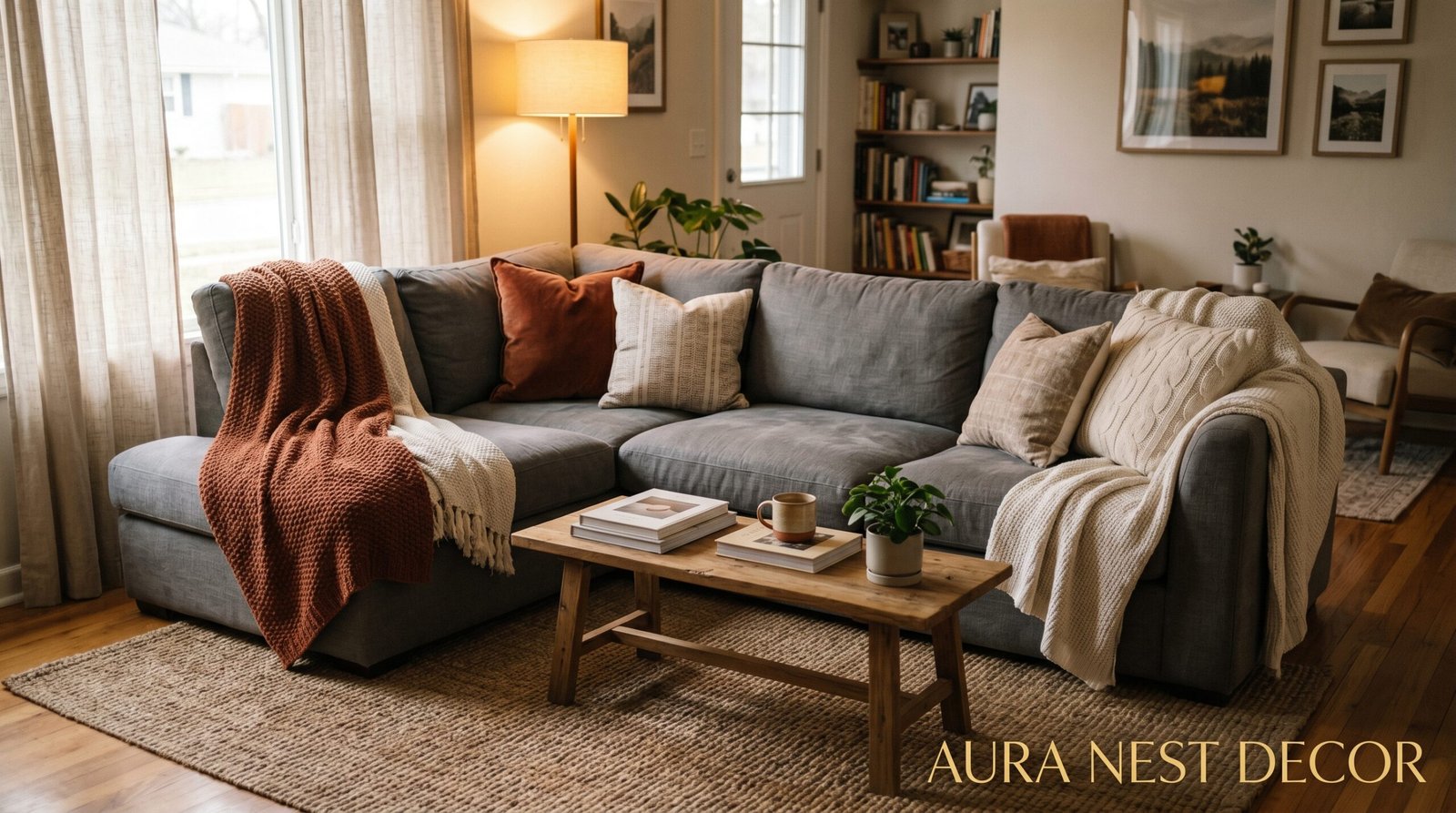
Why Grey Couches Are Having a Moment (And How to Make Yours Feel Like a Hug)
You bought the grey couch. Maybe it was on sale, maybe every design account you followed had one, maybe it just seemed like the safe choice. And now it’s sitting there looking a little… cold. A little “waiting room.” Don’t panic. That’s a fixable problem.

—
1. The Real Reason Grey Couches Look Bleak in Half the Photos You See
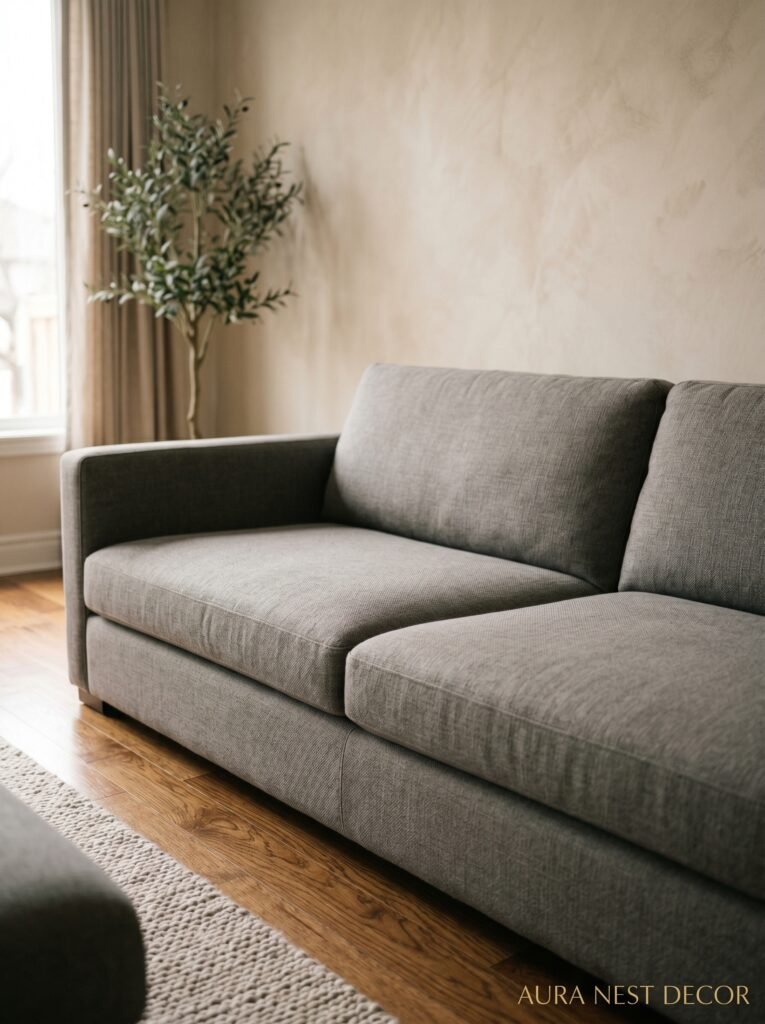
Here’s the thing nobody tells you when you’re standing in the furniture store, patting the cushions and imagining your new life: grey doesn’t read the same in every light. In the morning it can look silver and bright. By 4pm in January it can look like the inside of a filing cabinet. That’s not a flaw in your taste — that’s just physics.
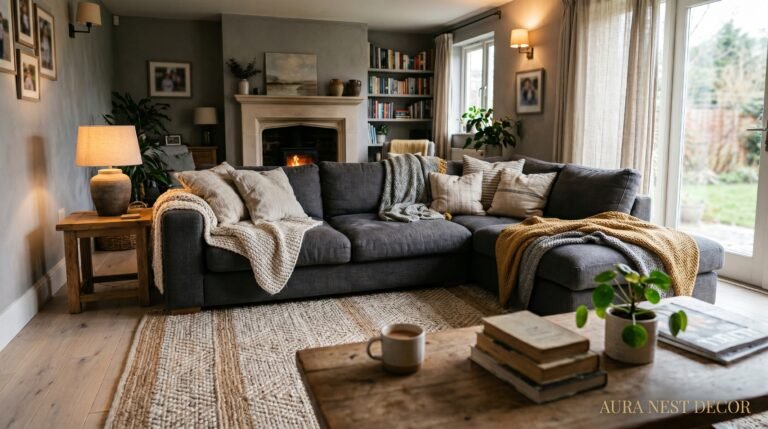
The photos where a grey couch looks stunning? Nine times out of ten it’s not because of the couch itself. It’s the layering around it. Warm-toned throws draped just slightly off-center. A rug that anchors the whole thing in something earthy. Plants that remind you there’s life in the room.
Grey is the most neutral of all the neutrals, which means it reflects back whatever energy you put around it. Surround it with cold whites and hard surfaces and yeah, it’ll feel clinical. Wrap it in texture and warmth and suddenly it becomes this moody, inviting thing that people don’t want to get up from.
The mistake most people make is treating the couch as the finished decision, when really it’s just the starting point.
“Grey doesn’t add warmth — it holds space for everything else you’re brave enough to put with it.”
—
2. The Throw Rule That Actually Works (Not the Folded-Square Method)
Can we talk about throws for a second? Because the folded-square-draped-over-the-arm thing is fine, but it’s also kind of… expected. And it photographs beautifully but in real life it falls off the second anyone sits down.
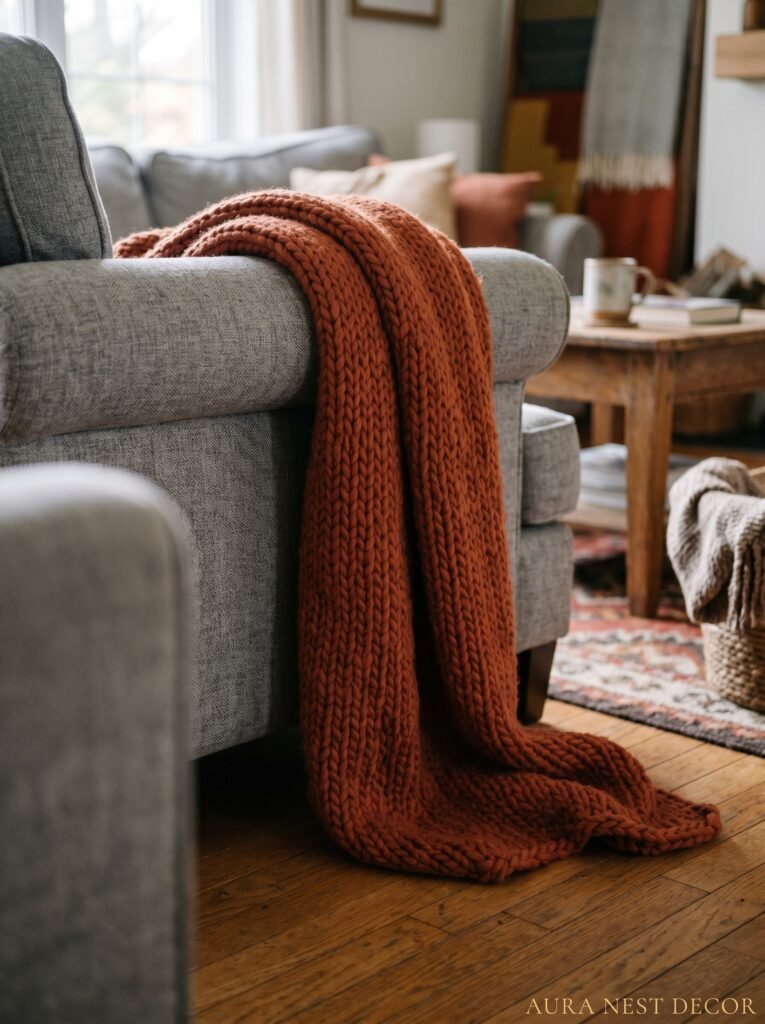
What actually looks better AND is more livable: grab a throw, hold it by one corner, and just toss it. Loosely. Like you used it last night and didn’t fully put it away. Because that’s the vibe that works — the room that looks like someone actually lives there, not a showroom where everything is staged within an inch of its life.
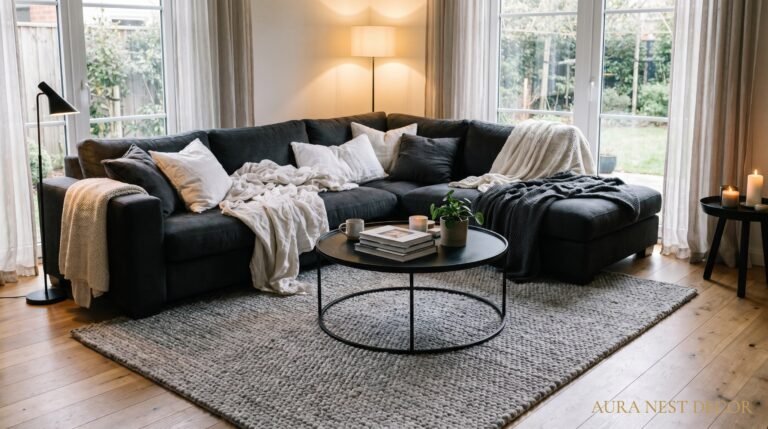
For a grey couch specifically, you want throws in warm terracotta, deep rust, camel, mustard, cream (but not bright white — go off-white, go ivory), or anything with an earthy undertone. A chunky knit in oatmeal. A mohair blend in dusty rose if you’re feeling brave. Genuine wool if you’re in the UK and you’ve already got a draughty window making itself known.
Two throws is not too many. Three might be pushing it, but honestly it depends on how big the couch is.
—
3. The Color That Keeps Showing Up Next to Every Gorgeous Grey Couch Right Now
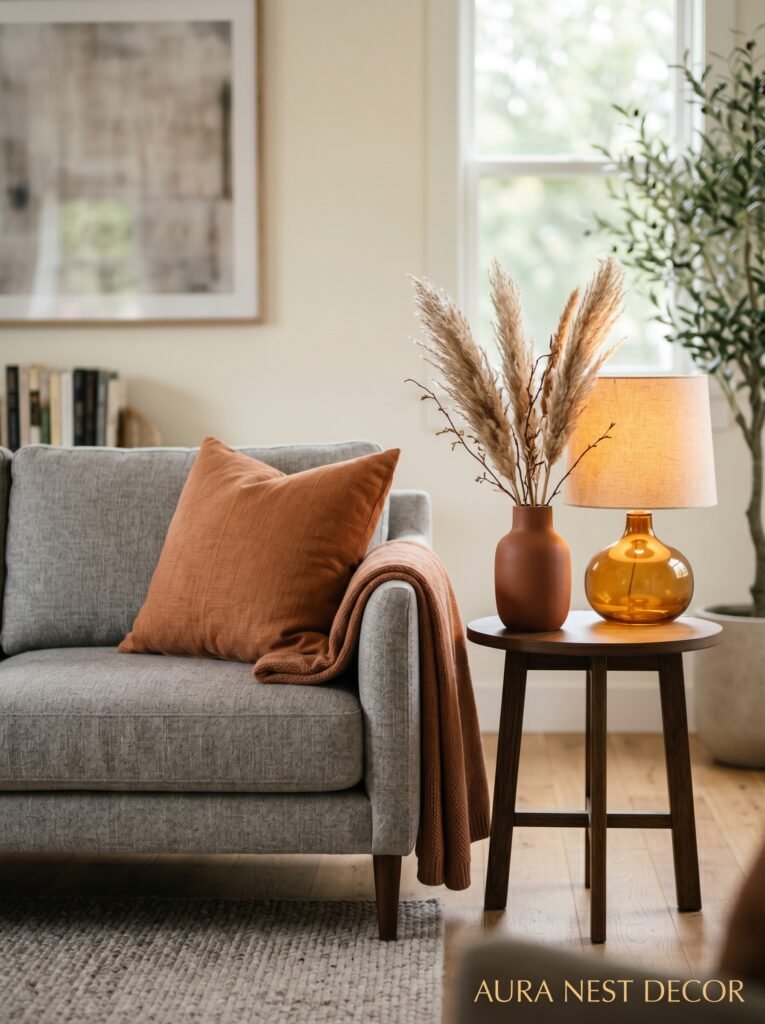
Terracotta. I know, I know, everyone’s been saying it for three years. But there’s a reason it won’t go away — it’s genuinely the most flattering thing you can put next to a grey couch.
Not the orange-terracotta. The dusty, muted, slightly pinkish-brown one. The one that looks like old clay pots from a market in Tuscany or a terrace in Marrakech (side note — those terracotta plant pots from the garden center are absolutely allowed inside and they’re not “cheap,” they’re intentional).
What makes it work is the warmth-to-cool contrast. Grey reads cool. Terracotta reads warm. They pull toward each other. You can introduce it through a single large cushion, a clay vase on the coffee table, even just a candle holder.
And here’s the less obvious cousin to terracotta that works just as well: rust. Burnt orange. The color of autumn leaves right before they fall. One rust velvet cushion on a grey couch is doing more work than you could possibly imagine.
—
4. Your Rug Is Doing More Than You Think
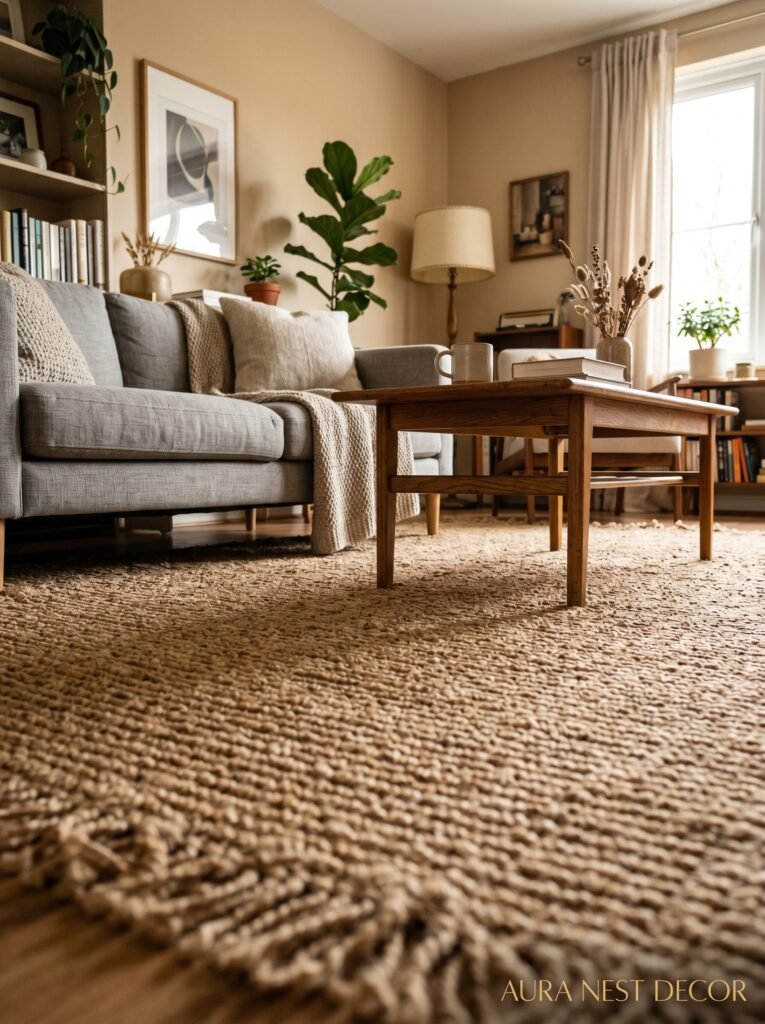
The rug is the foundation. I genuinely believe you can make or break a grey couch look entirely based on your rug choice, and I cannot stress this enough.
Cold grey couch + cold-toned grey or white rug = an actual nightmare. You’ve just doubled down on the problem. Everything looks washed out.
What you want is something with warmth in it. A jute or seagrass rug is doing a LOT of heavy lifting here, and it doesn’t cost a fortune. The natural fibers bring in that earthy, organic texture that soften the whole room without screaming “I tried really hard.”
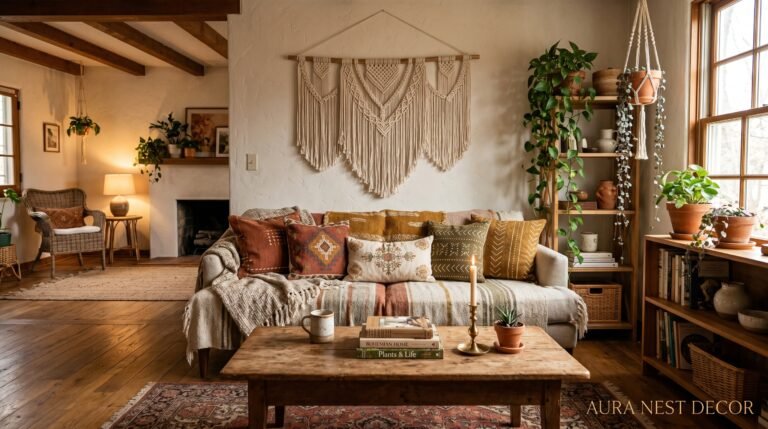
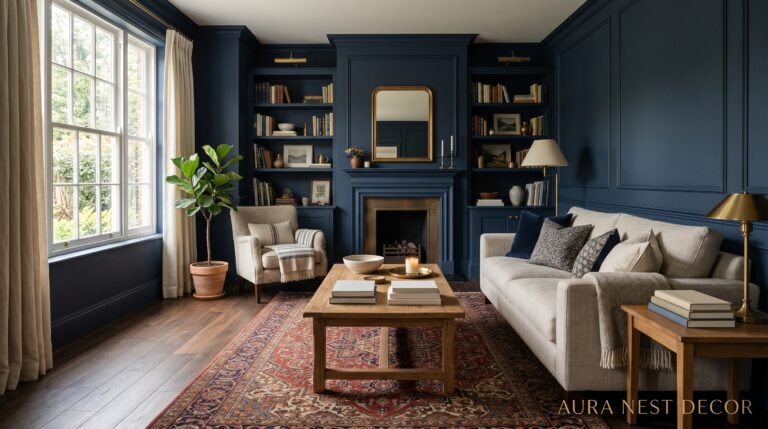
Or go the opposite direction entirely: a bold patterned rug in deep jewel tones. Navy and gold. Forest green and cream. Something Moroccan-inspired with a bit of red in it. A grey couch can handle it — in fact, it wants it. Grey is the background, not the main character.
The rug also needs to be the RIGHT SIZE. If your sofa legs aren’t at least partially on the rug, the whole thing floats. Front legs on the rug minimum. All four legs on the rug is ideal. A rug that’s too small is the single most common living room mistake I see, and it makes even a beautiful space feel unfinished.
“The rug isn’t just under your feet — it’s holding the entire room together.”
—
5. The Cushion Formula That Stops You from Overthinking It
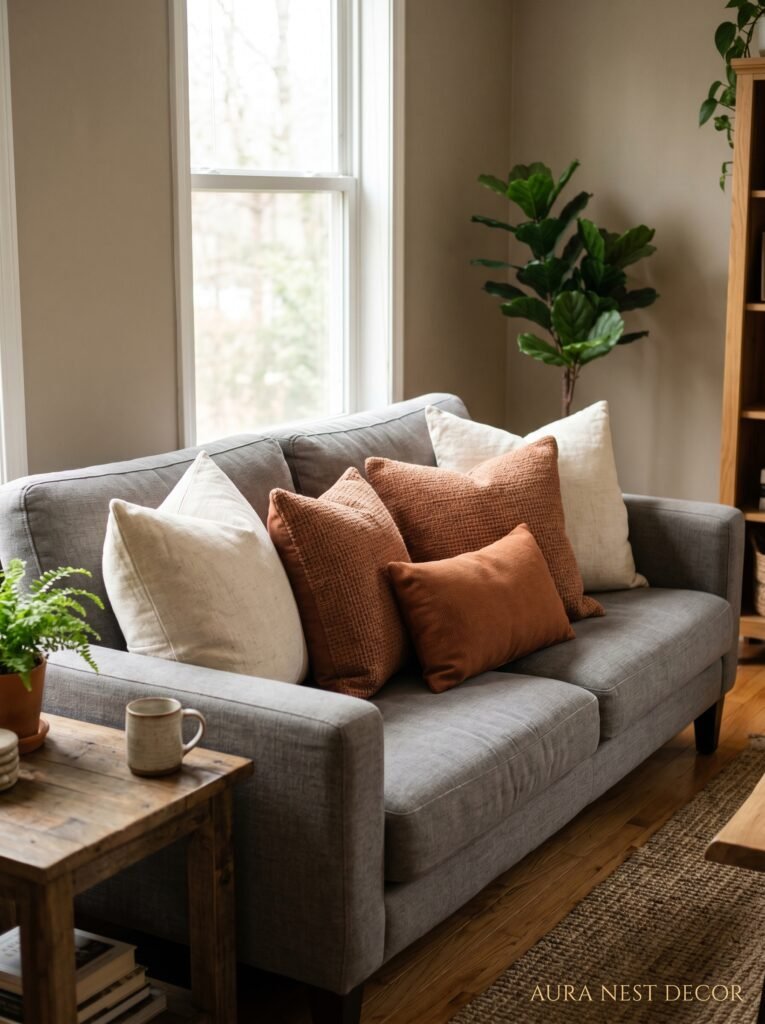
Okay, so cushions. There’s a formula that works and I use it constantly. You don’t need seventeen of them but you DO need more than two flat squares.
Start with two larger cushions in a solid color — pick your warmth tone here, so your terracotta, your rust, your mustard. Then add two mid-size cushions in a texture or pattern. A boucle. A subtle stripe. A velvet with some surface interest to it. Then one odd cushion in something a little unexpected. Smaller. Maybe a different shape. This is where you get to be a tiny bit weird — a deep teal, a warm sage green, an abstract print.
The odd cushion is the one that makes the whole arrangement look curated rather than matchy-matchy. Because matchy-matchy on a grey couch is the enemy. You want “collected over time, I just happen to have good taste” energy, not “I bought the cushion set that came with the couch.”
And please — remove at least one cushion before you sit down. Rooms that feel genuinely lived-in have cushions slightly moved. It’s a weird thing but it’s true.
—
6. What Lighting Does to a Grey Couch That Nobody Photographs
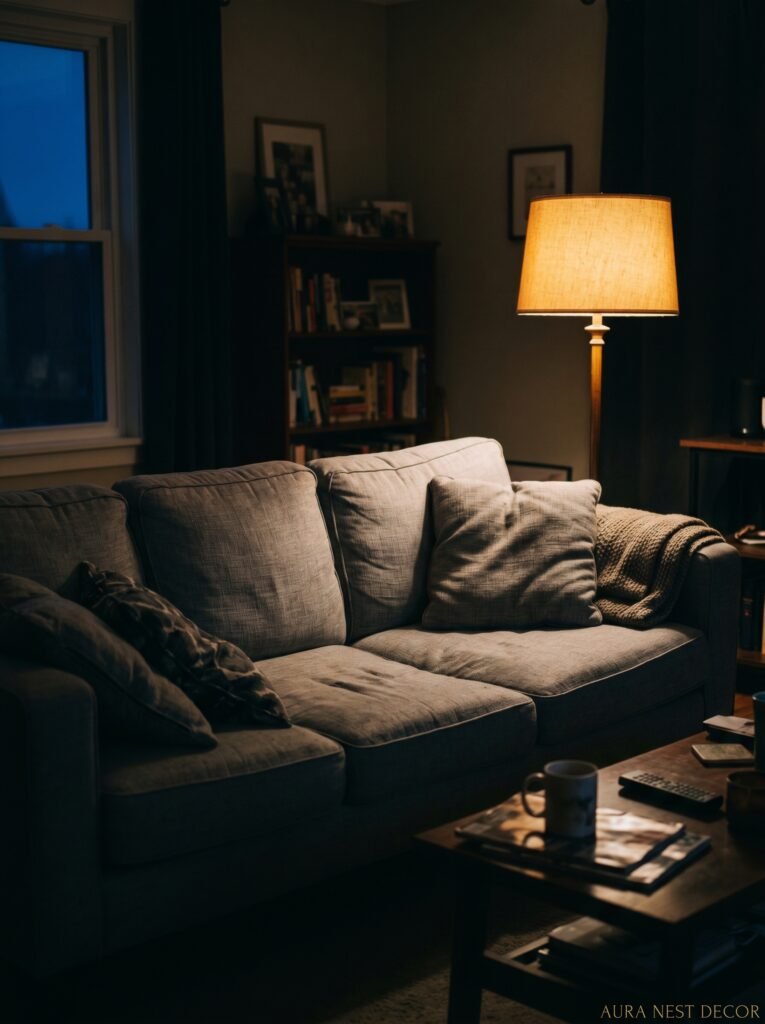
You can have the most perfectly styled grey couch in the world and if you’ve got a cold overhead bulb flooding the room, it’s going to look depressing. Full stop.
Warm lighting is the most important styling tool you’re probably underusing. And not just “warm” in a vague sense — I mean the amber glow of an Edison bulb at 7pm kind of warm. The kind that makes everything in the room look like it’s slightly golden.
Add a floor lamp in the corner behind or beside the couch. A table lamp on a side table nearby. Some candles on the coffee table if you’re going for that full hygge situation (very valid, especially in a British winter when it’s been raining for four consecutive days).
The difference between a grey couch that looks cold and one that looks cozy is often just the light source closest to it. Overhead light = interrogation room. Side lamp at eye level = Sunday afternoon, nowhere to be.
—
7. Plants That Earn Their Place Near a Grey Couch
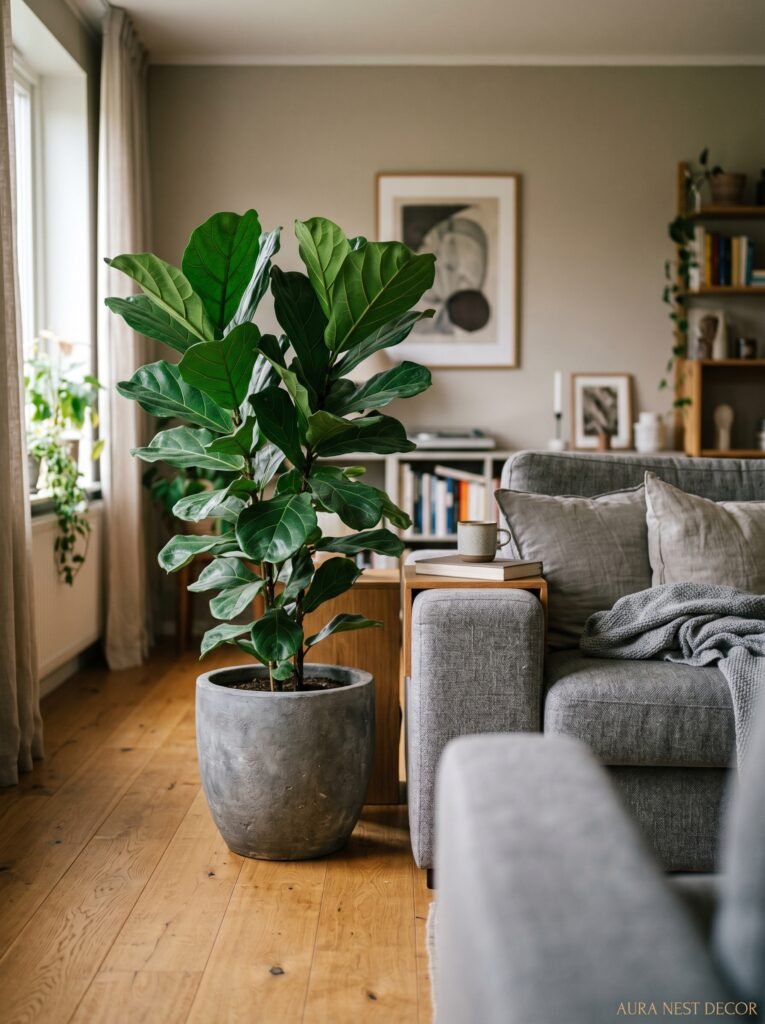
Not all plants are created equal for this specific vibe. A grey couch in a living room wants something lush and full, not a sad little succulent on the windowsill three feet away.
My honest recommendation: a big fiddle leaf fig or a monstera in a floor pot in the corner nearest the couch. Something with actual visual presence. A pothos trailing down from a shelf. A peace lily if you don’t get a lot of natural light (British homes, I’m looking at you specifically — it’s okay, peace lilies thrive in the shade and they also apparently purify the air, though I’ve never personally tested that theory).
The pot matters as much as the plant. Terracotta, obviously, if you’re doing the warm earthy thing. Matte cream or a rattan basket cover if you want something softer. A dark clay or matte black pot if your grey couch is leaning into a more dramatic direction.
The reason plants work so well next to grey specifically is the contrast. Green against grey is genuinely one of the most satisfying color relationships in the whole design world, and I don’t think it gets said enough.
“One big plant in the right corner will do more for your living room than a hundred small accessories ever could.”
—
8. The Accent Wall Question (And My Actual Opinion)
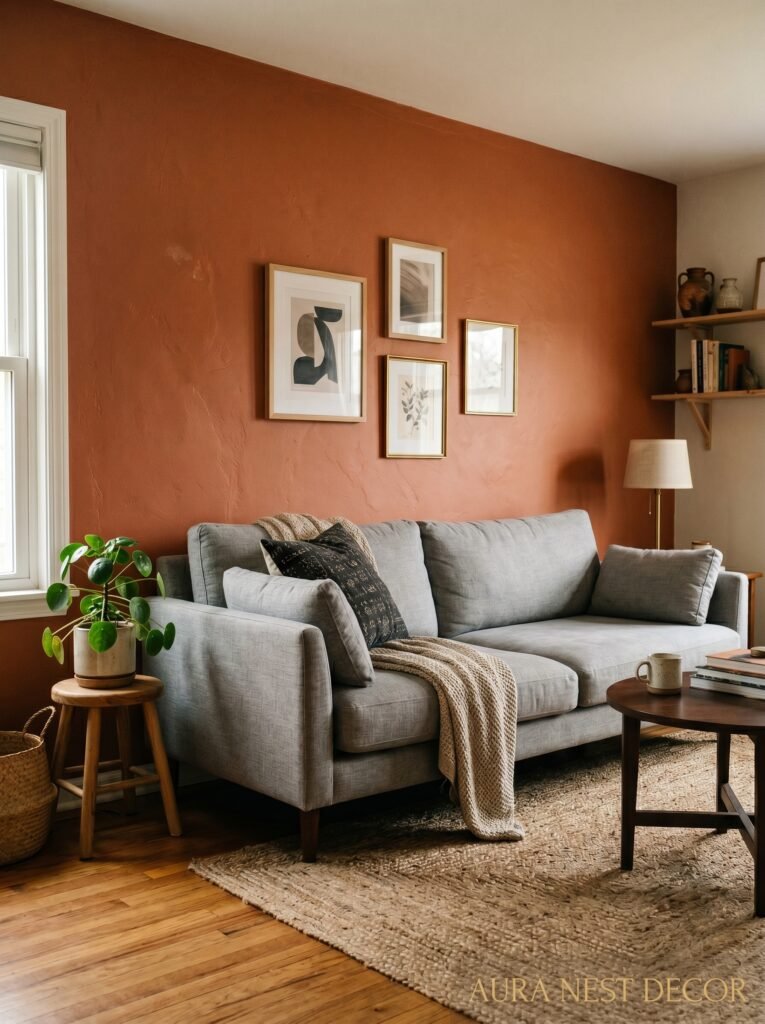
People ask this constantly: should I paint the wall behind the grey couch?
My answer: yes, but not what you’re thinking.
Everyone immediately goes to dark charcoal or navy blue, which CAN work but it’s been done so many times at this point. The more interesting move in right now is a deep warm tone. A dusty sage green. A terracotta that matches your cushions. A moody brown that’s almost chocolate but not quite. An earthy clay tone that makes the whole wall feel like the inside of a pottery studio.
If you’re in a UK Victorian or Edwardian house with those gorgeous high ceilings, you’ve got free license to go darker and bolder because the proportions can handle it. If you’re in a newer build American home with average ceiling height, stick to the dusty, muted end of the spectrum and you won’t go wrong.
And if you don’t want to paint at all? A large piece of art above the couch can do the same job. Something with texture in it — a canvas with a lot of surface movement, a framed print with warm amber tones, a gallery wall that builds gradually. The wall just needs something to anchor the couch to the room.
—
9. Coffee Table Styling on a Budget That Doesn’t Look Like Pinterest-Trying-Too-Hard

The coffee table in front of a grey couch is the room’s focal point more often than people realize. And styling it doesn’t have to be expensive or precious.
The keys are: height variation, at least one organic element, and restraint.
A stack of two or three books with a candle on top. A small clay or ceramic bowl with some smooth stones or dried flowers in it. A single sculptural vase — it doesn’t need to have flowers in it. A wooden tray that corals everything so it looks intentional rather than just… stuff.
The height variation part is the one people skip. Everything at the same level looks flat. Mix a low bowl with a taller candlestick. A small plant with a flat tray beside it.
And honestly? Leave some empty space. A coffee table that’s 80% empty with three beautiful objects looks more considered than one that’s crammed edge-to-edge with stuff that seemed nice at the time.
—
10. The One Rule That Makes Any Small Living Room with a Grey Couch Feel Intentional
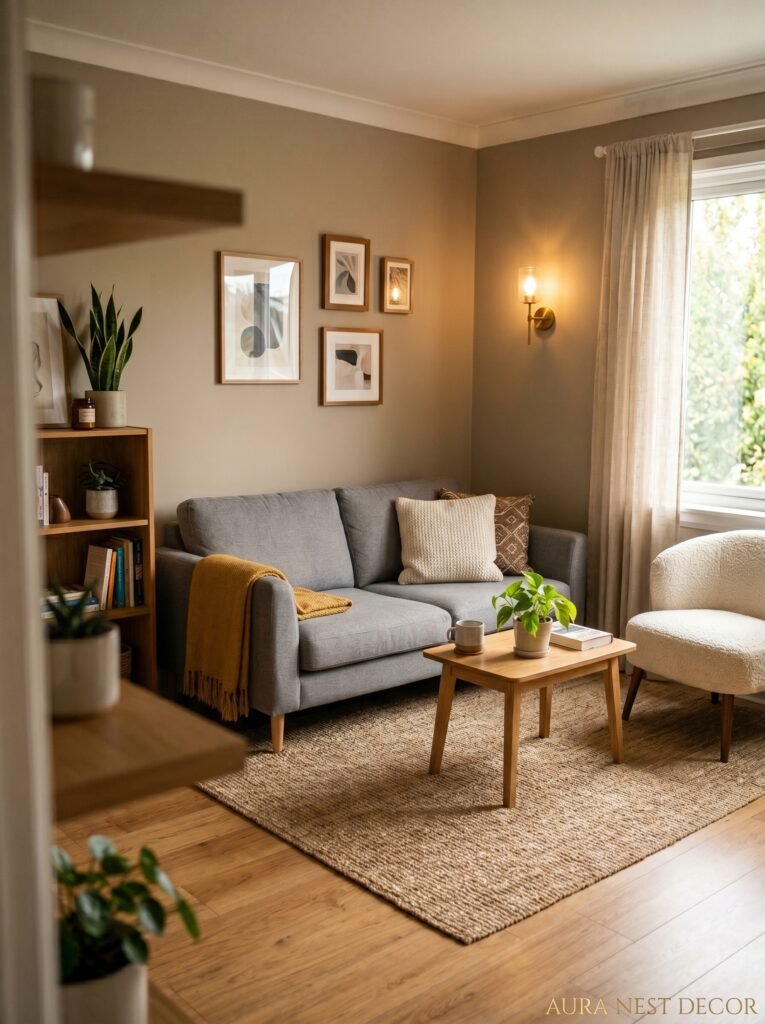
If your living room is on the smaller side — and especially if you’re in a UK flat or terraced house where the lounge isn’t exactly cavernous — there’s one rule that changes everything.
Keep the floor as clear as possible.
It sounds too simple. But visible floor space reads as breathing room, and breathing room reads as intention. The more floor you can see around and between your furniture, the bigger and more deliberate the room feels.
This means choosing a coffee table with legs (not a solid plinth base that blocks sightlines). It means not having side tables on both ends of the couch unless you genuinely need them. It means a rug that’s the right size rather than one that’s too big and edges right up to the walls.
A grey couch in a small room isn’t a problem — grey is actually one of the best colors for small spaces because it doesn’t jump forward the way darker tones can. It recedes quietly and lets the room breathe.
—
11. Dark vs. Light Grey — Because They’re Actually Two Totally Different Problems
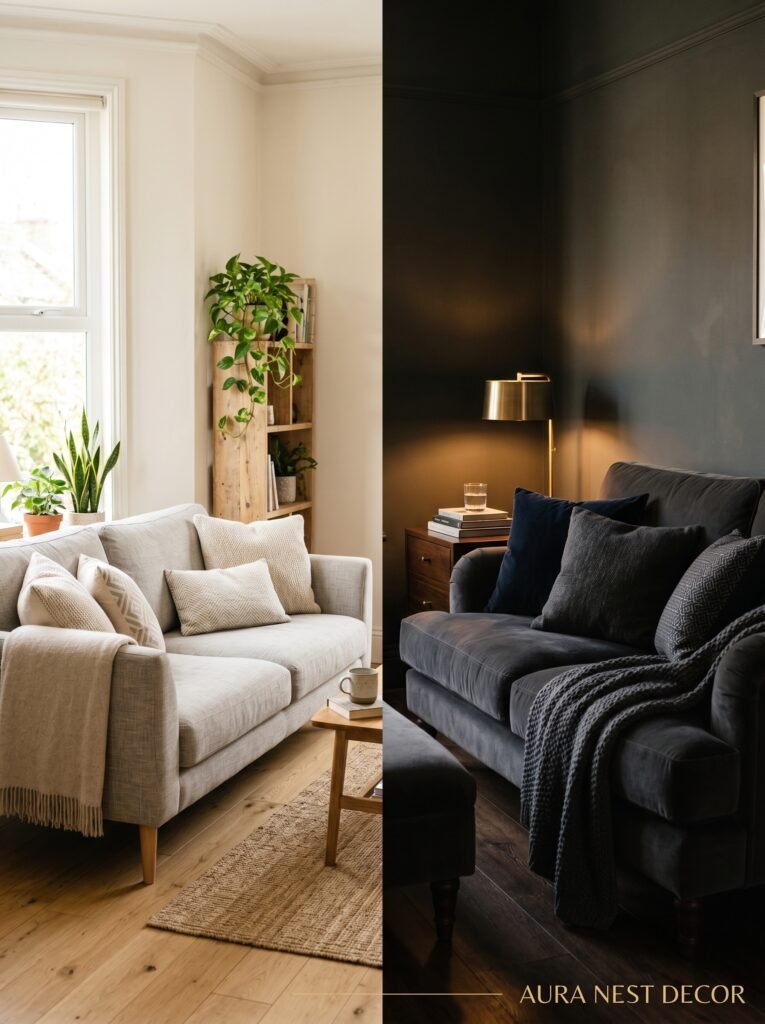
Your medium-to-dark charcoal grey couch and your soft dove grey couch are not the same piece of furniture when it comes to styling. I feel like this distinction gets glossed over in about 90% of the advice out there.
A charcoal or darker grey couch can absolutely handle bold, contrasting colors. Bright mustard. Deep jewel tones. Vivid emerald green. It’s got the depth to take it. The risk with a dark grey couch is making the room feel heavy, so you need to counterbalance with lighter elements somewhere — pale walls, natural wood, lots of light sources.
A lighter or mid-tone grey couch is more delicate in a weird way. It can go either warm or cool depending on what you put around it. Warm it up too much and it starts to look faintly pinkish. Cool it down too much and it washes out. The sweet spot with a light grey couch is those dusty, muted warm tones — the aged pinks, the smoked creams, the warm greens that are more sage than neon.
Know which grey you have before you start buying cushions, basically.
—
12. The Small Detail That Ties the Whole Look Together and Costs Almost Nothing

Side note — and this is genuinely one of my favorite styling tricks ever — you can tie an entire room together with scent.
I’m serious. A candle or a diffuser near the grey couch area that smells like amber or sandalwood or warm cedar does something weird and specific to how that room feels. People walk in and they immediately sense that it’s cozy before they’ve even processed what they’re looking at. Scent bypasses the visual brain entirely. It hits the emotion first.
Warm, woody, slightly sweet scents make grey rooms feel welcoming. Fresh, clean, cold scents (think certain white tea or ocean-type candles) make them feel austere. It’s a minor thing but it’s not a minor thing, if you know what I mean.
Pair that with a soft knitted throw and some low lamp light and your grey couch becomes the place everyone gravitates toward. Which is exactly what it should be.
—
❓ FAQ
Q: What color throws and cushions go best with a grey couch? A: Warm, earthy tones work the best — terracotta, rust, mustard, camel, and dusty rose all complement grey beautifully. Avoid bright white or very cool-toned accessories, which can make the whole space feel clinical rather than cozy. Off-white, ivory, and cream are fine; stark white generally isn’t.
Q: How do I make a grey couch look less boring or cold? A: Layering is everything. Start with a warm-toned rug, add textured cushions, drape a chunky throw casually, and — this is the big one — add warm ambient lighting from a floor or table lamp rather than relying on overhead lights. Plants help a lot too, especially larger ones with some presence to them.
Q: Should I paint my walls a dark color if I have a grey couch? A: It’s a personal choice, but a deep, warm tone like dusty sage, earthy terracotta, or a warm clay can look incredible and adds depth without making the room feel like a cave. If you’re nervous about committing, test a large sample patch first and look at it at different times of day — grey couches shift so much in different light, and so will your wall color.
—
💭 Final Thoughts
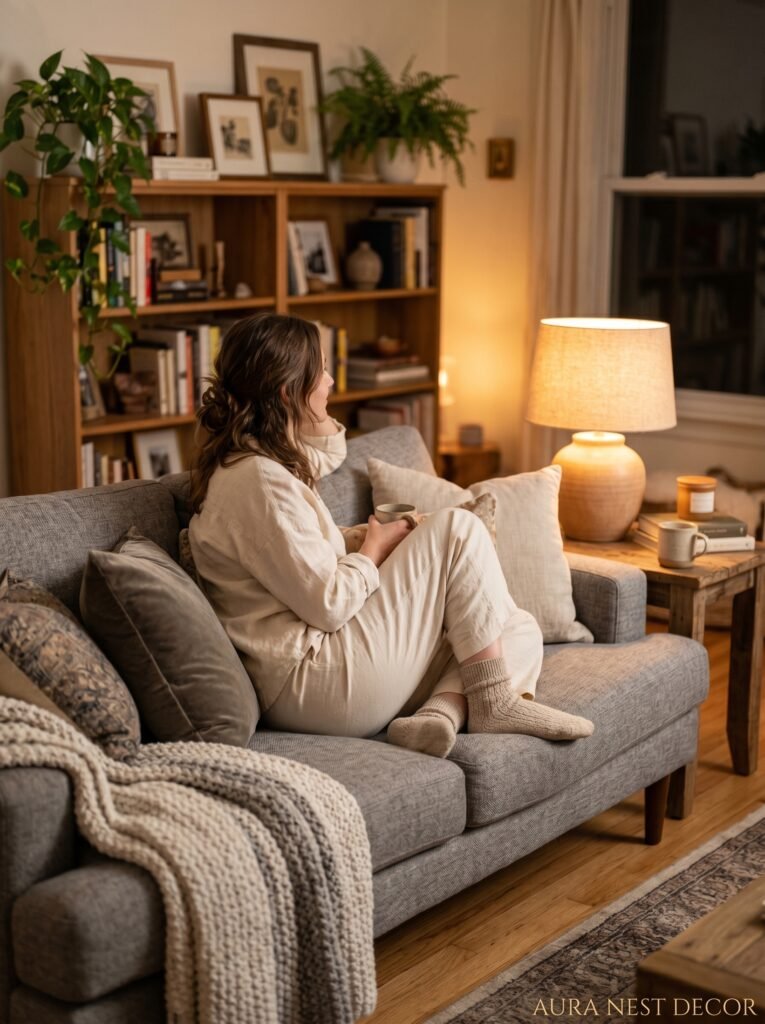
A grey couch doesn’t want to be boring. It’s been waiting for you to take it somewhere interesting. All it needs is warmth around it — in the lighting, in the colors, in the textures, in the small sensory details that add up to a room that feels genuinely yours.
The most beautiful living rooms aren’t the ones that look like a catalog. They’re the ones where every layer has a reason, even if that reason is just “I loved this and it made me feel something.”
So what’s the one thing in your living room right now that you could change this weekend — and what’s been stopping you?