The Dark Grey Couch That Actually Makes Your Living Room Look More Expensive
You bought it, or you’re about to. That deep, slate-grey sofa sitting in the middle of your living room — and suddenly you’re wondering if you made a bold decision or a beautiful mistake. Here’s what nobody tells you: dark grey is one of the most versatile, sophisticated foundations you can build a room around. The trick is knowing what to do next.

—
1. Why Dark Grey Became the New Neutral (And Why It’s Staying)
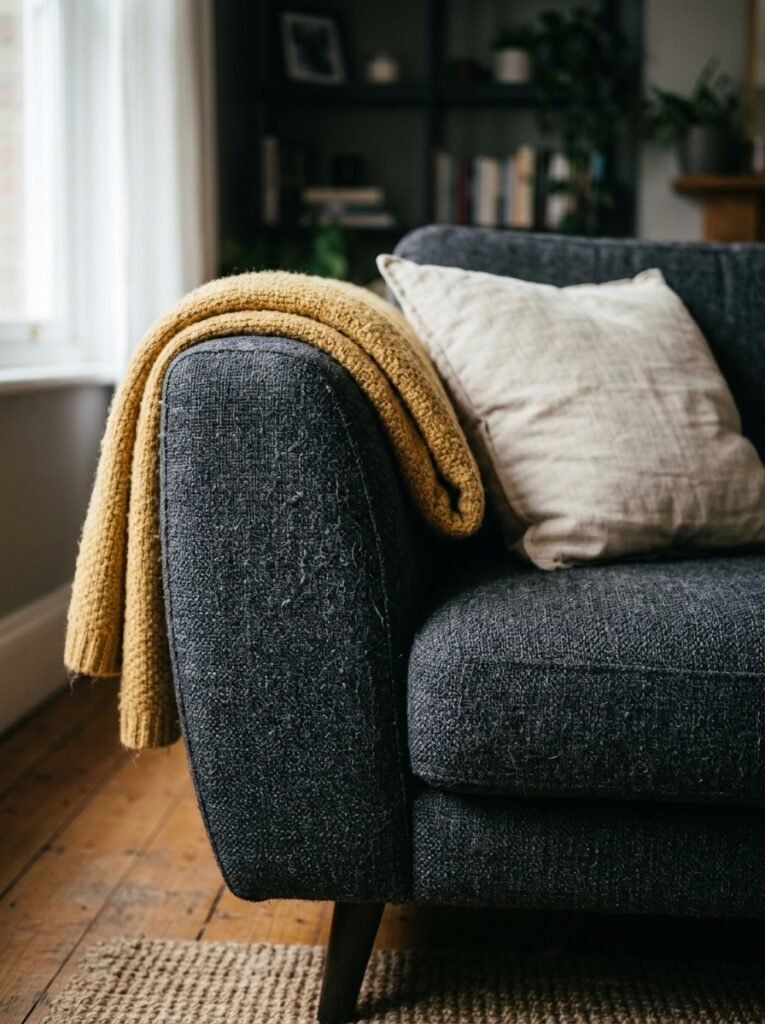
Beige had its moment. White linen had its decade. But dark grey? Dark grey is quietly becoming the defining sofa choice of modern interiors, and not just because it photographs beautifully for Instagram.
It earns its place because it does something neither white nor cream can do — it grounds a room. A dark grey sofa creates a visual anchor, a piece of furniture that the rest of the room can genuinely revolve around. It says: this is the center of gravity. Everything else can breathe.
The tone itself matters enormously. Charcoal leans warm when natural light hits it in the afternoon, especially paired with wood and brass. True slate sits cooler and more architectural. Blue-grey (that dusty, almost-indigo version you see everywhere right now) feels moody without being heavy. Knowing which grey you have shapes every decision that follows.
British interiors have embraced this confidently — think Farrow & Ball’s Mole’s Breath, that slightly warm charcoal that works in Victorian terrace living rooms with high ceilings and original cornicing. American interiors have taken it in a more expansive direction — wider sofas, lower profiles, more contrast. Both approaches work. What makes them work is intention.
Dark grey doesn’t ask you to decorate around it apologetically. It asks you to commit.
“A dark grey sofa doesn’t need saving. It needs framing.”
—
2. The Wall Color Conversation You Actually Need to Have
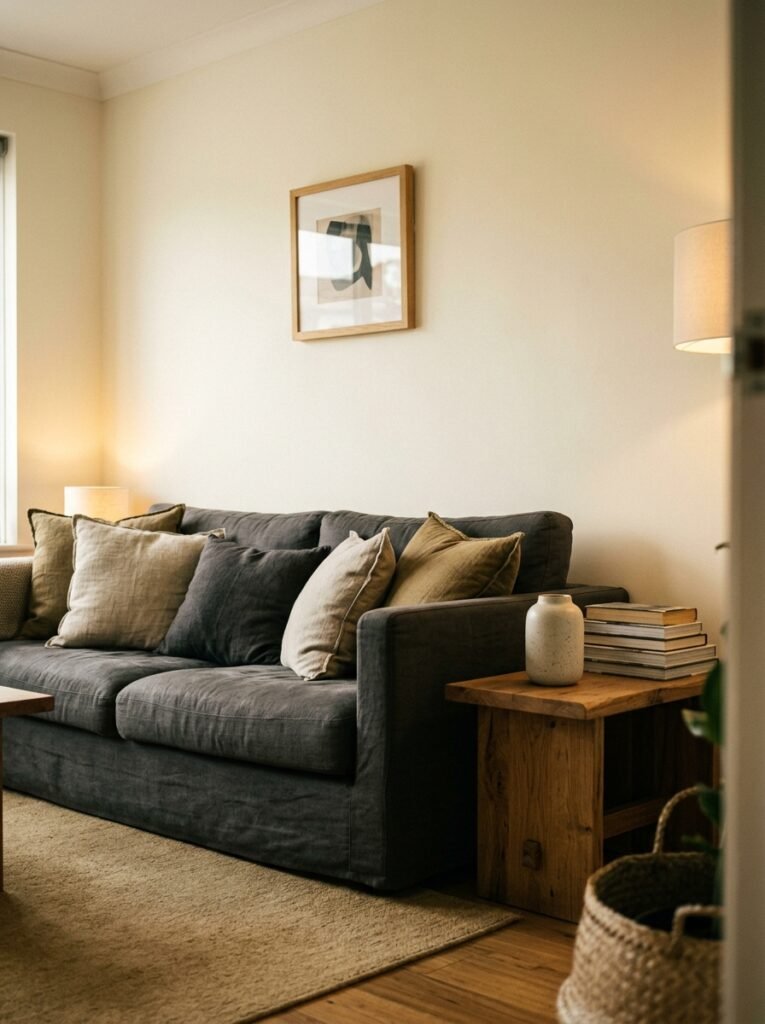
The most common mistake people make with a dark grey sofa is putting it against a white wall and calling it done. It’s not wrong. It’s just unfinished.
White walls with a charcoal sofa create contrast, yes. But they can also make a room feel cold — like a showroom rather than a home. The fix is surprisingly simple: go warmer on the walls than you think you should.
A soft putty, a warm greige, a barely-there blush — these tones work in a way that startles people. The grey sofa suddenly reads as rich rather than heavy. The room stops feeling like it’s trying to be minimal and starts feeling like it has taste.
For those who do want contrast, consider a deep accent wall rather than four white ones. Sage green behind a dark grey sofa is having a serious moment right now. So is terracotta. So is a dusty navy that almost matches the sofa but not quite — that tonal layering creates a depth you can feel when you walk into the room.
If you’re in a period UK home with older walls, don’t fight the imperfections. A slightly limewashed or chalky warm white makes the sofa look intentional rather than accidental. If you’re in a newer American build with smooth drywall, you can go bolder. Try a warm taupe or even a muted olive. You’ll be surprised.
The wall color doesn’t frame the sofa. It has a conversation with it.
—
3. The Rug Underneath Everything — Get This Right and the Rest Follows
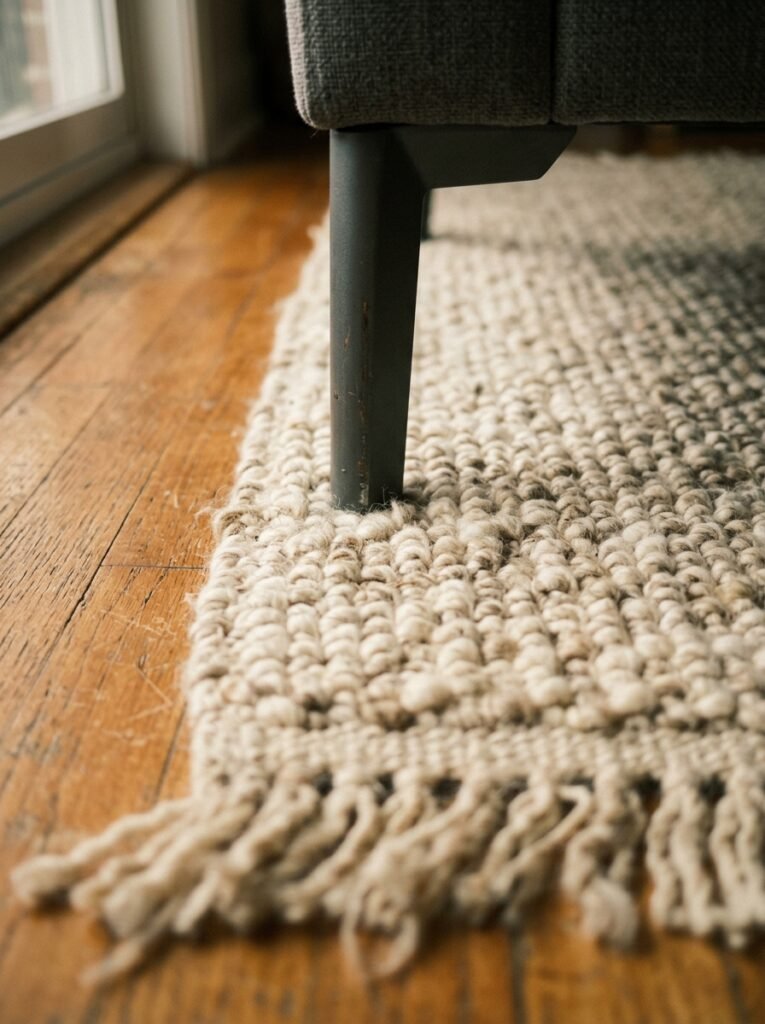
The rug is doing more work than you think. It’s the element that either ties the dark grey sofa into the room or leaves it floating.
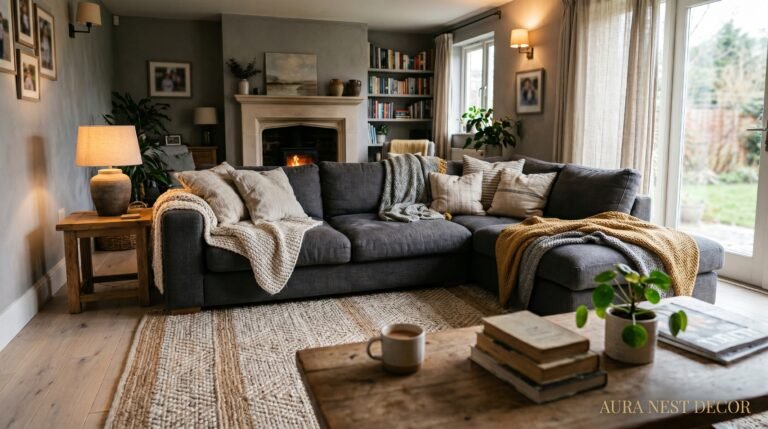
For a modern look, contrast is your friend. A pale jute or natural fiber rug under a charcoal sofa creates texture contrast that is incredibly satisfying — rough and organic beneath something smooth and tailored. It softens the room without diluting it.
A cream or off-white wool rug works beautifully, especially with gold or brass accents elsewhere. The warmth from the rug reflects upward and changes how the sofa reads entirely.
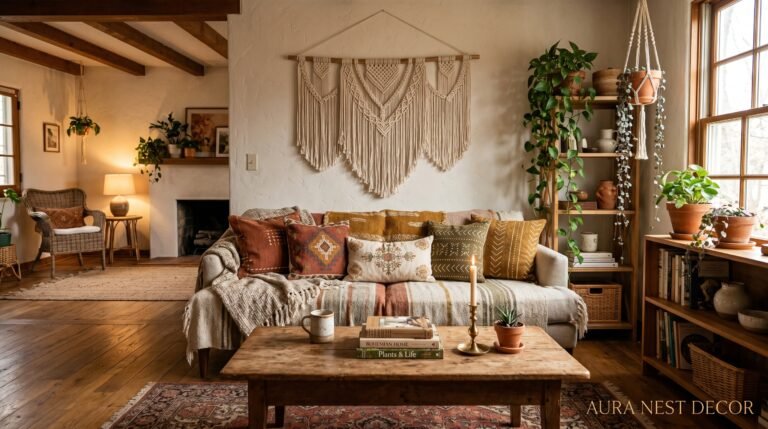
Patterned rugs are underused here. A vintage-style Moroccan rug in terracotta and ivory under a grey sofa is a combination that keeps showing up in every beautiful living room right now for a reason. It sounds like it shouldn’t work, and then it absolutely does.
Size matters more than pattern. Get the rug big enough that the front legs of the sofa sit on it. When a rug is too small, the room looks like it gave up. When the rug is properly sized — large, grounding, confident — the whole seating area becomes a defined space rather than a collection of furniture.
In smaller UK living rooms, this principle is even more important. A well-chosen, generous rug in a compact room creates the sense that the space was designed rather than assembled.
—
4. The Color That Keeps Showing Up in Every Beautiful Grey Sofa Room Right Now
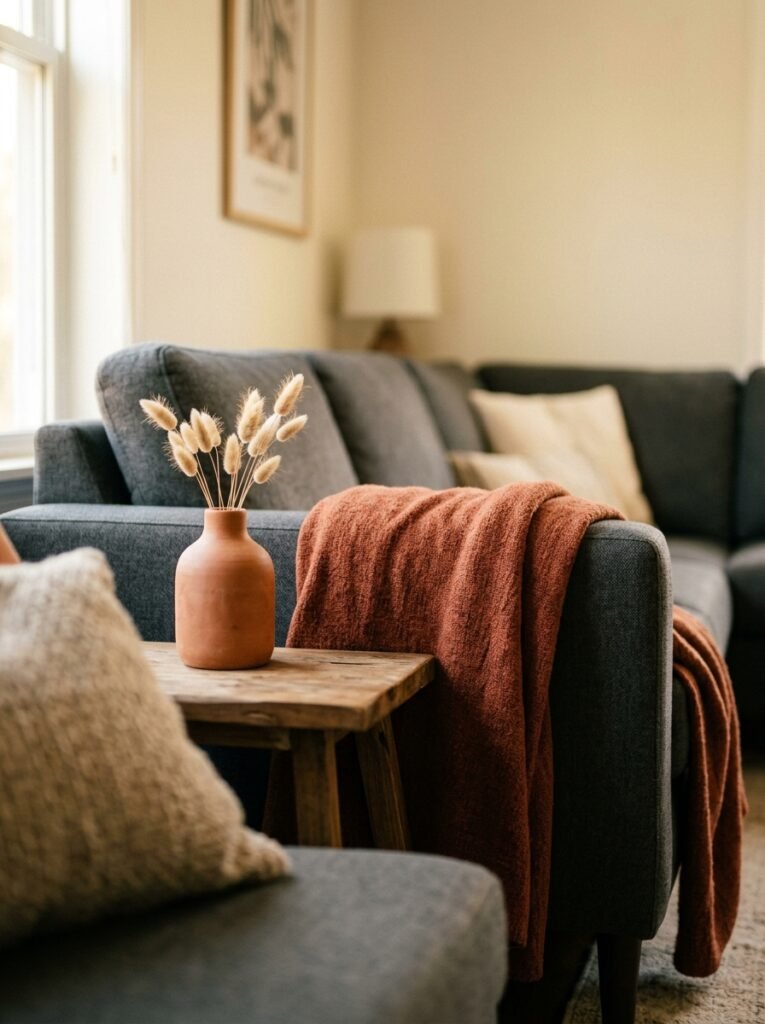
Terracotta. Warm rust. That particular shade of dried clay that sits somewhere between orange and brown.
It sounds counterintuitive. But next to a dark grey sofa, terracotta does something almost alchemical. The cool depth of the grey makes the warm red-orange pop in a way that feels both bold and grounded. It doesn’t fight the sofa. It completes it.
You don’t have to commit to terracotta on every surface. Start with a pair of cushions in a warm rust linen. Add a ceramic vase in that dusty, sun-baked clay color. Bring in a throw that edges toward paprika. The grey sofa holds all of it.
Burnt orange and mustard yellow work on the same principle — they’re warm, earthy, and deeply rooted in color theory. Analogous colors to terracotta, they create harmony rather than chaos.
This combination is extremely popular in British homes right now, particularly in those warm, gallery-style living rooms with gallery walls and collected objects. In American interiors it often appears in that warm California-casual aesthetic — linen and clay and natural wood.
If you’re nervous about going terracotta, start with one pillow. Just one. You’ll add more within a week.
“Terracotta next to dark grey isn’t a risk. It’s the answer.”
—
5. What to Put On the Coffee Table (Because It Matters More Than You Think)
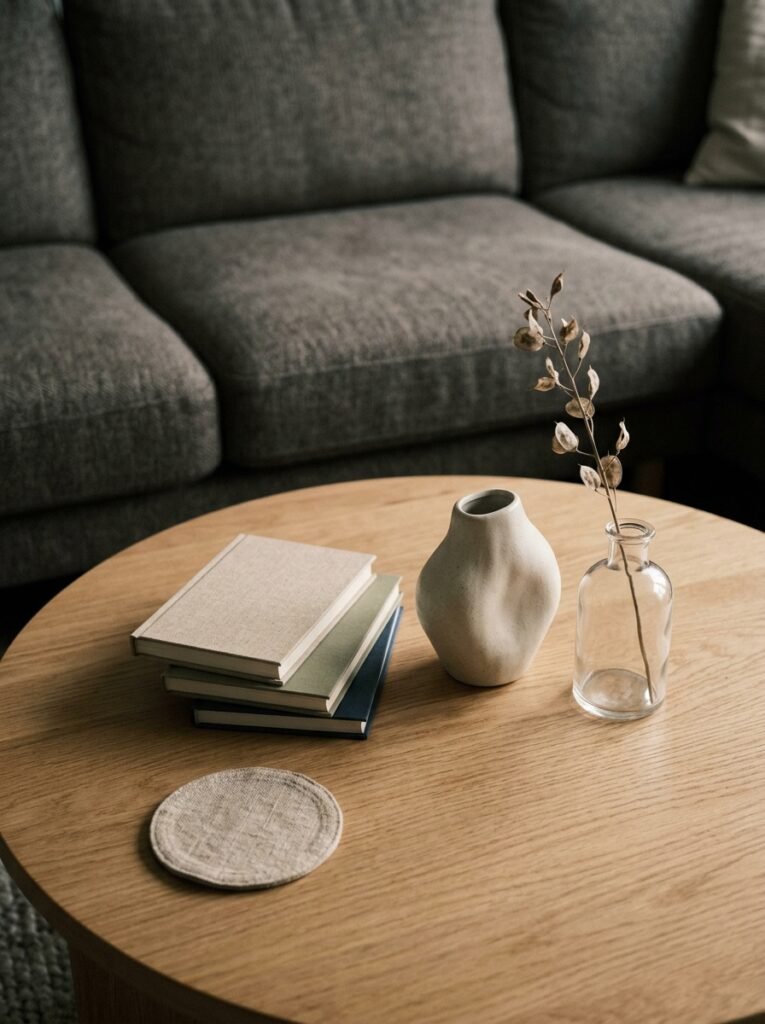
The coffee table is the sofa’s partner. Get this combination right and the room snaps into focus.
For a modern look with a dark grey sofa, a light-toned coffee table creates balance. Pale oak or ash wood in a simple rectangular form. Travertine in that warm cream-stone color. White or cream marble with subtle veining. The contrast between the dark sofa and the light table creates a visual tension that feels expensive and intentional.
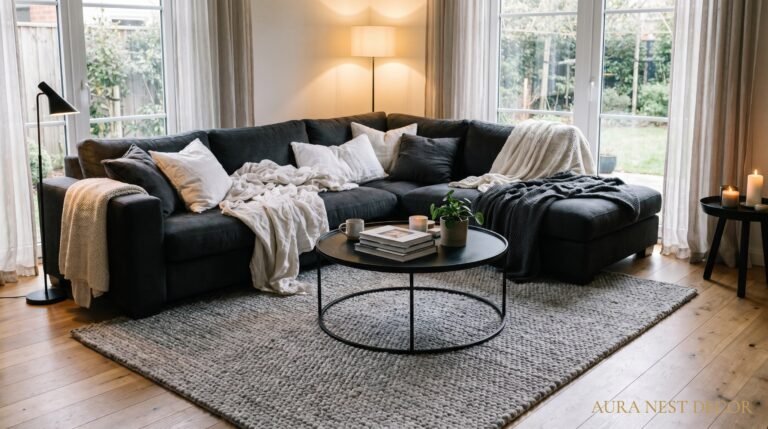
Metal is another strong option. A black iron coffee table creates a tonal, dramatic look — very editorial, very intentional. Brass or gold-toned metal sits differently, adding warmth that the grey can absorb beautifully.
What goes on the table matters too. A single large candle in a concrete or ceramic holder. A small stack of coffee table books — three is the magic number — with their spines arranged intentionally. A low bowl or tray containing a few considered objects: a stone, a sculptural piece, a dried flower stem. Not a collection of random things. Not a clutter of pretty objects. A small, curated moment.
The coffee table isn’t just functional. It’s the thing everyone looks at while they’re talking on your sofa. Make it count.
—
6. The Lighting Formula That Makes Grey Sofas Look Incredible After Dark
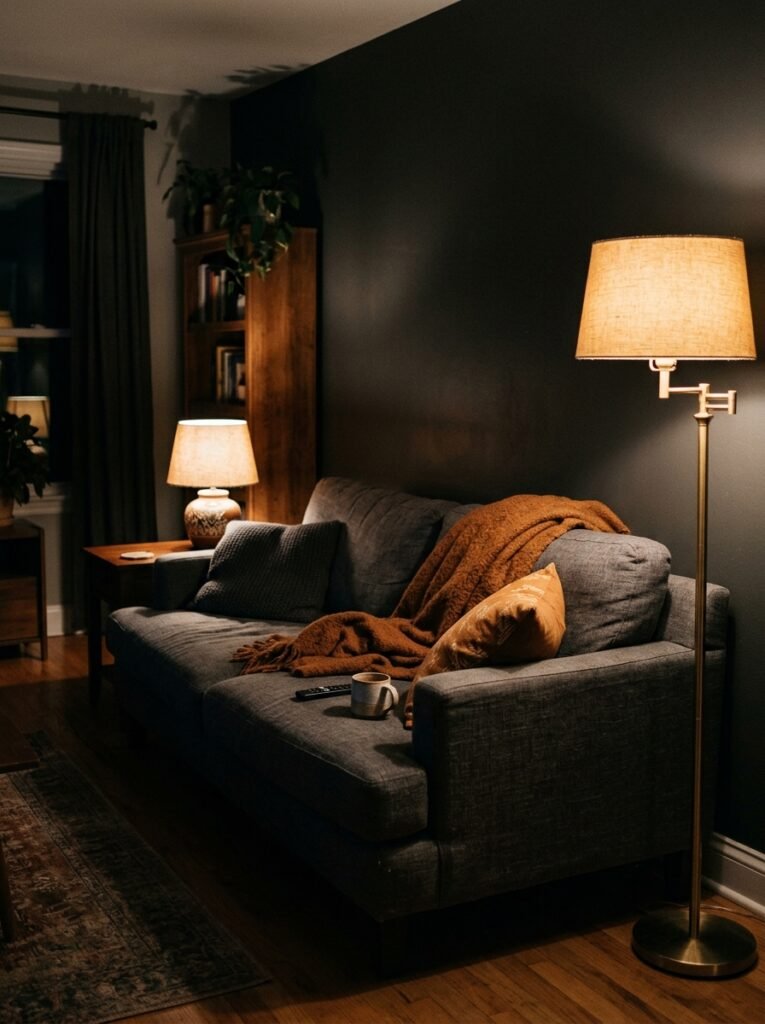
Here’s a truth about dark grey sofas: they look different at night. Under flat overhead lighting, they can feel cold, institutional, almost gloomy. Under warm, layered lighting, they feel like the most inviting place in the house.
The secret is multiple light sources, none of them overhead. A floor lamp with a linen shade standing beside the sofa — that amber warmth pooling over the cushions. A table lamp on the side table casting a soft circle of light. A few candles on the coffee table or mantle. These three elements together create what interior designers call layered lighting, and it changes everything.
Bulb temperature is non-negotiable. Warm white, around 2700K. Not the blue-white daylight bulbs that make everything look clinical. The warm ones. The ones that make the room look the way it smells when something good is on the stove.
Dimmer switches are worth retrofitting if you don’t have them. The ability to bring the overhead light down to nothing while the lamps do their work is genuinely life-changing in a living room with a dark sofa.
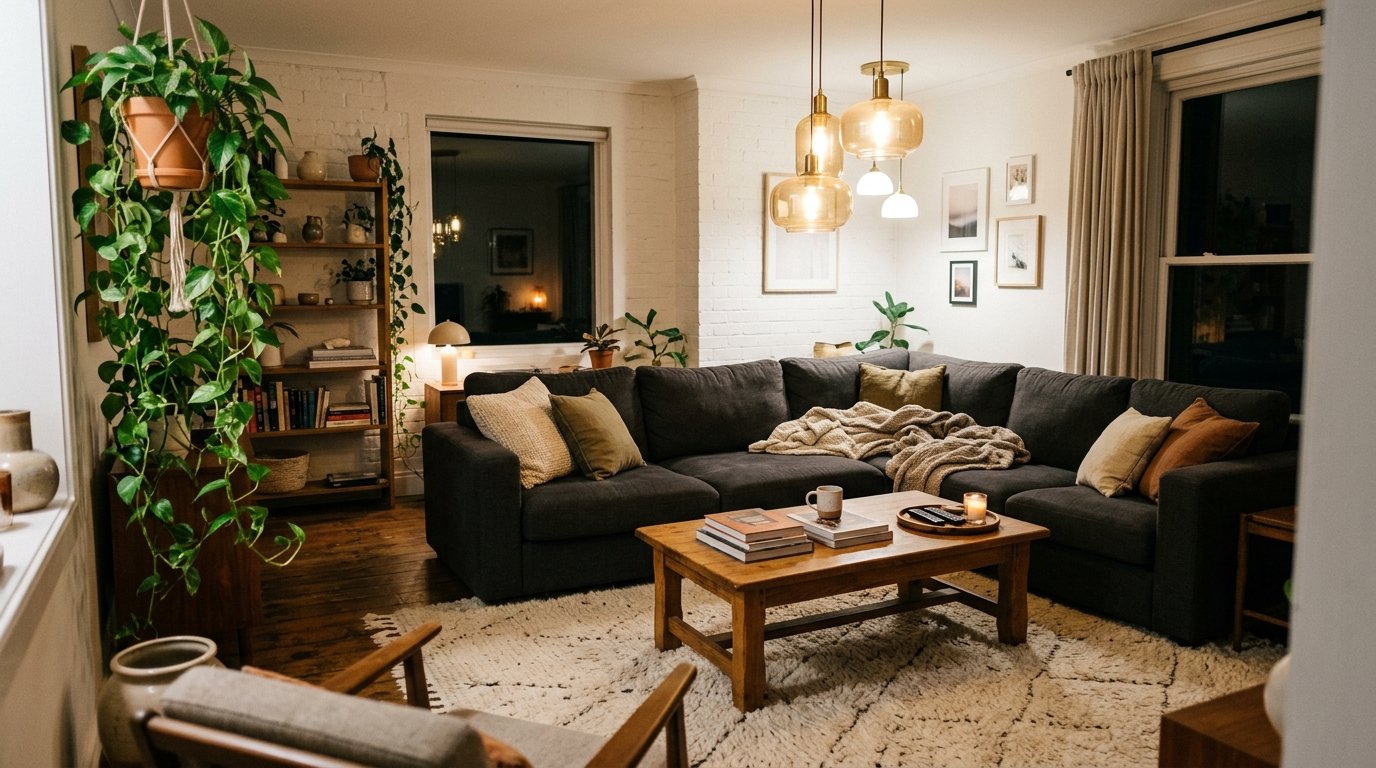
Edison bulbs in a pendant or exposed fixture add that filament warmth that photographs beautifully and looks even better in person. The amber glow of an Edison bulb at 7pm on a dark grey sofa is, honestly, what we’re all trying to recreate when we pin living room pictures.
—
7. Cushions That Don’t Look Like Everyone Else’s Cushion Situation
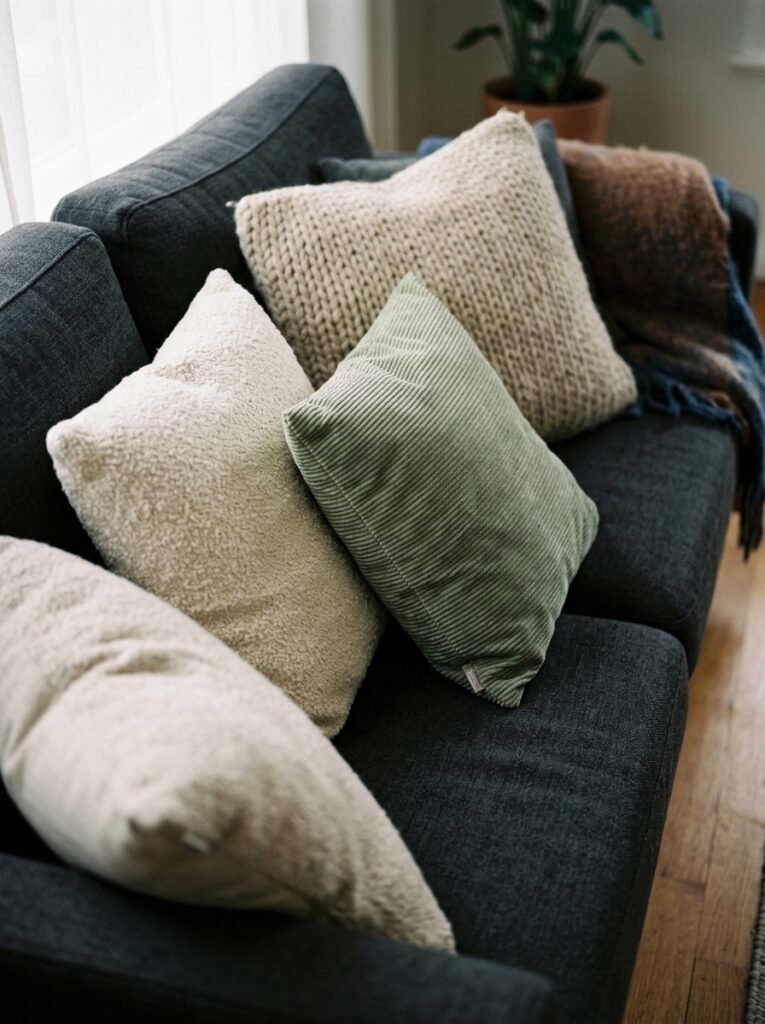
Walk into a showroom with a dark grey sofa and you’ll see the same cushion arrangement every time. Two pale grey cushions. Two mustard cushions. Maybe a white one. Symmetrical. Safe. Forgettable.
Do something different.
The best cushion arrangements feel collected rather than coordinated. They feel like each cushion was chosen for its own reason, not as part of a matching set. Different textures: a chunky knit, a smooth velvet, a rough linen weave. Different sizes: large square, standard square, a bolster or rectangular. Different but related tones: dusty pink and terracotta and cream, rather than one specific color family bought from the same range.
For a dark grey sofa, cushion colors that work beautifully include warm stone, dusty rose, deep olive, burnt sienna, cream, soft caramel, and navy. What doesn’t work as well: anything too cool or too corporate. Avoid: slate grey cushions on a slate grey sofa. Avoid: black cushions everywhere. The point is to bring warmth into a cool foundation.
Odd numbers feel more natural than even. Three cushions or five. Not four. Not two.
And please: a throw, casually draped over one arm. Not folded neatly. Just placed, like someone left it there after a Sunday afternoon nap.
“The best cushion arrangements look like you didn’t try. They take considerable trying.”
—
8. The One Plant That Completely Changes the Energy of a Grey Living Room
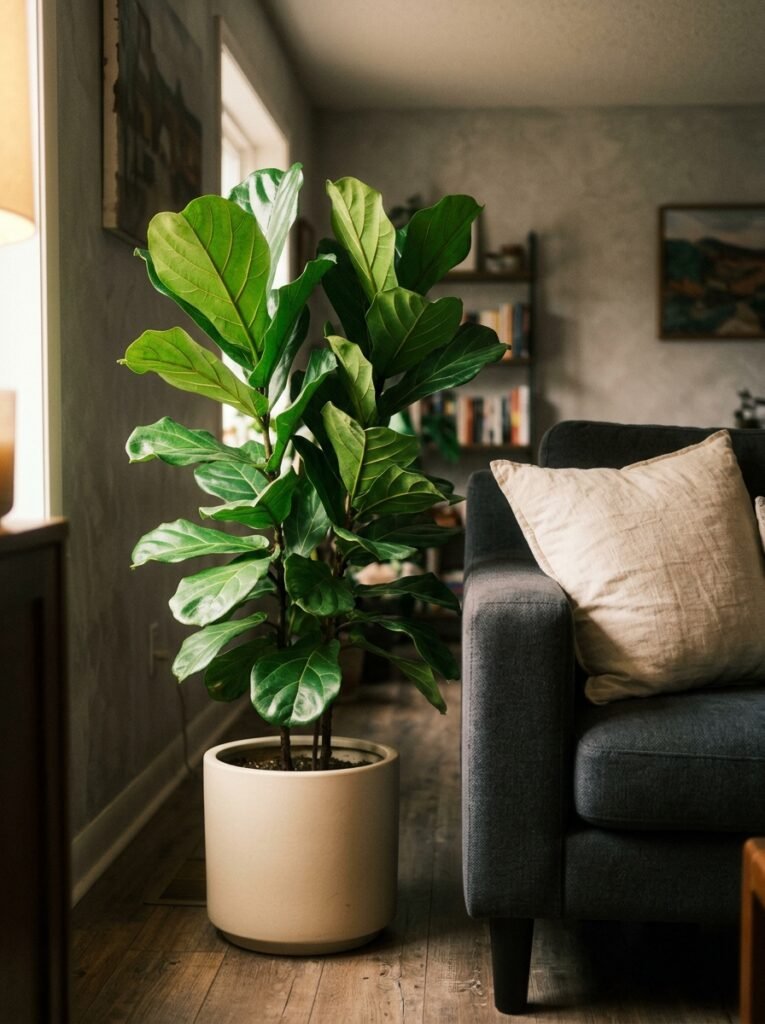
Plants and grey sofas should be legally required to exist together.
The specific plant that does the most work here, the one that shows up in every beautifully styled grey-sofa room, is the fiddle leaf fig. That’s not a new opinion — it’s been popular for years — but it’s popular because it’s right. The large, dark green leaves against a grey sofa create a contrast that feels alive, lush, breathing.
If fiddle leaf figs feel too expected, consider a large olive tree in a terracotta pot (there’s that terracotta again). The soft silvery-green of olive leaves against dark grey is extraordinarily beautiful. It’s a combination you see in Italian and French interior photography and immediately pin.
Trailing plants work differently — a pothos or a trailing philodendron on a shelf or in a hanging planter adds softness and organic movement to a room that might otherwise feel too composed.
The pot matters as much as the plant. A terracotta pot is always right. A ceramic pot in a warm off-white or matte sage works beautifully. Avoid: generic black plastic pots left visible. Avoid: very shiny glazed pots in cold colors.
One large statement plant is almost always better than several small ones cluttered in a corner. Commit to size. It pays off.
—
9. How to Make a Small Living Room With a Dark Grey Sofa Feel Intentional, Not Cramped
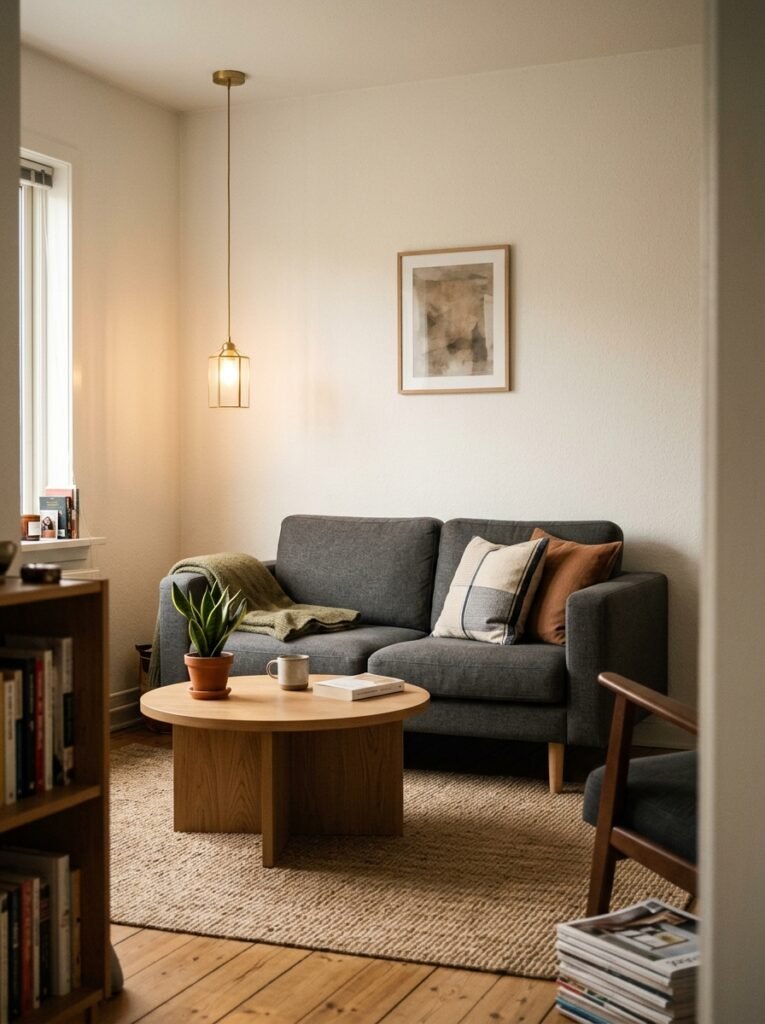
The worry with a dark grey sofa in a small space is that it will eat the room. That it will dominate, overshadow, make everything feel smaller and heavier than it is.
This is a real risk with the wrong approach. With the right approach, it becomes irrelevant.
The single most important rule: keep the area around the sofa light. Light walls (warm white or soft putty, not bright white), light rug, light coffee table. Let the sofa be the dark element in a predominantly light room. This creates a grounding effect rather than a closing-in one.
Legs matter. A sofa with visible legs — even modest ones — lifts the visual weight of the piece. The floor feels continuous beneath it. A sofa that goes to the floor in a small space creates a visual blockage. Legs create breathing room.
Mirrors are genuinely transformative in this context. A large mirror — either leaning against a wall or hung — reflects light and creates depth. In a small British living room with a front window, a mirror on the opposite wall doubles the light. It sounds obvious, and yet.
Avoid clustering too much furniture around the sofa. One chair. One coffee table. Breathing space. The room needs to feel considered, not filled.
—
10. The Bookshelf Styling Trick That Makes Grey Sofa Rooms Look Like Magazine Shoots
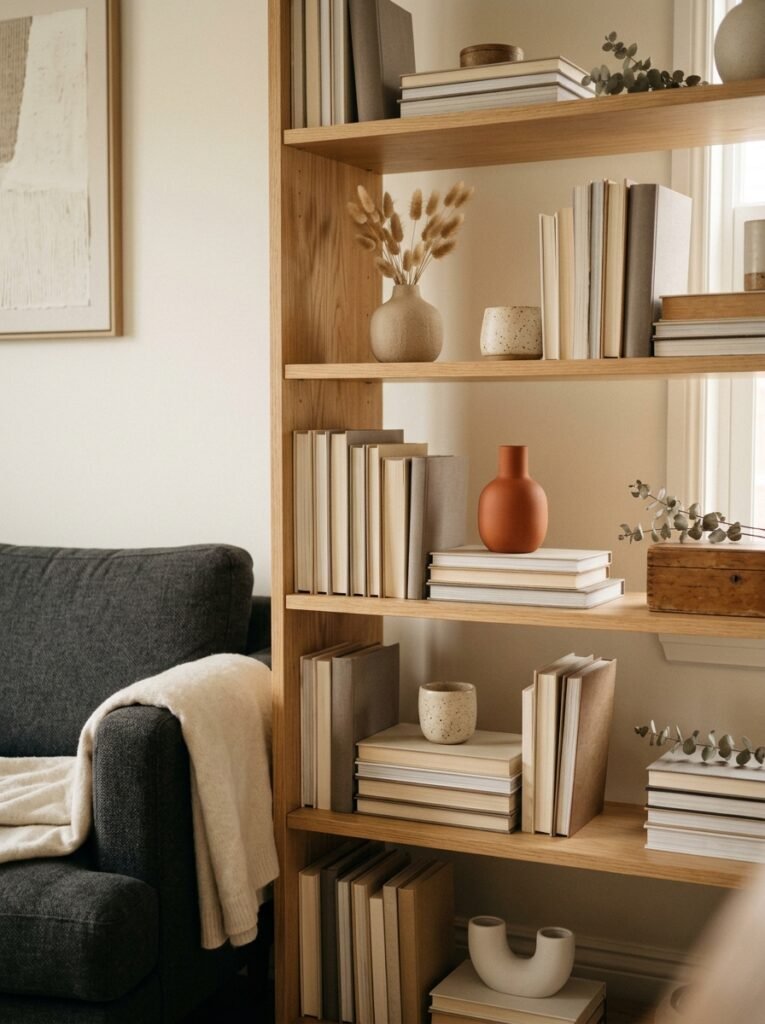
If you have shelving near your dark grey sofa — a built-in alcove shelf common in UK Victorian terraces, or a freestanding bookcase — how you style it directly affects how the sofa reads.
The mistake most people make is filling shelves entirely with books, spines out, in a random mix of colors. It looks chaotic against the calm sophistication of a grey sofa.
Instead: remove approximately a third of the books. Create space for objects. Candles, sculptural pieces, small framed artwork leaning against the back of the shelf, plants trailing down from higher levels. The breathing space makes everything look more curated.
Turn some books to face spine-inward, showing only the raw cream pages. It sounds strange until you do it and realize it creates the most beautifully calm, tonal effect — that cream-colored library aesthetic that photographs extraordinarily well.
Group books in small clusters of three to five, with an object bookending them. Build the shelf the way a stylist would: vertical stacks next to horizontal ones, varying heights, varying textures, occasional negative space.
The shelf becomes a part of the room’s composition, not just storage. Next to a dark grey sofa, a beautifully styled shelf lifts the entire space.
—
11. The Fireplace and Grey Sofa Combination That Feels Like a Hug

If you have a fireplace in your living room — and many UK homes do, whether working or decorative — the combination of that architectural feature with a dark grey sofa is one of the most inherently beautiful pairings in interior design.
The grey sofa facing a fireplace is an arrangement that goes back centuries in form if not in fabric. There’s something psychologically correct about it. The fire creates warmth and flickering light, the grey sofa absorbs and reflects it, the room feels like it was built for exactly this purpose.
For modern styling, place the sofa perpendicular or directly facing the fireplace, not awkwardly angled. Let the fireplace be the visual focus. Dress the mantle carefully: a large mirror or artwork, flanked by a pair of candles or small sculptural objects. Keep the mantle edited — three to five items maximum.
If the fireplace is purely decorative or it’s summer, fill the firebox with pillar candles in varying heights. The visual warmth it creates against a grey sofa is almost indistinguishable from the real thing in photographs, and genuinely cozy in person.
In American homes without traditional fireplaces, a flush wall-mounted electric fireplace or a bioethanol burner creates the same visual anchor with less architectural commitment.
—
12. The Styling Detail Everyone Skips That Makes the Whole Room Click

After everything — the rug, the cushions, the lighting, the plants, the coffee table styling — there’s one final detail that separates a room that looks styled from a room that looks like a home.
Personal objects.
A stack of books you’ve actually read, not just displayed. A photograph in a simple frame on the side table. A mug on the coffee table during Sunday mornings. A worn blanket that your dog also uses. These things look like nothing individually, but they tell the room’s story.
The danger with beautifully styled grey sofa rooms is that they can tip into feeling cold and magazine-ready rather than lived-in and loved. The styling holds the structure. The personal objects hold the warmth.
A single framed photograph of somewhere you’ve been, propped on a bookshelf. Your favorite candle, nearly burned down, on the coffee table. The book you’re currently reading, left open on the sofa arm. These are not clutter. These are character.
Dark grey is sophisticated. Sophistication without warmth is just an aesthetic. With the right objects and the right light and the things you actually love, it becomes a room worth staying in.
—
🌿 Quick Tips
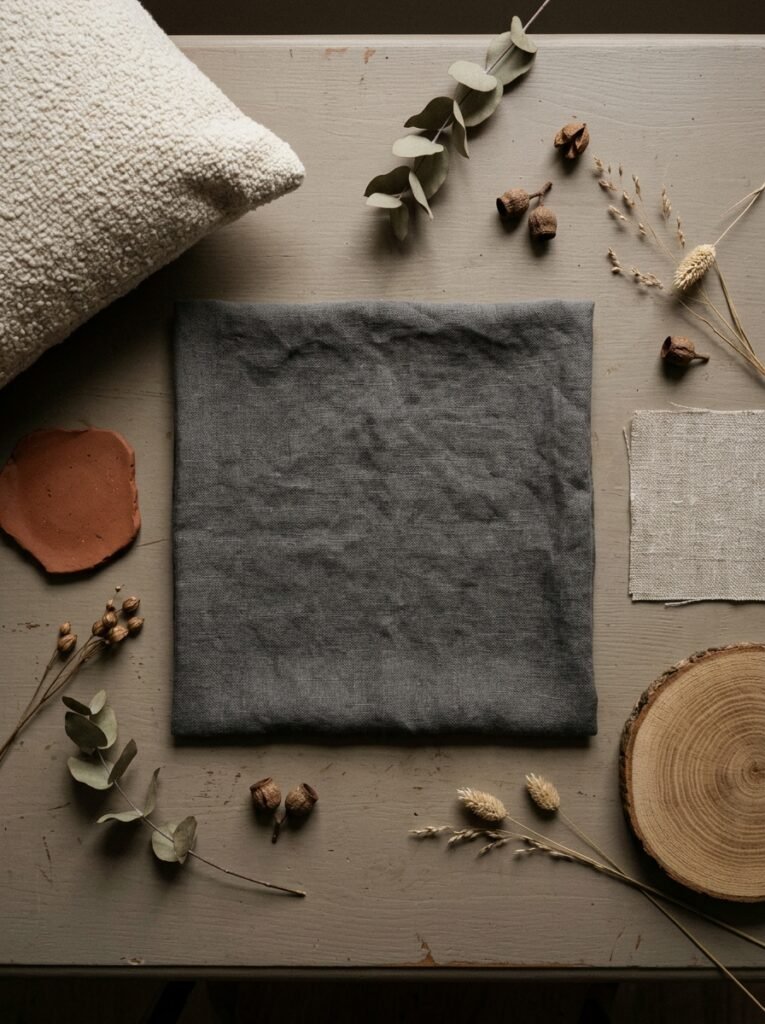
Walk into your room and identify the three warmest things in it — your grey sofa needs at least one warm element for every cool one, so adjust the balance if something feels off.
Use warm white bulbs exclusively near your sofa area. One cool-toned bulb can undermine every warm styling decision you’ve made.
If your grey sofa is blue-toned, lean into warm wood accents more deliberately — pale oak side tables, rattan elements, wooden candle holders — to counterbalance the cool.
Don’t overfill the sofa with cushions. Five maximum. The sofa needs to look like someone could sit down on it without engineering a solution first.
Reposition your sofa slightly off-center from its obvious placement. Even 15 inches away from the wall can make a room feel more designed and less default.
—
❓ FAQ
Q: What color curtains go with a dark grey sofa? A: Warm linen or off-white curtains in a natural or semi-sheer fabric almost always work, as they bring lightness to counterbalance the sofa’s depth. For something more dramatic, dusty blush, sage green, or even a deep forest green work beautifully — they add color without competing with the grey.
Q: Can you put a dark grey sofa in a small living room? A: Absolutely, as long as you keep everything around it relatively light — walls, rug, coffee table. Choose a sofa with visible legs to reduce visual weight, and don’t overcrowd the space with additional furniture. One well-chosen piece per function is the rule in a small room.
Q: Is a dark grey sofa hard to keep clean? A: Less than a light-colored one, honestly. Most dark grey upholstery hides everyday dust and light marks well. For pet hair and specific stains, a performance fabric like a tightly woven blend or a treated velvet is worth seeking out — these are widely available now and hold up beautifully to real life.
—
💭 Final Thought
Dark grey is not a difficult color to live with. It’s a generous one — it holds warmth, it holds drama, it holds the quiet beauty of a Sunday morning with coffee and good light. The rooms we come back to in our minds, the ones that feel like home before we even sit down, always have a specific feeling to them. Dark grey, done right, creates exactly that.
What’s the one thing in your living room right now that you think might finally be the piece that makes everything else click?