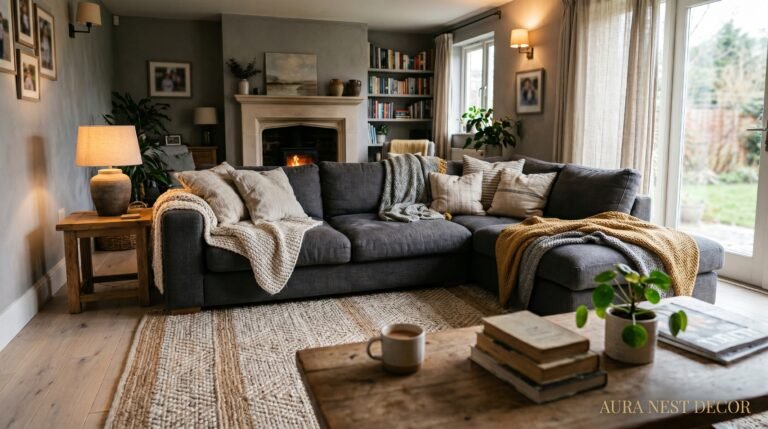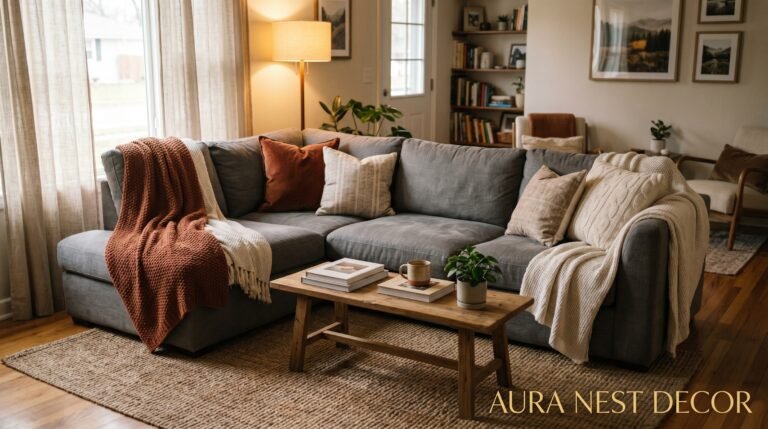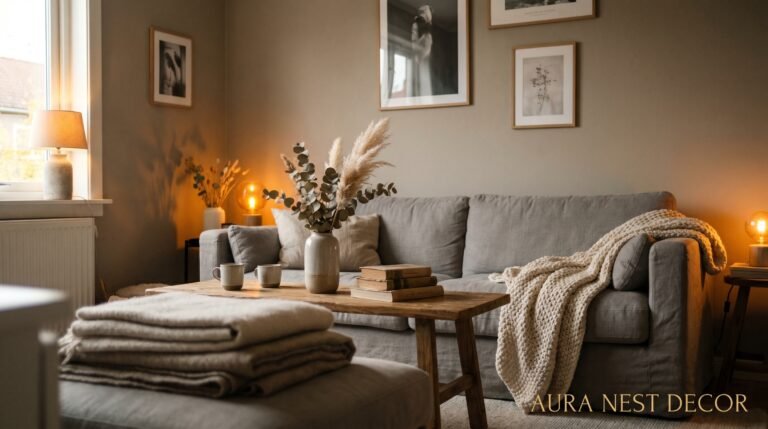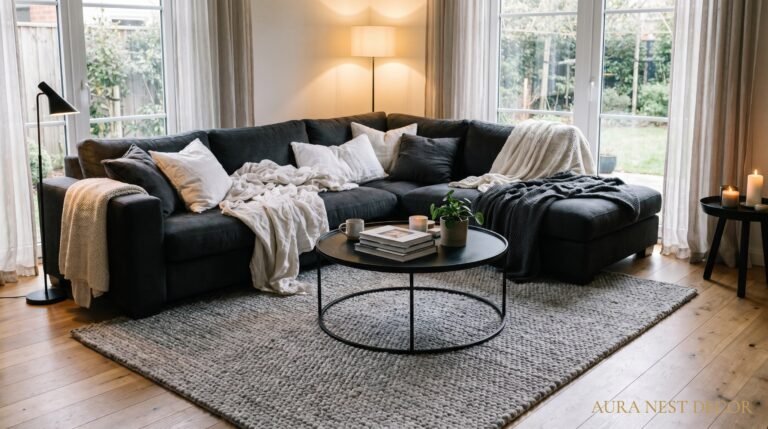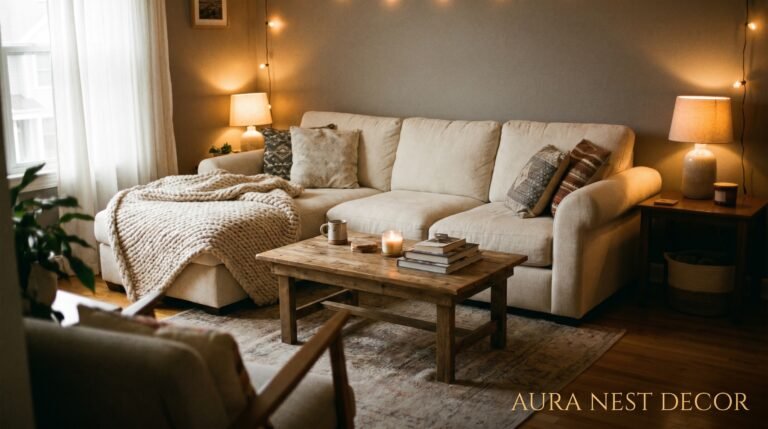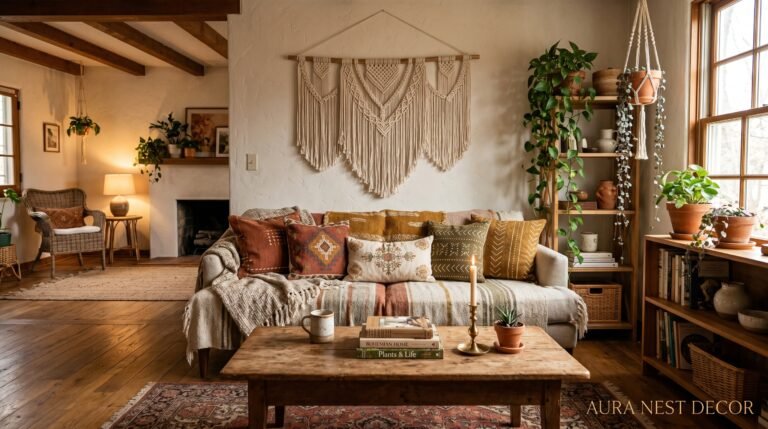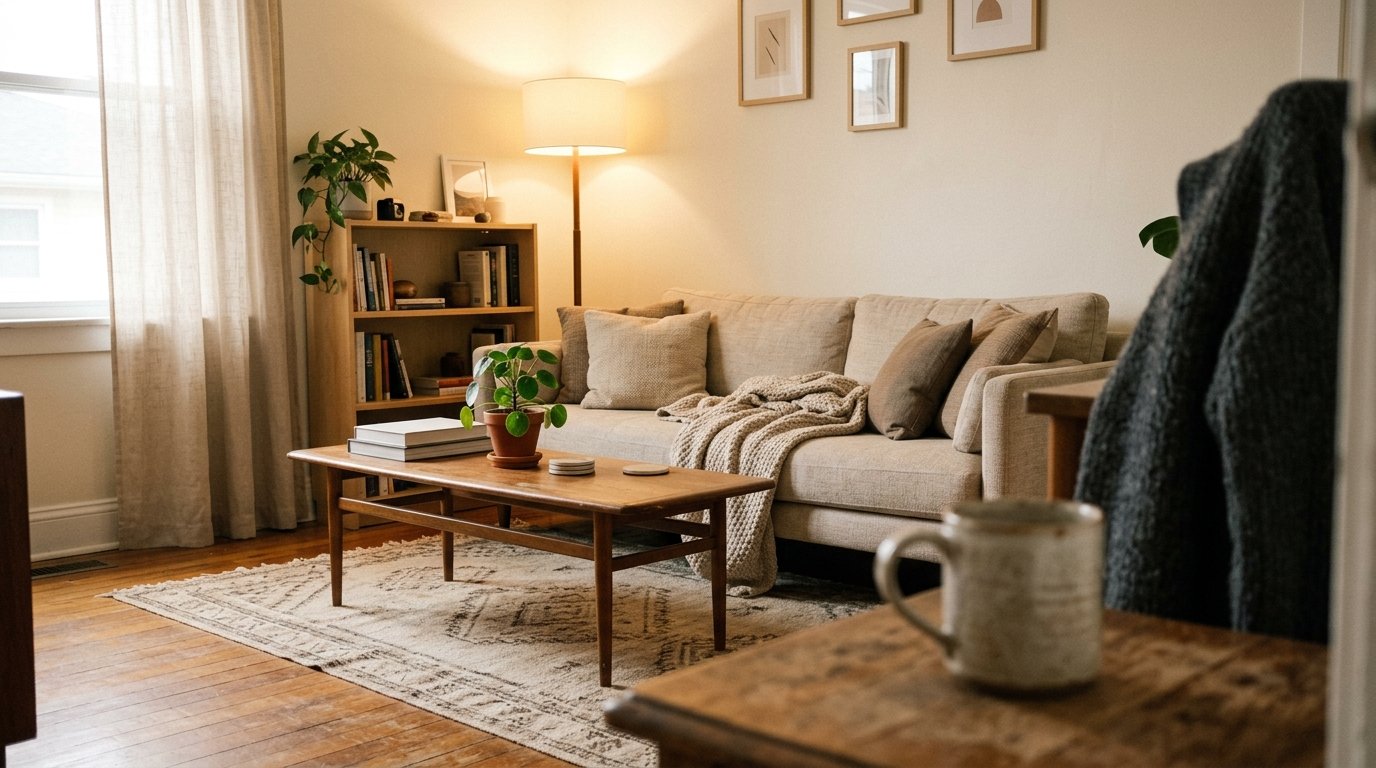
The Small Living Room Glow-Up That Has Nothing to Do With Buying More Stuff
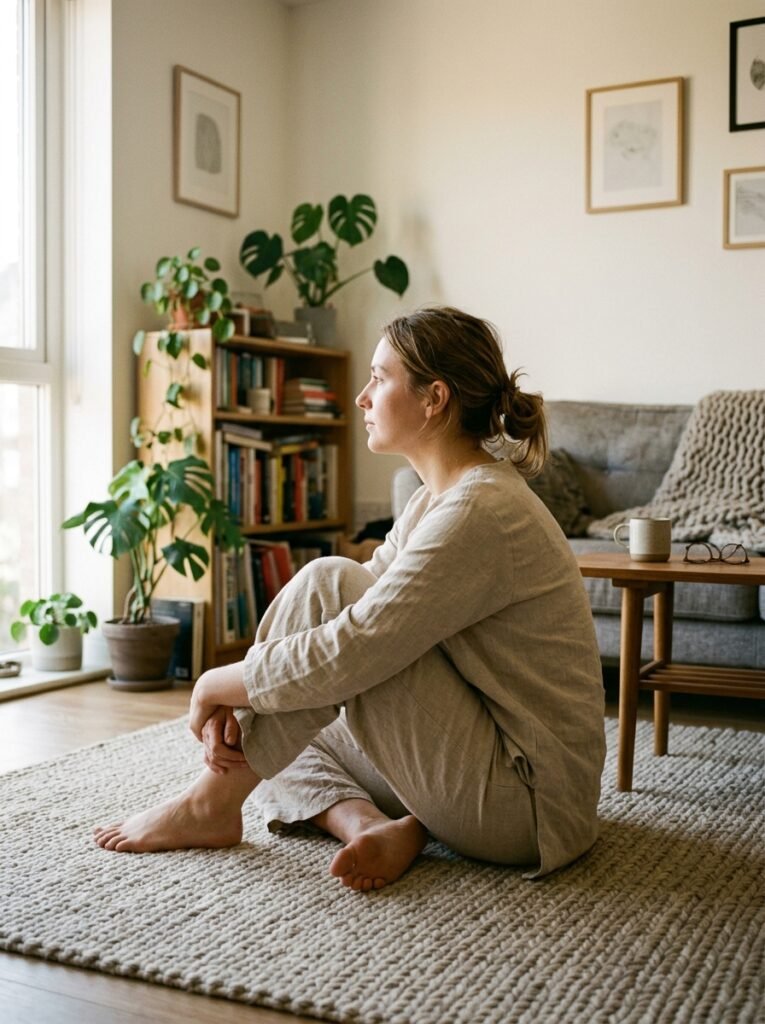
You walk into your living room and immediately feel it — that low-level hum of frustration. The space is fine. It works. But something about it feels squeezed, cluttered with potential that never quite lands. Here’s what nobody tells you: the most beautiful small living rooms aren’t the ones with the most square footage. They’re the ones where every single decision was made on purpose.
—
1. The Furniture Mistake Almost Every Small Living Room Is Making Right Now
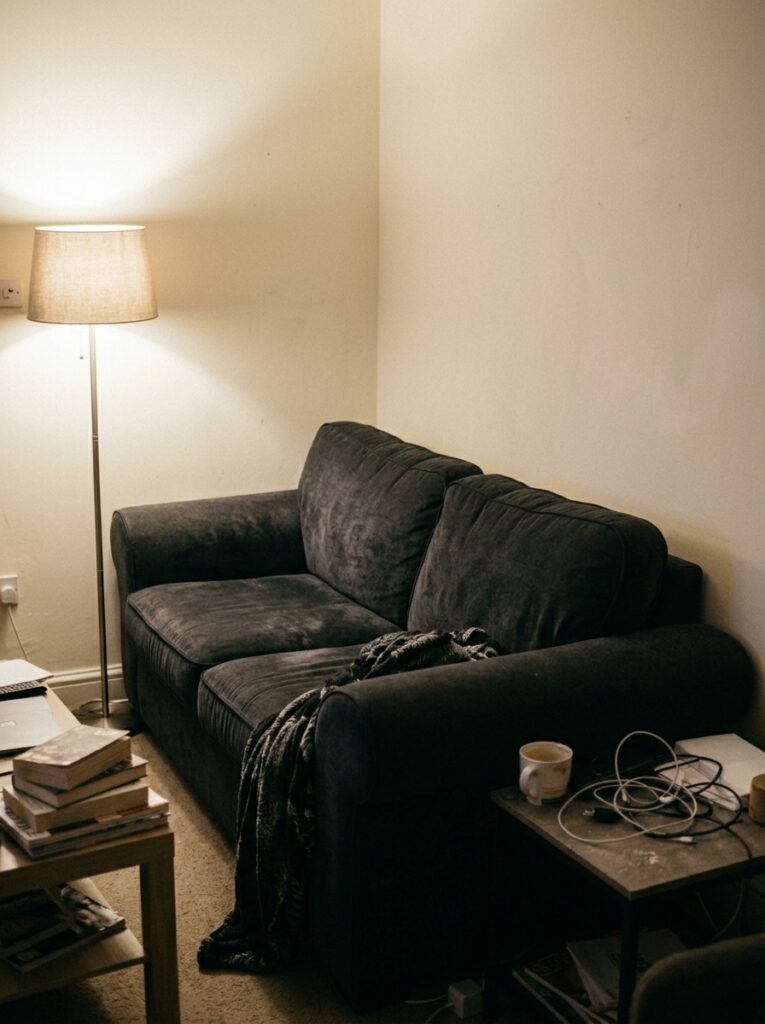
It’s the sofa pushed against the wall.
I know, I know — it feels like logic. Pull everything back, hug the perimeter, free up the middle. But this is the move that quietly kills a small living room, and once you see it you cannot unsee it.
When furniture lines the walls, your eye has nowhere interesting to go. The room reads as a waiting area, not a home. The fix sounds counterintuitive, but pull your sofa even just six inches away from the wall. Float your seating arrangement slightly inward so pieces actually face each other. Create a contained little island of living in the middle of the room.
What happens is almost magical. The space behind the sofa — that slim corridor between cushion and plaster — reads as intentional breathing room. The seating cluster feels purposeful, like a conversation zone rather than a furniture storage zone. In a small room, this visual tightness at the center actually makes the perimeter feel bigger.
In the UK especially, where Victorian terraces and purpose-built flats often give you one long, narrow sitting room, this single shift changes the whole character of a space. Try it on a Sunday afternoon. You’ll leave the sofa exactly where you put it.
“The most beautiful small living rooms aren’t the ones with the most square footage. They’re the ones where every single decision was made on purpose.”
2. The Color That Keeps Showing Up in Every Beautiful Small Living Room Right Now
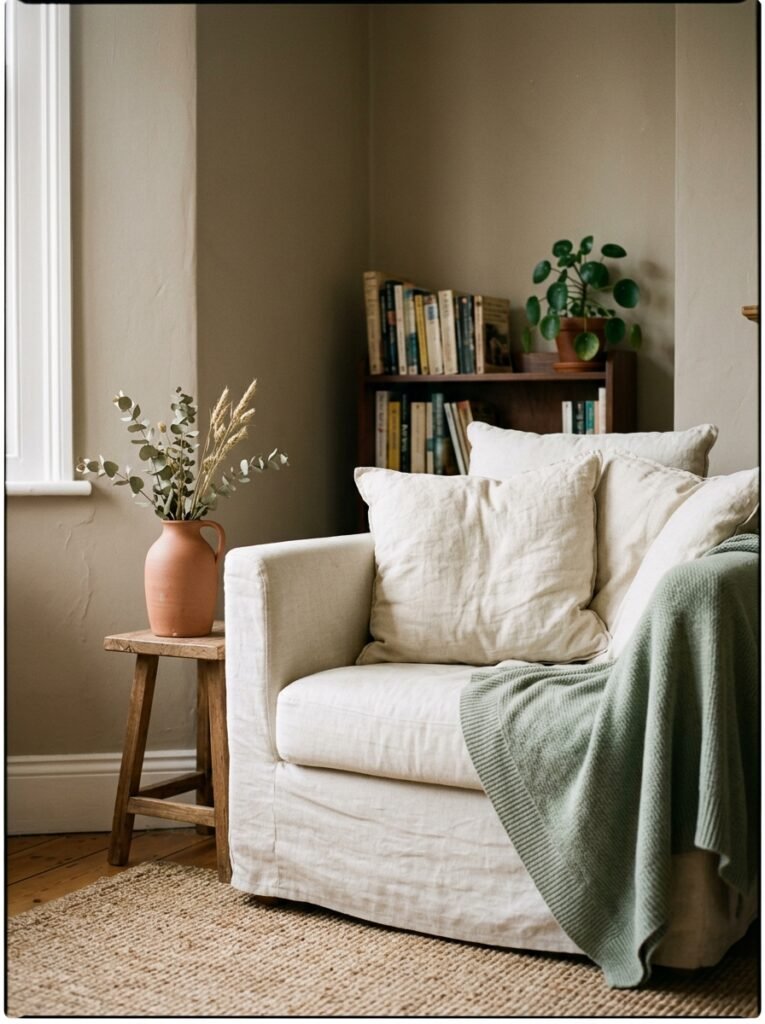
It’s not white. It’s not grey. It’s not even the moody navy that dominated every Pinterest board for the last three years.
It’s a warm, muddy, slightly complicated off-white — sometimes described as linen, sometimes putty, sometimes just the color of very good shortbread — and it is doing something genuinely clever to small rooms everywhere.
Here’s the thing about a true warm neutral: it doesn’t just reflect light, it holds it. Paint your small living room in Benjamin Moore’s White Dove, or Farrow & Ball’s Elephant’s Breath, or Sherwin-Williams’ Accessible Beige, and watch what happens at different hours. In the morning it looks almost golden. At 4pm on a grey November afternoon it feels like someone turned on a lamp that doesn’t exist. At night, with actual lamplight, it goes amber and rich and completely unexpected.
Cold whites make small rooms feel clinical. Stark greys make them feel temporary, like a rental you haven’t committed to yet. But a warm, layered off-white makes a small room feel chosen. Deliberate. Like you know exactly what you’re doing.
Pair it with warm wood tones and textured linen cushions and you have something that costs very little to achieve but looks like the result of a very expensive designer.
3. Why Every Tiny Room Needs at Least One Thing That’s Too Big for It
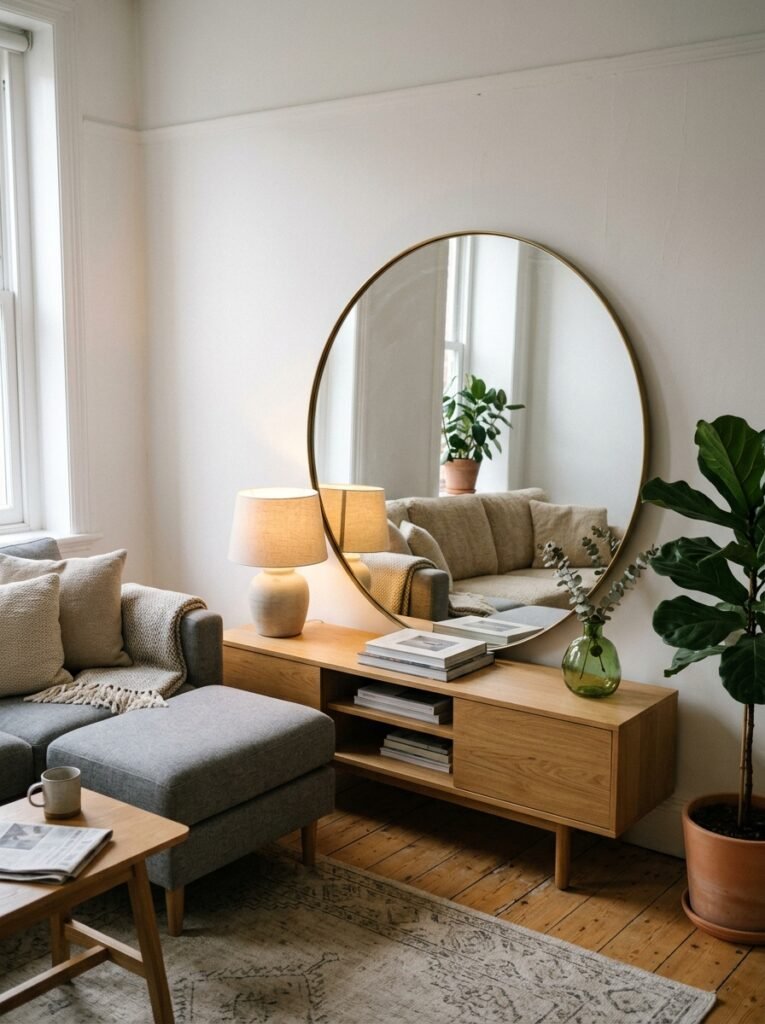
This one surprises people every time.
The instinct is to scale everything down in a small room. Small sofa, small coffee table, small art. Everything bite-sized and proportional and — ultimately — forgettable. The room ends up looking like it was furnished by someone who was apologizing for its size.
Go the other way. Pick one thing and let it be genuinely oversized.
Maybe it’s a piece of art that takes up most of one wall — not a gallery cluster, just one big, confident canvas. Maybe it’s a light fixture that you’d normally think was too grand for the ceiling height. Maybe it’s a coffee table that is generously, unapologetically wide, so wide that you have to angle around it slightly. That’s fine. That’s actually good.
When one element is deliberately large in a small room, the room reads as though it can contain big things. It stops feeling apologetic. The oversized element sets the tone for the whole space — it says, “we live here fully, not tentatively.”
In American homes where an open-plan living area bleeds into a kitchen or dining space, a large anchor piece in the seating area also creates visual separation. It’s doing double duty: bold statement and functional room divider.
4. The One Rule That Makes Any Tiny Room Feel Like It Was Designed, Not Just Decorated
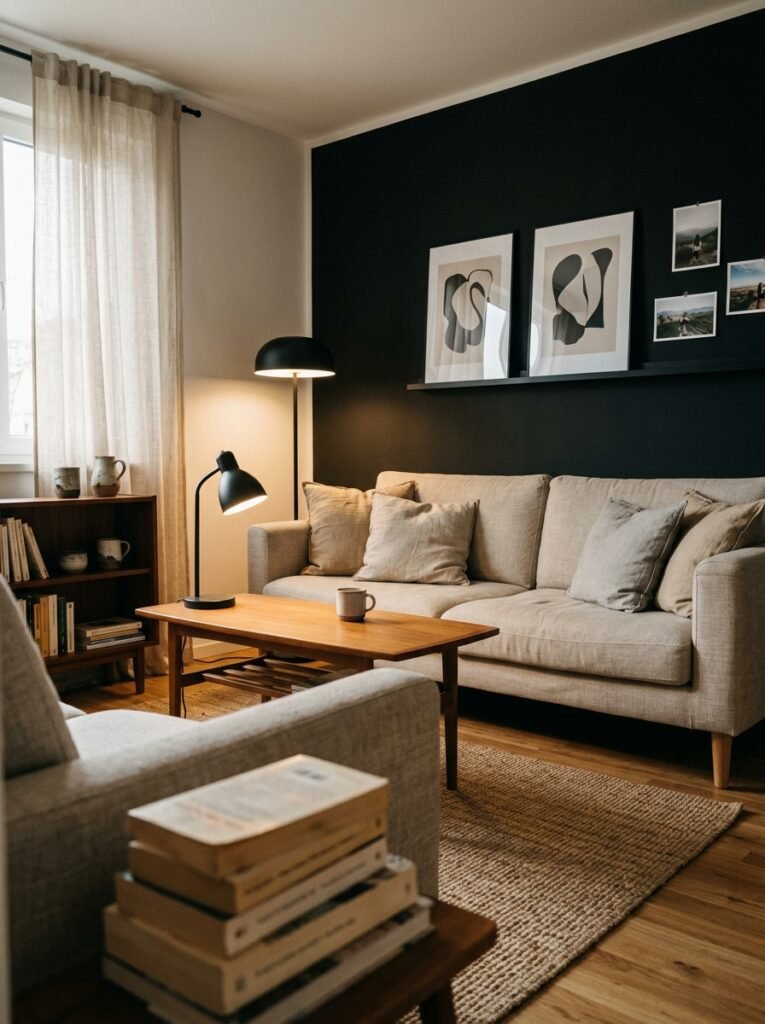
Edit by thirds.
Take everything off every surface. Take the cushions off the sofa. Clear the shelves. Look at the room in its emptiest possible version. Then add back only two-thirds of what you removed.
That last third? It was almost certainly the stuff that was making the room feel small. Not the furniture, not the architecture — the stuff. The little decorative objects that seemed charming at the shop and became visual noise at home. The throw that you don’t actually use, draped over the arm of the sofa in a way that reads as “messy” rather than “cozy.” The cluster of picture frames that individually mean something to you but collectively create a wall of competing attention.
Negative space in a small room isn’t emptiness. It’s air. It lets the things you love actually be seen.
This is the hardest thing to talk about in home decor because nobody wants to hear that less is more — it sounds like being told to throw away things you love. That’s not what this is. It’s about choosing what earns its place in your sightline. Your room is not a storage unit. It’s a stage.
“Your room is not a storage unit. It’s a stage.”
5. The Lighting Setup That Makes a 12-by-14-Foot Room Feel Like a Film Set
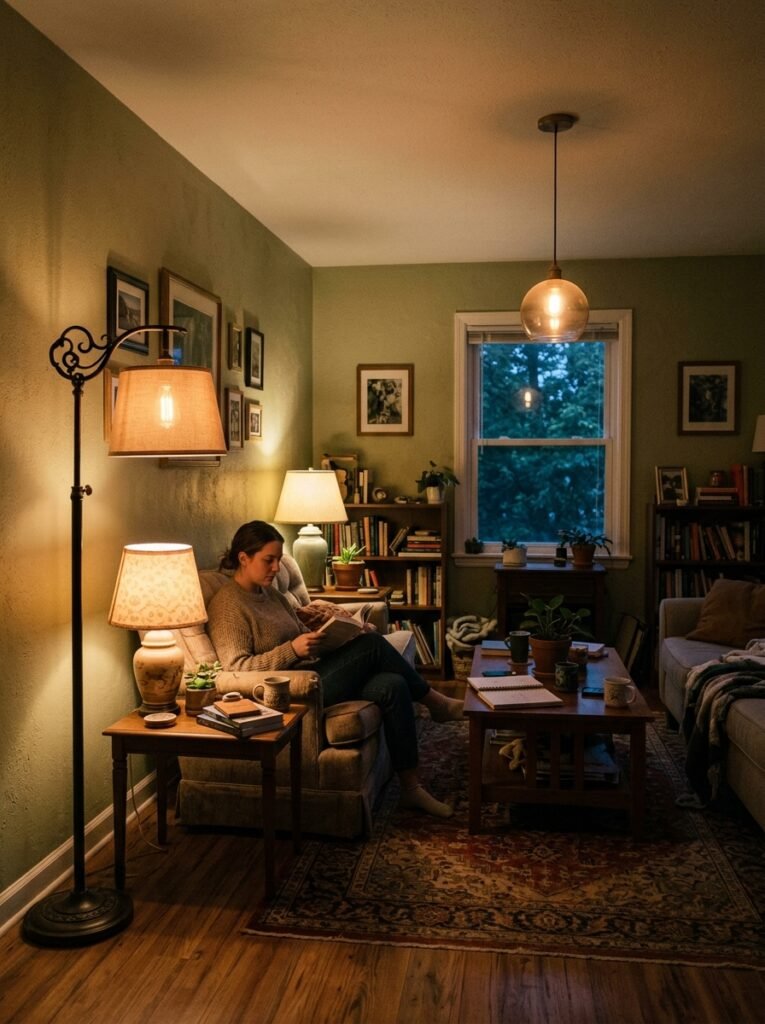
One overhead light is not a lighting plan. It’s a starting point, and not even a good one.
The secret to modern small living rooms that look like they belong in a design magazine — whether you’re in a converted barn in the Cotswolds or a condo in Austin — is layered lighting at multiple heights. And I mean genuinely multiple heights.
Start with the floor. A sculptural floor lamp in the corner creates a warm pool of light that says “this corner is cozy and intentional.” Add a table lamp on the side table beside your sofa — something with a linen or ceramic shade that diffuses light softly rather than throwing it in all directions. Then consider a wall sconce if you have the outlet for it, or a plug-in version that looks hardwired from a distance.
The overhead light? Put it on a dimmer, and use it mostly when you need to find things. Your real lighting lives at eye level and below.
The amber glow of an Edison bulb at 7pm, reflected off a warm putty-colored wall, layered with the soft pool of a ceramic table lamp — that’s the combination that makes guests walk in and immediately feel like they don’t want to leave. That feeling has a scientific basis: lower, warmer light signals safety and rest to the brain. Your room can be small and still feel like the place everyone wants to stay.
6. What Mirrors Are Actually For (It’s Not What You Think)
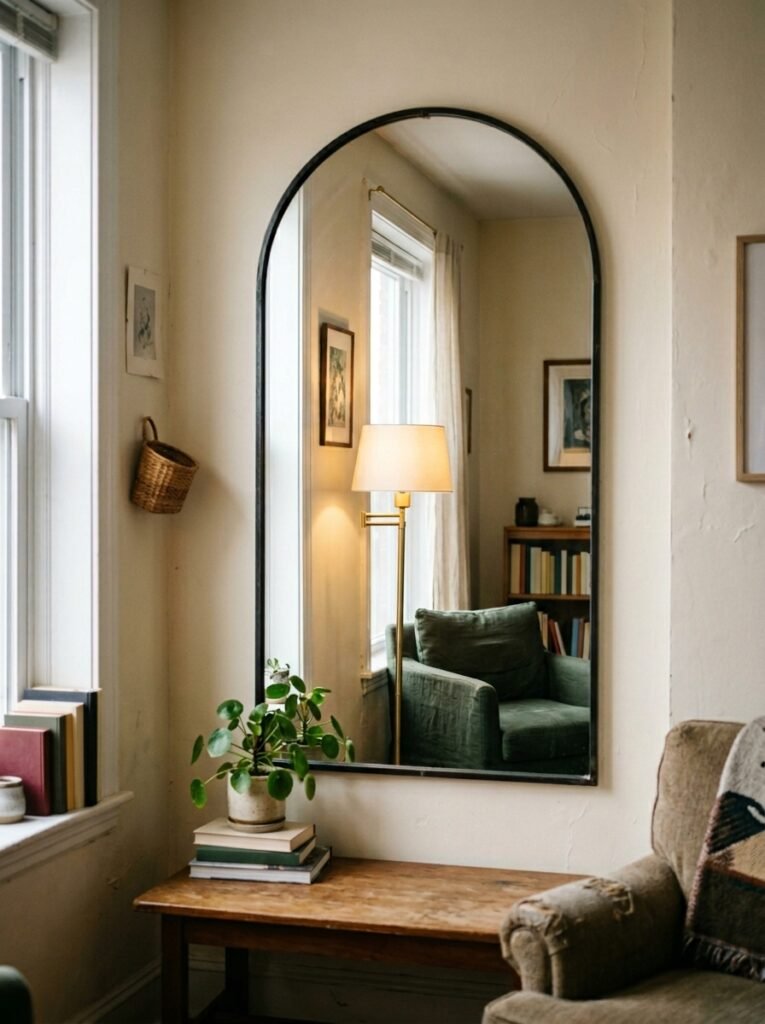
Yes, mirrors make a room feel larger. You know this. Everyone knows this.
But the reason most people’s mirrors aren’t working hard enough is that they’re hung in the wrong place — specifically, opposite a blank wall, which just gives you a reflection of more blankness.
Hang your mirror opposite a window. Full stop. Even a north-facing window in a British semi that gets about forty minutes of direct light per year will be multiplied by a well-placed mirror. What you’re borrowing isn’t just light — it’s depth. The reflection of a window gives the eye somewhere to travel, a sense of a space continuing beyond the wall it’s standing in front of.
In modern small living rooms, an oversized round mirror above the fireplace or sofa is having a serious moment right now. Not ornate, not gilded — just a clean, wide circle of glass in a slim frame. It’s sculptural and functional at once. It bounces light and breaks up the relentless rectangles of modern architecture.
If you’re in a flat or apartment without a fireplace, try leaning a large mirror directly on the floor against the wall. It makes the ceiling feel higher. It makes the room feel deeply intentional. And it costs exactly nothing to try.
7. The Coffee Table Swap That Changes How a Small Room Actually Lives
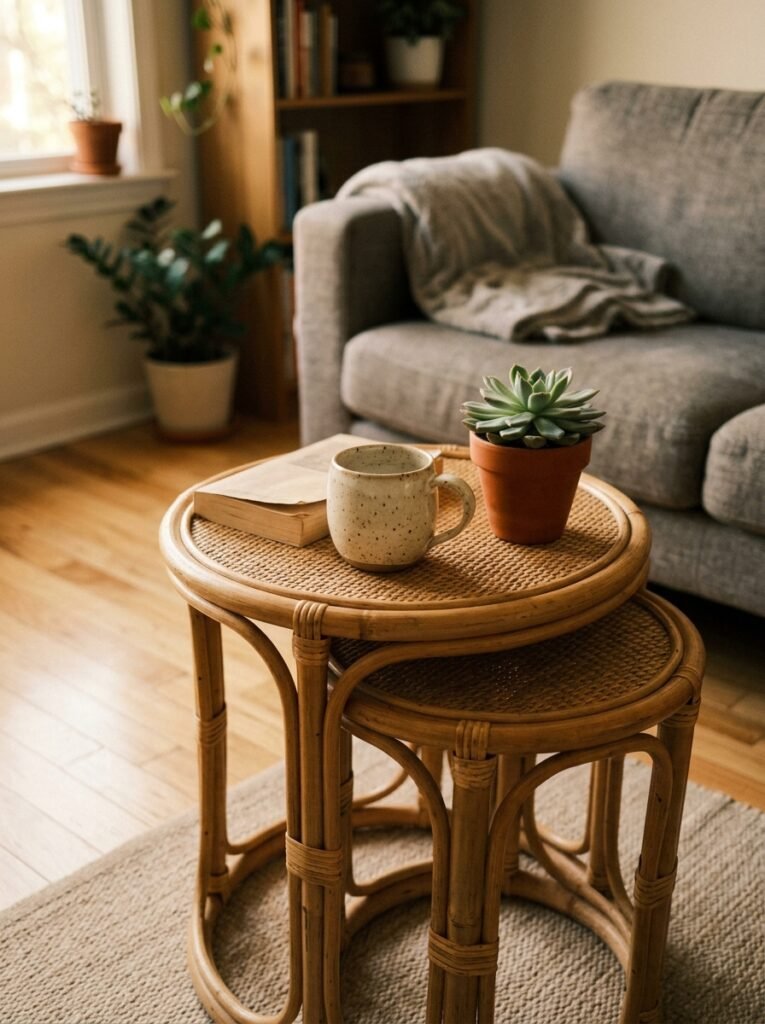
Trade the solid coffee table for something you can see through or under.
This sounds like a small thing. It isn’t. A traditional solid wood coffee table — especially one with a shelf underneath that inevitably becomes a graveyard for books you’ll never read again — creates a visual block right in the center of your seating arrangement. In a small room, that block reads as a chunk of visual weight at the exact place your eye naturally rests.
Switch to a glass-topped table, or a pair of smaller nesting tables you can pull apart, or even a cane or rattan option where the eye can pass through the weave of the structure. Acrylic and lucite coffee tables are having a genuine revival in modern interiors right now, and in a small living room, the reason is purely practical: you can see the floor through them.
Seeing the floor is everything. It extends the visual plane outward and downward. The room looks bigger not because it is bigger but because you can perceive more of it. And the rug underneath — which you absolutely should have — becomes a visible part of the design rather than a hidden thing under a piece of furniture.
“Seeing the floor is everything. It extends the visual plane outward and downward.”
8. The Shelf Configuration Nobody Talks About But Every Stylist Uses
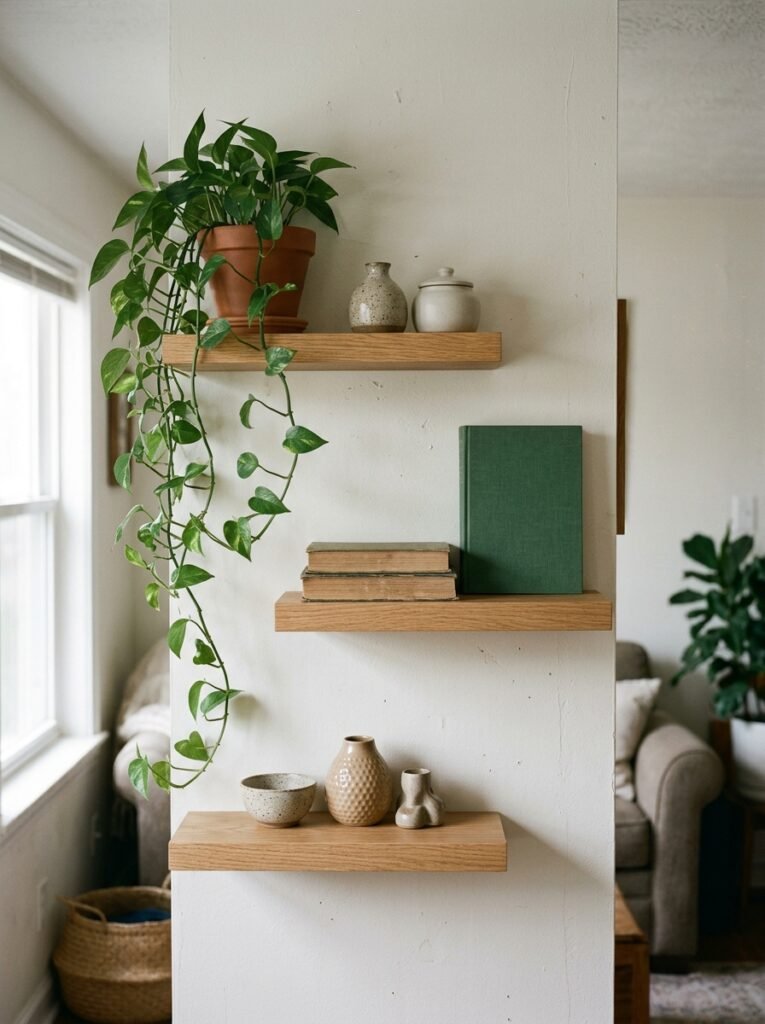
Stop shelving things in even horizontal rows.
The moment you walk into a room with shelves styled in rigid, symmetrical, evenly-spaced rows of objects, something registers as “display cabinet” rather than “lived-in home.” It looks correct but it doesn’t feel right.
What stylists actually do — in those Pinterest images you’ve pinned and can never quite recreate — is work with varying heights and intentional asymmetry. Stack three books horizontally, then stand two vertically on top of the stack. Lean a small print against the shelf back wall rather than hanging it. Leave one section of shelf deliberately, almost audaciously empty.
In a modern small living room, built-in shelving or a tall bookcase is one of the best investments you can make, because it takes storage vertical and keeps the floor plan clear. But the styling of that shelving matters as much as the shelving itself. Think of it like a still-life composition rather than a filing system. Objects at different depths, different textures — a smooth ceramic next to a rough woven basket, a glossy art book next to a matte earthenware pot — create the visual complexity that a small room needs without creating clutter.
The distinction is crucial: visual complexity is interesting. Clutter is exhausting. One is about variety. The other is about volume.
9. What Every Beautifully Styled Small Living Room Has That Yours Might Be Missing
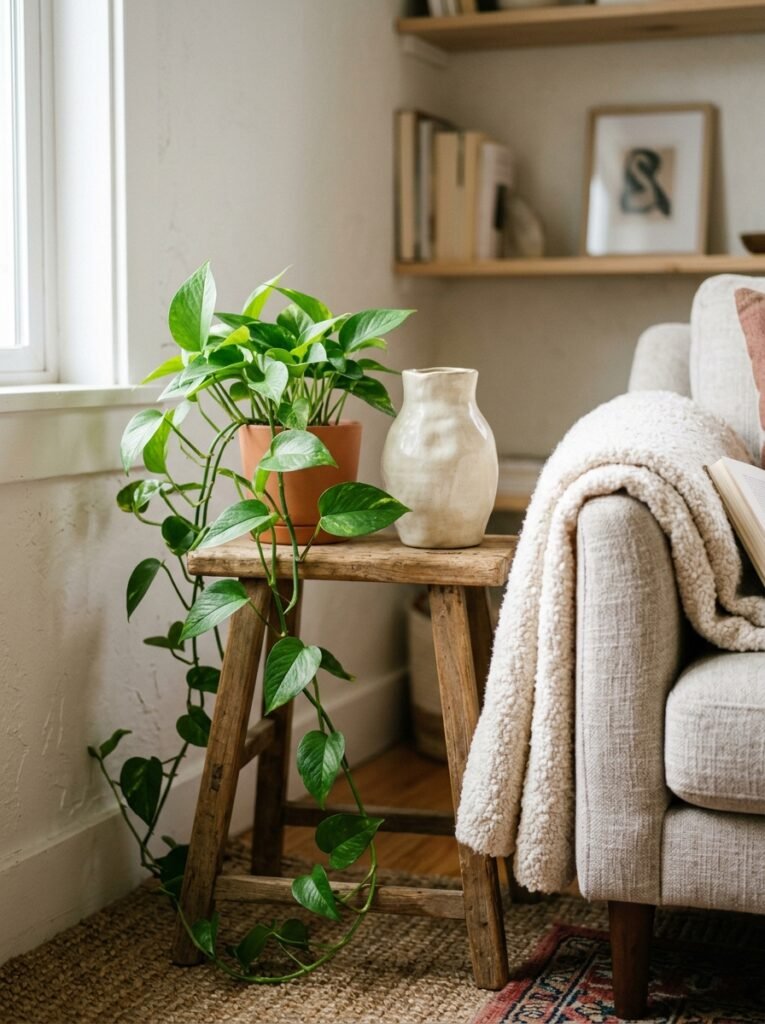
A plant that looks like it belongs there, not like it was placed as an afterthought.
I say this gently, because we’ve all done it — bought a small succulent at the grocery store, put it on the windowsill, called the place styled. But there’s a difference between a plant as decoration and a plant as presence.
One large plant — a fiddle-leaf fig in a terracotta pot, or a trailing pothos in a sculptural hanging vessel, or even a very good artificial olive tree if your light situation is truly dire — does something a small plant simply cannot. It brings vertical life into the room. It occupies space without blocking it. It adds a layer of organic texture that no piece of furniture, no matter how beautiful, can replicate.
In the current moment of modern interior design, the indoor plant has moved from accent to anchor. It’s no longer decoration; it’s architecture. The dark glossy leaves of a large monstera against a warm linen wall, catching afternoon light from a west-facing window — that’s not a styling choice. That’s a whole mood.
10. The Rug Size Mistake That’s Making Your Small Sofa Look Even Smaller
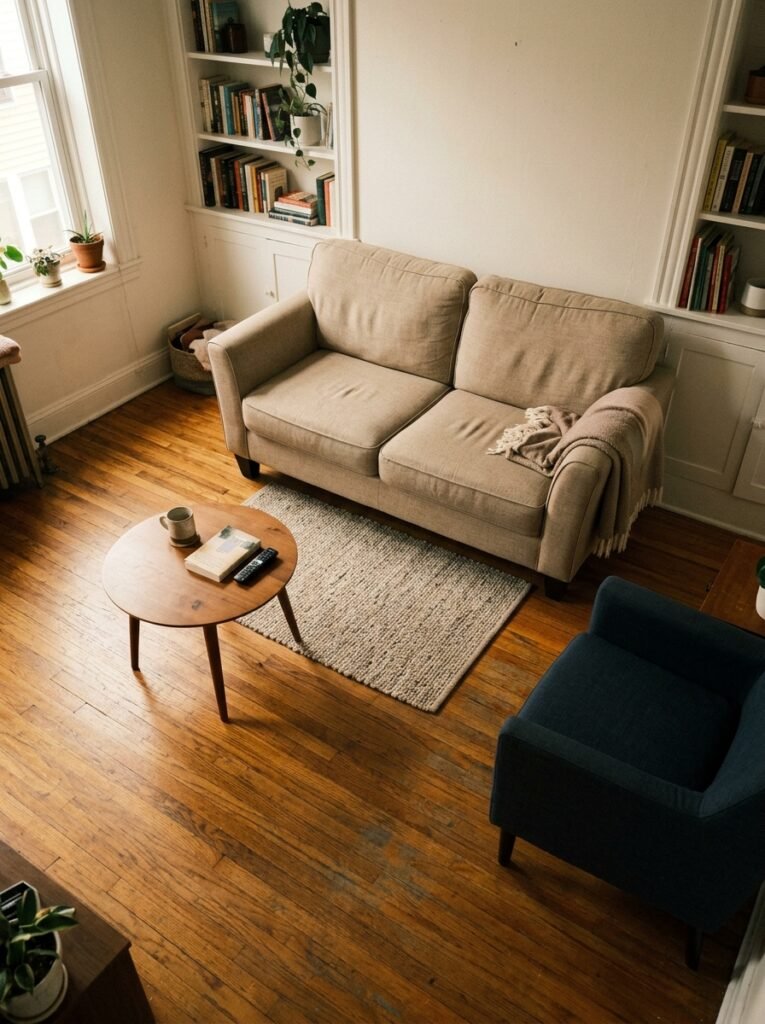
Go bigger than you think you should.
A small rug in a small living room creates visual islands — the furniture on one island, the floor on another, the whole thing looking like it couldn’t quite commit to a plan. The rug should be large enough that the front legs of your sofa and chairs sit on it. At minimum.
In an American living room, an 8-by-10-foot rug in a room you might have thought needed a 6-by-9 will change everything. In a UK sitting room with an irregular layout or an alcove, go to the largest size that the proportions allow and let it anchor the whole seating arrangement.
The rug unifies. It says, “this is the living room, and it lives here, in this defined space.” Without it — or with an undersized one — your furniture is just a collection of objects that happen to share a room.
11. The Modern Design Principle That Solves the “Too Much Stuff, Not Enough Space” Problem
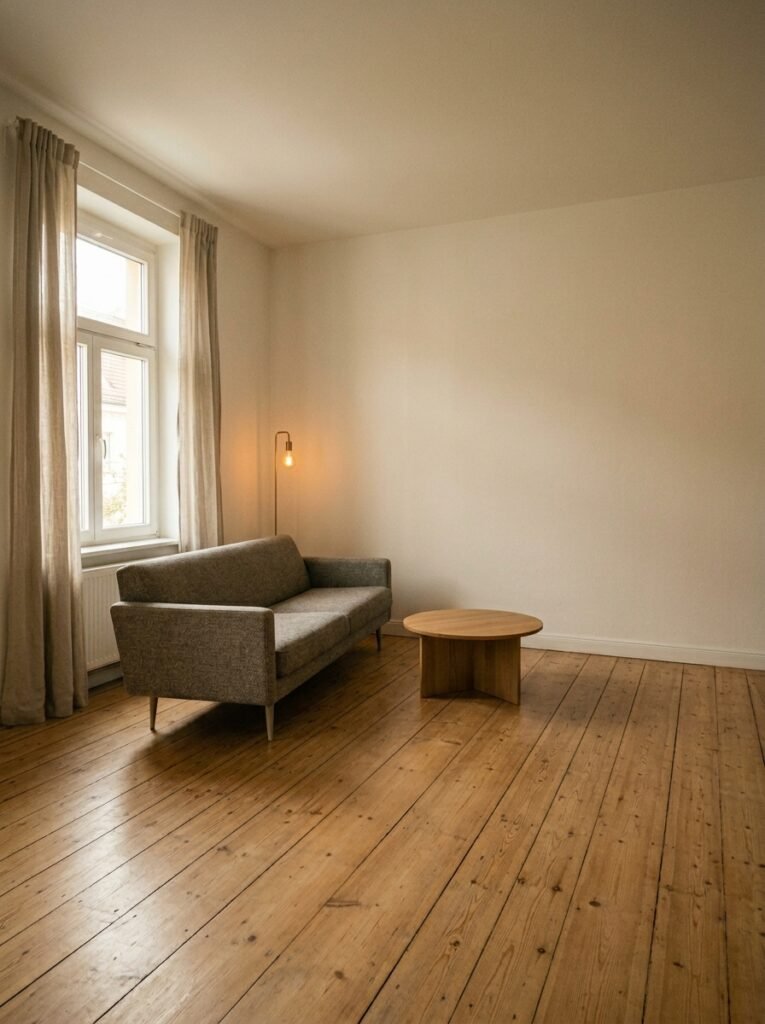
Repetition of materials, not variety of materials.
When you’re styling a small living room, the temptation is to add interest through variety — different woods, different metals, different textures all in one space. The result is a room that feels busy and somehow smaller than it actually is, because your eye is jumping between competing material stories.
Pick your metals and be consistent. If you have brass, let it be brass everywhere — the lamp base, the picture frame, the small tray on the coffee table. If you have matte black, let that be the throughline. Same principle with wood tones: one dominant wood throughout, used in the coffee table, the shelving, the small decorative bowl on the side table, rather than three or four different stains competing for attention.
This material consistency creates what designers call a “family” — the room looks curated because everything belongs to the same visual language. And in a small space, coherence reads as spaciousness. Your eye can rest rather than work.
12. The Last Thing to Add and the First Thing Most People Buy
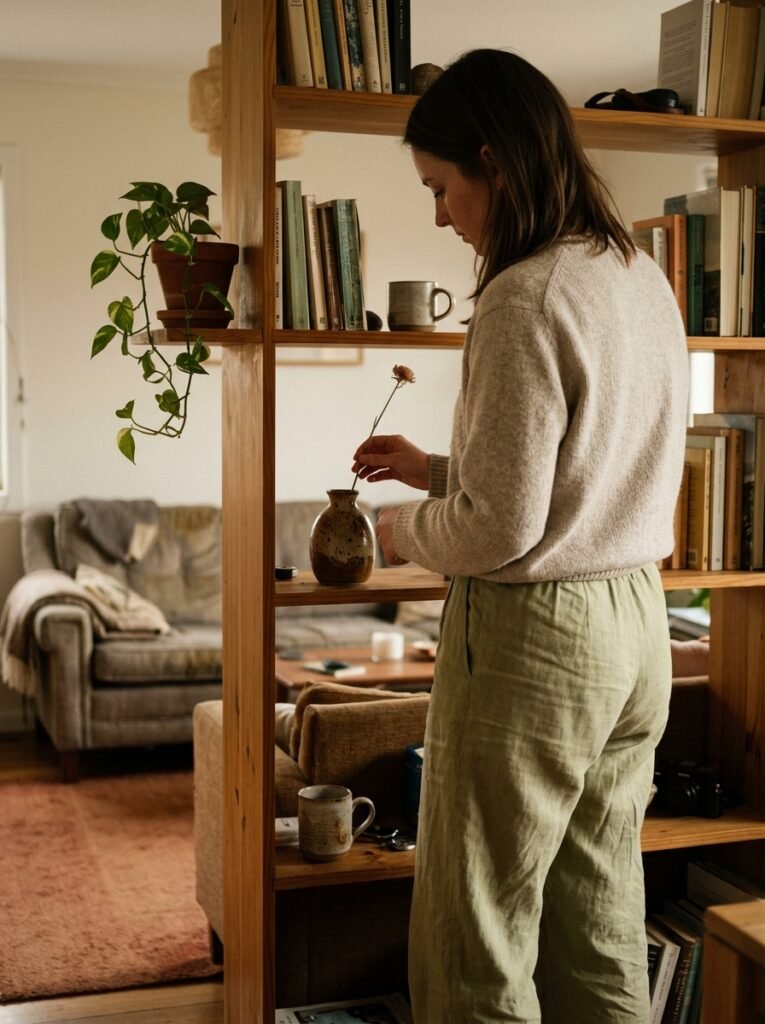
Cushions.
Textiles are last. Always. And I say this knowing full well that most of us start with the cushions and build backward, which is exactly why so many small living rooms feel like the theme is “cushions that came before the plan.”
When you have your furniture in the right place, your lighting layered, your rug anchoring the arrangement, your one oversized art piece creating that confident focal point — then you add the textiles. And when you do, think of them as the seasoning, not the meal.
Two to four cushions on a sofa, in a palette pulled from one or two other elements already in the room. A single throw, draped with some looseness but not theatrical chaos. A sheepskin over one chair arm if the room reads as needing softness in that corner.
The room should look like someone lives there. Not like someone is performing “cozy.” That distinction — between actual comfort and the performance of it — is what separates the living rooms you want to stay in from the ones that look great in photos and feel strange in person.
—
🌿 Quick Tips
Pull your sofa away from the wall — even a few inches changes the entire energy of the room and makes the space feel designed rather than defaulted.
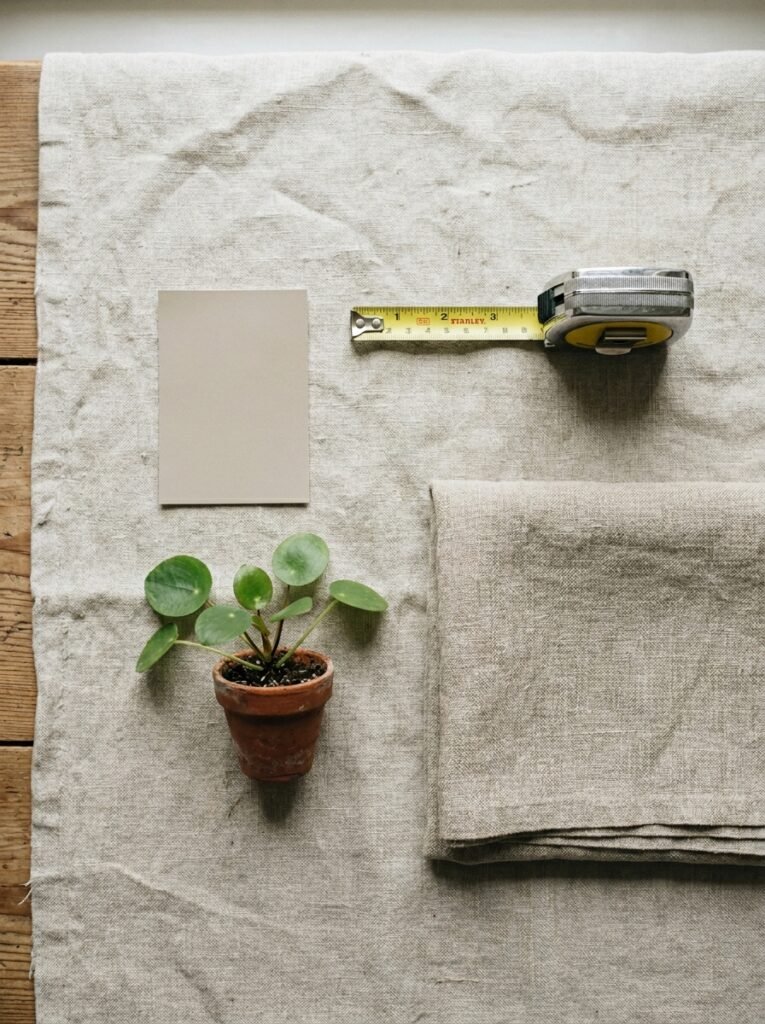
One warm, complicated off-white covers more styling sins than any other color choice. Test three samples on the same wall before committing, and look at them at 8am, noon, and 8pm.
The front legs of your sofa should always sit on the rug. If they don’t, your rug is too small and your furniture looks like it’s floating.
Edit by thirds: take everything off every surface, then put back only what genuinely earns its place. The last third is almost always the problem.
Layer your lighting at three heights — floor, table, and wall — and put your overhead light on a dimmer. You’ll rarely use it above 40%.
—
❓ FAQ
Q: What colors make a small living room look bigger? A: Warm off-whites like linen, putty, and creamy neutrals do the most work — they reflect light without feeling clinical the way cold whites can. The key is choosing a warm undertone rather than a grey or blue one, which tends to shrink a space visually. Test samples in your actual light conditions before committing; paint always looks different on the wall than on the chip.
Q: How do I make a small living room feel more modern without a complete renovation? A: Focus on three things: lighting, hardware, and one bold focal point. Swap out dated light fixtures for something with clean, simple lines. Replace any brass or chrome hardware with a consistent finish across the room. Then choose one wall or one piece of furniture to anchor — a large canvas, a significant mirror, a statement sofa in a considered color. These three moves cost relatively little and read immediately as intentional modern design.
Q: Can a small living room work as a dual-purpose space — like for working from home too? A: Absolutely, and the trick is defined zones rather than overlap. A compact desk pushed into an alcove or bay window area, styled to look as much like a reading nook as a workspace, keeps the “office” visually separate from the sitting area. When the work day ends, a few small shifts — closing a laptop, adding a candle, swapping the desk chair for something softer — help the brain recognize the shift from work mode to rest mode.
—
💭 Final Thought
The small living room isn’t the consolation prize. It’s actually the more interesting design challenge — the one where constraints force creativity, where every choice has to mean something, where you can’t hide behind scale. The rooms I remember most vividly, the ones I’ve walked into and immediately wanted to live inside of, were almost never the largest ones. They were the ones where I could feel someone’s personality in every corner, where the light was right, where there was nowhere I didn’t want to sit.
What would your small living room look like if you designed it for how you actually live — not for the version of your life you think you should have?