The Small Living Room That Feels Bigger Than It Is (Without Moving a Single Wall)
You know that feeling when you walk into a small room and it somehow feels exactly right? Not cramped, not trying too hard — just settled and full of life. That’s the modern rustic sweet spot, and it’s closer than you think.
—
1. Why Modern Rustic Works Especially Well in Tight Spaces
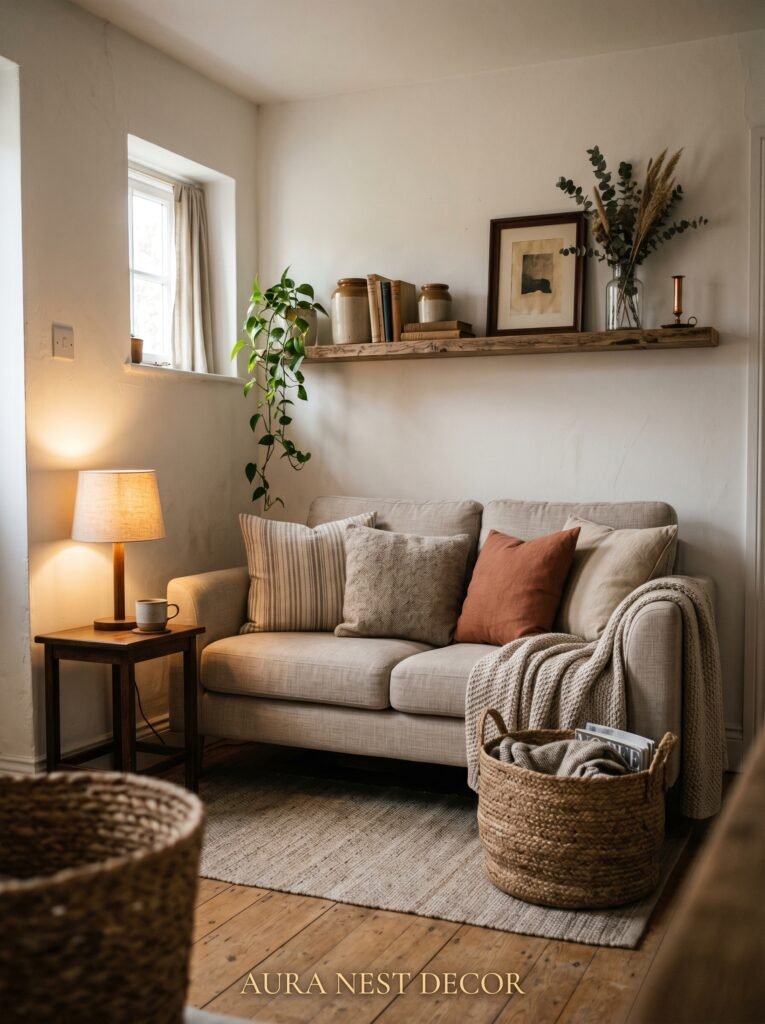
Here’s something designers know that most people don’t: a strong aesthetic identity actually makes a small room feel more intentional. Spacious rooms can get away with a bit of everything. Small rooms cannot. They demand commitment.
Modern rustic is a beautiful commitment to make. The combination of raw, tactile materials — think rough-hewn wood, linen, matte ceramic — with clean, contemporary lines means your room reads as considered rather than cluttered. There’s a visual logic to it that the eye follows without effort. When everything has a quiet coherence, the space stops feeling limited and starts feeling curated.
The reason it works in American ranch homes, British terraced houses, and everywhere in between is that it draws from honest, everyday materials. Nothing is trying to impress you. A chunky oak coffee table doesn’t announce itself as expensive. It just sits there being beautiful and useful, the way a good piece of furniture should.
Modern rustic also happens to be one of the most forgiving styles for imperfect homes. Slightly uneven plaster? Perfect. Old wooden floorboards with a little character? Ideal. You’re not fighting your architecture — you’re finally listening to it.
“A strong aesthetic identity makes a small room feel more intentional — spacious rooms can get away with a bit of everything, but small rooms demand commitment.”
2. The One Sofa Rule That Changes Everything in a Small Living Room
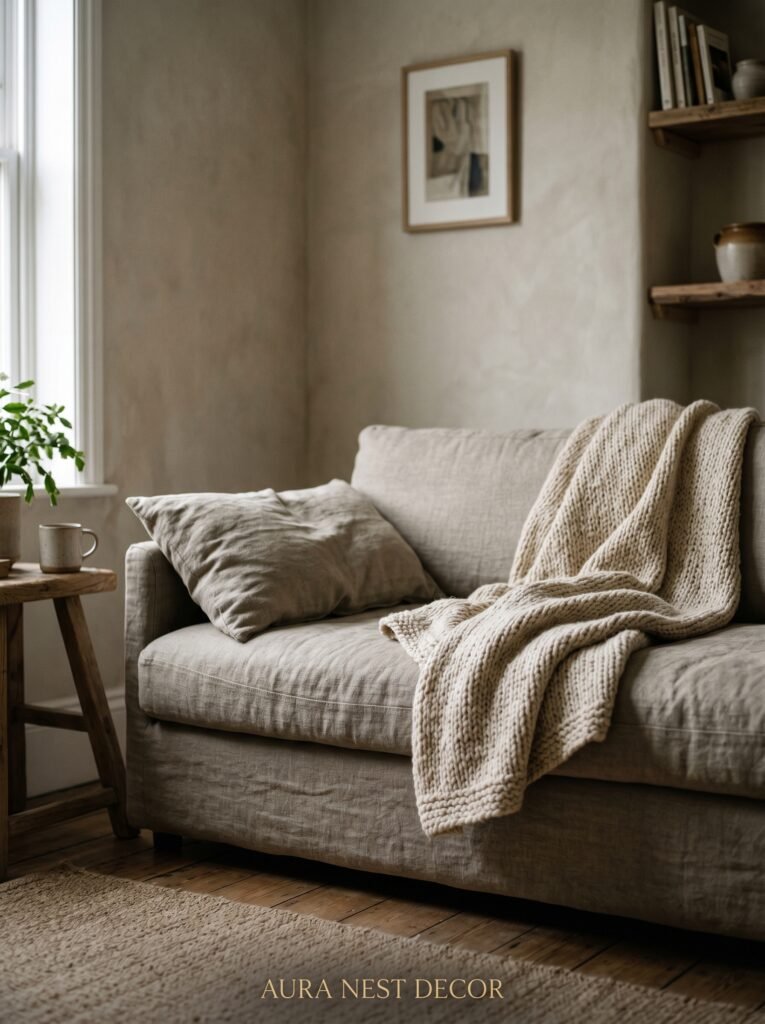
Resist the sectional. I know. It looks amazing in every showroom photo and every aspirational Pinterest board. But in a small living room, a large sectional sofa is the single fastest way to make a space feel like a furniture store that ran out of floor.
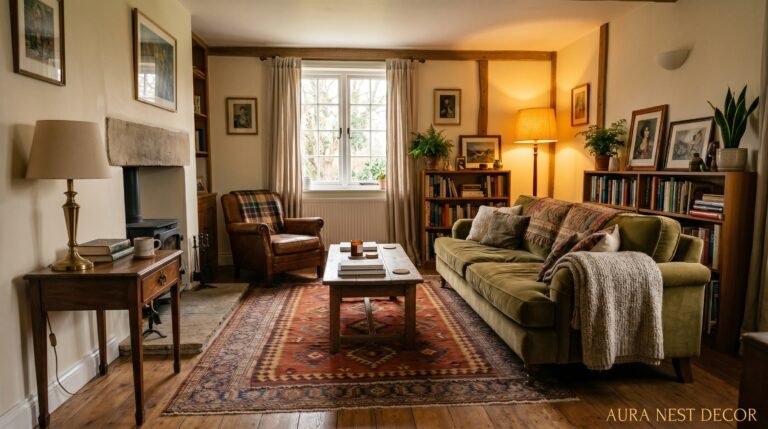
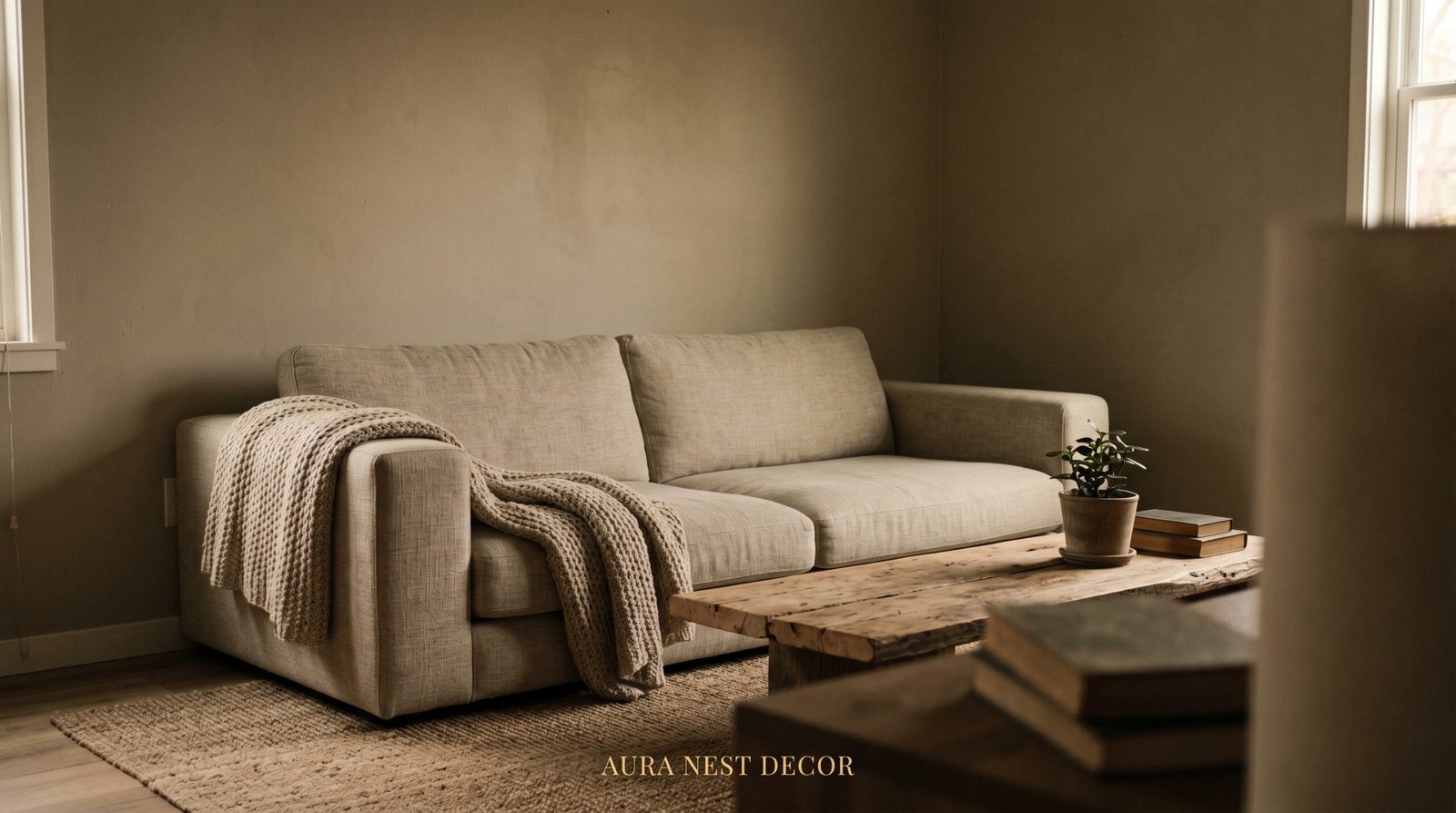
What you want instead is one medium sofa — ideally with legs. This is the detail that people overlook constantly, and it matters enormously. A sofa with exposed legs lets light travel underneath it, and that strip of visible floor creates the visual impression that the room continues rather than stops. Low, legless sofas planted directly on the ground act like walls. You don’t want walls. You want flow.
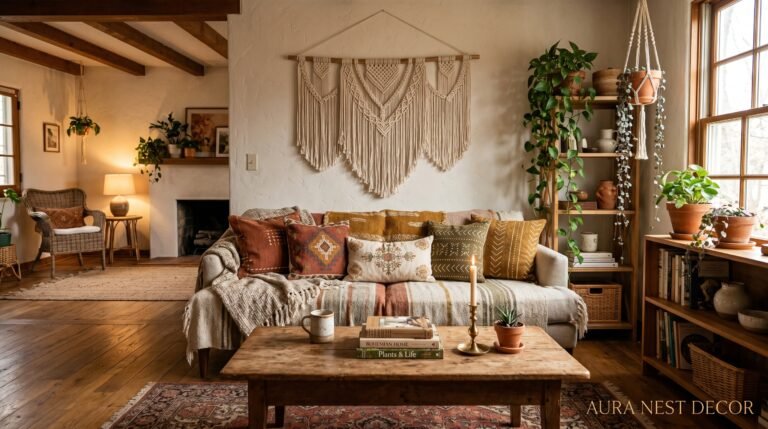
In the modern rustic context, look for sofas in oatmeal linen, warm grey, or natural cotton canvas. A sofa with a slubby, textured fabric immediately reads as rustic. Pair it with clean, straight arms — not rolled or overstuffed — and you hit the “modern” half of the equation. Add one or two cushions in a muddy terracotta or forest green and you’ve got the whole palette started.
One sofa also means there’s room for a chair. And a great armchair in a small living room is worth ten decorative accessories. It creates a second seating zone, adds visual variety, and implies that this room is for real living, not just looking at.
3. The Wall Color That Every Small Modern Rustic Room Gets Right
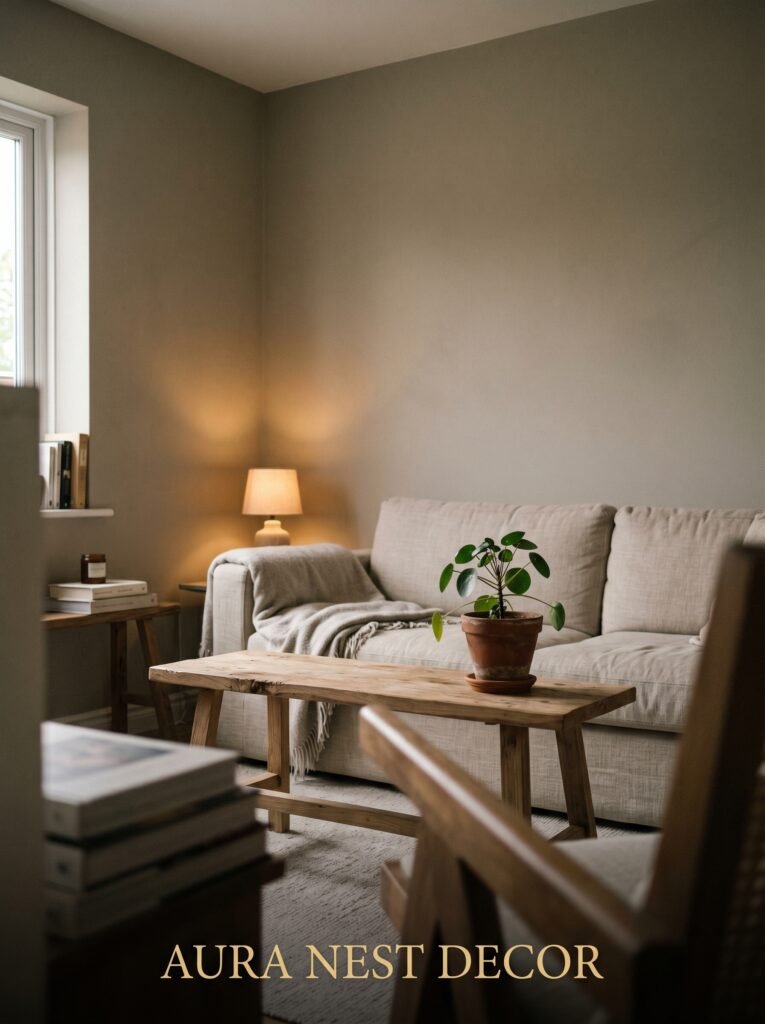
Pale doesn’t always mean peaceful. There’s a persistent myth that small rooms must be white, and it has robbed a lot of people of genuinely lovely rooms.
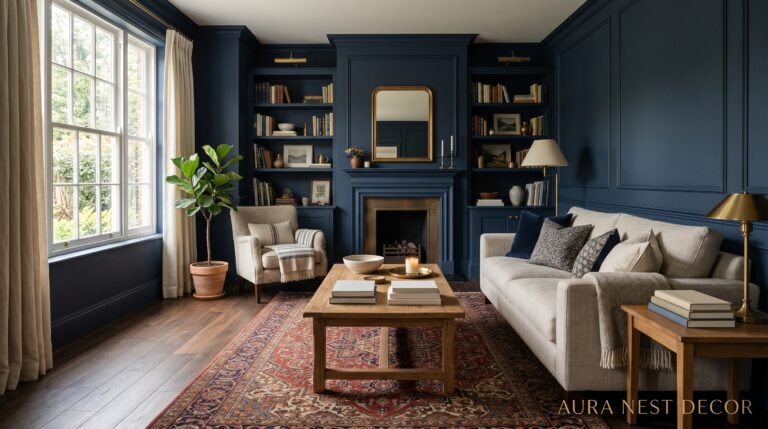
In modern rustic design, some of the most successful small living rooms lean into depth rather than away from it. A warm putty, a dusty sage, a greyed-out terracotta — these colors do something white can’t. They make the walls recede in a way that feels warm rather than clinical. The room wraps around you instead of reflecting light at you like a dentist’s waiting room.
If you’re in the US, Benjamin Moore’s “Pale Oak” and “Revere Pewter” are perennial choices for good reason — they’re warm without being yellow, grounded without being heavy. In the UK, Farrow & Ball’s “Elephant’s Breath” and “Purbeck Stone” are the equivalents. They sit somewhere between beige and grey in a way that no paint chip ever quite captures but every beautifully decorated room seems to use.
The key in a small room is keeping the ceiling lighter than the walls — one or two shades paler. It preserves the sense of height without breaking the cozy envelope the walls are creating. And if you have wood beams? Paint around them, not over them. They’re doing the rustic work you need.
4. Wood: How Much Is Too Much, and How Much Is Never Enough
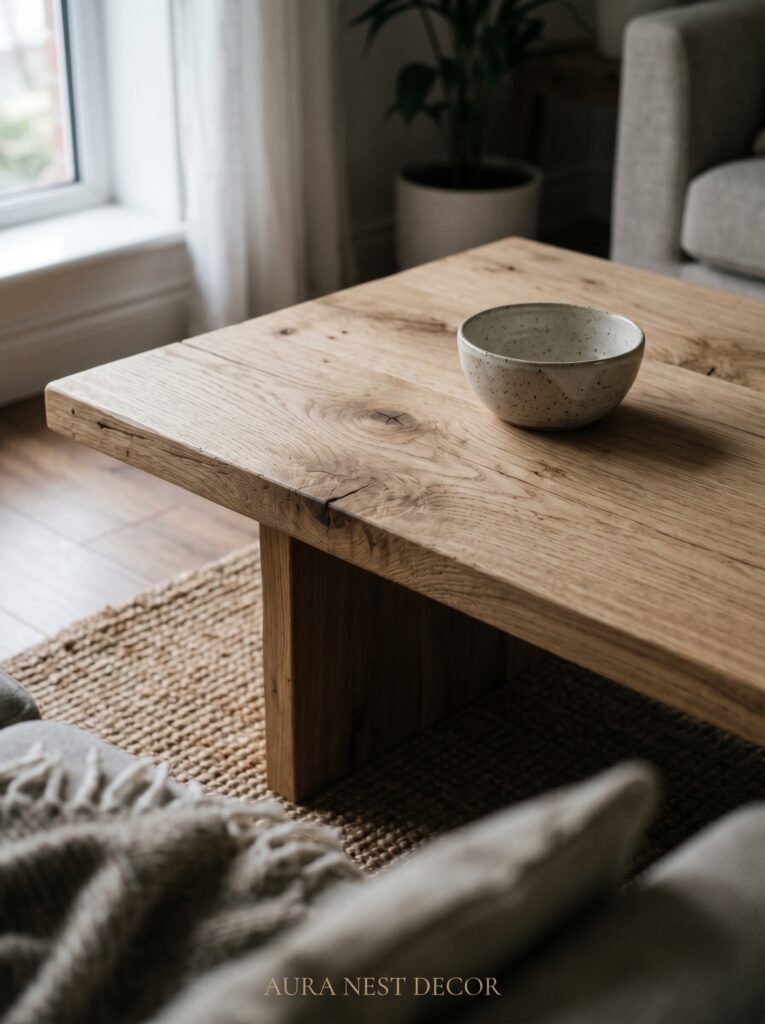
The modern in modern rustic is partly about restraint with wood. Raw, natural wood is the material that makes this whole aesthetic feel grounded and alive, but there’s a tipping point where a room stops feeling like a cozy retreat and starts feeling like the interior of a log cabin gift shop.
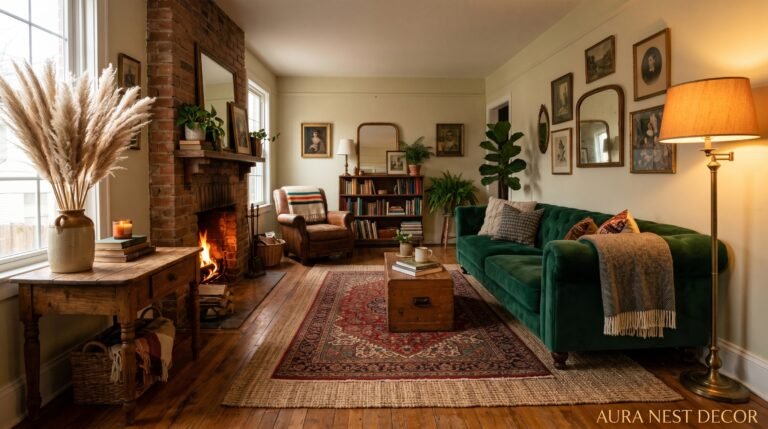
The rule I’ve landed on after styling far too many rooms: three wood tones maximum, and they should vary in darkness or finish so they read as deliberate contrast rather than accidental mismatch. A pale ash floor, a medium walnut coffee table, a dark-stained oak shelf. Each one distinct. Together, they create depth.
In a small living room, wood placement matters enormously. A wooden coffee table anchors the center of the room. Floating wooden shelves on the wall draw the eye upward, which creates the illusion of height. A single wooden side table beside an armchair gives the room a complete, finished feeling in that corner.
What to avoid: matching wood furniture sets. They flatten the room. A matching sideboard, coffee table, and TV stand in the same blonde wood finish makes everything look like it arrived in the same flat-pack box. Modern rustic is about things that look gathered over time, not purchased on the same afternoon.
“Modern rustic is about things that look gathered over time — not purchased on the same afternoon.”
5. Lighting That Does the Heavy Lifting (Your Overhead Light Is Not Enough)
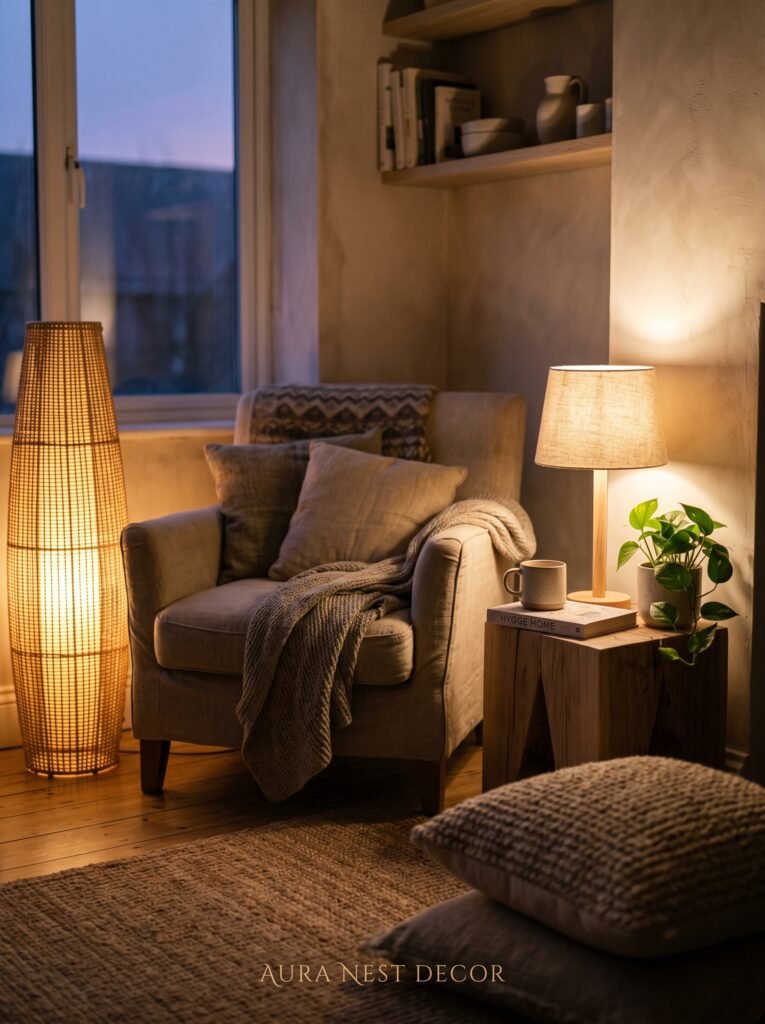
The single overhead light is the enemy of a cozy small room. I will stand by this completely.
A ceiling fixture that floods the entire room with one uniform brightness erases all shadow, and shadow is what gives a room dimension. A room with no shadow is flat. A room with layered light is alive. This is genuinely the cheapest and most dramatic thing you can do to change how a room feels, and almost nobody does it enough.
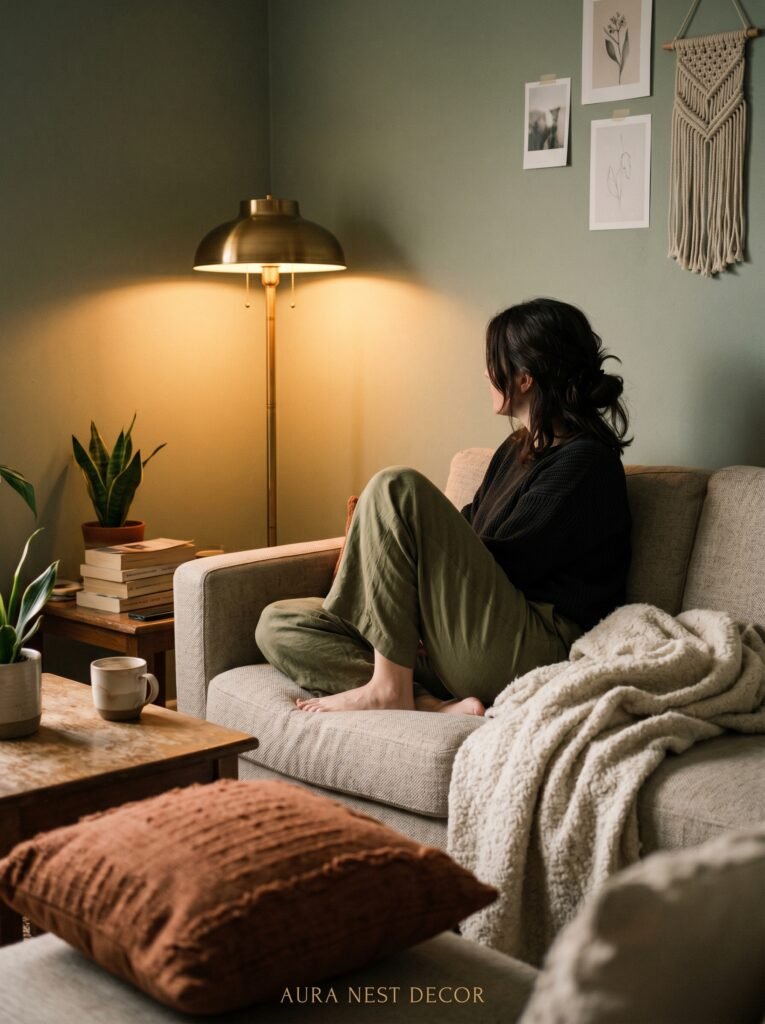
In a modern rustic living room, you’re aiming for at least three light sources: one ambient (the ceiling fixture or a floor lamp), one task (a lamp beside the sofa or reading chair), and one accent (a smaller lamp on a shelf, a candle grouping on the coffee table, fairy lights strung along a shelf). At 7pm on a winter evening, when those warm layers are all glowing together, the room becomes almost impossibly cozy.
For fixture styles, look for woven rattan pendants, matte black metal shades, or aged brass table lamps. All three say modern rustic without shouting it. In the UK, rattan pendants have had a genuine moment and they work brilliantly in low-ceilinged rooms — they add texture overhead without visually dropping the ceiling the way a heavy chandelier would. In the US, the Edison bulb moment never quite ended, and with good reason: that amber glow at 2200K is the color of warmth itself.
6. The Rug That Makes the Whole Room Click Into Place
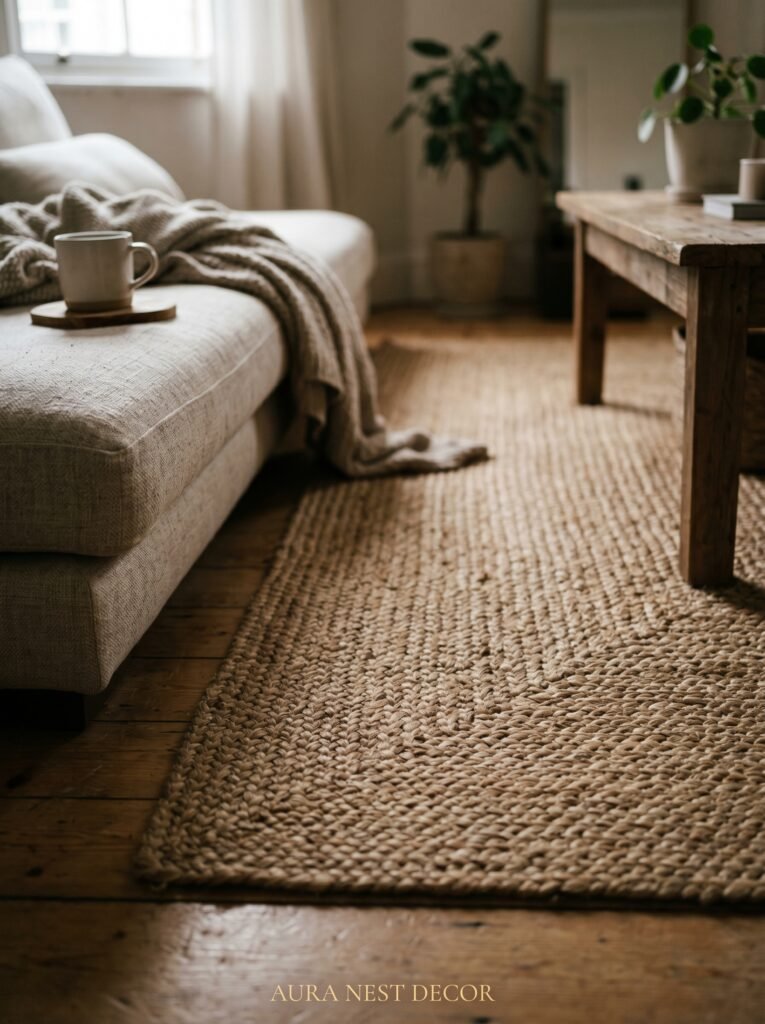
A rug in a small living room is not optional. Full stop. Without a rug, furniture floats. With the right rug, the entire seating area becomes a room within the room — unified, intentional, complete.
The sizing error most people make is going too small. A rug where only the coffee table legs sit on it, while all the sofa and chair legs float on bare floor, makes the room feel like a collection of furniture rather than a composed space. You want at least the front legs of all your seating on the rug. Ideally everything.
For modern rustic, the texture of the rug matters as much as the pattern. A flatweave kilim, a jute rug, a Moroccan-style beni ourain — these all have the right organic, handmade quality. Avoid anything too bright or too graphic. In a small room, a busy rug competes for attention and exhausts the eye. What you want is something that settles quietly beneath the furniture and says: everything belongs here.
Natural tones work best. Sand, oatmeal, warm grey, faded brick red. Colors that look like they might have been dyed with something found outdoors rather than manufactured.
7. Shelving That Looks Styled Rather Than Stored
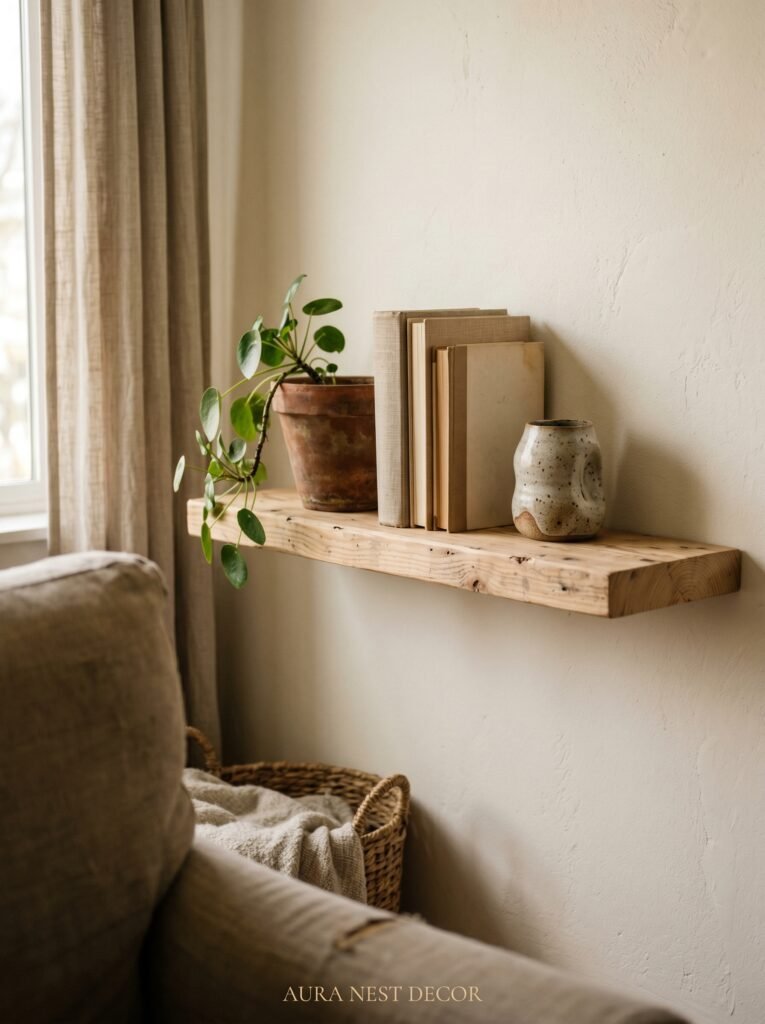
Open shelving in a small living room is a commitment. Done badly, it becomes visual noise — a wall of stuff that the eye can never quite rest on. Done well, it’s the thing everyone asks about first when they walk in.
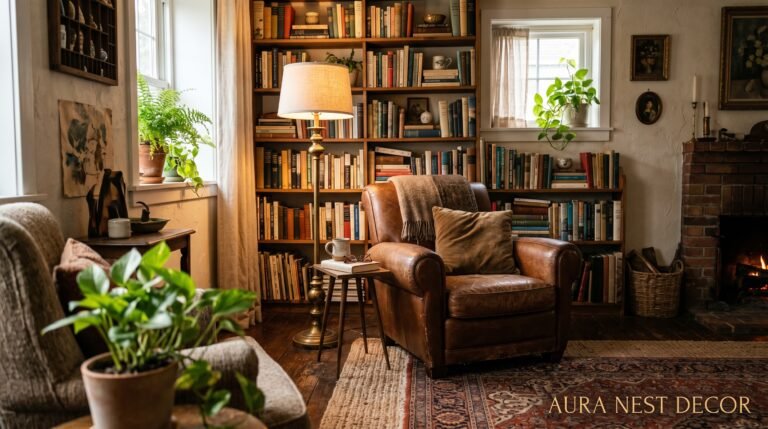
The modern rustic approach to shelving is deeply selective. You’re not displaying everything you own. You’re curating a small number of meaningful objects with deliberate breathing room between them. A stack of books, a small ceramic bowl, a trailing plant, a single piece of art leaning against the wall. Space. Then something else.
The materials of the shelf itself matter. Thick, live-edge wood brackets anchored into the wall feel substantial and warm. Hairpin-leg floating shelves hit the modern half of the aesthetic with their clean industrial lines. Both work. What doesn’t work is the flimsy white laminate shelving unit that wobbles slightly when you put anything heavier than a paperback on it — it undercuts the entire vibe.
Style your shelves in odd numbers. Three objects feel more resolved than four. A tall object, a medium object, and a small or trailing object create natural visual rhythm without requiring an art degree to achieve.
“You’re not displaying everything you own. You’re curating a small number of meaningful objects with deliberate breathing room between them.”
8. Plants: The Rustic Element That’s Also Free Therapy
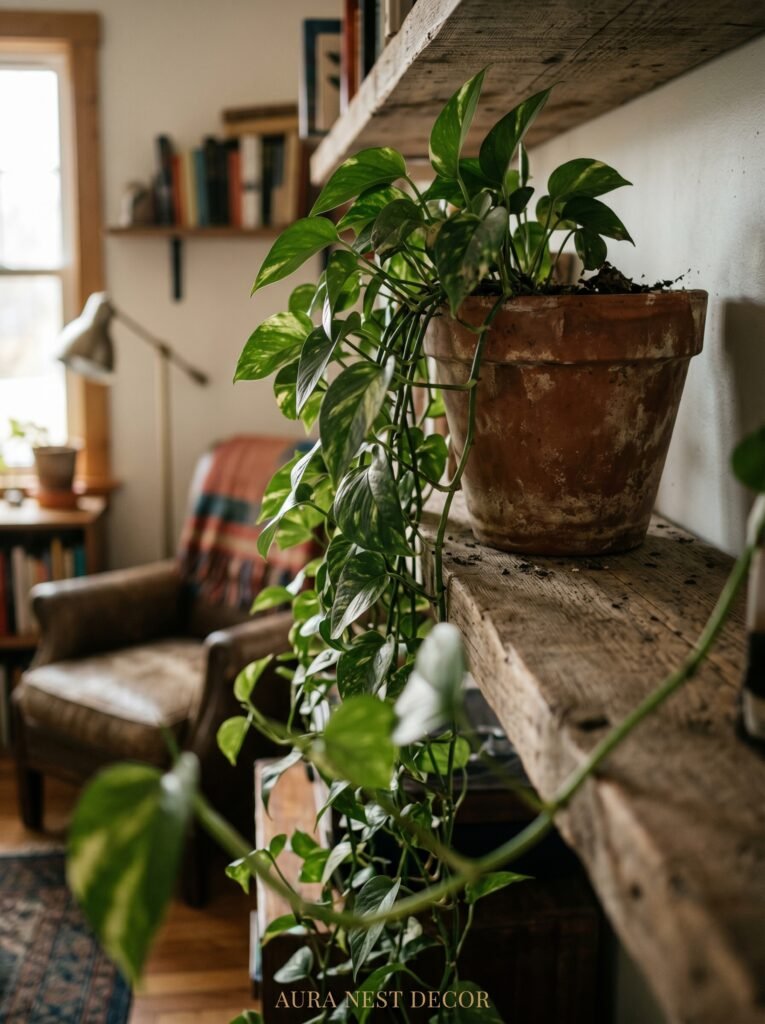
A living room without plants is a living room waiting to become itself. There is something about organic, growing things in a small space that changes the air — not just chemically, but emotionally. The room feels occupied in the best possible way.
In a modern rustic small living room, you want plants that earn their visual weight. A trailing pothos spilling from a high shelf. A fiddle leaf fig in a terracotta pot in the corner. A small succulent arrangement on the coffee table. These all bring different shapes and scales of green into the room, which adds visual variety without adding clutter.
The containers matter as much as the plants. Terracotta pots are the modern rustic standard because they’re warm, imperfect, and look better as they age and mark with use. Woven seagrass baskets work brilliantly for floor plants — they add texture at the low level of the room where it’s often missing. Avoid anything in shiny white ceramic if you’re going for this aesthetic. It reads too cool and too modern.
Don’t buy fake plants. I know they’re convenient. But there’s something visually flat about them that even non-designers can sense, and in a room that’s asking you to engage with real materials and real texture, they undercut the whole premise.
9. The TV Situation: Making Peace With the Screen in the Room
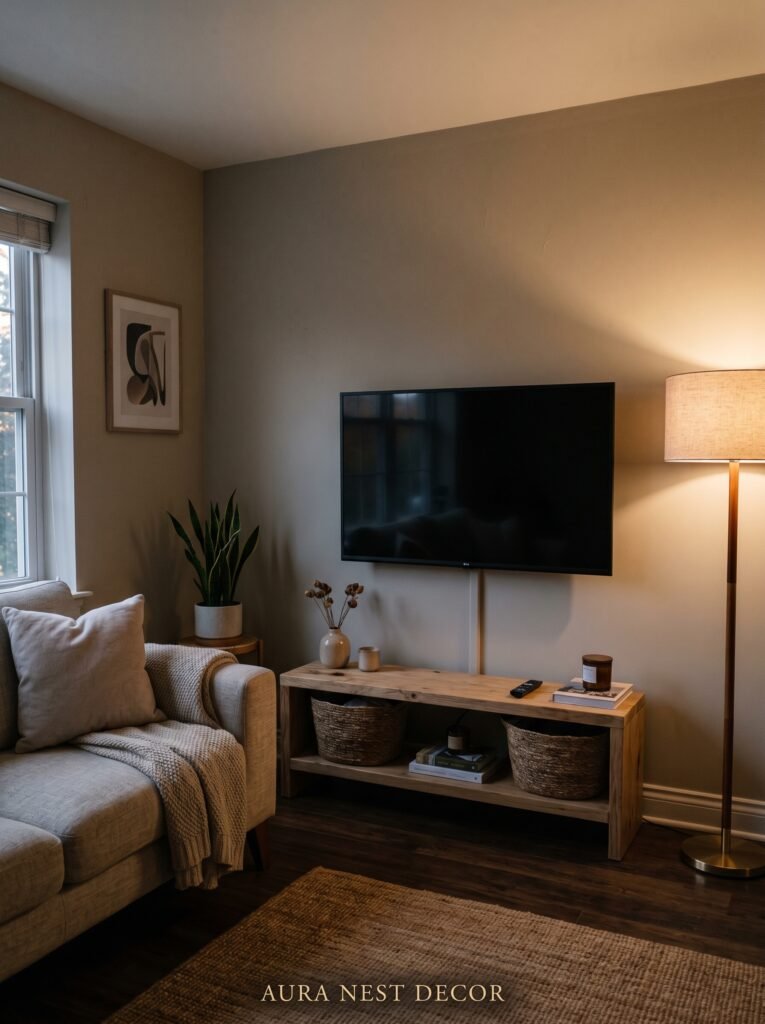
Nobody talks about this directly enough. The television is often the biggest object in a small living room, and in a modern rustic aesthetic that celebrates natural materials and organic beauty, a giant flat screen mounted on the wall can feel like an interruption.
There are a few approaches that work well. The first is the gallery wall mount — where the TV is incorporated into a larger arrangement of framed art, mirrors, and shelving, so it reads as one element among many rather than the entire wall’s focal point. This takes more planning but the result feels intentional rather than resigned.
The second is the console approach — a low, beautifully styled media console beneath the TV that draws as much attention as the screen itself. Solid wood or cane-front media consoles in the modern rustic style are widely available now in both the US and UK market, and a good one turns the TV wall into something worth looking at even when the screen is off.
The third is simply accepting the TV and making everything else in the room more compelling than it is. Strong shelving, great art, beautiful textiles. The TV becomes background noise visually when enough other things are competing for your interest.
10. Texture Layering: The Difference Between a Room That’s Designed and a Room That’s Lived In
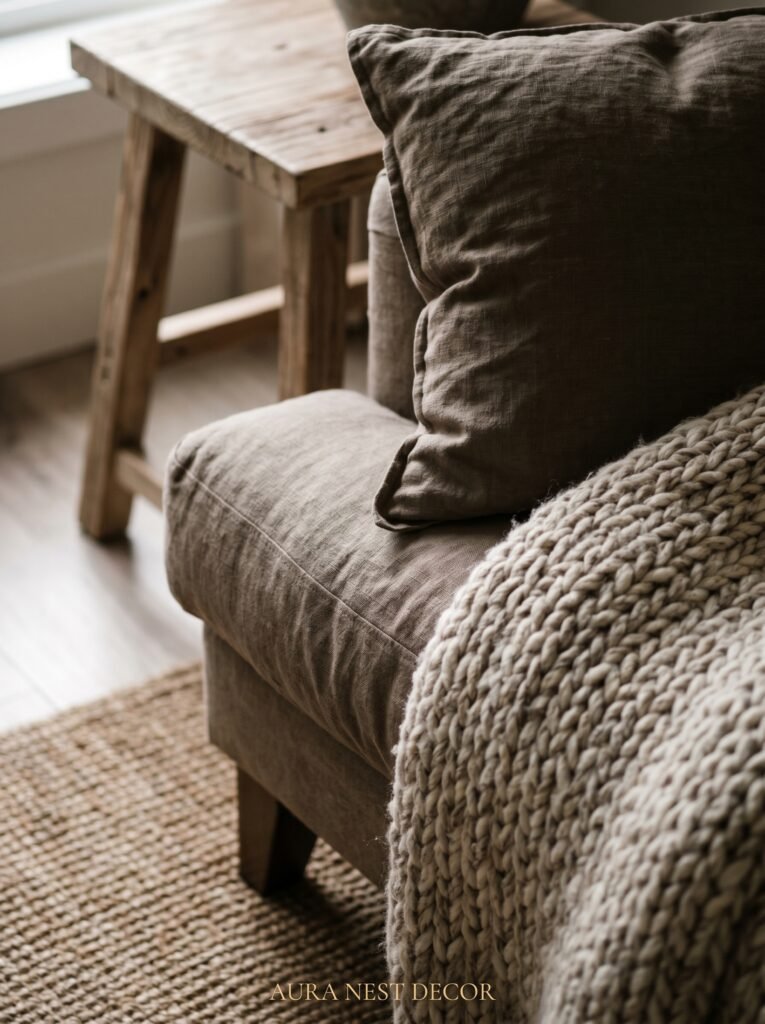
Visual texture is the most undervalued tool in interior design. Color gets all the attention, but texture is what makes a room feel like something real.
In a small modern rustic living room, you’re layering at least five distinct textures: something woven (a jute rug or rattan basket), something linen or cotton (throw cushions, curtains), something ceramic or stone (a vase, a lamp base), something wood (obvious, but essential), and something soft and tactile at arm’s reach (a chunky knit throw over the sofa arm).
These textures don’t need to be expensive. A simple chunky throw from any high street home store in the UK or a Target run in the US — draped casually rather than folded formally — does more for a room than a lot of people expect. It signals that someone lives here, that the room is used, that comfort is the actual point.
The key word in modern rustic is matte. Shiny finishes — lacquered surfaces, high-gloss cushion covers, metallic accents used heavily — pull the room toward something cooler and more clinical. Matte surfaces absorb light gently. They have warmth. They belong.
11. What to Do With an Awkward Fireplace or Chimney Breast
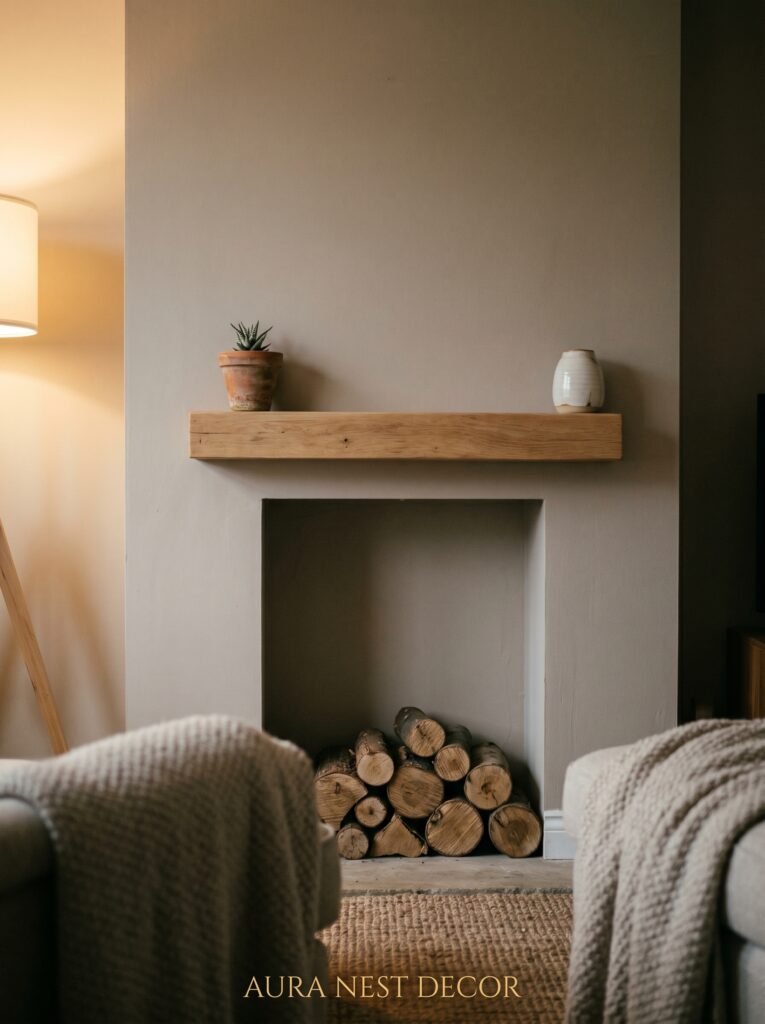
If you have one — and in many British terraced houses and older American homes, you do — the chimney breast is both a challenge and a gift. It’s the one architectural feature in the room that demands acknowledgment.
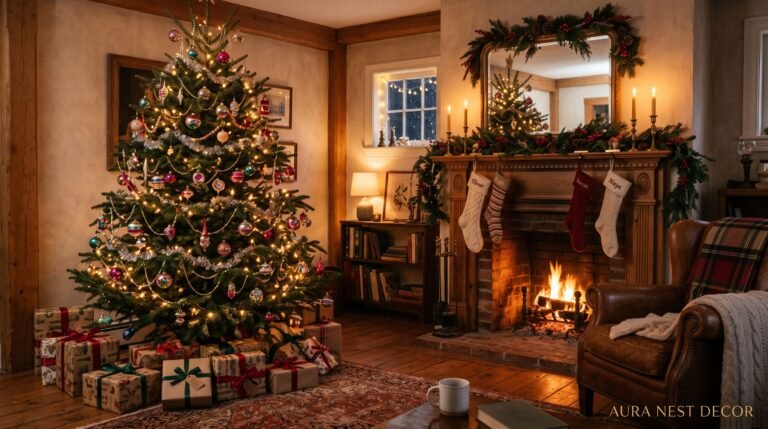
In a modern rustic scheme, the chimney breast should be your main moment. If you have a working fireplace, dress the hearth with care — a stack of real logs in a simple iron log holder, a few pillar candles of different heights on the mantelpiece, one piece of art propped against the back of the fireplace opening if it isn’t in use. The whole thing becomes a still life.
If you don’t have a working fireplace and the chimney breast is just a wall projection, treat it as your feature wall. A different color here — that dusty sage or terracotta — can anchor the whole room without the cost or commitment of wallpaper. Float a single large piece of art on it. Put your best shelf here. Make it the room’s visual center and let everything else lean toward it.
12. The Small Moments That Add Up to a Whole Feeling
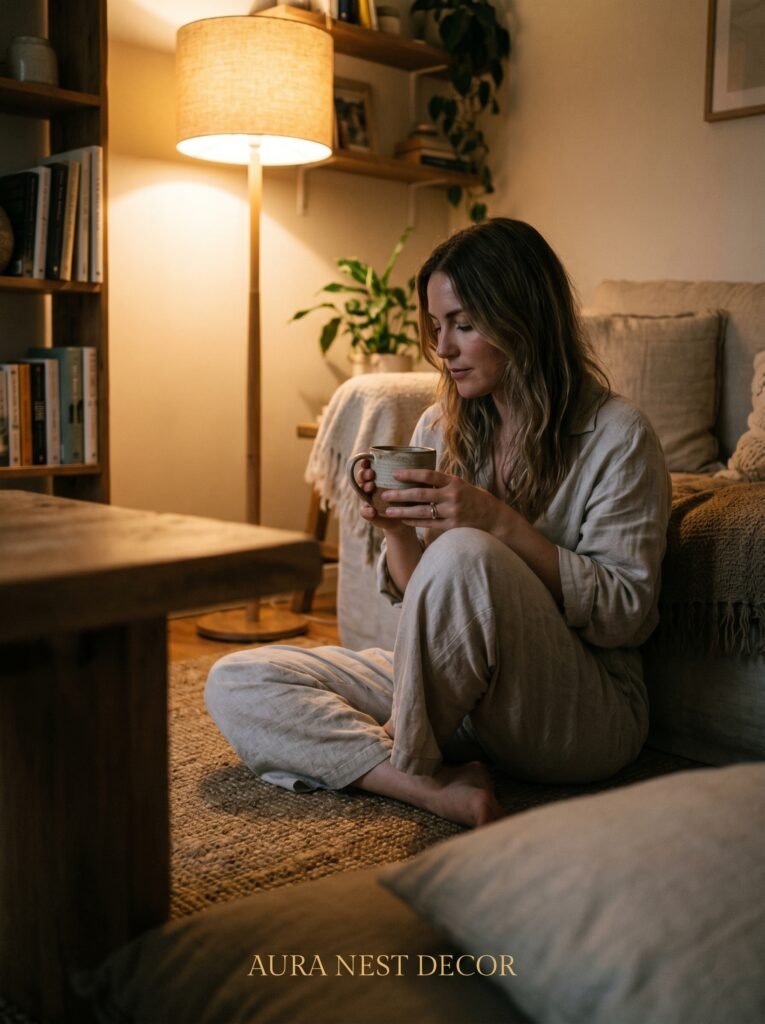
Here’s what separates a beautifully finished small living room from one that’s still slightly off: the details nobody plans for but everyone feels.
A stack of books on the coffee table — real ones you’ve actually read, spines up, with a small ceramic object resting on top. A cluster of candles in varying heights on the hearth or windowsill that you actually light in the evening. A throw that’s slightly rumpled rather than display-folded, because this is a room that gets used. A single branch of eucalyptus or dried pampas grass in a simple stoneware vase.
None of these things cost much. None of them are hard. But together, they communicate something that no amount of expensive furniture can manufacture: that someone with genuine taste and real warmth lives here, and they’ve thought carefully about how this room makes people feel.
That’s what modern rustic, done well, actually is. Not a style. A feeling.
—
❓ FAQ
Q: How do I make a small living room feel bigger without knocking down walls? A: Start with legs — furniture with visible legs lets light travel underneath and opens up the floor visually. Add mirrors strategically (one large mirror opposite a window does more than you’d expect), layer your lighting so shadows create depth rather than flatness, and keep your color palette cohesive so the eye moves smoothly around the room rather than stopping and starting.
Q: Can modern rustic work in a rented home where I can’t paint the walls? A: Absolutely. The modern rustic palette lives primarily in your textiles, furniture, and accessories — not in the walls. A cream or off-white rental wall is actually a perfectly neutral backdrop for warm wood tones, linen fabrics, and terracotta accents. Focus your energy on a great rug, layered lighting, and textured throws and cushions, and the aesthetic will come through regardless.
Q: What’s the single best investment for a small modern rustic living room? A: A quality rug, sized generously enough that at least the front legs of all your seating sit on it. Nothing else unifies a small space faster or makes such an immediate visual impact. A great rug makes even mismatched or budget furniture look like a considered collection.
—
💭 Final Thoughts
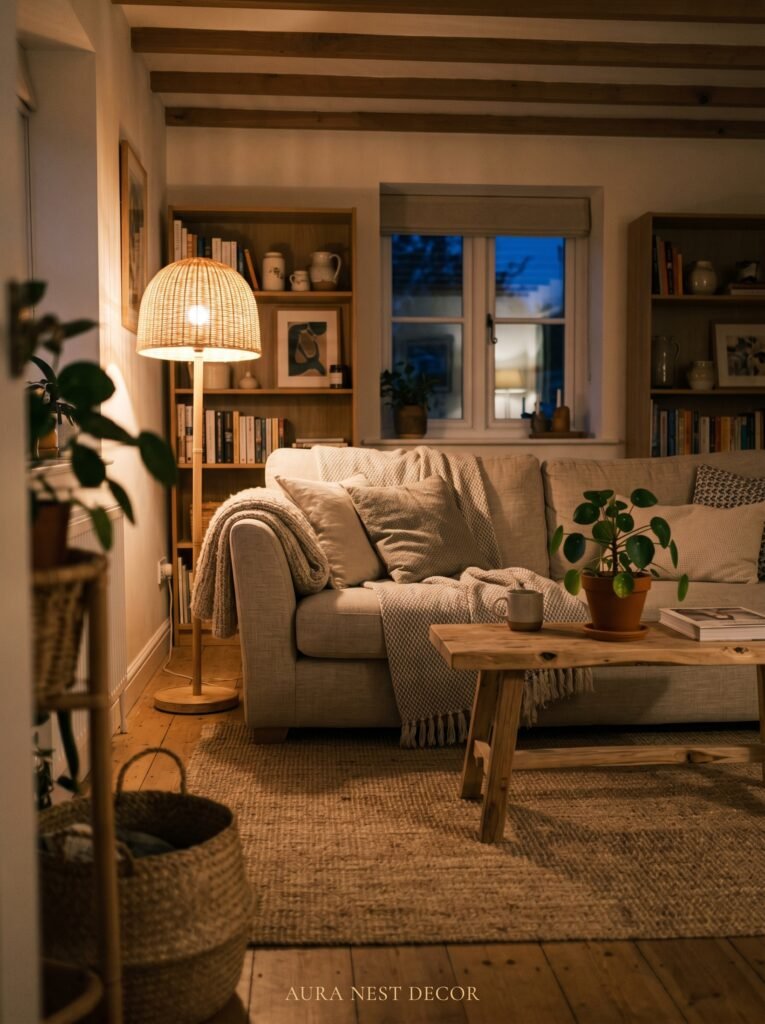
A small living room isn’t a limitation — it’s an invitation to be deliberate. Every piece matters. Every detail lands. When you get it right, the room doesn’t feel small at all; it feels complete, like everything that needed to be there is there and nothing that didn’t belong was ever allowed in.
The modern rustic sweet spot is really just about warmth and honesty — honest materials, honest light, things that age well and live beautifully. Does your room already have a detail that’s doing that quiet, right kind of work, and you just haven’t given it enough credit yet?