13 Mirror Ideas That Will Make Your Living Room Look Twice as Good
You walked into someone’s living room once and thought this feels bigger, lighter, more alive than mine — and you couldn’t figure out why. Nine times out of ten, there was a mirror involved. Not a small one hung awkwardly above a sideboard. A real one, placed with intention.
—
1. The Wall That Was Doing Nothing Is Now Doing Everything
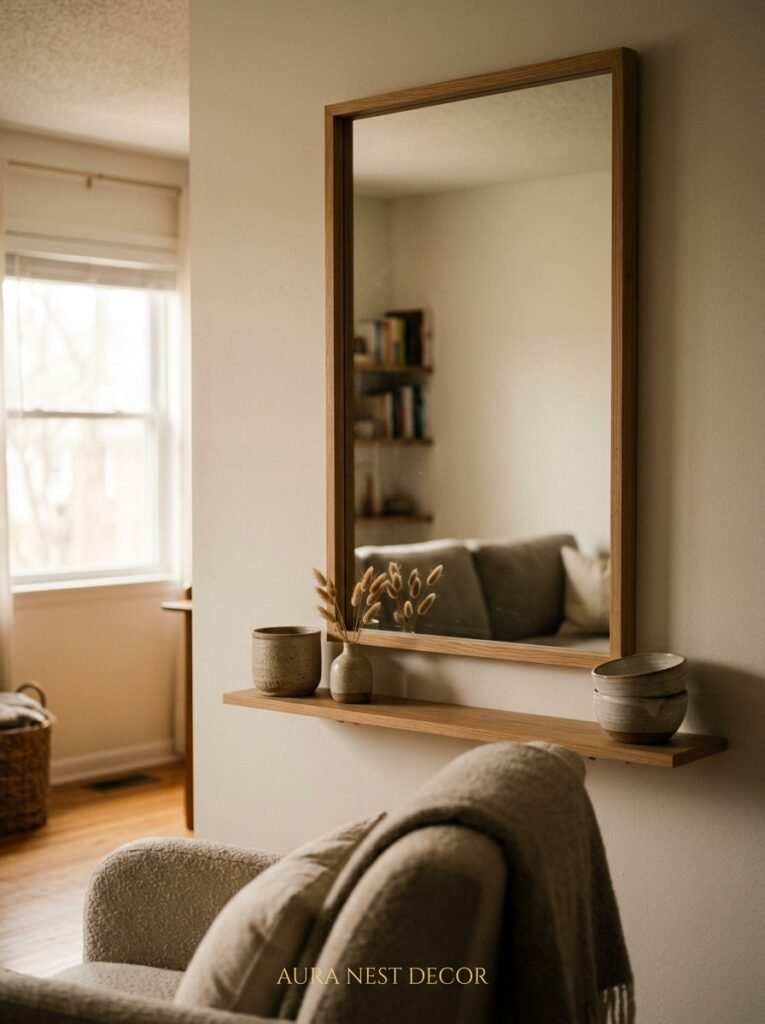
Every living room has one. That blank wall you keep meaning to do something with. You’ve considered a gallery wall, a large painting, maybe some floating shelves. But before you commit to anything, consider this: a single oversized mirror on that wall will do more for the room than almost anything else you could put there.
We’re talking a mirror that takes up genuine real estate. Something in the range of 48 to 60 inches tall, leaned against the wall or hung flush. When it’s that large, it stops being a mirror and starts being an architectural element. It reflects the opposite side of the room back at you — the sofa, the lamp, the window light — and suddenly the space has depth it didn’t have before.
The trick is to treat it the way you’d treat a piece of art. Don’t center it just because centering feels safe. Try it slightly off to one side. Let it interact with a floor lamp or a tall plant. The asymmetry will make it feel curated rather than compensatory.
This is the move for rental apartments and smaller terraced houses especially. You can’t knock down a wall, but you can make the eye believe there’s more space on the other side of one.
“A mirror hung with intention doesn’t just reflect the room. It rewrites it.”
—
2. Why Leaning a Mirror Is the Most Stylish Thing You’re Not Doing
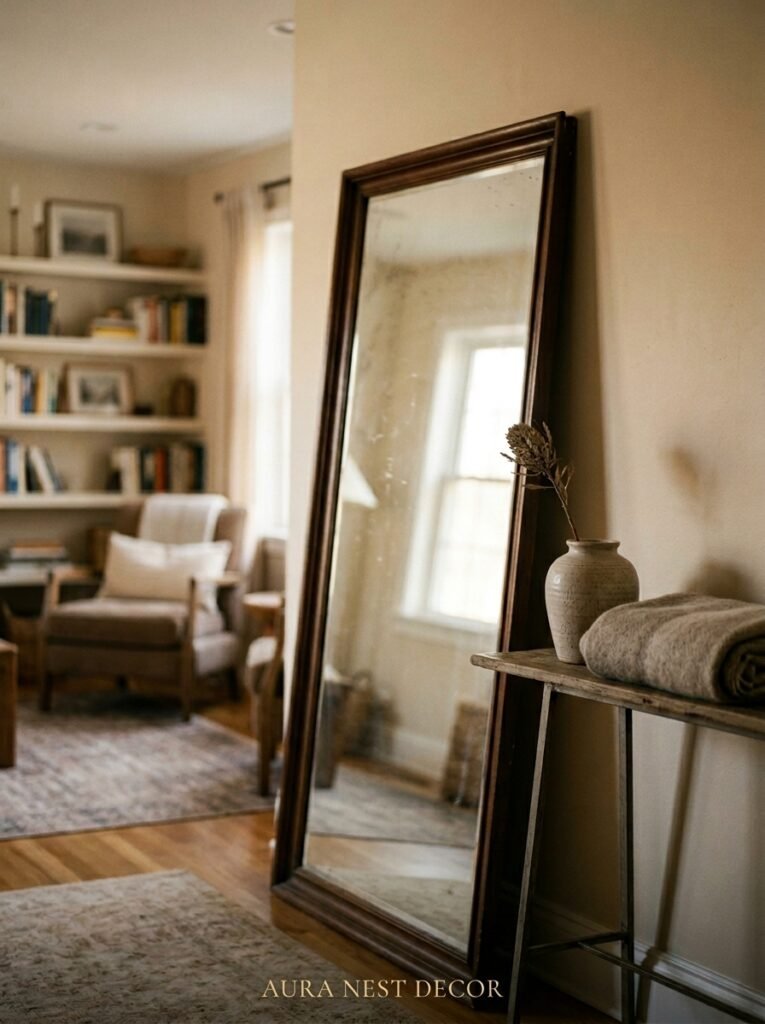
There’s something about a leaned mirror that a hung mirror almost never achieves: it looks like you didn’t try too hard. And in interior design, that effortlessness is worth more than you think.
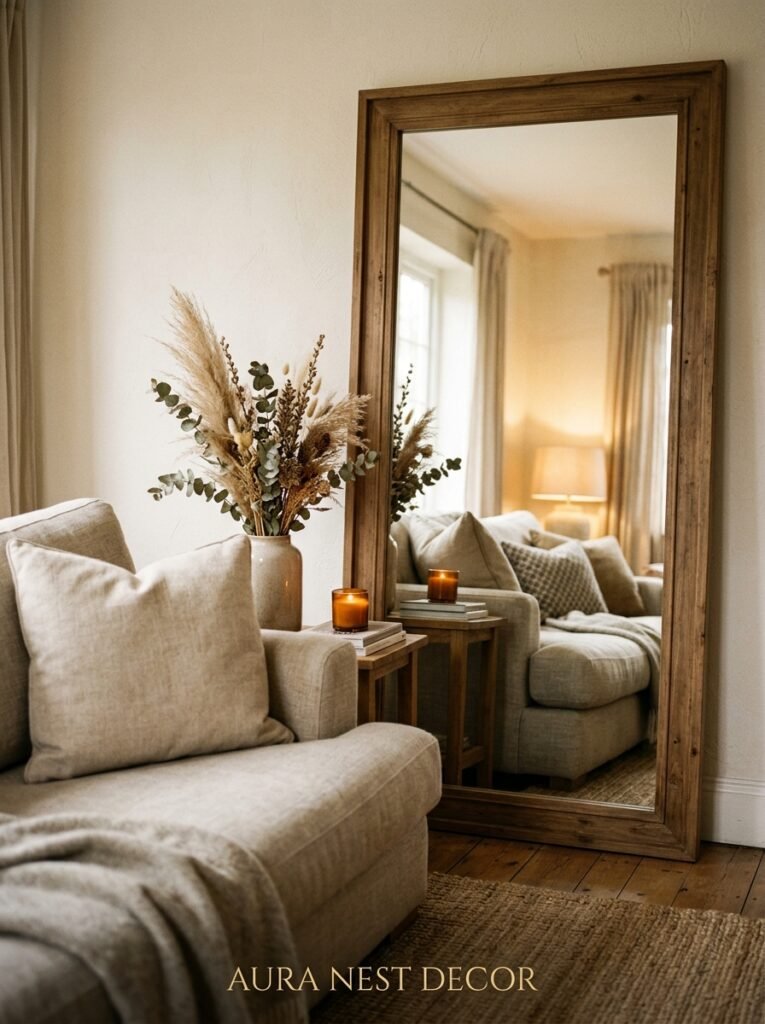
A large mirror leaned against the wall — especially in a chunky wooden or plaster frame — reads as confident and relaxed at the same time. It says this room was styled, not decorated. There’s a real difference between those two things.
Lean it behind a console table, a low sideboard, or even directly onto the floor with a few books and a plant beside it. The proportions matter more than you’d expect. The mirror should be wider than what’s sitting in front of it. If you lean a narrow mirror behind a wide console, it looks like an afterthought. But when the mirror is broader, everything in front of it gets framed like a still life.
This works particularly well in British-style living rooms where the fireplace is the focal point but the flanking walls feel flat. Lean a mirror on one side and suddenly the whole room has balance without feeling symmetrical and uptight.
—
3. The Color That Frames a Mirror Makes or Breaks It
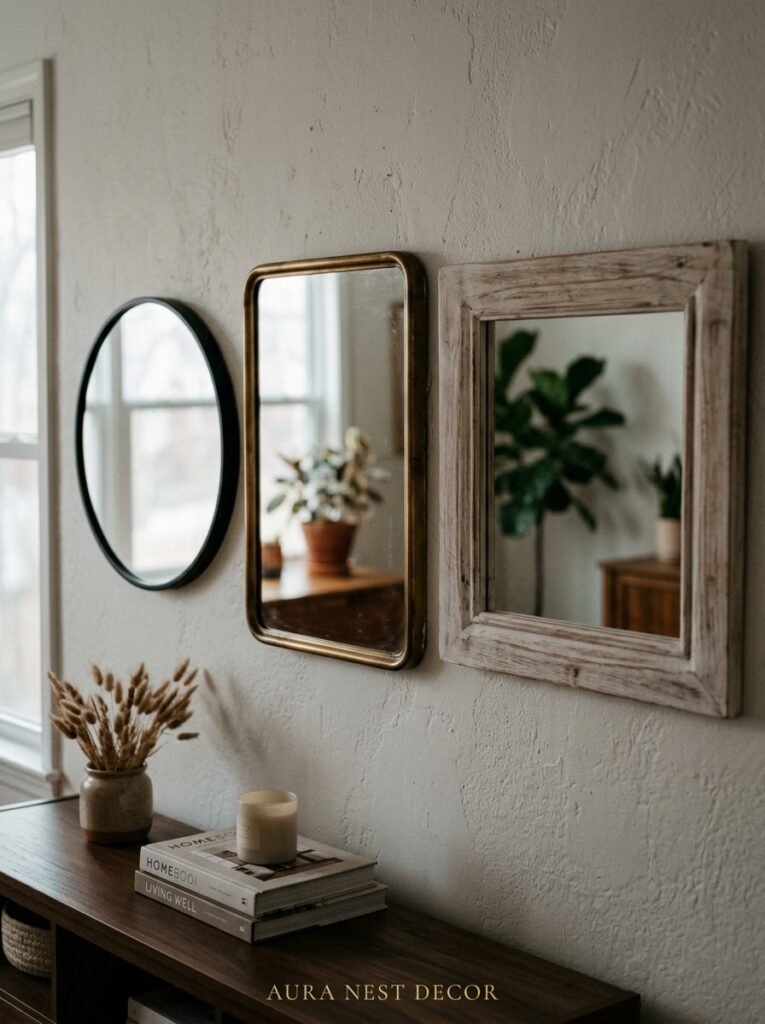
Nobody talks about this enough. The frame is not decoration. The frame is the decision.
A gold-leafed frame in an ornate style will read as maximalist and warm. A simple black metal frame will look sharp and contemporary. A whitewashed wood frame will feel coastal and easy. An unframed beveled mirror will feel sleek, almost invisible. None of these are wrong. All of them are completely different rooms.
Right now, the frame color that keeps showing up in every living room I’m in love with is a warm, dark bronze. Not polished brass — that’s a different era. Bronze with a little texture to it, a little age. It works with cream walls, with dark green walls, with natural linen, with terracotta. It somehow manages to feel both old and current.
If you’re in a home with original Victorian or Edwardian features — cornicing, ceiling roses, a tiled fireplace — a heavily framed antique-style mirror will play into all of that in the best possible way. If you’re in a new build with clean lines and not much architectural character, a thinner frame or no frame at all will feel more honest to the space.
Match the frame to one other metal in the room. The curtain rod, the light fixture, the coffee table legs. One through line is all you need.
—
4. The Fireplace Mirror That Isn’t the Same One Everyone Has
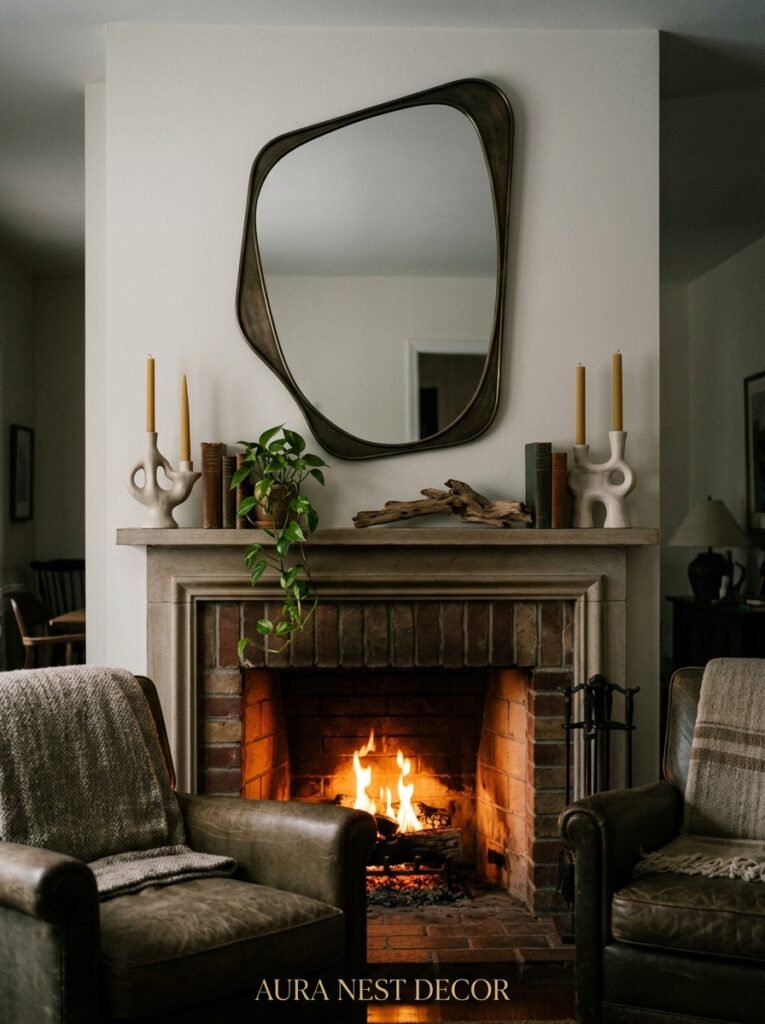
The overmantel mirror is a classic for a reason. A mirror above the fireplace bounces light from both the fire and the room back into the space, and it gives the whole wall a focal point that feels intentional and complete.
But here’s where people go wrong: they choose a mirror that’s too small. A mirror that barely clears the top of the mantel shelf, flanked by acres of blank wall on either side. It looks timid. It looks like you weren’t sure.
The overmantel mirror should be wide enough to feel like it belongs to the whole chimney breast, not just to the shelf it’s sitting above. Think in terms of percentages — ideally, the mirror spans about 80% of the mantel shelf width. Or go the other direction entirely and hang a mirror so large it touches the ceiling and extends past the shelf on either side. That’s a bold move, and it works.
For British homes with original fireplaces, an arched mirror with a carved wooden or plaster frame will echo the curves of the fireplace surround itself. For American homes with a more streamlined fireplace, a horizontal rectangular mirror hung landscape can feel fresh and intentional.
“Above the fireplace is the room’s most valuable wall space. Don’t waste it on something forgettable.”
—
5. How Mirrors and Windows Are Actually Working Together (If You Let Them)
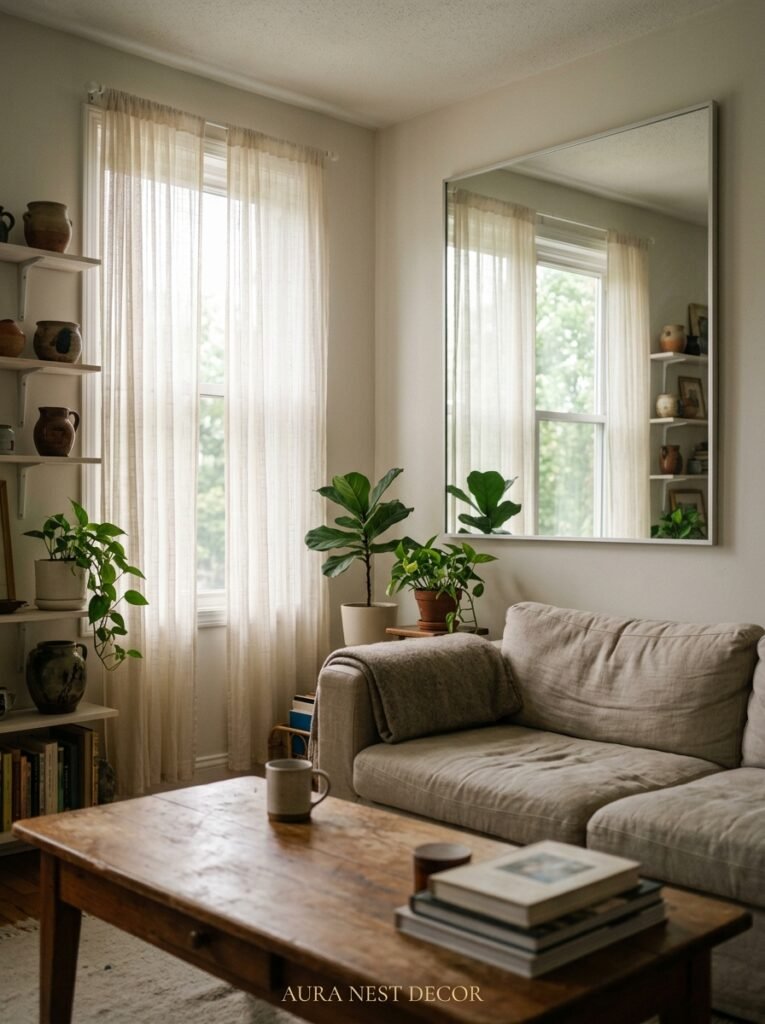
Natural light is the most beautiful thing in any room. The problem is there’s never quite enough of it. This is where a mirror stops being decor and becomes functional in the best possible way.
Place a mirror directly opposite or at a 90-degree angle to your largest window, and you effectively double the natural light in the room. The mirror catches the light and throws it deeper into the space, into corners that would otherwise stay dim and heavy. If you’re in a north-facing room — a common situation in British terraced houses and American apartments where you don’t get to choose your aspect — this is genuinely life-changing.
The best time to test this is at around 3pm on a bright afternoon. Move a handheld mirror around the room while standing in your dimmest corner. Watch where the light wants to go. Where it lands brightest and most naturally — that’s where your mirror should live.
Floor-to-ceiling mirrors on a wall perpendicular to the window will fill a room with golden afternoon light in a way that no number of extra lamps can replicate. It’s not a trick. It’s just physics being on your side for once.
—
6. The Vintage Market Mirror That Makes Everything Else Look More Expensive
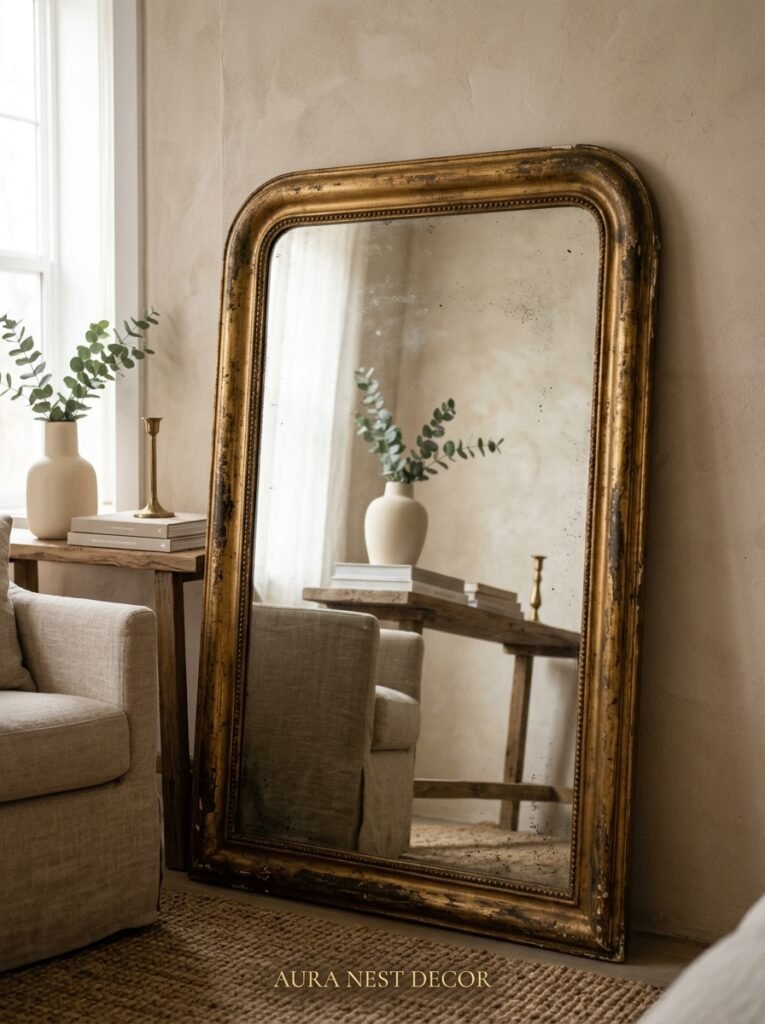
There is a specific type of mirror that costs thirty dollars at an antiques market or a thrift store, and it will make your living room look like it was styled by someone who gets paid for this. It’s old. It’s slightly foxed — meaning the mirror surface has those dark, cloudy patches around the edges that come from age. The frame has history to it. Peeling gilt, or dark wood with worn corners, or painted white with chips showing the original color underneath.
These mirrors work because they add something no new piece of furniture can: the suggestion of a life lived in the room. They make everything around them feel more intentional, more collected, more considered.
In the US, estate sales and Facebook Marketplace are where you find them. In the UK, it’s car boot sales, charity shops on the high street, and places like Reclaim or Scaramanga. They sell for almost nothing because people don’t always see what they’re looking at. You will.
Hang one above a simple, modern console table and the contrast between the old and new will do all the work for you.
—
7. Small Mirrors in Groups: When One Isn’t Enough and Three Is Just Right
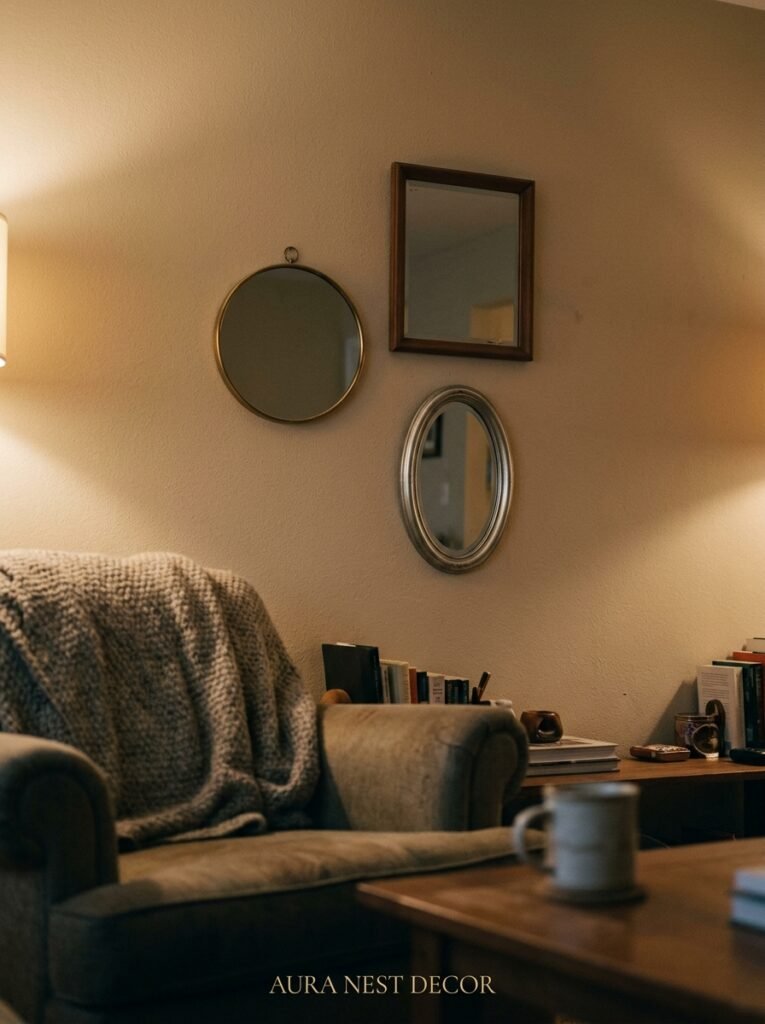
A single small mirror on a large wall looks like it got lost. But group three or more together with deliberate spacing, and you have something that feels like a gallery wall without any of the commitment.
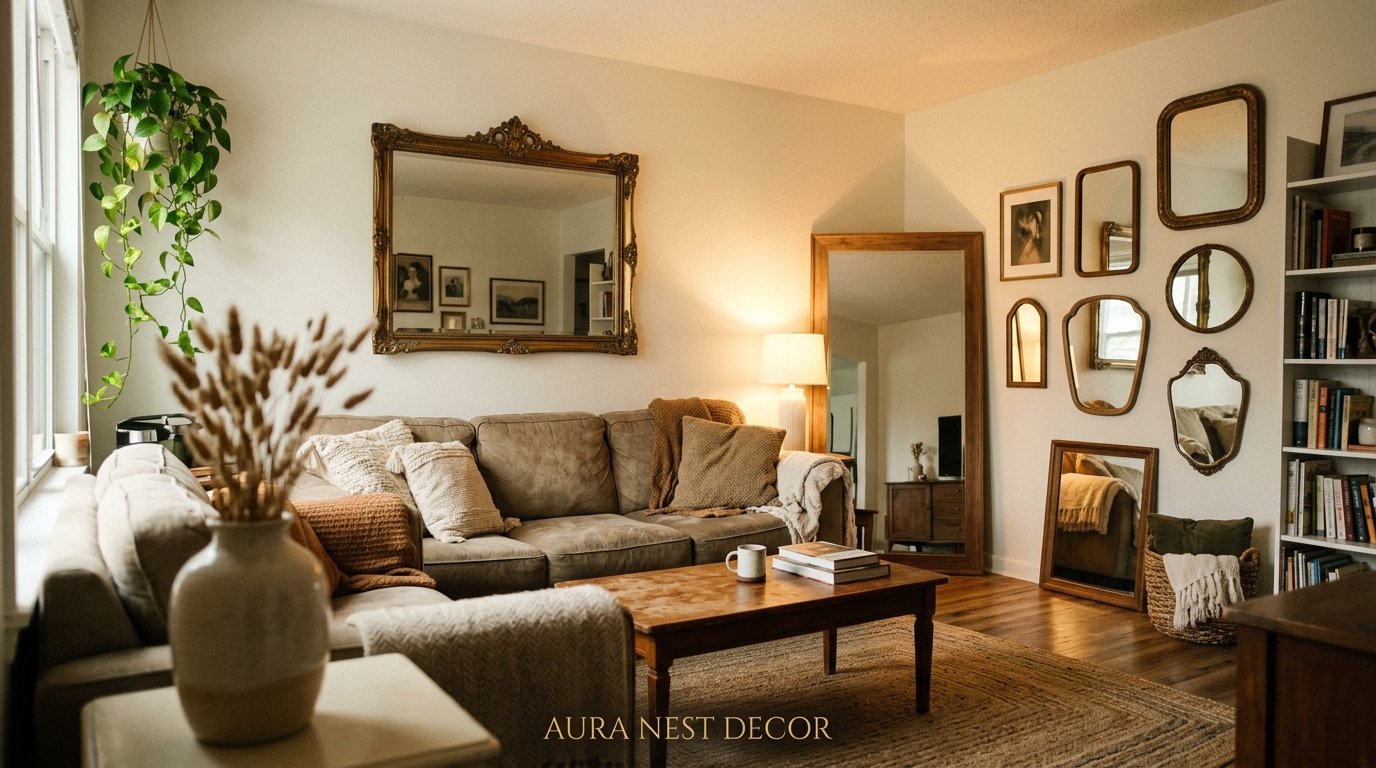
The key word there is deliberate. Random clusters of mixed mirrors can tip quickly into chaotic. What keeps it from looking like a rummage sale is a common thread: same frame style but different sizes, or same shape (all round, all arched) but different finishes. Pick one unifying element and let everything else vary.
Round mirrors are particularly forgiving in a group. Three round mirrors in slightly different sizes, arranged in a loose diagonal or a tight triangle, have a satisfying organic quality. They feel a bit botanical, like something you’d find in a room with a lot of plants and good taste.
For American living rooms with tall ceilings and wide open walls, a grouping of five or seven mirrors in varying sizes can fill a wall in a way that feels abundant and intentional. For cozier British living rooms with lower ceilings and less wall space, three is usually the magic number.
“Three mirrors on a wall create a conversation. One creates an awkward silence.”
—
8. The Arch Mirror Obsession: Why It’s Not Going Anywhere
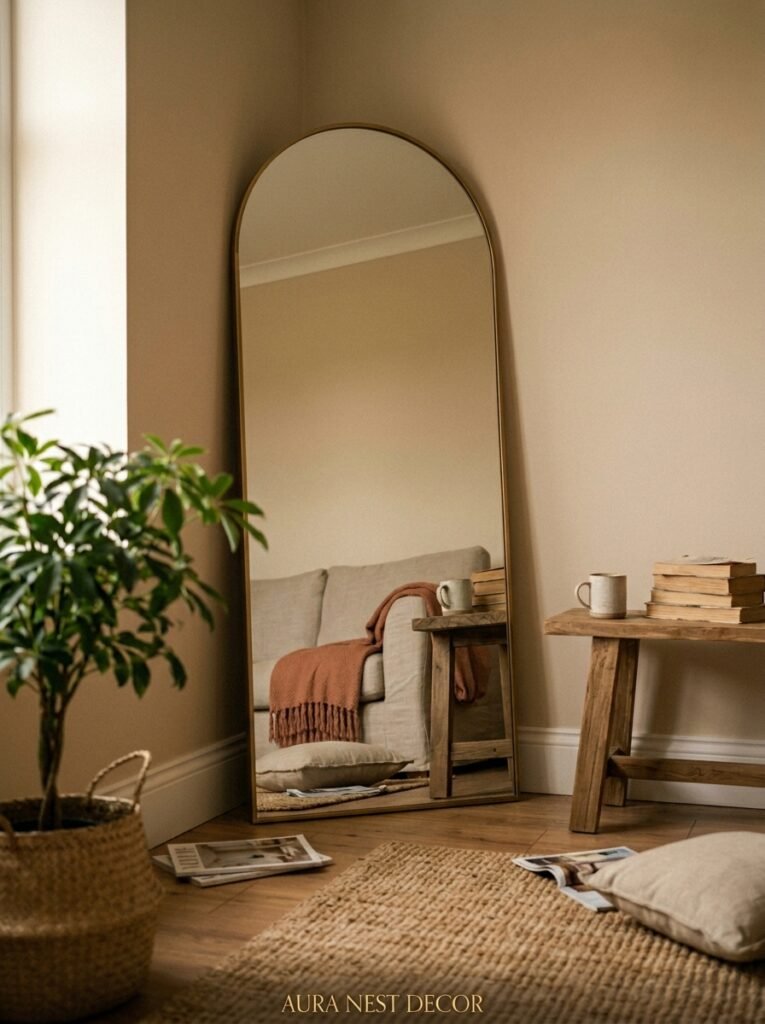
If you’ve been on Pinterest or Instagram in the last three years, you’ve seen the arch mirror. Tall, curved at the top, sometimes with a thin brass or black frame, sometimes completely frameless. It became popular so fast that there was a moment when it felt overexposed.
And then something interesting happened. It stayed. Because it works.
The arch shape does something that rectangular mirrors don’t: it introduces a soft curve into what are almost always very boxy, angular rooms. Four square walls, a rectangular sofa, a rectangular coffee table — and then this gentle arc that breaks the geometry and makes everything feel less rigid. It humanizes the room.
Tall arch mirrors, when leaned against a wall, also create a sense of elongated vertical space that makes ceilings feel higher. In a standard-height British living room, this matters a great deal. In an American ranch-style home with lower ceilings, it matters even more.
The size of the arch matters. A small arch mirror feels decorative. A large one — something that reaches from the floor to near your shoulder height, or taller — feels like a statement. It’s one of those rare pieces of decor where bigger is almost always better.
—
9. Mirrors in Dark, Moody Rooms: Yes, Even There
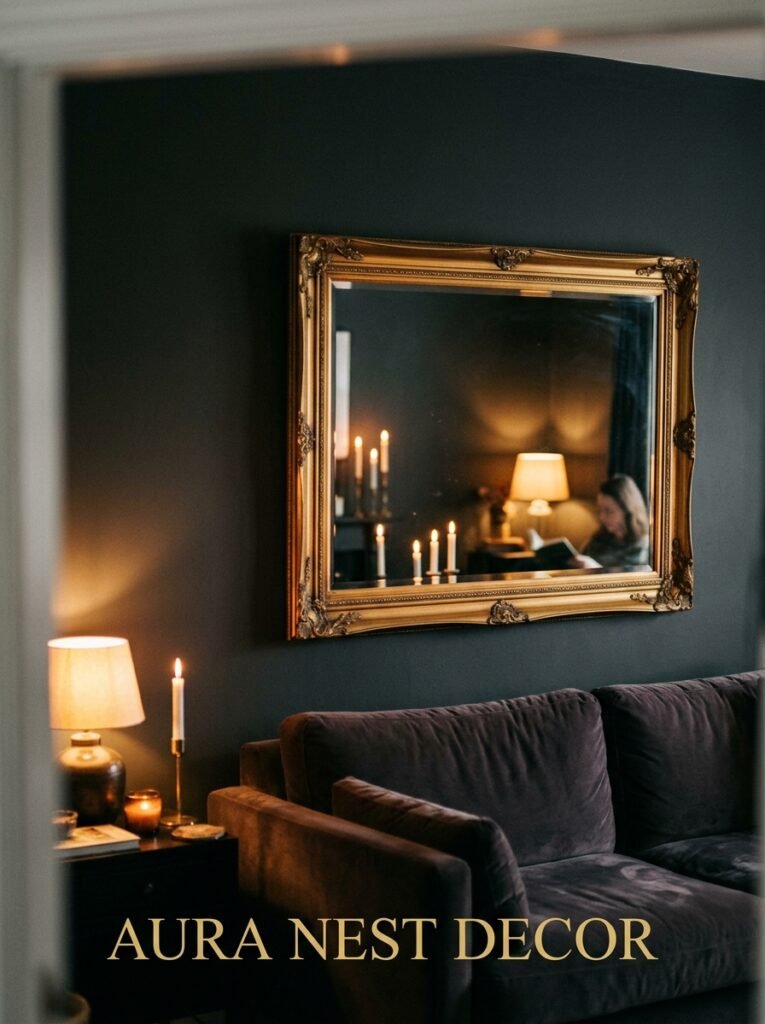
There’s a persistent idea that mirrors are only for light, bright rooms that need more of both. But some of the most beautiful mirror placements I’ve ever seen have been in dark, deliberate rooms — deep green walls, charcoal paint, dark wood floors — where the mirror doesn’t bounce light so much as it creates depth.
In a dark room, a large antique mirror with a foxed surface reflects a slightly hazy, dreamlike version of the room back at you. It looks like looking into a room from another era. The effect is genuinely atmospheric, and it leans into the moodiness rather than fighting it.
If you have a room painted in a deep shade — Farrow & Ball’s Railings, or Studio McGee’s take on a moody sage green, or any of those wonderful Benjamin Moore navies — a mirror with a dark frame will feel at home in a way that a bright chrome frame never would. Keep the tones consistent and the effect becomes intentional rather than contradictory.
—
10. The Styling Around the Mirror That Everyone Gets Wrong
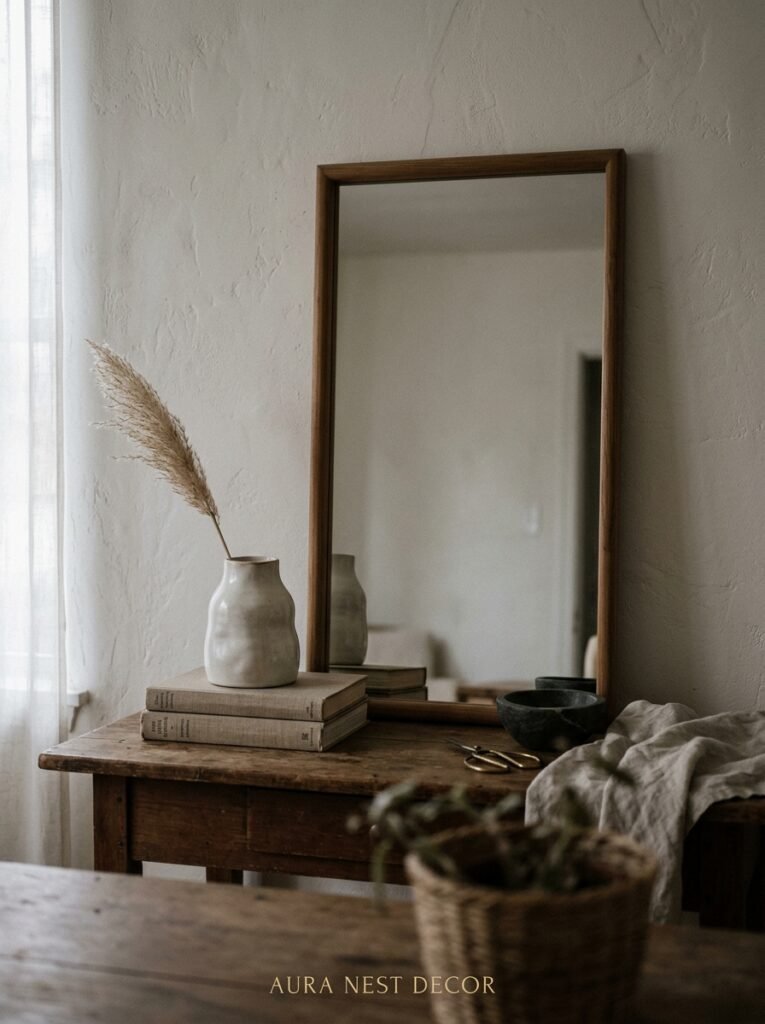
The mirror is hung. You stand back. Something is off. This is almost always a styling problem, not a mirror problem.
Mirrors need company, but not too much of it. A mirror hung above a sideboard surrounded by seventeen small objects looks cluttered and defensive. The mirror itself disappears. The rule is simpler than you think: two or three things maximum, and at least one of them should have height.
A tall vase or a slender lamp on one side. A lower object — a small stack of books, a candle, a ceramic bowl — on the other. Space between them. The mirror then has room to breathe and reflect, which is the entire point.
Candles in front of a mirror are an old trick that still works every single time. At night, a lit candle reflected in a mirror doubles the warm light and makes the whole arrangement feel like a painting. The amber flicker at 9pm with the overhead lights dimmed is one of the coziest things a room can do.
—
11. The One Mirror Placement That Interior Designers Will Tell You to Avoid
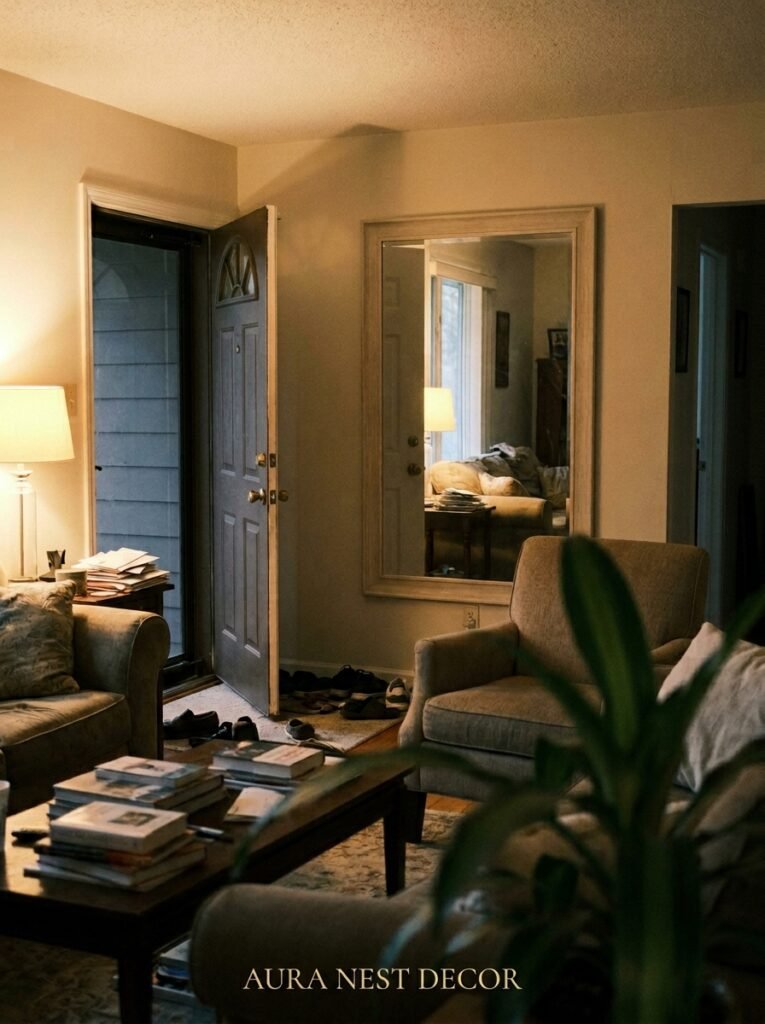
Don’t hang a mirror directly opposite your front door, facing into the living room so it’s the first thing you see when you enter. It sounds good in theory — it makes the room feel longer, it bounces light — but in practice, you walk into your own home and immediately see yourself walking in. It kills the sense of entering a separate, welcoming space.
Instead, angle the mirror 30 degrees, or place it on an adjacent wall, so it reflects the room rather than the doorway. You still get the depth and the light. You just don’t get the slightly unsettling experience of being greeted by your own face every time you come home.
The same principle applies to mirrors positioned to reflect a messy corner, a pile of cables, or anything you’d rather not see twice. Mirrors are honest. They will show you exactly what’s in the room. That’s their power and their limitation. Position accordingly.
—
12. What British Homes Do With Mirrors That American Homes Are Missing Out On
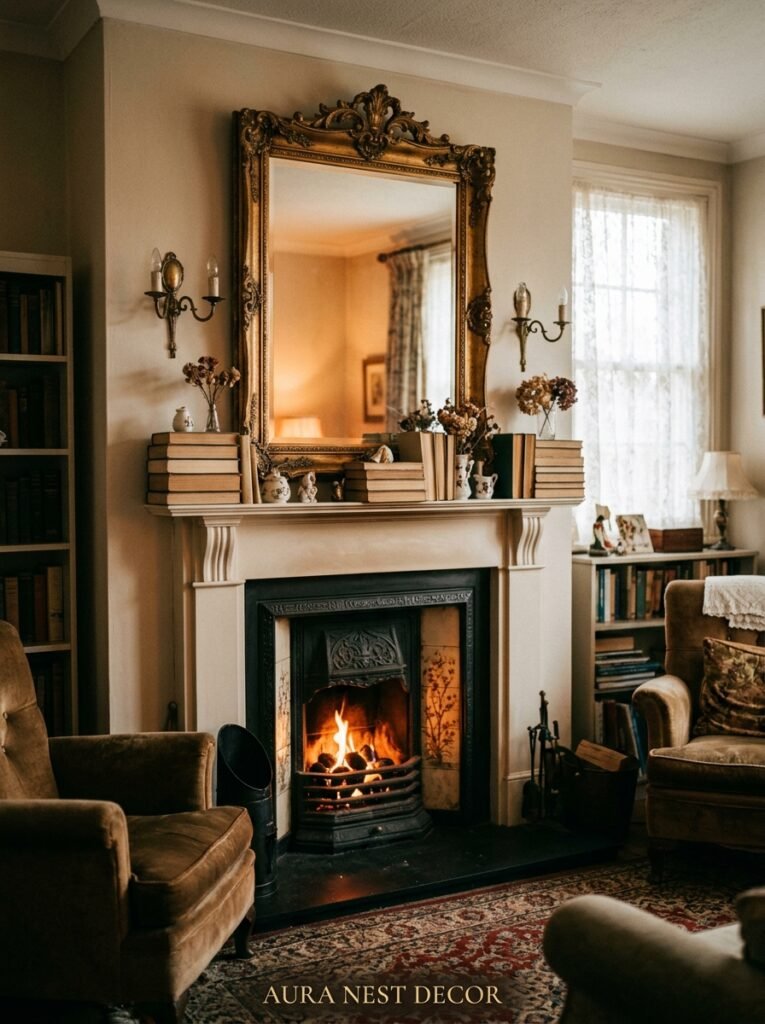
British interiors have a specific relationship with mirrors that comes partly from architecture and partly from culture. The houses are older, the rooms are smaller, the light is genuinely harder to come by. Mirrors became a practical necessity centuries before they became an aesthetic trend.
What British decorators tend to do brilliantly is pair mirrors with period features. A large ornate mirror hung between two wall sconces in a Victorian terrace. A small convex mirror — the kind that looks like a fishbowl — hung in the alcove beside a fireplace breast. Mirrors in hallways so narrow that a mirror is the only thing that makes them feel livable.
American homes have the advantage of space and light, but sometimes they underuse mirrors as a result. The move for American rooms — especially suburban homes with wide open floor plans — is to use mirrors to create intimacy rather than to manufacture space. A large mirror on the wall behind a reading nook makes the nook feel like its own world. It doubles the coziness rather than the square footage.
—
❓ FAQ
Q: Where should you not put a mirror in the living room? A: Avoid placing mirrors directly opposite each other — the infinite reflection looks disorienting rather than stylish. Also avoid positioning mirrors so they reflect a cluttered area, a bathroom door, or anything you wouldn’t want to see emphasized. The mirror will always tell the truth about what’s behind you.
Q: What size mirror works best in a living room? A: In most living rooms, you want to go bigger than your instinct tells you to. A mirror that feels almost too large when you’re buying it tends to feel exactly right once it’s on the wall. As a rough guide, for a standard wall, aim for at least 36 inches wide — and ideally more. Anything smaller risks looking like it got lost.
Q: Do mirrors actually make a small living room look bigger? A: Yes, genuinely — but placement is everything. A large mirror opposite a window will reflect the outdoor view and create real visual depth. A mirror hung too high or too small won’t do much at all. The effect is most dramatic when the mirror reflects something worth seeing: light, greenery, a well-styled corner of the room.
—
💭 Final Thoughts

A mirror is the one piece of decor that improves everything around it — the light, the proportions, the sense that the room has been genuinely thought through. It doesn’t require a renovation or a big budget. Just intention, and the willingness to go bigger than feels comfortable.
The best mirror placement you’ll ever find is usually the one you discover by accident: moving it from room to room, trying it in corners, leaning it in spots you didn’t expect it to work. Trust that process.
What’s the one wall in your living room that you’ve been staring at for months, knowing something needs to change?