Why a Black Sofa Might Be the Smartest Thing You Ever Put in Your Living Room
You know that feeling when you walk into a room and everything just clicks? Nine times out of ten, there’s a black sofa in it. Bold, grounding, completely unbothered by trends — and somehow, it makes everything around it look more intentional.
—
1. The Reason Black Sofas Got a Bad Reputation (And Why That’s Totally Over Now)
For a long time, people avoided black sofas the way they avoided dark paint — convinced it would make a room feel smaller, heavier, more like a waiting room than a home. And okay, I get it. A shiny, stiff black leather sofa from 2003 wasn’t doing anyone any favors.
But that’s not what we’re talking about here.
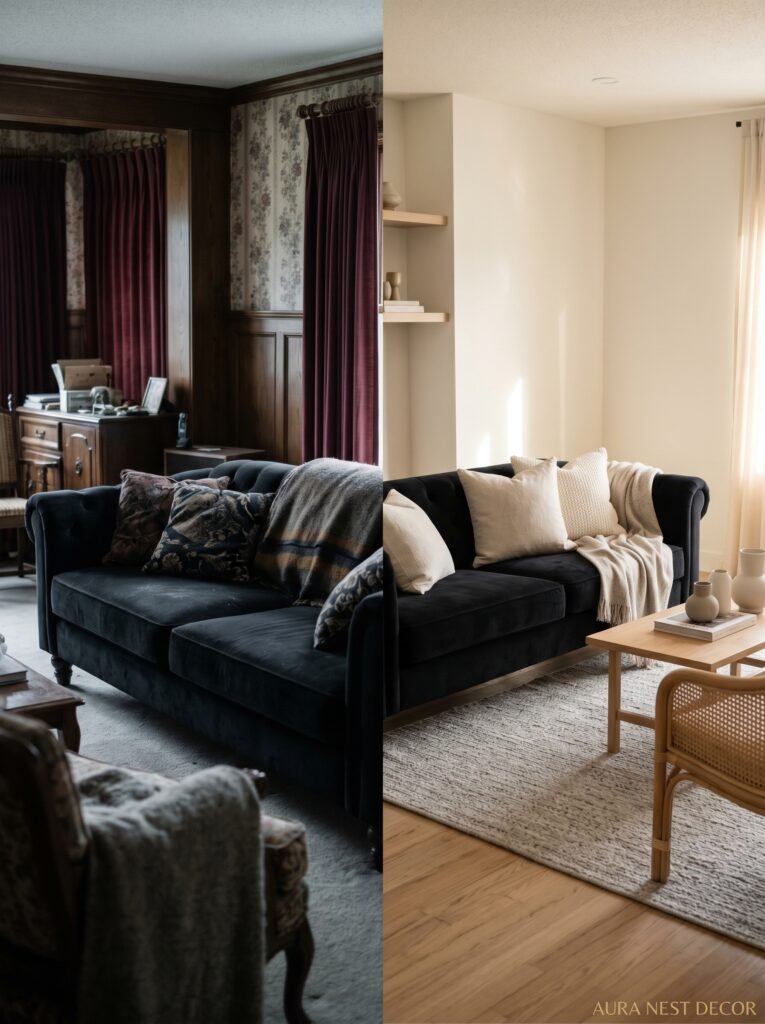
What’s happening right now in interior design — in New York apartments, in London terraces, in everywhere-in-between suburban living rooms — is something different. Black sofas in textured fabrics. Black sofas with curved arms and low profiles. Black sofas that feel genuinely soft and lived-in, not corporate.
The shift happened because people stopped thinking of black as a color that dominates a room and started thinking of it as a foundation. Like a great pair of black jeans that makes every top you own look better. That’s what a black sofa does to a living room. It anchors the whole thing. Every throw pillow, every wooden coffee table, every single plant you put near it suddenly looks more considered — because the sofa isn’t competing with any of it.
Side note — velvet black sofas specifically deserve their own fan club. The way velvet catches light from different angles means a black velvet sofa reads as almost a deep midnight blue in some light and pure black in others. It’s never boring.
“A black sofa doesn’t make a room dark. It makes everything else in the room look like you meant it.”
—
2. The Warm Tones That Make a Black Sofa Feel Like a Hug
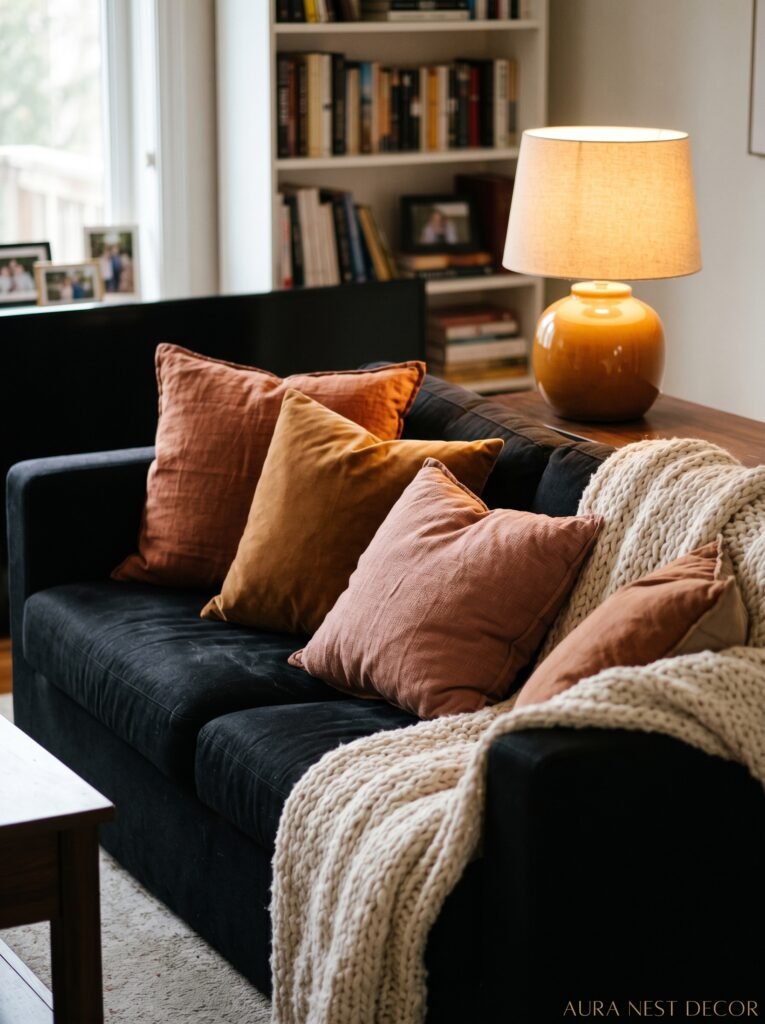
Here’s the thing that surprises people. Black sofas actually go warmer than you’d expect, and the easiest way to prove that is in how they react to the colors around them.
Terracotta. Ochre. Deep rust. Caramel leather. Warm wood. These tones don’t fight with black — they love it. The black sofa becomes a moody backdrop that makes warm tones pop in a way that a beige or grey sofa never could.
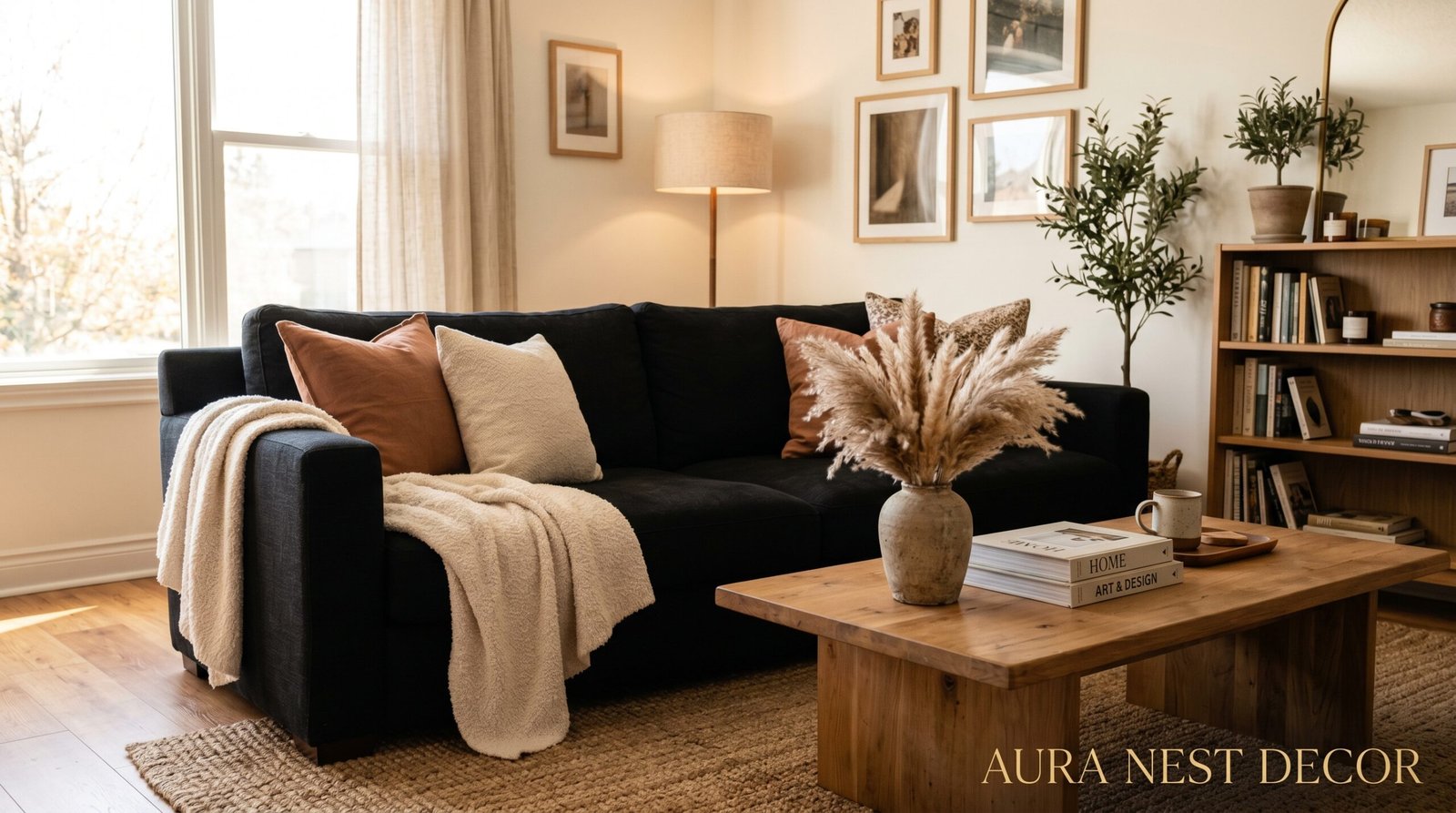
Think about a living room with white walls, a black sofa, and a worn jute rug in honey-brown. Stack a couple of rust-colored linen cushions on there. Add a coffee table in oiled walnut. Put a ceramic lamp in a soft cream. You haven’t done much, and yet the room looks like a spread in Kinfolk magazine.
That amber glow from a warm bulb at 7pm? On a black sofa, it’s everything. The sofa absorbs the cool shadows and reflects the warm light back in a way that makes the whole room feel — I don’t know, like soup tastes on a cold day. That specific. That cozy.
If you’re in a UK home with older features — deep skirting boards, picture rails, that kind of thing — a black sofa with warm terracotta accents is chef’s kiss. It honors the architecture without trying to fight it or over-modernize it.
—
3. The Color Combo That Keeps Showing Up in Every Beautiful Black Sofa Room
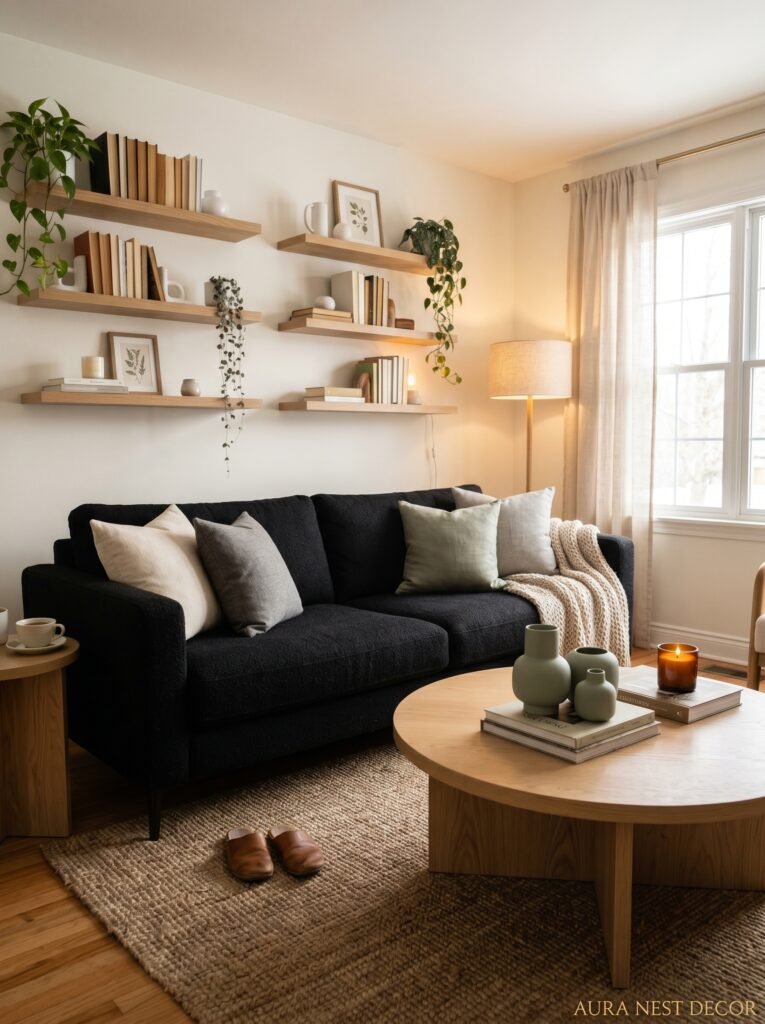
Cream and black. And before you roll your eyes because it sounds obvious — it’s not what you think.
Not stark white and harsh black. Cream. Off-white. Warm ivory. The kind of white that looks like it got a bit of coffee stirred into it. That’s the pairing that actually feels cozy rather than graphic.
Layer in cream-colored curtains (linen, not polyester, please) and suddenly the room breathes. The black sofa sits at the center of this warm, airy space and instead of pulling it down, it pulls it together. Textured cream boucle cushions on a black sofa might be the single most satisfying visual combination I’ve ever encountered in a living room. I’m not exaggerating.
But the color that keeps GENUINELY surprising people? Forest green. Specifically that deep, saturated bottle green or hunter green. A black sofa styled with green velvet cushions and brass or aged-gold accents is jaw-dropping. It’s moody and rich and grown-up without trying too hard. A lot of the most re-pinned living rooms on Pinterest right now are doing exactly this, and once you see it, you can’t unsee it.
—
4. What You Put on the Floor Changes Absolutely Everything
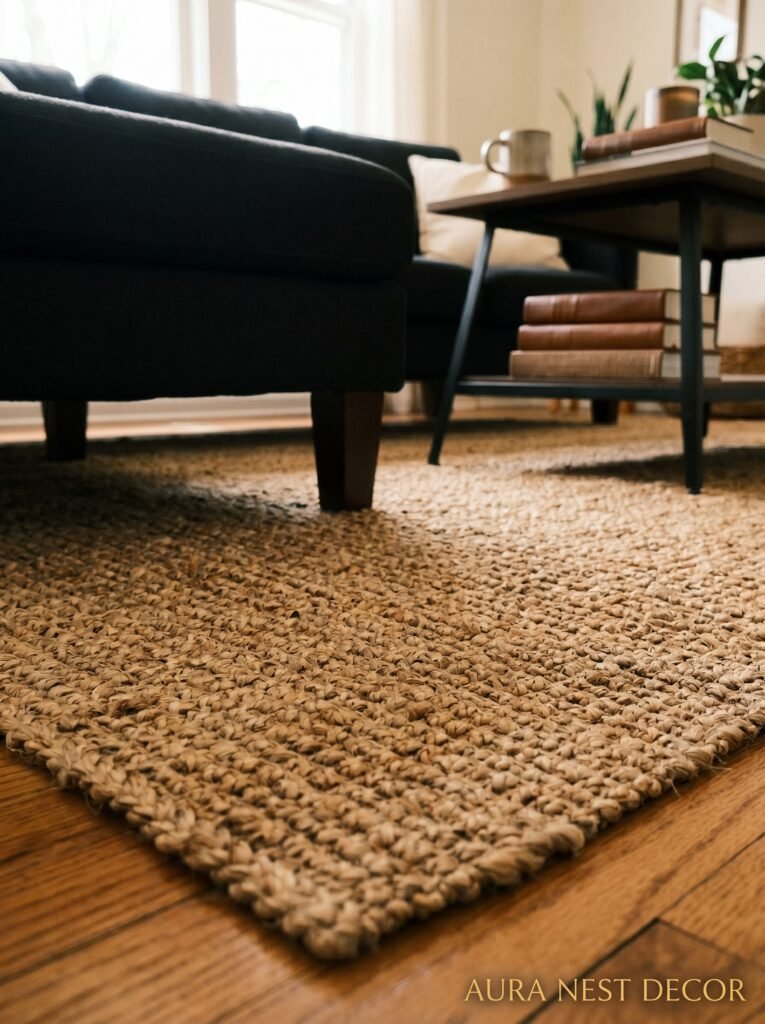
People focus so much on the sofa and the walls that they completely ignore what’s happening at floor level. And that’s a mistake. Because with a black sofa specifically, the rug is doing more heavy lifting than in almost any other setup.
A high-contrast room with dark floors AND a black sofa risks feeling flat. But a chunky, warm-toned rug in that same room? It adds a layer that suddenly reads as intentional rather than accidental.
The best rugs for a black sofa living room, honestly? Moroccan-style rugs in cream and black — classic for a reason. Thick wool rugs in oatmeal or sand. Vintage-style Persian rugs where the background tone is red or terracotta (these are incredible against a black sofa, don’t sleep on this). Braided jute, which somehow makes even the most modern black sofa feel cozy and approachable.
What doesn’t work as well — and I’ll commit to this opinion — is a very pale, very flat rug. Like a light grey low-pile rug under a black sofa. It looks unfinished. It looks like you couldn’t decide. The rug needs some weight or some warmth to hold its own.
“The rug under a black sofa is like the base note of a perfume — most people don’t consciously notice it, but pull it out and everything falls apart.”
—
5. The Wall Color Nobody Talks About That’s Perfect for This
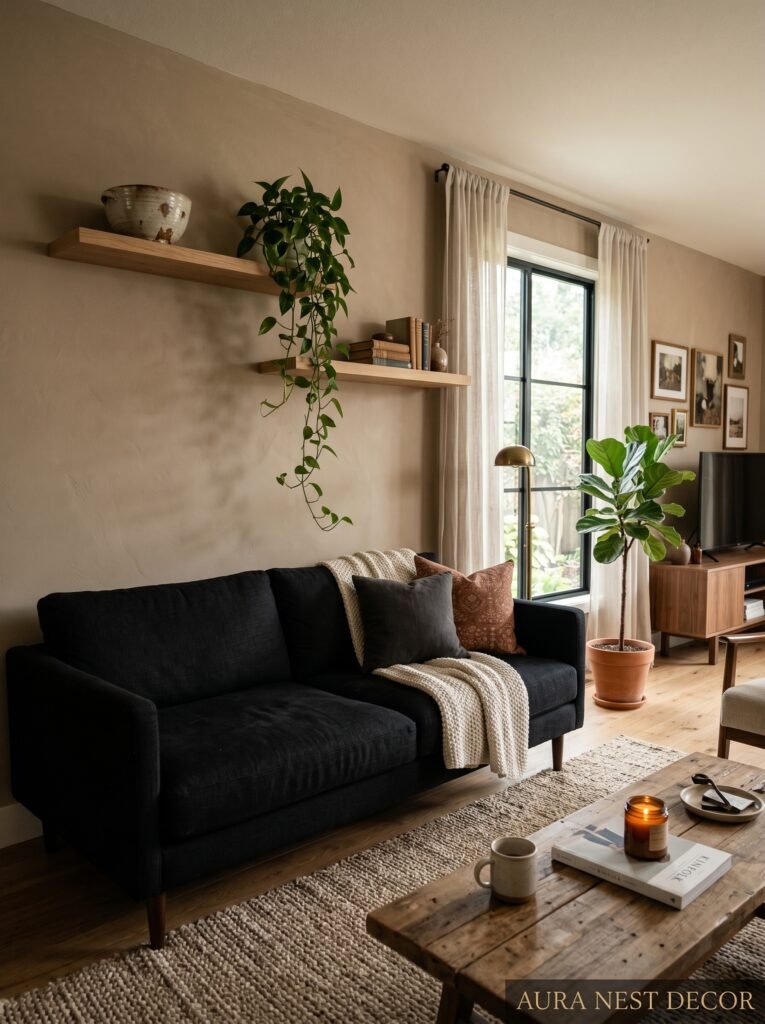
Everyone defaults to white walls with a black sofa. And sure, it works. But there’s a wall color I’m genuinely obsessed with for black sofa living rooms and it’s not getting nearly enough attention.
Warm greige. Not grey, not beige, that exact in-between tone that’s warm enough to read soft but cool enough to not feel dated. Shades like Farrow & Ball’s Elephant’s Breath (UK readers know this one) or Accessible Beige by Sherwin-Williams for US readers. Against those walls, a black sofa looks sophisticated and cozy simultaneously — which is a difficult combination to achieve.
The other option that genuinely surprises people is a deep, dark wall. Charcoal. Inky navy. Even a very deep warm brown. People assume dark walls plus black sofa equals cave. But actually? Dark walls make a black sofa disappear in the best possible way — it becomes part of the room’s mood rather than a piece of furniture sitting in it. Very European, very chic, very much something you’d find in a beautifully decorated Brooklyn apartment or a Notting Hill flat.
Just add enough texture and light sources to keep it from tipping into actual-cave territory. Candles help. A lot of candles.
—
6. The Throw Pillow Formula That Actually Works (Steal This)
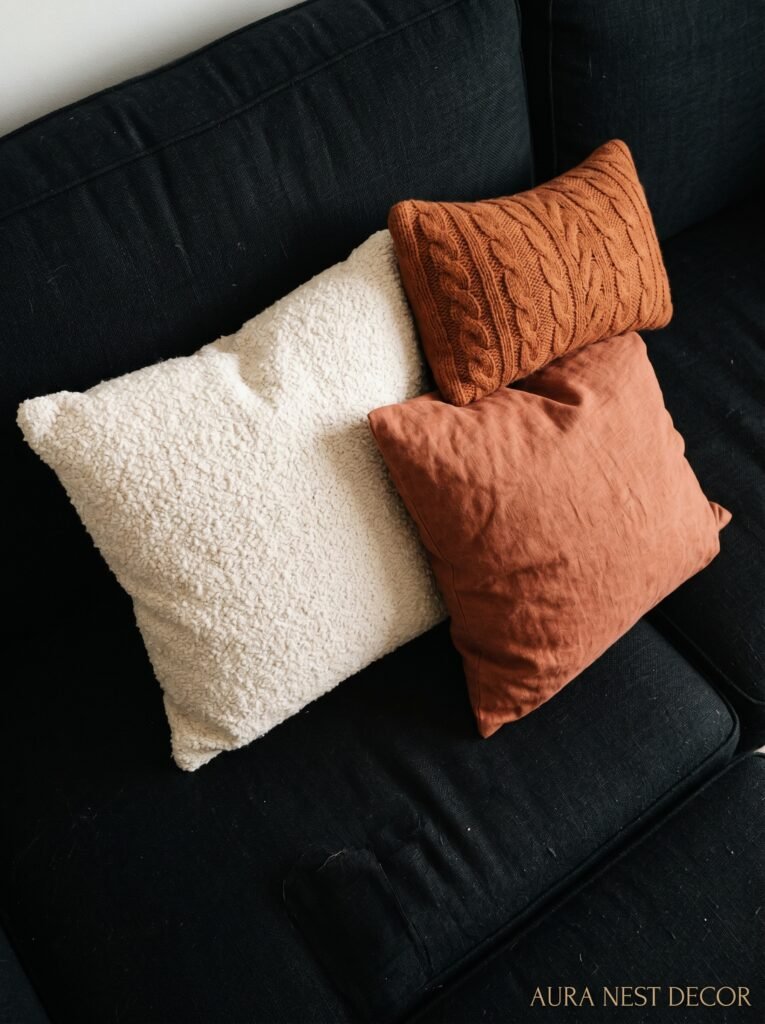
I know everyone says there are no rules with cushions and throw pillows. Those people are wrong. Or, well — there aren’t rigid rules, but there are combinations that work every single time on a black sofa.
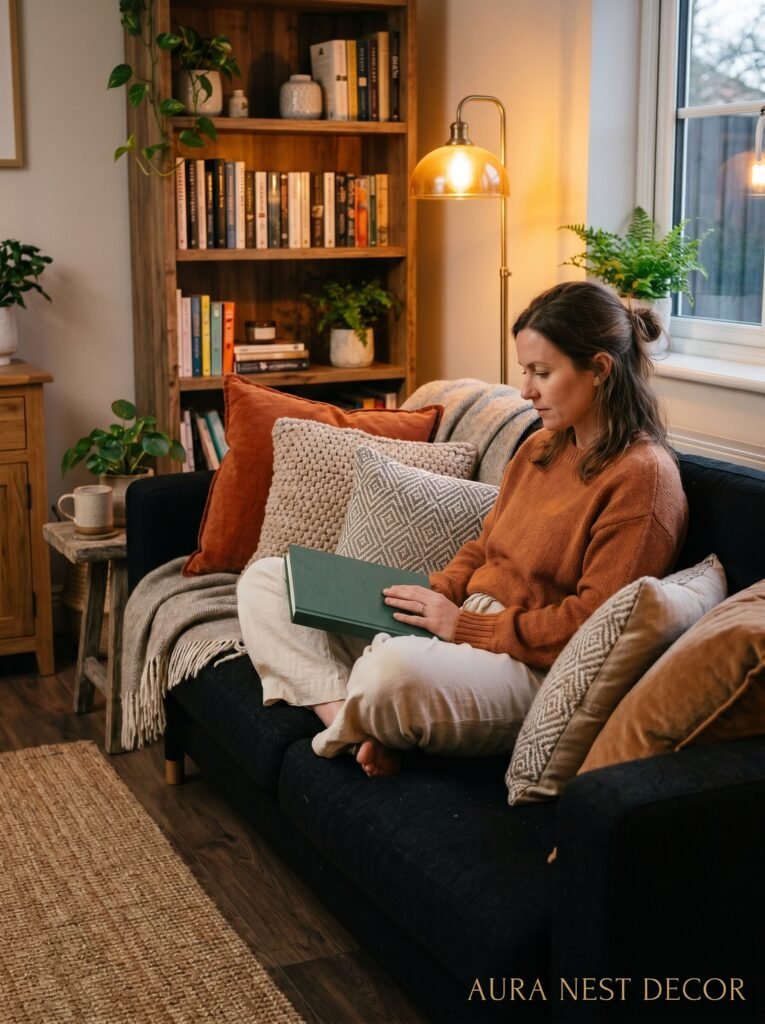
Here’s the one that hasn’t failed me: one large textured neutral (cream boucle, oatmeal knit), one pattern in warm tones (think terracotta or mustard abstract, or even a classic plaid), and one that’s unexpected — maybe a deep velvet jewel tone like teal or forest green. That’s it. Three cushions in those categories and you’re done.
The mistake people make is going all-black-and-white with a black sofa, which ends up looking a bit cold and magazine-set rather than lived-in. You need at least one warm tone in there to make the whole thing feel like a place someone actually sits and reads and falls asleep watching something they didn’t mean to stay up for.
Throws, by the way, are non-negotiable on a black sofa. A chunky knit throw in off-white or caramel tossed (and I mean casually tossed, not artfully arranged) over one arm? That’s the thing that takes it from styled to genuinely cozy. Don’t overthink the placement.
—
7. How to Make a Small Living Room With a Black Sofa Feel Intentional, Not Cramped
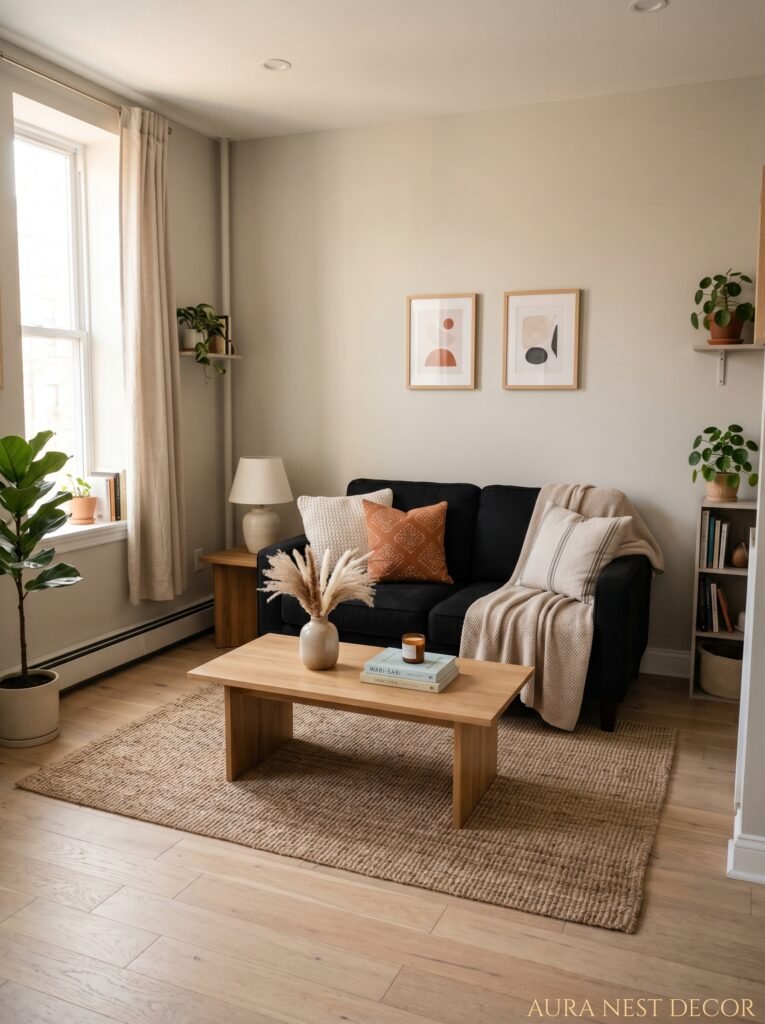
This is where a lot of people hesitate, honestly. Small room, dark sofa — it seems counterintuitive. But I’d actually argue a black sofa in a small space can look more considered than a light sofa in the same room. Here’s why.
A light sofa in a small room can sometimes make the space feel scattered, because your eye bounces around looking for visual rest. A black sofa gives the room a center. A definitive center. Everything else can be light and airy and the sofa holds it all together without needing extra furniture to create structure.
The key is keeping everything else relatively light and minimal. Light walls. Light rug. Simple, low-profile furniture. Let the sofa be the statement, then resist the urge to make twelve other statements.
“A black sofa in a small room isn’t a mistake. It’s a decision. And rooms that look like decisions are always more interesting than rooms that look like indecision.”
—
8. The Lighting Setup That Makes a Black Sofa Look Cozy Instead of Harsh
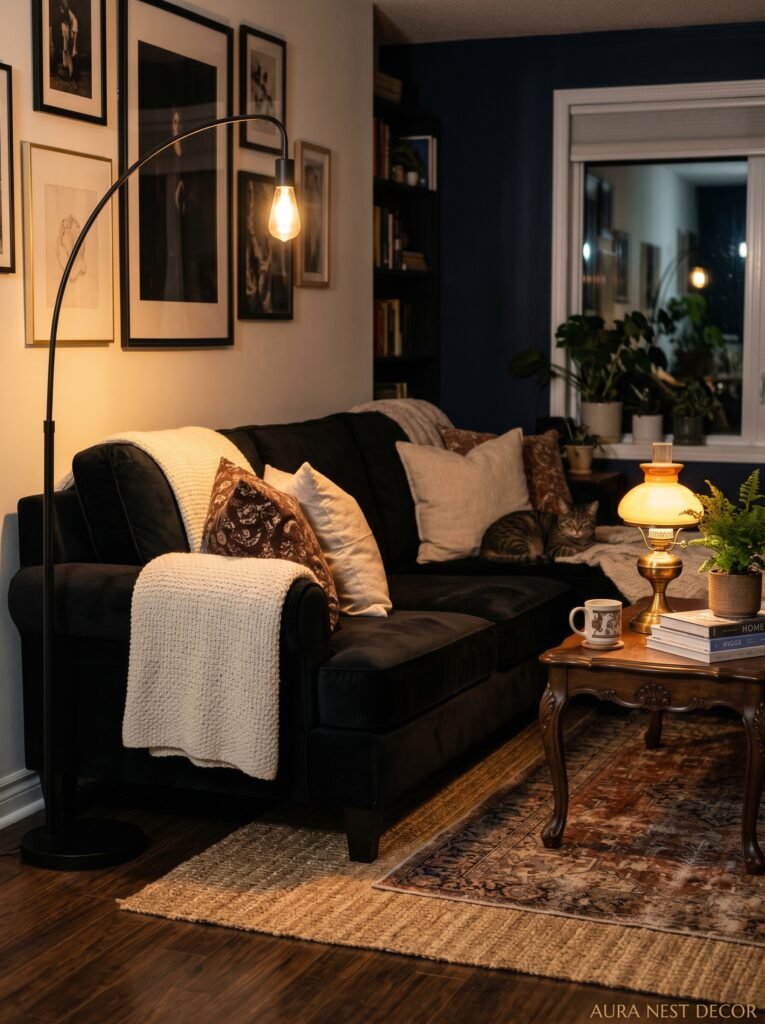
Overhead lighting and a black sofa are not friends. I’ll just say it. A single harsh overhead light will make a black sofa look like it belongs in a waiting room. What you want instead is layers of warmer, lower light.
Floor lamps positioned near the sofa, at about shoulder height when you’re sitting, are the starting point. Table lamps on side tables on either side add warmth symmetrically without feeling too staged. And then — candles. Real candles on the coffee table, or at minimum a candle in a lantern on the floor nearby. That flickering quality of candlelight against a dark sofa is genuinely one of the coziest visual combinations that exists.
Bulb temperature matters more than most people realize. You want 2700K or warmer. Not the cool daylight bulbs, not the standard 3000K, specifically warm warm bulbs. The difference on a black sofa is dramatic — warm light makes it feel inviting, cooler light makes it feel clinical.
For US readers: look for LED bulbs labeled “soft white” or “warm white.” For UK readers: same principle, labeled similarly. And if you can get them on dimmers, you should. Always.
—
9. The One Piece of Furniture That Makes a Black Sofa Look More Expensive
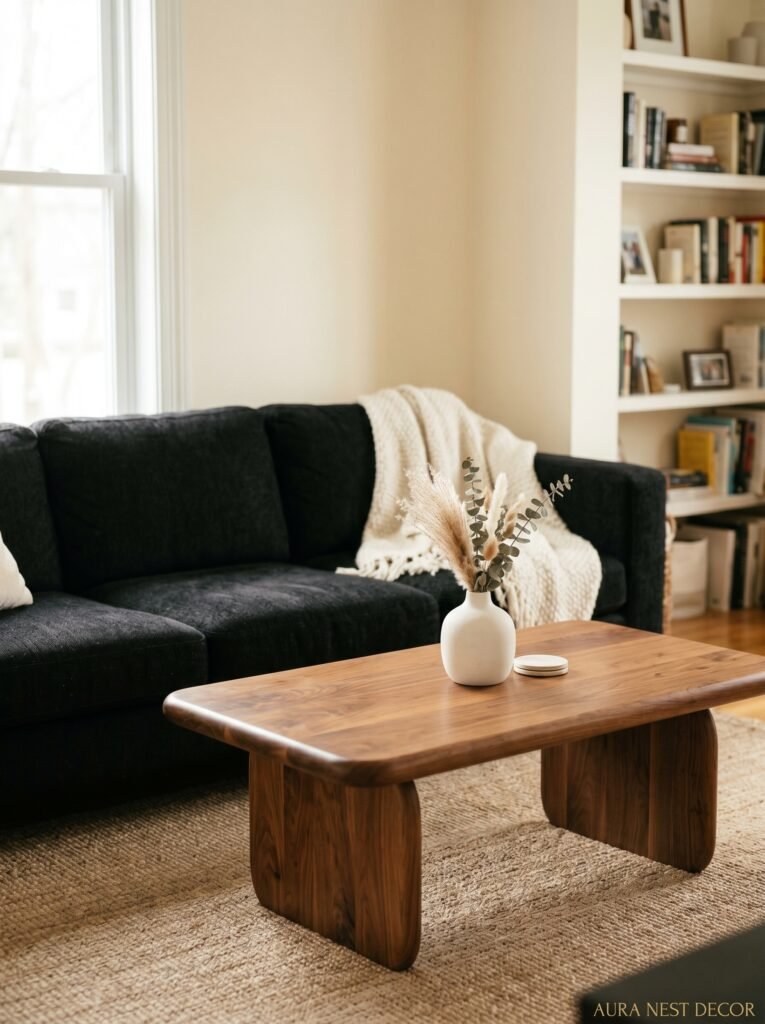
Not a better coffee table. Not more cushions. It’s a side table — specifically a small, warm-toned side table right next to the sofa. And ideally it’s in a material that contrasts with the black.
Cane or rattan side tables are currently having a moment and they are spectacular next to a black sofa. The warm, natural weave against the dark upholstery creates this visual conversation that feels collected and thoughtful. A walnut-stained round side table does something similar. Even a small marble-topped table in warm beige tones adds that contrast.
The specifics matter. It should be the right height (level with the sofa arm or just below), not too fussy in design, and it should have something on it. A small plant, a candle, a single beautiful mug. A bare side table next to a sofa looks like staging. A loaded one looks like a home.
—
10. The Plant Situation — What Actually Works Here
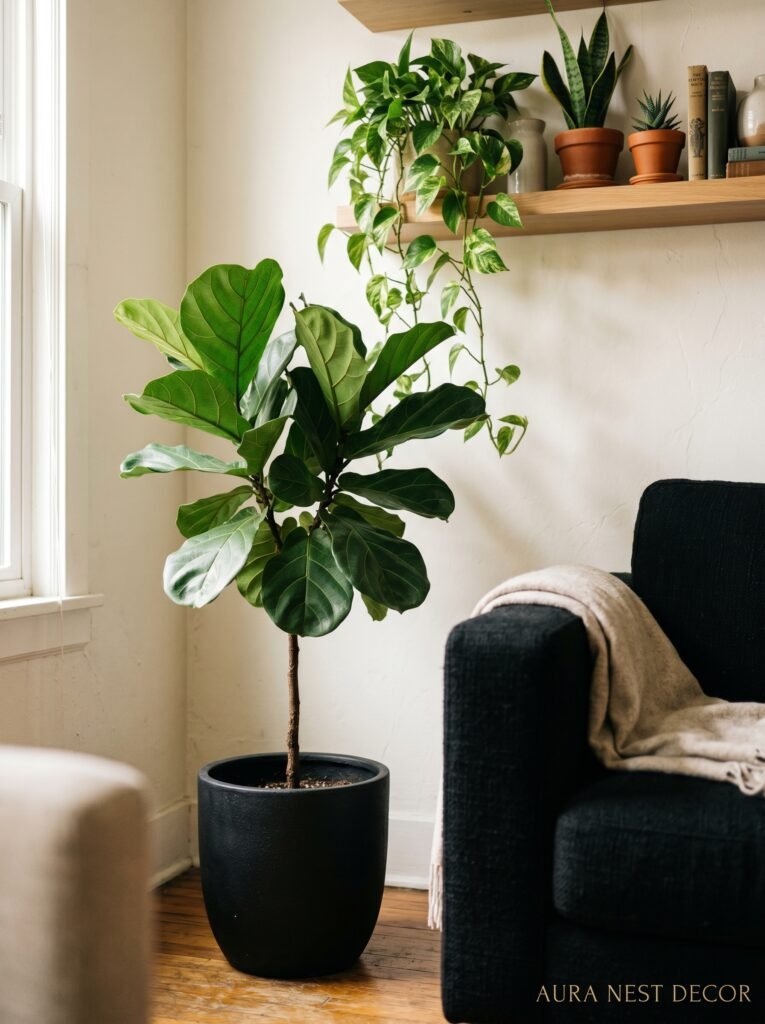
Plants and black sofas are, genuinely, one of my favorite combinations in all of interior design. The green against the dark upholstery is striking in a way that feels natural rather than designed.
Big, dramatic plants work especially well. A large fiddle-leaf fig in a terracotta pot near the sofa. A monstera in a woven basket. Snake plants in groups of two or three varying heights. The sculptural quality of these plants stands out more against a black background than it would against a lighter sofa.
Don’t be tempted by small, fussy arrangements of tiny plants spread around the room. One or two large, confident plants positioned near or behind the sofa will do more visually than a dozen little ones scattered everywhere. This is true in general, but especially true when you’ve got a dark sofa creating a strong focal point.
Trailing plants — pothos, string of pearls — look wonderful on a shelf or side table near the sofa. Something about the relaxed, organic trail of a vine against something as structured as a sofa just works.
—
11. When to Break All the Cozy Rules and Go Full-On Modern With It
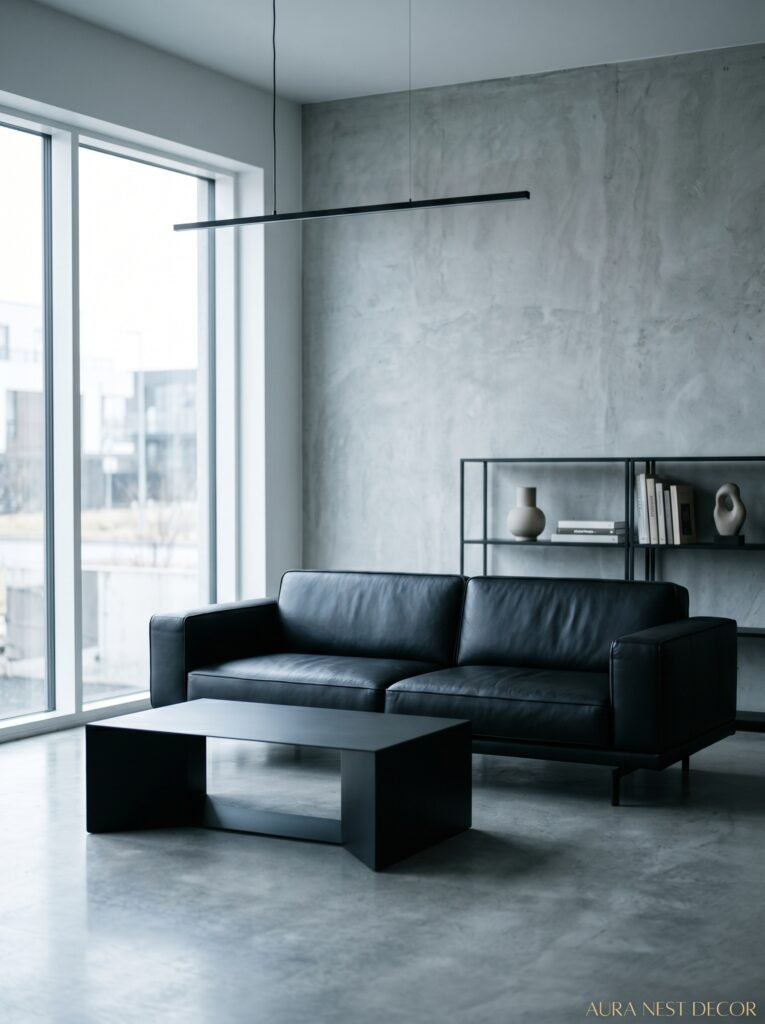
Not every black sofa living room needs to be cozy. And there’s a version of this that’s sleek and modern and completely intentional that I want to give equal time to.
Concrete floors or polished porcelain, a low-profile black sofa, a glass or steel coffee table, architectural plants only (I’m talking a sculptural cactus or a single tall snake plant — nothing trailing or loose), and art on the walls that leans abstract and graphic. That room is COOL. Genuinely cool. Not cozy, not warm, but arresting.
The thing that makes it work is commitment. If you’re going modern, go modern. Don’t hedge by adding a chunky knit throw or a jute rug. Those cozy elements will fight the aesthetic and the room will look confused rather than curated. Pick your lane and commit to it completely. The black sofa can handle both directions — it just can’t handle indecision.
—
12. The Unexpected Detail That Ties the Whole Room Together
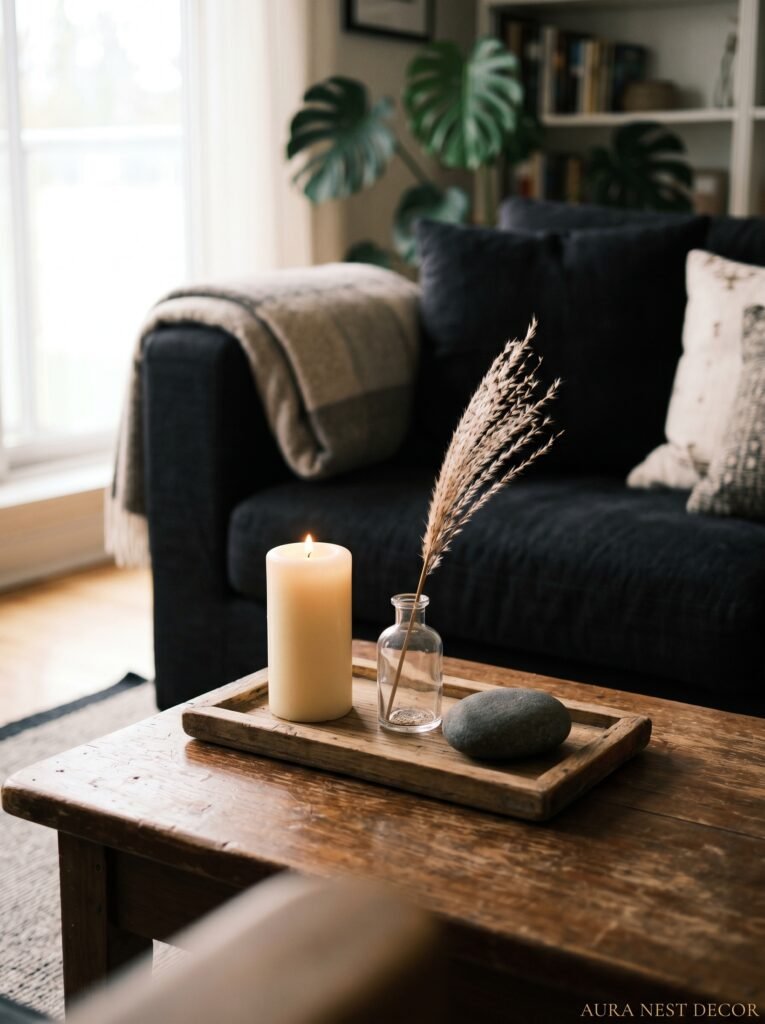
This is the thing I’ve noticed in every living room with a black sofa that actually feels finished and intentional versus one that feels like it’s almost there.
It’s always one unexpected material or texture that nobody would have thought to add. A woven leather tray on the coffee table. A sculptural wooden bowl. A raw edge candle holder in concrete. A vintage market find that has nothing to do with the rest of the room but looks completely at home there anyway.
These things don’t follow a rule. But they share a quality — they feel like a person lives there. Like someone with a specific, confident taste made a decision and stuck with it. That’s ultimately what transforms a living room from “nice” to genuinely memorable. Not more throw pillows, not the perfect rug (though the rug helps), but one unexpected thing that tells you something about who lives in that room.
A black sofa gives you the canvas for that. It’s neutral enough in its boldness — which sounds like a contradiction but really isn’t — to let one personal touch become the thing the whole room revolves around.
—
❓ FAQ
Q: Will a black sofa make my living room look smaller? A: Not if you style it thoughtfully. Light walls, a warm rug, and plenty of soft lighting counteract the visual weight. The sofa grounds the room rather than shrinking it, especially if you keep other furniture relatively minimal.
Q: What’s the best fabric for a black sofa if I have kids or pets? A: Microfiber and performance velvet are genuinely excellent options — they resist staining and clean up well, and black hides most marks better than you’d expect. Avoid loose-weave linens if you have pets, as claws catch easily.
Q: Can a black sofa work in a rental where I can’t change the walls? A: Absolutely. If your walls are magnolia or builder’s white, lean into warm accessory tones — terracotta cushions, wooden furniture, warm-bulb lamps — and the sofa will anchor the space beautifully without needing wall paint to support it.
—
💭 Final Thoughts
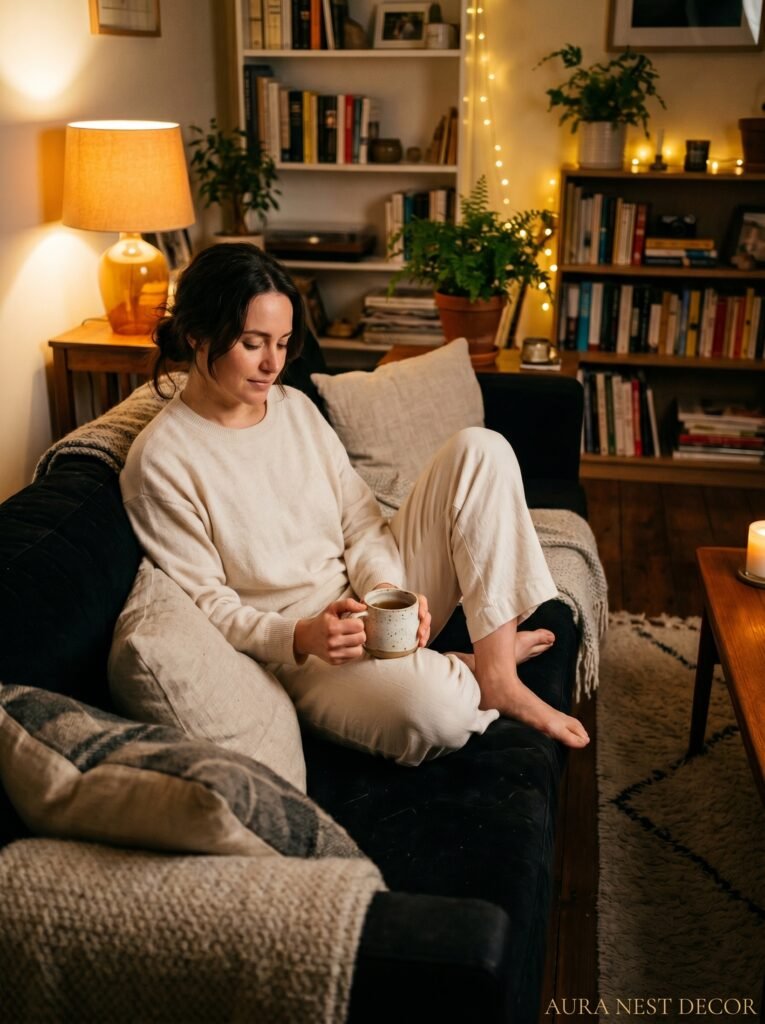
A black sofa asks something of you. It asks you to be deliberate, to think about what surrounds it, to resist the urge to fill the room with too much. But when you get it right, the payoff is a living room that feels genuinely yours — confident and cozy and completely specific to the person who lives in it. And isn’t that the whole point?