The Coffee Table That Actually Makes Your Living Room Feel Like a Home (Not a Showroom)
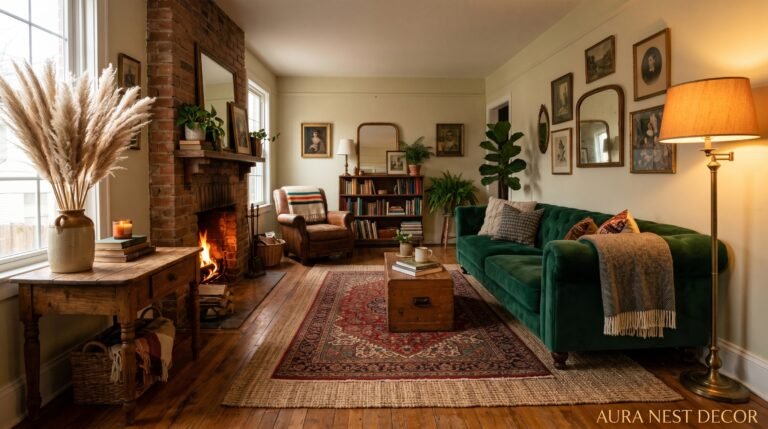
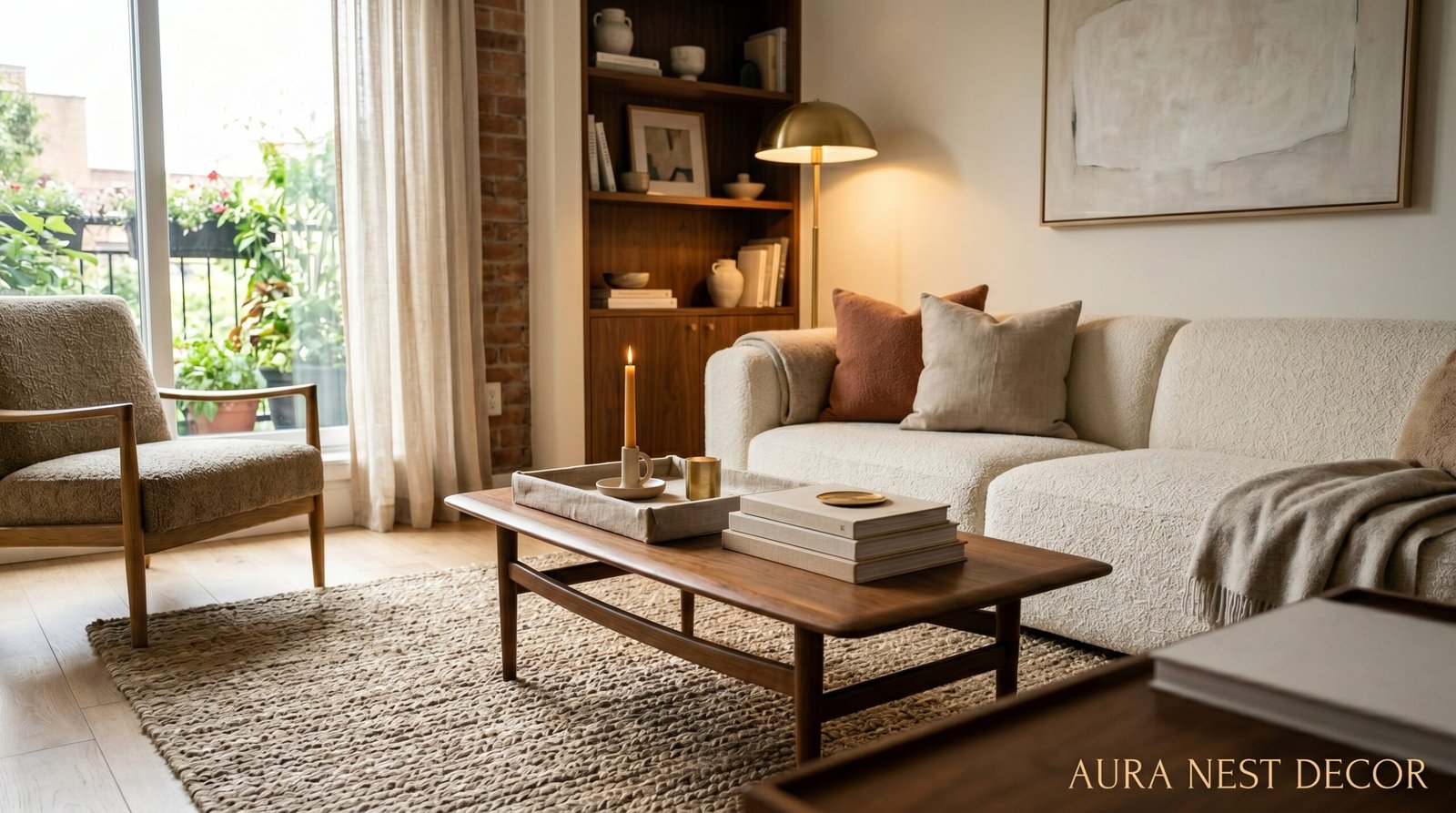
You know that feeling when you walk into someone’s living room and just… exhale? The couch looks lived-in. There’s a candle burning somewhere. And the coffee table — oh, the coffee table — it’s doing SO much work without looking like it’s trying. That’s what we’re chasing here.
—
1. Why Your Coffee Table Is the Emotional Center of Your Entire Living Room
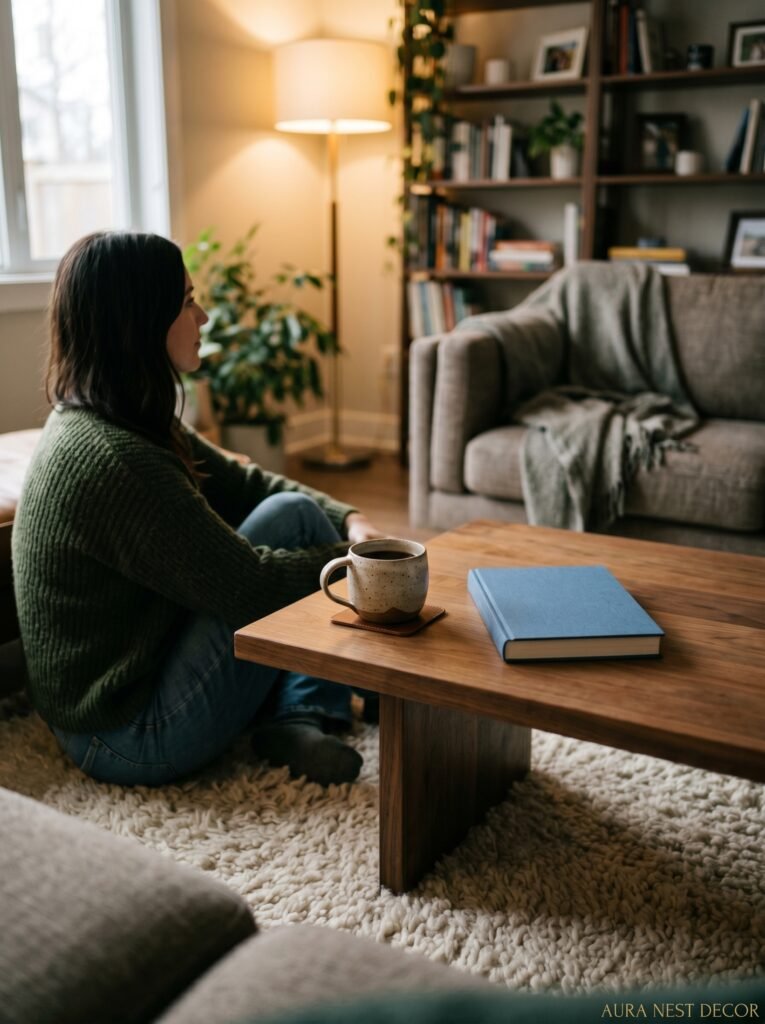
I don’t think people talk about this enough. Your sofa is where you sit, your rug is what you feel underfoot, but your coffee table is the thing your eye keeps returning to. It’s where you set your mug down without thinking. It’s where guests lean in during a conversation. It holds your remote, your books, your half-burned candle from three weeks ago that you keep meaning to replace.
It’s doing a LOT.
And when it’s wrong — too big, too cold, too “furniture showroom circa 2014” — the whole room feels off. You can’t always name it, but you feel it. That slight tension. Like the room is a bit too formal, or a bit too empty, or a bit too… beige.
Modern cozy is a real design concept, not just a vibe someone made up on Pinterest. It’s the sweet spot between a space that feels current and visually sharp, and one that makes you want to curl up with a blanket at 9pm on a Tuesday. Your coffee table is honestly where that balance either happens or falls apart. So let’s get it right.
“The coffee table isn’t furniture. It’s the room’s heartbeat.”
—
2. The Shape Nobody Talks About (But Every Beautiful Room Has)
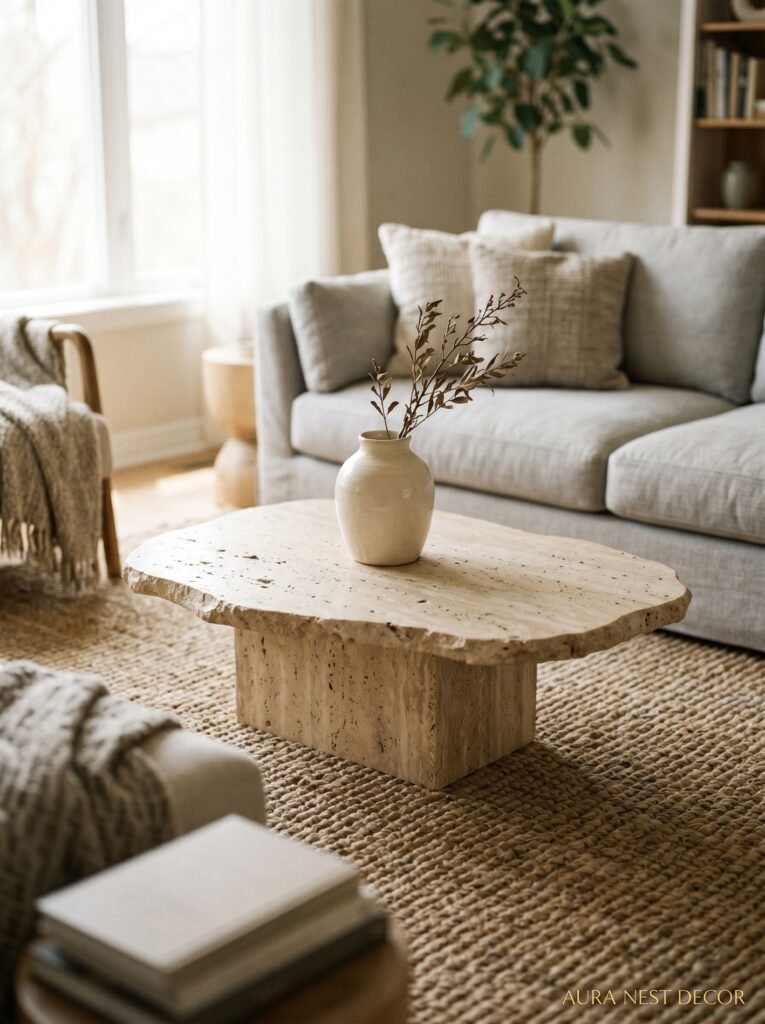
Rectangular. Square. Round. Oval. You’ve probably scrolled past a thousand of each. But here’s what I’ve noticed after way too many hours on Pinterest: the rooms that feel genuinely cozy — not staged, actually cozy — almost always have a round or oval table.
And here’s why, I think. Sharp corners are fine. But they’re also slightly… defensive? A rectangular table with hard edges creates a boundary in the room. A round table invites you in. It softens everything around it. It makes your sofa arrangement feel like a conversation rather than a presentation.
Side note — if you’ve got kids or a particularly clumsy partner (no judgment, same), round is also just a practical mercy.
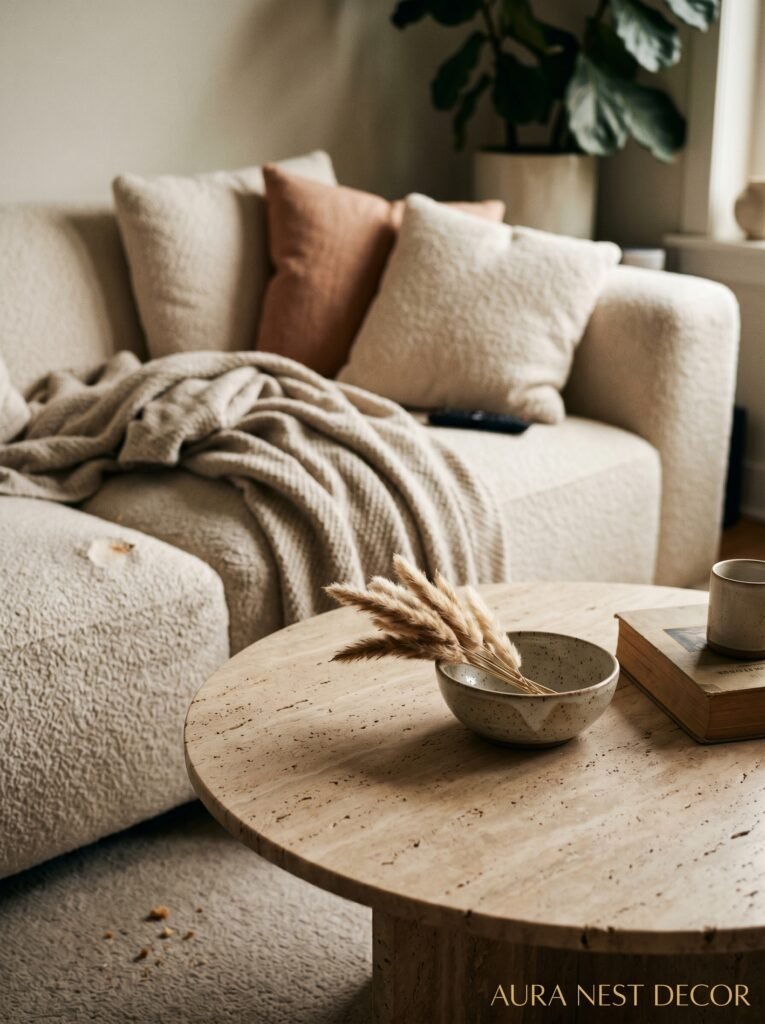
For smaller living rooms especially, round works brilliantly. It takes up less visual space. Your eye travels around it instead of stopping at it. And with the right material — a warm travertine, a light oak, a bouclé ottoman — it can anchor the whole room without dominating it.
—
3. The Material That’s Everywhere Right Now (And Honestly, It Deserves to Be)
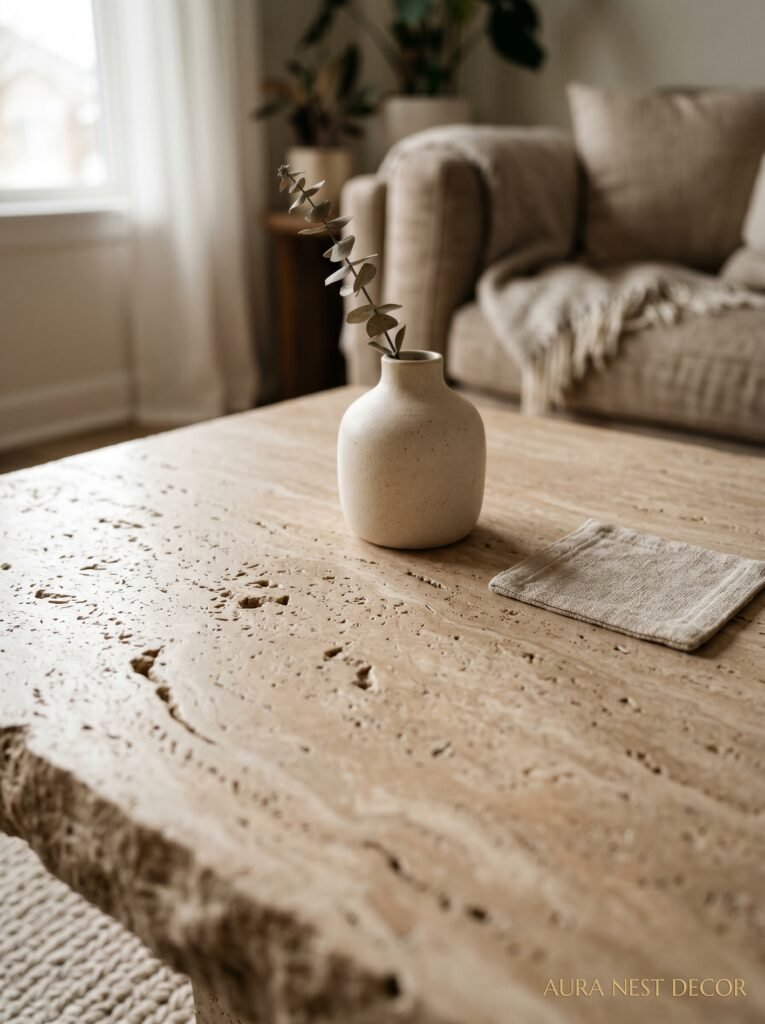
Travertine. If you haven’t already noticed it, you’re about to see it everywhere. It’s this warm, slightly creamy stone with natural veining and a texture that catches light in the best way. Not marble — warmer, less formal, less “I renovated for resale value.” More “I have taste and also I like to put my feet up.”
I’ve seen it in tiny London flats and big open-plan American homes and somehow it works in both. There’s something about that natural patterning that adds depth without chaos. The room immediately reads as considered. Intentional.
The good news: you don’t have to spend a fortune to get the look. There are genuinely beautiful travertine-effect coffee tables at much more accessible price points than real stone. The trick is the base — make sure it’s something solid and interesting, not just a generic black metal frame from a flat-pack catalogue. A curved plaster base, a sculptural stone pedestal, a low chunky wooden form — the base is what makes it feel deliberate rather than just decorative.
—
4. Stack Two Books, Light One Candle, Stop Decorating
Okay, this is where I get a little opinionated. Coffee table styling has gotten completely out of hand. I’m scrolling through these “living room inspo” posts and there are literally seventeen objects on this coffee table. A tray within a tray, four books, a plant, a sculpture, a bowl of decorative balls (WHY), two candles, and a vase of dried pampas.
It’s too much. It’s so much.
Real cozy doesn’t look like a styled shoot. It looks like someone actually lives there. And that means restraint. Deliberate, confident restraint.
“The most beautiful coffee tables have room to breathe — and one thing you actually use on them.”
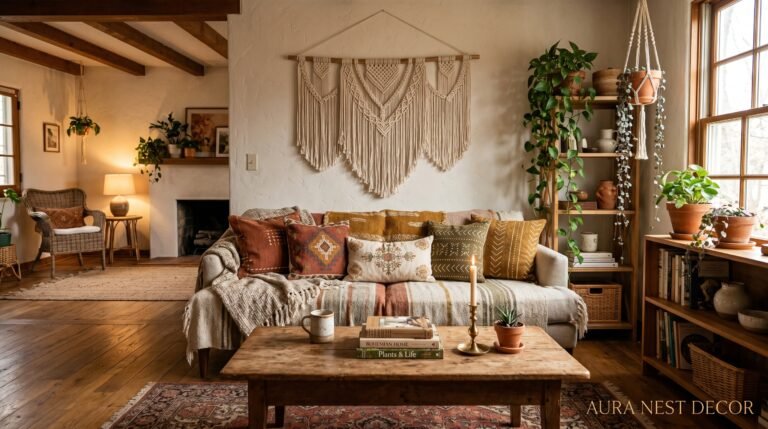
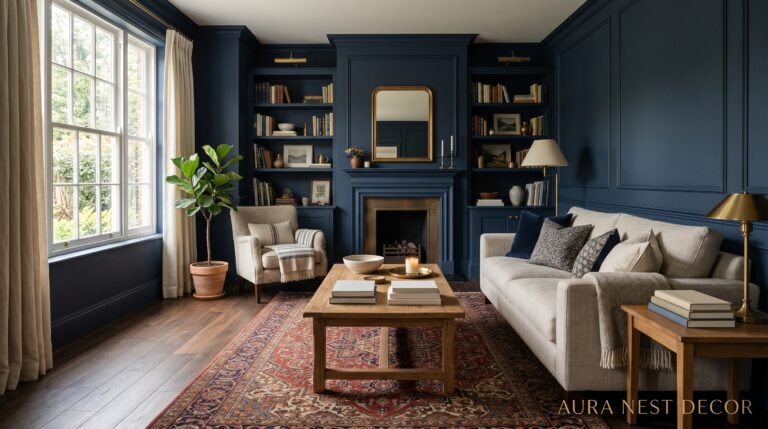
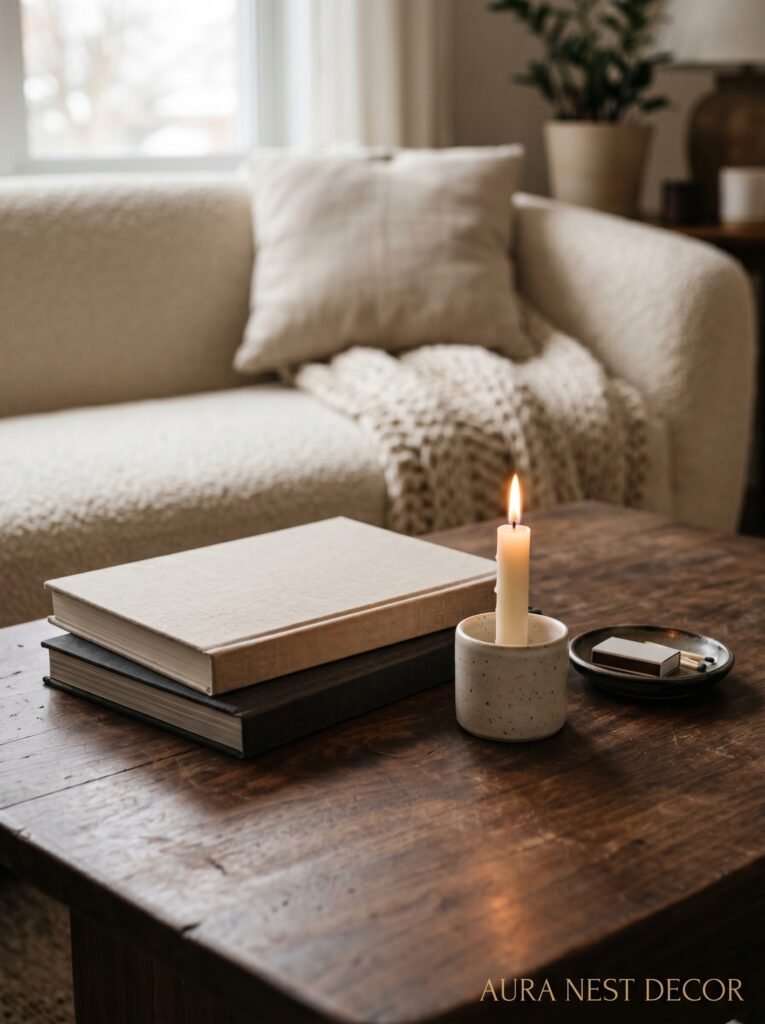
Here’s what actually works: two or three oversized coffee table books, stacked (not fanned, stacked — fanning is over), one interesting object on top, and a single candle or small plant. That’s genuinely it. The empty space isn’t emptiness, it’s breathing room. It’s what makes the things you DO have on there feel chosen rather than accumulated.
—
5. The Height Rule That Every Interior Designer Knows and Nobody Tells You
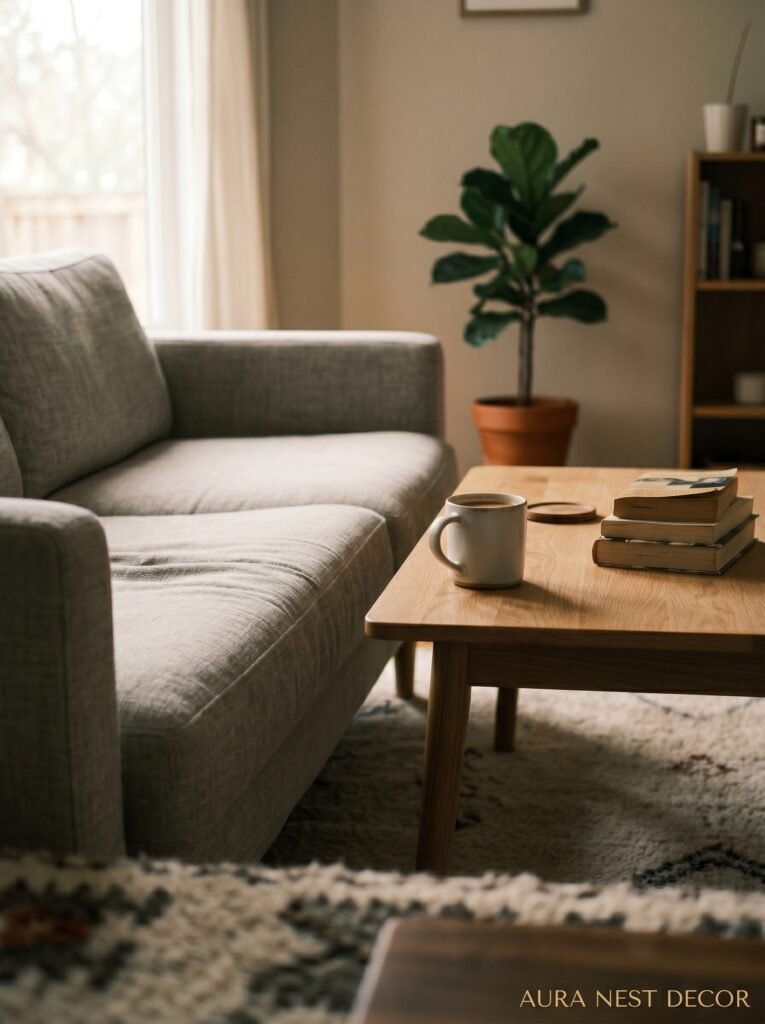
This is a proper aha moment if you’ve ever had a coffee table that felt slightly awkward to use. The rule is simple: your coffee table should be within about two inches of your sofa seat height. That’s it. That’s the rule.
Too low, and you’re hunching over every time you reach for your tea. It looks cool in photos but it’s genuinely uncomfortable in real life, and you’ll notice it every single day. Too high, and the table starts to feel like a barrier instead of a surface.
The sweet spot is roughly 16 to 18 inches for most standard sofas — roughly 40 to 46cm if you’re working in metric. Measure before you buy. I know that sounds obvious but I’ve absolutely bought a coffee table based entirely on vibes and then spent six months mildly annoyed at my own living room. Learn from my mistake.
—
6. Cold Metals Are Out. Here’s What’s Replaced Them.
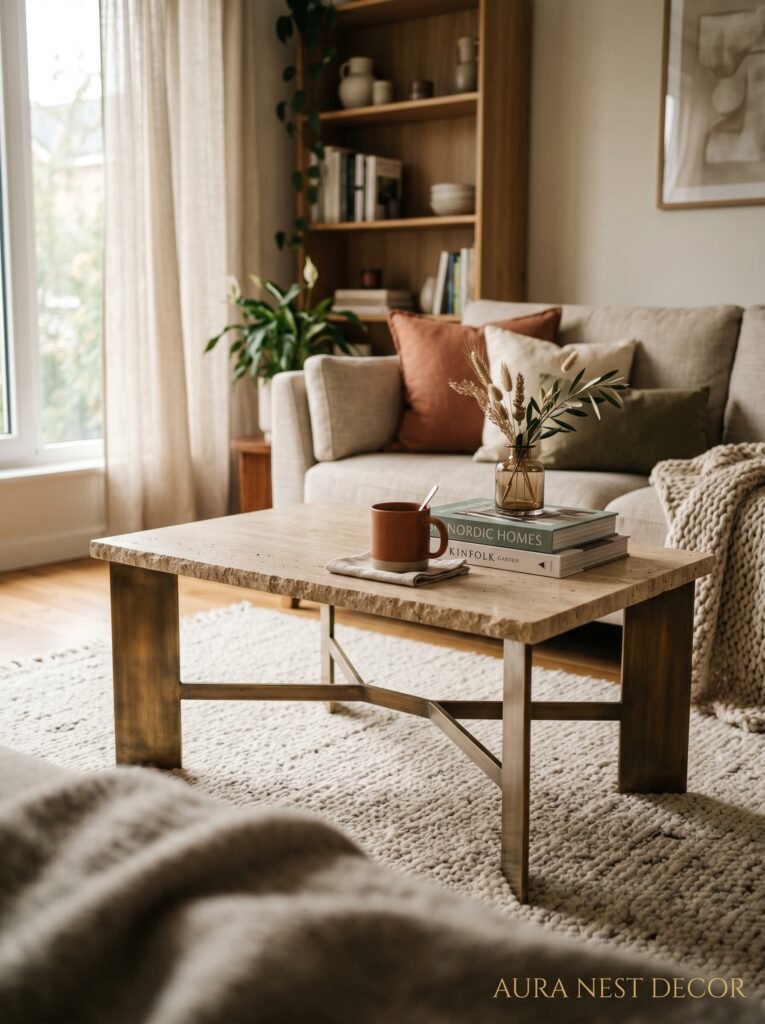
Remember when everything was brushed chrome and cold gunmetal and glass? Very 2015. Very “executive hotel suite.” It looked sharp, don’t get me wrong, but it didn’t feel like anywhere you’d want to actually spend a Sunday afternoon.
What’s replaced it isn’t one single finish — it’s a whole mood. Warm brass that’s slightly antiqued. Bronze that’s been allowed to develop a bit of depth. Unlacquered brass that will patina over time. Dark, smoky iron that’s textured rather than smooth. Even blackened steel, but with a matte finish instead of a shine.
The difference is warmth. These finishes feel handmade, or at least hand-adjacent. They don’t reflect light aggressively. They absorb it a little, which is exactly what a cozy room needs. Pair any of these with a natural stone or wood top and you’ve basically cracked the modern cozy code. It doesn’t have to cost a lot. Even a mid-range table with the right finish and the right base will read as expensive if the proportions are good.
—
7. The Ottoman Coffee Table Situation (Controversial Take Included)
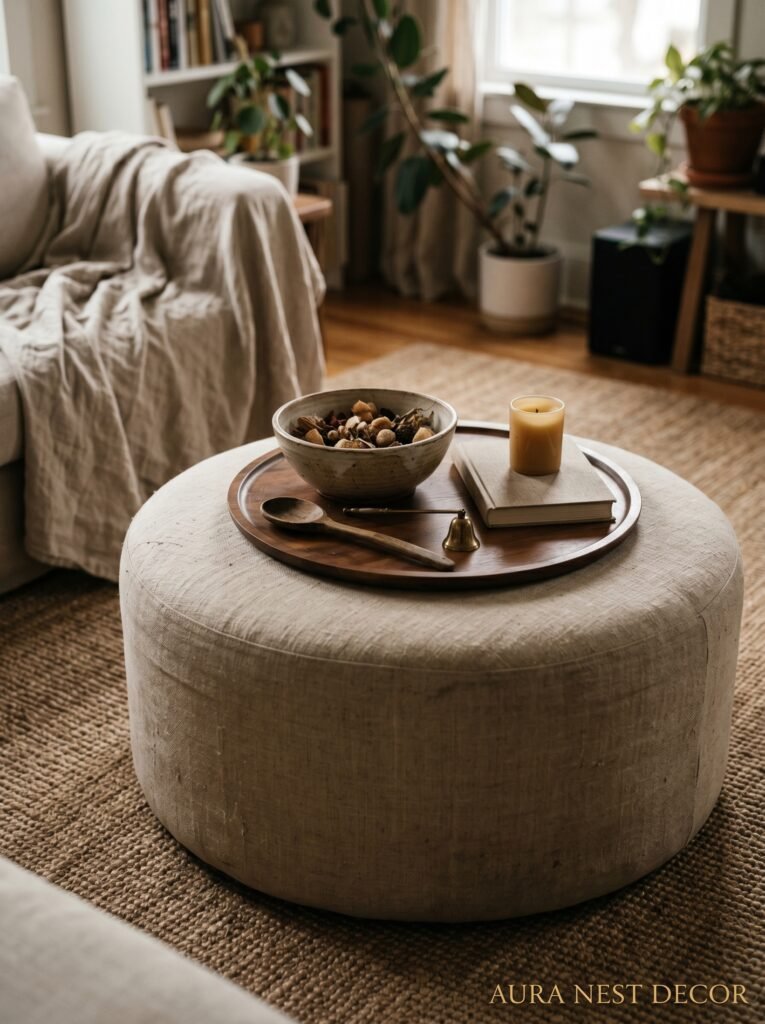
Here’s where I’ll lose some of you, maybe. I think fabric-top ottomans as coffee tables are almost always a mistake.
I know. I know. They’re everywhere. They look incredible in photos. The bouclé ones especially — that creamy, pillowy surface against a clean-lined sofa? Stunning on camera. But in real life? You can’t put a cup of tea down without a tray. You can’t set anything down without it immediately looking messy. And after about three months, that beautiful cream bouclé has a ring from a wine glass and some sort of mysterious shadow that you’re not entirely sure about.
If you love the softness of an ottoman — and I get it, the coziness is real — do a leather one. Or get a genuinely good tray that covers most of the surface and commit to it. Or honestly, do an ottoman as a secondary piece to the side and get a low, simple, hard-top table as your main piece.
“Soft is cozy. Impractical is just annoying.”
That said — if you’ve got a small space and you want something that doubles as extra seating, a firm-topped square ottoman with legs is actually great. Just make sure the top is wipeable.
—
8. The Color That Keeps Showing Up in Every Beautiful Living Room Right Now
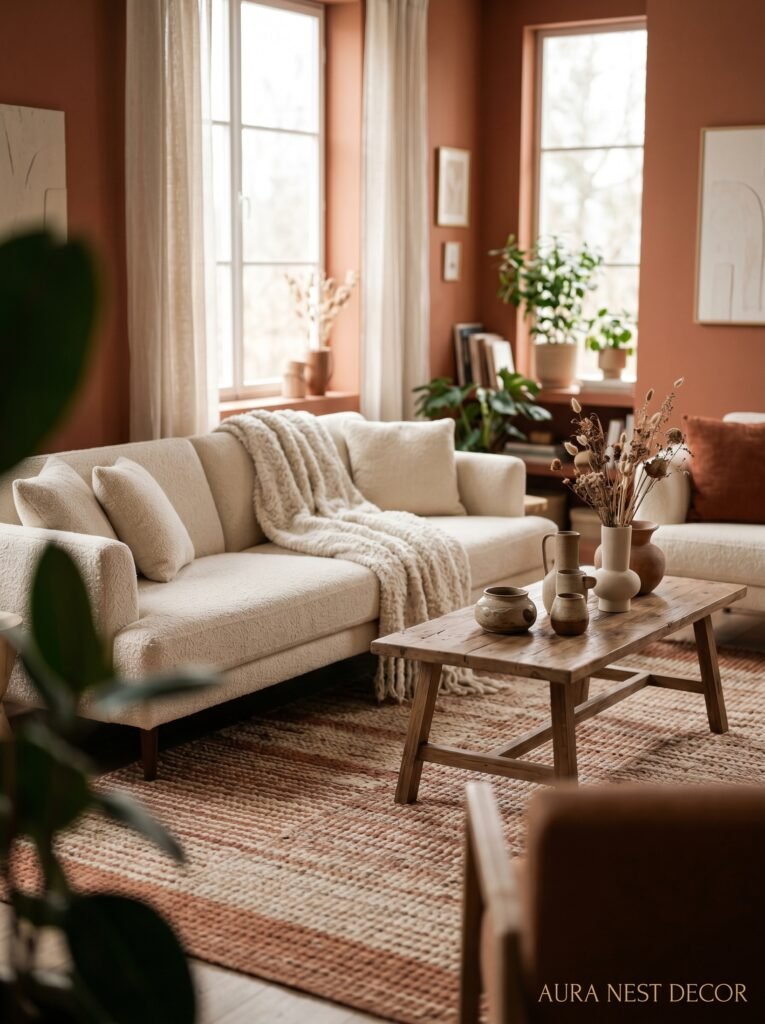
Warm brown. Not beige, not tan — warm, deep, slightly red-toned brown. Think walnut. Think coffee (obviously). Think a terra cotta that got a little bit more sophisticated.
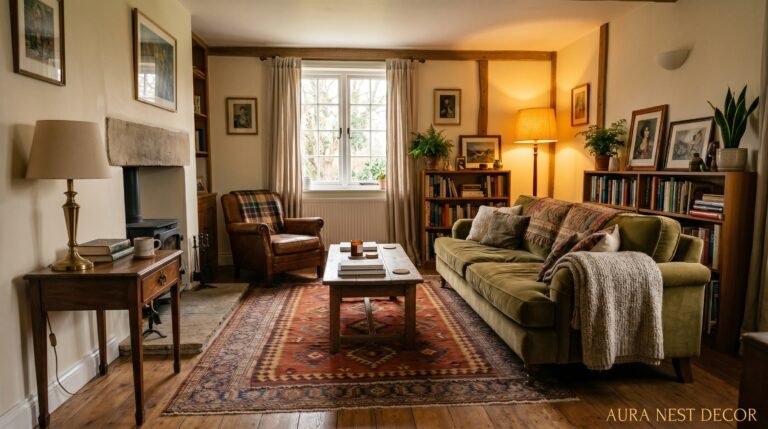
This is showing up in coffee tables specifically as a wood finish: mid-to-dark walnut, especially in a matte finish rather than a glossy one. It’s warm without being orange (I’m looking at you, early 2000s golden oak). It pairs brilliantly with the off-whites and warm greys that still dominate British and American living rooms. And it photographs SO well, which matters more than it should but here we are.
If you’ve got a lot of cool tones in your room already — grey sofa, blue accents, silver hardware — a warm walnut table is exactly the thing that stops the room from feeling chilly. It’s the thermal layer of interior design. Or something like that, anyway.
—
9. Small Living Room? This One Layout Change Fixes Everything
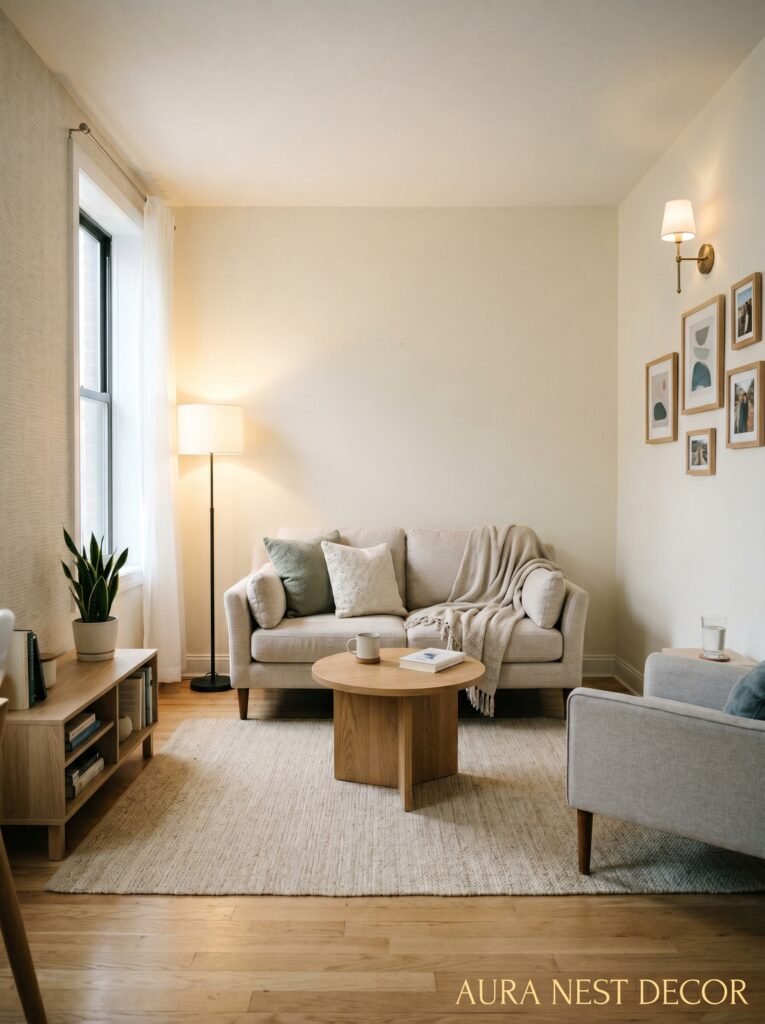
If your living room is on the smaller side — a typical London terrace front room, an American apartment living area, a cottage sitting room — the worst thing you can do is get a coffee table that fills the space. I know that sounds like obvious advice. But the instinct when a space feels small is to go smaller with everything, and sometimes that just makes the room feel like a jumble of small things.
What actually works is one substantial piece — your coffee table — with breathing room around it. Keep at least 18 inches between the table and your sofa, even if it feels like a lot. And go round, or oval, if you can. The visual flow around a curved table makes the whole room feel bigger, not smaller.
Also — raise your rug game. A coffee table floating on a rug that’s too small looks immediately cramped. The rug should extend at least 6 to 8 inches beyond the coffee table on all sides. When the proportions are right, even a small room can feel considered rather than crowded.
—
10. The Hack That Makes a Cheap Coffee Table Look Actually Good
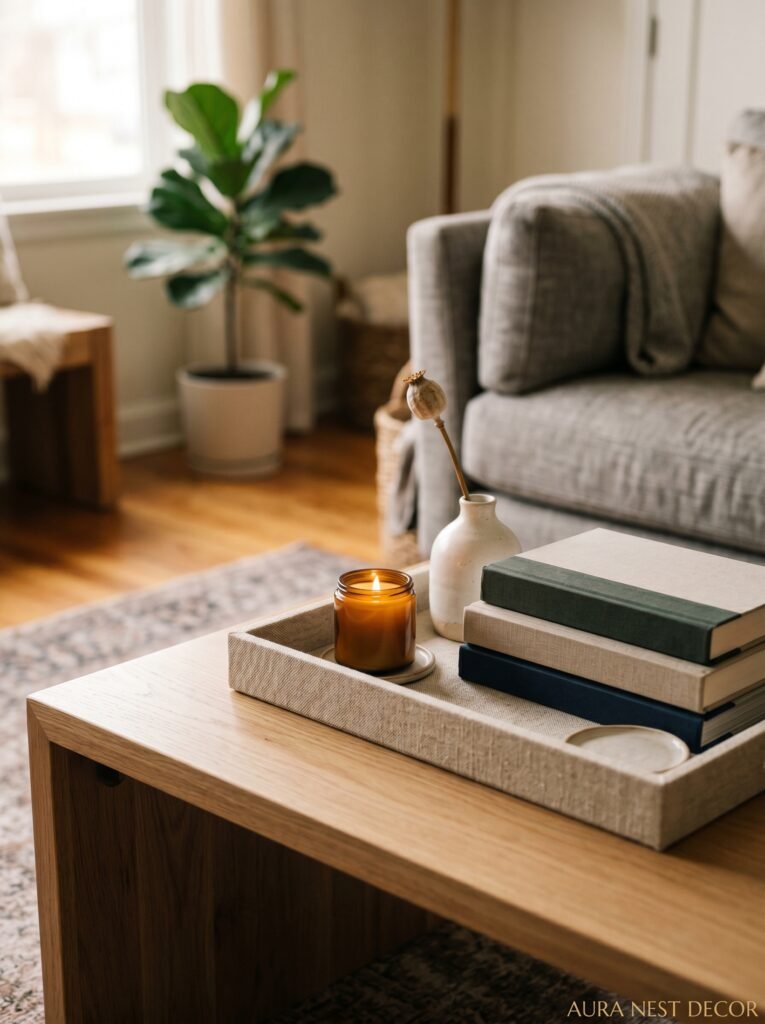
Legs. It’s always the legs.
A cheap flat-pack coffee table with ugly legs reads as cheap. The same surface with good legs — tapered, or hairpin, or a solid sculptural base — reads as intentional. I’ve seen people releg coffee tables from thrift stores and budget retailers and genuinely, the transformation is wild.
If you can’t swap the legs yourself (or can’t find a table where that’s even possible), the other trick is to add a single beautiful object to it — a really good candle in a heavy ceramic vessel, one proper coffee table book with an image-forward cover. It pulls focus to the deliberate choice and away from the less-special furniture underneath. Not gonna lie, it works better than it should.
—
11. The Case for Having Two Small Tables Instead of One Big One
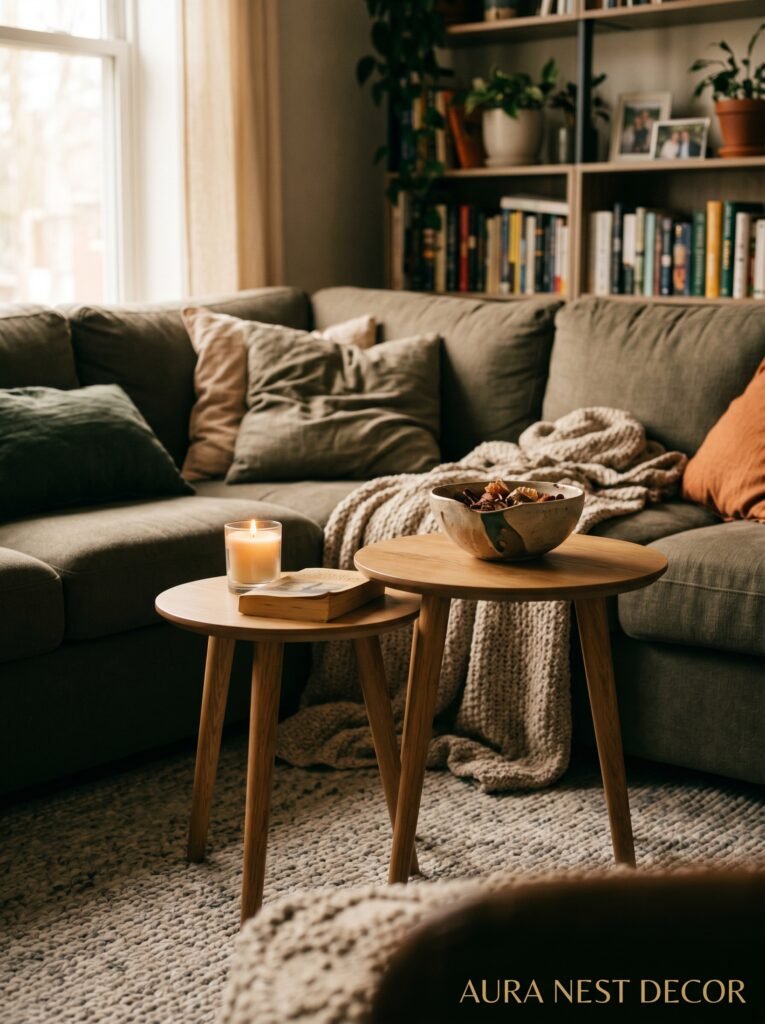
This doesn’t get talked about enough. Two smaller coffee tables — either matching or intentionally mismatched — can do more for a living room than one big central one.
Here’s why it works. First, flexibility. You can push them together when you’ve got people over, spread them out when it’s just you. Second, visual interest. A matching pair of small round tables side by side is somehow more interesting than one large round table. There’s a rhythm to it. And a mismatched pair — say, a small stone table next to a slightly taller wooden one — looks genuinely collected and personal rather than “I bought a living room set.”
For American homes with those wider open-plan layouts, two tables also help anchor the space better. For smaller British rooms, two slimmer tables can actually feel less cramped than one substantial central piece because you can arrange them more flexibly against how the room is actually used.
—
12. The Styling Ratio That Makes Any Coffee Table Look Magazine-Worthy
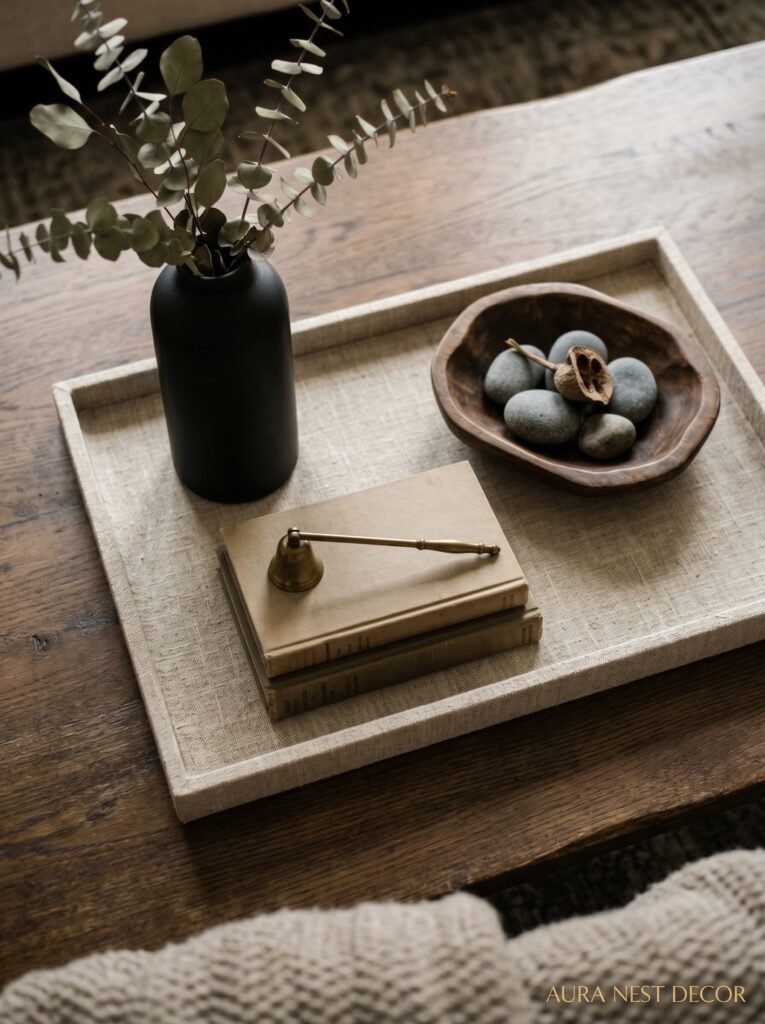
I’ve tried a lot of coffee table configurations over the years. Too many, probably. But I’ve landed on something that consistently works regardless of the table shape or material, and it’s this: three objects, three heights, one tray.
Low: the tray itself, or a stack of books. Medium: a candle, a small vase, or an interesting bowl. Tall: a single stem in a simple vessel, or one sculptural object that draws the eye upward. The tray contains it all visually so it reads as a composition rather than clutter.
That’s genuinely it. You don’t need more. And you definitely don’t need those ceramic balls.
—
❓ FAQ
Q: What size coffee table should I get for my living room? A: A good general rule is that your coffee table should be roughly two-thirds the length of your sofa. So if your sofa is 90 inches, aim for a table around 60 inches. For smaller rooms, go slightly smaller but don’t go too small — a table that’s proportionally off can actually make a room feel messier than a slightly larger one would.
Q: Is it okay to have a coffee table that doesn’t match my other furniture? A: Honestly, yes — and it often looks better that way. Matching sets tend to feel a bit static. The key is to connect your coffee table to the room through one element: a color, a finish, or a material that echoes something else in the space. A walnut table pairs beautifully with a walnut picture frame or a wooden lamp base. That thread of connection is enough.
Q: How do I keep a styled coffee table from looking messy day-to-day? A: The tray is your best friend here. Keep everything styled within one or two trays and it reads as intentional even when you’ve stacked some extra books or left your glasses on there. The boundary the tray creates does a surprising amount of visual organizing work without requiring actual effort.
—
💭 Final Thoughts
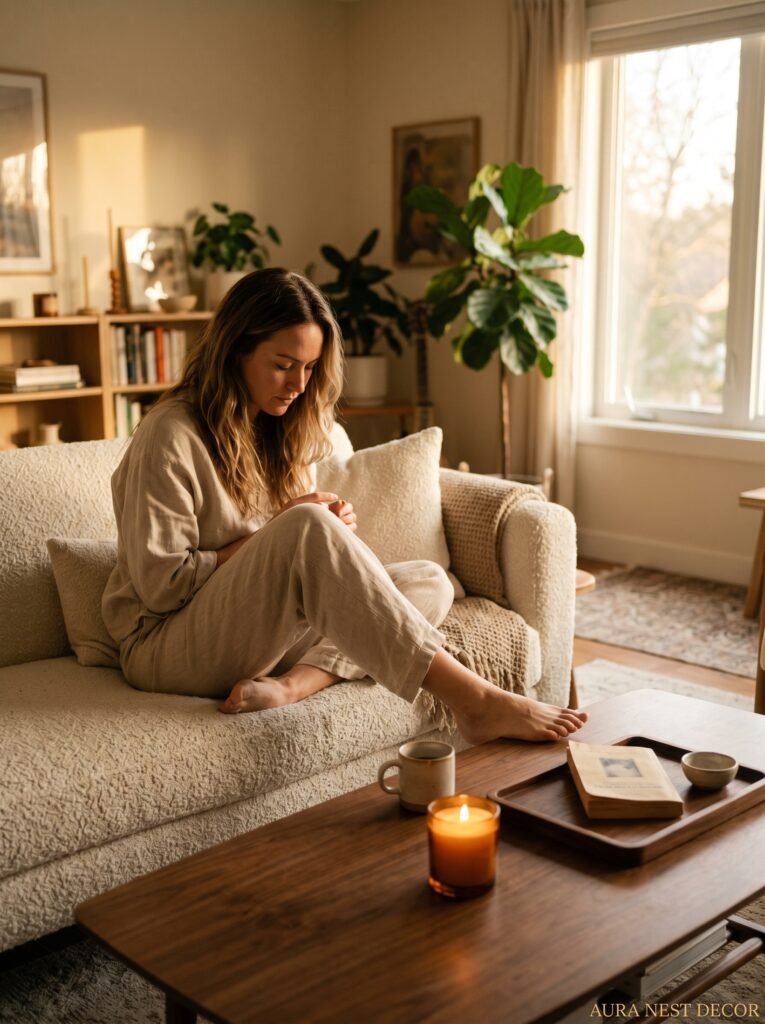
There’s something quietly lovely about getting your coffee table right. It’s not the biggest decision in a room, but it’s the one you live with in the most immediate, daily, hands-on way. The right one makes you feel slightly more at home every time you walk in.
So — what does your living room actually need right now?