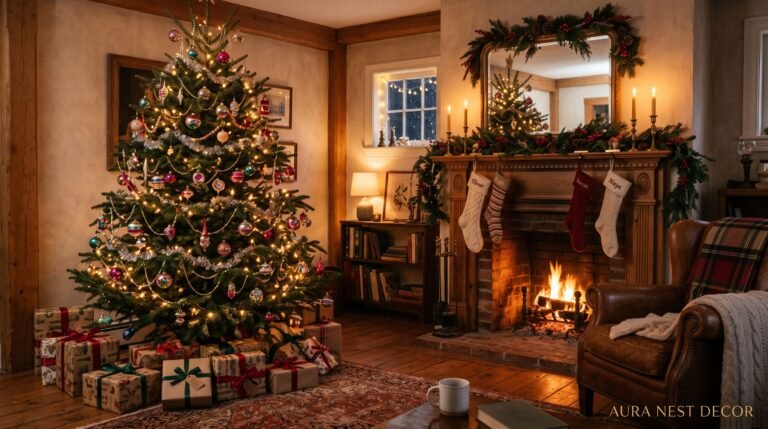
The Cozy Vintage Living Room You’ve Been Pinning All Year Actually Looks Like This
You walk into a room and something in your chest loosens. You don’t know why — it’s just a room — but it feels like exhaling. That’s what a truly cozy vintage living room does. And honestly, it’s not as complicated as Instagram makes it look.
—
1. Why “Vintage” Doesn’t Mean What Most People Think It Does
Here’s where a lot of people go wrong. They see vintage and they think clutter, they think brown, they think their grandmother’s house in 1987 — and look, maybe that’s not the vibe. But actual vintage style? It’s got nothing to do with collecting every old thing you find and stacking it on a shelf.
Vintage in a living room is more of a feeling than a checklist. It’s patina. It’s things that look like they’ve been loved. It’s a lamp that has a story, even if you made up that story yourself five minutes after buying it at a car boot sale.
The key distinction — and this is the one thing I want you to take away — is that vintage is selective. You’re not keeping everything old. You’re choosing specific pieces that have warmth, character, and that slightly imperfect quality that makes a room feel like someone actually lives in it.
So if you’ve been hesitating because you think you need to go full-on antique shop explosion, don’t. You don’t. One or two genuinely interesting old pieces can anchor a whole room. The rest can be new, or neutral, or whatever you already own. The vintage pieces will do the heavy lifting.
“One genuinely interesting old piece can anchor an entire room. The rest just needs to get out of the way.”
—
2. The Sofa Decision That Sets the Tone for Everything Else
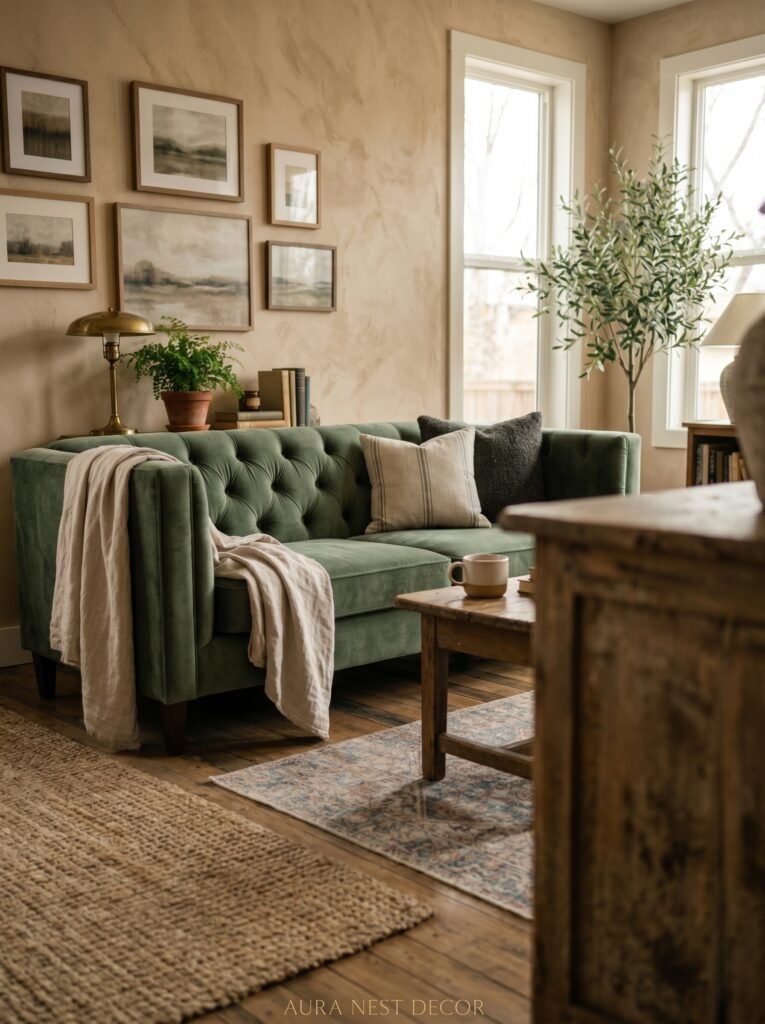
I’m gonna be blunt: your sofa is either working for this aesthetic or it’s fighting it. And if you’ve got a sleek, low-profile gray sectional from 2019, it might be fighting it.
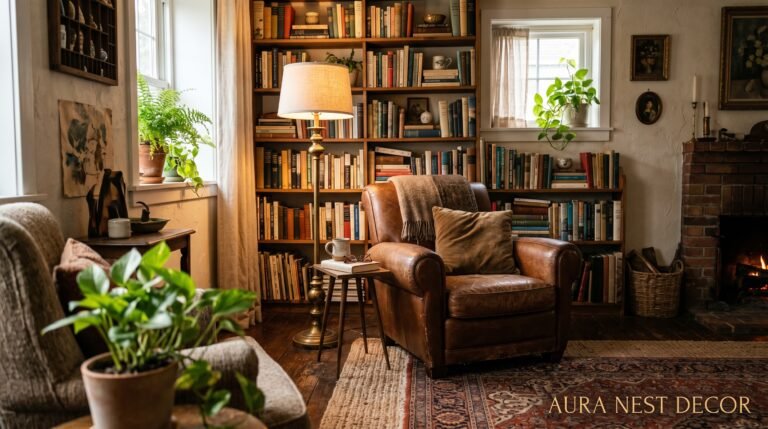
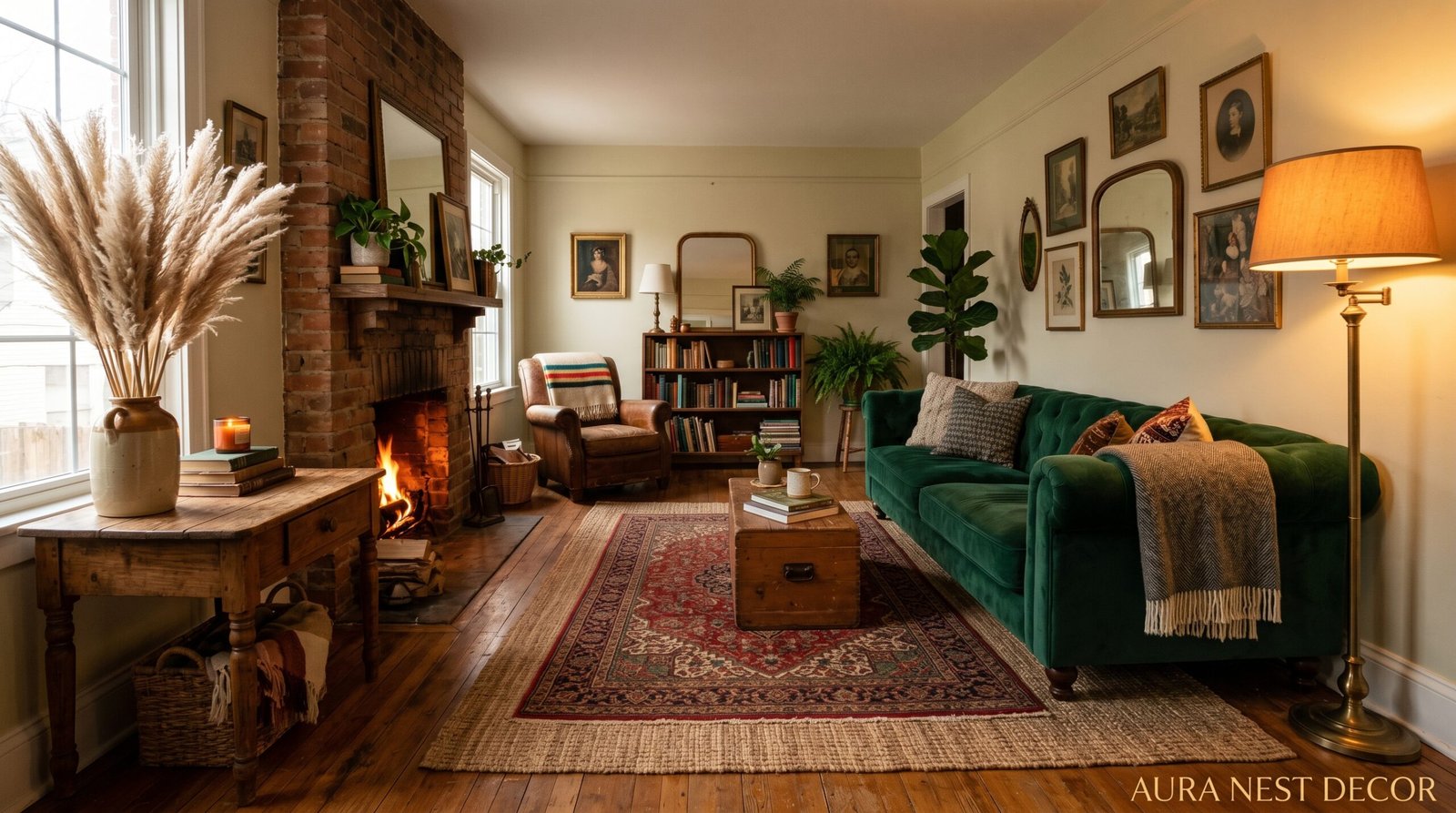
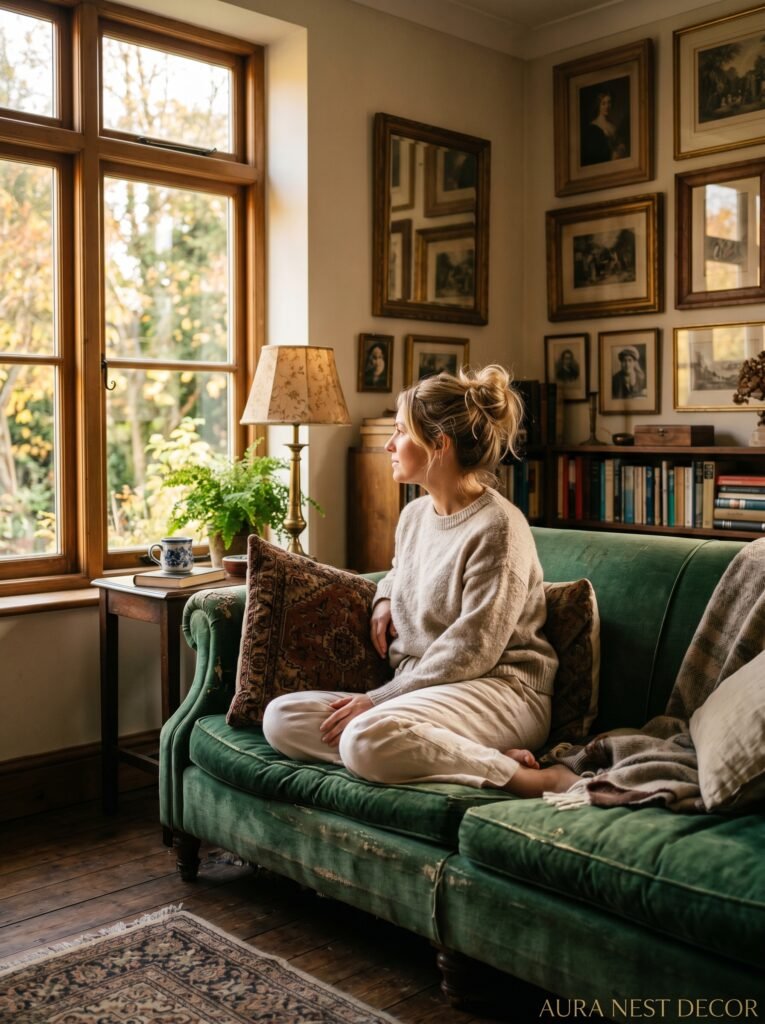
That doesn’t mean you need a new sofa. Not everyone has the budget for that, and not everyone should go out and buy new things just because a blog told them to. But if you’re starting fresh, or if you’ve got flexibility, here’s what to look for. High arms. Rounded shapes. A tufted back or at least some visible cushion depth. Velvet, worn leather, or linen — all good. That ultra-flat, no-arm minimalist look kind of kills vintage coziness before it even starts.
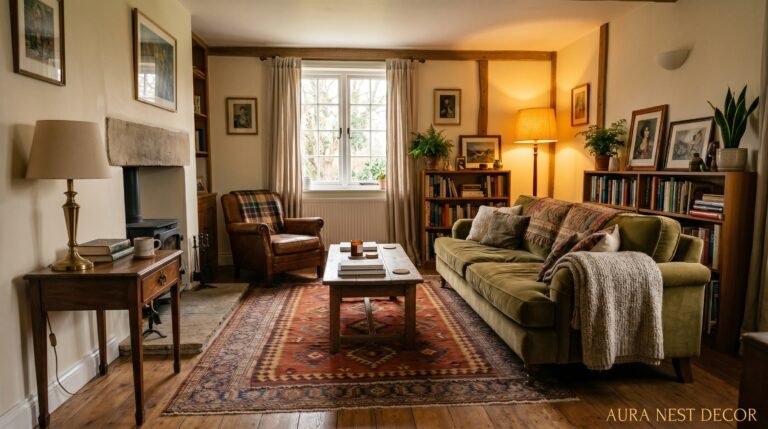
Jewel tones are having a serious moment right now for vintage-style sofas. Deep teal. Dusty rose that’s more mauve than pink. A forest green that looks almost olive in certain light. These aren’t bold choices so much as they’re timeless ones — colors that show up in rooms from the 1940s and haven’t stopped being beautiful since.
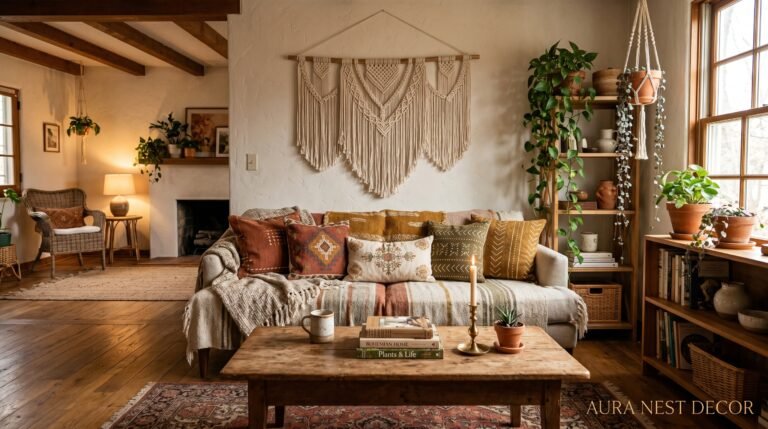
And if you genuinely can’t change the sofa, throw a chunky knit or an antique quilt over one arm. Add a couple of vintage-style cushions. Give people something else to look at. It works more than you’d think.
—
3. The Color That Keeps Showing Up in Every Beautiful Vintage Living Room Right Now
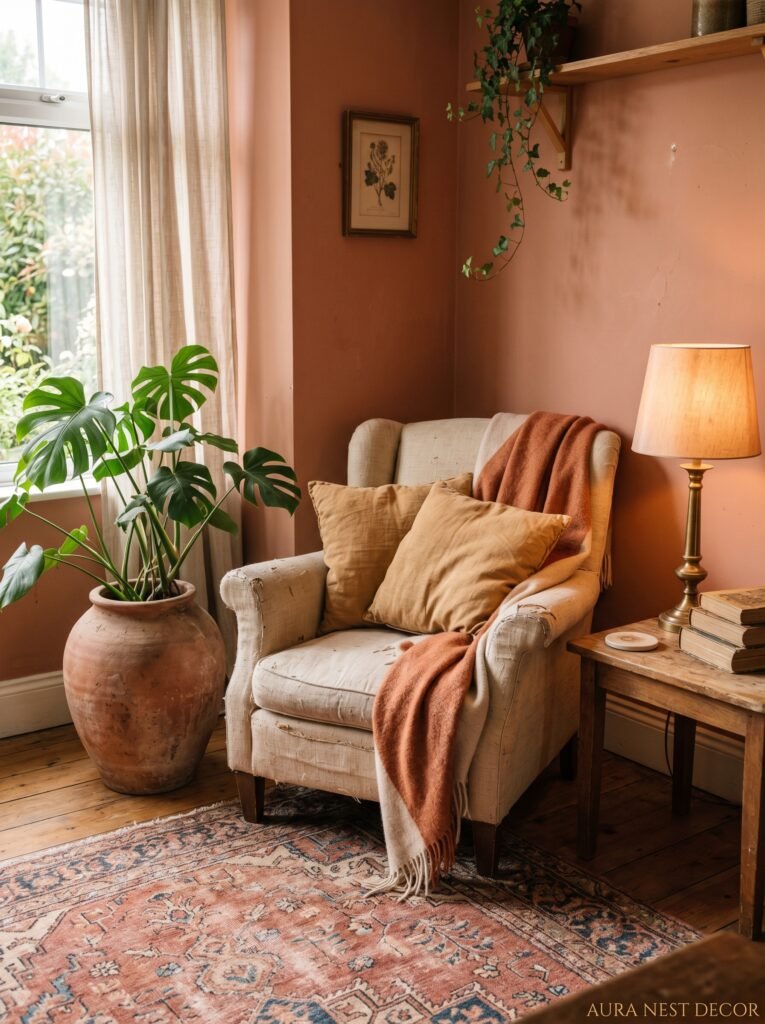
Warm white. But not just any warm white — I’m talking the specific shade that sits somewhere between cream and plaster, with just a hint of yellow in it. Benjamin Moore “White Dove” does it. Farrow & Ball “Bone” does it too. And yeah, I know everyone and their mum is recommending neutrals right now, but bear with me.
What makes this color work in vintage rooms specifically is contrast. Against warm white walls, old wood glows. Brass hardware pops. Even a faded vintage rug suddenly looks intentional instead of just worn-out.
The thing about cool grays and stark whites — they’re beautiful, but they fight vintage furniture. Old wood tends to be warm. Old fabrics tend to be warm. Stick a honey-toned antique dresser against a cool gray wall and watch it just… sort of die. Everything pulls in different directions and the room feels unsettled.
Side note — if you’re in the UK and renting, obviously you can’t paint the walls. In that case, lean hard into warm-toned textiles and lighting (more on both later) and don’t stress about it. Plenty of renters have stunning vintage living rooms. The walls matter less than you think when everything else is doing the right thing.
—
4. Layering Rugs Like You’ve Been Doing It Your Whole Life
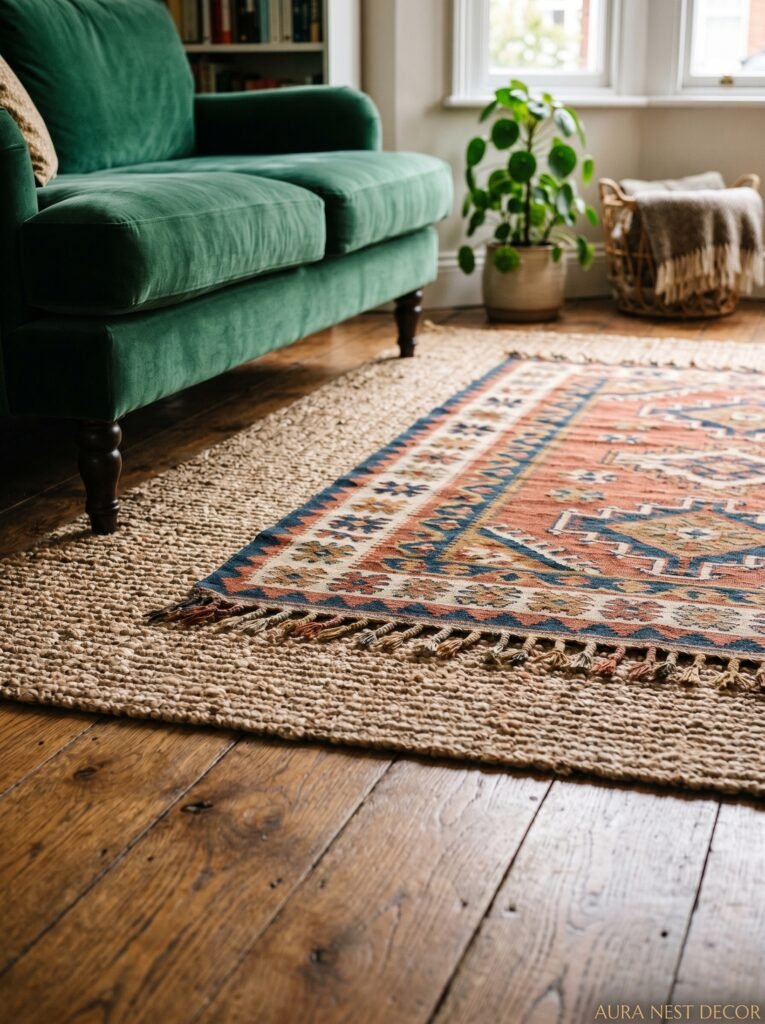
This might be the single most impactful thing you can do. Full stop.
A layered rug situation says this person knows what they’re doing before anyone even looks at anything else. And yet it’s not hard. You just need two rugs at different scales, with different textures, and the courage to overlap them.
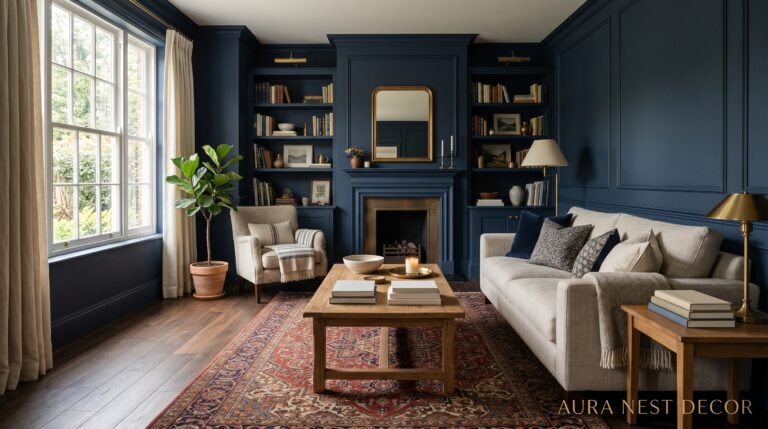
The bottom layer should be larger and simpler — a jute or seagrass rug is perfect here. Natural fiber, not too thick, relatively affordable. It grounds the space and gives you a neutral base. The top layer is where you bring in the vintage. A Persian-style rug with faded reds and navy. An old kilim with geometric pattern. Even a Turkish-style rug from a TJ Maxx or a charity shop find that’s got that beautiful worn-through quality where you can almost see the floor through it in the corners.
Offset the top rug. Don’t center it on the bottom one. That slight misalignment is part of the whole look — it reads as intentional and effortless at the same time, which is maybe the definition of vintage cozy done right.
“Layered rugs are the fastest shortcut to a room that looks like it took years to put together.”
—
5. The Lighting Situation That Nobody Talks About Enough
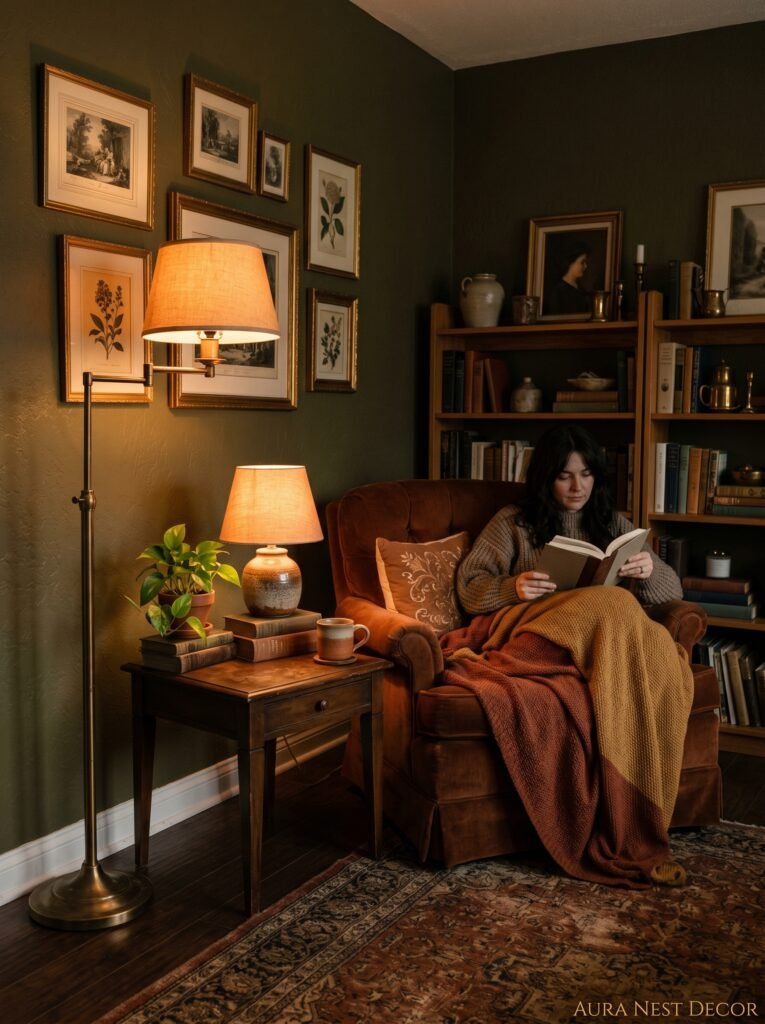
Overhead lighting in a living room is almost always wrong. Not sometimes. Almost always.
If your living room currently relies on a center ceiling fixture for most of its light, I want you to experiment this weekend. Turn it off. Completely. Then turn on every lamp you own, add some candles if you’ve got them, and just sit in the room for twenty minutes.
I bet it feels different. Warmer. More like something.
The amber glow of a lamp at 7pm on a winter evening is genuinely one of the best things about having a home. And vintage rooms need layered, low-level light to work properly — without it, the textures go flat, the patina disappears, and even beautiful furniture looks kind of dull.
Vintage-style lighting that works well: table lamps with linen or pleated shades, old brass floor lamps (genuinely old ones from eBay are usually cheaper than the new ones pretending to be old), wall sconces if you’re willing to do some electrical work or find plug-in versions, and — yes — Edison bulbs. They’re a cliché, but they’re a cliché because they genuinely work.
Go warm bulbs. 2700K or lower. Your room will thank you.
—
6. What Actually Goes on a Vintage-Style Bookshelf (And What Doesn’t)
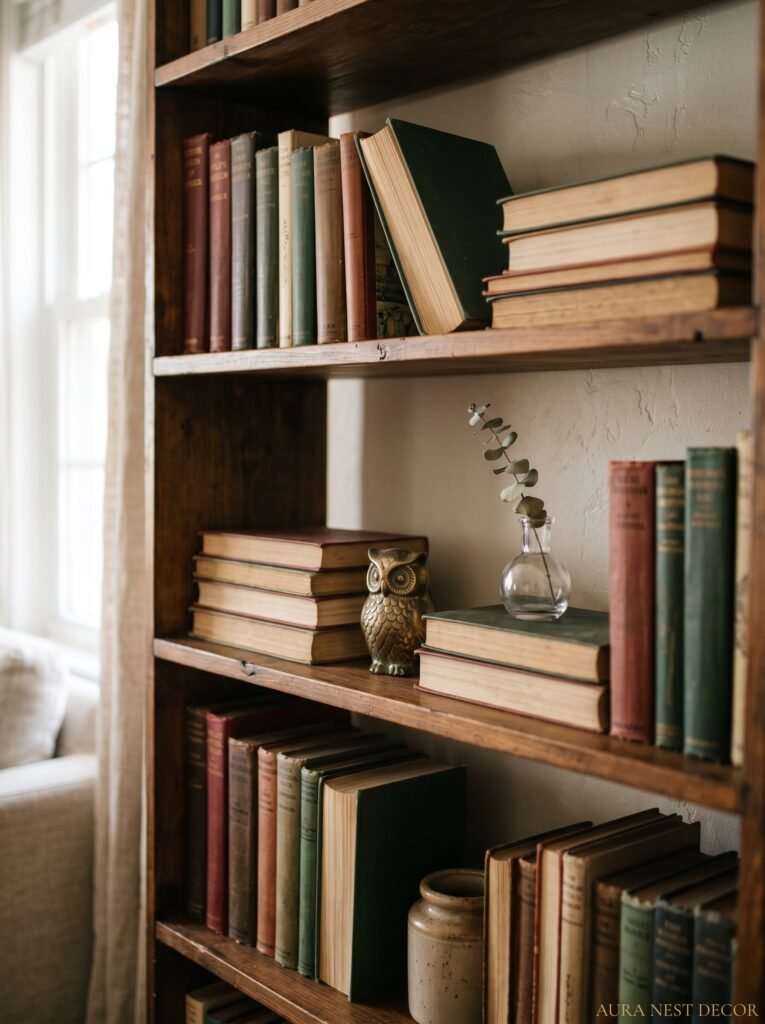
Books, obviously. But also: not just books.
The mistake I see constantly on Pinterest is people styling bookshelves with everything perfectly arranged by color. And look, it photographs beautifully, I get it. But in person it feels a little dead. Like a set instead of a room someone lives in.
Real vintage bookshelves have layers. A few books stacked horizontally on top of a row of vertical ones. A small framed photo or postcard tucked between books. A weird little ceramic someone picked up somewhere and couldn’t leave behind. A vase — doesn’t have to be fancy — with a single dried stem in it.
Objects need breathing room, though. Don’t fill every inch. Leave some empty shelf space here and there, because oddly enough, the negative space is what makes everything else look considered rather than crammed.
Things that don’t work: identical decorative objects in matching sets, anything that looks like it came in a “shelf decor kit,” very new-looking items with sharp edges and no patina. You don’t need to buy vintage for every object. You just need objects that look like they were chosen individually, over time, for reasons that made sense to you.
—
7. The Curtain Choice That Makes or Breaks the Whole Room
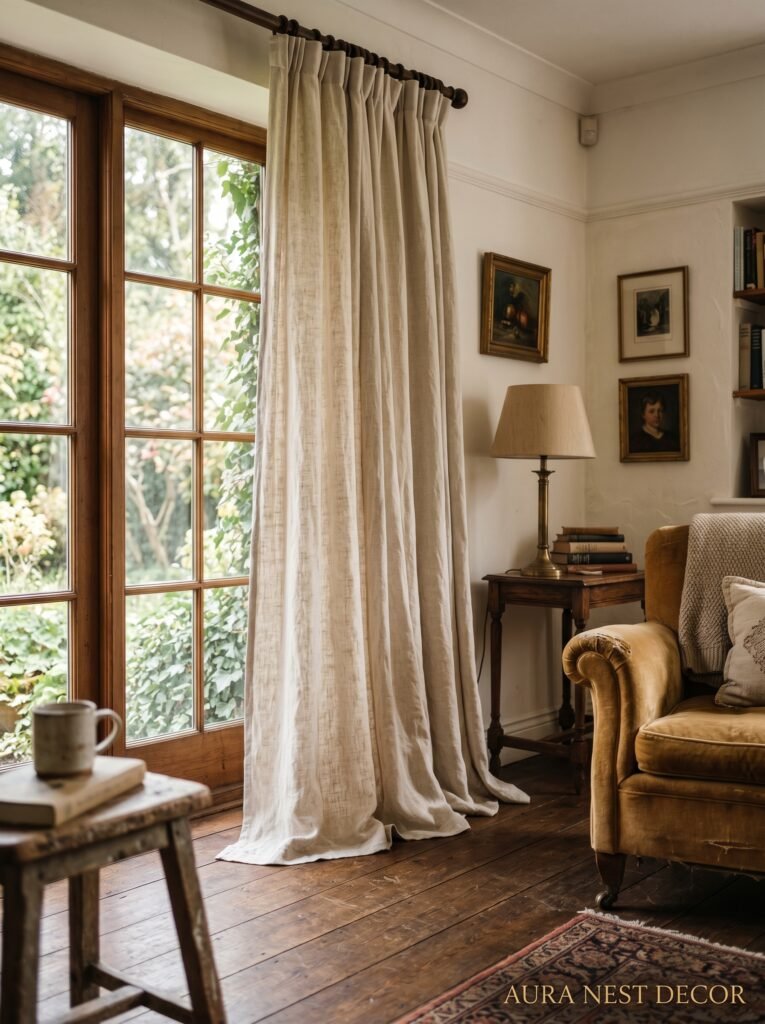
Floor-length. Always. Please. I’m begging.
Short curtains that hover above the floor are the one thing that will instantly make a vintage living room look like a rental property that hasn’t been updated since 2004. I know some people have radiators under windows. I know it’s not always convenient. But if there’s any way to go full-length — ceiling to floor if you can manage it — do it.
Linen curtains are ideal for vintage rooms. They’ve got natural texture, they let light filter through softly rather than blocking it, and they look more expensive than they often are. Slightly wrinkled is fine. That’s not a flaw, it’s the point. An unlined linen curtain in a warm cream in afternoon light is one of those genuinely transcendent home things, and I will die on this hill.
Color-wise, curtains in vintage rooms work best when they’re either very neutral (cream, off-white, warm gray) or in a rich deep tone that picks up on something else in the room. Don’t go pattern unless you really know what you’re doing — it’s a commitment and it can fight with everything else if the scale isn’t right.
“Floor-to-ceiling curtains are one of the cheapest ways to make a room feel genuinely grand.”
—
8. Vintage Accessories That Are Worth Hunting For (And Where to Actually Find Them)
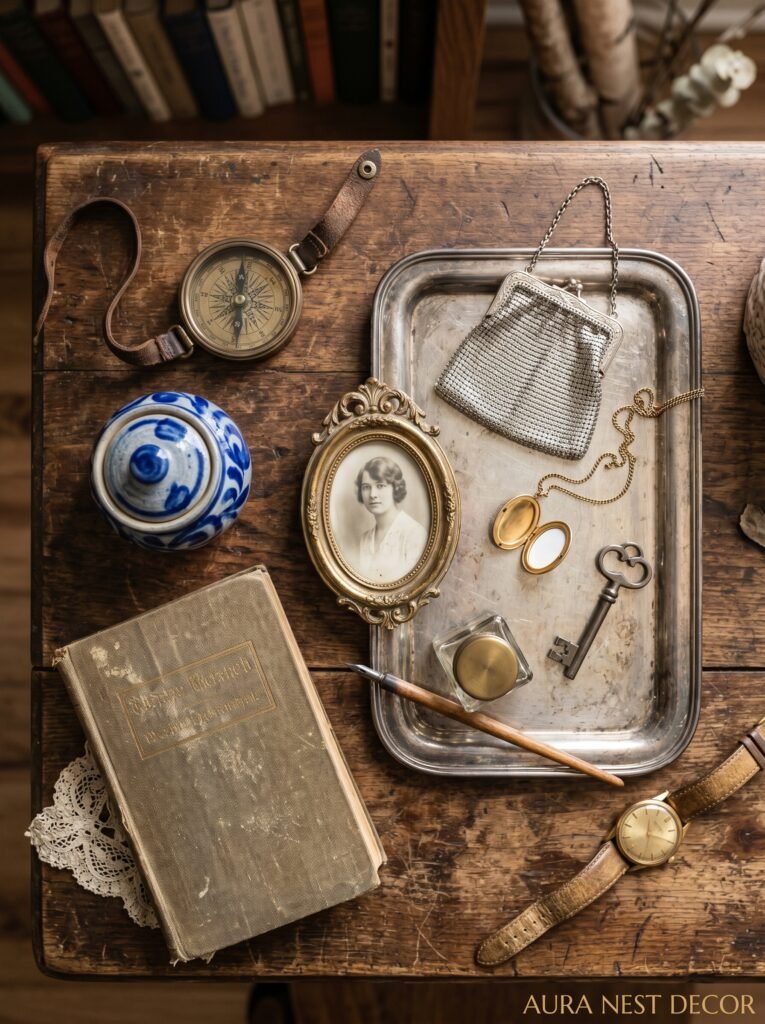
Okay so this section is maybe the most practical one and I’ve got opinions.
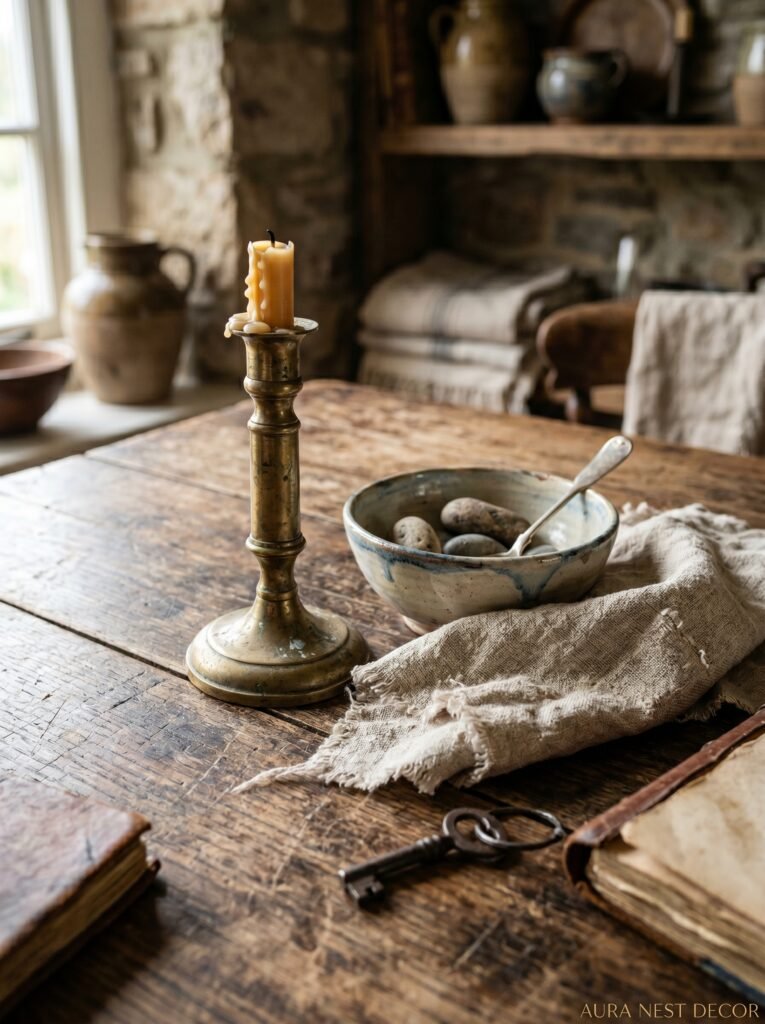
The items that make the BIGGEST visual difference in a vintage living room: old mirrors (especially gilded or distressed frames), ceramic vases with any kind of age to them, brass or bronze candlesticks in mismatched heights, old books with interesting spines, and lamps. Always lamps.
Where to find them in the US: eBay is genuinely incredible for vintage lamps and mirrors. Facebook Marketplace is perfect for local finds — I’ve found extraordinary things for almost nothing because people just want stuff gone. Estate sales are worth the early Saturday morning. And honestly, HomeGoods/TJ Maxx has gotten surprisingly good at stocking vintage-adjacent pieces that read as genuinely old.
In the UK: charity shops are unbeatable, but you need patience and frequency. Go often. The good stuff moves fast. Car boot sales in summer are where real finds happen — get there early, bring cash, and don’t be afraid to haggle. Etsy UK is worth bookmarking too, though prices have crept up in the last few years.
One thing I’d say: don’t buy vintage accessories online just by looking at the product photo. Read descriptions carefully. Vintage condition varies wildly and “good vintage condition” means something different to every seller.
—
9. The One Rule That Makes Any Tiny Living Room Feel Intentional
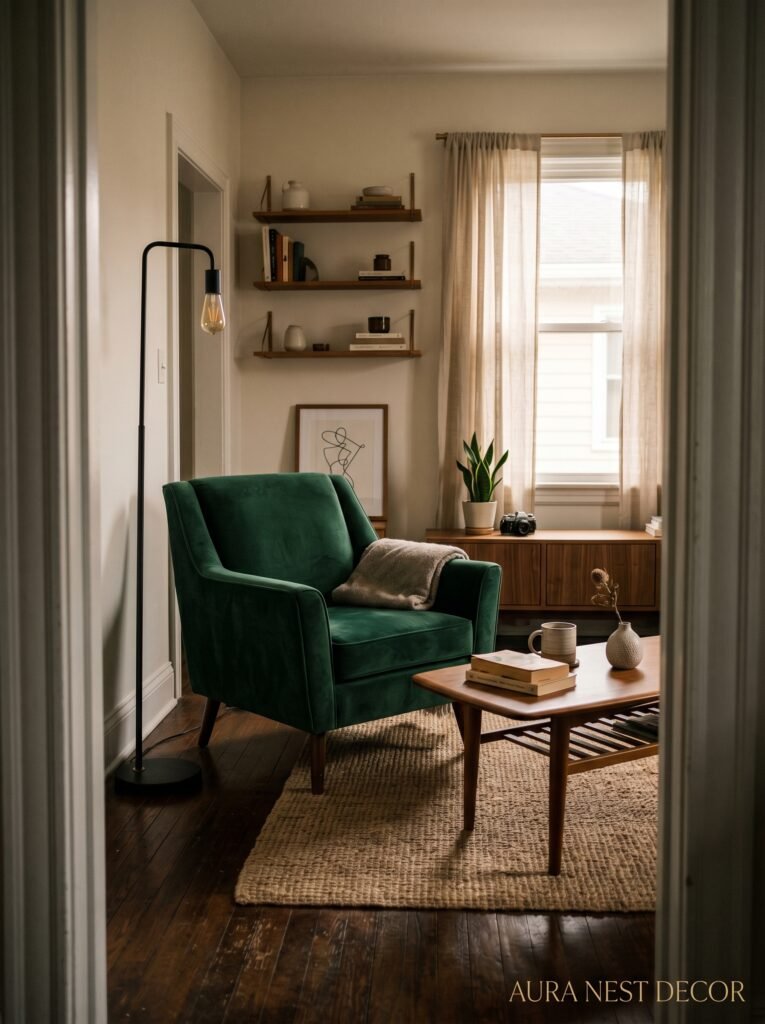
Less, but better. That’s the whole rule.
Small rooms can’t absorb clutter the way larger ones can. Every object is visible, everything competes, and if you’ve got twelve things on a coffee table in a 12-by-14 room, it looks overwhelming before you’ve even sat down.
But here’s the thing — small rooms are actually EASIER to make feel cozy and vintage, because coziness is naturally suited to intimate spaces. You just can’t go overboard. Pick your three favorite objects and display those. Put the rest somewhere else. A single beautiful lamp, a small stack of books, one interesting vase — in a small room, that’s enough. Maybe more than enough.
Scale matters more in small rooms too. Huge furniture in a tiny space doesn’t feel cozy, it feels claustrophobic. Look for pieces that are a little lighter on their feet — a loveseat instead of a full sofa, a narrow vintage side table instead of a wide one, curtains that draw the eye UP to make ceilings feel higher.
—
10. Plants in a Vintage Room — Do It Wrong Once and You’ll Know Why
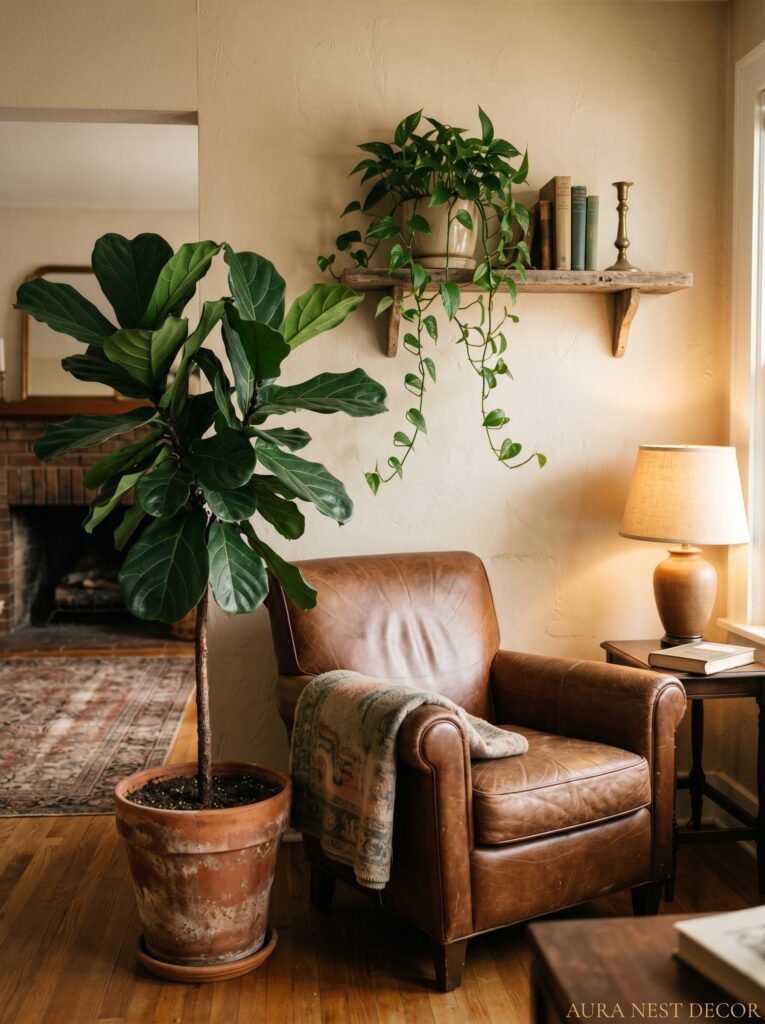
Big, graphic, architectural plants don’t work in cozy vintage rooms. They look too modern. A huge fiddle leaf fig is beautiful, genuinely, but in a vintage room it kind of announces itself and pulls everything toward contemporary.
What works instead: trailing plants in old ceramic pots. A pothos or an ivy falling over the edge of a bookshelf. Small terracotta pots clustered on a windowsill, slightly imperfect, slightly terracotta-dusty. Dried flowers — wildflowers or pampas or eucalyptus — in an old glass bottle or a ceramic vase.
The goal is plants that look like they’ve been living in the room for a while, not plants that make a statement. Does that make sense? Or maybe it’s the opposite — the plant should feel like it came with the house, not like it was ordered for the aesthetic.
—
11. Coffee Table Styling That Doesn’t Look Like a Magazine Shoot
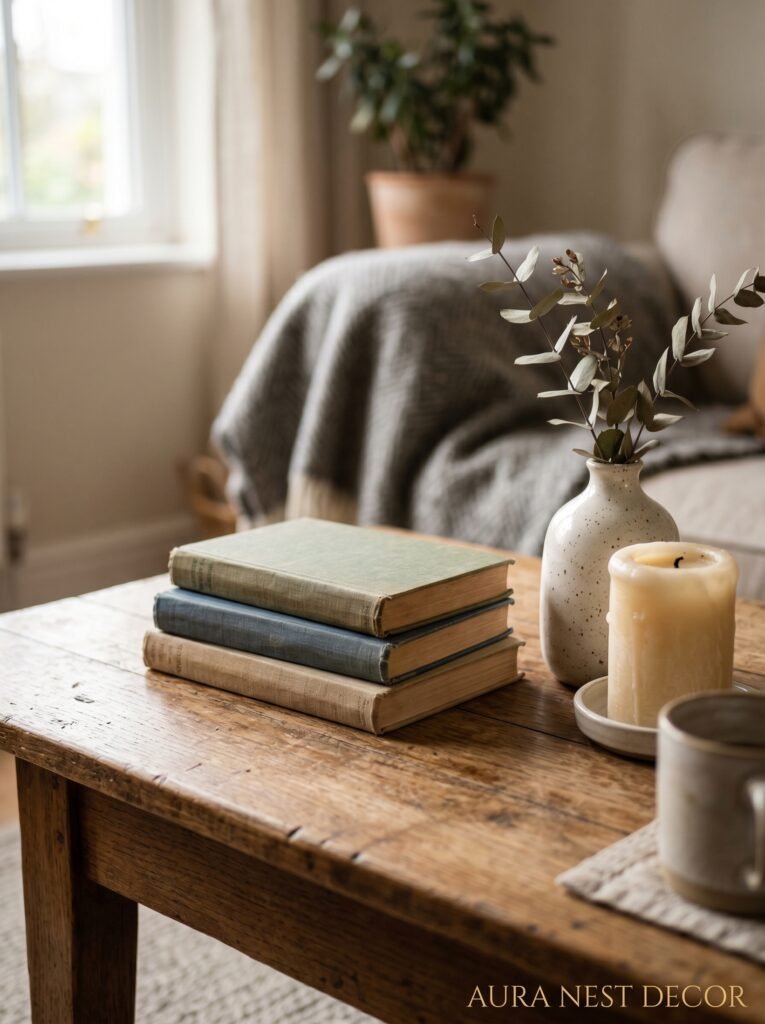
Okay here’s my actual coffee table right now: three books stacked (two novels, one interiors book), a small tray that used to be my grandmother’s, a candle that’s half-burned down, and a little clay dish I made in a pottery class that I still can’t quite believe turned out okay. That’s it.
No matching coasters. No geometric sculpture. No ring of decorative objects arranged in a perfect crescent moon. Just stuff that I use and stuff that means something, and it looks more vintage and cozy than any styled coffee table I’ve seen in a catalog.
The tray is the key, honestly. Get one vintage or vintage-looking tray. Corral some of your smaller objects inside it. The tray creates the visual container so things don’t look scattered, and then within the tray you can be as informal as you like.
—
12. The Atmosphere Is the Final Ingredient (And It Costs Nothing)
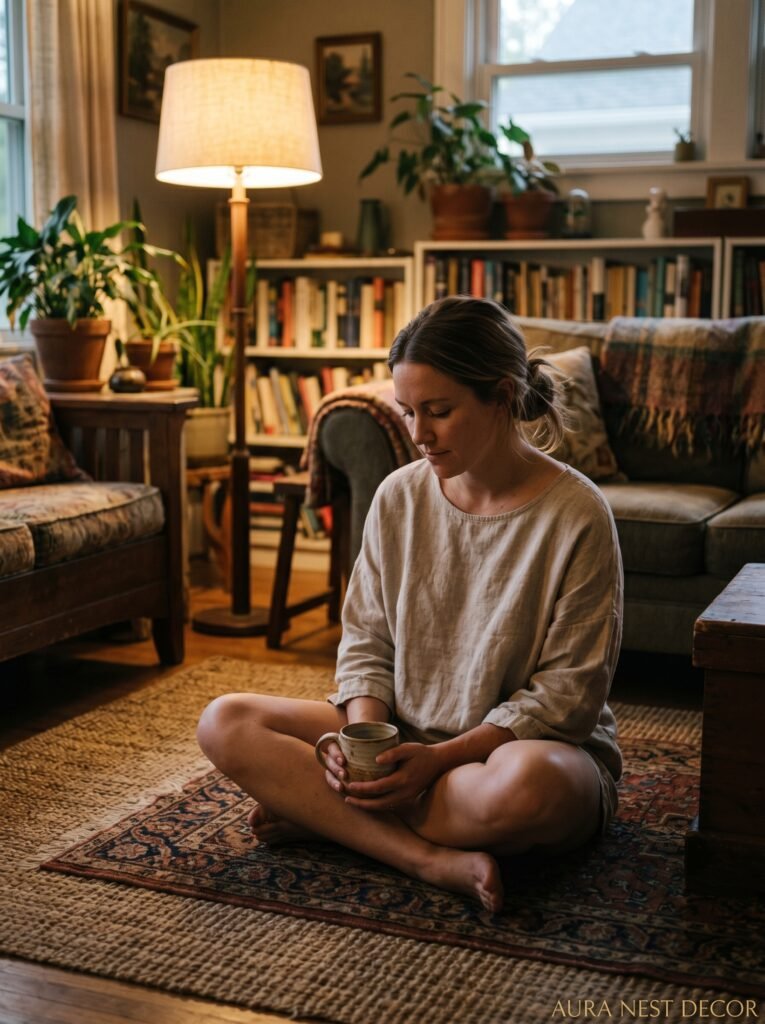
Here’s the thing no one really says: all the furniture and vintage finds in the world won’t make a room feel cozy if the atmosphere isn’t right.
Atmosphere is smell. It’s the candle you actually burn instead of just displaying. It’s the throw blanket that gets used and therefore looks slightly rumpled instead of pristinely folded. It’s music — actual music, low, coming from a corner of the room, not from a television.
It’s the sense that the room is for you. Not for guests, not for photos. For you, on a Tuesday, with a cup of tea, when it’s raining outside and you’ve got nowhere to be. That feeling is the whole point of cozy vintage. You build the room to support that moment, not the other way around.
Light some candles. Lower your lights. Make the room work for you.
—
❓ FAQ
Q: How do I mix vintage and modern without it looking weird? A: The key is keeping the bones — walls, large furniture, rugs — in a consistent warm palette, and then letting vintage and modern pieces coexist within that. If everything shares the same color temperature, the eye stops noticing the date of manufacture and just sees a room that feels cohesive.
Q: Can I do a cozy vintage living room on a tight budget? A: Honestly, yes — it’s one of the more budget-friendly aesthetics because thrifted and secondhand pieces are exactly what you want. Charity shops, Facebook Marketplace, eBay, car boot sales — these are the places. New vintage-style pieces often cost more than the real thing.
Q: What if my living room has really modern architecture — high ceilings, big windows, open plan? A: Lean into it. Big vintage pieces — a large Persian rug, an oversized antique mirror, substantial curtains — will actually look more dramatic in a modern space. Use the architecture rather than fighting it. The contrast can be genuinely beautiful.
—
💭 Final Thoughts
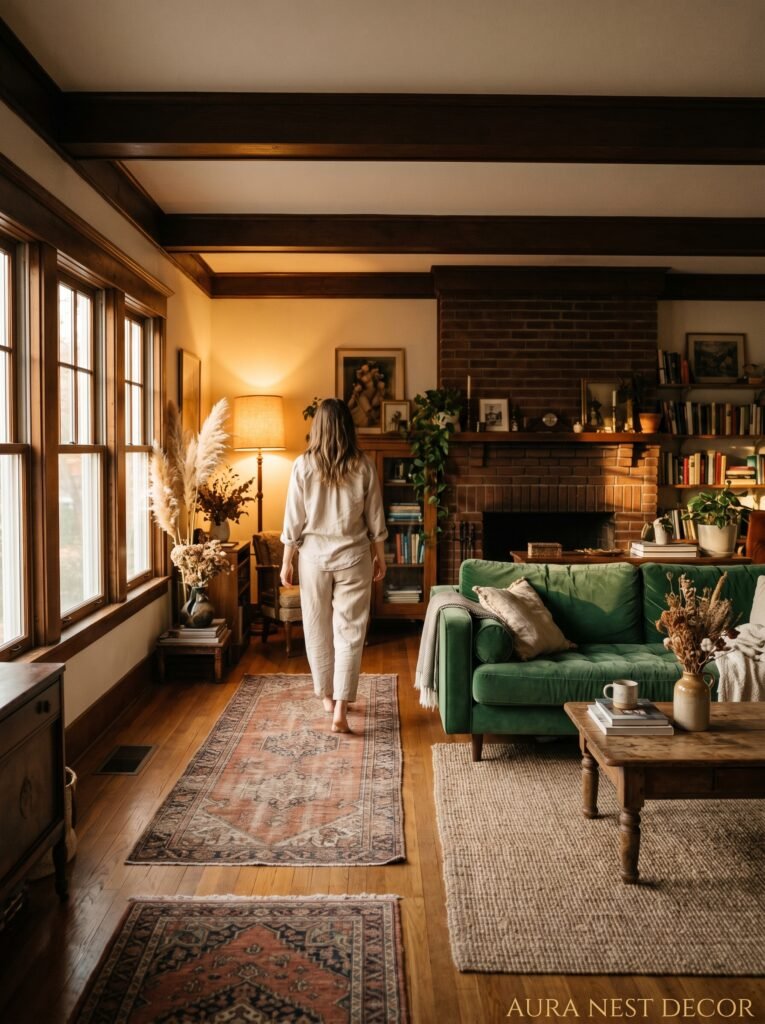
There’s no perfect vintage living room. The best ones look like they happened gradually, one good find at a time, over years of paying attention. Start with one piece you genuinely love and build outward from there. Trust your instincts over any trend.
What’s the one vintage piece in your home that gets the most compliments — and where did you find it?