The Vintage Living Room That Actually Feels Lived In (Not Like a Museum)
You know the kind of room I mean. The one where you walk in and immediately want to sit down, pull a blanket over your lap, and stay for three hours. It’s not staged. It’s not perfect. And somehow that’s exactly why it works.
—
1. Why “Vintage” Went Wrong — and How to Get It Right
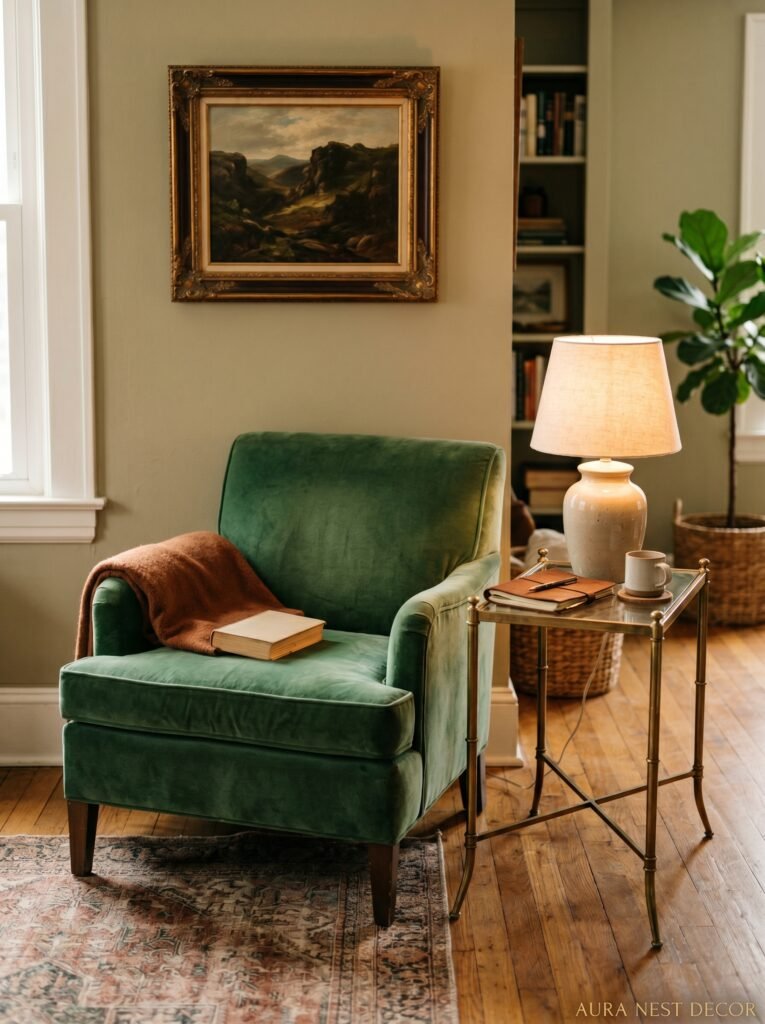
Here’s the thing a lot of people get tangled up on. Vintage doesn’t mean old. Or it does, but not in the way that feels stiff and untouchable. There’s a version of vintage decorating that reads like a grandmother’s front room that nobody was ever actually allowed to sit in — doilies under everything, air that smells faintly of lavender and old carpet. That’s not what we’re going for.
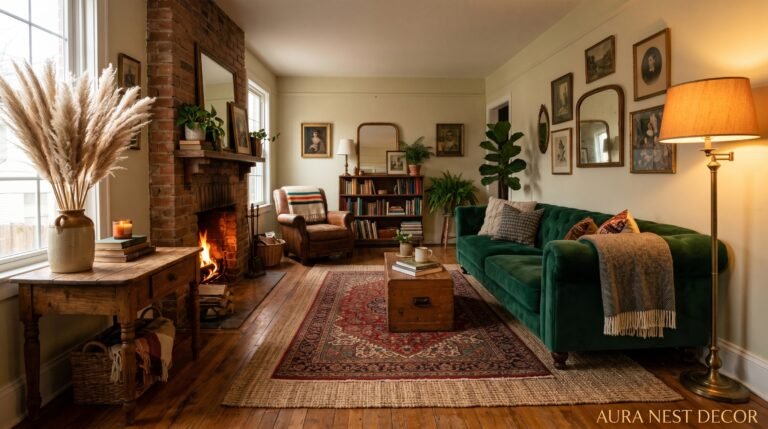
The vintage aesthetic that’s everywhere on Pinterest right now? It’s about warmth. It’s patina and texture, faded colors that somehow still feel rich, furniture that looks like it has a history because it actually does. A 1960s armchair with slightly worn armrests. A side table with a water ring from someone’s tea mug, many decades ago. That mark isn’t damage. That mark is charm.
The key distinction — and I think this is the thing that separates a beautiful vintage room from a dated one — is intention. You’re choosing these pieces. You’re placing them with care. There’s a difference between a room that collected clutter over fifty years and a room that was thoughtfully styled with pieces that happen to be fifty years old. One feels abandoned. The other feels loved.
So before you buy a single thing, get clear on the feeling you want. Not the look. The FEELING. Cozy and a bit dim, like a second-hand bookshop? Bright and airy but with history? Dark and dramatic with velvet and old oil paintings? That decision shapes everything else.
“Vintage isn’t a style. It’s a feeling — and the room should feel like someone actually lives there.”
—
2. The Sofa Decision That Changes Everything Else in the Room
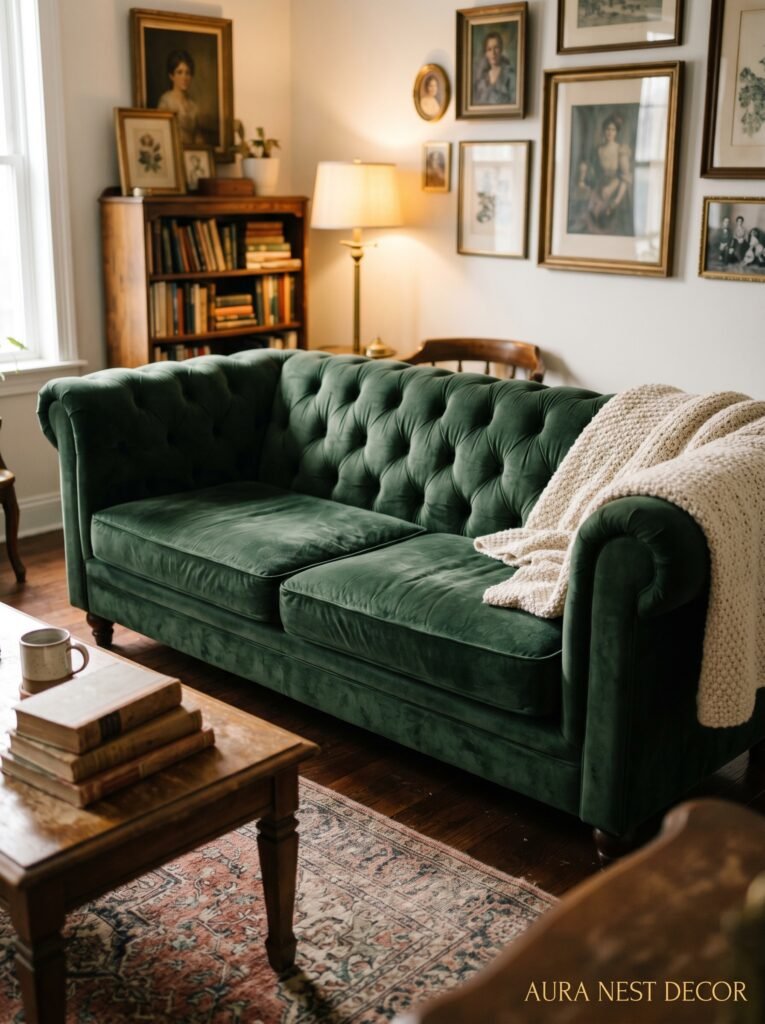
I’ll be real: the sofa is the hardest part. Because a truly vintage sofa — like, an actual vintage sofa from a thrift store or an estate sale — is a gamble. The bones might be incredible and the upholstery might be a crime. And reupholstering is expensive and time-consuming, though it’s absolutely worth it if you find the right frame.
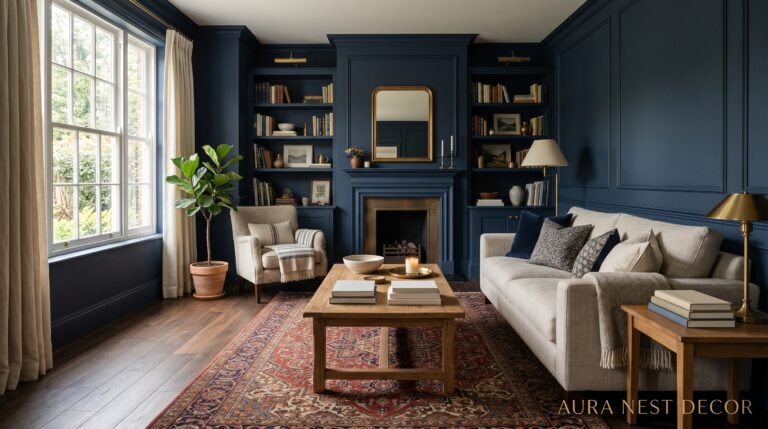
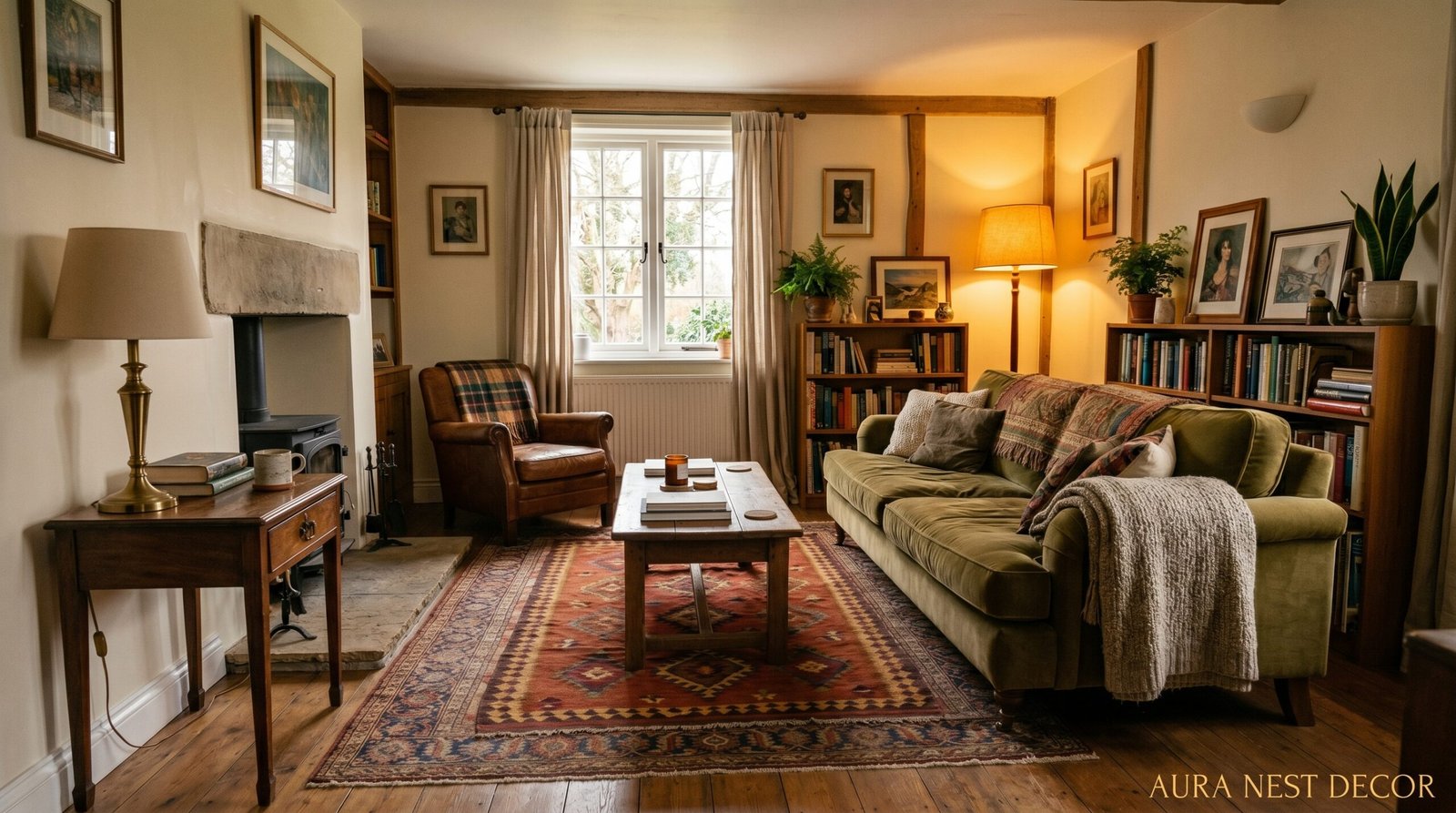
But here’s what I’d actually recommend if you’re starting from scratch. Look for a sofa with a classic silhouette — a camelback, a Chesterfield, a low-slung mid-century shape — in a muted, slightly unexpected color. Not gray (so overdone), not beige (safe but boring). Think dusty terracotta, faded olive green, a deep ink blue that’s almost navy but warmer. These colors read as vintage immediately because they’re not from the current trend cycle.
The fabric matters almost as much as the shape. Velvet, worn linen, bouclé — all of them say “this piece has been somewhere.” A sharp, tight microfiber sofa in a perfect jewel tone doesn’t, no matter how pretty it is.
If you’re in the UK, honestly, charity shops and Facebook Marketplace are underrated gold mines for this. I’ve seen stunning Parker Knoll armchairs go for thirty quid because someone didn’t know what they had. In the US, estate sales and thrift stores near older neighborhoods — not the trendy areas — tend to have the best finds.
—
3. The Color That Keeps Turning Up in Every Beautiful Vintage Living Room Right Now
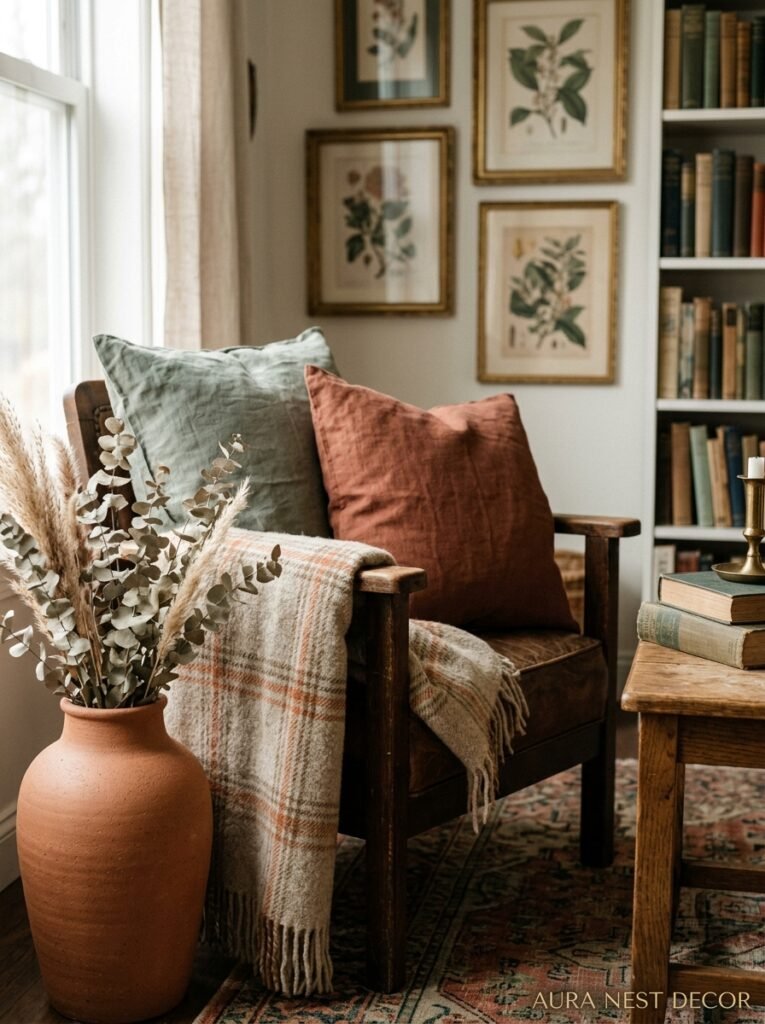
Warm white. But not the cold, clinical white. The kind that reads almost cream in afternoon light and almost gold in lamplight. It’s the wall color that does the most for a vintage room because it doesn’t compete — it lets the furniture and objects breathe.
But there’s a whole other conversation happening around deeper shades right now. Sage green walls have been dominant for a couple of years (very much still beautiful, not going anywhere). Terracotta is having a serious moment, especially paired with natural wood and old woven textiles. And then there’s this dusty mauve — almost a faded Victorian pink — that sounds alarming and looks extraordinary.
Side note — if you’re renting and can’t paint, peel-and-stick wallpaper has genuinely gotten so good. There are options with tiny floral prints, faded damask patterns, even aged linen textures, that look real from across the room. It’s not a perfect solution but it works.
The color principle for vintage rooms specifically is this: choose something that looks slightly faded. Not dingy — faded. Like it’s been in beautiful sunlight for decades. That quality is what ties the room together and makes new pieces look like they’ve always been there.
—
4. Layering Rugs the Way Actual Stylists Do It (Not How Instagram Does It)
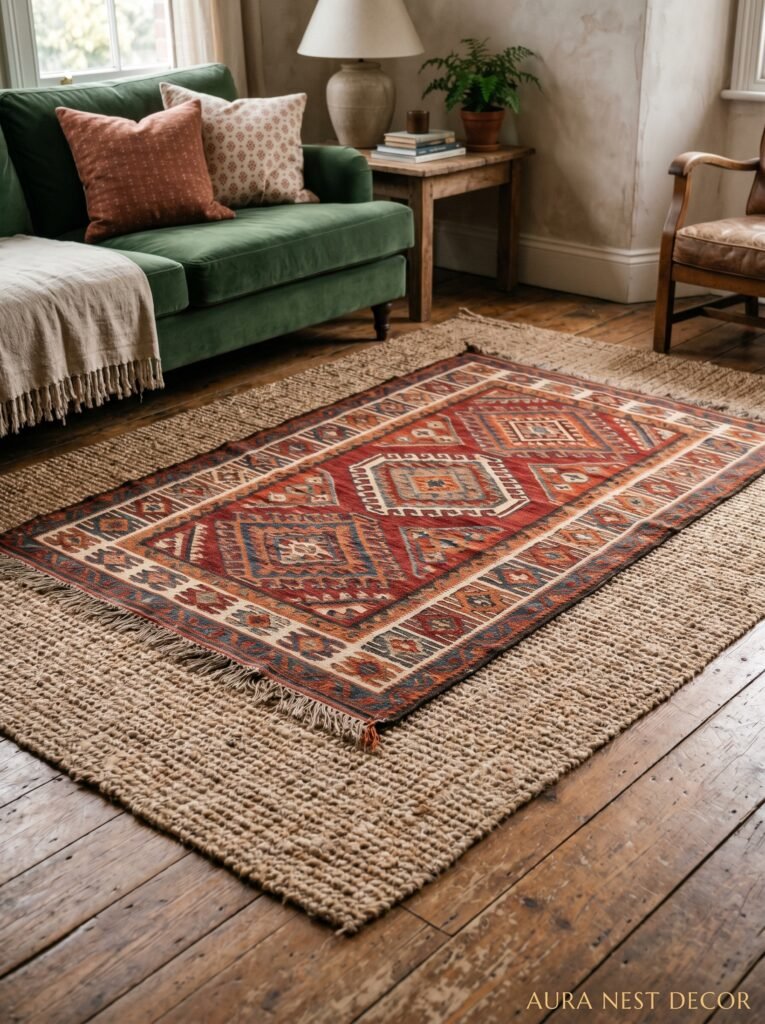
Rug layering gets talked about a lot and done badly even more. The Instagram version is usually a large neutral rug with a smaller kilim or patterned rug on top, and yes, it looks good, but it’s also what every single staged room looks like right now. There’s a more interesting way to do it.
The rug that goes under everything should have some texture but stay quiet. A faded Persian or Turkish rug — again, Facebook Marketplace, eBay, charity shops in the UK — as your base layer is genuinely incredible. Even a worn one. ESPECIALLY a worn one. Those soft, faded colors underneath everything else create this sense of depth that a brand new rug just can’t replicate.
Layer a natural fiber rug or a smaller woven piece on top if you want. Or don’t. Honestly, one really great vintage rug does more for a room than two mediocre ones stacked on each other.
What matters more than the layering is the placement. Pull the furniture onto the rug. Not just the coffee table — the sofa legs, the chairs, everything. A rug that floats in the middle of a furniture arrangement looks like an afterthought. When the furniture sits on it, the whole room suddenly coheres.
“One worn Persian rug does more for a room than any amount of new furniture ever could.”
—
5. The Small Lighting Change That Makes a Room Feel 30 Years More Interesting
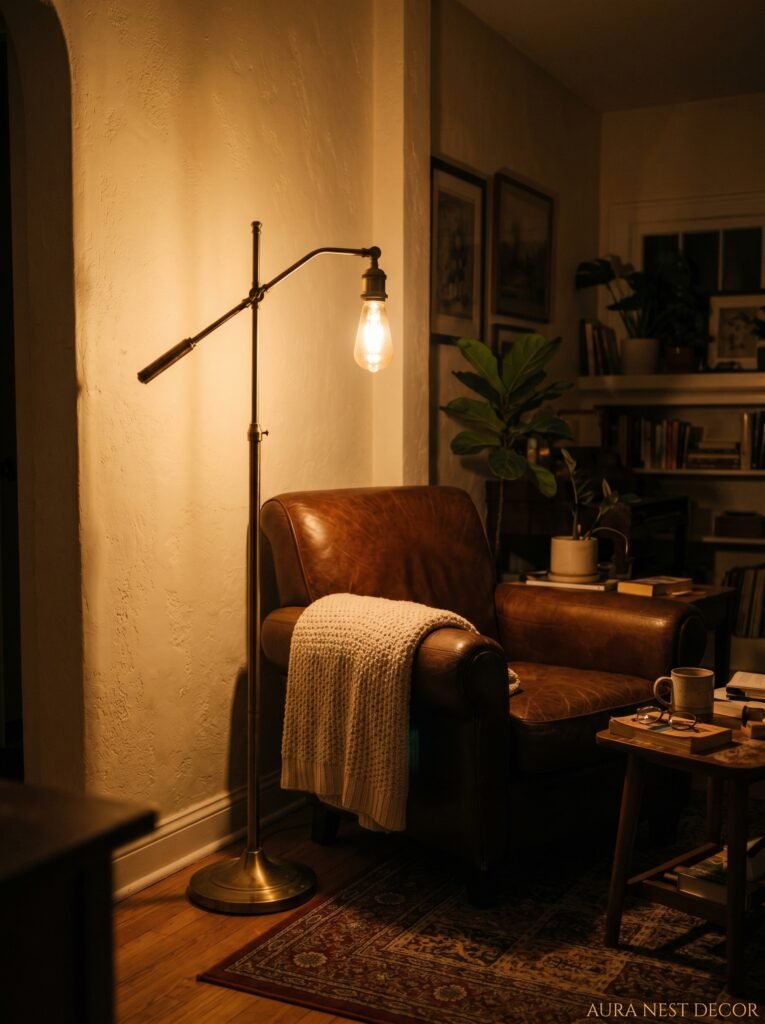
Take out your overhead light. Or at least, stop using it as your primary source. This is the single biggest mistake people make in living rooms — relying on that central ceiling fixture to do all the work, and then wondering why the room feels flat and a bit cold even with nice furniture in it.
Vintage rooms thrive on layered light at low levels. Table lamps with warm Edison bulbs. A floor lamp in the corner casting a pool of amber onto the ceiling. Candles, actual candles, not just for decoration but actually lit. That amber glow at 7pm when the room is softly lit from three or four sources? Completely different room. The shadows matter as much as the light.
For a specifically vintage look, hunt for old ceramic lamp bases at charity shops and thrifts. They tend to be heavy, interesting shapes — turned wood, textured pottery, painted porcelain — that you genuinely can’t find in current retail. A simple drum shade in cream or off-white and suddenly you have a lamp that looks like it cost four hundred dollars.
UK readers — Gumtree and car boot sales have lamp bases constantly. US readers — Goodwill and thrift stores often have them for a few dollars and people overlook them because the original shades are ugly. The bases are the valuable part.
—
6. What to Do With an Empty Fireplace (Even a Fake One Does This)
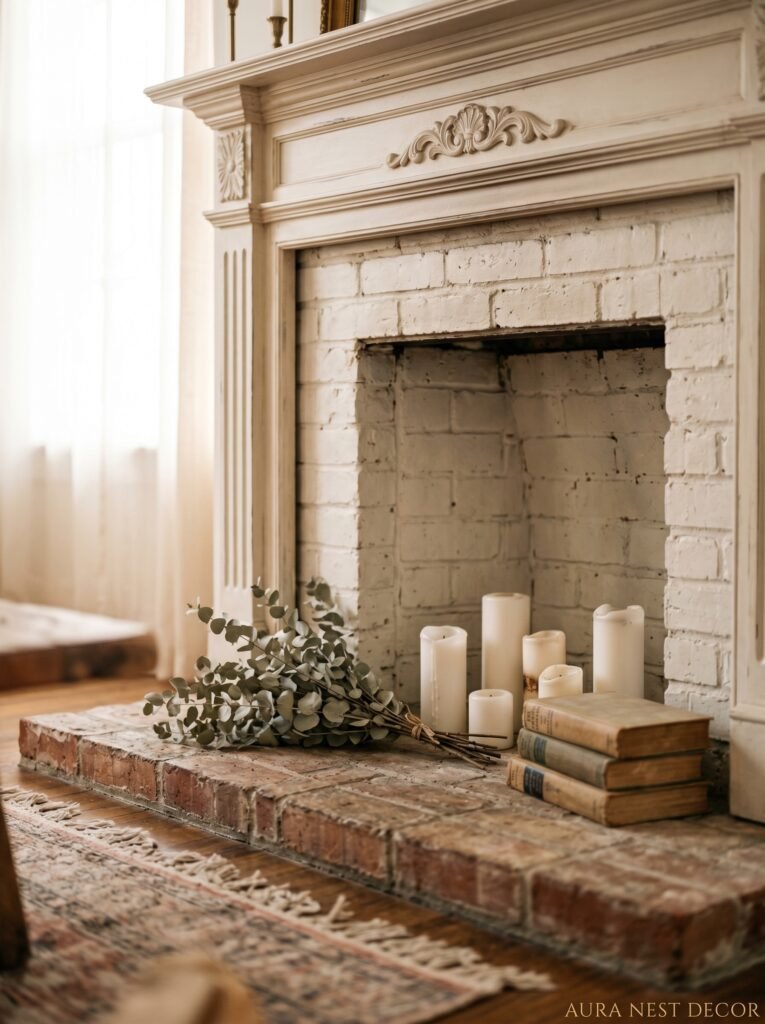
Not every living room has a working fireplace, but in a vintage-styled room, the presence of a fireplace surround — even a purely decorative one — does something almost architectural to the space. It creates a focal point, a reason for the furniture arrangement, a sense of history.
If you have a working fireplace, use it. Obviously. But even if yours is sealed or decorative, the surround itself is doing important work. Paint it out to match the walls for something seamless and editorial, or keep it in contrast — a marble surround against a dark wall is quietly dramatic in the best way.
Inside a non-working fireplace: stacked logs look beautiful. Pillar candles at varying heights. A big arrangement of dried pampas or preserved eucalyptus. Some people put plants in there and it genuinely works. The goal is to make it feel intentional rather than just… there.
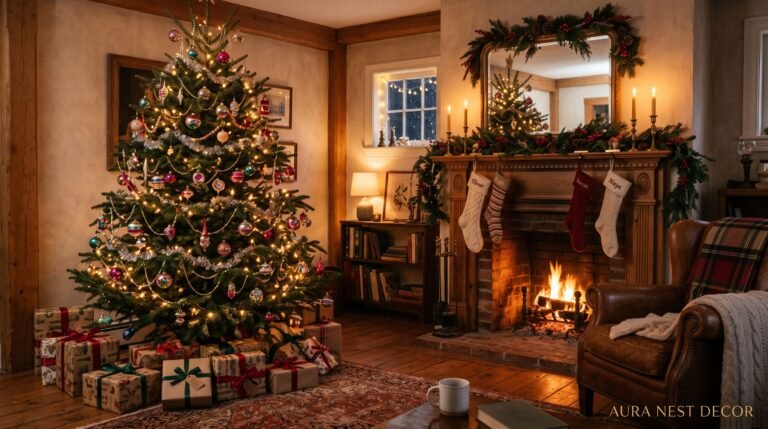
A chunky wooden mantle above a fireplace is one of the best display surfaces in a vintage living room. Keep it a bit crowded, a bit layered. Old mirrors, small paintings propped rather than hung, a clock (doesn’t have to work), dried flowers, a stack of books. Things at different heights. The mantle that’s too perfectly styled with three objects spaced exactly right reads as a catalog photo. The one that’s slightly overfull reads as a home.
—
7. Finding Vintage Art Without Spending a Fortune (Or Getting Fooled)
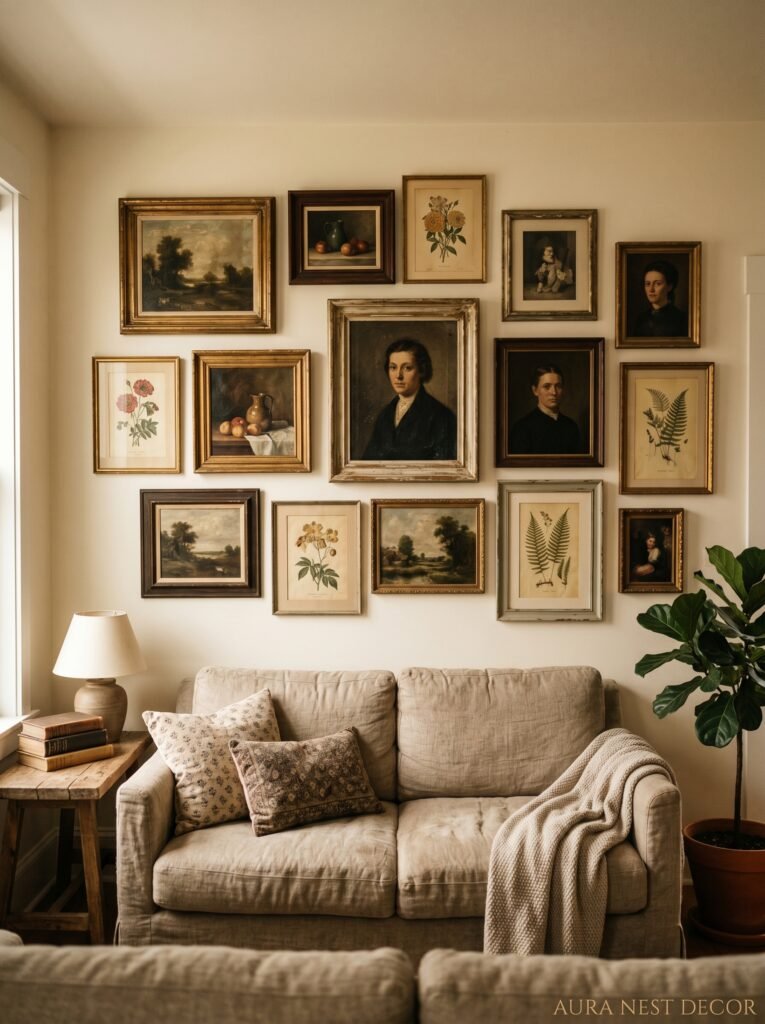
Art is where vintage rooms live or die. A room with the right furniture and zero interesting art still feels incomplete. But original vintage art doesn’t have to mean expensive.
Charity shops and thrift stores (on both sides of the Atlantic) cycle through paintings constantly. The frames alone are worth the purchase — old gilded frames, chunky wood frames, ornate plaster frames — and if the art inside isn’t your taste, you can pop out the original canvas and insert your own print. That’s actually a really good trick.
Estate sales are the best source for real paintings. Someone’s grandmother’s oil landscape for twelve dollars is genuinely possible. UK readers, car boot sales and auction house previews (even just for looking) are great hunting grounds.
For prints, old botanical illustrations, Victorian maps, faded travel posters — all of these work beautifully framed. Sites like Etsy and eBay have them in digital download form for very little money. Print them large at your local copy shop, frame them in something found or secondhand, and nobody will ever know they weren’t part of a collection.
“Art doesn’t have to be expensive to be right. It has to be chosen, not just placed.”
—
8. The Bookshelf Styling Approach That Doesn’t Look Like a Pinterest Cliché
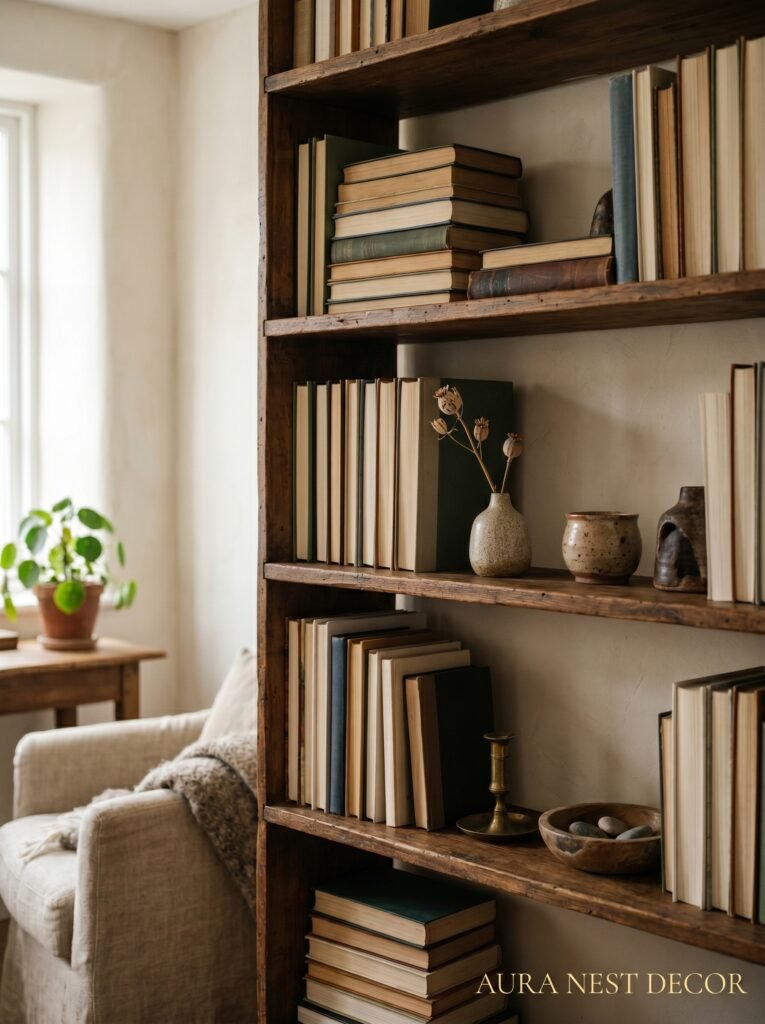
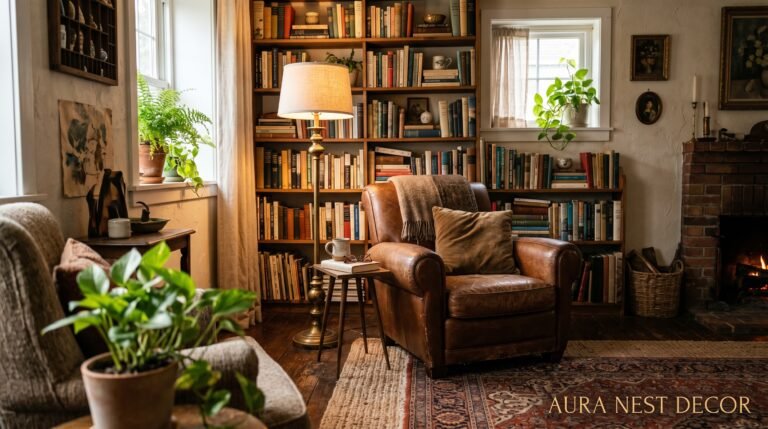
Books first, then objects. That’s the rule. A bookshelf that’s all objects and no books looks like a display case. One with mostly books and a few meaningful things tucked in looks like someone’s actual life.
Mixing the orientation helps — some books standing upright, some stacked horizontally and topped with a small object. Vary the heights. Don’t color-coordinate (unless you genuinely love that look) because it tends to make a shelf feel a bit staged and a bit cold in a vintage room where warmth is everything.
Objects between books should be a bit unexpected. Old tins, small framed photos, a few interesting rocks or pieces of pottery, a single dried flower in a small bottle. Not every item needs to be precious. Some of the best shelf objects I’ve ever seen were just beautiful junk — a brass doorknob, an old matchbox, a single vintage tile.
The thing to avoid is filling every single inch. Gaps are fine. Space between objects lets each one breathe and be noticed. A shelf stuffed to absolute capacity starts to read as clutter rather than collection.
—
9. Textiles Are Doing the Heavy Lifting (and Most People Underuse Them)
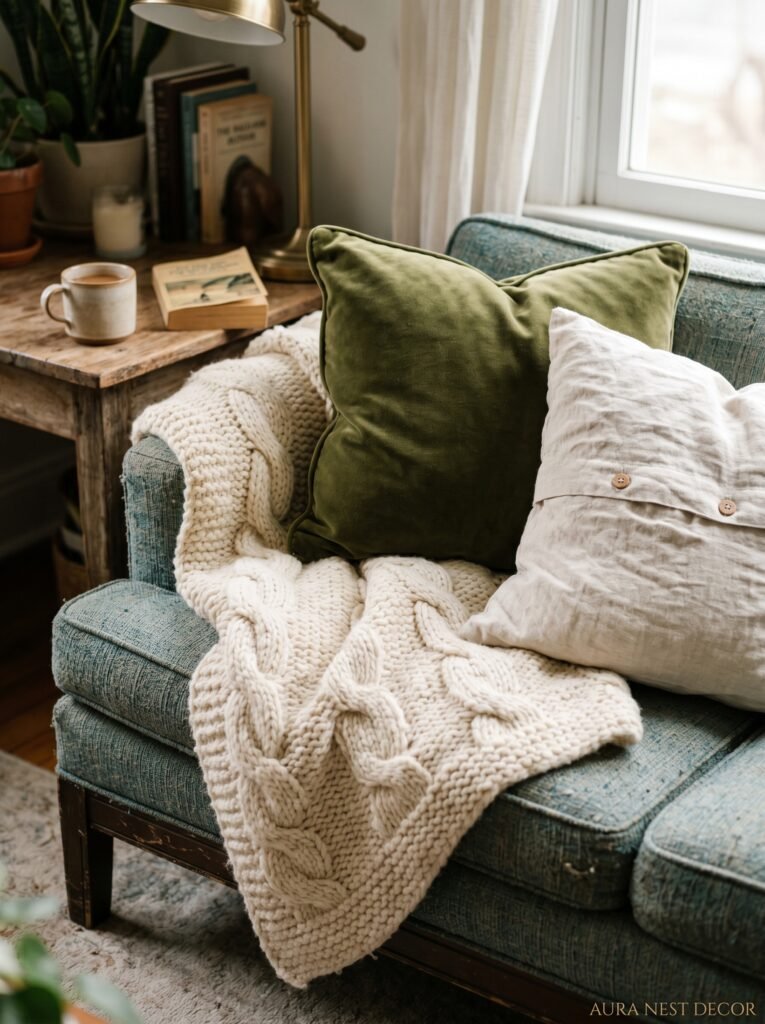
In a vintage room, textiles are what make you actually want to sit down. And most people don’t use enough of them.
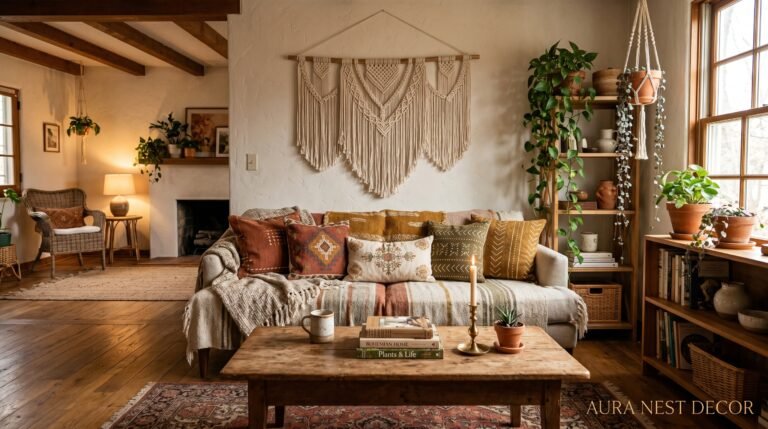
Throw blankets — plural, not just one perfectly folded throw on the back of the sofa. Have a few. Draped over the back, folded on a basket beside the armchair, casually left somewhere. Chunky knits, worn linen, faded quilts — particularly old quilts, which have this incredible texture and faded beauty that looks unlike anything you can buy new.
Cushions in unexpected combinations. You don’t need a “set.” Actually, a set of matching cushions is one of the things that makes a sofa look the least vintage. Mix patterns — a small floral, an old striped grain sack fabric, something in a faded jewel tone velvet. Keep the color palette loosely consistent but let the patterns disagree with each other a bit. That slight tension is what makes it look curated rather than bought.
Curtains deserve more attention than they usually get. Heavyweight linen in an undyed or barely-dyed color, pooling very slightly on the floor, hung high and wide — this single change can make a living room feel like something out of a French country house or an old English manor, depending on what else is in the room.
—
10. The One Rule for Vintage Displays That Prevents the “Charity Shop Dump” Feeling
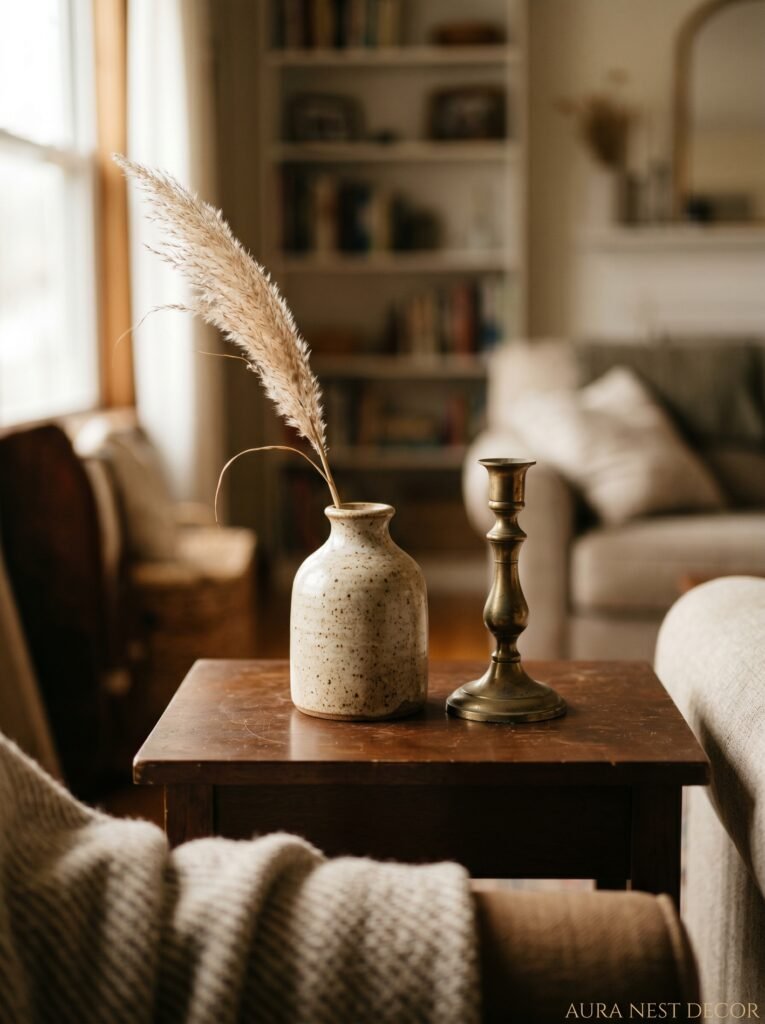
Here’s the line between a beautiful vintage room and one that just looks like everything was acquired randomly and put down wherever. It’s a grouping principle, and it sounds simple but it genuinely changes everything.
Group things by material or by color, not by theme. Not “a shelf of old things” — a cluster of brass objects near the window, dark wood pieces together on the coffee table, ceramic pieces in soft neutrals on the mantle. When visually similar materials sit near each other, the eye reads it as intentional. Things that are related only because they’re all old, scattered around the room at random, read as clutter.
It’s worth walking around your room sometimes and asking: if someone walked in who didn’t know me, would they think I put this here on purpose? If the answer’s no, move it. Or get rid of it. A room with twenty well-placed objects looks more beautiful than one with sixty that are all slightly in the wrong place.
—
11. The Forgotten Corner That Can Change the Whole Energy of the Room
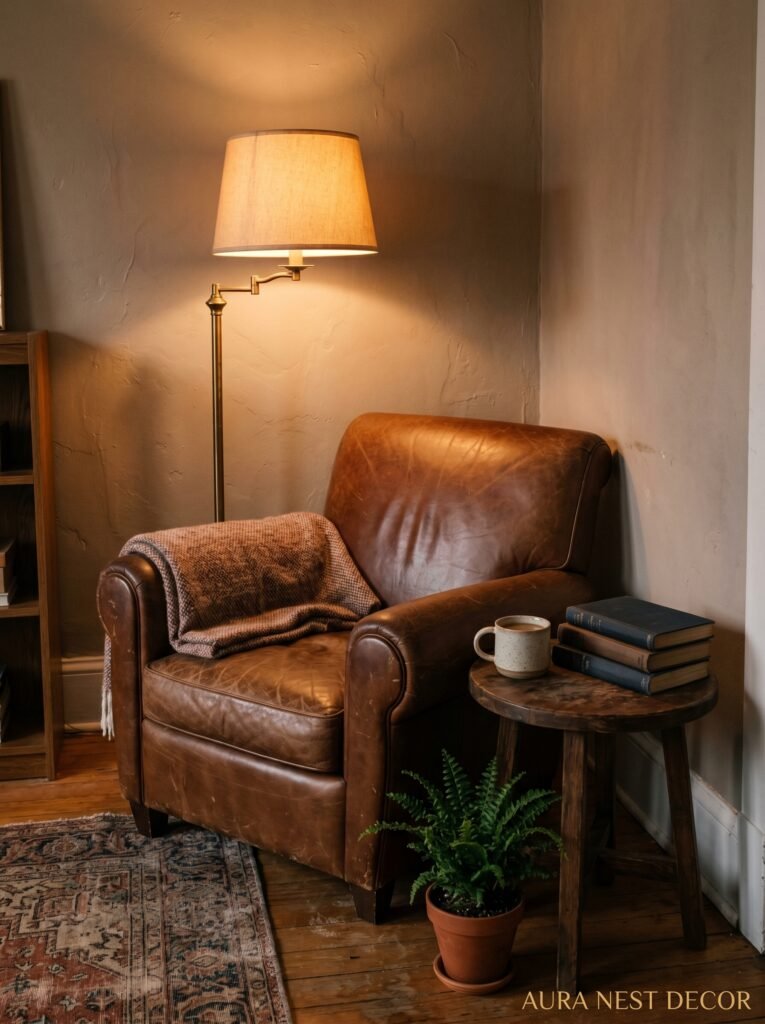
Every living room has one. A corner that isn’t doing anything. Maybe there’s a floor lamp there that doesn’t really light anything and a plant that’s sort of surviving. Maybe it’s genuinely just empty.
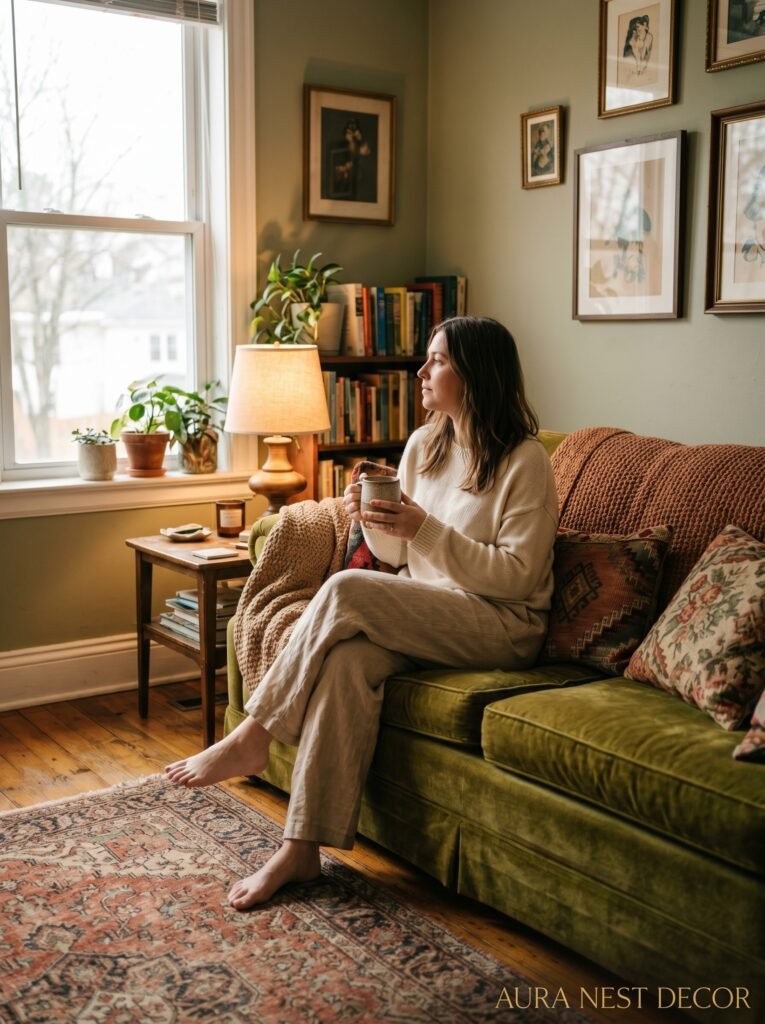
Corners in vintage rooms should feel like discoveries. A reading nook — even just an armchair, a small side table, a lamp, and a stack of books — turns a corner into the most wanted seat in the room. Add a small footstool or an ottoman. Put a vintage rug just underneath the chair. Now that corner has its own little world.
If a chair doesn’t fit, consider a tall plant (a fiddle leaf fig, a large monstera, something dramatic) paired with a tall lamp and a small wooden ladder with some folded blankets on it. That’s a corner that reads beautifully on its own and anchors the room compositionally.
The point is: don’t leave corners to chance. In a cozy vintage room, every part of the space should feel chosen.
—
12. How Smell Finishes a Room That Your Eyes Have Already Fallen In Love With
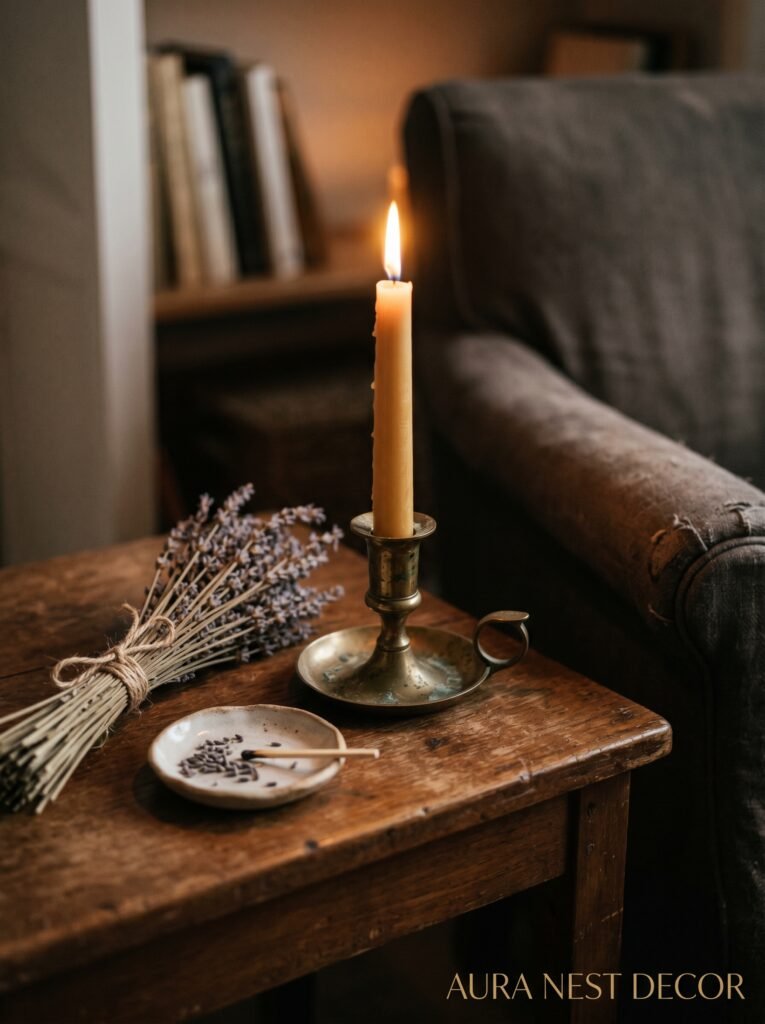
This sounds a bit woo-woo but stay with me. The rooms that I remember — the ones that made me want to immediately start redecorating my own house — almost all had a specific scent. Old books, beeswax candles, dried flowers, the faint sweetness of good wood polish. It’s not coincidental.
In a vintage-styled room, what you burn or diffuse should match the aesthetic. Not sharp synthetic fragrances — something old and natural. Beeswax pillar candles smell incredible and they look beautiful. Dried lavender in a small bowl. Cedar wood near the bookshelves. Something with clove or sandalwood in winter.
It’s the last layer of a well-done room — the one guests notice without knowing what they noticed. They just feel like they want to stay.
—
❓ FAQ
Q: How do I make a vintage living room feel cozy without it feeling dark or dated? A: The key is layered warm lighting and keeping at least some natural light in the room during the day — don’t block windows completely with heavy curtains. Vintage doesn’t mean dim, it means warm. There’s a real difference between amber lamplight at night and a room that just needs better light bulbs.
Q: I’m renting and can’t paint or make permanent changes. Can I still achieve this look? A: Genuinely, yes. Rugs, textiles, lamps, and art do about 80% of the visual work in a vintage living room. Peel-and-stick wallpaper has improved enormously and there are good options now that look really convincing. Focus on what you put IN the room rather than the walls themselves.
Q: Where do I actually find good vintage pieces in the UK and US without overpaying? A: Facebook Marketplace and Gumtree are consistently the best for furniture. Charity shops and thrift stores for smaller objects, art, lamp bases, and textiles. Estate sales (US) and car boot sales (UK) for the real finds — get there early. eBay for specific searches when you know what you’re looking for.
—
💭 Final Thoughts
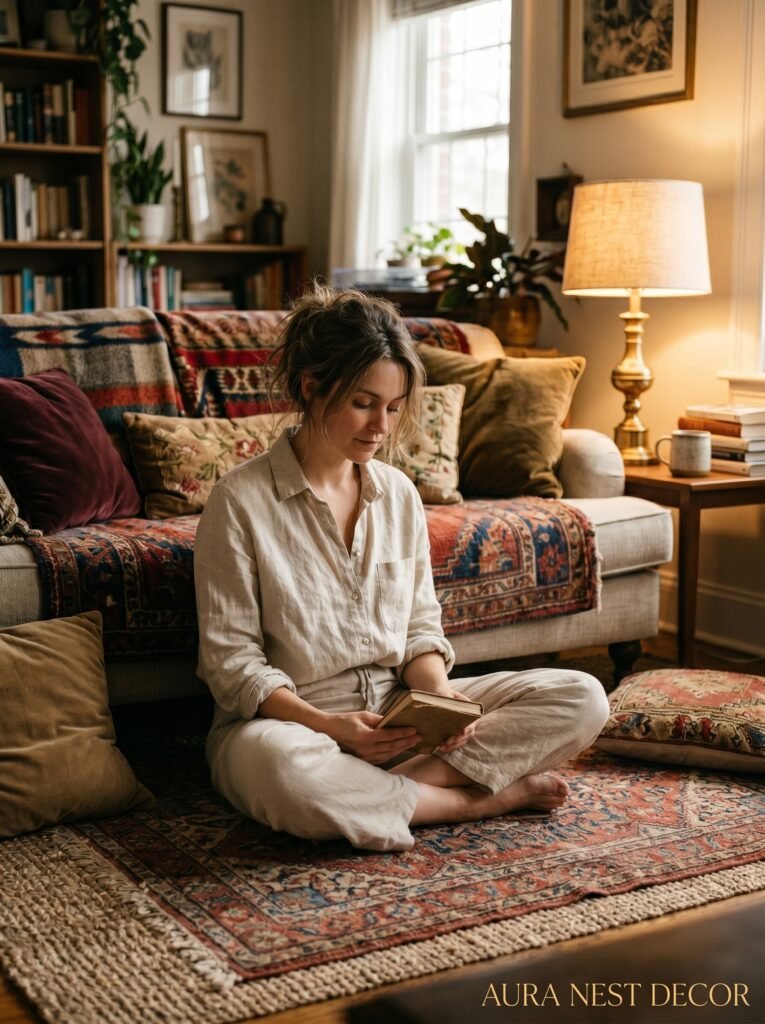
A cozy vintage living room isn’t something you finish. It’s something you keep adding to, slowly, over years — a piece from a market here, a lamp from a car boot there, a blanket your grandmother gave you that suddenly looks exactly right on that chair. The rooms that feel the most beautiful are the ones that tell a story, and stories take time.
Are you building this room from scratch, or slowly shifting one that’s already yours?