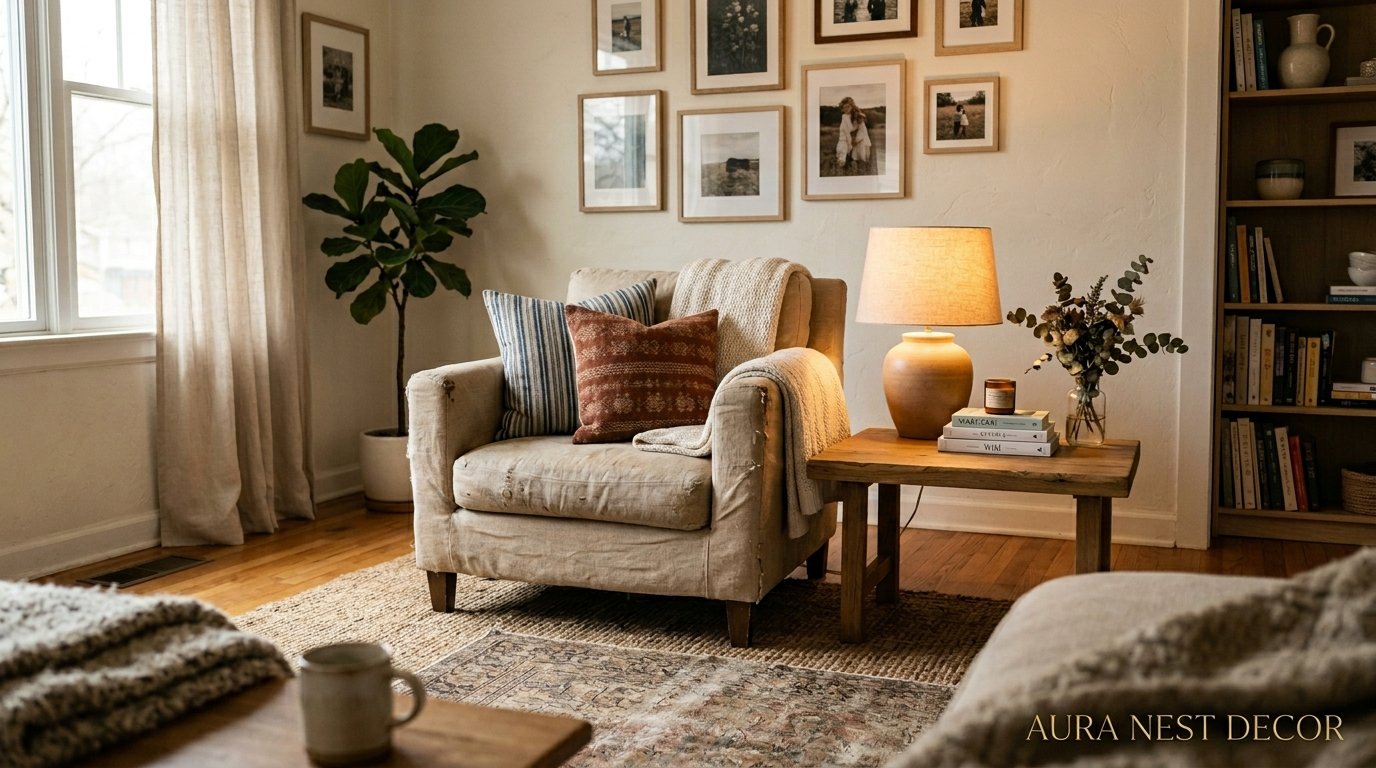
The Armchair That Changes Everything: How One Seat Can Make Your Whole Living Room Finally Feel Right
You know that moment when you walk into someone’s living room and it just works? Not perfectly staged, not magazine-stiff, but genuinely, warmly right? Nine times out of ten, there’s an armchair doing most of the heavy lifting.
—
1. Why the Sofa Gets All the Credit and the Armchair Does All the Work
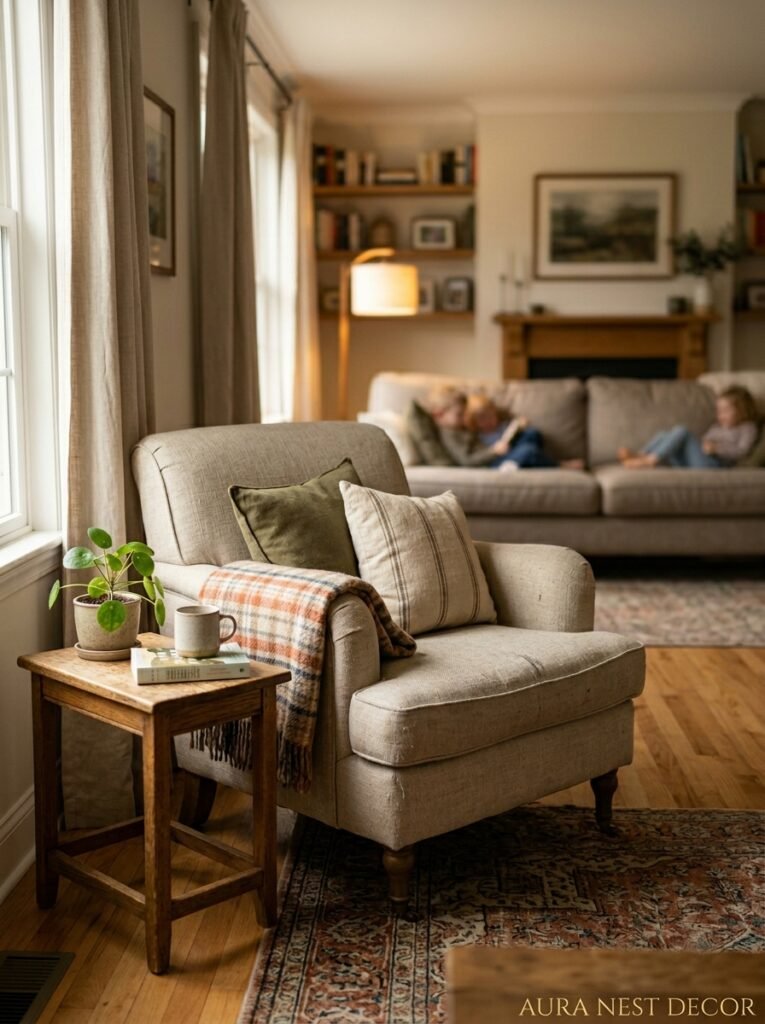
Here’s the thing nobody tells you when you’re furnishing a living room: the sofa is the obvious choice, and obvious choices rarely make a room interesting. It’s the armchair that adds the personality. The sofa sits there being useful and large and, fine, necessary. But the armchair? That’s the piece that says something about who actually lives in this house.
Think about it. A well-placed armchair creates a reading corner, a conversation node, a visual anchor — all without trying very hard. It’s the supporting character who steals every scene. And because it’s smaller and more affordable than a sofa, you can actually take risks with it. You can go bolder with the fabric, weirder with the shape, braver with the color. A mustard velvet sofa is a commitment. A mustard velvet armchair? A decision that takes exactly one afternoon to feel confident about.
I’ve watched so many living rooms transform not because someone repainted or replaced the rug, but because they added one armchair in exactly the right spot. It breaks up sofa-and-coffee-table monotony. It creates a sense that the room has rooms within it, little zones of purpose and intention. And somehow, for reasons I can only half-explain, it makes a living room feel like someone actually lives there.
Don’t underestimate it.
“The sofa is the obvious choice. The armchair is the interesting one.”
—
2. The Shape That’s Dominating UK and US Living Rooms Right Now (And Won’t Date Badly)
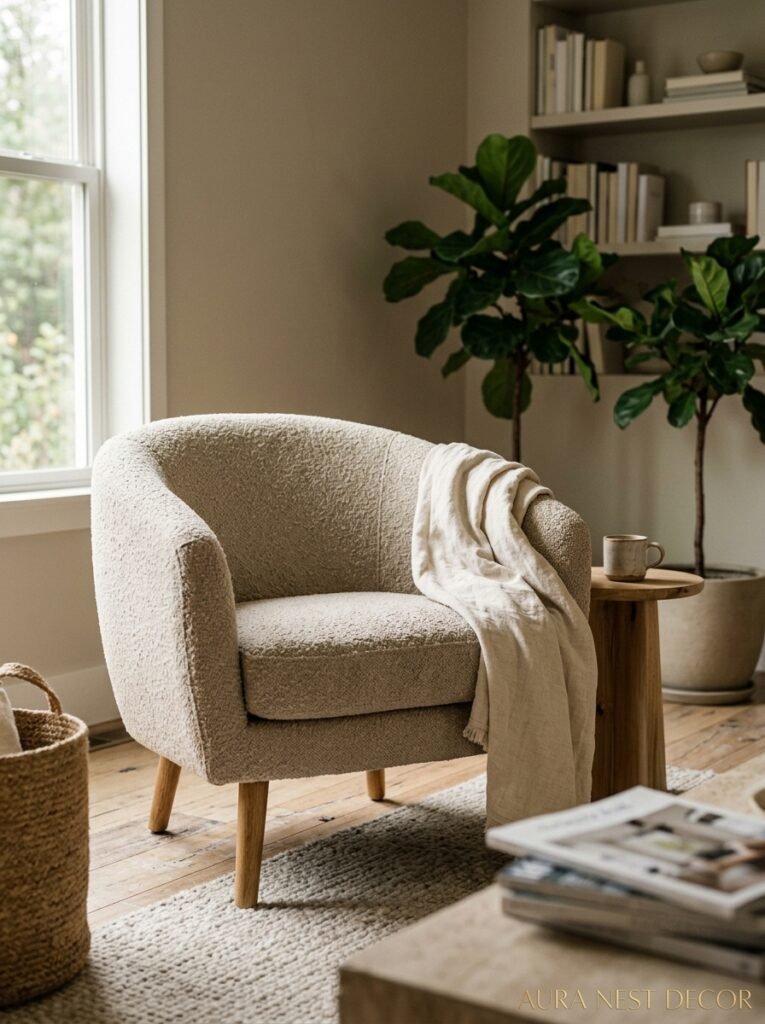
Curved. Everything is curved right now, and I’m not even a little bit mad about it.
The barrel chair specifically — that rounded, enveloping shape where the back wraps around you like a gentle hug — is absolutely everywhere on Pinterest and, more importantly, in the homes of people with genuinely good taste. And here’s why it’s not going anywhere soon: curved furniture doesn’t compete. It softens rooms full of hard angles, plays beautifully with both modern and traditional aesthetics, and photographs incredibly well, which matters more than people admit when they’re curating a home they actually enjoy living in.
But beyond the barrel, there’s the tub chair making a massive comeback in British living rooms especially — that low, wide, retro shape that looks brilliant in a bay window with a cup of tea balanced on the arm. And in American homes, the slipper chair is still pulling serious weight: sleek, armless-or-barely-armed, fits everywhere, argues with nothing.
What you want to avoid, if we’re being real, is anything with legs that are too spindly paired with a seat that’s too deep. It looks like the chair is about to collapse under its own pretensions. Proportions matter enormously in armchairs in a way they don’t quite as much in sofas, because there’s nowhere to hide. The whole chair is on display from every angle.
So: go curved if you’re not sure. You’ll thank yourself in three years when it still looks current.
—
3. The Spot Nobody Thinks to Use (That Makes the Best Reading Nook in the House)

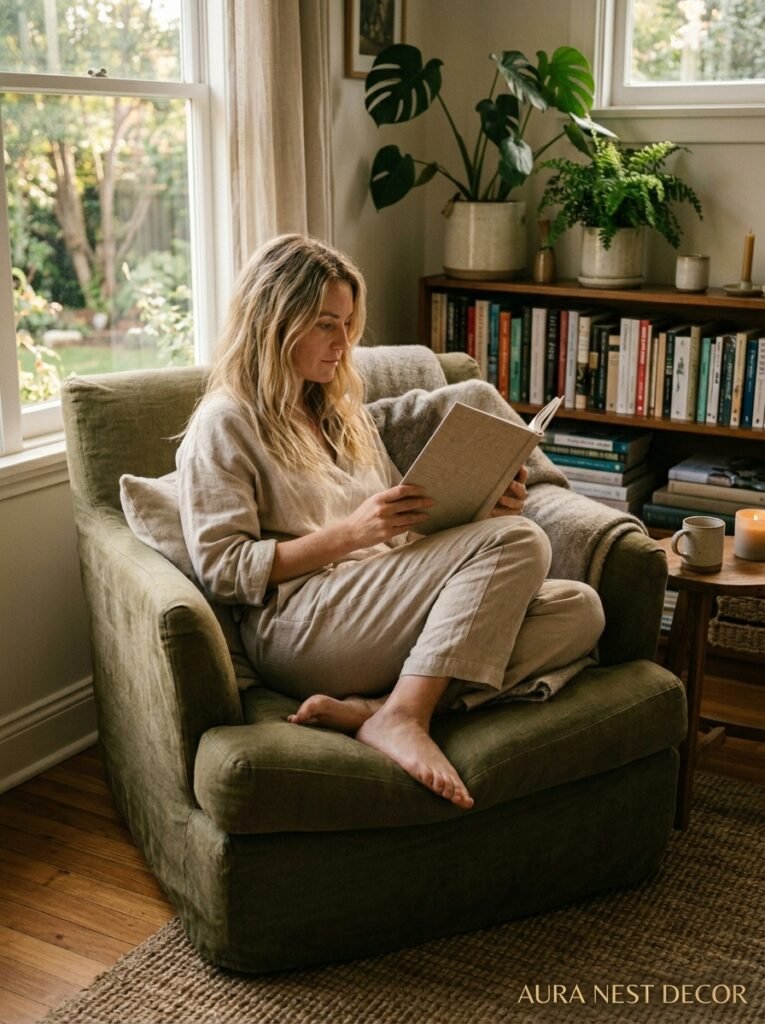
The dead corner by the window. That’s it. That’s the spot.
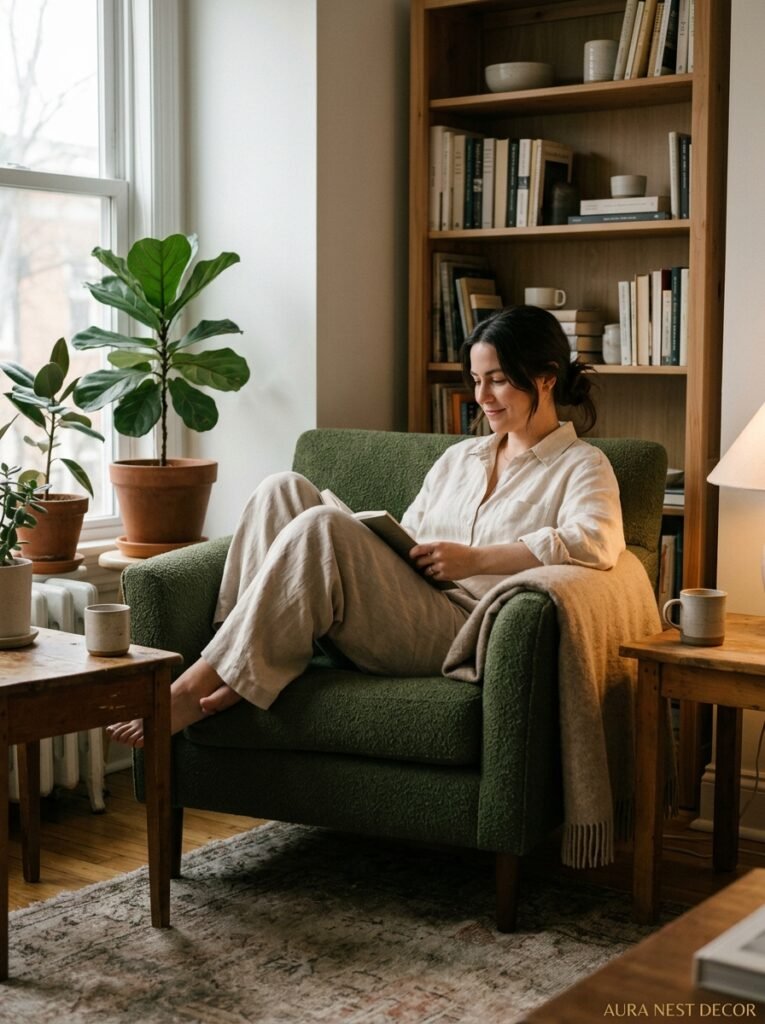
Every living room has one — that slightly awkward corner where the wall meets a window and nothing has ever quite fit. People shove floor lamps there, sometimes a sad little plant stand, occasionally a pile of things they meant to deal with. But pull an armchair into that corner, angle it slightly toward the room rather than hard against the wall, add a floor lamp that arcs over the shoulder, and drop a small side table within reach for a drink, and you’ve created something genuinely cozy. Not just functional. Cozy in that specific way that makes people gravitate to it the moment they enter the room.
The window light matters. Even on a grey British afternoon — which, let’s be honest, is most of them — natural light from the side is flattering both to the chair and to whatever you’re reading. In American homes with bigger windows, this corner becomes genuinely luminous in the morning. Either way, it works.
Side note: if your corner window has a radiator under it, don’t panic. You just need a chair with a higher seat so your legs aren’t dangling directly over the heat. There are great options. And also, a warm radiator nearby in winter? Actually quite lovely.
—
4. Fabric Choices That Interior Designers Rarely Discuss Openly
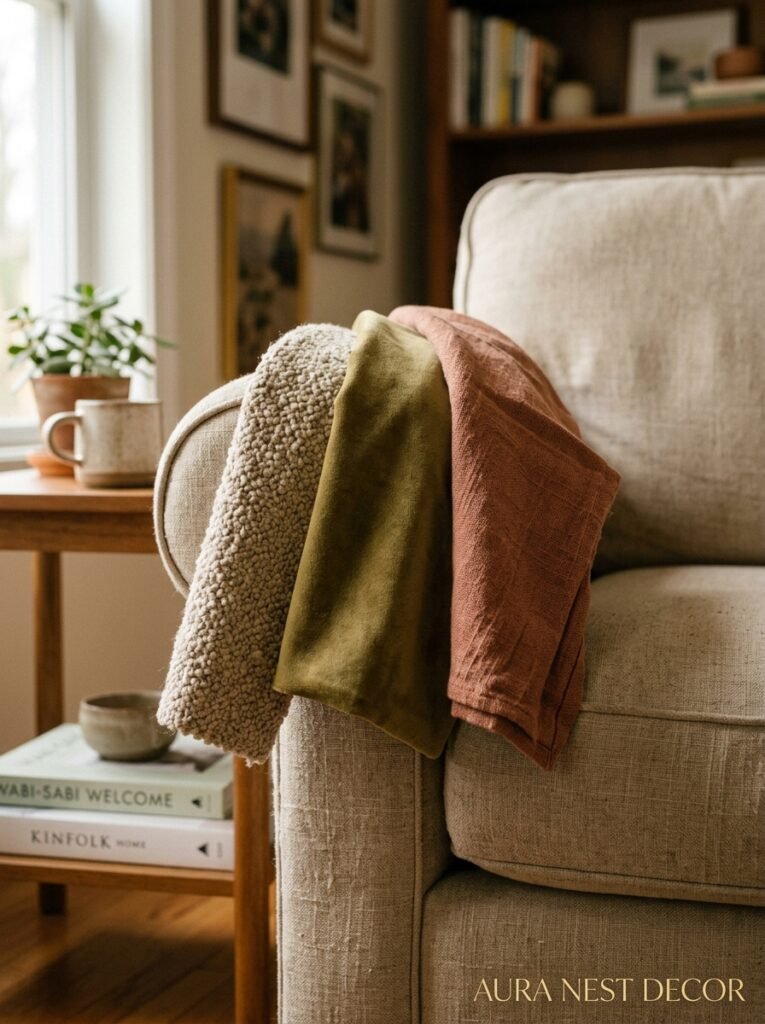
Let’s talk about the thing that makes or breaks an armchair in real life as opposed to in a showroom.
Velvet looks incredible. You know this. You’ve seen it. That deep jewel tone, the way it catches light from different directions, the sheer luxury of it sitting in a corner with nothing to prove. But velvet attracts pet hair like it’s being paid to do so, and flattens in weird ways if you sit in the same spot every day. If you have cats, a velvet armchair is a commitment to daily lint rolling and a very specific kind of acceptance.
Bouclé — that textured, loopy, slightly furry fabric that’s been on every design blog for two years — is warmer to the touch and more forgiving of wear, but it snags on jewelry and belt buckles and, in my experience, one well-placed dog claw.
Here’s what nobody tells you: performance fabrics have gotten GOOD. We’re talking fabrics that look exactly like linen or cotton twill but wipe clean with a damp cloth. American brands especially have invested heavily in this. If you’ve got kids, or you just want to live in your home without treating a chair like a museum exhibit, look for performance weaves. They’ve lost the plasticky feel entirely and gained something that actually passes for real linen at a glance.
For pattern — and this is where I have strong feelings — a chair is actually the PERFECT place to commit to a pattern you love but couldn’t put on a sofa. Florals, geometric, even plaid. It’s small enough to be brave with.
“A velvet armchair is a commitment. A performance-fabric armchair is a life choice.”
—
5. The Color Conversation That Makes Designers Actually Exciting to Talk To
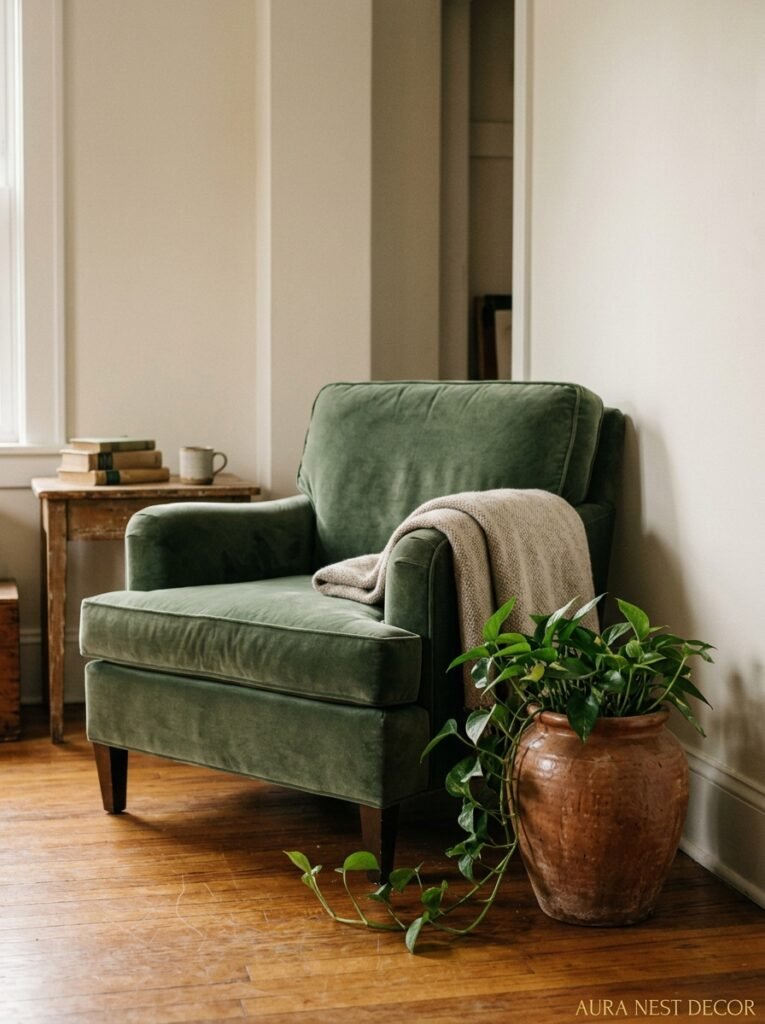
Here’s a color that keeps showing up in every beautiful living room I’ve been obsessing over lately: warm terracotta-adjacent tones. Not orange. Not burnt sienna exactly. Something between clay and apricot that catches the late afternoon light and makes the whole room feel warmer than it is. In British living rooms with their often-grey skies and older light fittings, this color does something almost magical. In American homes with warmer natural light, it deepens into something rich and deliberate.
But honestly? The color question is less about what’s trending and more about what your room can handle. A room with a lot going on — patterned rug, varied cushions, busy shelving — needs a calm, clean armchair. Maybe a deep green, maybe a warm oat, maybe a soft charcoal that reads almost navy in lamplight. A room that’s very clean and neutral needs the chair to BE the moment.
I’d also make a case for dark forest green, which has been quietly living its best life in both American and UK interiors. It reads as classic, never fussy, and works against warm wood, cool white walls, and even exposed brick.
What I’d avoid: that very light, very grey greige that was everywhere a few years ago. It looked like uncertainty made into furniture. Be more decisive than that.
—
6. When Two Armchairs Are Better Than One (And When They’re Not)
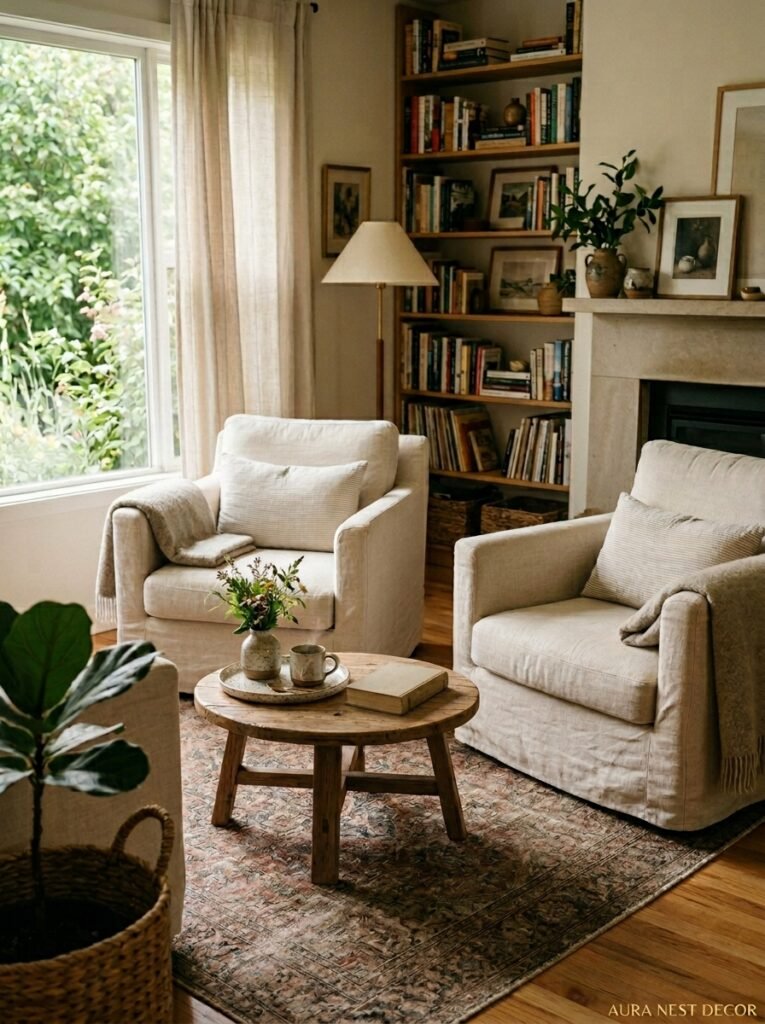
A pair of armchairs facing each other across a fireplace or coffee table — this is the kind of symmetry that feels intentional rather than rigid. It creates an immediate sense of conversation, of purpose. If you’ve got a large living room with a sofa that floats slightly awkwardly in the middle, a pair of chairs anchors the seating arrangement into something coherent.
But — and this is important — the pair doesn’t have to match. Matching is fine, but mixed is often better. Two chairs in the same general silhouette but different fabrics. Or the same fabric in slightly different tones. Or even genuinely different chairs that share a common element: matching legs, matching scale, matching vibe. That last one’s harder to pull off, but when it works, it looks like it took absolutely no effort, which is the highest possible compliment in interior design.
When NOT to do two chairs: small rooms. One strong armchair in a small living room is a design decision. Two armchairs in a small living room is a traffic problem. Scale matters, and so does flow — you need people to actually be able to move around without turning sideways.
—
7. The Armchair Style That Looks Good in Every Single Living Room (Seriously, Every One)
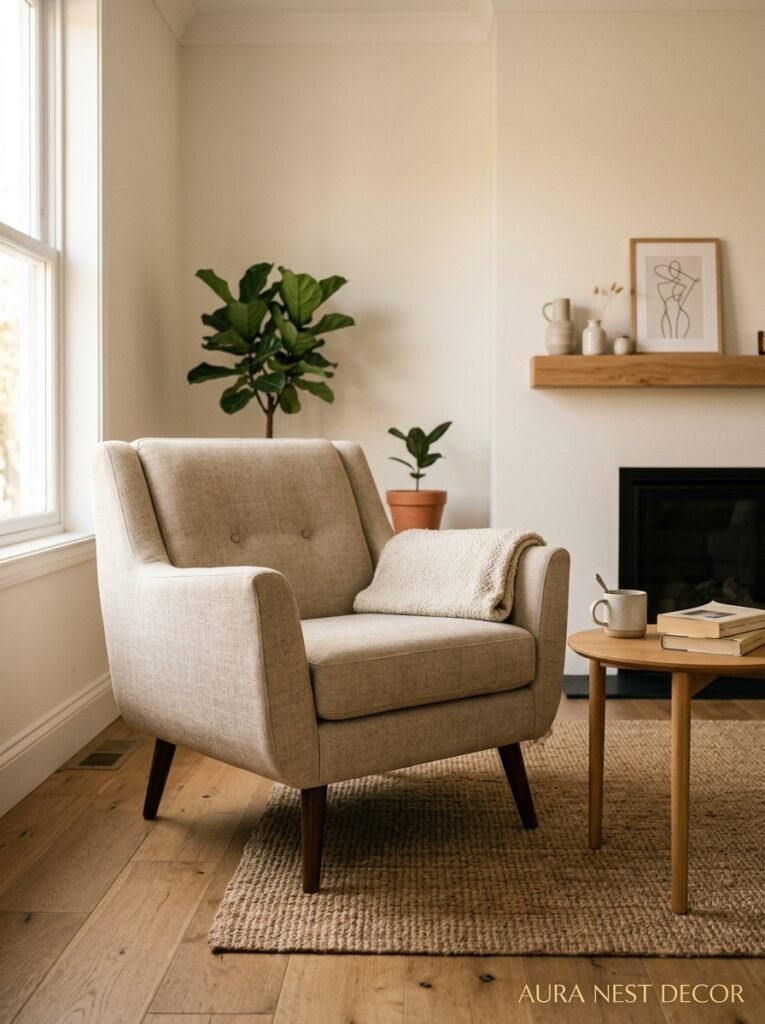
I don’t make sweeping claims lightly. But the classic English roll-arm chair — think fat, rolled arms, tight back, low seat, often in a plain or very gently patterned fabric — works in every living room I’ve ever placed it in mentally.
It’s not flashy. That’s the point. It looks like it’s been there for thirty years even when it arrived last Tuesday. It doesn’t demand attention, so it plays well with bold rugs, strong sofas, dramatic art. In a very modern room it adds warmth and character. In a traditional room it just belongs. It’s the house staple that somehow also has personality.
In the US, a close equivalent is the classic club chair — slightly more substantial, often with a boxier arm, very deep seat. Also versatile. Also worth considering if you’re starting from zero.
If you can only have one armchair, and you’re not sure, and you don’t want to think about it too hard? Roll arm. Classic club. You’ll be fine.
“The best armchair in the room usually looks like it’s been there forever.”
—
8. What to Put Next to Your Armchair So It Doesn’t Look Lonely
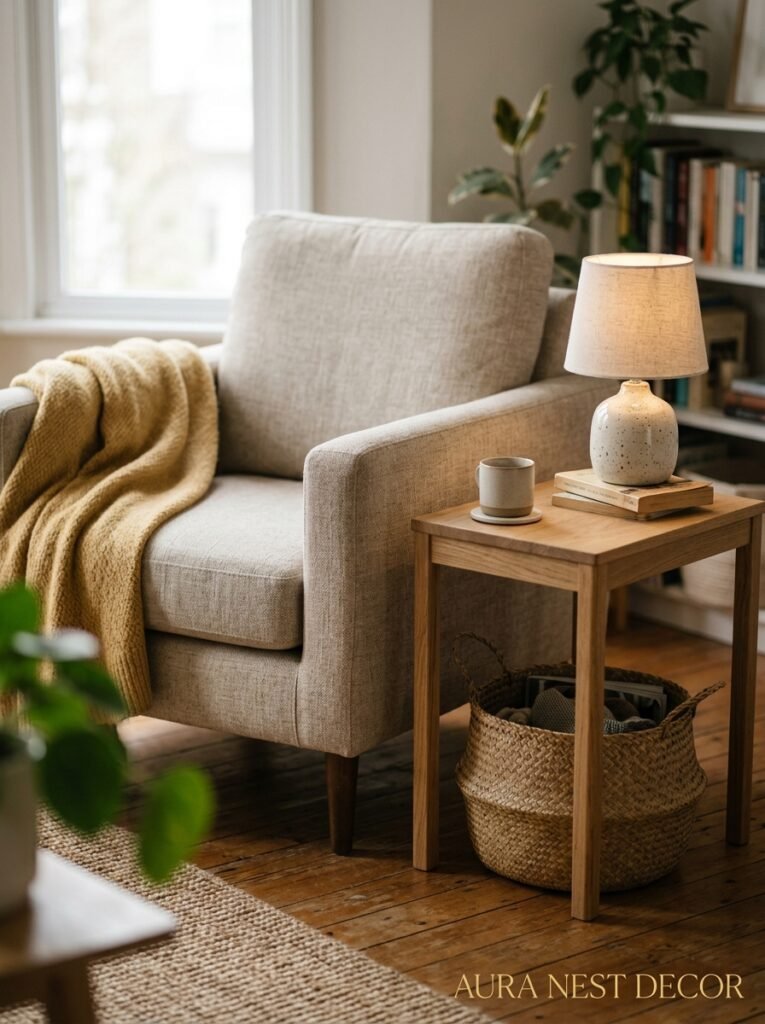
An armchair by itself floats. It needs a little ecosystem.
The floor lamp is non-negotiable if you’re going to actually use the chair for reading — and the arc lamp specifically, the kind that sweeps over your shoulder from behind, is genuinely practical in a way that table lamps can’t quite match. The amber glow of an Edison bulb at 7pm in a reading corner is a specific pleasure that I think about more than is probably normal.
Side table: it needs to be small and it needs to be close. Not decor-close where it’s technically nearby but your elbow can’t reach it. Actually close. The height should sit roughly level with the arm of the chair, which means you can set a mug down without looking. This sounds basic but get it wrong and you’ll spend months with your drink on the floor.
Then there’s the question of a small throw. Draped casually over one arm — not folded into a neat square, please, we’re not in a hotel — a throw makes an armchair look lived-in in the best way. Chunky knit, linen, even a thin quilt. It signals that someone actually uses this chair, which paradoxically makes guests more comfortable sitting in it.
And a small plant, nearby but not on the table (we’ve established the table has a purpose), somewhere in the general vicinity? Perfect. But that’s me and I’m aware not everyone has the same plant enthusiasm.
—
9. The Budget Reality: Where to Spend, Where to Save, What’s Actually Worth It
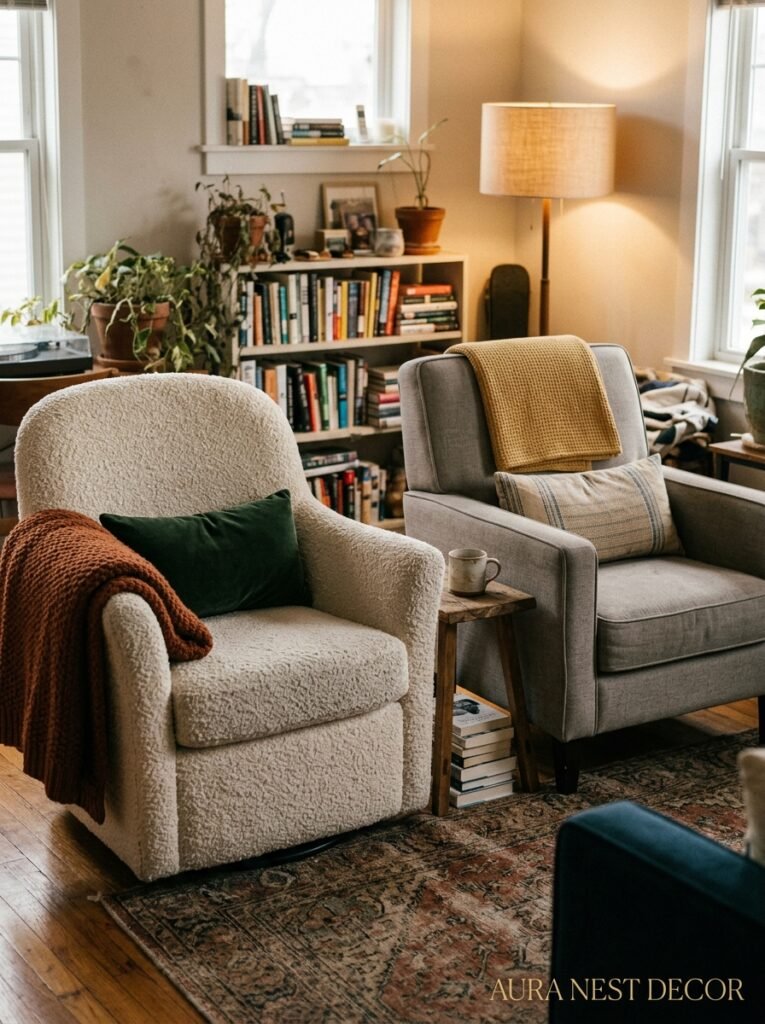
Let’s be honest about money for a second.
A very cheap armchair — like, suspiciously cheap, under $150/£120 or so — is almost never worth it. The frame will shift, the cushion will compress, the fabric will pill. Not immediately. But by year two you’ll be annoyed at it, and by year three you’ll be replacing it. This is more expensive than buying one good chair.
On the other hand, you don’t need to spend $2000/£1600 either, unless you’re buying from a small maker or getting something genuinely heirloom quality. The sweet spot for a solid armchair that’ll last 10+ years and look good throughout is roughly $500-900 / £400-750 depending on where you’re shopping and whether you catch a sale.
West Elm, Article, and MADE.com have all served people well in this range. Secondhand is worth considering — a genuinely solid old armchair from a charity shop or Facebook Marketplace, recovered in new fabric, can be extraordinary and cost less than a cheap new one. UK readers especially have brilliant access to quality secondhand furniture in a way the US market doesn’t quite replicate at the same price point.
The thing NOT to save on: the fabric. A cheap frame in a good fabric looks considerably better than a good frame in a cheap fabric. Prioritize accordingly.
—
10. The Armchair Rule British Decorators Swear By That Most Americans Haven’t Heard Yet
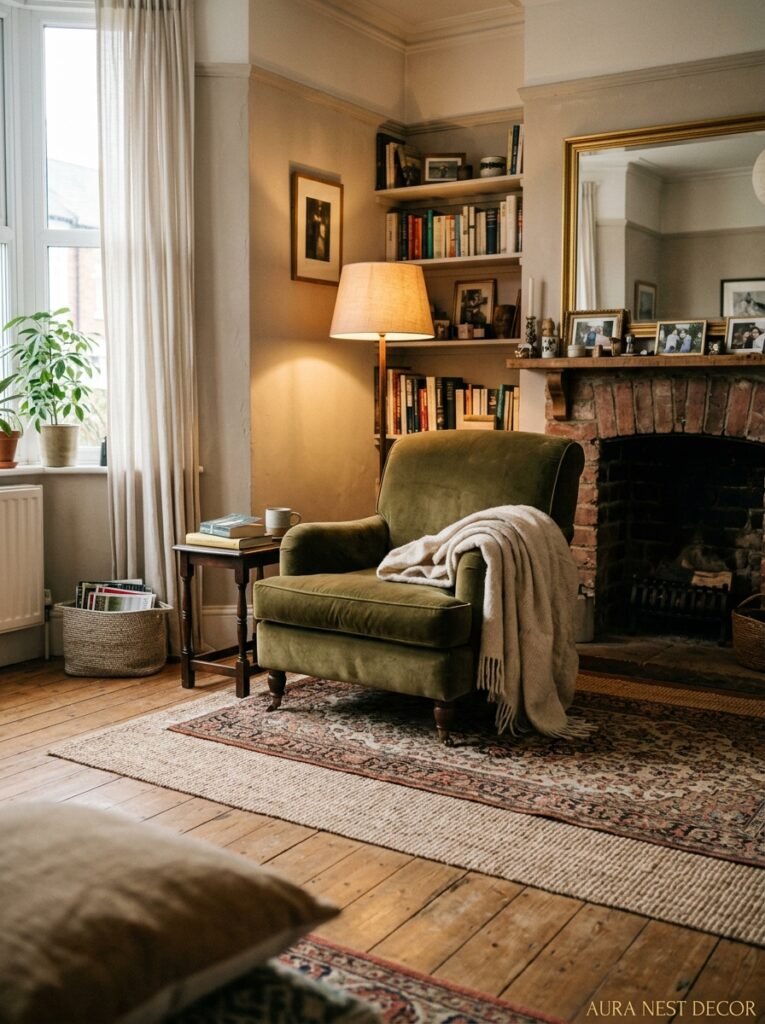
Scale it up.
British interior designers — the good ones, the ones whose Instagram makes you want to immediately rearrange your entire house — have this habit of choosing armchairs that are slightly larger than you’d expect for a given room. Not enormous, not overstuffed in a way that blocks movement, but just… generous. Wide. High-backed. Substantial.
The reason? A too-small chair in a room looks nervous. Like it’s not sure it belongs there. A properly scaled chair — or one that’s just a touch bigger than “safe” — looks confident. It knows exactly why it’s there.
This is counterintuitive because the instinct in smaller rooms especially is to go smaller with everything. But a small room with one confident, correctly scaled chair often looks more put-together than the same room with two small, apologetic chairs that are afraid to commit.
Try it. Go slightly bigger than you planned. See how it feels.
—
11. How to Style an Armchair for Pinterest (Without Making It Look Like You Styled It for Pinterest)
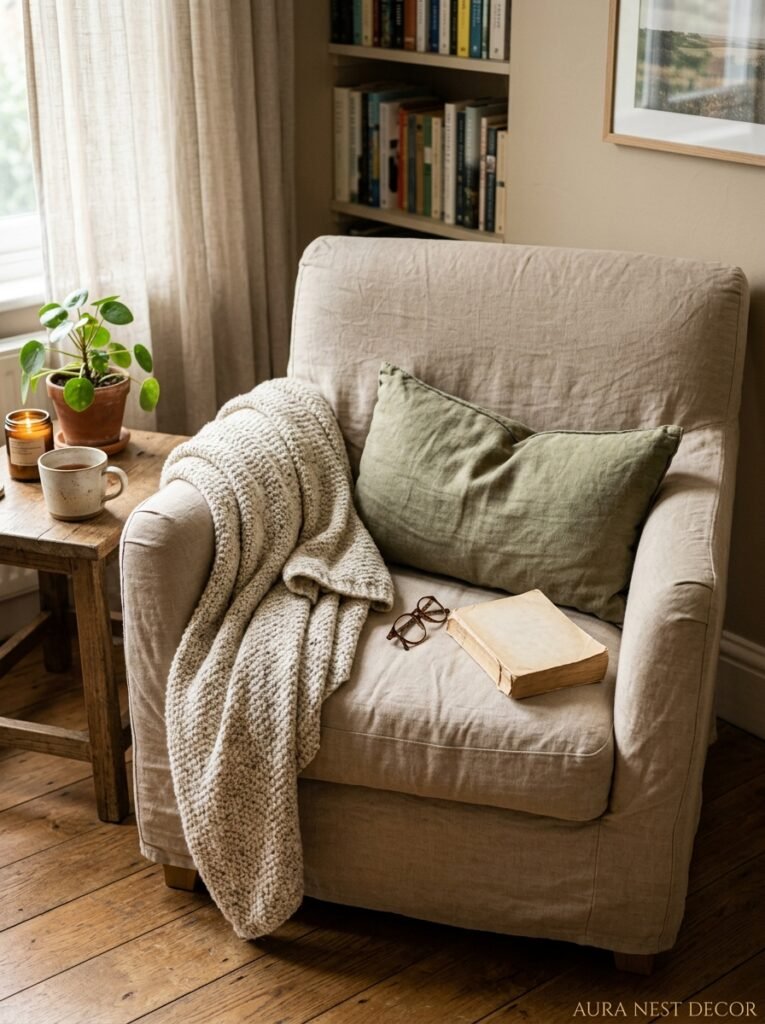
This is genuinely a skill and I say that without any irony.
The best-performing armchair photos on Pinterest have something in common: they look accidental. Throw slightly askew. A book left open on the side table, spine up. A mug that’s clearly been used. Light that comes from an actual lamp rather than a ring light. These aren’t accidents — they’re decisions made to look like non-decisions, and there’s real craft in that.
What kills the photo: excessive cushion arrangement, color-coordination that’s too tight, any surface that’s been cleared completely. Real rooms have surfaces with things on them. Your armchair photo will be more pinnable if it has a little mess.
The angle matters too. Shooting slightly from the side, slightly below eye level, with the window in frame but not blown out — that’s the shot. And natural light always, always over artificial when you’re taking the photo, even if artificial is what makes the chair look best at night in person.
—
12. The Sign That You’ve Found the Right Armchair for Your Room
You’ll know. That sounds frustrating but it’s true.
When the armchair is right — right scale, right color, right fabric, right position — the room doesn’t look like it has a new chair in it. It looks like it finally has the thing it was always missing. You stop noticing the chair specifically and start noticing that the room feels better. That’s the sign.
If you’ve placed an armchair and you keep noticing it as a separate element rather than as part of the room, something’s off. Might be the color clashing. Might be the scale. Might be the placement — sometimes moving a chair two feet to the left is the entire solution.
The right chair, in the right place, in a room that suits it? You’ll walk past it and feel something warm and right without being able to say exactly why.
That feeling is the point of the whole exercise.
—
❓ FAQ
Q: How much space do I actually need around an armchair? A: You want about 18 inches of walkable space on at least two sides so people can move past it without turning sideways. For the chair itself, measure the width and add that 18 inches on each side — then hold that against your room dimensions before buying. It saves a LOT of hassle.
Q: Can an armchair work as the main seat if I don’t have a sofa? A: Absolutely, especially in a smaller living room or studio. Two or three armchairs arranged around a coffee table can feel more social and interesting than a sofa, and gives you flexibility to rearrange. The key is making sure at least one chair is generous and comfortable enough for longer sitting.
Q: What’s the most common armchair mistake people make when decorating? A: Going too small. It’s almost always that. People choose a chair that’s proportionally undersized for the room and then wonder why the room doesn’t feel finished. Size up, and trust yourself.
—
💭 Final Thoughts

An armchair is one of those purchases that seems straightforward until you’re standing in a showroom completely overwhelmed and second-guessing everything you’ve ever believed about your own living room. But it doesn’t have to be complicated. One chair, in the right spot, in a color that actually excites you — that’s all it takes to change the entire feeling of a space.
Don’t settle for the safe option just because it’s easy. You’ll live with this chair every day.
So — what’s stopping you from going a size bigger, or bolder, or a little more surprising than you planned?