The Dark Side of Beautiful: Why Black Living Rooms Are Having a Moment (and How to Actually Pull One Off)
You scroll past a room and stop. You don’t know why you stopped. Then you look closer and realize: it’s almost entirely black, and it’s the most stunning space you’ve ever seen. That’s the thing about black in a living room — when it works, it doesn’t just work. It stops you.
—
1. Why Everyone’s Suddenly Afraid to Paint Their Living Room Black (and Why They’re Wrong)
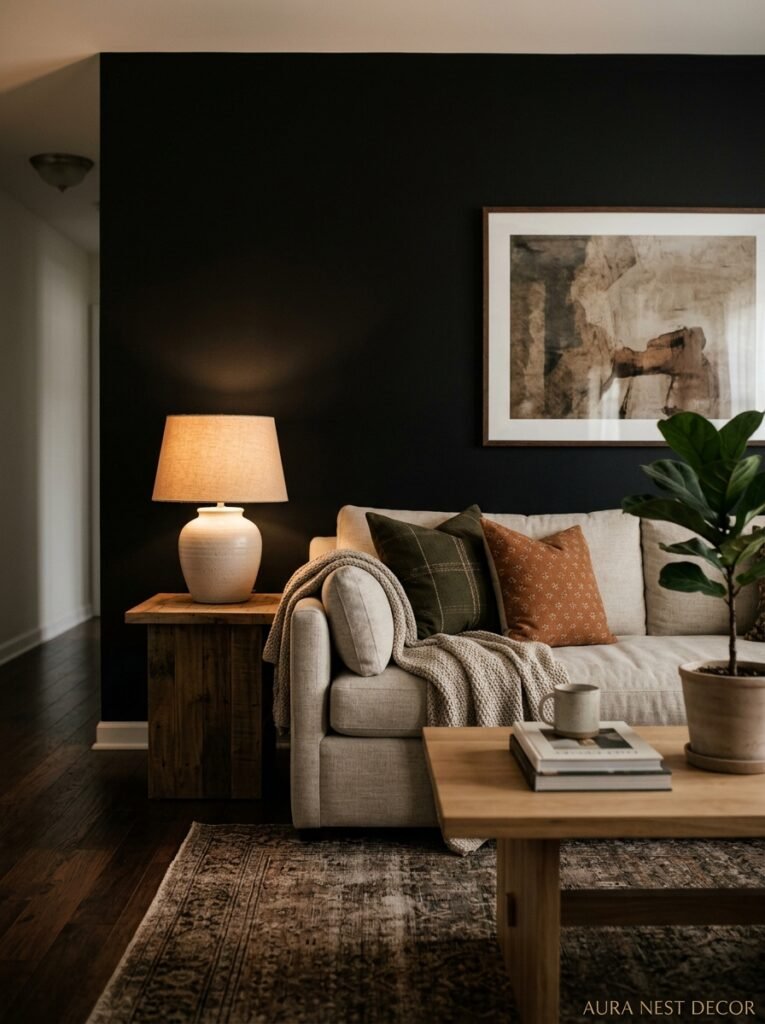
There’s this fear that black will make a room feel like a cave. I get it. I had it too. But here’s what nobody tells you: black doesn’t shrink a room, bad lighting does. And honestly? A cave isn’t automatically a bad thing. Caves are cozy. Caves are intimate. Some of the most beautiful living rooms I’ve ever saved on Pinterest are basically dressed-up, deeply glamorous caves.
The truth is black has been in high-end interior design for decades. It’s not a trend that snuck up on us from TikTok — Coco Chanel used it, Kelly Wearstler built a career on it, and the Dutch have been painting their walls charcoal and forest-dark shades since before “moody interiors” was a search term. What’s new is that regular homeowners — people like us, with regular budgets and regular fears — are finally doing it.
And it doesn’t have to be every wall. Sometimes it’s one. Sometimes it’s the trim. Sometimes it’s just the sofa and suddenly your whole room has a spine.
“Black doesn’t make a room look smaller. It makes everything else in the room look more intentional.”
—
2. The One Paint Finish That Can Make or Break a Black Room
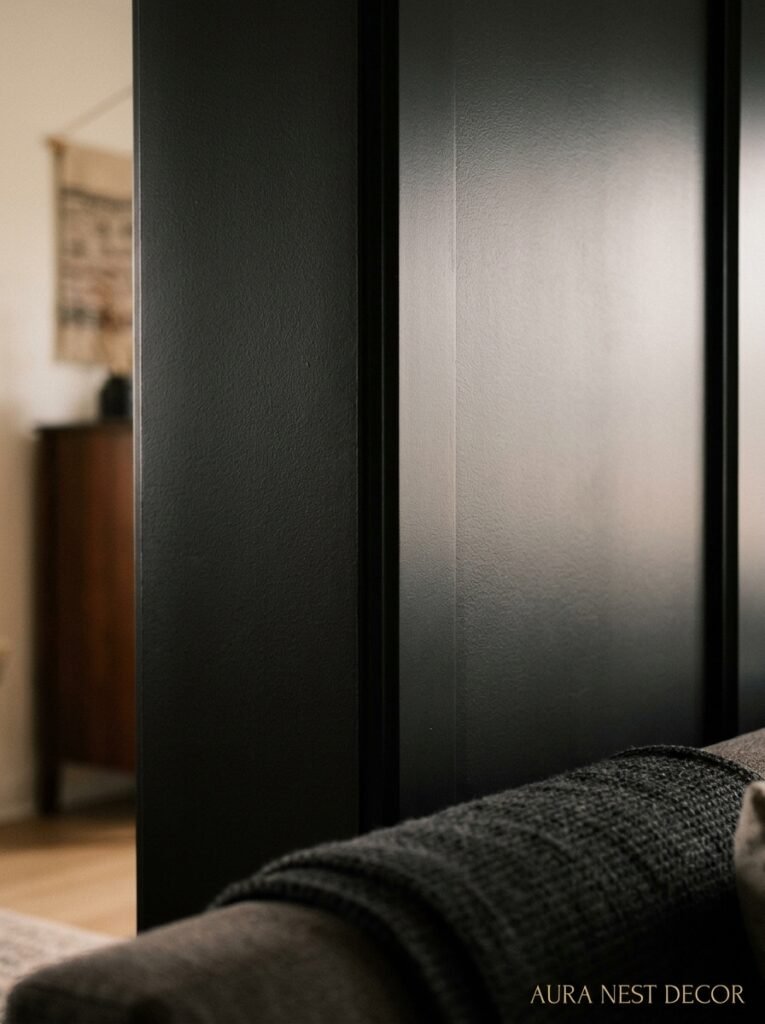
Not all black paint is created equal. This sounds obvious but it’s the thing I see people get wrong more than anything. They pick the right color and then use the wrong finish, and the room looks flat and dusty and sad.
Matte black on walls? Gorgeous. Deeply dramatic, absorbs light in this velvety way that makes the room feel like a theatre. But here’s the thing — matte shows EVERYTHING. Every scuff, every handprint, every time your dog brushes past it. If you’ve got kids, matte black walls are a commitment you need to think hard about.
Eggshell or satin is more forgiving. You still get that depth, but it’s cleanable, it’s liveable. I’d say for most people, eggshell is the sweet spot. High gloss black is a different animal entirely — it’s glamorous in a very specific, deliberate way. Think vintage Hollywood, think lacquered furniture in a Mayfair flat. Stunning but not subtle. Not gonna lie, I love it in the right context.
Benjamin Moore’s Onyx, Farrow & Ball’s Pitch Black, Little Greene’s Obsidian — these are the names that come up constantly and they come up for a reason. They’re all black but they read COMPLETELY differently on the wall. Pitch Black has this slight warmth to it. Obsidian can go almost purple in certain light. Get the samples. Please.
—
3. The Color That Keeps Showing Up Beside Black in Every Beautiful Living Room Right Now
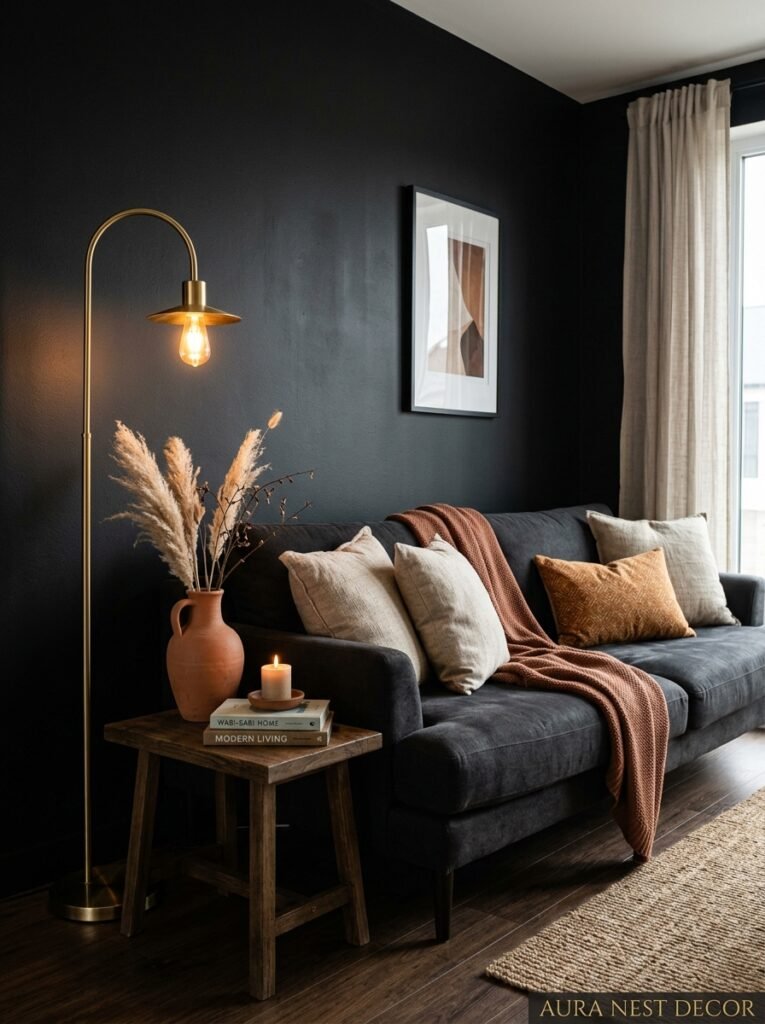
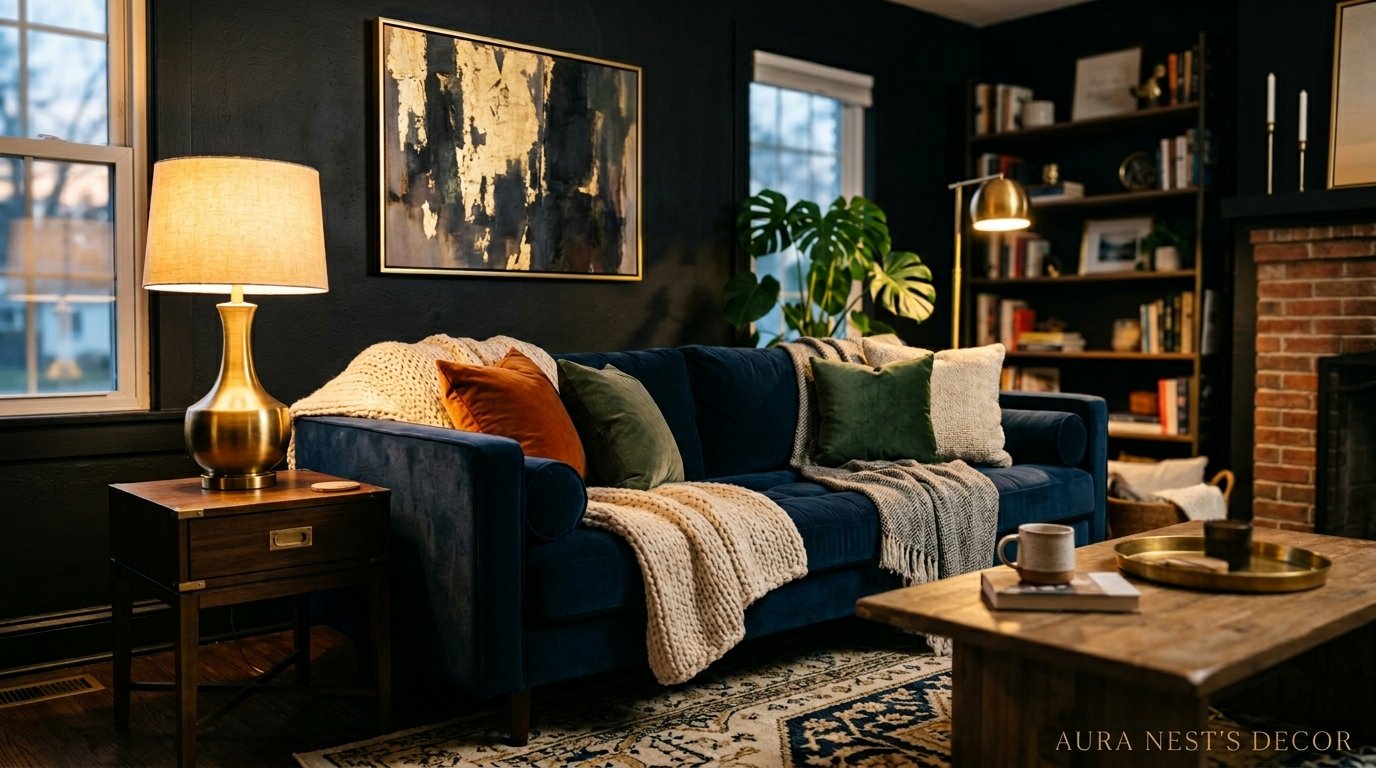
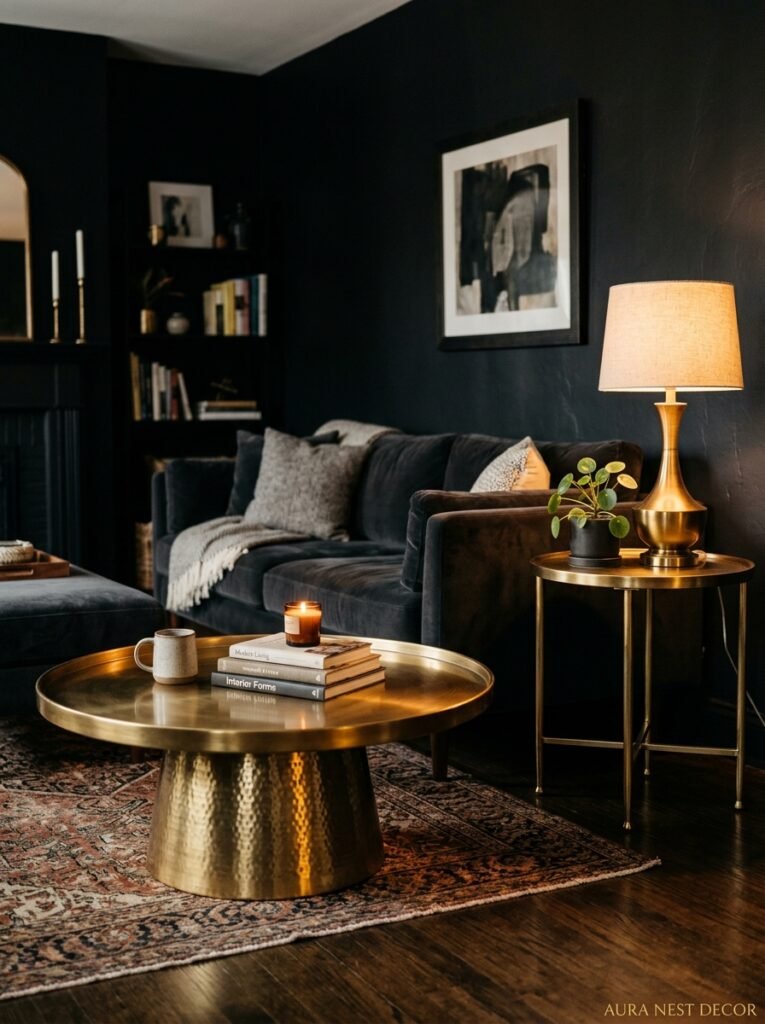
Brass. It’s always brass. And before you roll your eyes — I know, I know, brass was having “a moment” five years ago — but the way it sits against black is genuinely different from how it looks beside anything else. It doesn’t feel dated here. It feels correct.
There’s something about that warm, slightly dull gold against a flat or satin black wall that just communicates wealth without trying. Not in a showy way. In a “this room was put together by someone who knows exactly what they’re doing” way. A brass table lamp on a black side table. A brass-framed mirror above a black fireplace surround. Even just brass cabinet hardware on built-ins painted black.
But it’s not the only option. Deep terracotta works. Forest green alongside black is currently everywhere and it shouldn’t work but it does. I’ve seen pale blush pink cushions on a black velvet sofa and it looked like a painting. The rule, if there is one, is that whatever sits next to the black has to commit. Washed-out colors look timid beside it. Rich, saturated, or genuinely warm tones are the ones that survive.
—
4. How Much Black Is Actually Too Much (and the Ceiling Question Nobody Talks About)
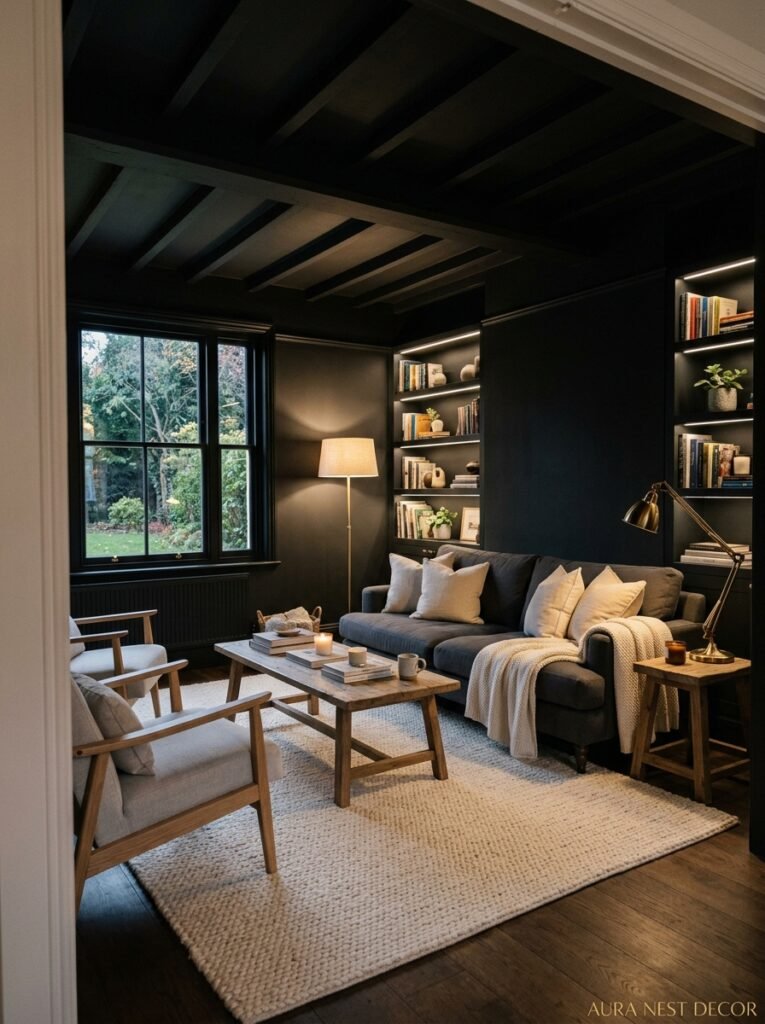
This is where I’ll give you an actual opinion rather than the usual “it depends on your space” non-answer: you probably want around 60-70% of your surfaces in black or very dark tones if you’re going for a full moody room. The rest needs to breathe.
If you paint four walls, the floor, and the ceiling all in the same flat black and put a black sofa in the middle — that’s not moody, that’s a sensory deprivation chamber. You need contrast. You need your eye to have somewhere to rest that isn’t dark.
Now, the ceiling question. Should you go black on the ceiling? Yes. Under very specific conditions. If your ceilings are low — under about 8 feet — I’d skip it, or at least go lighter than the walls. But if you’ve got high ceilings? A black ceiling can be the single most dramatic thing in the room. It draws the eye up and then wraps it back down. It makes the whole room feel complete rather than like someone ran out of paint at the halfway point.
In UK Victorian terraces with those tall, ornate ceilings, a black ceiling with white or plaster-colored crown molding is genuinely magnificent. In an American craftsman-style home, same idea, slightly different execution.
“Paint the ceiling black and suddenly the room doesn’t have a top. It has a sky.”
—
5. The Lighting Trick That Separates a Beautiful Black Room from a Depressing One
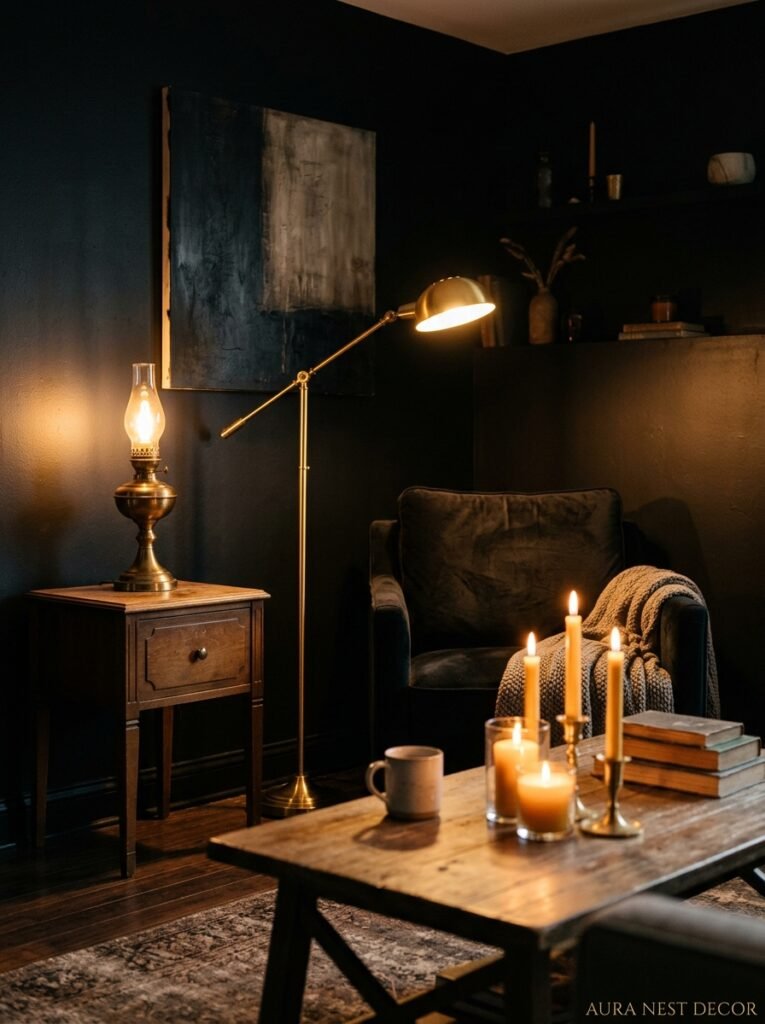
This is THE thing. The whole game. You can do everything else right and get the lighting wrong and your black living room will feel like a waiting room for bad news.
The amber glow of an Edison bulb at 7pm is not a coincidence — that warm, low, golden light is what makes black interiors feel alive rather than oppressive. You want multiple light sources. Not one overhead fixture in the middle of the ceiling. Multiple. Floor lamps in corners, table lamps at different heights, maybe a picture light above something on the wall.
2700K to 3000K is your bulb temperature sweet spot for a black room. Cooler light — the kind most overhead LED panels produce — turns black walls steely and cold and sad. Warm light bounces off the sheen of your dark surfaces and creates depth, layers, that quality where the room seems to glow from within.
And here’s something that doesn’t get said enough: candles. I know. It sounds like something from a lifestyle blog circa 2013. But honestly, nothing — no lightbulb, no smart home system, no carefully angled floor lamp — does what a cluster of lit candles does in a black room. The flicker. The warmth. Something about it hits differently against dark walls. It doesn’t look gothic or strange. It looks like a restaurant you’d pay a lot of money to eat in.
—
6. The Texture Rule: Why a Black Room Without Texture Just Looks Sad
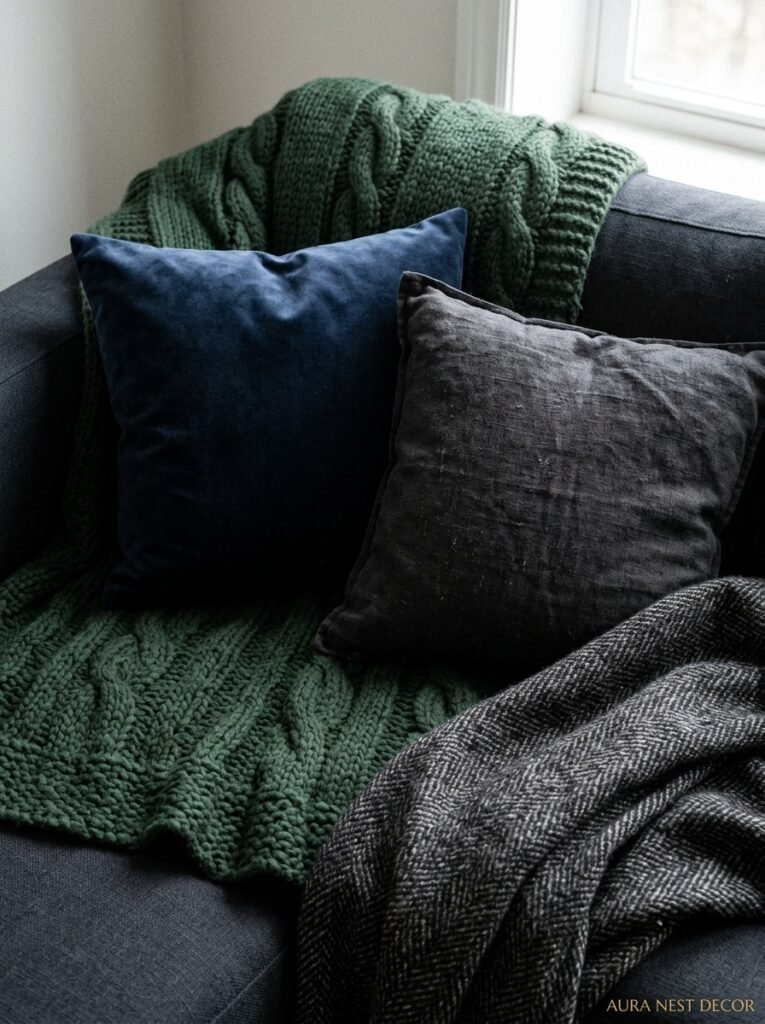
Black is unforgiving of laziness. A beige room can look fine with flat, boring surfaces. A black room will not. If everything in your black living room is the same finish, the same texture, the same weight — it reads flat, and not in a good way.
Velvet is probably the easiest win. A velvet sofa or even velvet cushions in a black room does something magical because velvet absorbs and reflects light differently depending on the angle. It’s never just one shade. You sit in it and the color shifts and it’s alive in a way that no other fabric quite is.
Beyond velvet: linen in natural tones, sheepskin throws (I know they’re everywhere but there’s a reason), chunky knit blankets, jute or sisal rugs, matte ceramic vessels, rough-hewn wood. You want materials that catch light, hold shadow, and remind you that the room is made of real things by real people. Against all that black, a simple piece of driftwood on a shelf looks like sculpture.
—
7. The One Rule That Makes Any Dark Living Room Feel Intentional Rather Than Accidental
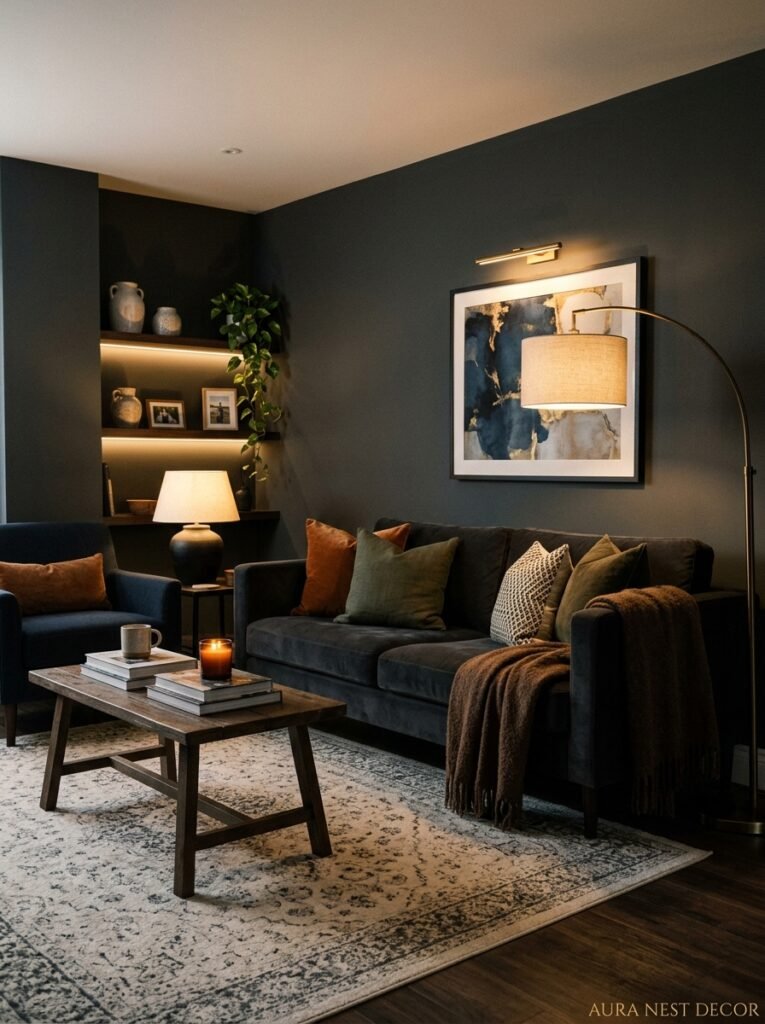
Have a reason for each thing being there. I know that sounds abstract, so let me be specific.
When a room is light and neutral, a random collection of stuff can look eclectic and charming. When a room is dark, every object either earns its place or it doesn’t. There’s nowhere to hide. The black pulls everything forward and makes it visible. That cluttered stack of magazines you forgot about? Suddenly it’s a feature. Not a good one.
This isn’t about minimalism — black rooms can be full and rich and layered. But each layer should be chosen, not defaulted to. Your bookshelf doesn’t have to be sparse, but if you’ve got books, arrange them. Group objects by height. Leave a little air between things. The room should feel considered. Not perfect. Considered.
And side note — art works incredibly well in black rooms. Like, INCREDIBLY well. A large canvas with warm tones, or an old oil painting, or even a simple framed print in a thick matte frame. It pops against the dark in a way it never would against white. If you’ve got art you love and you’ve always felt like it disappeared against your neutral walls — paint the wall behind it black and watch what happens.
“A black room doesn’t hide your things. It frames them.”
—
8. How British and American Homes Do Black Rooms Differently (and What Each Can Learn)
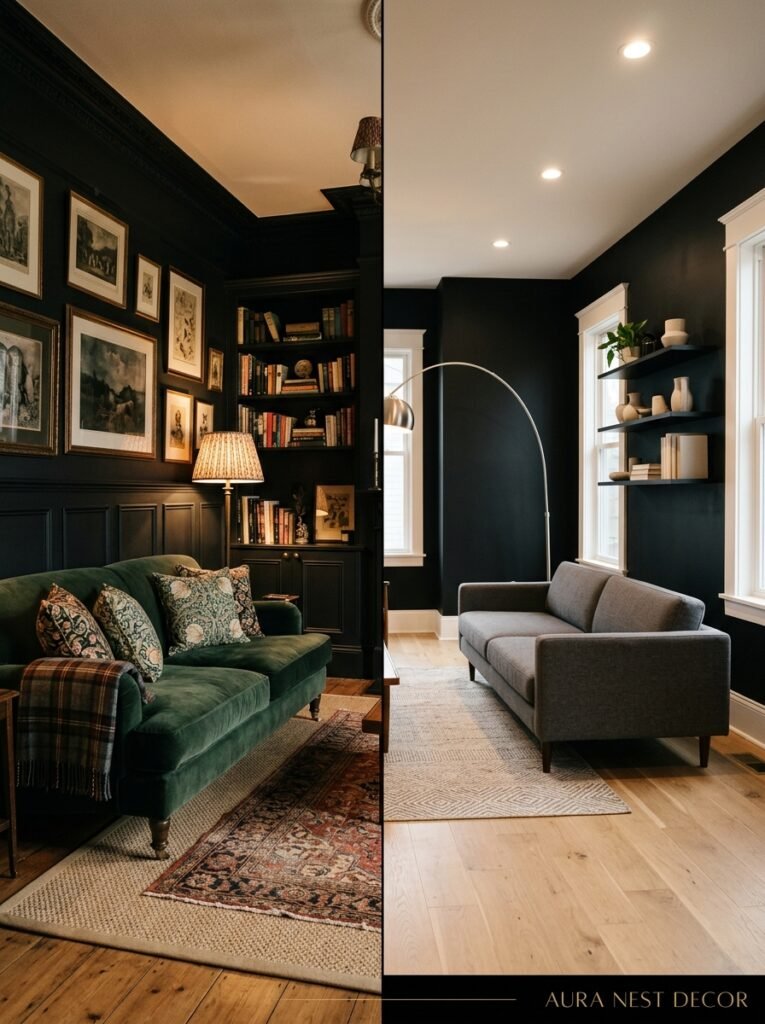
This is something I find genuinely interesting. British homes tend to go softer around a dark color choice — you’ll see black walls paired with white woodwork, natural linens, vintage finds, and aged brass. It’s got this quality of being deeply rich but also somehow casual. Very much “found this at a boot sale and it’s priceless” energy.
American interiors doing the black room thing tend to go bigger and bolder — more contrast, more drama, more statement furniture. A large sectional in black leather. High-gloss black built-ins floor to ceiling. It’s confident and cinematic in a way that’s genuinely exciting.
Neither approach is wrong. But they can learn from each other. British interiors could sometimes commit a little harder — there’s a tendency to hedge, to soften, to add the obligatory cream sofa when the room was begging for black velvet. American interiors could sometimes slow down and let things be quieter, let one beautiful detail do the work instead of five loud ones competing.
The rooms that stop me cold on Pinterest are usually somewhere in the middle. Bold enough to mean it, restrained enough to breathe.
—
9. The Furniture Finish That Looks Wrong Until Suddenly It Looks Perfect
Natural wood. Raw, pale, unfinished-looking wood against black walls. It shouldn’t work. It looks like it would clash, like the contrast would be jarring and wrong.
It’s one of the best things you can do in a black room.
A light oak coffee table on a dark rug against black walls looks like a Scandinavian cabin in the best possible way. Exposed timber beams in a room with dark walls create this almost ancient quality, like the bones of the house are showing. Even something as simple as a wooden bowl on a dark sideboard reads beautifully — the grain shows up, the color has warmth, and it stops the room from feeling cold or monolithic.
The contrast between organic, imperfect natural wood and that flat expanse of black creates something that neither material could do on its own. It’s sort of the same principle as why a simple wildflower looks incredible in a dark bottle — the setting makes the thing.
—
10. What to Do With Your Windows (Because This Actually Matters More Than People Think)
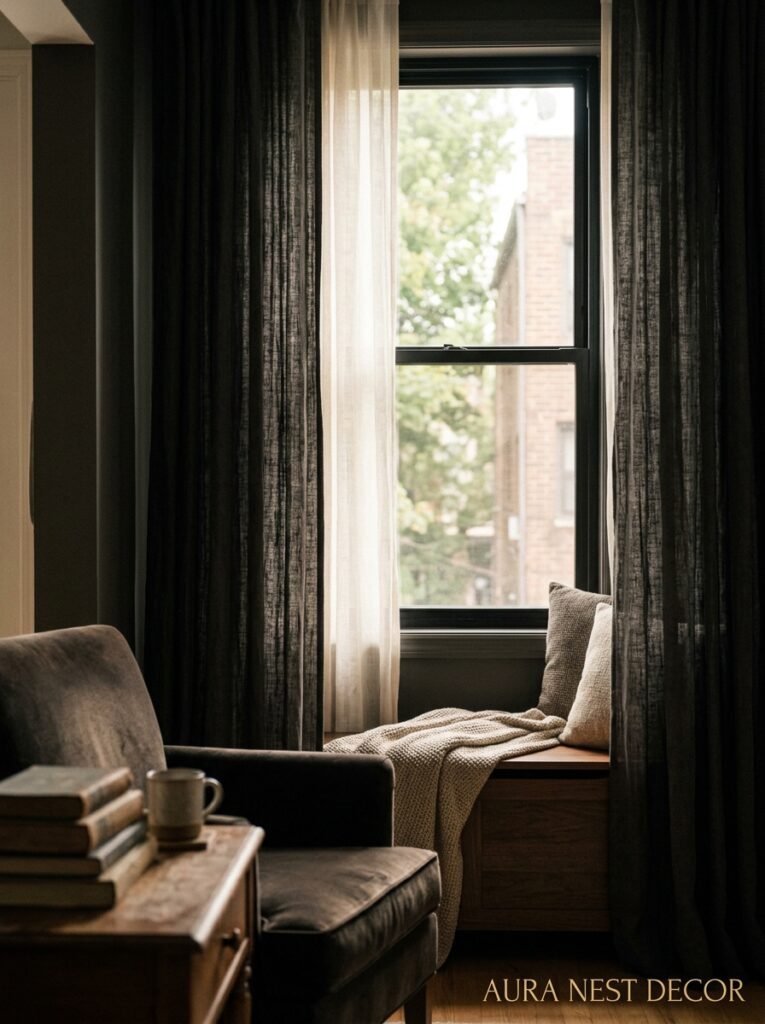
Black rooms and natural light have a complicated relationship. More light is generally better — it stops the room from feeling heavy and gives the dark tones that depth I keep talking about. But the way you treat your windows changes everything.
Sheer white or linen curtains in a black room are gorgeous. The light comes through diffused and warm, and the pale fabric against the dark walls creates that layered contrast you want. Floor-to-ceiling sheers are especially good — they make the windows feel tall and airy even in rooms where the walls are doing the opposite.
Heavy velvet drapes in a deep jewel tone — burgundy, forest green, navy — work completely differently. They make the room feel sealed and intentional, like a room that knows exactly what it is and doesn’t need outside validation. Which is kind of a mood.
What you probably want to avoid is standard, slightly-too-short curtains in an off-white that doesn’t quite commit. In any room they look a bit sad. In a black room they just look confused.
—
11. The Mistake That Kills Black Living Rooms (I’ve Seen It Too Many Times)
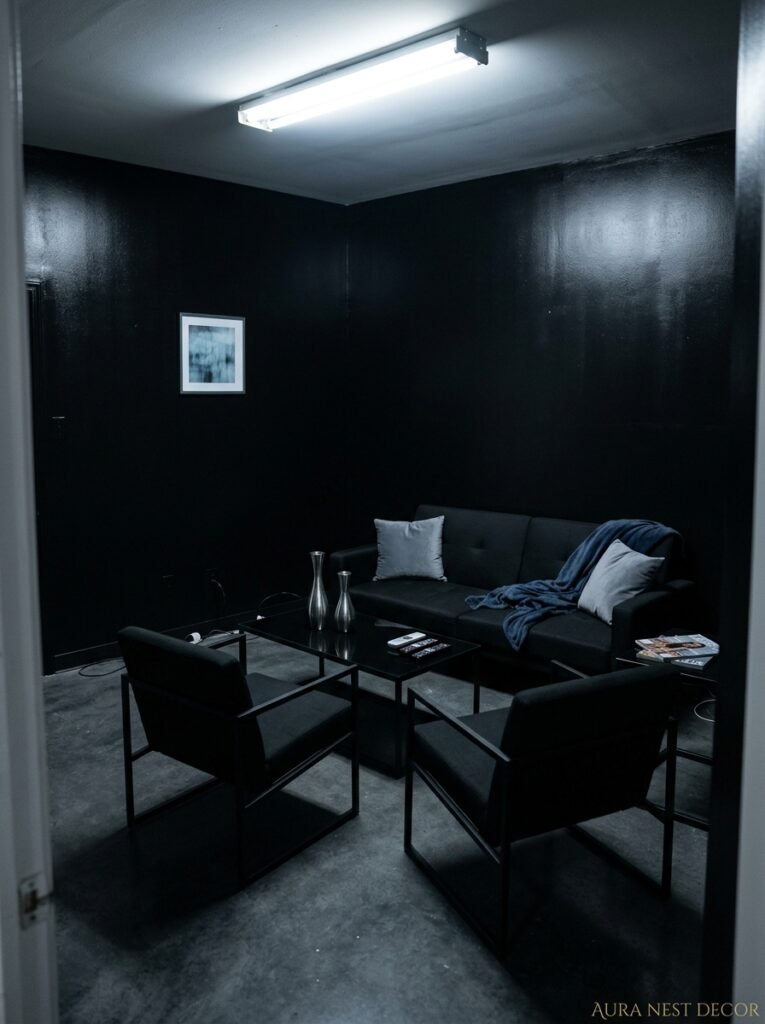
Not enough life. I don’t mean plants, specifically, although plants in a black room are beautiful — the green is so vivid against the dark it almost looks unreal. I mean living elements. Softness. Things that breathe.
A black room done badly is all hard surfaces and deliberate drama with nothing warm inside it. No blankets. No worn edges. No book left face-down. No mug ring on the coffee table. It looks like a set for a film that’s trying too hard, and you wouldn’t want to spend a Tuesday evening in it.
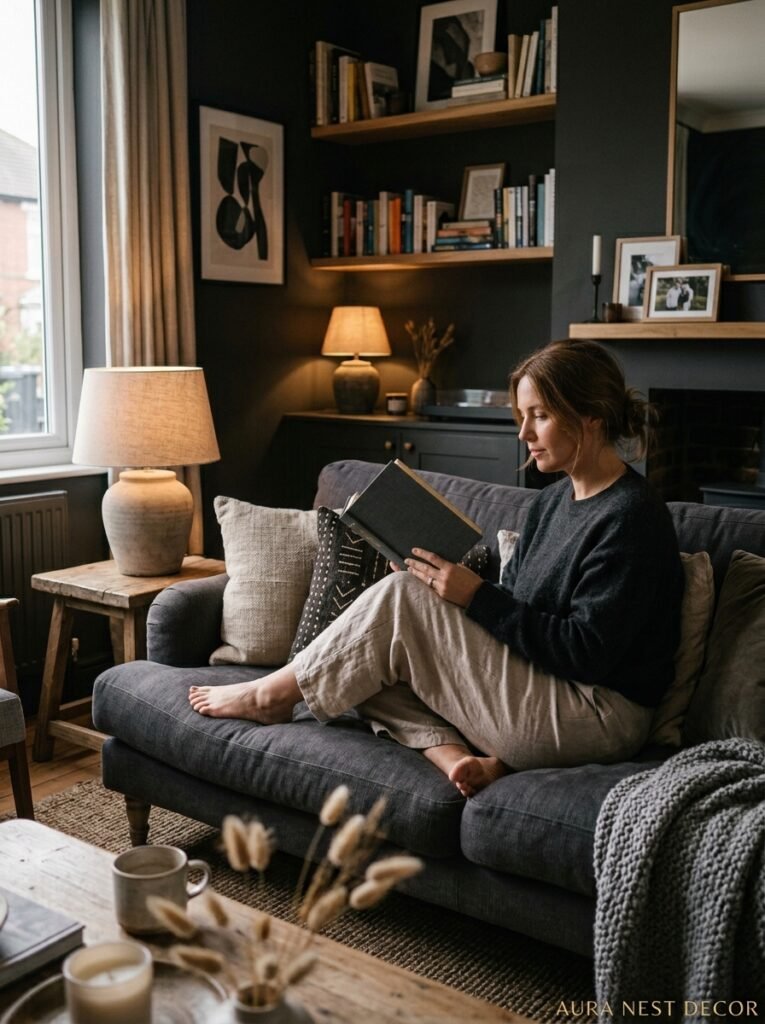
A black room done right has a dog-eared book on the arm of the sofa. Has a lamp you’ve had for years. Has a plant that’s slightly overgrowing its pot. Has a throw that’s actually been used. The darkness is the backdrop, not the personality. The personality is everything else — the mess of living, the soft and the warm and the real.
—
12. Starting Small If You’re Terrified — The Low-Commitment Entry Points Into a Black Living Room
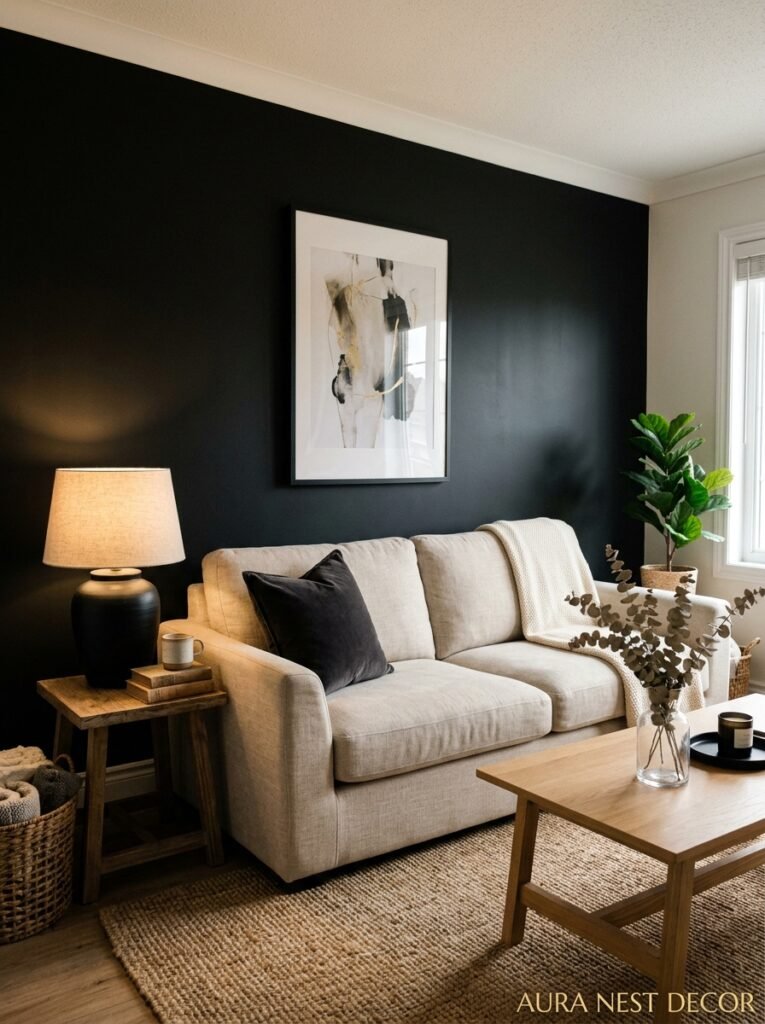
You don’t have to commit to four walls. Nobody’s making you do that.
A black sofa in an otherwise neutral room is genuinely transformational — it anchors everything around it and suddenly your blush pink cushions look sophisticated instead of girlish and your wooden side table looks like a choice. The sofa is the biggest piece of furniture in the room and making it black gives you all the drama without touching a wall.
Or go smaller. A black fireplace surround. Black bookshelves flanking a chimney breast. One accent wall — specifically the one behind the sofa, or the one the fireplace sits on. Black window trim on an otherwise white room (very popular in the UK right now for good reason). A black console table. A gallery wall with all-black frames on a white wall.
Each of these is a step into the world of the dark living room without diving in headfirst. And I’ll be honest — sometimes those small moves are enough. Sometimes one black bookcase turns your room from “fine” into “I need to stop scrolling and save this.”
—
❓ FAQ
Q: Will a black living room make my small space feel even smaller? A: Not necessarily, and here’s the thing — a well-lit, richly textured black room can feel more intentional and interesting than a small beige room that’s trying to look bigger and failing. Mirrors help. Multiple warm light sources help a lot. If you’re nervous, start with one wall rather than going all in.
Q: Is black a good choice if I’m renting and want to repaint before I leave? A: It depends on how dark you go and what you used underneath. Most black paints are dark enough that you’ll need a good primer and probably two or three coats of white to cover it properly when you leave. If you’re renting, you might be better off going dark with furniture and soft furnishings rather than the walls themselves — it’s removable and often just as effective.
Q: What colors should I pair with black walls in a living room? A: Warm tones work best — brass, terracotta, rust, warm white, natural wood, sage green, deep burgundy. Cool grays and icy whites alongside black can tip from sophisticated into sterile pretty quickly. Warm and rich is almost always the right direction.
—
💭 Final Thoughts
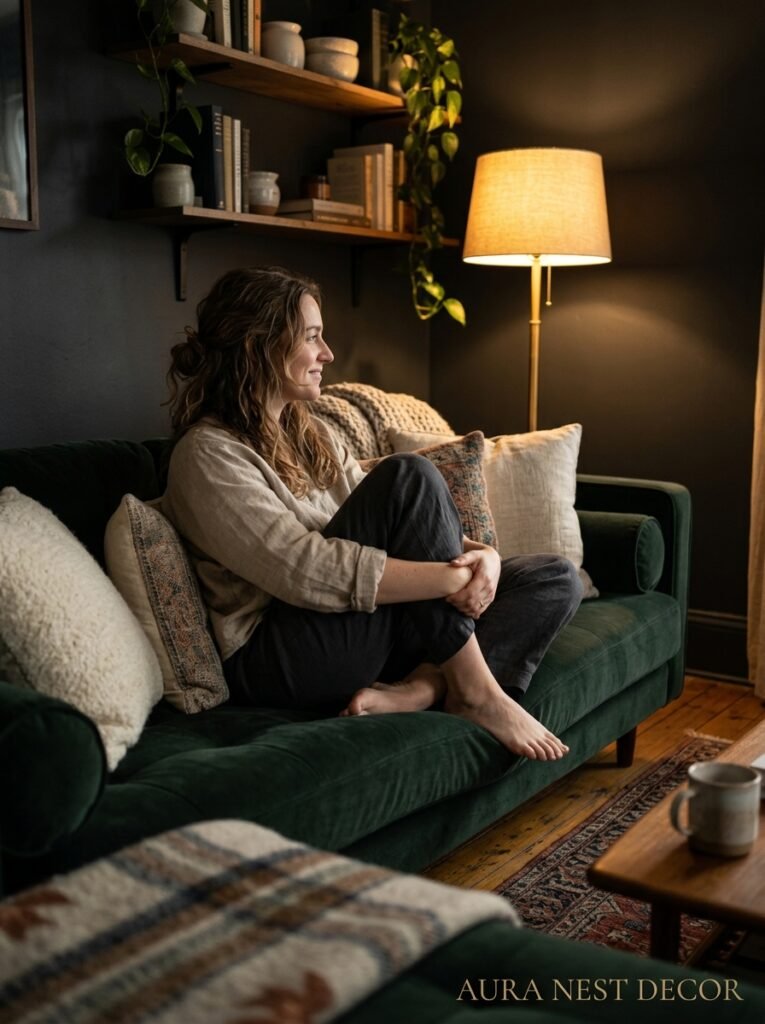
Black living rooms aren’t for everyone, and that’s honestly fine. But if you’ve been sitting on the idea, saving images, wondering whether you could actually do it — you probably can, and it will probably look better than you’re imagining. The fear of getting it wrong is almost always bigger than the actual risk.
Start somewhere. One wall, one sofa, one lamp with a warm bulb in a dark corner. See what happens.
And if you’ve already done it — how did you know when you’d gone far enough?