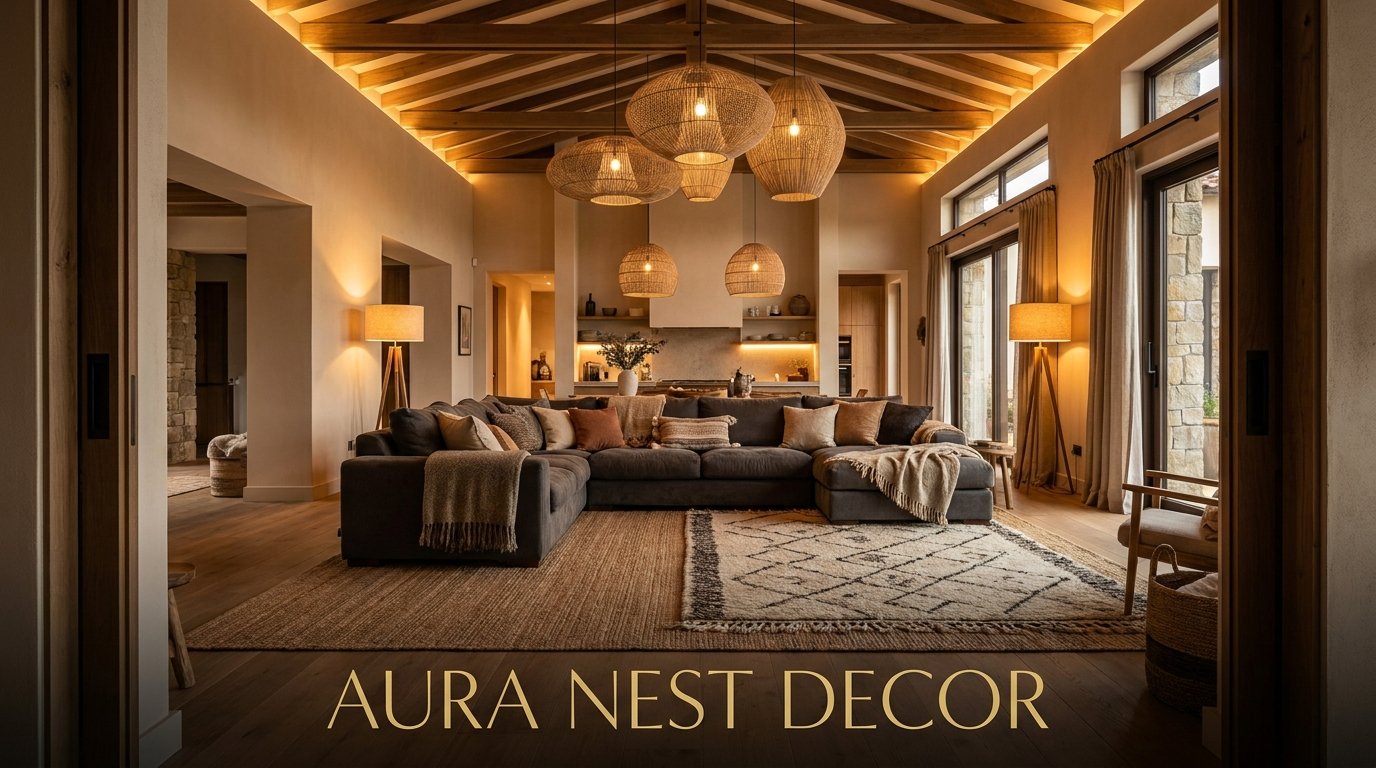
Big Living Room Energy: The Bloxburg-Inspired Decor Ideas That Actually Work in Real Life
My friend sent me a screenshot of her Bloxburg living room at 11pm with the caption “why does this look better than my actual house.” And honestly? Same.
There’s something about the way people design in Bloxburg — that commitment to big, open, intentional spaces — that most of us have completely forgotten is possible in a real room. We clutter. We compromise. We buy the sofa that fits the budget and call it done. But those big, beautiful Bloxburg living rooms? They follow actual design principles. And once you see them, you can’t unsee them.
—
1. The Bloxburg Rule Nobody Talks About: Go Bigger Than You Think
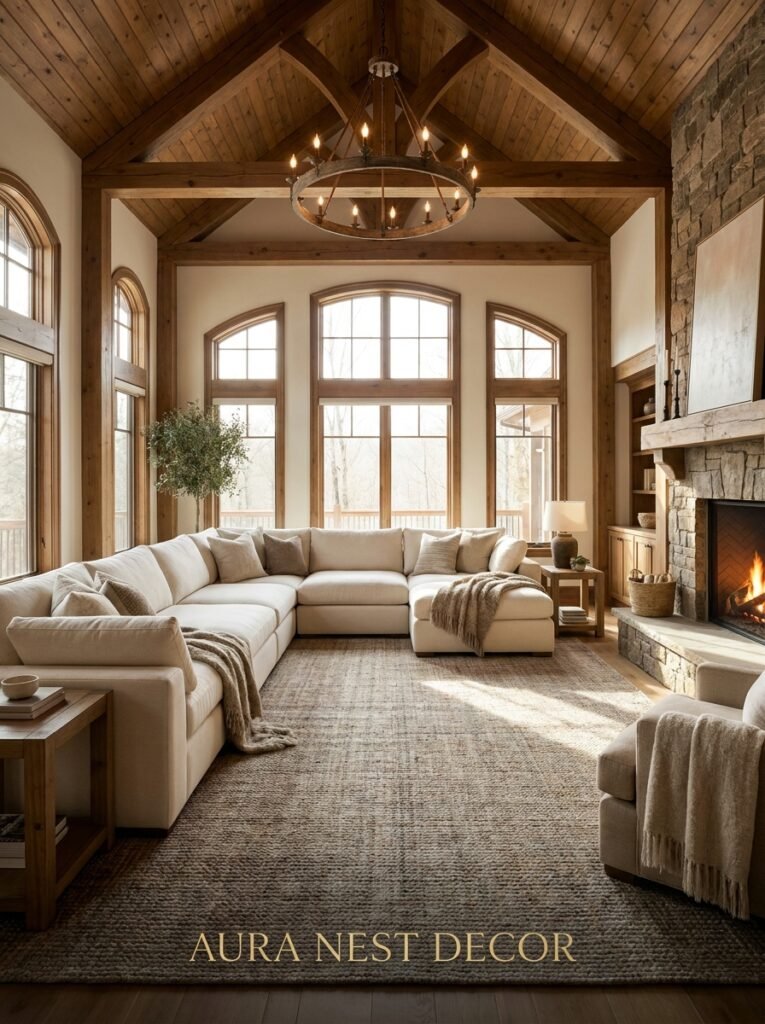
The number one thing that makes a Bloxburg living room look incredible is scale. Not color. Not furniture style. Scale.
In the game, players instinctively go oversized — huge sofas, tall ceilings, wide rugs, windows that eat up the entire wall. And it works because it FEELS right, even if nobody could explain why. Here’s the thing: real interior designers say the same thing. We consistently underscale our furniture in real homes, then wonder why the room looks awkward and sad.
So the first move — before anything else — is to resist every instinct to play it small. If you’re looking at a rug and thinking “that might be too big,” buy it. If you’re eyeing a sofa and thinking “that’s a lot of sofa,” sit with that feeling for a second, because you’re probably right to want it.
Big rooms need big anchors. A tiny rug under a floating sofa doesn’t make a large room feel cozy. It makes it feel lost.
—
2. The Sofa Color That Keeps Showing Up in Every Beautiful Bloxburg Living Room Right Now
Not white. Not grey. Not that greige that was everywhere three years ago.
It’s warm linen. Sometimes called oat, sometimes flax, sometimes just “natural” depending on where you’re shopping — but it’s that creamy, slightly warm neutral that reads as beige in some lights and almost wheat-colored in others. Bloxburg players use it constantly because it photographs beautifully against almost every wall color and it pairs effortlessly with wood tones, terracotta, and even deep jewel colors.
In a real home, a linen-toned sofa does something greige never quite managed: it feels warm without feeling dirty. It feels intentional without feeling cold.
“The right sofa color doesn’t match your room — it holds your entire room together.”
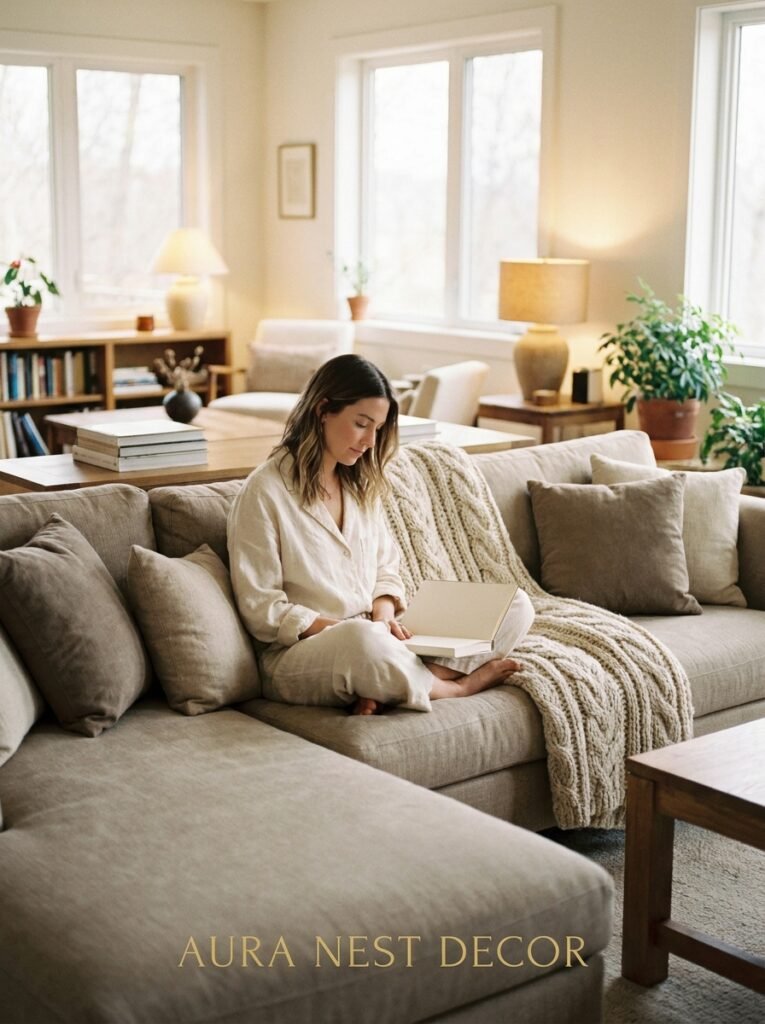
Pair it with an oversized throw in a contrasting texture — chunky knit, boucle, even a heavy cotton blanket. Not draped perfectly. Just… thrown. Like someone actually lives there.
—
3. Why Your Living Room Probably Needs a Second Seating Area and You’ve Never Considered It
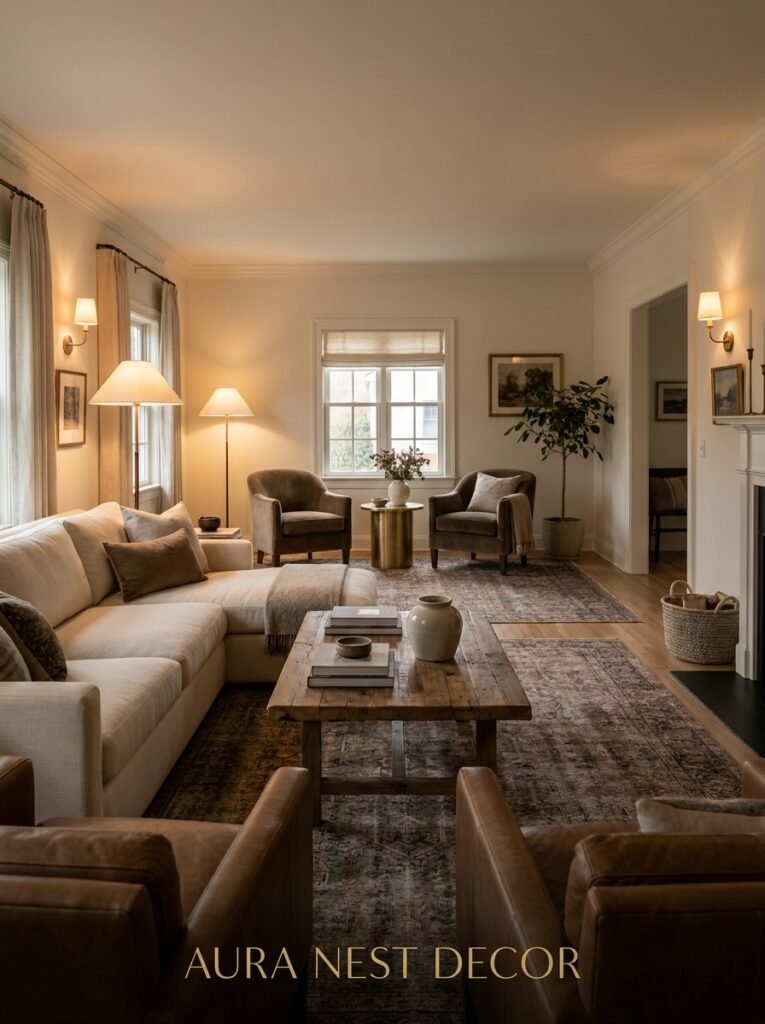
Big Bloxburg living rooms almost always have two distinct seating moments. A main sofa arrangement and then something else — a reading chair by the window, a couple of cushioned benches near a fireplace, a window seat tucked into an alcove.
Real rooms can do this too. Especially if you’re working with a larger living room that just feels… echoy and a bit purposeless in the corners.
The trick is to treat the second seating area as a completely different vibe to the first. Your main sofa zone is probably social — facing a TV or a coffee table, arranged for conversation. Your secondary spot should be singular and intentional. One really good chair. A floor lamp positioned exactly right. A small side table that’s actually the right height, not whatever you grabbed.
Side note — getting the side table height right is one of those things that sounds tiny but changes everything. Your elbow should reach it without straining. That’s it. That’s the whole rule.
—
4. The Fireplace Situation: Real, Fake, Electric, or Just a Really Good Dupe
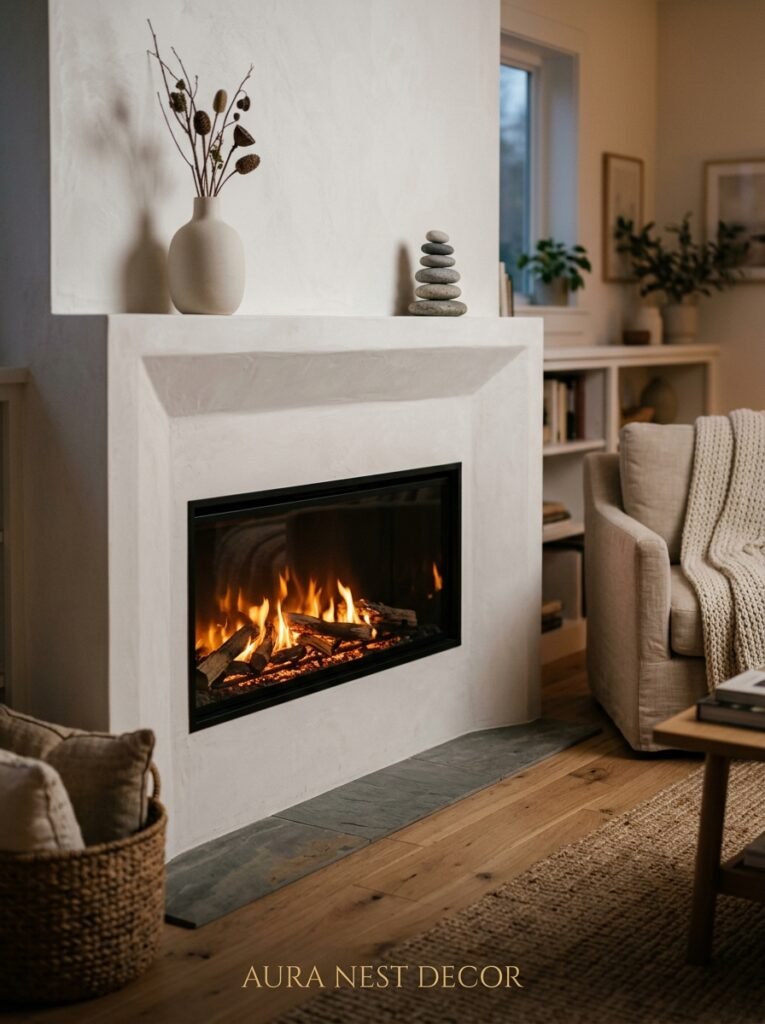
Bloxburg players add fireplaces to almost every big living room, and look, it makes sense. A fireplace gives a room a focal point. A reason for the furniture to orient itself. A center of gravity.
Not everyone has a working fireplace. In the UK, a lot of older homes do — but a lot of those original fireplaces got bricked up or covered with a hideous surround sometime in the eighties, which is a crime we’re all still recovering from. In the US, newer builds often skip them entirely.
But here’s the thing: you don’t need a real one. An electric fireplace insert set into a freestanding surround — or even just a well-styled fireplace-adjacent nook with candles at different heights and a beautiful overmantel mirror — gives you 80% of the visual effect for a fraction of the cost and effort.
The fireplace doesn’t have to produce heat. It just has to be the thing your eye goes to first when you walk in the room. That’s its whole job.
—
5. What Bloxburg Lighting Teaches You That IKEA Never Will
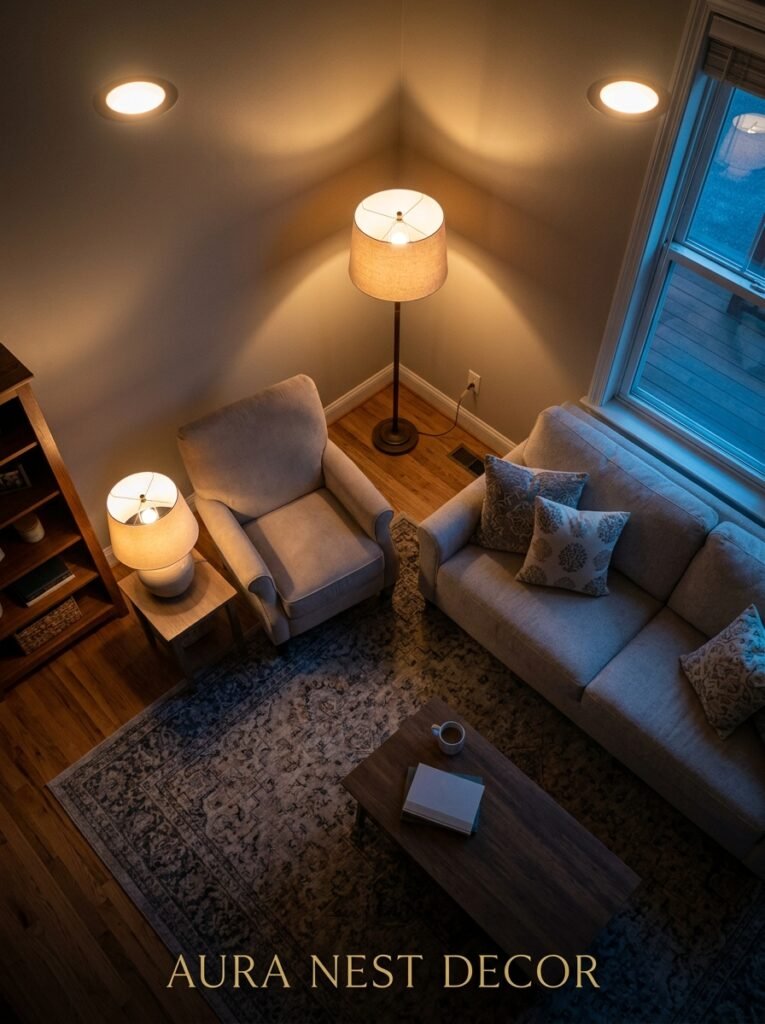
No overhead lighting. Or more accurately: overhead lighting is NOT the main event.
This one takes real people by surprise because we’re conditioned to flick the big light on and call it done. But in Bloxburg, players layer lighting constantly — floor lamps, table lamps, pendant lights, wall sconces — and the result is rooms that look genuinely warm and cinematic, even in a blocky video game.
Try this one evening. Turn off every overhead light in your living room. Then turn on every lamp you own. Look at the room for sixty seconds.
It’s different, isn’t it.
“Overhead lighting is for finding things. Lamp lighting is for living.”
The amber glow of a table lamp at 7pm, a warm floor lamp behind the sofa — that’s what creates atmosphere. If you don’t have enough lamps, that’s your next purchase. Not a new cushion. Not a new rug. Lamps.
—
6. The One Color Combination Bloxburg Designers Keep Accidentally Discovering
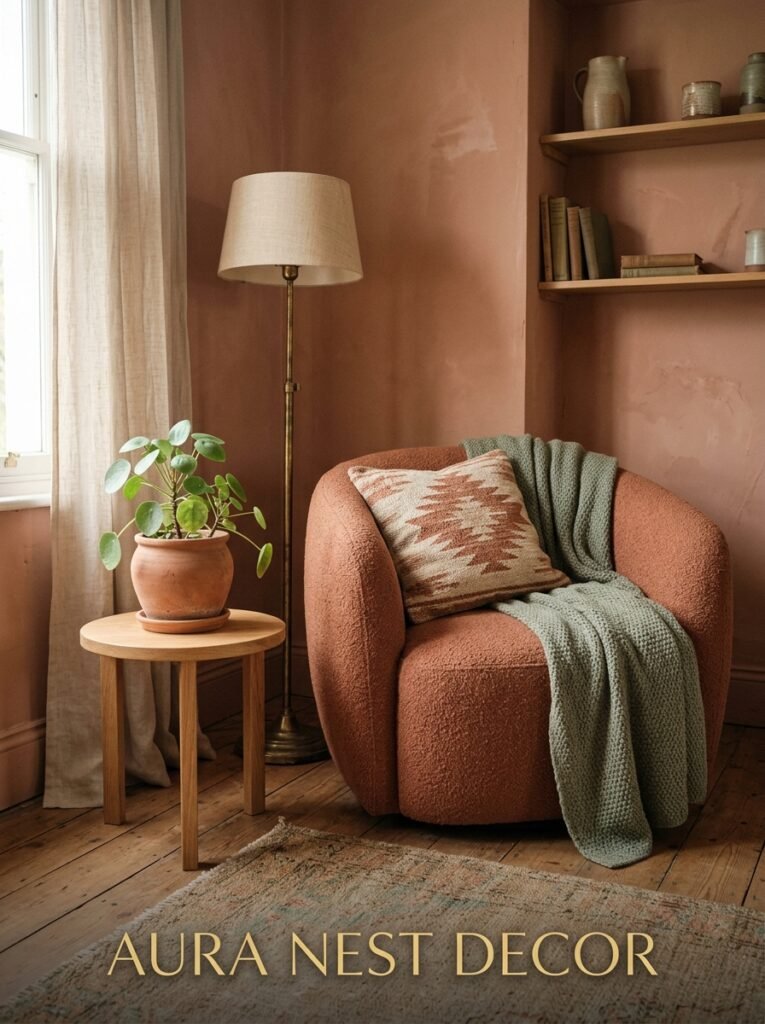
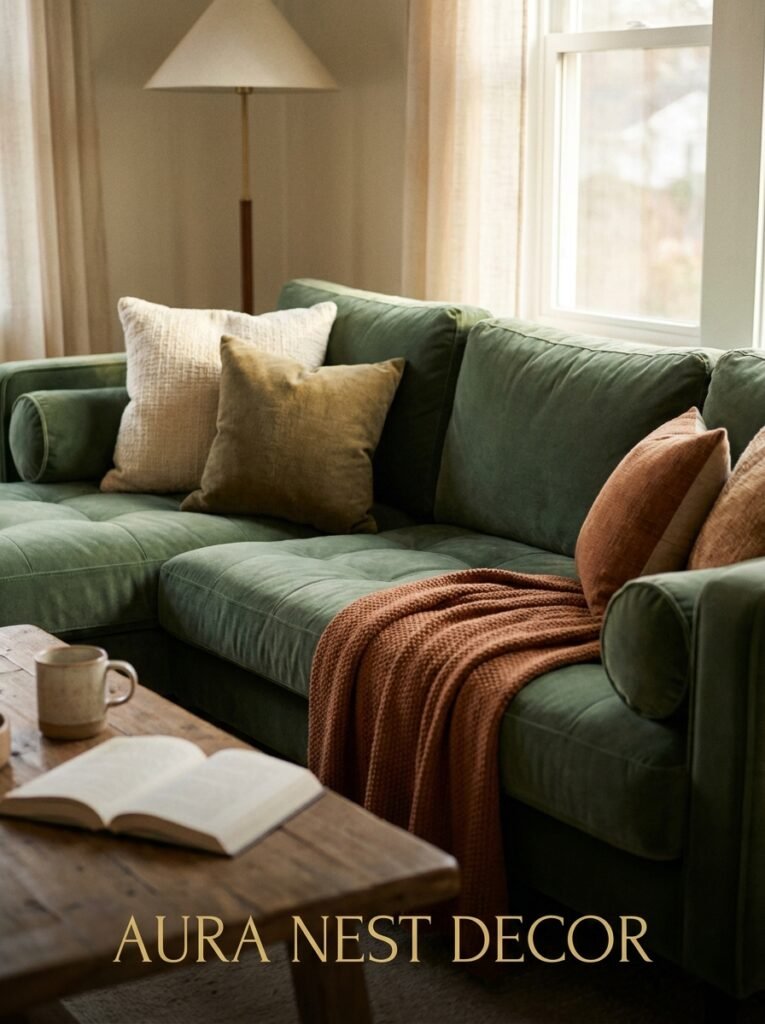
Warm white walls plus warm wood floors plus one deep accent color.
That’s it. That’s the formula that appears over and over in the most-shared Bloxburg living rooms, and it works because it’s essentially how really good Scandinavian and California-casual design works in real life.
The deep accent can be almost anything — forest green, dusty navy, a burnt terracotta, deep plum. It should show up in maybe two or three places: a throw pillow, the underside of a coffee table book stack, a vase, a lamp base. Not everywhere. Just enough to feel intentional, not accidental.
What it CANNOT be is a muted version of itself. Deep olive, not sage. Dusty navy, not powder blue. The whole thing falls apart if the accent color is too apologetic.
—
7. The Coffee Table Mistake Every Single Person Makes in a Big Room
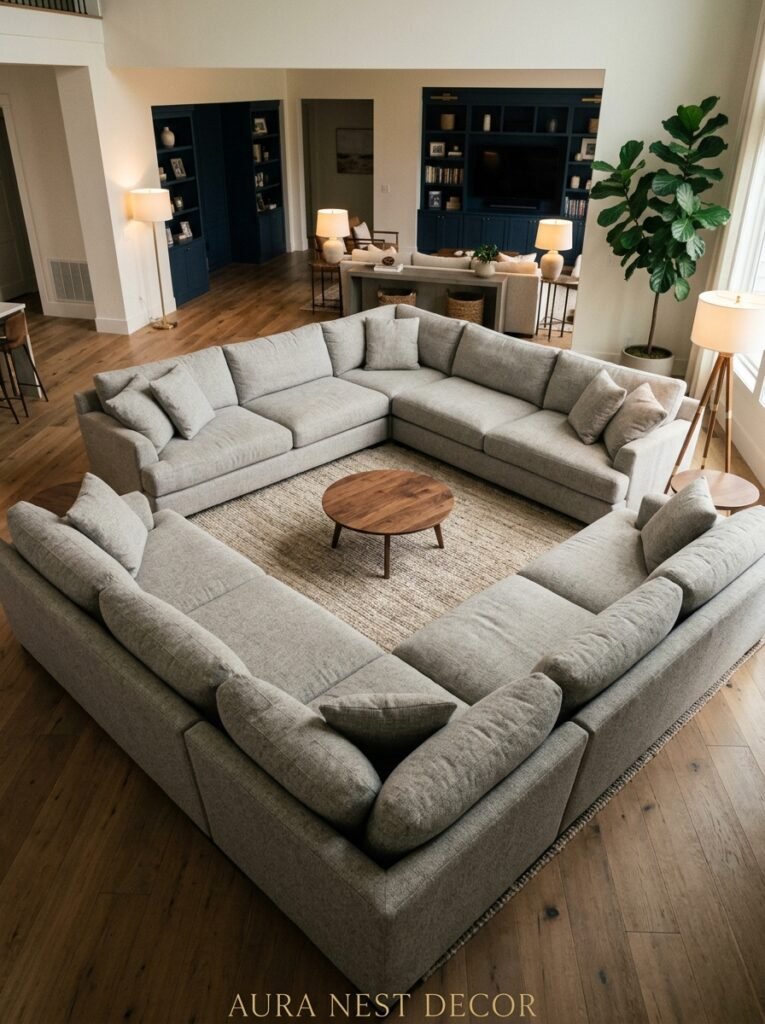
They buy a coffee table that’s too small, too short, or — the worst one — the wrong shape for how the furniture is actually arranged.
In a large living room where the sofa is long and the seating is spread out, a round coffee table gets lost. It feels like a stepping stone in a pond. You want something rectangular, ideally with some heft to it — a thick marble-effect top, dark walnut wood, even a slatted rattan tray table at the right scale.
A few Bloxburg players have been using what I’d call the “stacked tray” trick: a large rectangular table with a tray on top, a stack of books, and a single object that earns its place. A candle. A small sculptural bowl. Nothing more.
The visual weight of a properly-scaled coffee table is the difference between a living room that looks designed and one that looks like furniture in a room.
—
8. How to Do an Accent Wall Without It Looking Like 2009
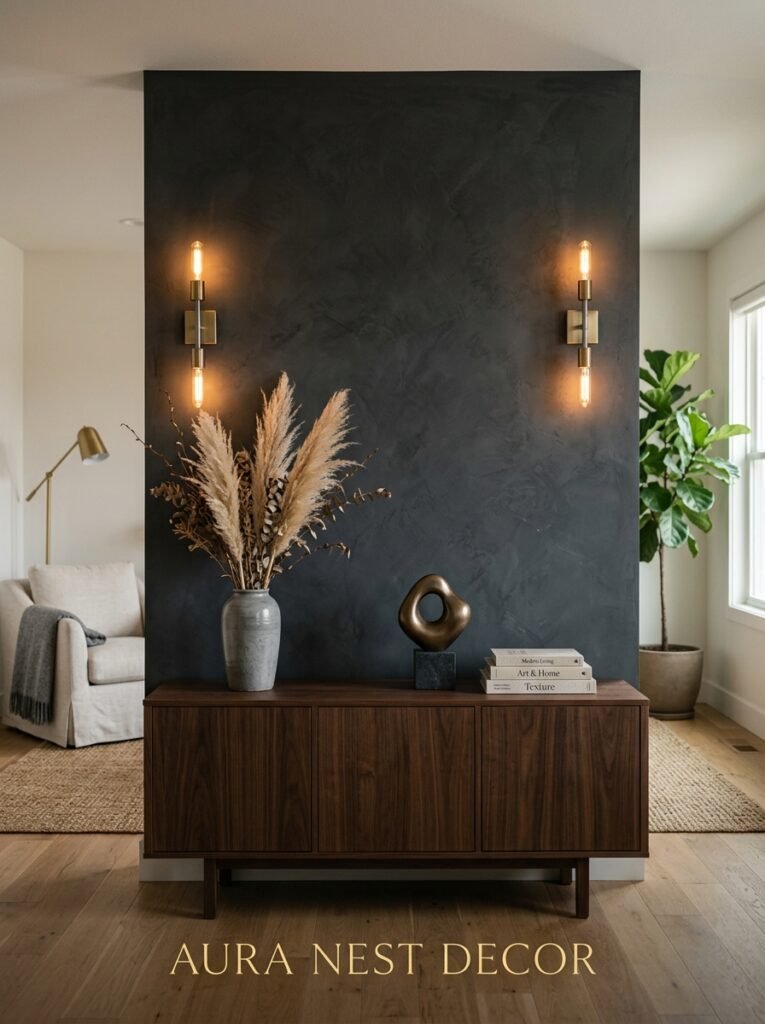
Bloxburg accent walls are BACK, but they don’t look the way they used to. Nobody’s painting one wall burgundy and calling it a vibe anymore — or at least, nobody with a beautiful living room is.
The 2024-25 version of the accent wall is:
- A limewash or textured paint finish in a muted, warm tone (terracotta, aged clay, soft sage)
- A full wall of warm wood paneling — not shiplap, something more vertical and architectural
- Deep moody wallpaper on just the chimney breast or behind the shelving unit
The key difference from the old accent wall is texture. It’s not a bold color competing with the room. It’s a material that adds depth. You’re drawn to it because it looks rich, not because it screams.
And honestly? Even in a Bloxburg room it’s obvious when someone chose texture over just slapping a color on. It photographs completely differently.
—
9. Shelving That Actually Looks Like Someone Styled It
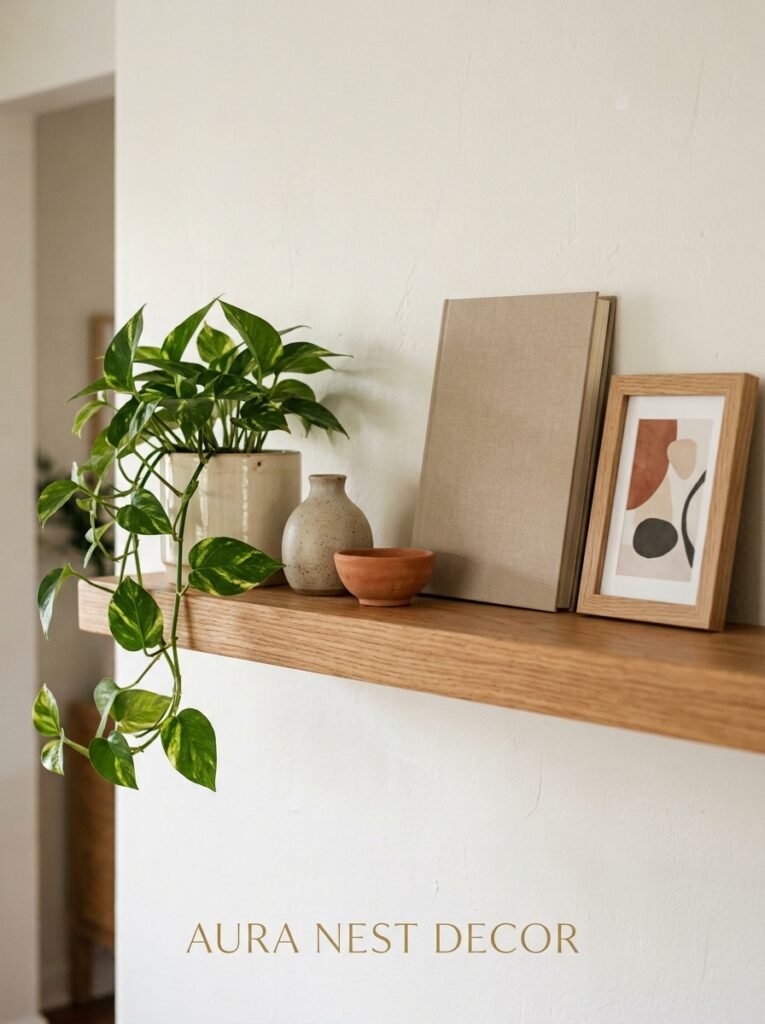
The living room shelves in Bloxburg homes are never crammed. They’re never empty either. They hit this specific sweet spot that looks effortless but is actually quite considered.
Here’s what that balance tends to look like in practice: roughly 60% filled, 40% breathing room. Taller objects toward the back or center. Lower, flatter objects — a small stack of books, a tiny trinket dish — at the front. Nothing symmetrical. Nothing that looks like it came as a matching set.
The single biggest upgrade to real-life shelving? Stop arranging books by size and start mixing orientations — some upright, some stacked flat, with an object on top of the stack. A small plant. A candleholder. Something with life in it.
“A shelf that looks styled isn’t full — it’s curated, which means some of it is just air.”
—
10. The Plant Placement Thing Nobody’s Told You
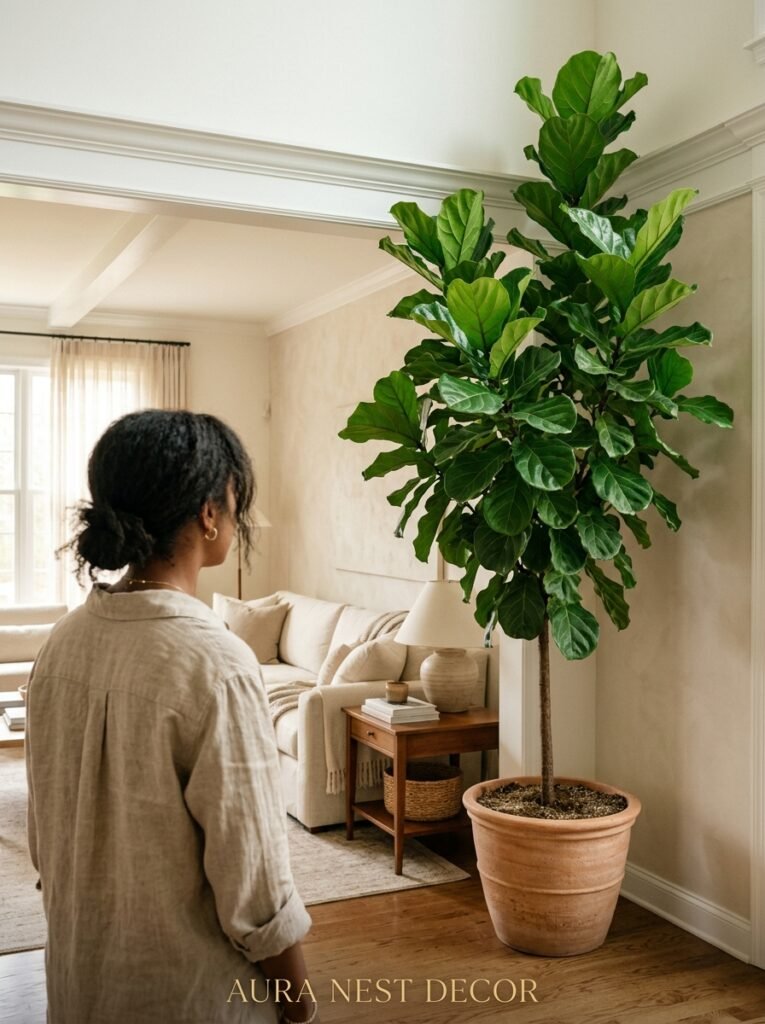
In Bloxburg, plants show up in corners. And not in a sad, I-put-this-here-because-nowhere-else-made-sense way — in a this-corner-now-has-a-reason way.
A large floor plant (a fiddle leaf fig, a monstera, a tall snake plant) in the corner of a big living room does two things: it fills vertical space without adding visual weight, and it softens the geometry of the room. Corners are harsh. Plants aren’t.
The other placement that always works: a trailing plant on a high shelf, where it can fall downward. It pulls the eye up without being aggressive about it.
What doesn’t work is a small plant on a coffee table in a big room. It looks like you’re taking care of a pet, not styling a space.
—
11. The Gallery Wall Formula That Works Every Time in a Large Room
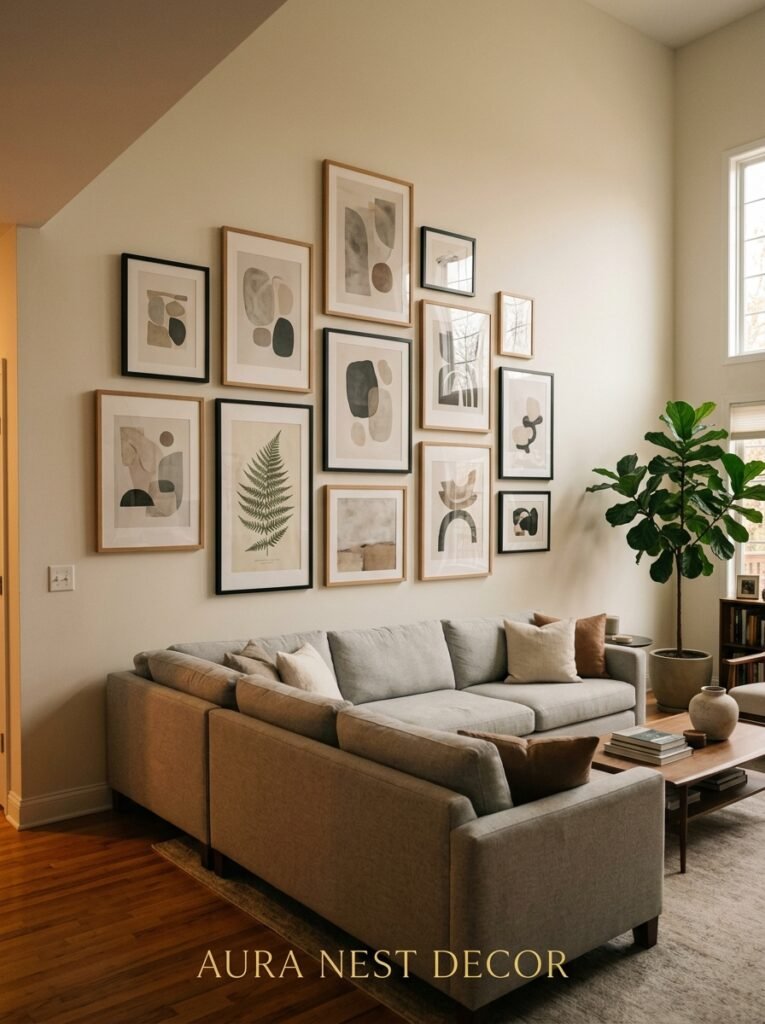
Bloxburg gallery walls don’t look chaotic, even when they’re full of different frames. And the reason is surprisingly simple: they always have a dominant piece.
One large frame — or one large piece of art — anchors the entire arrangement. Everything else is supporting cast. The second most common mistake (after the too-small coffee table, which we’ve already covered) is trying to create a gallery wall from pieces of equal size. It looks restless. Your eye doesn’t know where to land.
Start with your biggest piece. Center it at eye level. Then build outward from there, varying frame colors and sizes but keeping the overall shape of the arrangement vaguely rectangular or square. Leave a bit more space between frames than feels right. About three to four inches is usually the sweet spot — enough that each piece breathes, not so much that they look unrelated.
Mix media if you can. A framed print next to an unframed canvas next to a small oval mirror. That variation is what makes it look intentional rather than matched.
—
12. The Tiny Finishing Details That Separate a Good Room from a Great One
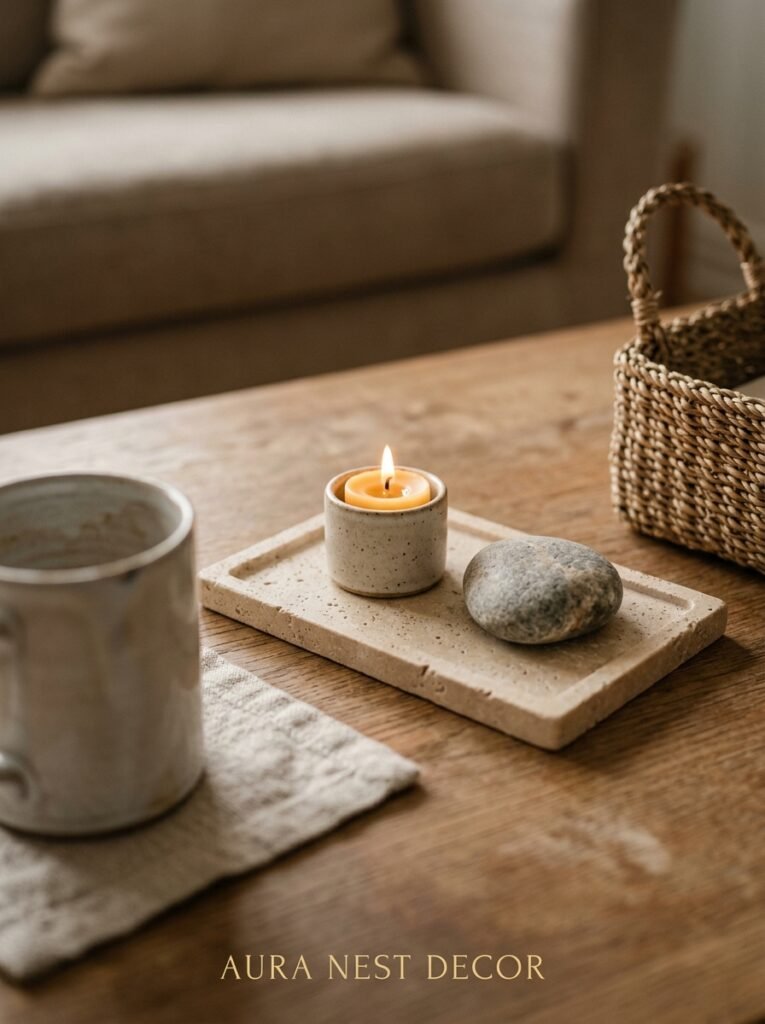
This is the stuff that Bloxburg players obsess over and most real-life decorators forget about.
Cord management. You can have the most beautiful lamp in the world and if there’s an ugly black cable snaking across the baseboard, it’ll bother people subconsciously even if they can’t say why. Cord clips, cable covers, or just routing things behind furniture — it matters more than it should, but it does.
Throw placement. Not folded neatly over the arm. Not balled up. Somewhere between the two — half-draped, like someone just got up from under it.
The smell of the room. I know this isn’t visible in a photo, but if you’re living in it, a room that smells faintly of something nice — a candle, diffuser reeds, cedar — feels more designed than one that doesn’t. Can’t explain it. Just true.
And finally: one thing in the room that doesn’t match. Not a mistake — an intentional outlier. A very modern lamp in a traditional space. A rough-hewn wooden bowl on a sleek coffee table. Something that makes the room feel like a person lives there, not like a catalogue page.
—
❓ FAQ
Q: How do I make a big living room feel cozy without making it feel cramped? A: Layer your lighting first — multiple lamps instead of overhead light makes an enormous difference. Then add a large area rug that actually fits the seating arrangement (all furniture legs on it, ideally), and use warm, natural textures like linen, boucle, and wood. The goal is warmth through materials, not by crowding more stuff in.
Q: What’s the best rug size for a large living room? A: For most large living rooms, an 8×10 or 9×12 is the starting point, not the maximum. The front legs of all your main seating pieces should sit on the rug. If only the sofa is on it and the armchairs are floating off to the side, the rug’s too small and the room will feel disjointed.
Q: Can I really recreate Bloxburg decor looks on a budget? A: Mostly, yes. The biggest wins are free or cheap: rearranging furniture for better scale, swapping overhead lighting for lamps you already own, decluttering shelves to get closer to that 60/40 ratio. The purchases that move the needle most are a properly-sized rug and one good floor lamp — neither has to cost a fortune to make a real impact.
—
💭 Final Thoughts
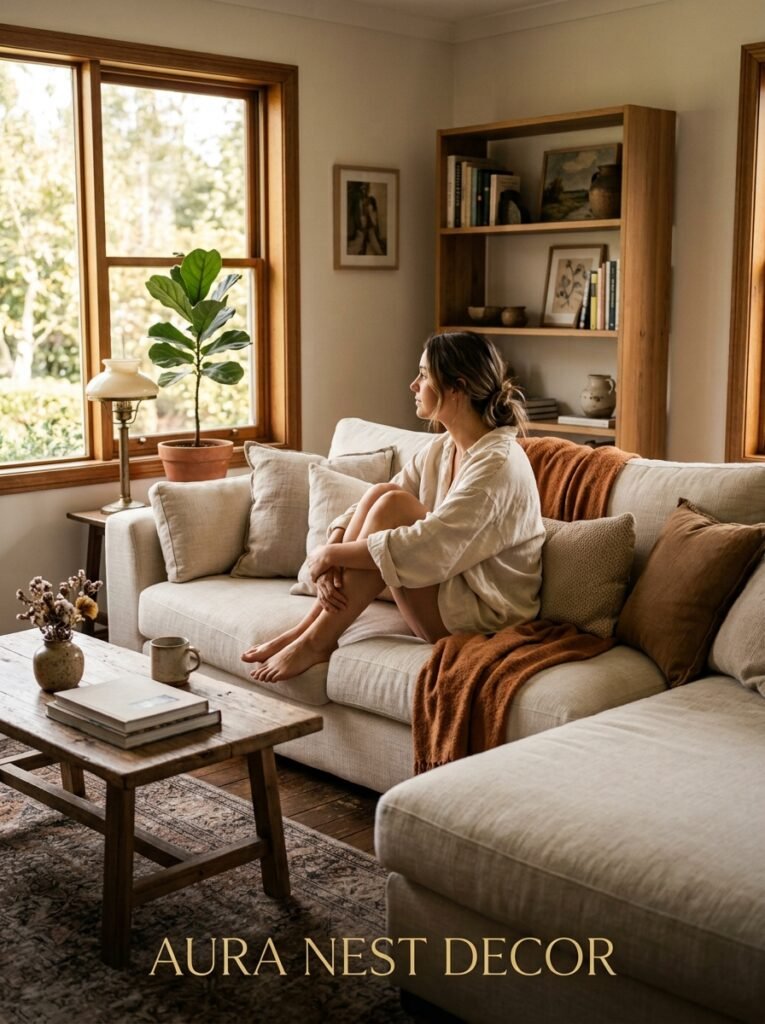
There’s a reason people spend hours getting their Bloxburg living room exactly right — it’s the same reason we move our sofa three times before deciding the first position was correct. We want the space we spend the most time in to feel worth being in.
The ideas above aren’t complicated, and most of them don’t cost anything beyond paying a bit more attention. Scale your furniture up. Layer your light. Give your corners a reason to exist.
What would your living room look like if you designed it the way you do in Bloxburg — without compromise, just instinct?