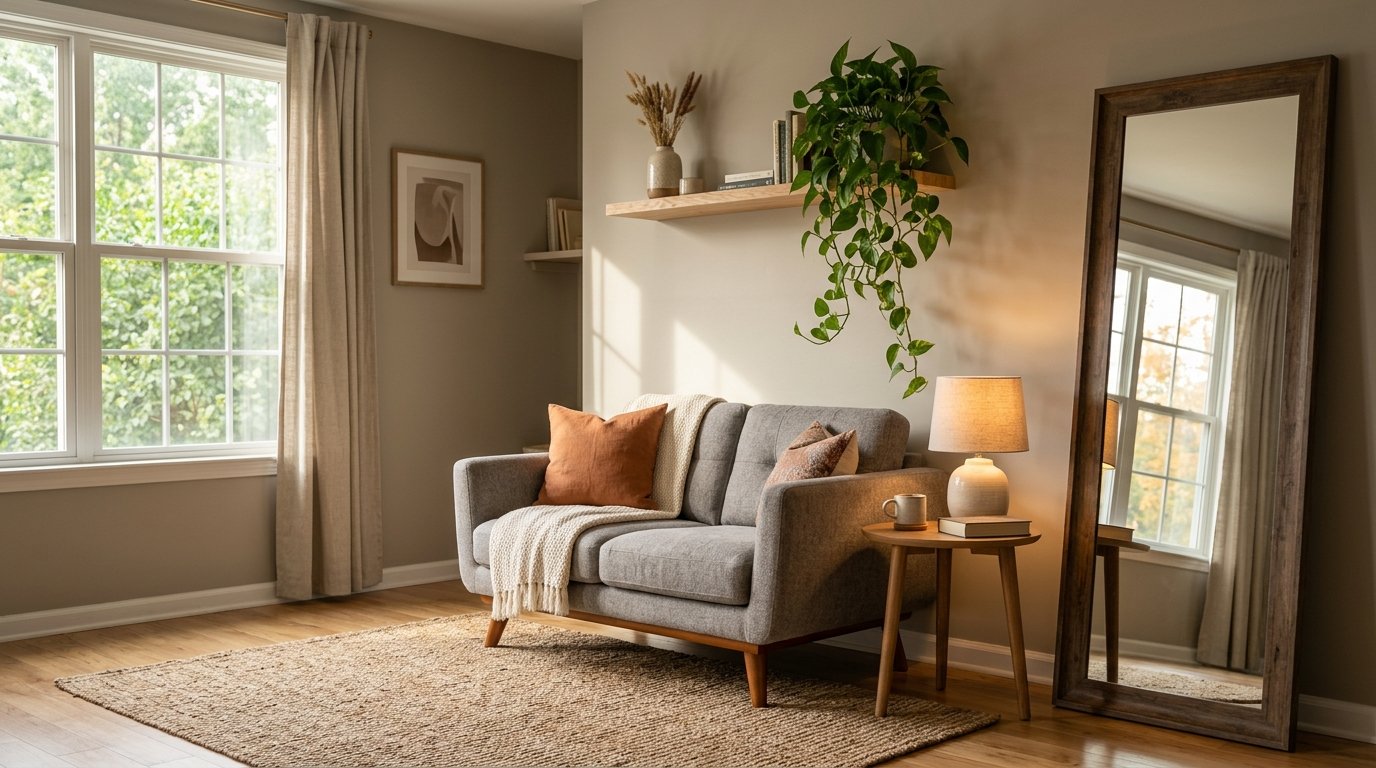
The Tiny Living Room Makeover That Cost Me Less Than a Nice Dinner Out
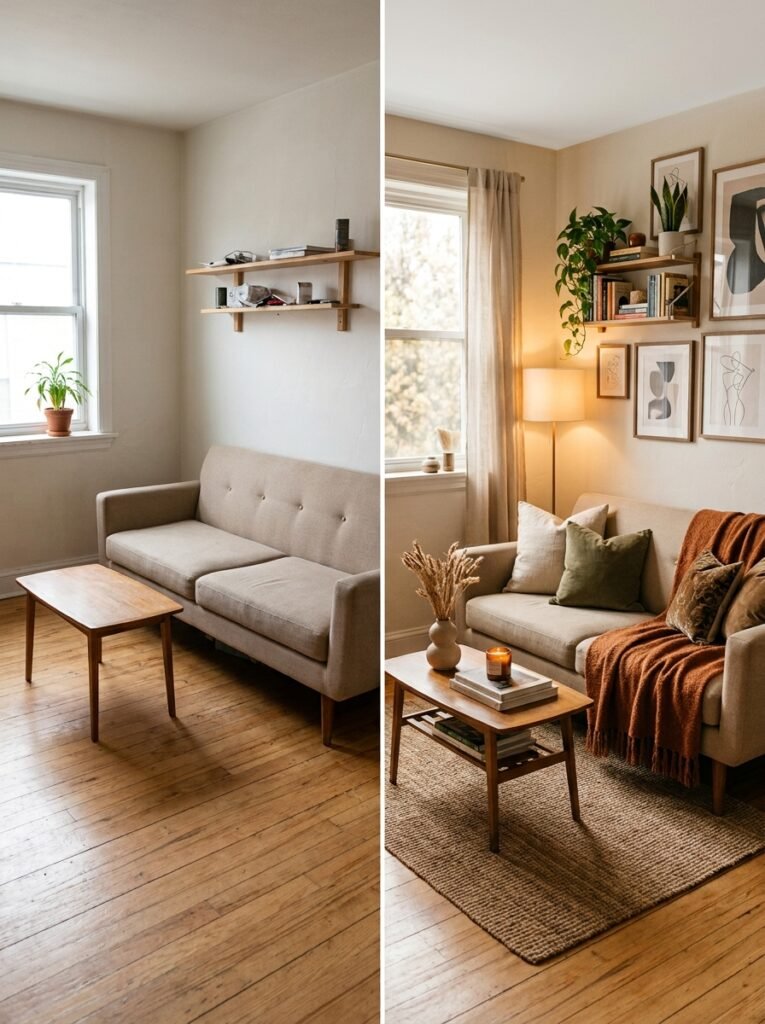
My friend walked into my apartment last spring and said, “Wait — did you move?” I hadn’t. I’d spent $47 and one Saturday afternoon rearranging things.
That stuck with me. Because we spend so much energy wishing for bigger spaces when the real problem is almost never the square footage.
—
1. The Furniture Mistake That’s Making Your Small Room Feel Like a Waiting Room
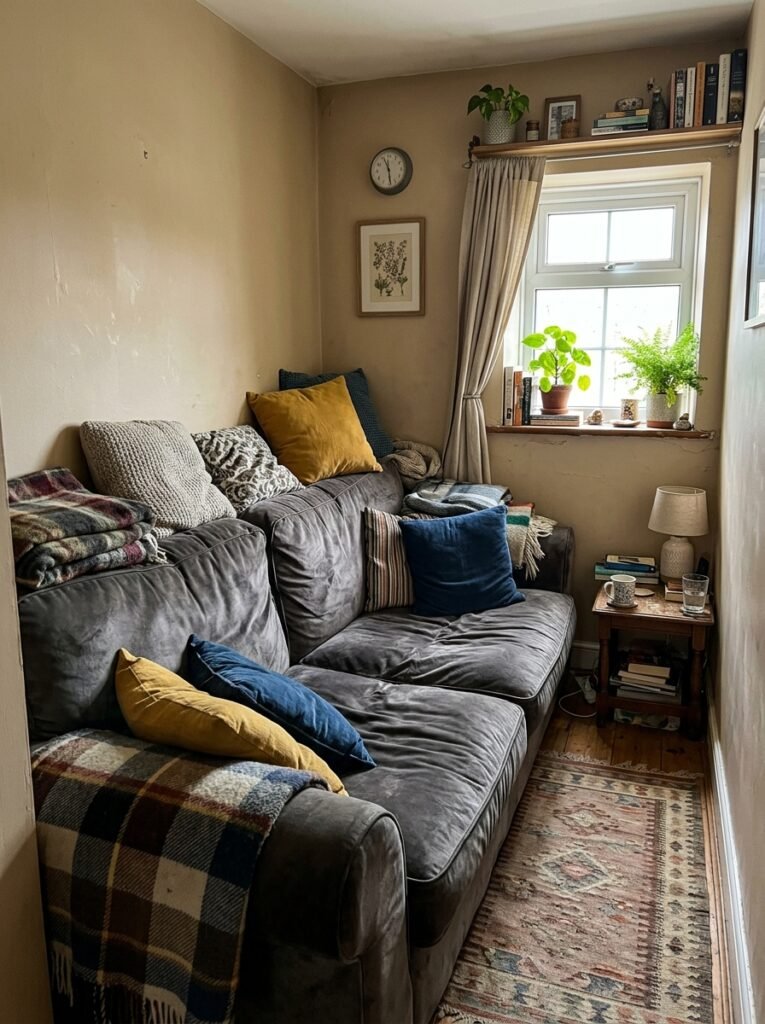
Here’s the thing nobody tells you: big, puffy, oversized furniture doesn’t make a small room feel cozy. It makes it feel like a doctor’s office where someone ran out of budget halfway through.
I spent two years with a three-seater sofa crammed into my living room. It technically fit. But it dominated everything — you couldn’t walk around it properly, you couldn’t breathe near it, and the whole room felt like it was arranged around the couch rather than the life happening inside it.
The fix? A loveseat and a couple of accent chairs. Or a sofa with legs — and this is KEY — raised legs that show the floor underneath. That gap between the base of the furniture and the floor is genuinely doing heavy lifting optically. Your brain reads it as “more floor = more room.” The room doesn’t get bigger. Your perception of it does.
Also, if you’re still holding onto a coffee table the size of a surfboard: please let it go.
—
2. The Color That Keeps Showing Up in Every Beautiful Small Living Room Right Now
It’s not white. Well, it’s not ONLY white.
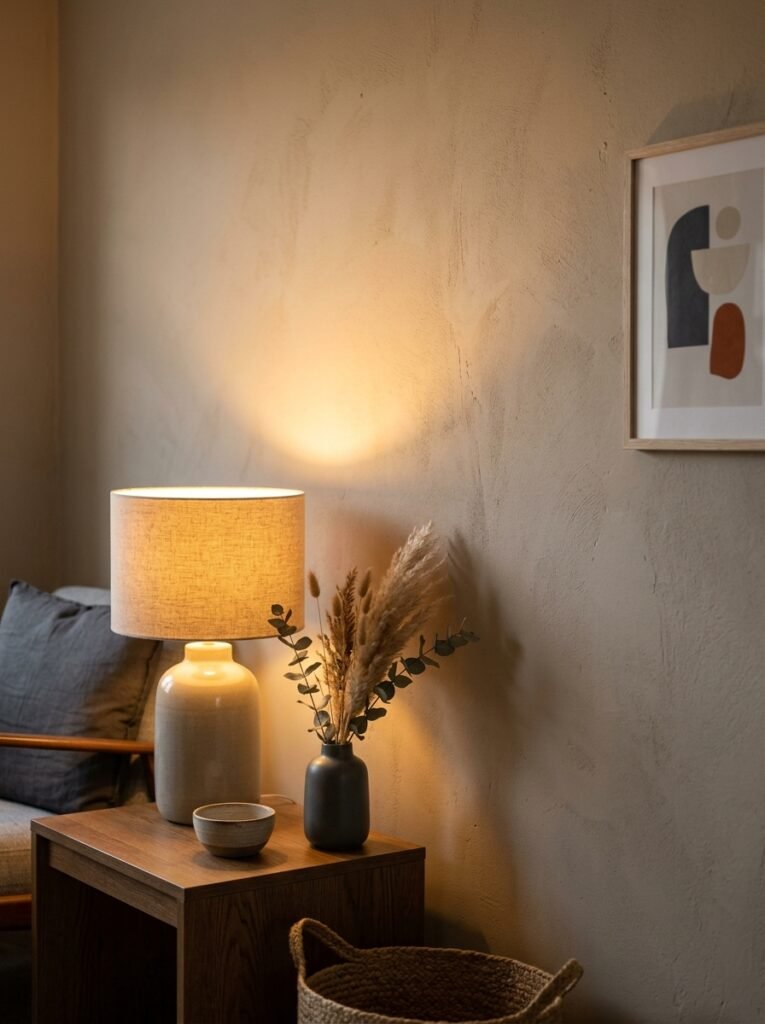
Everyone defaulted to white walls for years and it works, sure, but what’s actually showing up everywhere right now — on Pinterest, in those “small flat, big personality” accounts I can’t stop saving — is warm greige. That particular color that can’t decide if it’s beige or grey and lands somewhere genuinely gorgeous in between.
Think Farrow & Ball’s Elephant’s Breath, or Dulux’s Pebble Shore. The kind of tone that looks totally different at noon versus 7pm when the lamps are on, and both versions are beautiful. It doesn’t shrink a room the way people fear deeper tones will. In fact, painting all four walls the same color — ceiling included sometimes — creates this wrapped, intentional feel that a room with one white accent wall never quite achieves.
Side note — if you’re in a rental and can’t paint at all, large fabric wall hangings or a gallery wall that covers most of one surface does something similar. Not identical, but you’d be surprised.
—
3. Why Your Living Room Still Looks Cluttered Even After You Cleaned It
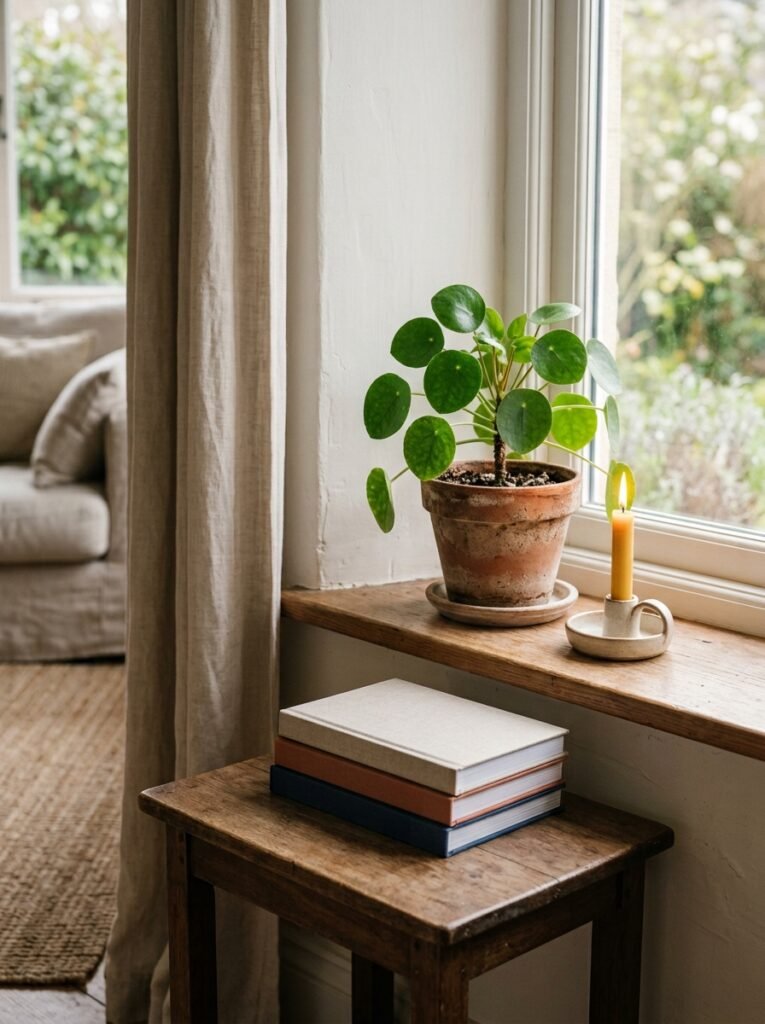
Horizontal surfaces. That’s it, that’s the whole answer.
Every flat surface you have — the windowsill, the top of the TV unit, the side table — becomes a dumping ground over time. And when those surfaces are covered in random stuff, the eye never gets to REST anywhere. The room feels noisy even when it’s technically tidy.
The rule I swear by now: one intentional vignette per surface. That means ONE thing on the windowsill. Or three things max, grouped together like they belong. A plant, a candle, a small stack of books. Not a plant, a candle, a remote, a charger, a receipt, and last Tuesday’s mail.
“A room doesn’t look curated because you bought nicer things. It looks curated because you stopped letting every surface become a soft landing zone.”
This is genuinely the cheapest fix on this entire list. Free. It costs nothing except some decisiveness about what actually belongs in the room and what’s just passing through.
—
4. The Lamp Situation You’ve Been Ignoring (And Why It’s Costing You the Whole Vibe)
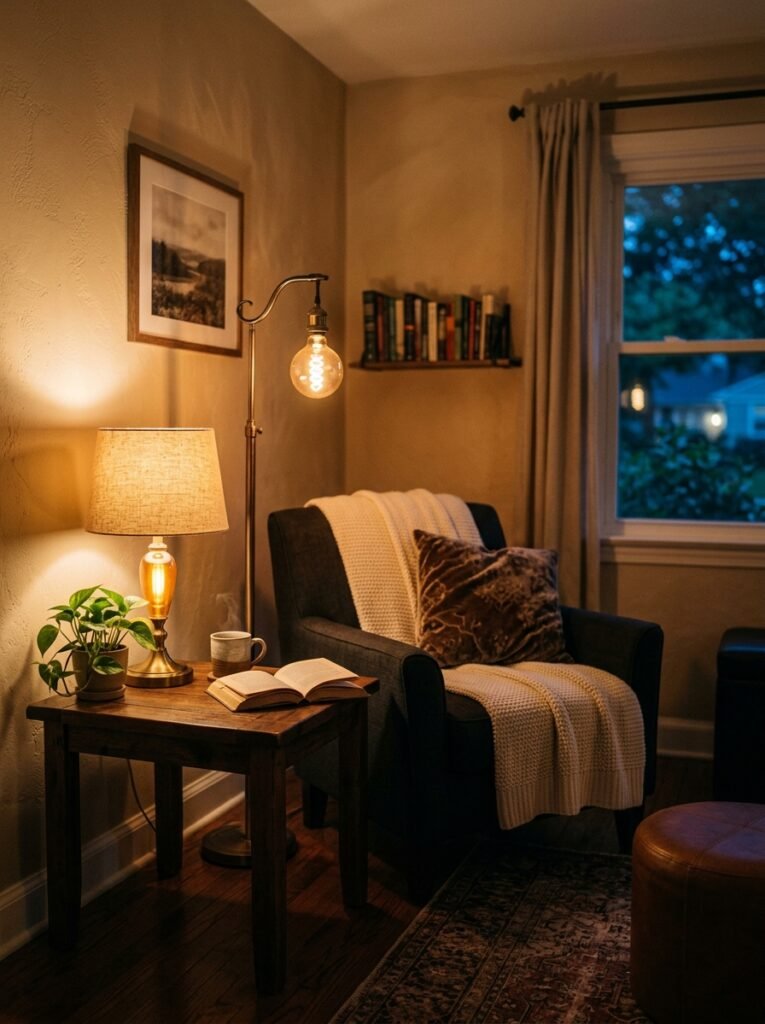
Overhead lighting is the enemy of a cozy living room. I said what I said.
That single ceiling light — the one that came with the flat, the one that’s technically functional — it flattens the room. It removes all shadow and warmth and makes everything look like a school corridor at 4pm in November.
Lamps. You need lamps. Specifically, you need lamps at different heights — one on a side table, one on the floor if you can manage it. The amber glow of an Edison bulb at 7pm does more for a room than any piece of furniture. It creates depth. It creates zones. It makes the space feel like it has a personality rather than just contents.
You can find decent floor lamps at IKEA, TJ Maxx, TK Maxx in the UK — places where $30 gets you something that actually looks good. Thrift stores too, honestly. The lamp base doesn’t have to be perfect, just the right height and the right shade of warm.
The overhead light? Keep it for cleaning days only. The room will thank you.
—
5. The One Rule That Makes Any Tiny Room Feel Intentional
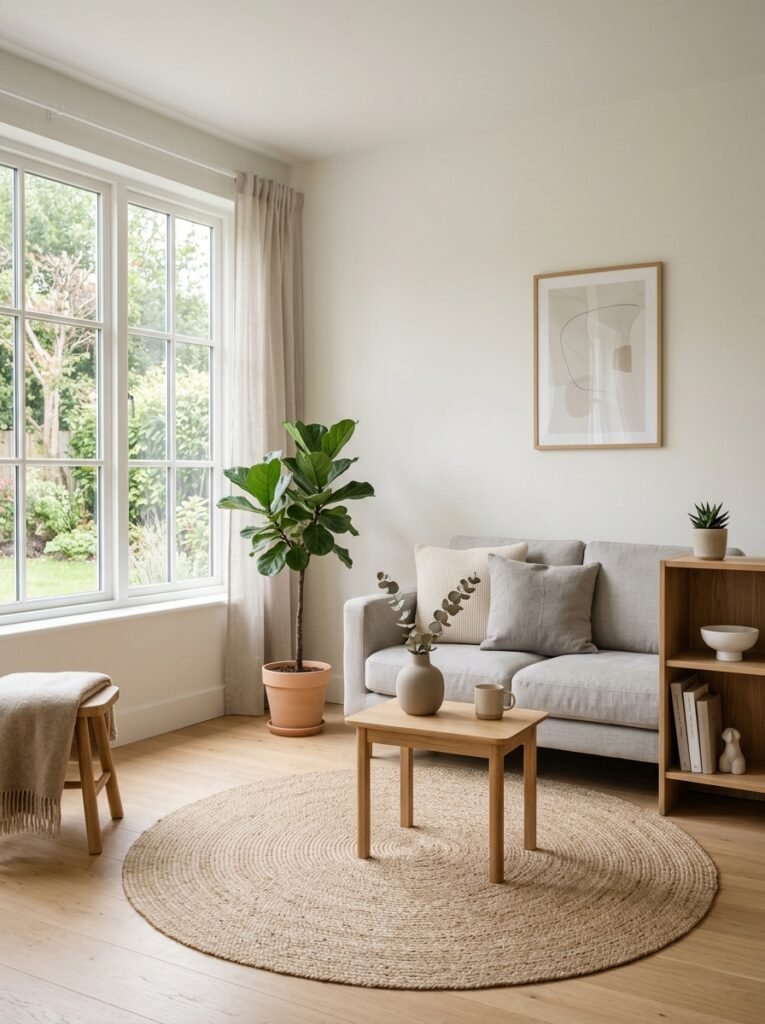
Everything needs a reason to be there.
Not sentimental. Not “I’ve had it for years.” A functional or visual reason. Does it serve a purpose? Does it actually bring you joy when you look at it, or have you just stopped seeing it?
This sounds brutal but it’s actually kind. Because every extra thing in a small room is competing for visual attention. Every item is asking your eye to stop and register it. And when everything demands attention, nothing gets it — the room just feels busy and kind of exhausting.
I went through my living room once with this question — does it earn its space? — and cleared out about forty percent of what was in there. The room looked larger. Calmer. More expensive, somehow, even though I’d removed things and spent nothing.
—
6. Mirrors That Actually Work (Not the Ones That Just Reflect Your Sofa Back at You)
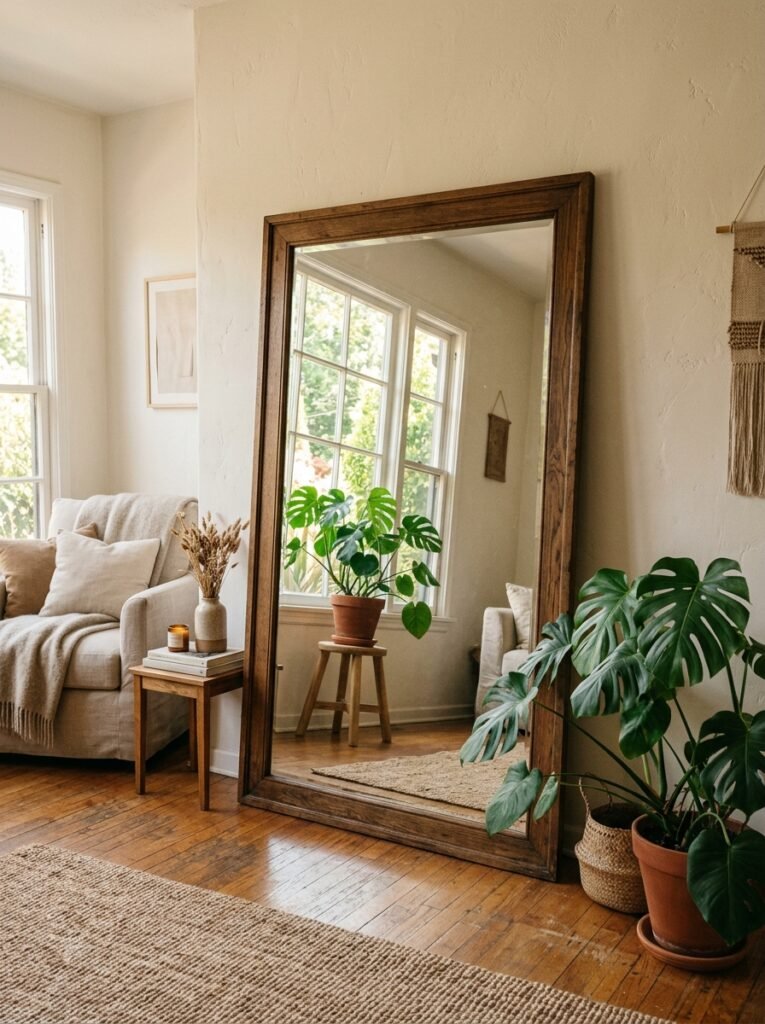
Okay, yes, mirrors make small rooms feel bigger. You’ve heard this. But the placement matters enormously and most people get it wrong.
A mirror that faces a wall reflects a wall. Groundbreaking. No.
You want a mirror that reflects either a window (natural light bouncing back into the room = the room appears to glow from within) or something beautiful — a lamp, a plant, a corner you love. The reflection should be something you’d want to see twice.
“A mirror isn’t a trick. It’s a decision about what you want the room to say about itself.”
Lean a large mirror against the wall rather than hanging it precisely centered — that slightly casual angle reads more like a design choice and less like a Pinterest tutorial you followed. And go bigger than you think. A small mirror in a small room just looks timid.
Charity shops in the UK, Facebook Marketplace, eBay — you can find a beautiful large mirror for almost nothing if you’re willing to spray paint a tired frame.
—
7. The Rug Size That’s Secretly Shrinking Your Room
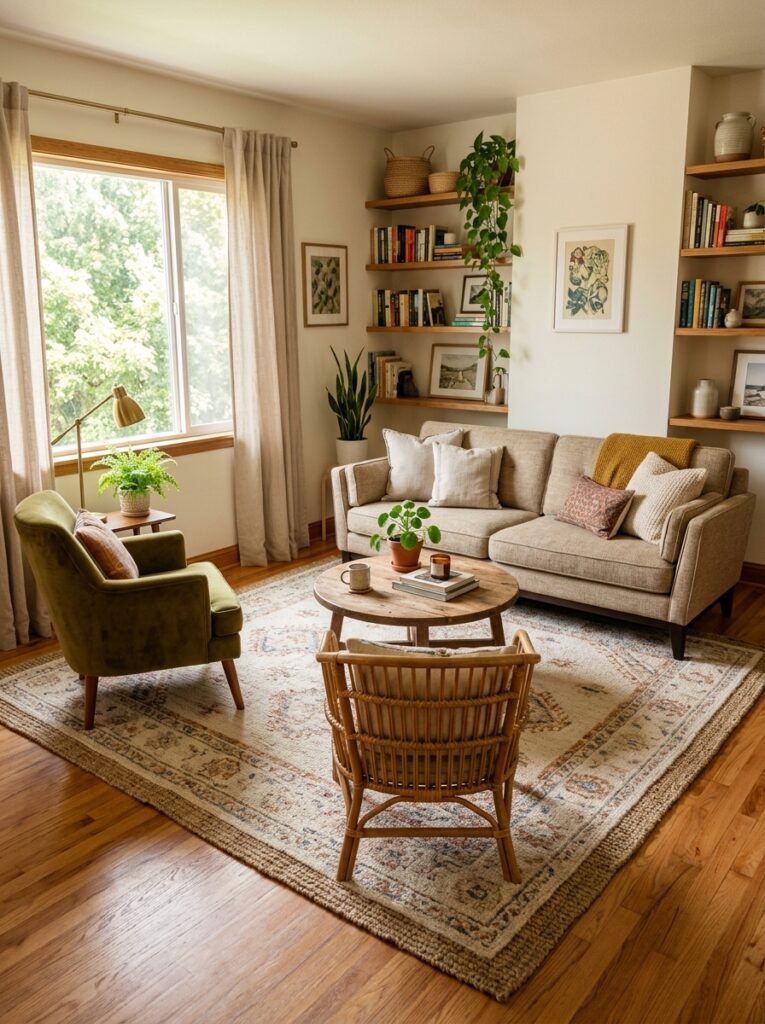
Too small. The rug is almost always too small.
A tiny rug floating in the center of a room is the equivalent of putting a paperclip on a desk and calling it organized. It doesn’t anchor anything. It doesn’t define the space. It just sits there, looking apologetic.
For a small living room to feel complete and purposeful, the rug needs to be large enough that the front legs of your sofa and chairs sit ON it. That connection — furniture to rug — makes the whole seating area feel like one intentional zone rather than a collection of separate things that ended up in the same room.
The cheapest route here is IKEA’s flatweave rugs (the Köpenhamn and similar ranges), or honestly, checking rug sellers on Amazon where you can get a decent 8×10 for under $100. It doesn’t have to be thick. It doesn’t have to be a statement. But it has to be big enough to DO something.
—
8. Plants That Won’t Die in a Dark Flat (Because Most of Them Will)
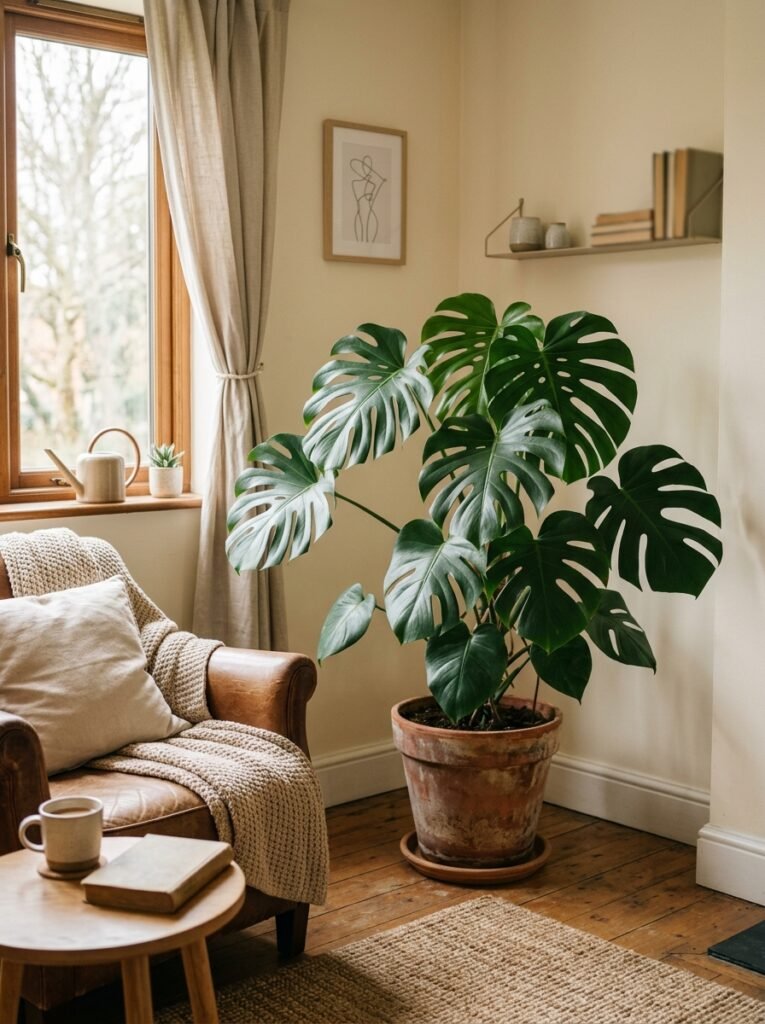
Not every plant is going to survive your living room. I’ve killed enough of them to know.
But certain ones genuinely thrive in lower-light situations and they look GOOD doing it. Pothos — the trailing kind that you can let drape down from a shelf — is almost indestructible. Snake plants look architectural and sharp and sort of intentional in a way that makes people think you have a design eye. ZZ plants have these perfect glossy leaves that look almost fake, but in a very good way.
A single large plant — not a collection of tiny plants in a row — makes more visual impact and takes up less actual floor space than you’d expect. One big, dramatic monstera in the corner of a small room looks like a decision. Twelve little succulents on a windowsill look like a hobby.
I know which one I’d rather have in my living room.
—
9. The Shelf Styling Secret That Costs Basically Nothing
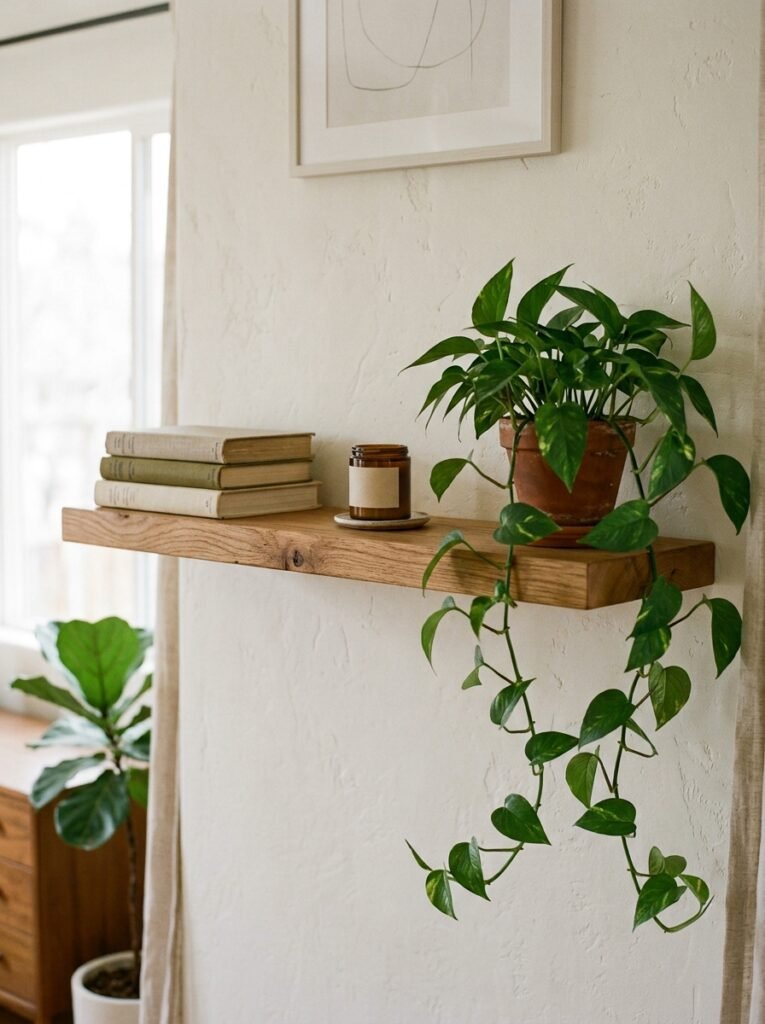
Empty space is part of the design. This took me years to learn.
When you pack shelves completely — every inch filled, no gaps — it reads as storage, not styling. Your eye doesn’t know where to land. It’s all equally loud.
But when you leave space? When there’s breathing room between the books and the little ceramic thing and the trailing plant? That whitespace — that visual pause — is what makes the whole shelf look intentional.
Here’s a cheap trick that works embarrassingly well: vary the height. Stack two books horizontally and place a candle on top. Lean a small framed photo against the back instead of hanging it. Let one shelf be nearly empty. Let another feel more filled. The asymmetry is the point.
“The shelf that looks expensive is usually the one where someone was brave enough to leave half of it empty.”
—
10. The Throw Pillow Math That Nobody Actually Talks About
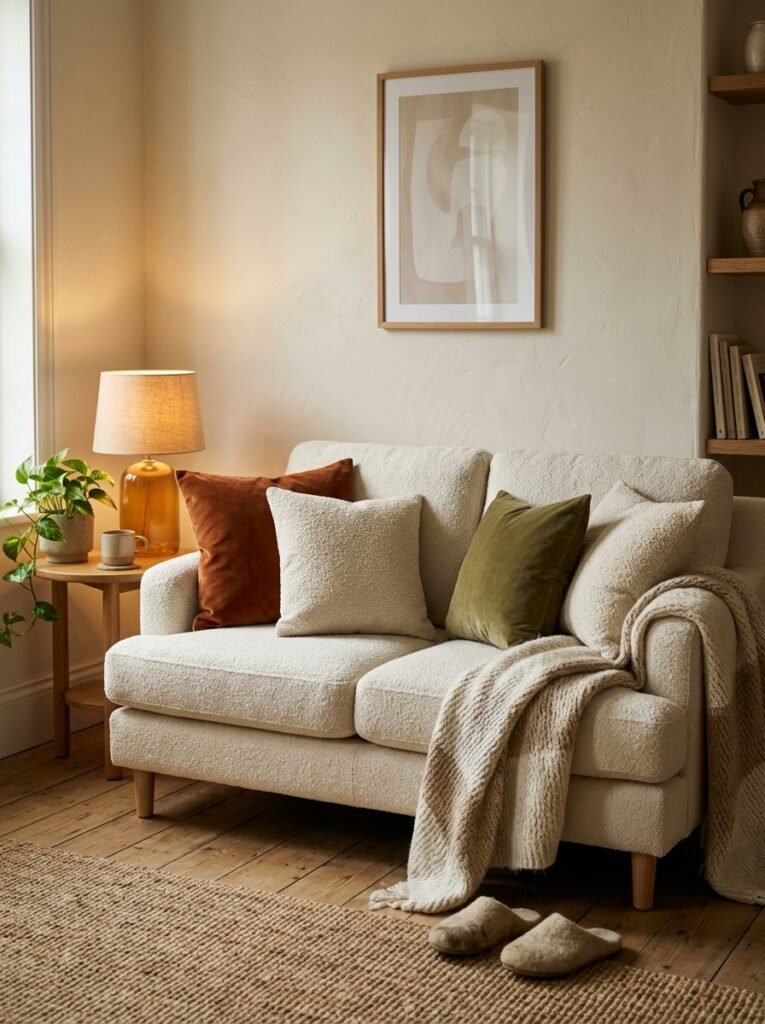
Too many. You have too many throw pillows.
I’m saying this with love. But the sofa that’s drowning in seven throw pillows of varying sizes and patterns isn’t cozy — it’s overwhelming, and also, you have to move all of them before you can sit down, which means they end up on the floor, which means the whole thing looks chaotic within about four minutes of anyone using the room.
Two or three pillows. That’s it. In a small room, your sofa needs to look like furniture, not a display. Pick one or two that have an interesting texture — boucle, velvet, chunky knit — over ones with busy prints. Texture reads as cozy and intentional even when there’s not much of it. Busy prints just add visual noise.
Same logic applies to throws. One throw, draped casually (not folded with origami precision). That’s all.
—
11. The Vertical Space Everybody Has and Nobody Uses
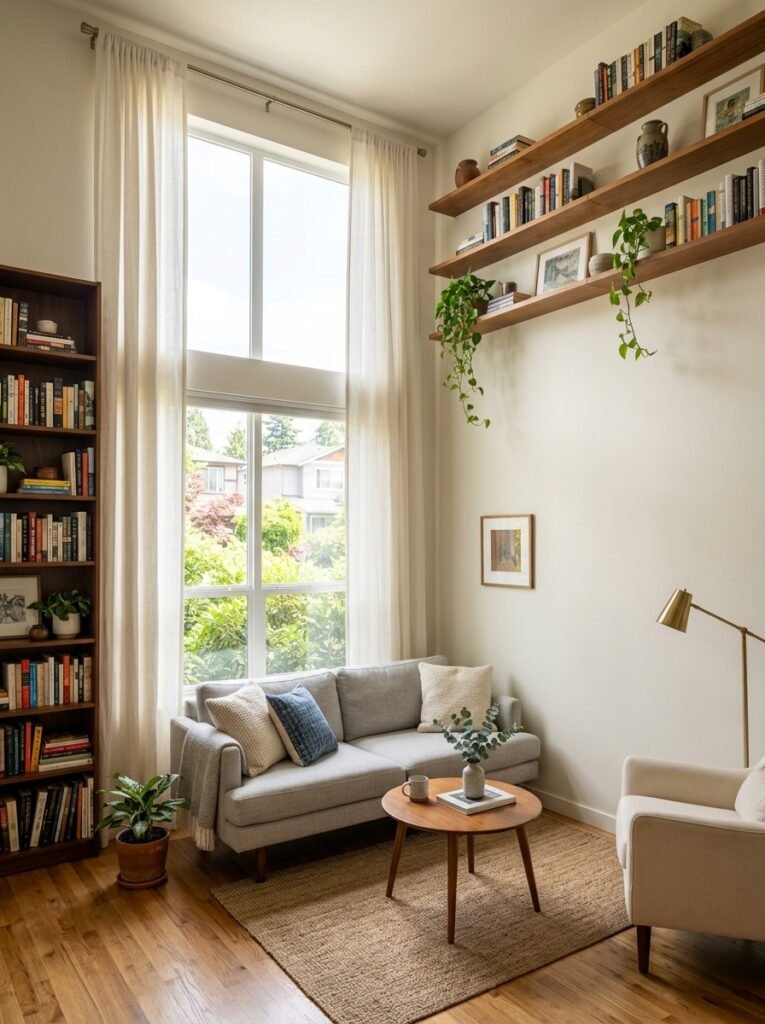
In a small room, the floor is basically a luxury item. You don’t have a lot of it. So stop putting everything on it.
Tall, narrow bookshelves instead of wide, low ones. Curtains hung as close to the ceiling as possible — even if the window starts at normal height, curtains that run floor-to-ceiling make the wall feel TALLER and make the window feel larger. This is genuinely one of those “why didn’t I do this years ago” changes.
Wall-mounted shelves in the corner where two walls meet create a whole extra storage and display zone without eating a single inch of floor space. And hooks — plain black metal hooks from any hardware store — on the wall near the entrance of your living room handle the coats and bags that would otherwise end up draped over the furniture.
Not glamorous, maybe. But functional things that get the visual clutter off the floor make every other beautiful thing you’ve done in the room actually visible.
—
12. The One Cheap Buy That Ties a Whole Room Together (And It’s Not What You Think)
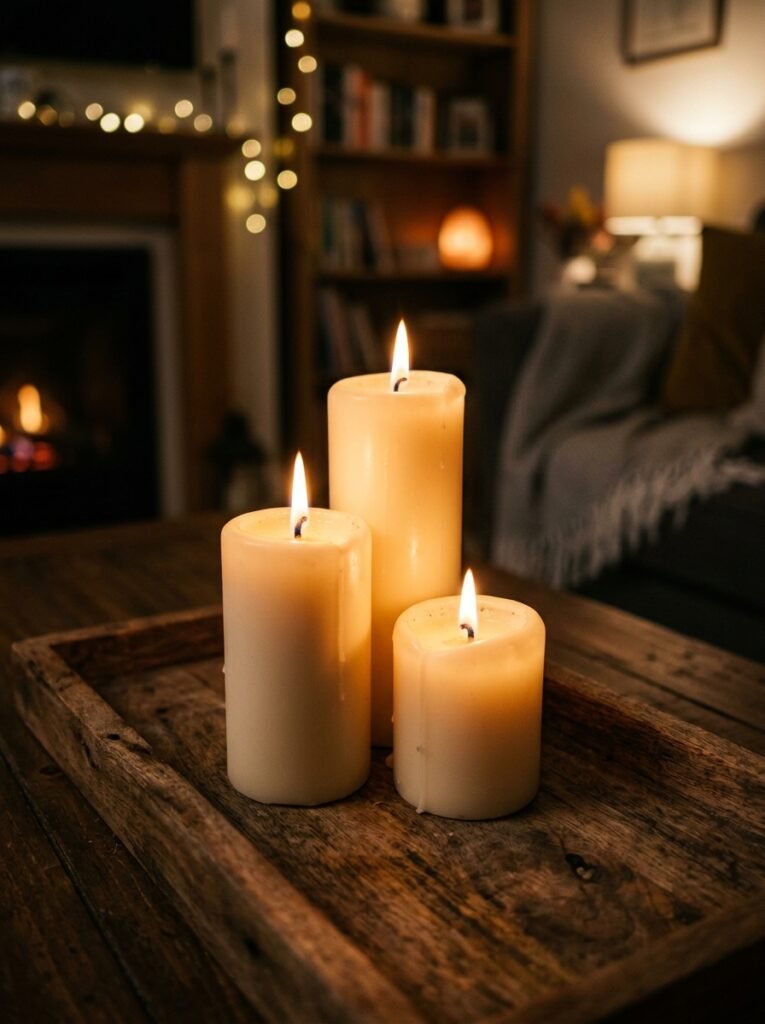
A candle. Or three of them, clustered at different heights on a tray.
I know. It sounds so simple it’s almost disappointing. But something happens when you light a candle in a small living room — the scale of the room stops mattering. Your attention narrows to the warmth, the flicker, the particular vanilla-amber-cedar smell that you’ve come to associate with a Tuesday evening when you’re finally off your feet.
A small room at 8pm with good lamp light and a candle going and a throw over your legs — that’s not a “small room.” That’s a room where people want to stay.
And you can build that atmosphere for under $20. The scent, the flicker, the warmth — they do the heavy lifting that no expensive sofa ever could. Honestly, maybe that’s the whole point of this article right there.
—
❓ FAQ
Q: How do I make a small living room look bigger without spending a lot of money? A: Start with what you’re removing, not what you’re adding. Clear the horizontal surfaces, pull the furniture away from the walls slightly, and swap your overhead light for two lamps. These three things cost almost nothing and create an immediate visual shift.
Q: What’s the best rug size for a small living room? A: Bigger than you have. Genuinely. For most small living rooms, an 8×10 foot rug is the minimum you want — the front legs of your sofa and chairs should rest on it. A rug that’s too small makes the room feel disjointed and actually emphasizes how small the space is.
Q: Can dark colors work in a small living room? A: Yes, and sometimes better than you’d expect. A single deeply colored wall — dusty green, navy, terracotta — can make a small room feel intimate rather than cramped. The key is keeping the furniture lighter and making sure you have enough warm lamplight to counter it in the evenings.
—
💭 Final Thoughts
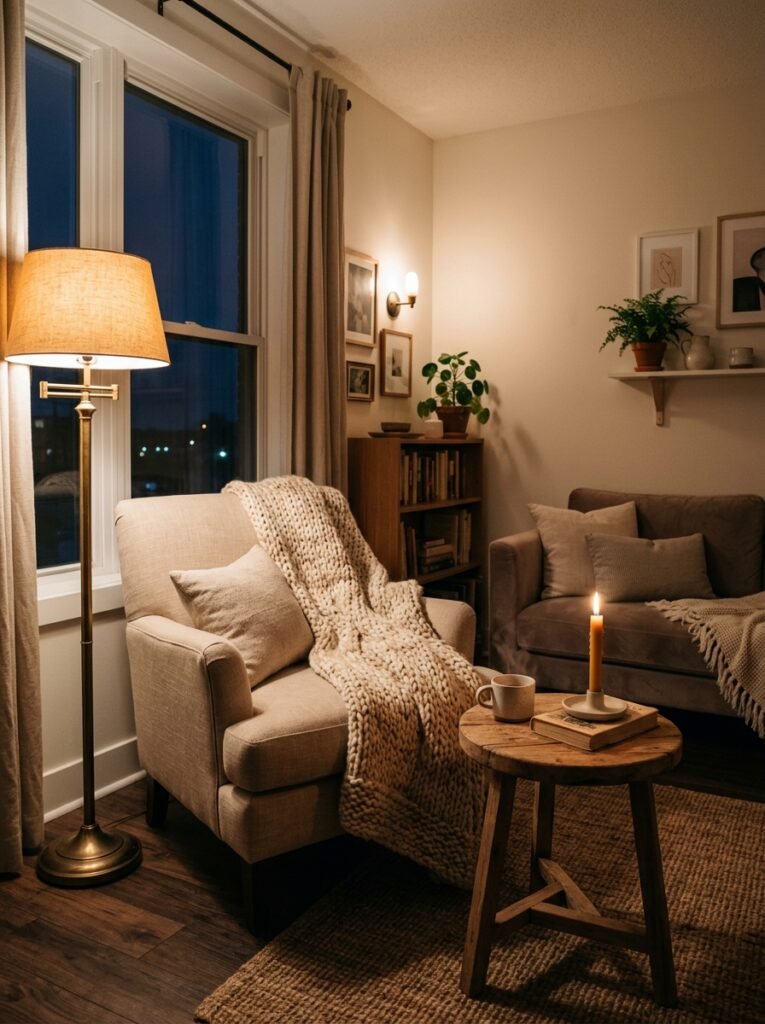
Small rooms aren’t a problem to solve. They’re a constraint that makes you more intentional — about what you keep, what you light, what you let breathe. Every beautiful small living room I’ve ever seen has that quality: nothing accidental about it.
You don’t need more space. You need a clearer eye for what the space you have is actually doing.
So — what’s the one thing in your living room right now that isn’t earning its place?