Modern Living Room Curtains That Actually Make the Room (Not Just the Window)
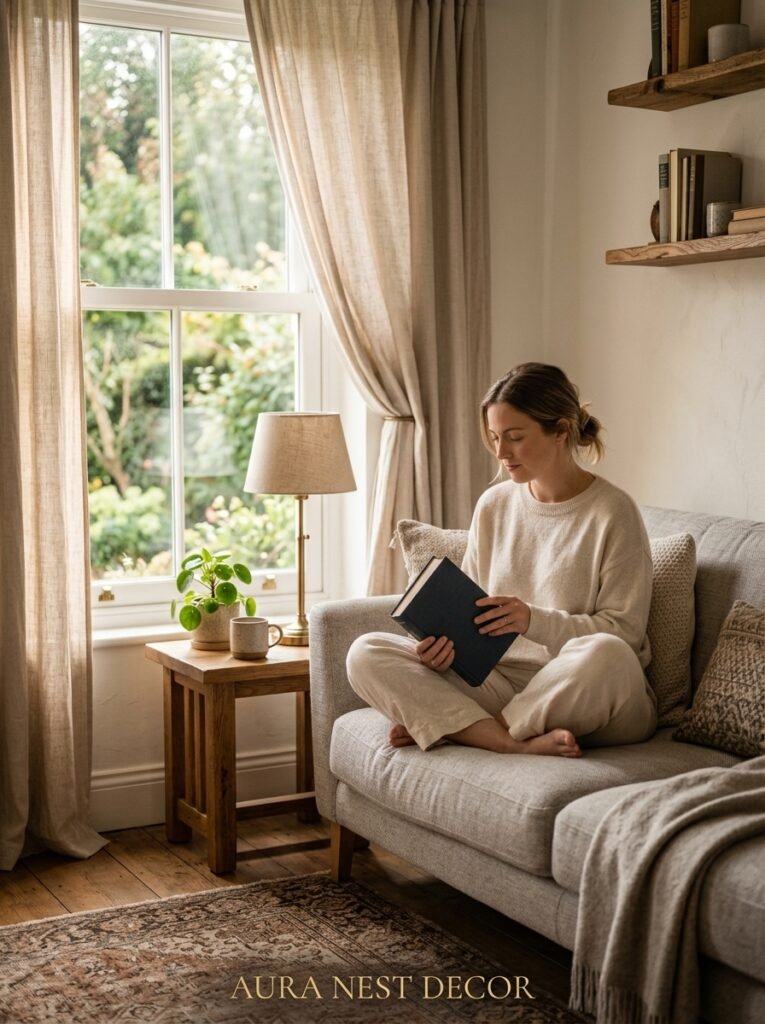
My friend Emma kept saying her living room felt “off.” New sofa, fresh paint, the whole thing. And I walked in and immediately saw it — the curtains were hanging six inches below the ceiling, in a fabric that matched nothing, doing absolutely nothing for that gorgeous tall window she had.
One change. That’s all it took.
—
1. The Height Trick That Designers Use on Every Single Project
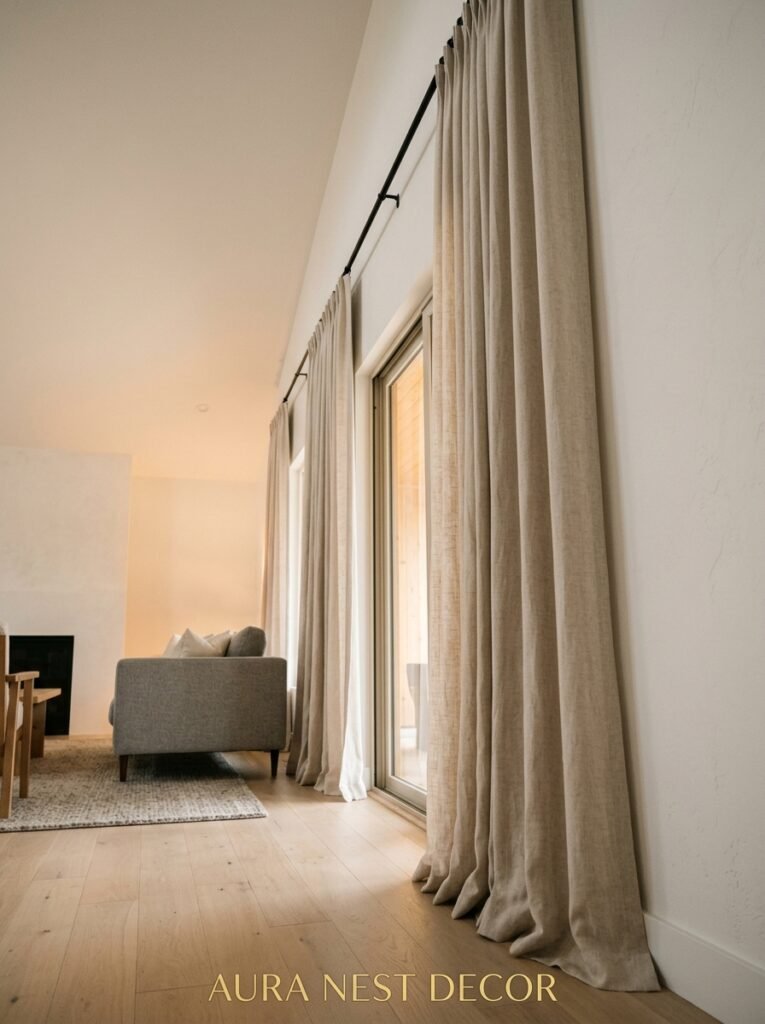
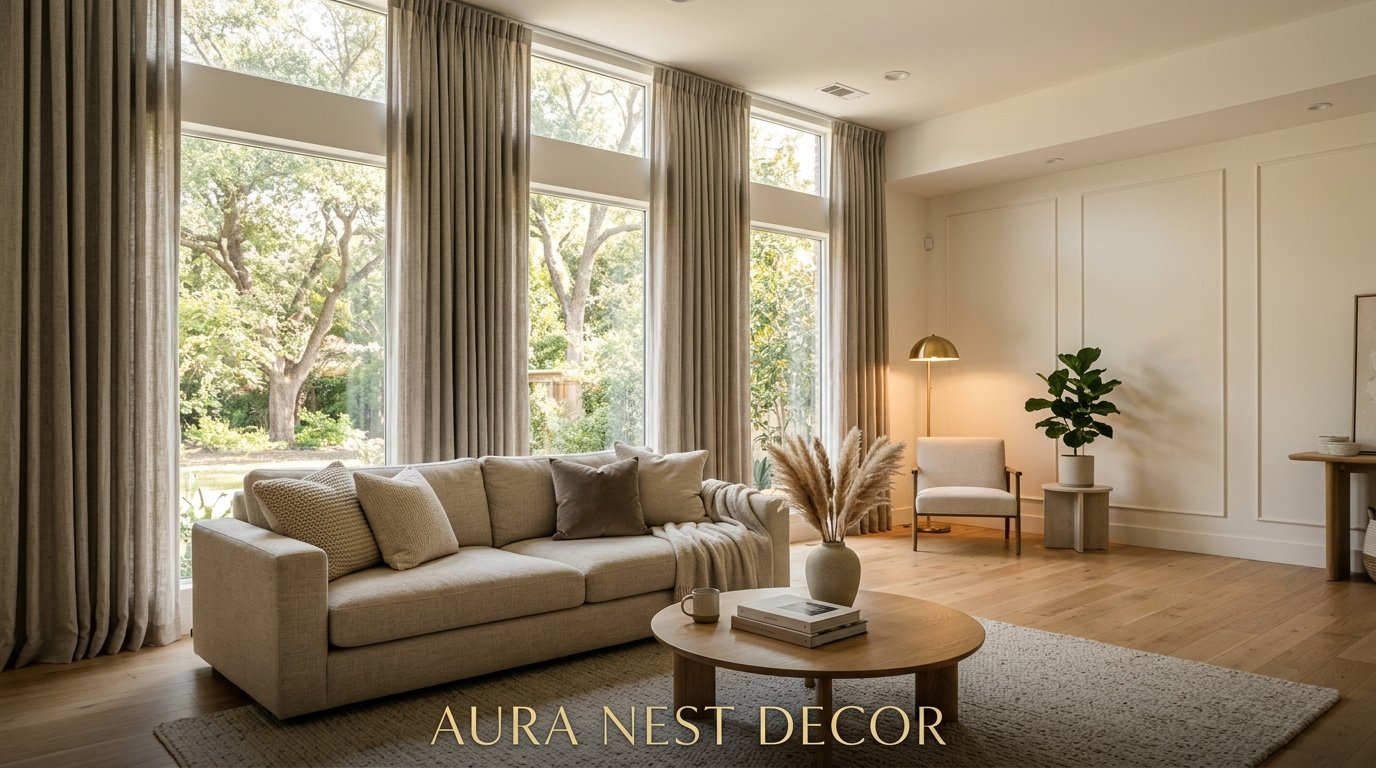
Hang them HIGH. I can’t stress this enough. Most people hang curtain rods at the top of the window frame and then wonder why the room feels squat and a little sad. The actual rule — and this is the one that changed how I look at every room — is to mount the rod as close to the ceiling as possible, or at minimum 4 to 6 inches above the window frame.
It’s not magic. It’s just physics. Your eye follows the fabric upward, the ceiling appears taller, the whole room exhales.
For a standard 8-foot ceiling, that means your curtains are probably 96 inches long. For anything taller, you might want a slight puddle at the floor, maybe an inch or two, which sounds fussy but actually reads as incredibly intentional in person. British homes especially — those Victorian bay windows in older terraces — look STUNNING with floor-length panels hung high. Don’t let anyone talk you into short curtains in a room with character like that.
“The rod placement does more work than the curtain fabric. Get that wrong and nothing else matters.”
—
2. Linen Is Everywhere Right Now and There’s a Reason For That
I’ll be honest, I resisted the linen curtain trend for a while. Felt a bit too “trying to look effortless,” if that makes sense. But I tried them and I get it now.
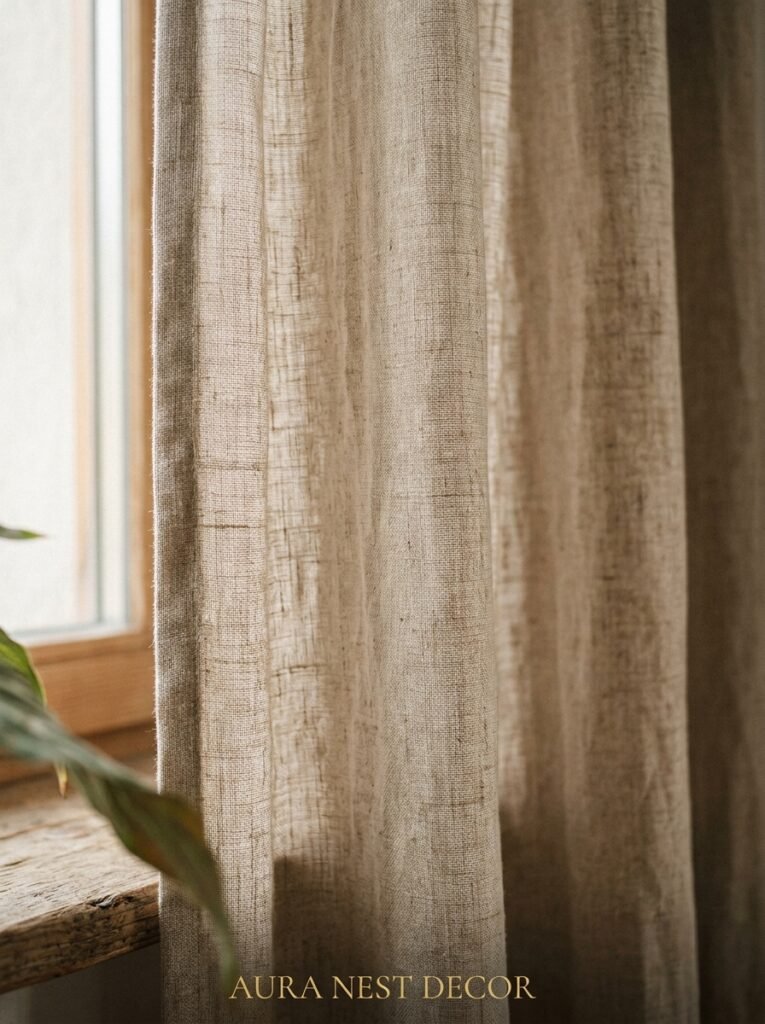
The way linen handles light is genuinely different from polyester sheers or heavy velvet. It softens sunlight rather than blocking it or letting it blast straight through. You get this warm, diffused glow in the morning that feels almost like a filter has been put over your whole room. And they drape with just the right amount of rumple — not sloppy, just lived-in.
Natural linen, undyed or in oatmeal/warm white tones, is what’s showing up in every beautiful living room on Pinterest right now. Paired with warm wood tones or plaster-effect walls, it feels modern without trying too hard.
Washing tip: wash them before hanging. Linen shrinks. Ask me how I know.
—
3. The Color That Keeps Showing Up in Every Beautiful Living Room Right Now
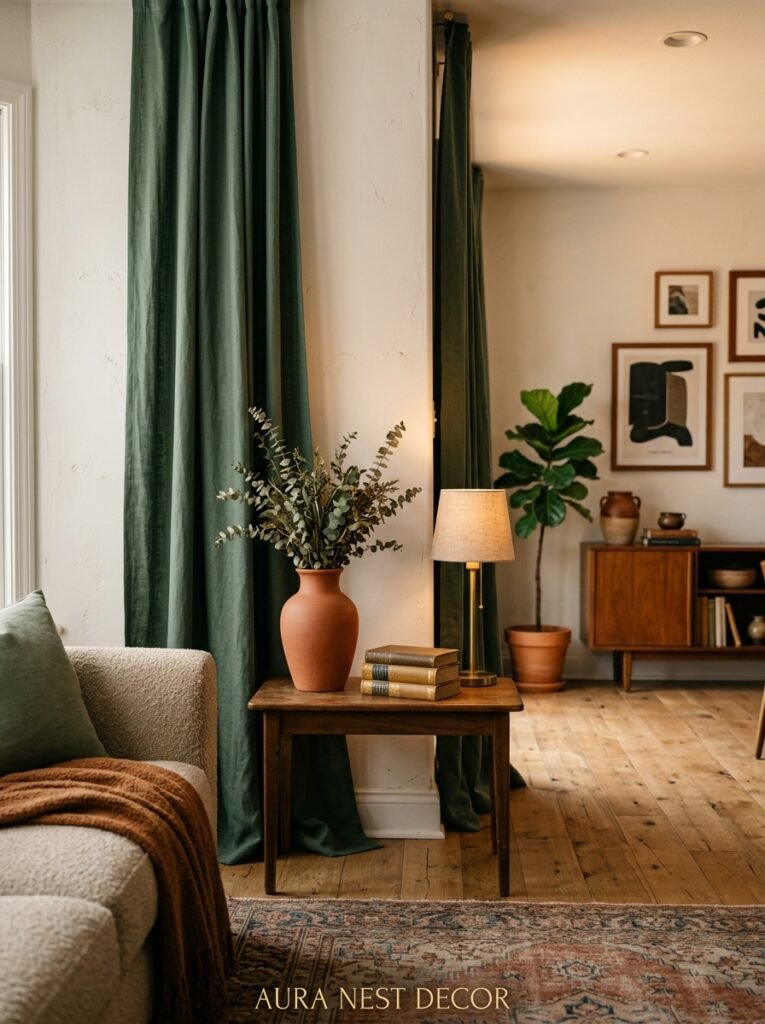
Deep terracotta. Warm clay. That brick-adjacent, burnished rust tone that looks absolutely nothing like what you’d expect on a curtain but somehow makes everything around it look more expensive.
It works because it’s warm without being aggressive. It’s color without being loud. And it photographs BEAUTIFULLY, which is why it keeps showing up in every saved Pinterest board and every design magazine editorial right now.
If you’re nervous about committing — don’t be, but I get it — try it in a room that already has warm undertones. Cream walls, wooden flooring, brass hardware. That combination is nearly impossible to get wrong. The curtains become the anchor instead of the afterthought.
And for UK readers specifically: terracotta pairs extraordinarily well with the kind of grey-cast natural light we get in northern England or Scotland. It counteracts that cool flatness in a way that plain white or grey curtains just… don’t.
—
4. Why Velvet Curtains Aren’t Just for Period Properties Anymore
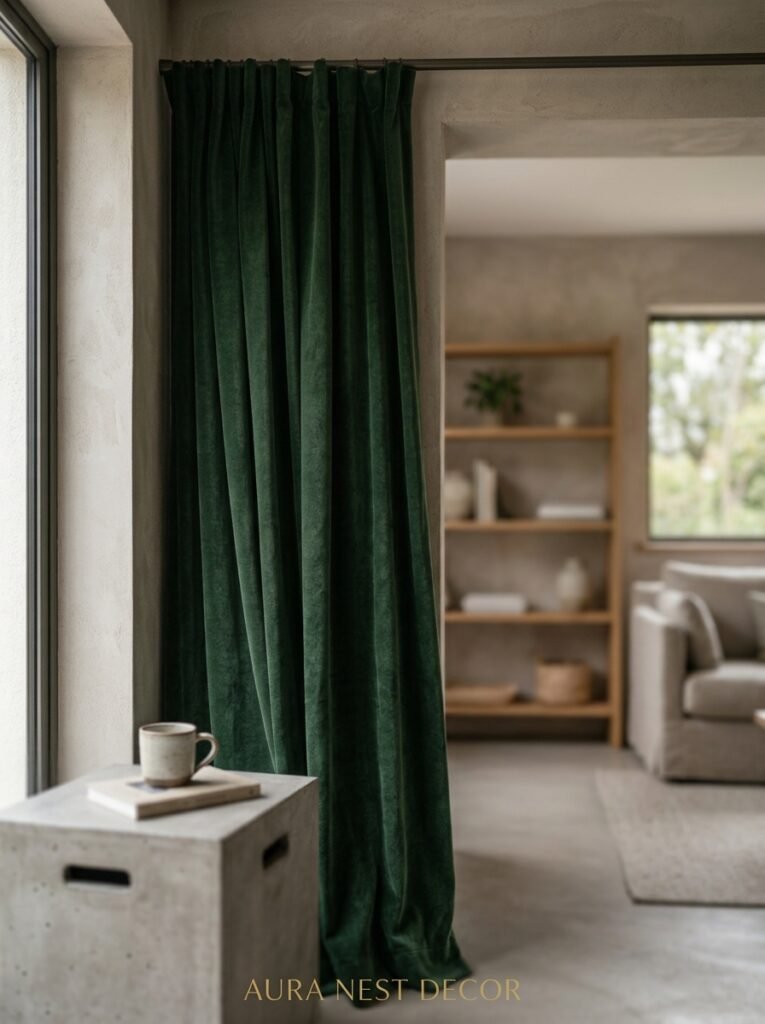
Someone told me once that velvet curtains were only for old houses with fireplaces and Persian rugs, and I think about how wrong that is constantly.
Modern velvet — particularly in deep teal, dusty sage, or dark forest green — works brilliantly in contemporary spaces. The trick is contrast. Put a plush velvet panel against a matte plaster wall and clean-lined furniture and it reads as intentional and interesting, not heavy or dated.
The practical case for velvet: it’s one of the best curtain fabrics for noise reduction and insulation. If your living room faces a busy road, or if your UK home has those old sash windows that let in a draft, thick velvet panels make a REAL difference. Not just aesthetically. Actually, physically, in the winter.
Go floor to ceiling. Keep the hardware simple — a matte black or brushed brass rod with minimal rings. That’s it. That’s the look.
—
5. The One Rule That Makes Any Tiny Living Room Feel Like It Was Designed on Purpose
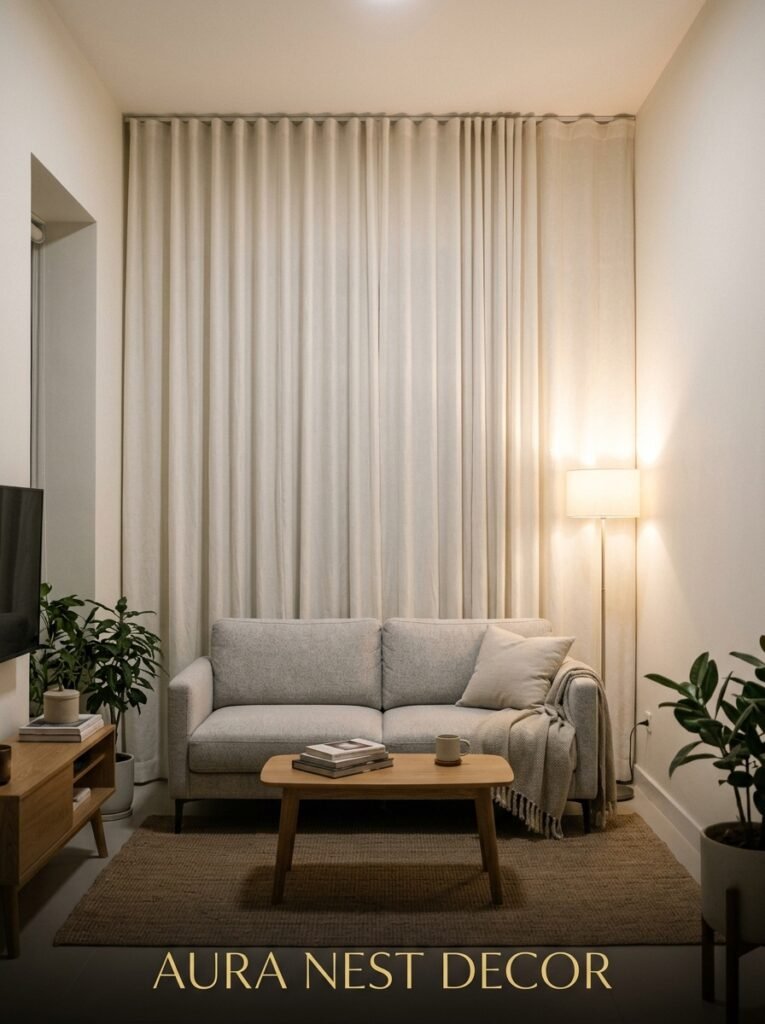
Width. Not length. Width.
People obsess over curtain length but the thing that actually makes a room feel pulled-together is having enough fabric width. A curtain panel that barely covers the window when closed looks thin and cheap regardless of what it cost. The standard advice is to use fabric that’s 2 to 2.5 times the width of your window.
So a 48-inch window wants panels totaling about 96 to 120 inches of fabric. Yes, that’s a lot. But when they’re open during the day, all that extra fabric gathers into beautiful, full stacks on either side, and the window looks framed rather than covered.
“Skimpy curtains are the single fastest way to make a well-decorated room look unfinished.”
Small rooms actually benefit from this MORE than large ones, not less. The fullness draws the eye to the window and then out, which tricks the brain into perceiving more space. Counterintuitive but it works every time.
—
6. Sheer Layering and Why You Probably Want Two Curtain Rods
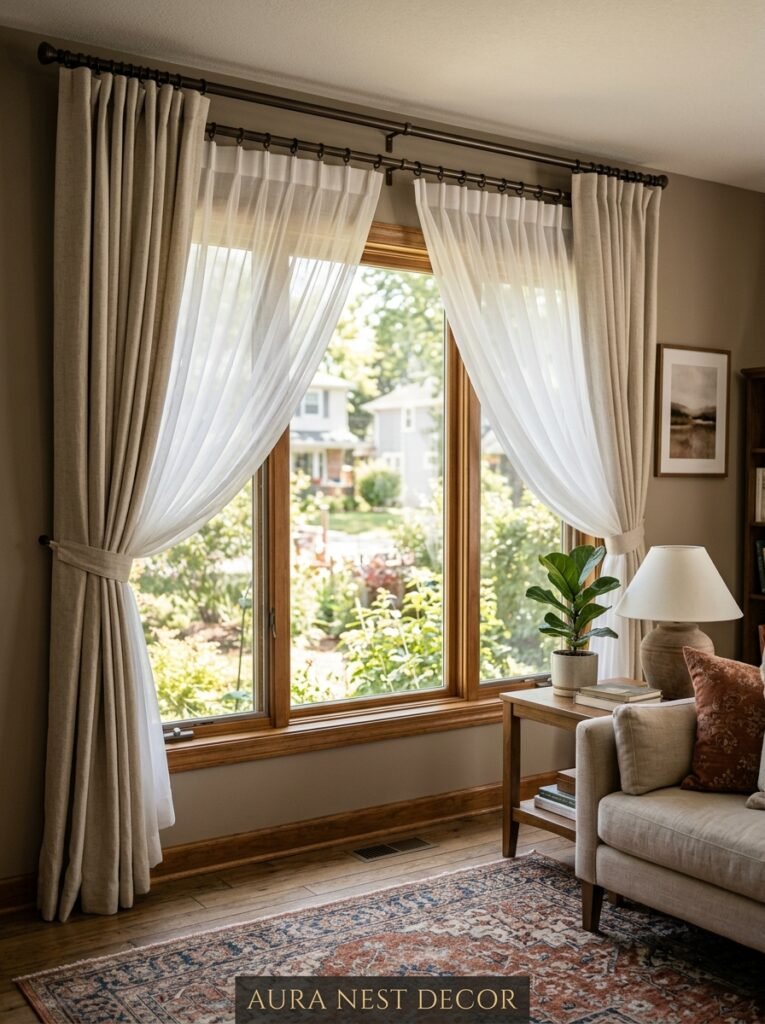
Two rods. I know it sounds like extra work, and it is, but hear me out.
The combination of a sheer inner layer and a heavier outer panel is what gives that magazine-quality look to a window. During the day you can pull back the heavy panels and let the sheers do their thing — filtering light, maintaining some privacy, making the room glow. In the evening you close everything and the room feels properly cocooned.
For the sheers: white or ivory linen sheers are the safest choice and they go with genuinely everything. If you’re feeling adventurous, try a very fine striped sheer — a barely-there thin stripe in the same family as your wall color. It adds texture without adding visual noise.
The double rod setup also gives you flexibility. Going bold with your outer curtains? Balance it with plain white sheers. Going neutral on the outer panels? You can do something slightly more interesting in the sheer layer. It’s a surprisingly low-stakes way to add complexity to a window.
—
7. The Hardware Is Not an Afterthought (I Promise You’ll Regret Cheap Rings)
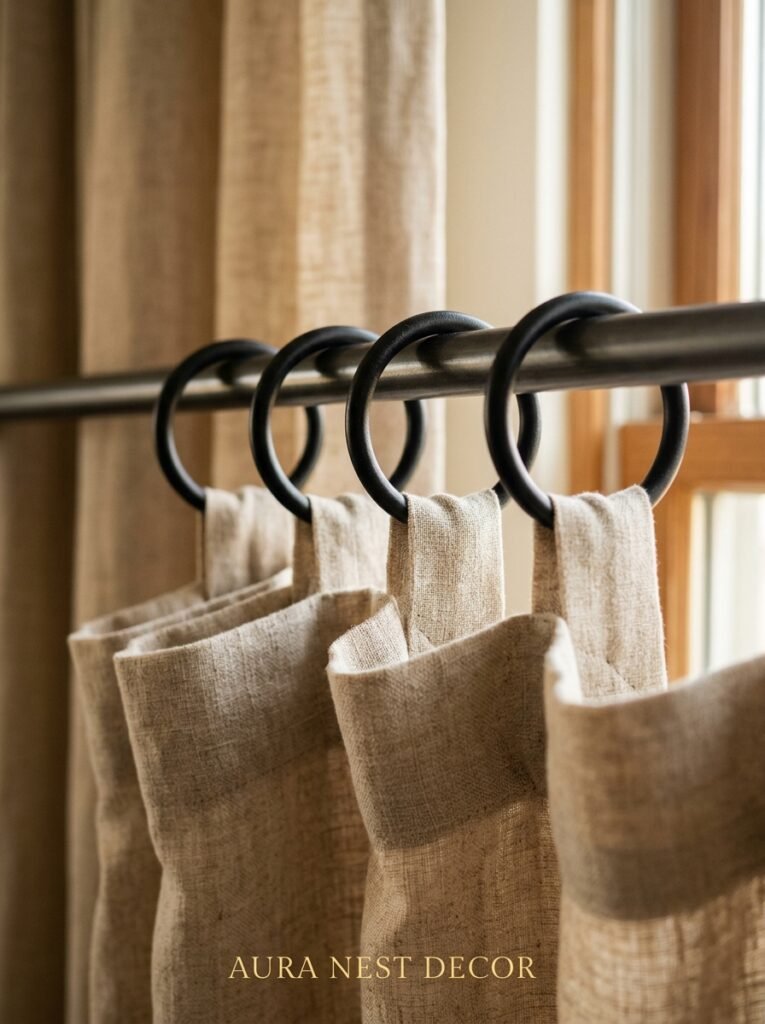
Okay, real talk. I’ve made the mistake of buying beautiful curtains and then pinching pennies on the hardware, and it shows. Cheap curtain rings make a noise every time you open them, they stick, they look obviously plastic-gold even from the other side of the room.
Matte black is the most forgiving finish right now and it works with almost everything — warm or cool rooms, traditional or modern furniture, every paint color I can think of. Brushed brass is slightly warmer and works brilliantly in rooms with aged brass or antique touches elsewhere. Brushed nickel or chrome is best saved for very clean, minimal spaces.
For rod diameter: don’t go too thin. A 1-inch diameter minimum for most living room windows. Anything thinner bows slightly under the weight of heavier panels and it never stops being noticeable once you’ve seen it.
Side note — eyelet curtains vs. pinch pleat vs. tab top. Eyelet curtains (the ones with the metal rings built into the fabric) are the easiest to hang and clean and they look clean and modern. Pinch pleat is more formal and architectural — great for period homes or if you want that tailored look. Tab top is casual and better for lighter fabrics. Choose based on the vibe, not just what’s easiest.
—
8. What Nobody Tells You About Dark Curtains in a Small Room
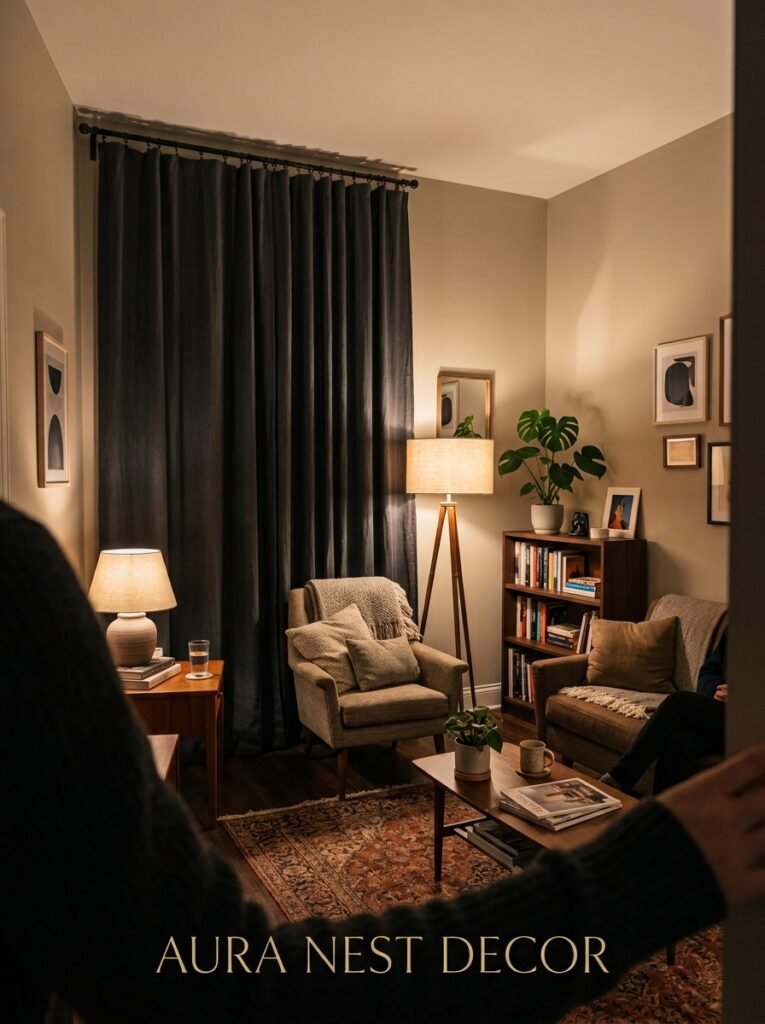
Don’t avoid them. That’s the short version.
The longer version: dark curtains in a small room work when everything else is light and the room has decent natural light for at least part of the day. The curtains become a feature, a frame for the window, rather than something that closes the room in.
A small living room in deep navy, charcoal, or forest green curtains against white or off-white walls doesn’t feel cramped. It feels considered. It feels like someone made a choice, which is almost always more interesting than playing it safe.
The rooms that feel small and dark are usually the ones with low-hung curtains in a blah beige that doesn’t add to anything. Counterintuitively, sometimes going darker and bolder makes a small room feel MORE designed and therefore more spacious.
—
9. Pattern Rules — and When to Break Them
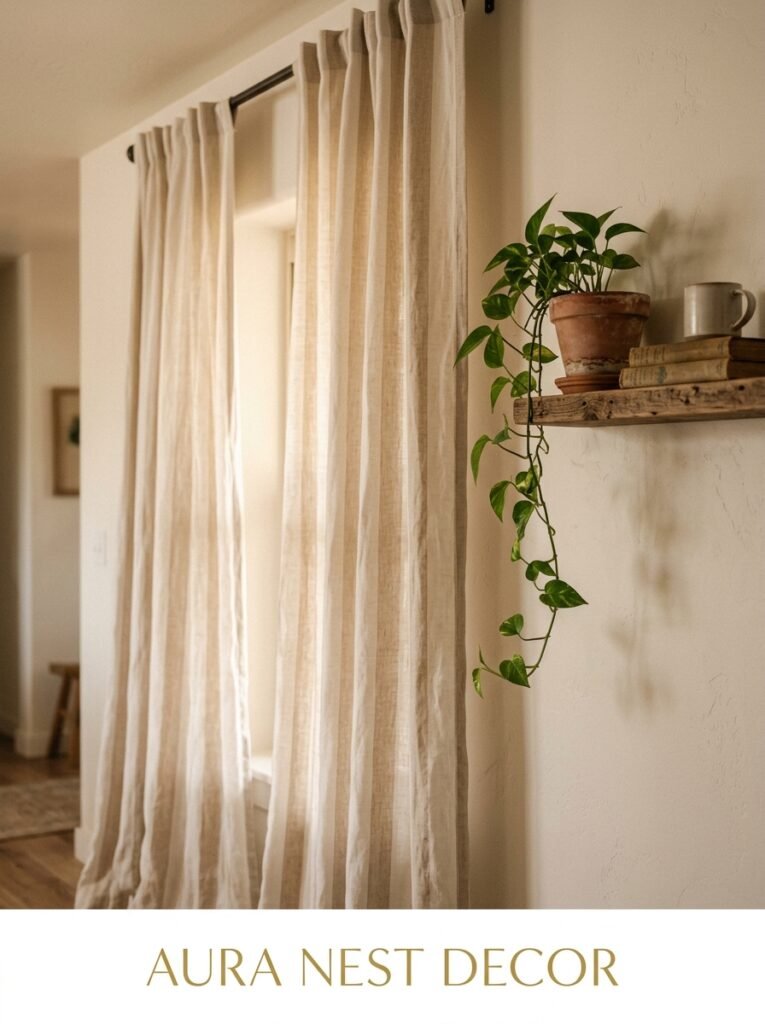
Most modern living rooms look best with solid curtains because the room itself usually has enough going on — a patterned sofa, art, a rug. The curtain is the backdrop, not the feature.
But. There are cases where a pattern works brilliantly, and I’d rather tell you what they are than just say “it depends.”
Organic patterns — irregular, botanical, slightly abstract — work better than geometric repeats in most living rooms. A large-scale leaf print in muted, earthy tones can feel organic and modern rather than busy. A very subtle tone-on-tone weave counts as pattern too and it’s one of the safest ways to add texture without risk.
Geometric prints work in very clean, minimal spaces. If your living room has simple furniture, plain walls, and not much else going on, a bold geometric curtain can be the thing that saves the room from looking bare. But in a room that’s already layered? Probably skip it.
Floral? Honestly, if it’s a very modern, stylized botanical print rather than a vintage cabbage rose, yes. The line between “design-forward floral” and “your grandma’s parlour” is real but it exists. Trust your gut on this one.
“Pattern on curtains works like a statement necklace — occasionally brilliant, sometimes too much, always a conversation.”
—
10. The Curtain Trend I Actually Think Will Last (and the One That Won’t)
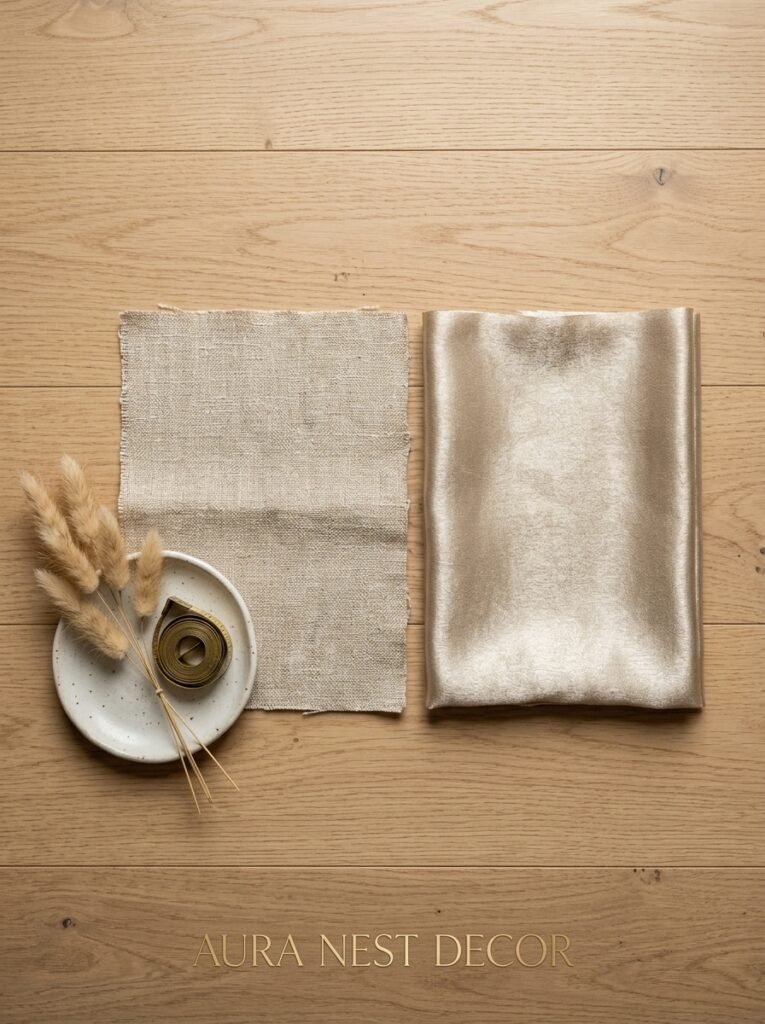
Lasting: warm neutrals in natural fabrics. Linen, cotton, jute-blend. Oatmeal, warm white, pale terracotta, soft sage. These have been building for several years and they’re not going anywhere because they work in real homes, not just photoshoots. They age well, they clean decently, and they make every living room feel slightly more peaceful.
Not lasting: extremely trendy colorways that feel very much of this moment. I’m not going to name specific ones because that feels harsh, but you know the ones — the very particular shade of green that’s everywhere in 2024, the exact dusty lilac that’s on every mood board right now. Curtains are a bit of an investment and they’re not easy to swap out the way a cushion is. Think twice before chasing a color that’s been everywhere for about eight months.
Also not lasting: curtains that are obviously too short, which somehow became “on trend” in some design circles. I don’t buy it. Short curtains date a room faster than almost any other choice.
—
11. The UK-Specific Stuff American Posts Always Miss
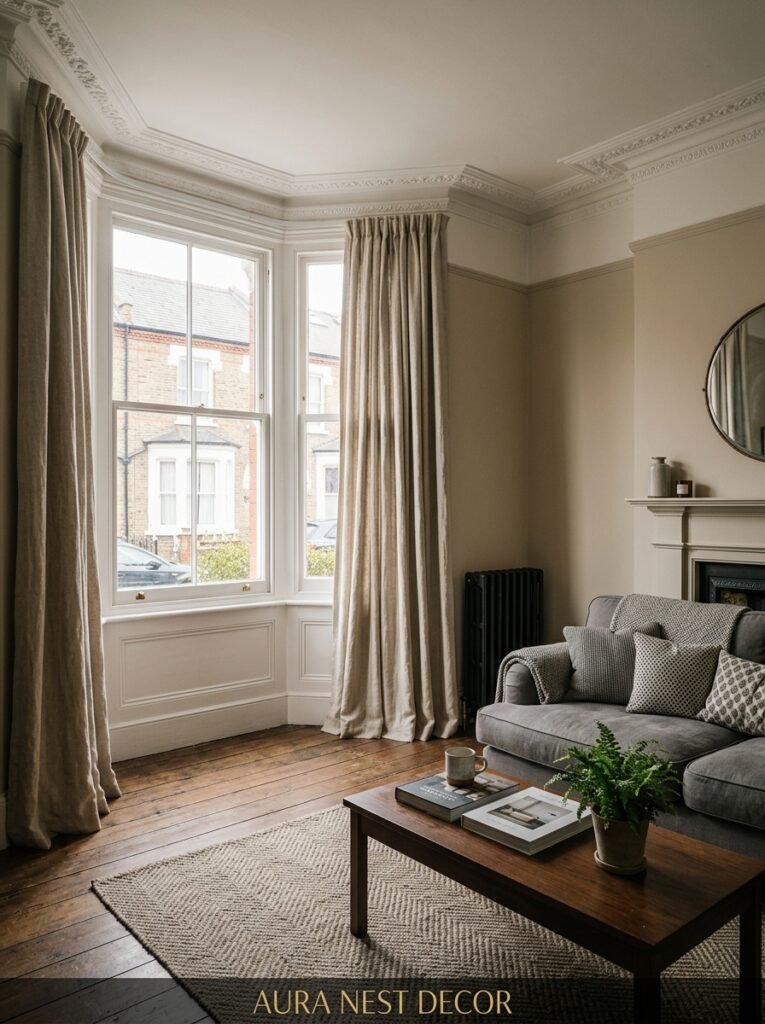
British living rooms have different challenges that American curtain guides just don’t account for.
Bay windows, for one. If your home has a Victorian or Edwardian bay, you’ve got a few options: bend the curtain rod around the bay (this requires a flexible or curved rod), hang separate panels on each section of the bay, or use a track system instead of a rod. The track system is the most practical and it can look incredibly sleek with the right curtain fabric. It’s also much easier to draw the curtains fully without them catching on the angle.
Sash windows. The sliding mechanism means you lose a couple of inches at the bottom of the frame to the sill that can be awkward with traditional rod placement. Hanging higher helps here — mount the rod well above the frame so the panels clear the sash mechanism entirely and you can still operate the window.
Also: British homes tend toward lower ceilings in older housing stock, which makes the “hang it high” rule even more important here than in American homes with standard 9-foot ceilings.
—
12. Making It Feel Like Your Room, Not a Showroom
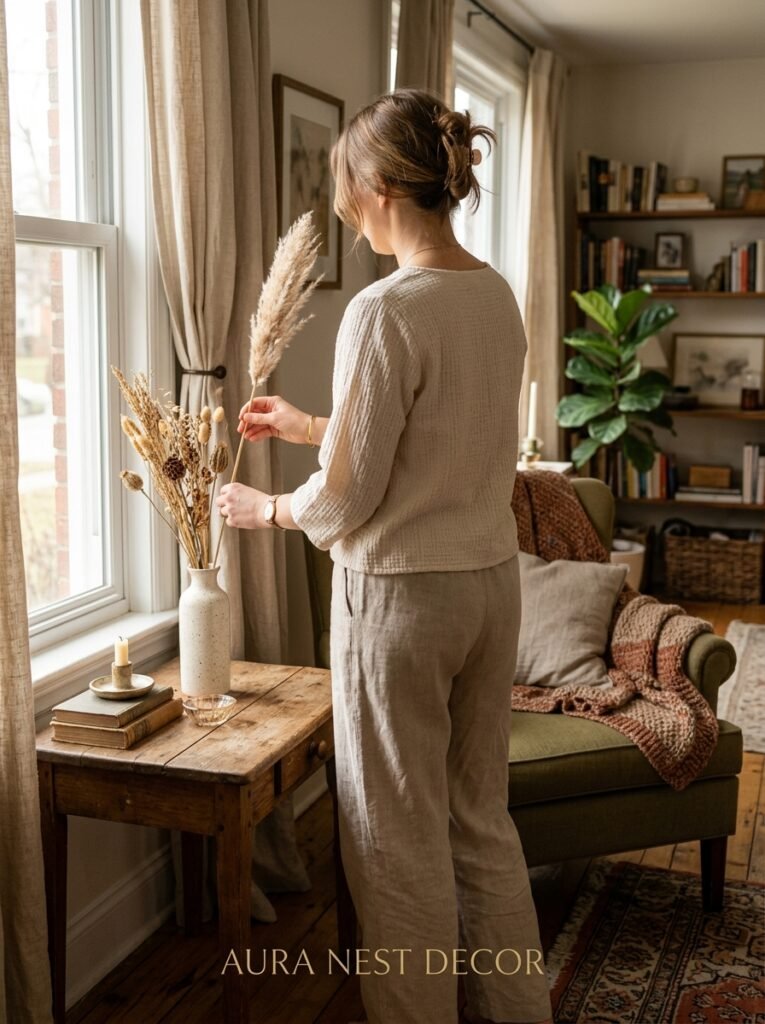
The best living rooms on Pinterest — the ones you save and come back to — usually have one thing in common. They feel inhabited. Not perfect, just real.
Curtains are part of that. And what I mean is: don’t overthink the cohesion. If you love a fabric, try it. If it’s not quite right with your sofa, live with it for a week before you return it. Rooms that feel good usually got there through a bit of trial and a bit of instinct, not through rigid planning.
Mix your curtain style with what you already love about your room. Have a lot of warm wood? Lean into linen in warm tones. Have a very cool, clean palette with grey and white? Try something unexpected — a rust, a deep teal, a proper navy — as a curtain that grounds it all. The unexpected thing, done confidently, usually looks better than the obvious safe choice.
And buy the longer ones. Always buy the longer ones.
—
❓ FAQ
Q: How do I know what length curtains to buy for my living room? A: Measure from where the rod will sit (ideally near the ceiling, not just above the window frame) down to the floor, then add 1 to 2 inches if you want a slight puddle, or keep it exact if you want a clean break. Always measure before you order — the difference between 90-inch and 96-inch panels is actually very visible in a room.
Q: Can I use bedroom-style curtains in a living room? A: You can, but be aware that living room windows often get more direct light and more foot traffic near them, so fabric durability matters more. Delicate silks or very lightweight voiles that work beautifully in a bedroom might fade or get pulled around more than you’d want in a high-use living space.
Q: What’s the easiest way to update my living room curtains without replacing them? A: Change the hardware first — new curtain rods and rings can make an enormous difference without touching the actual fabric. If the curtains still feel off after that, try remounting the rod higher before you buy anything new. You’d be surprised how many times just moving the rod up fixes the whole problem.
—
💭 Final Thoughts
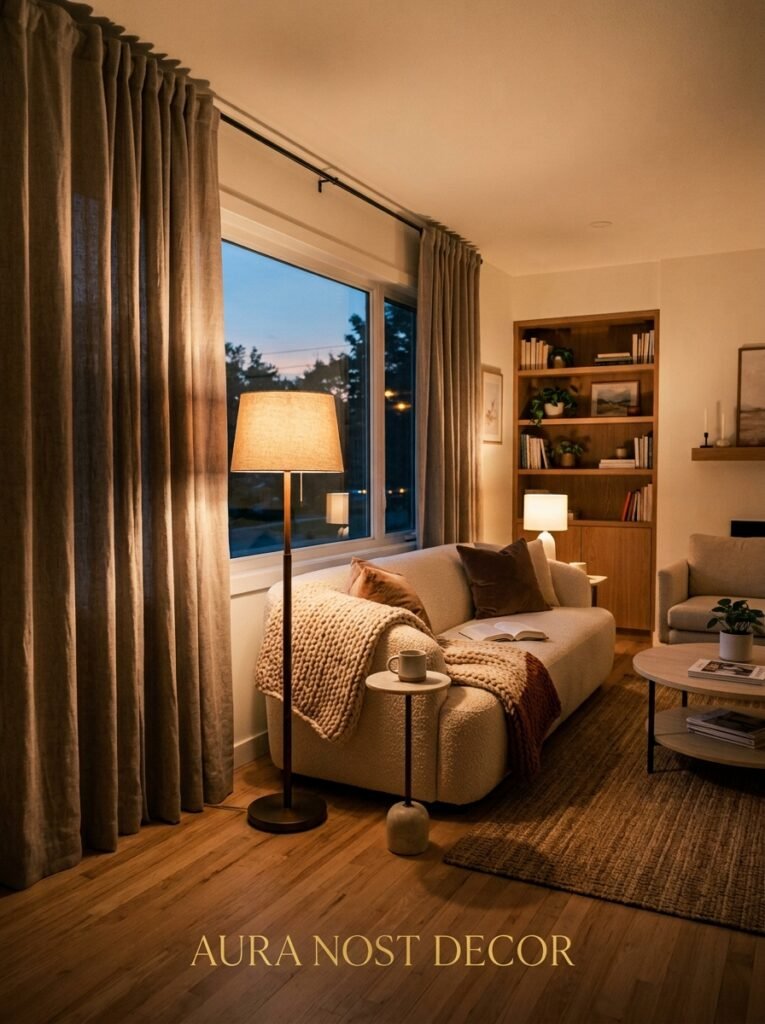
A living room’s curtains do something no other element quite does — they’re always there, even when you’re not noticing them, shaping the light and the feeling of the whole space. Get them right and the room just feels settled, like it knows what it is.
You don’t have to spend a lot. You don’t have to choose the “right” color according to anyone’s trend report. But you do have to choose on purpose.
So — what’s the one window in your living room that’s been quietly bothering you for months?