
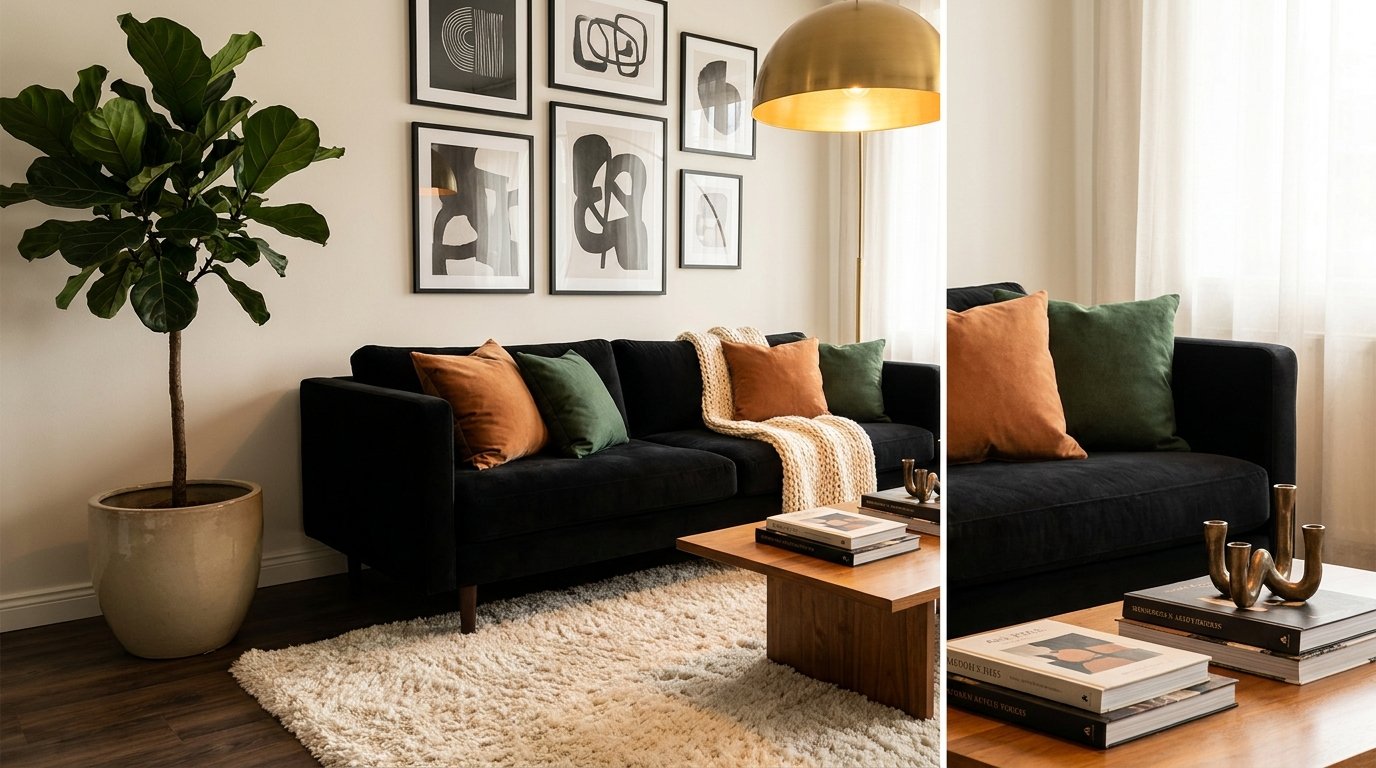
The Black Sofa Living Room: How One Bold Piece Can Transform Your Entire Home
There’s a moment — you know the one — when you walk into a living room and something just stops you. The air feels different. The room feels intentional. And almost always, right at the center of it, there’s a black sofa, anchoring the whole space like a quiet, confident heartbeat.
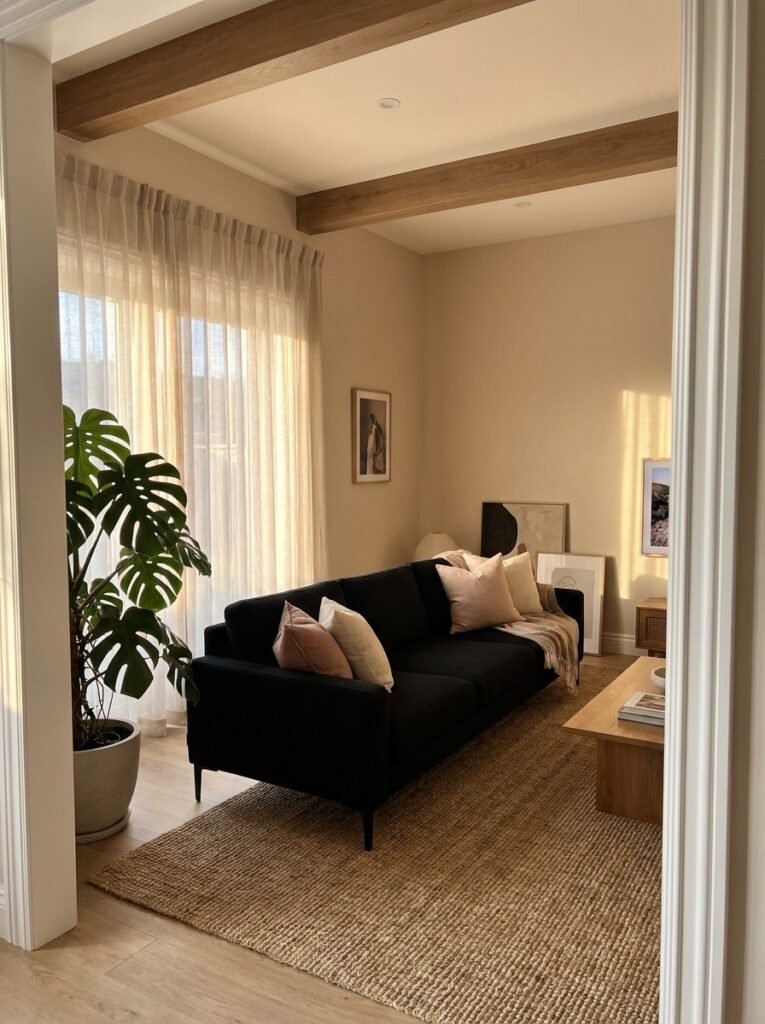
—
1. Why Black Sofas Are Having a Major Moment (And Deserve Every Second of It)
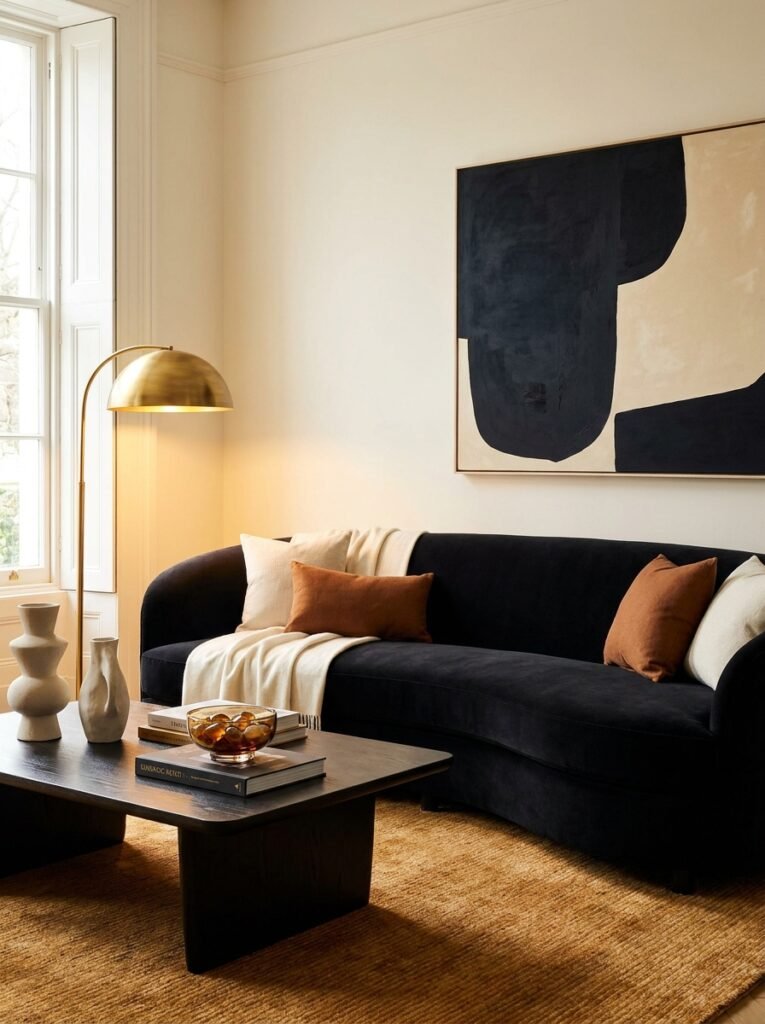
For years, we were told to play it safe. Choose beige. Choose cream. Choose something that won’t show the dirt, won’t date your space, won’t scare away buyers if you ever sell. And so many of us listened — filling our living rooms with forgettable furniture that blended into the background and never truly felt like us.
But something shifted. Maybe it was the rise of moody interior design on social media. Maybe it was the collective exhaustion with beige. Whatever the reason, black sofas have reclaimed their rightful place as one of the most sophisticated, versatile, and genuinely beautiful choices you can make for a living room.
A black sofa isn’t just a furniture choice. It’s a design philosophy — one that says you’re not afraid of contrast, depth, or making a room feel truly lived-in and intentional.
“A black sofa doesn’t darken a room — it gives the room something to orbit around.”
—
2. The Psychology of Black in Interior Design (It’s Not What You Think)

Most people’s first instinct when considering a black sofa is hesitation. Won’t it make the room feel smaller? Heavier? Too dramatic? These are completely understandable concerns — but they’re also largely myths rooted in outdated design thinking.
Black, in interior design psychology, is one of the most grounding colors you can introduce into a space. It creates visual weight, which is actually a good thing when used deliberately. Visual weight prevents a room from feeling scattered or unfinished. It gives the eye a resting place — a place to land before it explores everything else.
Think of it this way: every great painting has shadows. Those deep, dark areas aren’t mistakes — they’re what makes the lighter elements pop. A black sofa works exactly the same way in your living room. It becomes the shadow that makes your warm wood tones, your soft textiles, your gallery wall, and your plants glow with more vibrancy than they ever did before.
Studies in color psychology also link black with feelings of sophistication, security, and elegance. It’s not a depressive color when used with balance — it’s a powerful, stabilizing one.
—
3. The Color Palettes That Make a Black Sofa Absolutely Sing
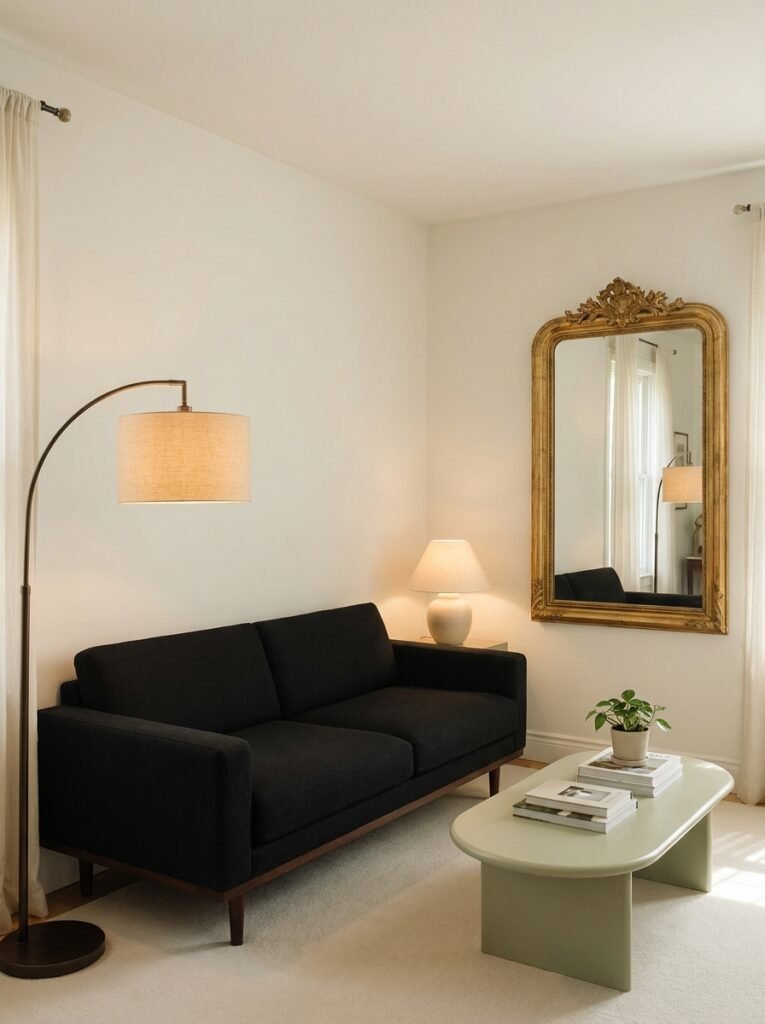
Here’s where things get genuinely exciting, because a black sofa is essentially a design chameleon. Depending on what colors you pair it with, you can create dramatically different moods and aesthetics — all with the same centerpiece.
Warm neutrals and terracotta: Pair your black sofa with terracotta cushions, warm beige walls, and honey-toned wood furniture and you’ll create a space that feels both modern and deeply cozy. The black grounds the warmth, preventing it from tipping into saccharine sweetness.
Crisp white and architectural lines: For a more editorial, magazine-worthy aesthetic, pair black with stark white walls, minimal décor, and clean geometric lines. This combination is bold, confident, and always looks intentional — never accidental.
Forest greens and botanical tones: One of the most gorgeous pairings you can create is black sofa against deep sage, emerald, or forest green. Add natural textures — rattan, linen, jute — and suddenly your living room feels like a sophisticated sanctuary that brings the outdoors in.
Dusty pink and blush tones: This one surprises people every time, but the pairing of black and blush is genuinely beautiful. It softens the drama of the black while elevating the femininity of the pink. It’s romantic without being precious.
—
4. Small Living Room? Here’s How a Black Sofa Actually Works in Your Favor
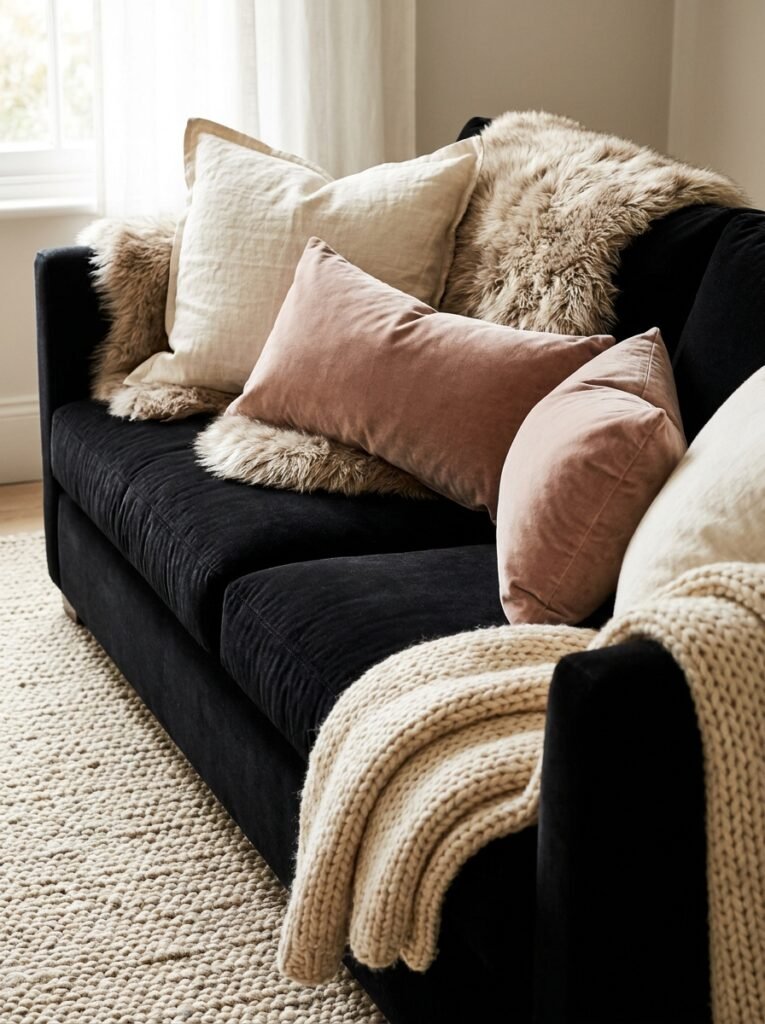
Let’s address the elephant in the room — or rather, the sofa. Many people with smaller living rooms dismiss black sofas entirely, convinced that the dark color will swallow their already-limited square footage. But this is one of the most persistent misconceptions in interior design, and it’s time to retire it.
The key to making a black sofa work in a small space is what you do around it. Light walls — particularly warm whites, soft creams, or even a pale sage — create contrast that makes the room feel airy rather than cave-like. Strategic lighting matters enormously here: floor lamps, table lamps, and even candles at different heights fill the room with warmth and prevent any sense of darkness from creeping in.
Mirrors are your best friend. A large mirror opposite or beside a black sofa doubles the light in the room and creates the illusion of significantly more space. Pair that with low-profile furniture, raised sofa legs (which create visual space beneath the sofa), and you have a small living room that feels curated, not cramped.
“The right lighting doesn’t just illuminate a black sofa — it makes the whole room feel like it’s glowing from within.”
—
5. Textures That Transform a Black Sofa From Stark to Stunning
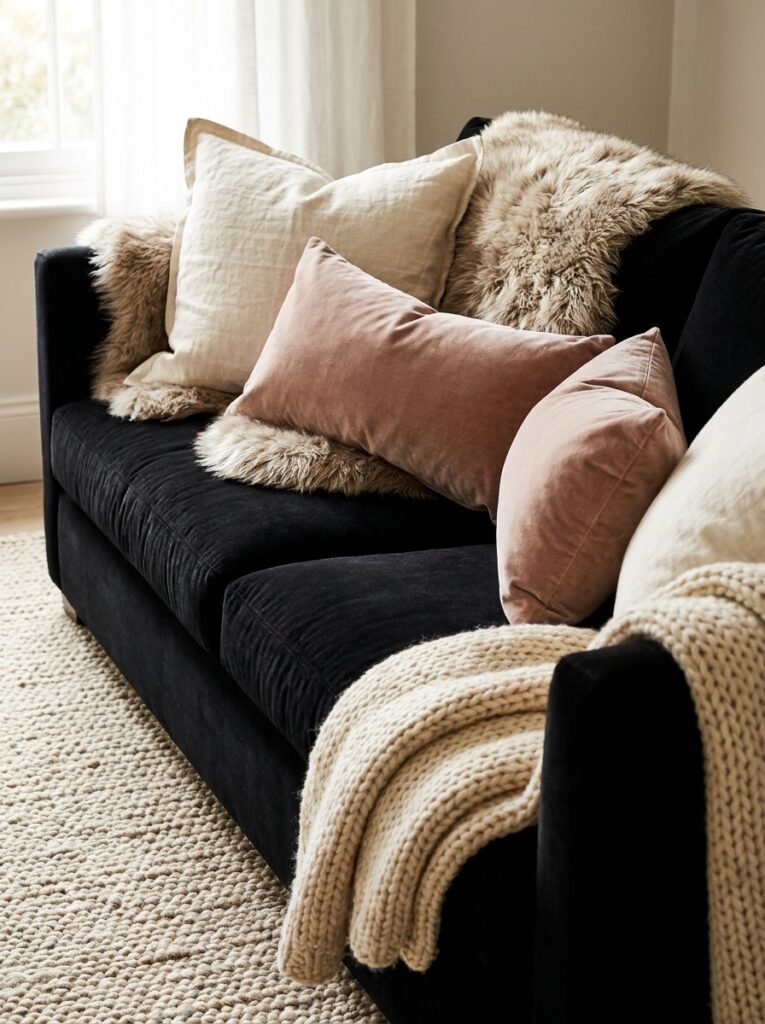
A black sofa with no textural variation can read as flat or even cold. But add layers of texture — and suddenly, that same sofa becomes a masterclass in tactile luxury.
Consider your sofa’s material first. Velvet black sofas have an almost sculptural quality — they absorb light in some areas and reflect it in others, creating depth and richness that flat matte fabrics can’t replicate. Leather black sofas bring a different energy entirely: clean, confident, and slightly edgy in the best possible way. Boucle or bouclé-covered black sofas are a more recent trend that leans into the contrast between the softness of the fabric and the boldness of the color.
Then come the layers: chunky knit throws draped casually over one arm, a pile of cushions in varying sizes and materials — linen, velvet, faux fur — and a textured rug beneath that ties everything together. Each layer softens the visual weight of the black while making the space feel infinitely more inviting.
—
6. Rugs That Were Born to Live Beneath a Black Sofa
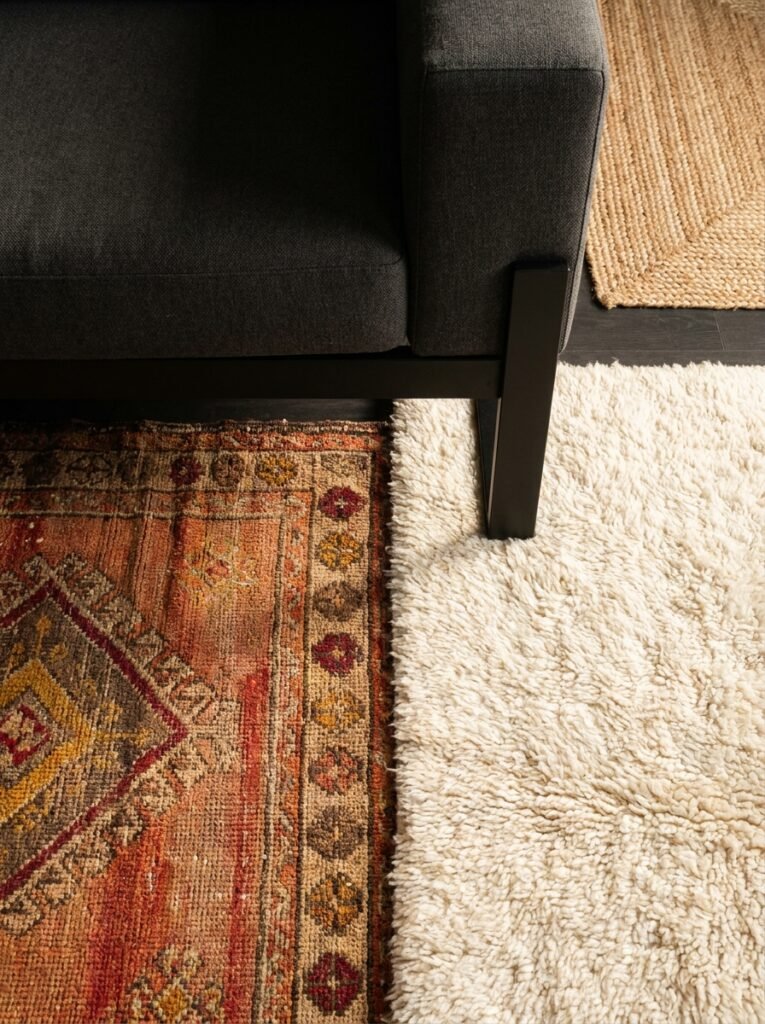
The rug beneath a black sofa is arguably one of the most important decisions you’ll make for the room. It’s the piece that either grounds the sofa beautifully or makes the whole space feel disjointed — and the range of options is genuinely wonderful.
For a bohemian, layered aesthetic, a vintage Moroccan or Persian rug with warm reds, oranges, and golds creates a stunning conversation between the rug’s color and the sofa’s depth. For a more contemporary look, a simple cream or ivory shag rug creates a striking high-contrast moment that’s both modern and deeply cozy.
Natural fiber rugs — jute, sisal, seagrass — work beautifully with black sofas in spaces that lean toward organic or Japandi-inspired design. The rawness of the natural fiber grounds the boldness of the black, creating balance without visual competition. And for those who love drama, a geometric black-and-white rug beneath a black sofa is unexpected and unexpectedly cohesive.
—
7. The Art of the Gallery Wall Above a Black Sofa
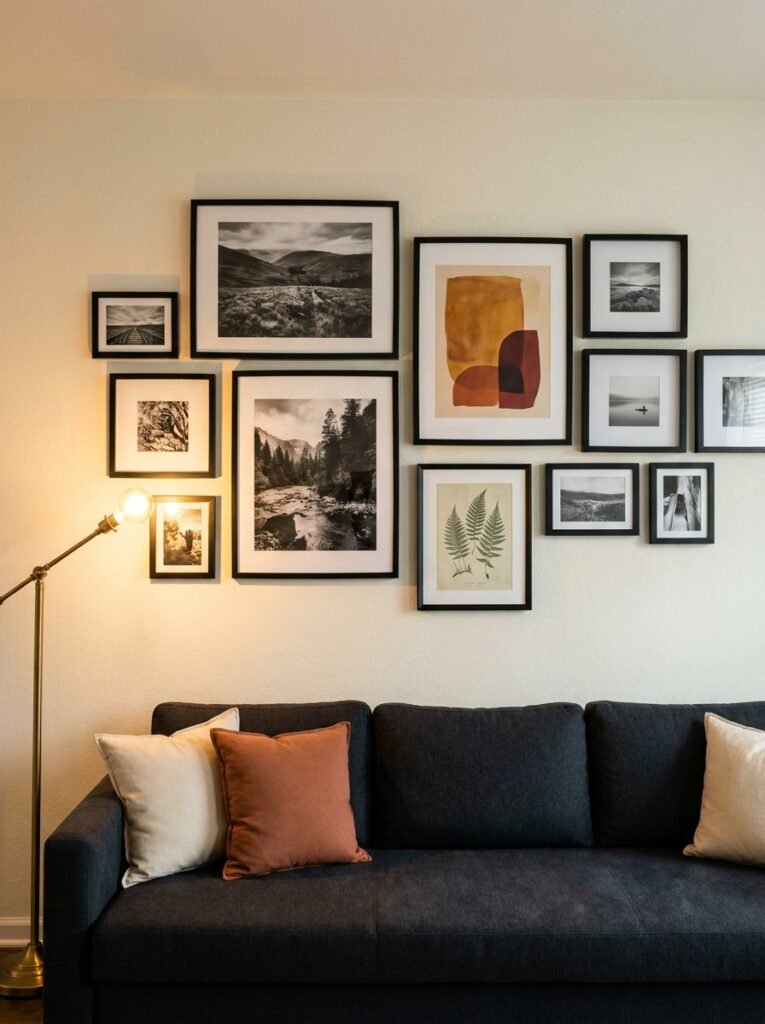
If you’ve ever seen a beautifully styled black sofa living room on Pinterest, chances are the wall above it was doing some serious heavy lifting. The space above your sofa is prime real estate — and a gallery wall is one of the most personal, impactful ways to use it.
With a black sofa, you have tremendous freedom in your gallery wall approach. Black-and-white photography creates a sleek, editorial look that feels timeless and curated. A mix of colorful abstract prints in warm tones adds personality and prevents the space from feeling too stark. Botanical prints bring life and organic movement to the wall, complementing any greenery you’ve added to the room.
The key is consistent framing — even if the art itself varies wildly, keeping frames in a unified color (black, gold, or natural wood are all excellent choices) creates visual harmony across the whole arrangement. Don’t be afraid to mix frame sizes, either. The variation in scale makes the gallery feel collected over time rather than purchased in one anxious afternoon.
—
8. Lighting Ideas That Make Your Black Sofa Look Like It Belongs in a Magazine
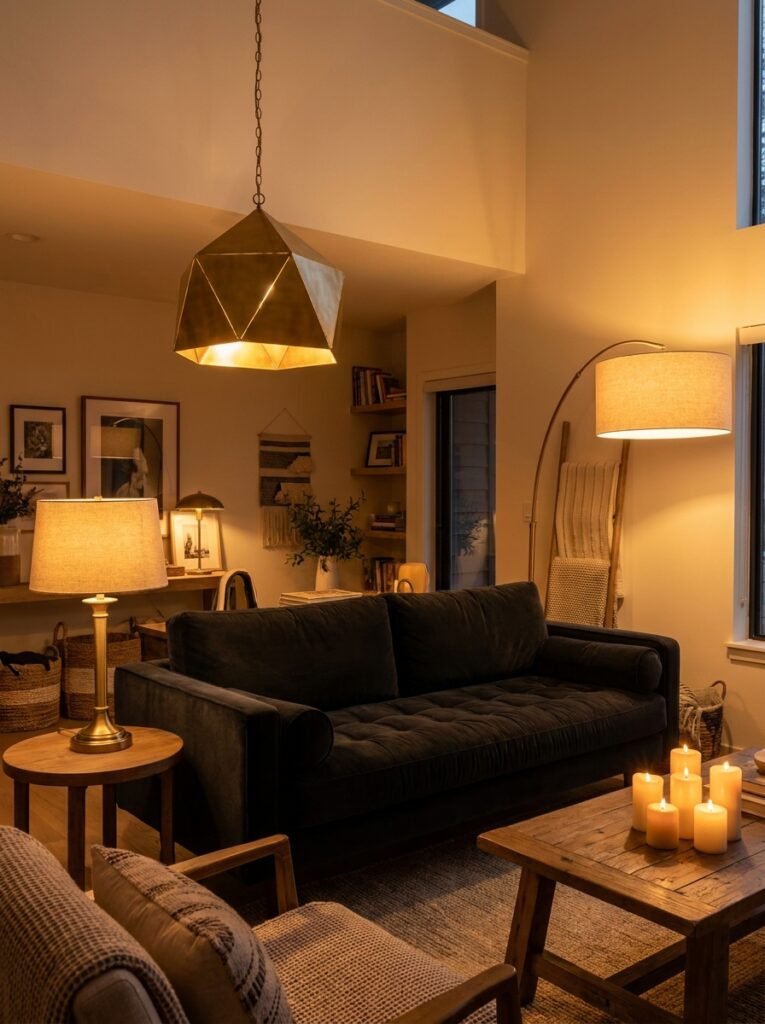
Lighting is the single most underestimated element in any interior design scheme — but it’s especially critical when your anchor piece is black. Without thoughtful lighting, a black sofa can feel flat and heavy. With the right lighting, it becomes the dramatic, intentional centerpiece it was always meant to be.
Layer your light sources. A large overhead fixture (pendant lights and chandeliers are having a glorious moment) provides ambient light that sets the overall tone of the room. Table lamps on either side of the sofa — or on a nearby console or side table — create pools of warm light that soften the sofa’s edges and make the space feel intimate. Floor lamps positioned in corners fill dead zones with warmth and add height to the room’s visual composition.
Candles deserve special mention here. A cluster of candles on a coffee table in front of a black sofa creates a warmth and flickering intimacy that no artificial light can fully replicate. Even if you never light them, they add texture and visual interest.
“Lighting in a room with a black sofa isn’t decoration — it’s the difference between a space that whispers and one that sighs.”
—
9. Coffee Tables That Complement a Black Sofa Without Competing With It
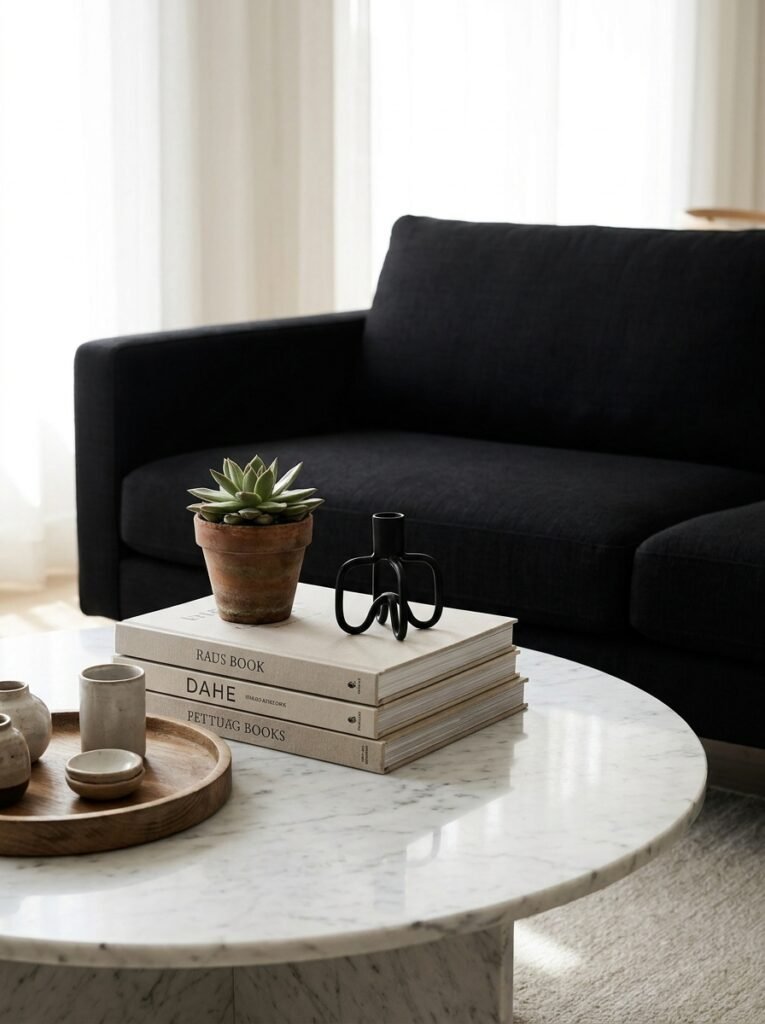
The coffee table in front of your black sofa is in a delicate negotiation with the biggest piece in the room — and getting that negotiation right matters more than most people realize.
Marble-topped coffee tables in white or grey create a beautiful, high-contrast partnership with a black sofa. The cool elegance of marble alongside the depth of black is genuinely timeless. Warm wood coffee tables — particularly in lighter finishes like oak or ash — bring warmth and organic texture that balances the sofa’s visual weight. Glass or acrylic tables are a smart choice for smaller spaces, as they create visual space rather than consuming it.
What you place on the coffee table also matters enormously. A stack of oversized art books, a small potted succulent, a sculptural candle holder, and a decorative tray to corral the smaller items — this kind of intentional styling turns a coffee table into a conversation piece rather than just a functional surface.
—
10. Plants and Greenery: The Secret Weapon of Every Stunning Black Sofa Living Room
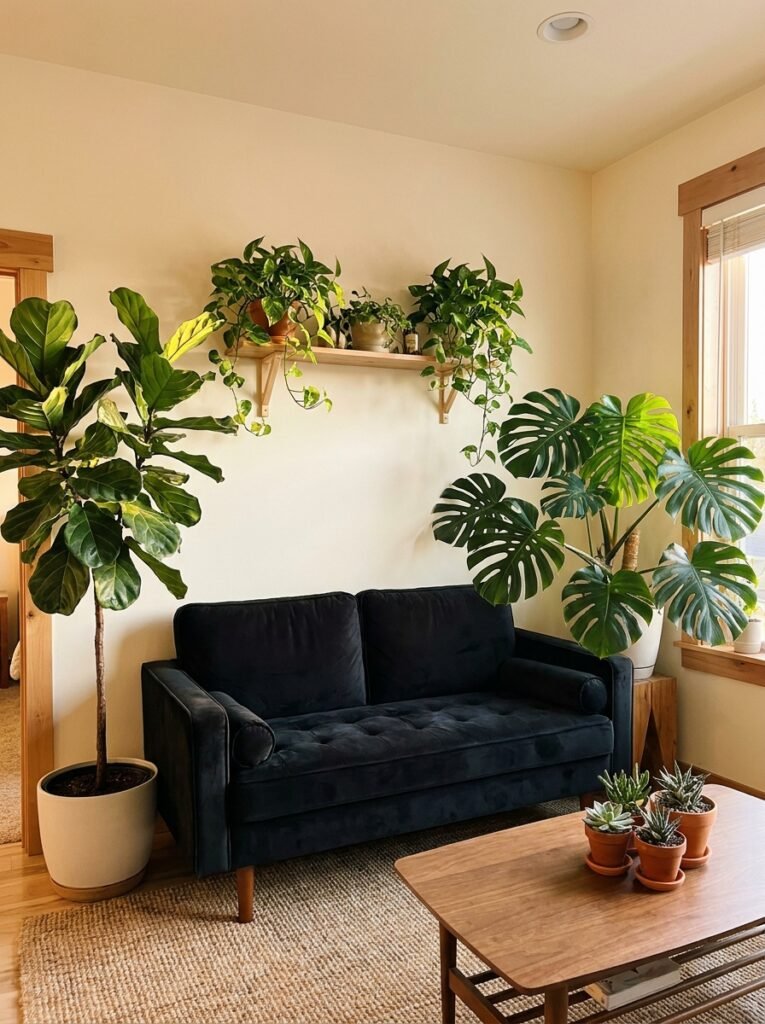
If there is one single element that elevates a black sofa living room from stylish to spectacular, it’s greenery. Plants and a black sofa have a relationship that borders on magical — the contrast between deep, inky black and the lush, living green of plants creates a visual dynamism that photographs beautifully and feels even better in person.
Large statement plants — fiddle leaf figs, monstera deliciosa, rubber plants — placed beside or behind a black sofa add height, life, and a sense of organic abundance to the room. Trailing plants on shelves or in hanging planters add movement and softness. Even a small succulent arrangement on the coffee table introduces a note of nature that the room will thank you for.
The green doesn’t just look beautiful against black — it also shifts the emotional register of the room entirely. A black sofa surrounded by plants feels less like a dramatic design statement and more like a lush, welcoming sanctuary. Which is, of course, exactly what a living room should be.
—
11. Styling a Black Sofa for Different Interior Aesthetics
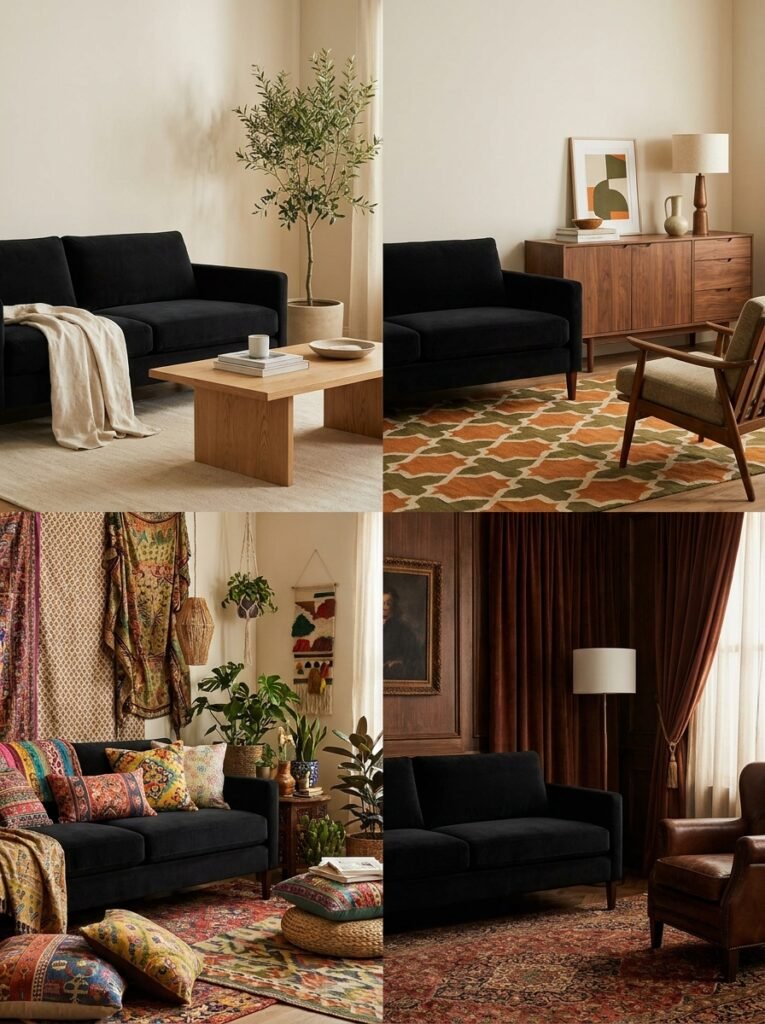
One of the most remarkable things about a black sofa is its stylistic fluidity. It doesn’t belong to one aesthetic — it belongs to all of them, and it adapts with remarkable grace.
In a Scandinavian or Japandi interior, a black sofa finds its home alongside light wood, neutral textiles, and minimalist accessories. The result is clean, calm, and deeply intentional. In a mid-century modern space, a black sofa with tapered legs and clean lines fits beautifully among walnut furniture, geometric rugs, and statement lighting. In a maximalist or bohemian room, a black sofa becomes the anchor that prevents the explosion of color, pattern, and texture from becoming visually chaotic — it’s the quiet constant in a room full of personality. Even in a traditional or transitional space, a tuxedo-style black sofa brings a contemporary edge that refreshes classic elements without dismissing them.
—
12. Common Black Sofa Mistakes — And How to Sidestep Every One of Them
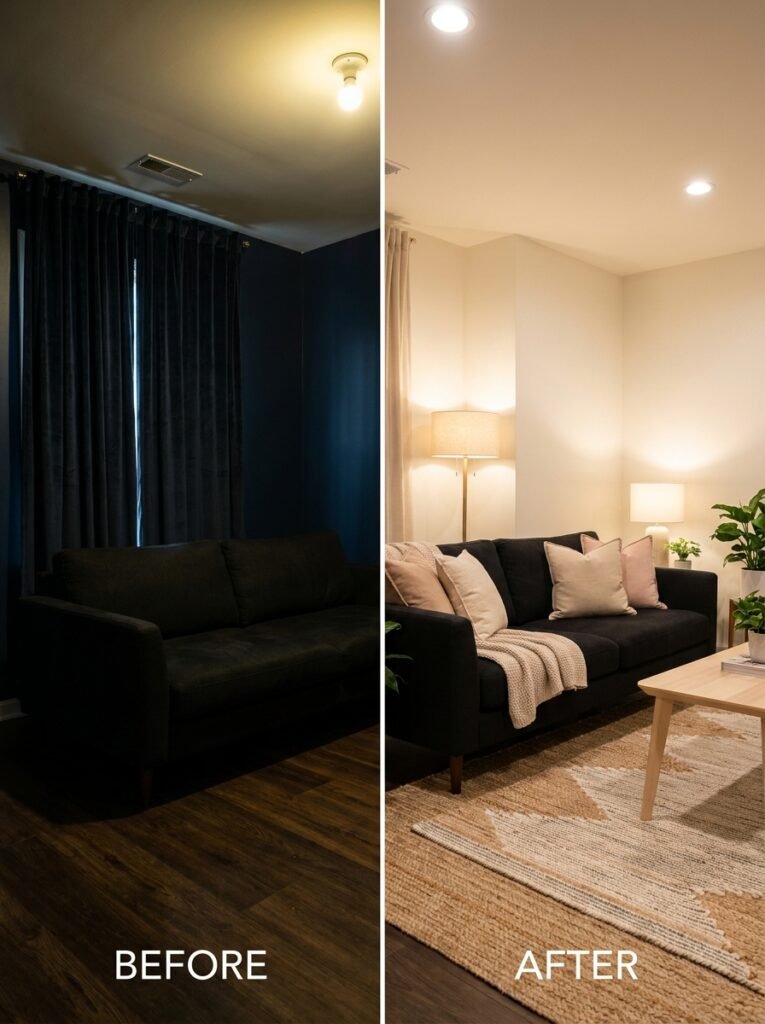
Even with the best intentions, certain styling missteps can prevent a black sofa from reaching its full potential. Being aware of them is half the battle.
The first and most common mistake is going too dark everywhere else. A black sofa paired with very dark walls, heavy curtains, and minimal lighting can make a room feel oppressive rather than dramatic. Balance is essential — introduce lighter elements, warm wood tones, and generous lighting to keep the space feeling breathable.
The second mistake is choosing cushions that are too similar in tone to the sofa itself. Very dark navy or charcoal cushions on a black sofa create a muddled, undifferentiated look. Go lighter, warmer, or more colorful with your cushion choices — let them contrast against the black rather than disappear into it.
The third mistake is skipping the rug entirely. A black sofa floating on bare hardwood or tile without a rug beneath it can feel cold and unfinished. A rug defines the seating area and creates the visual foundation the sofa needs to truly anchor the room.
—
🌿 How to Take Care of Your Black Sofa
A black sofa is an investment — and with the right care, it will reward you with years of beauty and comfort.
For velvet sofas, use a soft brush attachment on your vacuum to lift dust and pet hair regularly — velvet can look dull when debris builds up in the pile. Blot spills immediately rather than rubbing, and always allow damp patches to air dry naturally. For leather sofas, a monthly conditioning treatment prevents cracking and keeps the leather supple. Keep it away from direct sunlight and heat sources, which can cause fading and drying over time. For fabric sofas, a fabric protector spray applied at purchase creates an invisible barrier against spills and stains. Rotate your cushions weekly so they wear evenly and maintain their shape. And for all black sofas without exception — pet owners especially — a lint roller is not optional. It’s essential.
—
❓ FAQ
Q: Will a black sofa make my living room look smaller? A: Not necessarily — and often, not at all. The key is balancing the sofa with light-colored walls, good lighting, and a few well-placed mirrors. When those elements are in play, a black sofa actually makes a room feel more defined and grounded rather than smaller.
Q: What color walls work best with a black sofa? A: Warm whites, soft creams, and pale greys are the most universally flattering choices. For a bolder look, deep forest green or warm terracotta walls create a moody, enveloping atmosphere that feels deliberately designed. What you want to avoid is very dark walls paired with minimal lighting, as this creates imbalance.
Q: Is a black sofa a good choice for families with children and pets? A: It can absolutely be family-friendly — especially if you choose a durable fabric like performance velvet or leather, both of which clean up relatively well. Black also has the practical advantage of hiding crumbs and certain kinds of debris that would show immediately on a lighter sofa. The main challenge is pet hair on velvet, which requires regular brushing.
—
💭 Final Thought
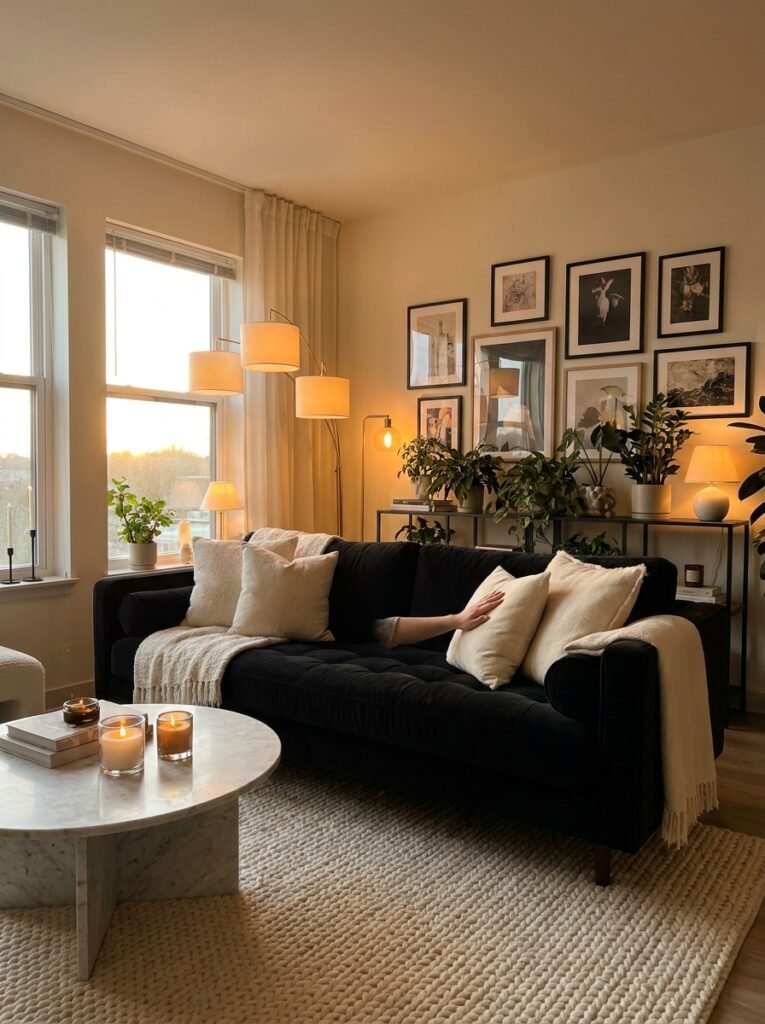
A black sofa is not a risk — it’s a declaration. It says you trust your instincts, you understand contrast, and you’re willing to build a living room that feels truly and unmistakably yours. Surrounded by the right colors, textures, lighting, and life — whether that’s plants, art, or the warm presence of people you love — a black sofa becomes the most welcoming anchor a room can have.
So here’s the question only you can answer: what would your living room feel like if you finally stopped playing it safe?