
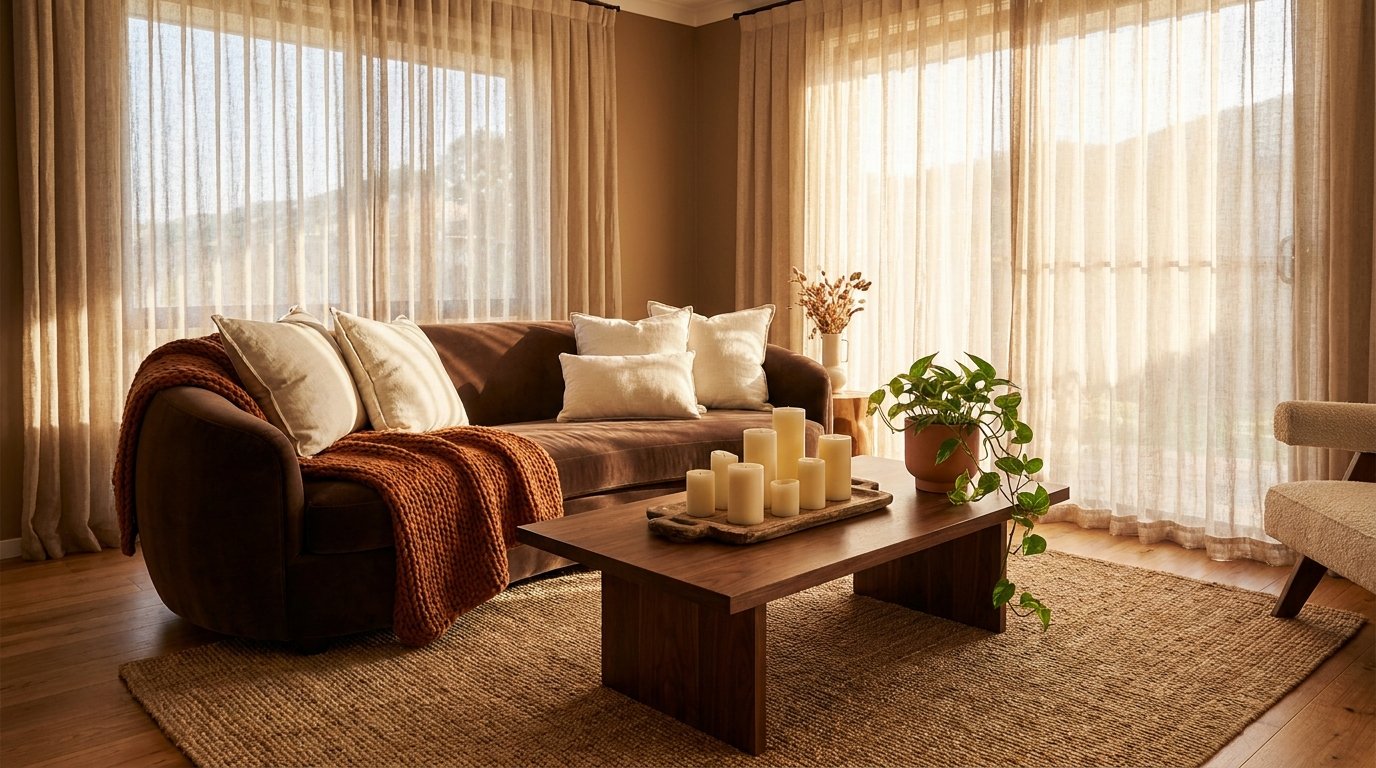
The Brown Living Room Aesthetic: How Earth Tones Create the Home You’ve Always Wanted to Come Back To
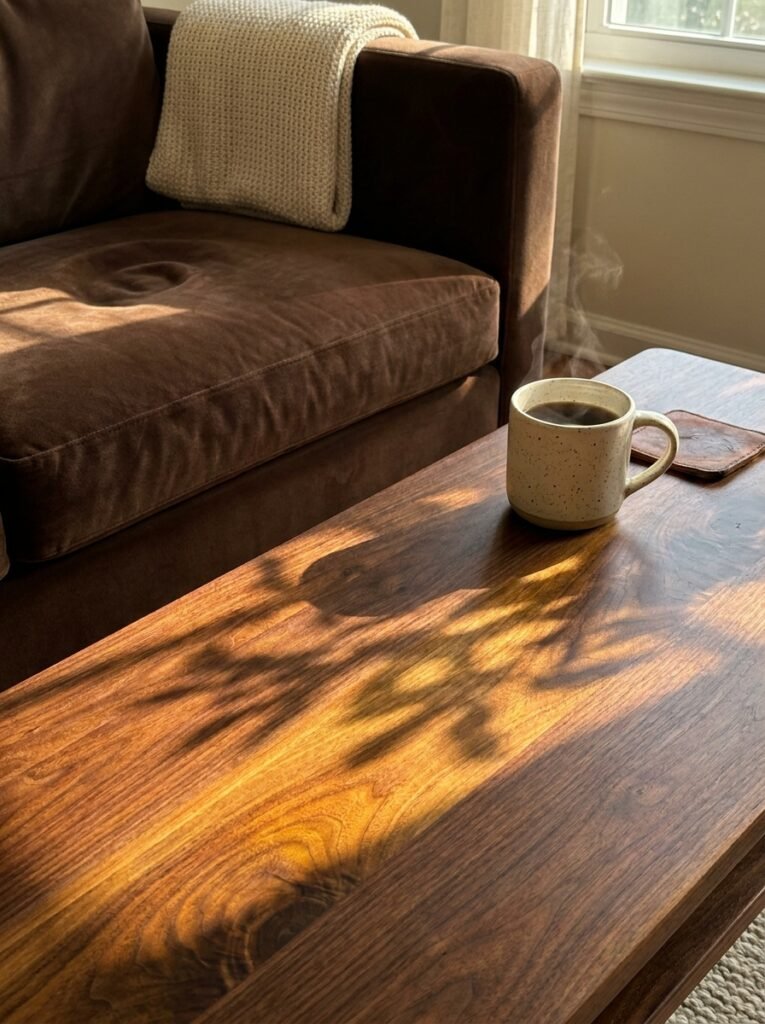
There’s something deeply instinctive about being drawn to brown. Maybe it’s the way a walnut coffee table catches the afternoon light, or the way a chocolate velvet sofa makes you want to sink in and stay forever — like the room itself is giving you permission to exhale. The brown living room aesthetic isn’t just a design trend. It’s a feeling, and once you understand it, you’ll never want your home to feel any other way.
—
1. Why Brown Is Having the Biggest Interior Design Moment Right Now
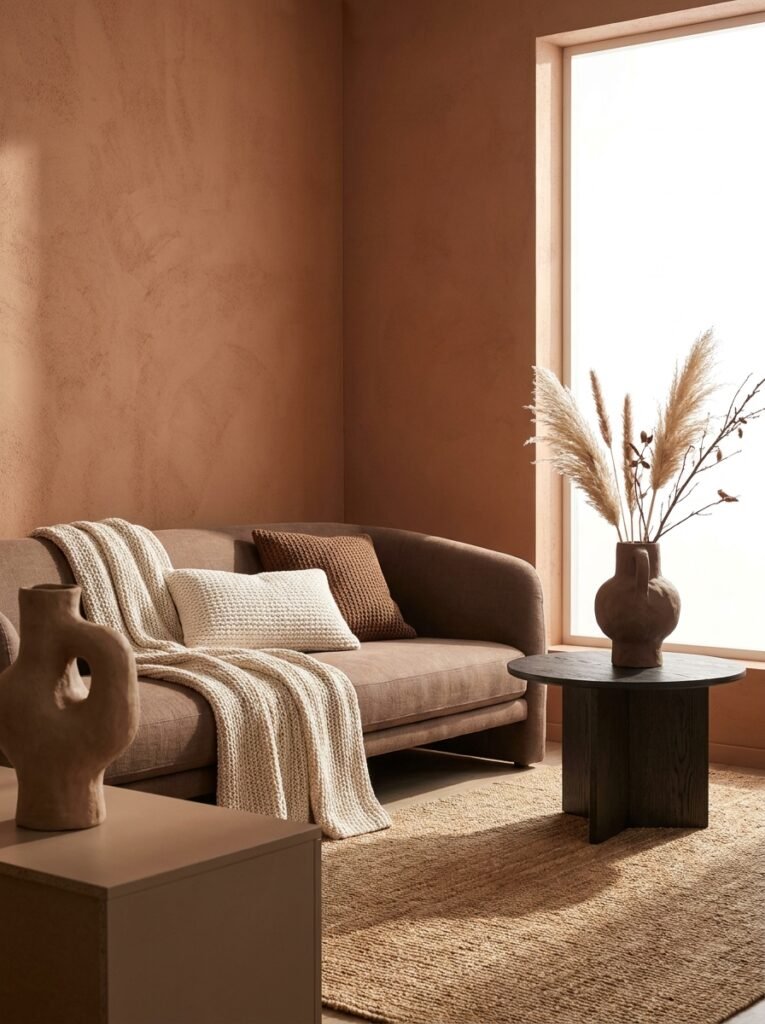
For years, brown was dismissed. Beige got all the attention. White walls ruled Pinterest boards, and minimalism dominated every design magazine. But something shifted — quietly, beautifully, inevitably — and brown came roaring back. Not the muddy, dated brown of the early 2000s with chunky leather sectionals and oak everything. This is something entirely different.
Today’s brown living room aesthetic is sophisticated, layered, and intentional. It draws from global influences — Moroccan earthenware, Japanese wabi-sabi philosophy, Scandinavian warmth — and weaves them into spaces that feel both ancient and deeply modern. Interior designers who once swore by stark white walls are now reaching for terracotta, mocha, and raw umber. Why? Because after years of living inside crisp, sterile interiors, people started craving something that felt human.
“Brown doesn’t just decorate a room — it grounds it, warms it, and makes it feel like someone actually lives there.”
Brown is the color of the earth beneath our feet, of tree bark and dark roast coffee and worn leather journals. Our nervous systems recognize it as safe. Welcoming. Real. And in a world that often feels chaotic and overstimulating, coming home to a room that whispers slow down is more valuable than any design trend that’s ever graced a mood board.
2. The Emotional Language of Brown Tones and What Each One Says
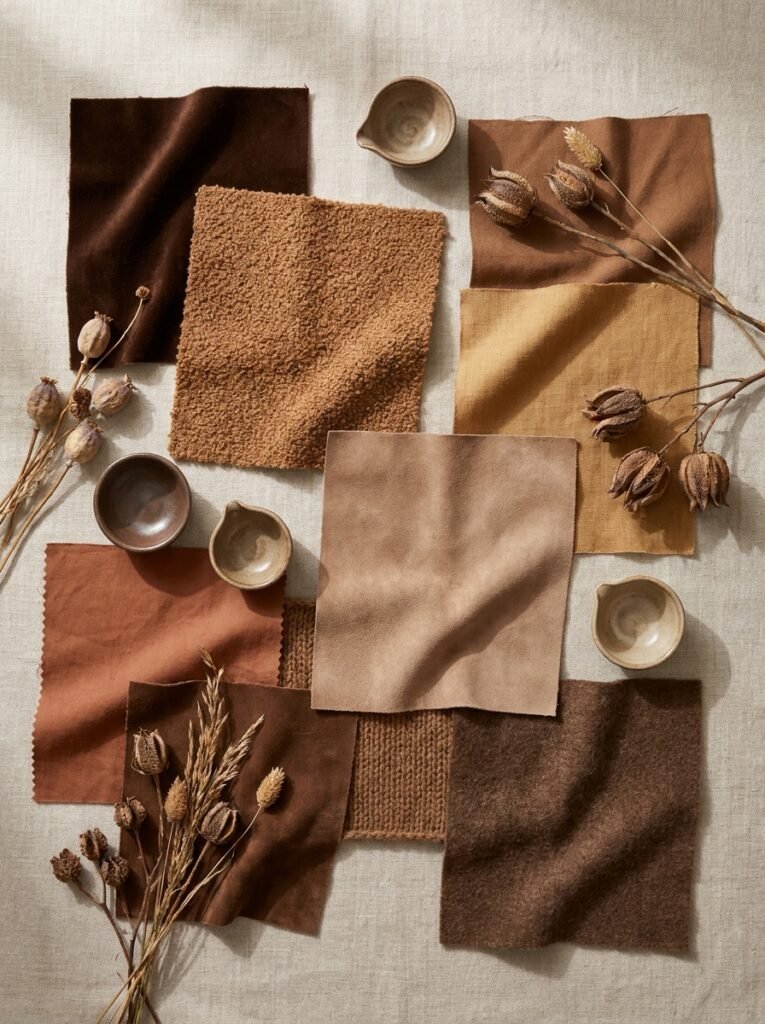
Not all browns are created equal, and understanding their emotional language is the first step to designing a living room that feels exactly right. Brown is a family — a wide, rich, beautifully varied family — and each shade speaks differently.
Deep chocolate brown is confident and luxurious. It wraps a room in intimacy, making it feel like a private sanctuary from the rest of the world. Pair it with gold accents and warm lighting, and you have something that feels almost cinematic. Caramel and honey tones, on the other hand, are generous and optimistic — they bounce light around a room and keep things feeling open and airy even as they stay warm. Tan and fawn sit quietly in the middle, flexible and graceful, working beautifully with nearly every other color you might want to introduce.
Then there’s terracotta — technically a reddish-orange, but so spiritually brown that it belongs in this conversation. Terracotta is the color of sun-baked clay pots and Mediterranean afternoons. It brings an organic, slightly rustic energy that makes every room feel like a destination. And raw umber — that deep, complex, almost greenish-brown — is for people who want their living rooms to feel like a page from a worn travel journal, earthy and quietly adventurous.
Knowing which brown speaks to you is the foundation of everything that follows.
3. The Art of Layering Browns Without Making a Room Feel Heavy
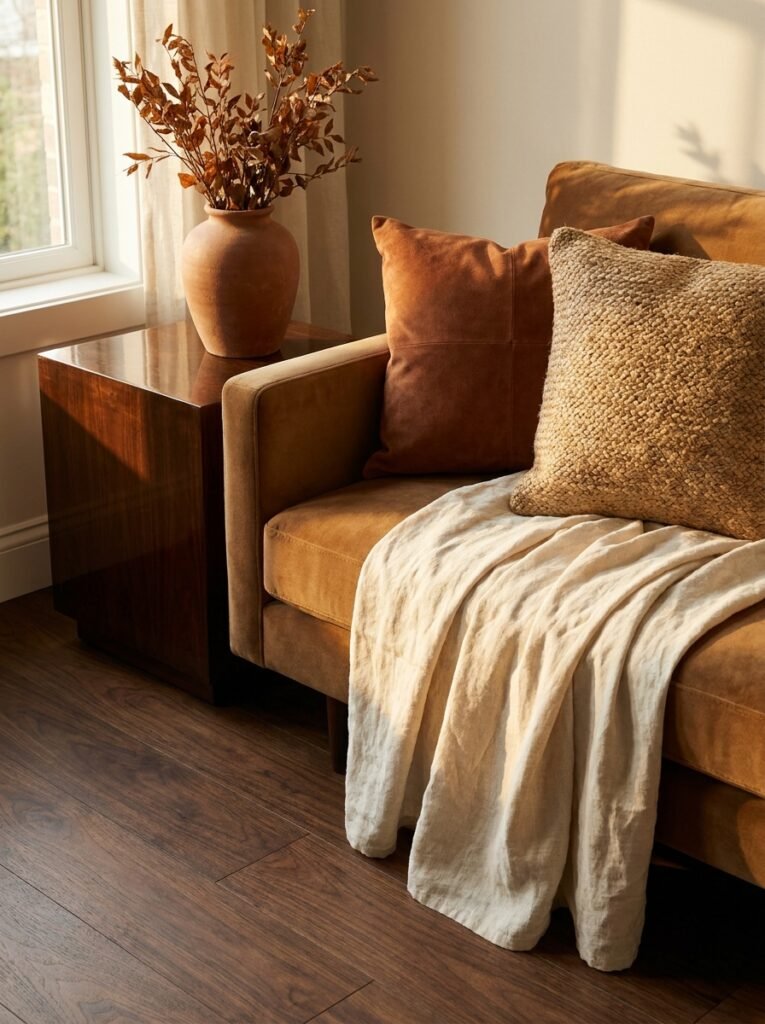
Here’s the fear that holds most people back: What if it’s too dark? Too heavy? Too cave-like? It’s a fair concern, and the answer lies entirely in layering.
The secret to a beautiful brown living room is texture. When you mix multiple brown tones in different textures — a suede cushion here, a linen throw there, a jute rug underfoot, a lacquered wooden side table, matte terracotta vases — the eye reads richness and depth rather than weight. Each material catches and reflects light differently, creating a visual conversation that keeps the room feeling dynamic and alive.
Think of it the way a professional pastry chef thinks about chocolate — there’s always contrast. Dark chocolate cake, lighter mousse, a dusting of cocoa, a drizzle of caramel. None of those elements alone would be enough. Together, they become something extraordinary. Your living room works the same way. A dark walnut floor paired with a caramel sofa, accented with cream linen cushions and a rust-orange throw — that’s a room with balance, dimension, and soul.
4. Furniture Choices That Anchor the Brown Living Room Aesthetic
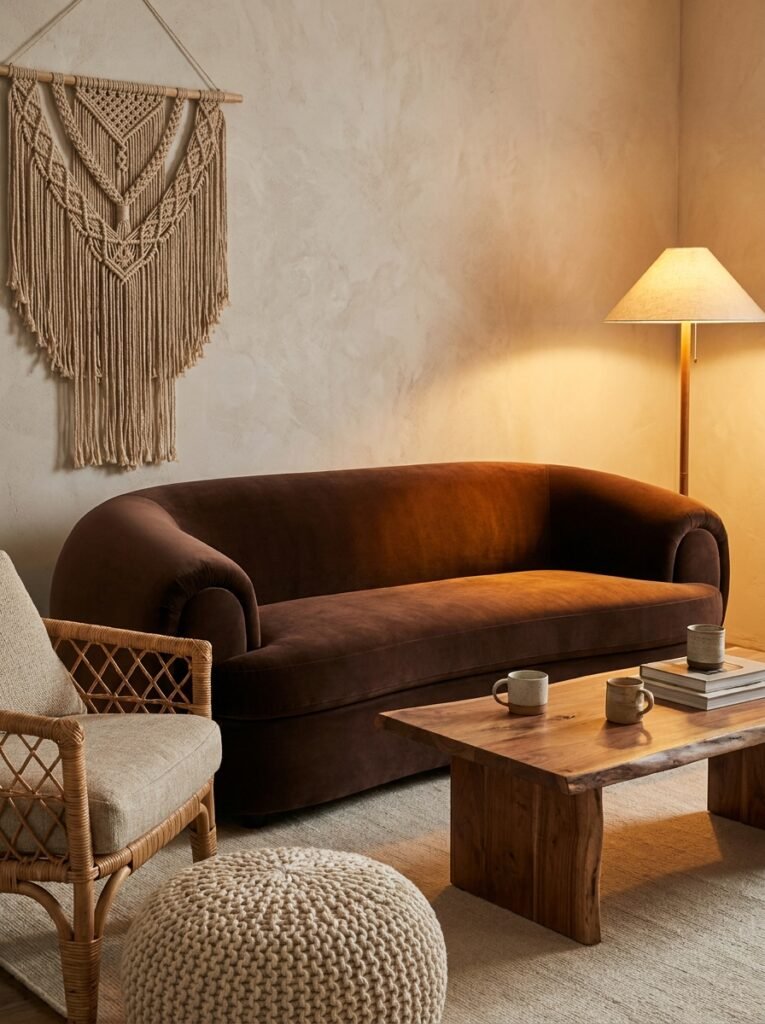
The furniture you choose is the backbone of this aesthetic, and there are a few pieces that consistently elevate the look from pleasant to genuinely breathtaking. A curved sofa in a warm chocolate or camel tone — preferably in velvet or bouclé — is perhaps the single most impactful piece you can invest in. Curves soften a room. They feel generous and human, the opposite of cold right angles. When covered in a rich brown fabric, a curved sofa becomes the emotional center of the entire space.
Wooden furniture in darker, richer tones — walnut, mahogany, dark oak — adds history and craftsmanship. There’s something about a beautiful piece of wooden furniture that feels like it has a story, like it belonged to someone interesting before it belonged to you. A live-edge coffee table, a turned-leg side table, a rattan bookshelf — all of these bring organic warmth that no mass-produced metal piece can replicate.
Don’t overlook woven furniture. A rattan or wicker chair, a macramé wall hanging, a chunky knit pouf — these materials are all deeply rooted in earth tones and add that crucial layer of organic texture that makes the brown aesthetic feel curated rather than accidental.
5. Color Combinations That Make Brown Sing
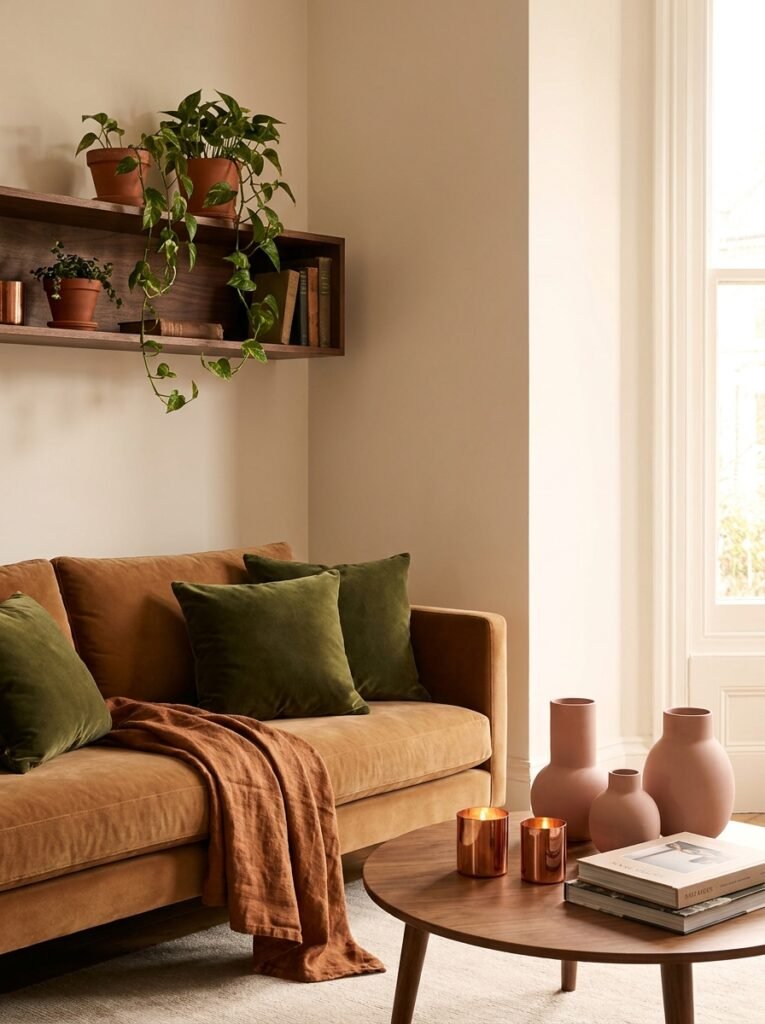
Brown is one of the most versatile neutral backbones in interior design, and knowing what to pair it with unlocks an entirely new dimension of creativity. The combinations that work best are the ones that feel like they were discovered, not designed.
Cream and brown is the most timeless pairing — effortlessly elegant, endlessly livable. Think of a mocha-brown sofa against cream walls, layered with ivory cushions and natural linen curtains. It’s the visual equivalent of a perfectly made café latte: simple, warm, deeply satisfying.
Brown and forest green is earthy and dramatic in the best possible way. Imagine deep olive or hunter green velvet cushions against a caramel sofa, with trailing pothos plants in terracotta pots on a dark walnut shelf. The combination feels lush and slightly wild — like a greenhouse and a library had a beautiful baby.
“Brown and green together don’t just look good — they feel like something the earth itself designed.”
Brown and rust or burnt orange is perhaps the most authentically Pinterest-worthy combination right now. These colors sit close to each other on the warm end of the spectrum, so they harmonize effortlessly. A rust linen throw across a chocolate sofa, accompanied by an abstract print in ochre and copper — it’s warm, modern, and genuinely stunning.
Brown with blush or dusty rose adds femininity and softness without ever feeling saccharine. This is the combination that makes a room feel like it belongs to a person with exceptionally refined taste — someone who understands that warmth and delicacy can coexist beautifully.
6. Lighting Strategies That Transform the Whole Mood
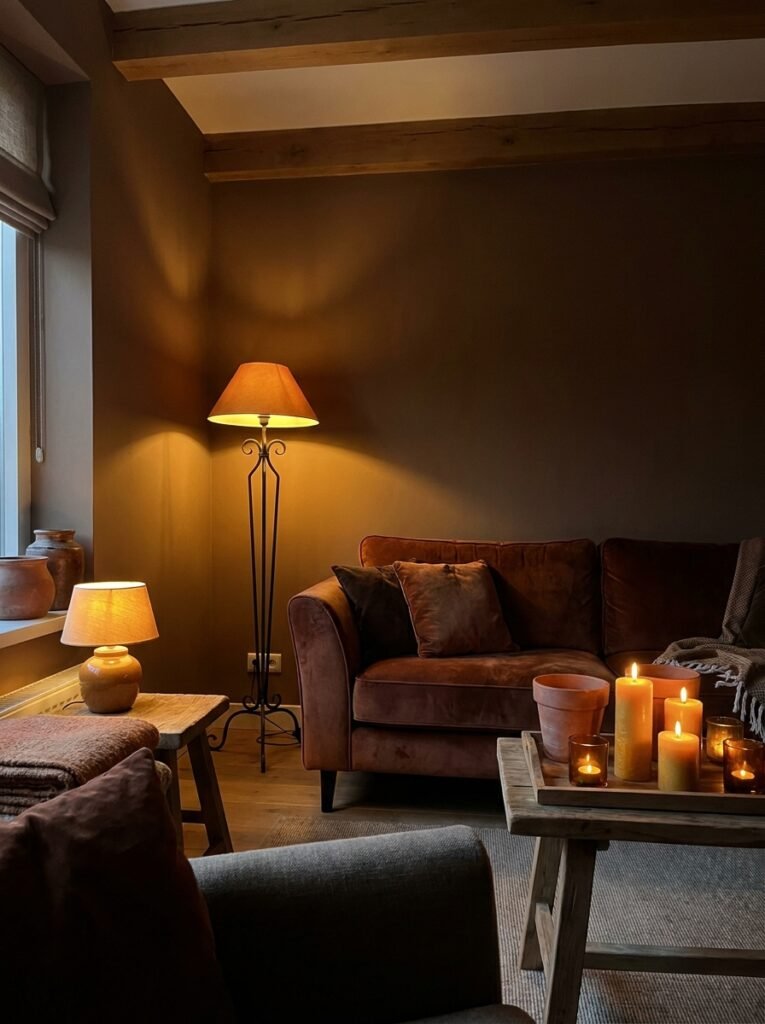
Lighting is the element that most people address last but should be thinking about first. In a brown living room, lighting isn’t just functional — it’s transformative. The wrong light can make warm brown tones look muddy and flat. The right light makes them glow like amber honey held up to the sun.
Always prioritize warm-toned bulbs — anything in the 2700K to 3000K range gives off that golden, incandescent warmth that makes brown tones come alive. Cool white or daylight bulbs will fight against your palette and make the room feel disjointed. Layer your lighting: a combination of floor lamps, table lamps, and perhaps wall sconces creates pools of warm light throughout the room, which adds depth and intimacy.
Candlelight is the secret weapon of the brown aesthetic. A cluster of pillar candles on a wooden tray, a few amber glass votives on the coffee table — these small touches add a flicker and warmth that no artificial light can fully replicate. There’s a reason that candlelit rooms always look beautiful in photographs. They do something to the atmosphere that connects to something very old and very human in all of us.
7. Plants and Natural Elements That Belong in This Space
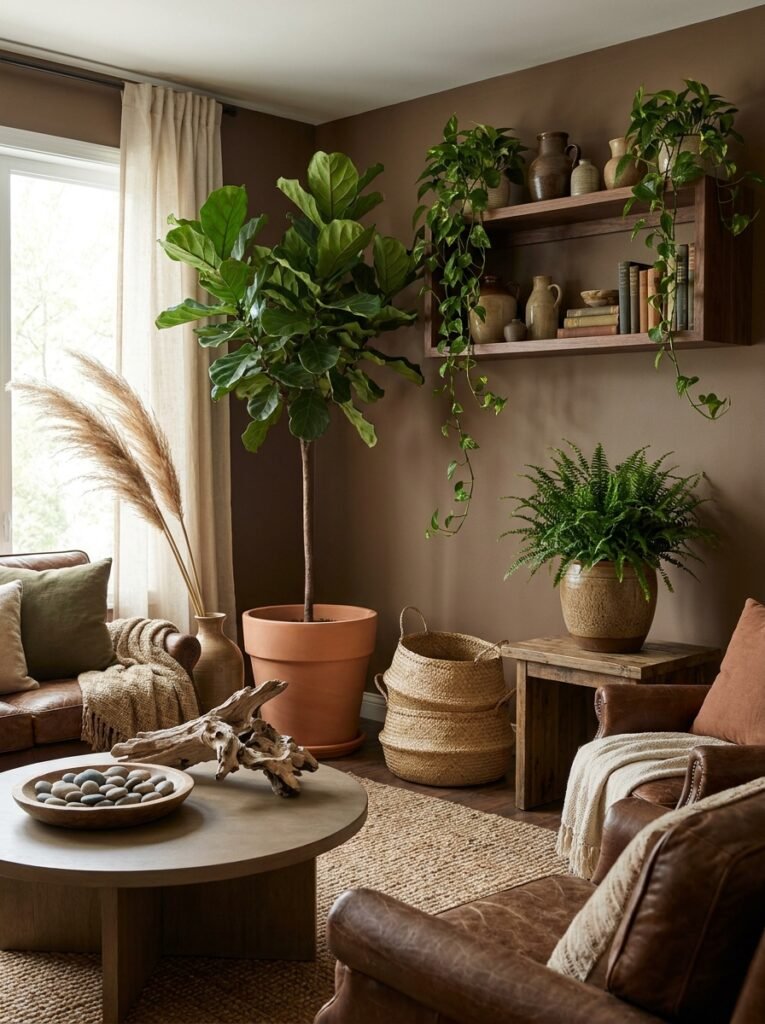
A brown living room without plants feels like a sentence without punctuation — technically fine, but missing something essential. Plants introduce living, breathing green into an earth-toned palette in a way that feels perfectly natural, because it is.
Choose plants that feel full and abundant — trailing pothos, large-leafed fiddle-leaf figs, architectural snake plants, voluminous Boston ferns. Place them in terracotta or textured ceramic pots in warm earth tones. Cluster plants at different heights to create that lush, layered look that photographs so beautifully. Beyond plants, bring in other natural elements: a bowl of smooth river stones, a driftwood sculpture, woven baskets in warm browns, dried pampas grass in a tall ceramic vase. These elements speak the same visual language as your furniture and palette, reinforcing the organic, grounded feeling that defines this aesthetic.
8. Wall Treatments That Take the Aesthetic Further
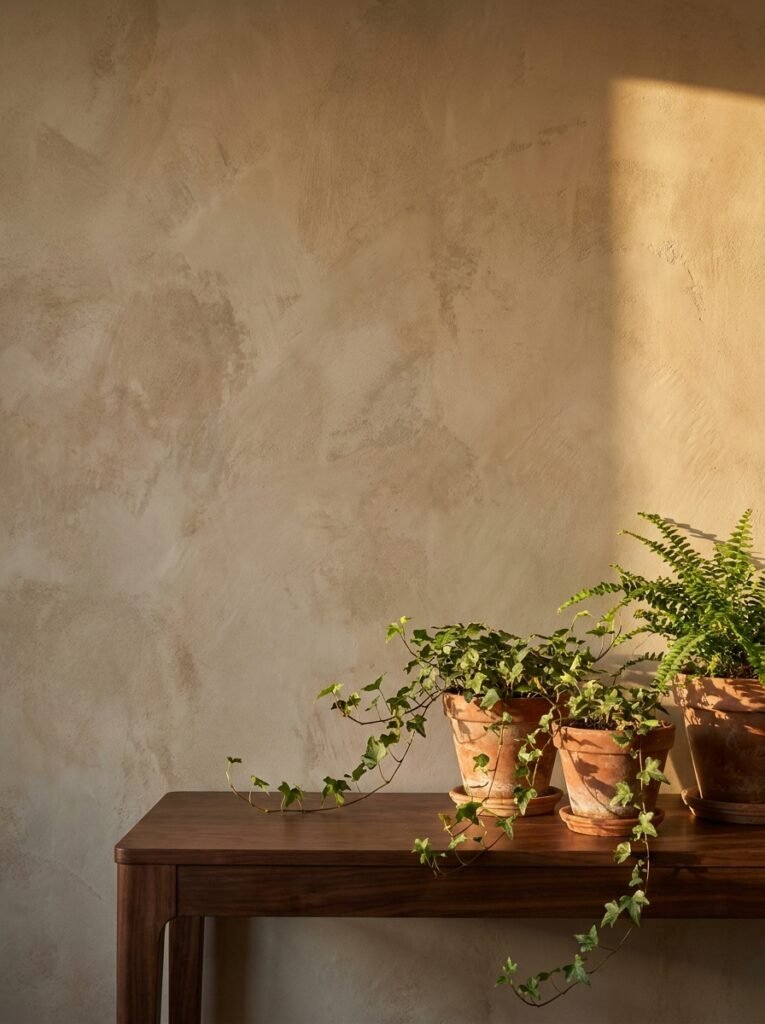
Your walls are a canvas, and in a brown living room, you have some genuinely exciting options. Painting all four walls in a deep mocha or terracotta is bold — but when done right, it creates a wraparound warmth that feels like being inside something wonderful. If that feels too committed, an accent wall in a rich brown or burnt sienna behind the sofa or fireplace adds dramatic depth while keeping the rest of the room lighter.
Limewash paint is having an extraordinary moment right now, and it pairs beautifully with the brown aesthetic. It creates a soft, textured, slightly aged finish that looks like ancient Italian plasterwork — imperfect, organic, and deeply beautiful. In a warm putty or clay tone, limewash walls become the perfect backdrop for everything else in the room.
Wallpaper is another avenue worth exploring. Botanical prints, abstract earthy patterns, textured grasscloth wallpaper — all of these add visual interest and personality without overwhelming the palette. A single wallpapered wall in a warm botanical print can anchor an entire room’s personality.
9. The Role of Rugs in Pulling a Brown Living Room Together
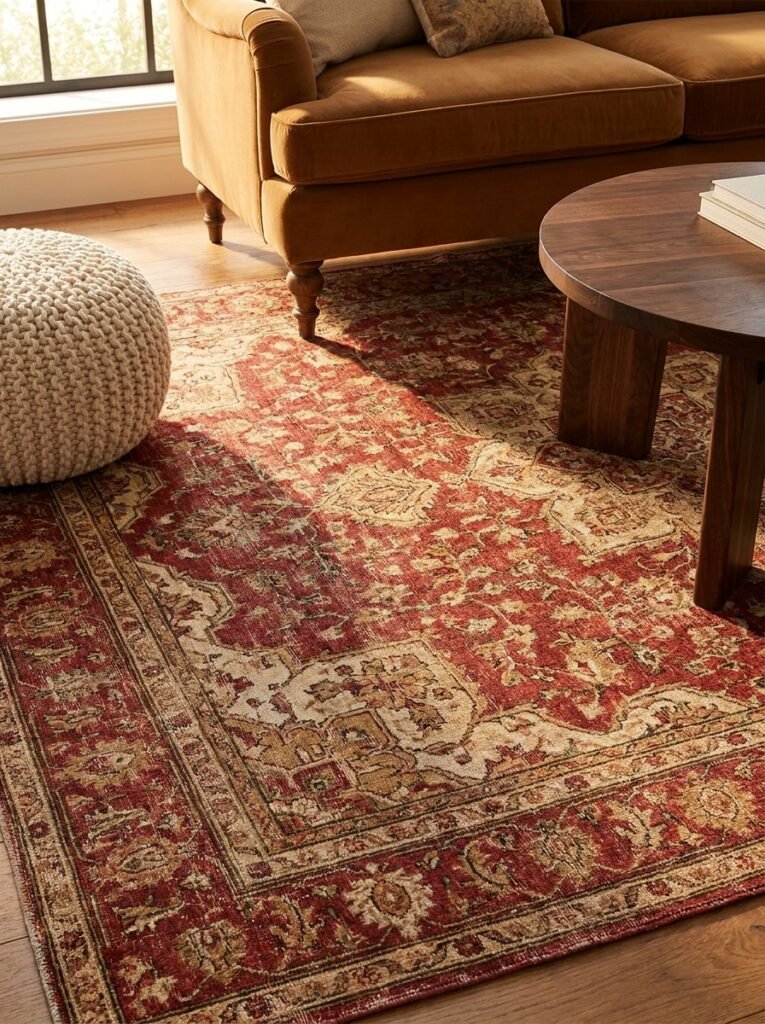
A rug is not just a floor covering. It’s the piece that ties every other element in the room into a coherent, intentional whole. In a brown living room, the rug is one of the most critical choices you’ll make.
A vintage-style Persian or Moroccan rug in warm reds, golds, and creams brings age and personality — it makes a room feel collected and well-traveled. A solid jute or sisal rug adds texture and organic simplicity, grounding the space without competing with anything else. A chunky knit wool rug in ivory or oatmeal introduces comfort and softness underfoot, and photographs magnificently.
“The right rug doesn’t just complete a room — it makes you want to take your shoes off and stay.”
Whatever rug you choose, make sure it’s large enough. One of the most common interior design mistakes is using a rug that’s too small, which makes furniture look like it’s floating and disconnected. Your sofa’s front legs — at minimum — should rest on the rug. Ideally, all furniture legs should sit within its boundaries. Size creates cohesion, and cohesion creates that effortless, professionally styled look.
10. Small Space Solutions: Brown Aesthetic in Apartments and Compact Rooms
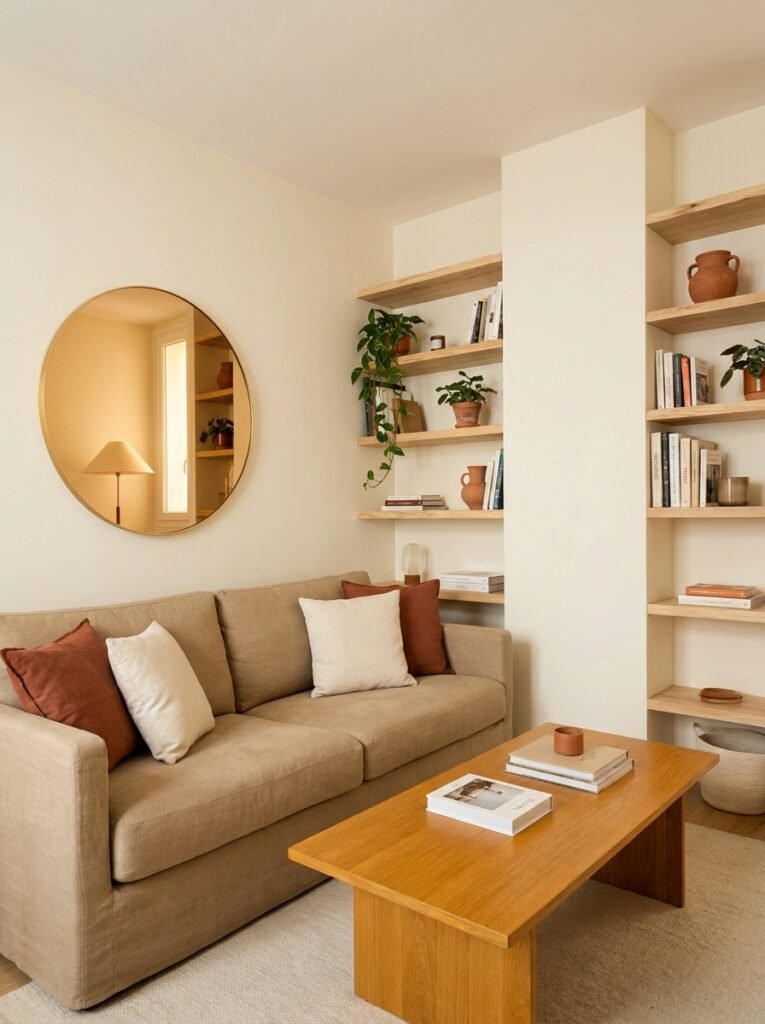
Living in a smaller space doesn’t mean you have to sacrifice warmth or depth. The brown aesthetic actually works beautifully in compact rooms when approached thoughtfully. The key is contrast and scale — using lighter brown tones as your dominant color to keep the room feeling open, and introducing deeper, richer browns through smaller accent pieces.
A small living room might feature cream walls with caramel accents — a tan sofa, rust cushions, a honey-toned wooden coffee table — rather than deep chocolate walls and furniture. The palette stays cohesive and warm, but the lighter tones keep the room from feeling enclosed. Mirrors in warm gold or wooden frames help bounce light and add the illusion of depth. Built-in shelving in natural wood finishes adds storage without eating into floor space, and when styled with books, plants, and a few well-chosen objects, becomes a decorative feature in its own right.
11. How to Shop for the Brown Aesthetic on a Budget
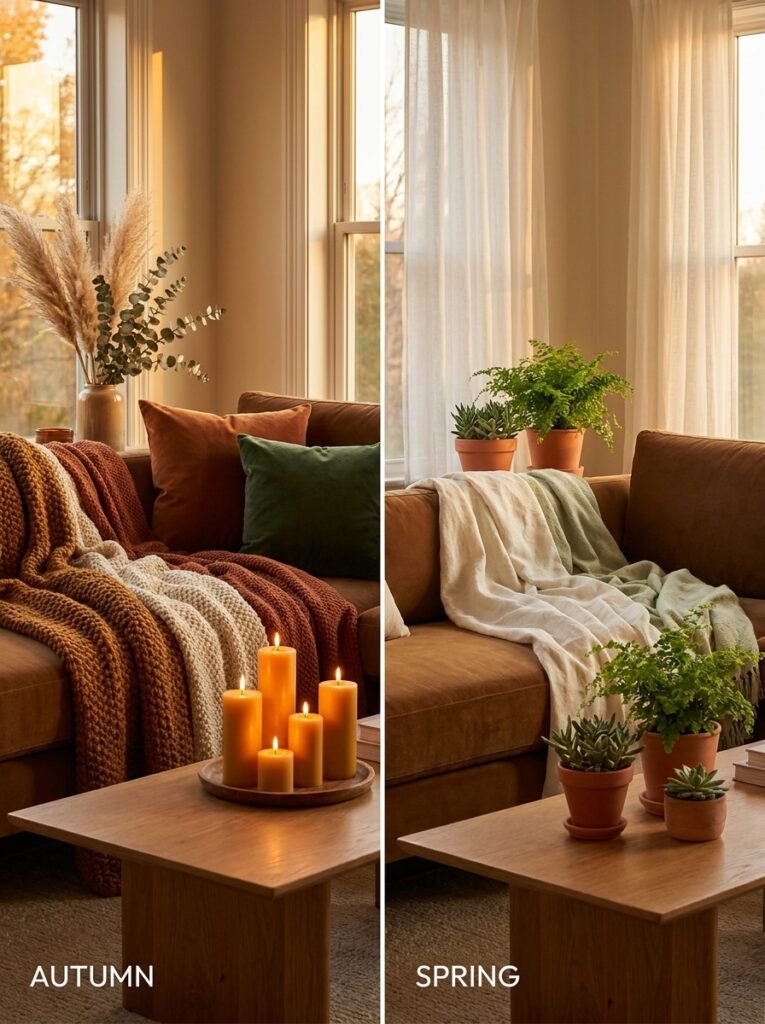
Here’s the liberating truth about the brown living room aesthetic: it rewards thrift shopping, second-hand hunting, and patient accumulation more than almost any other design style. Because this aesthetic values age, texture, and organic imperfection over newness, it’s one of the most budget-friendly styles you can pursue.
Vintage and thrift stores are goldmines for wooden furniture in walnut, mahogany, and dark oak — pieces that would cost thousands new can be found for hundreds used. Estate sales and Facebook Marketplace are excellent sources for velvet cushions, woven rugs, rattan pieces, and terracotta ceramics. Refinishing and reupholstering are powerful tools: a tired armchair reupholstered in a warm camel fabric becomes something genuinely beautiful. A dated wooden coffee table refinished in a dark walnut stain looks custom and expensive.
For new purchases, invest selectively — a beautiful rug, a quality sofa — and fill in the rest with found, thrifted, and DIY elements. The layered, lived-in quality that makes this aesthetic so appealing can’t be bought all at once anyway. It develops over time, with intention and a good eye.
12. Seasonal Styling: How to Refresh a Brown Living Room Throughout the Year
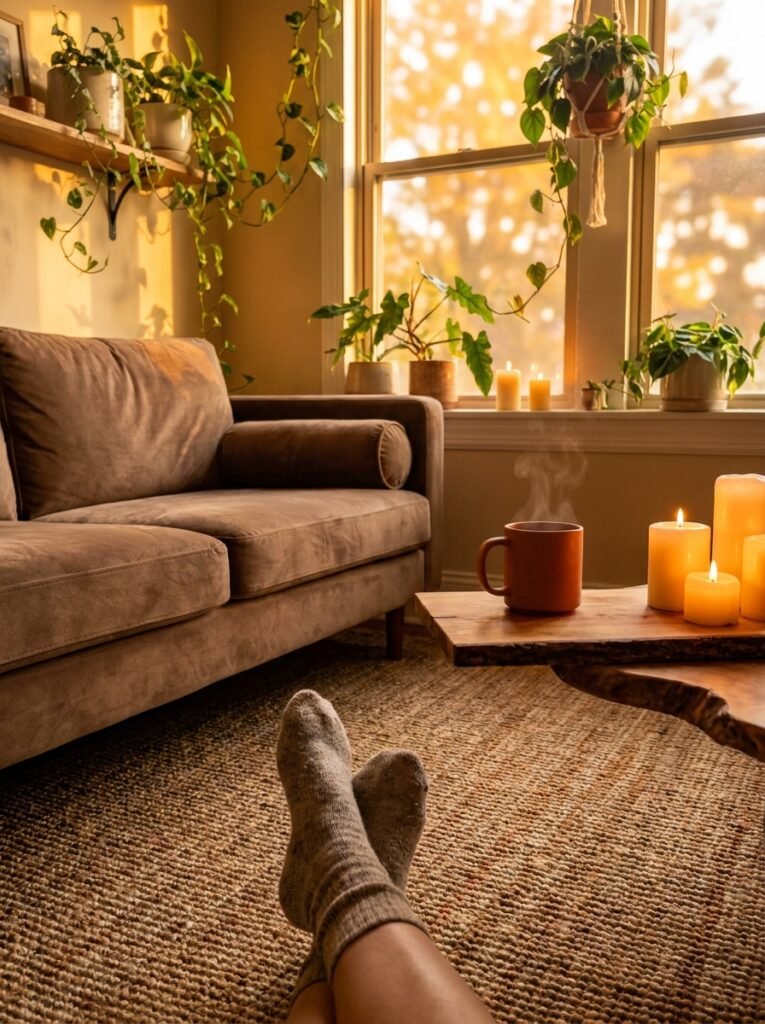
One of the greatest strengths of the brown living room aesthetic is its year-round adaptability. Because the core palette is anchored in warm neutrals, it’s remarkably easy to shift the mood of the room with seasonal accent changes — without ever feeling the need to overhaul everything.
In autumn and winter, lean into the richness. Layer on chunky knit throws in deep caramel and cream, pile up cushions in forest green and rust, cluster pillar candles on wooden trays, and bring in dried botanicals and dark ceramic pieces. The room becomes a warm cave of comfort — the kind of space that makes a cold evening feel like a gift.
In spring and summer, lighten the layers. Swap heavy throws for lightweight linen blankets, introduce fresh green plants and simple terracotta arrangements, bring in brass or gold accents that catch the longer evening light, and let more air into the space by pulling back heavier curtains. The underlying warmth of the brown palette stays constant, but the mood shifts from cozy and enveloping to relaxed and sun-warmed. This seasonal flexibility is what makes the brown aesthetic a long-term design investment rather than a passing trend.
—
🌿 How to Maintain Your Brown Living Room Aesthetic
Keeping this aesthetic feeling intentional and beautiful over time doesn’t require constant effort — just a few consistent habits. First, edit regularly. The brown aesthetic is rich and layered, but there’s a fine line between curated and cluttered. Every few months, walk through the room with fresh eyes and remove anything that isn’t earning its place. Second, take care of your textiles. Velvet cushions benefit from occasional brushing to maintain their pile. Linen and cotton throws should be washed regularly in gentle cycles. A well-cared-for textile looks better with age — softer, more lived-in, more beautiful.
Third, rotate your accessories seasonally, as described above. This keeps the room feeling fresh and intentional without requiring any major investment. Fourth, keep natural elements alive — replace dying plants promptly, refresh dried botanicals before they become dusty, and replenish candles so they’re always ready to be lit. Finally, trust your instincts. The brown aesthetic is fundamentally personal and organic. Add things that genuinely move you, remove things that don’t feel right, and let the room evolve slowly and honestly over time.
—
❓ FAQ
Q: Is the brown living room aesthetic too dark for small rooms or rooms without much natural light? A: Not necessarily — it’s all about choosing the right shades and layering light strategically. In rooms with limited natural light, focus on lighter brown tones like camel, tan, and warm beige as your dominant palette, and reserve deeper shades for small accent pieces. Multiple warm-toned light sources will make even a compact, low-light room feel golden and inviting rather than heavy.
Q: What is the easiest way to start transitioning to a brown living room aesthetic without redecorating everything at once? A: Start with textiles and accessories — they’re the lowest-commitment, highest-impact changes you can make. A caramel or chocolate throw, a couple of rust and cream cushions, a jute rug layered over your existing flooring, and a few terracotta plant pots can shift a room’s entire feeling in an afternoon without touching a single piece of furniture.
Q: How do I make sure my brown living room doesn’t look outdated or reminiscent of 2000s-era design? A: The key differentiator is texture, shape, and restraint. Today’s brown aesthetic uses curved furniture, layered organic textures, and a mix of materials rather than matching sets. Avoid heavy, dark leather sofas in uniform tones, and instead choose softer fabrics, natural materials, and varied brown shades. Adding green plants, layering rugs, and mixing vintage and modern pieces instantly lifts the look into something fresh and intentional.
—
💭 Final Thought
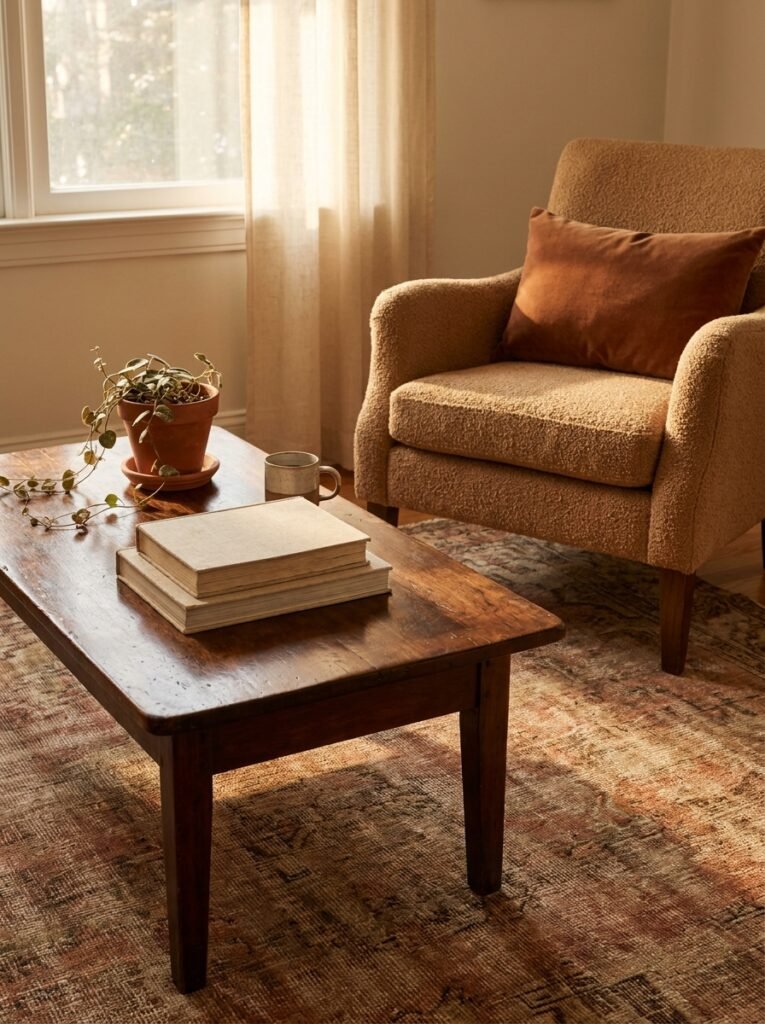
At the end of the day, the most beautiful living room is one that feels like you — your warmth, your history, your way of moving through the world. The brown aesthetic offers something rare in interior design: it doesn’t demand perfection. It welcomes imperfection, age, texture, and the kind of beauty that only comes from things that have been genuinely loved. So as you think about your own space, ask yourself this: what would it feel like to come home to a room that felt like the earth itself was holding you — warm, grounded, and completely, quietly at peace?