The Boho Minimalist Living Room: How to Make “Less Is More” Actually Feel Like Home
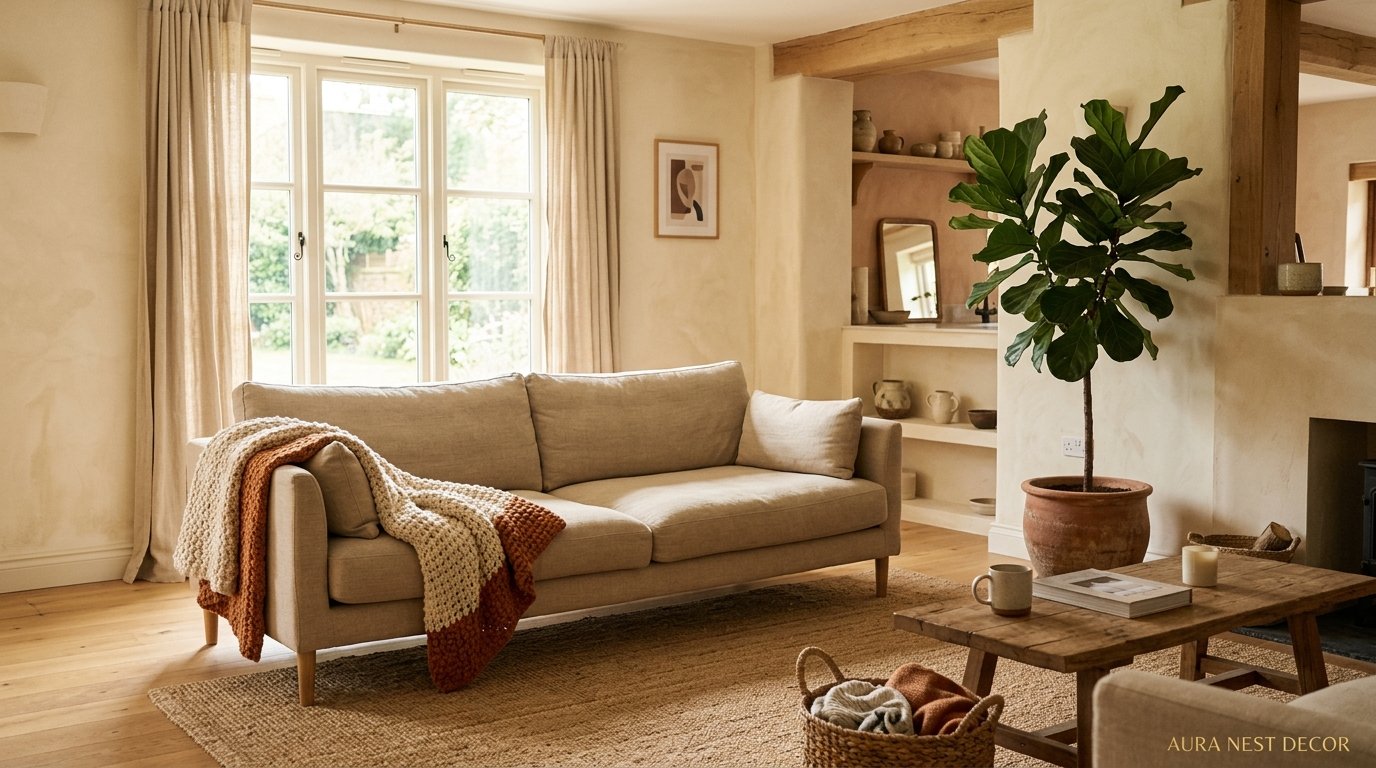
You know that feeling when you walk into a room and everything just… exhales? No clutter, no visual noise, but somehow it’s warm and layered and it looks like someone actually lives there. That’s boho minimalism. And it’s harder to nail than it sounds.
—
1. What “Boho Minimalist” Actually Means (Because It’s Been Totally Misunderstood)
So let’s clear this up right away, because Pinterest has made it confusing. Boho minimalism isn’t “throw a rattan chair in a white room and call it a day.” It’s also not a maximalist boho space with stuff edited out. It’s its own thing.
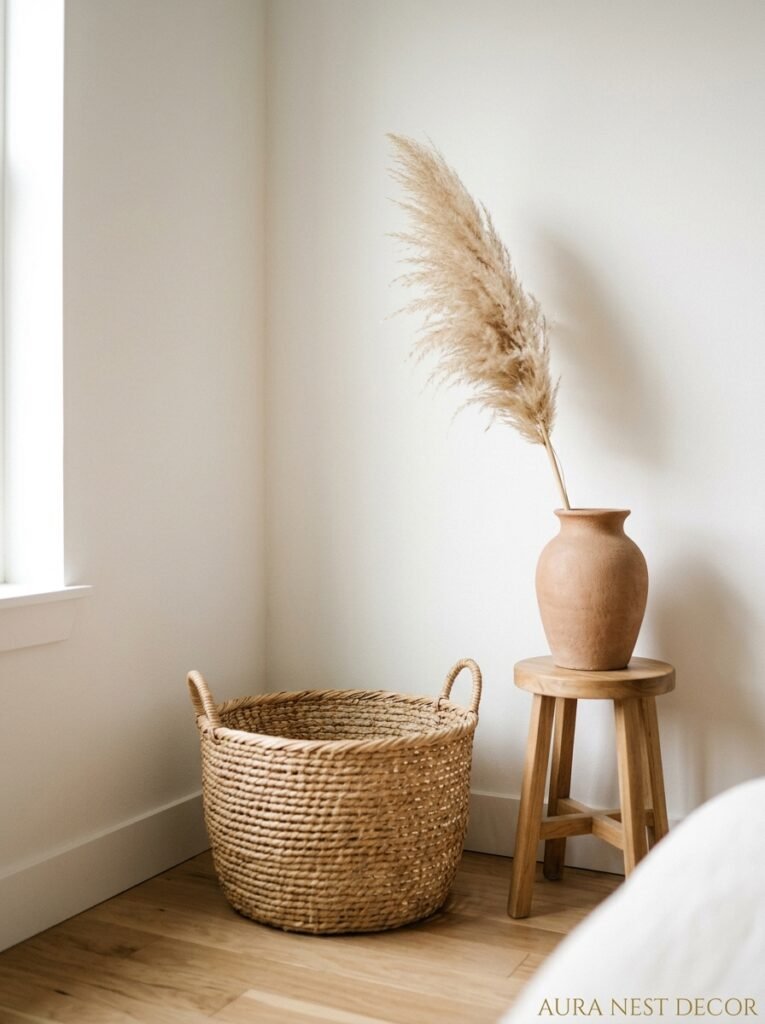
The idea is that every single object in the room has a reason to be there — but those objects are warm, imperfect, and alive. A linen throw that’s slightly wrinkled. A ceramic vase with an uneven glaze. A basket that you actually use. The minimalism is in the restraint, the breathing room, the intentional empty spaces. The boho part is in the soul of it. The texture, the organic shapes, the sense that this room grew rather than got decorated.
What makes it hard is that you can’t just shop your way there. You have to resist things, which is genuinely difficult when you’re on a roll at a thrift store or scrolling through H&M Home at midnight. The whole point is to love fewer things MORE. And that requires a little ruthlessness.
“Boho minimalism isn’t about owning less. It’s about owning exactly the right things — and giving them space to breathe.”
—
2. The Palette That Actually Works (and It’s Not All Beige, Promise)
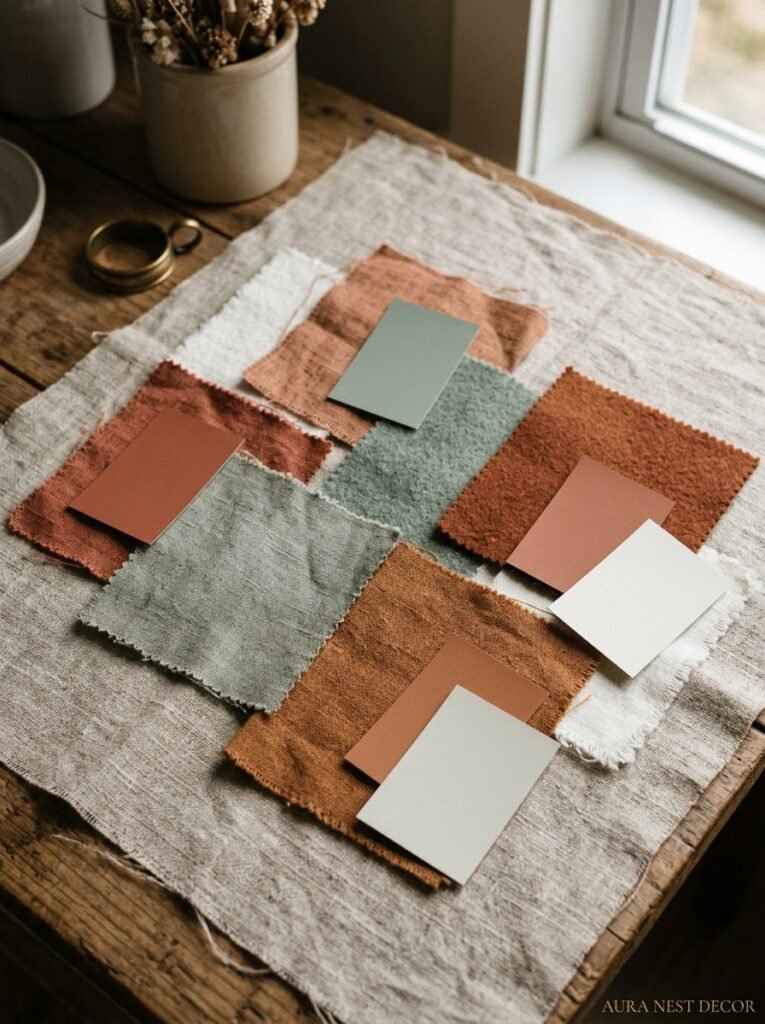
Okay so. Neutral-heavy, yes — but “neutral” doesn’t have to mean beige-beige-beige until the room looks like an uncooked biscuit. The palettes that REALLY work for this aesthetic have some depth to them.
Think warm whites that lean cream. Putty tones. A muted terracotta that’s almost a nude. Soft olive greens that look like sage left in the sun too long. And then — this is the part people miss — one or two genuinely moody shades. A dusty plum cushion. A deep rust throw pillow. A coffee-colored woven wall hanging that grounds the whole thing.
The key in US spaces especially is that natural light changes everything. A color that looks perfect in a moodboard photo taken in a Scandinavian apartment at noon might look completely flat in a north-facing living room in Ohio in November. So test your main color in BOTH morning and evening light before you commit. This honestly saved me from a very expensive mistake involving a paint called “French Linen” that turned absolutely grey-green by 4pm.
British homes tend to have less natural light anyway, so if you’re working with a UK living room, lean warmer. A touch of amber, not cool greige. Your room will thank you.
—
3. The Furniture Formula That Makes the Room Feel Intentional Instead of Empty
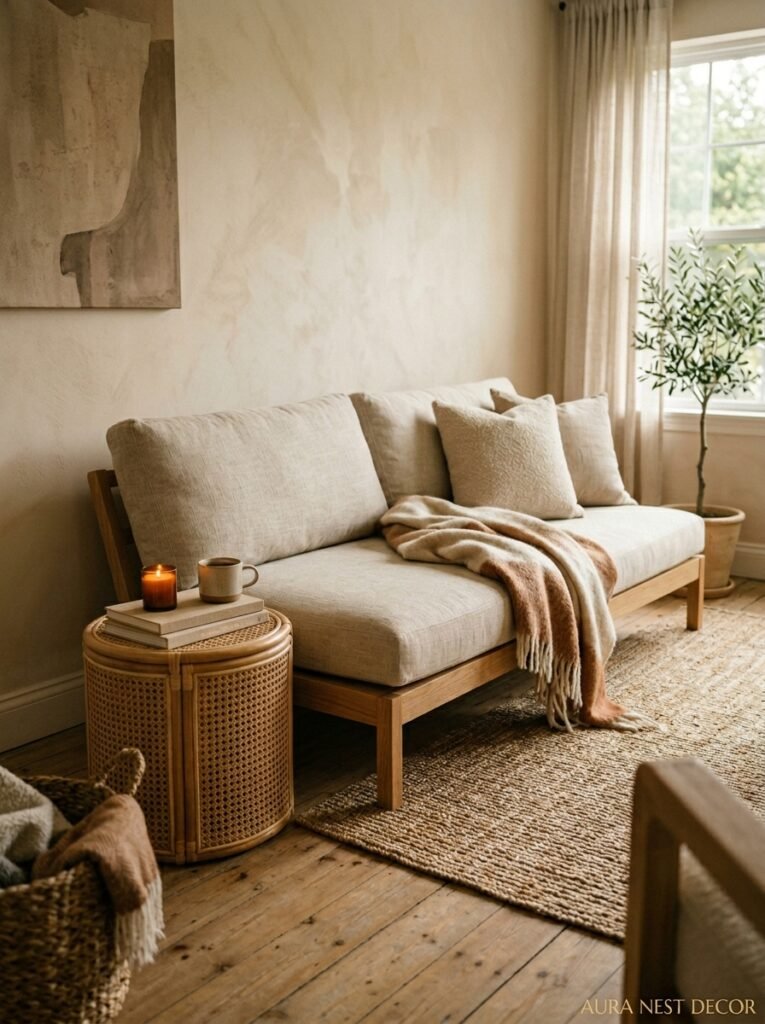
Here’s the thing about minimalism that nobody tells you upfront: fewer pieces means each one works HARDER. A statement sofa in an almost-empty room has nowhere to hide. So you have to choose carefully.
For a boho minimalist space, the furniture rule I keep coming back to is: one substantial piece, a few smaller pieces with interesting shapes, and nothing that matches. Not in the way a furniture set matches. A low-profile sofa in natural linen or textured boucle. A vintage wooden coffee table with a bit of worn character — not a perfect Scandinavian slab, but something with history. A rattan side chair or a curved wicker accent piece that brings that natural, organic line.
And then you stop. That sounds obvious but it’s genuinely hard. The urge to add a pouf, another table, another chair — resist it. The empty corner is doing something. It’s creating visual calm. Let it.
One rule I’d actually fight for: avoid anything with shiny metal legs in this aesthetic. It immediately pulls you out. Matte, warm, natural finishes only — wood, cane, raw iron if anything.
—
4. Textiles Are Where the Boho Lives (Don’t Let Them Overwhelm the Minimal)
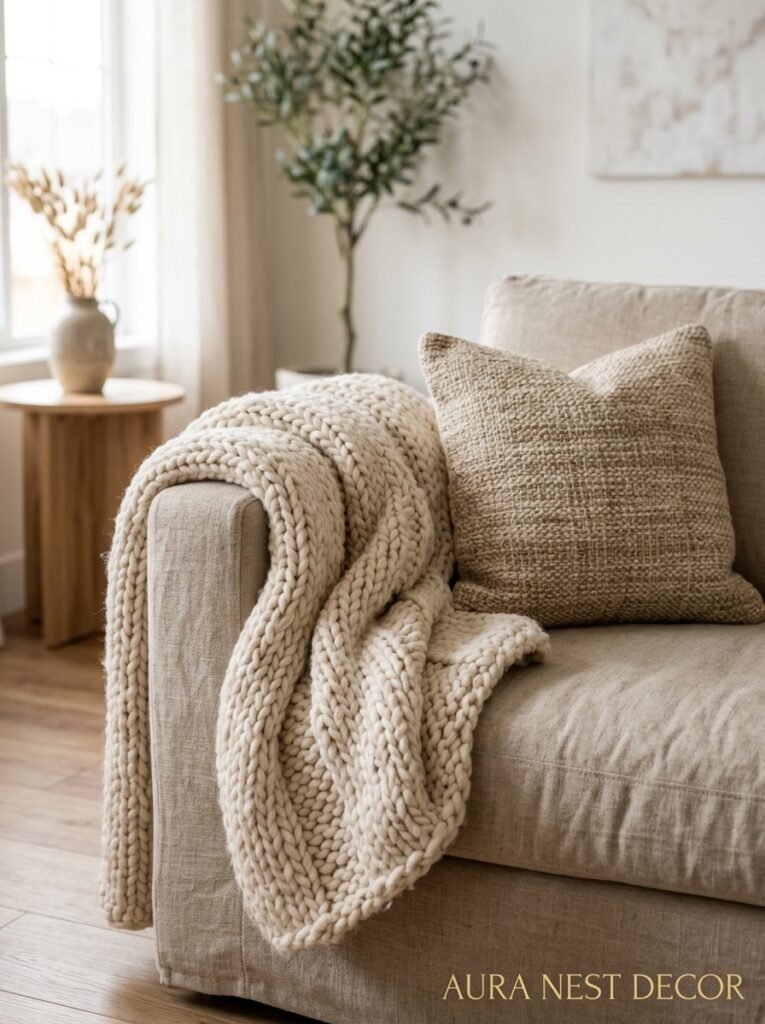
This is where the magic happens and also where the whole thing falls apart if you’re not careful.
Texture is the boho side of the equation. Chunky knit throws. Aged linen cushion covers. A woven cotton rug with a subtle pattern — diamond or stripe, nothing too loud. A macramé wall hanging that isn’t massive (more on that in a sec). These are the things that stop the room from looking like a furniture showroom.
But here’s where people go wrong: they layer ALL of it. Chunky throw AND three different cushion textures AND a huge macramé AND a shaggy rug AND a fringe blanket and suddenly the “minimalist” part is completely gone. You’ve just done maximalist boho with a light background.
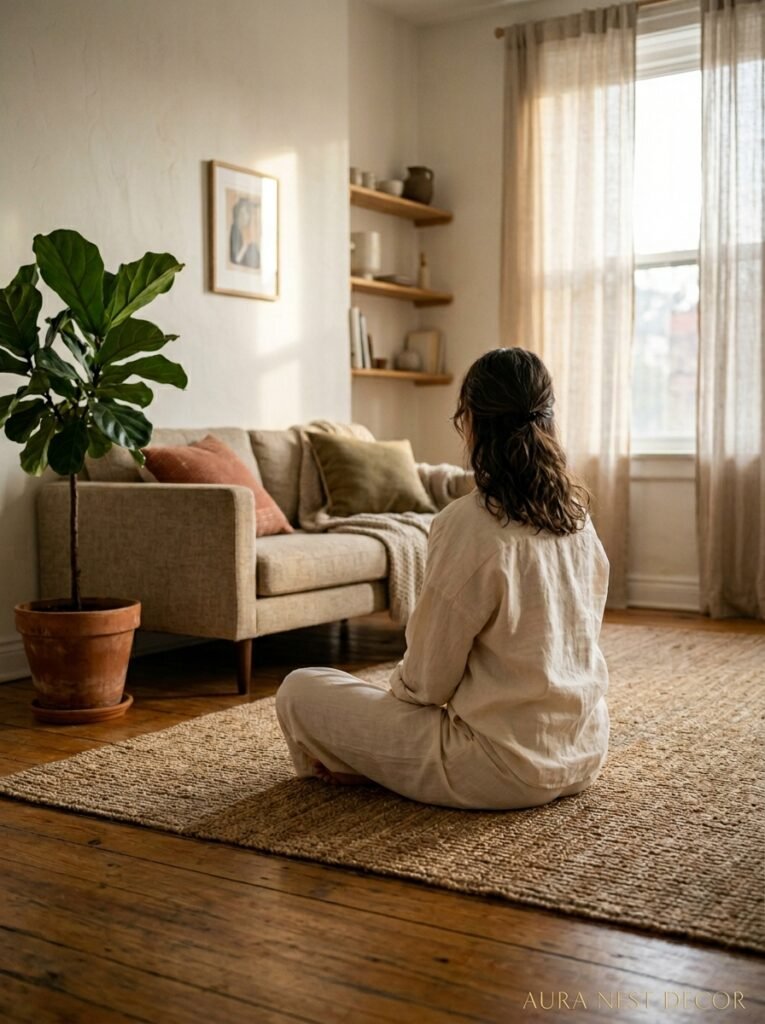
Pick a LEAD texture. One that you’re really committing to. For me it’s always linen — a slightly wrinkled, lived-in linen sofa cover or a handful of linen cushions with interesting trim. Then let one or two other textures support it quietly. A soft wool throw. A simple woven basket. Done. That’s it.
“One lead texture, two quiet ones. That’s the formula. Break it and you’re back in maximalist territory before you notice.”
—
5. The Wall Art Situation: Why That Giant Macramé Might Actually Be Killing Your Vibe
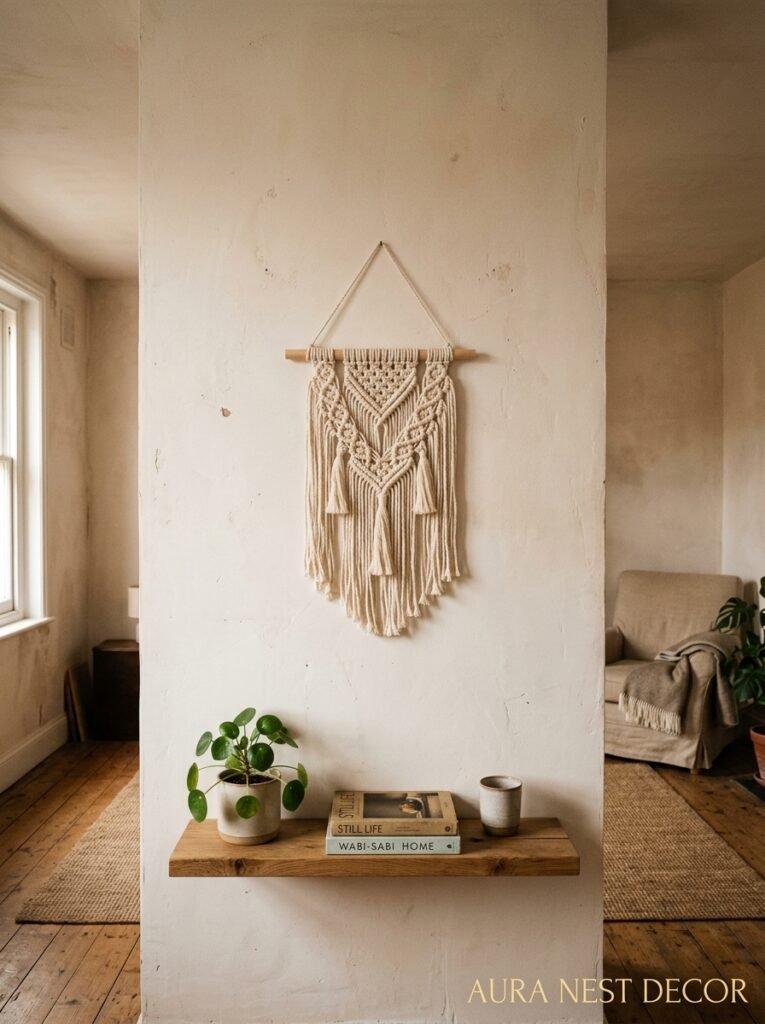
I love macramé. I do. But I’ve seen it destroy more boho minimalist living rooms than anything else. A 5-foot-wide macramé hanging above a sofa with intricate knotting and fringe that almost touches the floor — it doesn’t say “intentional.” It says “Etsy 2019.”
For a true boho minimalist wall, think SMALLER and more unexpected. A single oversized vintage textile in muted tones. A collection of three very simple rattan frames with botanical prints — but keep them small and grouped tightly so they read as one object. A woven wall piece that’s more about shape than detail, something abstract and quiet.
Or honestly? Nothing on the wall at all. A bare warm-white wall behind a beautiful sofa with the right cushions doesn’t look unfinished. It looks like you knew exactly what you were doing. Sometimes leaving the wall empty is the most confident design choice in the room. A lot of American and British homeowners haven’t quite gotten comfortable with that yet, but once you try it, it’s hard to go back.
—
6. Plants: The Living Element That No Amount of Decor Can Replace
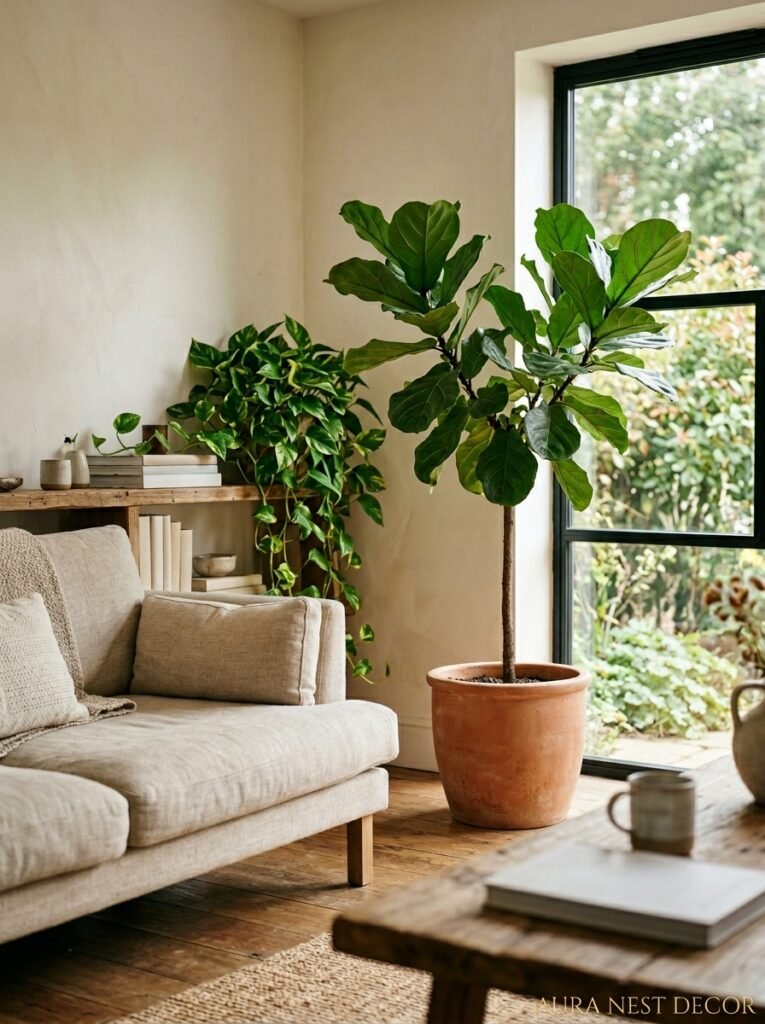
You can’t do boho minimalist without plants. Not really. They bring the organic, uncontrolled quality that all the linen and wicker in the world can only gesture toward.
But here, again, restraint matters. Two or three plants, carefully chosen, beat twelve plants crammed into every corner. A large fiddle-leaf fig or an olive tree in a simple terracotta pot — one big statement plant can carry a whole room. Add a trailing pothos on a high shelf or in a hanging planter, and maybe one small succulent grouping near a window, and you’re done.
The pot matters as much as the plant. No plastic nursery pots visible, obviously, but also avoid anything overly decorated. Matte terracotta, textured cement, simple woven baskets. The plainer the vessel, the more the plant becomes the thing you’re looking at. Which is the point.
Side note — dried pampas grass and dried botanicals fit brilliantly in this aesthetic and last ages. I know they’re everywhere right now but honestly they work, so don’t avoid them just to be contrarian.
—
7. The Coffee Table Styling That Looks Effortless but Isn’t
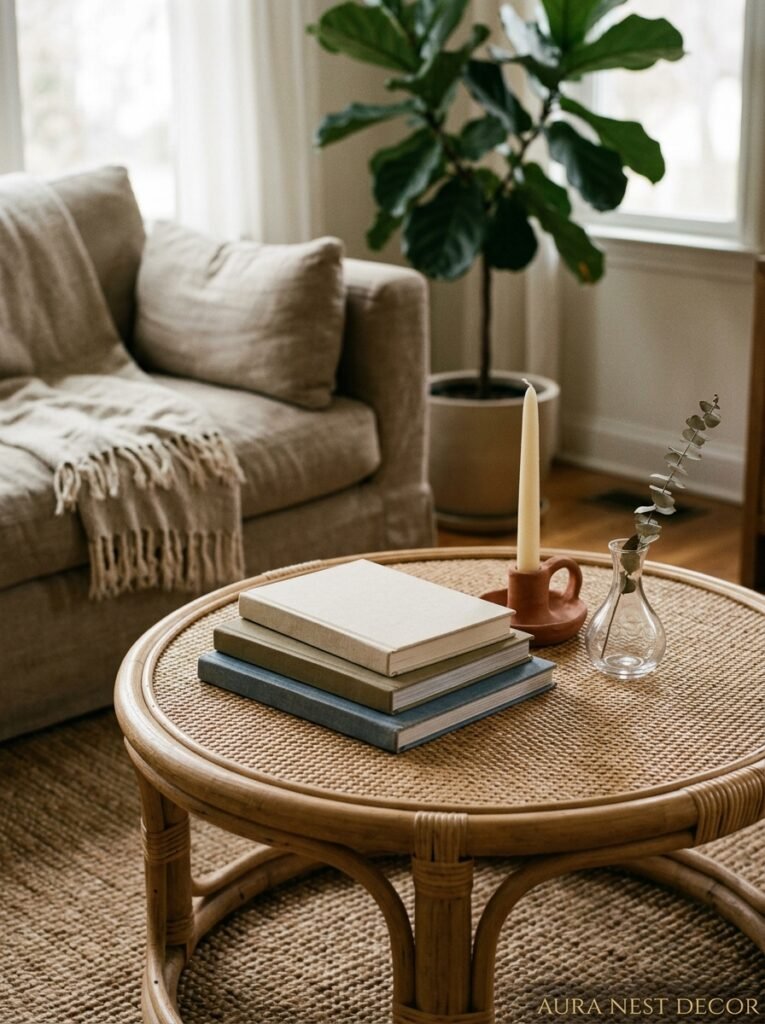
Real talk: the coffee table is the most photographed surface in any living room, and the one where “effortless” styling takes the most effort. Boho minimalism’s version of coffee table styling is specific.
You want three elements MAX. Something tall — a small stack of books or a single candle in a substantial holder. Something organic — a small woven tray, a piece of driftwood, a ceramic bowl. Something alive — a small cutting from a plant, or a few dried stems in a bud vase. That’s it. White space on the table matters as much as what’s on it.
No decorative objects just for the sake of decoration. And nothing that matches too perfectly — three things bought as a set from the same store at the same time will always look like a set, and that’s not the vibe. The coffee table should look like it came together over time, casually. Even if it didn’t.
“The stuff on your coffee table should look like you almost didn’t notice you put it there. That’s the whole game.”
—
8. Lighting: The Amber Hour Is Non-Negotiable
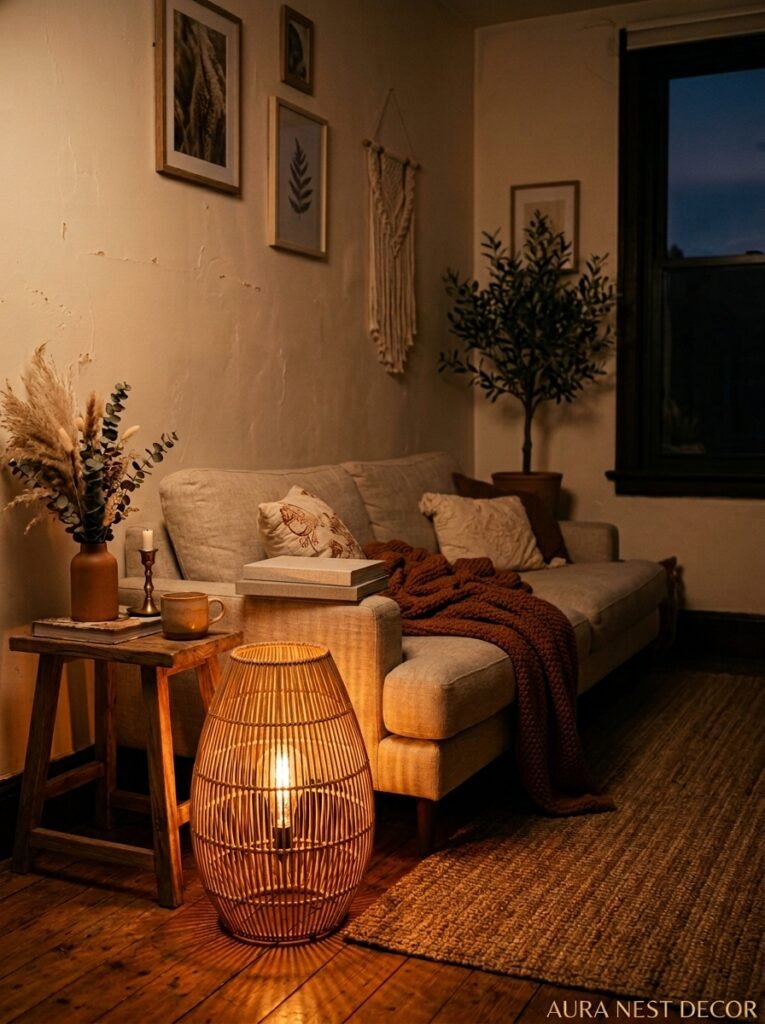
This might be the most underrated part of any boho minimalist room. You can do everything else right and have overhead can lighting or a harsh cool-white bulb and ruin it completely.
The goal is warm, low, layered light. Not dim — warm. An arc floor lamp with a linen or rattan shade that throws light downward and sideways. A table lamp on a side table or shelf with a warm Edison-style bulb — that amber glow at 7pm on an autumn evening is the whole mood. String lights if you want, but tucked and subtle, not draped dramatically around everything.
The UK tends to be better at layered living room lighting than the US, which still leans on the single overhead ceiling fixture more than it should. If that’s you — the single overhead light — please. Add a floor lamp. Just one. The difference is immediate and enormous and it costs less than most cushions.
Overhead lights should be on a dimmer if at all possible. This single upgrade does more for a room’s atmosphere than almost any decorative purchase.
—
9. The Floor: Why Your Rug Choice Is Making or Breaking Everything
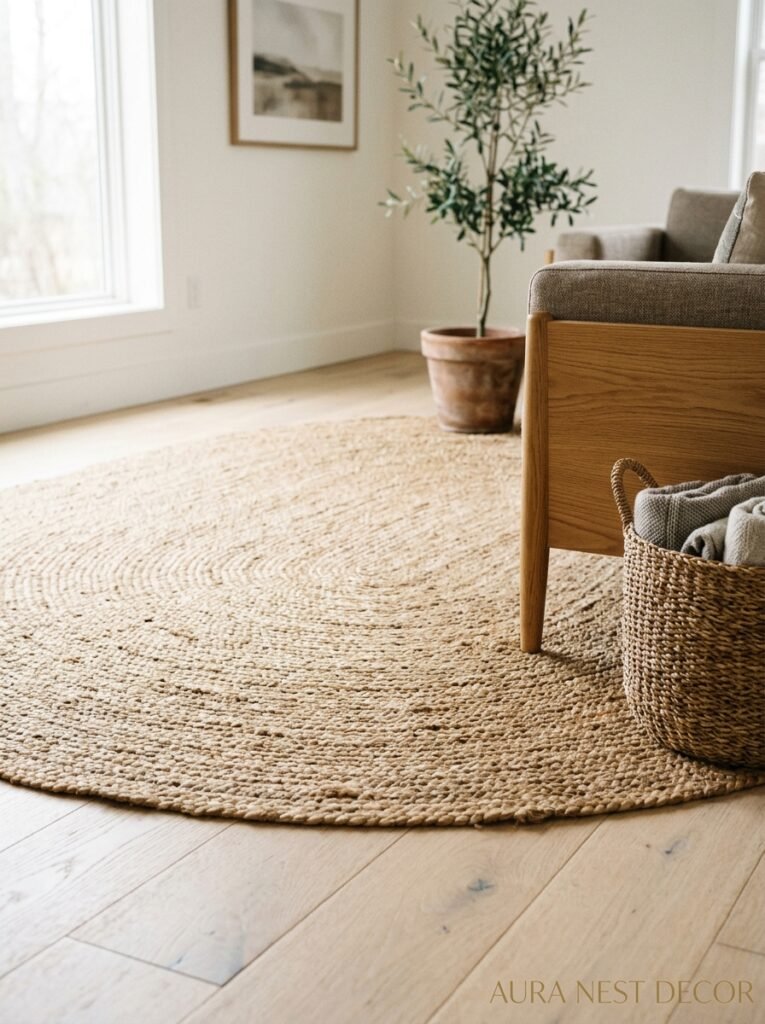
The rug anchors everything. And in a boho minimalist room, the wrong rug doesn’t just look bad — it throws the whole mood off completely.
What you want: natural fiber (jute, sisal, wool) or a flatweave cotton with a simple geometric pattern. The texture should be interesting but the pattern should be quiet. Warm tones. Nothing too polished, nothing too worn. And it needs to be BIG — seriously, rugs that are too small make a room look like furniture accidentally landed on them.
What to avoid: anything with bright colors, anything that looks like it belongs in a Moroccan restaurant rather than a calm home, and please, anything with fringes that are too white and too perfect. Imperfect and natural. That’s the goal.
In the UK, wool rugs are genuinely easier to find at good prices, and they’re warmer underfoot in those cold stone-floored Victorian terraces and cottages. Worth spending a bit more on a wool rug than anything else in this list, honestly — it lasts longer and it FEELS better.
—
10. Shelving: The One Rule Nobody Follows But Everyone Should
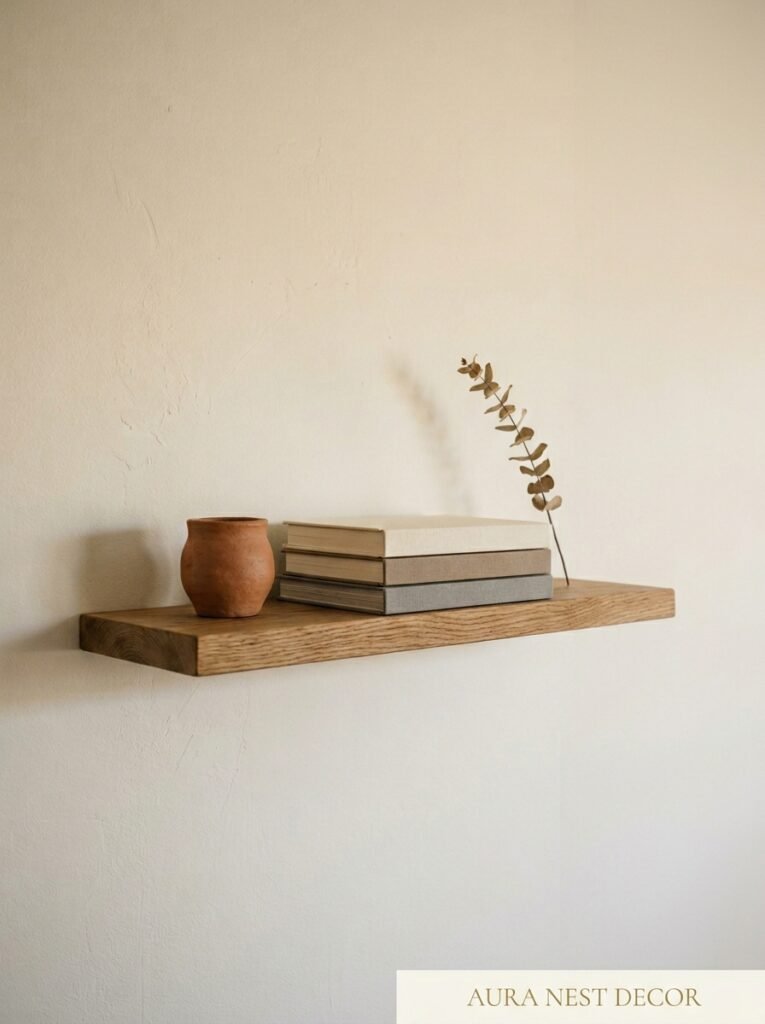
If you’ve got shelves in your living room — built-ins, a freestanding bookshelf, floating wall shelves — the boho minimalist rule for styling them is: leave a third of each shelf EMPTY.
Not as a design principle you read once and forget. As an actual rule. Every time you add something, remove something. Every time you’re tempted to fill a gap, stop and ask if the gap is doing something. Usually it is.
The things ON the shelves should be the best version of the aesthetic: books with interesting spines (or turned spine-in for a quieter look, which sounds weird but is actually beautiful), one or two ceramics in organic shapes, a small plant, maybe a basket tucked low to hide the practical stuff. No knick-knacks, no novelty items, no things you’re keeping because you feel guilty not displaying them.
This is the hardest part. Because shelves, by their nature, invite accumulation.
—
11. The Scent Layer People Forget Is Part of Interior Design
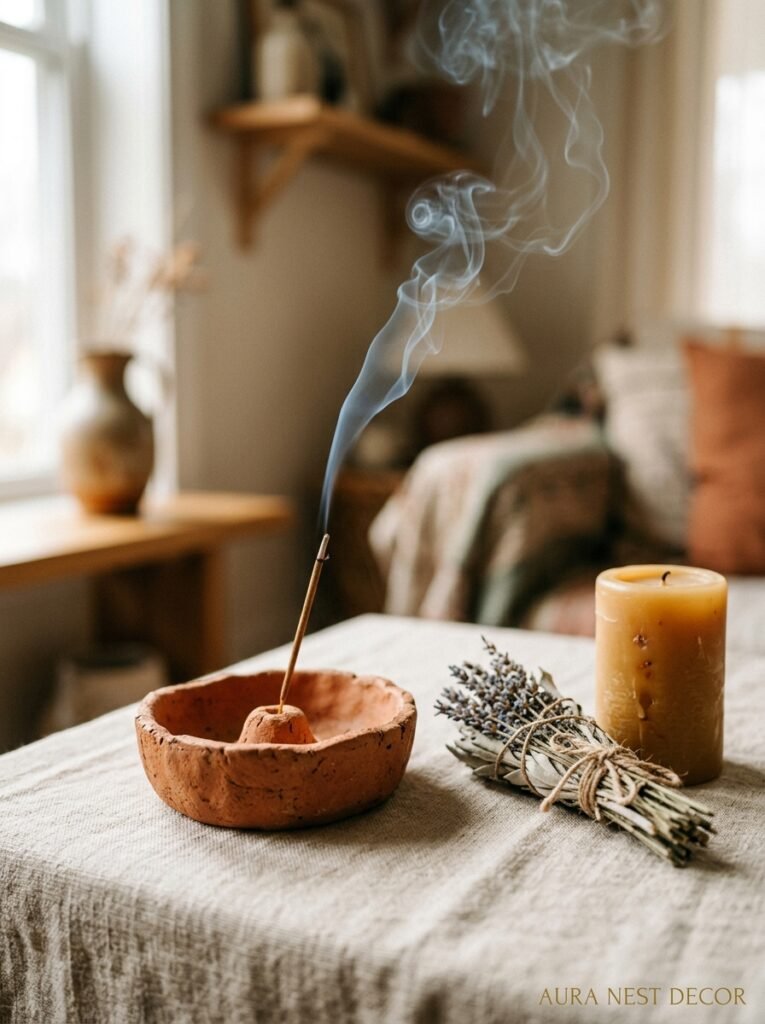
I’m not joking. The smell of a room is part of how it FEELS. And in a boho minimalist living room, the scent should match the aesthetic — warm, natural, a little earthy, never synthetic-sweet.
Beeswax or soy candles in scents like vetiver, sandalwood, cedar, or warm amber. Not “fresh linen” (that’s a bathroom candle). Not vanilla extract levels of sweet. And ideally in a simple vessel — a terracotta pot, a matte ceramic container, a glass jar with a kraft paper label.
Dried herbs bundled near a window work too. A small palo santo stick on the coffee table, not burning, just sitting there smelling like itself. These things are small but they round out the sensory experience of a room in a way that nothing visual quite does. Visitors won’t necessarily know WHY your living room feels so right. But they’ll feel it.
—
12. The Edit: The Hardest Part Is What You Take Away
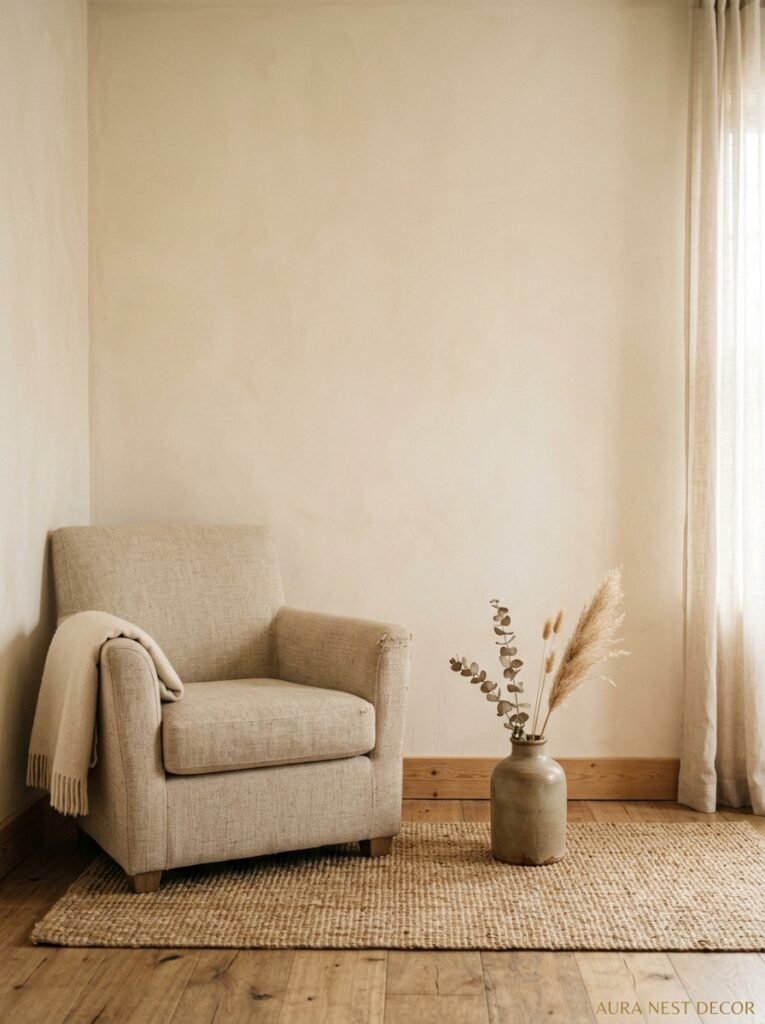
Every few months, you have to edit. This is the work that never quite ends with a boho minimalist space because life keeps adding things — gifts, impulse buys, things migrating from other rooms. The room drifts back toward clutter slowly, like a tide coming in, and you have to push it back out.
Walk into your living room like you’ve never seen it before. What do you notice FIRST? If it’s clutter or a wrong-feeling object or a surface that’s too full — that’s your answer. Start there.
Ask yourself: does this thing earn its place? Does it have warmth, purpose, some quality of beauty or usefulness? If the answer is maybe… it probably needs to go. Or at least leave the room for a while, to test whether you miss it. You usually won’t.
The rooms that stop your scroll on Pinterest, the ones that look impossibly beautiful and calm — they got there through removal, not addition. Someone looked at them and took something away, then took something else away, and eventually arrived at exactly enough.
That’s the whole practice.
—
❓ FAQ
Q: Can a boho minimalist living room work if I rent and can’t paint the walls? A: Absolutely — and honestly, a lot of renters pull this off better than homeowners because they have to be more creative. Warm-toned textiles and lamps can shift a cold white rental wall significantly. Large woven wall hangings and leaned-against-the-wall art (rather than hung) also give you the same effect without a single nail hole.
Q: How do I stop a boho minimalist room from looking cold or sterile? A: The texture is what keeps it warm. If it feels cold, it’s usually because there’s not enough natural material — linen, jute, wood, terracotta. Add a chunky woven throw to the sofa and a warm-toned rug if you haven’t already. Those two things alone almost always fix the problem.
Q: How much should I spend on a boho minimalist living room makeover? A: Less than you think, honestly. Thrift stores, Facebook Marketplace, and charity shops (for UK readers) are full of exactly the right kind of imperfect, organic, vintage pieces this aesthetic calls for. Spend more on the sofa and rug — the things you can’t fake — and hunt for everything else secondhand.
—
💭 Final Thoughts
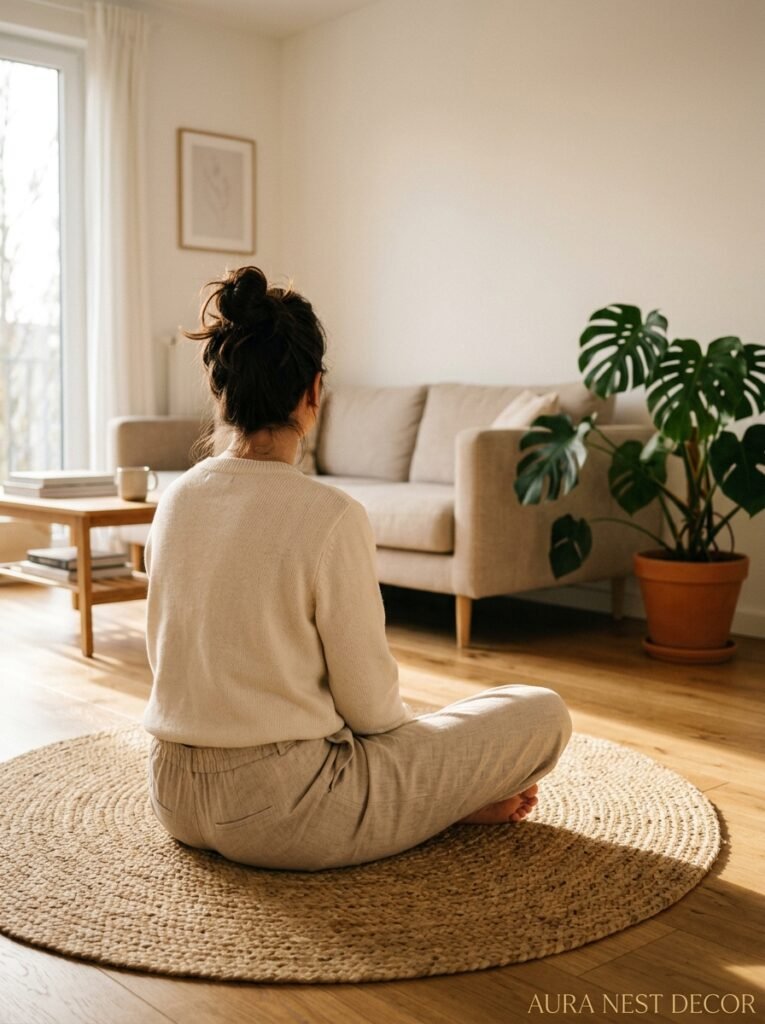
There’s something almost quietly radical about a room that has less in it and yet feels like more. Like you’ve made a decision about what actually matters in a space, and stuck to it. Boho minimalism, when it works, doesn’t just look beautiful on a screen — it changes how you feel sitting in it on an ordinary Tuesday morning, coffee in hand, light coming through the window.
The edit is never really finished, and that’s okay. Maybe the question worth sitting with is: what would you take away today?