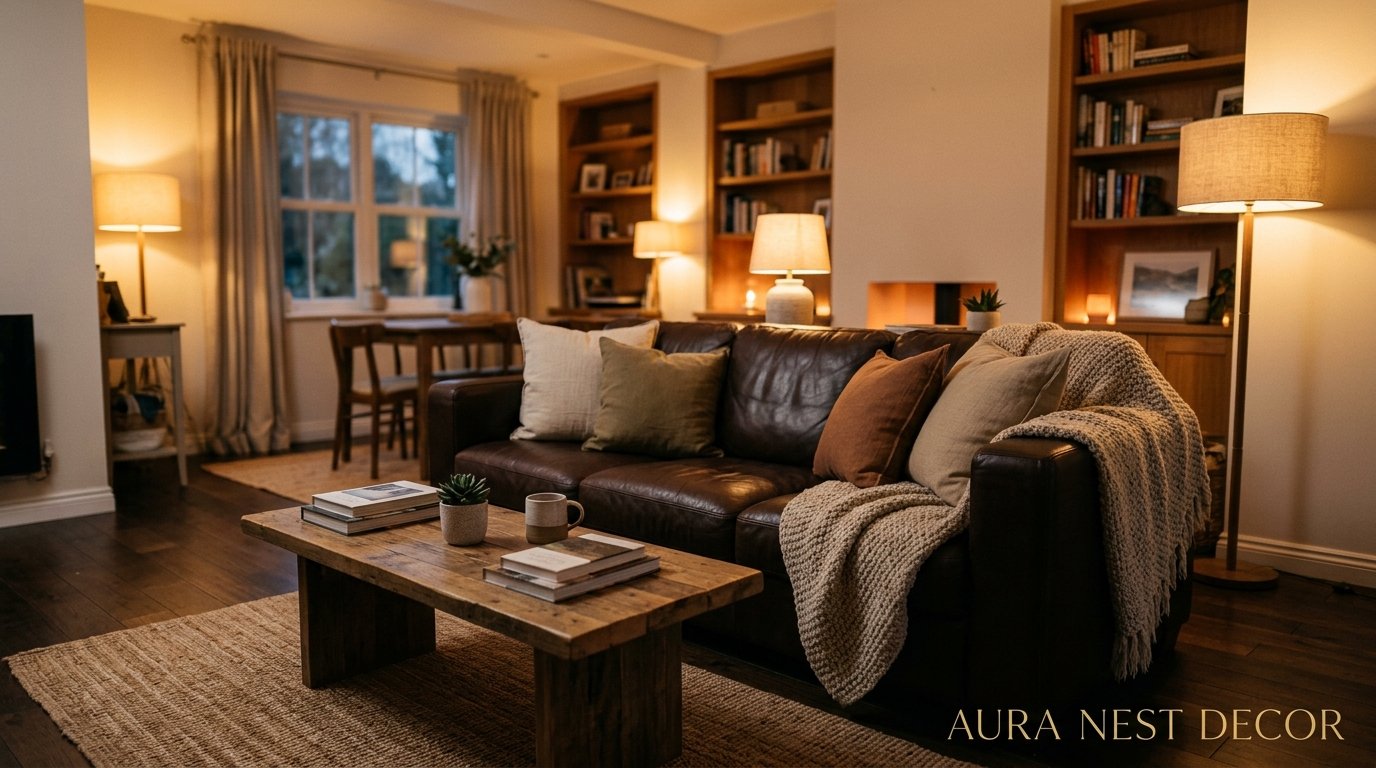
The Brown Sofa Is Back and It’s Making Every Other Color Look Boring
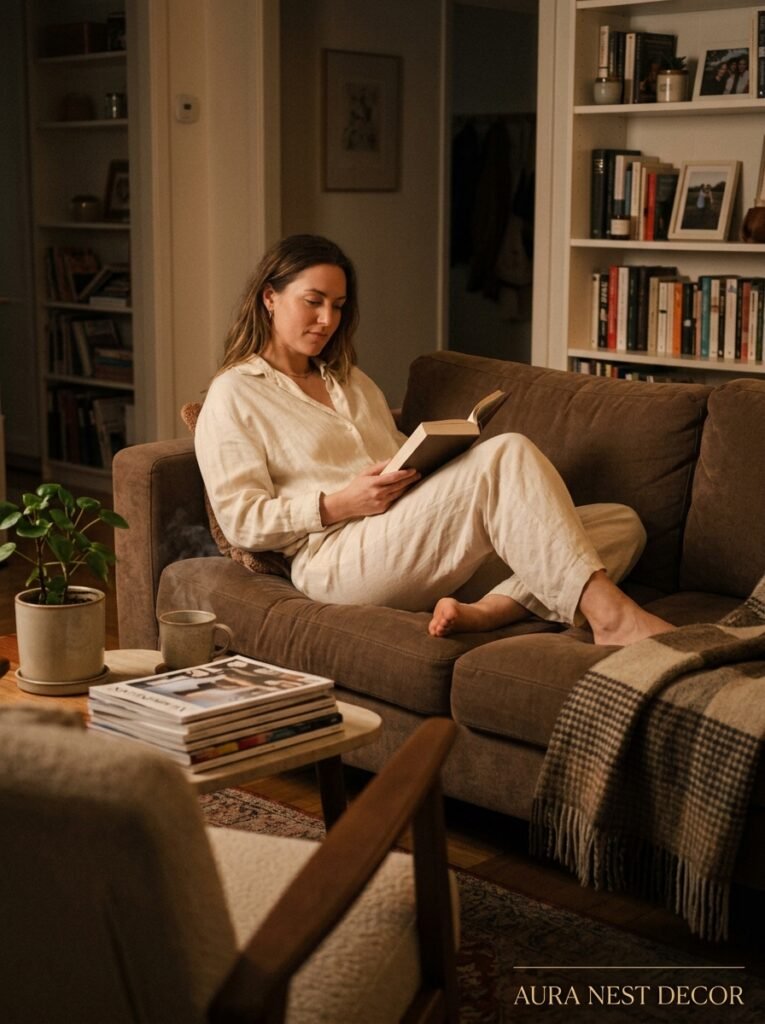
You bought the gray sofa everyone told you to buy and now you’re tired of it. That’s okay. A lot of us are in the same boat. Brown is having a full-blown comeback and honestly, it never should have left.
—
1. Why Brown Sofas Are Dominating Every “Cozy Living Room” Board Right Now
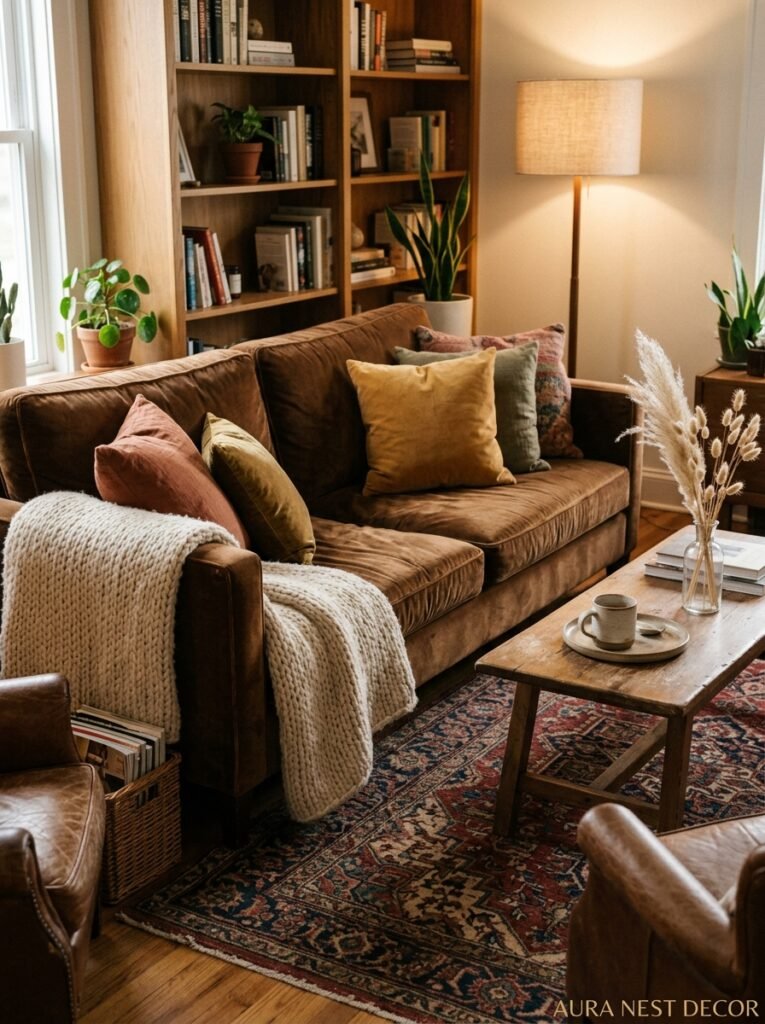
There’s a reason your Pinterest feed is suddenly full of warm, earthy living rooms that look like you could sink into them and never leave. It’s not a coincidence. It’s brown.
Specifically, it’s the warm toffee, the deep cognac, the muted cocoa tones that have crept back into interior design after about a decade of being replaced by — let’s be real — a lot of cold gray and blinding white. And those spaces looked clean. Sharp, even. But they didn’t feel like anywhere. You could live in them for years and they’d never quite feel like yours.
Brown does something different. It’s the color of warm wood and morning coffee and old leather books. It carries weight. There’s an intimacy to a brown sofa that you don’t get from a pale sage or an ivory linen, and I think that’s exactly why people are gravitating toward it again. Not just in the US — this is happening everywhere in the UK too, especially in that whole “quiet luxury” and “heritage home” aesthetic that’s been sweeping Instagram and Pinterest for the past couple of years.
Here’s what’s funny, though. People are nervous about it. They’ll pin fifteen brown sofa images and then ask “but is it too dark?” It’s not too dark. That darkness is the ENTIRE point.
“Brown doesn’t hide in the room. It grounds the room. There’s a difference.”
—
2. The Leather vs. Velvet Decision Is More About Mood Than Material
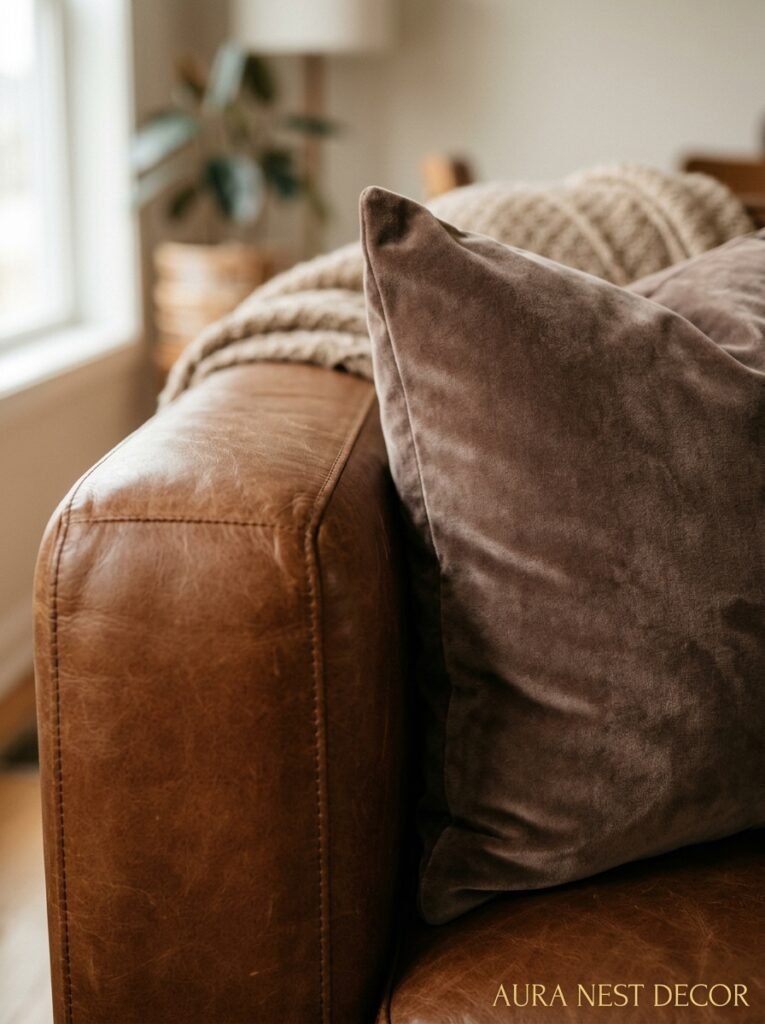
This is the first real choice you’ll make and it shapes everything else. Leather and velvet feel completely different to live with — not just to sit on, but to look at, to style around, to maintain.
A brown leather sofa is honest. It looks better with age, develops character in a way velvet simply doesn’t. Scratch it a little, let it soften over years, and it becomes something you couldn’t have bought on purpose. That worn cognac leather next to raw wood floors and a jute rug? Genuinely one of the warmest-looking rooms a person can own. It reads as masculine when it needs to and relaxed when you want it to. It cleans up easily, which — not gonna lie — matters if you have kids or a dog or any real life happening in your living room.
Velvet, though. A brown velvet sofa in a deep chocolate or cinnamon shade is something else entirely. It changes color as the light hits it. In the afternoon with sun coming through the curtains it looks almost amber, and by evening under warm lamp light it goes dark and plush and absolutely gorgeous. The catch? Velvet shows every dent, every paw print, every impression. Some people hate that. Some people kind of love the lived-in look of it and see each mark as proof the room is actually being used.
There’s also boucle, which is having its own big moment right now — a chunky, textured brown boucle sofa looks incredibly current without being trendy in a way you’ll regret.
—
3. The Color That Actually Pairs Better With Brown Than Anything Else (It’s Not Beige)
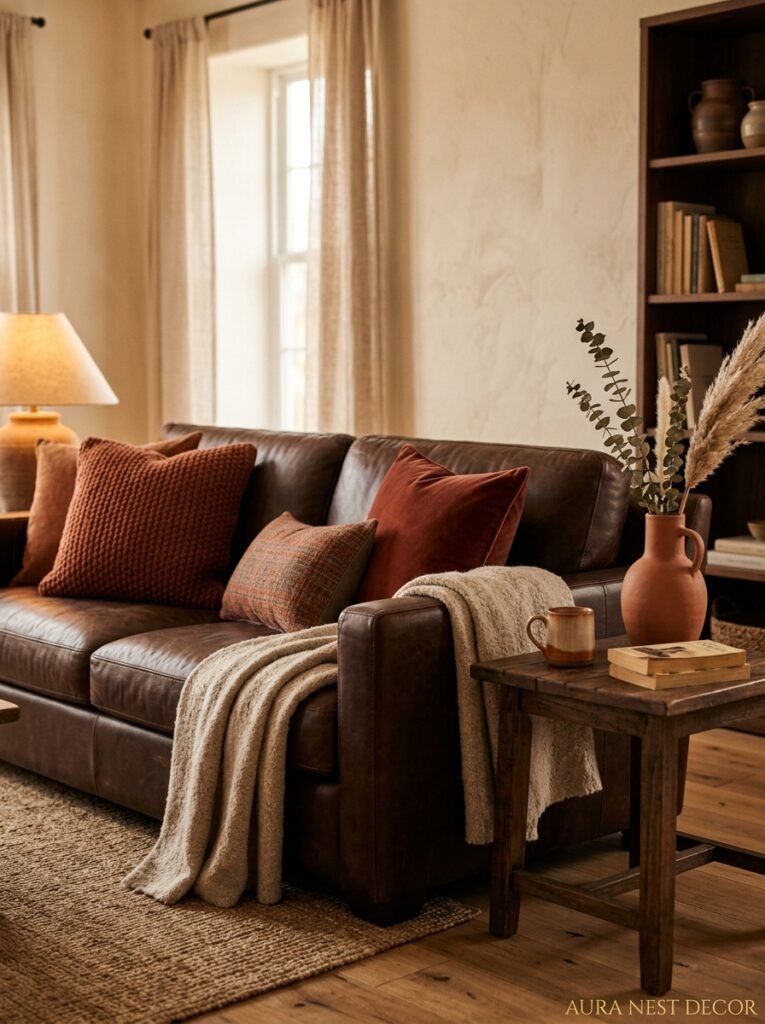
Everyone assumes brown goes with beige. And it does, fine, but that combination can tip into looking like the inside of a 1994 catalog if you’re not careful. You need something else in there to save it.
The answer is rust. Or terracotta. Deep burnt orange in any shade — a rust-toned throw, terracotta ceramic pots, an amber glass vase on the coffee table. These colors don’t just complement brown, they make it look intentional. They make the whole room look warm and curated and somehow very current.
Cream also works better than white. Bright white next to a warm brown sofa creates too much contrast — your eye goes straight to the gap between them and it reads as mismatched rather than contrasting. But a warm cream or a soft oat linen? That’s the combination. Throw pillows in oat and rust on a cognac leather sofa and it looks like something straight off an Interiors Pinterest board.
For people who want something unexpected — deep forest green works. Bottle green. That hunter green that’s been everywhere in UK interiors for a few years now. Brown and green together feels earthy and rich and very grown-up.
—
4. How to Make a Dark Brown Sofa Not Eat the Room
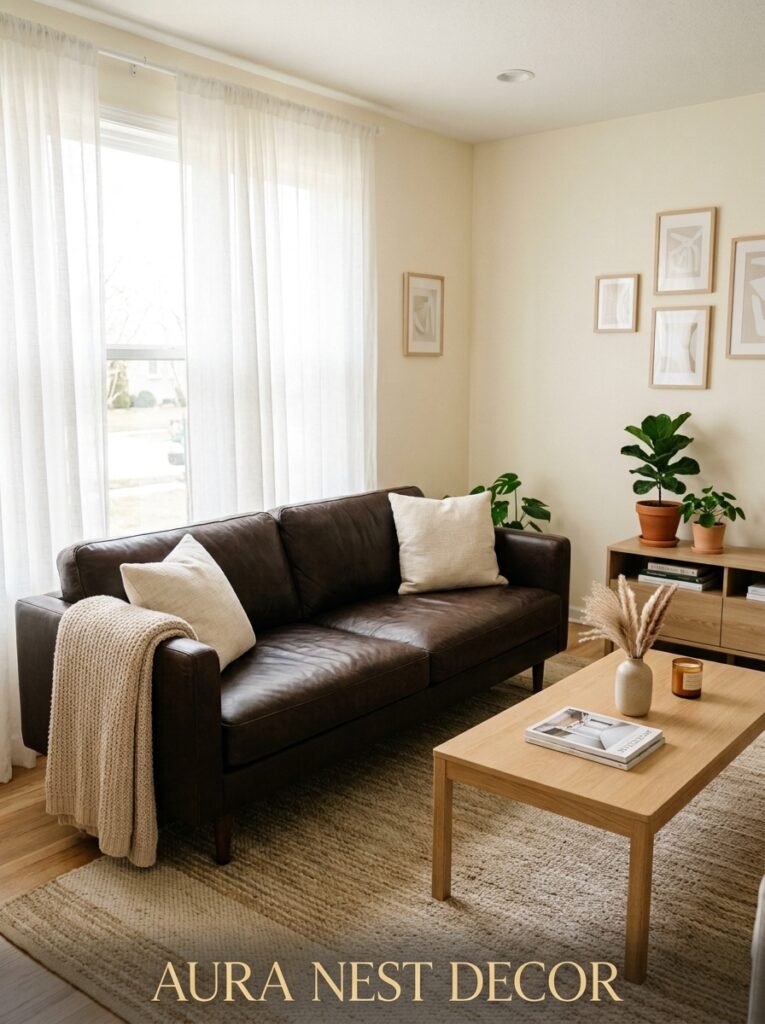
This is the fear, isn’t it? A dark brown sofa in a small room feels like it’ll take up all the visual space. But it won’t — if you do a few specific things.
First, keep your floor light. A pale wood floor or a cream rug pulls the room back and gives your eye somewhere to rest. The contrast between the dark sofa and the light floor creates definition, and the room feels layered rather than heavy. This works in a UK terrace living room just as well as an American open-plan space.
Second, don’t fight it with pale, timid walls. Counterintuitive, maybe. But a dark brown sofa against a warm white wall can look a bit lost, like it’s waiting for permission. Try warm terracotta or deep olive. Try a proper dark wall color — a moody taupe, a warm charcoal, even a deep burgundy if you’re feeling brave. Dark on dark, done right, feels intentional and cozy rather than closed-in.
Light. Lots of it, layered. A floor lamp behind one end of the sofa. Candles on the coffee table. The amber glow of an Edison bulb at 7pm bouncing off a warm wall. That’s what keeps a dark room from feeling heavy.
“The mistake isn’t choosing dark. The mistake is choosing dark and then being scared of it.”
—
5. The Rug Rule That Nobody Talks About For Brown Sofa Rooms
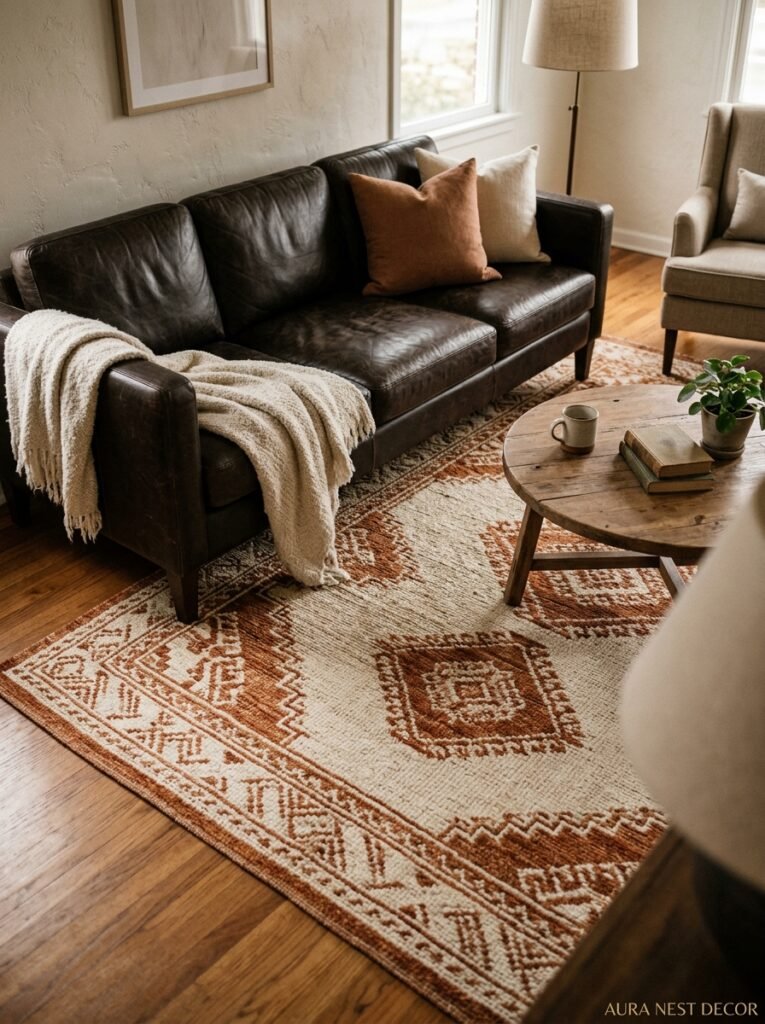
Here’s something I figured out after redoing my own living room: the rug does more work than the sofa.
Most people pick their sofa first, then try to find a rug that “matches.” And they end up with something that just blends in. But the rug is actually the foundation of the whole room. It’s what ties the furniture together, what introduces texture, what draws the eye down and makes the space feel complete.
With a brown sofa, the safest rug choice is also the most boring: tan or beige. It works, sure. But consider a patterned rug with warm ochre and deep red tones. Or a tufted wool rug in off-white with a subtle texture. A dark rattan-style flatweave. Any of these options add something the sofa can’t add on its own — pattern, depth, visual interest at floor level.
Size matters too, and most people go too small. The rug should be big enough that at least the front legs of your sofa sit on it. In a UK sitting room that might mean a 6×9, in an American living room you might need an 8×10. A rug that floats in the middle of the room with no furniture touching it doesn’t anchor anything.
—
6. Throw Pillows That Don’t Make Your Brown Sofa Look Like a Stock Photo
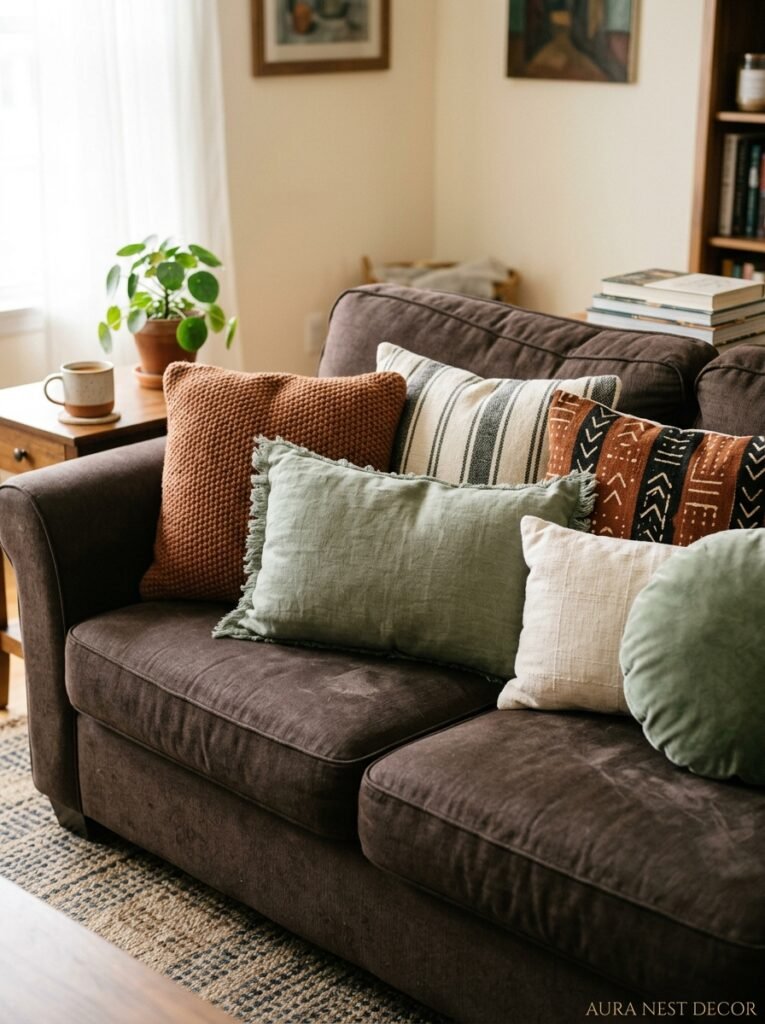
Can we talk about the generic pillow styling that shows up constantly? The perfect symmetrical arrangement of matching cushions in three coordinated colors? It looks like the display sofa at Pottery Barn. Not a living room.
Real throw pillow styling is messier. Different sizes. Different textures. Maybe a bolster on one end because you always curl up on that side to read. A lumbar cushion that’s technically a different shade from the main pillows and somehow that’s fine. A chunky knit throw draped in a way that looks casual but actually took you four tries to get right.
For brown sofas specifically — linen textured cushions in warm cream or sand are always safe. Add one print, something botanical or geometric, in rust or terracotta tones. Then add one cushion in a completely unexpected color, maybe mustard yellow or that dark forest green. Not too many. Four to five on a standard two-seater is enough, seven or eight on a big sectional. More than that and it starts looking like you can’t actually sit down.
—
7. What to Put on the Wall Behind a Brown Sofa (And What to Avoid)
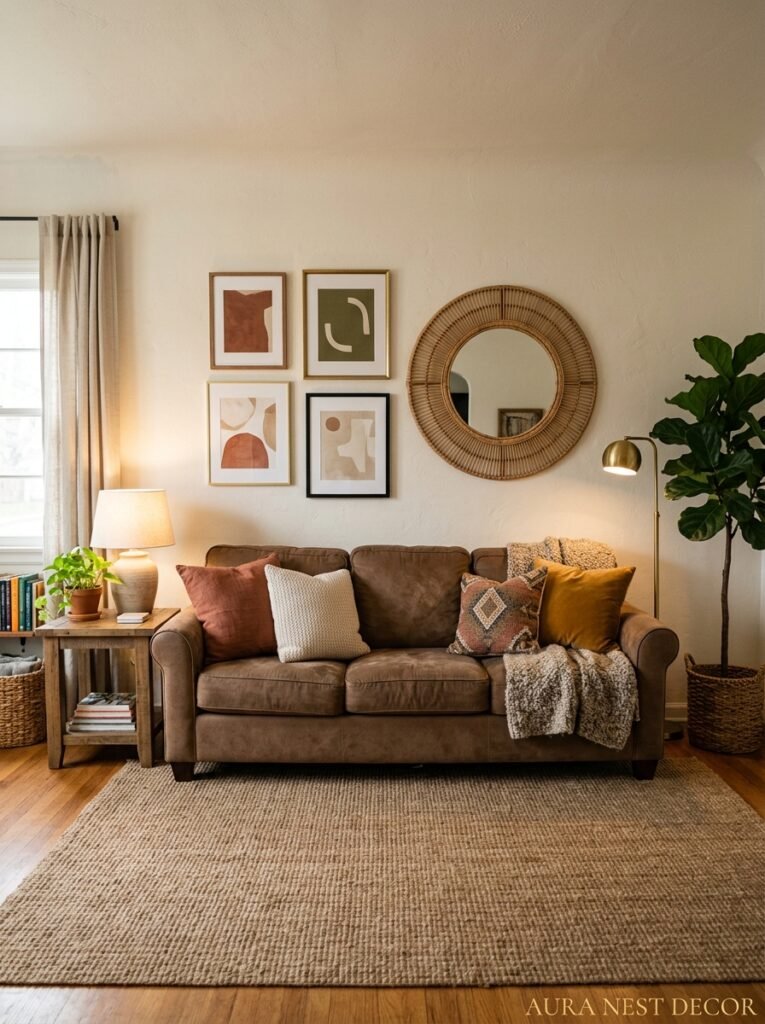
The wall behind your sofa is a whole conversation and most people either ignore it or over-style it. Gallery walls above brown sofas can look incredible — but the framing matters. Gold and brass frames warm things up beautifully and make the whole arrangement look expensive. Black frames against a warm brown sofa create a really modern, graphic look that works well if the rest of the room has clean lines.
What I’d avoid: those big canvas prints with the thin black modern frames that were everywhere in the early 2010s. They look cold next to warm brown upholstery. And floating shelves directly above a sofa always make me nervous — not just aesthetically, just, structurally, for anyone in the room.
A single large piece of art works really well here. Something abstract with warm earthy tones, or even a landscape in muted greens and tans. Don’t be afraid to go big. A too-small piece of art above a sofa just looks like it got lost.
Woven wall hangings work brilliantly above brown sofas — a natural jute or wool hanging adds texture where a painting would add color, and the combination of soft textiles on the wall and the sofa below feels deliberate and very current.
“The wall doesn’t need to scream. It just needs to have something to say.”
—
8. The Lighting Setup That Makes a Brown Sofa Room Look Like a Magazine
Overhead lighting is the enemy. Not completely, you need it to actually see things, but relying on a central ceiling light to do all the work in a living room is a mistake. It flattens everything. It kills atmosphere. It makes even the most beautiful brown sofa look flat and uninviting.
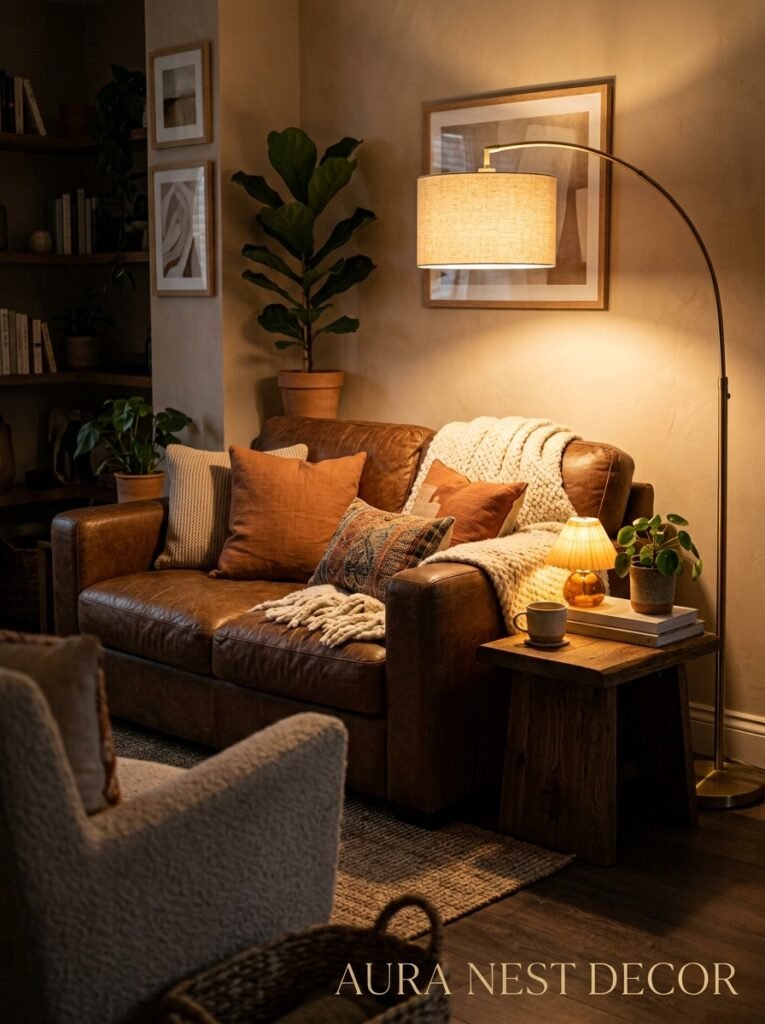
Layer your lighting. A floor lamp — ideally with a warm amber or cream shade — placed behind or beside the sofa. A table lamp on a sideboard across the room. Candles on the coffee table, actual real candles not just for show but actually lit in the evenings. And then a dimmer switch if you can manage it, so the overhead light can come down low enough to stop fighting with the warm lights around it.
The magic happens when the lamp light catches the sofa fabric. On leather it creates highlights and shadows. On velvet it changes the whole tone of the color. This is why brown sofas photograph so well in the evenings — it’s the lighting doing the heavy lifting.
—
9. Brown Sofas in Small Living Rooms: What Actually Works
Small rooms need a little more thought. Not because brown won’t work, it absolutely will, but because the decisions you make matter more when there isn’t much room to course-correct.
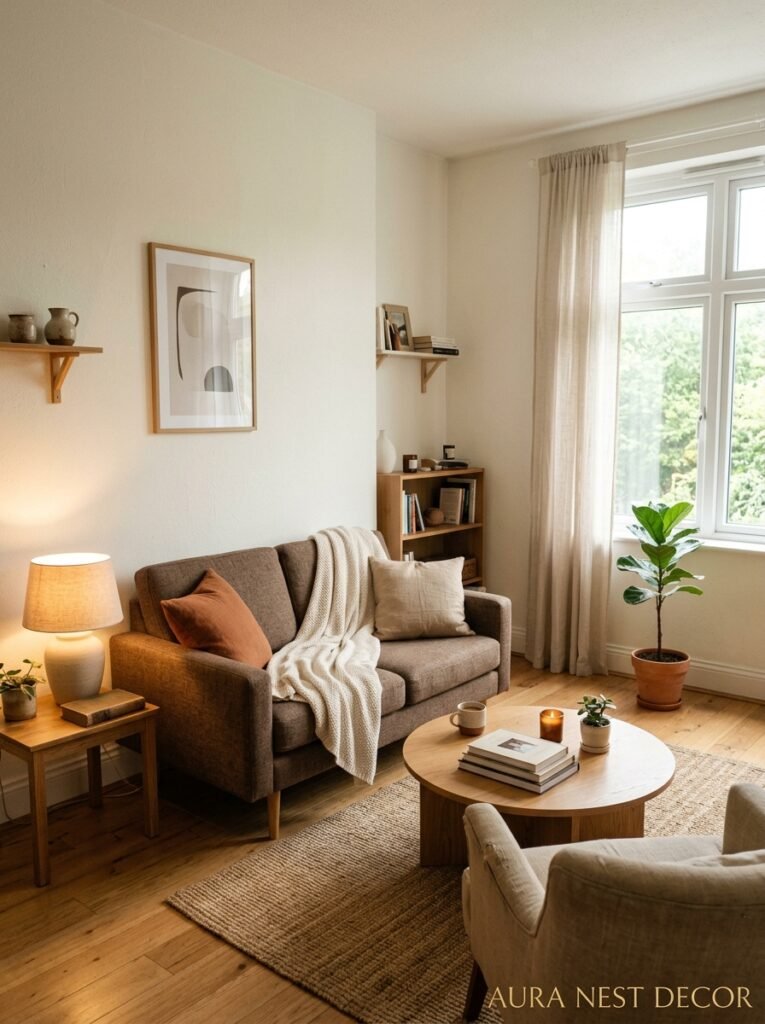
In a small UK sitting room with low ceilings and one north-facing window — which is basically half the living rooms in Britain — you want the sofa to feel like an anchor, not an obstacle. Keep the legs visible if possible; a sofa with exposed wooden legs rather than one that goes straight to the floor feels lighter and lets the eye see under it, which makes the room feel bigger. Choose a warm brown rather than a very dark chocolate — mid-tones like tan, caramel, and warm cognac are your friends in a small space.
Mirrors help, obviously, but place them to reflect a light source rather than just a wall. A large mirror opposite a window doubles the natural light and makes the brown tones in the sofa read warmer and richer.
And don’t fill every inch. A brown sofa, a small coffee table, one floor lamp, one good rug — that’s often enough. Empty space in a small room isn’t wasted space. It’s breathing room.
—
10. Styling a Brown Sofa With Indoor Plants (The Combinations That Work)
Plants and brown sofas are a natural pairing — literally, in the most basic sense. But some plant-and-sofa combinations look much better than others and it’s worth thinking about it.
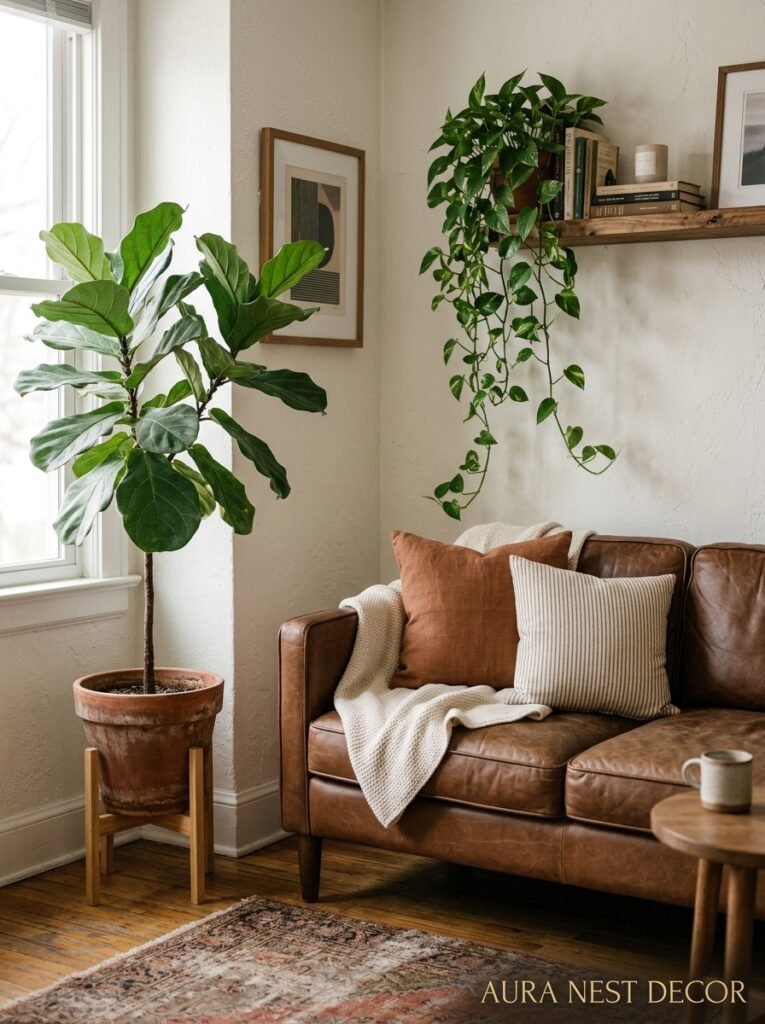
Big, dramatic plants work well here. A large fiddle leaf fig or a monstera in a terracotta pot placed beside or behind the sofa adds height and freshness. The green of the leaves against the warm brown of the sofa creates a contrast that feels alive without being loud. And a terracotta pot specifically echoes all those warm orange-toned accents that work so well in brown sofa rooms.
Trailing plants on shelves behind the sofa — pothos, heartleaf philodendron — add a softness and a bit of wild energy to a room that might otherwise feel very settled and still. Side note — dried pampas grass or dried wheat stalks in a tall vase also work beautifully here. They bring that same organic texture but without the watering.
What doesn’t work as well: very small plants in white pots on a coffee table directly in front of a brown sofa. They get swallowed. Go bigger, or go for clusters with varying heights.
—
11. The Unexpected Brown Sofa Combination Everyone Saves But Nobody Tries
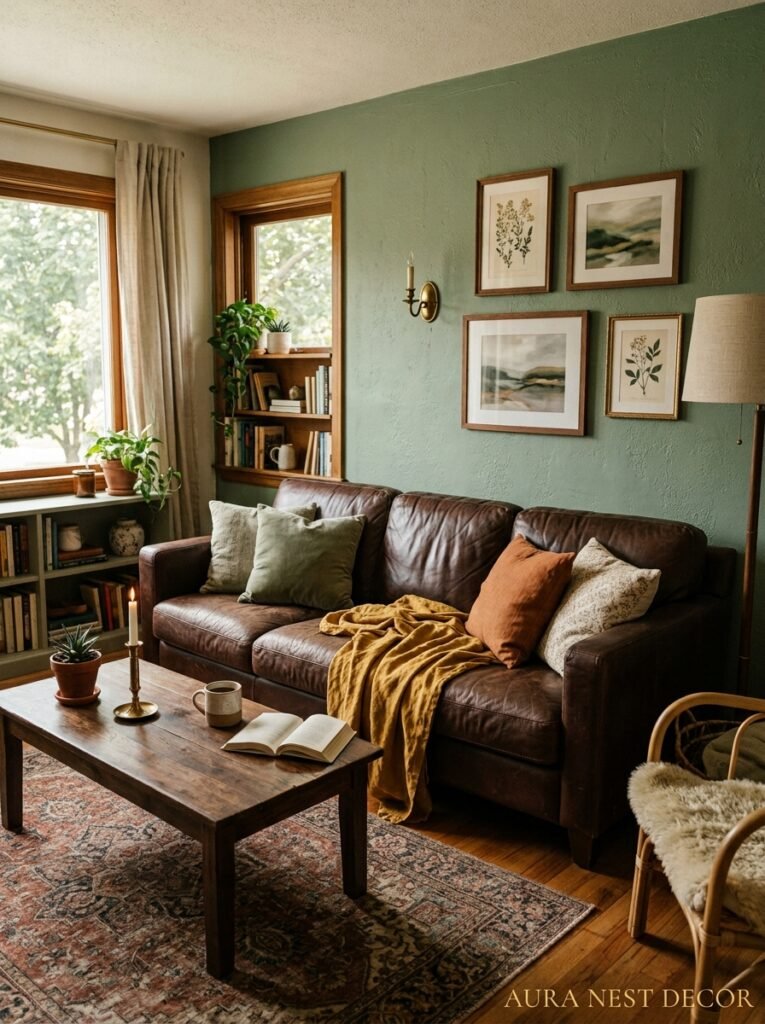
Dark walls with a brown sofa.
I keep seeing this saved on Pinterest. I keep seeing people say “I wish I was brave enough.” And then I watch them paint their walls greige and wonder why the brown sofa looks a little flat.
Deep teal, dark olive, forest green, moody burgundy, even a very dark navy — these wall colors do something unexpected next to a brown sofa. Instead of the sofa disappearing into a dark room, it pops. The warm tones in the brown become more visible against a cool or jewel-toned background, and the whole room feels like it was decorated on purpose.
This works especially well in rooms without huge windows, where bright white walls weren’t doing much to help anyway. Lean into the darkness. Add warm lighting. Add texture. The result looks like a boutique hotel, which is — honestly, not a bad thing to aim for in your own living room.
—
12. The Brown Sofa Mistake Most People Make When They Try to “Update” It
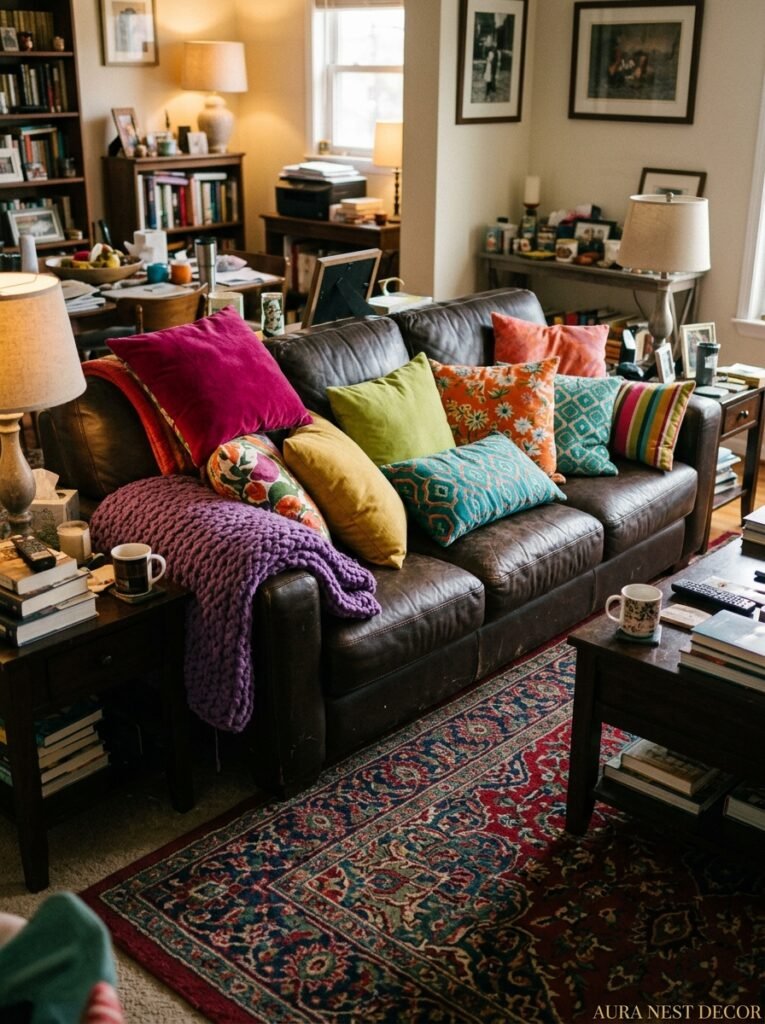
Here’s a thing I see constantly. Someone has a perfectly good brown sofa, it’s not broken, it’s not ugly, it’s just that they’ve covered it in so many throw blankets and mismatched pillows trying to “update” it that you can barely see it anymore. The whole thing looks chaotic and somehow they end up thinking the sofa is the problem when it’s not. It’s the panic-styling.
Trust the brown. If you’ve got a warm brown leather sofa, let it be seen. Don’t pile things on it to apologize for it. A couple of well-chosen pillows, a single throw in a complementary tone, and let the sofa do the rest. It doesn’t need saving. And if you’ve got a brown velvet sofa that needs a refresh, that’s what new rugs and lamps and paint are for — not seventeen throw cushions and a faux fur blanket.
Brown sofas can last decades and look better for it. Give yours room to breathe.
—
❓ FAQ
Q: Does a brown sofa go with grey walls? A: It can, but it tends to fall a little flat because grey is a cool tone and brown is warm — they’re not exactly fighting, but they’re not singing together either. If you have grey walls and a brown sofa, bring in warm accents like brass fixtures, rust or terracotta pillows, and warm wood tones to bridge the gap. Or, if you’re repainting anyway, consider a warm greige or an earthy taupe instead.
Q: What’s the best way to clean a brown leather sofa? A: For general maintenance, a dry microfiber cloth for dust and a slightly damp cloth for spills — deal with them quickly and pat, don’t rub. A dedicated leather conditioner every few months keeps it soft and prevents cracking. Avoid anything with harsh chemicals or alcohol-based cleaners, they’ll dry the leather out faster than anything.
Q: Is a brown sofa too outdated for a modern home? A: No, and I’d genuinely push back on the idea that brown was ever “outdated” versus simply out of trend — different things. Modern brown sofa styling looks nothing like it did in the 1990s. A sleek low-profile sofa in warm caramel leather with clean lines, brass coffee table legs, and minimal decor is completely current. The key is avoiding the overly ornate or very heavy styles. Brown is neutral. It goes wherever you take it.
—
💭 Final Thoughts
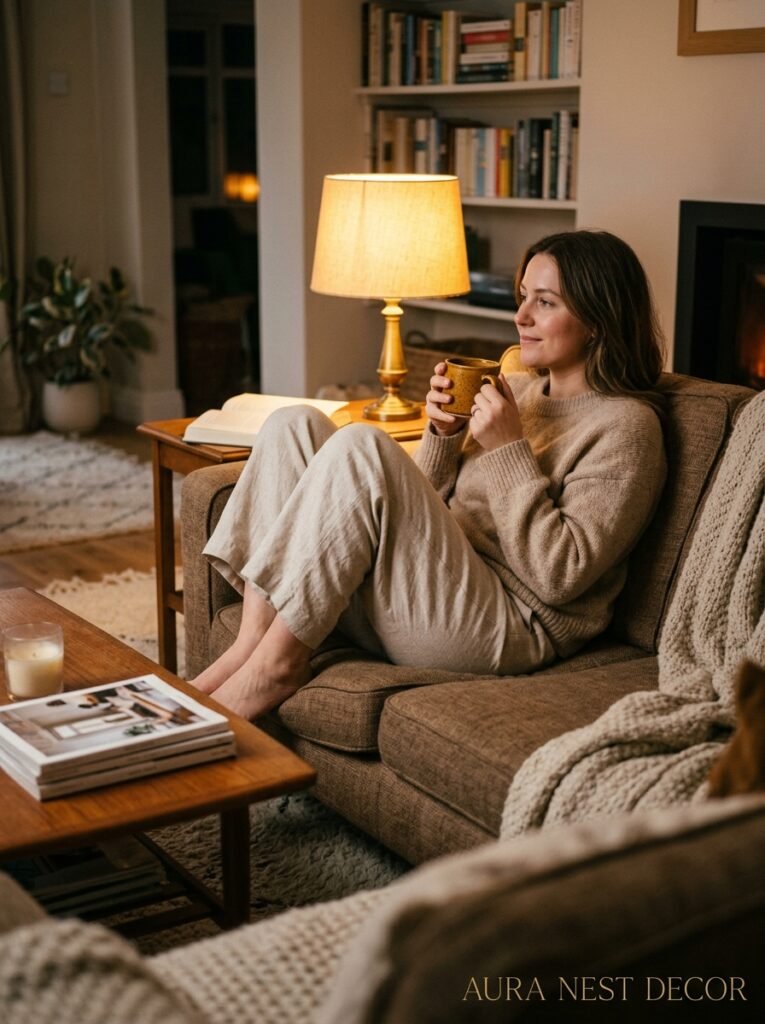
Brown sofas have a quiet confidence that I think is rare in furniture. They don’t need to be the loudest thing in the room and they’re usually not — but they make every other element feel warmer, more grounded, more like someone actually lives there.
Don’t overthink the pairing, don’t apologize for the color, and don’t bury it in accessories that were only ever meant to hide your uncertainty. The brown sofa is exactly what your living room might have been missing.
What’s the one change you’ve been most nervous to try?