
The Cozy Living Room Formula That Makes Every Single Guest Say “I Never Want to Leave”
There’s a moment — you’ve probably felt it — when you walk into someone’s living room and every muscle in your body just… exhales. The lighting is soft, something smells faintly of cinnamon or cedar, and the cushions on the sofa look like they were arranged by someone who genuinely cared. That feeling isn’t accidental. It’s designed. And the best part? You can build it in your own home, starting this weekend.
—
1. Why “Warm” Is the Most Powerful Word in Interior Design Right Now
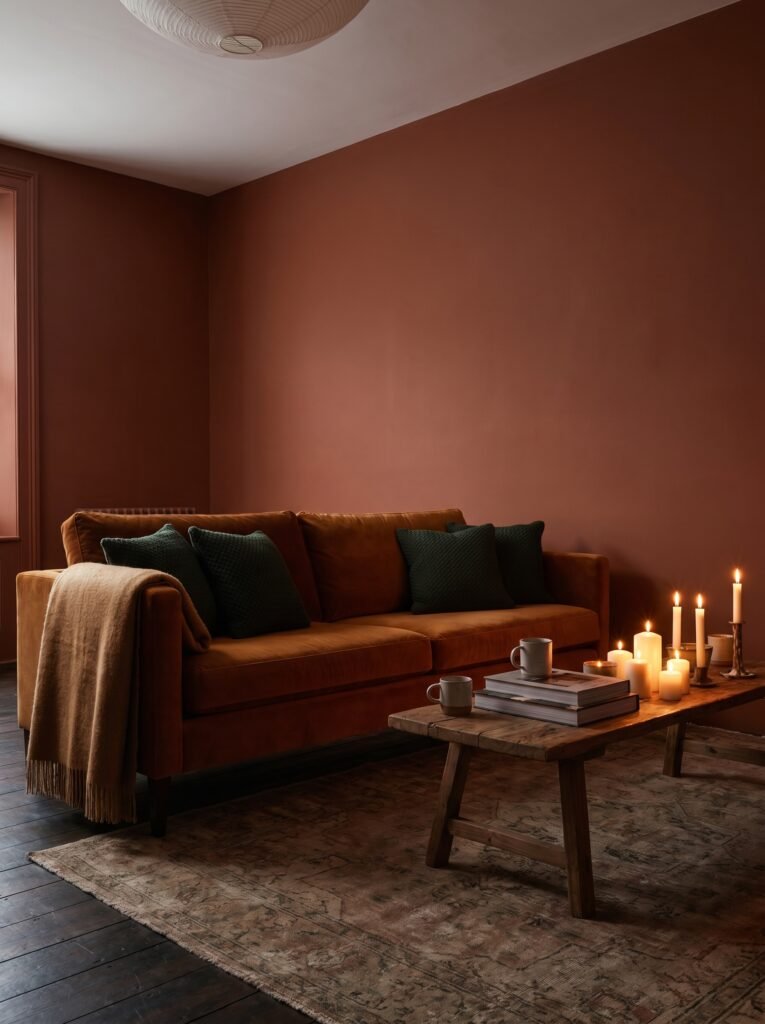
Warmth in a living room isn’t a trend — it’s a response. After years of stark minimalism, cold gray palettes, and furniture that prioritized Instagram aesthetics over actual human comfort, people are craving rooms that feel like a hug. The design world noticed. Warm terracotta, burnt amber, soft camel, and deep forest green have replaced the icy whites and chrome finishes that dominated the last decade.
But here’s what most decorating guides miss: warmth isn’t just about color. It’s about the way a room makes you breathe. It’s the flicker of a candle. It’s the weight of a blanket you didn’t plan to grab but now can’t let go of. When your living room is truly warm, it communicates something to your nervous system before your brain even registers what it’s seeing.
“A warm living room doesn’t just look good — it makes the people inside it feel safe, seen, and unhurried.”
Understanding this principle changes everything about how you approach your space. You stop asking “Does this look cozy?” and start asking “Does this feel cozy?” — and those two questions lead you to very different places.
2. The Paint Color Mistake That’s Making Your Living Room Feel Cold
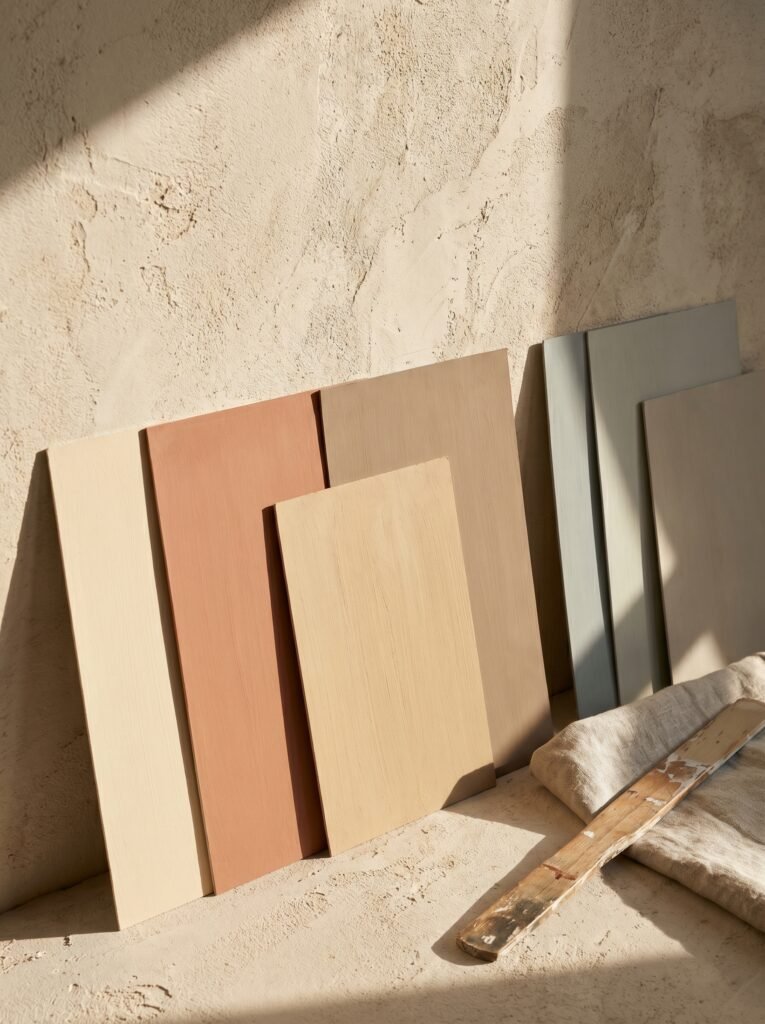
If your living room feels chilly no matter how many candles you light or blankets you pile on, your paint color might be working against you. This is more common than you’d think. Many colors that read as “warm” on a paint chip — certain greiges, creamy whites, even some light taupes — contain hidden undertones of blue or green that read as cold once they hit four walls.
The fix is beautifully simple: go warmer than you think you need to. Colors with red, yellow, or orange undertones absorb light rather than reflect it, creating that wrapped-in-warmth feeling you’re chasing. Think Sherwin-Williams’ “Accessible Beige,” Benjamin Moore’s “Pale Oak,” or a deep, moody terracotta for a more dramatic effect.
Test your paint swatches in the actual room, at different times of day, with your lights on and off. Paint a large swatch — at least a foot square — because a small chip will lie to you every single time. Natural light and artificial light interact with pigment completely differently, and a color that glows golden in the afternoon might turn muddy by lamplight.
3. Layering Light: The Secret Every Interior Designer Knows
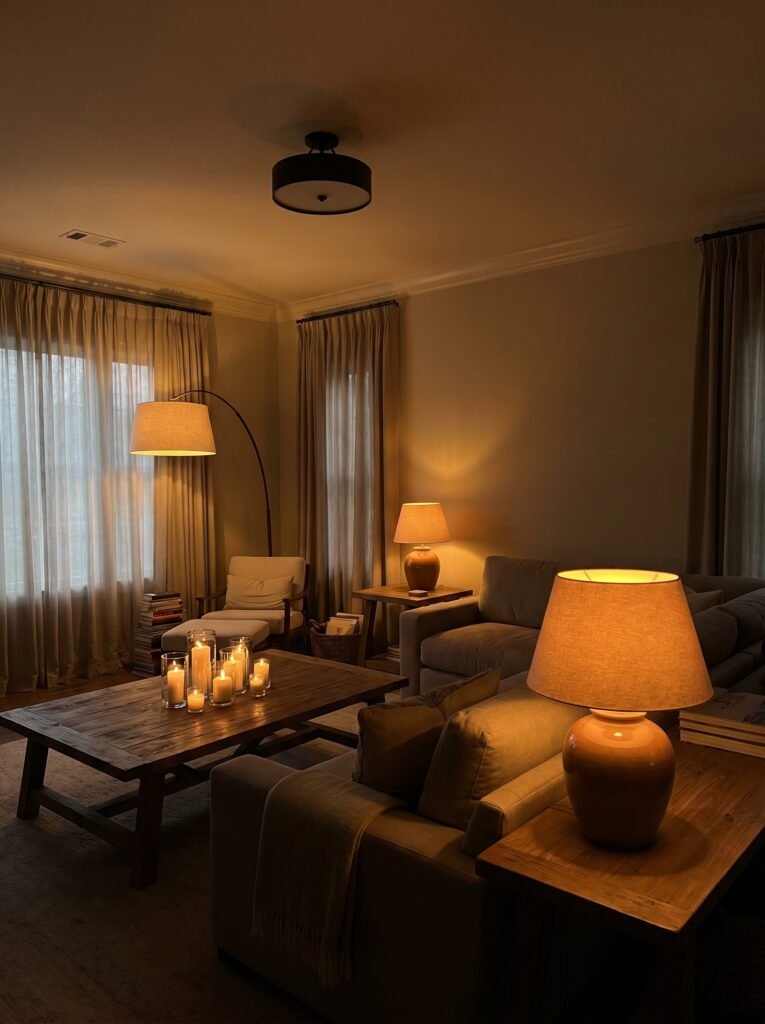
Here is the single biggest thing separating a cold living room from a warm one, and it has nothing to do with your decor budget: lighting layers. The harsh overhead light — that one flat fixture beaming down from the center of your ceiling — is the enemy of coziness. It’s fluorescent-office energy. It makes everything look flat and slightly clinical.
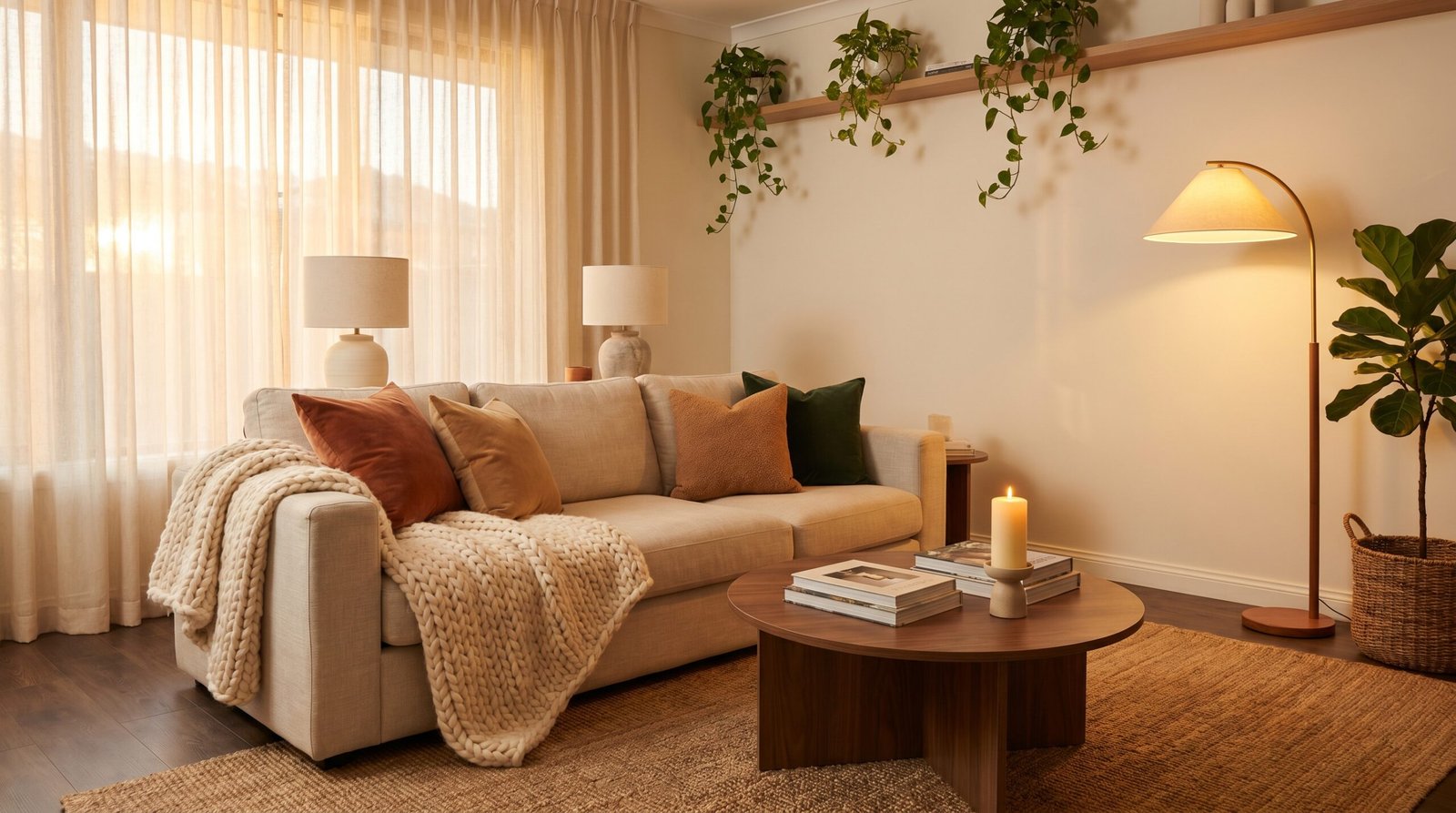
Warm living rooms use at least three sources of light, all operating together at different heights. A floor lamp in the corner creates depth and pulls the eye downward. Table lamps on side tables cast soft pools of light that feel intimate. Candles or LED flame bulbs add flicker, which triggers a primitive, deeply soothing response in the human brain.
If you do nothing else from this entire article, swap out your overhead light for warmer-toned bulbs — 2700K to 3000K color temperature — and add one floor lamp. You’ll feel the difference immediately. The room will feel smaller in the best possible way, like it’s folding in around you.
4. Textiles Are the Architecture of Coziness

Walk into any genuinely cozy living room and count how many different textures you can find. There will be many — and that’s not an accident. Textiles are the fastest, most affordable way to completely transform the emotional temperature of a space, and layering them is both an art and a forgiving one.
Start with your sofa. A linen or cotton slipcover reads as casual and soft. Add throw pillows in varying sizes — resist the urge to perfectly match them — and choose covers in velvet, chunky knit, or boucle. These materials catch light differently throughout the day, creating subtle visual warmth even when the room is empty.
Then add a throw blanket. Not tucked away in a basket (though that’s a nice secondary option) but draped casually, like someone just got up from a nap. This single gesture communicates lived-in warmth more than almost any piece of furniture can. Finally, ground the whole arrangement with a rug that’s larger than you think you need. A rug that’s too small floats furniture awkwardly. A rug that extends generously under your sofa and chairs anchors the room and makes it feel complete.
5. The Furniture Arrangement That Invites Conversation — and Why Most People Get It Wrong
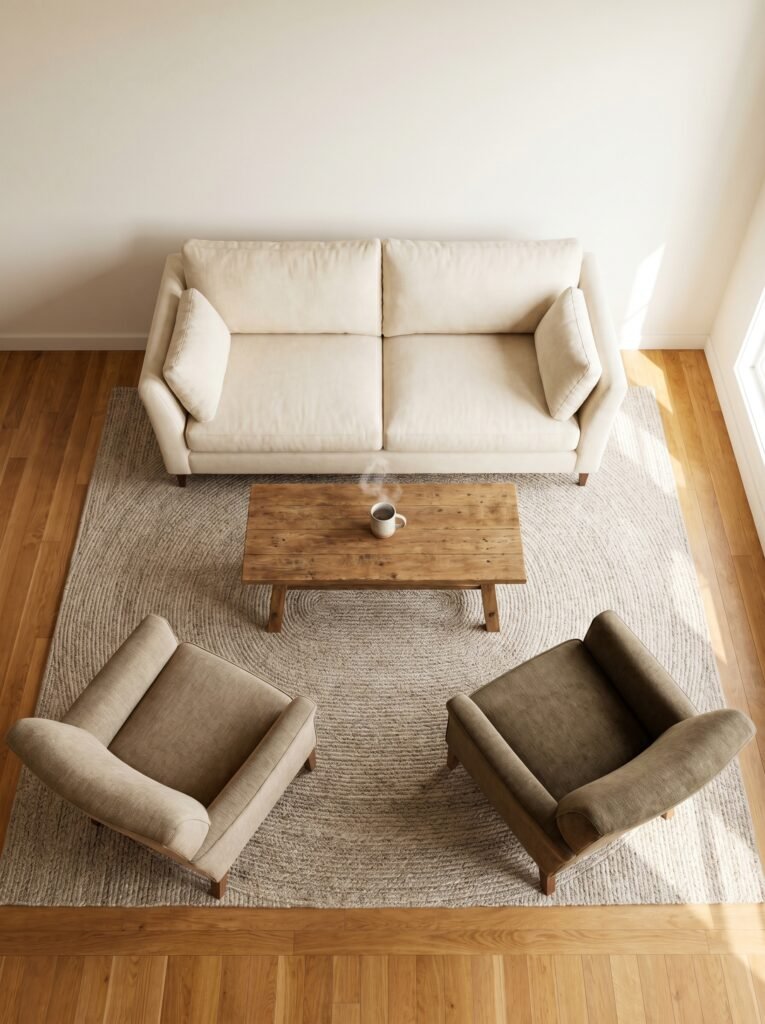
Most people arrange living room furniture by pushing everything against the walls. It feels logical — more floor space, right? But this is the arrangement that makes a room feel like a waiting room. Furniture pulled away from walls and oriented inward, toward each other, creates a sense of togetherness that the brain reads instantly as warmth.
Pull your sofa six to twelve inches off the wall. Position chairs at a slight angle facing the sofa rather than parallel to it. Place a coffee table within easy reach — close enough to set down a mug without leaning — and let the arrangement feel slightly imperfect. Real rooms where real people gather have a slight asymmetry to them.
“The most inviting living rooms aren’t perfectly symmetrical — they’re arranged as if someone expected a friend to show up any minute.”
If you have a fireplace, orient your primary seating toward it. If you don’t, choose a focal point — a gallery wall, a large piece of art, a well-styled bookcase — and let your furniture face and honor that point. When a room has a clear center of gravity, it feels purposeful and warm rather than scattered.
6. The Forgotten Power of Natural Wood in a Modern Living Room
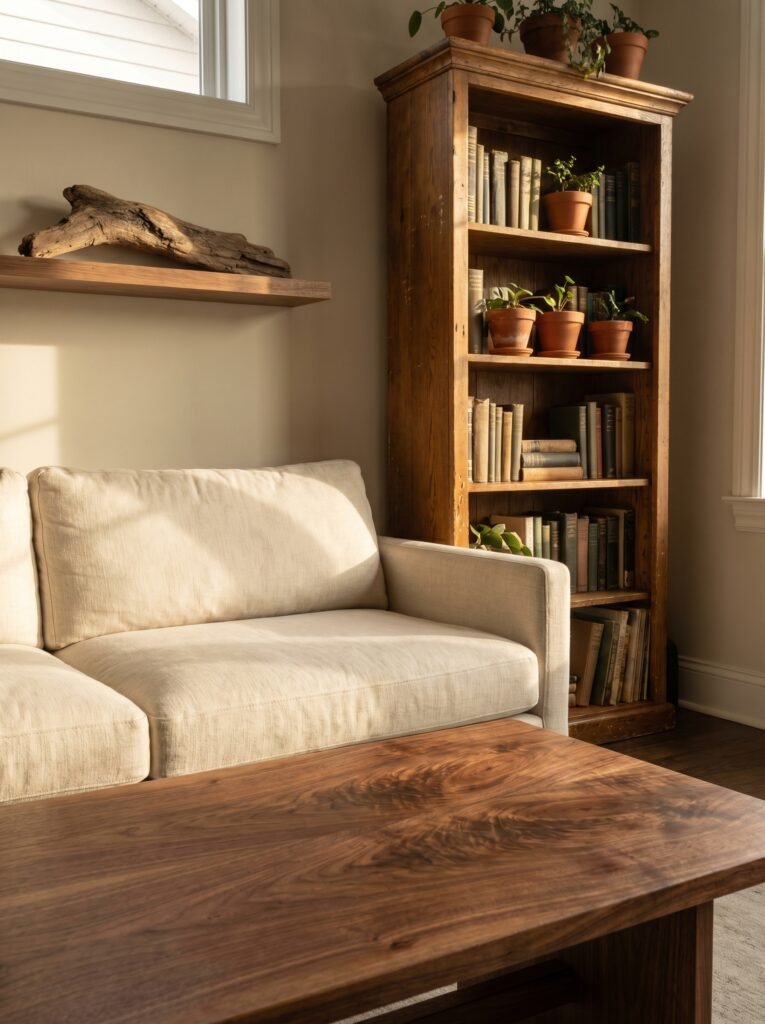
There’s a reason every cozy coffee shop, beloved kitchen, and perfectly styled reading nook has wood somewhere in it. Natural wood — whether it’s a reclaimed beam, a worn side table, or a simple wooden tray on your coffee table — brings an organic warmth that no manufactured material has ever fully replicated.
Wood carries time in it. It has grain and imperfection and history. When you introduce it into a living room that’s otherwise full of upholstered furniture and painted walls, it provides visual grounding that feels earthy and real. A walnut coffee table against a cream sofa. A light oak bookcase filled with books and small plants. Even a single driftwood piece used as a sculptural object on a shelf.
If you’re decorating on a budget, thrift stores and Facebook Marketplace are treasure troves of solid wood pieces waiting to be sanded, stained, and loved again. The warmth you’ll gain costs almost nothing.
7. What Scent Has to Do With How Warm Your Living Room Feels
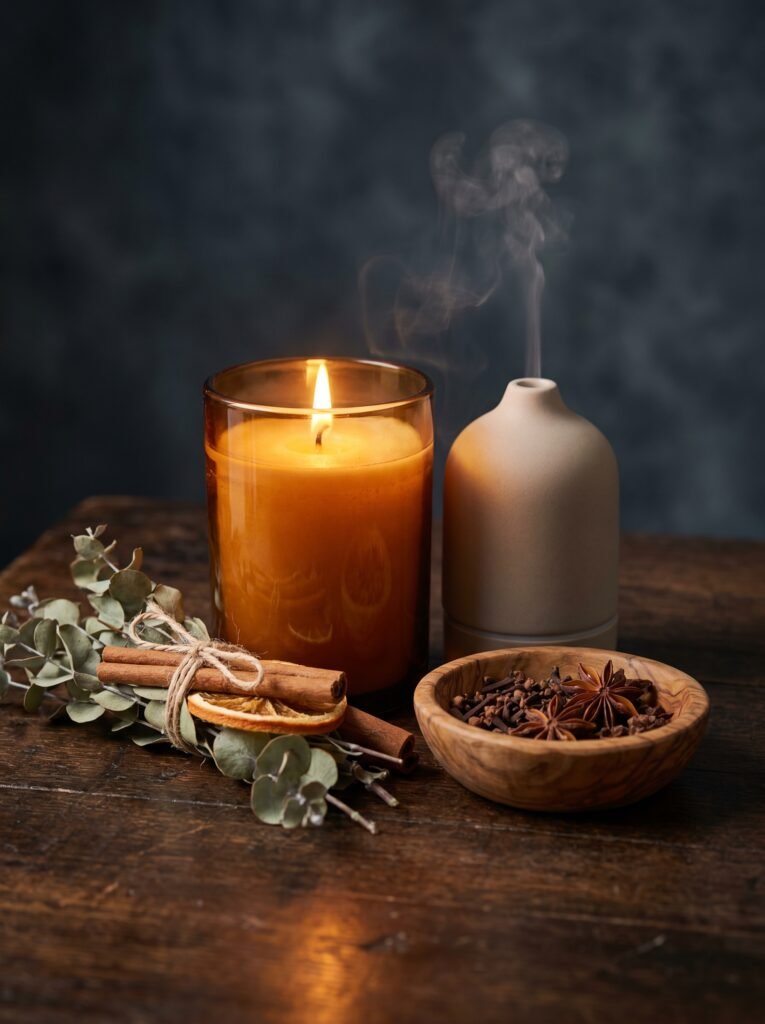
Scent is the most underrated element in interior design. It bypasses your eyes entirely and lands directly in the part of your brain that governs memory and emotion. A room that smells warm feels warm — it’s that straightforward. And it’s also one of the easiest things to get right.
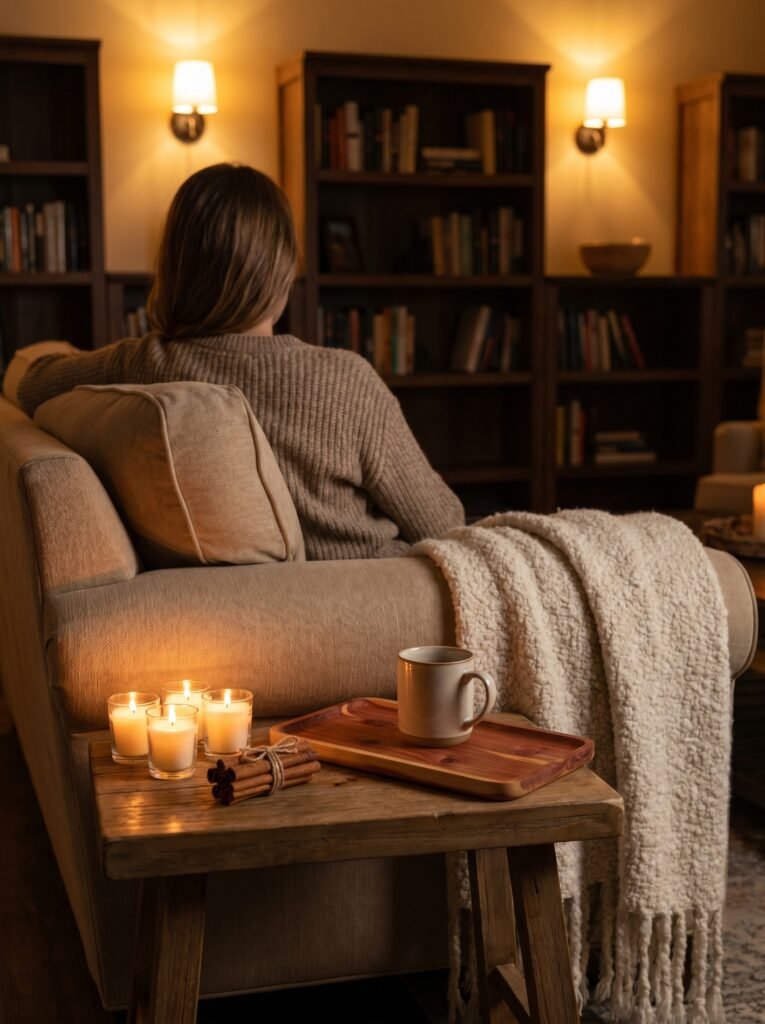
Candles with notes of amber, sandalwood, vanilla, cedar, or clove work with virtually any decor style and any season. Diffusers with essential oils like frankincense, sweet orange, or cinnamon bark add warmth that doesn’t overwhelm. Fresh eucalyptus or dried botanicals in a vase contribute a quieter, more natural scent that’s almost subliminal.
One practical note: don’t layer too many scents at once. Choose one primary scent identity for your living room — woody, spiced, or floral — and build around it. Competing scents create olfactory chaos, which is the opposite of cozy.
8. Cozy Living Room Styling With Plants: The Living Warmth
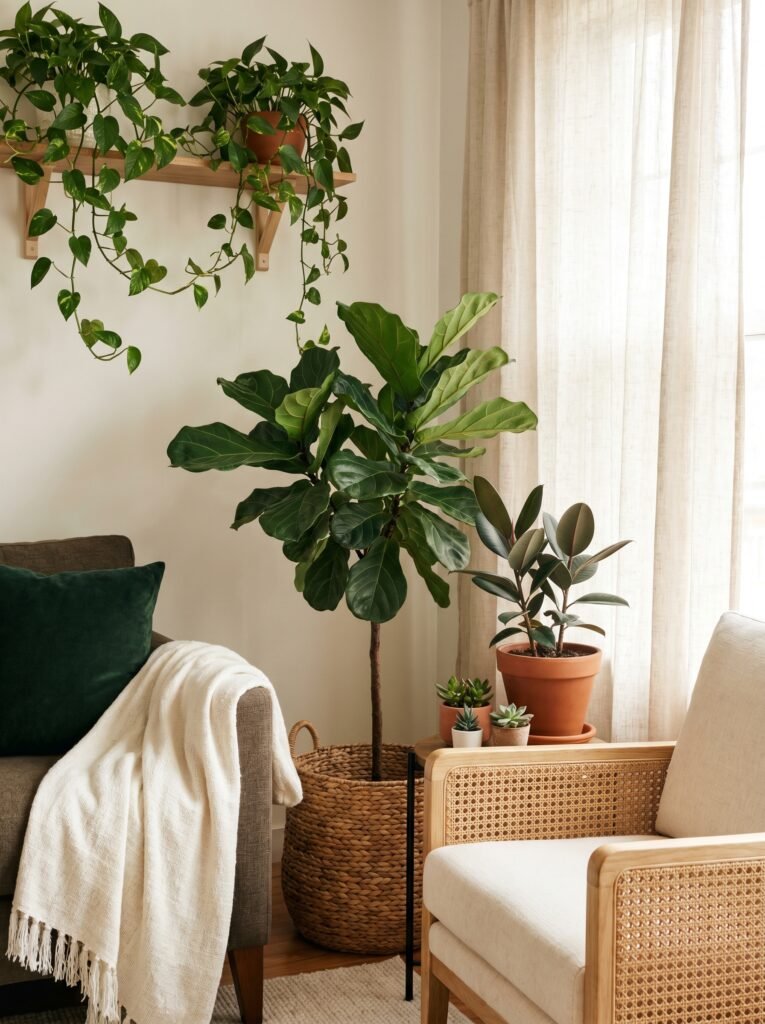
Plants in a living room don’t just add visual interest — they change the entire energy of a space. There’s a reason biophilic design (the concept of connecting indoor spaces to nature) has become one of the most researched areas of interior psychology. Being near living things calms the nervous system, reduces perceived stress, and makes a space feel nurturing rather than sterile.
For a warm living room, choose plants with rounded, full foliage over sharp or spiky varieties. Pothos trailing from a high shelf, a fiddle-leaf fig in a corner, a rubber plant in a woven basket, or a cluster of small succulents on a side table all contribute to that greenhouse-café warmth that feels both alive and undemanding.
Even if you’re not a plant person — even if you’ve killed every succulent you’ve ever owned — try one or two low-maintenance options. A ZZ plant thrives on neglect. Pothos forgive almost any watering mistake. The visual payoff is immediate and significant.
9. Curating a Gallery Wall That Feels Warm, Not Chaotic
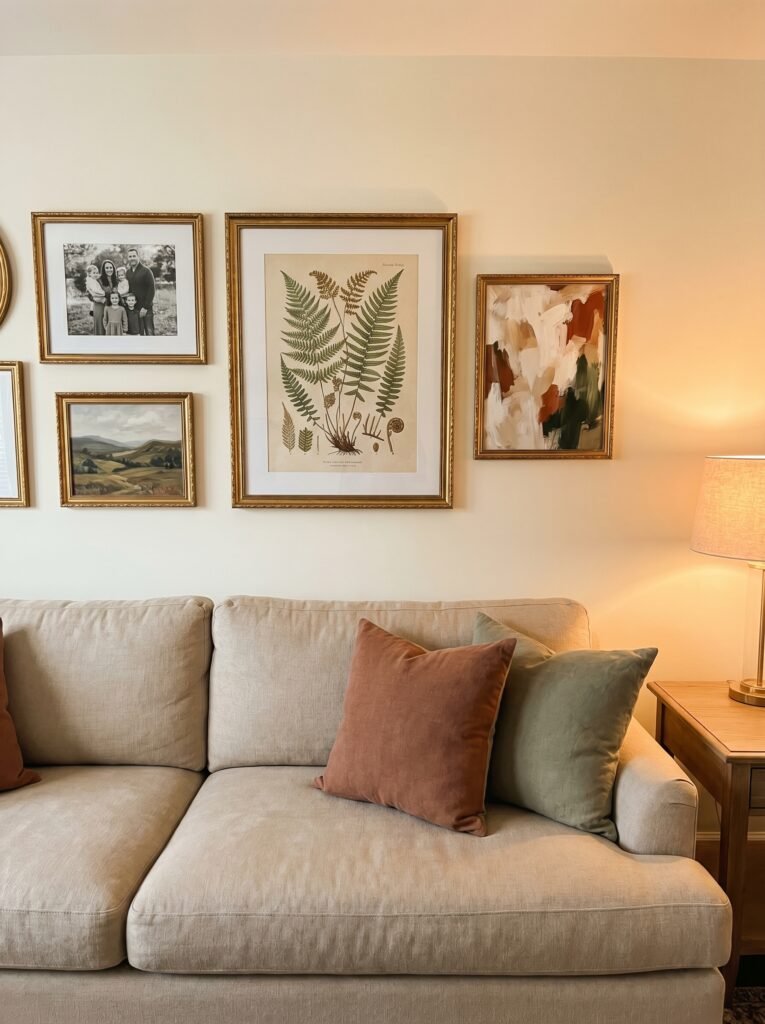
A gallery wall done right is one of the most personal, character-rich things you can do to a living room. Done wrong, it’s visual clutter that makes a room feel busy and cold. The difference is cohesion — and cohesion doesn’t mean everything has to match.
Choose a warm frame finish and stick to it throughout: all natural wood, all thin black metal, or all antique gold. Mix art styles freely — a botanical print next to a family photo next to an abstract brushstroke painting — but keep that frame consistency as your anchor. Size variation creates interest; aim for one large piece that serves as the focal point and layer smaller pieces around it.
“A gallery wall tells the story of the people who live there — and stories, more than anything, make a house feel like a home.”
Leave small, intentional gaps between frames rather than crowding them together. This breathing room makes the arrangement feel intentional rather than accumulated. And hang the whole collection slightly lower than feels instinctive — artwork that sits at eye level when you’re seated, not when you’re standing, feels more intimate and more appropriate for a living room.
10. The Coffee Table Styling Approach That Pulls Everything Together
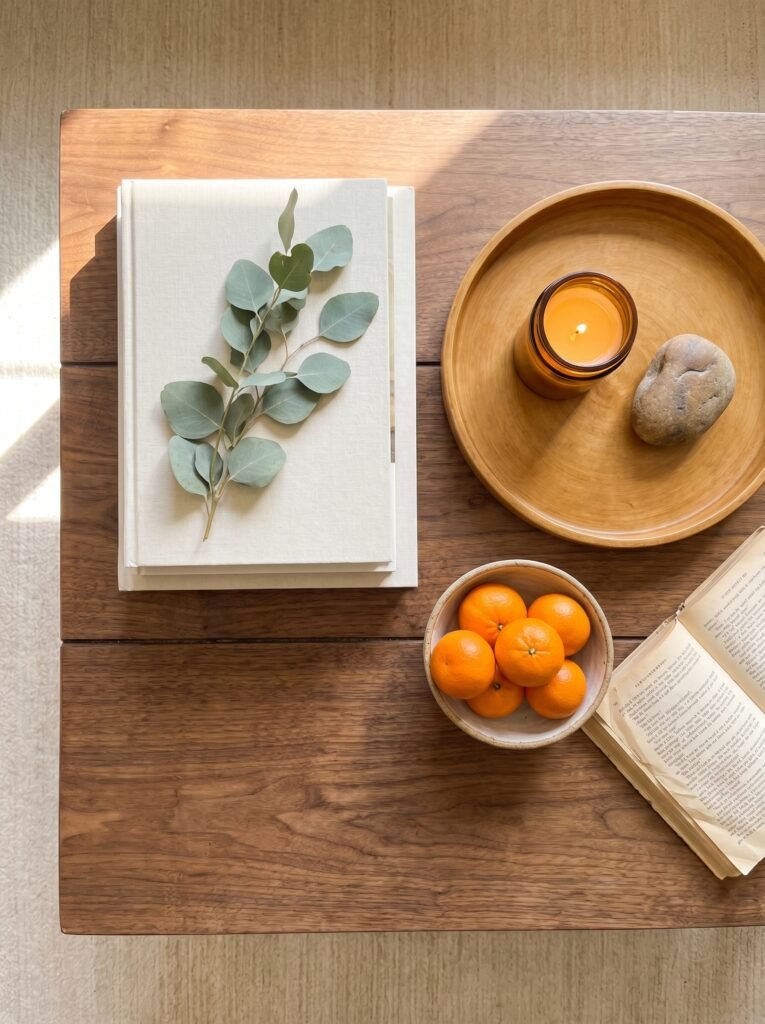
The coffee table is the living room’s centerpiece — it’s what your eye lands on when you first walk into the room. And yet most people either leave it completely bare or pile it with remotes, coasters, and miscellaneous mail. Neither extreme creates warmth. A thoughtfully styled coffee table, though, pulls the entire room into focus.
The rule of three applies beautifully here: choose one tall element (a small stack of books, a vase with stems), one medium element (a decorative bowl, a wooden tray), and one low element (a candle, a small succulent). Arrange them slightly off-center. Leave room for an actual mug, a real book someone is reading, a bowl of clementines in winter — the lived-in touches are what make the styling feel warm rather than staged.
11. Budget-Friendly Warmth: What You Can Change for Under $50
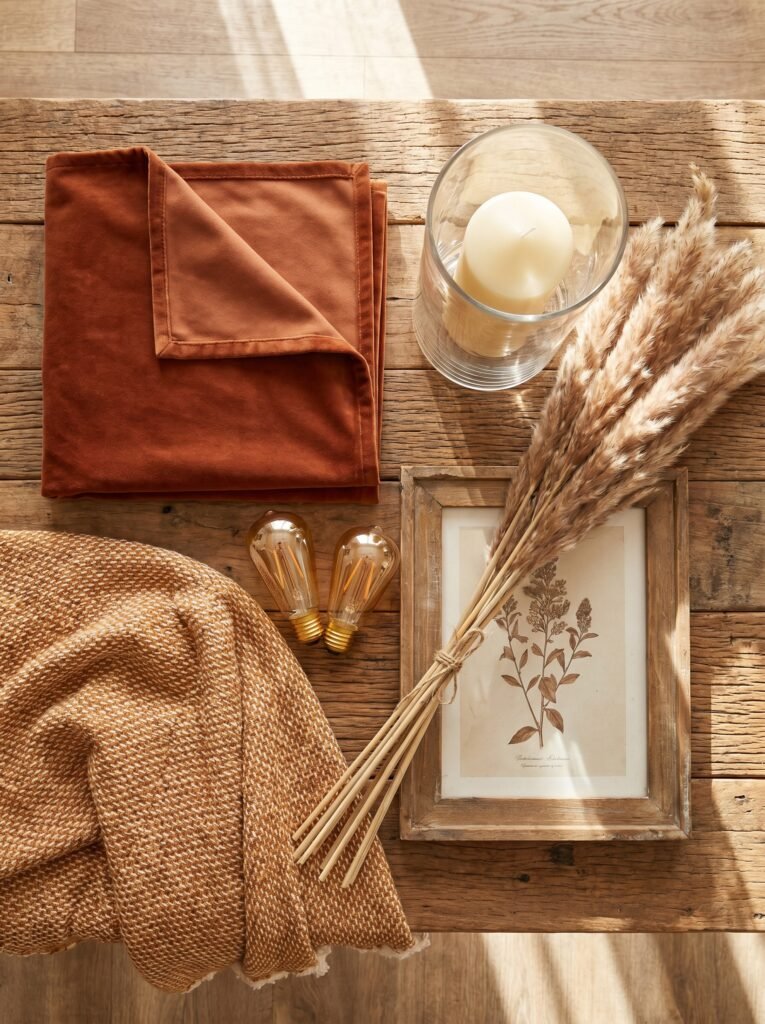
Creating a cozy, warm living room doesn’t require a renovation budget or a professional designer. Some of the most transformative changes cost almost nothing, and knowing which ones to prioritize is genuinely empowering.
New throw pillow covers — not whole pillows, just the zip-off covers — can change the entire color story of your sofa for fifteen to thirty dollars. A single warm-toned throw blanket draped over a chair. Two amber-bulb table lamps from a thrift store. A large pillar candle in a simple glass holder. A bundle of dried pampas grass or wheat stems in a tall vase. A printed piece of art downloaded and framed in a thrifted frame.
These aren’t compromises. They’re precisely the kind of quiet, intentional details that experienced interior designers use to make spaces feel full and alive — because warmth is less about expensive pieces and more about layering the right textures, tones, and touches.
12. Seasonal Coziness: How to Let Your Living Room Change With the Year
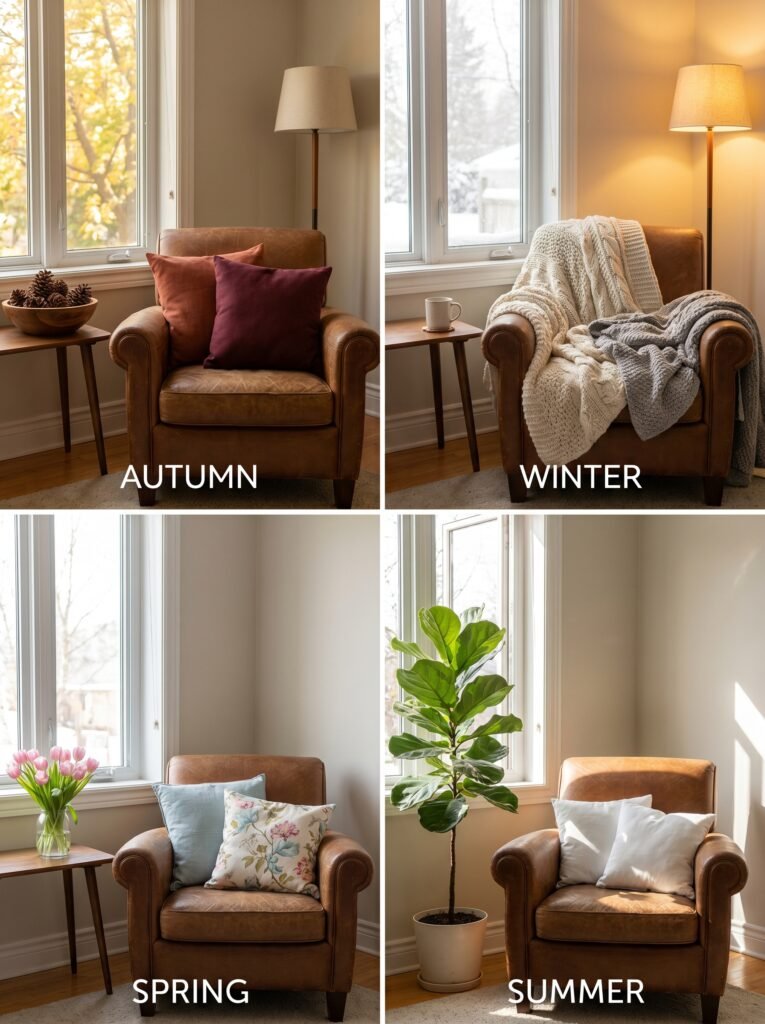
The most beloved, most-saved living rooms on Pinterest share one quality: they feel of the moment. Not trendy — of the season. And adapting your living room to the rhythms of the year is one of the most sustainable, affordable decorating practices there is.
In autumn, bring in deeper tones — rust, burgundy, dark olive — through pillows and a new throw blanket. Add a wooden bowl with pine cones or a cluster of beeswax candles. In winter, layer in more textiles, add extra lamplight, lean into the feeling of intentional shelter. In spring, swap out the heavy textiles for lighter linens, bring in fresh flowers, and let more natural light in. In summer, simplify — fewer objects, brighter accents, and plants moved closer to the windows.
This seasonal rotation doesn’t require buying new things every few months. It’s about rotating what you already own, storing some things and bringing others out — a living room wardrobe, of sorts. The result is a room that feels fresh, intentional, and deeply in tune with the world outside.
—
🌿 How to Take Care of a Cozy Living Room
Maintaining that warm, inviting atmosphere isn’t about perfection — it’s about a few consistent habits that keep the space feeling intentional rather than neglected.
Refresh your textiles regularly. Wash throw blanket covers every few weeks, fluff your pillows daily, and rotate your cushion inserts so they keep their shape. Textiles that look tired and flat undo all the work your lighting and color choices are doing.
Tend your candles properly. Trim wicks to a quarter inch before every burn, let the wax pool reach the edges of the container before extinguishing, and replace candles before they start to look depleted. A half-melted, blackened candle reads as neglect rather than coziness.
Dust and water your plants on a consistent schedule — not obsessively, but with care. A healthy plant contributes warmth; a struggling, yellowing plant creates visual noise that disrupts the calm you’ve worked to create.
Declutter mindfully, not aggressively. A warm living room has objects on display, but they’re chosen objects — each one has a reason to be there. Once a season, walk through your space and ask whether each item still belongs. The ones that do earn their place more fully by not competing with things that don’t.
Finally, light your candles and lamps every evening, even if you’re alone, even if no one is coming over. The habit of creating warmth for yourself — not for guests, not for photos — is what turns a decorated room into a genuinely cozy home.
—
❓ FAQ
Q: What is the best color palette for a warm and cozy living room? A: Colors with warm undertones — think soft terracotta, creamy ivory, warm taupe, camel, and muted olive green — consistently create the most welcoming, cozy feeling. Avoid colors with blue or gray undertones if warmth is your goal, as they tend to read as cool even in a well-lit room. Always test large paint swatches in your actual space before committing.
Q: How do I make a small living room feel cozy without feeling cramped? A: The key is strategic layering rather than filling. Use a single large rug instead of multiple small ones, choose furniture with legs (which creates visual breathing room), keep your color palette cohesive and warm, and focus your lighting on corners and low surfaces rather than overhead fixtures. A small room can feel incredibly cozy when it’s well-lit, thoughtfully arranged, and free of visual clutter.
Q: How many throw pillows are too many on a sofa? A: There’s no hard rule, but a practical guideline is to have enough pillows to look full and layered without making it difficult for someone to actually sit down comfortably. For a standard three-seat sofa, four to six pillows in varying sizes and textures usually hits that balance. The goal is “I could sink into this” — not “I’m afraid to disturb it.”
—
💭 Final Thought
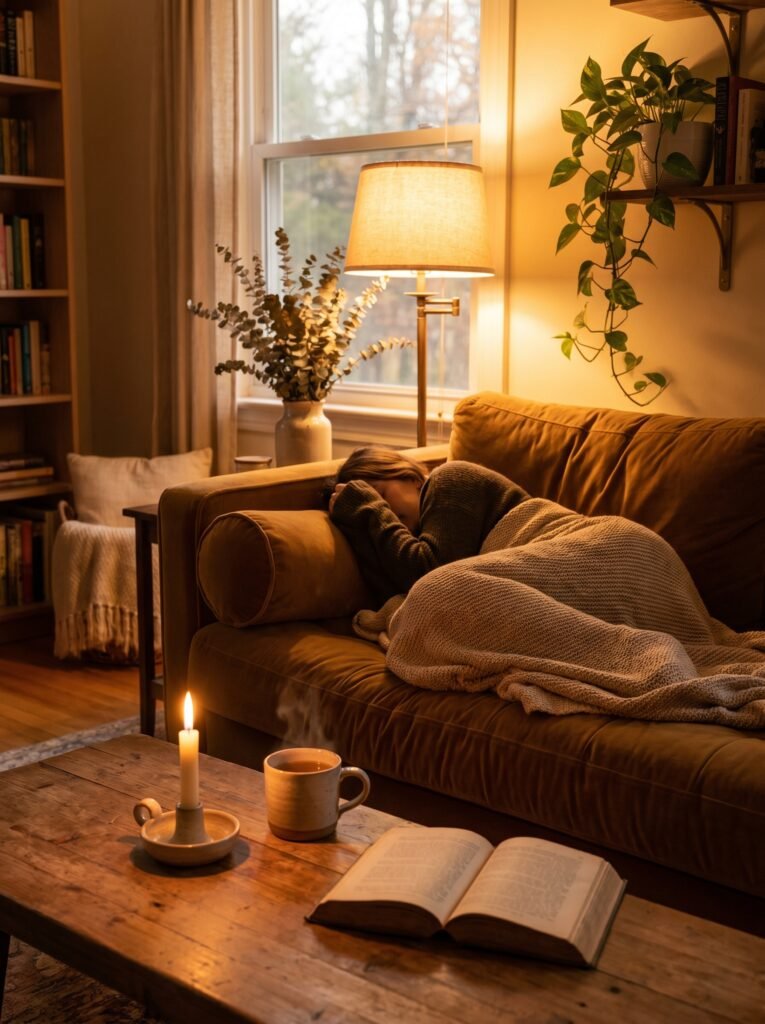
A warm living room is really just a room that’s been given permission to be fully itself — full of texture, softened by light, scented with something that makes time feel slower. You don’t need to redecorate everything at once or spend more than you have. You just need to start somewhere, make one small change, and then notice how it feels. Because here’s the question worth sitting with: when you walk into your own living room tonight, does it feel like the rest you’ve been looking for all day?