
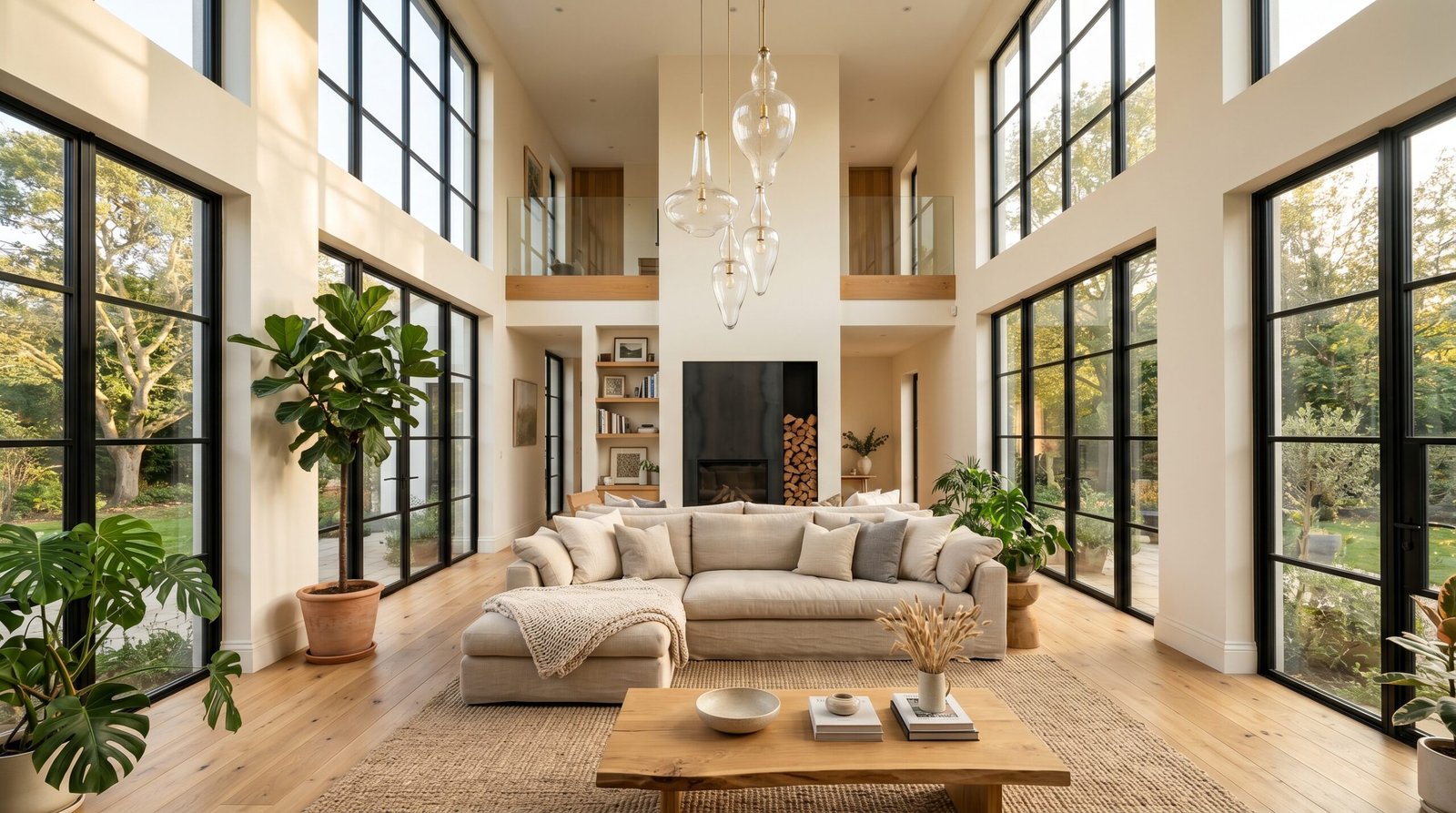
The Double Volume Living Room: How High Ceilings Transform a House Into a Home That Breathes
There’s a moment — you’ve probably felt it — when you walk into a room and your shoulders drop. Not because you’re tired, but because the space itself exhales around you. That’s what a double volume living room does. It doesn’t just give you more ceiling; it gives you more life.
—
1. What Exactly Is a Double Volume Living Room — and Why Does It Feel So Different?
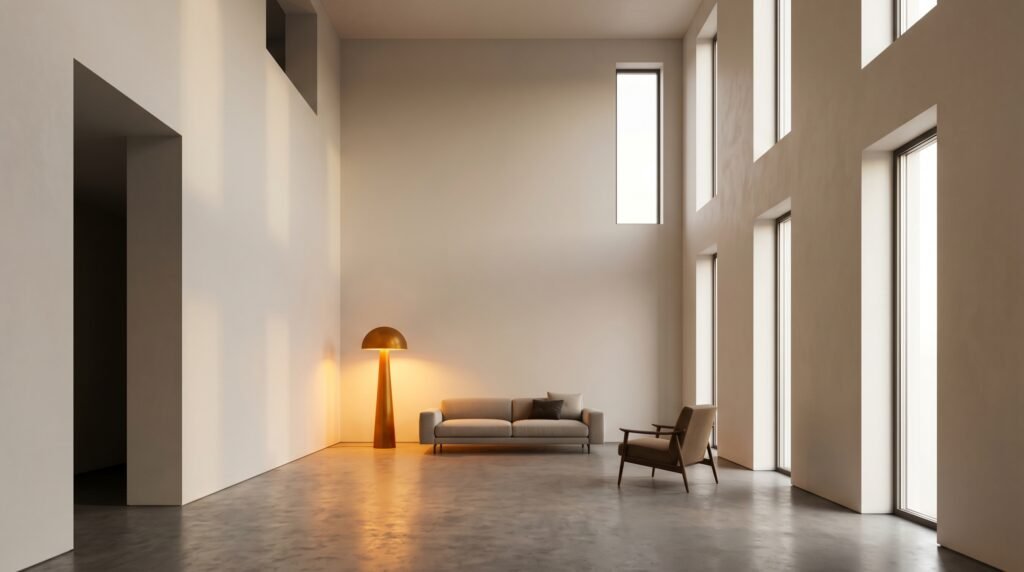
A double volume living room — sometimes called a double-height space or a two-story living room — is any living area where the ceiling height spans the equivalent of two floors. Instead of the standard 8 to 10 feet most homes offer, you’re looking at ceilings that soar anywhere from 16 to 24 feet above the floor. The visual effect is immediate and almost impossible to fake with any other design trick.
But here’s what makes it more than just an architectural feature: the psychological shift is real. Studies in environmental psychology consistently show that higher ceilings correlate with feelings of freedom, creativity, and emotional expansiveness. The brain literally processes vertical space differently. When you walk into a room where the ceiling disappears into height, your nervous system registers openness — and you feel it as calm, as possibility, as welcome.
The double volume living room doesn’t just look beautiful in photographs (though it absolutely does, which is why it dominates Pinterest boards worldwide). It changes how you feel inside the space, every single day you live there.
“A room that breathes gives the people inside it permission to breathe too.”
—
2. The History Behind High Ceilings — Why This Design Isn’t Just a Trend
Before air conditioning existed, high ceilings were practical survival architecture. Heat rises — and in warm climates, a taller ceiling meant cooler air at living level. Grand colonial homes, Victorian townhouses, European manor halls — they all embraced height not for vanity but for ventilation. The wealthy could afford the lumber and labor; the effect became synonymous with elegance and prosperity.
Fast forward to the post-war era of the mid-20th century, and ceilings dropped sharply. Suburban tract housing optimized for affordability, not airiness. Low ceilings meant less material, less heating cost, more units per building. For decades, the soaring ceiling was reserved for churches, hotels, and the very rich.
The contemporary revival of the double volume living room is partly aesthetic and partly cultural. As open-plan living took hold in the 1990s and 2000s, architects and designers began reintroducing vertical space as the natural complement to horizontal openness. Today, it appears in everything from modern farmhouses to sleek urban lofts — and Pinterest has been instrumental in making it aspirational for everyday homeowners, not just architects’ dream clients.
—
3. The Architectural Elements That Make or Break the Look
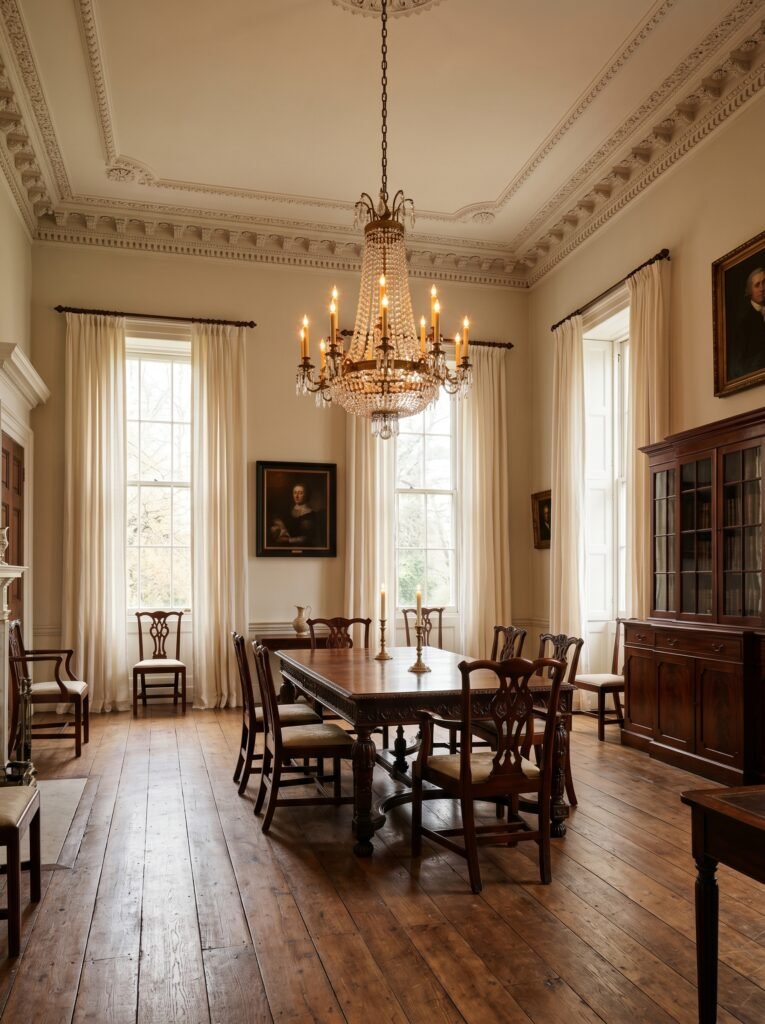
Not every tall room automatically feels like a double volume living room done right. The architecture has to support the height — and that means paying close attention to proportions, windows, and structural honesty.
Proportion is everything. A room that is 20 feet tall but only 10 feet wide creates a chimney effect — uncomfortable and visually claustrophobic in an upward direction. The best double volume living rooms have a width-to-height ratio that feels balanced, typically at least a 1:1 relationship between floor area and ceiling height. When proportions work, the room feels grand without feeling cold.
Windows are non-negotiable. A double height wall without windows is a missed opportunity — and honestly, it can feel oppressive. Floor-to-ceiling windows, clerestory windows placed high on the wall, or dramatic skylights are the most common solutions. Natural light in a tall space doesn’t just illuminate — it cascades, moving across the room throughout the day in ways that feel almost cinematic.
Exposed structural elements — steel beams, timber trusses, concrete columns — add authenticity and texture that prevent the space from feeling like an empty box. They give the eye places to rest on the journey from floor to ceiling.
—
4. The Furniture Challenge Nobody Warns You About
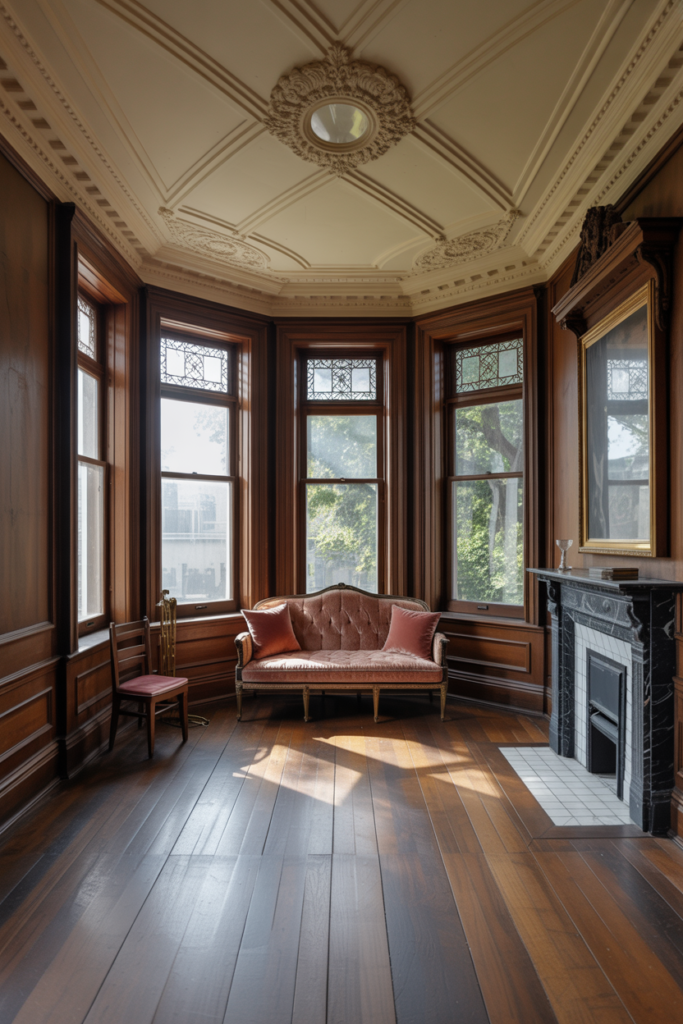
Here is the honest truth about double volume living rooms that design magazines tend to gloss over: the furniture that looked perfect in your previous home will almost certainly look like dollhouse pieces in a soaring double-height space. Scale is the single greatest challenge in decorating these rooms, and it’s the one thing that separates a Pinterest-worthy space from a space that just feels expensive and lonely.
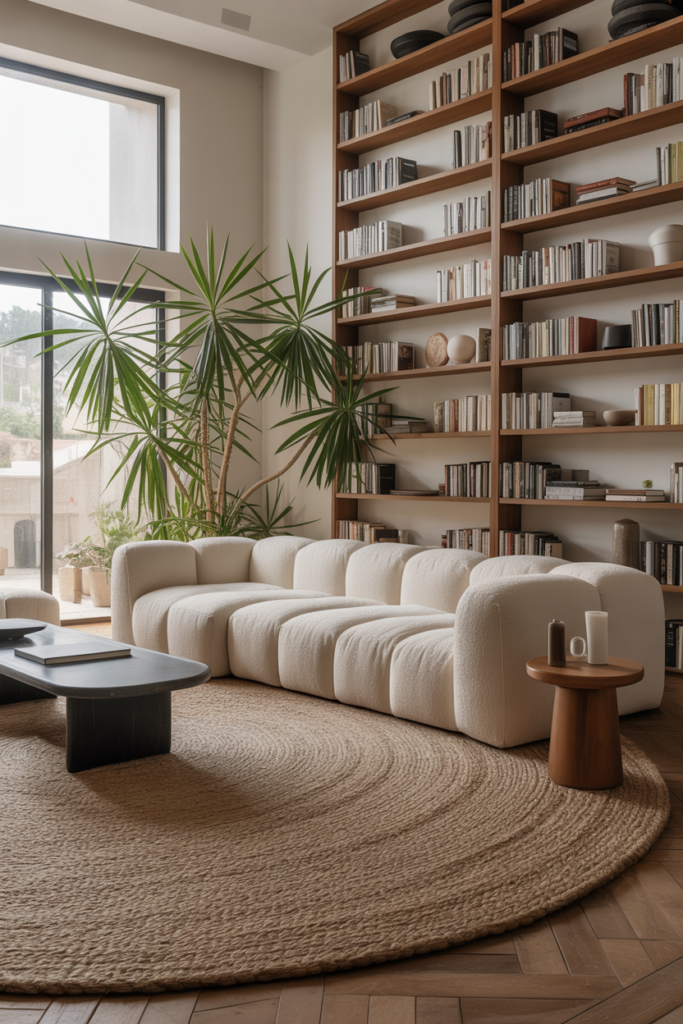
Every piece needs to go up in scale — and that doesn’t necessarily mean up in cost. It means being intentional. A standard three-seater sofa can disappear in a 22-foot ceiling room. You need either oversized pieces, multiple seating groupings, or a combination of furniture heights that creates visual layers. Think: a deep sectional sofa paired with substantial armchairs, a coffee table that’s wide enough to anchor the conversation area, and floor lamps with height enough to hold their own against the vertical drama above.
Area rugs become structural decisions, not decorative afterthoughts. A rug that’s too small will make your furniture look like it’s floating in a void. In a double volume space, go larger than you think you need — and then go larger still.
“Scale isn’t about matching furniture to the room. It’s about making the room feel like it was designed for the humans living inside it.”
—
5. Lighting a Double Volume Living Room Without Getting It Wrong
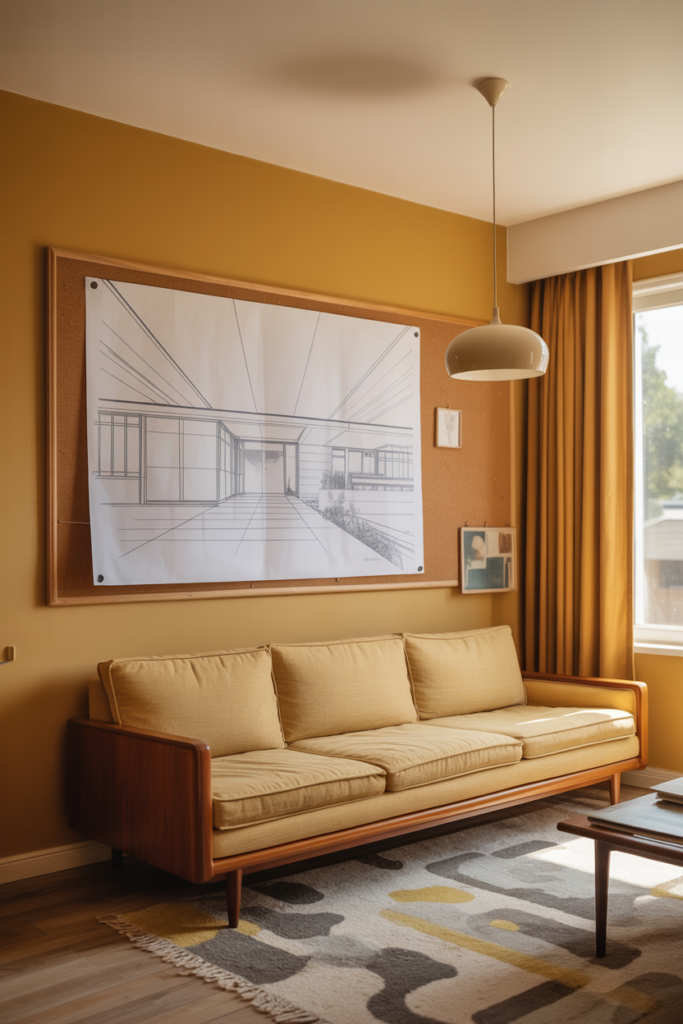
Lighting a double-height space is one of the most rewarding — and most technically demanding — aspects of the design process. Done well, it transforms the room from daytime drama to evening intimacy. Done poorly, it leaves you with a vast, shadowy space that no amount of candles can rescue.
The key principle is layering. You need at least three distinct layers of light working together: ambient light (which handles overall illumination), task light (for reading, conversation areas, and functional zones), and accent lighting (which adds drama, warmth, and visual interest to the architectural elements of the space).
For ambient light, a statement chandelier or pendant light that hangs at a significant drop — sometimes 8 to 10 feet below the ceiling — serves double duty. It fills the vertical visual space and anchors the seating area below. This is where double volume living rooms give you permission to invest in truly spectacular lighting — a hand-blown glass cluster pendant, a dramatic geometric frame chandelier, a sculptural branching fixture in aged brass. These pieces justify themselves in a space with this kind of ceiling height.
Wall sconces placed at different heights on the tall walls add warmth and prevent the upper sections of the room from feeling abandoned. Recessed lighting at floor level — or uplighters positioned near structural columns or behind large plants — draws the eye upward in a flattering, theatrical way.
Never rely solely on overhead lighting in a double volume room. The ceiling is too far away to cast meaningful warmth at floor level. Every seating area needs its own source of intimate light.
—
6. The Color Question: What Works on 20-Foot Walls
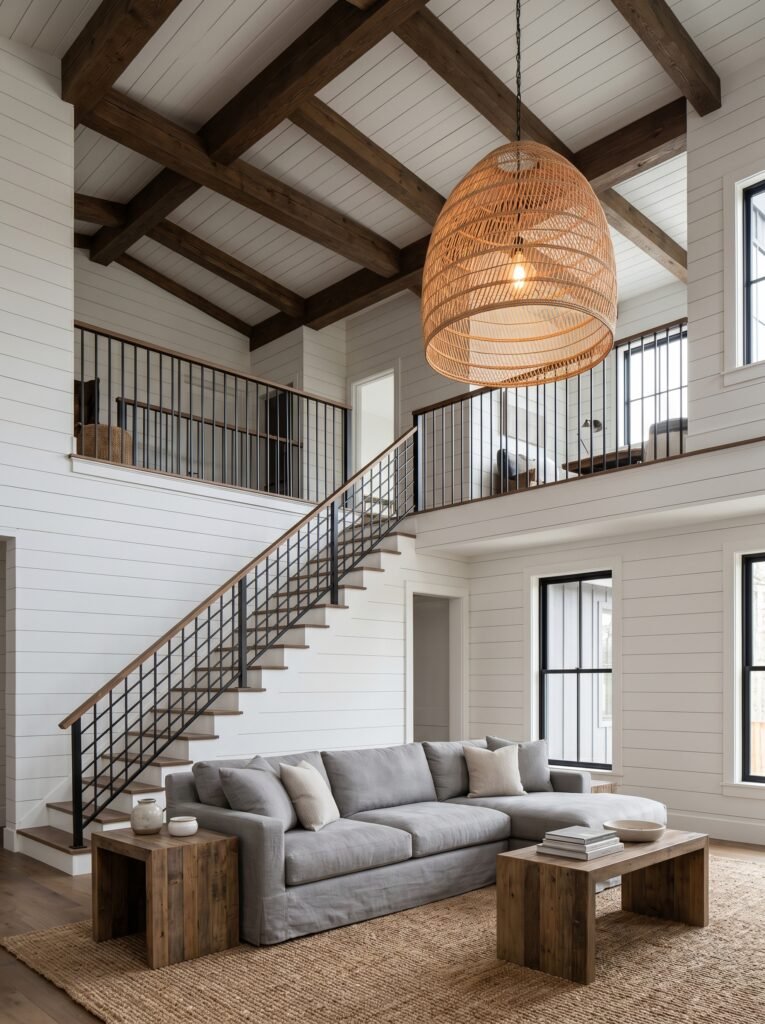
Color choices in a double volume living room carry far more visual weight than they do in a standard space — because there’s simply so much more surface area involved. The wrong choice gets amplified dramatically; the right choice becomes something close to breathtaking.
Deep, saturated colors — forest green, navy, charcoal, terracotta — can feel absolutely magnificent on double height walls, provided the room has enough natural light to prevent them from becoming cave-like. These tones add intimacy to what might otherwise feel too grand, wrapping the space in drama without sacrificing elegance.
Light, warm neutrals — soft white, warm linen, pale stone — are the safe and genuinely beautiful choice for rooms with less natural light or for homeowners who want the architecture to speak for itself. The height and structural elements become the visual interest; the wall color becomes the canvas.
One technique that works beautifully in practice: use a deeper tone on the lower portion of the tall wall — perhaps the bottom six to eight feet — and transition to a lighter tone above. This creates a subtle visual grounding effect, making the space feel anchored while still celebrating the height above.
—
7. How to Use a Double Volume Living Room for Real, Everyday Life
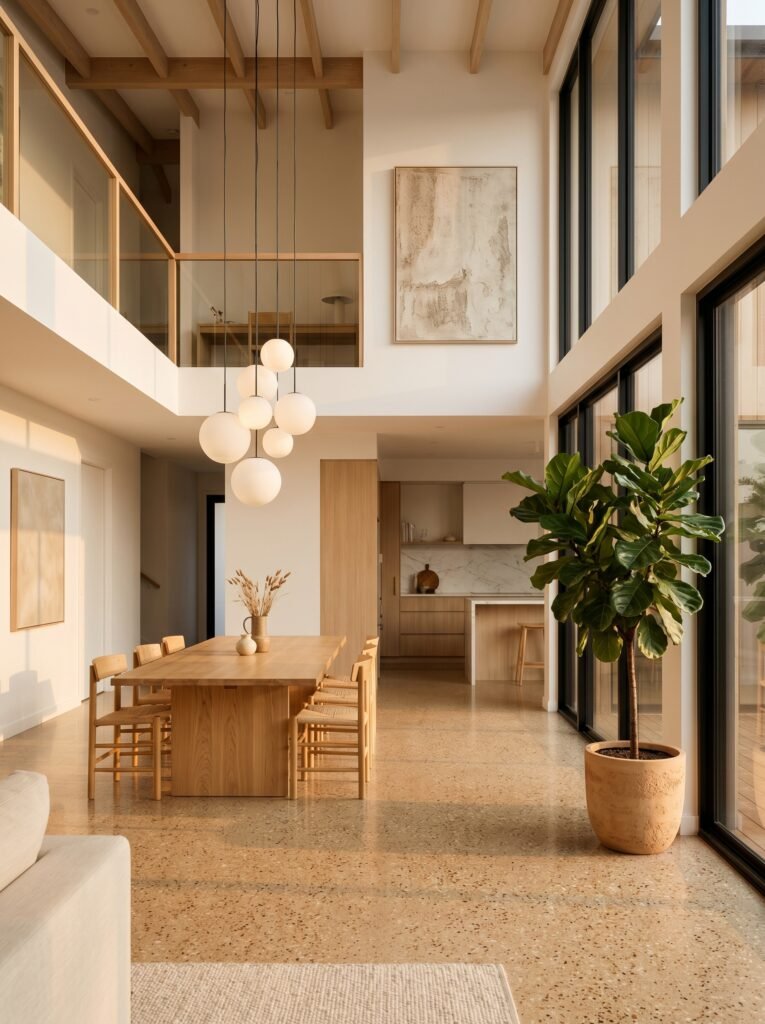
There’s a misconception worth addressing head-on: double volume living rooms are sometimes dismissed as purely formal or impractical — beautiful to look at, but not suited to daily living. That simply isn’t true when the design is thoughtful.
The secret is zoning. A double height space gives you the freedom — and the floor area that typically accompanies it — to create distinct zones within a single room. A primary conversation area, a reading nook tucked against a column or near a window, a media corner with its own lighting scheme, perhaps a small home bar or shelving wall built into an alcove. Each zone feels contained and purposeful even while the shared ceiling creates cohesion above.
Built-in bookshelves that run the full height of a double volume wall are among the most beloved features in these spaces — and for good reason. They add warmth, personality, and that wonderful sense of a room that has been lived in and loved. A rolling library ladder adds both function and an undeniable romantic quality that never gets old.
—
8. Plants, Texture, and the Art of Filling Vertical Space
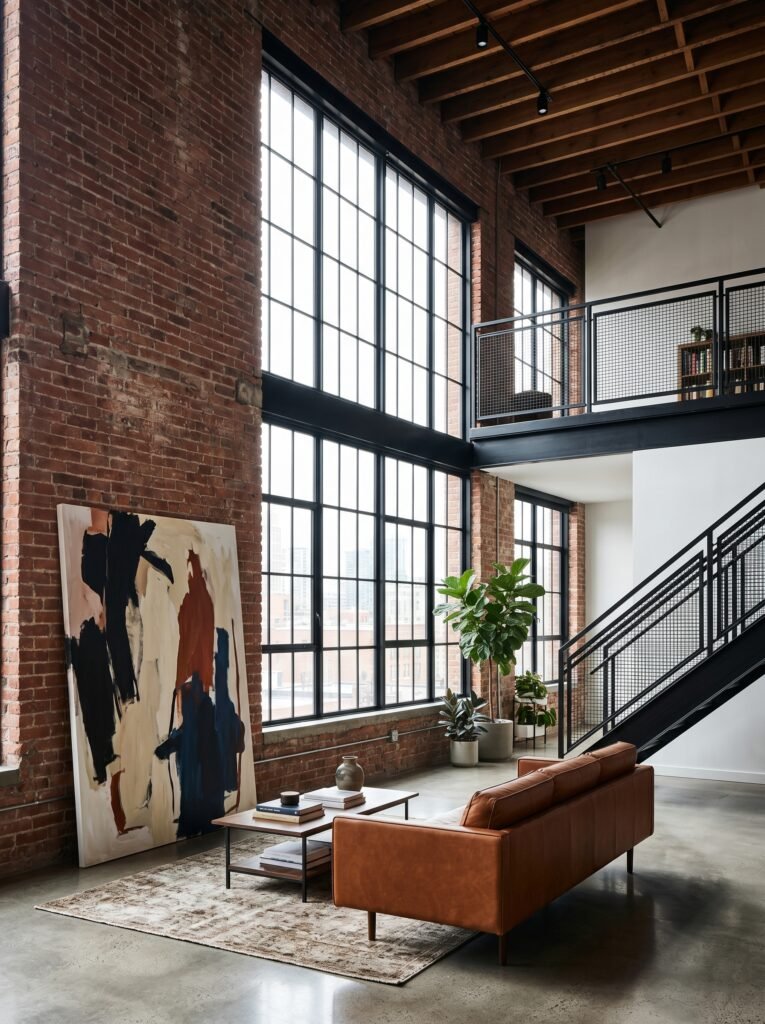
One of the most overlooked opportunities in a double volume living room is the vertical plane itself — those expansive stretches of wall between the floor and the ceiling. Leaving them entirely bare creates a gallery-before-opening feeling: architecturally impressive but emotionally unfinished.
Large-scale artwork is the obvious solution, and it works magnificently. A single oversized canvas, a set of three large prints in matching frames, or a gallery wall that extends upward beyond the standard hanging height — all of these ground the vertical space and give the eye a story to follow.
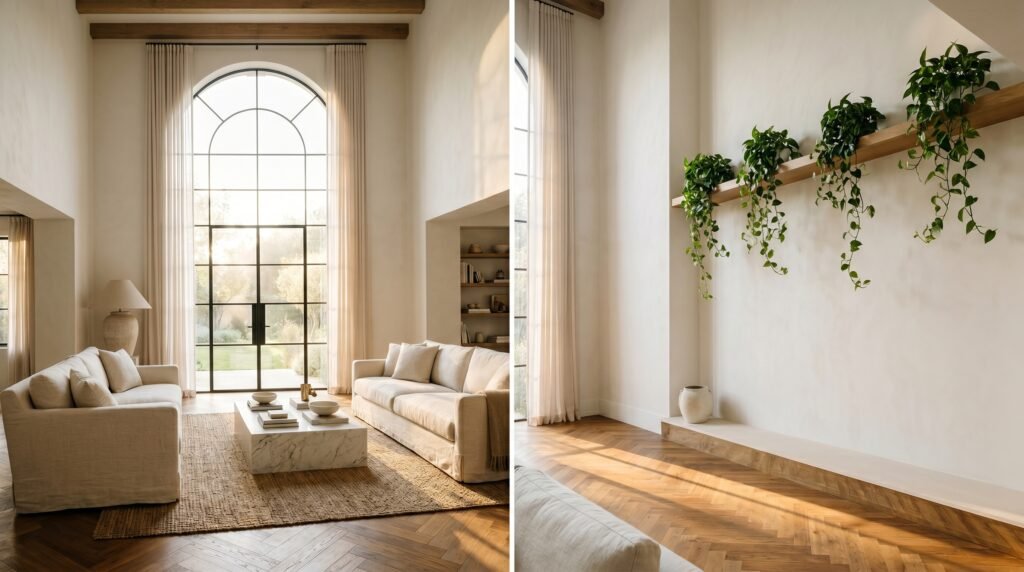
Large indoor plants — fiddle leaf figs, monstera deliciosa, olive trees, or dramatic bird-of-paradise plants — bring life and organic softness to the structural geometry of a tall room. In a double volume space, plants can grow to truly impressive heights without ever feeling cramped, which creates a genuinely extraordinary visual effect over time.
Texture on the walls themselves — exposed brick, limewash plaster, stone cladding on a feature wall, or even a floor-to-ceiling curtain in a heavy linen or velvet — adds sensory richness that pure paint cannot achieve in a space this scale.
“The vertical space in a double volume room isn’t empty — it’s an invitation to be bold.”
—
9. The Acoustics Reality Nobody Talks About
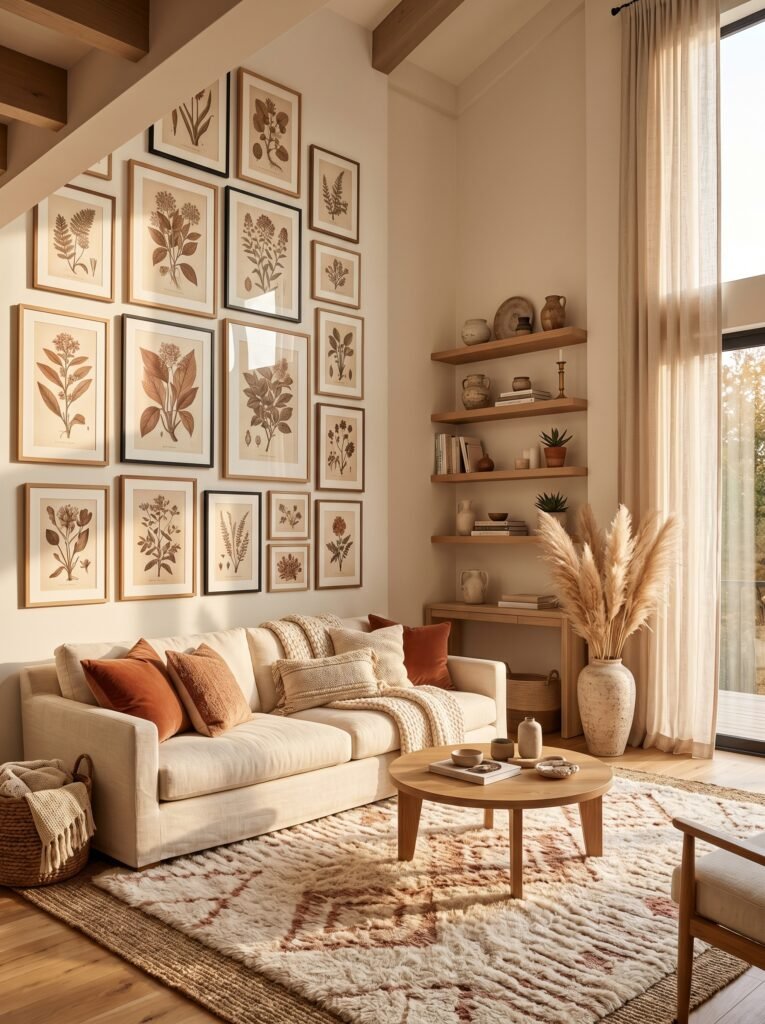
This is the practical section — the one a truly trustworthy guide has to include. Double volume living rooms, for all their beauty, can present real acoustic challenges. Hard surfaces, high ceilings, and open floor plans create a combination that amplifies sound and echo in ways that can be genuinely uncomfortable for daily living.
The solution isn’t to sacrifice the design — it’s to layer in sound-absorbing materials thoughtfully. Large area rugs are your first line of acoustic defense. Heavy curtains, upholstered furniture in fabric rather than leather, throw cushions, and even wall-mounted tapestries or textile art all absorb sound and reduce reverb without compromising aesthetics.
Coffered ceiling details, wooden ceiling panels, or acoustic tile systems designed to look like architectural features are used in high-end projects specifically to manage sound in tall spaces. If you’re building new or undertaking a significant renovation, these are worth factoring into the design budget from the beginning.
—
10. The Double Volume Living Room and Natural Light: A Love Story
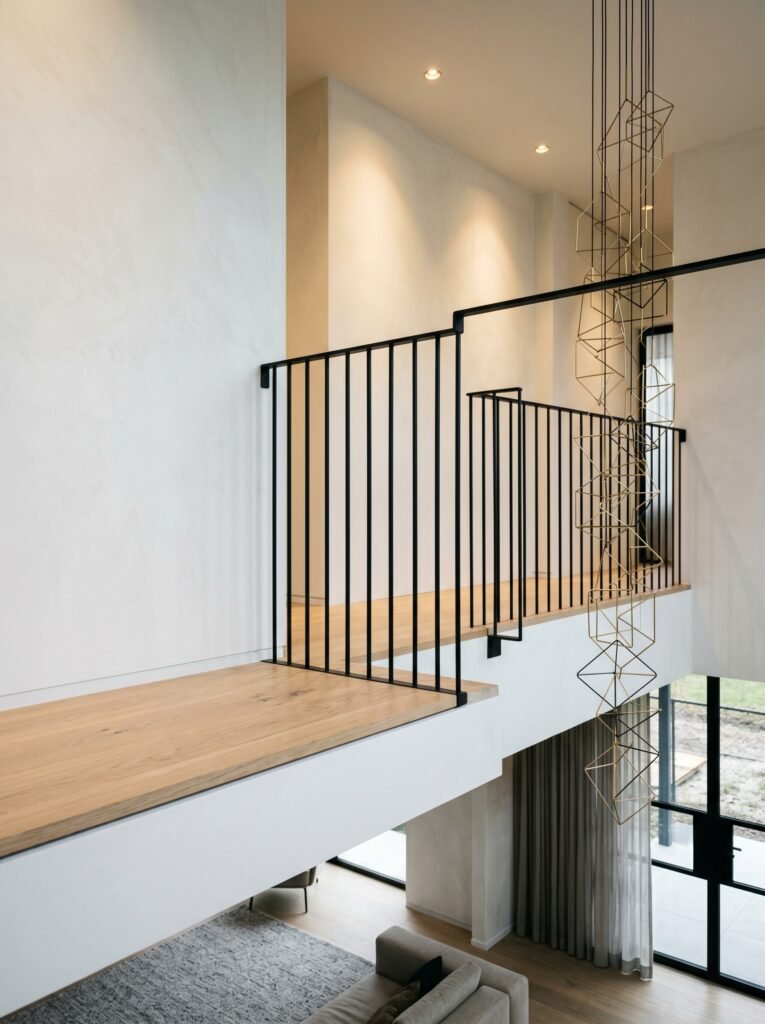
If there is one feature that transforms a double volume living room from impressive to genuinely magical, it is natural light — and the way it moves through a tall space is categorically different from what it does in a standard room. In a space with two full stories of window height, sunlight doesn’t enter horizontally and fade. It travels diagonally across the floor, climbs walls, shifts in color from cool blue morning light to amber afternoon warmth, and eventually settles into the golden glow of late afternoon that makes everything look like it belongs in a film.
South-facing double volume windows (in the Northern Hemisphere) maximize this effect through every season. North-facing tall windows offer softer, more consistent light that suits artists, readers, and those who prefer a calmer, more diffused quality of natural illumination.
Shading in these spaces is its own design consideration. Motorized blinds or sheer curtains on floor-to-ceiling tracks are the most practical solutions for windows that reach beyond what a standard step ladder can access. The investment in good window treatments is never wasted in a double volume space — they add softness, privacy, and thermal comfort that the architecture alone cannot provide.
—
11. Budget Realities: Can You Achieve the Look Without the Architecture?
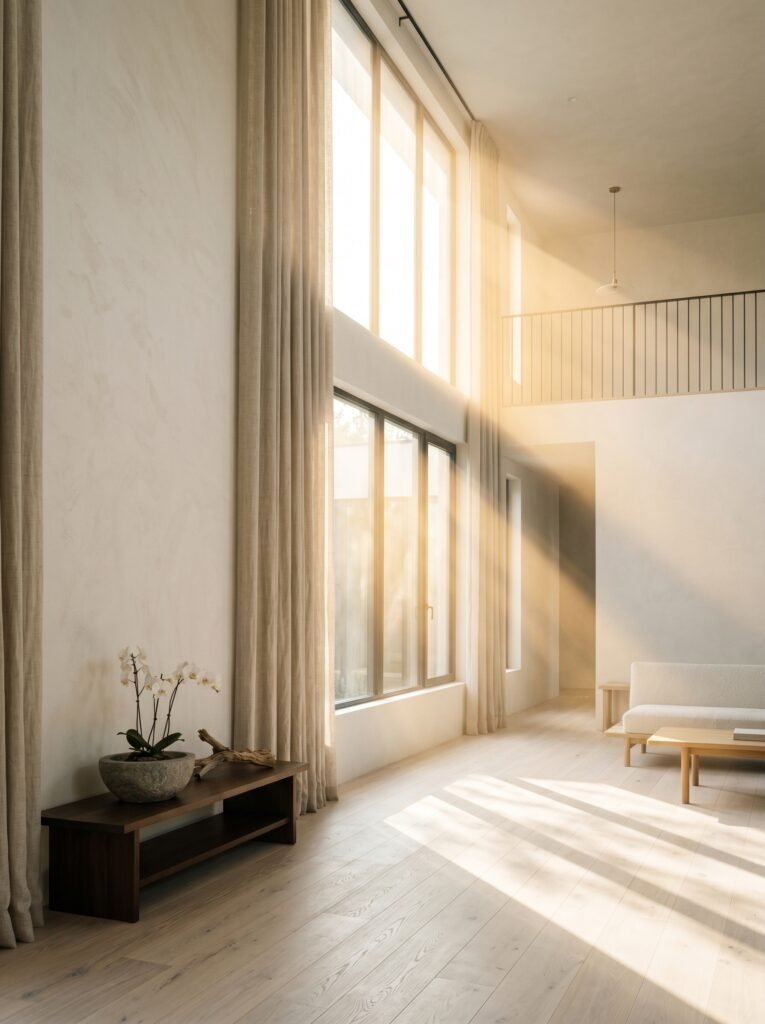
Not every home comes with soaring ceilings built in — but there are genuine design techniques that borrow the visual language of double volume spaces and apply it at a fraction of the cost or structural complexity.
Vertical stripes on walls, whether painted or wallpapered, draw the eye upward and create the perception of greater ceiling height. Curtains hung close to the ceiling and falling all the way to the floor — even on windows that sit at normal height — create the illusion of height with remarkable effectiveness. Choosing furniture that sits lower to the ground (think Japanese-influenced sofas and low-profile coffee tables) exaggerates the perceived distance to the ceiling.
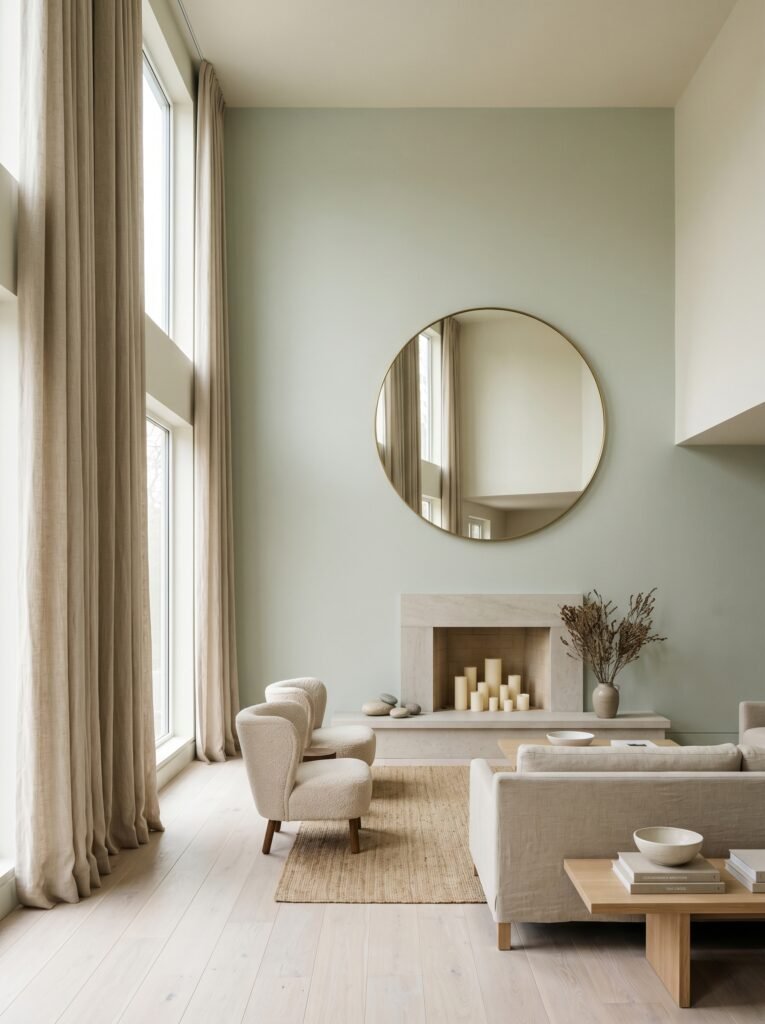
Mirrored surfaces placed on walls opposite windows reflect light upward and create a sense of infinite vertical space. Painting the ceiling the same tone as the walls — or slightly darker — removes the hard visual boundary between wall and ceiling, softening the box-like feeling of a standard-height room and making the space feel more continuous.
These aren’t tricks — they’re the same principles of perception and proportion that architects and interior designers use every day. Used thoughtfully, they deliver real results.
—
12. Why the Double Volume Living Room Endures — and What It Says About How We Want to Live
Every design trend eventually fades. The double volume living room doesn’t — and it’s worth asking why. What is it about this particular architectural feature that has maintained its hold on our collective imagination across centuries, across cultures, across radically different design aesthetics?
The answer, perhaps, is that it speaks to something fundamental about how we want to feel at home. Not just sheltered — which is the minimum any roof provides — but free. Expansive. Unhurried. Like there is enough space for our full selves, our families, our conversations, our quiet moments.
In an era of increasingly compressed urban living, of smaller apartments and higher land costs and the constant pressure of doing more with less, the double volume living room stands as a quiet act of generosity. It says: there is enough. There is room. Come in, sit down, and stay awhile.
Whether you live in one, are designing one, or simply save pictures of them to a Pinterest board at midnight because something about them fills you with a feeling you can’t quite name — that feeling is real. And it matters.
—
🌿 How to Take Care of Your Double Volume Living Room
Maintaining a double volume living room well is mostly about staying ahead of the details that become difficult to address when neglected.
Dust and cobwebs accumulate at height faster than you’d expect — invest in a quality extendable duster and make ceiling corners part of your regular cleaning routine, because in a space this visually open, every detail reads clearly. Keep light bulbs in your chandeliers and pendant fixtures consistent in color temperature (warm white at 2700K to 3000K is the most flattering for living spaces) and replace individual bulbs promptly, since a single cold bulb in a warm cluster is immediately noticeable.
Textiles need regular attention in a tall space because they’re doing so much acoustic and visual work. Rotate throw cushions and wash them seasonally. Steam or gently clean heavy curtains once a year to keep them looking intentional rather than tired.
Large indoor plants in a double volume room need consistent watering schedules and occasional fertilizing — they grow more vigorously in the light these spaces provide, which is a joy, but they’ll also show neglect more dramatically. Finally, be attentive to the impact of seasonal humidity changes on any exposed timber elements — hardwood floors, ceiling beams, and wooden furniture all benefit from a stable indoor humidity level of around 40 to 60 percent.
—
❓ FAQ
Q: Are double volume living rooms expensive to heat and cool? A: They can be more energy-intensive than standard rooms due to the greater volume of air involved, but good insulation, well-placed windows, ceiling fans (which help circulate air in both warm and cool months), and quality window treatments significantly reduce this impact. Many modern double volume homes are designed with passive solar principles specifically to offset these costs.
Q: What’s the minimum ceiling height to qualify as a double volume living room? A: The term typically applies to ceilings that span two full floor heights, which generally means anything from 16 feet upward. That said, even ceilings in the 12 to 14 foot range achieve a significant portion of the visual and psychological effect — they’re sometimes called “lofty” ceilings rather than true double volume, but the design principles are largely the same.
Q: Can I add a mezzanine level to a double volume living room? A: Absolutely — and many homeowners do exactly this to add functional space while preserving the sense of height in the main living area. A mezzanine that overlooks the living room below creates a beautiful relationship between levels and adds an architectural feature that makes the double volume even more dramatic. Always consult a structural engineer before undertaking any mezzanine addition.
—
💭 Final Thought
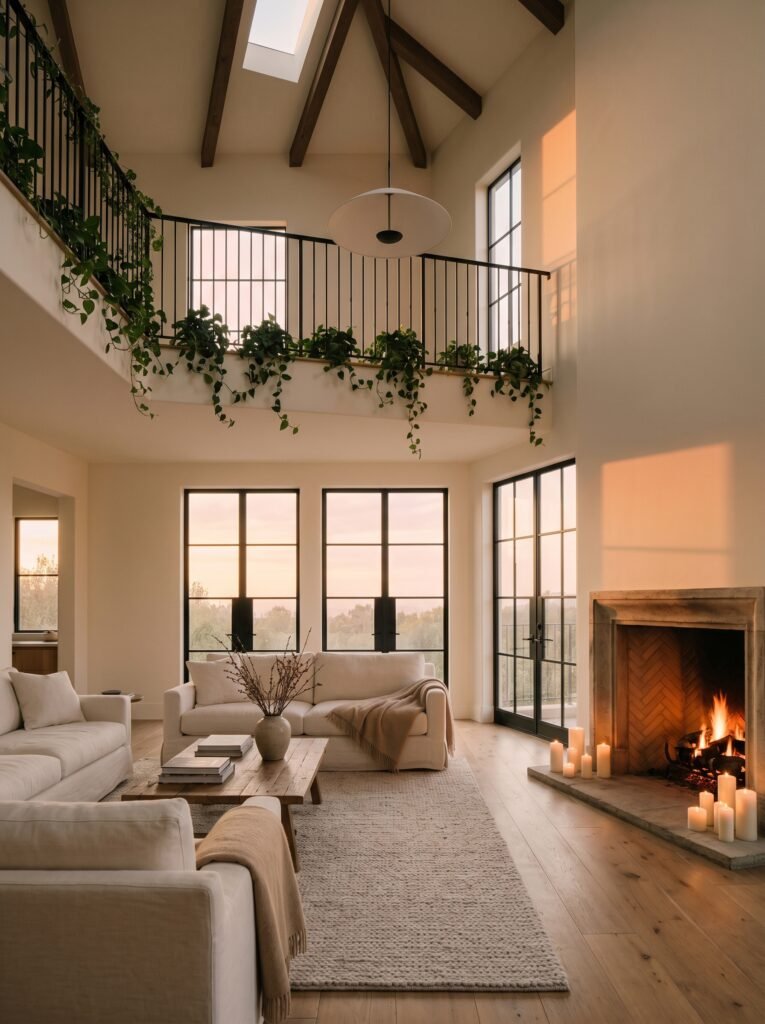
A double volume living room is, at its heart, a gift — to the people who live inside it and to anyone who walks through the door. It offers something that most rooms simply cannot: the feeling that there is space for everything, that nothing is cramped or rushed or squeezed, that you can take a full breath and let it out slowly.
Whether you are designing one from scratch, decorating one you’ve just moved into, or simply dreaming from your phone screen late at night — trust that instinct. The pull you feel toward a soaring ceiling and a room that breathes is telling you something true about the kind of home you want to live in.
So here’s the question worth sitting with: if your home could feel like anything — if the walls could say something about who you are and how you want to live — what would they say?