The Scandi Living Room: How to Create a Space That Feels Like a Deep Breath
There’s a moment — you’ve probably felt it — when you walk into a room and your whole body relaxes before your mind even registers why. That’s what a true Scandinavian living room does. It doesn’t just look beautiful; it changes how you feel the instant you cross the threshold.
—
1. What “Scandi” Actually Means (And Why Everyone Gets It Slightly Wrong)
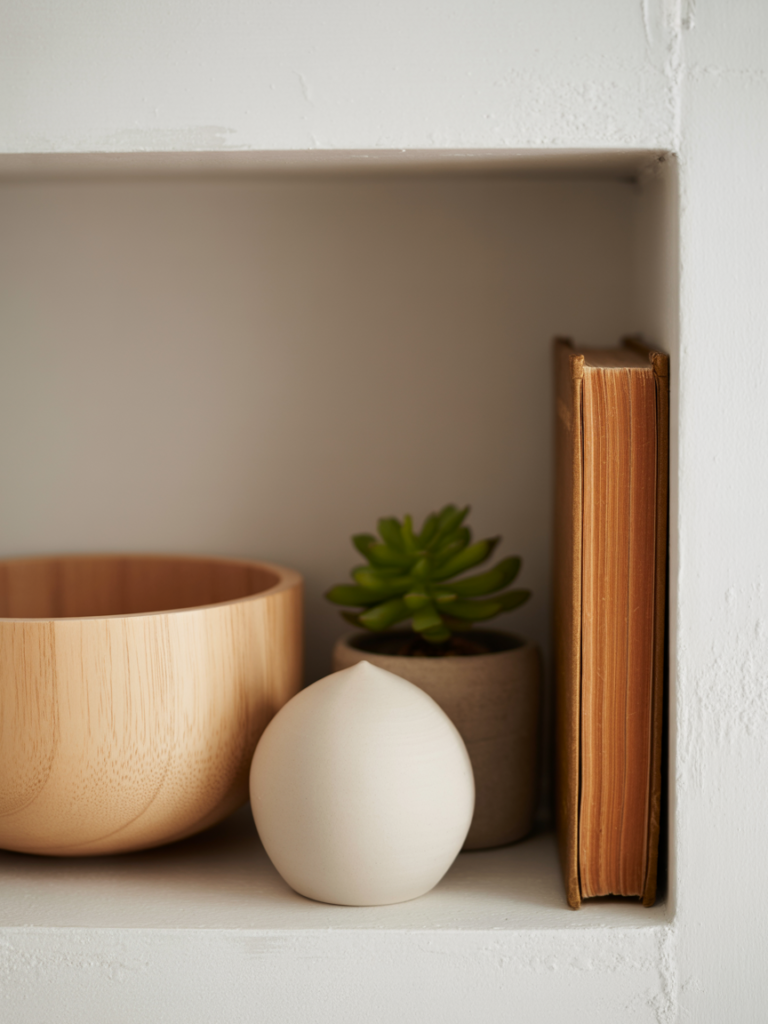
Scandinavian design is one of the most misunderstood aesthetics in the interior world. Most people assume it simply means white walls, a few plants, and some blonde wood furniture — and while those elements do appear, they barely scratch the surface of what this design philosophy is truly about.
Scandi style emerged from the Nordic countries — Sweden, Denmark, Norway, Finland, and Iceland — during the early 20th century, shaped by long, dark winters and a deeply rooted cultural belief that everyday life deserves to be beautiful. It wasn’t born in a design school. It grew from a genuine human need: to make the home a refuge, a place of warmth and intentionality, especially when the world outside is cold and grey for months at a time.
The philosophy behind it is deceptively simple. Every object in a Scandinavian home earns its place through either beauty or function — ideally, both. There is no decoration for decoration’s sake. There is no clutter for nostalgia’s sake. And yet, paradoxically, a true Scandi living room never feels cold or sparse. It feels curated — the way a poem feels when every word has been chosen carefully.
“Scandinavian design doesn’t ask you to have less. It asks you to choose better.”
Understanding this distinction is the key that unlocks everything else. When you start seeing Scandi design as a philosophy rather than a Pinterest mood board, every decision you make for your living room becomes clearer, more confident, and more you.
—
2. The Colour Palette That Feels Like Morning Light
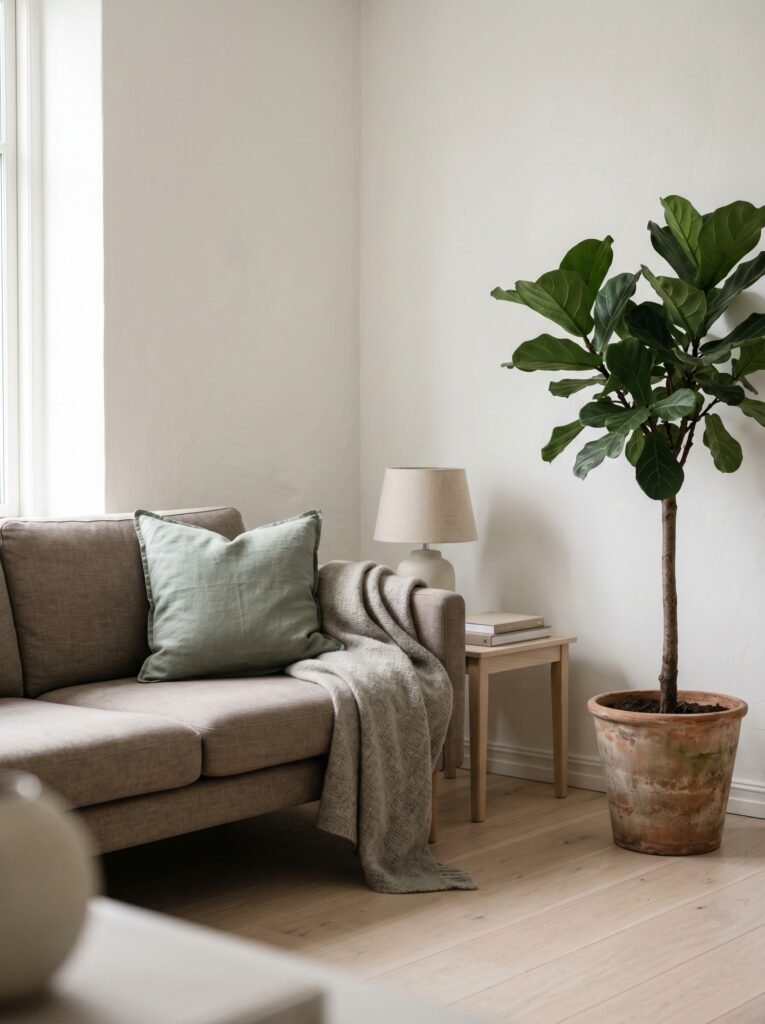
Walk into a Scandinavian living room and you’ll almost always notice the quality of light before anything else. That’s entirely intentional. The Nordic colour philosophy begins with neutrals — warm whites, soft creams, cool greys, and the particular shade of greige that sits so comfortably between the two — because neutral walls act as a canvas that catches and amplifies natural light throughout the day.
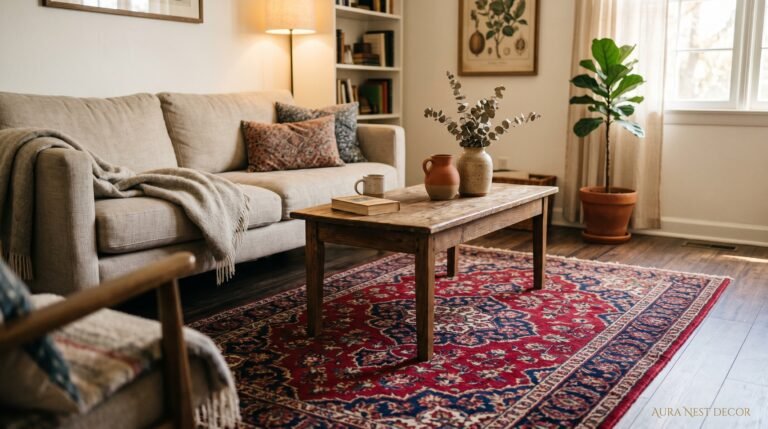
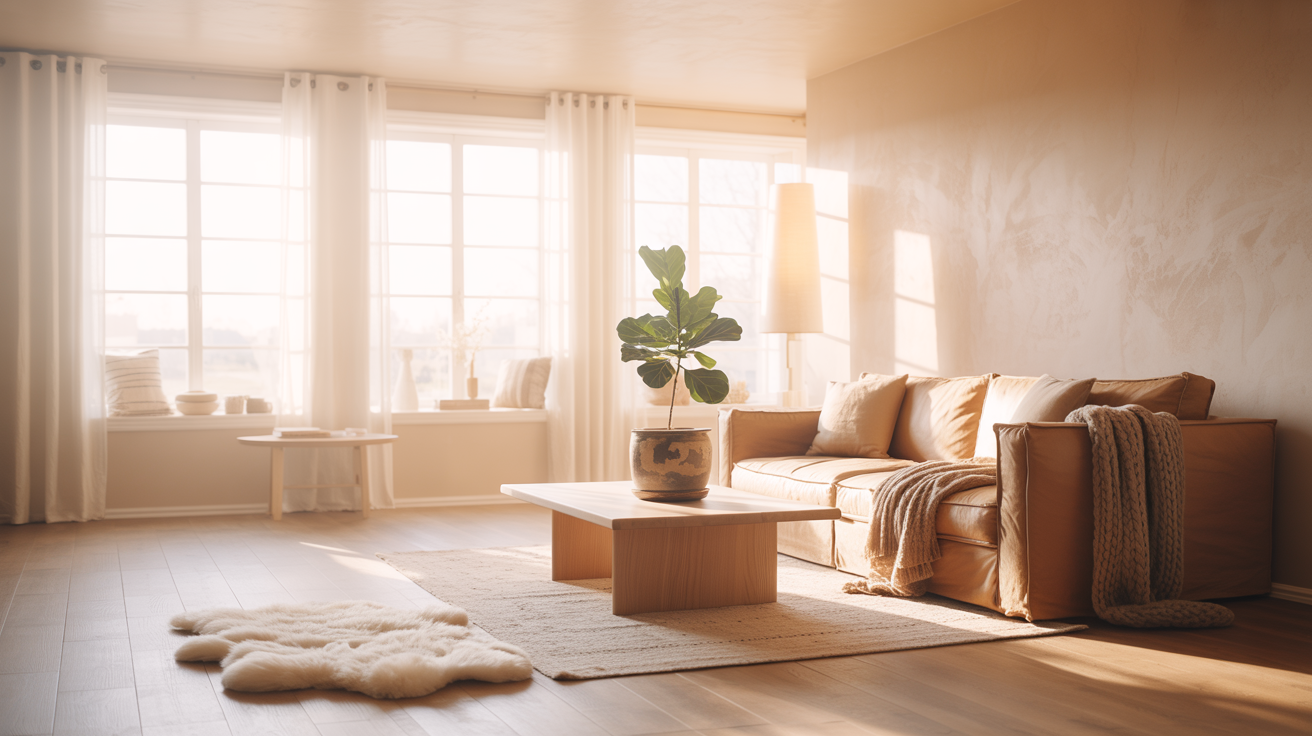
But here’s what most people miss: Scandi isn’t monochromatic. It uses what designers call “tonal layering” — building a palette of colours so close in value that they create depth without visual noise. Think a warm white wall paired with a mushroom-toned linen sofa, accented by a dusty sage cushion and a worn terracotta pot holding a fiddle-leaf fig. Every colour whispers, and together they create a conversation that feels entirely harmonious.
The accent colour — there’s usually just one, maybe two — tends to come from nature. Sage green, muted rust, dusty blue, charcoal black. These tones are never saturated or aggressive. They ground the space the way a stone does in a forest: quietly, perfectly.
If you’re starting from scratch, begin with your walls. Warm white is almost always the safest Scandi foundation. Then build your palette upward from there, choosing soft textiles, natural materials, and one grounding accent colour that feels personal to you.
—
3. The Sacred Art of Negative Space
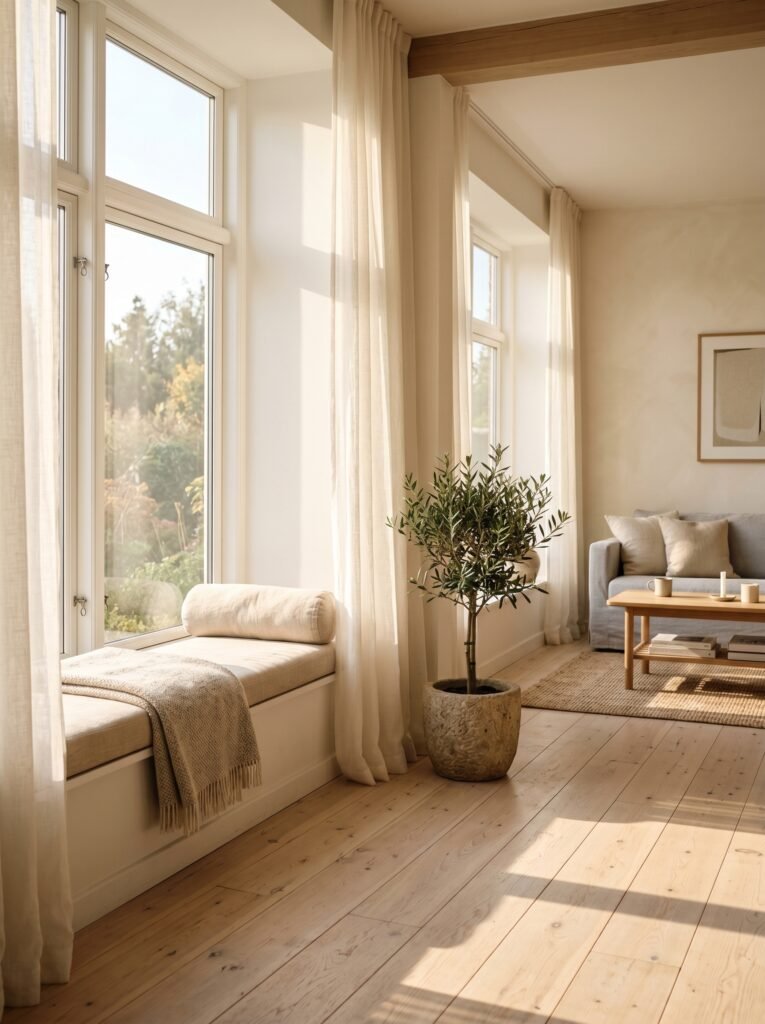
This is the concept that separates a truly Scandi room from a room that’s simply trying to be Scandi. Negative space — the deliberate emptiness between objects — is not wasted space. It’s breathing room. And in Scandinavian design, it is treated with as much respect as the furniture itself.
In a culture shaped by long winters and small, insulated homes, the Nordics learned that a crowded room compounds stress. A room with breathing room, on the other hand, allows the eye to rest, the mind to settle, and the spirit to exhale. This is why you’ll never see a true Scandi living room with furniture pushed against every wall, surfaces covered in decorative objects, or shelves so full they look like storage units masquerading as decor.
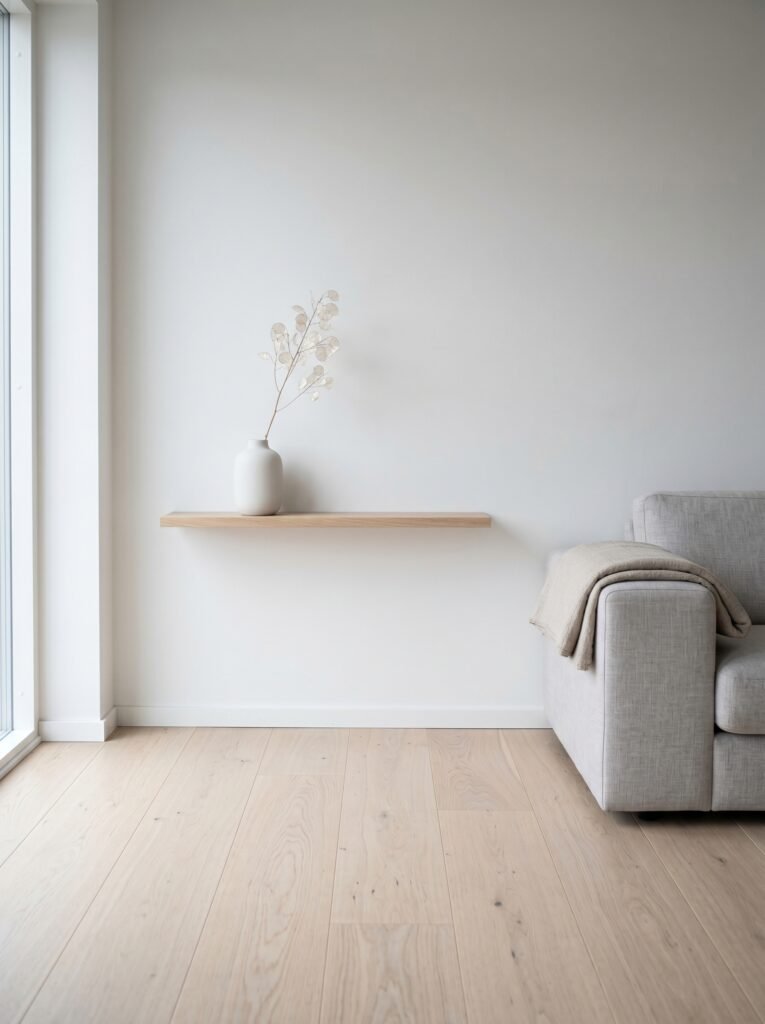
The practice of negative space asks you to do something counterintuitive: to resist the urge to fill. To trust that the empty wall, the bare corner, the shelf with only three objects on it, is doing exactly what it should.
Start by removing one thing from every surface in your living room. Then stand back and notice how the remaining objects suddenly have more presence, more weight, more meaning. That’s the power of negative space — it doesn’t diminish your belongings; it elevates them.
—
4. Furniture That Looks Simple and Is Secretly Brilliant
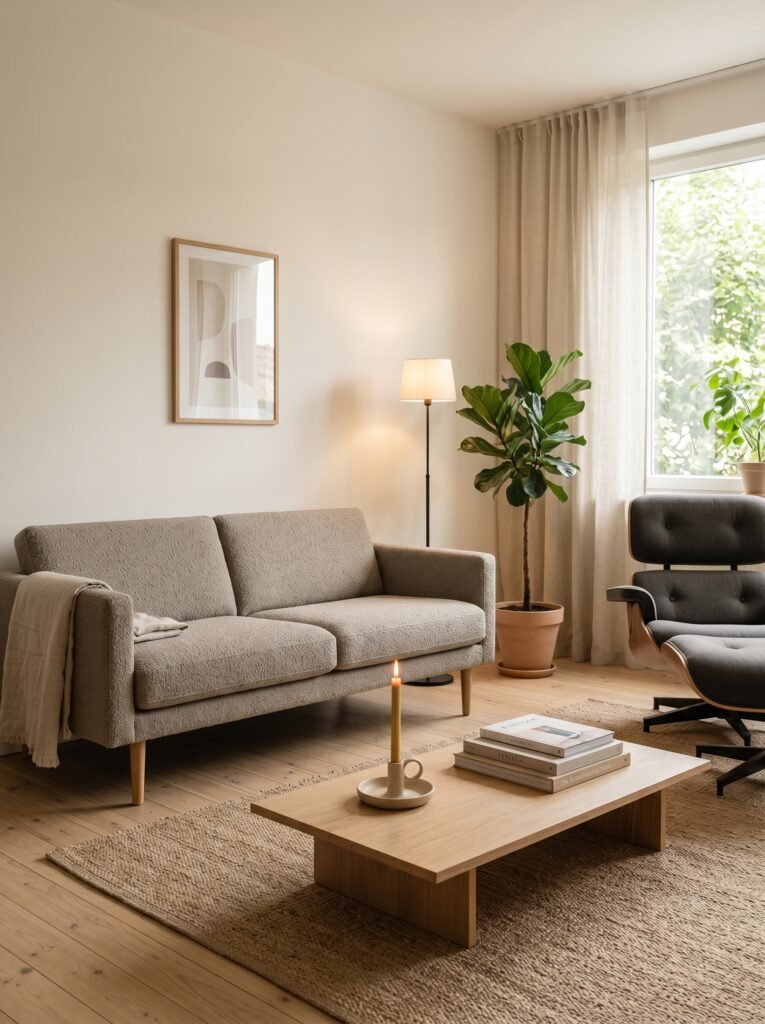
Scandinavian furniture design has given the world some of its most enduring icons — the Egg Chair, the PH Lamp, the Wishbone Chair — and what they all share is a quality of elegant problem-solving. Every curve, every joint, every material choice exists for a reason.
For your living room, this translates into furniture with clean lines, low profiles, and natural materials. Think solid oak or beech wood coffee tables with tapered legs. Sofas in undyed linen or boucle fabric with simple, structured silhouettes. Side tables made of pale wood or matte-finished metal. The furniture should never compete for attention. It should simply be — confidently, quietly present.
“In a Scandi home, furniture is chosen like words in a sentence: only what’s necessary, but each piece carrying real weight.”
One of the most defining features of Scandinavian furniture is the raised leg. Sofas, chairs, and sideboards that sit on slender legs rather than flat bases allow light to travel beneath them, making the room feel more open, more airy, more spacious — even in a small flat. It’s a small detail with a dramatically large effect.
When shopping for Scandi-style pieces, look for craftsmanship over trend. A well-made solid wood coffee table will anchor your living room for decades. A fast-fashion equivalent, no matter how aesthetically accurate, won’t carry the same weight — literally or figuratively.
—
5. Texture Is Where the Warmth Lives
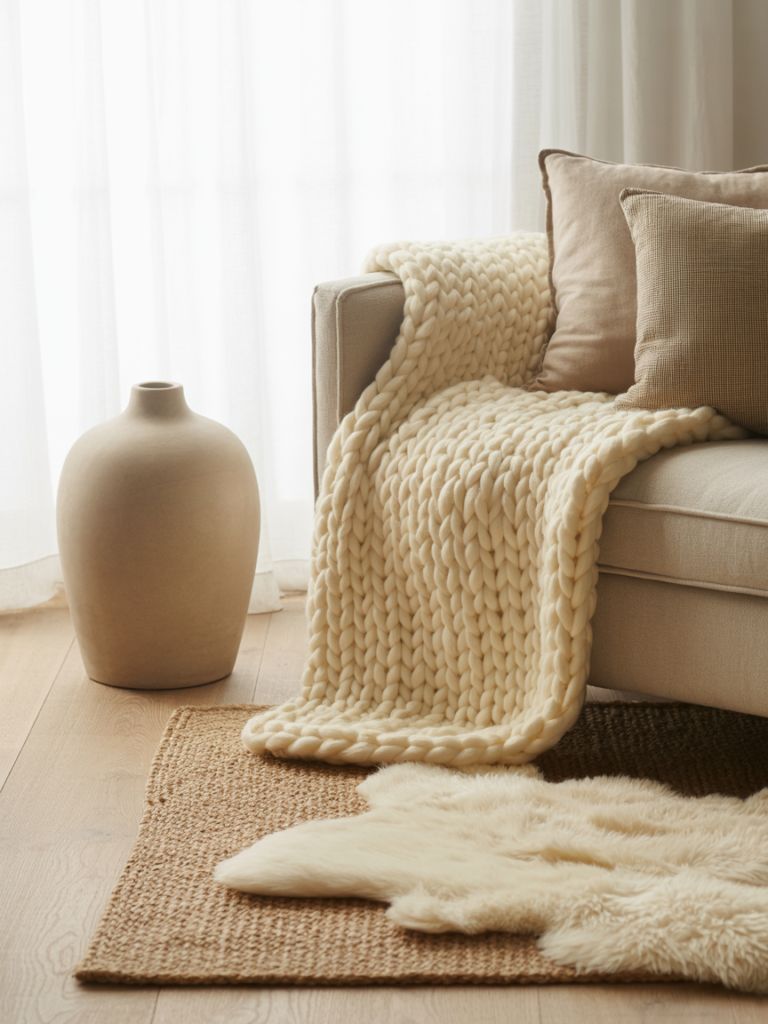
If Scandinavian living rooms were truly as minimal as they’re often portrayed, they’d feel sterile — clinical, even. The reason they don’t is texture. This is the secret ingredient that transforms a cold, spare room into something that feels like being wrapped in a warm blanket on a grey afternoon.
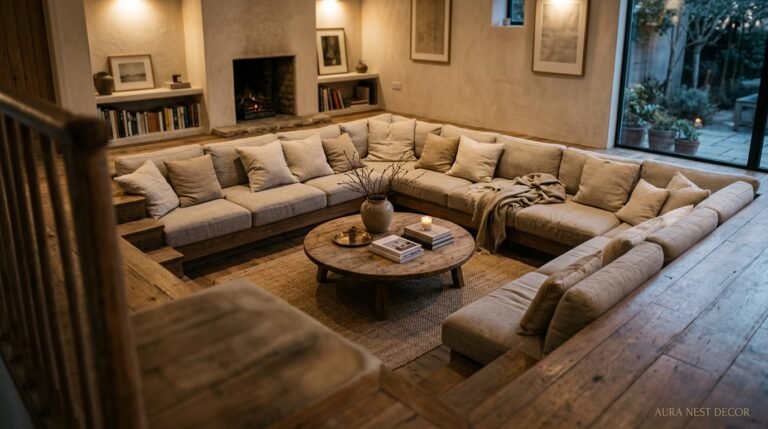
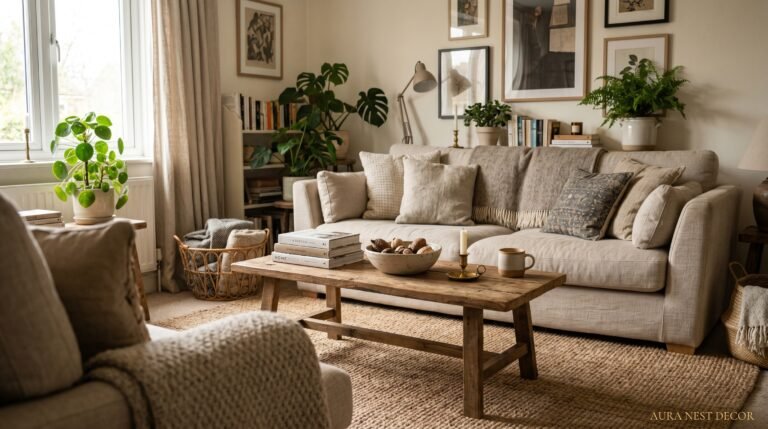
In the absence of visual complexity from patterns and colours, texture becomes the language of the room. A chunky knit throw draped over the arm of a linen sofa. A sheepskin rug layered over a jute area rug. Velvet cushions alongside raw linen ones. A wooden bowl with a smooth, worn finish sitting beside a ceramic vase with a deliberately rough, handmade quality.
The Danes have a design concept called “hygge” — a word that roughly translates to cozy, contented togetherness — and texture is its physical expression. Hygge isn’t just an aesthetic. It’s a feeling. And that feeling is created primarily through touch: the materials you can run your hand across, sink into, wrap yourself in.
When building your Scandi living room, close your eyes and think about texture before you think about appearance. Choose materials that invite physical contact. Natural fibres, tactile ceramics, warm wood. These are the building blocks of a room that doesn’t just look inviting — it actually is.
—
6. The Role of Natural Light (And How to Cheat It)
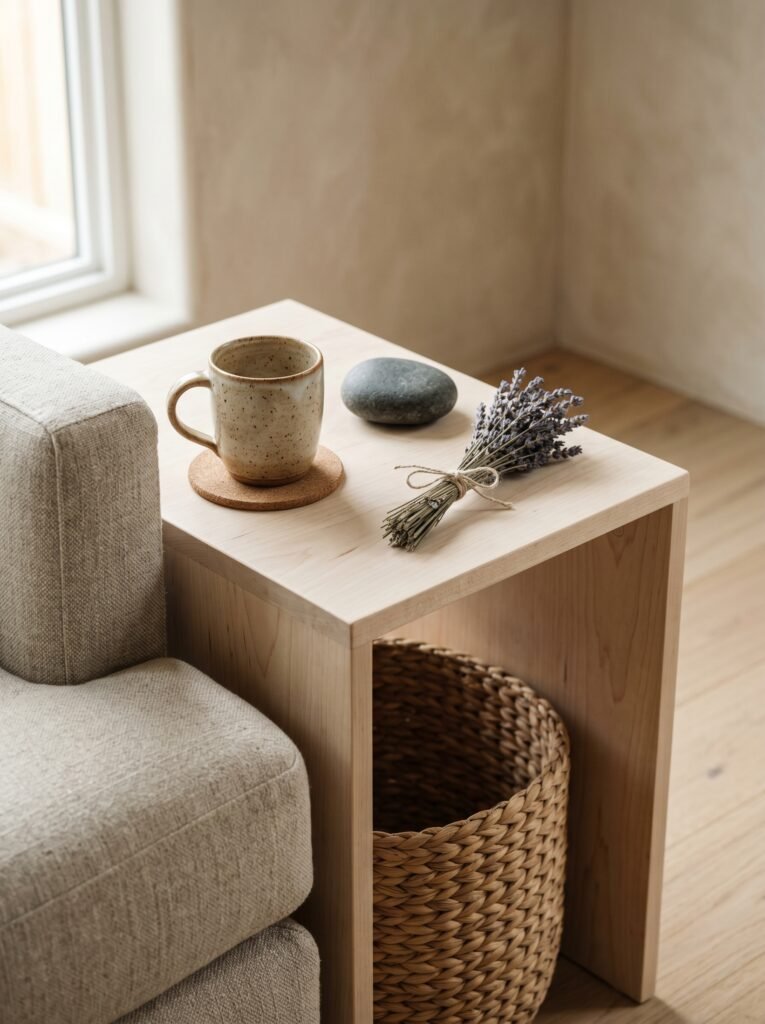
In Scandinavia, natural light is treated as one of the most valuable resources in a home. During winter months, the sun barely rises above the horizon in some Nordic regions, and so the way light moves through a living space is considered as thoughtfully as any piece of furniture.
In your Scandi living room, maximise every source of natural light you have. Keep windows unobstructed or dressed with sheer linen curtains that filter rather than block. Position mirrors strategically to bounce light deeper into the room — a large, simple-framed mirror on the wall opposite a window can effectively double the perceived brightness of any space.
For the darker hours — which in a Scandinavian winter represent the majority of the day — artificial lighting becomes critically important. The Nordic approach avoids harsh overhead lighting entirely, favouring instead multiple, layered light sources at different heights: a floor lamp in the corner, a table lamp beside the sofa, a small pendant above the coffee table, a candle or two on the windowsill. The goal is to create pools of warm, intimate light rather than flooding the room with uniform brightness.
“Light in a Scandi room isn’t about illumination. It’s about atmosphere.”
Candlelight, in particular, is central to Nordic living. The Danes burn more candles per capita than any other nation in the world, and walking through Copenhagen on a winter evening, you’ll see the warm flicker of candles in nearly every window. It’s not merely decorative — it’s a ritual of warmth and comfort that transforms even the simplest room into something magical.
—
7. Plants and Nature: The Living Design Element
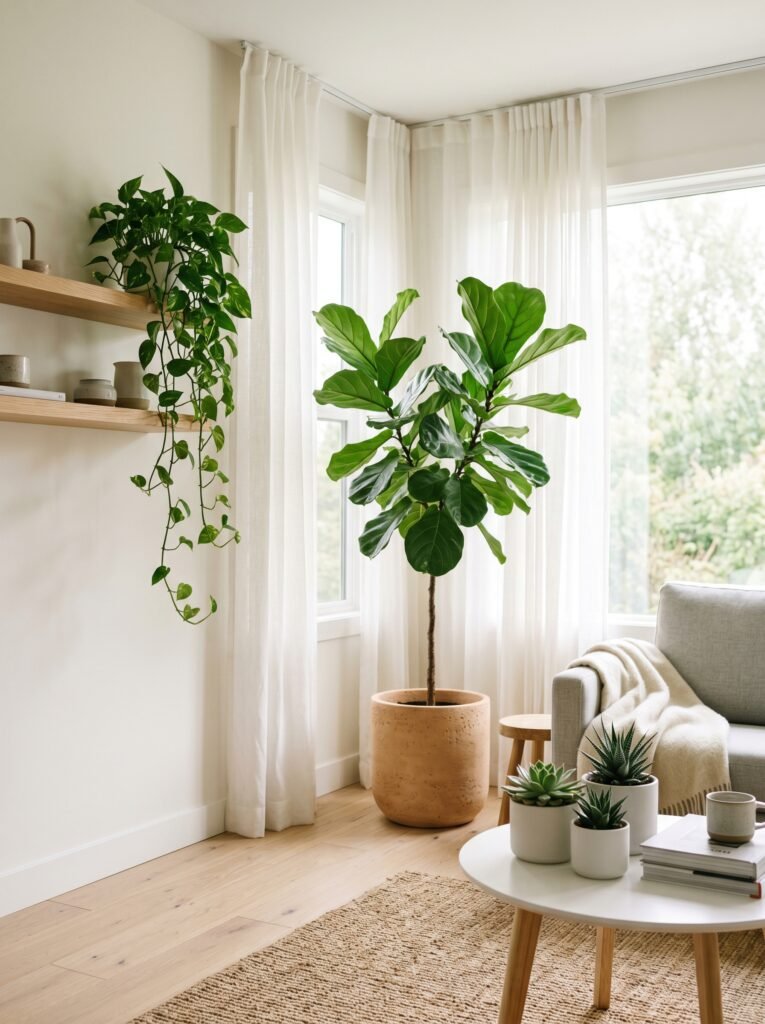
Scandinavians have a profound relationship with the natural world — shaped by landscapes of forests, fjords, mountains, and sea — and they carry that relationship inside their homes. Greenery in a Scandi living room isn’t a trend. It’s a design principle.
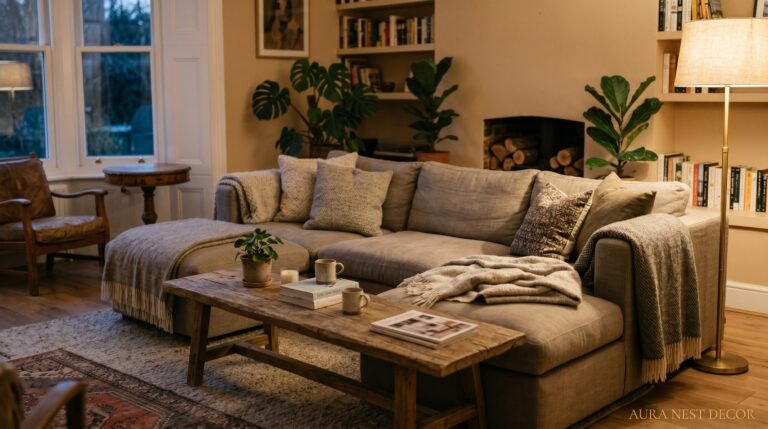
The plants chosen for Scandinavian interiors tend to be architectural and bold: the fiddle-leaf fig, the monstera, the snake plant, the olive tree. These aren’t dainty accent plants — they’re living statements, adding height, structure, and organic life to a room that might otherwise feel too composed.
But beyond large statement plants, Scandi interiors also embrace smaller nature-based details: a branch of eucalyptus in a simple vase, a small ceramic pot holding a single succulent, a wooden bowl filled with pinecones or smooth river stones. These touches are deliberate, quietly beautiful, and deeply grounding.
Nature-inspired materials extend this philosophy further — raw linen, rattan, jute, cork, unglazed ceramic, untreated leather. Each one carries the texture, colour, and imperfection of the natural world, and together they prevent any Scandi room from feeling manufactured or generic.
—
8. How to Style a Scandi Bookshelf Without Overloading It
The bookshelf is one of the most challenging elements in any Scandi living room, because it sits at the intersection of function and display. Books are inherently cluttered — different sizes, different colours, different spines — and in a design philosophy that prizes simplicity, styling them well requires a particular kind of restraint.
The Scandi approach to bookshelves involves a technique sometimes called “breathing the shelf.” For every section of books, leave a visual gap — a small, deliberate space, or a simple object like a ceramic sculpture or a small plant. Alternate between books stacked horizontally and others standing vertically. Use neutral bookends to anchor the sections without drawing attention away from the whole.
The objects displayed alongside books should be chosen with extreme care. One wooden bowl. One small photograph in a simple frame. One sculptural candle. Three objects, maximum, per shelf section. The shelf should look curated, not decorated. There is a meaningful difference.
Consider also removing the dust jackets from your books — the raw board covers underneath are almost always more muted and visually harmonious with a Scandi palette than the bright, commercially designed jackets that sit on top.
—
9. The Coffee Table: Where Function Meets Ceremony
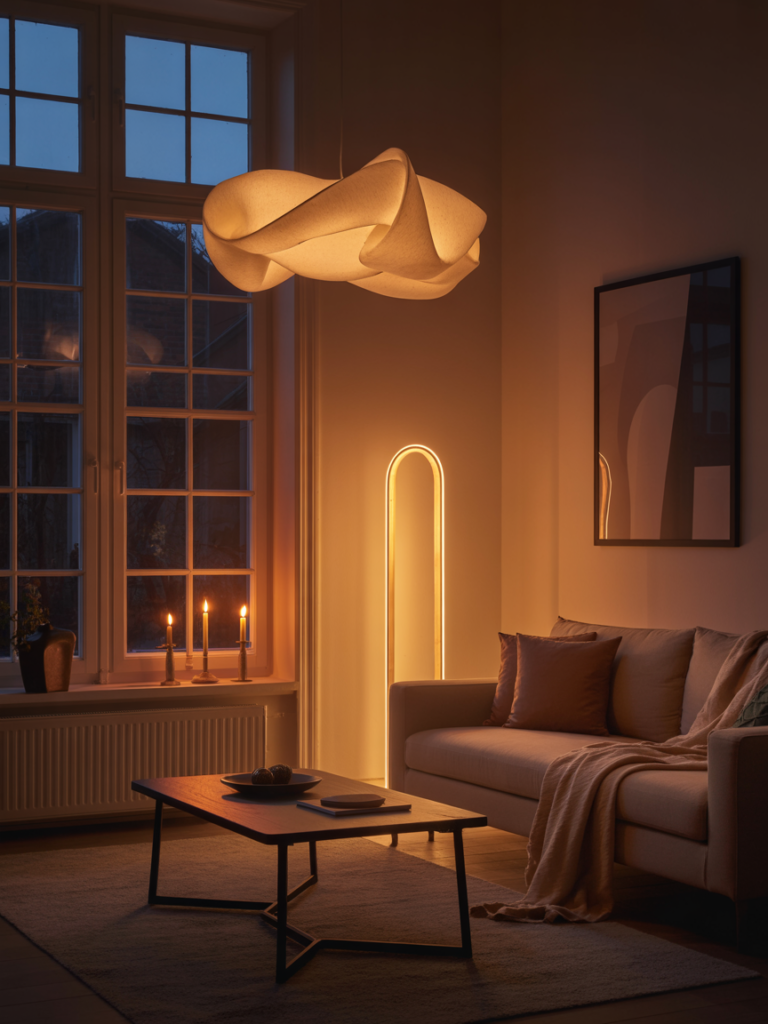
In a Scandinavian home, the coffee table is never just a surface. It’s the heart of the living room — the place where books are opened, coffee cups are set down, conversations are held, and life is lived at its most comfortable and unhurried.
Styling a Scandi coffee table is a small art form in itself. The classic approach involves a maximum of three to five elements: a tray to anchor the arrangement, a stack of two or three beautiful books, a small plant or single stem in a bud vase, and perhaps one sculptural object — a smooth stone, a wooden bowl, a ceramic orb. That’s it. The tray contains the arrangement and prevents it from spreading visually across the whole surface.
“A perfectly styled Scandi coffee table doesn’t just look good. It tells you something about the person who lives there.”
The material of the coffee table itself matters enormously. Solid wood — particularly oak or walnut with a natural finish — is the most universally Scandi choice. Alternatively, a marble-top table with simple wooden or metal legs bridges Scandinavian minimalism with a slightly warmer, more European sensibility. Glass, chrome, and high-gloss finishes are generally avoided — they create visual noise and disrupt the calm, organic quality that defines this aesthetic.
—
10. The Rug Situation: Grounding Your Space in Warmth
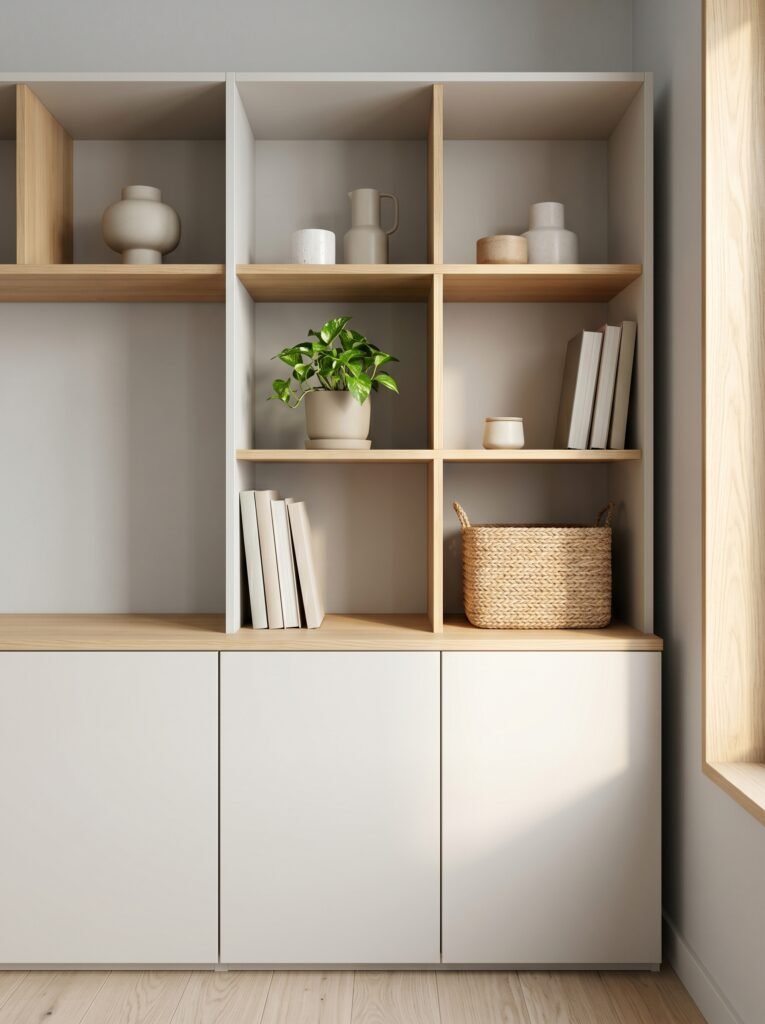
No Scandi living room is complete without a rug, and choosing the right one can either anchor the entire space or quietly undermine everything else. The rug is the largest textile in the room. It sets the tone for every other decision.
In Scandinavian interiors, rugs tend to fall into two camps: natural fibre rugs — jute, sisal, seagrass — that add earthy texture and warmth, and wool rugs in simple geometric patterns or subtle tones that reference traditional Nordic textile design. Both work beautifully; the choice depends on how much warmth and softness you want underfoot.
Size is critical. In most living rooms, the rug should be large enough that at least the front legs of every piece of seating rests on it. A rug that’s too small floats awkwardly in the space and makes the room feel disconnected and unsettled. When in doubt, go larger than you think you need.
Layering rugs — placing a smaller sheepskin or wool rug on top of a larger jute base — is a distinctly Nordic styling technique that adds depth, texture, and that coveted hygge quality without adding colour complexity.
—
11. Scandi on a Budget: Getting the Look Without the Price Tag
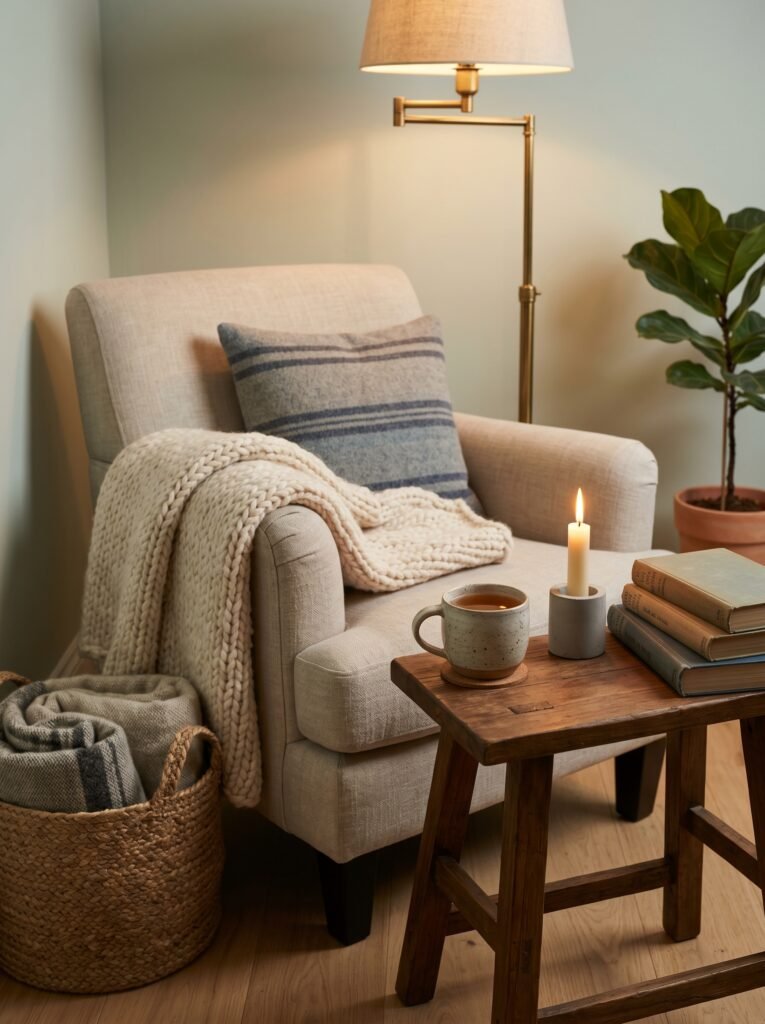
Scandinavian design, at its finest, involves handcrafted furniture, high-quality natural textiles, and pieces that have been made to last a lifetime. This can come with a significant price tag — and that’s fair, because quality costs money. But the underlying philosophy of Scandi design is actually profoundly accessible, even on a limited budget.
Start with decluttering. This costs nothing and is the single most powerful step toward achieving the Scandi look. Remove anything from your living room that isn’t beautiful, functional, or deeply meaningful to you. The transformation that follows will astonish you.
Paint your walls. A warm white — something with the faintest hint of cream or greige — changes everything. It’s one of the most affordable interventions in interior design with one of the largest visual impacts.
Shop second-hand for the key furniture pieces. Solid wood is solid wood, regardless of where you find it. A second-hand oak coffee table sanded and oiled is indistinguishable from a new one, and it carries the added character of wear and time — something Scandinavian design actually celebrates.
Invest selectively in textiles. A quality linen cushion cover, a good throw, a simple wool rug — these are the elements that create the tactile warmth of a Scandi room, and they don’t have to cost a fortune. Swap fast-fashion homeware for one or two well-made pieces and you’ll notice the difference immediately.
—
12. Making a Scandi Living Room Feel Like Yours
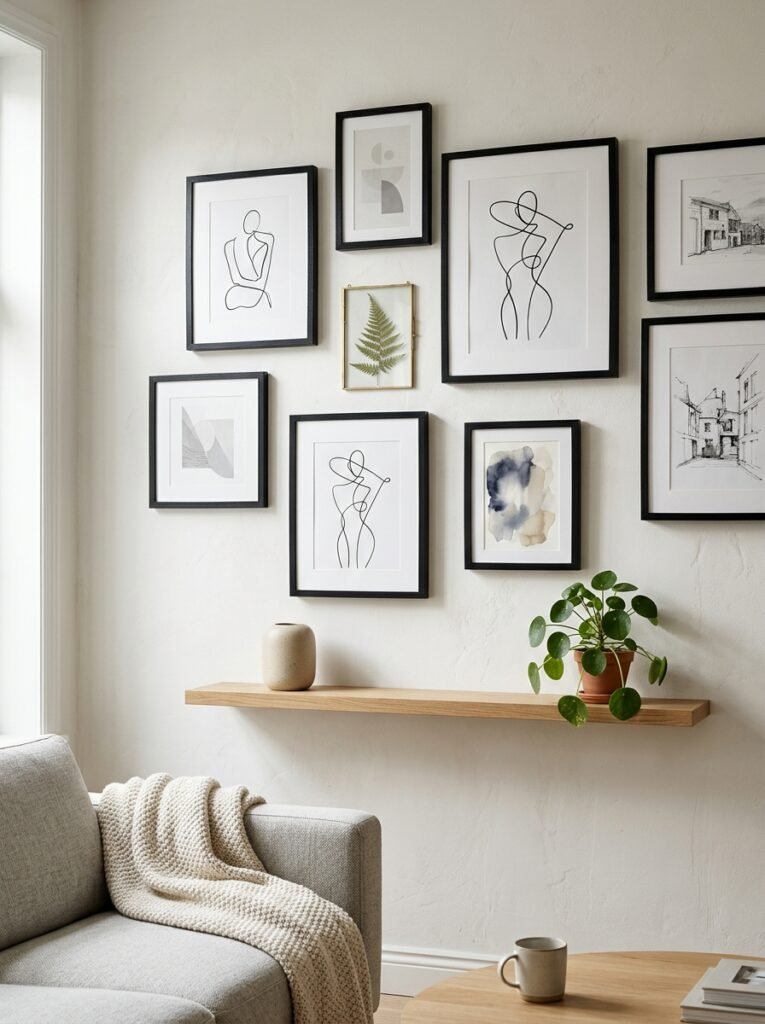
Here is the thing about Scandinavian design that no mood board will ever show you: the most beautiful Scandi homes are never purely Scandi. They’re personal. They have the book that’s been read seven times sitting dog-eared on the coffee table. They have the ceramic mug that was made by a friend sitting on the windowsill. They have the photograph from a trip that changed everything, framed simply, hanging on the otherwise bare wall.
Scandi design is not a template to be copied. It is a philosophy to be inhabited — gently, confidently, with your own life woven through it. The simplicity isn’t meant to erase you from the room. It’s meant to make you more visible: to allow the things that truly matter to you to speak clearly, without competition.
When you design your living room through this lens, something shifts. The room stops being a collection of furniture and surfaces and starts being an extension of who you are at your most settled, most intentional, most at home.
That’s the real magic of Scandi design — not the blonde wood or the fiddle-leaf fig or the perfectly styled coffee table, beautiful as those things are. It’s the feeling you create for yourself and everyone who enters: that they are in a place where life is good, quiet, and worth paying attention to.
—
🌿 How to Take Care of Your Scandi Living Room
Maintaining the effortless quality of a Scandi living room requires a consistent but gentle practice, not a dramatic overhaul.
Do a weekly reset rather than occasional deep cleans. Take five minutes each week to return objects to their intended places, fold throws, remove anything that has crept onto the surfaces without intention. The Scandi aesthetic is fragile in this way — small accumulations of clutter disturb the visual calm quickly.
Care for your natural materials properly. Oil your wooden furniture twice a year with a food-safe wood oil. Wash linen textiles on a cool cycle and allow them to dry naturally — never in a dryer, which destroys the natural texture that makes linen so beautiful. Shake out your rugs and vacuum them with care; natural fibre rugs in particular need gentle handling.
Edit seasonally. Scandi interiors are never static — they shift subtly with the seasons. In autumn and winter, layer in warmer textiles: heavier throws, sheepskin rugs, more candles. In spring and summer, strip back to lighter linens and introduce fresh greenery. This seasonal curation keeps the room feeling alive, intentional, and always relevant.
Finally, resist the temptation to keep adding. The hardest discipline in maintaining a Scandi home is not the cleaning or the curation — it’s the ongoing resistance to accumulation. Before anything new enters your living room, ask honestly: does this add beauty, function, or genuine meaning? If the answer is uncertain, the answer is no.
—
❓ FAQ
Q: Does a Scandi living room always have to be white? A: Not at all, though white and warm neutrals are the most common foundation because they maximise light and create visual calm. You can achieve a beautifully Scandi aesthetic with a warm greige, a pale sage, or even a deep charcoal — as long as the philosophy of simplicity, natural materials, and intentional styling guides your choices.
Q: Can I do Scandi style in a small living room? A: Scandi design is actually one of the best approaches for small spaces. The emphasis on negative space, raised-leg furniture, neutral palettes, and layered lighting all work to make small rooms feel larger and more open. A small Scandi living room can feel just as spacious and calm as a large one — sometimes more so.
Q: How is Scandinavian style different from minimalism? A: Minimalism is primarily about reduction — having as little as possible. Scandinavian design is about intention — having exactly what you need, and ensuring that everything you have is beautiful, functional, and meaningful. Scandi spaces are warmer, more tactile, and more human than pure minimalism. They embrace coziness, natural materials, and personal touches in ways that strict minimalism often doesn’t.
—
💭 Final Thought
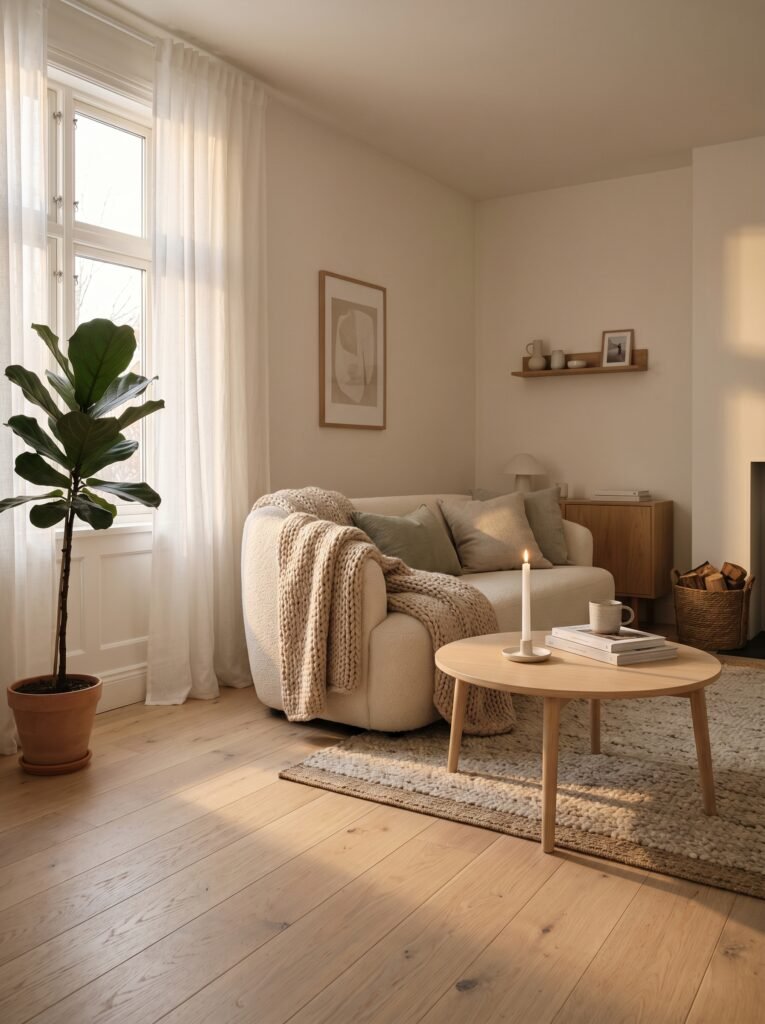
A Scandi living room isn’t a destination you arrive at and then stop. It’s a practice — a daily, quiet conversation between you and your space about what matters, what can go, and what deserves to stay. The room that emerges from that conversation is never identical to the one in the magazine, and that’s exactly the point. It’s yours.
So as you look around your living room today, I want to leave you with one question worth sitting with: if your home reflected only your most settled, most intentional self — what would it look like?