The Sunken Living Room Is Back and Honestly, It Never Should Have Left
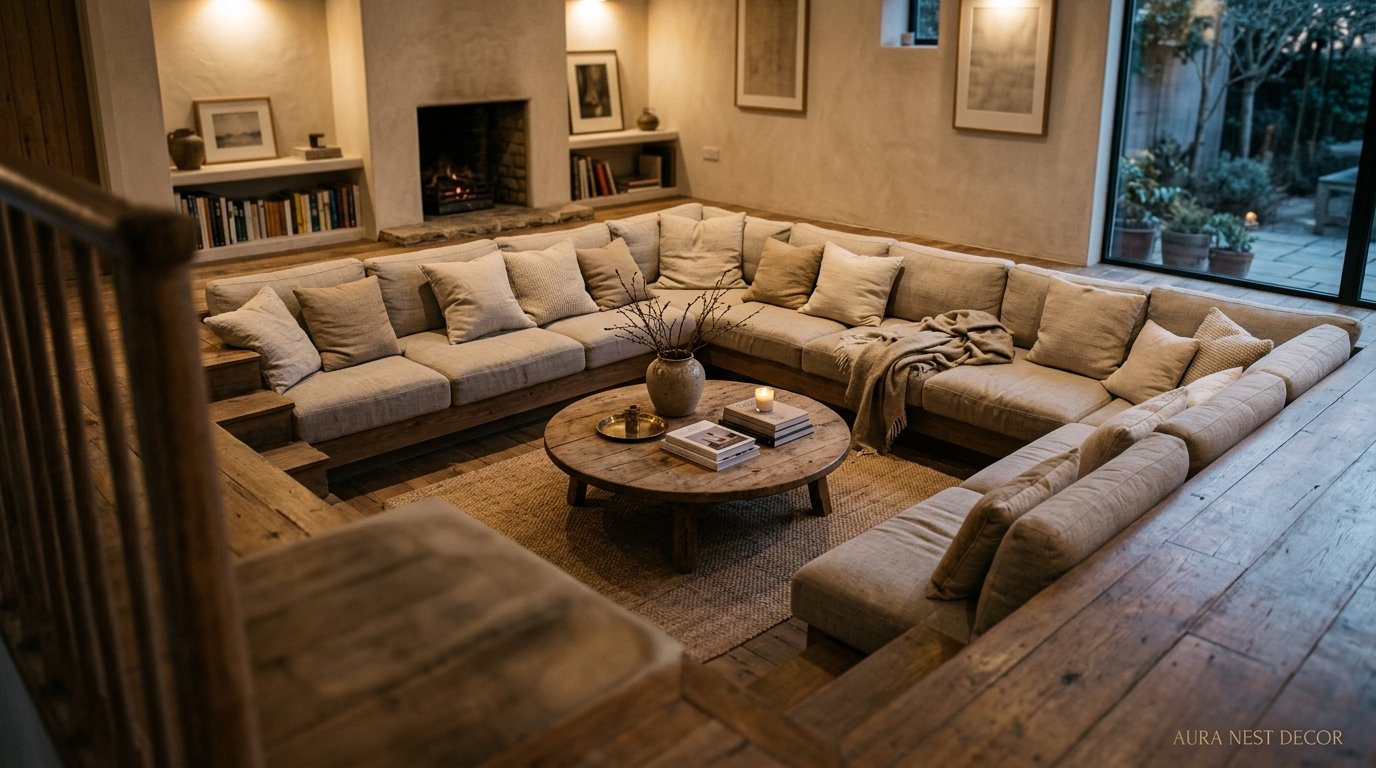
You know that feeling when you step down into a space and your whole body relaxes? Like the room is literally holding you. That’s what a sunken living room does, and it does it without a single throw pillow or scented candle doing the heavy lifting.
—
1. Why Your Brain Feels Calmer the Second You Step Down

There’s actual psychology behind this. When you lower the floor level of a seating area — even by just one or two steps — your brain registers it as a protected space. Enclosed. Intentional. It’s the same instinct that makes window seats and reading nooks feel so good. You’re slightly below the main floor level, slightly tucked away, and something in your nervous system just… exhales.
Designers have a word for this: refuge. As opposed to prospect, which is the urge to look outward and survey. A sunken pit creates refuge without walls, which is genuinely hard to do in an open-plan home. You’re cocooned, but you can still see everything happening around you. It’s a weird little magic trick.
And honestly? I think this is why people feel so nostalgic about the conversation pit aesthetic. It’s not just the 70s vibes or the shag carpet (though I won’t pretend the shag carpet doesn’t help). It’s the way those spaces made you feel like the room was giving you a hug. Modern homes are often so flat and so open that there’s nowhere to psychologically land. A sunken living room solves that without adding a single wall.
“A sunken living room doesn’t just change the floor level — it changes how you feel the moment you step into it.”
2. The 1970s Called, But This Isn’t What They Had in Mind
People hear “sunken living room” and immediately picture harvest gold, avocado green, and a fondue set. Which, fair. The conversation pit peaked somewhere between 1965 and 1982 and it was very of its moment. But that’s not what’s happening now.
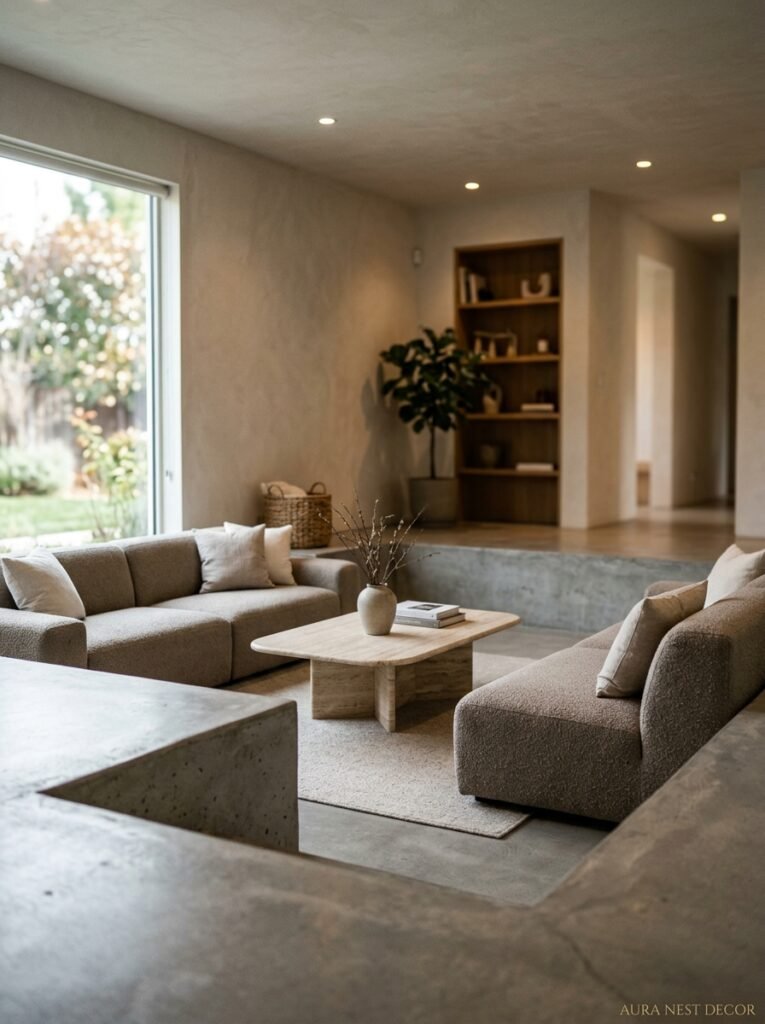
What’s coming back is the concept, stripped of the era. Clean lines, natural stone, linen upholstery in warm off-whites and clay tones. Think more Axel Vervoordt and less Brady Bunch. The proportions tend to be more considered — lower ceilings over the pit area, or a floating pendant light that defines the zone rather than the floor level alone doing all the work.
In the UK especially, I’ve been seeing this in converted Victorian terraces where someone takes the bay window front room and lowers the central seating area by a single step. It doesn’t read as retro at all. It reads as architectural. And in American homes, particularly in that mid-century ranch style where the bones already lend themselves to level changes, a sunken seating area just feels inevitable — like it was always supposed to be there.
The materials make all the difference, honestly. Shag carpet sunken pit = 1973. Travertine step edge + bouclé sofa + low walnut coffee table = right now.
3. The One Structural Question Everyone Asks First (And the Real Answer)
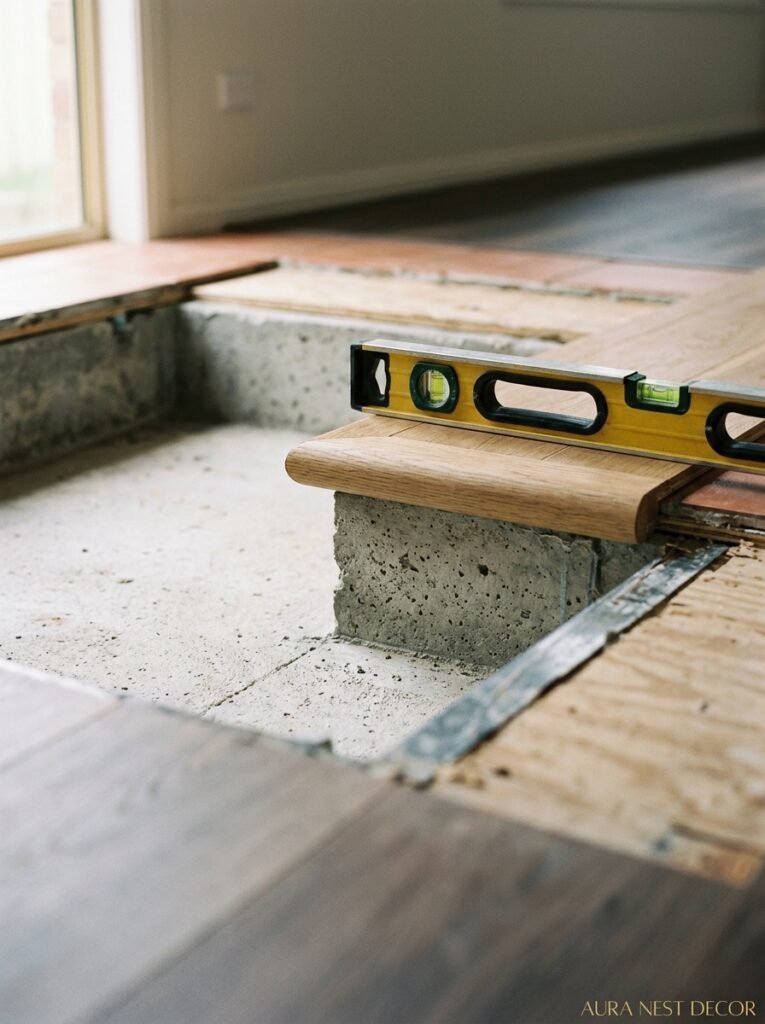
Can you actually DO this? Is it a nightmare renovation?
Short answer: it depends entirely on what kind of floor you’re starting with. If you’re in a home with a suspended timber floor — which is most UK Victorian and Edwardian houses — it’s more complicated but not impossible. You’re essentially lowering the subfloor in a defined zone, which means dealing with joists, possibly adjusting or removing some, and reinforcing around the edges. It’s a structural job. You need an engineer involved, not just a builder who says “yeah, I reckon.”
For American homes with concrete slab foundations, the process is different. You’re cutting into concrete and excavating, which is its own kind of project. But it’s actually very common in mid-century homes in places like Palm Springs, Phoenix, and parts of California where slab construction is standard. Contractors in those areas have done it before.
The cost range is genuinely wide. A single step down in a smallish living room could run anywhere from $8,000 to $20,000+ depending on your floor type, the size of the pit, and what you’re finishing it with. Add stone surround or custom millwork and you’re heading higher. But here’s the thing — this is a permanent architectural feature. It doesn’t go out of style the way a kitchen backsplash does. You do it once, it’s there forever.
4. The Small Room Version Nobody Talks About
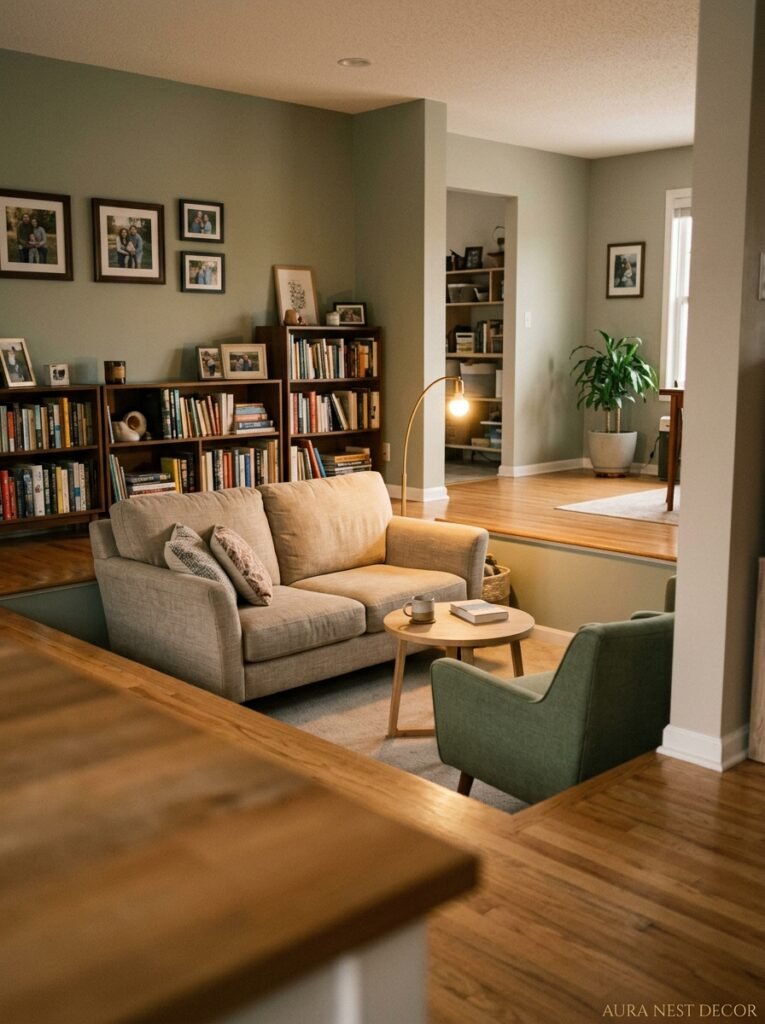
Here’s where it gets interesting and also where most design content drops the ball completely. Everyone assumes sunken living rooms are for big, sprawling spaces. Open-plan new builds. American McMansions with double-height ceilings. But a SMALL sunken area? In a modest room? That can actually be the smarter move.
When you lower even a small seating area — say, a 10×10 foot zone in an otherwise normal-sized room — you create the visual impression that the whole space is larger than it is. The level change draws the eye. The ceiling suddenly reads taller. And because the furniture is tucked down, it stops competing with the rest of the room. Everything feels more deliberate.
In the UK, I’ve seen this work brilliantly in Victorian terraces with those slightly awkward proportions — the long, thin front rooms that don’t quite know what they want to be. Drop the seating area at the far end by one step, add a curved low sofa that wraps the space, and suddenly you’ve got a room that has a clear reason to exist. The conversation pit becomes the focal point. Not the fireplace, not the TV. The place itself.
“You don’t need a cathedral ceiling for a sunken living room to work. You just need the courage to commit to one step.”
5. What Happens When You Put the TV Down There (Controversial Opinion)
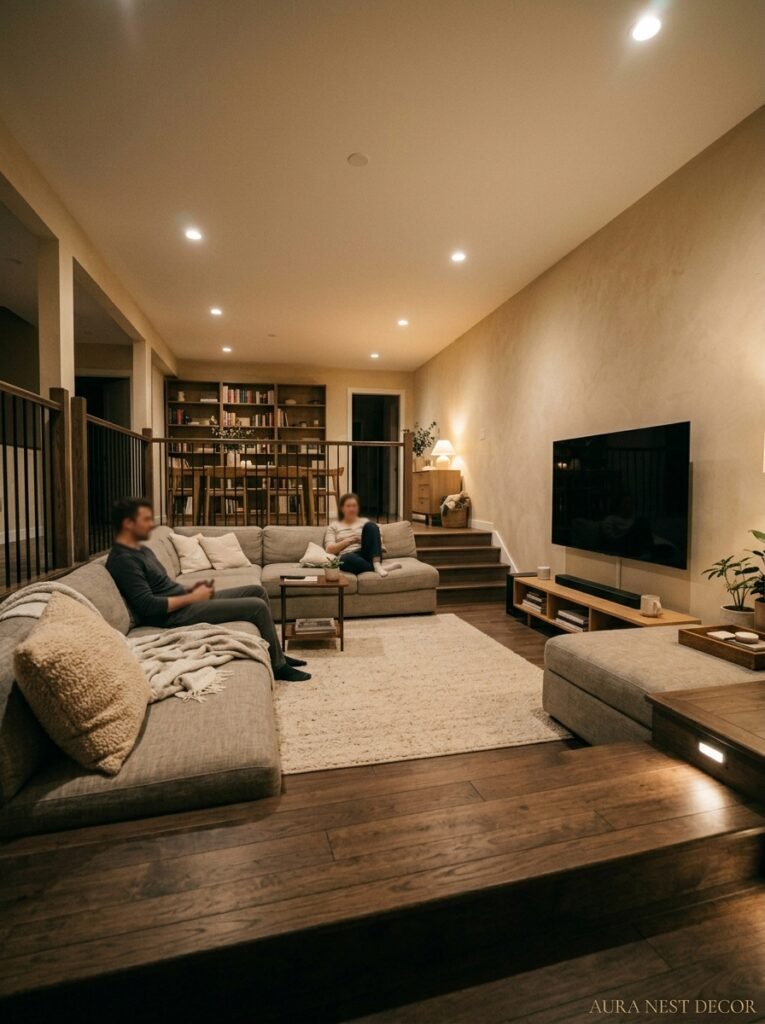
Don’t do it. Or, actually — wait. Let me think about this.
The traditional instinct is to lower the seating area and put the TV across from it, up at the regular floor level or wall-mounted above. Which works fine. But there’s a growing camp of designers — and homeowners who’ve actually lived with these spaces — who argue that the sunken pit should be a screen-free zone. A place for conversation, reading, just being together.
And honestly? That opinion makes a lot of sense to me. The thing that makes a sunken seating area feel special is that it doesn’t perform a function the way a sofa in front of a TV does. It just IS. It’s a room that exists for the sake of being in a room together. That’s increasingly rare.
That said, if you’re not precious about it and you want to watch films from a deeply comfortable pit with everyone half-buried in cushions? Put the TV wherever makes sense. Low and centered on the step-down level can work surprisingly well for that cinema feel, especially if you add indirect lighting along the step edges. Life’s too short to make your living room feel like a design museum.
But the pit-as-social-hub, no-screens version? I genuinely think it’s one of the best interior design ideas that almost nobody is building.
6. The Step Edge Is Actually the Most Important Design Decision You’ll Make
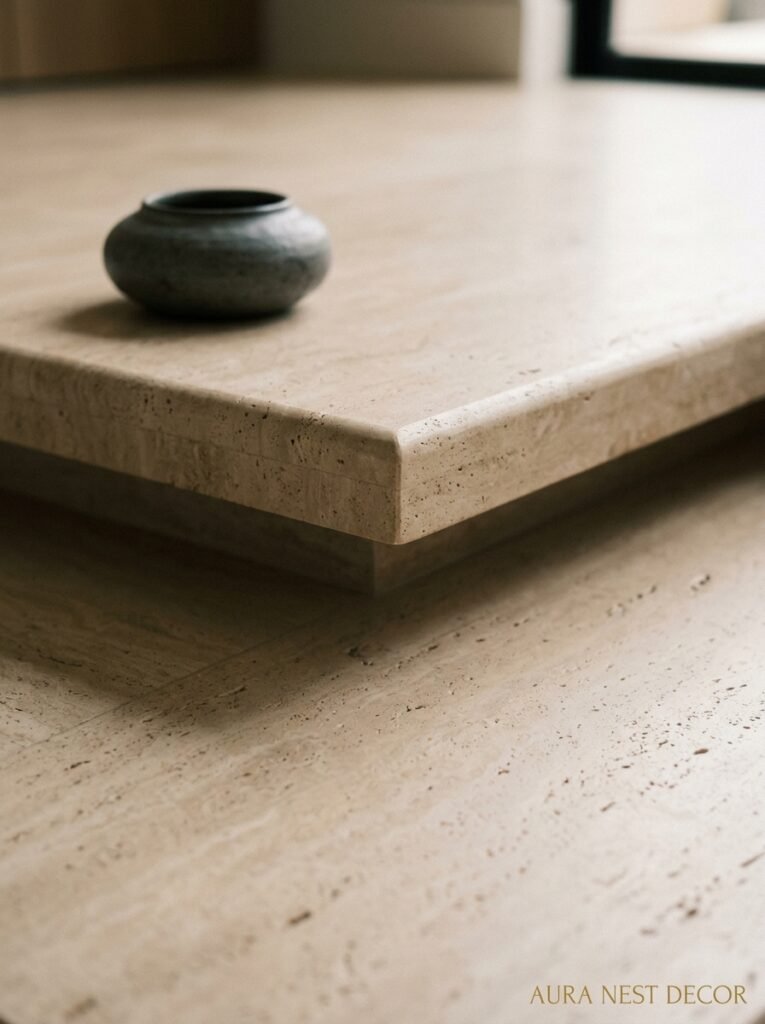
Nobody talks about this. Everyone obsesses over the sofa, the rug, the coffee table — but the step edge is where the whole thing either looks incredible or looks like a health-and-safety warning waiting to happen.
Your options break down roughly like this: a flush stone or tile edge (sleek, modern, slightly cold), a hardwood edge that matches or contrasts your floor (warm, obvious, classic), a rounded concrete lip (very architectural, slightly industrial, ages beautifully), or an upholstered edge (soft, a bit unexpected, genuinely cozy and more practical than it sounds). In a family home with kids? Upholstered step edges are not just aesthetically interesting — they’re actually sensible.
The step height matters too. Standard stair height is around 7 inches in the US. But for a sunken living room, you want that step to feel like a gentle descent, not a stair. Somewhere between 6 and 8 inches is typical, but some designers go as low as 4 or 5 — just enough of a drop to register as intentional without feeling like you need to watch your step every time.
And please. I’m begging. Light the edges. Low-profile LED strip lighting under the step lip makes the whole thing feel considered and — crucially — means nobody’s going to take a tumble when they’re walking through at night. Form AND function. Rare that they align this perfectly.
7. Rugs in a Sunken Living Room: The Sizing Problem Has an Easy Fix
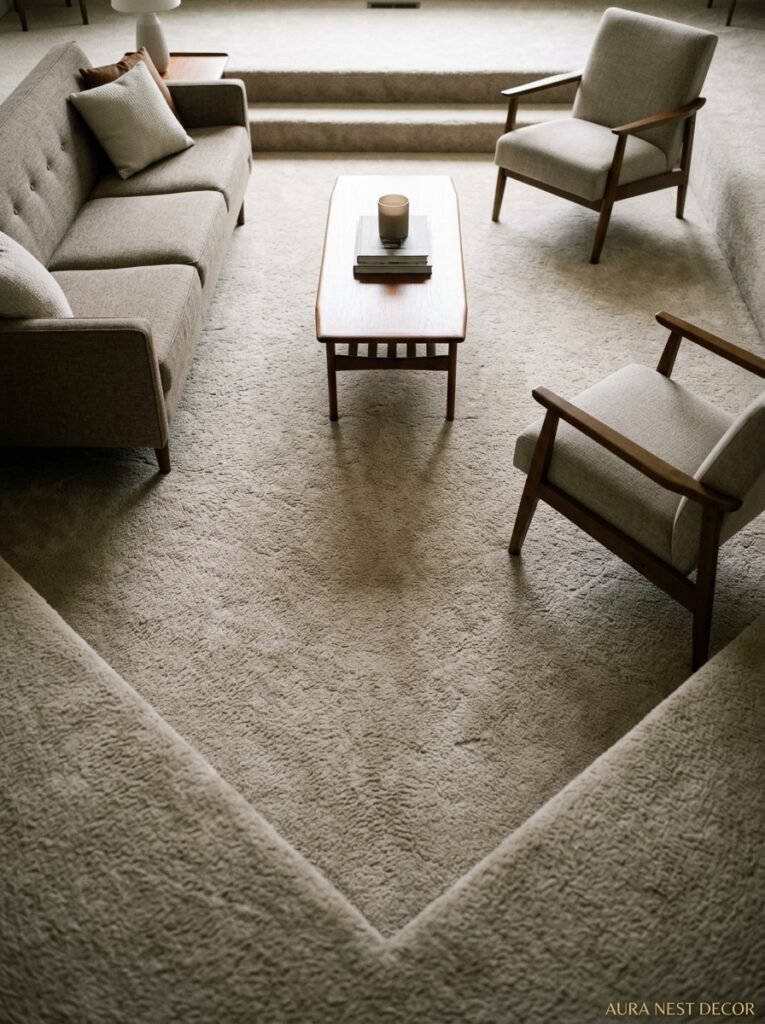
You’d think rugs would be simple. They’re never simple. But in a sunken living room, there’s actually a very clean rule: the rug should fill the pit.
Not slightly smaller than the pit. Not overhanging the edges. Exactly the pit. Or close enough that from above it reads as intentional. When the rug fits the sunken zone precisely, the whole seating area becomes a defined room-within-a-room. It feels complete. When the rug is slightly off — too small, too large, awkwardly placed — the whole architectural gesture starts to look accidental.
Custom sizing is worth it here if you’re going to go through with this renovation. A bespoke rug sized to your exact pit dimensions isn’t as expensive as it sounds, especially from UK independent rug makers or US companies that do custom natural fiber rugs. And a deeply textured, plush rug — something chunky and substantial — works much better in a sunken area than a flat weave. The texture reads well from above and it adds to that sensory quality of stepping down into something softer.
“The rug shouldn’t decorate the pit. It should complete it.”
8. The Lighting Formula That Makes Sunken Living Rooms Look Like Editorial Photos
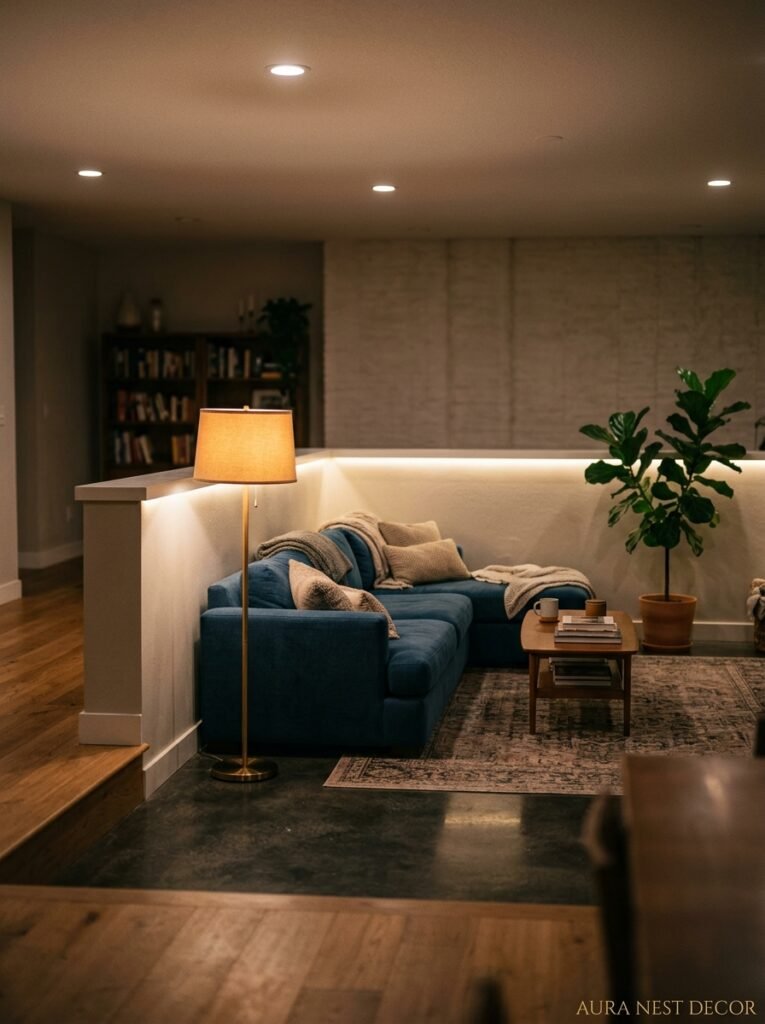
Overhead lighting kills it. I say this with love but also firmness. A ceiling light directly over a sunken seating area flattens the whole thing and removes all the architectural drama you just spent money creating.
Instead, you want three layers, all working slightly below or to the side of where you’d normally think to put them. First: the step edge lighting mentioned earlier — that low amber wash along the floor level that defines the descent. Second: a pendant or a cluster of pendants hung LOW over the seating area, almost uncomfortably low by regular standards. Low enough that the light pools specifically within the pit. Third: candles, table lamps, or floor lamps AT the pit level, tucked into corners or on low surfaces. Light that exists at the same altitude as you when you’re seated down there.
The effect of all three together — especially at night — is genuinely extraordinary. The pit glows. It looks like a stage set but in the best way. The amber light from a low-hung pendant at around 7pm on a winter evening in that space is one of the best things a living room can offer.
9. How British Homes Handle It Differently Than American Ones (And What Each Can Learn From the Other)
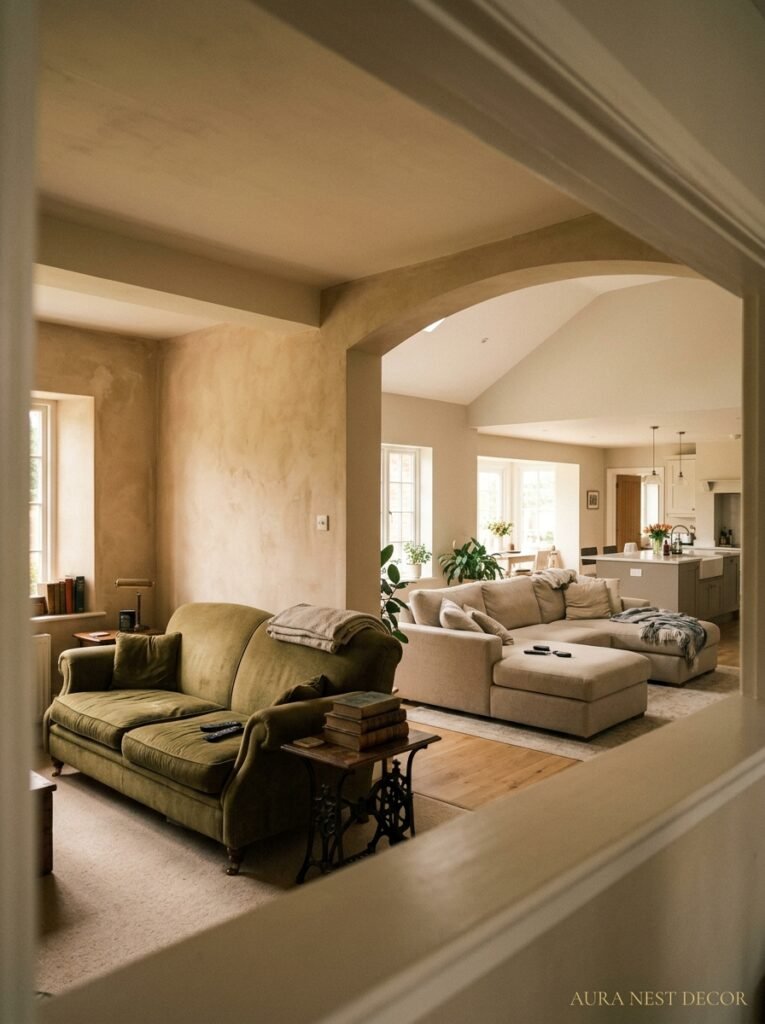
American sunken living rooms tend to go bigger. The pit is often the center of a large open-plan space, surrounded by a floating kitchen and dining zone, with the level change doing the work of separating living from everything else. It suits the scale. And the materials Americans often reach for — warm concrete, wide-plank oak, natural stone — suit that spatial generosity.
In the UK, the approach tends to be more restrained, partly because the rooms are. There’s less square footage to play with, so the sunken area is smaller, more intimate, sometimes just large enough for four people to sit comfortably. What UK designers tend to do better — and honestly, American designers could steal this — is the use of built-in seating around the pit perimeter. Upholstered benches that are structurally part of the step itself, with storage underneath. Clever, space-saving, and it removes the need to buy oversized furniture that might not fit anyway.
What American homes do better? Connecting the sunken area to the outdoors. Dropping a living room slightly below grade in a ranch-style home and then having glass doors that open to a patio at that lower level creates an incredible indoor-outdoor flow that most UK homes can’t pull off in the same way. Different climates, different architectures, different results — but both worth knowing about.
10. The Furniture That Actually Works Down There (And What to Avoid)
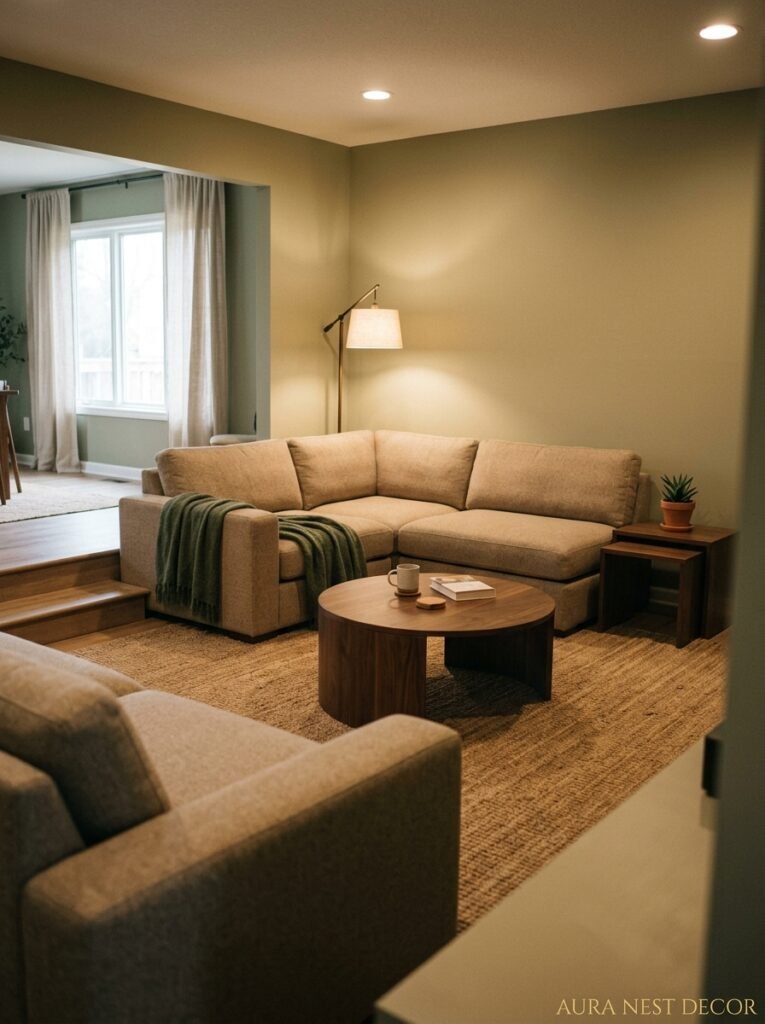
Low and modular. That’s the shortlist.
A sunken living room with tall furniture looks wrong — the pieces visually crawl back up to regular floor level and the whole point is lost. You want sofas and chairs that sit low to the ground, with generous seating depth and cushions thick enough that you’re genuinely sinking in. The classic curved sectional or a built-in L-shaped bench with removable cushions are the most common solutions, and they’re popular for a reason. They hug the space.
What to avoid: legs. Furniture with long, visible legs in a sunken seating area looks inexplicably awkward. Something about the step down emphasizes the gap underneath furniture in a way that reads as unfinished. Go for platform bases, built-in seating, or sofas where the base sits flush to the floor. And avoid anything too precious or too formal. A sunken living room is meant to be lived in. Laid in. Sprawled across at 11pm with a glass of something while rain hits the windows. Save the upright armchairs and the delicate side tables for the rest of the house.
11. The Child and Dog Question (Because Real Life Exists)
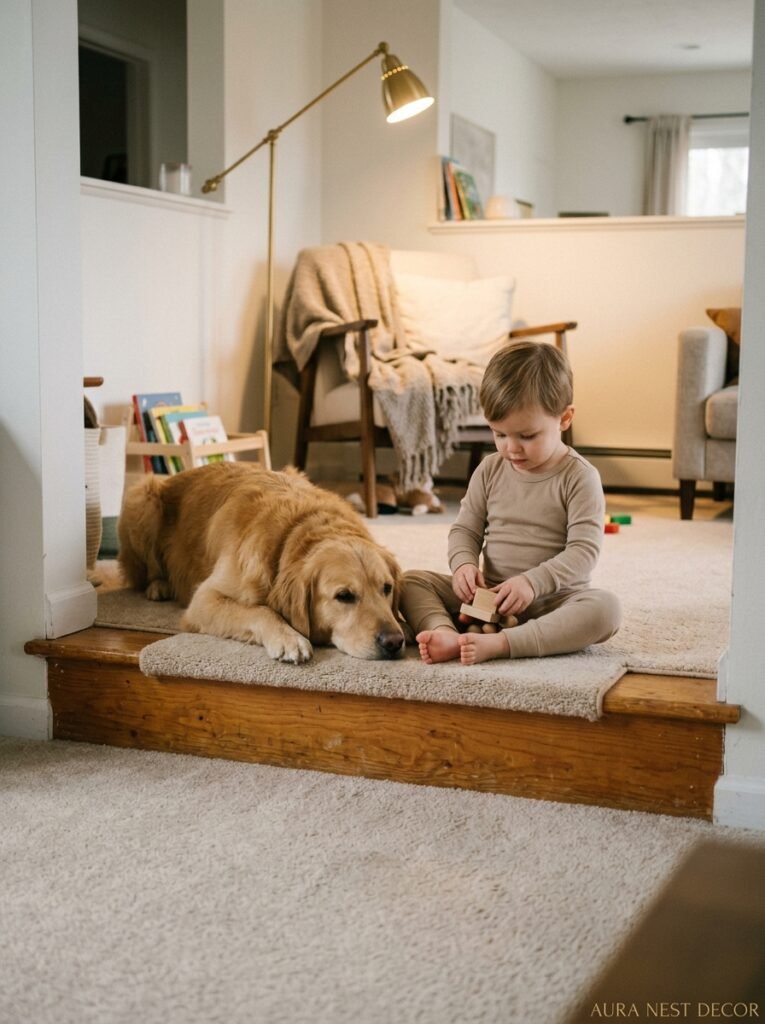
Yes, you can have a sunken living room with children. And yes, with dogs. Both will immediately treat it as their personal domain, which is either a nightmare or the best possible outcome depending on your perspective.
Kids and step edges are the obvious concern. Low LED-lit step edges help enormously with visibility. Rounded or upholstered edges remove the sharp corner risk. Some families go the extra step (no pun intended) of putting a subtle contrast in the flooring material right at the edge — a different tile, a brass strip inlay, a change in texture — that visually signals “step here.” Kids actually adapt quickly. It becomes part of the house’s logic.
Dogs, meanwhile, think a sunken living room was built specifically for them. And sort of, it was? A deep cushioned pit with slightly enclosed sides reads as a nest to any dog with half a brain. So if you’re already resigned to sharing your sofa with a large animal, a sunken living room will make you both very happy.
The trickier question is accessibility. If you have older family members visiting regularly, or anyone with mobility issues, a sunken living room requires real thought. Handrails can be designed in subtly — a low flush rail along the step that reads more as architectural detail than grab bar. It’s worth thinking about from the start rather than retrofitting later.
12. The One Thing That Makes or Breaks the Whole Project
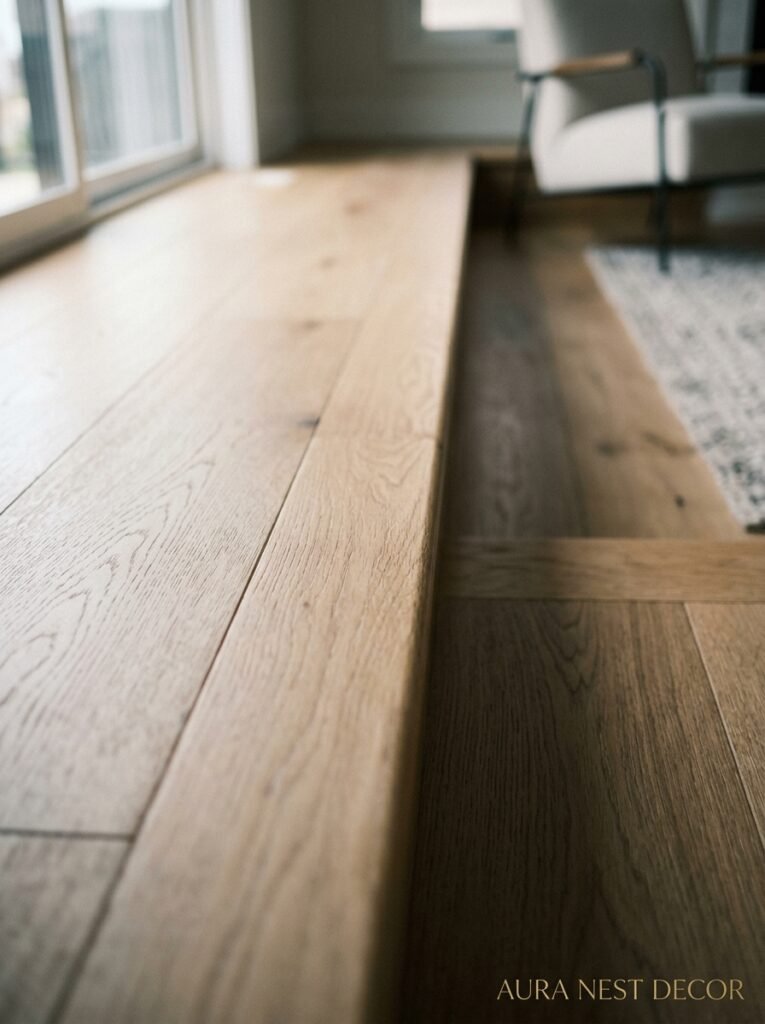
Commitment. That’s it. That’s the whole secret.
A sunken living room done halfway — the step is there but nothing else changed, the furniture’s too tall, the lighting’s wrong, the rug’s the wrong size — looks like a renovation mistake. It looks like someone miscalculated the floor level. The architectural intervention only reads as intentional when everything in the space responds to it.
This isn’t a feature you can casually add and then style around like a new sofa. When you lower the floor, the room is reorganized around that decision. The lighting responds to it. The furniture responds to it. The rug, the step edge, the way the room connects to the rest of the house — all of it has to be considered together. That’s not a reason not to do it. It’s a reason to plan it properly from the beginning and let it be the main event.
Because when it works? It WORKS. There’s no living room feature I can think of that creates more atmosphere, more genuine comfort, more “I never want to leave this room” energy than a well-designed sunken seating area. Not a fireplace. Not a bay window. Not a perfectly styled bookshelf. The pit wins, every time.
—
❓ FAQ
Q: How much does it cost to build a sunken living room? A: Costs vary a lot based on your floor type and finish choices, but a realistic range for a modest sunken seating area in an existing home is $8,000–$25,000 in the US, or £7,000–£20,000 in the UK. Concrete slab homes are generally less expensive to excavate than suspended timber floors, and custom stone or built-in seating will push costs higher.
Q: Is a sunken living room a good idea for resale value? A: Honestly, it depends on the execution. A poorly done pit can put buyers off — it reads as a structural oddity. But a well-designed, properly finished sunken seating area in the right kind of home tends to be a selling point, particularly in mid-century or architecturally interesting properties. Get it done properly and it adds character that’s genuinely hard to replicate.
Q: Can you add a sunken living room to a house with underfloor heating? A: Yes, but it needs planning from the start. Underfloor heating systems can be incorporated into the lowered floor of a pit during construction — it’s actually a lovely combination, since you’re already in a lower, more enclosed space where warmth naturally pools. Retrofitting underfloor heating into an existing pit is trickier, so if this matters to you, design both together.
—
💭 Final Thoughts

There’s something quietly radical about a room that asks you to step down before you sit down. It slows you. It makes the act of settling in feel intentional rather than incidental. In homes that are increasingly designed around speed and practicality and open-plan everything, a sunken living room is almost a form of protest — a space that exists purely to make you stay.
Is it for every home? No. Is it a serious renovation that deserves serious planning? Absolutely. But if you’ve got the bones for it and you’ve been thinking about it for longer than you’d like to admit — what’s actually stopping you?