The Persian Rug That Makes Everything Else in the Room Look More Expensive
You walk into a room and something just works. The furniture’s nice, sure, but your eyes go straight to the floor. That’s the Persian rug doing exactly what it’s been doing for about 2,500 years — making everyone stop and look.
—
1. Why Your Living Room Has Felt “Off” and a Persian Rug Is Probably Why
I’m not gonna lie, I resisted Persian rugs for years. Too busy, I thought. Too old-fashioned. I was wrong, and I’m still a little embarrassed about it.
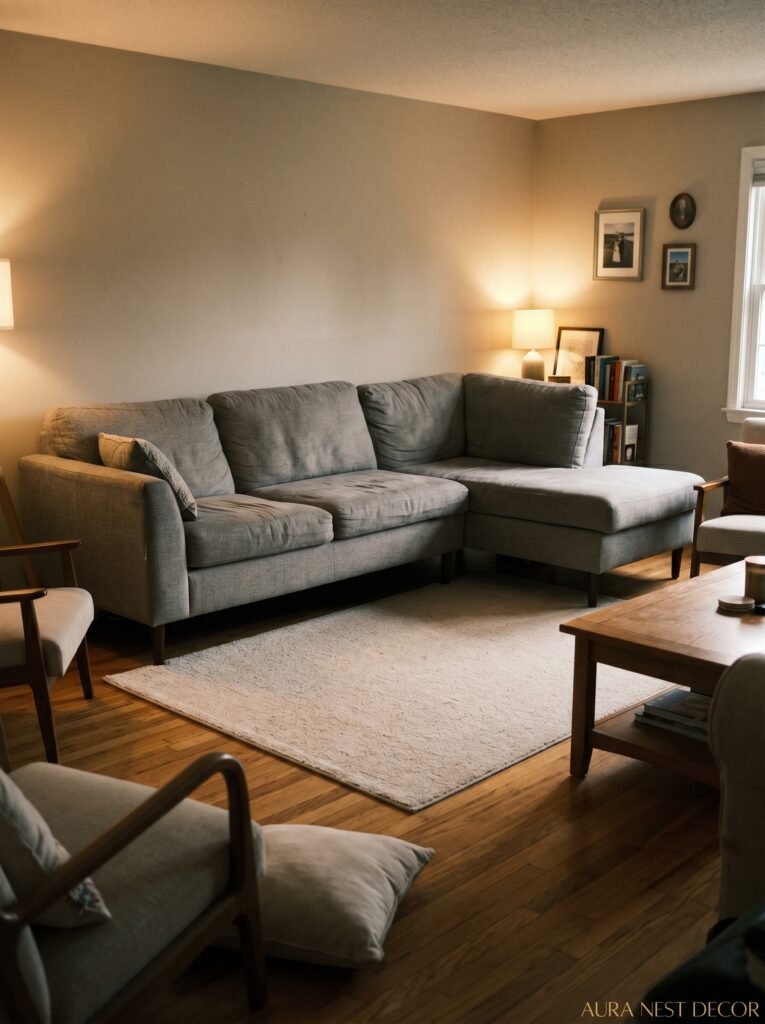
Here’s what nobody tells you when you’re endlessly scrolling through minimalist beige interiors on Pinterest: a room without visual weight on the floor feels like a stage set. It looks designed but not lived in. Persian rugs carry centuries of pattern and color intelligence — not in a pretentious way, just in a “someone figured this out a long time ago and it works” kind of way.
The geometry in a traditional Persian rug, that central medallion surrounded by borders and field patterns, is doing something really specific. It anchors the furniture. It draws the eye inward. It gives the room a CENTER, which is surprisingly hard to achieve with modern furniture alone. I’ve seen perfectly styled rooms that felt weirdly restless, and the fix every single time was something on the floor pulling it all together.
And the color thing? A Persian rug doesn’t clash with your room. Or at least a good one doesn’t. The palette is almost always muted enough from age — or made to look aged — that it sits underneath everything else like a really great foundation layer. Sort of like how the right base coat changes how every lipstick looks. Anyway.
“A Persian rug doesn’t compete with your room. It completes it.”
2. The Size Mistake That Makes Even Nice Rugs Look Wrong
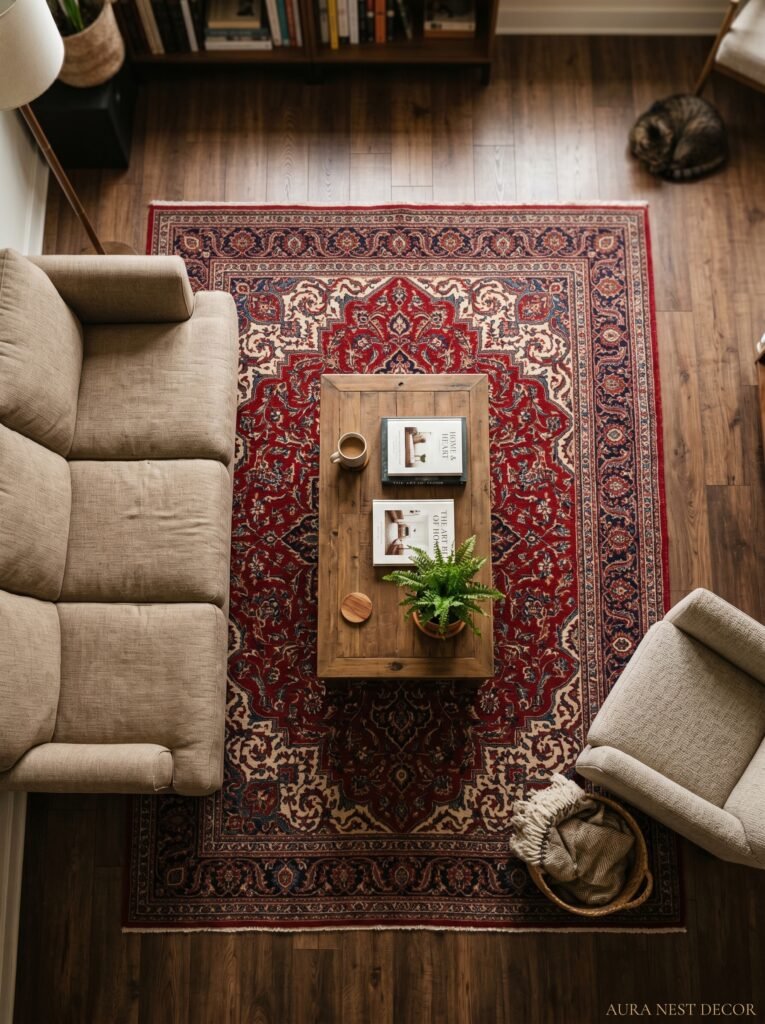
Too small. Almost everyone goes too small.
I understand the impulse — rugs are expensive, smaller ones cost less, and a 5×8 looks fine in the shop or in the product photo online. But in an actual living room with actual furniture? It floats there like an island nobody asked for. Furniture legs dangle off the edges, the whole thing looks like an afterthought.
The rule that actually works: your rug should be large enough that at least the front legs of every major piece of seating sits ON it. All legs on, if possible. In a standard American living room — let’s say a 12×15 foot space — you’re usually looking at a 9×12 rug minimum. In a British terraced house with a smaller sitting room, an 8×10 can absolutely work, but only if you’re intentional about the furniture arrangement around it.
Here’s the thing about Persian rugs specifically: they tend to come in traditional proportions, so the sizing decisions have almost been made for you by convention. A 9×12 Persian rug has a border and field ratio that’s been refined over generations. It KNOWS what it’s supposed to look like in a room. Trust it. Buy bigger than you think you need, I promise you won’t regret it.
3. The Color That Keeps Showing Up in Every Beautiful Persian Rug Living Room Right Now

It’s not red. Well, not JUST red.
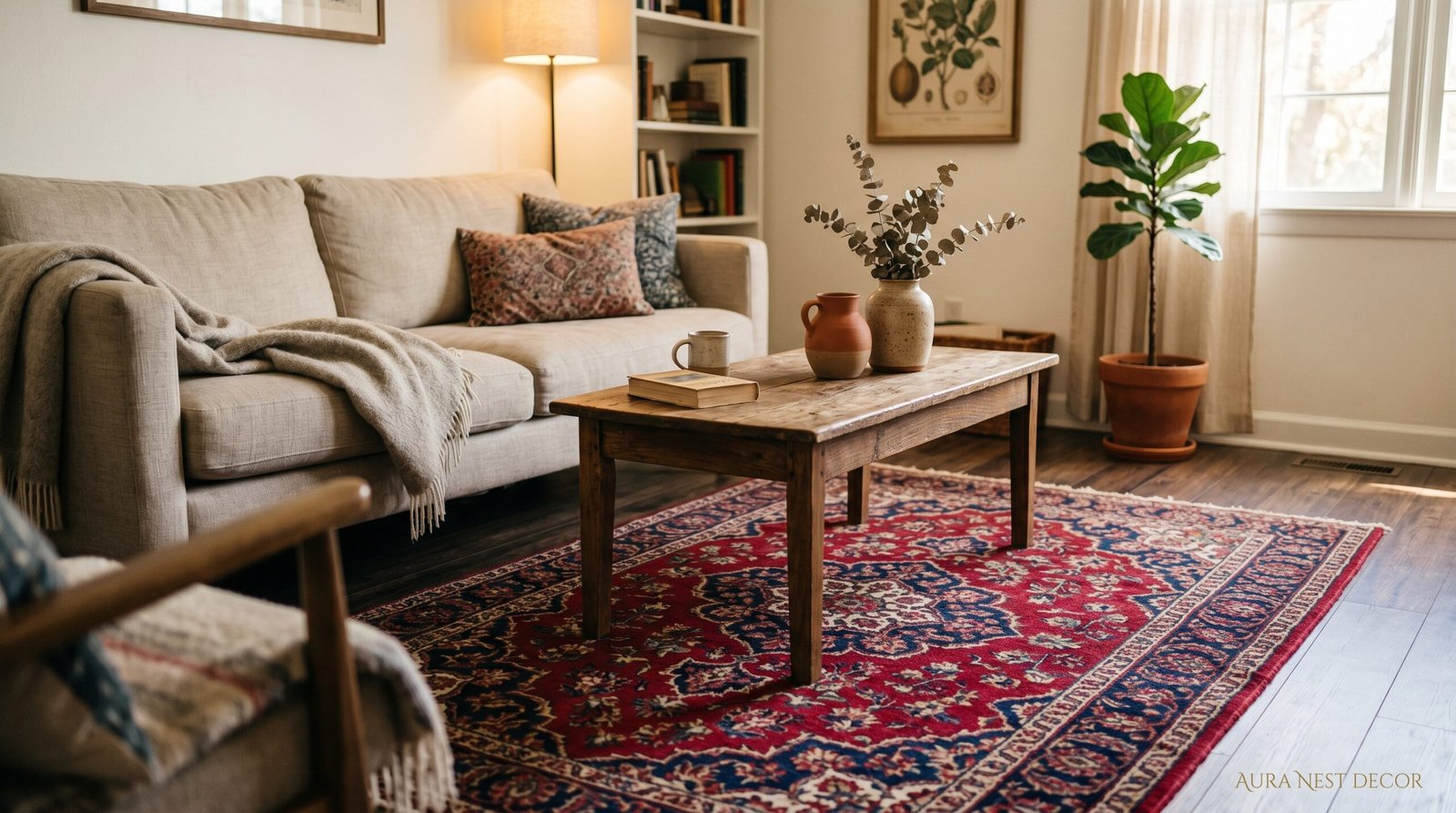
The color combination that’s everywhere right now — and that actually photographs beautifully for Pinterest, which matters, let’s be real — is aged terracotta and navy. Not bright red and cobalt, but the dusty, faded version of both. The kind of Persian rug that looks like it’s been in someone’s family for forty years, even if you just bought it last Tuesday from an online dealer in Atlanta.
This particular palette does something almost miraculous with modern neutral interiors. Against a white or cream wall? The colors pop without screaming. Against linen furniture? They ground it. Next to natural wood tones? Suddenly everything looks like a spread in Architectural Digest, or at least a very good Pinterest board.
The rugs I keep seeing pull in that specific terracotta-and-navy combination are usually Tabriz, Heriz, or Bidjar styles. Bidjar rugs especially have this incredibly dense weave that makes the colors look almost three-dimensional — they’re sometimes called “iron rugs” because they’re so tightly knotted. Side note: that density also means they’re wildly durable, which is great for a living room with actual human beings using it.
4. How to Style a Persian Rug With Modern Furniture (Without It Looking Like a History Museum)
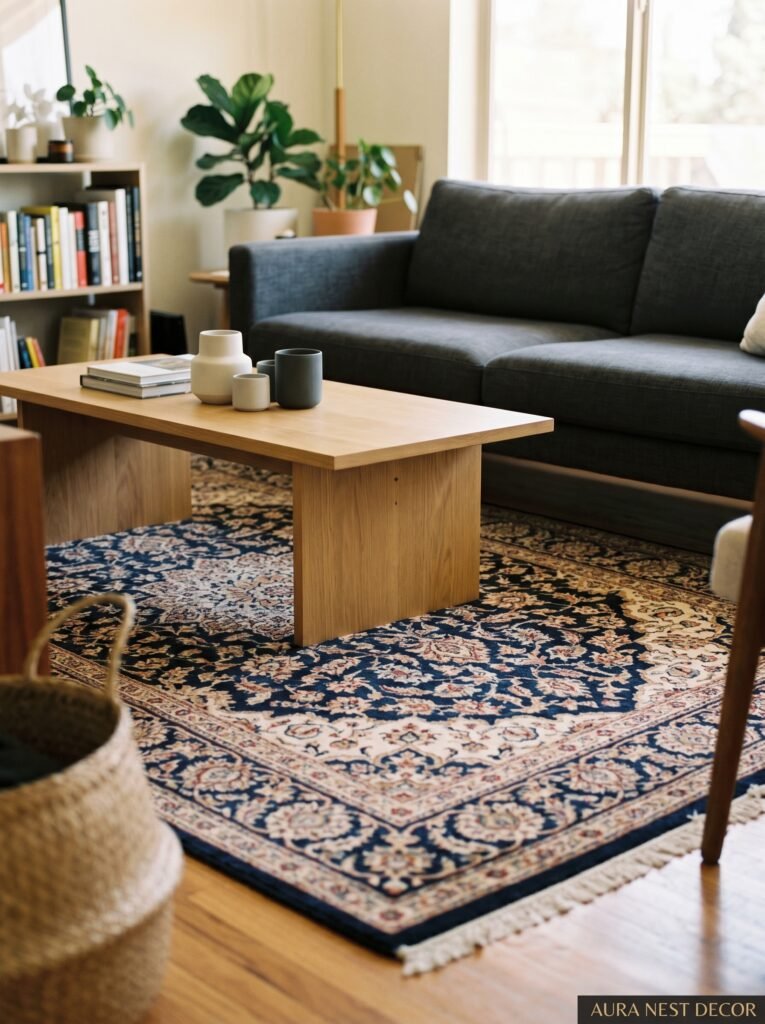
The key is contrast, and I feel like this doesn’t get said enough.
A Persian rug looks its BEST when it’s surrounded by clean, simple, modern furniture. Not more traditional furniture — modern. A low-profile sofa in a solid color, maybe linen or boucle, lets the rug breathe. Mid-century legs on a coffee table? Perfect, because you can see the rug underneath. Heavy, ornate Victorian furniture on top of a Persian rug is just… too much. Everything starts competing and nothing wins.
This is actually a decorating principle that works across the board but shows up most clearly with Persian rugs. The more detailed the rug, the simpler the surrounding furniture should be. Think of it like this: the rug is the statement. Everything else is supporting cast.
Concrete example of what works — a terracotta and navy Heriz rug under a low, pale grey sofa with tapered wooden legs, a simple rectangular oak coffee table, white walls, one or two plants. Done. That room looks finished. Add a chunky patterned throw on the sofa and a couple of mismatched cushions and you’ve basically cracked the code for a room that feels both curated and comfortable.
“The more detailed the rug, the simpler everything else needs to be. Let it talk.”
5. The Honest Truth About Buying a Persian Rug on a Budget
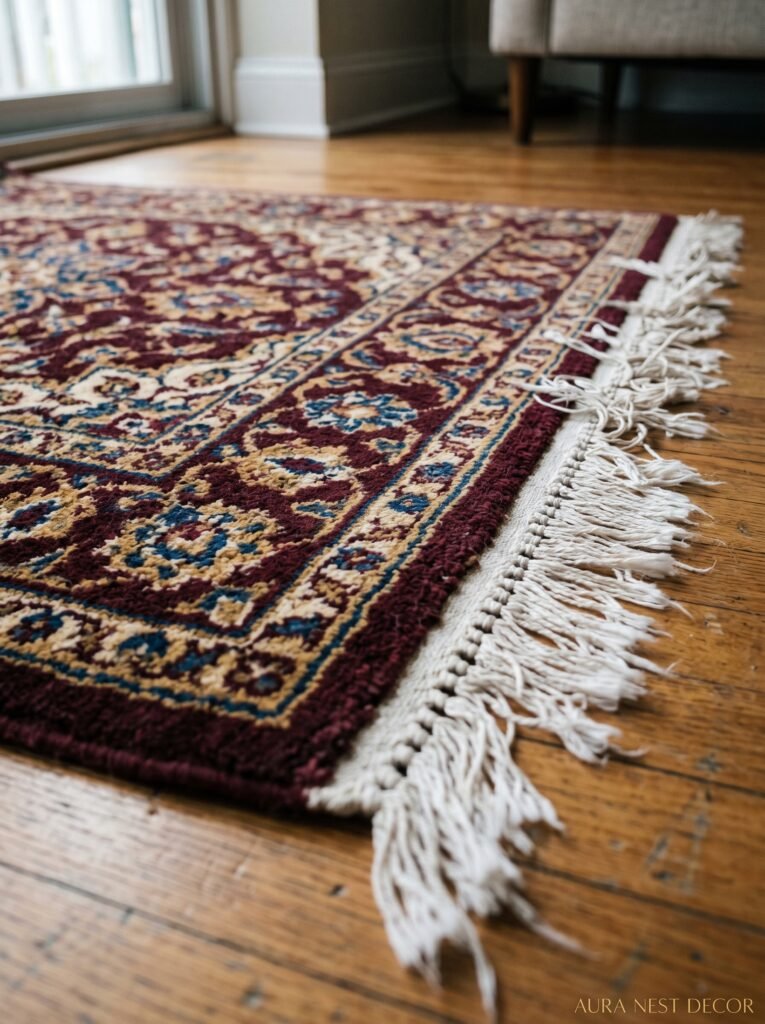
Real hand-knotted Persian rugs from Iran are expensive. Like, genuinely expensive. A quality 9×12 antique Persian rug can run anywhere from a couple thousand dollars to tens of thousands. That’s just reality.
BUT — and this is a big but — there are options that honestly look incredible and won’t make you cry when your dog skids across them.
Machine-made Persian-STYLE rugs have gotten remarkably good. Not the same, not hand-knotted, not collector’s items, but visually? In a normal living room at normal viewing distance? Really, genuinely beautiful. Brands like Safavieh, Loloi, and Rugs USA all make Persian-pattern rugs that photograph well and hold up decently under foot traffic. For a British buyer, Wayfair UK and Dunelm both stock options that punch above their price point.
If budget allows and you want the real thing, vintage Persian rugs are often more affordable than new hand-knotted pieces and have that authentic aged quality that no machine can fully replicate. eBay, Etsy, and local estate sales are worth checking — I’ve seen people find genuinely good pieces for a few hundred pounds at house clearances in the UK. Craigslist and Facebook Marketplace in the US too. Takes patience but it’s so worth it when you find one.
6. The One Rug Pad Rule Everyone Skips and Regrets
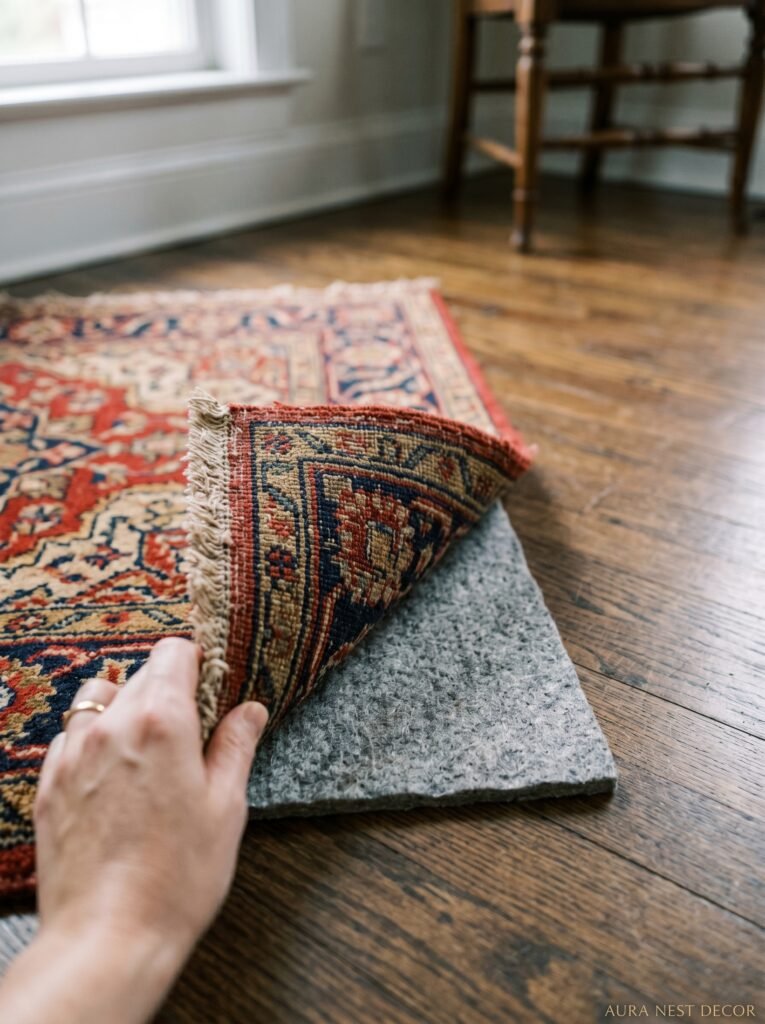
Get the rug pad. PLEASE.
I know it feels like an unnecessary expense on top of an already expensive purchase. It’s not. A good rug pad — and by good I mean a quality felt-and-rubber combination, not just a thin rubber mat — does three things that will save you from real annoyance. It stops the rug from shifting and bunching, which happens constantly without one on hardwood or tile. It protects both your floor AND the back of the rug from friction damage. And it adds a tiny bit of cushion that makes the whole floor feel more luxurious underfoot.
The cheap thin rubber pads? They work okay for about six months and then they start to break down and leave actual marks on hardwood floors. This is a known thing that lots of people find out the hard way. A quality felt-and-rubber pad costs more upfront but doesn’t do that.
Size-wise, cut your rug pad about an inch smaller on all sides than the rug itself. That way it stays hidden but the rug doesn’t curl at the edges. Tiny thing, but it matters for how finished the room looks.
7. What Room Colors Actually Work With a Traditional Persian Rug
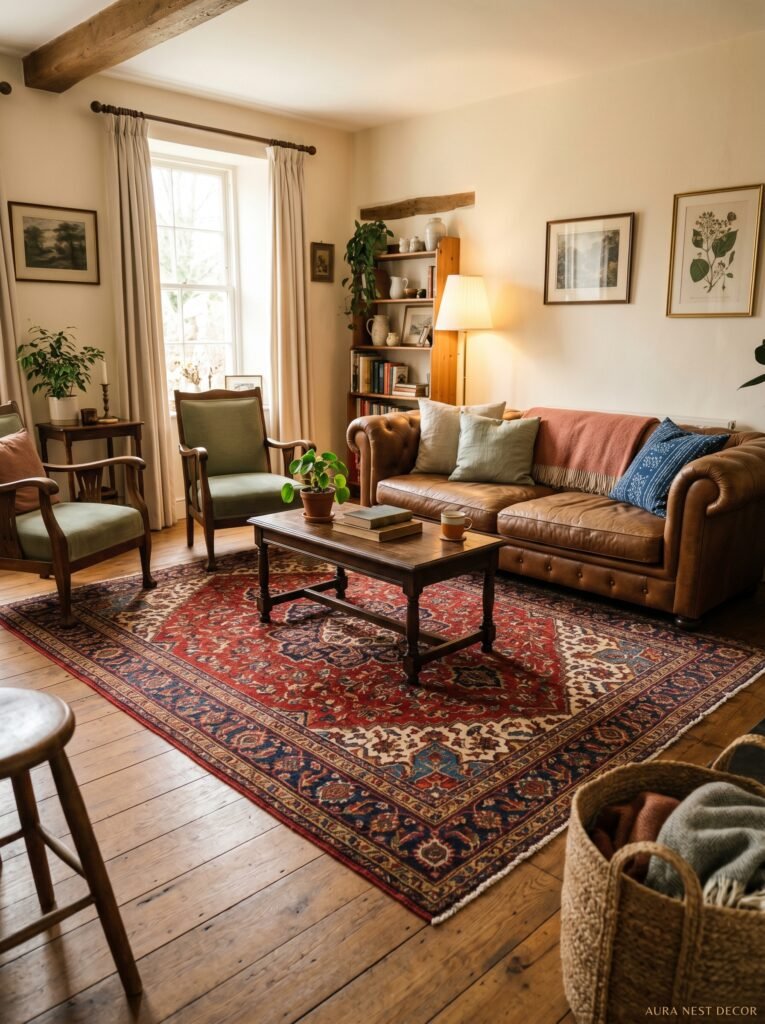
The short answer: almost everything, honestly.
The longer answer: there are some combos that are actively stunning vs. just fine.
White walls with a Persian rug is the obvious choice and it works incredibly well — the rug becomes the color in the room and everything feels purposeful. But off-white or cream is even better if you can manage it. Pure brilliant white can make the colors in a rug look a bit harsh, whereas a warm white or linen-tone wall softens everything and the room feels cozier.
Deep wall colors are having a major moment right now, and Persian rugs look INCREDIBLE against them. Forest green, particularly Farrow & Ball’s “Mizzle” or Sherwin-Williams “Rosemary,” does something almost magical with a red-toned Persian. The green pulls out the small amounts of green you often don’t even notice in the rug’s border. Navy or dark teal walls work the same way with the gold and ivory tones in many Persian patterns.
The one combo I’d be careful with: warm terracotta or orange walls with a red-heavy Persian rug. It can work but it’s easy to tip into overwhelming — the whole room goes orange-red and loses definition. Better to go with a rug that leans blue or has significant ivory in the field if you love those warm wall tones.
“Deep green walls and a red Persian rug is the combination your Pinterest board has been missing without knowing it.”
8. The Specific Persian Rug Styles Worth Knowing Before You Shop
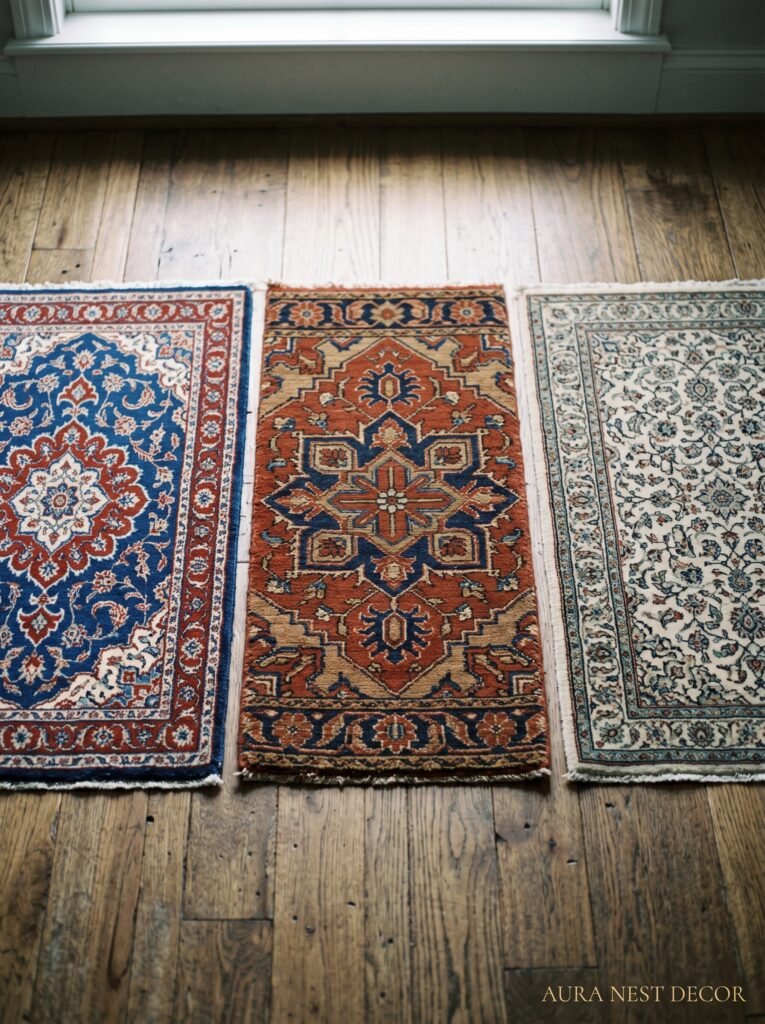
You don’t need to become an expert. But knowing a few names will save you from buying something that doesn’t actually do what you want.
Heriz rugs come from northwestern Iran and they’ve got this slightly geometric, almost graphic quality compared to more fluid Persian styles. Big medallion, bold borders, rectilinear patterns. They’re dense and durable and look great in a lived-in family room — they’re not precious, and that’s the appeal.
Kashan rugs are more formal. Intricate, curvilinear, often with incredibly detailed central medallions and elaborate borders. They look stunning in a more formal sitting room or a space where you want things to feel elegant. Not the right call for a room with three kids and a Labrador.
Isfahan rugs are similar to Kashan but often have a slightly warmer, more golden tone to the palette. Beautiful. They photograph incredibly well.
Tribal rugs — Gabbeh, Qashqai — are looser, more abstract, with a handmade quality that’s more casual. These actually mix brilliantly with modern or bohemian interiors because they’ve got that same slightly raw energy.
9. How to Layer a Persian Rug With Other Textiles and Not Make It Look Chaotic
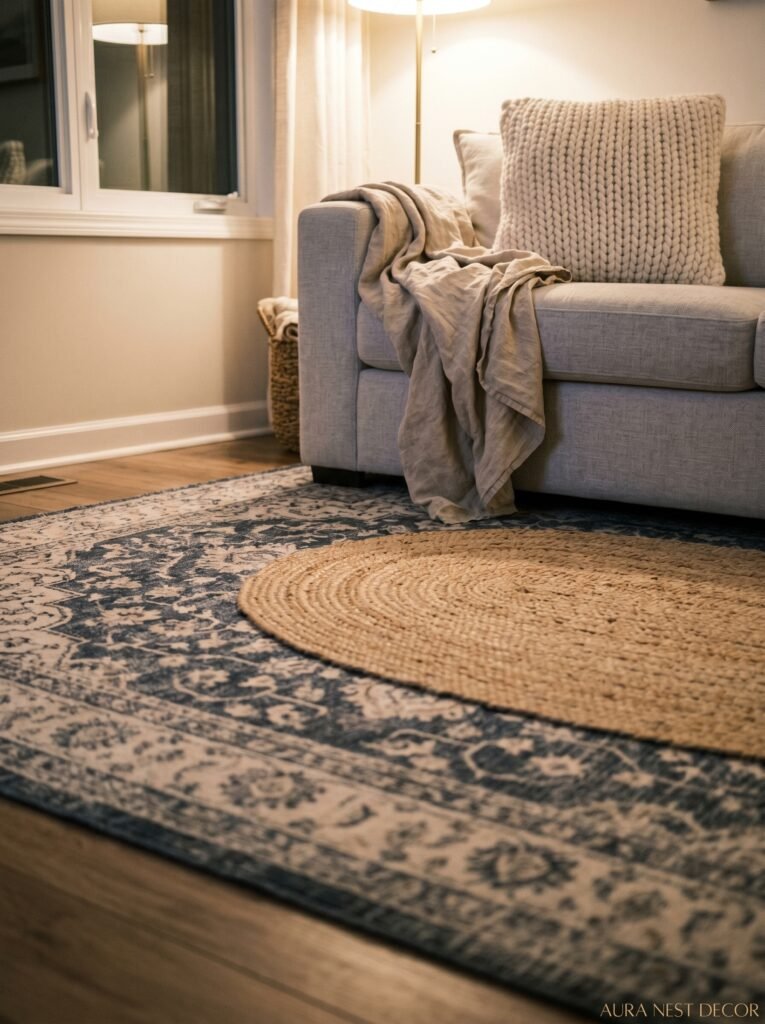
This is where people either nail it or completely lose the plot.
The key to layering textiles around a Persian rug is repetition without matching. Pick ONE color from the rug — just one — and carry it into your cushions, throw, or curtains. Not an exact match, a tonal echo. If your rug has dusty rose in it, a blush linen cushion works. Not pink, BLUSH. The slight mismatch is actually part of what makes it look intentional rather than costume-y.
Curtains in a solid color that pull from the rug’s palette can be genuinely transformative. I saw a room once — in a Victorian terraced house in Bristol, actually — where the owner had hung deep teal linen curtains that picked up a barely-there teal in the rug’s border. The effect was this beautiful visual thread connecting the ceiling height to the floor. I think about that room more than is probably normal.
Keep texture varied. If your sofa is smooth linen, add a chunky knit throw. If your cushions are velvet, balance them with something more casual. The Persian rug already has incredible visual texture from the weave, so it needs soft, physical texture around it to feel cohesive.
10. The Surprising Room Layout That Makes Persian Rugs Look Their Best
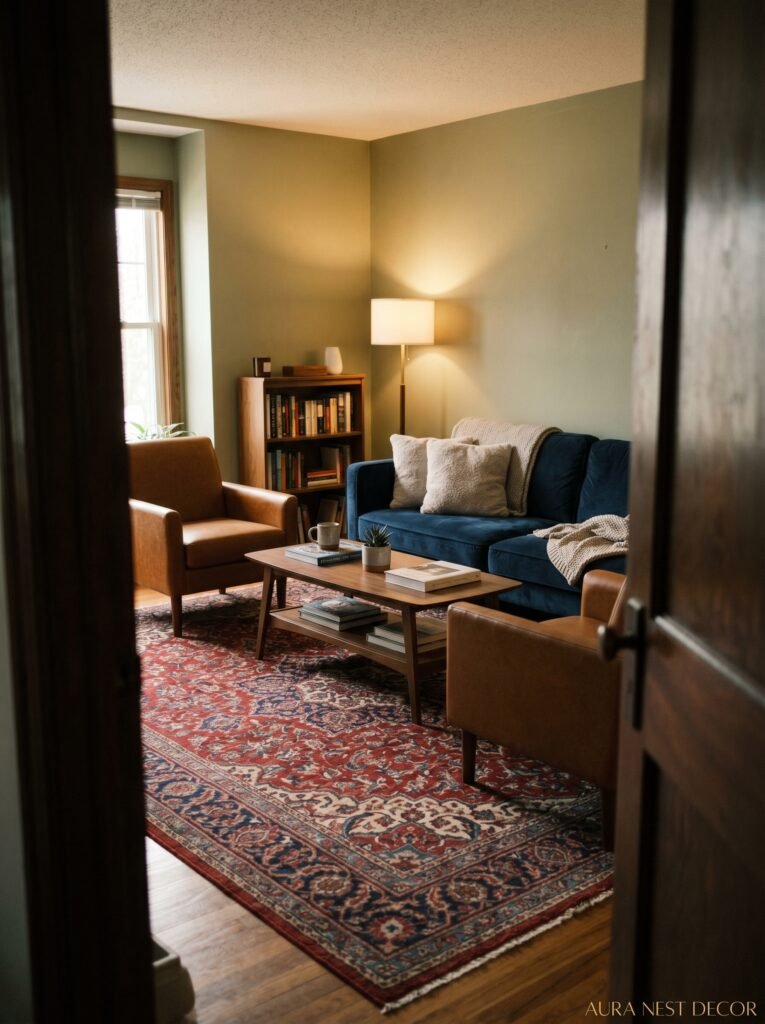
There’s a layout thing that people don’t talk about enough: the rug should be centered in the seating arrangement, not centered in the room.
These are often different things. In a room where the sofa is against one wall and there’s a fireplace on another, the center of the conversation area is rarely the center of the room. If you place the rug in the geometric center of the room, you end up with a strange disconnect between the rug and the furniture, as if they’re in separate zones.
Anchor the rug to the seating first. Pull the coffee table over it. Pull the front legs of the sofa onto it. THEN see where you are relative to the walls. Most of the time it looks completely right even if it’s not mathematically centered, because our brains read “centered within the furniture arrangement” as balanced.
This is one of those rules that feels slightly wrong on paper and COMPLETELY right in practice. Trust it.
11. When a Persian Rug Is the Wrong Choice (Let’s Be Honest)
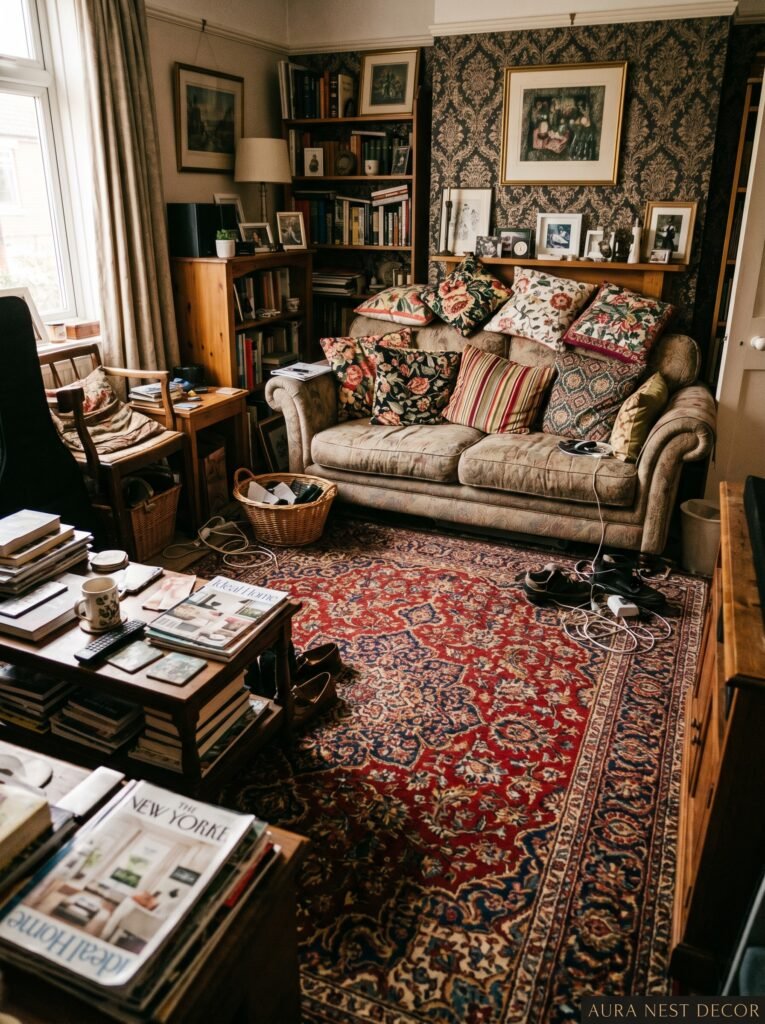
There ARE situations where I’d pause.
Very high-traffic zones with kids who are still in the spill phase — real antique Persian rugs can be tricky here. They’re not impossible to clean but they’re not indestructible. A machine-made or more durable Bidjar-style rug is a better call until the children develop a relationship with the concept of “beverage container with a lid.”
Rooms with very pale, cool, grey-dominated palettes can sometimes fight with warmer Persian tones. Not always, but sometimes the warm terracotta and the cool grey end up looking like they’re from two different planets rather than the same room. Worth testing with a rug sample or return policy before committing.
And if your furniture is very dark — dark brown leather sofa, espresso wood floors — a dark Persian rug can make the whole room feel like it’s absorbing light rather than reflecting it. You’d want something with significant ivory or cream in the field to keep things from going too dim.
12. The One Question Worth Asking Before You Spend Anything
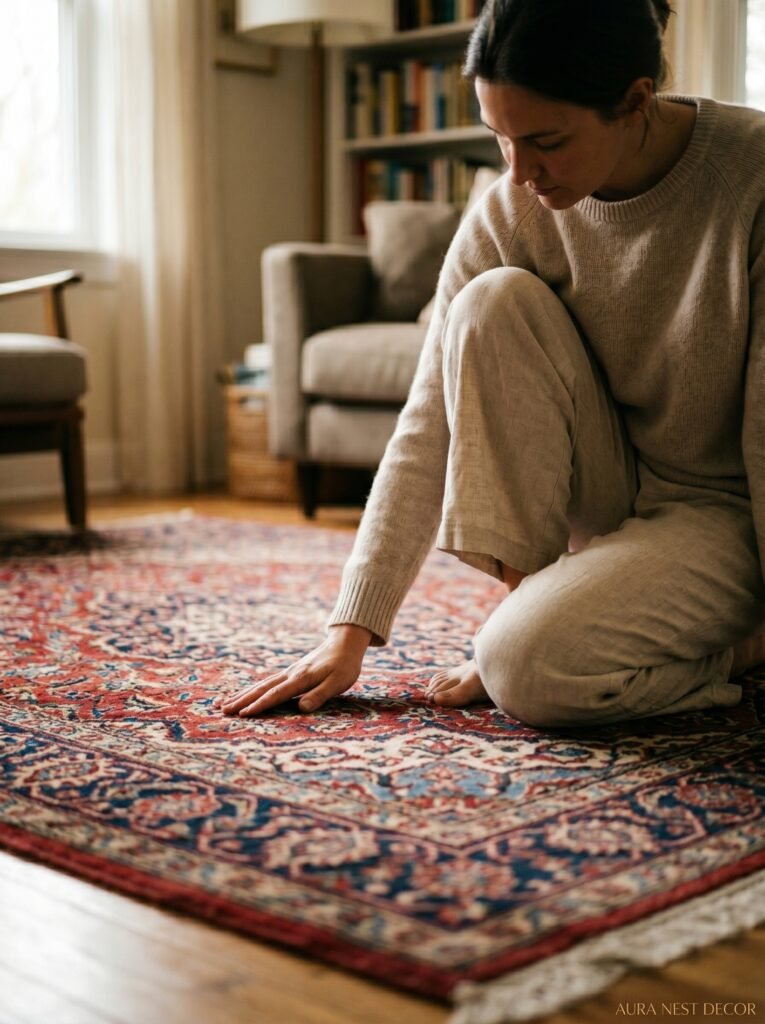
Will I still love this in ten years?
Genuinely. Trends cycle. Right now Persian rugs are having a massive moment — I see them on every design account, in every “before and after” post, stacked in the backgrounds of home tours on YouTube. They’re everywhere. And I don’t think that’s just a trend, I think it’s a correction. A lot of people went very minimalist and very cold and are now craving warmth, pattern, and something with a story.
But if you’re buying a Persian rug BECAUSE it’s trending, that’s a different thing than buying one because you genuinely love the look of it and can picture yourself living with it for years. Good Persian rugs appreciate in value. They age beautifully — they actually often look BETTER worn, which is genuinely not true of most things you put in a house. The colors soften, the pile compresses in the walked-on areas, it starts to look like it belongs there.
So ask yourself: is this something you love, or something you think you’re supposed to love right now? The answer should probably guide you.
—
❓ FAQ
Q: Can I put a Persian rug on top of carpet? A: Yes, and it can actually look really intentional — layering a flat-weave or lower-pile Persian over carpet is a popular trick, especially in rental homes where you can’t change the flooring. Just make sure the rug is large enough to look deliberate, not like it landed there by accident.
Q: How do I clean a Persian rug without ruining it? A: For regular maintenance, gentle vacuuming without the beater bar is your best friend — do it weekly on low suction and avoid the fringe. For spills, blot immediately with a clean white cloth and cold water. For a real deep clean, especially for antique or hand-knotted pieces, professional rug cleaning is worth it every few years rather than risking a DIY disaster.
Q: Do Persian rugs work in a modern or Scandinavian-style home? A: They work brilliantly, actually. The contrast of a detailed traditional rug against clean, minimal modern furniture is a really compelling look — it adds warmth and personality without cluttering the space. Keep the surrounding furniture simple and let the rug carry the visual complexity.
—
💭 Final Thoughts
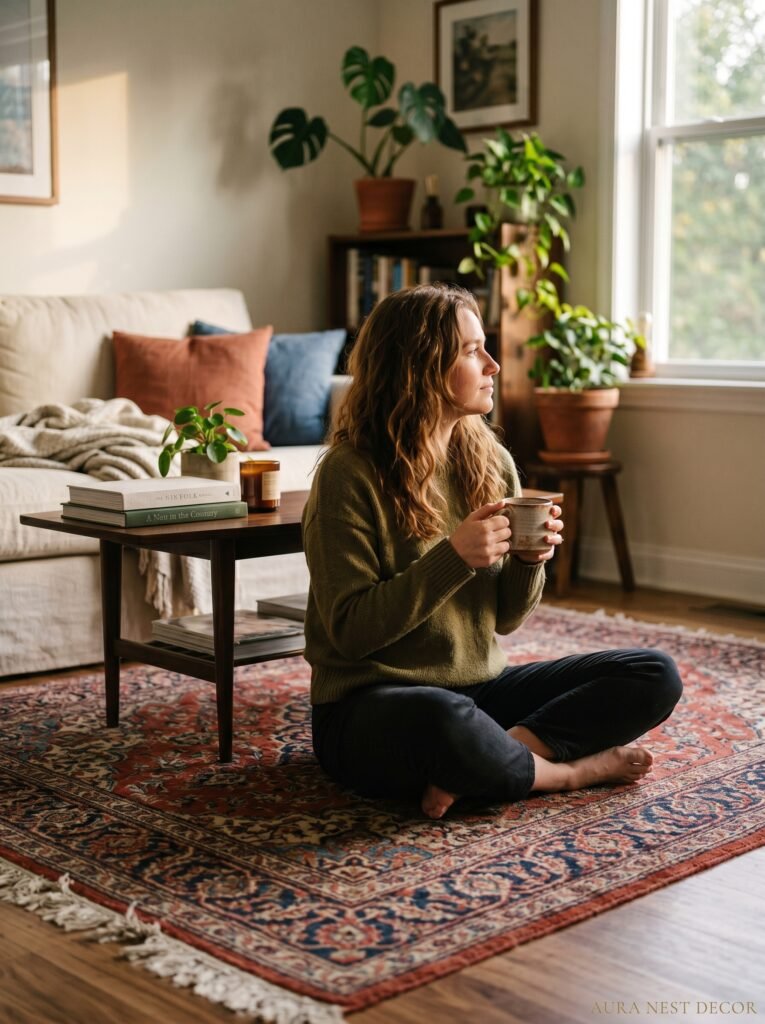
There’s something about a Persian rug that makes a house feel less like it was assembled and more like it was accumulated — in the best possible way. Like the room has a history, even if that history started last month. I keep coming back to them not because they’re trending but because they genuinely make rooms feel more like themselves.
What’s the one thing that’s been stopping you from pulling the trigger on one?