
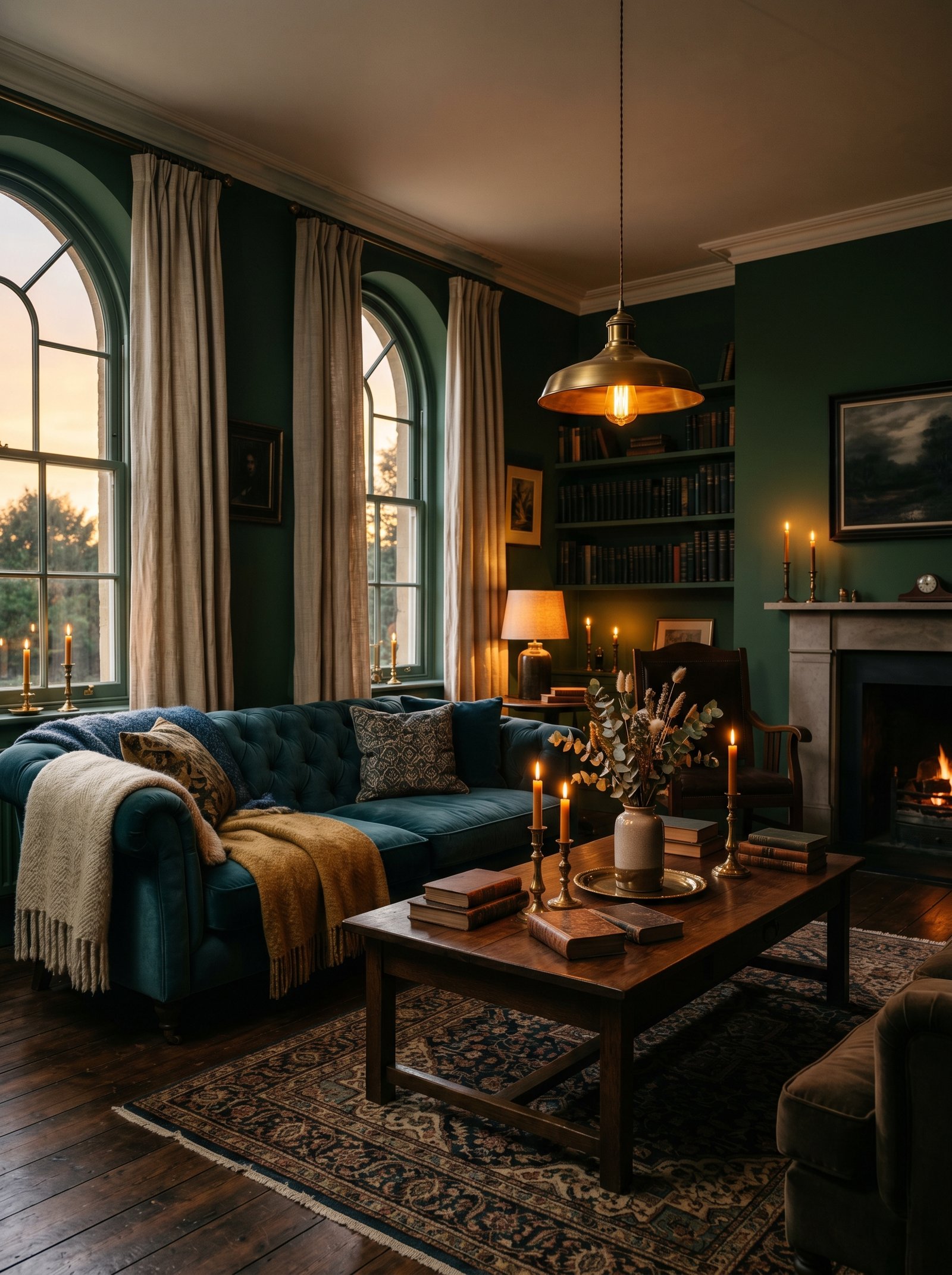
The Moody Living Room: How to Design a Space That Feels Like a Long Exhale
There’s a particular kind of room that makes you slow down the moment you step into it — where the light is low, the colors are deep, and the whole space seems to say you can rest now. That room is a moody living room, and once you’ve felt what it’s like to sit inside one, bright white spaces will never feel quite the same again.
—
1. What “Moody” Actually Means in Interior Design (It’s Not What You Think)
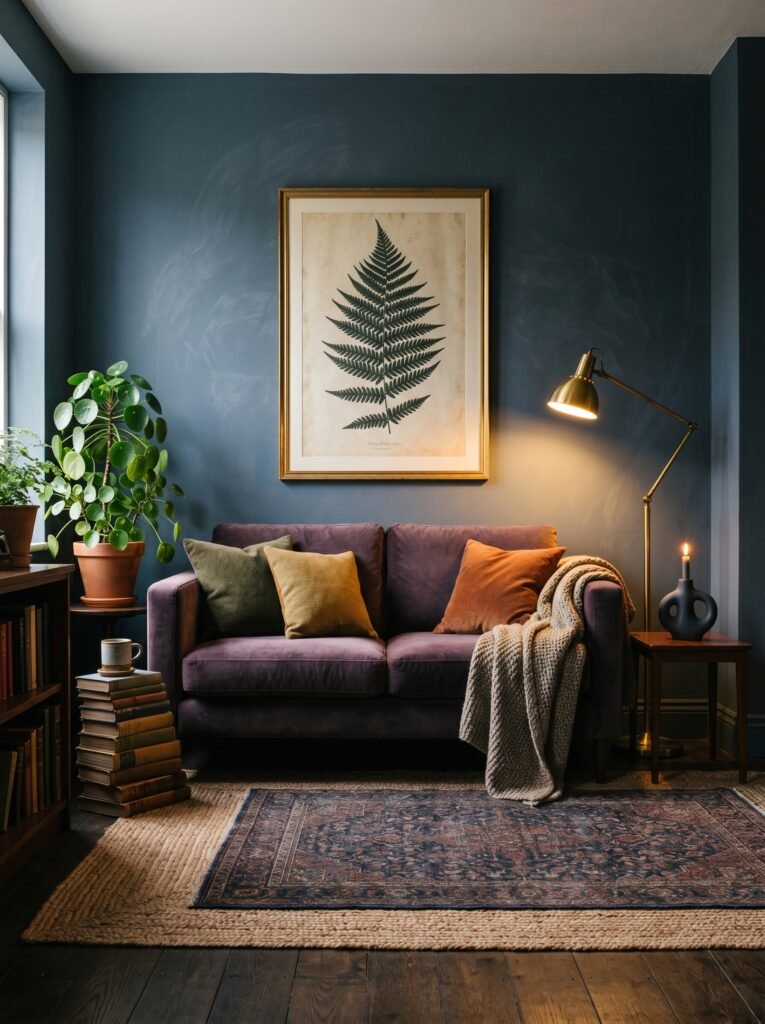
When most people hear “moody living room,” they picture something dark, heavy, or even a little depressing. That couldn’t be further from the truth. A moody living room is about atmosphere — it’s the deliberate layering of deep color, warm texture, and soft light to create a space that feels emotionally rich and deeply inviting.
Think of it this way: a moody room is the interior design equivalent of your favorite slow Sunday morning. The coffee is strong, the candles are lit, and there’s no reason to rush anywhere. Every design decision in a moody living room is made to encourage that exact feeling — to slow the nervous system, quiet the noise of the outside world, and wrap you in something that feels genuinely human.
The word “moody” doesn’t mean sad. It means intentional. It means a room that has a personality, a pulse, a quiet confidence about what it wants to be.
“A moody living room doesn’t ask you to be productive. It asks you to simply be present.”
2. The Psychology of Dark Colors and Why They Feel So Good
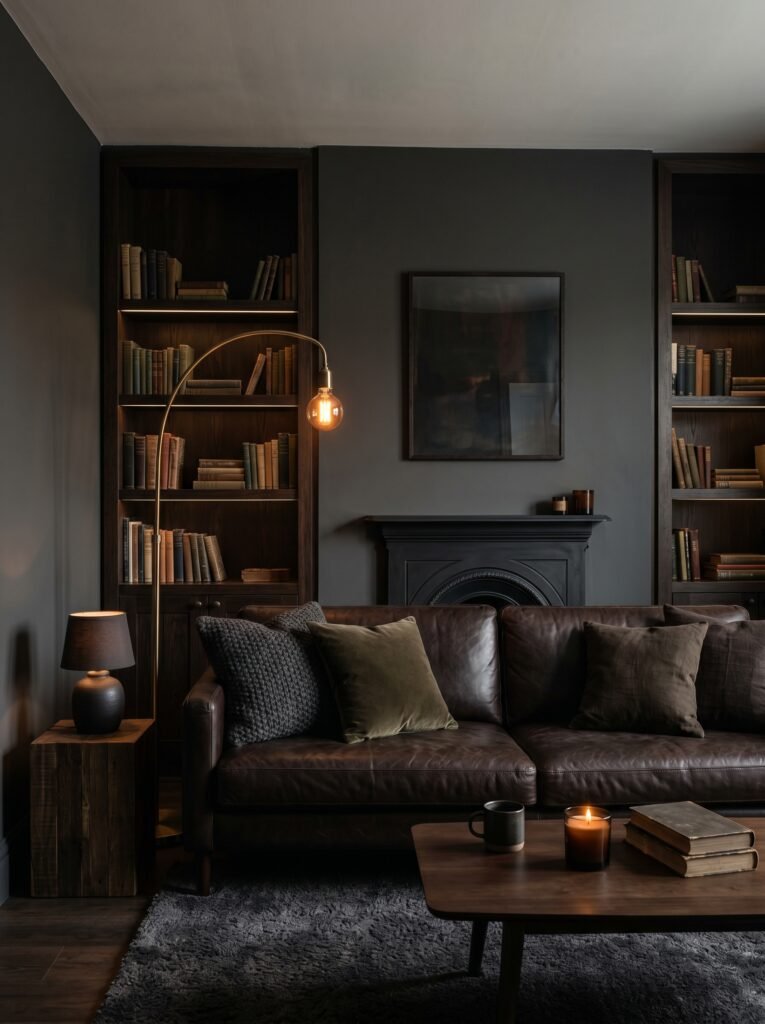
Color psychology is a powerful force in interior design, and the science behind why dark, saturated colors feel so comforting is genuinely fascinating. Deep shades like forest green, navy blue, charcoal, burgundy, and warm espresso brown activate the brain’s sense of safety and enclosure — a phenomenon sometimes called the “cave effect.”
Humans, for most of our existence, sought shelter in enclosed, darker spaces. We associated dim, protected environments with rest, warmth, and safety. When you paint a living room in a rich, deep tone, you’re actually tapping into something primal. The room feels held. Contained. Safe in a way that an all-white space, with its bright exposure, simply doesn’t.
Beyond the evolutionary response, dark colors create visual coziness by making a room feel smaller and more intimate — even if the space is actually quite large. They absorb light rather than reflect it, which softens hard lines and makes every surface look more tactile, more touchable, more alive.
3. The Five Colors That Define a Moody Living Room
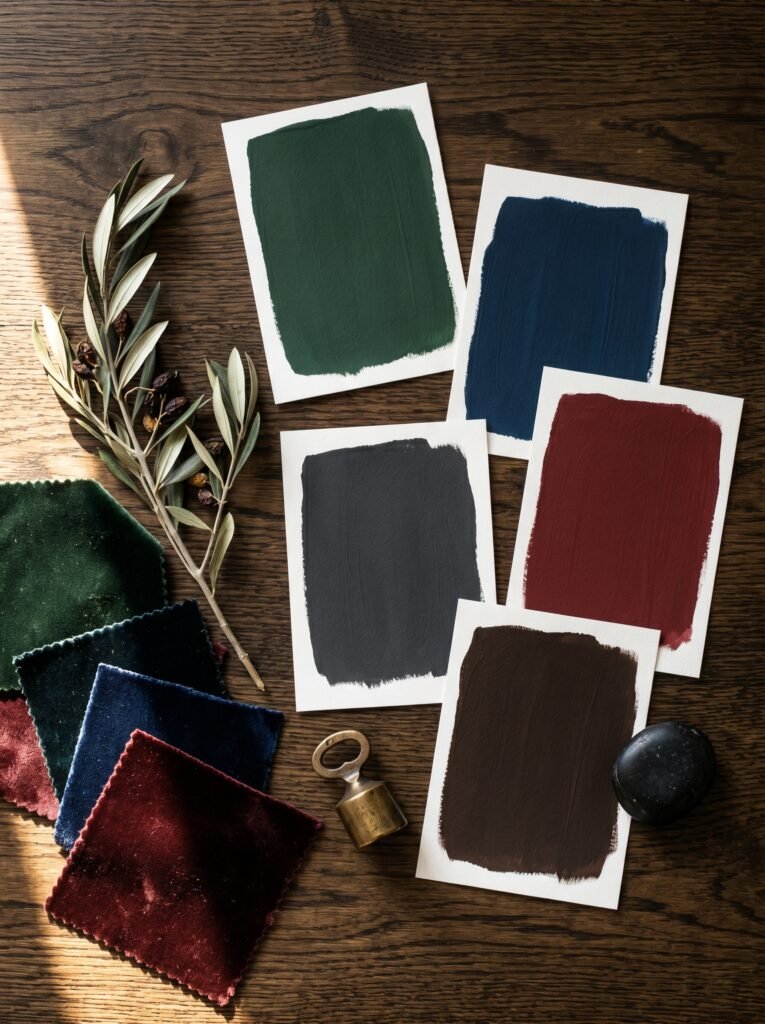
Choosing the right color is the single most powerful decision you’ll make when designing a moody living room. The good news? There’s a whole palette of gorgeous options depending on the feeling you’re chasing.
Forest Green is perhaps the most beloved moody living room color right now — and for very good reason. It’s organic, deeply calming, and connects the indoors to the natural world. It pairs beautifully with warm wood, aged brass, and linen.
Navy Blue brings a sense of depth and quiet sophistication. It’s the color of late-night conversations and bookshelves lined with well-read novels. Navy reads as both bold and serene — a rare combination.
Charcoal and Soft Black are for those who want maximum drama without committing to a single hue. These near-neutrals work as the perfect backdrop for layering warm-toned textiles and natural materials.
Burgundy and Wine add richness and intimacy — they feel warm in a way that blue-based dark colors don’t. Think velvet sofas, candlelight, and the soft glow of a table lamp.
Warm Taupe and Chocolate Brown are the quietest of the moody tones — earthy, grounding, and endlessly versatile. If you want a room that feels like a warm embrace without leaning too dramatic, this is your palette.
4. Lighting: The Secret Architecture of Every Moody Room
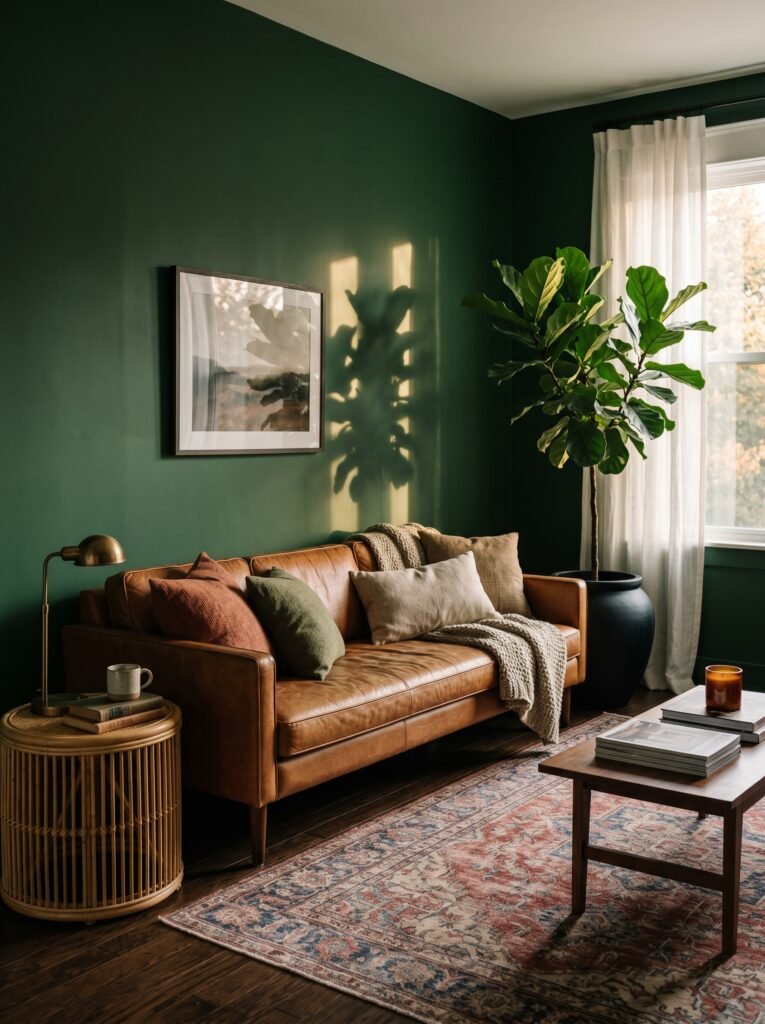
Here’s a truth that professional interior designers know and most homeowners don’t: in a moody living room, lighting does more work than the paint color. You could have the most perfectly chosen deep teal walls in the world, but if you’re flooding the room with cool overhead fluorescents, the moodiness evaporates instantly.
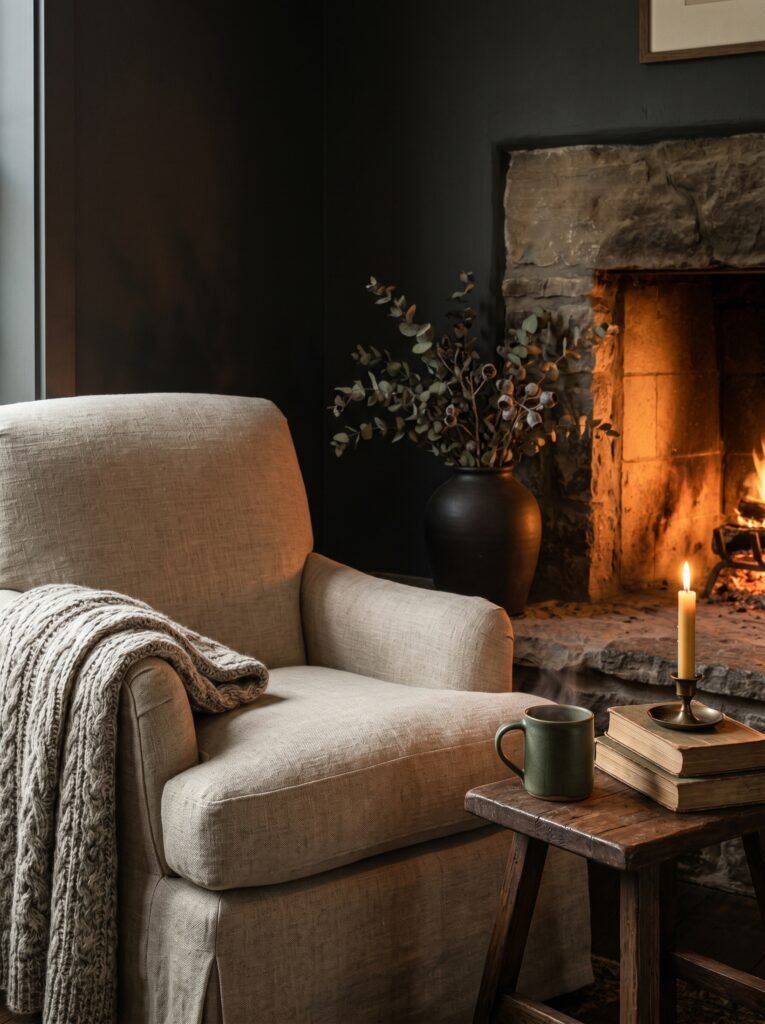
Moody lighting is all about layers. It’s the warm glow of a floor lamp in the corner. The flicker of a candle cluster on the coffee table. The soft blush light of a table lamp beside the sofa. The ambient glow of Edison bulb string lights threaded along a bookshelf. None of these sources are harsh. None of them point downward from a central fixture and illuminate every corner equally — because equal, even lighting is the enemy of atmosphere.
The goal is pools of warm light — specific moments of brightness that draw the eye, create depth, and leave the corners of the room in intentional shadow. That shadow isn’t a design failure. That shadow is where the mood lives.
Opt for bulbs with a color temperature between 2700K and 3000K — this is the warm, amber-leaning range that makes skin glow and rooms feel like evening, even in the middle of the afternoon.
“In a moody room, it’s not about what the light reveals. It’s about what it chooses to leave in shadow.”
5. Texture Is the Heartbeat of a Moody Living Room
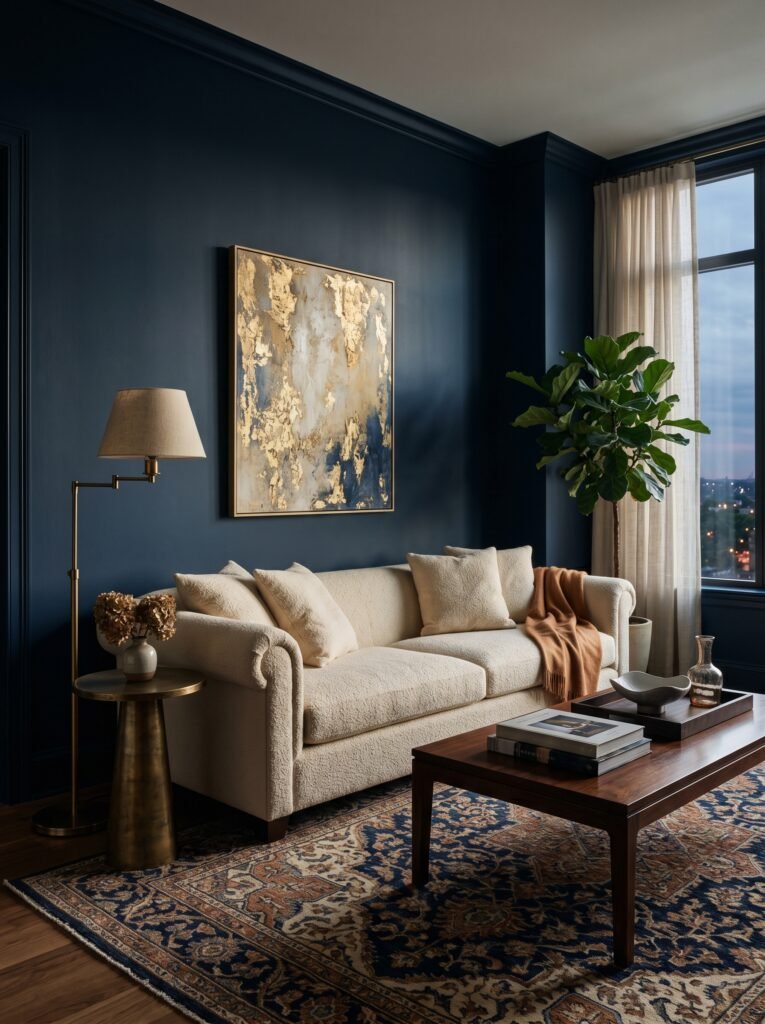
Color and light set the stage, but texture is what makes a moody living room feel genuinely alive. Without texture, a dark room just feels flat and somber. With it, every surface becomes something you want to reach out and touch.
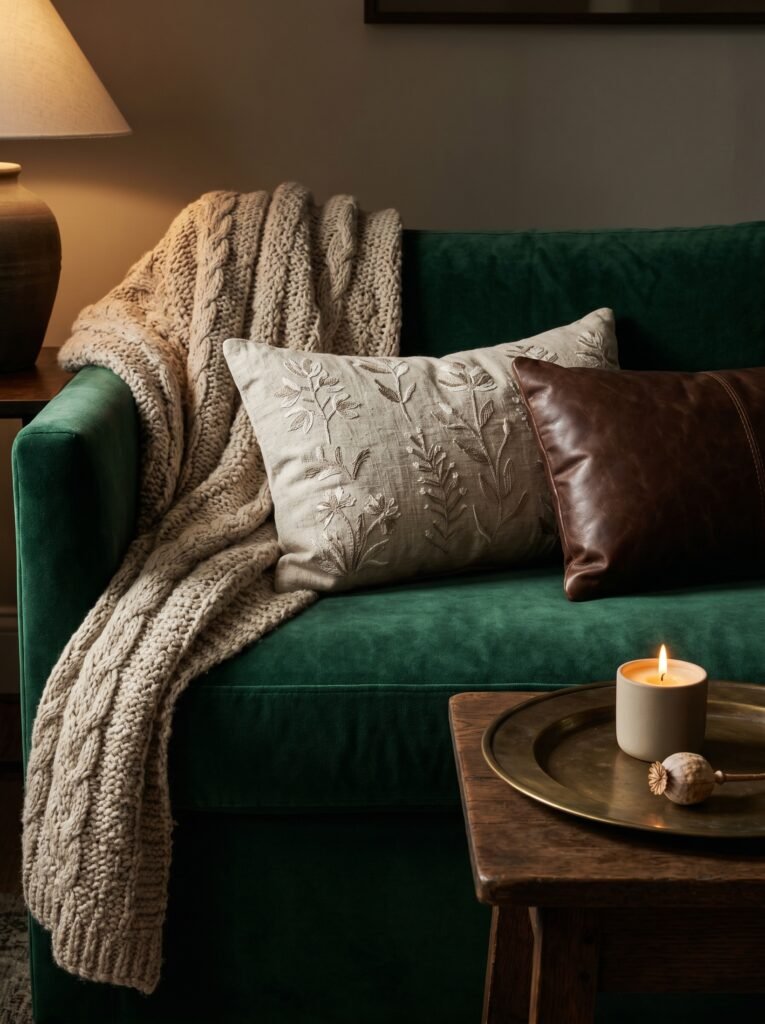
Velvet is the quintessential moody texture — plush, light-shifting, and unabashedly luxurious. A deep emerald or navy velvet sofa immediately elevates the emotional temperature of a room. Velvet has this magical quality of changing shade depending on how the light hits it, which keeps the eye engaged and the room feeling dynamic.
Chunky knit throws, worn leather, aged linen, jute rugs, and rough-hewn wood all contribute layers of tactile interest. The goal is to mix rough with smooth, soft with structured, organic with refined. A raw oak coffee table beside a silky velvet cushion. A knitted throw draped over a leather armchair. These contrasts create visual tension in the best possible way — they make the room feel curated without feeling stiff.
Don’t forget the walls, either. Textured wallpaper — grasscloth, linen weave, or embossed patterns — can add incredible depth to a moody space, making the walls feel dimensional rather than flat.
6. Furniture That Belongs in a Moody Living Room
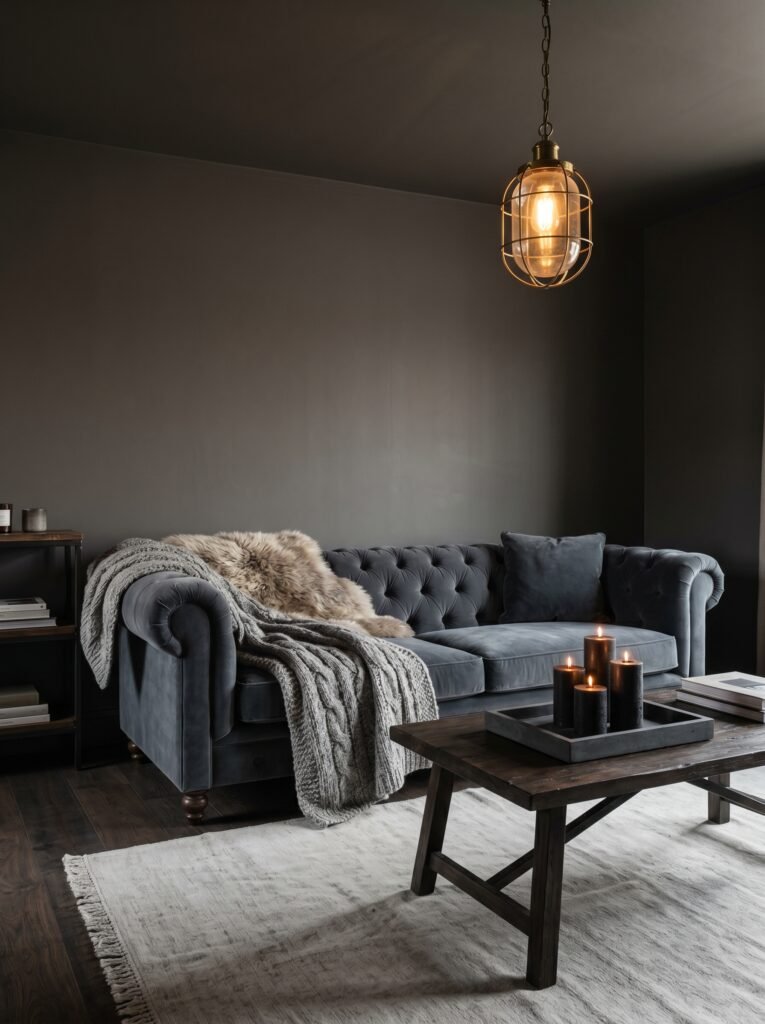
The furniture choices in a moody living room should feel grounded, substantial, and somewhat timeless. This is not the space for ultra-minimalist, legs-in-the-air, Scandinavian-white aesthetics — though you can absolutely borrow the principle of intentionality from that design philosophy.
Low-profile sofas in deep, saturated upholstery anchor the room beautifully. Sofas with curved arms and generous cushions feel especially at home here — they’re inviting in a way that sharp, angular shapes aren’t. Vintage and antique pieces work wonderfully in moody spaces because they bring a sense of history and earned character.
Dark wood furniture — walnut, mahogany, ebony-stained oak — feels completely natural against deep wall colors. It creates a tonal layering that reads as sophisticated and intentional. Avoid anything too shiny or lacquered, as high-gloss finishes bounce light in ways that work against the moodiness you’re building.
Layering furniture at different heights also matters. A low sofa, a medium-height console, tall bookshelves — this vertical variation creates interest and draws the eye around the room naturally.
7. Art and Objects That Whisper Rather Than Shout
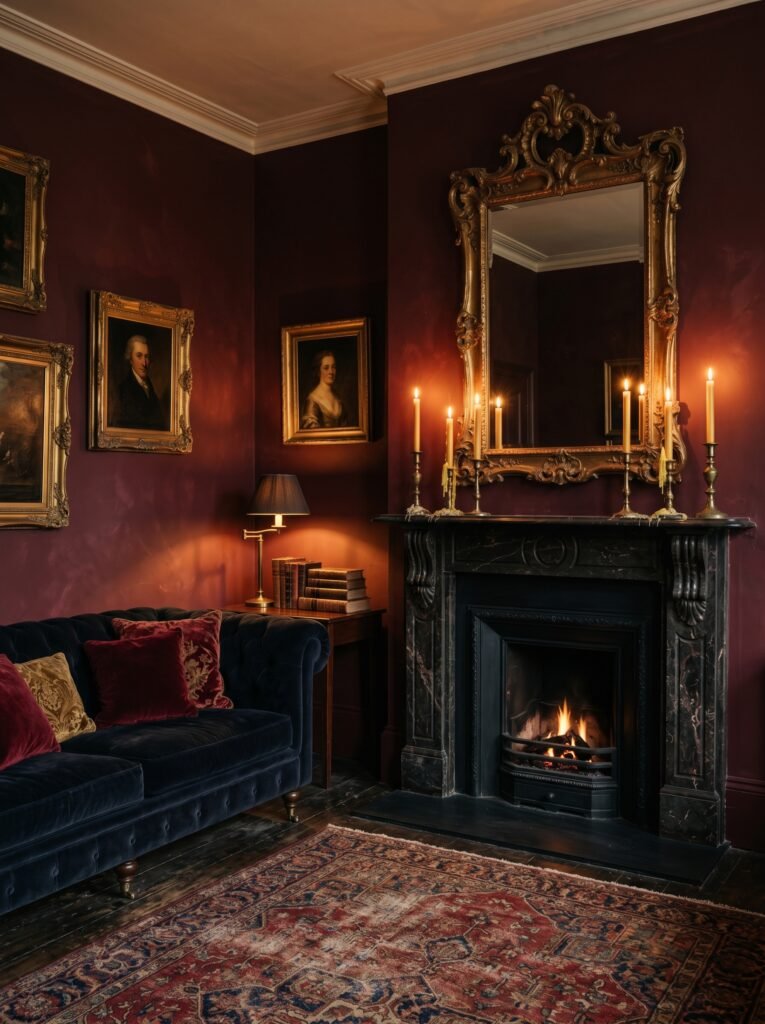
A moody living room isn’t the place for bright, graphic pop art with aggressive color blocking. The art and objects in this space should feel like they belong — like they were slowly gathered over years of travel, reading, and living rather than purchased all at once from a home goods store.
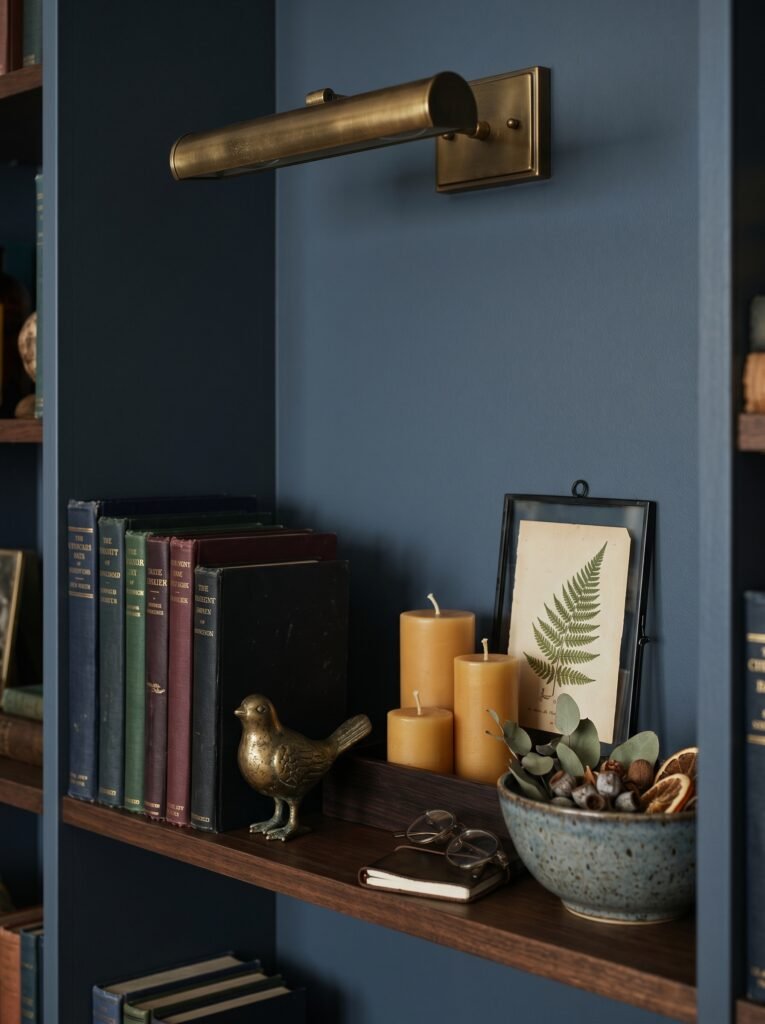
Look for art with depth: moody landscape paintings, abstract works in earthy tones, vintage botanical prints, portraits with quiet intensity, or black and white photography. The frames matter as much as the art itself — dark walnut, aged brass, or simple matte black frames integrate naturally without competing for attention.
Objects on shelves and tables should feel meaningful. Old books with beautifully worn spines. A collection of dark glass vessels catching the lamplight. A vintage clock. Dried botanicals in a ceramic vase. These items don’t just fill space — they tell a story.
“Every object in a moody room should earn its place by adding beauty, memory, or meaning — preferably all three.”
8. The Role of Plants in a Moody Living Room
Plants and moody interiors are a match that might surprise you — but think about it. The deep, saturated greens of living plants against dark walls create a scene straight out of a romantic Victorian greenhouse, and that contrast is breathtaking.
Plants also soften the visual weight that dark rooms can carry. They introduce organic shapes — imperfect, asymmetrical, alive — into a space that might otherwise feel a little too composed.
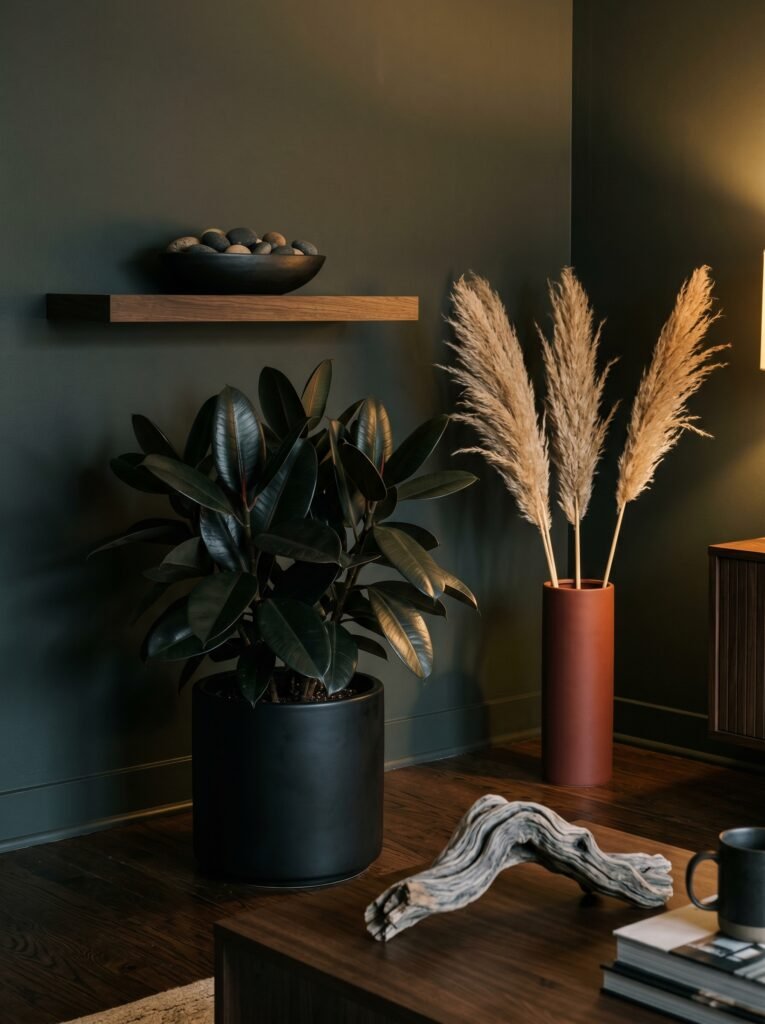
For a moody living room, lean toward plants with dramatic silhouettes: fiddle leaf figs, monstera deliciosa, trailing pothos, snake plants, or dark-leafed varieties like black velvet alocasia or burgundy rubber trees. These choices complement the color palette naturally while adding scale and movement.
Pair your plants with matte ceramic pots in earthy tones — terracotta, forest green, charcoal, or bone white. Avoid plastic pots or anything too bright and modern; they’ll break the spell.
9. Small Space? Here’s How to Go Moody Without Going Claustrophobic
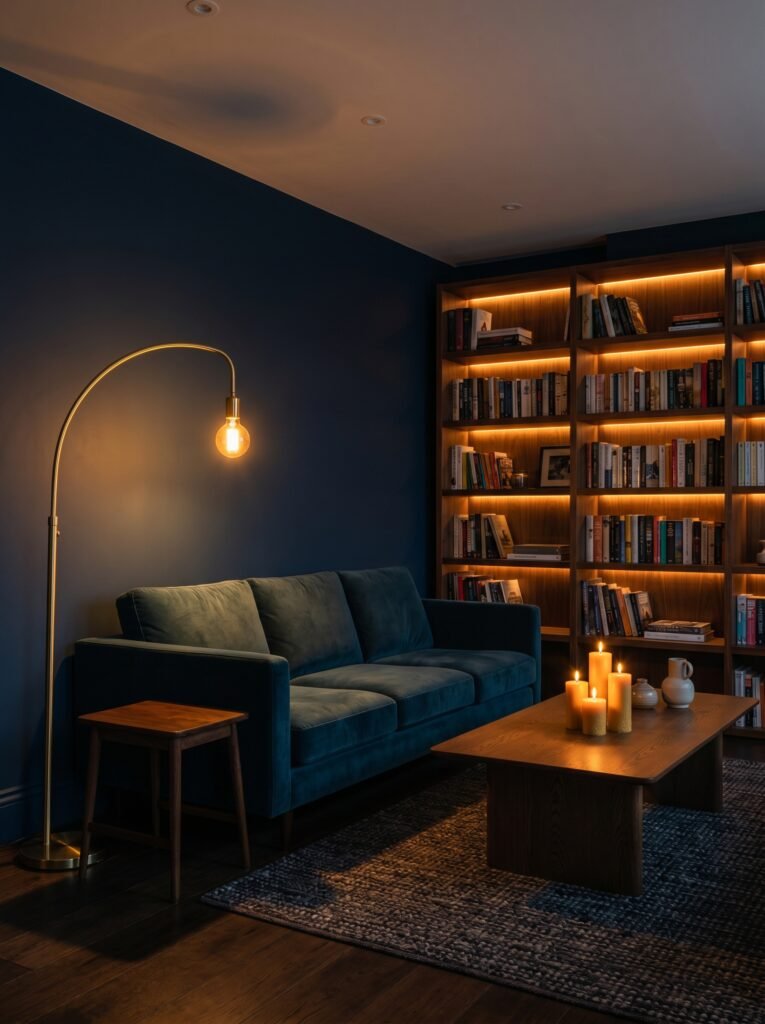
One of the most common fears people have about designing a moody living room is that it’ll make a small space feel even smaller. It’s an understandable concern — but there are smart ways to create a deeply atmospheric dark room without losing any sense of space.
The key is strategic contrast. Paint the walls in a deep tone but keep the ceiling and trim crisp white or very light. This creates the visual sensation of depth and enclosure on the walls while preserving the vertical openness above. The room feels cozy at eye level but not oppressive overhead.
Mirrors are another essential tool in a small moody space. A large, dark-framed mirror reflects lamplight and creates the illusion of depth — it essentially doubles the perceived size of the room while fitting perfectly within the aesthetic.
Choose furniture that’s proportional to the space. A single large velvet sofa and one or two carefully chosen accent chairs will always look better than cramming in too many pieces. Restraint is a design virtue, and in small spaces, it’s non-negotiable.
10. Seasonal Adaptability: Your Moody Living Room Through the Year
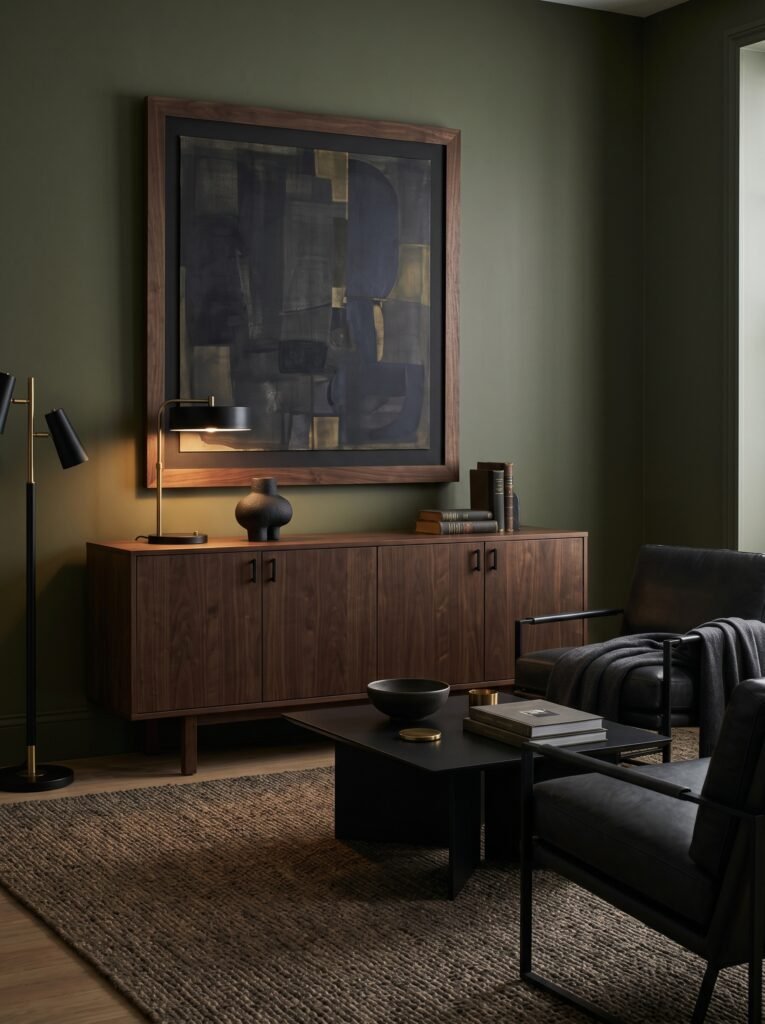
One of the most underappreciated qualities of a well-designed moody living room is how naturally it adapts to the changing seasons. While a bright white room can start to feel cold and sterile in winter and overpowering in summer, a moody room has an almost chameleon-like quality.
In autumn and winter, lean into the coziness: layer extra throws, add more candles, swap the linen cushion covers for velvet ones, and bring in deeper, warmer accent colors like burnt orange, rust, and deep burgundy. The room will feel like the inside of a warm cocoon while the world outside turns cold.
In spring and summer, you can lighten the moody atmosphere slightly without losing the essence. Introduce fresh greenery, swap heavier window treatments for lighter linen panels that let in more natural light, and add a few lighter-toned textiles. The deep wall color and furniture remain — they just breathe a little more.
11. Common Mistakes People Make When Designing a Moody Living Room
Every design trend has its pitfalls, and the moody living room is no exception. The most common mistake is going too dark, too fast — painting every surface, buying all-black furniture, and wondering why the room feels oppressive rather than atmospheric. Dark rooms need contrast to function beautifully. They need moments of warmth, lightness, and reflection to feel alive.
Another frequent error is neglecting natural light. Before committing to a deep wall color, assess how much natural light your room receives at different times of day. A room that faces north and gets little direct sun will need extra care with artificial lighting to prevent the space from feeling genuinely gloomy.
Choosing the wrong undertones in your paint color is also a trap worth avoiding. Dark colors can have blue, green, red, or purple undertones that interact dramatically with your light sources. Always test large paint samples on your actual walls and observe them in both daylight and lamplight before committing.
Finally — don’t forget the ceiling. A crisp white or off-white ceiling instantly lifts a moody room; painting it the same dark shade as the walls can feel dramatic and deliberate in the right hands, but it requires very careful execution.
12. Building Your Moody Living Room From Scratch: Where to Start
If you’re standing in your current living room feeling the gap between where it is and where you want it to be, the process of creating a moody space is more approachable than it might seem. Start with the single most impactful change: the wall color. Choose one deep, saturated shade and paint just the largest wall first. Live with it for a week before committing to the full room.
Next, address your lighting. Remove the overhead fixture’s harsh bulb and replace it with the warmest option available — or better yet, turn off the overhead light entirely and rely on floor lamps and table lamps for a full week to understand what warmth and shadow can do for a space.
Then begin layering slowly: one velvet cushion, one textured throw, one piece of art in a dark frame. The moody living room is not a project you complete in a weekend — it’s a space you grow into, refine, and slowly make your own.
“The most beautiful rooms in the world weren’t designed all at once — they were lived in, adjusted, and loved into existence over time.”
—
🌿 How to Maintain the Atmosphere in Your Moody Living Room
A moody living room needs a little ongoing care to stay feeling intentional rather than neglected — because in a dark, richly textured space, the difference between atmospheric and tired comes down to a few consistent habits.
Keep candles fresh and replace them before they burn out completely. The presence of candles — even unlit ones — contributes to the visual atmosphere. A burned-down, wax-coated candle in a holder says “forgotten,” and that chips away at the feeling you’ve worked to create.
Dust and clean your textured surfaces regularly. Velvet, in particular, can show dust and lint easily. A quick once-over with a soft lint roller or velvet brush keeps your sofa and cushions looking rich and fresh rather than worn.
Edit regularly. Moody rooms live and die by restraint. Every time you add something new, assess whether something else needs to leave. Clutter is the fastest way to turn a moody space into a messy one.
Refresh your plant arrangements seasonally. Remove any dead leaves immediately — they break the visual spell. Rotate plants toward light sources to keep them healthy and full-shaped.
Adjust your lighting with the seasons. Add candles and warmer bulbs in winter; allow a little more natural light in summer by swapping heavier curtains for lighter panels.
—
❓ FAQ
Q: Will a moody living room make my home harder to sell? A: Not necessarily — and here’s why. A well-executed moody room photographs beautifully and often creates a more memorable first impression than a generic neutral space. That said, if you’re planning to sell soon, choose a deep color with broad appeal (like a sophisticated sage green or classic navy) and ensure the space is immaculately styled with excellent lighting for any listing photos.
Q: Can I create a moody living room on a budget? A: Absolutely. Paint is the most affordable, highest-impact change you can make — a can of deep-toned paint costs very little relative to the transformation it creates. Beyond that, look for velvet cushion covers, second-hand furniture with good bones, thrifted frames for art, and inexpensive warm-toned Edison bulbs. The moody aesthetic actually favors vintage and aged pieces, which are often more affordable than brand-new furniture.
Q: How do I stop my moody living room from looking too dark and depressing? A: The answer is always in the balance. Ensure you have multiple warm light sources at different heights. Include reflective elements like mirrors or glass objects to bounce light. Keep the ceiling light if the walls are dark. Layer textiles in a range of tones from deep to medium, and include living plants for natural color and vitality. A moody room should feel like a warm evening — not a power outage.
—
💭 Final Thought
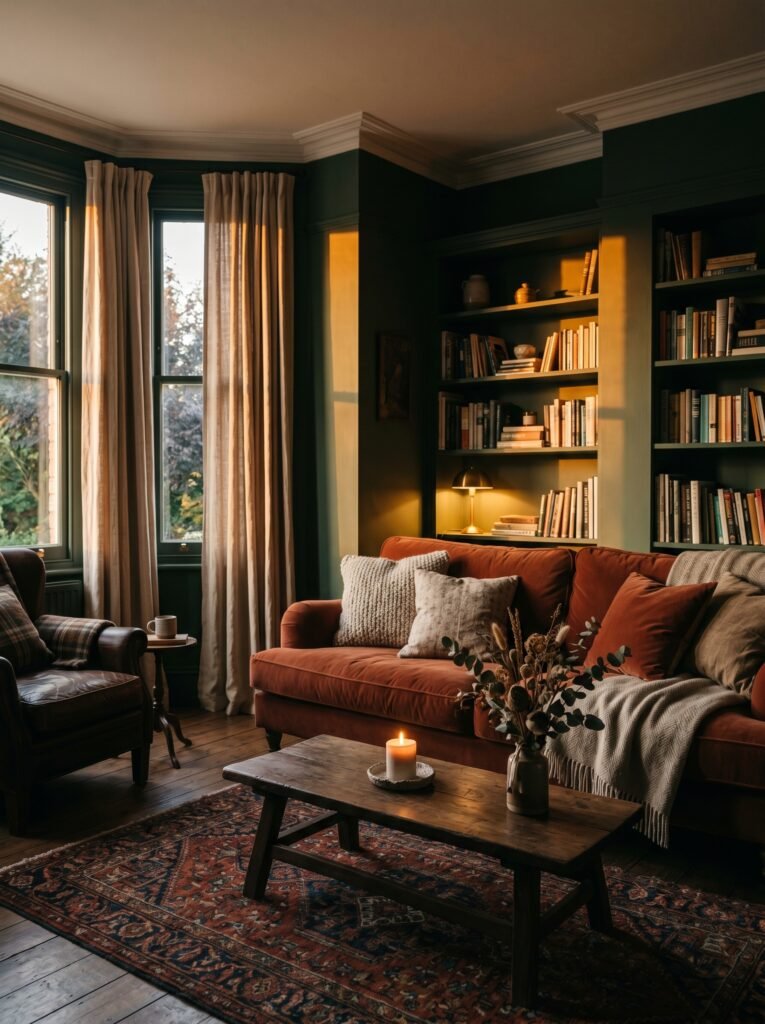
A moody living room is ultimately an act of self-knowledge — it’s choosing to design around the feeling you actually want to come home to, rather than the feeling you think a room is supposed to have. It’s permission to love the dark, the deep, and the quiet in a world that tends to celebrate only the bright.
So as you think about your own space, ask yourself: what does rest actually feel like for you, and does your living room reflect that?