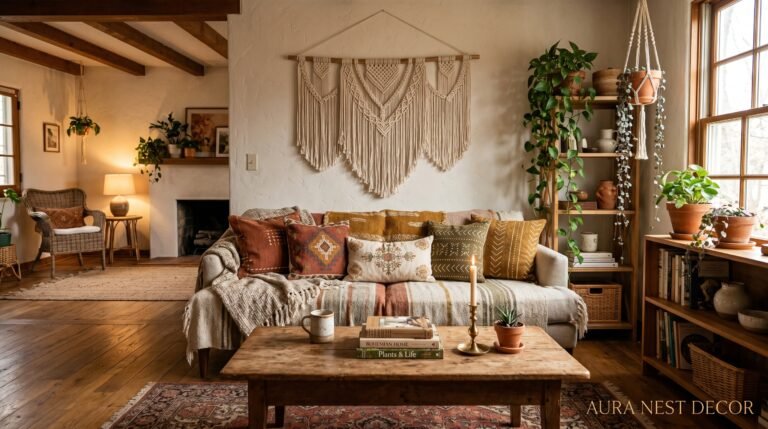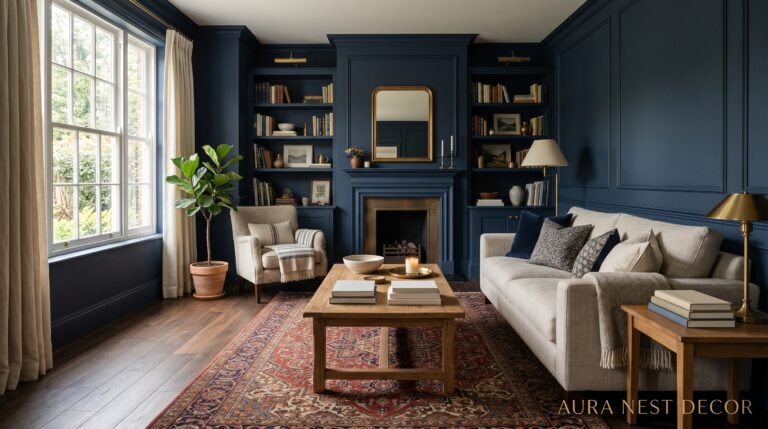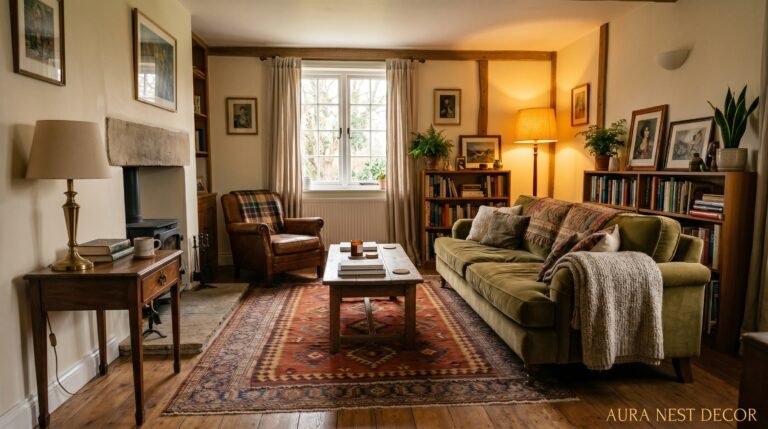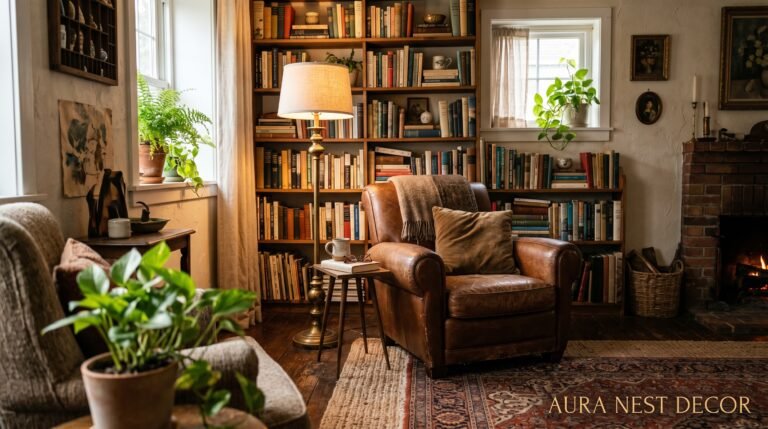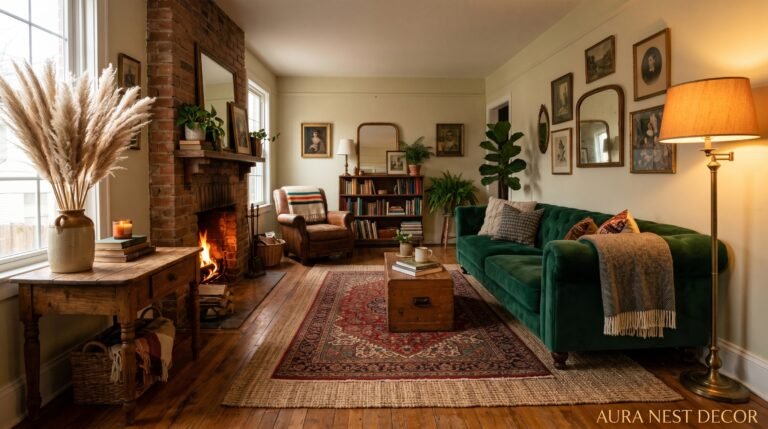
The Comfy Living Room You’ve Always Wanted — And Why It Matters More Than You Think
There’s a moment — maybe you’ve felt it — when you walk into someone’s living room and your whole body exhales. The light is soft, the cushions look like clouds, and somehow the space just holds you. That feeling isn’t accidental. It’s designed. And the best news? You can create it in your own home, no matter your budget, your square footage, or your starting point.
—
1. Why Comfort in a Living Room Is Actually a Form of Self-Care
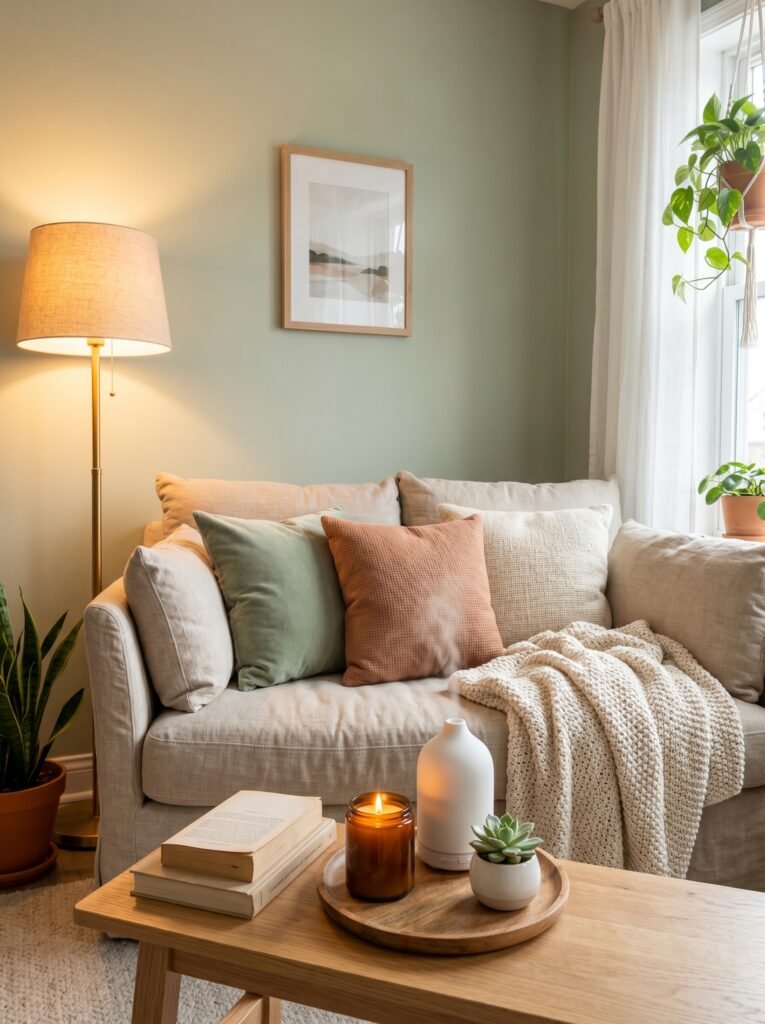
We talk about self-care in terms of bubble baths and journaling, but rarely do we talk about the environments we inhabit every single day. Your living room is the room you return to after long days, the room where you laugh with friends, cry during movies, and sit quietly with your morning coffee. It’s doing a lot of emotional heavy lifting.
Research in environmental psychology consistently shows that the spaces around us directly affect our mood, stress levels, and even our sleep quality. A cluttered, poorly lit, or aesthetically mismatched room can subtly drain your energy — even when you can’t pinpoint why you feel so tired by 7pm. On the flip side, a room that genuinely feels comfortable signals safety to your nervous system. Your cortisol levels drop. You breathe easier.
“Your living room isn’t just decor — it’s the emotional heartbeat of your home.”
So when you invest time and intention into making your living room comfy, you’re not being frivolous. You’re building a sanctuary that actively restores you. That’s worth every throw pillow.
—
2. The Sofa: The Throne That Sets the Tone for Everything Else
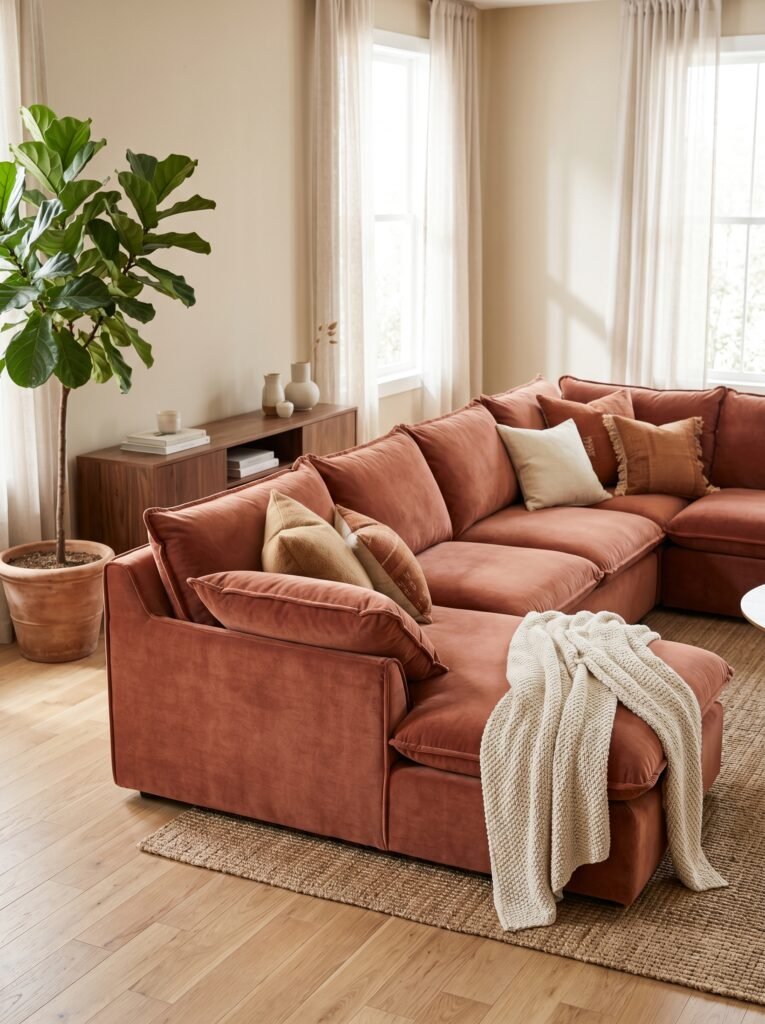
Let’s start where most people spend the majority of their living room time — the sofa. Your sofa is not just a piece of furniture. It’s a statement about how you want to feel in your home. Do you want to sink into it like quicksand? Or do you prefer a firmer, more upright silhouette that still feels inviting?
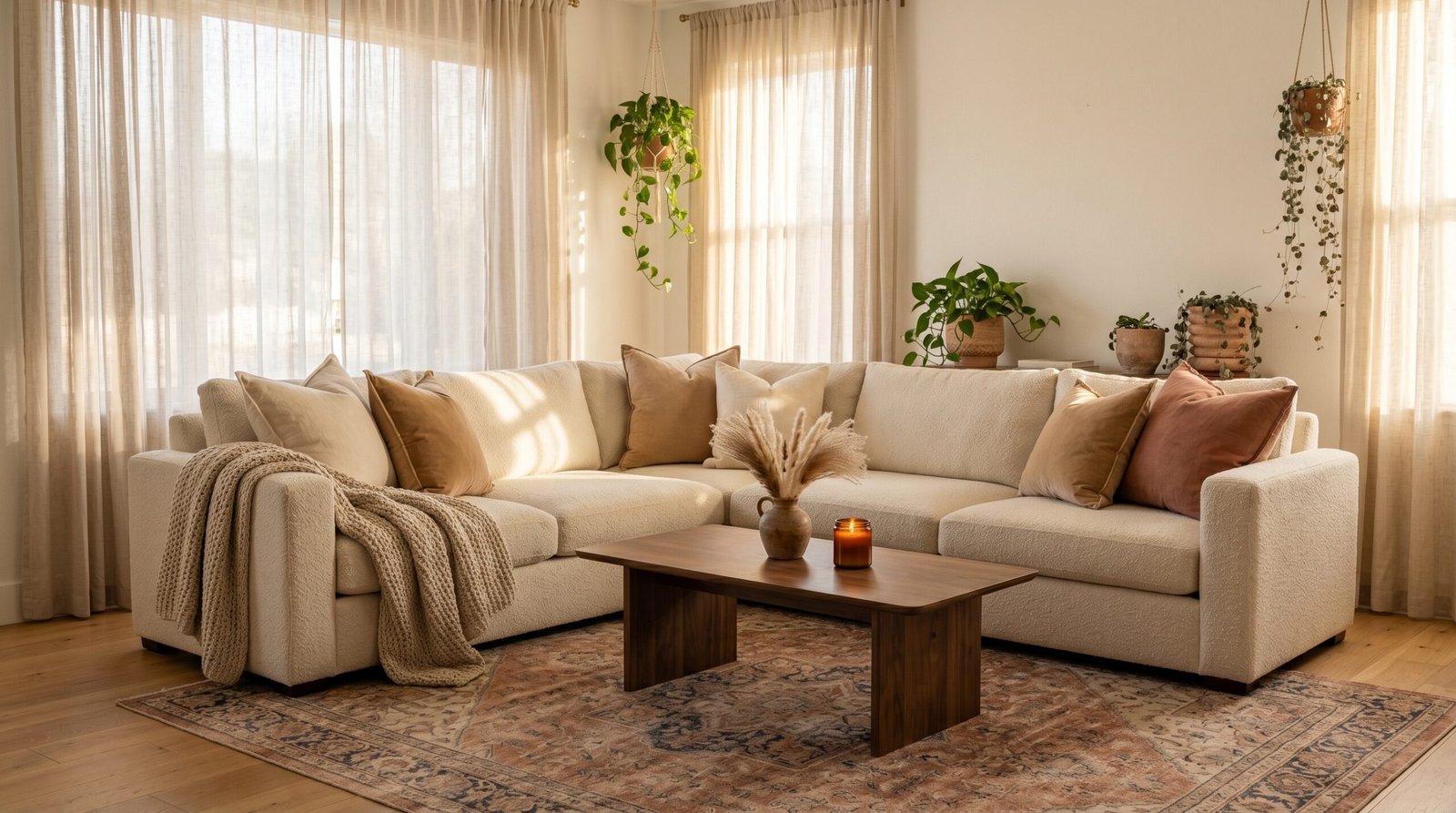
The most comfy sofas for everyday living tend to feature deep seats (at least 22–24 inches), removable cushion covers for easy cleaning, and durable yet soft upholstery like velvet, bouclé, or performance linen. Sectionals are having a major moment for good reason — they wrap the room in an embracing shape and invite everyone to sprawl without apology.
Color matters here too. Warm neutrals like camel, warm white, and dusty terracotta ground a room without feeling cold. Navy or forest green add depth and drama while still feeling cozy. The key is to choose a sofa you genuinely love to sit in, not just look at.
—
3. Layered Lighting: The Secret Ingredient Nobody Talks About Enough
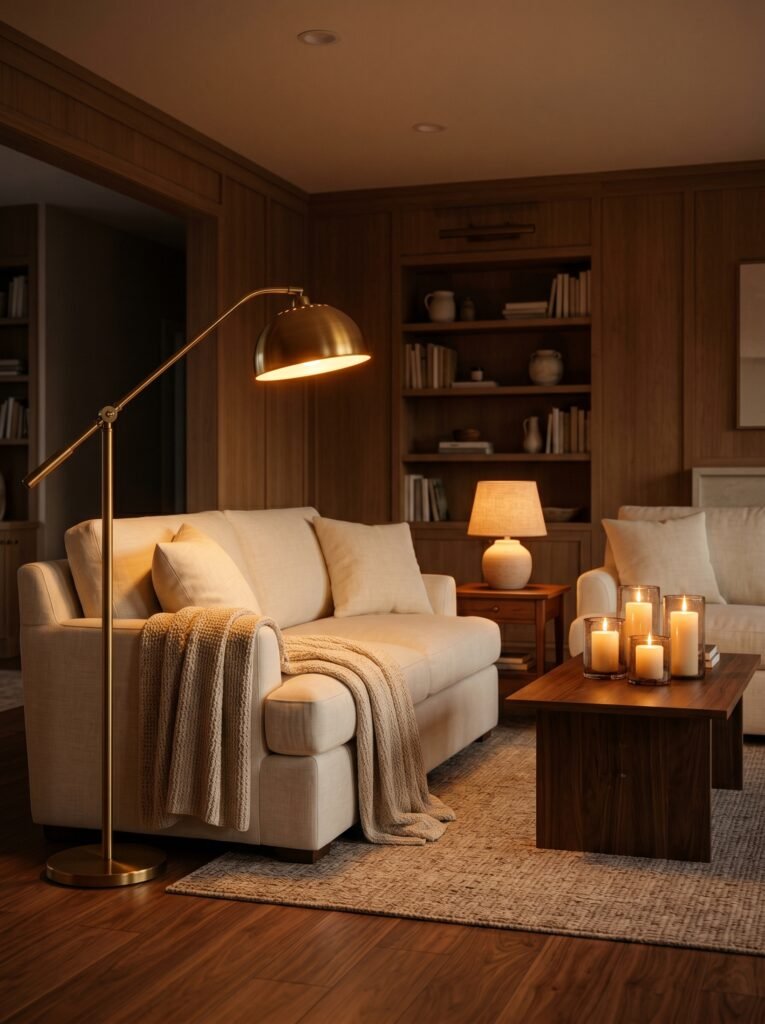
Here is one of the most transformative — and most overlooked — elements of a comfy living room: lighting. Specifically, layered lighting. Most living rooms rely on a single overhead light, which creates a flat, almost clinical feel that works against warmth at every turn.
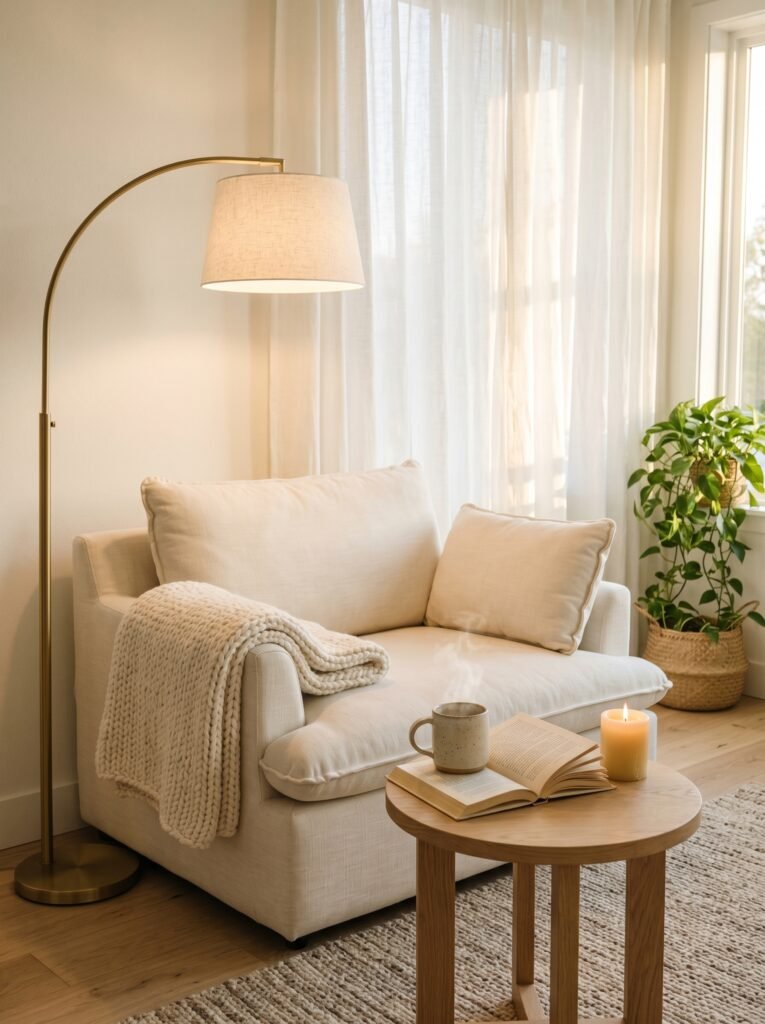
The magic formula involves three layers. First, ambient lighting — this is your overhead fixture, whether it’s a ceiling fan with a light kit, a flush mount, or a statement chandelier. Second, task lighting — floor lamps, table lamps, and reading lights positioned near seating areas. Third, accent lighting — string lights, LED strip lights behind a TV unit, or a candle arrangement on the coffee table.
When all three work together, your living room transitions from a flat, one-dimensional space into something that actually glows with warmth. Use warm-toned bulbs (around 2700K) throughout. Dimmer switches are worth every penny of the installation cost — they let you shift the mood of the room in seconds.
—
4. The Art of the Throw Blanket (It’s More of a Science)
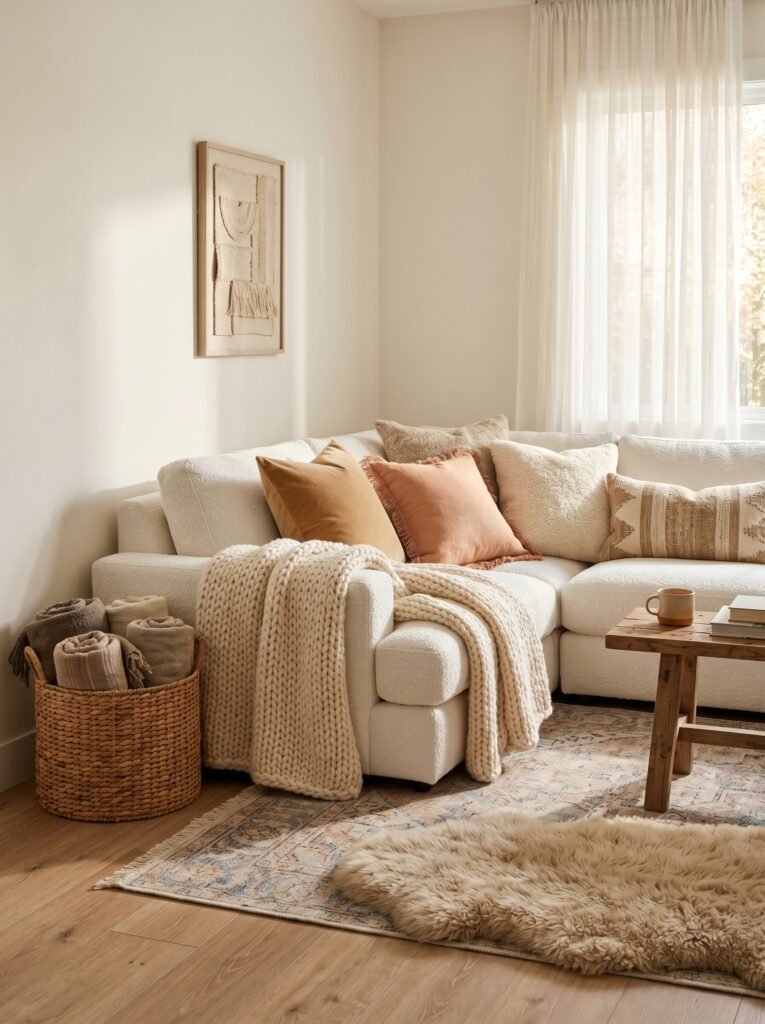
There’s a reason interior designers always add a casually draped throw blanket to every styled sofa photo. It’s not just aesthetic filler — it’s a visual and tactile promise that this space is for resting. A throw says: you are welcome to get comfortable here.
But there’s technique involved. Don’t fold your throw blanket into a neat rectangle and lay it across the sofa arm. Instead, let it cascade naturally — half-folded, slightly imperfect, like it was just used. Drape it over one corner of the sofa, or let it pool softly on the floor beside your favorite reading chair.
Material matters enormously. Chunky knit throws add texture and visual warmth. Faux fur brings glamour and coziness in equal measure. Waffle-weave cotton is breathable and perfect for year-round use. If you have kids or pets, opt for machine-washable options in patterns or darker colors that wear beautifully over time. Having two or three throws at different weights and textures throughout the room creates that effortlessly layered look that Pinterest boards are made of.
—
5. Color Psychology for a Cozy, Comfortable Living Room
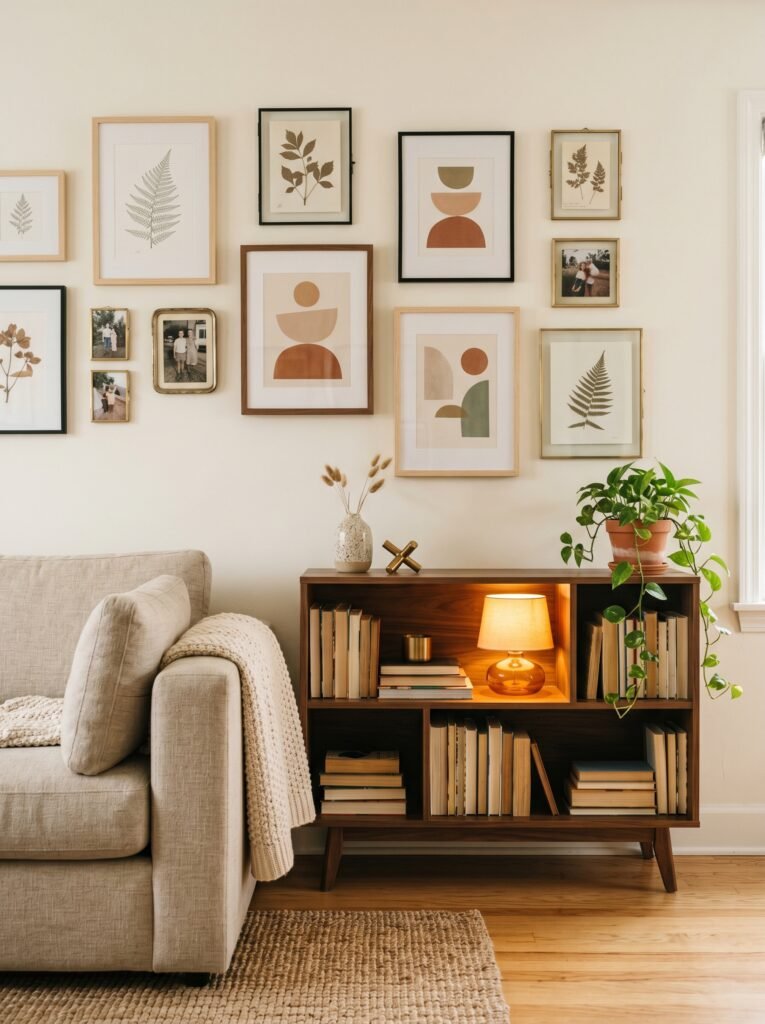
Color is one of the most powerful tools in your decorating arsenal — and it costs nothing to understand how it works before you pick up a paintbrush. Warm colors (terracotta, rust, golden yellow, warm beige) advance toward the eye and make spaces feel more intimate and enveloping. Cool colors (icy blue, cool gray, stark white) recede and can make a room feel larger but also more detached.
For a comfy living room, lean into warmth. That doesn’t mean you have to paint every wall terracotta — even a warm white with undertones of cream or blush reads as more cozy than a stark, cool white. Greens that sit on the warmer side of the spectrum, like sage and olive, have become enormously popular precisely because they feel both fresh and grounded.
“The right color doesn’t just look beautiful — it changes how your body feels in the room.”
Accent colors matter too. Deep burgundy cushions against a warm neutral sofa. A rust-colored rug anchoring a cream-toned room. Mustard yellow as a pop in an otherwise muted palette. These combinations feel intentional without feeling stiff.
—
6. Rugs: The Foundation That Ties a Room Together (Literally)
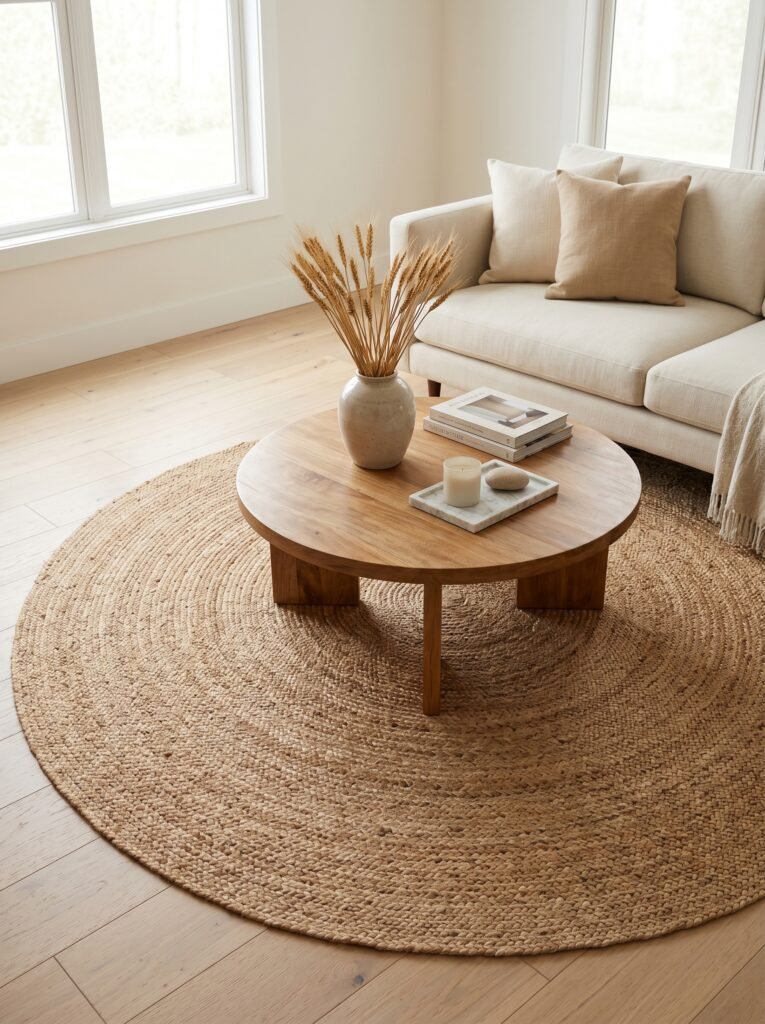
An interior designer will almost always say that the number one mistake homeowners make is choosing a rug that’s too small. A rug that barely peeks out from under the coffee table doesn’t anchor the space — it floats awkwardly in it. In a comfy living room, your rug should be large enough that all major pieces of furniture at least have their front legs sitting on it.
For comfort specifically, pile height matters. Low-pile rugs are easier to clean and work well in high-traffic homes. High-pile or shag rugs feel absolutely luxurious underfoot — imagine stepping out of bed and sinking your toes into softness — but require more maintenance. Natural fibers like jute and sisal add beautiful texture but are less soft underfoot. A wool rug hits the sweet spot between durability, softness, and natural warmth regulation.
Layering rugs is another designer trick that has become widely accessible. A large jute or sisal rug as a base, topped with a smaller patterned or plush rug, creates depth and dimension that a single rug simply cannot replicate.
—
7. Cushions and Pillows: How to Arrange Them Like a Pro
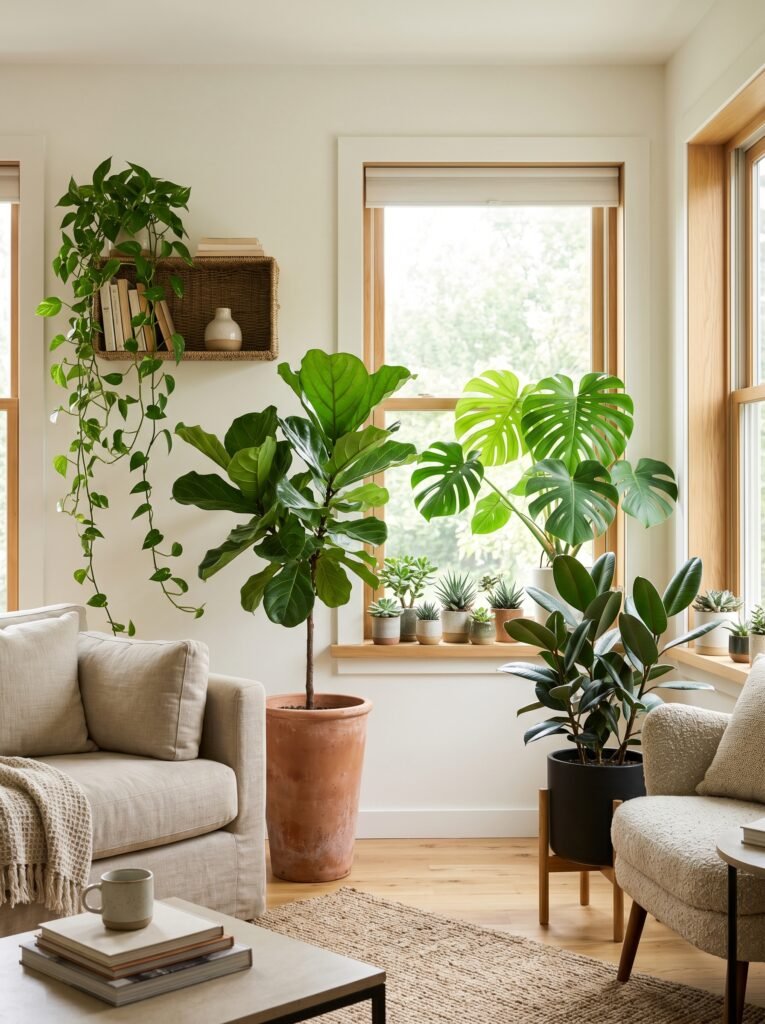
You might think that any grouping of cushions looks fine, but there is genuinely a method to a beautiful pillow arrangement — and once you see it, you can’t unsee it. The key is variation across three elements: size, texture, and pattern.
Start with two large anchor pillows (around 22×22 inches) in a solid, foundational color. Add two medium pillows (18×18) in either a subtle texture or a geometric pattern. Finish with one lumbar pillow (roughly 14×24 inches) in a complementary print or bold accent color. This 2-2-1 formula creates visual balance without looking staged.
Don’t overstuff the sofa to the point where there’s no room to sit. Cushions should invite you to adjust them and nestle in, not guard the sofa like sentinels. Down-insert pillows are fuller, softer, and more luxurious in appearance than poly-fill alternatives — the extra cost is usually worth it.
—
8. Plants and Natural Elements That Breathe Life Into the Space
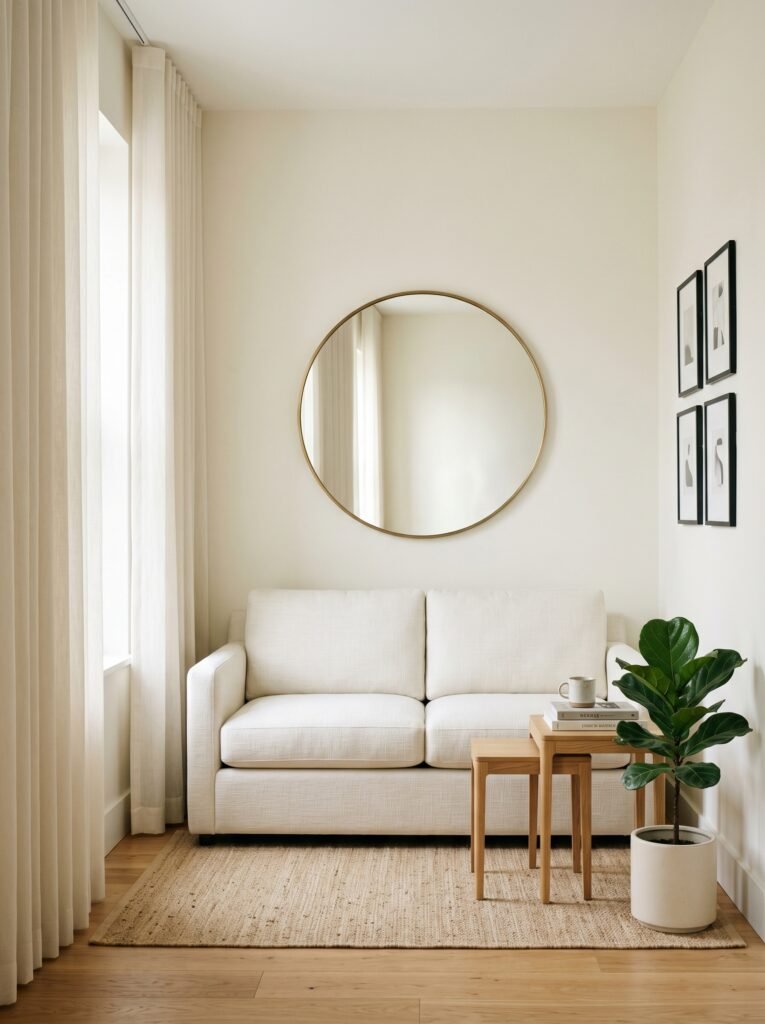
There’s something undeniably comforting about bringing the natural world indoors. Plants in a living room don’t just purify air (though they do that too) — they soften hard architectural lines, introduce organic color, and remind you, on an almost primal level, that life is happening all around you.
For low-maintenance options that thrive in typical living room light, consider pothos, snake plants, ZZ plants, or a fiddle leaf fig near a bright window. If you’re not ready to commit to live plants, high-quality dried botanicals — pampas grass, dried eucalyptus, cotton branches — add extraordinary texture without watering schedules.
Natural elements extend beyond plants. A woven basket used as a blanket storage solution. A wooden coffee tray holding candles and a small succulent. Stone or ceramic vases on shelving. These touches ground a room in tactile, organic beauty that synthetic materials simply can’t replicate.
—
9. Smart Storage That Doesn’t Kill the Cozy Vibe
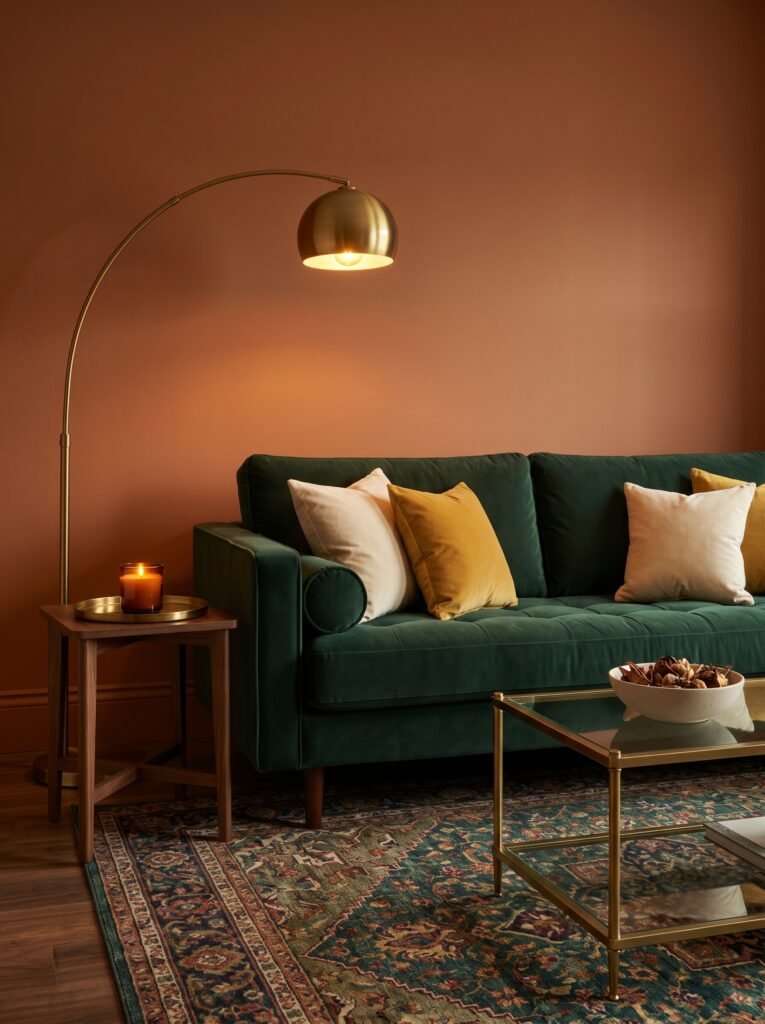
Nothing disrupts the comfy atmosphere of a living room quite like visible clutter. Remote controls scattered across every surface, tangled charger cables, books stacked in teetering piles, toys migrating across the floor — these things create low-grade visual stress that most people feel but don’t always consciously identify.
The answer isn’t to hide everything and create a sterile, museum-like room. It’s to build in intentional storage that feels like part of the design. An oversized wicker basket beside the sofa holds throw blankets and looks like a purposeful decor piece. A vintage wooden chest doubles as a coffee table and hides everything inside. Built-in shelving units display curated items while keeping things organized — the key word being curated, not crammed.
“A comfy room doesn’t mean a messy room — it means a room where everything has a place it actually belongs.”
A good rule of thumb: for every decorative item you add to your living room, make sure there’s an equal amount of negative space — breathing room around objects that lets each one be seen and appreciated.
—
10. The Coffee Table: Small in Scale, Enormous in Impact
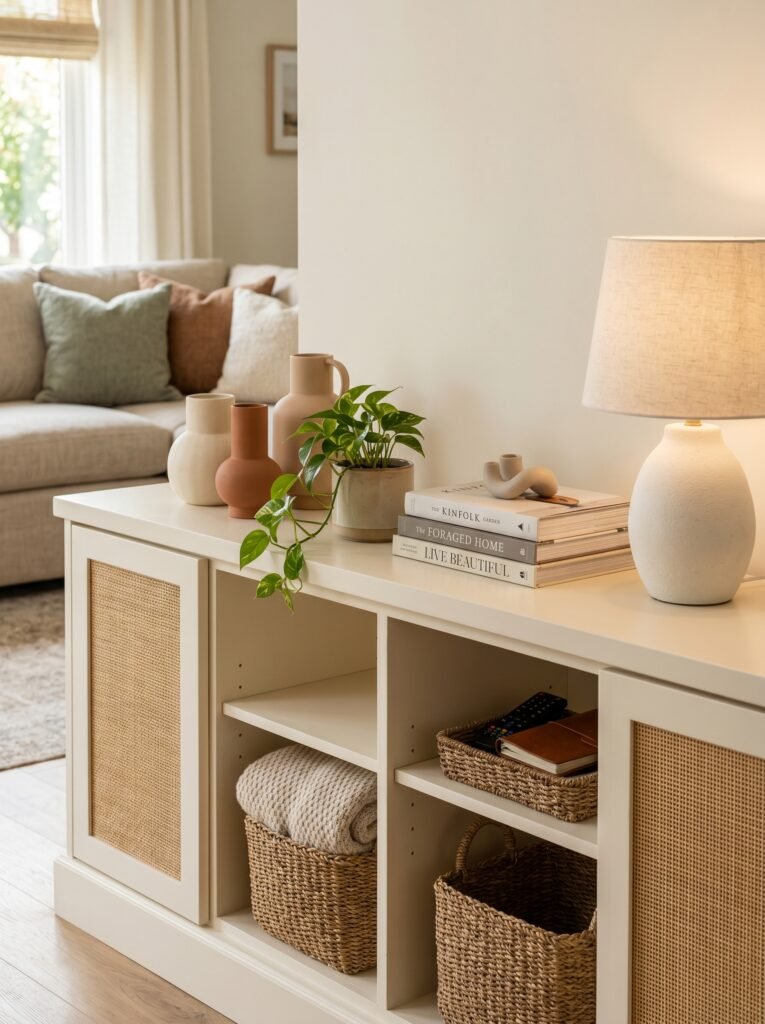
The coffee table sits at the visual center of most living rooms. It’s where guests rest their drinks, where you fold laundry while watching TV, where the remote controls inevitably migrate, and where your most carefully arranged vignette lives or dies. Getting the coffee table right — both functionally and aesthetically — dramatically elevates the overall feel of the room.
For a comfy living room, rounded coffee tables have a clear advantage: they’re safer in homes with young children, and their soft shape contributes to the overall sense of ease and flow in the room. Materials like light wood, rattan, and marble-top options all have a warm, inviting quality that cold glass tables can lack.
Style your coffee table in odd numbers — three groupings work beautifully. A small stack of coffee table books, a low candle arrangement, and a small living plant or sculptural object. Vary heights within those groupings for visual interest. Change out seasonal elements (a pumpkin in autumn, fresh flowers in spring) to keep the room feeling alive and connected to the outside world.
—
11. The Emotional Power of Scent in a Comfortable Living Room
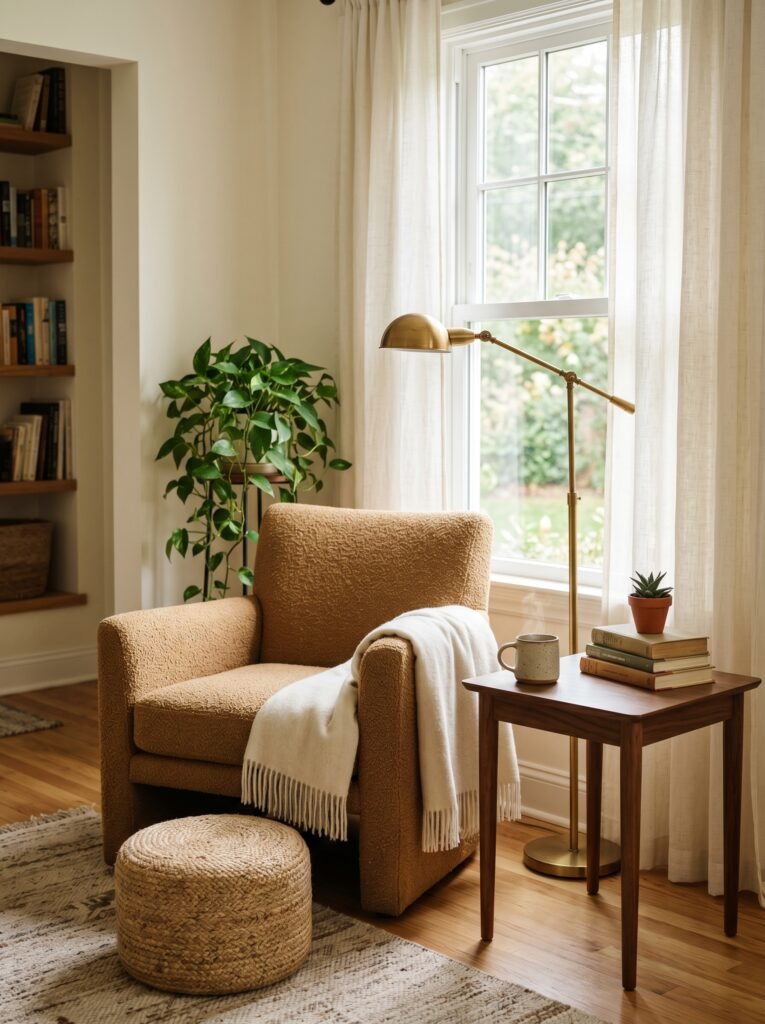
This might be the most underestimated element on this entire list. Scent bypasses conscious thought and goes straight to the limbic system — the part of the brain responsible for emotion and memory. The right scent in your living room can make it feel instantly more welcoming, more lived-in, more yours.
Warm, grounding scents like vanilla, sandalwood, cedarwood, and amber create an immediate sense of coziness. Herbal or earthy scents like eucalyptus and bergamot add a spa-like freshness. For seasonal resonance, cinnamon and clove in autumn, fresh linen or lavender in spring, and citrus in summer all contribute to a room that feels attentive and curated.
Candles are the most beloved delivery method, but essential oil diffusers, linen sprays, and wax melts all work beautifully. Be thoughtful about overwhelming the room — subtle scent that guests notice when they first walk in, then settle into comfortably, is always preferable to a room that announces its fragrance from the hallway.
—
12. Personalizing Your Space So It Feels Like Nobody Else’s Home
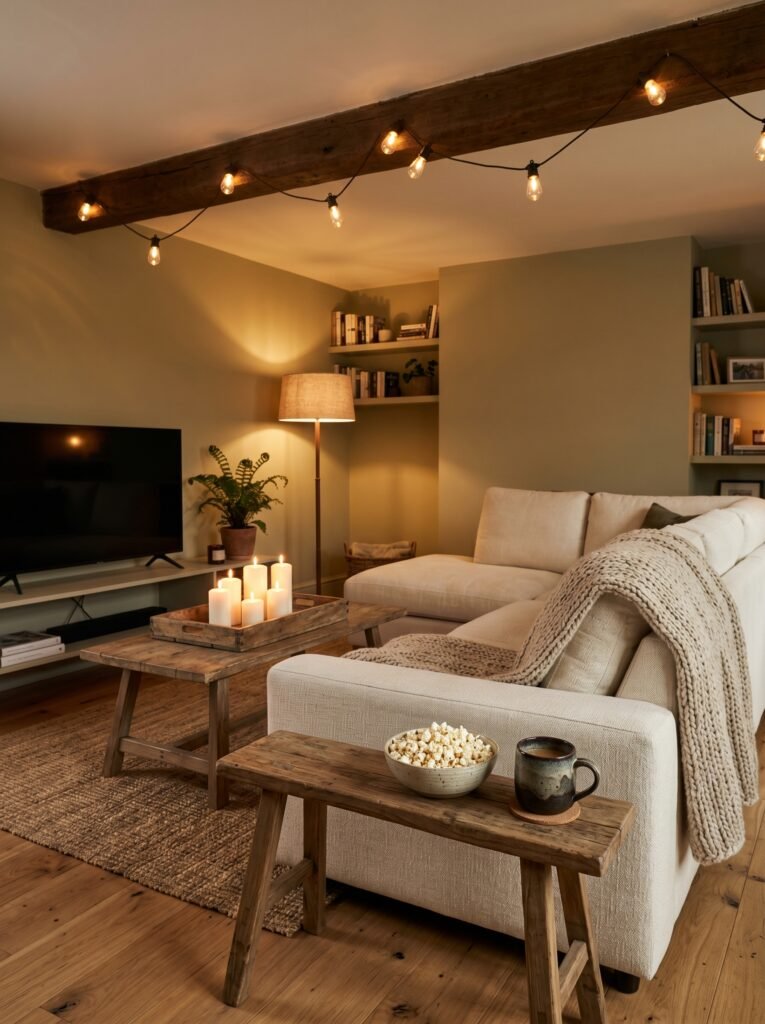
The most comfy living rooms are also the most personal ones. They’re the rooms where you notice a framed print from a trip that clearly meant something, a shelf of beloved books that are obviously actually read, a family photo tucked beside a small lamp. These details aren’t noise — they’re signal. They say: a real person with a real life lives here.
Personal touches don’t have to be grand gestures. A small bowl where you always toss your keys. A throw blanket your grandmother knitted. A candle in the scent you associate with Sunday mornings. A gallery wall built slowly over years, adding one frame at a time as life happens. These things can’t be bought as a set and delivered in a flat-pack box — they accumulate through living, and that is precisely what makes them so irreplaceable.
Resist the urge to make your living room look exactly like a Pinterest board (even this one). Use those boards as inspiration, as a vocabulary of ideas — then translate them through the filter of who you actually are.
—
🌿 How to Maintain That Comfy, Inviting Feel Year-Round
Keeping a living room feeling consistently cozy isn’t about one big redesign — it’s about small, regular habits. First, do a quick reset each evening: fluff the cushions, fold the throws, clear the coffee table. It takes three minutes and the transformation is remarkable. Second, rotate your accessories seasonally — swap out lighter cotton throws for chunky knits in winter, switch candle scents, bring in fresh flowers or seasonal botanicals. Third, address lighting often — replace any harsh or flickering bulbs immediately, and reassess lamp placement when the light changes with the seasons. Fourth, declutter honestly and regularly — walk through the room every few weeks and remove anything that no longer belongs or serves a purpose. Finally, clean your soft furnishings on a schedule: vacuum sofa cushions, wash throw covers, and spot-clean rugs before stains set. A clean room genuinely feels more comfortable, even when you can’t explain exactly why.
—
❓ FAQ
Q: What is the most important element in making a living room feel cozy? A: Lighting is consistently cited by interior designers as the single most impactful element. Warm, layered lighting — combining overhead fixtures, floor lamps, and accent sources — transforms a room’s atmosphere more dramatically than almost any other change. If you can only do one thing, swap cool-toned bulbs for warm ones and add a floor lamp to your seating area.
Q: How do I make a small living room feel comfy without it feeling cramped? A: Choose furniture with legs (it creates visual breathing room), use mirrors to reflect light and add depth, keep your color palette warm but light, and invest in one large rug rather than multiple small ones. The most important rule for small spaces is to resist the urge to fill every corner — negative space is not empty space, it’s breathing room.
Q: Can I create a comfy living room on a tight budget? A: Absolutely — and often the most personal, characterful living rooms are built on a modest budget over time. Thrift stores and estate sales are extraordinary sources for lamps, rugs, baskets, and decorative objects. Rearranging your existing furniture costs nothing and can completely change a room’s feel. Fresh paint is one of the highest-impact, lowest-cost changes you can make. And a few well-chosen throw blankets and cushion covers can transform a basic sofa into something that looks curated and intentional.
—
💭 Final Thought
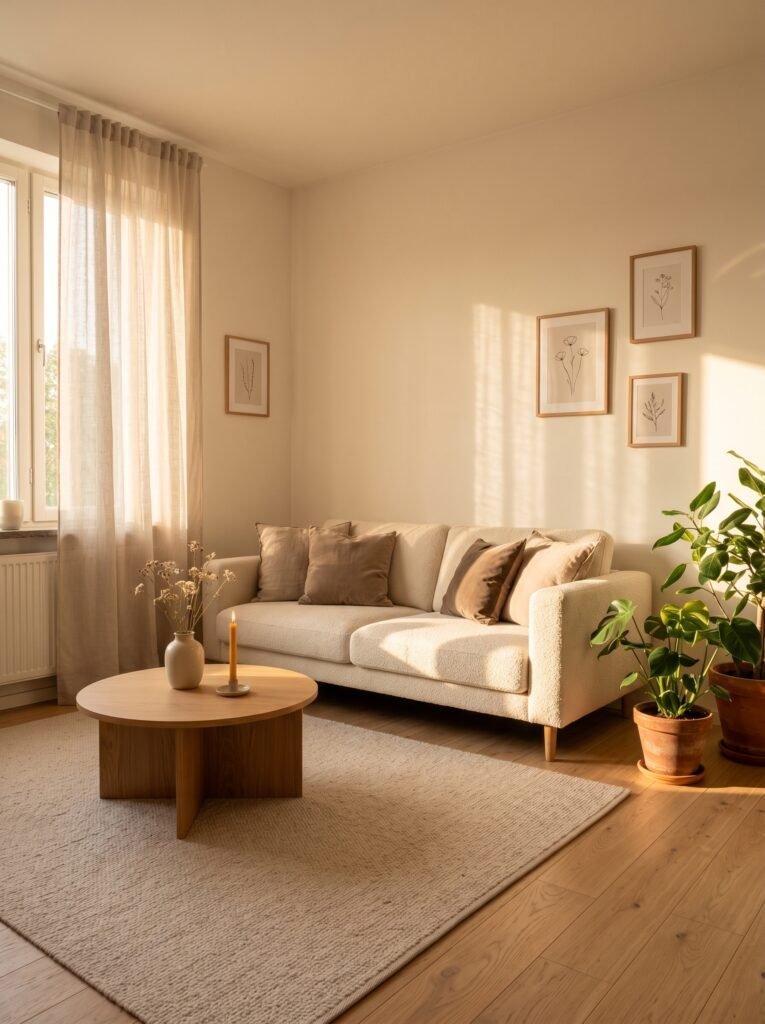
A comfy living room isn’t a destination you arrive at once and never revisit — it’s a practice, a conversation between you and the space you inhabit. It grows and shifts as you do, collecting the memories and textures of a life genuinely lived. The goal was never perfection. The goal was always a room that makes you feel, unmistakably, like you’re home.
So here’s what I want to leave you with: what is the one thing in your living room right now that you walk past every day wishing you’d change — and what would it feel like if you finally did?