The Lighting Mistake That’s Making Your Living Room Feel Cold (And What to Do Instead)
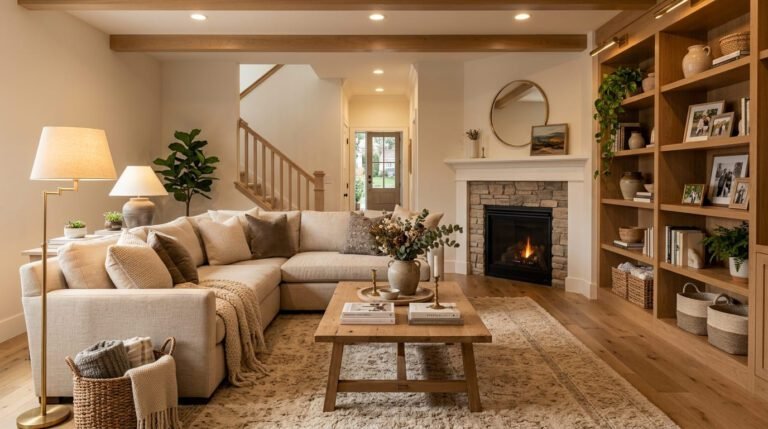
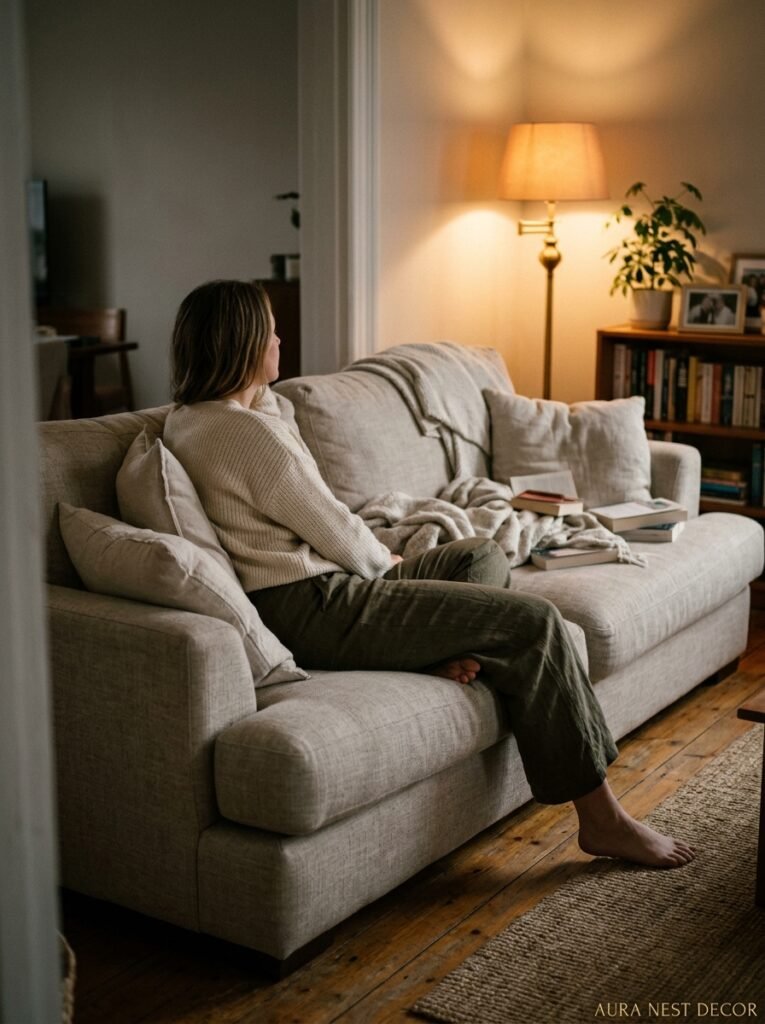
You know that feeling when you walk into someone’s house and it just feels right? Cozy, golden, lived-in. You can’t immediately figure out why. Then you look up, and there’s no overhead fluorescent glare killing the mood — just warm, layered light that makes everyone look good and the room feel like it’s breathing.
That’s not an accident. And it’s not expensive. It’s just knowing a few things most people don’t.
—
1. Why Your Living Room Feels “Off” and It’s Probably Not the Furniture
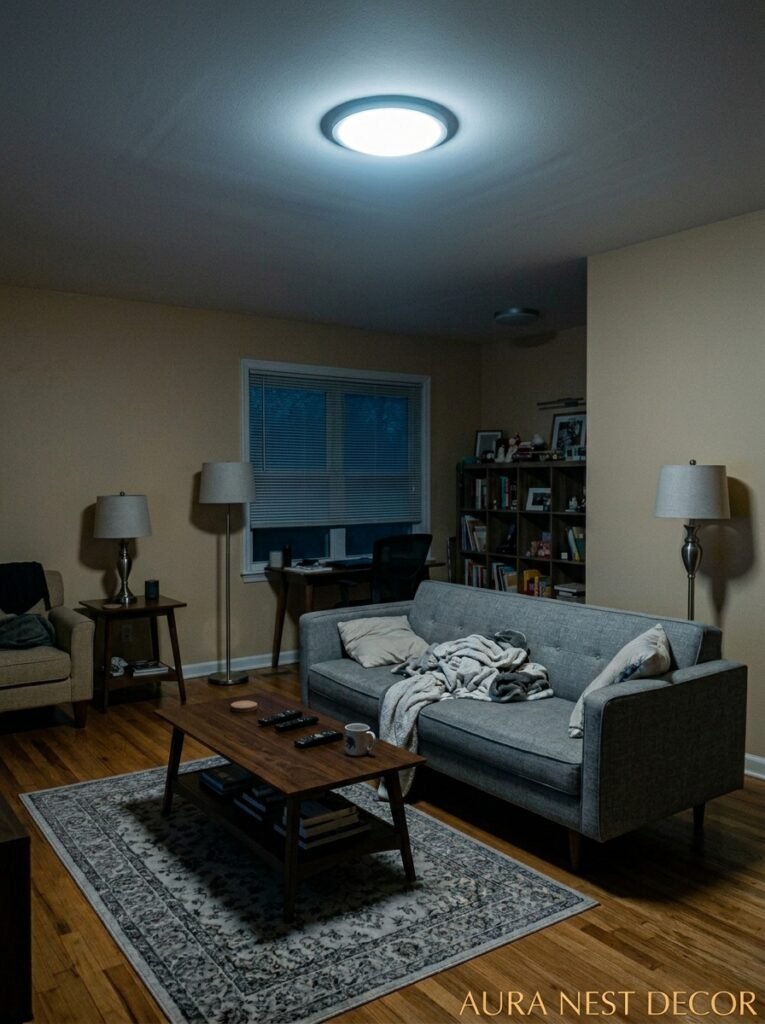
I spent years rearranging sofas and repainting walls before someone finally told me the truth. It wasn’t the sofa. It wasn’t the paint color. It was the lighting. Specifically, it was ONE overhead light doing ALL the work.
Here’s the problem with that: a single ceiling fixture casts light straight down. Shadows pool underneath furniture. Faces look tired. The room feels like a waiting room, not a living room. And no amount of throw pillows fixes that.
The fix isn’t buying all new everything. It’s understanding that warm lighting is about LAYERS, not lumens. You want pools of light at different heights — low to the ground, at eye level, and occasionally up high — so the eye moves around the room instead of landing on one harsh point.
Side note — once you start noticing layered lighting in restaurants, hotel lobbies, film sets, you genuinely cannot stop. It’s a bit of a curse, honestly.
“One overhead light is the fastest way to make a beautiful room feel like a doctor’s office.”
—
2. The Color Temperature Thing Nobody Explains Properly
Okay so color temperature sounds technical and boring. Stay with me.
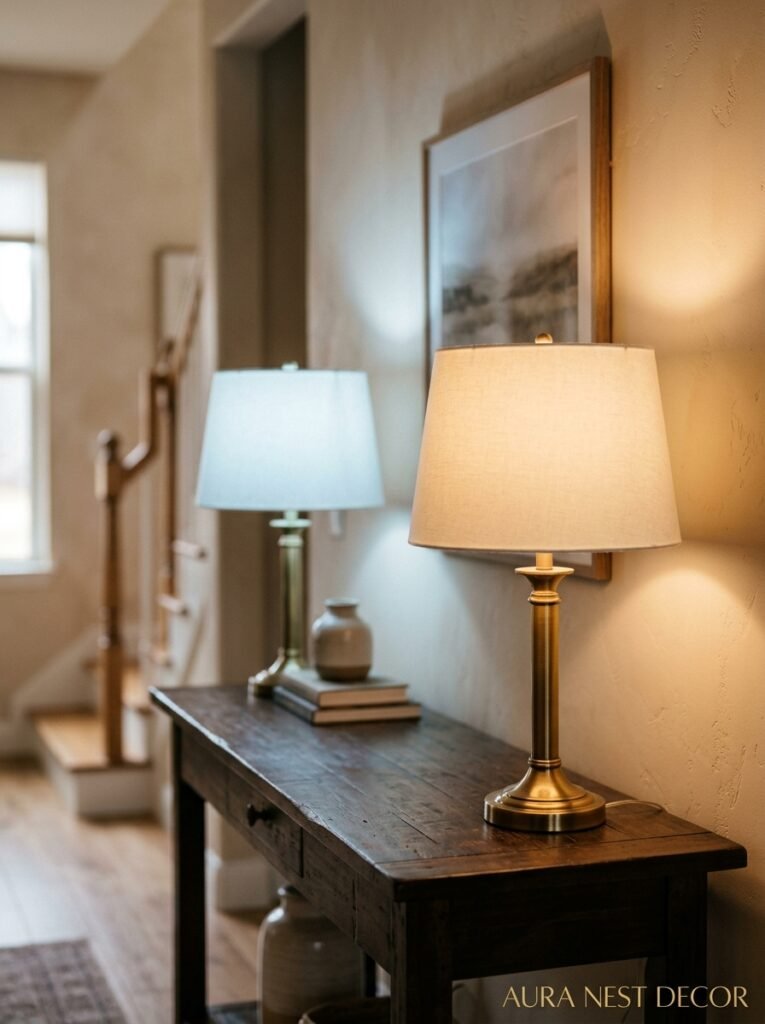
Bulbs are measured in Kelvins. Higher number = bluer, colder, more office-y. Lower number = warmer, more amber, more “golden hour at 6pm in October.” For a living room you want somewhere between 2200K and 2700K. That’s the sweet spot.
2200K is very amber — almost candlelight. Gorgeous for evenings, a bit dim for reading. 2700K is still warm but bright enough to actually see. Most people do best starting at 2700K and then layering in some 2200K accent lights (candles, a low lamp in the corner) for evenings.
The mistake I see CONSTANTLY on Pinterest boards that don’t quite work: mixing warm and cool bulbs in the same room. One warm lamp, one daylight bulb in the ceiling fixture, maybe some cool LED strips under the shelf. The room ends up looking confused. Your brain can’t settle. Pick a temperature and commit to it throughout.
Also, please stop buying “cool white” bulbs for living rooms. They’re fine in bathrooms. In a living room they’re genuinely depressing, I don’t care how modern the fixture is.
—
3. The Lamp Placement Formula That Interior Designers Use and Don’t Really Talk About
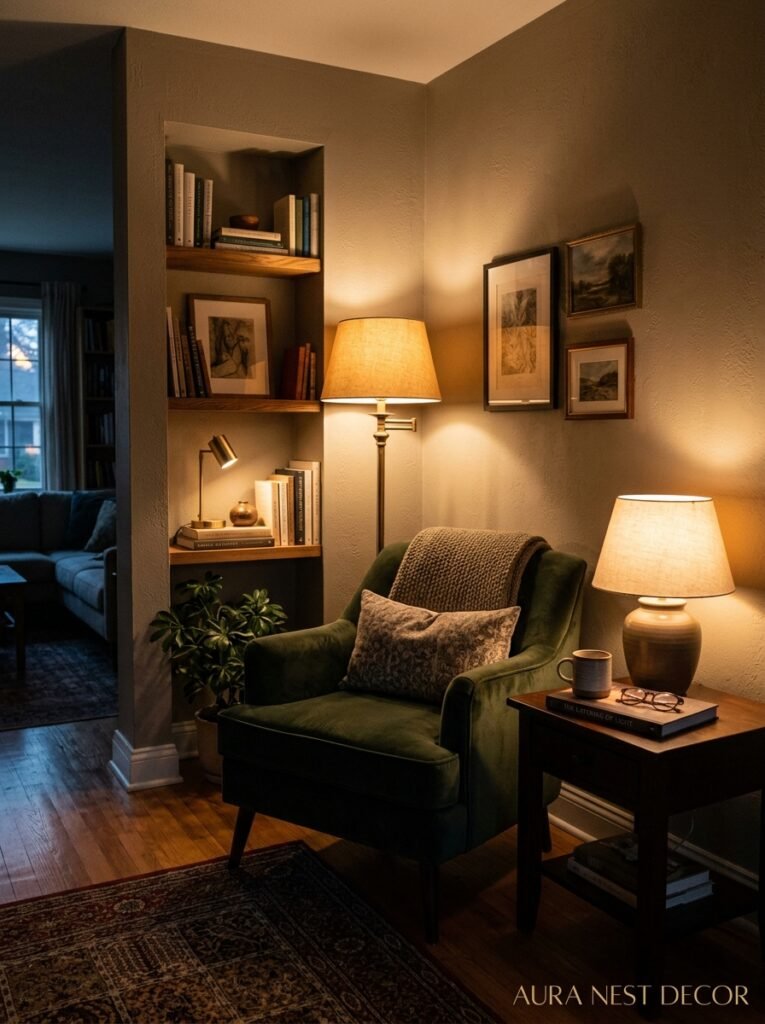
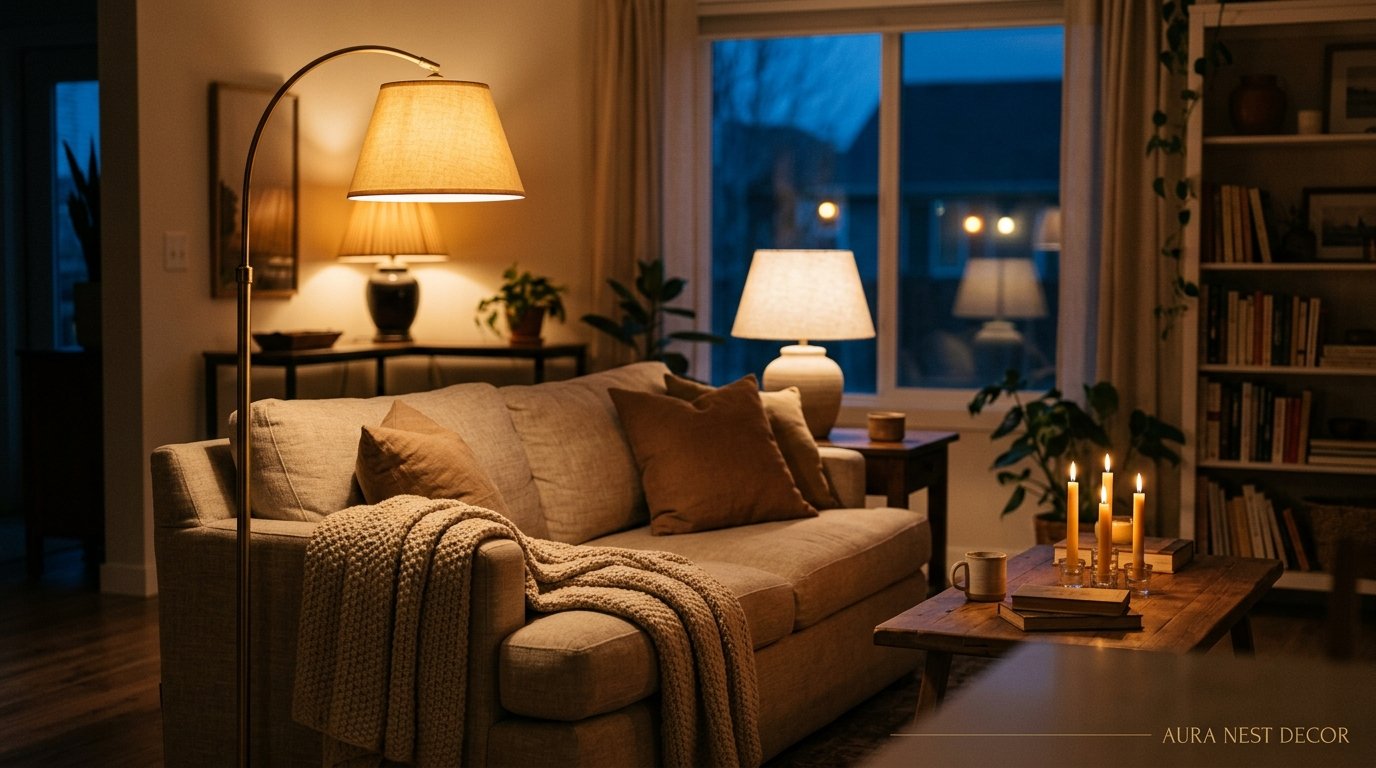
There’s a rule — sort of unofficial — that experienced designers use when they’re styling a room for photography or staging. You want a light source visible in every corner of the room when you stand in the doorway. Not blazing, not overhead, just — present.
That usually means three to five sources in an average living room. Not three to five OVERHEAD lights. Three to five light sources TOTAL at varying heights. A floor lamp in one corner. A table lamp on the side table. Maybe a wall sconce or a plug-in sconce if you’re renting and can’t wire anything. A few candles on the coffee table don’t hurt either — and yes, real flames count.
The actual placement matters too. Lamps pushed back into corners do more work than lamps sitting right in the middle of a shelf. A corner lamp bounces light off two walls at once. That’s twice the warmth for zero extra effort.
—
4. Edison Bulbs Are Back and the People Who Never Left Were Right All Along
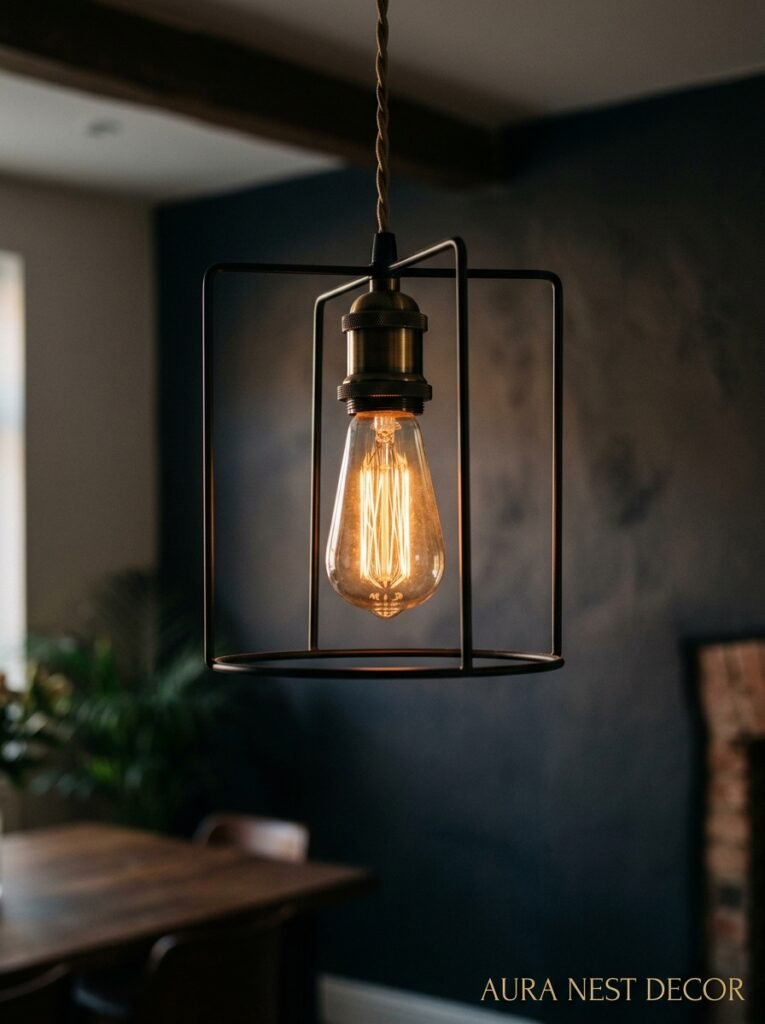
I know, I know. Edison bulbs had their moment circa 2014 and then everyone declared them over. But here’s the thing — the people who kept them weren’t being nostalgic. They were just right about the light.
That amber glow at 7pm, when the sun’s gone down and you’ve got nothing on but a single Edison bulb in a glass pendant over the reading chair — genuinely one of the most comforting things a room can offer. It doesn’t look like a trend. It looks like warmth.
Modern Edison bulbs are LED now, so the energy efficiency argument against them is basically gone. Look for “vintage filament” or “amber LED” bulbs. They’re available at most hardware stores and a lot of them are dimmable, which matters a LOT (more on dimmer switches in a minute, because they might be the single best £20/$25 you’ll ever spend on your home).
The one thing I’d say: Edison bulbs work best in exposed fixtures where the bulb is part of the design. Shove one in a lampshade and you lose the whole effect.
—
5. What Happens When You Install a Dimmer Switch (Honestly, Everything Changes)
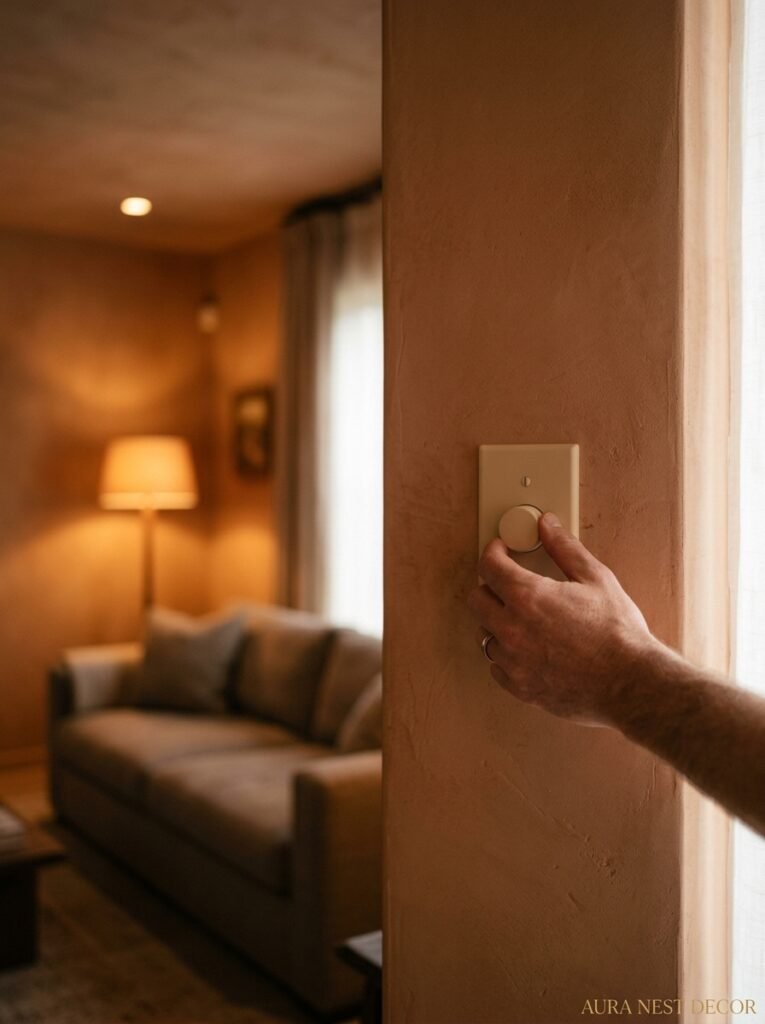
Not gonna lie, I resisted dimmer switches for years because I thought they were complicated to install. Then I looked it up. In most standard UK and US homes, a dimmer switch replaces an existing switch in about 15 minutes with a screwdriver. No electrician needed.
And the difference. Oh, the difference.
A room at full brightness at noon feels completely different from the same room at 40% brightness at 9pm. Dimming doesn’t just reduce light — it changes the COLOR of the light. Warm bulbs get warmer. Amber gets more amber. The room shifts from functional to atmospheric without you moving a single piece of furniture.
Pair a dimmer with a 2700K or 2200K bulb and you’ve basically built yourself a whole evening mood. Turn it down low, light a candle or two, and that’s a room that feels intentional in a way that impresses people who can’t quite put their finger on why.
One thing: make sure your bulbs are labeled “dimmable.” Not all LEDs are, and non-dimmable bulbs will buzz and flicker on a dimmer. Annoying and slightly anxiety-inducing.
“A dimmer switch is the cheapest renovation you’ll ever do to a room. And it’s the one you’ll notice every single day.”
—
6. The Color on Your Walls Is Either Fighting Your Warm Light or Helping It
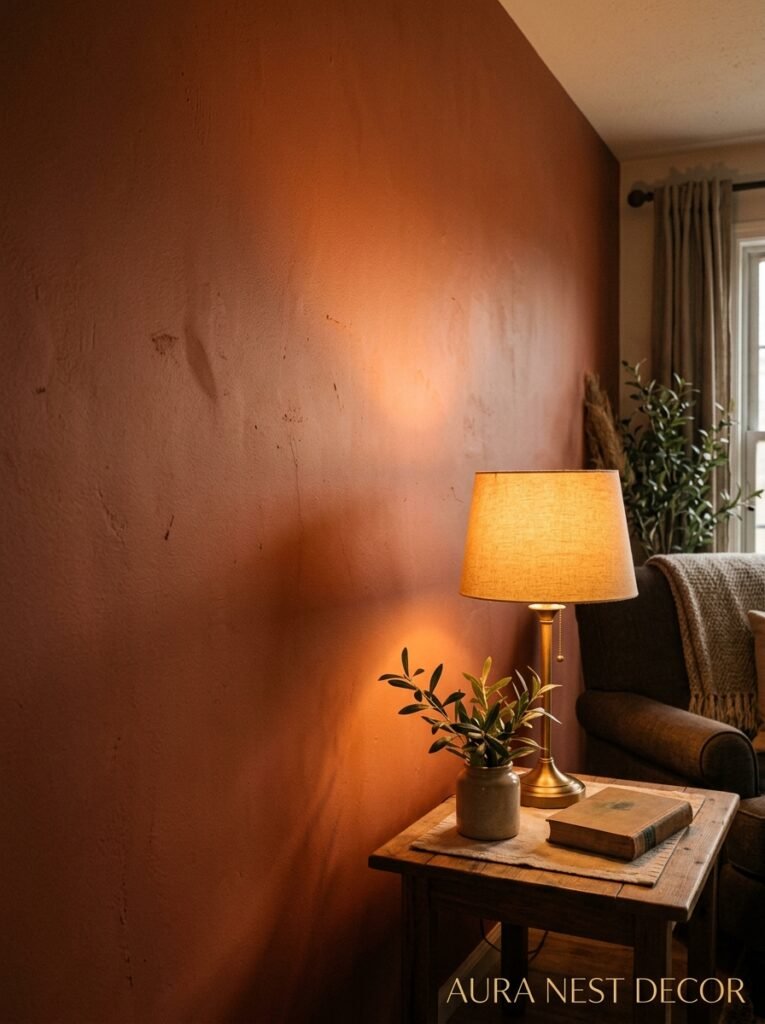
This is where it gets a bit counterintuitive. You can buy all the warm bulbs in the world and still end up with a cold-feeling room if the walls are working against you.
Cool grays, bright whites, stark blues — they reflect cool light. Even a warm bulb bouncing off a very cool gray wall will lose some of its warmth. The room feels a little clinical. A little flat.
Warm whites, creamy off-whites, soft terracottas, olive greens, dusty pinks — these colors HOLD warm light. They absorb it and give it back with something extra. A 2700K bulb in a room with warm cream walls glows like the room itself is a candle.
You don’t have to repaint your entire house (although if you’re thinking about it — warm tones, seriously). Even painting ONE wall a deep warm color — a rich cognac, a terracotta, a moody sage — can create a corner of the room that catches light beautifully and anchors the whole space.
The UK light situation, especially in winter, makes this even more important. Natural light is so limited that your artificial lighting is basically doing the heavy lifting from October through March. Warm walls make warm light feel like it’s been there all day.
—
7. Candles Are Not Just Decorative and I’ll Die on This Hill
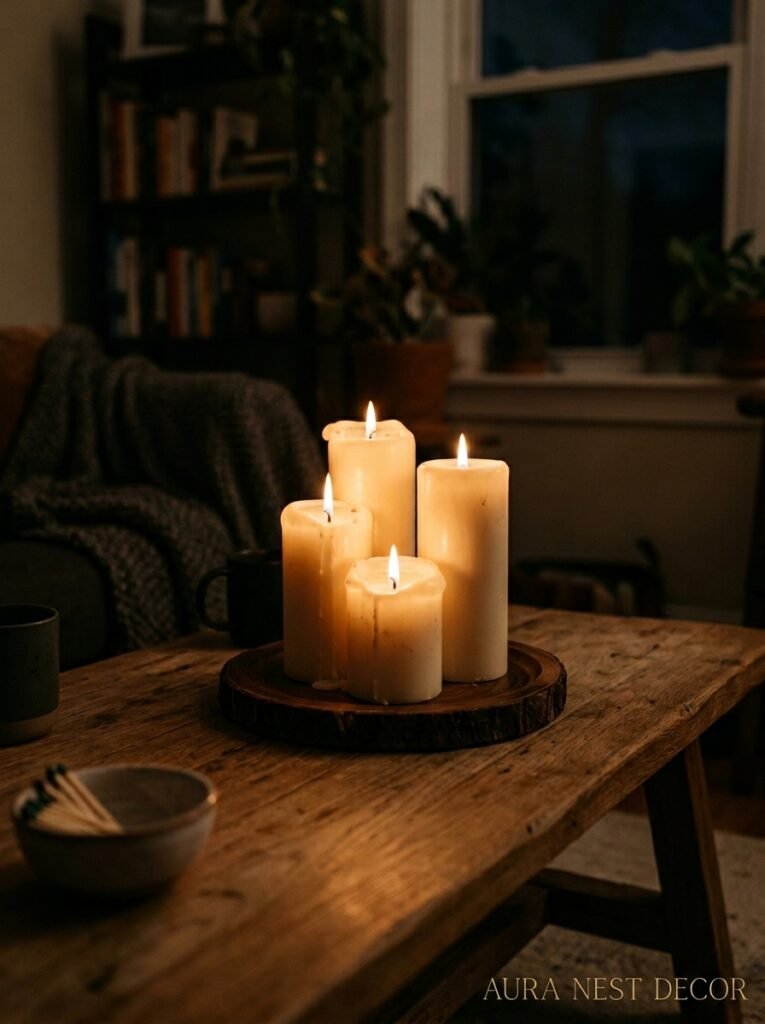
People treat candles like styling props. Something to put on the coffee table for photos. But actual, burning candles are one of the most effective warm lighting tools in any room, because they produce the warmest, most flickering, most alive light you can get.
Flame temperature is around 1800K. That’s WARMER than any lightbulb you can buy. The flicker adds movement. Movement adds life. A room with candles burning feels inhabited in a way that even the best lamp can’t fully replicate.
For living rooms, I’d suggest grouping them rather than scattering singles everywhere. Three candles of different heights together on a tray on the coffee table. Or a cluster of pillar candles on a fireplace mantel. The group creates something that reads as a light source, not just decoration.
Scent matters too — but that’s another article entirely. For pure warm light purposes, unscented works just as well as anything fancy.
“Candles at 1800K are warmer than any bulb ever made. They’re not decoration. They’re the original warm lighting strategy.”
—
8. The Floor Lamp Nobody Is Talking About Enough
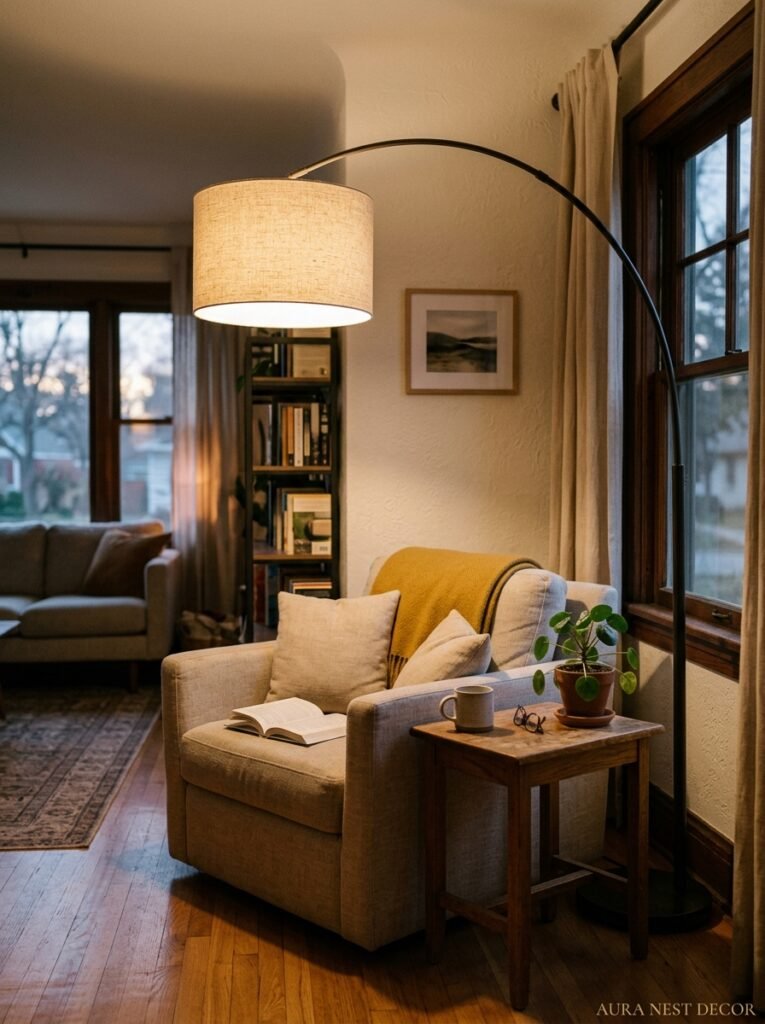
Arc floor lamps have been having a moment and honestly, deserved. But I want to talk about a different kind of floor lamp — the simple, tall torchiere style that faces UP.
An upward-facing floor lamp bounces light off the ceiling and spreads it across the whole room without any direct glare. It’s diffused, even, soft. It adds warmth without creating a harsh focal point. In a room where the overhead light is harsh or unflattering, a torchiere in the corner pointing up can completely replace it as the main light source.
With a warm bulb inside — 2700K or lower — a torchiere creates this almost cloud-like glow across the ceiling that makes the room feel taller and cozier at the same time. Which sounds like a contradiction but it’s not.
They’re also cheap. Like, genuinely cheap. You don’t need the designer version. A basic plug-in torchiere from a hardware store or secondhand shop, a good warm bulb, put it in the darkest corner, turn it on. Done.
—
9. Table Lamps: Why Height Matters More Than Style
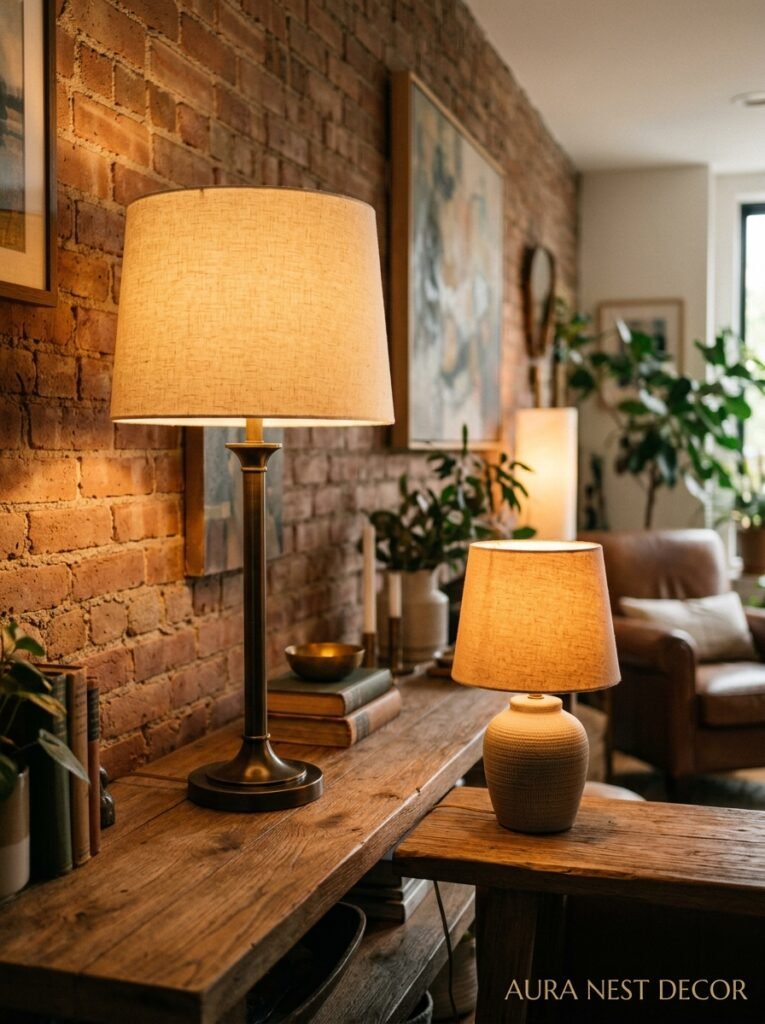
Okay so you’ve found the perfect lamp. Beautiful base, great shade, exactly the right vibe. But if it’s sitting too high or too low, it’s not going to do what you think it’s going to do.
The shade of a table lamp, when you’re seated, should roughly be at eye level. Not the base — the shade. This means for a lamp on a side table next to a sofa, the shade should be somewhere around 18 to 20 inches above the table surface, give or take depending on your sofa height.
Why does this matter? Because a lamp that’s too tall sends all its light too high, so you’re sitting in shadow underneath it. A lamp that’s too short shines light directly at your face. Neither is cozy. Both are mildly annoying in a way you can feel but can’t explain.
When the shade sits at seated eye level, the light pools AROUND you rather than over or at you. That’s the sweet spot where warm light actually feels like warmth.
—
10. The Bookshelf Light Trick That Changes Everything About a Wall
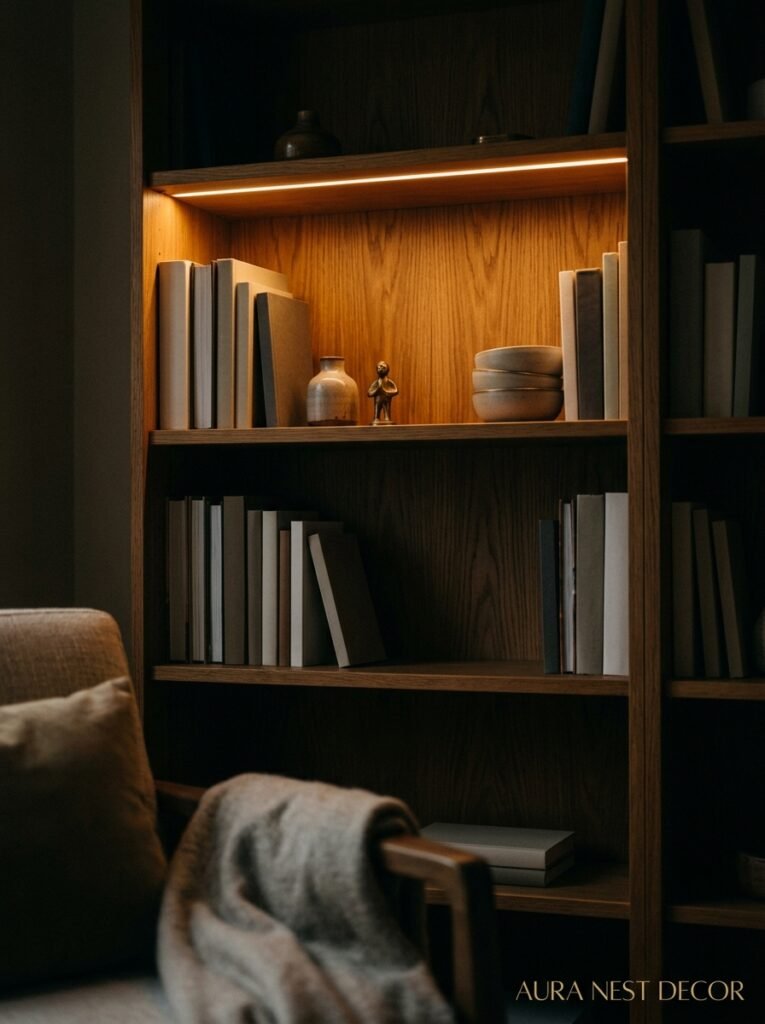
If you’ve got a bookshelf, built-in or freestanding, you’re sitting on an untapped warm lighting opportunity. Plug-in LED strip lights in a warm amber color, tucked behind the books along the top of each shelf, create this gorgeous backlit glow that makes the whole unit look like a piece of art.
You’re not lighting the books. You’re lighting the wall behind the books, and letting that glow spill out from the edges.
It’s warm. It’s interesting. It makes a bookshelf feel like a destination in the room instead of just furniture. And plug-in LED strips cost almost nothing — you can find warm amber options for under $15/£12 and they’re genuinely simple to install.
Same trick works on floating shelves. Behind plants if you’ve got them displayed on a shelf. Even behind a large piece of art hung close to a wall, the backlight creates a halo effect that’s genuinely lovely.
—
11. What Natural Light During the Day Has to Do With Warm Light at Night
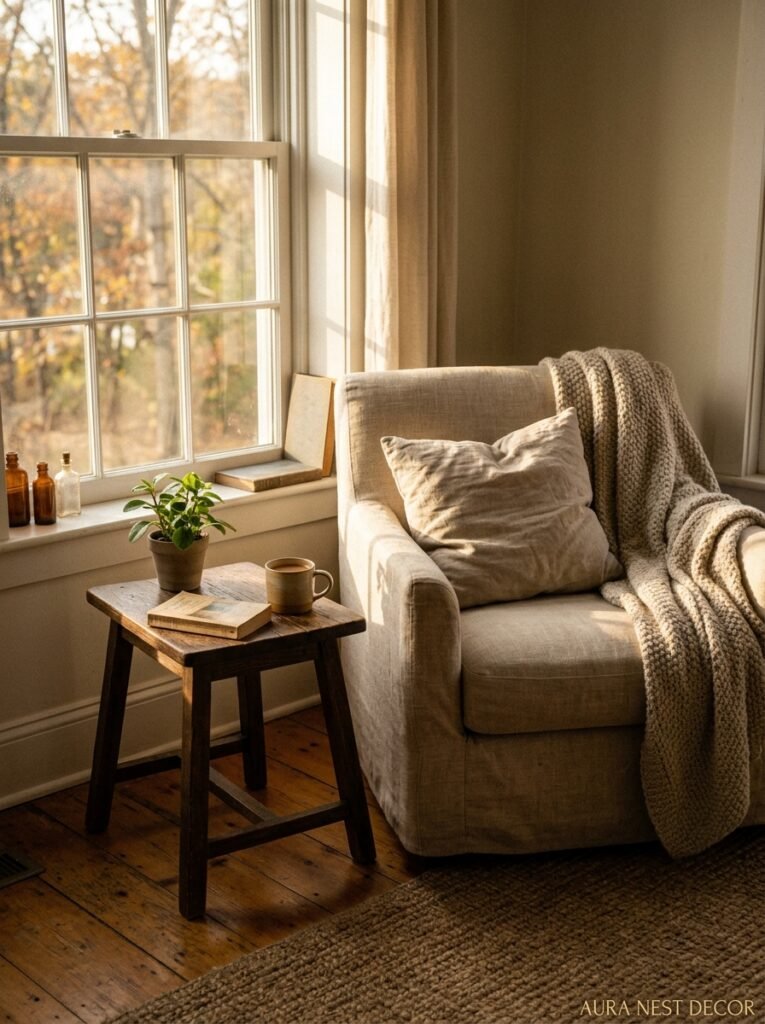
Here’s something that doesn’t get said enough: how your room handles natural light during the day affects how much warm artificial light you need at night. Not because of some complicated physics thing — just psychologically.
Rooms that get good natural light during the day feel MORE cozy when the lighting shifts to warm and low in the evening. There’s contrast. Your brain registers the shift. It relaxes.
Rooms that are dark all day and then lit with warm light at night can sometimes feel a bit cave-like, even with perfect bulb choices. So think about your curtain situation during the day. Sheer curtains that let light flood in. Keeping windows unobstructed. Letting the room breathe with daylight so that when you shut it all out and light your lamps at 6pm, the shift feels intentional and intimate rather than just dark.
It’s the difference between a den and a sanctuary. Both are dark. Only one of them feels that way on purpose.
—
12. The Easiest Way to Start If You’ve Done Nothing Yet
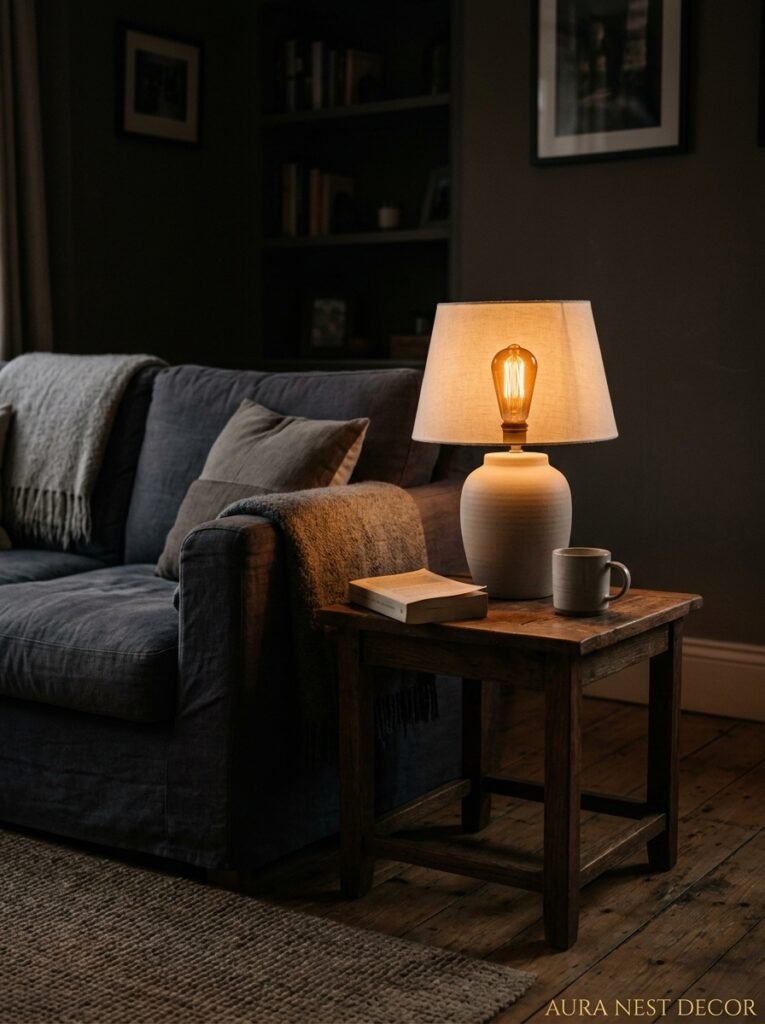
Look. If you’ve read all of this and you’re staring at your living room thinking “where do I even start” — here’s the honest answer. One lamp. One warm bulb. One corner.
Buy a simple floor lamp or pull out one you already own. Put in a 2700K LED bulb. Set it in the darkest corner of your living room. Turn off your overhead light. Sit down.
That’s it. That’s the first step. And I genuinely think you’ll be surprised by how much a room changes when you’re not fighting overhead light anymore. Once you feel it, you’ll want more — another lamp, a dimmer switch, maybe some candle clusters on the mantel. But you don’t have to do it all at once.
Warm lighting is one of those things that builds. You add one thing, the room responds, you add another. Before long your living room looks like somewhere you genuinely want to be.
—
❓ FAQ
Q: What’s the best light bulb color temperature for a cozy living room? A: Go for 2700K as your starting point — it’s warm without being so amber that you can’t see anything. If you want full evening atmosphere, layer in some 2200K options through accent lamps or candles. Anything above 3000K starts to feel cool and less relaxing.
Q: Can I make my living room feel warmer without buying new furniture or painting the walls? A: Yes, completely. Swap your bulbs to warm LEDs (2700K), add a floor lamp or two in the corners, and install a dimmer switch on your existing overhead light. Those three changes alone will shift the whole feel of the room and none of them are permanent.
Q: How many lamps do I actually need in a living room? A: A good rule of thumb is one light source per seating area, plus at least one ambient source (a torchiere, a wall sconce, or a cluster of candles) that’s not tied to a specific seat. For most average-sized living rooms that’s three to five sources total, at different heights.
—
💭 Final Thoughts
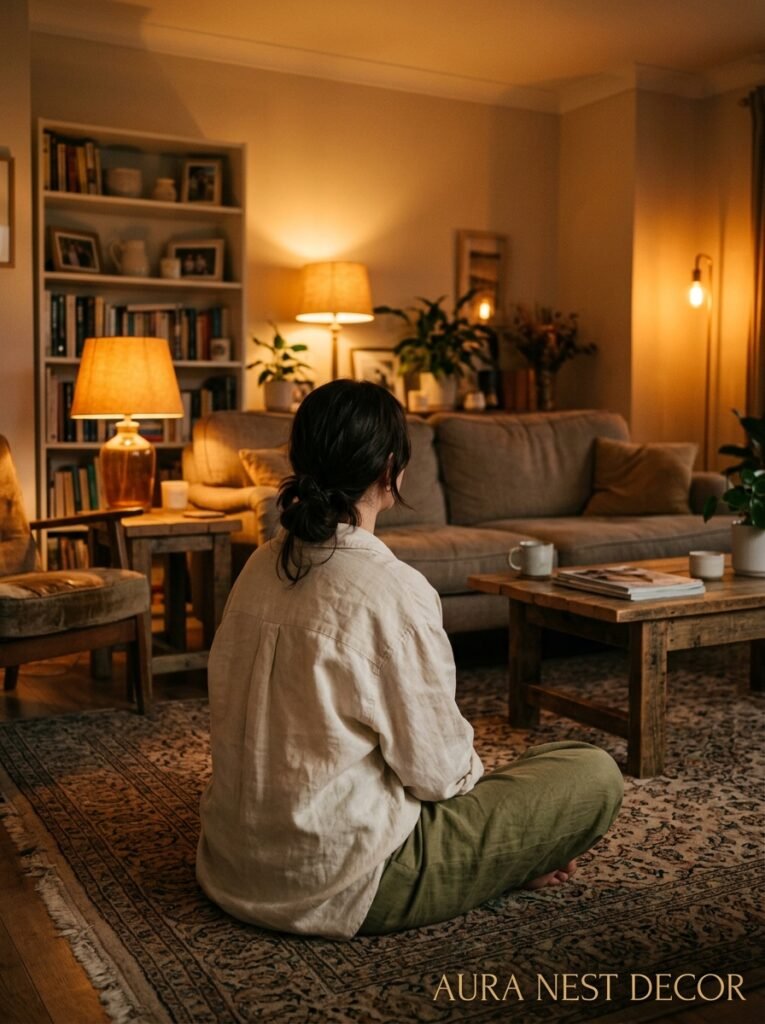
Warm lighting isn’t really about the light. It’s about how you want a room to feel at 8pm when the day is done and you finally sit down. That feeling is absolutely achievable — with a $15 bulb swap, a dimmer, a single good lamp in the right corner. It doesn’t have to be a project. It just has to be intentional.
What’s the one change you could make in your living room this week that would make it feel a little more like somewhere you want to stay?