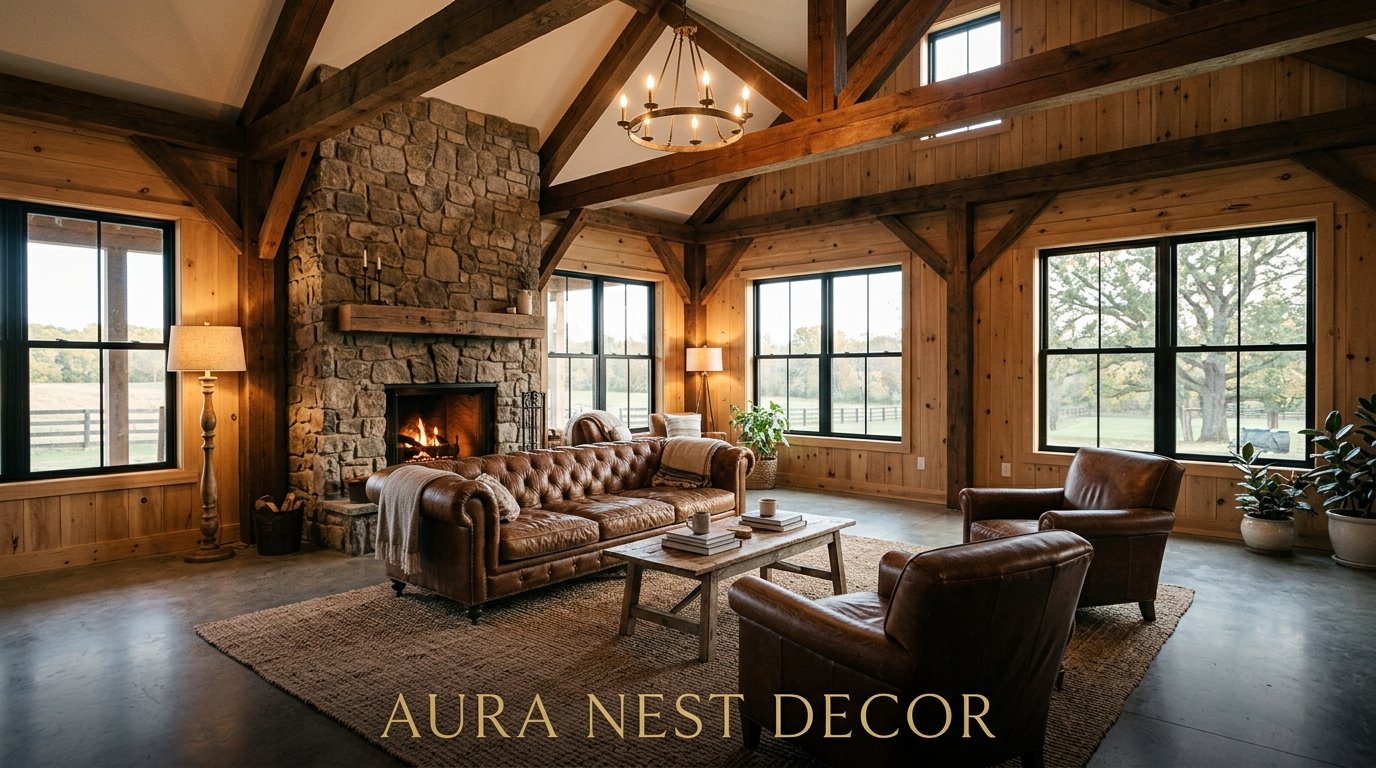
The Living Room Makeover Nobody Warned Me Would Become an Obsession
My neighbor Sarah knocked on my door last spring and said, “Did you do something to your living room? It feels like a completely different house.” I hadn’t done anything dramatic — no renovation, no new sofa. Just a slow accumulation of choices that, apparently, added up to something.
That something was barn house style. And now I can’t stop.
—
1. Why Barn House Living Rooms Hit Different Than Every Other “Cozy” Trend
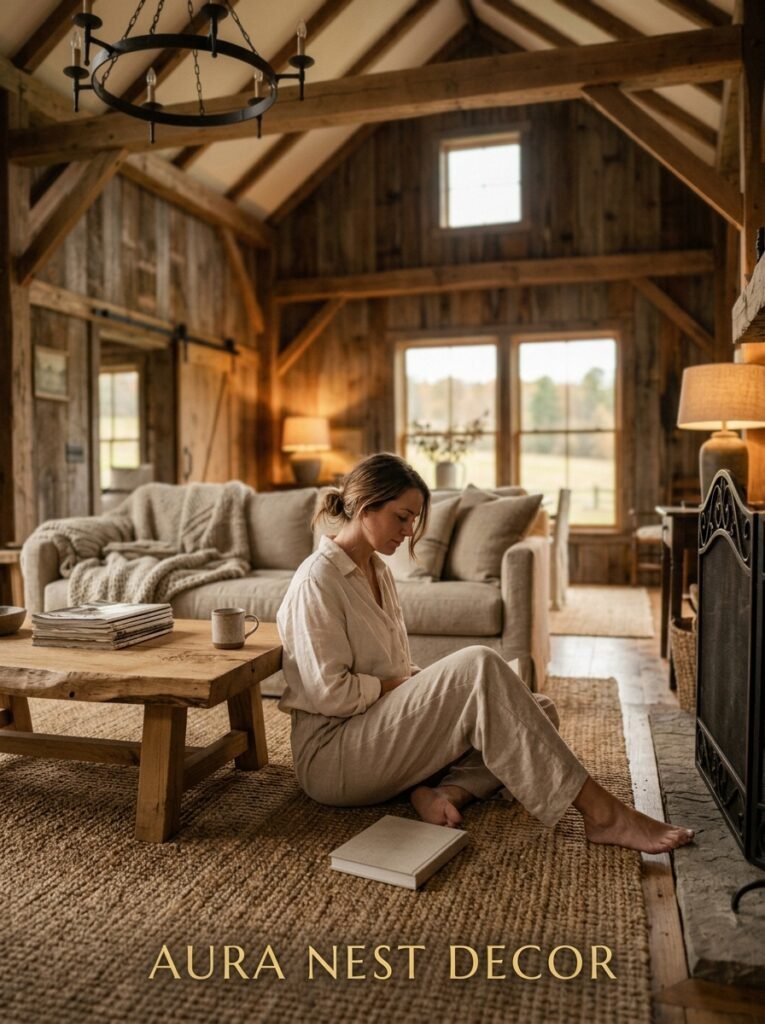
Here’s what I didn’t expect: barn house decor isn’t actually about making your home look like a barn. That’s the misconception that keeps people from trying it. It’s about a specific feeling — worn, earned, solid, like the room has been lived in for decades even if you just moved in six months ago.
Every other cozy trend right now feels like it’s trying too hard. Japandi is beautiful but cold at the edges. Cottagecore tips into the precious. Barn house style just… sits there. Confident. It doesn’t need you to notice it.
The textures do the work. Rough-hewn wood, faded linen, iron fixtures that have some actual weight to them. The whole thing reads as effortless because the materials themselves carry the history. You’re not decorating — you’re curating evidence that a real life happens in this room.
“Barn house style doesn’t try to look curated. That’s exactly why it works.”
And honestly? It photographs BEAUTIFULLY. Which, if you’re a Pinterest person, matters more than you want to admit.
—
2. The Wood That Makes or Breaks the Whole Room
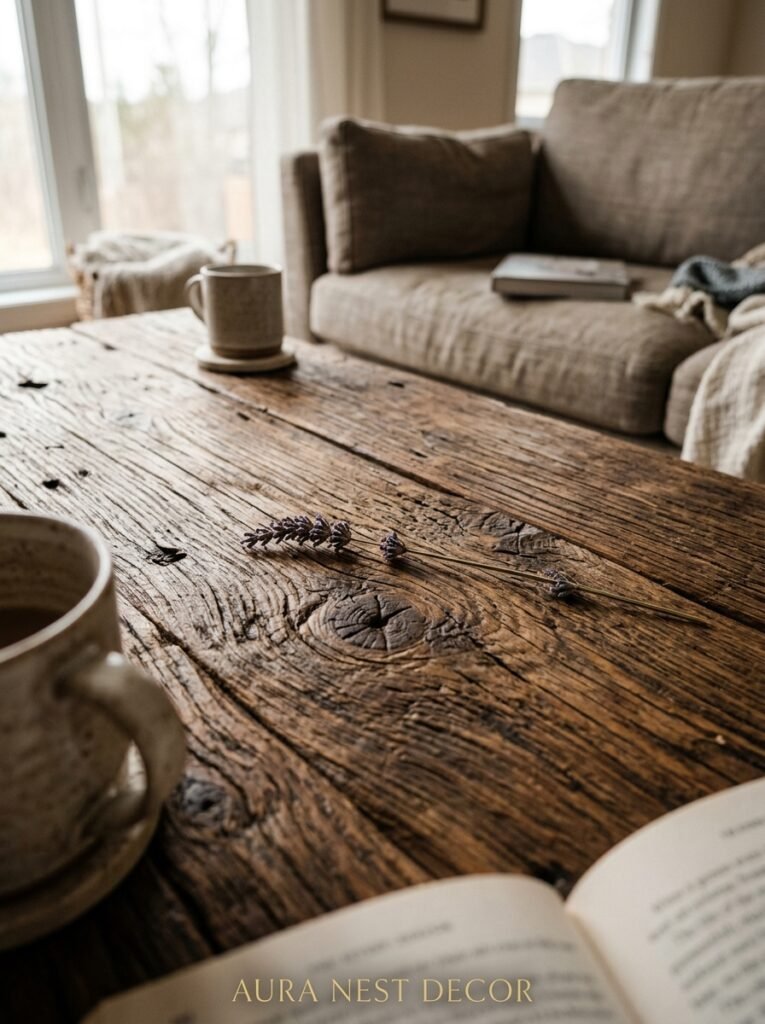
Let’s talk about reclaimed wood, because this is where most people get it wrong.
There’s a difference between reclaimed wood and wood that’s been distressed to look reclaimed. One has genuine character — nail holes, saw marks, grain variations, color shifts from decades of sun exposure. The other looks like someone took sandpaper to a piece of pine from the hardware store and called it rustic.
You can tell immediately. Don’t buy the fake version.
Real reclaimed wood beams across a ceiling will do more for your barn house living room than anything else in this entire article. If you’re in the UK, salvage yards around Yorkshire and the Midlands are absolute gold — you’ll find pieces with centuries of story in them. In the US, look at companies like Elmwood Reclaimed Timber or check your local Habitat for Humanity ReStores.
Can’t do ceiling beams? Fair. A reclaimed wood console table, a chunky wooden coffee table, even a single thick shelf above the fireplace — any one of those can anchor the whole aesthetic. The wood just needs to be REAL. Imperfect. A little unpredictable in its grain.
—
3. The Wall Color Situation Is More Interesting Than You Think
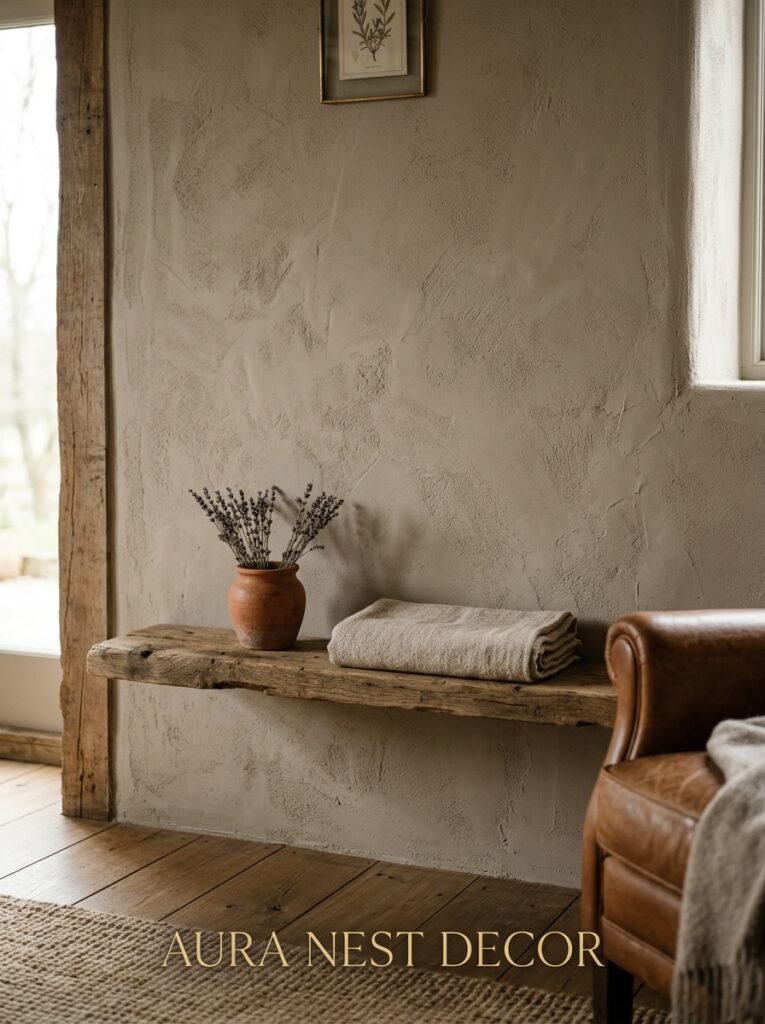
Most barn house inspo photos default to white walls. Shiplap white, plaster white, chalky white. And those look gorgeous, I’m not arguing.
But I’d push you toward something more interesting.
Warm greige. Deep charcoal. Or — and this is the one that keeps showing up in every living room I actually want to sit in — a muted sage green that looks almost gray in low light. Benjamin Moore’s “Pale Oak” does something magic in a barn-style room. So does Farrow & Ball’s “Mole’s Breath,” which sounds like the least appealing paint name in history but is genuinely one of the most beautiful neutrals I’ve ever seen on a wall.
The key is choosing something that looks different at noon versus 7pm. That light-shift quality is what makes barn house rooms feel ALIVE.
White walls do work best when you’ve got genuine architectural detail — exposed brick, wooden beams, board and batten paneling. If your walls are just… walls, add some color. Give them something to say.
—
4. Sofas That Actually Belong in a Barn House Room
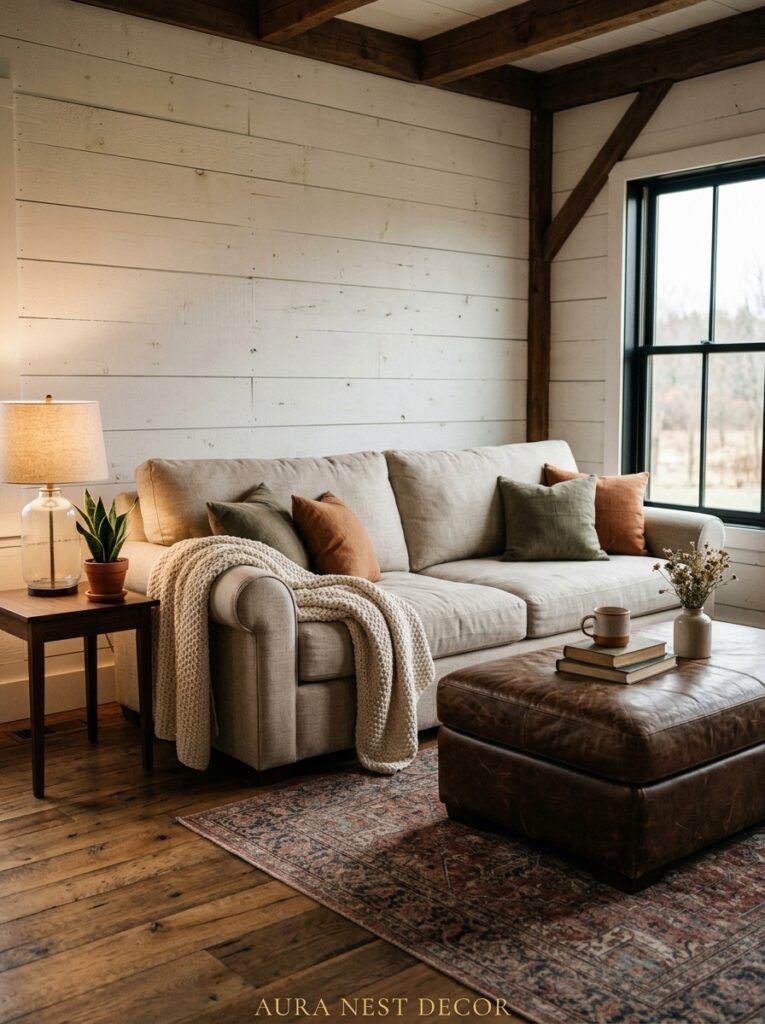
Okay, unpopular opinion coming: linen sofas are overrated for this style.
Linen looks incredible in photographs. In real life, in a barn house living room where the whole point is that people actually USE the space? It shows every crease, needs constant fluffing, and starts looking exhausted within about three months. I’ve been there.
What works better is leather — specifically, aged leather that already has some character. Not stiff, not precious, not obviously new. That slightly worn leather that gets softer every year and develops this incredible patina. In a cognac, saddle, or warm tobacco tone. A big, slightly battered Chesterfield or a wide-arm leather sectional will anchor a barn house room in a way that linen just can’t.
“The sofa should look like it’s been there for years. Even if you just bought it.”
For a more budget-friendly route: a slipcover sofa in heavyweight cotton canvas. Gets softer with washing, doesn’t require precious treatment, and tucks right into the aesthetic.
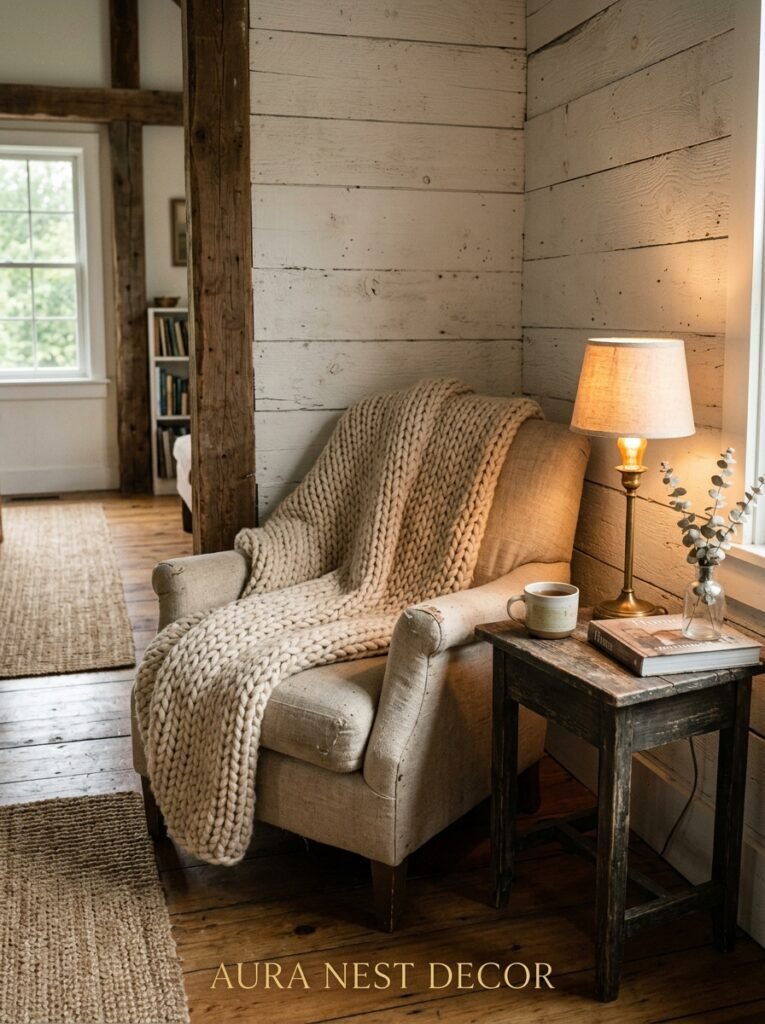
If you’re set on linen, go for a chunky weave in oatmeal or warm flax and commit to the throw blankets. Multiple. Layered. They’ll hide the crumpling.
—
5. The One Metal That Belongs in This Room (and the Ones That Don’t)
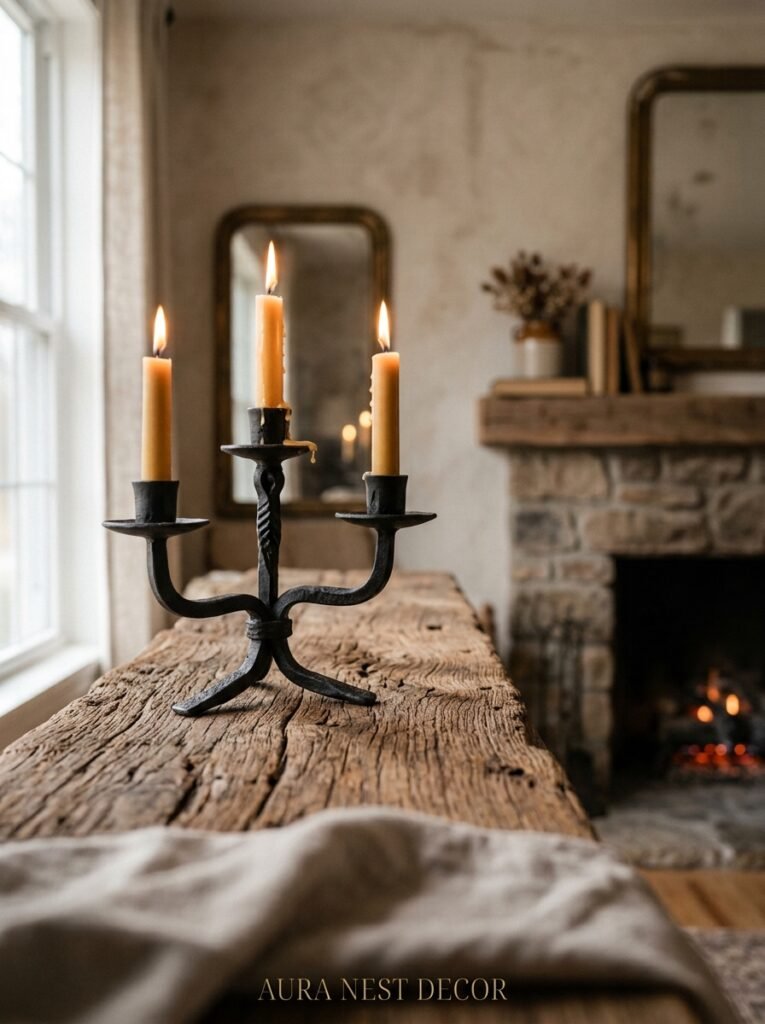
Barn house style has a metal rule and it’s pretty firm. Matte black and aged bronze are in. Everything else is a harder sell.
Not silver. Not brushed nickel. Definitely not chrome. Those finishes belong in different rooms — not here.
Matte black shows up in the curtain rod, the light fixture, the door hardware if you can swing it, maybe a black iron candle holder on the coffee table. It reads as industrial without being cold, which is the exact balancing act barn house style requires.
Aged bronze is warmer and slightly more British-country in feel — gorgeous in a table lamp base, picture frames, fireplace tools. If your space has warmer undertones in the wood and the walls, bronze is probably your metal.
What you’re going for is weight and age. These metals don’t look shiny and new. They look FOUND.
—
6. Lighting That Actually Changes the Mood of the Room
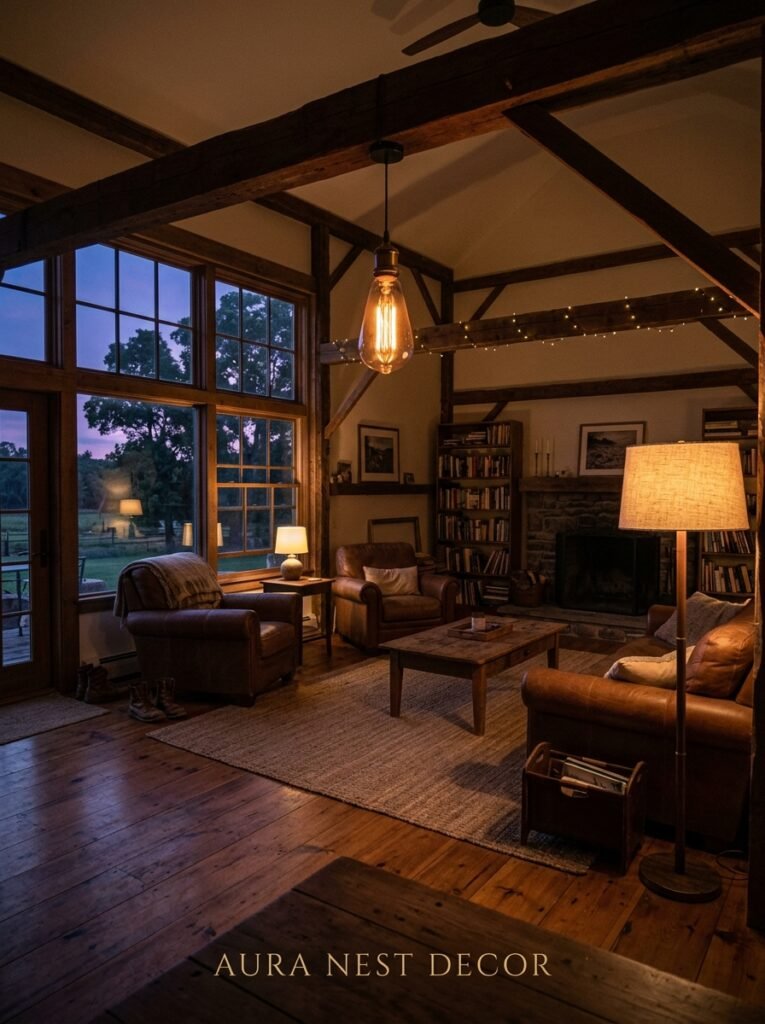
The wrong lighting will kill a barn house living room. Full stop.
No recessed LED grids. No harsh overhead fixture. Nothing that makes the room feel like a car showroom when the lights come on at night.
What you want: warm, layered, slightly imperfect. An exposed filament Edison bulb at 2700K in a pendant light over the seating area. A floor lamp in the corner that casts that amber pool of light rather than flooding the whole room. Candlelight, where you can — even a cluster of pillar candles on the mantle adds something that electricity genuinely can’t replicate.
I have a theory that the single biggest difference between a barn house living room that WORKS and one that just looks like the Pinterest board of it is the evening lighting. During the day, it’s all about the textures and the materials. At night? It’s entirely about where the light falls and where it doesn’t. The shadows are part of the design.
Dimmer switches. Please. If you don’t have them, get them. The cheapest and most effective upgrade in any room.
—
7. The Fireplace Situation — Real, Faux, or Neither
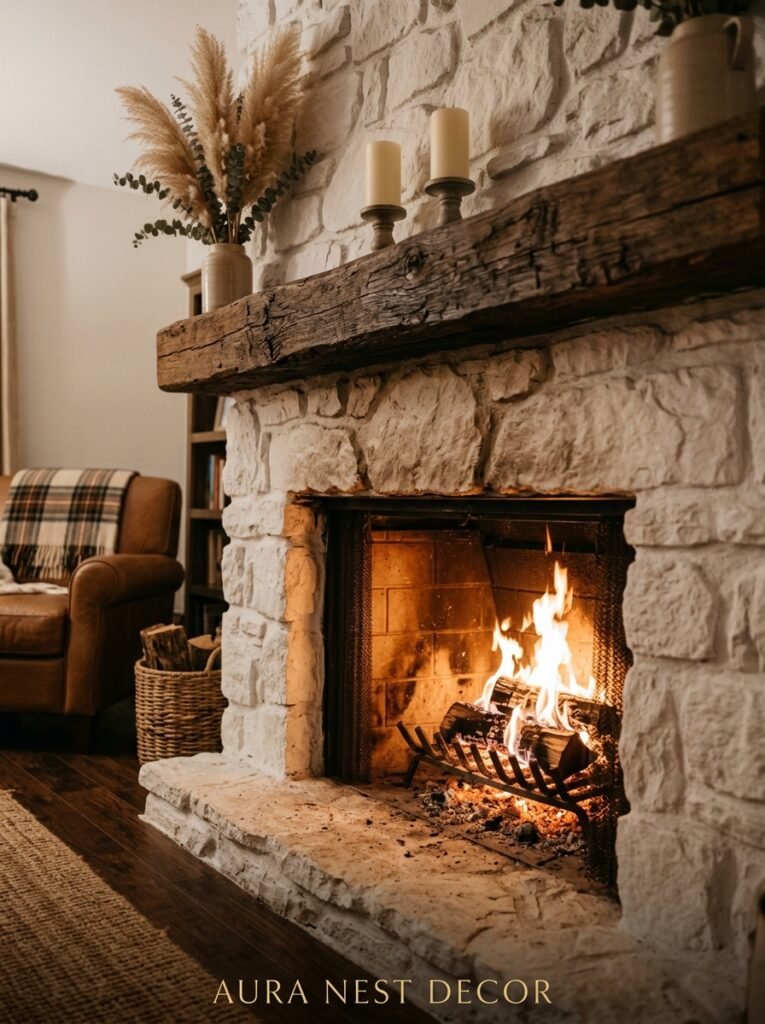
If you’ve got a working fireplace, you already won. I’ll just say that and move on.
But a lot of us don’t. And a lot of barn house inspiration photos rely HEAVILY on that fireplace as the room’s anchor, which can feel discouraging if your living room has a blank wall where the chimney breast should be.
Here’s what actually works: a faux fireplace surround built around an electric insert. The better electric fireplaces now have genuinely convincing flames — not the fake animated ones that look like a screensaver from 2003, but actual multi-effect units with glowing embers and layered flame colors. Surround it with shiplap paneling, put a reclaimed wood beam as the mantle, and honestly? Most people won’t question it.
Side note — in the UK especially, so many old fireplaces were bricked up in the 60s and 70s, and a lot of homes have the original hearth still sitting behind plasterboard. Worth investigating before you install anything.
Even if you skip the fireplace entirely, a really strong mantle-style shelf with some carefully chosen objects — a taller candle, some worn wooden objects, maybe a simple wreath in winter — creates that focal point the room needs.
—
8. Rugs: The Part People Always Underestimate
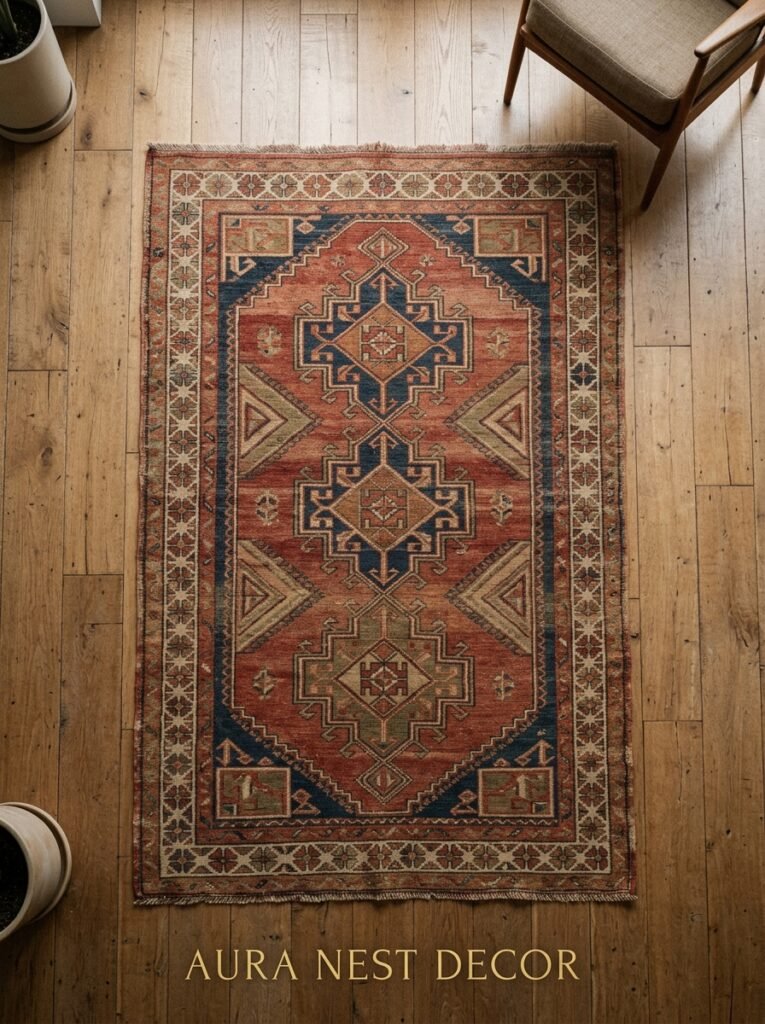
The rug is doing more work in this room than you think.
For barn house style, you want texture and age. Not pattern for pattern’s sake, not something that looks too designed. A jute or sisal rug as the base layer — big, goes almost to the furniture — grounds the whole room in that natural, earthy feeling. On top of that, a worn vintage kilim or a faded Persian-style rug layered in the seating area adds warmth and color without things getting too precious.
“Two rugs layered wrong can look messy. Two rugs layered right look like you’ve been collecting them for twenty years.”
The sizing matters enormously. Go bigger than you think. Always. A too-small rug is one of the most common mistakes in living room design and it makes the space feel random and unfinished. All the main furniture legs should sit on the rug, or at minimum the front legs of the sofa and chairs.
Faded tones — dusty red, faded blue, muted terracotta — work best. Stay away from rugs that look crisp and new; they’ll fight everything else in the room.
—
9. What You Put ON the Walls (This Is Where People Mess Up)
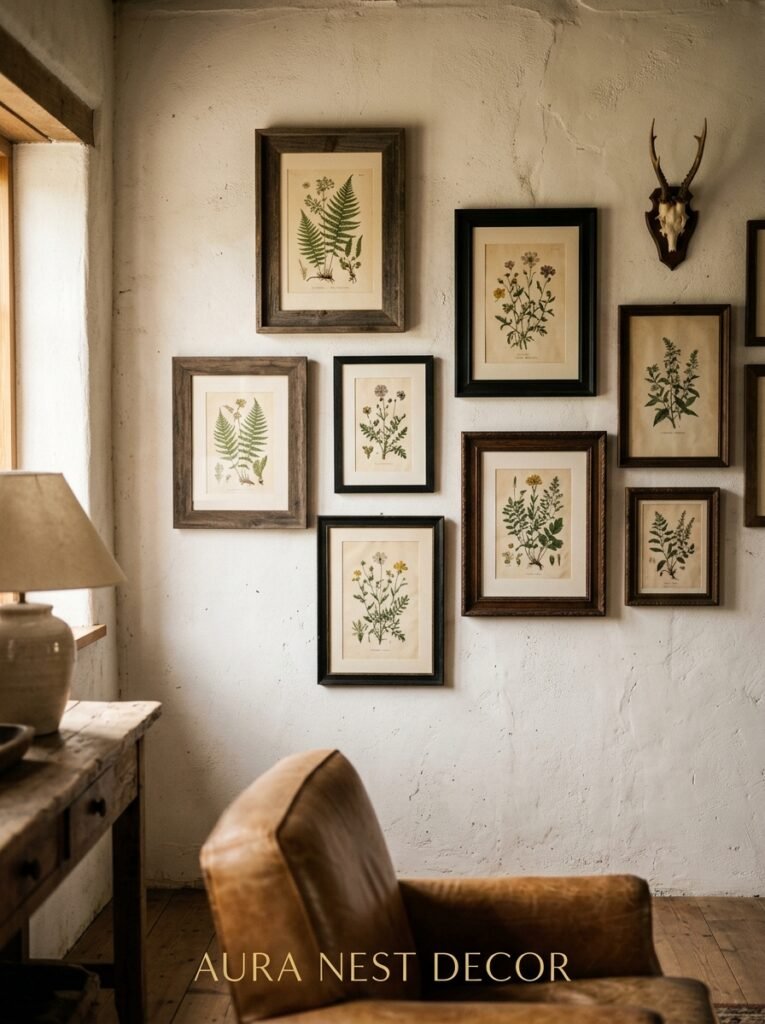
Gallery walls in barn house rooms can go really wrong, really fast. Here’s my take: resist the farmhouse-quote signs. The “gather” and “home” and “family” wooden letter art. Please. It’s dated. You’ll hate it in eighteen months.
What works instead is simpler and more personal. A single oversized vintage print or landscape painting in a thick, chunky frame. A collection of antique mirrors in mismatched frames — different sizes, different shapes, clustered loosely. Black-and-white photography in simple black frames works well if the subject matter is meaningful to you rather than just chosen for aesthetics.
Hooks are underrated. A row of heavy iron hooks with some things hanging — woven baskets, a worn leather bag, a dried herb bundle — reads as functional and lived-in. Very barn house. Very not decorative-for-the-sake-of-it.
And blank wall space is fine. Actually, it’s more than fine. Barns have a kind of spare quality that’s part of their beauty. You don’t need to fill every inch.
—
10. Throw Blankets and Cushions — Yes, This Needs Its Own Section
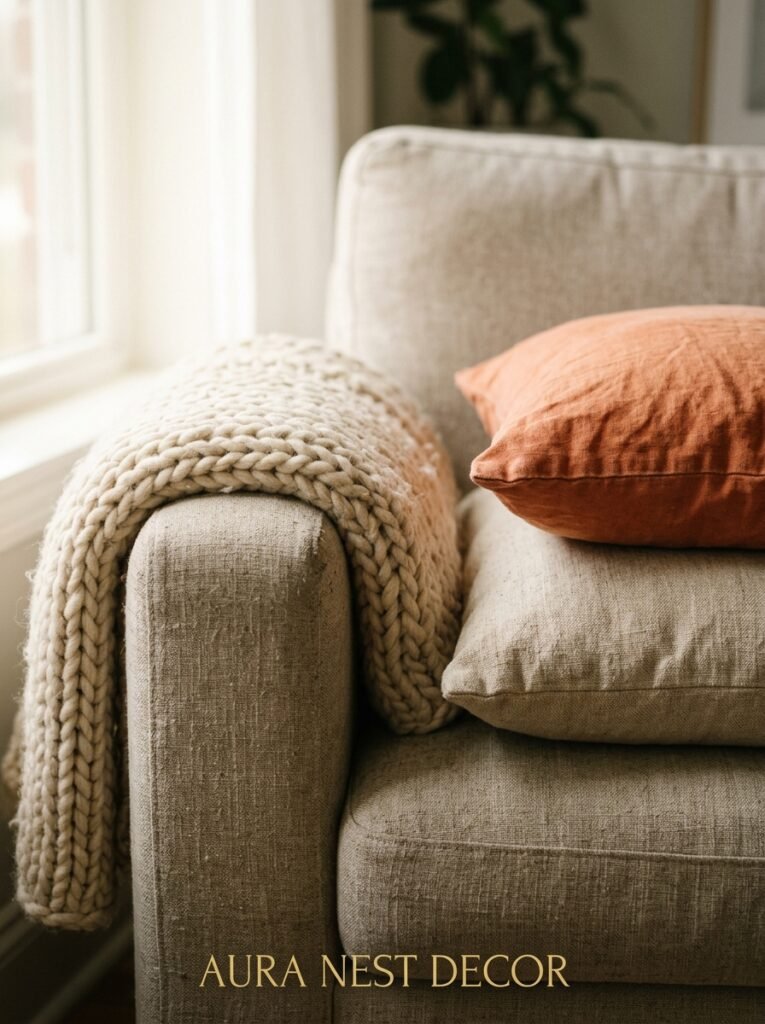
Because people either over-do this or completely ignore it, and there’s actually a right way.
The textures you want: chunky knit, washed linen, aged canvas, thin buffalo check in neutral tones. Not velvet (too formal), not polyester fleece (too casual in the wrong direction), not anything that feels overly decorative or fussy.
Color palette for cushions: think natural. Undyed linen, creamy white, warm toffee brown, faded navy, the occasional deep rust if it suits your other tones. Three or four cushions on a sofa is usually right — more starts looking like a bed. And at LEAST one throw, loosely folded or casually draped over the arm. Not neatly folded. Not tucked in. Just… left there, like someone was using it.
The aim is that it looks like someone actually lives here. Not that someone styled this for a photo shoot and then left.
—
11. Plants That Actually Suit the Barn House Vibe
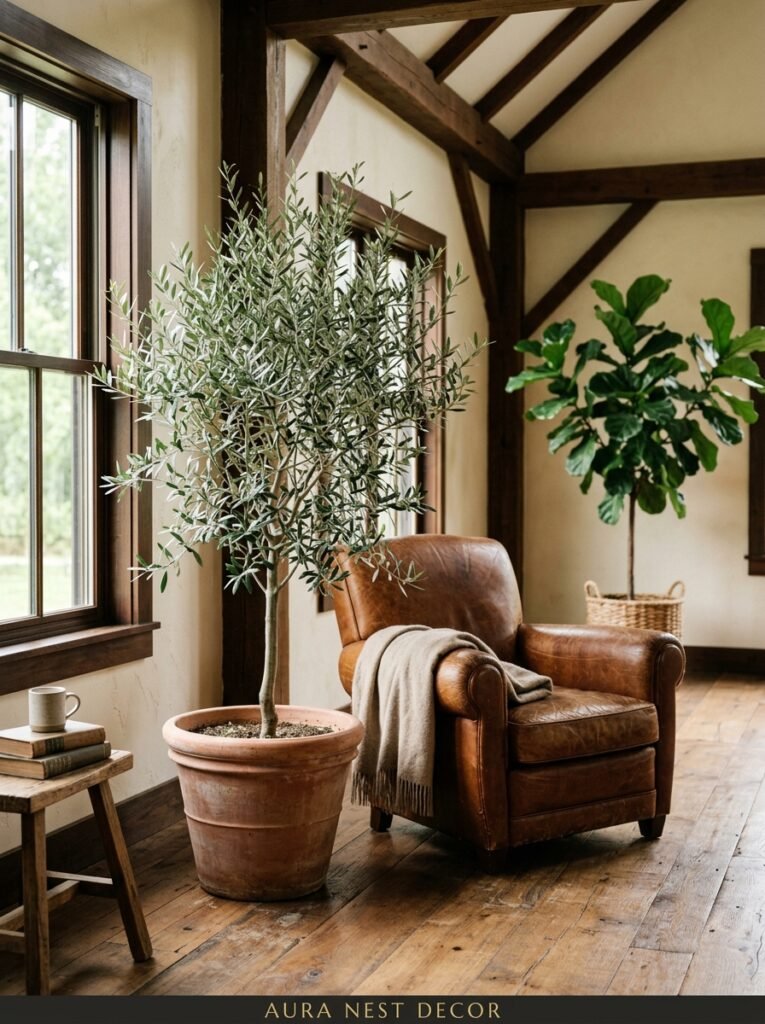
Not all plants are barn house plants. I know that sounds ridiculous, but it’s true.
Succulents are too modern-minimalist. Tropical plants like monstera or bird of paradise feel too lush, too dramatic. What suits the barn house living room is simpler, slightly more rugged — plants that look like they could survive in a drafty old farmhouse because, aesthetically, they belong there.
Dried grasses and pampas in an aged stoneware vase. A simple, slightly wild olive tree in a terracotta pot. Lavender bundles, dried. A small rosemary plant on the windowsill that’s actually there for use rather than decoration. Maybe a simple snake plant because they’re near-impossible to kill and they have this quiet, architectural quality that fits the space without demanding attention.
The vessels matter as much as the plants. Aged terracotta, chipped stoneware, simple linen-wrapped pots. Nothing glossy. Nothing brightly colored.
—
12. The One Thing That Pulls the Whole Room Together
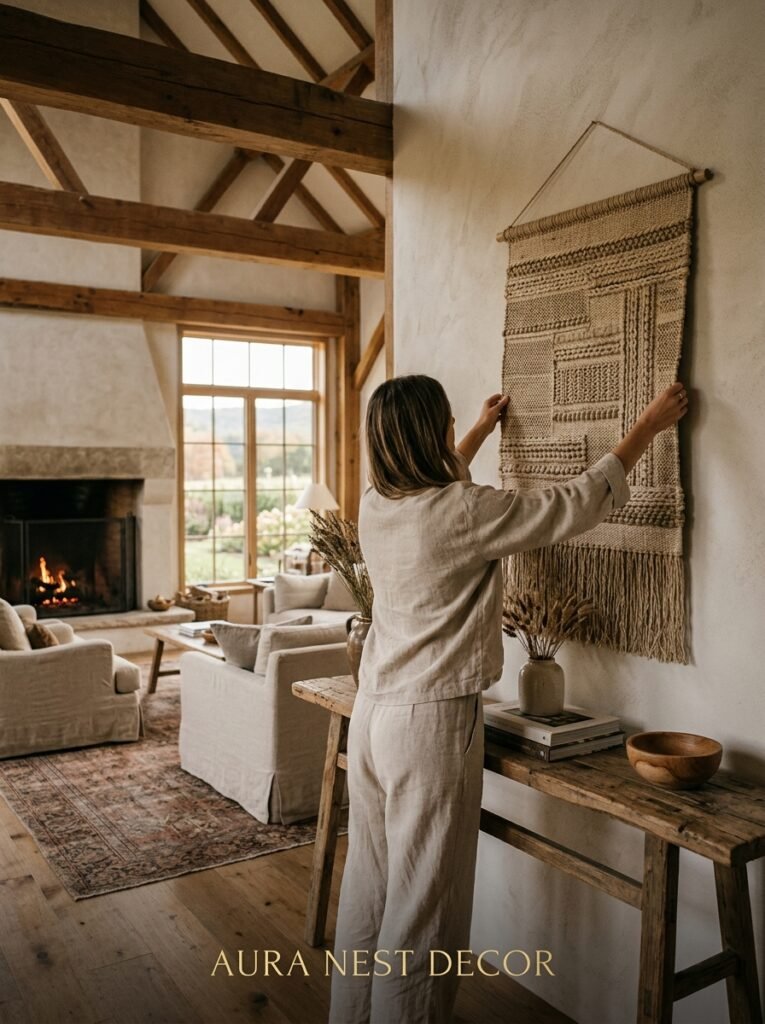
You can get every element right — the wood, the metal, the rug, the lighting — and the room can still feel slightly off. Like it’s trying to be something rather than just being it.
What closes the gap is lived-in detail.
A stack of actual books you’ve read, not arranged for color. A worn throw left from last night’s film. A candle burned most of the way down. A basket next to the sofa with stuff actually in it. These aren’t styling tips — they’re permission to stop treating your living room like it’s on show and start treating it like it’s YOURS.
Barn house style is fundamentally about authenticity. The aged materials, the imperfect textures, the muted colors — they’re all in service of one feeling: this room belongs to real people who really live in it.
Get that right, and the whole thing clicks.
—
❓ FAQ
Q: Can barn house decor work in a modern new-build home with no original features? A: Genuinely, yes — and sometimes it works even better because you’re introducing contrast. The trick is to add architectural texture where you can: shiplap paneling on one wall, a faux beam on the ceiling, original vintage pieces mixed with new furniture. The raw materials do the heavy lifting even when the bones of the house are completely modern.
Q: How do I do barn house style on a budget without it looking cheap? A: Prioritize the big-impact pieces first — the rug, the lighting, one great piece of reclaimed wood somewhere in the room. Then fill in slowly with secondhand and thrifted finds. eBay, Facebook Marketplace, and charity shops in the UK are full of exactly the right things. The worn, aged look you’re going for actually costs LESS to achieve secondhand than brand new, which is a rare win.
Q: What’s the difference between barn house style and farmhouse style? A: Farmhouse leans more toward clean white, shiplap, and a slightly polished “country” look — think Chip and Joanna Gaines. Barn house is a bit rawer, darker in places, more industrial at the edges. More exposed wood, heavier metals, a little less pristine. The two overlap considerably, but barn house has a slightly more rugged, less styled feel overall.
—
💭 Final Thoughts
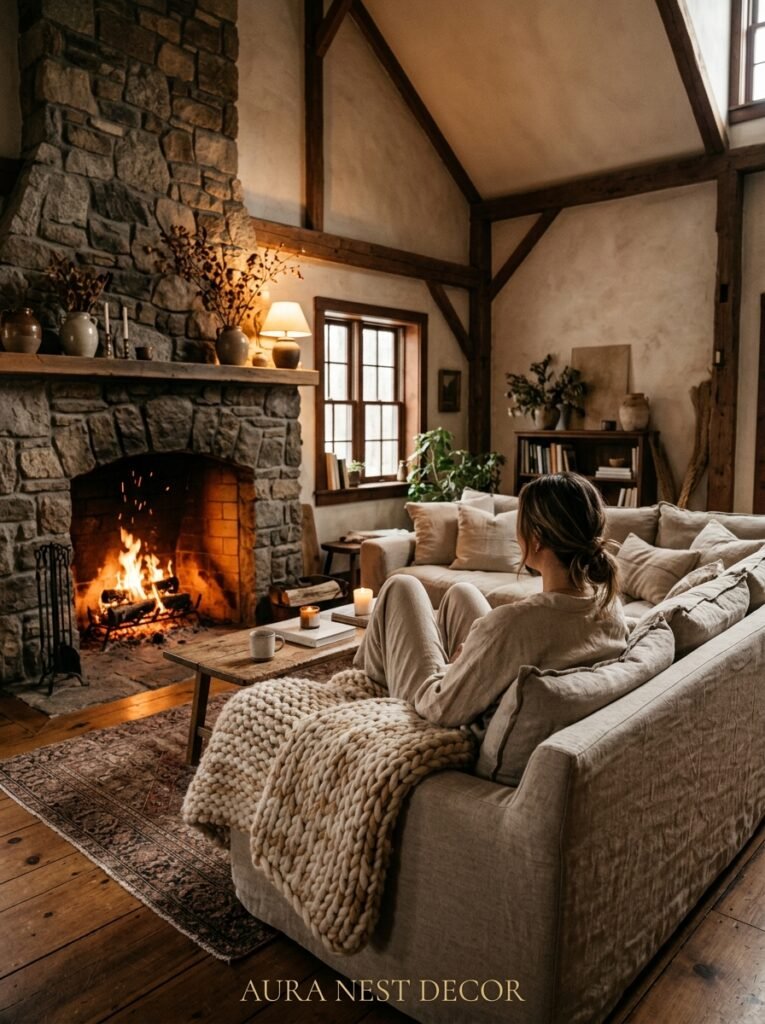
There’s something quietly satisfying about a barn house living room at its best — not because it’s perfect, but because it looks like it’s been perfectly imperfect for a very long time. It’s a style that rewards patience, genuine pieces, and the confidence to leave a little breathing room.
My neighbor asked what I’d changed. I hadn’t renovated a single thing. I’d just stopped trying to make the room look right and started making it feel right.
What would your living room feel like if you applied that same logic?