The Modern Western Living Room Look That’s Taking Over Pinterest (And Why It Actually Works)
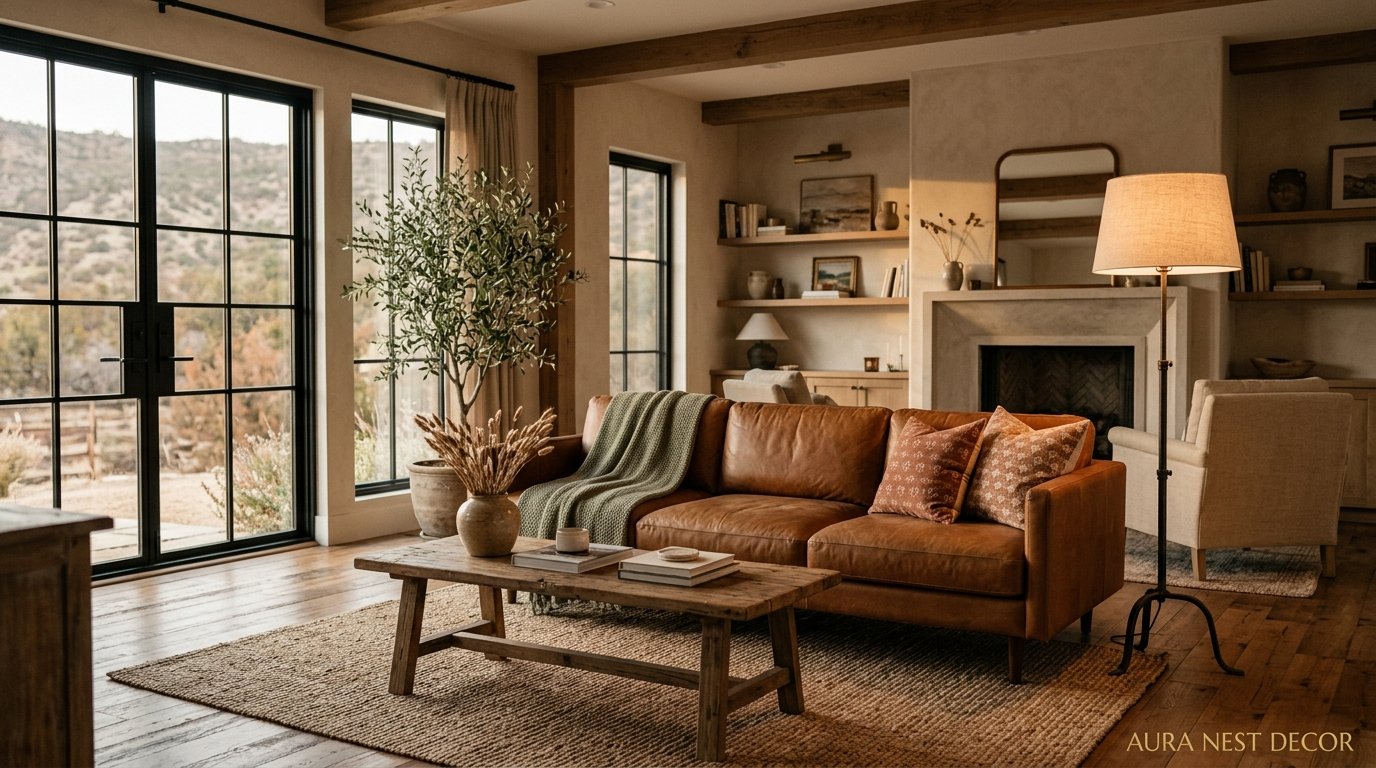
You’ve seen it everywhere lately — that specific kind of living room where raw wood meets clean lines and somehow it doesn’t look like a ski lodge or a dusty ranch. It’s something else entirely. It’s warm but sharp, rooted but modern, and honestly? I didn’t think I’d love it this much.
—
1. Why “Modern Western” Hits Different Than Regular Rustic
Here’s the thing nobody tells you upfront: modern western isn’t just rustic with a haircut. The difference is ENORMOUS and once you see it, you can’t unsee it.
Regular rustic leans heavily on the nostalgic — the “grandpa’s cabin” energy, the knot-heavy pine, the deer antler chandelier that someone’s aunt genuinely loves. Modern western takes everything that made that feel grounded and warm and then strips it back. Way back. You’re keeping the soul of it, but you’re cutting the clutter completely.
Think about the color story alone. Rustic tends toward reds, hunter greens, that slightly overwhelming plaid. Modern western? It’s more like the landscape itself — dusty terracotta, sun-bleached stone, the grey-brown of weathered wood before it’s been touched by anything. It’s quieter. More considered.
And I think that’s what resonates so hard with people right now. We’re all exhausted by excess. There’s something genuinely restful about a room that looks like it knows what it is.
The British version of this look, by the way, tends to lean slightly moodier — think deeper walls, heavier linens — and it works brilliantly. The bones are the same.
“Modern western isn’t rustic with a fresh coat of paint. It’s what happens when the American landscape becomes interior design philosophy.”
2. The Exact Color Palette That Makes This Work (No, It’s Not Just Brown)
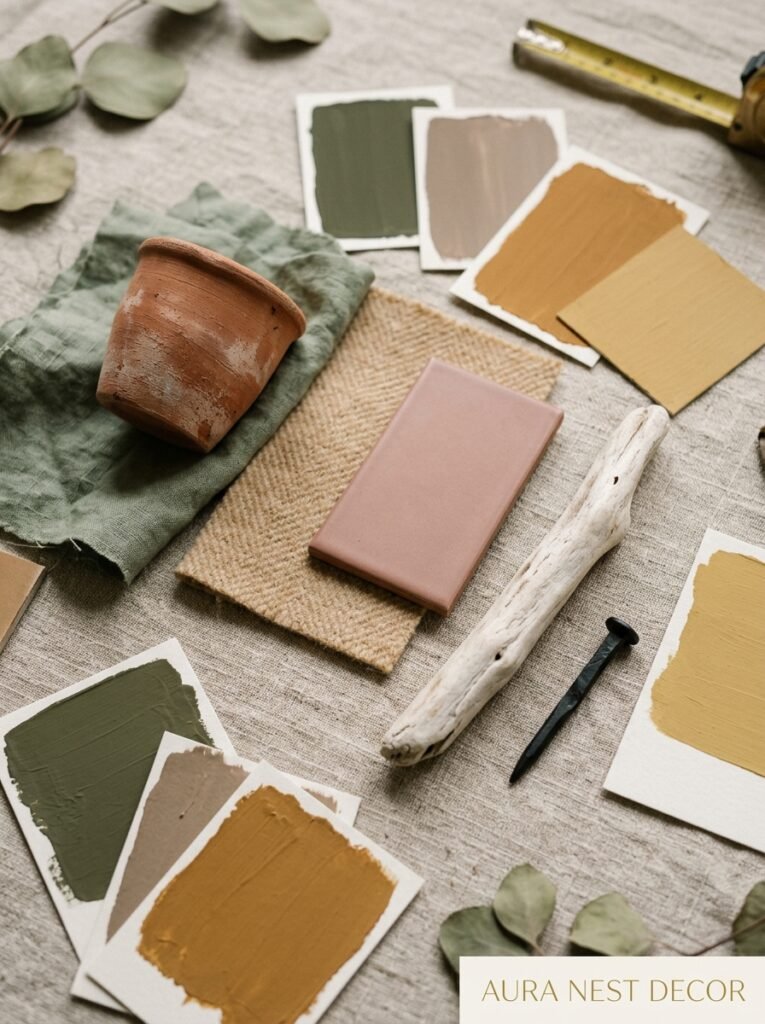
Okay so people hear “western” and they mentally go to brown. Just brown. Brown on brown, maybe some tan, possibly a brick red if they’re feeling wild.
But the actual palette that makes this look sing is way more nuanced than that. I’d call it “edited earth” — it’s like someone took a photo of the desert at 6pm and turned those colors into paint swatches.
Your base should be something in the warm greige family — not too yellow, not too pink, just that kind of sand-meets-stone neutral that does nothing wrong. Benjamin Moore’s “Pale Oak” keeps showing up in these spaces for a reason. So does Farrow & Ball’s “Elephant’s Breath” for anyone playing along from the UK side.
Then you’re adding depth with terracotta. Not in every cushion and every throw simultaneously, please — just one or two anchor moments. Maybe the rug. Maybe a large ceramic vase on the floor.
Then your dark moments: near-black or deep charcoal for the iron hardware, the picture frames, the metal legs on your coffee table. That contrast is doing HEAVY lifting. It stops the whole thing from going soft and directionless.
And then — this is the part people miss — you need at least one moment of something unexpected. Sage green. A slightly dusty blue. Even a muted rust that leans more pink than you’d think. It’s what keeps the room from looking like a hotel lobby.
3. The Sofa Decision That Actually Determines Everything Else
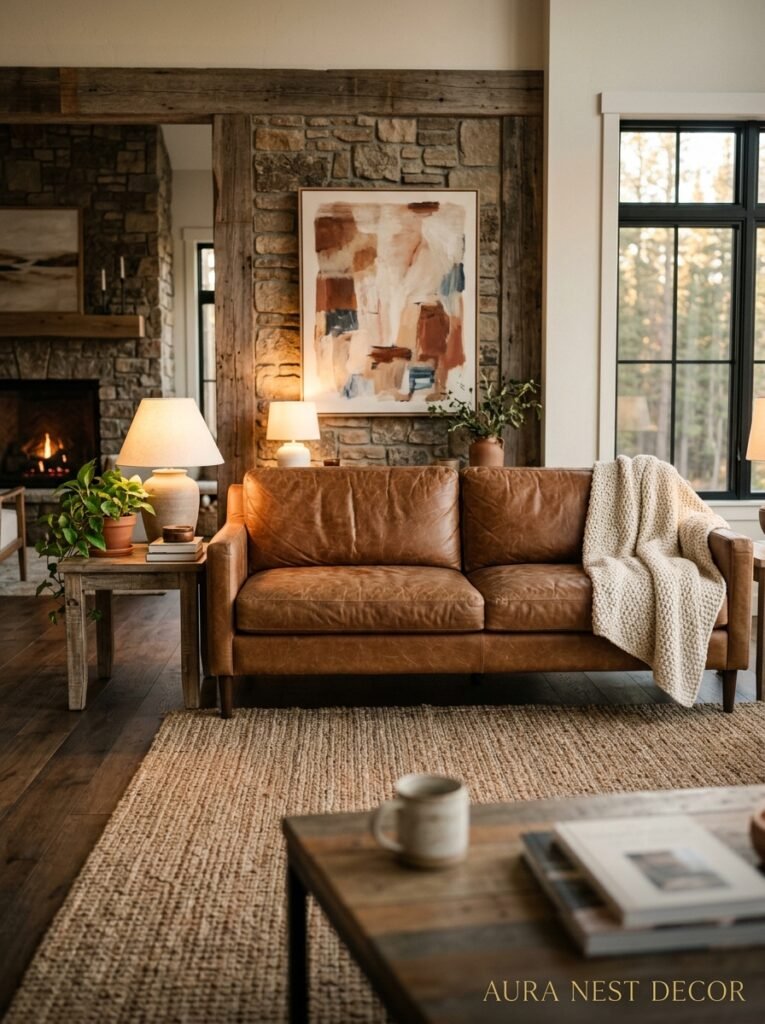
I’m going to say something slightly controversial: the sofa in a modern western living room matters more than any other single decision.
Because here’s what happens. You get the wall color right, you get some great accessories, you’ve got the texture situation mostly under control — and then you put in the wrong sofa and the whole thing falls apart. I’ve seen it happen. It’s genuinely sad.
What you’re looking for is something with WEIGHT. Not bulk, necessarily — weight. Visual weight. The modern western living room doesn’t do those overstuffed cloud sofas that look like you might sink into them and never be found again. But it also doesn’t do anything too sleek, too leggy, too mid-century.
What works: a structured silhouette with deep seats, maybe a track arm, upholstered in something that photographs like it has texture — a loose linen weave, a thick boucle in cream or oat, a distressed leather in cognac or a warm saddle tan.
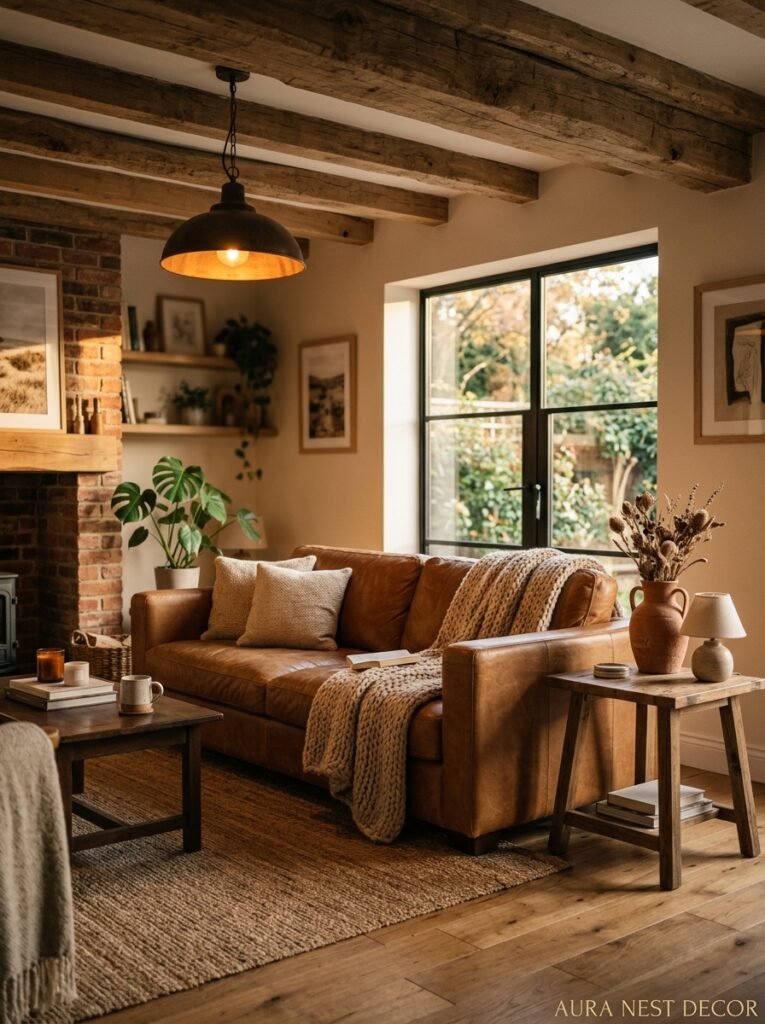
That leather option, by the way. If you’ve been on the fence about it — just do it. Properly aged leather in a living room ages BETTER over time, not worse. The more it gets lived in, the more it looks like it belongs there. It’s kind of the opposite of everything else we own.
Legs matter too. Chunky tapered legs in a dark wood, or sometimes no legs at all — a full platform base — both work. Thin metal legs don’t. Sorry.
4. The Floor Situation: What’s Underneath Changes Everything
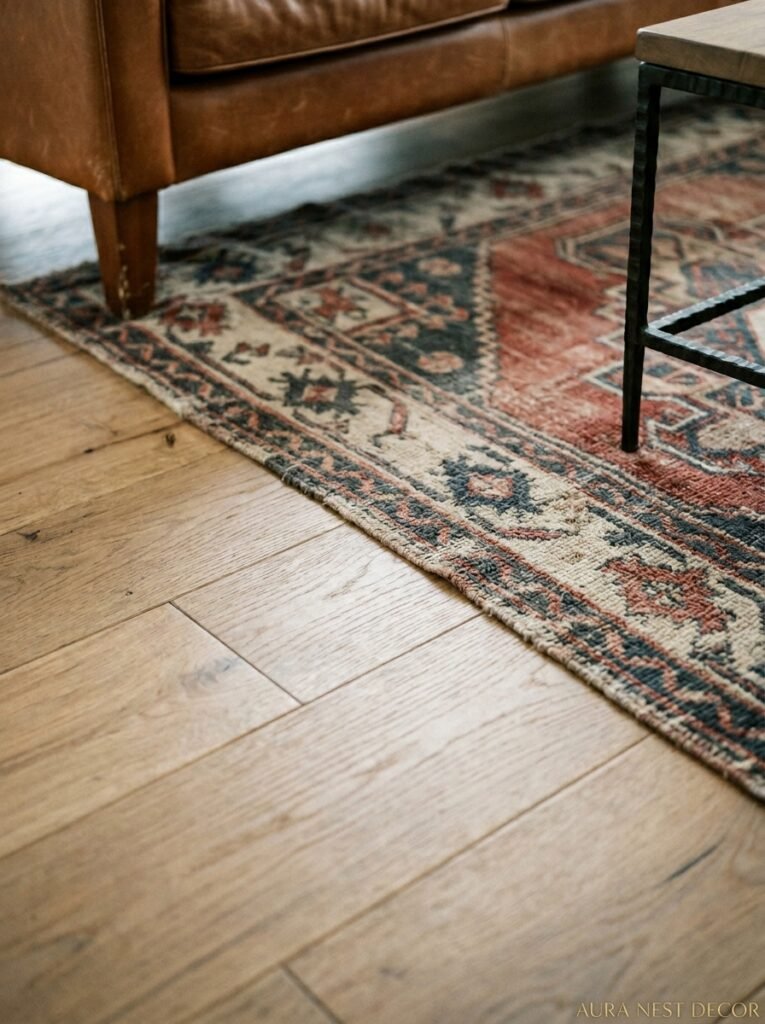
Wide plank hardwood. That’s the answer. Done.
Okay, but — not everyone has wide plank hardwood, and not everyone can get it installed, so let’s talk about how to work with what you’ve got.
If you have lighter hardwood floors, great. Don’t sand them darker. The light-wood-with-dark-accents combination is actually more interesting and more modern. It reads more like a contemporary ranch home in Marfa, Texas and less like a hunting lodge.
If you have carpet — specifically that kind of mid-toned carpet that came with the house and is perfectly fine but utterly characterless — you can work with it. The rug you layer on top is doing the work. More on that in a second.
If you have tile or stone floors, genuinely one of the easier situations. A good area rug over stone or large-format tile looks AMAZING in this style, because the contrast between the cold hardness of the floor and the warmth of everything layered on top is exactly the tension this look thrives on.
The rug itself: go bigger than you think you need. Way bigger. The “all furniture legs fully on the rug” approach isn’t always possible, but at minimum your front sofa legs and coffee table need to be grounded by it. A rug that floats in the middle of a room, touching nothing, is a crime I feel strongly about.
“The rug isn’t an accessory. In a modern western room, it’s the ground itself.”
5. Hardware and Metal Accents: The Detail That Tells You If Someone Actually Knows What They’re Doing
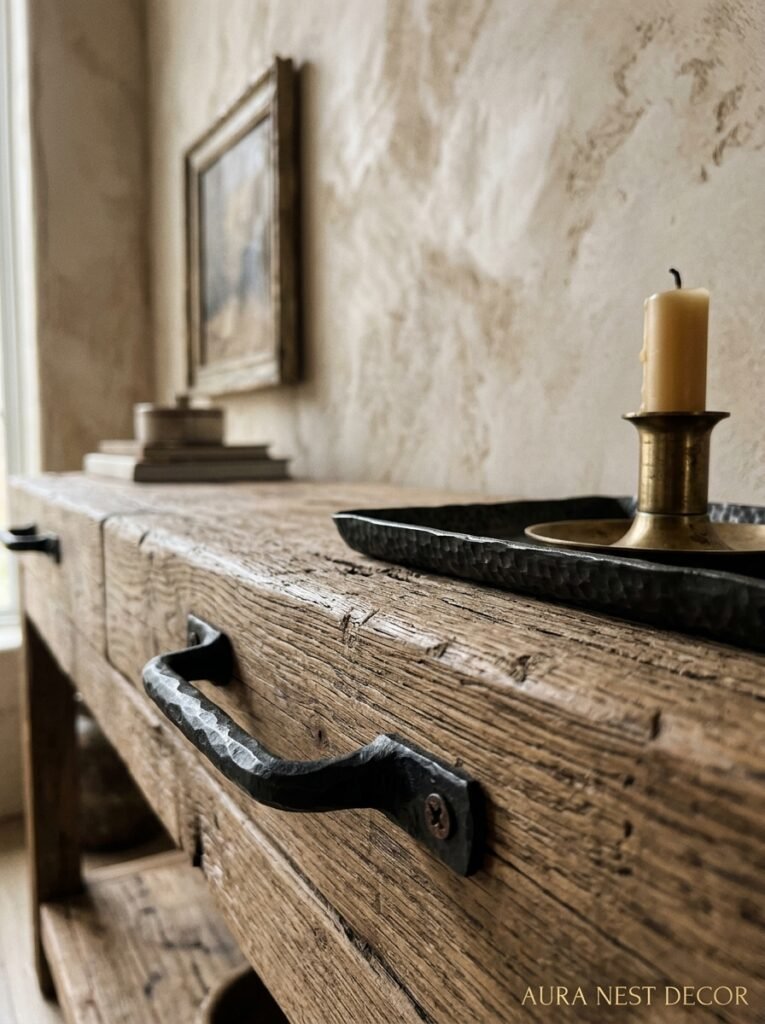
This sounds like a small thing. It’s not a small thing.
The metal finishes in your living room — the curtain rod, the light fixture, the side table legs, the picture frames, the cabinet pulls if you’ve got a media unit — these either tie the room together or they make it look like you bought things on five separate Amazon shopping sessions and hoped for the best.
In a modern western living room, you want almost everything in one metal family. And that family is: aged brass, or unlacquered brass, or matte black, or a warm bronze. Not chrome. Please not chrome. Chrome is having its moment somewhere else.
My personal favorite for this look is matte black with occasional warm brass moments. The matte black keeps it grounded and modern, and then when you hit a brass table lamp or a brass picture frame, it feels intentional and rich.
The hardware on a media unit or sideboard is SO worth upgrading if you’ve got builder-grade stuff. A $40 set of chunky matte black pulls can make a piece of flat-pack furniture look like it cost three times as much. I’ve done this. It works.
Side note — the UK market has gotten really good at aged brass fixtures lately. Places like Soho Home and even some of the better high street options are stocking pieces that actually read as the real thing.
6. The Lighting Setup That Gives You That Warm-But-Awake Glow
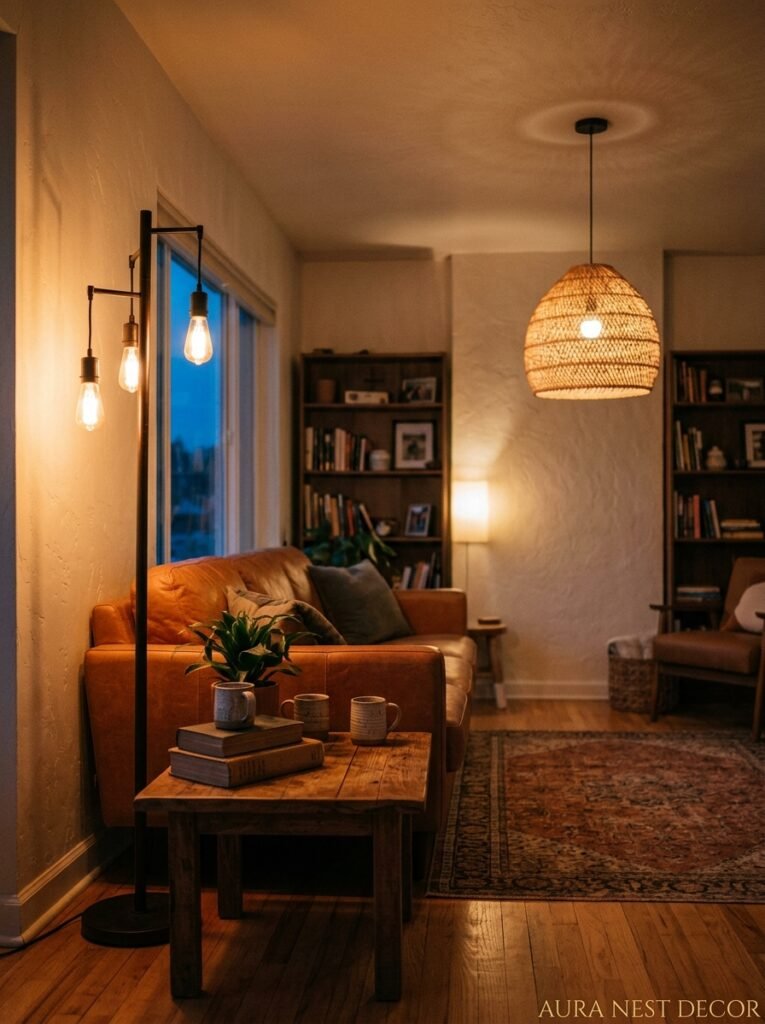
The amber glow of an Edison bulb at 7pm in a well-layered room is genuinely one of the most satisfying things you can create in a home. And it’s not hard. But it does require thinking about lighting in layers instead of just “is there a lamp in this room?”
You need three things working at once. A statement overhead fixture — in modern western rooms this is almost always either a drum shade in a natural material like jute or linen, or a wrought iron chandelier with exposed bulbs. Low, preferably. These rooms like their light source close to eye level when possible.
Then you need table lamps. Minimum two in a properly sized living room. A ceramic lamp base in a muted terracotta or stone finish works beautifully. So does a turned-wood base. The shade should be a natural linen — not white, LINEN — because white lamp shades are doing you absolutely no favors.
Then the floor lamp as the finishing move. This is the one that fills in the dark corners and makes the room feel like an actual place people live rather than a showroom. I’m partial to an arc lamp in a warm metal, positioned over a reading chair that nobody exclusively reads in but looks incredible.
Dimmers on everything. Non-negotiable. The difference between 100% and 65% on a warm-toned bulb is the difference between “room” and “atmosphere.”
7. Textiles: The Part Where People Either Nail It or Go Way Overboard
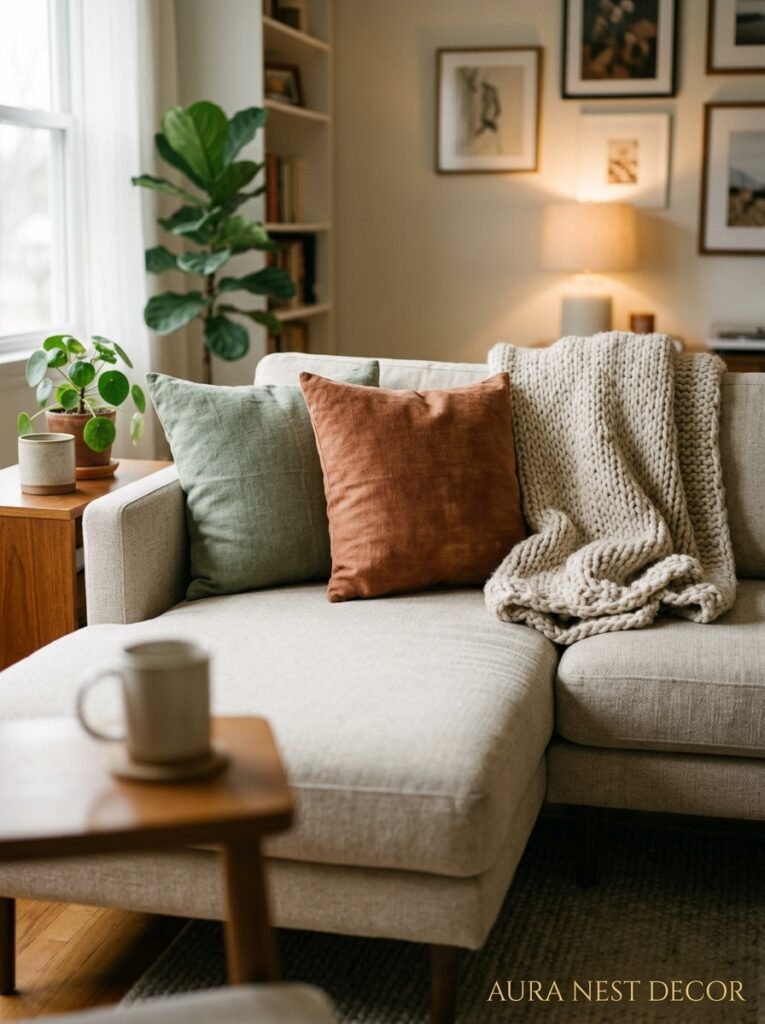
Textures in a modern western room are doing a very specific job. They’re adding warmth without adding noise. And there’s a real difference.
The mistake most people make is treating textiles as decoration — like more throw blankets means more coziness. But past a certain point it just means more chaos. The room starts to look like it’s compensating for something.
What you actually want is maybe three to four textile moments, each distinctly different in texture. A chunky knit throw draped on the arm of the sofa (not folded neatly over the back, that’s a hotel move). A woven cushion cover, maybe with some subtle fringe or a loose-weave front. The rug itself, which we’ve discussed. And possibly a sheepskin or raw-edged hide on a chair or low bench.
The key is that each texture looks different from the others. Don’t put a boucle cushion on a boucle sofa — they’ll cancel each other out visually and the room loses definition.
Color-wise, keep the textiles mostly in your palette but let ONE of them do something slightly unexpected. A dusty sage knit throw on a cognac leather sofa is a combination that makes people stop scrolling on Pinterest for a reason.
“Textiles in a modern western room aren’t decoration. They’re the temperature of the whole space.”
8. Plants That Actually Belong in This Aesthetic (Not a Monstera)
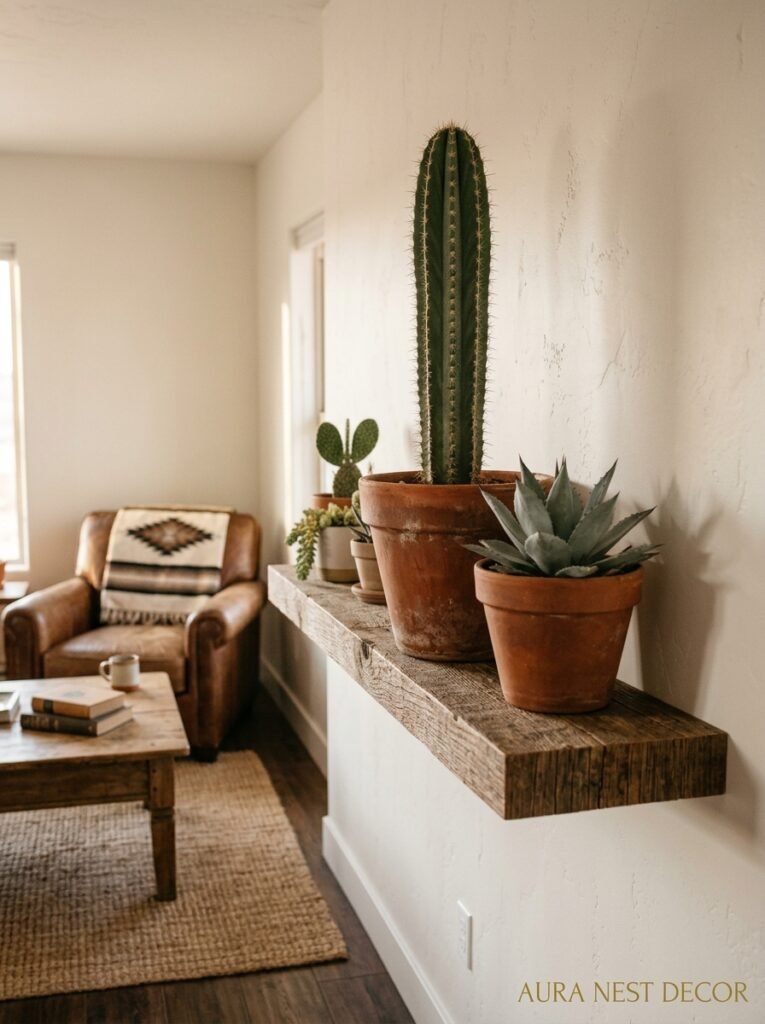
Okay I love a monstera as much as the next person, but a massive tropical leaf situation in a modern western living room looks confused. It’s the wrong landscape. The wrong energy.
What works here: anything that looks like it could survive with less water than it probably needs. I know that sounds weird but it’s a useful filter.
Olive trees in a terracotta pot — perfect. They look ancient and modern at the same time, which is basically the whole vibe of this style. A large saguaro or column cactus if you’ve got enough light. Palo verde or any of the drought-tolerant shrubby options in larger pots near a sunny window.
For something lower-maintenance, snake plants work beautifully in this context because their structural silhouette and muted green color read more like the high desert than a tropical greenhouse.
The pots are half the point. Terracotta — real terracotta, the unsealed kind that ages and gets a little dusty-looking over time — is so much better in this context than anything plastic or glaze-finished. Or a raw concrete pot. Or a woven basket liner. Anything that looks like it could have been found somewhere rather than purchased, basically.
9. What to Put On the Walls (And What Definitely Doesn’t Work)
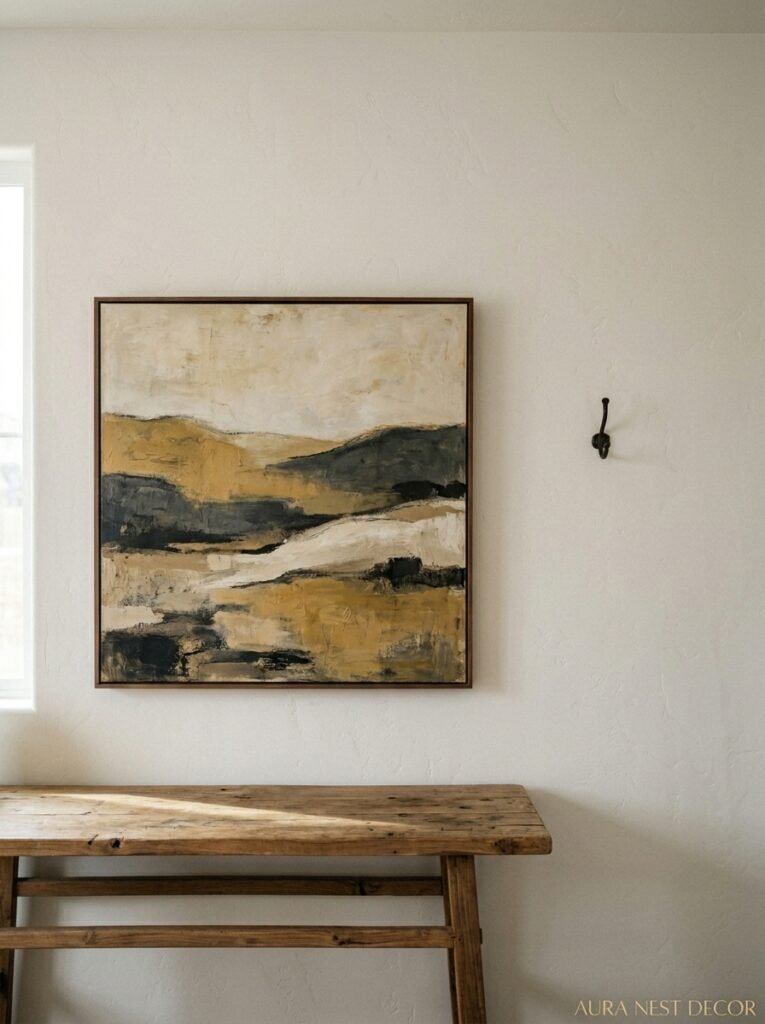
The walls in a modern western living room are not a gallery. They’re not a mood board. They don’t need to be covered.
One large piece of art — properly large, not “large” in the way that means you’re stretching it — does more for a room than six medium-sized things arranged anxiously above the sofa. Landscape photography works brilliantly here. A wide, sparse image of red rock country, or scrubland, or even just a dramatic sky. Framed in simple black or warm wood. Hung lower than you think it should go.
Alternatively: a large woven textile. A Navajo-inspired geometric in the dusty palette we talked about. Something with physical presence, not just visual presence. Texture on the wall is incredibly good in this aesthetic.
What doesn’t work: motivational script prints, gallery walls with too many small frames, anything matted in white (go natural linen mat if you need one), very bright or saturated photography. Anything that fights with the quietness of the room.
British homeowners sometimes lean toward botanical prints in their western-inspired rooms and honestly — it can work if the frames are right and the color palette of the botanicals is muted enough. But watch that it doesn’t tip into a completely different style altogether.
10. The Coffee Table That Makes or Breaks the Center of the Room
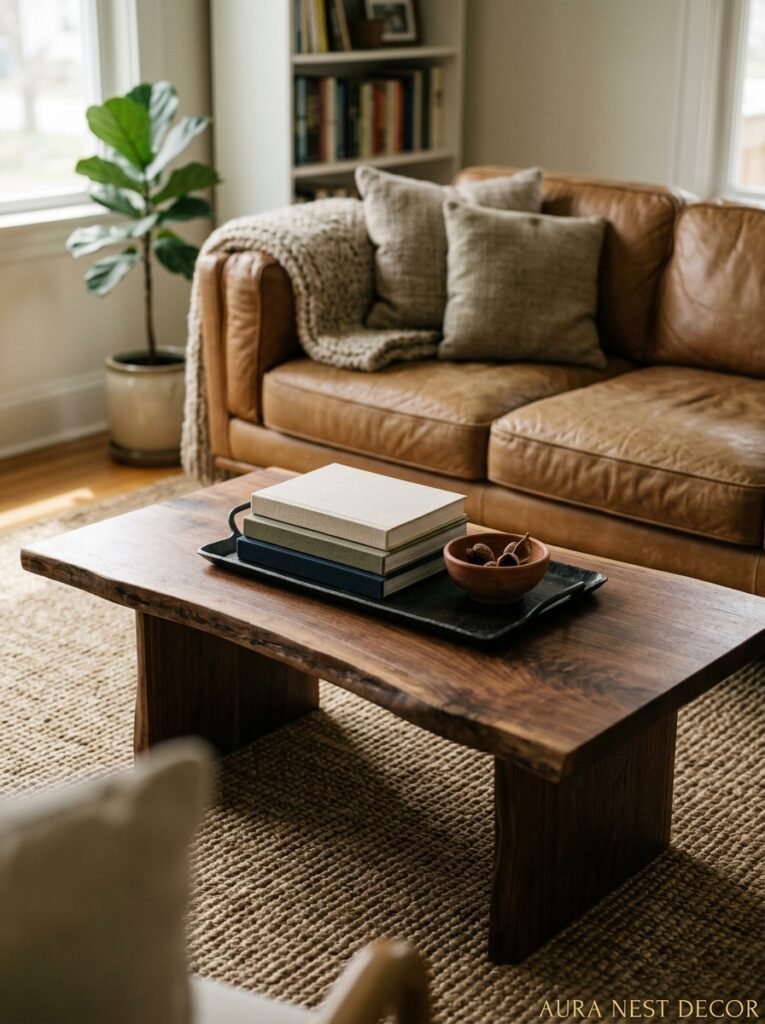
Here’s where I’ll fight people: the live-edge slab coffee table is almost always the right answer for this look. I know it’s been everywhere. I know. But there’s a reason it keeps coming back.
A raw-edged piece of walnut or reclaimed wood on simple iron legs has a quality that no manufactured table replicates, which is that it looks like it was always there. Like the room grew around it. And in a style that’s fundamentally about rootedness and authenticity, that quality is worth a lot.
If live-edge is too much, a chunky turned-wood coffee table in a darker stain works well. So does a concrete-top table if you want something that leans a bit more modern.
What you’re styling on top of it matters almost as much as the table itself. A stack of books with their covers turned outward. A low ceramic bowl — not decorative, functional-looking, the kind you might use for something but currently holds a few smooth stones or a candle. One object that’s taller than everything else, like a simple vase or a sculptural piece in clay.
Three items. That’s basically the limit. Modern western rooms don’t do the “curated chaos” thing — everything that’s out should look like it belongs.
11. The Reading Chair or Accent Chair: Where the Room Gets Its Soul
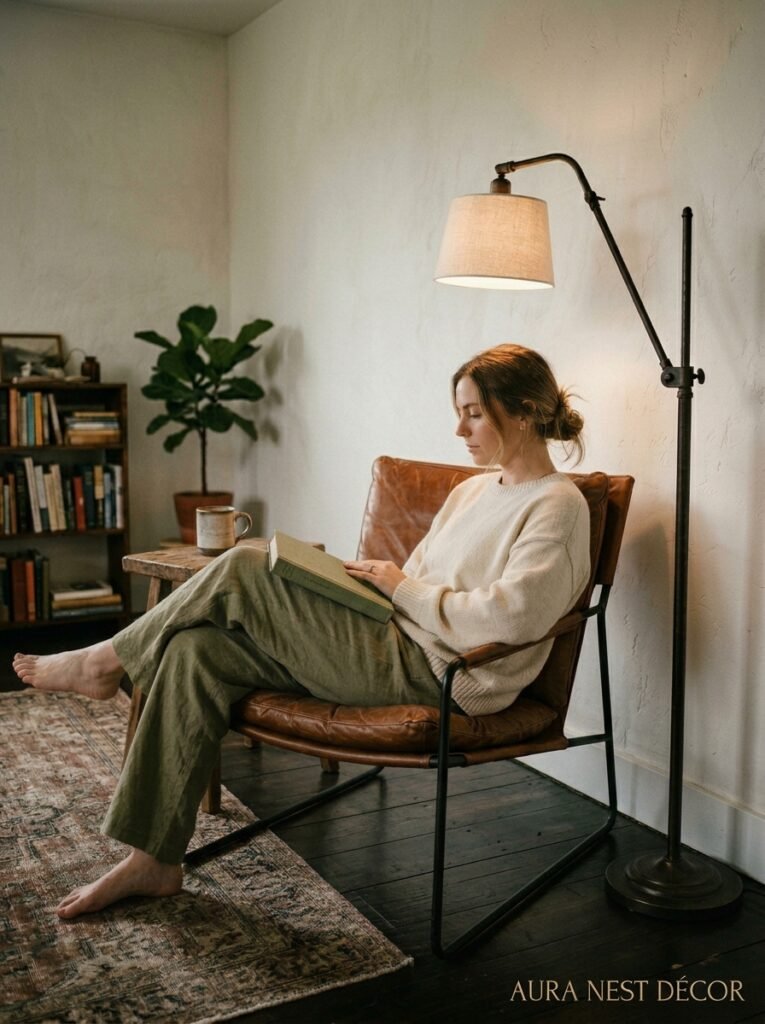
Every well-styled modern western living room has a chair that looks like someone actually sits in it regularly. Not perfectly. Like it’s been claimed.
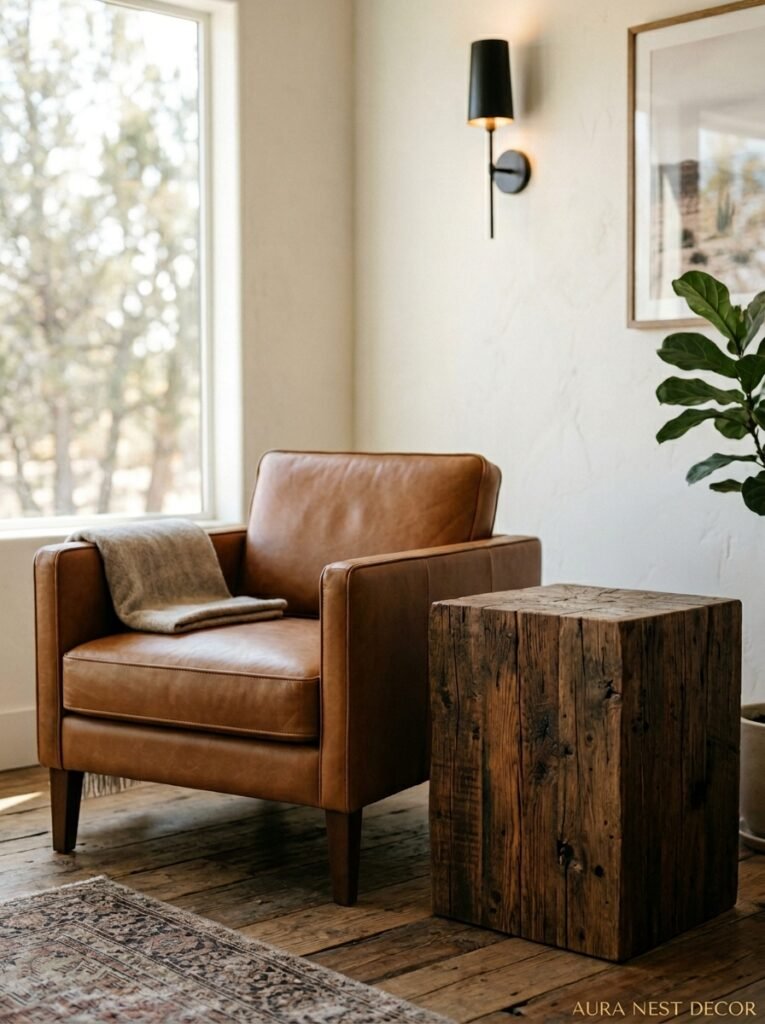
This is the chair where you allow yourself something slightly different from the sofa. If the sofa is linen, the chair can be leather. If the sofa is cognac leather, the chair can be a natural undyed linen. The contrast between them gives the room personality.
Shape-wise: bucket chairs and wingbacks both work in this aesthetic, which might seem contradictory. A wide bucket chair with a low, generous seat looks great if the sofa is more structured. A tighter wingback works when everything else is soft and layered. What doesn’t really work is the big overstuffed recliner or anything with visible technology — cup holders, adjustable headrests, footrests that pop out. That energy is wrong for this room.
Next to the chair: a small side table (hairpin legs in black iron, or a simple drum in natural wood), a floor lamp, and maybe a small stack of books or a ceramic mug that got left there. That’s the scene. That’s the soul of the room, right there in one corner.
12. The Common Mistake That Kills the Whole Look
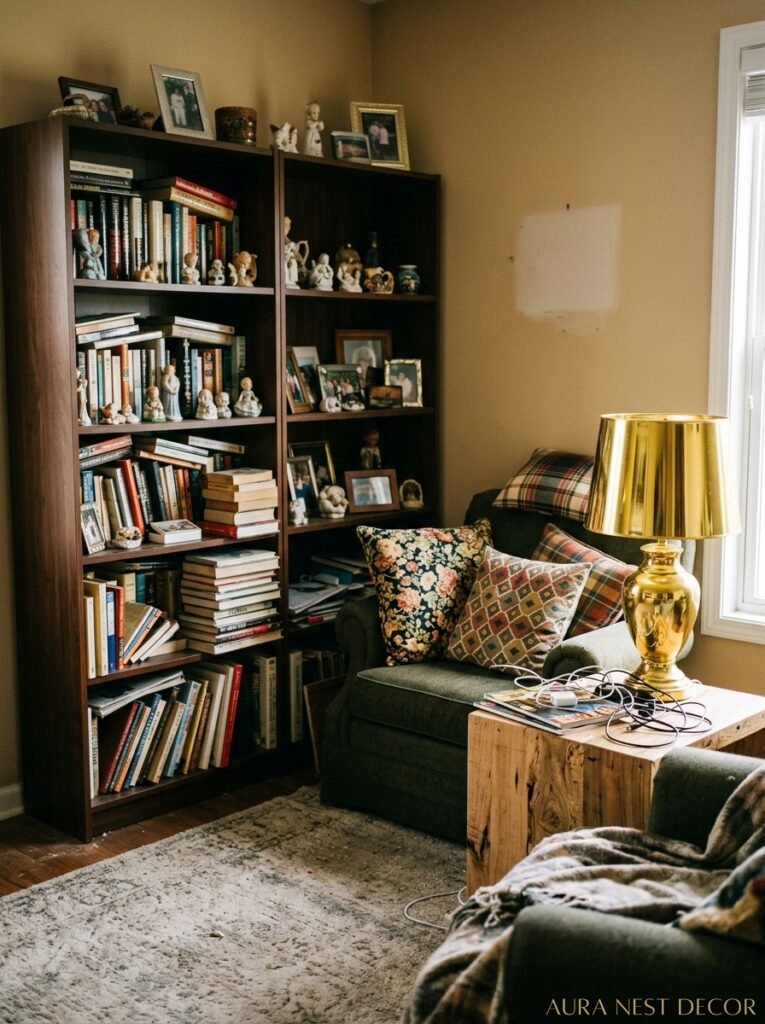
After everything — the palette, the furniture, the layers, the lighting — the single most common mistake I see people make with modern western living rooms is trying to add too much story.
One set of antlers. A vintage boot on a shelf. A lasso hung on the wall. A map of Texas. And suddenly it doesn’t look like a beautifully considered living room anymore, it looks like a theme. Like you went too literal.
Modern western as a design language works because it’s about atmosphere, not decor motifs. The warmth, the materiality, the quietness — those are doing the emotional work. The moment you start adding objects that “explain” the aesthetic, you’ve undermined it.
Trust the palette. Trust the textures. Let the room be felt rather than read.
That’s the whole secret, honestly. The rooms that stop you mid-scroll aren’t trying to tell you what style they are. They just are.
—
❓ FAQ
Q: Can a modern western living room work in a small apartment? A: Absolutely — and in some ways it works better in a compact space because the emphasis on a few well-chosen pieces rather than lots of stuff actually suits smaller rooms. The key is keeping the palette very tight, choosing ONE statement piece (usually the sofa or rug), and resisting the urge to add things.
Q: Is modern western decor the same as Southwestern decor? A: They overlap but they’re not the same thing. Southwestern leans more heavily on specific cultural patterns, brighter colors, and more overt regional references. Modern western is quieter and more edited — it takes the landscape and material qualities of the American West but removes most of the motifs. Think more Marfa art town than Santa Fe gift shop.
Q: Does this style work in a traditional British home? A: It genuinely does, maybe more than you’d expect. The key is leaning into the moodier British interpretation — slightly deeper walls, heavier textiles, that wonderful quality of old stone and thick plaster that period homes have — and letting the western elements be the warm counterpoint. It feels like the two aesthetics balance each other out rather than fight.
—
💭 Final Thoughts
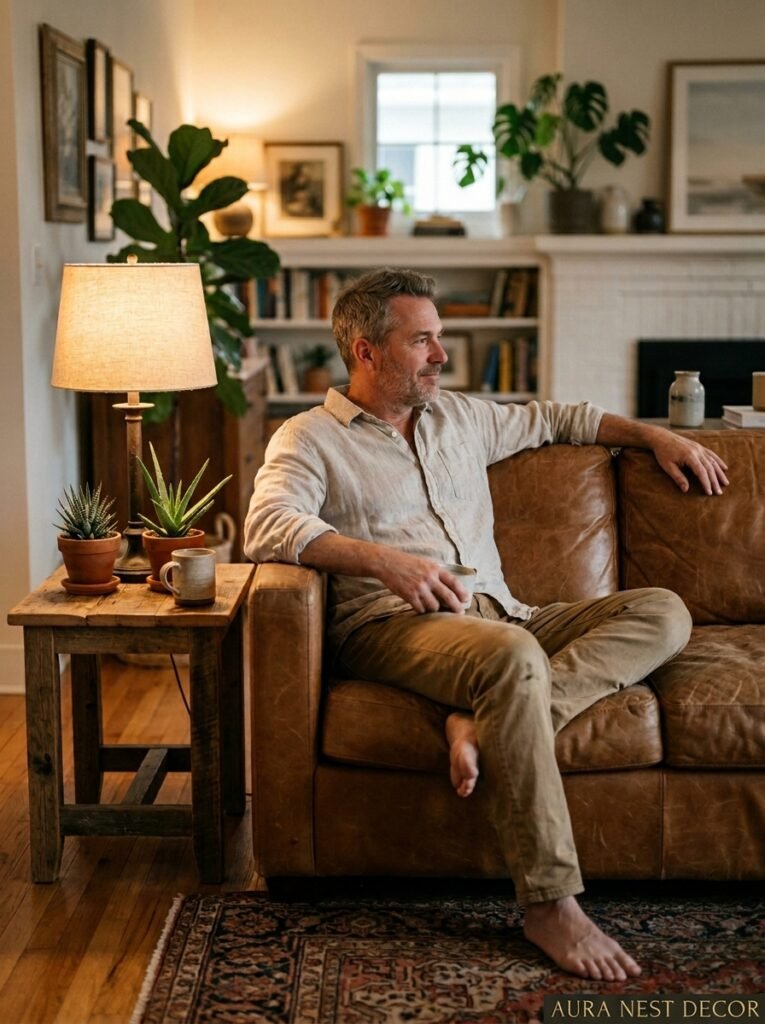
There’s something about a modern western living room that feels less like a trend and more like a correction — like we collectively decided we wanted rooms that felt grounded rather than impressive. Rooms you’d actually want to spend a long Sunday afternoon in, not just photograph.
The materials are honest. The palette is quiet. And there’s this sense that everything in the room has earned its place.
What part of your living room are you tackling first?