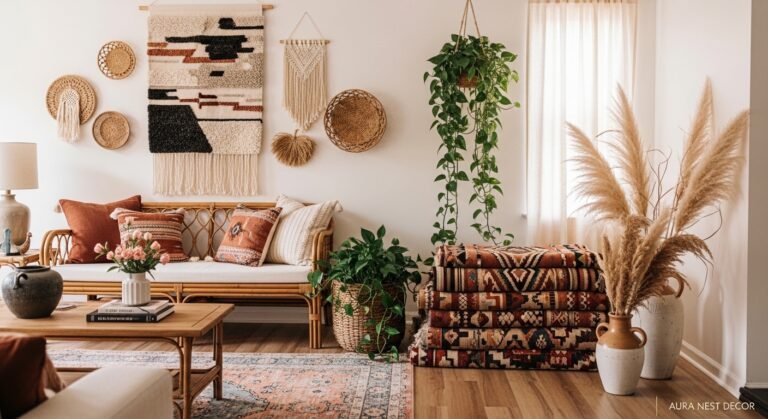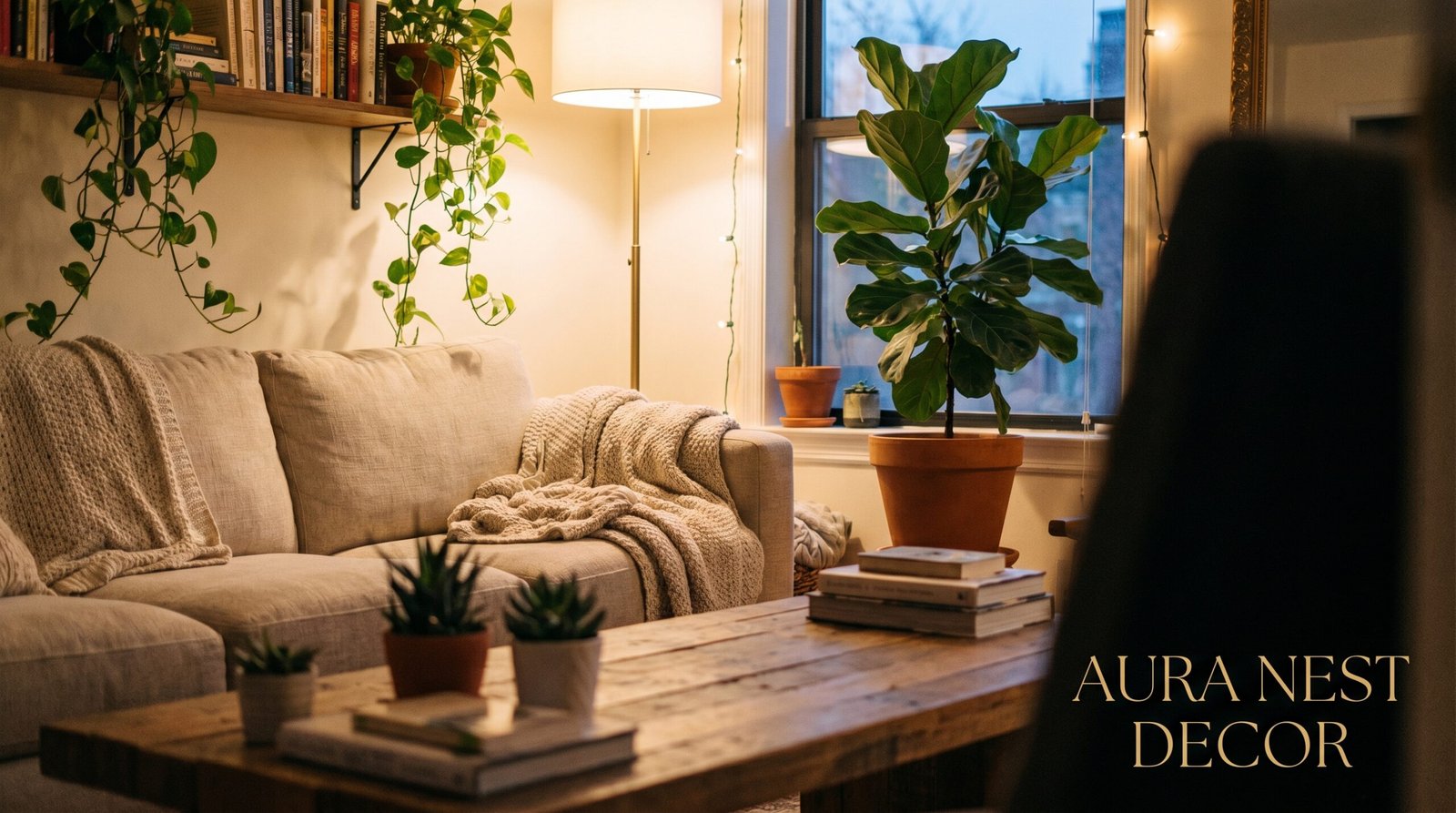
The Plant Styling Secrets That Make a Living Room Feel Like a Hug
You walk into someone’s living room and it just feels right. Warm, lived-in, like the room has a pulse. And then you look around and realize — plants everywhere. Not in a jungle way. In a this person really knows what they’re doing way.
That’s what we’re doing today.
—
1. Why the Corner by Your Sofa Is the Most Underused Real Estate in Your Home
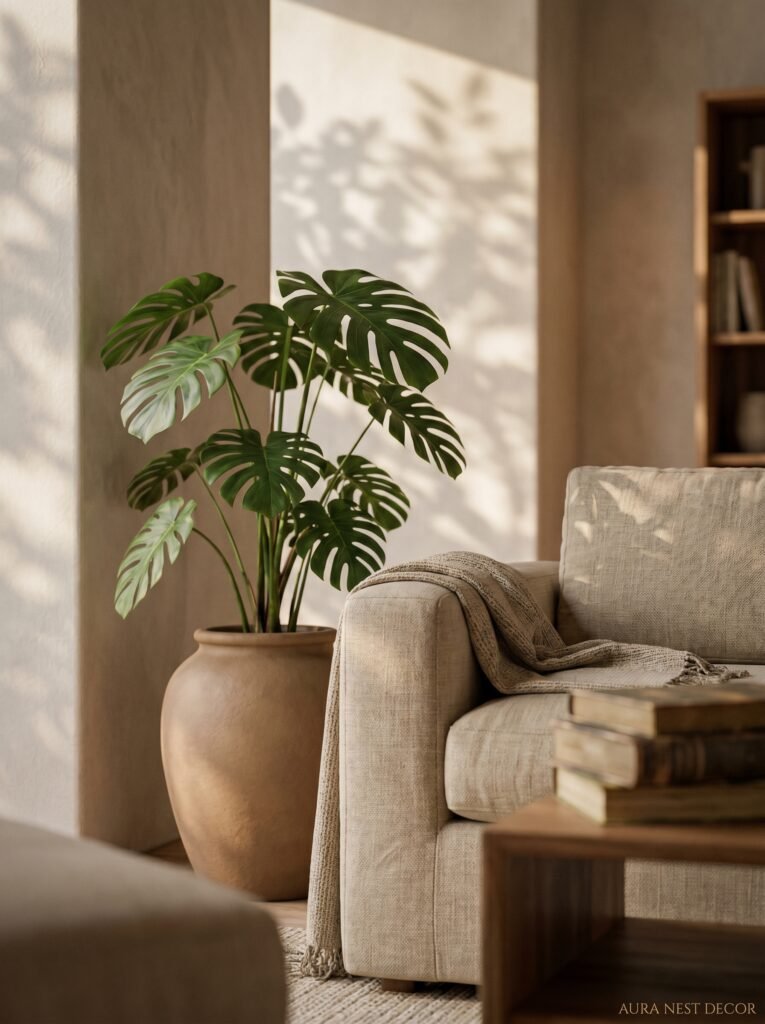
I don’t know who decided that corners were dead zones for furniture you can’t figure out where else to put, but it’s genuinely one of the worst design habits people have. That awkward back corner next to your sofa? It’s the best spot in the whole room for a plant. Specifically, a tall one.
A fiddle leaf fig or an olive tree in a terracotta pot, placed just behind and beside the sofa arm — that’s not decoration, that’s architecture. It frames the seating area, gives the eye somewhere to travel, and makes the whole arrangement look intentional in a way that no throw pillow ever could. You’re not adding a plant, you’re finishing the room.
The key is height. Whatever you’re choosing for a corner, it needs to go UP. Something that reaches at least chest height, or ideally to around five or six feet, turns empty vertical space into an actual design moment. A squat little succulent in a corner just looks lost. But a big monstera in a woven basket? That corner starts doing something.
And honestly, the pot matters as much as the plant. Matte black, brushed terracotta, or a thick-rimmed ceramic in cream or sage — those shapes and textures are what make it look like a styled room rather than a garden center.
“The right plant in a corner doesn’t just fill space. It anchors the whole room.”
—
2. The Shelf Styling Trick That Every Beautiful Living Room Is Using Right Now
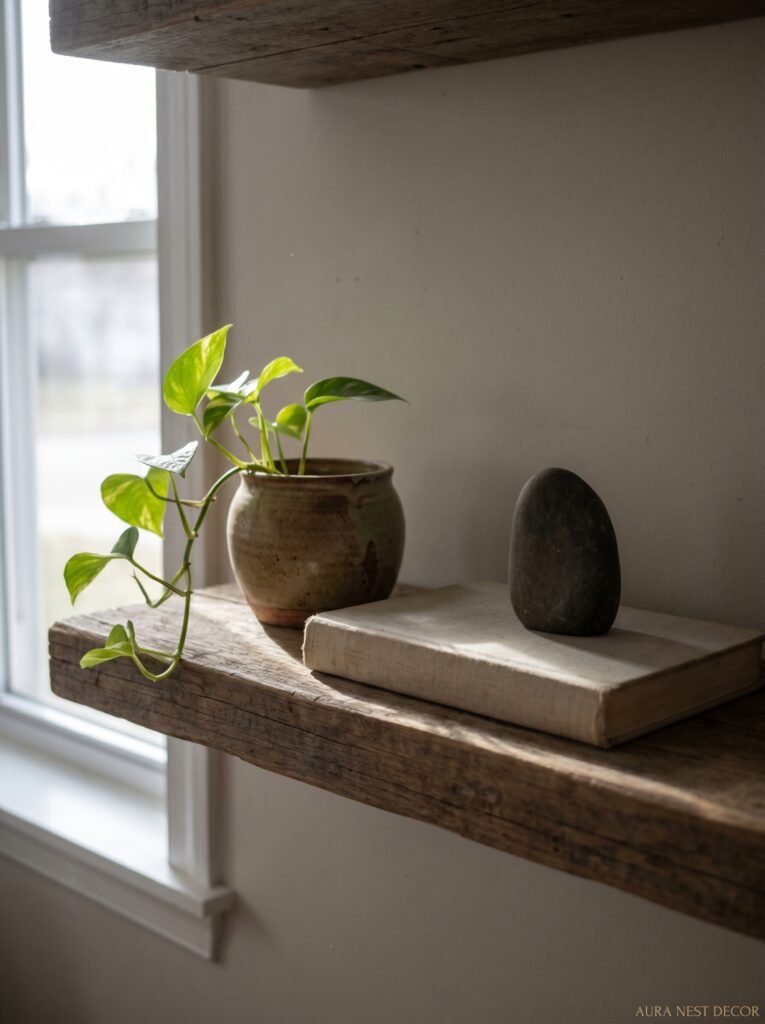
Not every plant needs to be floor-level. This is something I feel strongly about, and I’ve seen too many living rooms with all the greenery stuck down low while the upper half of the room is doing absolutely nothing.
Put plants on your shelves. Mix them with books, candles, small ceramics — but let the trailing vines drape over the edge. A pothos or a string of hearts spilling off a floating shelf is one of the most satisfying things you can add to a living room, and it costs maybe twelve dollars from a garden center.
The trick is that you don’t want every shelf to have a plant. Maybe the middle shelf has a trailing pothos, the top shelf has a small sculptural cactus next to a stack of art books, and the bottom shelf is all books and a candle. Uneven. Unpredictable. That’s what makes it look like a real person styled it rather than a showroom.
Side note — if you’ve got built-in shelves or an alcove with shelving, you’re already winning. Those are the spaces where plants really sing because the architectural framing does half the work for you. Lean into it.
Height variation matters here too. Don’t line up three plants of the same size in a row. Put a short, round pot next to a tall, narrow one. Let one hang lower than the rest. It should look a little like an accident that turned out beautifully.
—
3. The Coffee Table Plant Rule That Nobody Talks About (But Should)
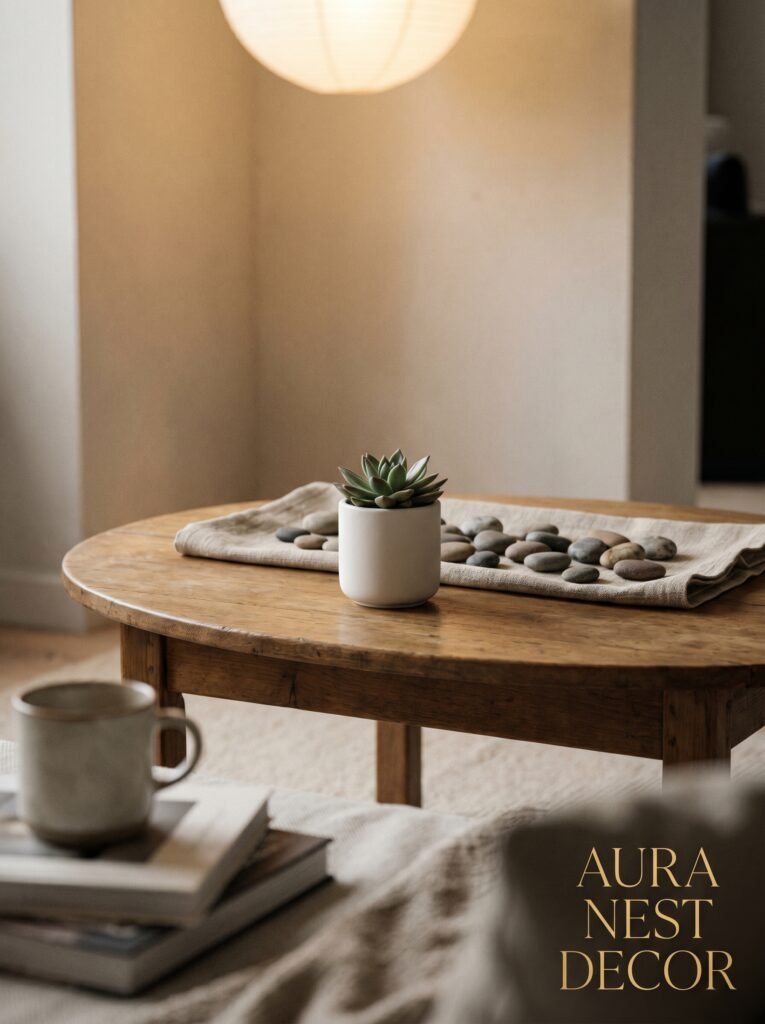
Coffee table styling is something people stress about way too much, and most of the advice out there is wrong. You don’t need a perfectly curated tray with a candle, a coaster, and a book. But you also — hear me out — don’t want a huge plant dominating the middle of your coffee table.
Small. Low. That’s the rule.
A small succulent arrangement in a shallow concrete dish, or a single low-growing trailing plant in a tiny terracotta pot — something that adds life without blocking eye contact across the room. The coffee table should still function like a coffee table. Drinks go there. Remotes go there. Your feet go there sometimes. A plant that demands space or attention is the wrong call.
What works brilliantly: a little cluster of air plants arranged casually on a small wooden board, or a single haworthia in a matte pot that coordinates with your cushions. Something that rewards a close look but doesn’t announce itself from across the room.
The SCALE is everything. Too big and it’s annoying. Too small and it disappears. You want something that makes a guest glance down and think “oh, that’s pretty” — not have to navigate around it to put their cup down.
—
4. Hanging Plants Are Back and They’re Not What You Think
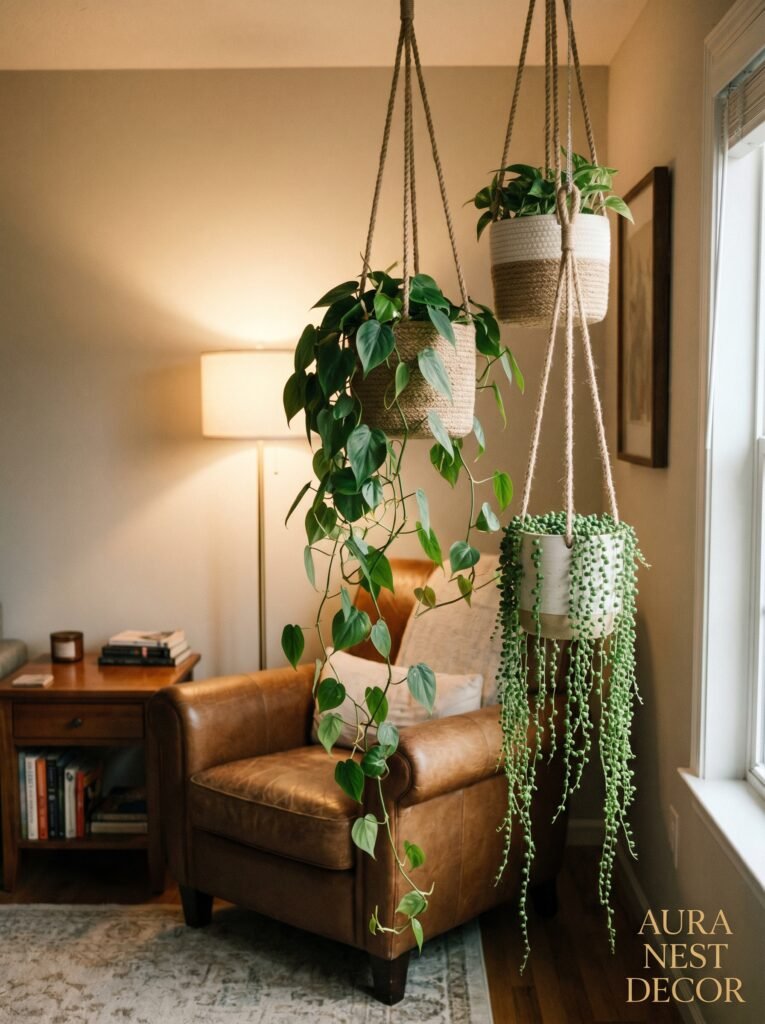
I know. The second you say hanging plants, people picture those macramé hangers from 1974 with the big spider plant. And look — macramé is actually having a genuine moment right now, so I’m not here to dismiss it. But the hanging plant possibilities have gotten so much more interesting.
There are beautiful wall-mounted geometric brass planters, minimal ceramic cone-shaped hangers, and woven rattan disc holders that look completely current. A hoya with its waxy, constellation-printed leaves hanging near a window is such a specific kind of joy to live with. It moves a little in the breeze from an open window, it catches the light in the afternoon — it’s ALIVE in the room in a way that nothing else quite is.
The placement matters so much with hanging plants. Near a window is obvious but right. In a corner where two walls meet, hung at slightly staggered heights with two different plant varieties, works almost impossibly well in a modern room. Don’t hang them too high — you want them at roughly eye level to really feel the effect.
In smaller UK terraced houses or American apartments where floor space is genuinely precious, hanging plants are doing actual work. They add greenery without taking a single square inch off the floor plan. That’s not just aesthetics, that’s practical problem solving.
“A hanging plant at eye level changes a room in ways a floor plant simply can’t.”
—
5. The One Surprising Spot for a Plant That Interior Designers Use Constantly
By the window is expected. On the shelf is expected. You know where nobody thinks to put a plant? On top of the fireplace mantel.
Not INSIDE the fireplace, obviously. But up on the mantel, where people usually put a mirror and two matching candlesticks in a perfectly symmetrical arrangement that looks like every other mantel you’ve ever seen. Put a plant up there. A big one, slightly off-center. Let it lean against the mirror if there is one.
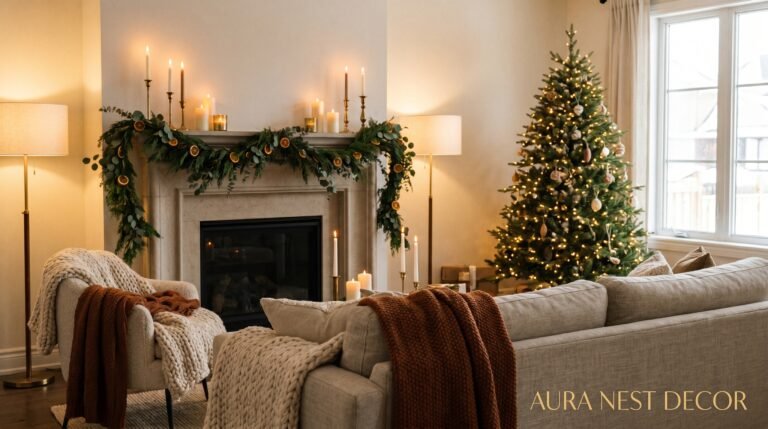
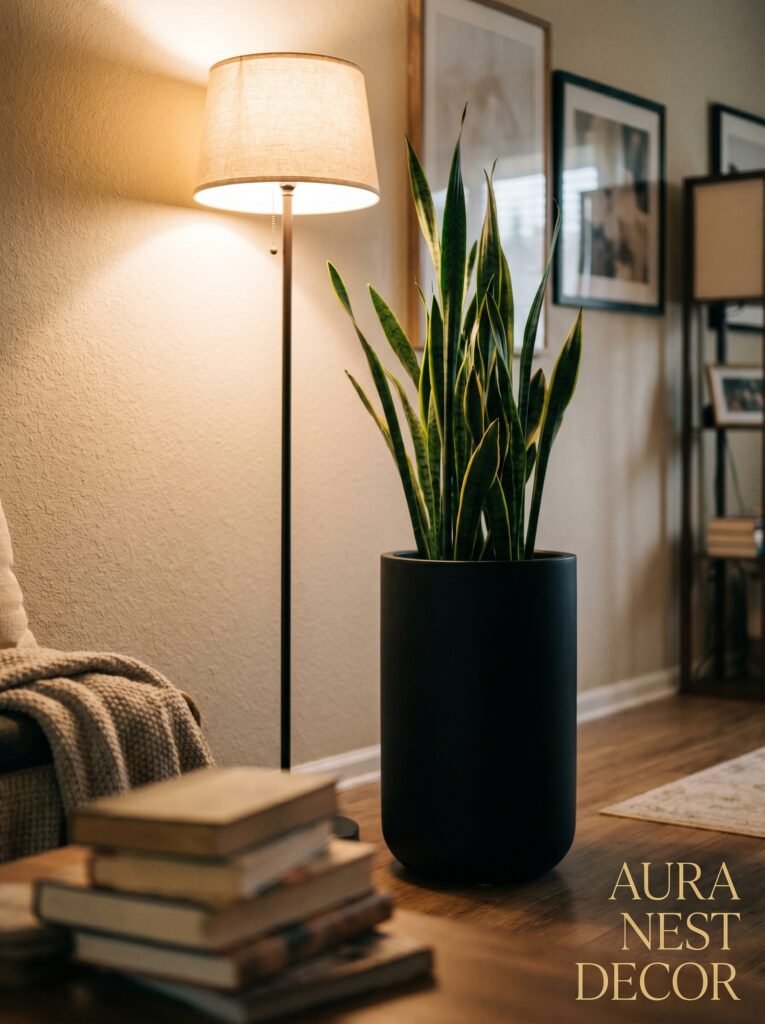
A rubber plant or a large snake plant on a fireplace mantel looks impossibly chic and it’s one of those details that people notice without knowing why the room looks so good. Or — and this is a less obvious option — trailing a pothos or a long-stemmed plant across one side of the mantel, slightly draping over the edge, adds softness to what’s usually a very hard, architectural surface.
UK homes with original Victorian or Edwardian fireplaces especially benefit from this. The ornate plasterwork around the fireplace and the organic, irregular shape of a plant create this wonderful friction between the formal and the wild. It shouldn’t work as well as it does, but it always does.
—
6. Dark Leaves, Light Room: The Color Theory Nobody Explains Properly
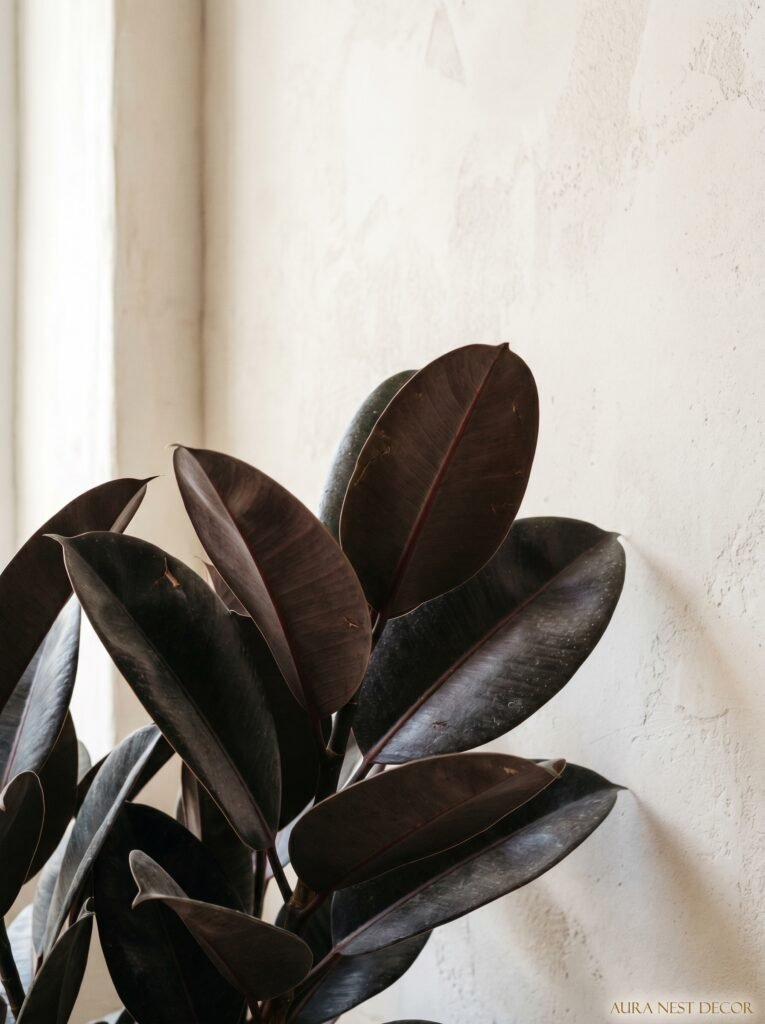
Most plant content focuses on green. But the plants that are really driving living room styling right now are the dark ones. Burgundy rubber plants, nearly-black ZZ plants, dark purple oxalis with its butterfly-shaped leaves — these are the plants adding DRAMA.
And here’s the thing: dark plants work better in light rooms than in dark ones. In a room with white or cream walls, pale oak floors, and natural linen fabrics, a dark-leaved plant reads as a sculptural statement. Put that same plant in a dark dramatic room and it just… dissolves into the background. You lose the whole point.
The contrast is what makes it work. A deep burgundy rubber plant against a white plaster wall in afternoon light — that’s a photograph waiting to happen. It’s also just an extraordinarily beautiful thing to live with day to day.
Pale green rooms or rooms with a lot of natural wood tones can do something interesting with variegated plants — things like the marble queen pothos or a variegated monstera, where the creamy patches in the leaves echo the pale tones of the room and make the whole thing feel coherent without being matchy-matchy.
—
7. How to Layer Plants So the Room Looks Styled, Not Overgrown
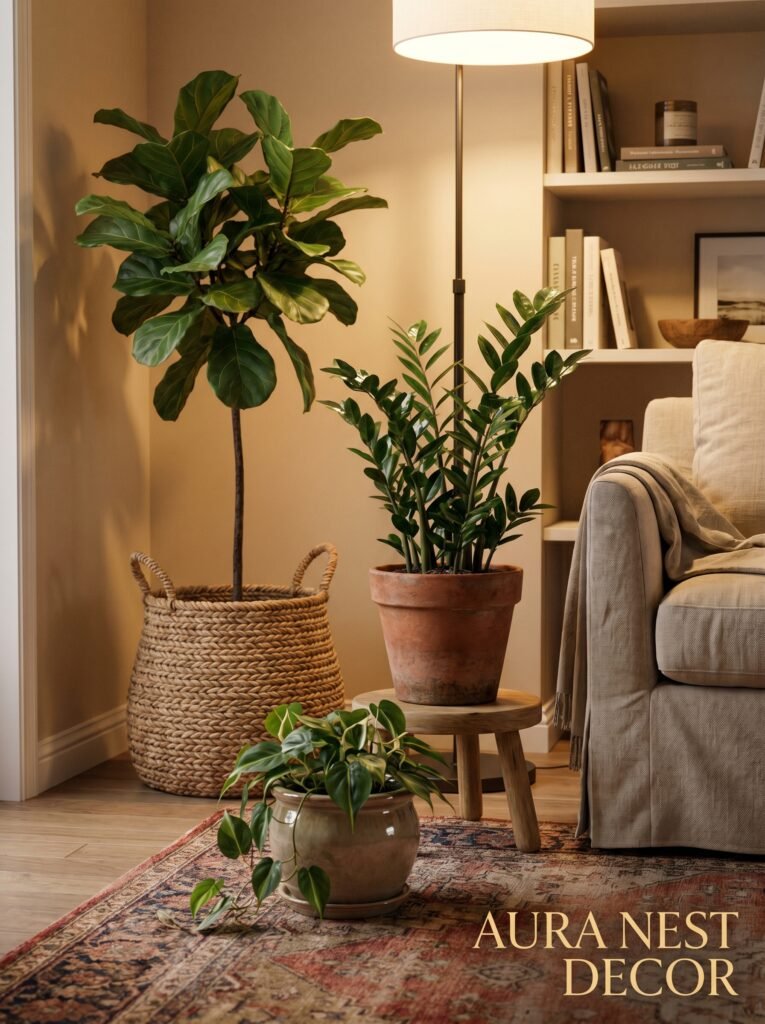
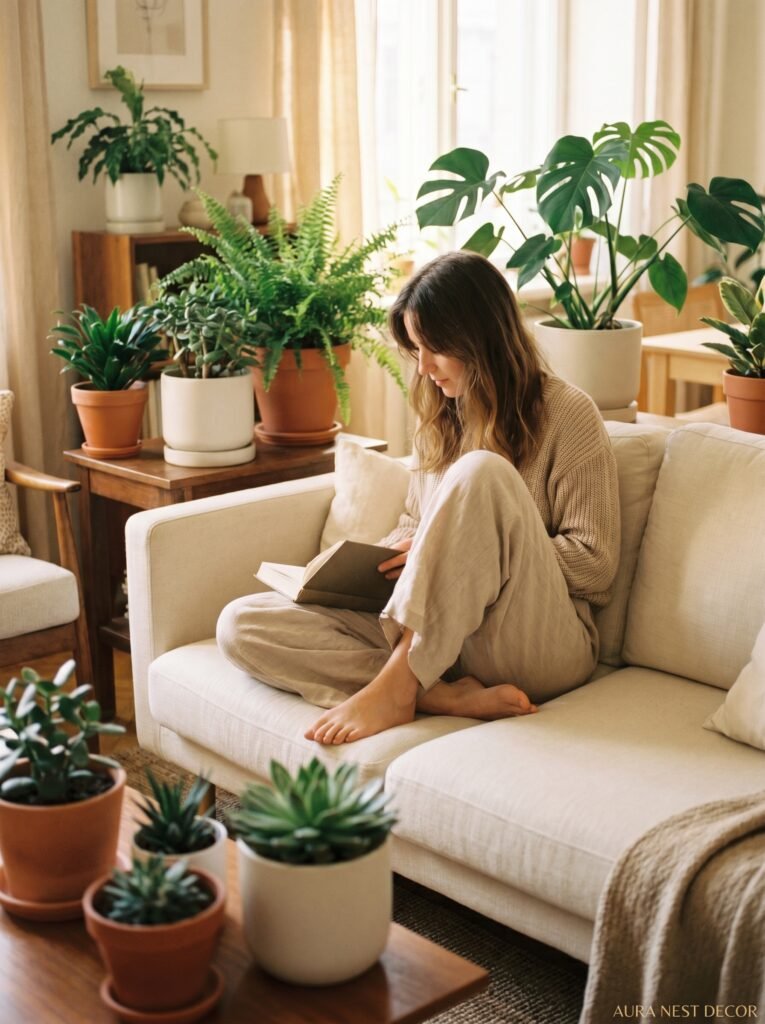
The difference between a beautiful plant-filled room and a room that just looks chaotic is layering. And layering means thinking about three levels: floor, mid-height, and high.
Floor plants anchor things — your big fiddle leaf, your monstera, your snake plant in the corner. Mid-height plants do the transitional work — shelf plants, plants on side tables or plant stands, the stuff at roughly waist to shoulder height. High-level plants are your hanging varieties and anything going on tall shelves or up near the ceiling on a ladder shelf.
When you’ve got something going on at all three levels — even just one or two plants at each — the room feels lush without feeling crowded. The eye naturally moves up and around, and the green becomes part of the architecture of the room rather than a collection of individual pots sitting around.
But. Don’t make it too even. If you’ve got two big floor plants, don’t mirror them on either side of the sofa like pillars outside a bank. Put them on the same side at slightly different depths. Let things be asymmetrical. That’s what makes it feel like someone actually lives there.
“Symmetry is for banks. An asymmetric plant arrangement makes a room feel lived-in and real.”
—
8. The Pots Are the Design Element — Not the Afterthought
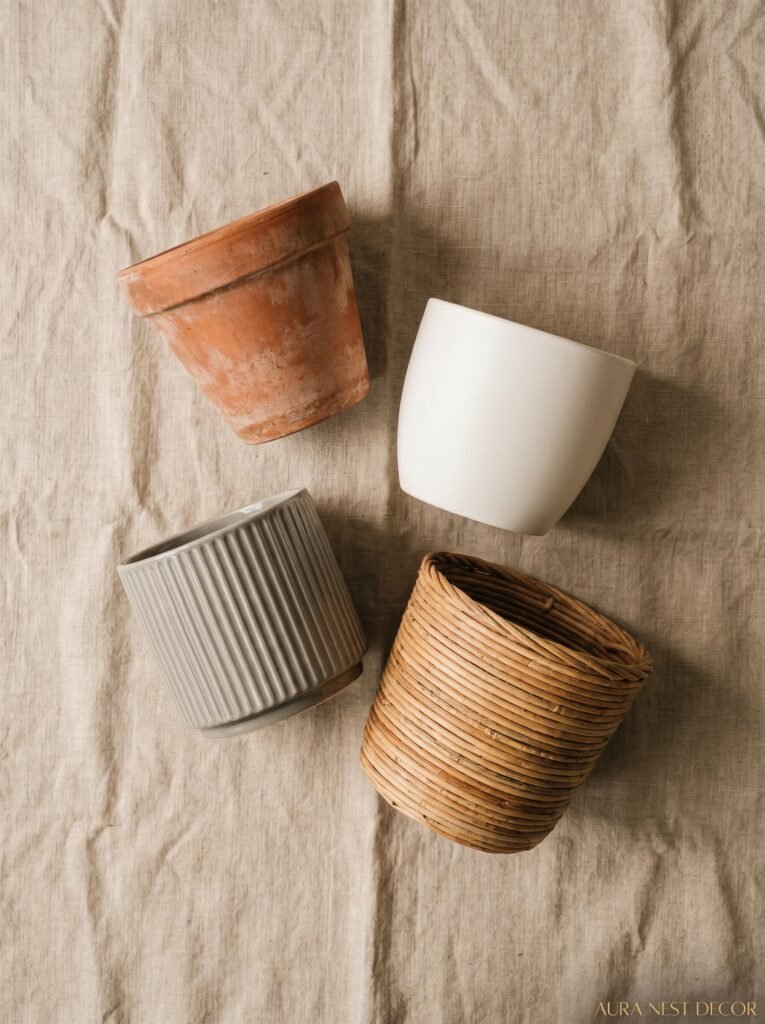
I cannot say this forcefully enough. The wrong pot ruins a beautiful plant. And the right pot can make a very ordinary plant look like something you’d see in a Soho House lobby.
Right now the pot shapes and finishes that are genuinely working: chunky terracotta with a rough, unglazed surface. Matte ceramic in soft sage, oyster white, or warm black. Tall cylindrical pots in a concrete or stone finish. Woven seagrass baskets for larger floor plants — the texture adds so much warmth against hard flooring.
What’s not working anymore: glossy bright-colored plastic pots used as decorative pots (cachepots). Cheap white plastic that looks like a hospital. Those square plastic pots everything comes in from the garden centre, just… left sitting there.
In the UK, Hortology and Patch Plants both have really strong pot selections. In the US, Target and World Market have genuinely good affordable options, and Etsy is brilliant for handmade ceramics if you want something nobody else has.
The pot doesn’t have to match the room exactly — but it should feel like it knows the room. Like they’ve met before.
—
9. The Low-Light Living Room Problem (And the Plants That Actually Solve It)
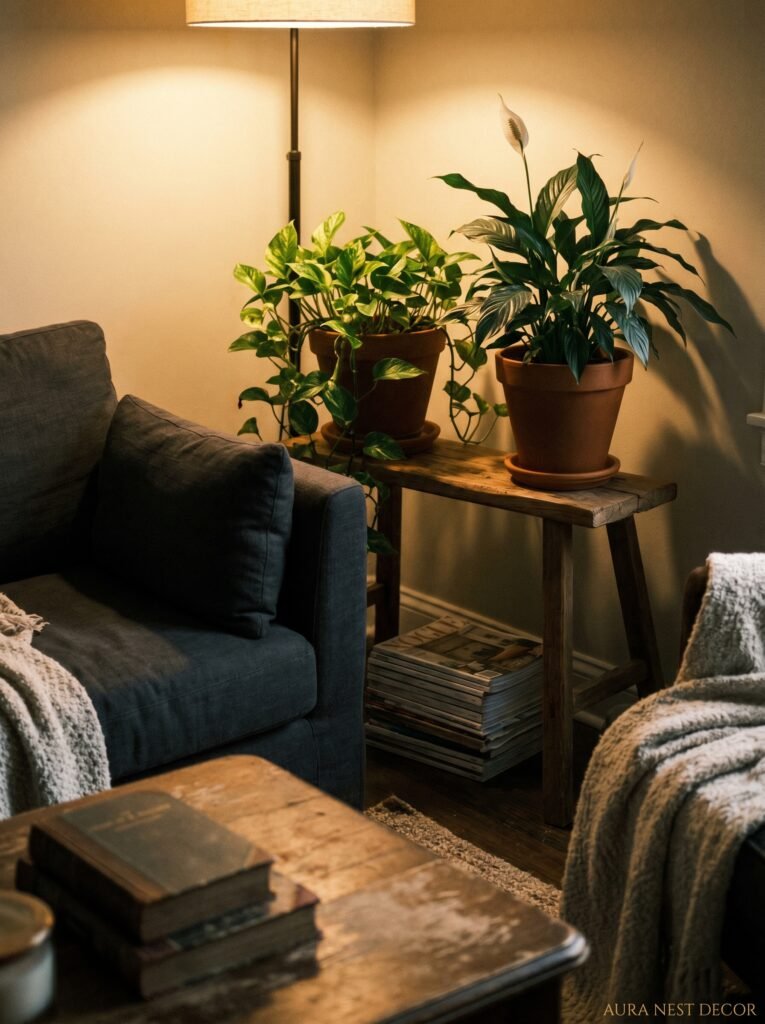
Not every living room gets gorgeous natural light. UK houses especially — north-facing rooms, Victorian bay windows that are gorgeous but somehow don’t actually let light IN, rooms that look beautiful and are basically caves by January. This is real life.
And the advice “put a plant near the window” is useless if the window faces a brick wall or gets direct sunlight for maybe forty minutes on a Tuesday.
Low-light plants that are genuinely good-looking AND hardy: ZZ plants (those glossy dark green leaves look expensive), cast iron plants which are extraordinary survivors and have a lovely upright architectural shape, peace lilies which actually flower in low light which feels like a miracle, and pothos which will grow absolutely anywhere short of a sealed bunker.
The snake plant — or sansevieria — is the real hero of the low-light living room. It comes in so many varieties now beyond the classic yellow-edged one. There are black coral snake plants, moonshine snake plants in a pale silvery green, and the cylindrical variety which looks almost sculptural. One of these in a good pot in a dark corner is genuinely doing real design work.
—
10. Plant Stands Are Having an Actually Interesting Moment
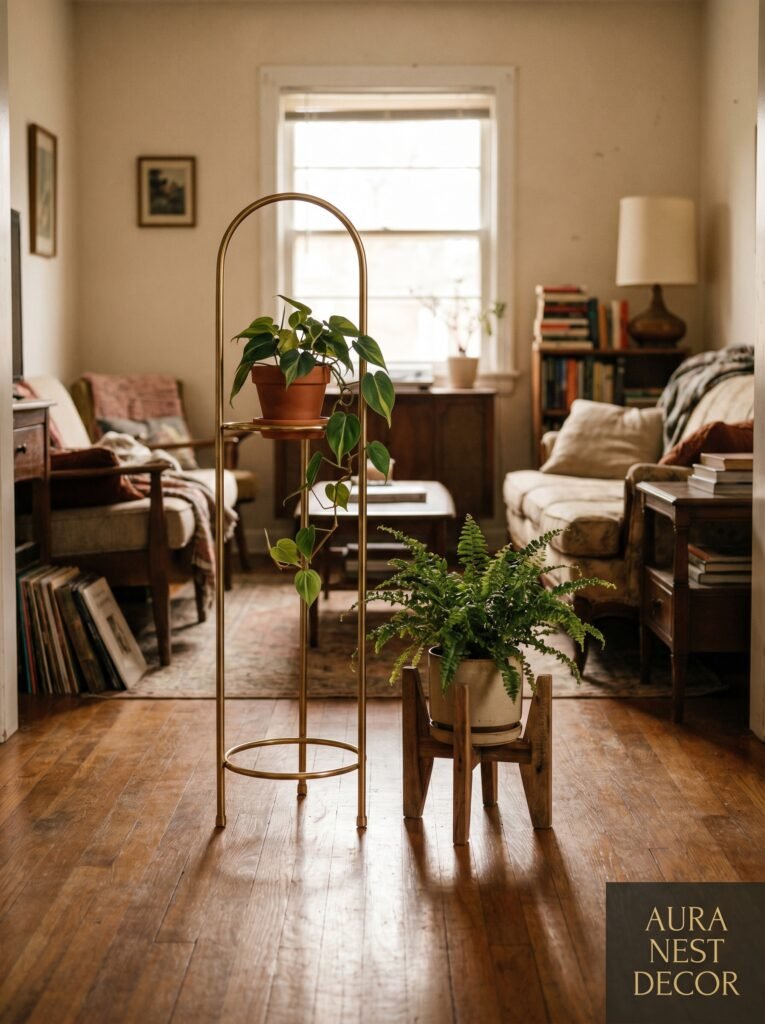
A plant without a stand is a plant sitting on the floor. A plant on a beautifully chosen stand is a STYLED plant. And the stands available right now are so much better than they used to be.
Thin-legged mid-century style stands in walnut or oak — these are everywhere and they work because they’re simple and the legs add visual interest without weight. Marble-topped stands for small pots add a material richness that elevates whatever you put on them. Wrought iron spiral stands feel quite romantic, especially in UK homes with period features.
And the trend that I think is the most genuinely good-looking: grouping multiple plant stands of different heights together to create a little corner installation. Three stands, three heights, three different plants — but the stands share a material or color so it holds together. That cluster reads as one intentional design moment rather than three random objects.
—
11. What the Coziest Rooms Have in Common (It’s Not the Plants Themselves)
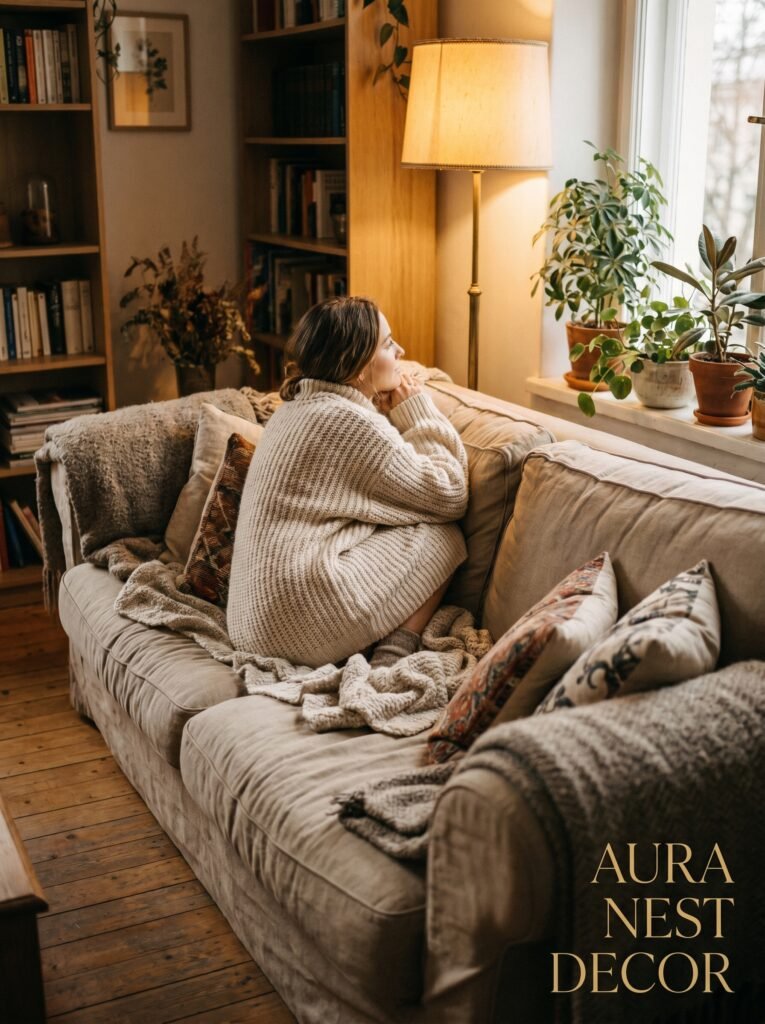
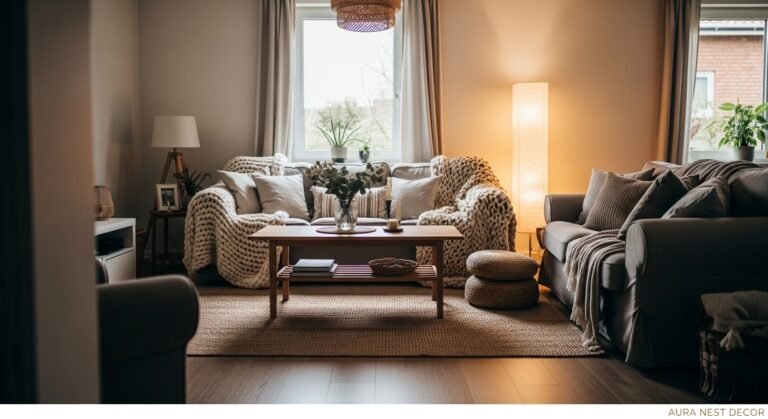
Here’s something I’ve been thinking about a lot. The rooms that actually make you exhale when you walk in — the ones that feel deeply cozy, warm, genuinely lived-in — they don’t just have plants. They have plants that interact with the other elements of the room.
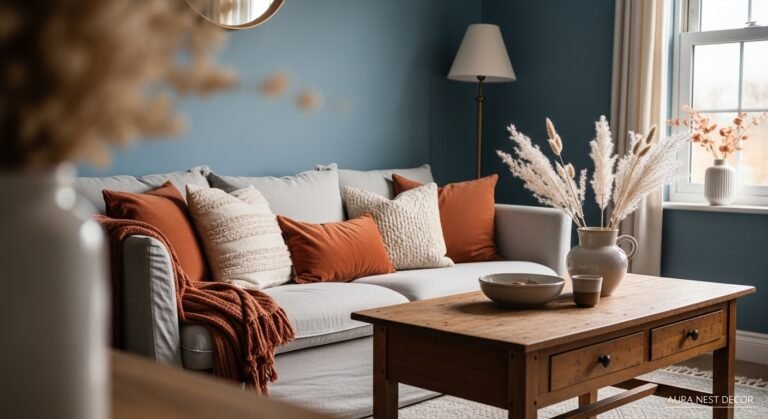
A plant that trails toward a candle on the shelf. Greenery that echoes the pattern on a cushion. A terracotta pot that picks up the terracotta tones in a woven rug. It’s the conversation between the elements that creates coziness, not any one thing in isolation.
Plants specifically bring something that no other decor item can: impermanence. A plant changes. It grows new leaves, it leans toward the light, it occasionally drops a leaf dramatically on the carpet and you notice it first thing in the morning. That aliveness is what creates a genuinely warm room. The room is never static. And that, I think, is actually what coziness is. Not a mood board. A living space that keeps surprising you a little.
—
12. The Easiest Way to Start If You Don’t Have a Single Plant Right Now
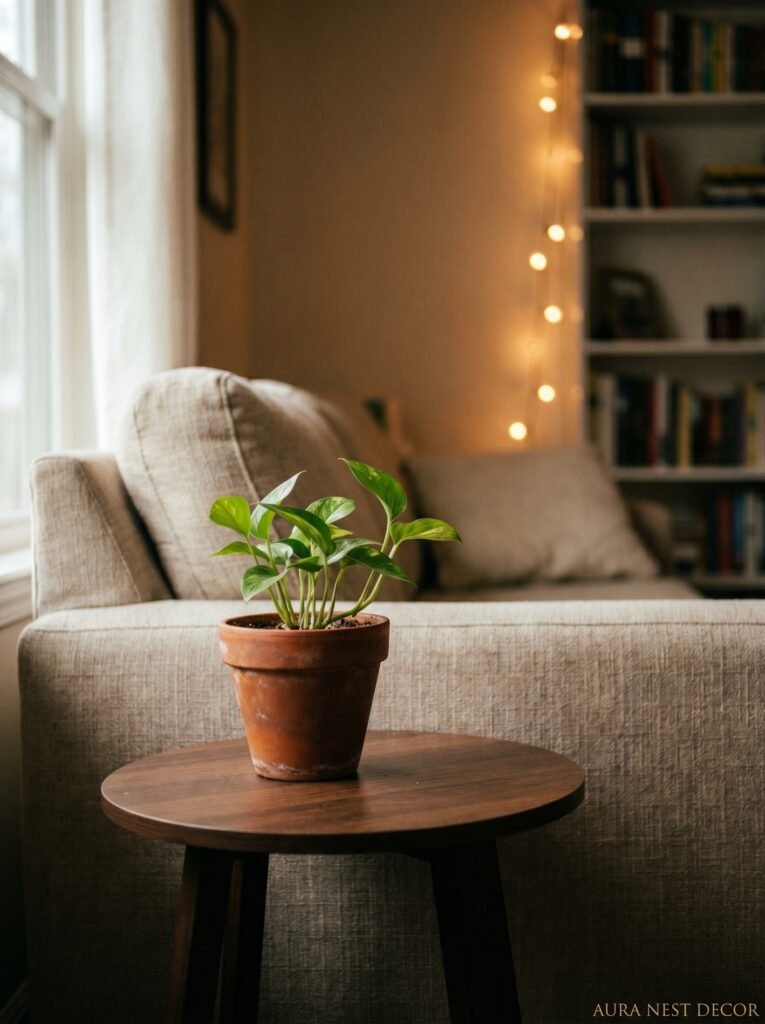
Buy one big plant. Not a small one. Not a little succulent that’ll get lost on a shelf. Get something that makes a statement — a monstera, a snake plant, a rubber tree — and put it in the best spot in your living room.
Then find one really good pot for it. Terracotta, ceramic, a seagrass basket. Something with texture and intention.
That’s it for now. Live with it for a few weeks. See how it changes the room, notice how you feel coming home to it. And THEN start adding more. The mistake people make is buying twelve plants at once and then having no idea where anything should go. Start with one good decision and let it teach you what comes next.
You’ll know when it’s right. The room will tell you.
—
❓ FAQ
Q: What are the best plants for a modern cozy living room that are hard to kill? A: Snake plants, ZZ plants, and pothos are your best starting points — they’re genuinely unfussy, they look great in almost any style of room, and they’ll survive being forgotten about for a couple of weeks. Rubber plants are slightly more demanding but not by much, and the visual payoff is significant.
Q: How many plants is too many for a living room? A: There’s no set number, but the test is whether the room still feels like a living room or starts to feel like a greenhouse. If you can’t see a clear path through, or the plants are competing with each other visually, you’ve probably gone too far. Layering at different heights helps you fit more plants without it looking overwhelming.
Q: Can I use artificial plants in my living room and still get a cozy feel? A: Honestly? High-quality artificial plants in good pots can work, especially in low-light areas where real plants genuinely struggle. But they don’t move, they don’t grow, and up close they don’t have the same life. If you can, mix real plants in the most visible spots and use quality faux plants to fill the harder corners. Best of both.
—
💭 Final Thoughts
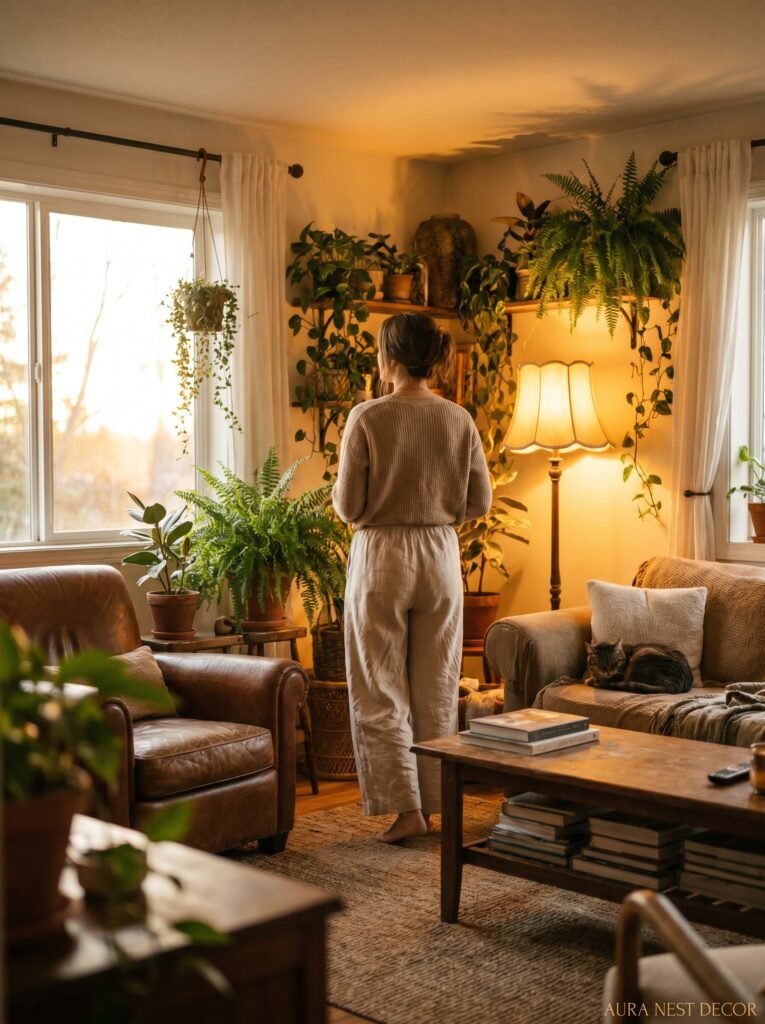
A plant-filled living room isn’t a trend. It’s something people have always been drawn to — the instinct to bring something living into the spaces where we rest. The styling just keeps getting better, the pots keep getting more beautiful, and the plants themselves keep surprising us with what they can do to a room.
Start with one corner. One good plant. See what happens.
What’s the one spot in your living room that’s been empty a little too long?