The Rustic Farmhouse Living Room That Actually Feels Lived In (Not Like a Pinterest Board Pretending to Be a Home)
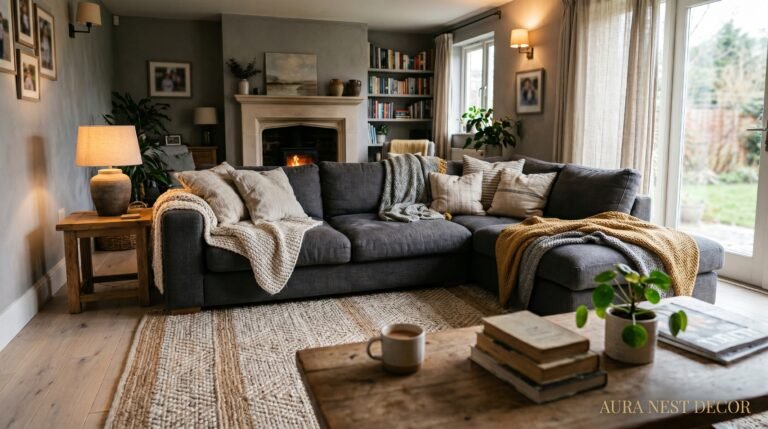
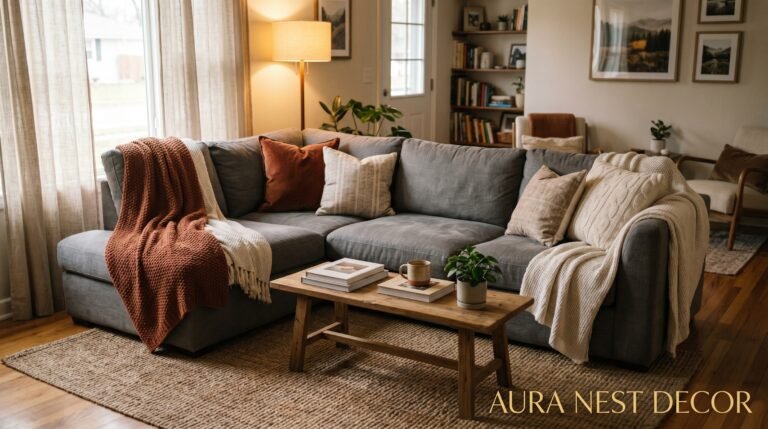
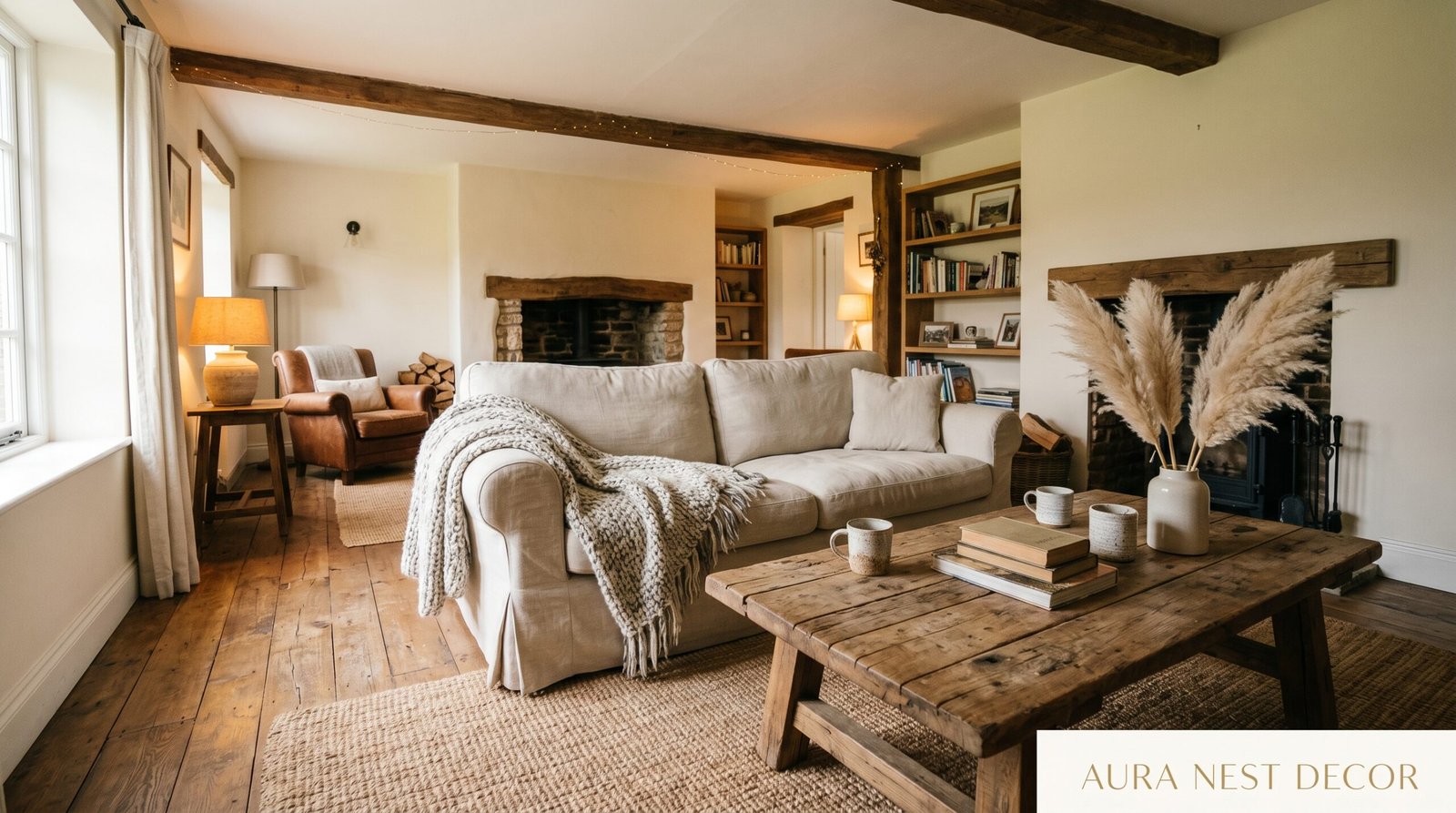
There’s a certain kind of room that stops you in the doorway. Not because it’s perfect — because it isn’t. The throw’s a little rumpled. The candles have been burning. Someone left a book face-down on the arm of the sofa. That’s the room we’re going for.
—
1. Why “Rustic Farmhouse” Went Wrong — and How to Get It Right This Time
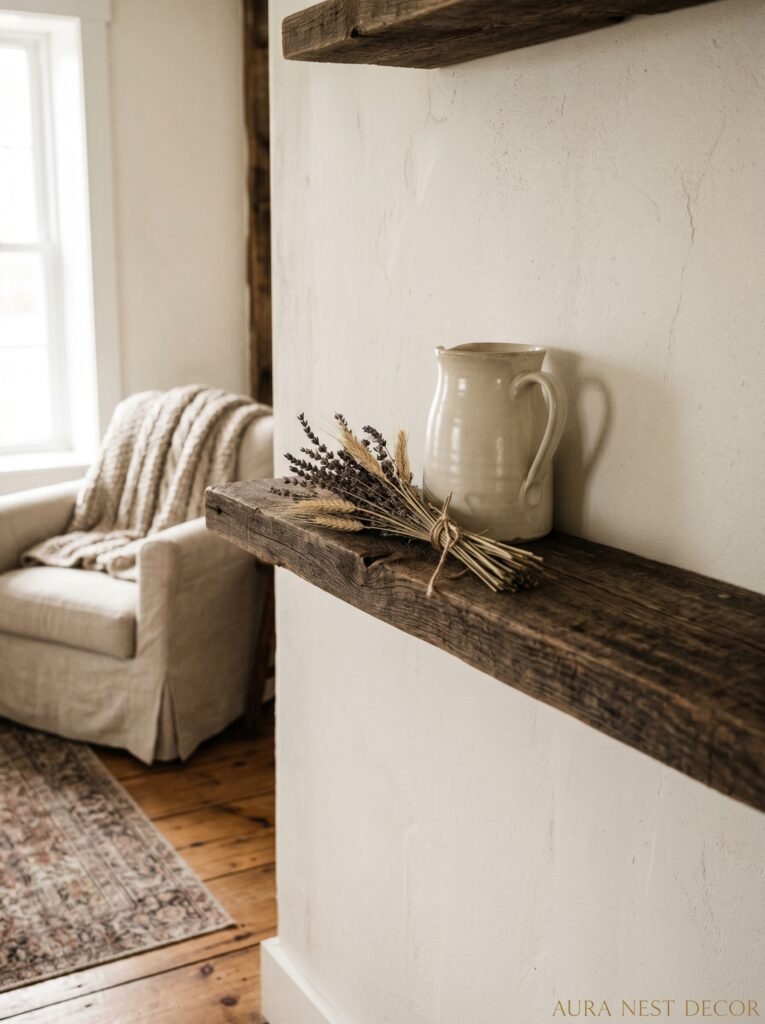
Here’s the thing nobody says out loud: a lot of farmhouse-style living rooms don’t feel cozy at all. They feel curated. Cold in a weird way, even with all the shiplap and the galvanized metal and the wooden signs that say “gather.” And I think I know why.
It’s the perfectness of it. Every element chosen to look like it wasn’t chosen. Every “imperfect” detail planned three Pinterest boards deep. Real farmhouse rooms — the actual ones, in actual old houses — weren’t designed. They accumulated. A rug someone’s grandmother brought home from a market. A side table that used to be in the bedroom. Curtains that were technically for a different window.
So the first thing to understand is that rustic farmhouse style done well is about restraint in the planning, not the execution. You’re not trying to recreate a catalog. You’re trying to make a room that feels like it has a history, even if that history is only two years old. Pick pieces you actually love, not pieces that “fit the aesthetic.” There’s a difference, and your room will show it. I promise.
The good news? Getting this right is actually easier than getting it wrong. Relaxing your grip on the vision — letting things be a bit mismatched, a bit worn, a bit personal — is not harder work. It’s less work. And it looks so much better.
“The rooms that feel the most like farmhouse don’t look like they’re trying to.”
—
2. The Wood Tones That Are Quietly Taking Over Every Beautiful Living Room Right Now
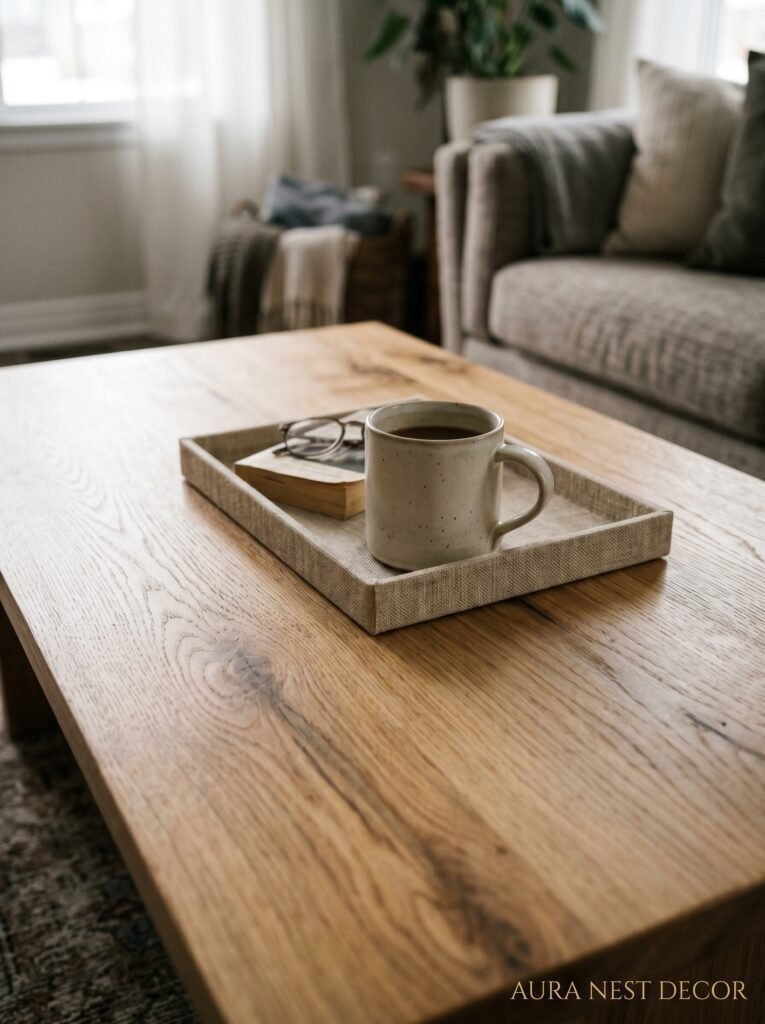
Not all wood is created equal, and in 2024, the shades that keep showing up in the farmhouse rooms that actually photograph well — and feel warm in real life — are the middle tones. Not too blonde, not too dark. Think reclaimed oak with a bit of age on it. Weathered walnut. Driftwood-gray pine.
The all-white farmhouse with bleached pine accents had its moment. It was beautiful! But it also photographed better than it lived, if that makes sense. Those rooms could feel stark by November, when the light drops and you want the room to hold you.
Warmer wood tones do something almost architectural. They lower the visual temperature of a room in the best possible way. A chunky coffee table in aged oak makes the whole space feel grounded. A reclaimed wood beam on a white ceiling — even a faux one — does more for the room than any rug you could pick.
In the UK especially, there’s such a natural affinity for this look because so many older homes already have original wooden floors and beams. Don’t fight them. Match to them. Let them lead. And if you’re starting from scratch — mixing two or three different wood tones reads as collected, not chaotic, as long as they’re all in that warm-medium range.
—
3. The Sofa Decision That Most People Get Backwards
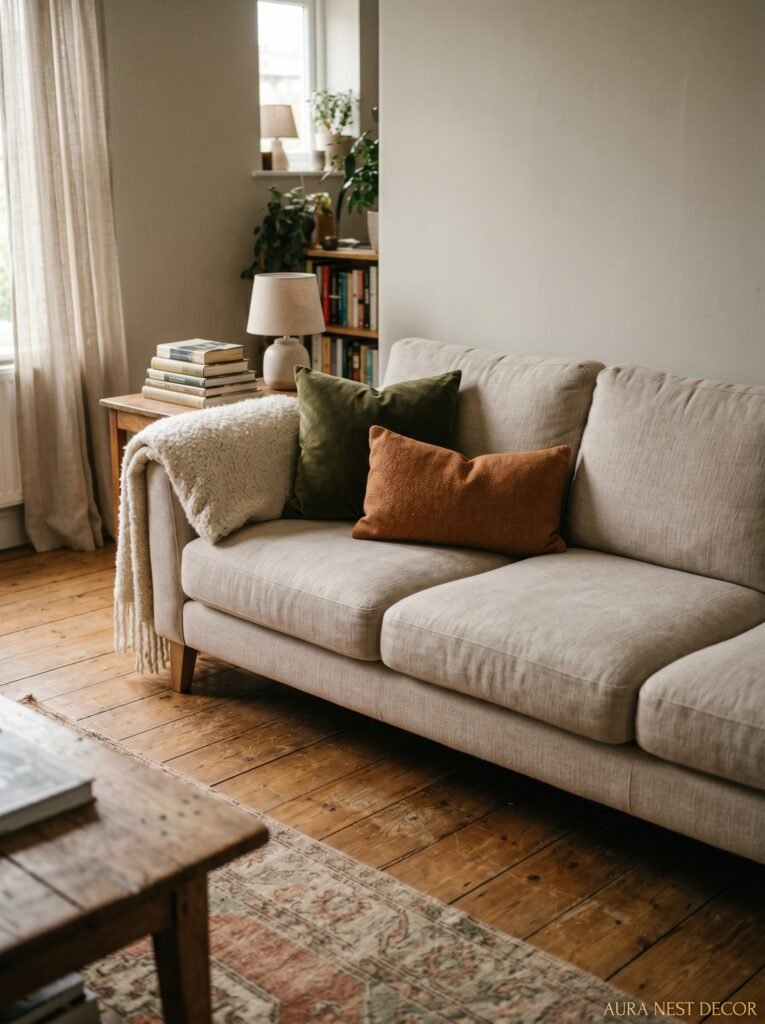
Most people pick their sofa first and style around it. And I get it — the sofa is the big purchase, the anchor, the thing. But in farmhouse living rooms specifically, it’s actually more forgiving to choose the sofa LAST, or at least not to make it your starting point.
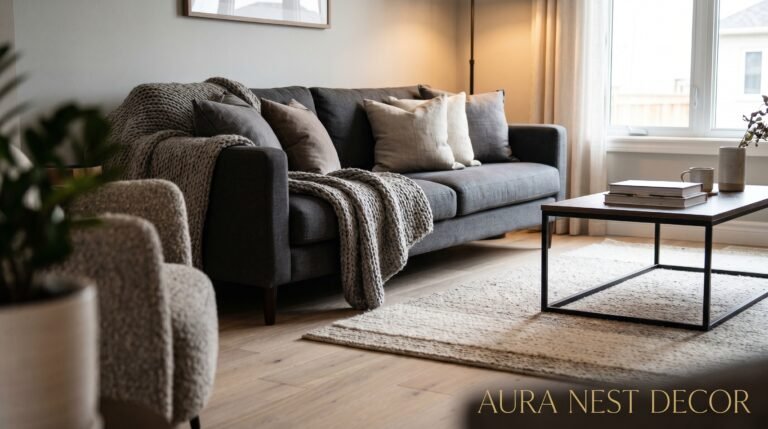
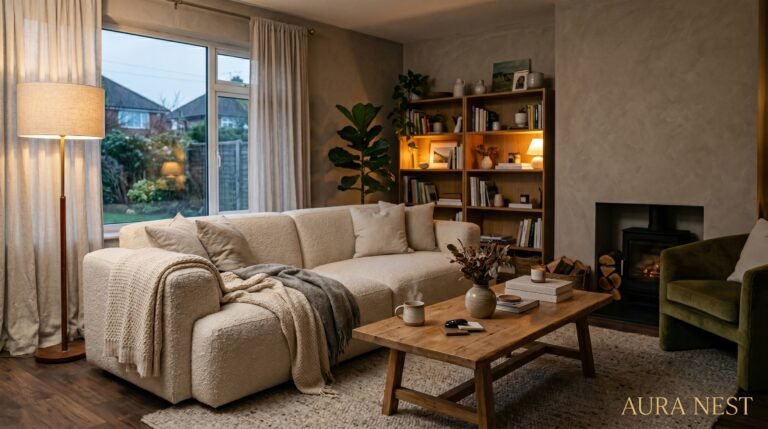
Why? Because the bones of a farmhouse room — the textures, the rugs, the wood — are so strong that a simple sofa in almost any neutral reads beautifully. A slipcovered linen sofa in cream. A worn leather Chesterfield in cognac (a particularly British look that’s wildly at home in a farmhouse context, by the way). Even a plain oatmeal sectional, if the room around it has enough warmth.
What does matter is comfort signaling. The sofa needs to look like you can sink into it. Deep cushions. Loose slipcovers that wrinkle naturally. A back that’s high enough to feel sheltering. If your sofa looks like no one is allowed to sit on it fully, the whole room loses something.
Pile on the cushions. But here’s the rule I’ve landed on after way too much time thinking about this: odd numbers, different sizes, nothing too matchy. A chunky knit cushion, a vintage grain-sack print, a plain linen one in the same tone as the sofa itself. Done.
—
4. The One Lighting Move That Changes Everything After Dark
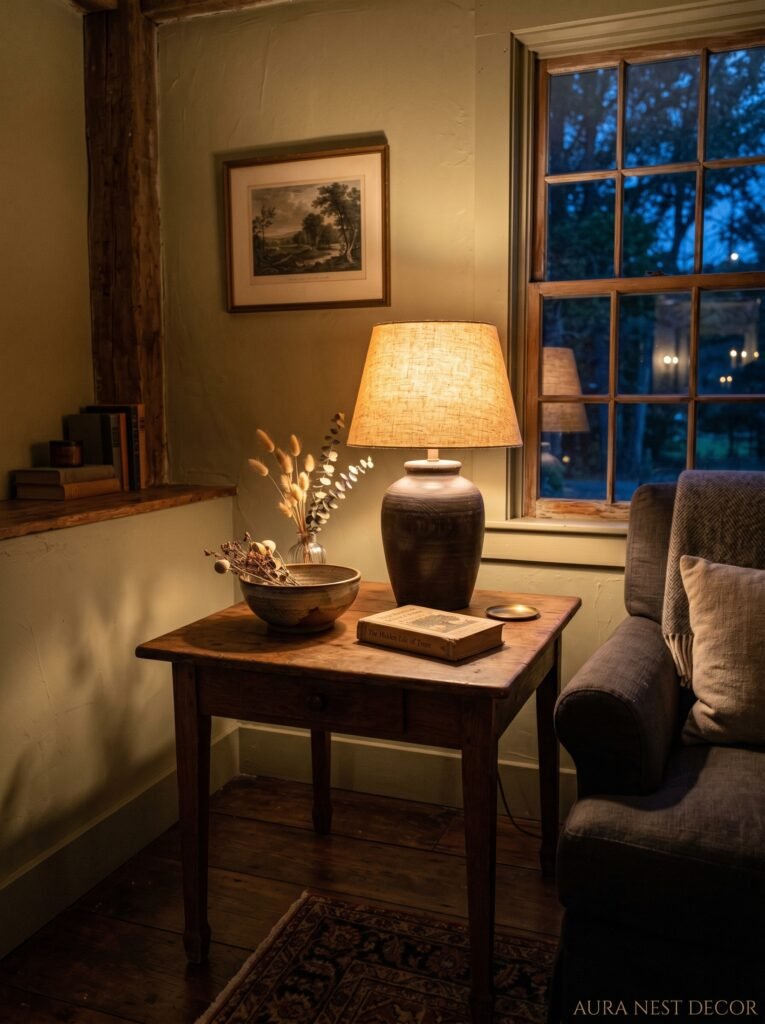
Can we talk about lighting for a second? Because I think it’s the single most underestimated thing in home decorating, full stop.
A farmhouse living room lit by overhead lighting looks like a waiting room. I’m sorry, it just does. The overhead stays off after 4pm. That’s basically a rule.
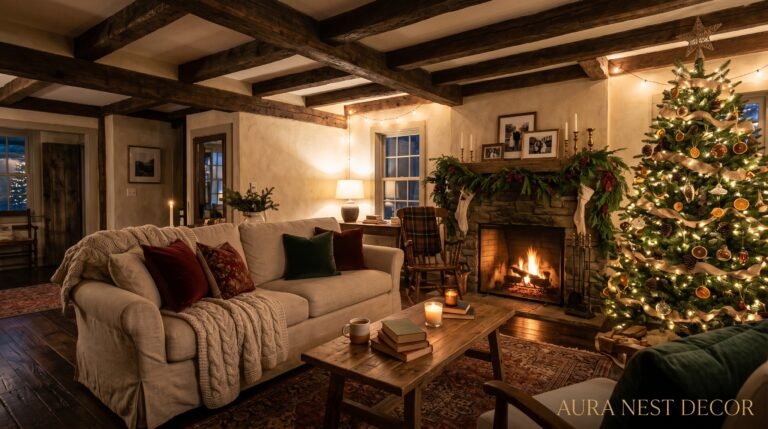
What you want instead is layers. Specifically: one floor lamp in the corner that throws warm amber light downward, at least two table lamps that can be on independently, and then candles — real ones, lots of them, different heights. The combination of these three things at 7pm on a November evening is genuinely one of the nicest things a living room can do.
“Good lighting isn’t about brightness — it’s about where the shadows fall.”
For farmhouse rooms, Edison bulbs are the obvious choice and they’re obvious for a reason. That filament glow is warm in a way that LED “warm white” doesn’t quite replicate — though the better LED Edison-style bulbs have gotten very close. Lantern-style table lamps, wrought iron floor lamps, ceramic bases in muted earth tones. None of it needs to match. It all needs to feel like it belongs.
Side note — battery-powered candles have genuinely gotten good enough that they don’t embarrass themselves anymore. Worth having a few, especially if you’ve got pets or small kids and real flames stress you out.
—
5. What to Put on the Walls When You’re Tired of Shiplap
Okay, shiplap. We need to have an honest conversation.
It’s still good. It’s not over. But it’s also not the only option, and a lot of rooms would actually benefit from skipping it and doing something a little more unexpected. Lime-washed walls, for instance, have a texture that shiplap doesn’t — they absorb light differently, they feel old in a way that’s almost impossible to fake badly. Really popular right now in the UK but starting to creep into American interiors in a big way.
Exposed brick, where you have it, is worth exposing. Even partial — one chimney breast done in brick and the rest of the walls painted a warm white or soft greige reads beautifully.
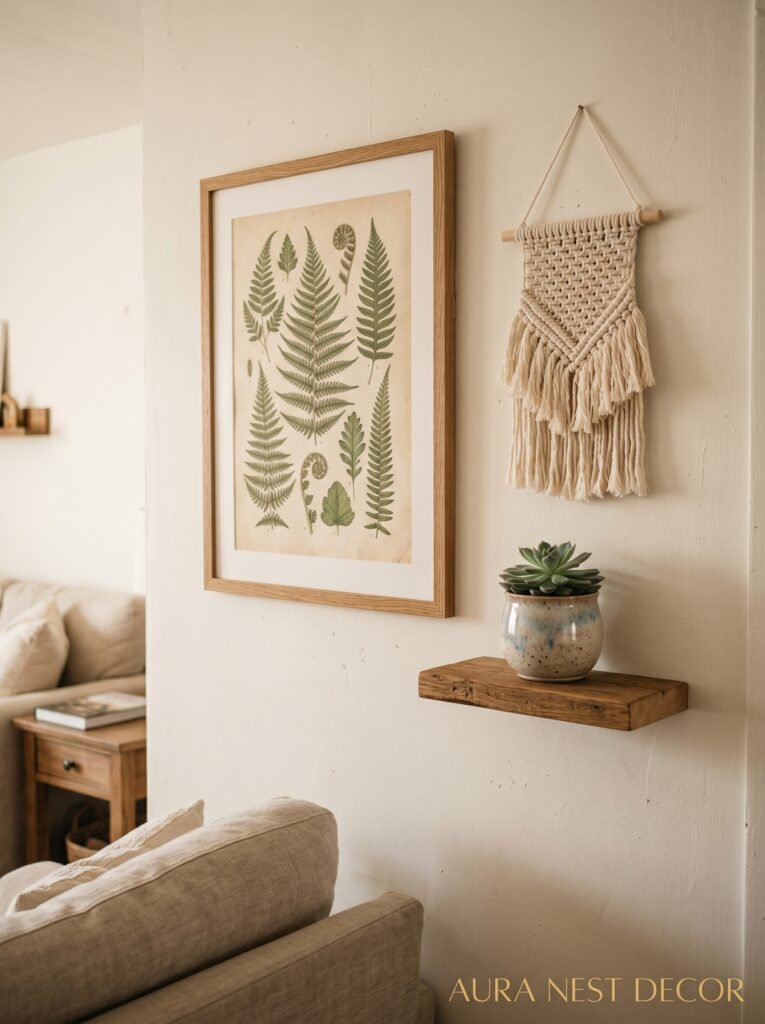
And for actual wall decor? Vintage botanical prints in mismatched frames. A large old map. Antlers (genuinely divisive — you know if you’re an antler person or not). A gallery wall of black-and-white family photos in simple oak frames. What doesn’t work in farmhouse rooms is anything too graphic or modern — clean-line abstract art looks confused in here, like it wandered in from a different apartment.
The frames don’t have to match. They really don’t. A mix of weathered wood frames, simple black metal ones, and maybe one gilded vintage frame does way more than a uniform set from a box store.
—
6. The Rug That Actually Ties It All Together (and It’s Probably Not What You Think)
So many farmhouse rooms have jute rugs. Fine! Jute is great. But jute is also scratchy and cold-feeling in winter and doesn’t add much in the way of color or pattern. If you want your living room to feel genuinely cozy — not just aesthetically cozy — you need a rug with some softness and some visual interest.
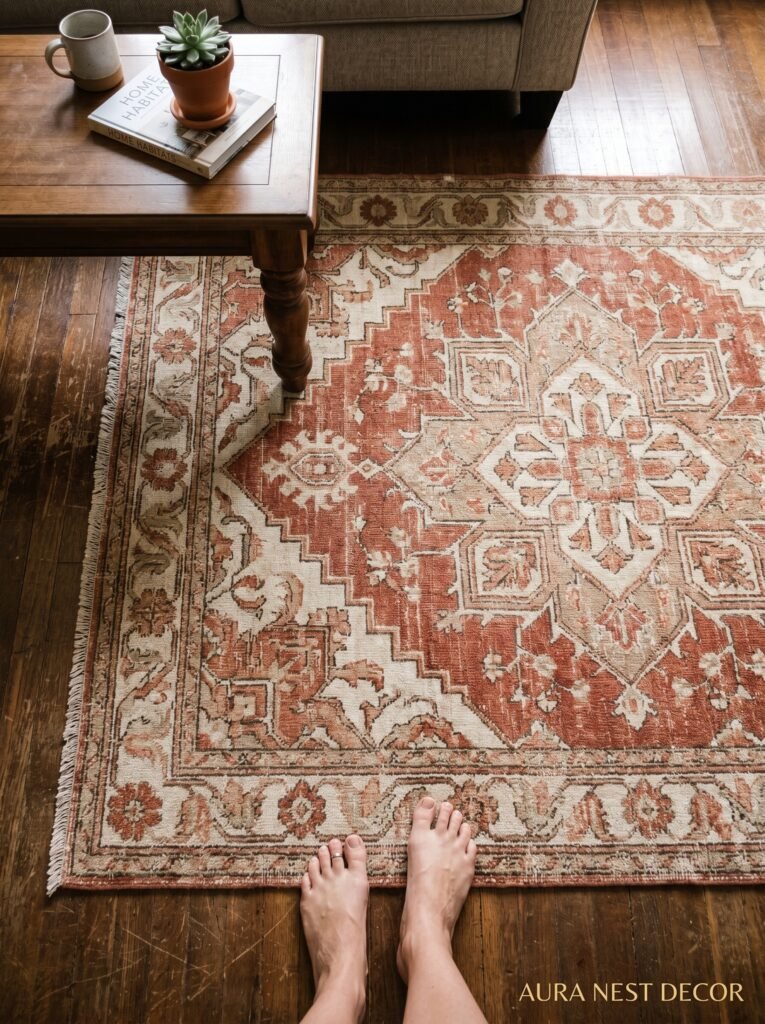
The rug I keep recommending to everyone is a vintage-style or over-dyed wool rug in muted tones. Faded rust, dusty blue, soft terracotta. The kind that looks like it has a history. These sit incredibly well against wood floors and cream walls, and they add the layer of warmth that jute just can’t provide.
In the UK, a lot of people swear by Beni Ourain-style Moroccan rugs, and honestly? They work beautifully in farmhouse spaces, especially against darker wood floors. The contrast between that creamy, nubby wool and a deep walnut floor is chef’s kiss.
Whatever you pick, go bigger than you think. A rug that’s too small to sit all the furniture legs on is the number one mistake in living rooms. The whole conversation area — sofa, chairs, coffee table — should either float fully on the rug, or have at least the front legs of every piece on it.
—
7. Thrifted Pieces That Actually Work (and the Ones That Just Look Sad)
Let’s get specific, because “thrift for farmhouse decor” is advice that everyone gives and almost no one narrows down enough to be useful.
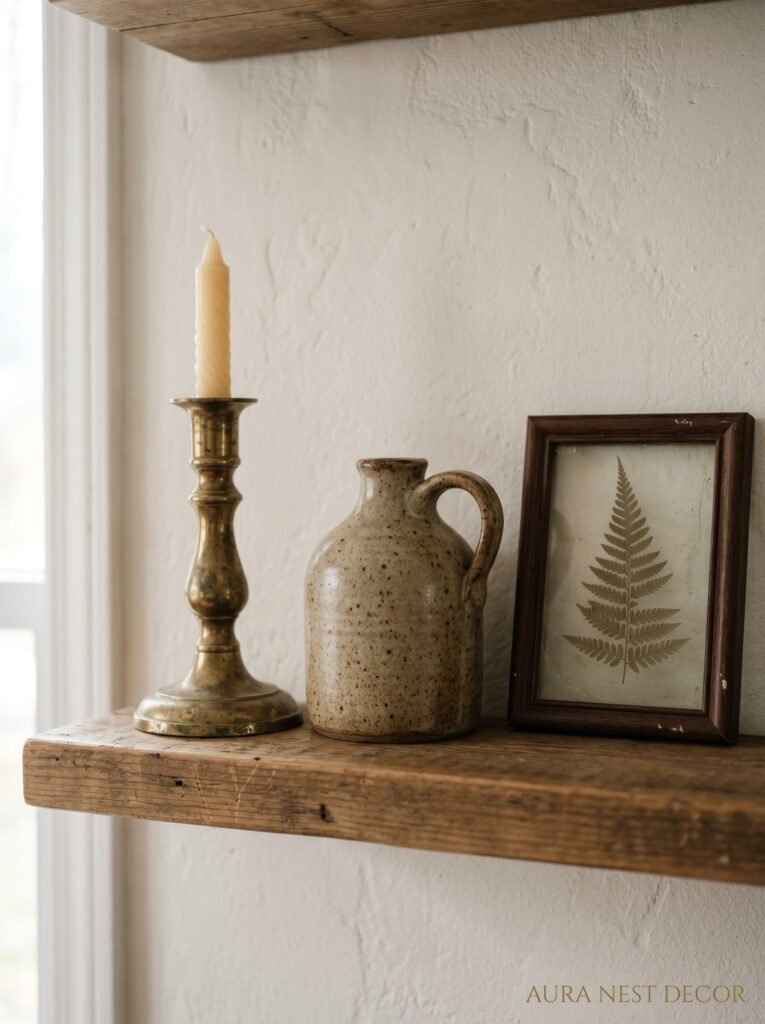
Things that are almost always worth buying secondhand: wooden side tables, especially with turned legs. Ceramic lamps with interesting bases. Heavy wool blankets. Old wooden crates. Frames of any kind, if the wood has character. Wicker baskets. Ironstone crockery if you’re using open shelving. Books — honestly, buy books. Stacks of old hardcovers with worn spines look incredible on coffee tables and low shelves.
Things that rarely survive the thrift-to-farmhouse journey: upholstered pieces that are too far gone to recover. Modern-era plastic-wood laminate anything. Anything with a very specific, non-farmhouse pattern like geometric 1970s fabric. Cheap chandeliers with visible fake-brass hardware.
“The difference between a thrifted room that looks collected and one that looks chaotic is almost always editing.”
Edit hard. Buy ten things, keep five. The impulse to fill the room is strong — resist it. Negative space in a farmhouse living room isn’t emptiness, it’s breathing room.
—
8. Textiles Are Doing 60% of the Work — Don’t Underestimate Them
The warmth you feel when you walk into a great farmhouse living room? It’s mostly textiles doing that. The visual texture. The layering. The sense that this room is soft.
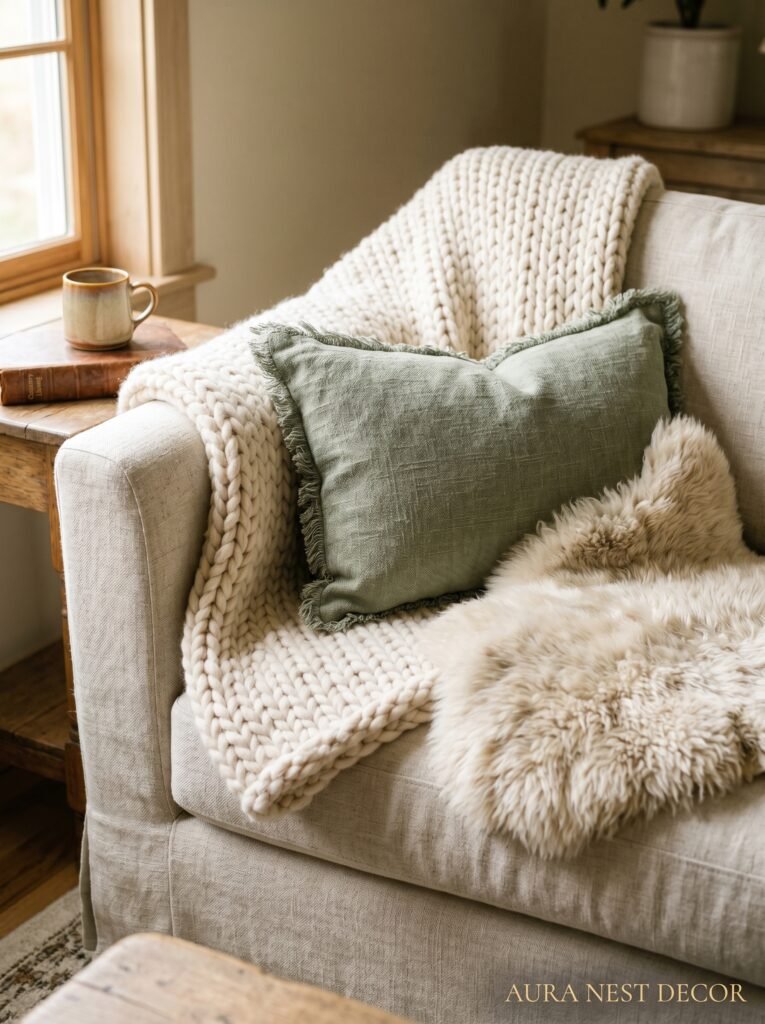
Chunky knit throws — one on the sofa arm, one folded on a chair — work hard. Linen curtains that pool slightly on the floor (not dramatically, just a half inch or so) add height and softness at the same time. A sheepskin on the floor near the fire or the reading chair. Velvet cushions in a deep olive or aubergine can surprise you with how well they sit in a farmhouse room — they’re not expected, but they read as rich in a way that works.
Don’t match everything. That’s not the goal. The goal is that every textile feels like it could belong to the same person. Same palette, loosely — warm neutrals, a bit of dusty color, no cold tones — but different weights and textures. Linen next to knit next to velvet next to cotton canvas. That’s the combination.
In the US, look at companies like McGee & Co. or Magnolia for starting points. In the UK, The White Company and Loaf have some genuinely lovely options, though you can usually find similar things at fewer pounds on Dunelm and NEXT Home.
—
9. The Fireplace Situation (Even If You Don’t Have One)
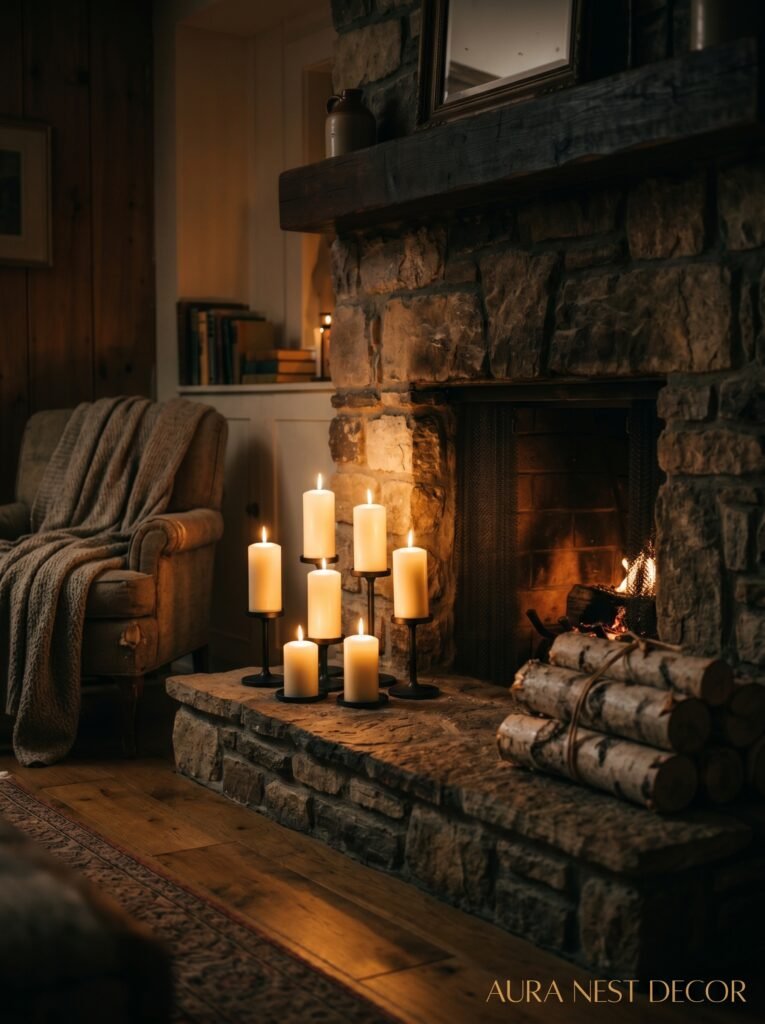
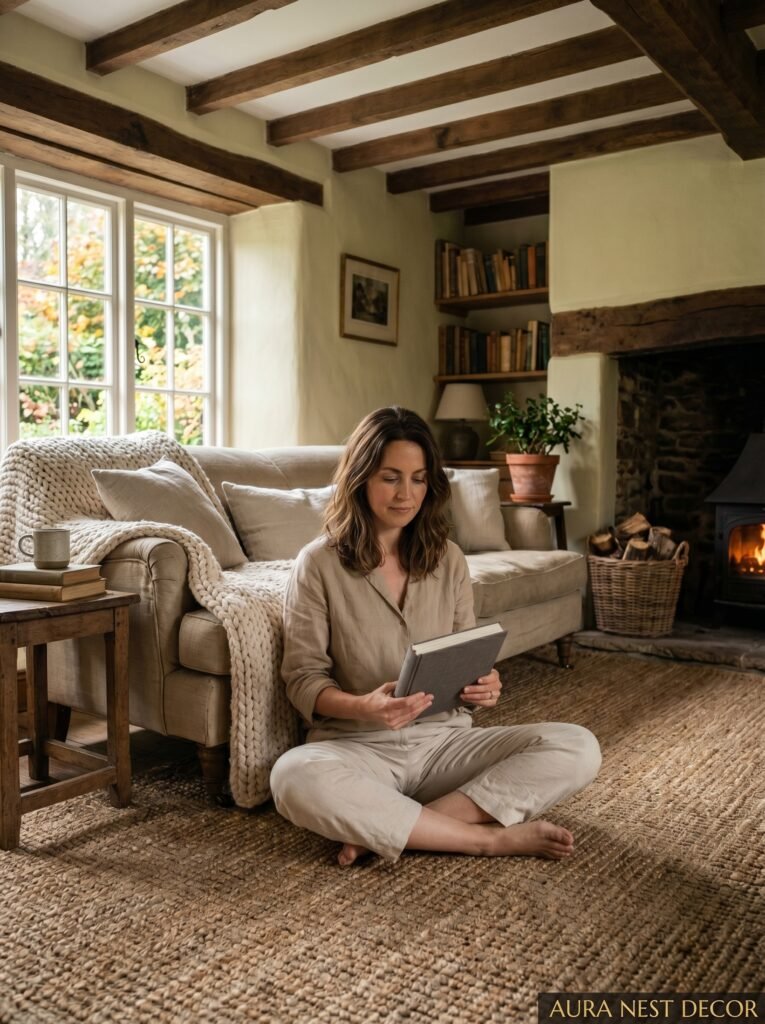
A real fireplace is one of the great gifts a house can give you. If you have one, for the love of all things cozy — use it. Not just on Christmas. Use it on a random Tuesday in October. The smell, the sound, the movement — nothing else in interior design replicates what a working fire does to a room.
But if you don’t have one, here’s what actually works rather than what just looks like a consolation prize. A good electric fire with a realistic flame effect and a proper surround doesn’t embarrass itself anymore — some of them are genuinely quite convincing from a few feet away. Build a proper chimneybreast around it with a painted wooden surround, and it reads as architectural even if it’s not original.
And above the fireplace — real or otherwise — keep it simple. One large piece of art or a mirror. A wooden mantle clock. Maybe a few simple objects. The farmhouse mantle overcrowded with stuff is a cliché that the best rooms avoid. Restraint here pays off.
—
10. Plants and Natural Elements That Don’t Look Like You’re Trying Too Hard
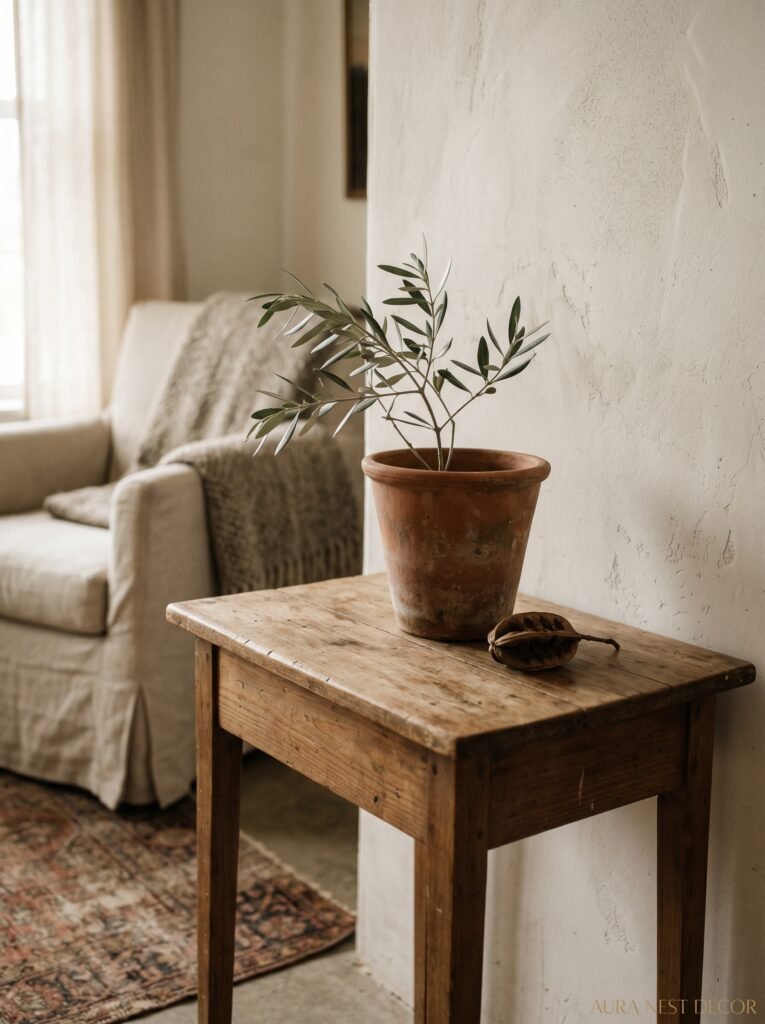
A farmhouse room without plants feels like it’s missing a heartbeat, honestly. But the wrong plants can also make the whole thing feel a bit set-dressed.
What works: olive trees in terracotta pots. Trailing ivy. Eucalyptus in a simple stoneware vase. Dried grasses and pampas grass (yes, still — done right it’s not over). Simple ferns on a windowsill. Herbs in the living room if you’re bold about it — a big pot of rosemary near the window smells incredible and looks appropriately lived-in.
What looks a bit try-hard: fiddle leaf figs have peaked, I’m sorry. Fake plants in expensive pots — I can almost always tell, and so can anyone who spends time in the room. Anything too tropical. Succulents in terrarium setups (that’s a different aesthetic entirely).
Foraged elements are wonderful when you have them — a branch of something you brought in from the garden, a bowl of pinecones, dried lavender from the summer. Free, personal, and they smell like the outside.
—
11. The Small Details That Separate a Good Room from an Unforgettable One
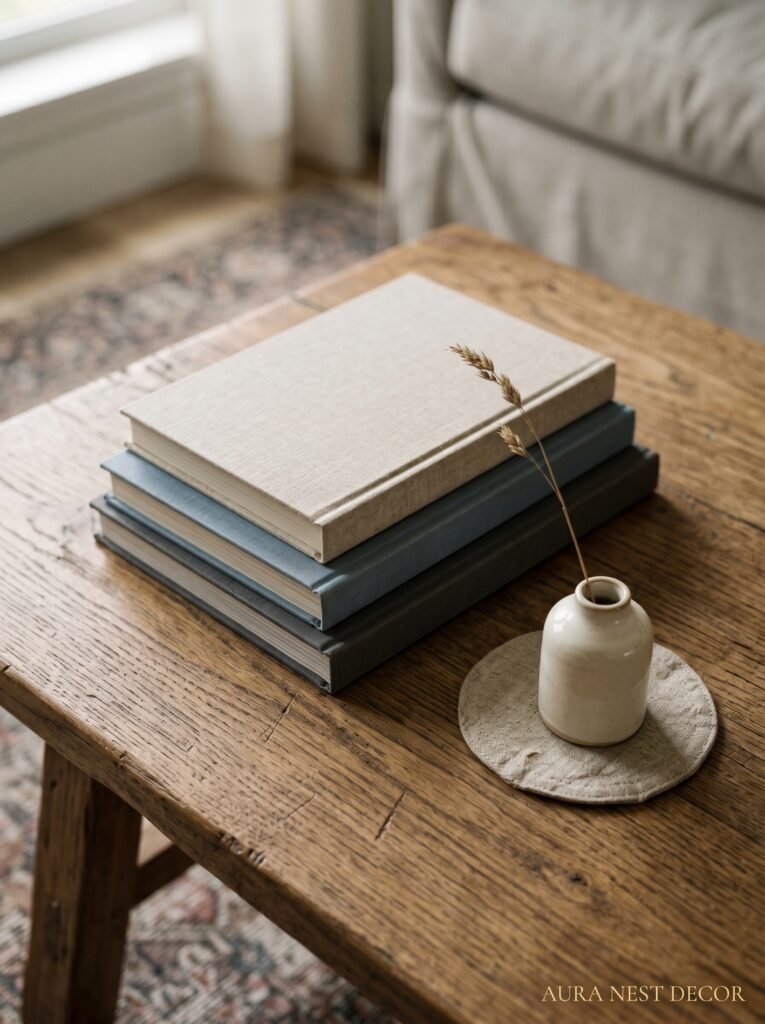
This is the section people skip. Don’t skip this section.
The good rooms have details. Specific, unexpected, slightly odd details that you notice on your third visit. A stack of vintage cookbooks on the coffee table when no one cooks in the living room. A small oil painting of a dog who isn’t anyone’s dog. A glass jar full of interesting pebbles. A worn leather pouf with no obvious purpose except to rest a cup of tea on.
These things aren’t in any decorating guide. They come from you. And they’re what make a farmhouse room feel like YOUR farmhouse room rather than a generic approximation of one.
The hardware matters too. Swap out any builder-grade fixtures if you can — a simple black iron curtain rod costs almost nothing but reads so much more finished than the chrome ones. Same with switch plates and outlet covers: aged bronze or matte black versions are available for pennies compared to how much they improve a room.
And scent. I mean it. A room that smells of woodsmoke, beeswax candles, or something like cedar and cardamom is a room you want to be in. It’s the first thing people register and the thing they remember. If you want your living room to feel like a farmhouse, make it smell like one.
—
12. The Rule About Clutter That Actually Makes Sense
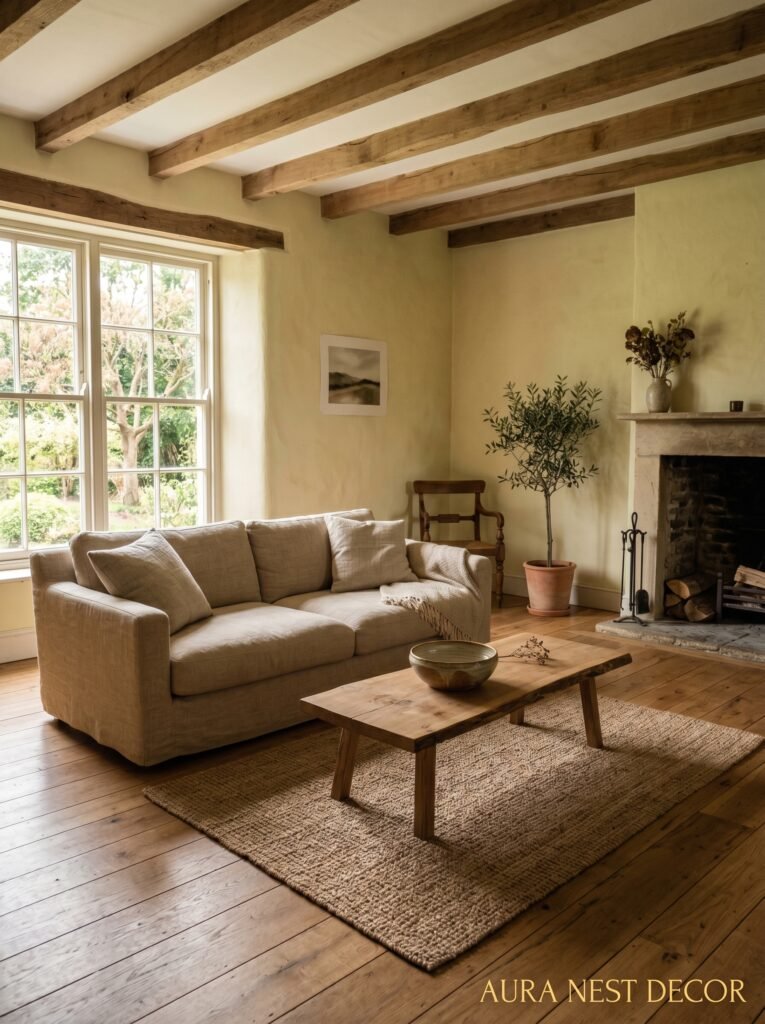
Here’s what I’ve landed on after years of thinking about this: there’s a difference between warm clutter and cold clutter.
Cold clutter is random. It doesn’t have a reason. It accumulates in ways you don’t notice and it’s usually things without visual warmth — plastic packaging, random cables, papers. That kind of clutter kills a farmhouse room because it fights the intentionality of the other elements.
Warm clutter is purposeful-looking even when it isn’t. A pile of books. A bowl of fruit. A cluster of candles at different heights. Baskets that hold things (and hide them). A tray on the coffee table that corrals the remotes and the matches and the little odds and ends that living generates.
The trick is giving warm clutter a home. Baskets are your best friend here — woven seagrass baskets, wooden crates, an old apple box. Things go in them instead of on the floor. The room looks curated but not sterile. Lived in but not chaotic. That’s the balance, and when you get it right, you’ll feel it.
—
❓ FAQ
Q: How do I make a farmhouse living room feel cozy without spending a lot of money? A: Start with lighting and textiles — they’re the fastest, cheapest way to change the feel of a room. Swap your bulbs for warm Edison-style ones, layer a few throws and cushions in natural fabrics, and add candles. You can do all of that for under $50 and the room will feel completely different.
Q: Can farmhouse style work in a modern flat or a newer build? A: It can, and actually some of the best farmhouse-style rooms I’ve seen are in very modern buildings because the contrast is interesting. The key is bringing in enough organic texture — wood, woven materials, stone accents — to offset the hard, clean lines of a newer build. Don’t try to hide the modernity; let the farmhouse elements sit against it.
Q: What colors work best for farmhouse living room walls? A: Warm whites and soft greiges are the classics for good reason — they let the textures and materials do the work. But don’t be afraid of deeper tones on one wall or for an accent: sage green, dusty blue, even a warm terracotta can feel incredibly at home in a farmhouse room. Just pull the color from something already in the room — a rug, a cushion — so it feels connected.
—
💭 Final Thoughts
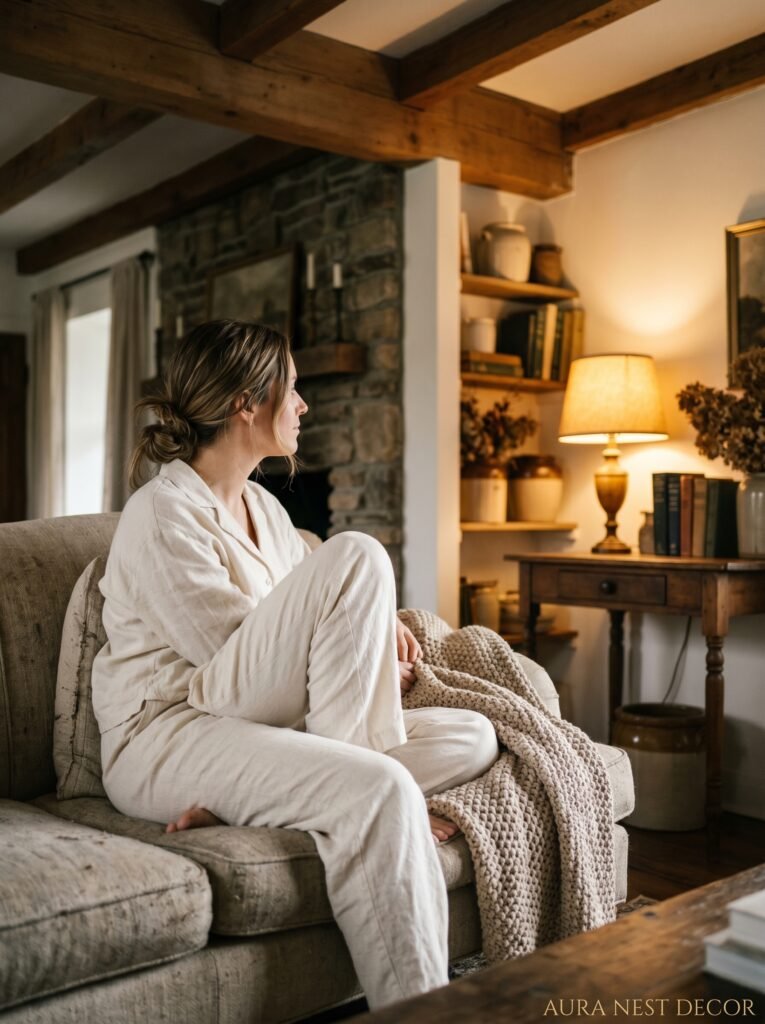
A farmhouse living room done well isn’t about a checklist or a trend or the right number of jute baskets. It’s about making a room that feels like it’s been loved for years, even if you just moved in last spring. Warm and a bit worn and a little imperfect — and absolutely, genuinely yours.
So here’s what I want to leave you with: what’s one thing already in your home that you love but feel like it “doesn’t fit”? Because I’m willing to bet it fits better than you think.