
The Small Living Room Glow-Up That Costs Almost Nothing (And Looks Like It Cost Everything)
You’ve stared at that room. The one that’s either too narrow, too boxy, or somehow both at once. You’ve rearranged the sofa three times and it still feels like you’re sitting in a waiting room. Here’s the thing — small doesn’t have to mean sad.
—
1. The Sofa Position Everyone Gets Wrong First
Nobody talks about this enough. Where you put your sofa isn’t just a logistics decision, it’s the decision. And most of us default to “push it against the wall” because that’s what you do in a small space, right? It makes sense. More floor space. Feels safer.
But it’s usually wrong.
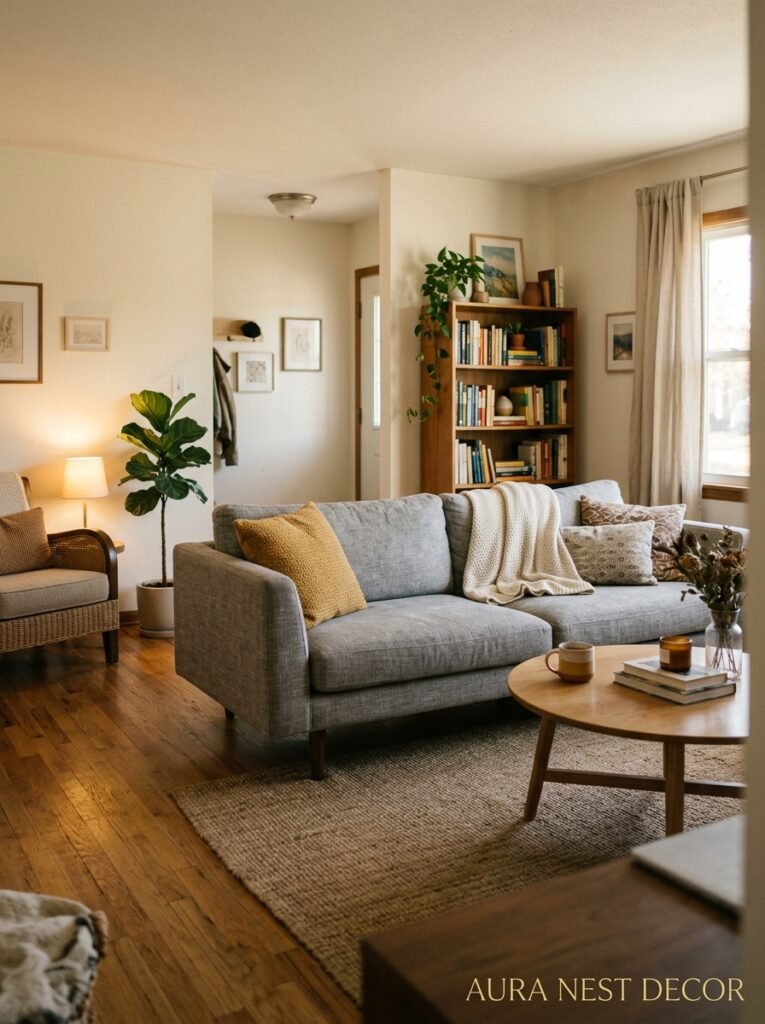
Pulling your sofa even 6 to 8 inches away from the wall does something almost architectural. The room gets depth. It stops looking like furniture that’s been shoved to the sides of a moving truck and starts looking like a room someone actually designed. I know it sounds counterintuitive — especially in a genuinely tiny space — and I’d be lying if I said it works in every single situation. But try it before you dismiss it.
The other thing worth reconsidering: whether your sofa is even pointing in the right direction. Most people orient everything toward the TV like it’s a shrine. What if you angled things slightly, even just the chairs? Conversation becomes the point of the room instead of passive consumption. The whole energy shifts. Suddenly it doesn’t feel like a holding pen, it feels like somewhere people want to be.
“The room isn’t too small. The furniture is just arranged like nobody actually lives there.”
—
2. Why Mirrors Are Either Magic or a Mistake (And How to Tell the Difference)
Mirrors make small rooms feel bigger. You’ve heard this. Everyone’s heard this. The trouble is people buy one sad little mirror from a discount home store, hang it at eye level above the sofa, and then wonder why the room still feels cramped.
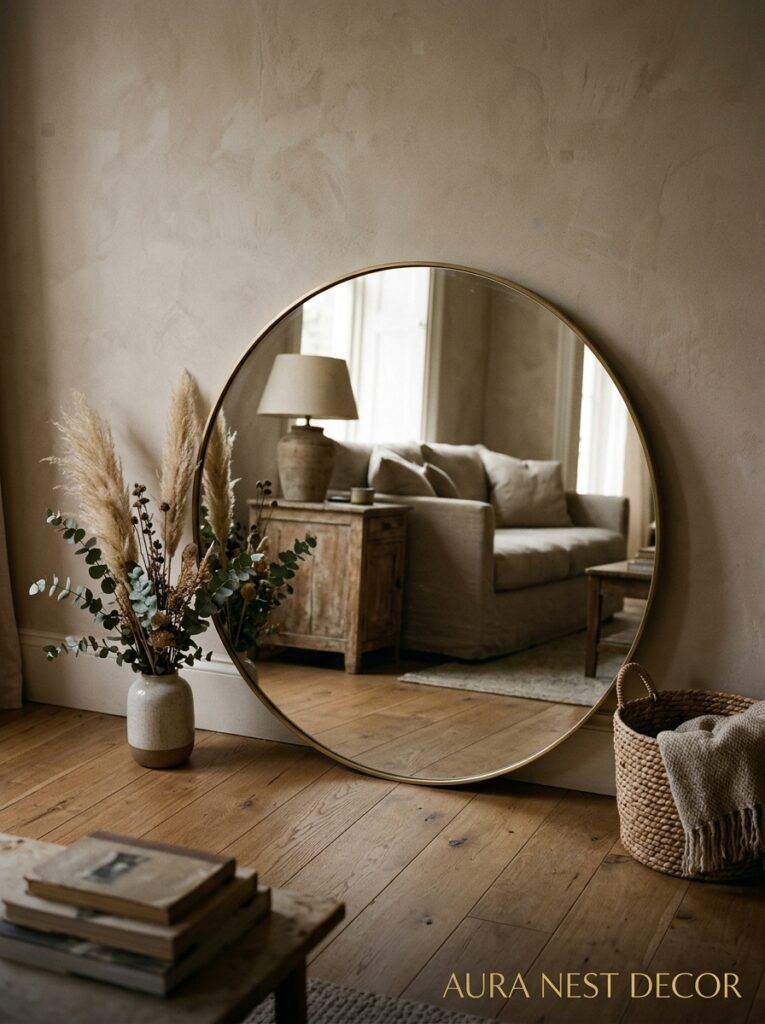
Size matters enormously here. One large mirror — genuinely large, taller than you’d think feels appropriate — does more work than four small ones clustered together. And WHERE you hang it matters just as much. Opposite a window is the classic advice, and it’s classic because it works. The mirror bounces natural light back into the room and suddenly you’ve basically added a second window. For free. Or close to it.
But here’s where people go wrong with mirrors: they hang them reflecting a blank wall, a corner, or worse — the inside of a closet door. Now all you’ve done is double the least interesting part of your room. Think about what the mirror will actually reflect before you commit. If it’s showing your sofa and a piece of art and a little patch of sky from the window? Perfect. If it’s showing a beige wall and a light switch? Move the mirror.
Charity shops and estate sales are genuinely the best source for large, interesting mirrors at budget prices. An ornate gold frame from 1987 can be spray-painted matte black in an afternoon. I’ve done this. It looks expensive. People ask where you bought it.
—
3. The Color Rule That Everyone Ignores in Small Rooms
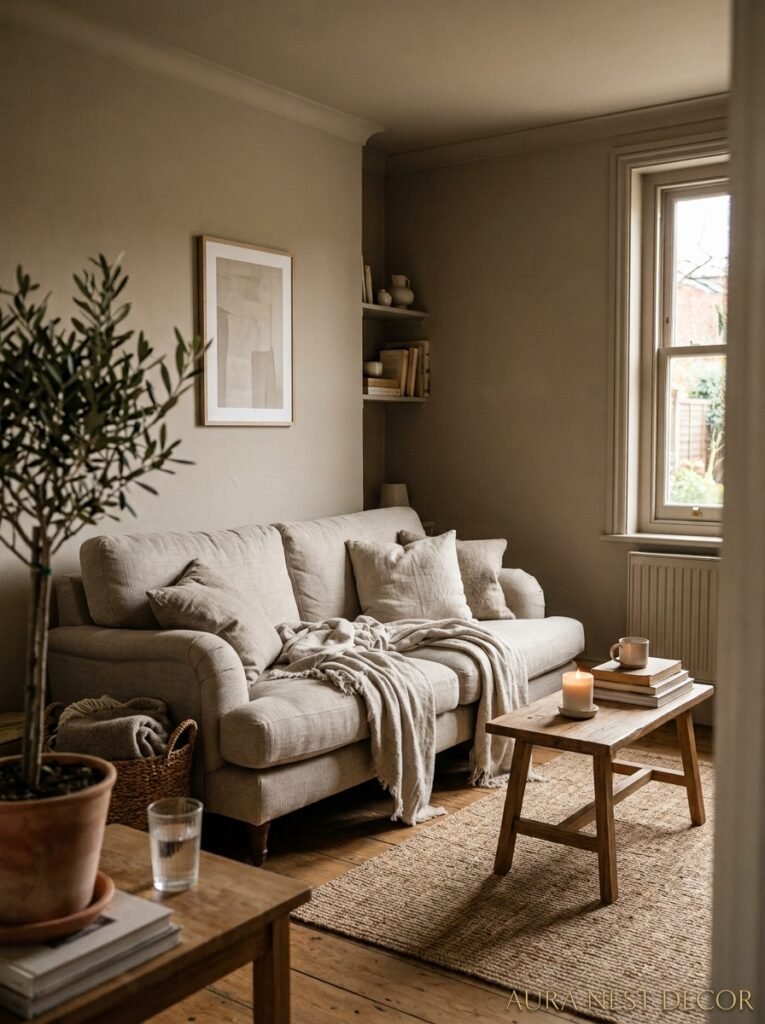
Light walls make small rooms bigger. Also a thing everyone says. Also not always true.
Here’s what I’d actually argue: a small room with NO personality is worse than a small room that feels intentional and bold. A pale greige box with mismatched furniture and no focal point doesn’t read as “airy” — it reads as unfinished.
Sometimes going DARKER on one wall is the move. A deep forest green or a moody navy blue on the wall behind your sofa can make the room feel like it has real bones. Suddenly the small size feels cozy and considered rather than just… small. British interior designers have known this for decades. Americans are slowly catching on.
The caveat: if your room gets almost no natural light, a dark accent wall can tip into gloomy. Know your space. That’s all.
Budget-wise, you don’t need a full tin of expensive designer paint. Sample pots — the tiny ones — are about £4 or $6 and you’d be surprised how far one goes on a small accent wall or even just painted around a doorframe. Sometimes that little bit of color framing an architectural feature is all the room needed.
—
4. Shelving Tricks That Make You Look Like You Hired Someone
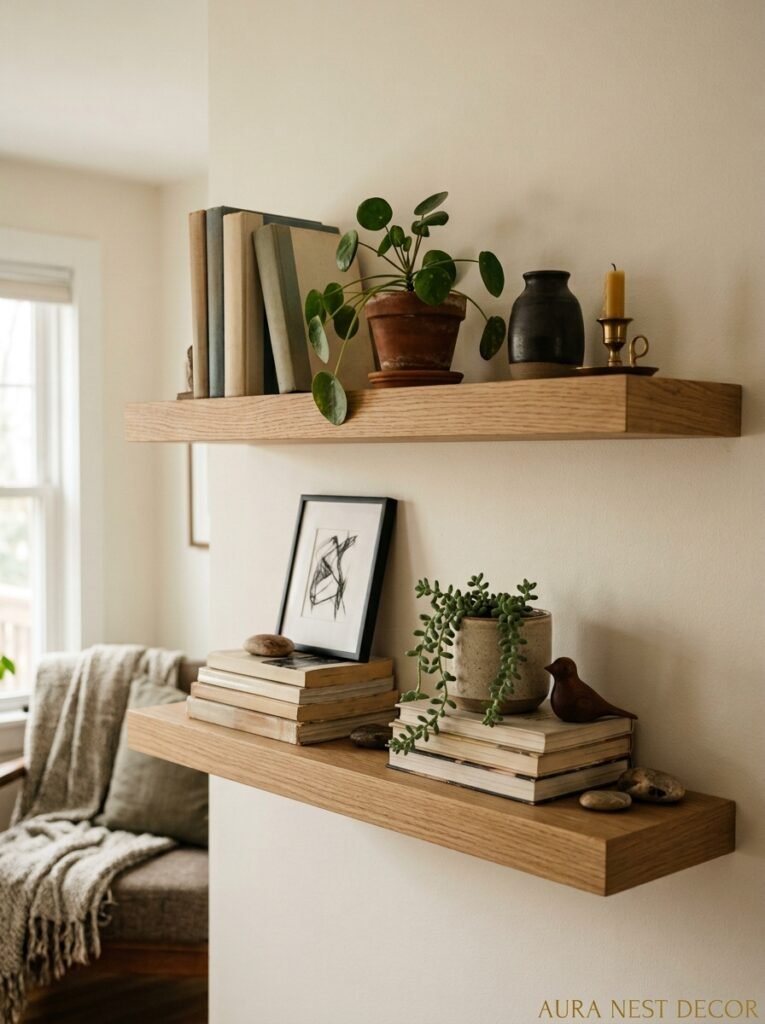
Floating shelves are almost free to install and they add so much. Not just storage — visual interest, height, and that particular kind of “lived in but curated” feeling that’s almost impossible to fake with furniture alone.
The trick is going HIGH. People hang shelves at eye level and they just look like extra surfaces covered in clutter. Push them up — genuinely high, toward the ceiling — and two things happen. Your eye is drawn upward, which makes the ceiling feel higher, and the shelves themselves become display space rather than just holding space.
And here’s the part people skip: you don’t need to fill every inch of them. Books, yes. But also one nice plant, a candle, maybe something with height like a vase, and then — empty space. That empty space is doing work. It makes everything around it feel more deliberate.
For actual budget shelving, the IKEA Lack shelf is a design community in-joke at this point because it’s so cheap it’s almost embarrassing, but it looks fine. You can find them secondhand on Facebook Marketplace constantly. Or timber planks from a hardware store with some simple brackets — honestly gorgeous, very DIY-friendly, cost about $20 or £15 total.
“Shelves that go all the way to the ceiling say ‘I know exactly what I’m doing.’ Shelves at shoulder height just say ‘I needed somewhere to put things.'”
—
5. The Rug Size Mistake That’s Ageing Every Small Room Right Now
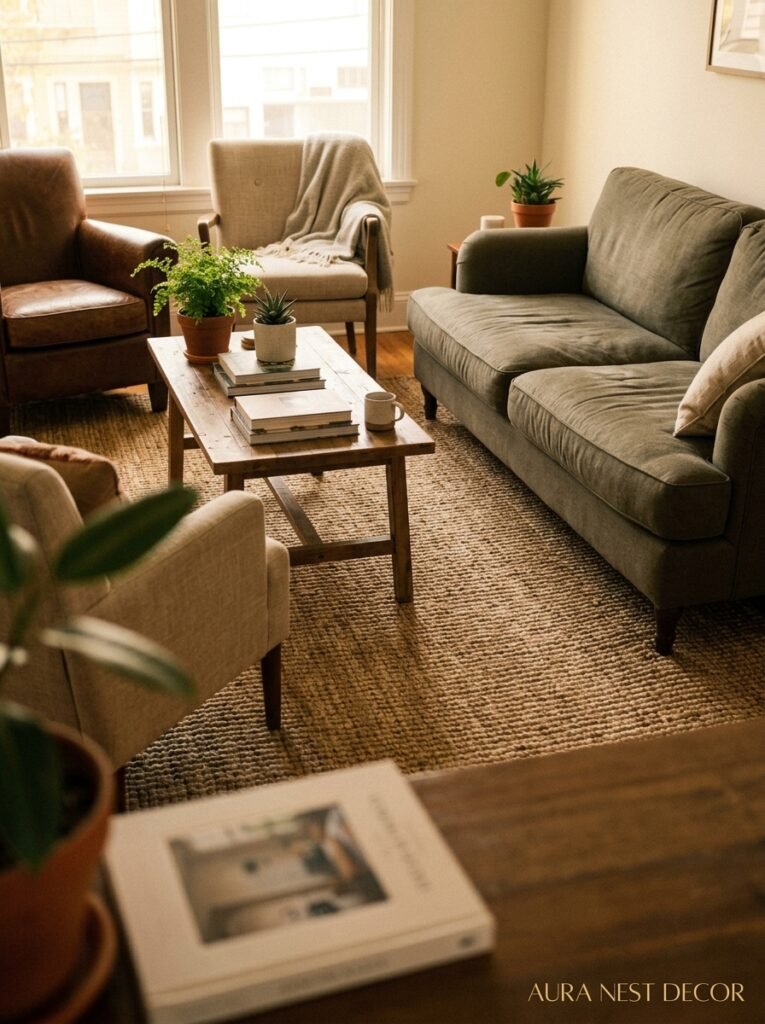
Too small. The rug is too small. I see this constantly and it’s the single fastest way to make a small room look worse, not better.
People buy a tiny rug because they think it’s proportionate to a small space and then set it in the middle of the room like a doormat and wonder why everything feels off. A rug that’s too small floats in the space and actually makes the room look MORE cramped, because it cuts the visual flow of the floor into weird little sections.
You want at least the front legs of all your seating on the rug. Ideally, everything sits on it. In a genuinely tiny space, even a rug that’s large enough to anchor the seating area makes an enormous difference to how cohesive the room feels.
But rugs are expensive. Fair. So here’s what actually works on a budget: layering. A cheap, large, neutral jute rug as the base (these are relatively affordable and last for ages), with a smaller, more interesting patterned rug layered on top. You get the size, you get the personality, you’ve spent less than you would on one decent rug of the same square footage.
Wayfair sales, TJ Maxx (HomeGoods), and Dunelm in the UK have surprisingly good rug deals if you’re patient. Or check Facebook Marketplace — people sell barely-used rugs constantly.
—
6. What a £5 / $6 Candle Actually Does to a Small Room
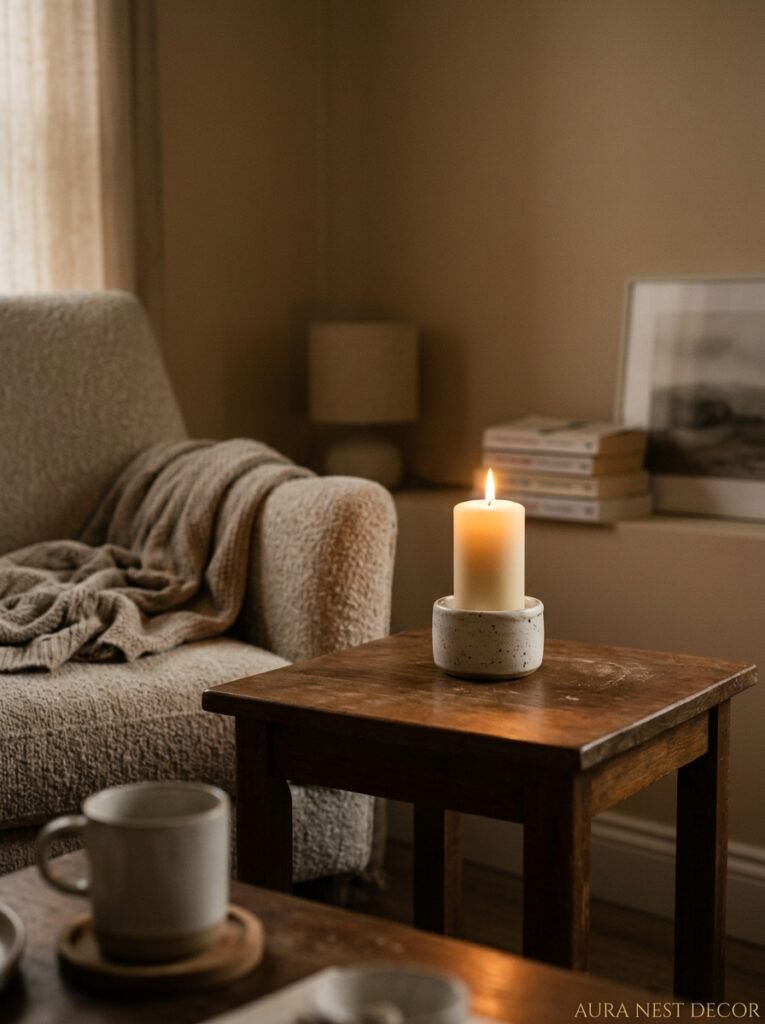
Not gonna lie, I resisted the “ambiance” thing for a long time because it sounded like justification for buying candles instead of fixing actual problems. But I’ve changed my position.
In a small room, the atmosphere is essentially the whole experience. Because there isn’t a sprawling layout or a grand architectural feature to focus on, how the room FEELS at 7pm on a Tuesday is the thing. And overhead lighting — especially if it’s a bright, flat, ceiling fixture — is the enemy of atmosphere. Full stop.
Lamps. Several. Layered at different heights. A floor lamp in the corner, a table lamp on a side table, something warm and low near the sofa. You’re not trying to light a stage, you’re trying to make the room feel like somewhere you’d actually choose to sit.
Candles add something even lamps can’t, which is movement. The flicker. And the smell, obviously — a room that smells like something intentional and good doesn’t feel small, it feels inhabited.
Budget option: IKEA FEJKA faux plants and Lidl or Aldi candles. Both are genuinely quality for the price. US readers — Trader Joe’s candles are brilliant and about $4. Stack them everywhere.
—
7. The Art Arrangement That Looks Gallery-Quality on a Charity Shop Budget
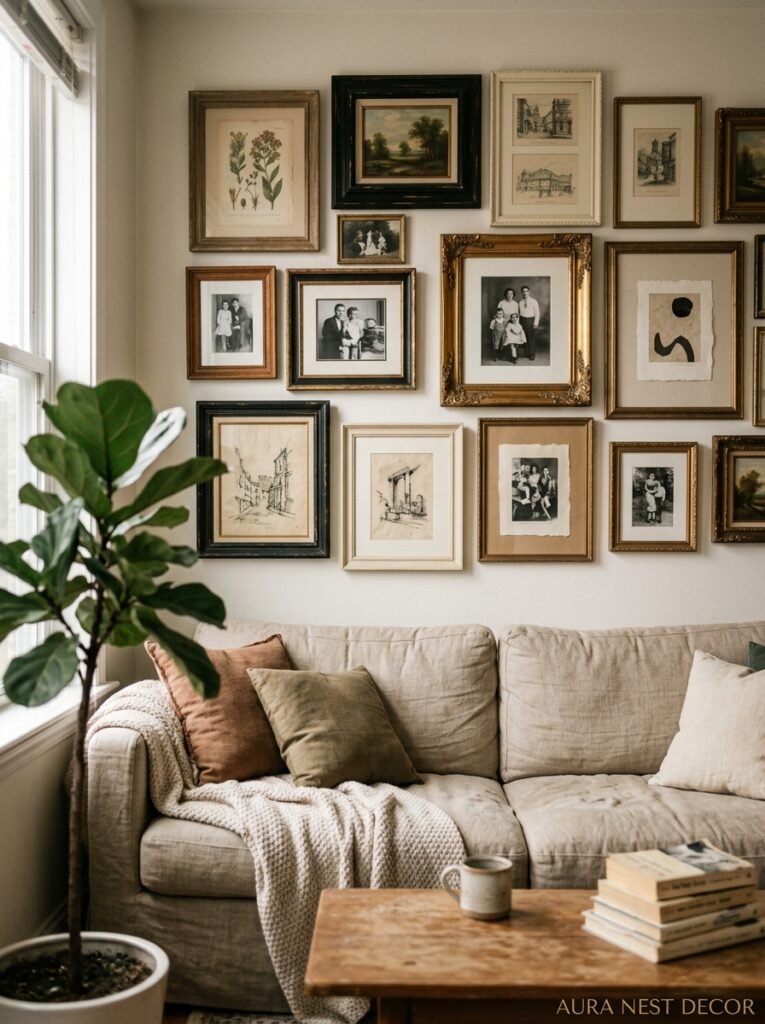
The gallery wall. Done well it’s incredible, done badly it looks like a notice board. The difference is usually in the execution, not the budget.
You don’t need expensive art. You need cohesion. That means picking a theme — not “things I like” but something more specific. All black and white photography. All botanical prints. All one color palette. Even just “all frames are black” gives you enough of a thread to tie random pieces together.
Charity shops — Goodwill in the US, any British charity shop on any high street — are FULL of interesting pieces that nobody wanted. Landscapes, old portraits, abstract prints. Most of them need the frame painted or changed. That’s fine. A can of spray paint is about £5 or $7.
Size variation matters. Don’t hang all the same size. One larger anchor piece, then medium and smaller pieces arranged around it. And print the arrangement on paper first, tape it to the wall with painter’s tape, live with it for a day. It sounds tedious. It saves enormous regret.
“The best gallery wall I’ve ever seen cost about $40 total. The worst one I’ve seen cost several hundred. Editing matters more than budget.”
—
8. Why Plants Do the Thing That No Furniture Purchase Can
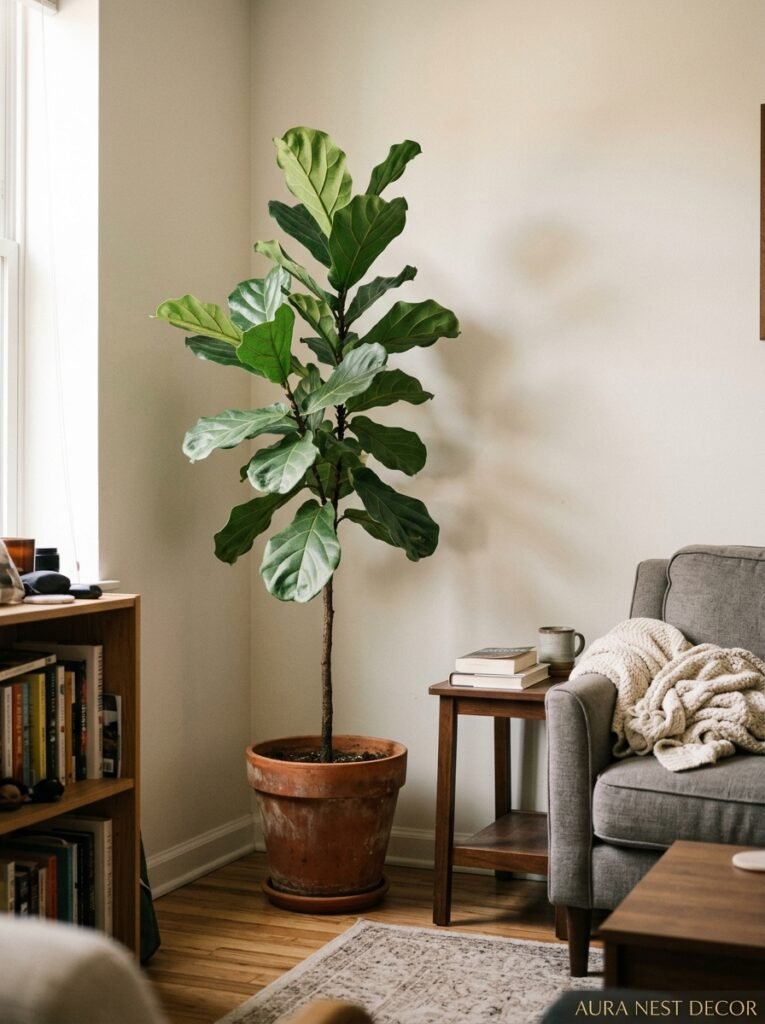
There’s something about a living thing in a room. A real plant — not a perfect one, just a real one — gives a space something that no amount of styled cushions or carefully chosen paint colors can quite manufacture. Life. The sense that the room is inhabited rather than installed.
For small spaces, go vertical. A tall fiddle leaf fig or a dramatic snake plant uses floor space but draws the eye UP, which does that ceiling-height thing again. Or hang trailing plants — pothos are practically indestructible, cost about $10 or £8, and will cascade down a shelf in the most beautiful way if you just leave them alone for a few months.
The budget-friendly secret: propagation. If you have any plant-loving friends (and everyone seems to now, honestly), ask for cuttings. A pothos cutting in a glass of water looks deliberate and chic and costs nothing. Seriously nothing.
Plants also — this is a minor thing but I think about it — signal that someone actually CHOSE this room. That they’re tending to it. It’s the difference between a room that looks like a waiting area and one that looks like a home.
—
9. The Cushion Formula That Every Stylist Uses and Nobody Talks About
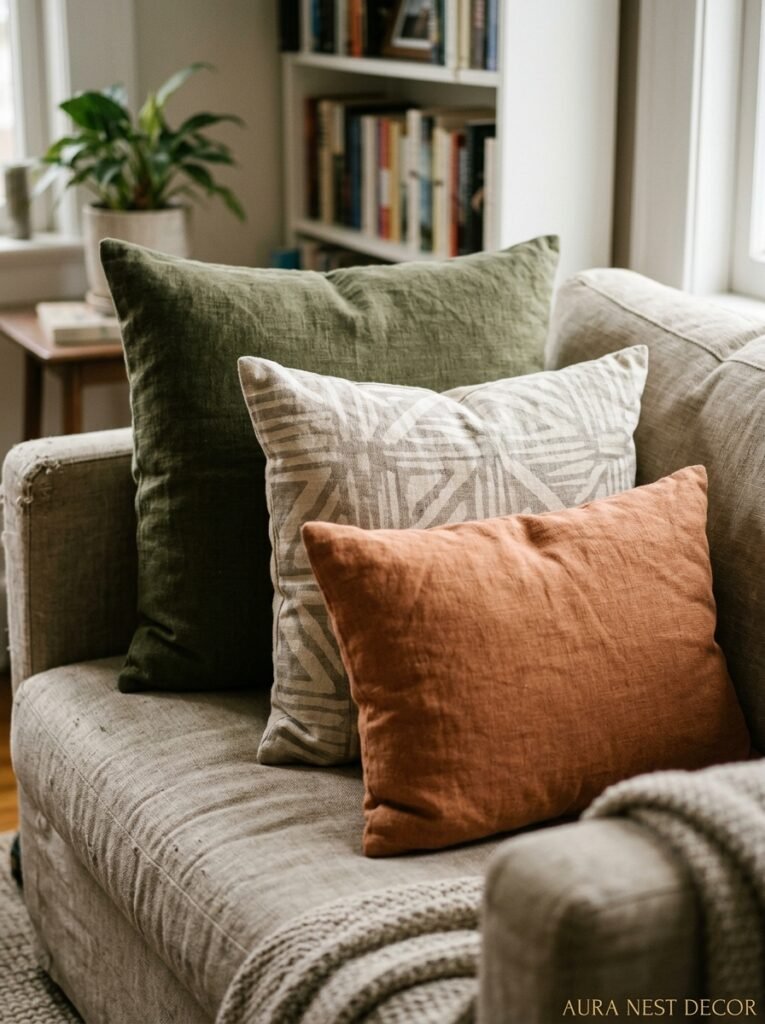
Two large, two medium, one small. That’s basically it.
Or some version of it. The point is variation in size, because identical cushions in a row on a sofa look like a showroom. And a showroom is exactly what you don’t want.
Texture is the other lever. Mixing velvet with linen with something knitted or woven gives you a richness that a pile of matching cushions simply can’t achieve, even if those matching cushions are expensive. The contrast is the thing.
Color: pick two colors that work together and one that surprises. Not shocks — surprises. If your sofa is grey and your walls are off-white, maybe the base cushions are dusty blue and cream, and then one unexpected terracotta or deep ochre pillow that somehow makes everything else look more intentional. That one weird cushion is usually doing the most work in the room.
Budget: H&M Home runs sales constantly. TK Maxx and its UK equivalent TK Maxx — sorry, same name, different country — always has cushion covers at well under half retail. And honestly, insert pads from IKEA plus covers from anywhere else is a perfectly good system.
—
10. The Furniture Swap That Instantly Gains You Visual Space
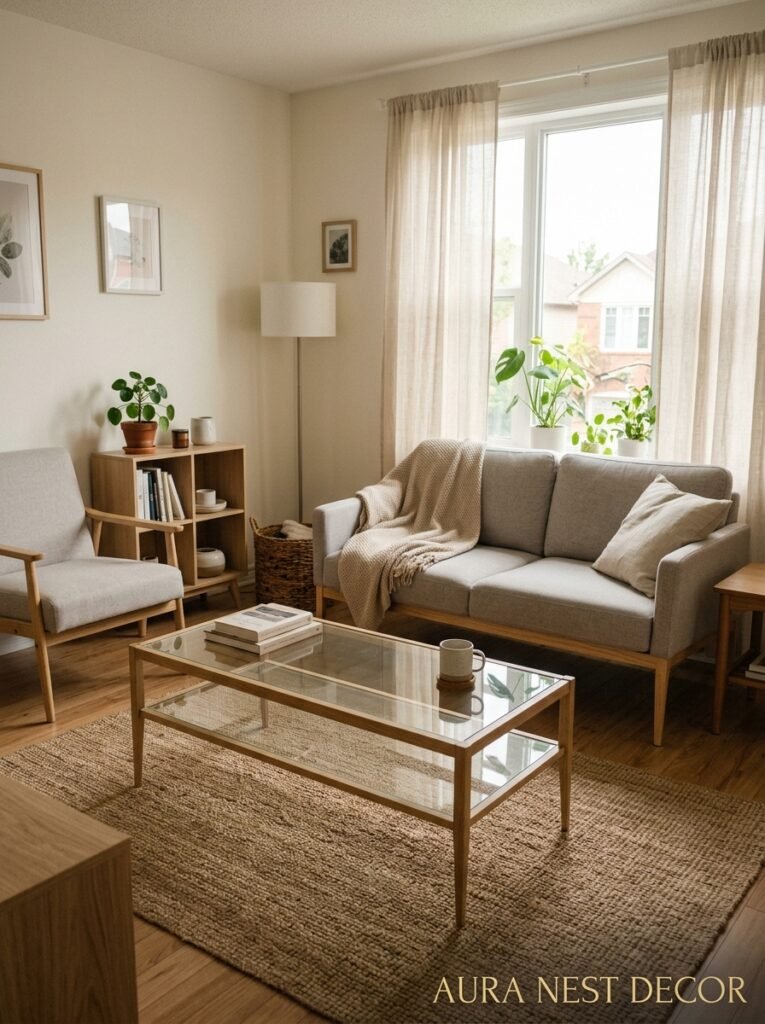
Coffee tables. Specifically: switching from a solid, opaque coffee table to something with visual lightness. Glass tops on metal frames. Rattan or cane. Even a simple acrylic table that’s essentially clear.
When your eye can see through or past a piece of furniture, the floor reads as more open. That’s physics as much as aesthetics. A big wooden coffee table sitting in the center of a small living room basically divides the floor in half. A glass-topped one barely registers.
This doesn’t have to be expensive. Secondhand glass coffee tables are everywhere on Marketplace and eBay — people get rid of them constantly because they’re “too much to clean.” More for you. You can find them for $20, £25, sometimes less.
Same principle applies to side tables: a thin-legged, minimal table takes up far less visual real estate than a chunky one. Hairpin leg furniture — which you can buy as a DIY kit for about £15 or find on Etsy — does this naturally.
—
11. Storage That Looks Expensive But Came From a Basket Aisle
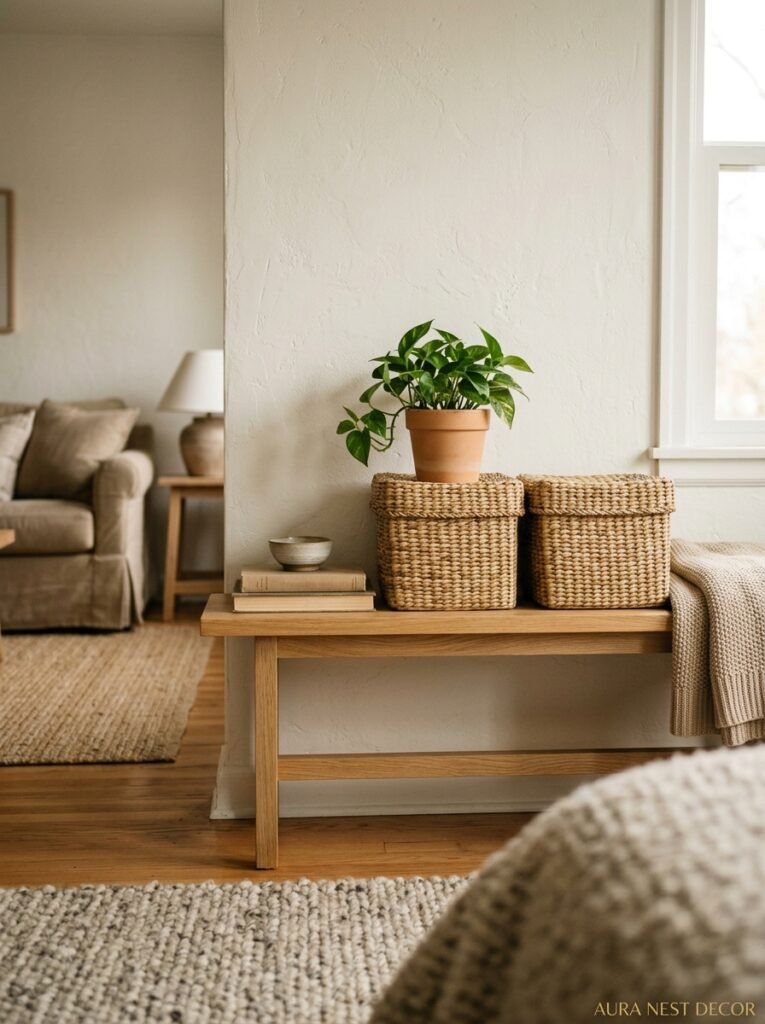
The basket. The wicker hamper. The rattan box with a lid. These things are genuinely doing heavy lifting in small rooms and they get less credit than they deserve.
Blankets, remotes, magazines, chargers, dog toys, that random collection of things that has no home — all of it disappears into a large basket and the room immediately looks more calm. Not cleaner, necessarily. Just calmer. There’s a difference.
Baskets also ADD texture without adding visual weight. A wicker basket in the corner is interesting to look at in a way that, say, a plastic storage box is not.
Good baskets don’t have to cost much. IKEA, as usual. Flying Tiger (a UK gem). Homebase. World Market in the US. And the HomeGoods/TK Maxx situation — always worth a look.
Stack smaller ones for a more intentional look. Or get ONE large, beautiful basket and let it be a statement. Either works.
—
12. The Finishing Detail That Pulls It All Together (It’s Cheaper Than You Think)
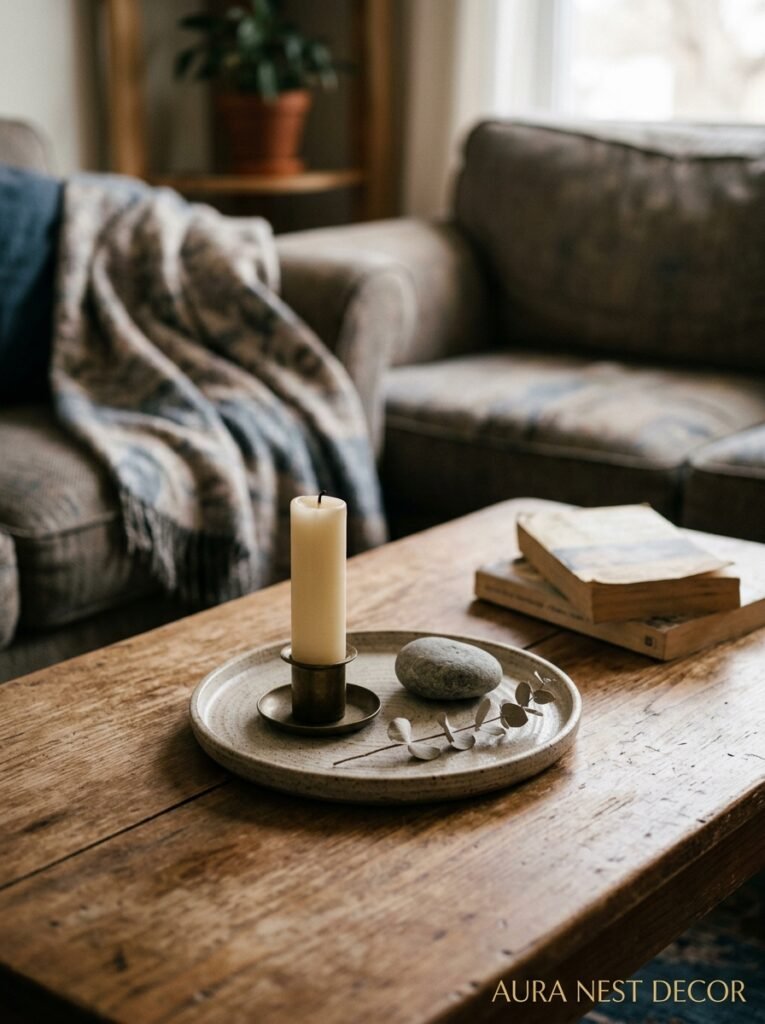
Curtains. Specifically: hanging them high and wide.
This is the oldest trick and somehow still the most underused. When you mount the curtain rod close to the ceiling — not above the window frame, but close to the actual ceiling — and extend the rod 6 to 8 inches beyond each side of the window, the window looks enormous. And when the window looks enormous, the room looks bigger. Full stop.
It costs nothing extra. The rod is the same price. The curtains can even be the same curtains, just hung differently. The dramatic difference this makes for zero additional cost is still something that kind of delights me, honestly.
For small rooms: floor-to-ceiling curtains in a light, semi-sheer fabric. Linen or linen-look fabric is everywhere right now and it’s beautiful — it filters light rather than blocking it, which keeps the room from feeling closed in while still giving you privacy. IKEA LILL for a few dollars or pounds. IKEA AINA if you want something a bit more textured. Both work. Both look more expensive than they are.
That’s the whole secret of this list, really. Looking more expensive than it is. Small rooms can feel rich, calm, and completely intentional — it just takes knowing which levers to pull.
—
❓ FAQ
Q: What’s the cheapest thing I can do right now that’ll make the biggest difference to my small living room? A: Rearrange. Genuinely free, takes an afternoon, and most people have never tried pulling their sofa off the wall or rotating the whole setup 90 degrees. It changes everything and costs nothing.
Q: Do small rooms really need to stick to light, neutral colors? A: Not at all — that’s a rule worth questioning. A single dark, rich accent wall can make a small room feel deeply cozy and curated rather than just small. It depends on your light, but don’t rule it out automatically.
Q: I rent and can’t paint or put holes in walls. What actually works? A: Command strips for lightweight art and shelves, removable wallpaper for an accent wall (genuinely convincing now), large floor-standing mirrors, and rugs for grounding the space. You can transform a rental room with none of it being permanent.
—
💭 Final Thoughts
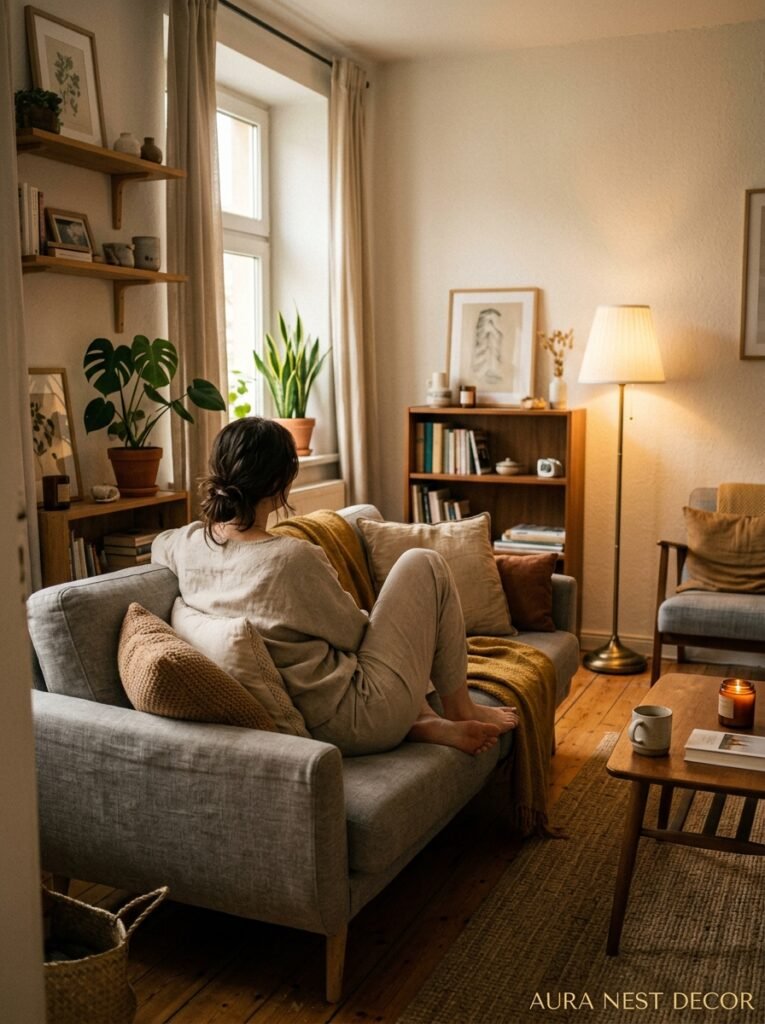
Small rooms aren’t the problem. The problem is treating them like they’re waiting to become something bigger. The spaces that feel genuinely beautiful — cozy in a way that makes you exhale when you walk in — are usually small ones where someone paid attention to the details. Where someone hung the curtains high, chose the rug with intention, and put one plant in a corner just because it made them happy.
You don’t need a renovation budget. You need a few good decisions and the willingness to move the sofa one more time.
What’s the one change in this list you’re trying first?