The Toddler Room Glow-Up Nobody Warns You About (And Everything That Actually Works)
My daughter told me our living room was “too boring” when she was two and a half. Two. And a half. I don’t know where she picked that up, but she wasn’t entirely wrong, and honestly that whole moment made me rethink every room in the house — starting with hers.
—
1. Why “Just Slap Some Stars on the Ceiling” Doesn’t Cut It Anymore
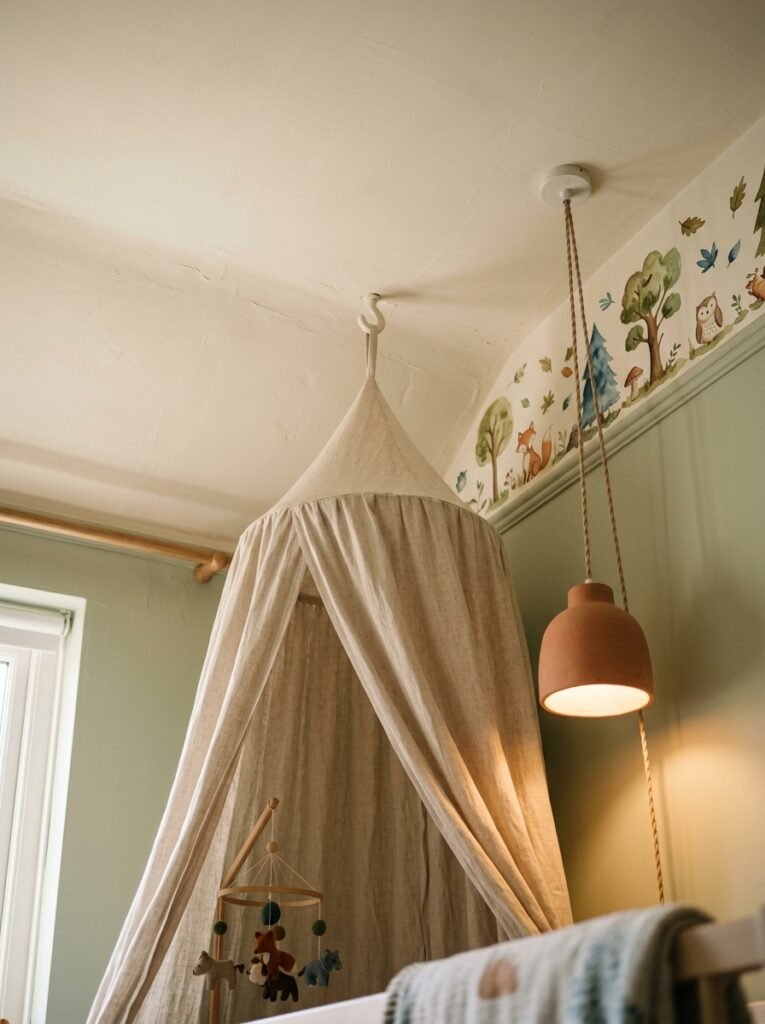
There’s this idea that toddler rooms need to be loud. Primary colors, cartoon characters, everything screaming for attention at once. And I get it — toddlers ARE loud. But here’s what I’ve noticed after redesigning my daughter’s room twice: a chaotic room makes for a chaotic kid at bedtime. Or maybe it’s the opposite, honestly — maybe the kid makes the room chaotic and we’re all just doing our best.
Either way, the nursery-to-toddler transition is real and it sneaks up on you fast. One day you’ve got a serene little room with a cot and a mobile. The next day there are seventeen stuffed animals, a toy kitchen, what I think used to be a puzzle, and crayon on the skirting board.
The rooms that actually work — the ones you see saved on every Pinterest board — aren’t the most decorated. They’re the most considered. That’s the shift. And once you see it, you can’t unsee it.
—
2. The Wall Color That Keeps Showing Up in Every Toddler Room Worth Saving
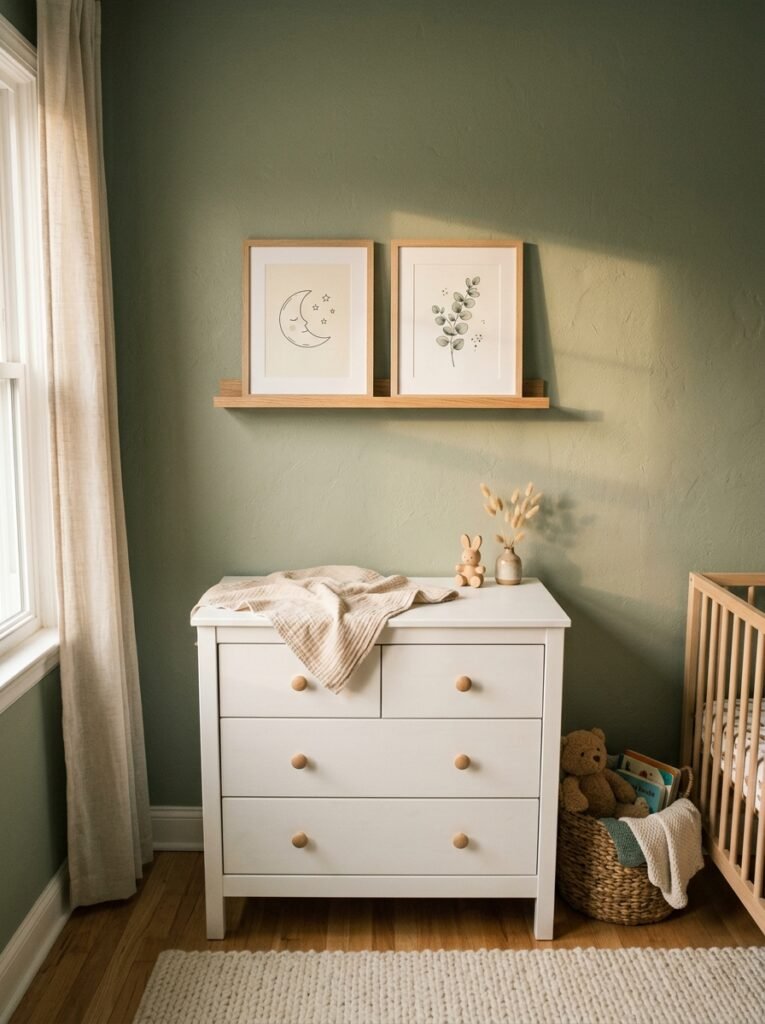
Sage green. I know, I know — you’ve heard this. But hear me out, because there’s a reason it keeps coming back.
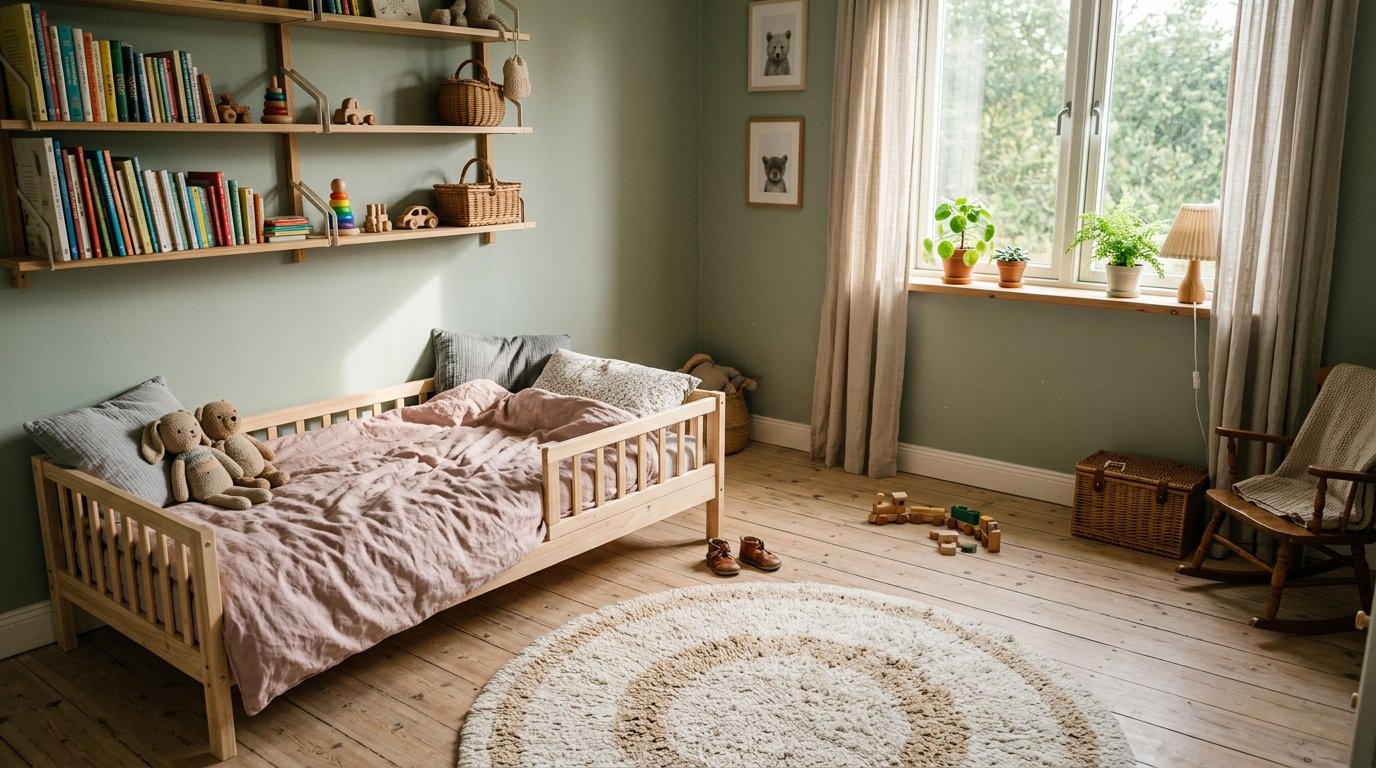
It works with natural wood. It works with white bedding. It works with those soft terracotta tones that are everywhere right now, and it does something to light in the late afternoon that honestly nothing else does. That specific moment where the room catches the sun and the walls go almost golden? Sage green makes that happen. Dusty blue does something similar but feels slightly cooler, better for north-facing rooms in the UK where the light’s already grey half the time.
What DOESN’T work, even though everyone tries it, is going too dark too fast. A deep forest green sounds dreamy until your toddler refuses to sleep in what they’ve decided is “the scary room.” True story, happened to a friend, repainted within a month.
The rule I’d stick to: if you’re unsure, go half a shade lighter than you think you need. You can always add depth with furniture and textiles. You can’t easily un-paint a room while a two-year-old naps on a 45-minute schedule.
“The rooms that actually work aren’t the most decorated. They’re the most considered.”
—
3. A Bed That Grows With Them (Or How to Not Spend $800 Twice)
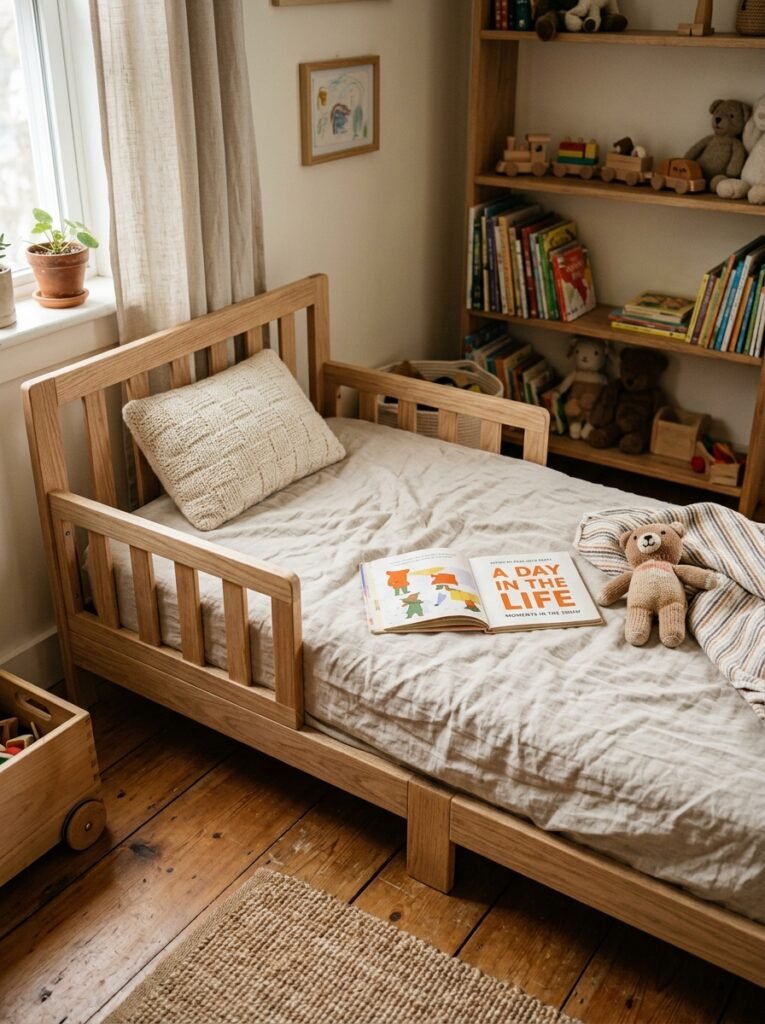
Toddler beds are a trap. There. I said it.
You buy the cute little car bed or the tiny frame with the side rails and you think you’ve solved the transition from cot. And you have — for approximately eighteen months. Then they’re too long for it, the side rails feel babyish, and you’re back at square one.
Floor beds or low platform beds are genuinely worth considering. They’re safe (low fall risk), they’re easy for toddlers to get in and out of independently, and most of them scale surprisingly well into the early school years. A simple low wooden frame with a decent mattress underneath — that’s it. Dress it up with good bedding and it looks intentional, not like you gave up.
The convertible cot-to-bed option is also solid if you’re still in the under-twos stage. But once you’re past it, I’d honestly skip the dedicated toddler bed entirely and go straight to a single.
—
4. The One Storage Rule That Stops the Room From Devolving Into Chaos by Tuesday
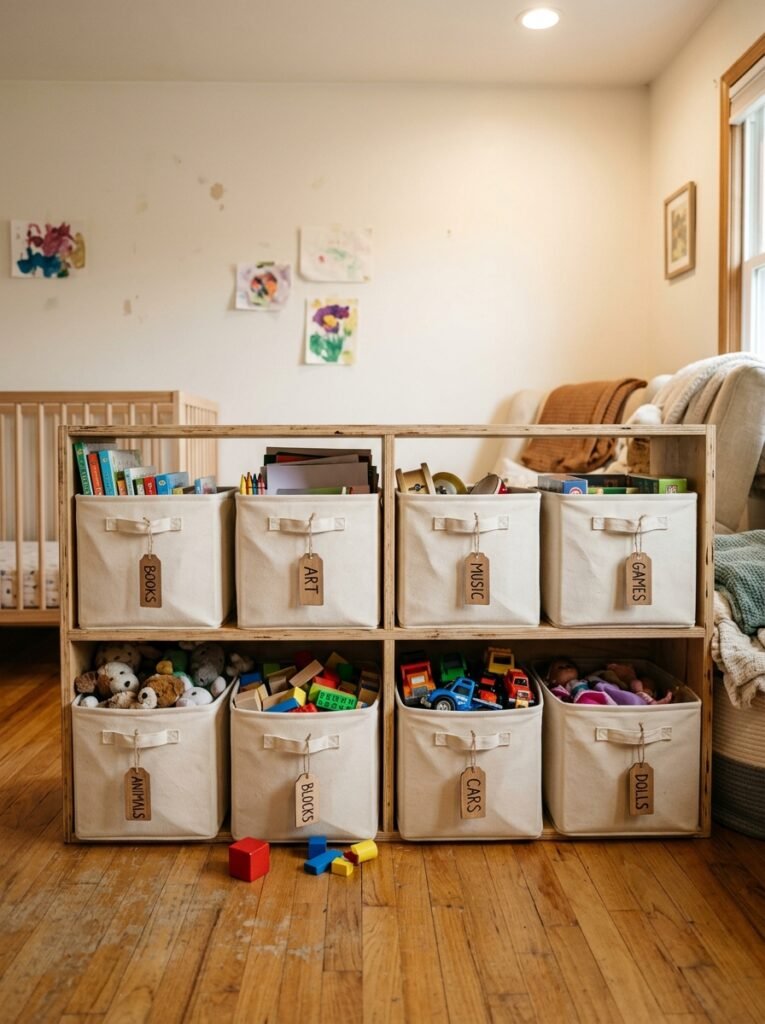
Everything needs a home. Obvious, right? And yet.
The issue isn’t having enough storage — it’s having the RIGHT storage at the right height. Open low shelves that a toddler can actually reach mean they can (theoretically) tidy up themselves. High shelves or deep closed cupboards mean you end up doing it all while they watch, which is not exactly building independence.
Here’s what I’ve found works: a mix of open bins at floor level for the big stuff (blocks, soft toys, chunky train sets), one or two small shelves at toddler eye-level for books and the things they’re currently obsessed with, and then higher shelving or closed storage for the stuff you control — art supplies, small pieces, things you don’t want eaten.
Rotating toys is a game changer, by the way. You don’t need to store everything in the room. Put half away. Bring it back out in three weeks and it’s basically Christmas.
—
5. What a “Reading Corner” Actually Needs to Feel Like a Reading Corner
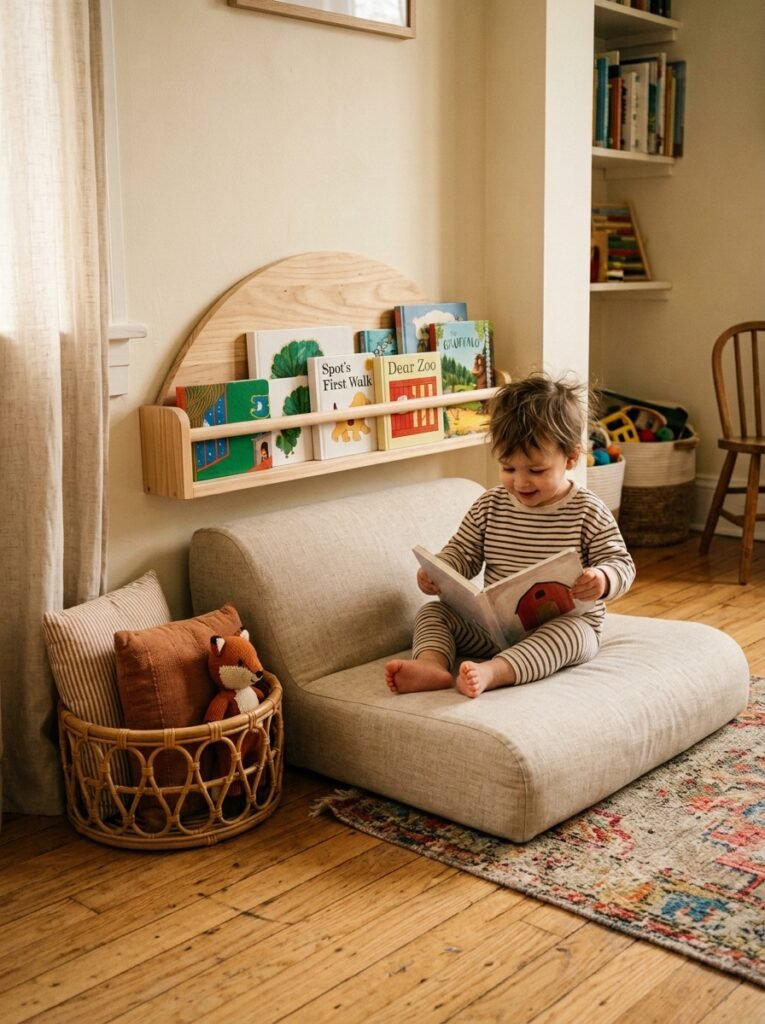
A beanbag. Some books. Done.
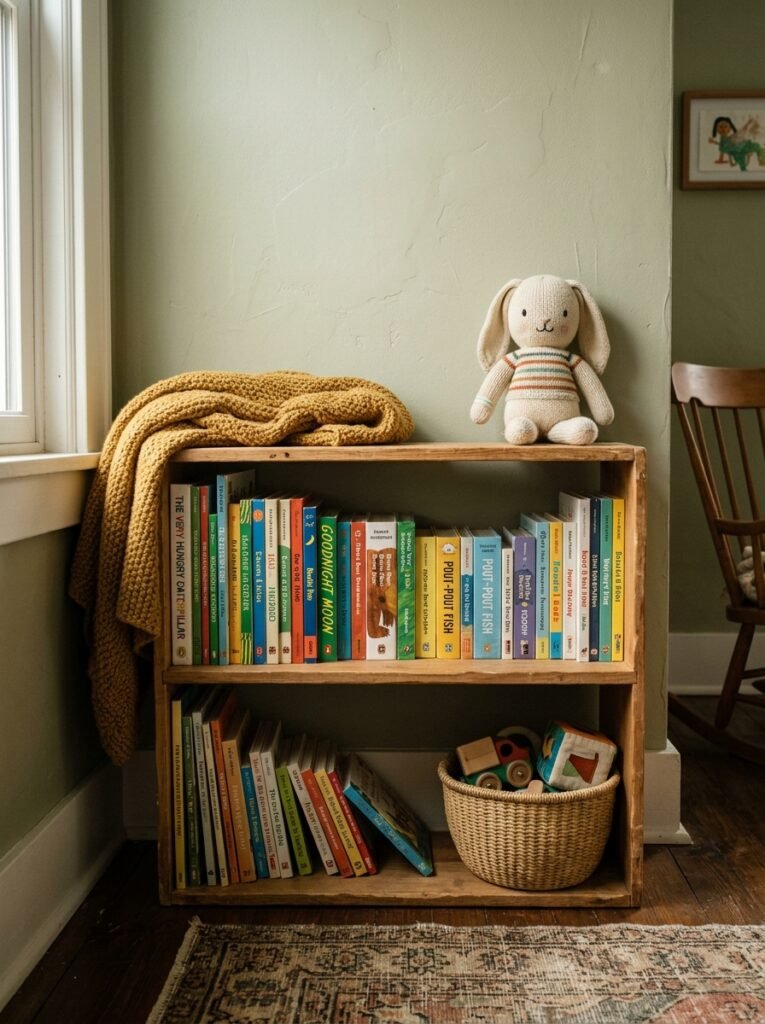
Except that’s not quite right either, because a reading corner only works if it feels distinct from the rest of the room. It needs to feel like a little world in itself. And the way you do that is surprisingly simple: define it with a rug, add one soft overhead or string light source to make it feel warm, and keep the book selection visible (facing out, not spine-out) so your toddler can actually SEE what they’re choosing.
Kids are visual. If they can only see the spines of books, they’ll ignore the shelf entirely and come to you with increasingly ambitious requests involving the television.
A low bookcase or a simple wall-mounted ledge at their height, books face-out, soft rug underneath, one floor lamp or a battery-powered wall light nearby. That’s genuinely all it takes. The corner does the rest.
“A reading corner only works if it feels distinct from the rest of the room — like a little world in itself.”
—
6. Rugs: The Underrated Element That Changes Everything About How a Room Feels
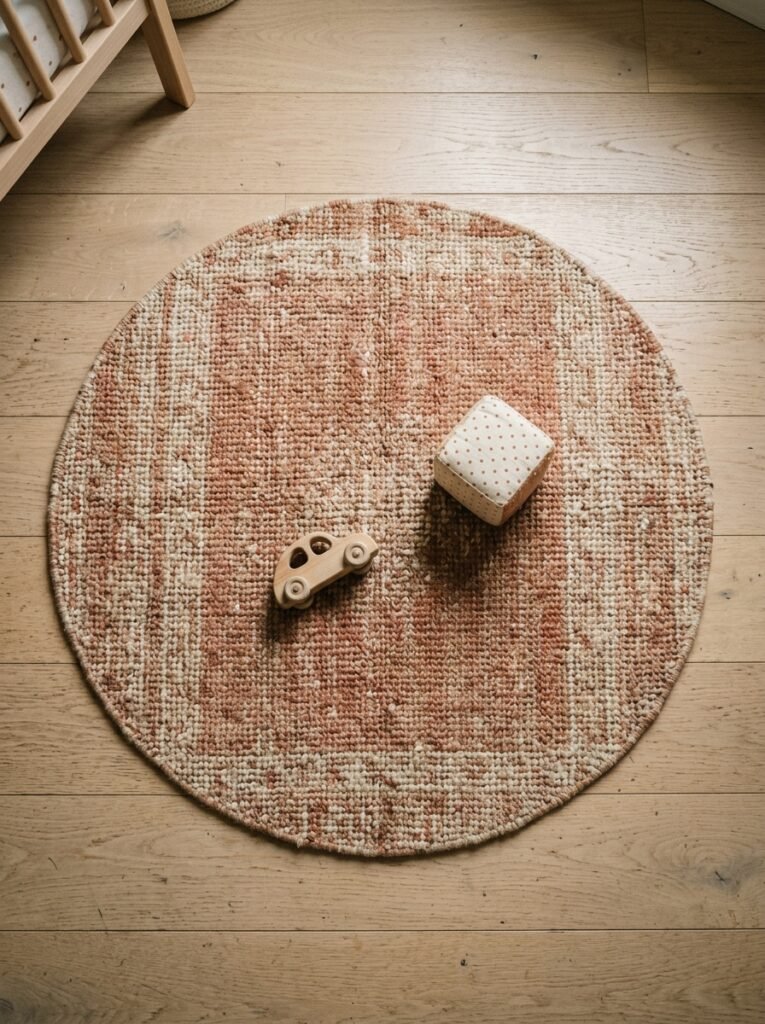
Not gonna lie, I skipped the rug in my daughter’s first iteration of this room. Wooden floors, I thought it’d be fine. It was not fine. The room felt cold, the acoustics were terrible (ever heard a toddler at full volume bouncing off hardwood? no thank you), and the play area didn’t feel like a play area, it just felt like… floor.
A large, low-pile rug defines the space. It absorbs sound. It makes sitting on the floor — which you’ll be doing a LOT — not a back-punishing experience. And it’s one of the fastest ways to introduce color or texture without committing to paint or wallpaper.
For toddler rooms specifically: go bigger than you think you need, go washable if at all possible, and avoid anything with a very high pile because small toys disappear into it and you WILL step on a Duplo brick in the dark at 2am. A flat-weave cotton rug or a low-pile wool blend is the sweet spot.
—
7. Wallpaper vs. Paint: The Honest Version of This Debate
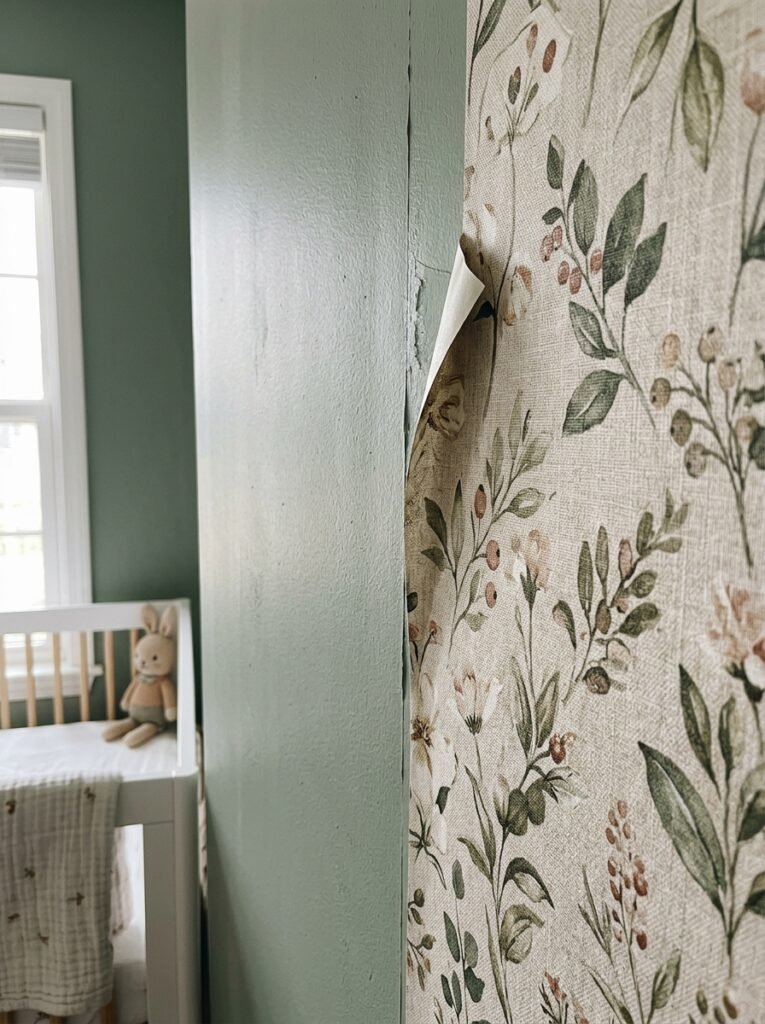
Wallpaper is beautiful. It really is. Those botanical prints, the little woodland animals, the geometric patterns that look like they came from a Scandi design studio — gorgeous, all of it.
But here’s what the pretty Instagram photos don’t show: the corner that started peeling after six months, the patch where your toddler picked at the seam because they were bored, the process of removing it when you eventually move house or change their room again. Wallpaper in a toddler’s room is a commitment, and not always a reciprocated one.
My actual recommendation? Use wallpaper on ONE wall. A feature wall. You get the visual impact, you limit the damage potential, and if something goes wrong, you’re only repairing one section. The other three walls in a soft, complementary paint color will make the wallpaper look MORE dramatic, not less.
In the UK especially, a lot of the peel-and-stick options have improved significantly. Worth looking into before you commit to paste.
—
8. The Lighting Setup That Makes Bedtime an Actual Possibility
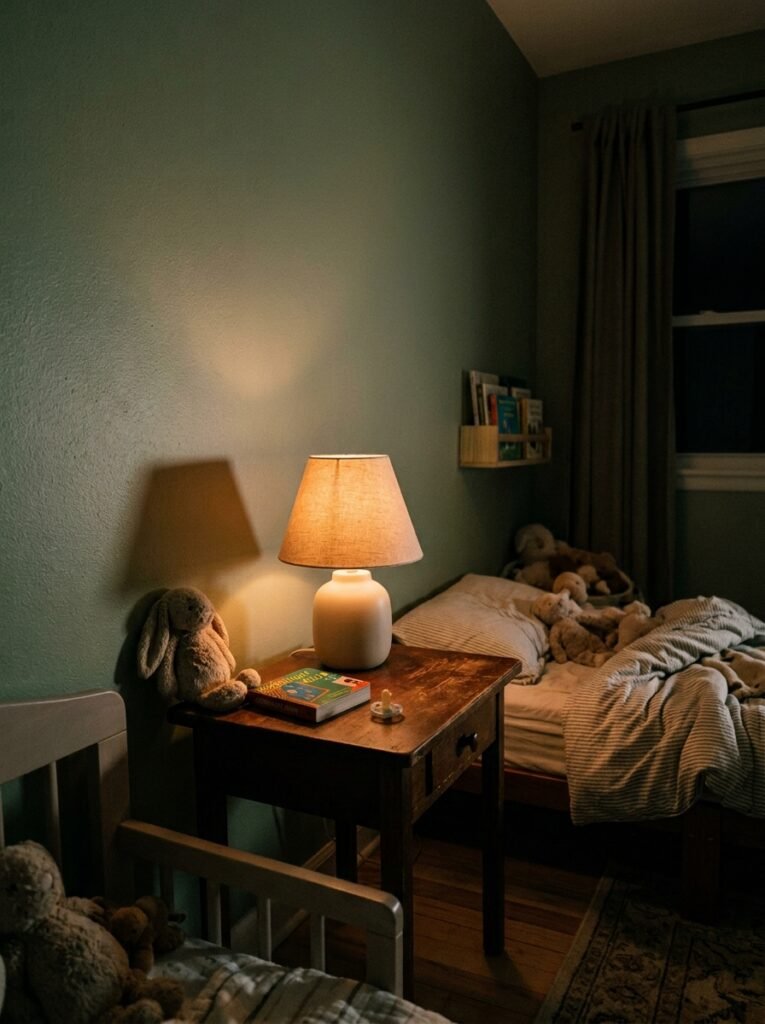
Overhead lighting alone will ruin you. This is not an exaggeration.
Bright, flat overhead lighting tells a toddler’s nervous system that it’s the middle of the day regardless of what the clock says. You need layered lighting — a dimmable overhead for daytime and getting dressed, plus a warm low-level lamp for the wind-down period starting about 30-45 minutes before bed.
The amber glow of a small table lamp or a low nightlight set around the 2200K-2700K range (warm, almost orange-tinted) actually signals the brain to produce melatonin. Cold blue-white light does the opposite. This is basic sleep science but I feel like nobody talks about it in the context of toddler room design and they really should.
Side note — plug-in nightlights that project soft shapes or stars onto the ceiling are fantastic for the 2am “I woke up and now I’m scared” situation. A gentle ambient glow, familiar shapes, nothing alarming. They’re inexpensive and they work.
—
9. The Trick to Making Art Feel Intentional Instead of Just Stuck on a Wall
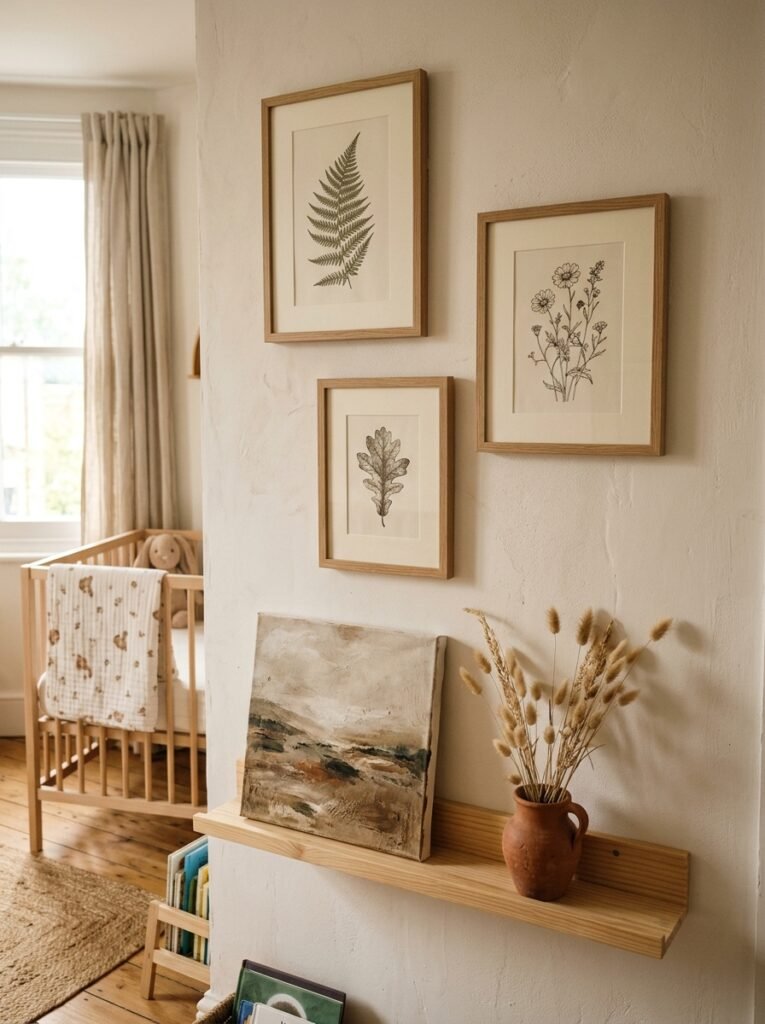
Gallery walls in toddler rooms can go one of two ways: beautifully curated little collection that grows with the child, or explosion of alphabet posters and framed superhero prints that have nothing to do with each other.
The difference is usually just restraint. Three to five pieces, properly matted, hung at a consistent height. Mix in one piece of actual children’s artwork (framed, not taped) — this does something to a room. Kids notice when their work is treated seriously. And it’s cheap. It’s free, actually, because they make it.
Pick a loose theme or color palette for the wall and stick to it. Botanical illustrations and maps. Abstract shapes in earthy tones. Playful animals in a consistent illustration style. It doesn’t need to be expensive — art prints are everywhere — but it does need to feel like someone made a choice.
—
10. How to Handle the Toy Explosion Without Making the Room Look Like a Toy Shop
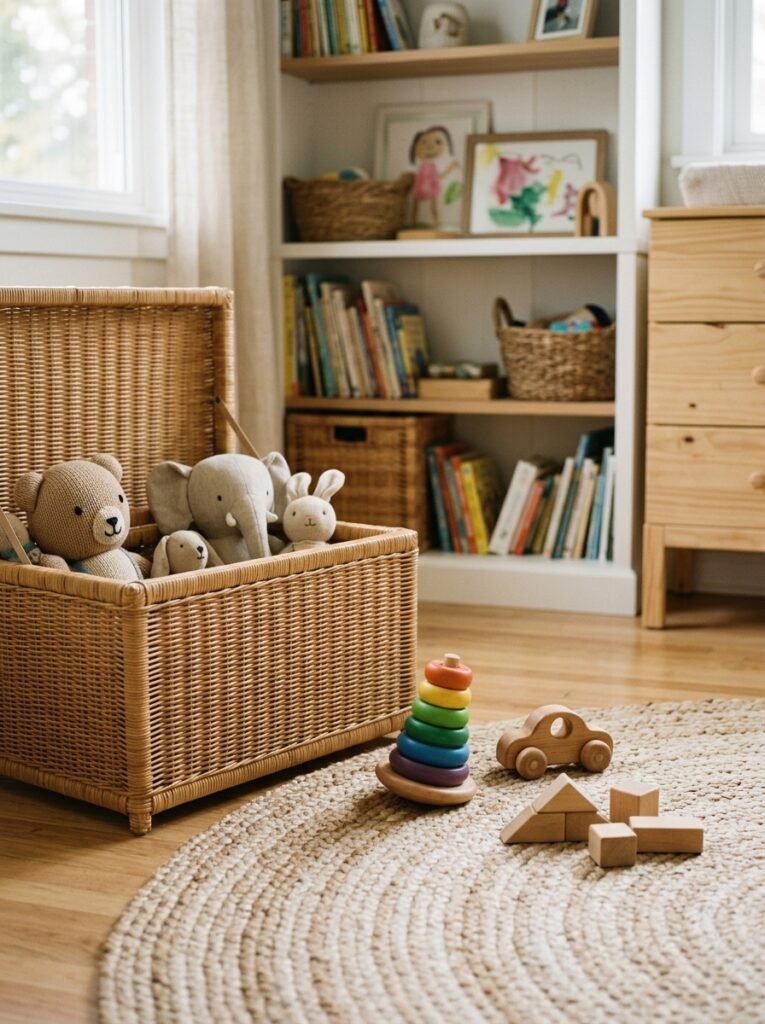
This one’s less about aesthetics and more about sanity, but they’re related.
The mistake most people make is buying furniture that only holds toys. Big plastic toy bins, those primary-color shelving units with the fabric drawers — functional, fine, but they signal “this is a toy room” and nothing else. When everything looks like toy storage, it feels impossible to ever make the room look calm.
The fix: use furniture that does double duty and looks like actual furniture. A wooden bench with a lift-up lid for storage. A dresser that holds clothes AND a few select display pieces on top. Baskets that could hold toys OR look equally at home in a living room. The room starts to feel like a space someone LIVES in, not just a holding bay for plastic things.
You don’t have to be precious about it. Toddlers are messy. But choosing storage that LOOKS good empty or full changes the whole visual register of the room.
“Choosing storage that looks good empty or full changes the whole visual register of the room.”
—
11. The Small Details That People Notice Without Knowing Why
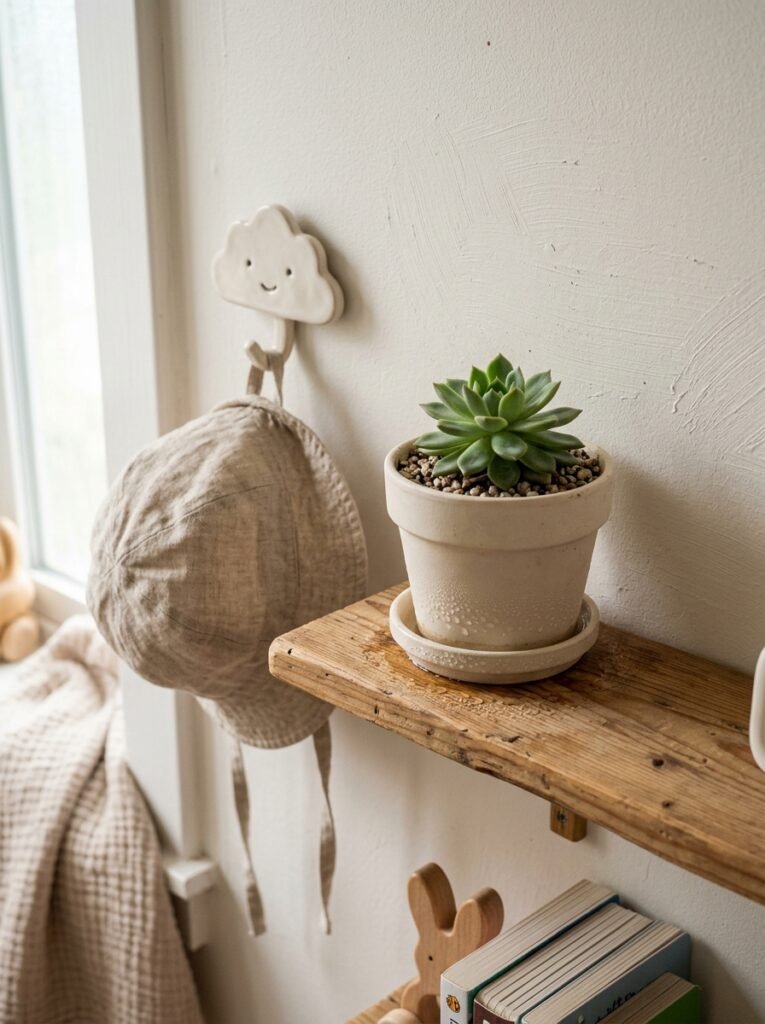
A hook by the door at toddler height. Not for them to hang coats perfectly — they won’t — but because it’s theirs. Their size, their level. It says: this room was thought about for you specifically.
Curtains that actually block light. Blackout, lined, or both. Non-negotiable in the summer, especially in the UK where June sunrise is before 5am and your toddler has absolutely no sympathy about this.
A plant. Yes, even in a toddler room. A robust succulent on a high shelf or a trailing plant in a hanging pot near the window — it’s a living thing in the room and it changes the texture of the space in a way that’s hard to explain but easy to feel. Just keep it out of reach.
And soft furnishings. Cushions, a small blanket draped over the bed or chair, a stuffed animal that’s actually part of the room’s look. These things make a room feel inhabited, not staged.
—
12. When to Let Go of the “Perfect Nursery” Idea Entirely
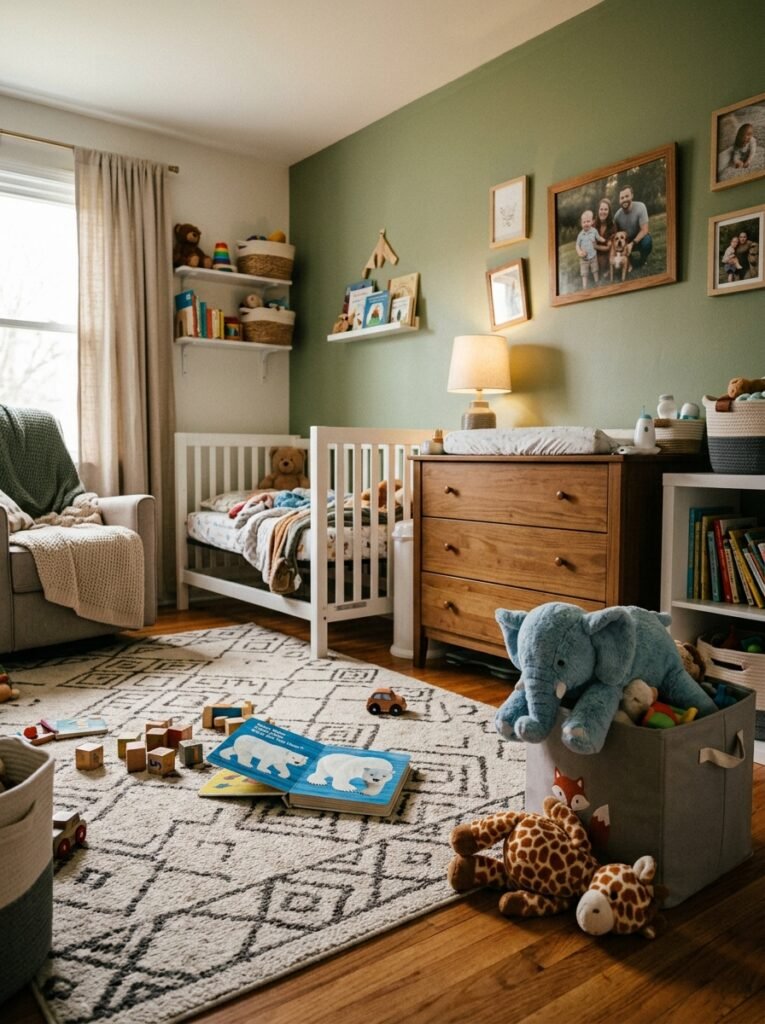
Here’s the thing. Your toddler doesn’t care about your carefully curated color palette. They will put stickers on the wardrobe. They’ll want the duvet with the cartoon character you find deeply ugly. They’ll go through a phase of needing every single soft toy on the bed simultaneously, regardless of what that does to your aesthetic.
And that’s fine. Actually, it’s more than fine.
The goal was never a room that looks good in photos (or, okay, it wasn’t ONLY that). The goal is a room that feels safe, stimulating, calming at the right times, and — most importantly — THEIRS. A child who feels like their room belongs to them is a child who’s more likely to sleep in it, play in it, and yes, sometimes tidy it.
The design choices you make create the container. What goes inside is up to them.
So build something thoughtful, don’t overthink every detail, and leave room for the stickers. Literally and metaphorically.
—
❓ FAQ
Q: What age is considered “toddler” for room design purposes? A: Roughly 18 months to 4 years, though the range varies. The big shift is when they move from cot to bed and start needing accessible storage and a defined play area — that’s usually the trigger for a toddler room rethink, regardless of exact age.
Q: How do I make a small toddler room feel bigger without knocking down walls? A: Keep the wall color light, use mirrors strategically (mounted securely, not freestanding), choose furniture with legs rather than pieces that sit on the floor, and resist the urge to fill every corner. Empty floor space actually reads as “more room” to a small child — they need it to play.
Q: Is it worth investing in expensive furniture for a toddler room? A: Only if it grows with them. A solid wood bed frame, a good quality dresser, a decent rug — these are worth spending on because they’ll last into childhood and beyond. The cute thematic stuff that’s only relevant for one year? Not so much. Put the budget into the bones of the room and accessorize affordably.
—
💭 Final Thoughts
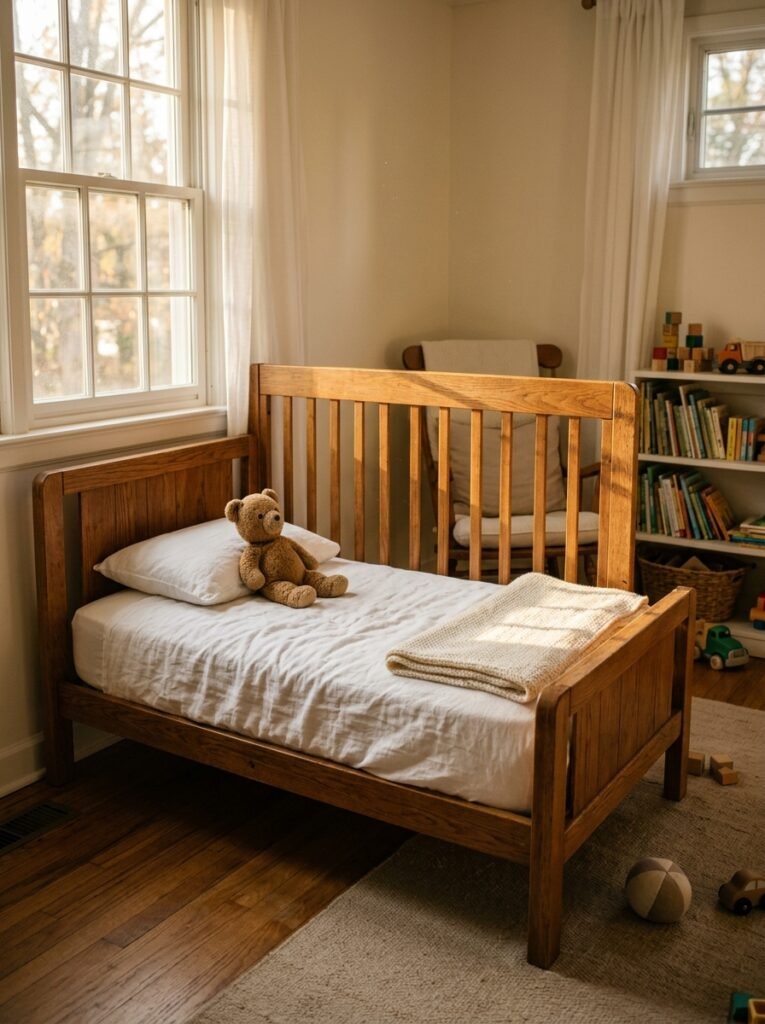
There’s something quietly lovely about designing a room for a small person who has absolutely no patience for overthinking. They’ll tell you immediately what they think. Sometimes that’s humbling and sometimes it’s really funny, but either way it keeps you honest.
The best toddler rooms aren’t the most beautiful. They’re the most lived-in. The ones where you can see the child in every corner — in the books they’ve chosen, the art on the wall, the very specific stuffed elephant at the top of the pillow pile.
What does YOUR toddler’s room say about the tiny human who lives in it?