Why Your Living Room Actually Needs Black Furniture (And You’ve Been Afraid of It for No Reason)
You walk into a room and something stops you. Not in a bad way — in that way where your brain goes quiet for a second and you just look. Nine times out of ten, there’s a piece of black furniture in that room doing all the heavy lifting.

—
1. The Fear Is Real, But It’s Also Completely Made Up
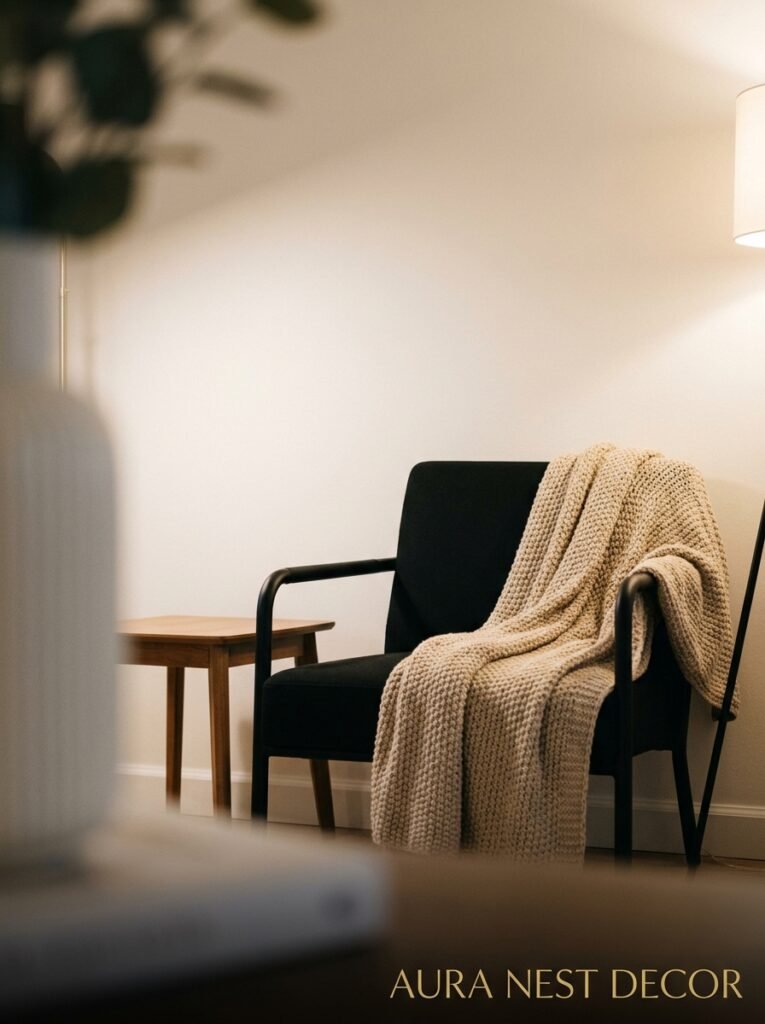
Black furniture has a reputation problem. Somewhere along the way — probably around the time everyone painted their walls greige and bought matching beige sofas — we collectively decided black was “too much.” Too dark. Too dramatic. Too risky.
But here’s the thing. That fear? It’s not coming from experience. It’s coming from imagining the worst version of the idea. Like, sure, if you painted your ceiling black, covered your floor in dark carpet, and bought a black sofa the size of a small aircraft carrier, yeah, that room would feel heavy. But that’s not what we’re talking about.
A black coffee table in a cream room isn’t dramatic. It’s grounding. A black bookshelf against a white wall doesn’t close the space in — it makes the wall look intentional. There’s a difference between darkness and depth, and black furniture gives you the second one.
I’ve seen so many people redo their living rooms and say the same thing: “I waited three years to do this and I wish I hadn’t waited.” That’s almost always the story. The fear is worse than the reality.
“Black doesn’t darken a room. It anchors it.”
—
2. The Specific Shade of Black That Actually Works (Because Not All Blacks Are Equal)
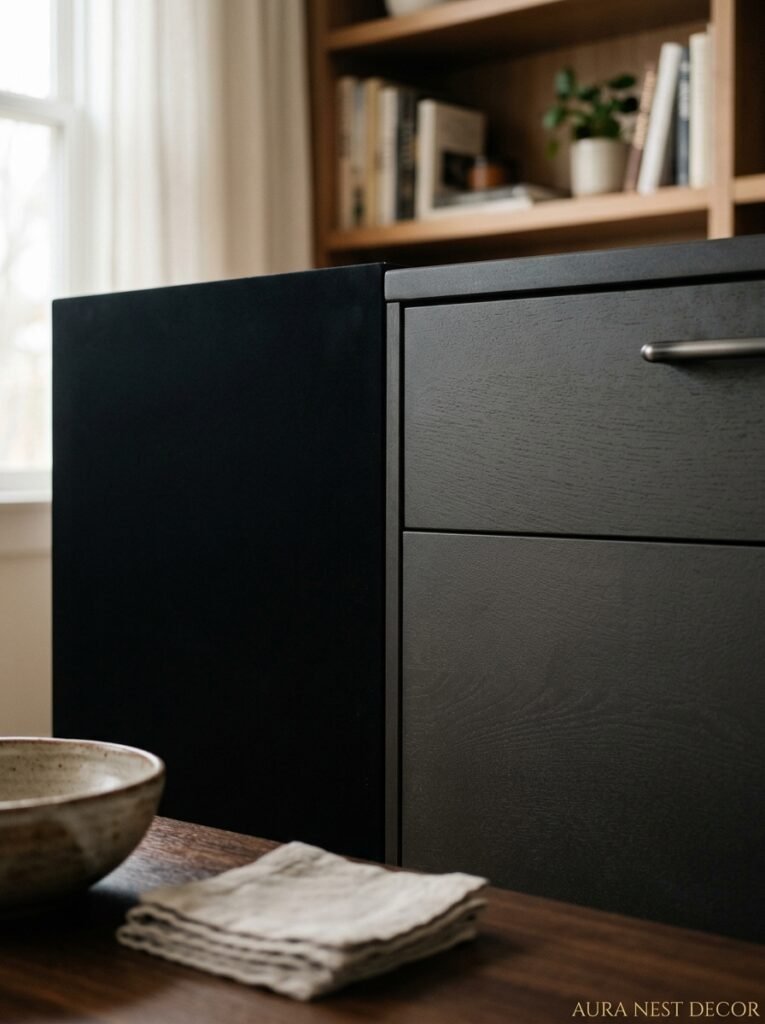
Okay so this is something nobody really talks about and it drives me a little crazy. People say “black furniture” like black is just… one thing. It’s not.
There’s the flat matte black that absorbs light like a black hole — stunning in the right room, suffocating in the wrong one. There’s the soft charcoal-black, which is basically black’s more approachable cousin. Satin black with a barely-there sheen. Ebonized wood that pulls slightly warm. High-gloss lacquer that bounces light around in ways that’ll genuinely shock you.
The finish matters AS MUCH as the color. More, maybe.
In rooms that don’t get a lot of natural light — north-facing rooms, you UK readers know EXACTLY what I mean — a matte black can feel like it’s pulling the walls in. But an ebonized oak sideboard or a satin-finish black coffee table? That warmth in the wood grain keeps it from feeling oppressive. Same color, totally different room.
For most people, I’d say start with a wood-based black. Lacquered MDF with no grain or texture is beautiful but it requires a more edited, confident room around it. If you’re newer to black furniture, the warmth of a dark-stained wood piece gives you more forgiveness.
—
3. The One Black Piece That Changes Everything Without Committing to Much
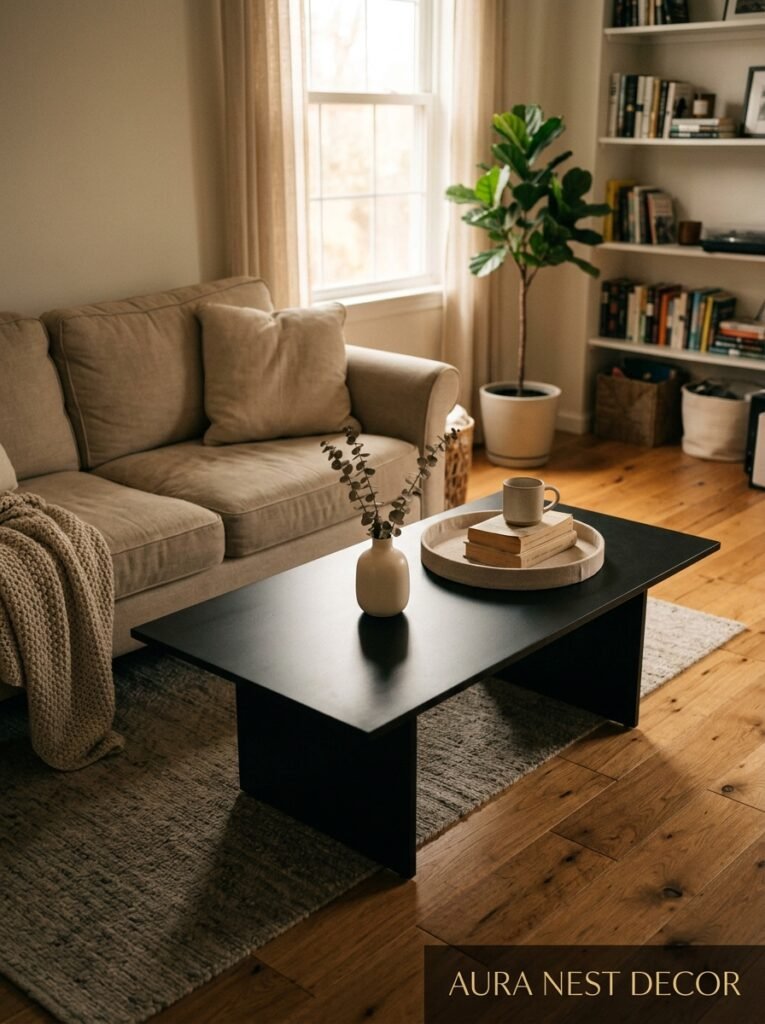
If you’re not ready to go all in — totally fair — there’s a very specific entry point that works almost universally.
A black coffee table.
I cannot overstate how much a black coffee table shifts a living room. It lands in the center of the whole space, it’s low so it doesn’t eat visual height, and because it’s functional it never feels like you’re “trying too hard.” It just looks like a decision. A confident one.
The room around it doesn’t need to change at all. You’ve got a soft grey sofa? Great. A warm linen couch? Even better. A slightly chaotic mix of prints and cushions that somehow works? The black table pulls it together. It’s kind of annoying how well it works.
Side note — the same is true of a black media unit or TV stand. It disappears the TV into itself in a really satisfying way, especially if the TV frame is dark. The whole thing becomes one cohesive shape instead of a big black rectangle floating on a beige wall.
—
4. How Black Furniture Makes Every Other Color Look Better (This Is Not an Exaggeration)

This is the part that won me over completely. Black is, genuinely, the best thing you can put in a room full of other colors. Not neutral grey, not safe white — black.
Dusty pink cushions next to a black shelf look intentional and edited. Rust orange against black looks EXPENSIVE. Even the kind of muddy olive green that’s hard to pull off everywhere else? Stunning next to black. Something about the contrast forces each color to commit to being exactly what it is.
There’s also this thing that happens with warm metallics — brass, gold, bronze — near black furniture. The warmth pops in a way it just doesn’t against wood or white. A brass table lamp on a black side table looks like it belongs in a design magazine. Same lamp on a blond wood surface looks nice. But nice isn’t what we’re going for.
In UK homes especially, where you’re often working with older architecture, Victorian cornicing, sash windows, that kind of thing — black furniture adds a kind of seriousness that matches the bones of the house without being stuffy. It respects the architecture, if that makes sense. Or maybe it’s the opposite, honestly — it contrasts with it just enough to feel modern.
“Rust, brass, olive, dusty pink — every color gets bolder when black is in the room.”
—
5. The Styling Rules That Black Furniture Actually Needs You to Follow
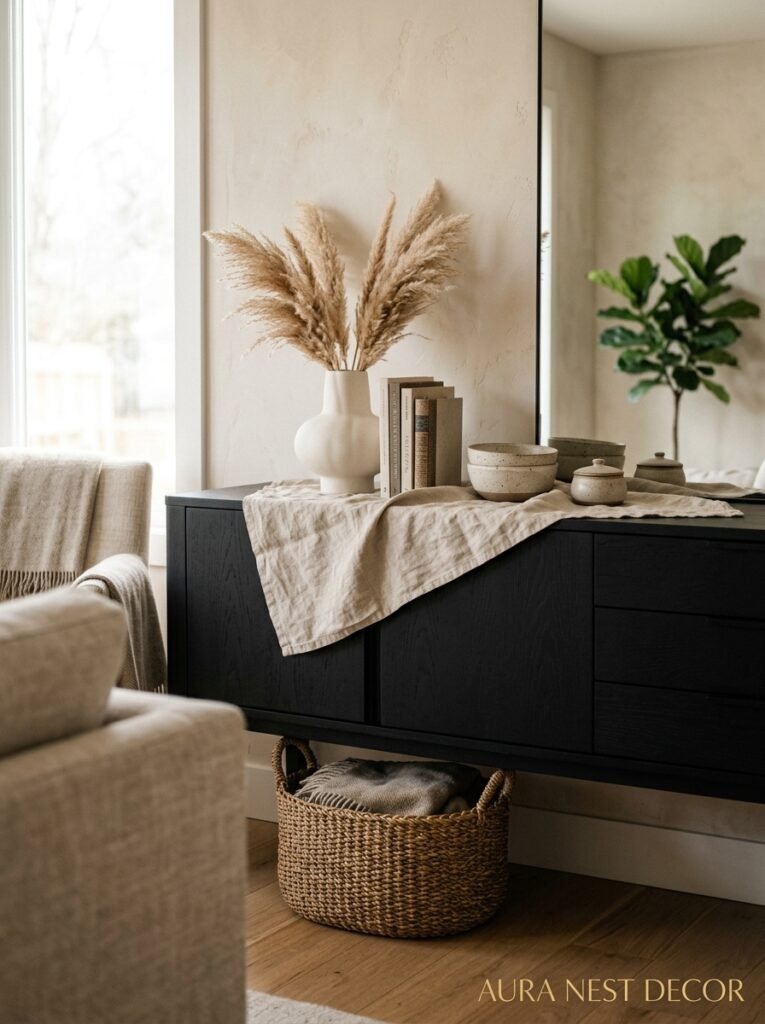
Okay so black furniture isn’t entirely forgiving. There are some things that’ll make it feel heavy or dated, and it’s worth knowing them upfront.
Clutter is the enemy. This is non-negotiable. A black bookshelf crammed absolutely full of stuff reads as chaotic in a way a white one might not, because your eye has nowhere to rest. You need breathing room — some open shelves, some objects with space around them, things displayed rather than stored. It’s worth being ruthless about it.
Same goes for a black coffee table with too much on it. A candle and a book? Perfect. The same table covered in remotes and coasters and three half-drunk cups of tea? The black makes all of that visual noise worse, not better.
Texture also matters more with black than with any other color. A flat matte black surface on its own can feel cheap unless you’ve got something tactile nearby — a boucle throw, a linen cushion, a rough-hewn wood bowl. The contrast between soft and hard, rough and smooth, is what stops the black from feeling flat.
—
6. What Walls Actually Work With Black Furniture (Spoiler: More Than You Think)
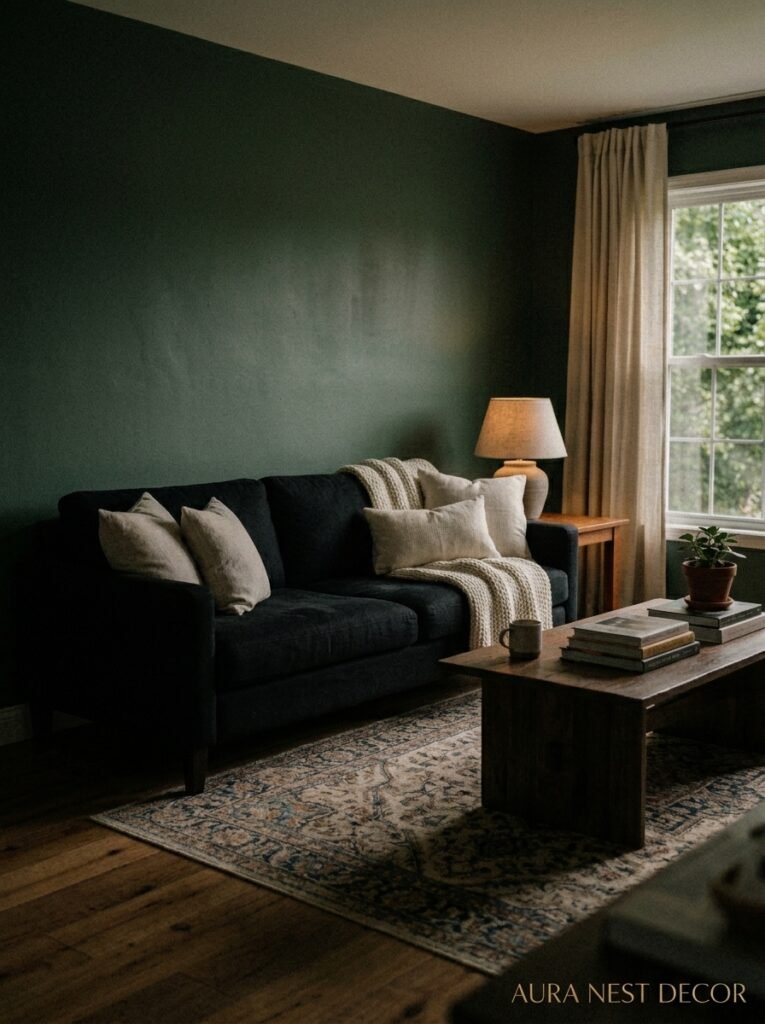
People assume black furniture needs white or very pale walls to breathe. And yeah, white walls work brilliantly — the contrast is clean and the black stands out properly.
But honestly? Some of the most striking living rooms I’ve seen pair black furniture with deep wall colors. Dark forest green walls with black furniture feels like the inside of a very expensive library. Terracotta or burnt sienna walls with a black sofa — warm, rich, a little bit Italian. Even a deep navy with black accents works if your lighting is warm enough.
The thing is, when you use deep walls with black furniture, you’re committing to a mood. The room becomes atmosphere. It stops being a backdrop for living in and becomes somewhere you actually want to be in, at night especially, with low lamps on and a glass of wine in hand.
Light walls give you versatility and contrast. Dark walls give you drama and envelope. Neither is wrong. It just depends on what you want the room to do.
For smaller rooms — this is very practical advice — try black furniture against a medium-toned wall. Sage green, warm putty, dusty blue. The contrast isn’t as sharp but the black still does its anchoring job, and the room doesn’t feel like it’s being swallowed.
—
7. The Living Room Black Furniture Combination That’s Absolutely Having a Moment
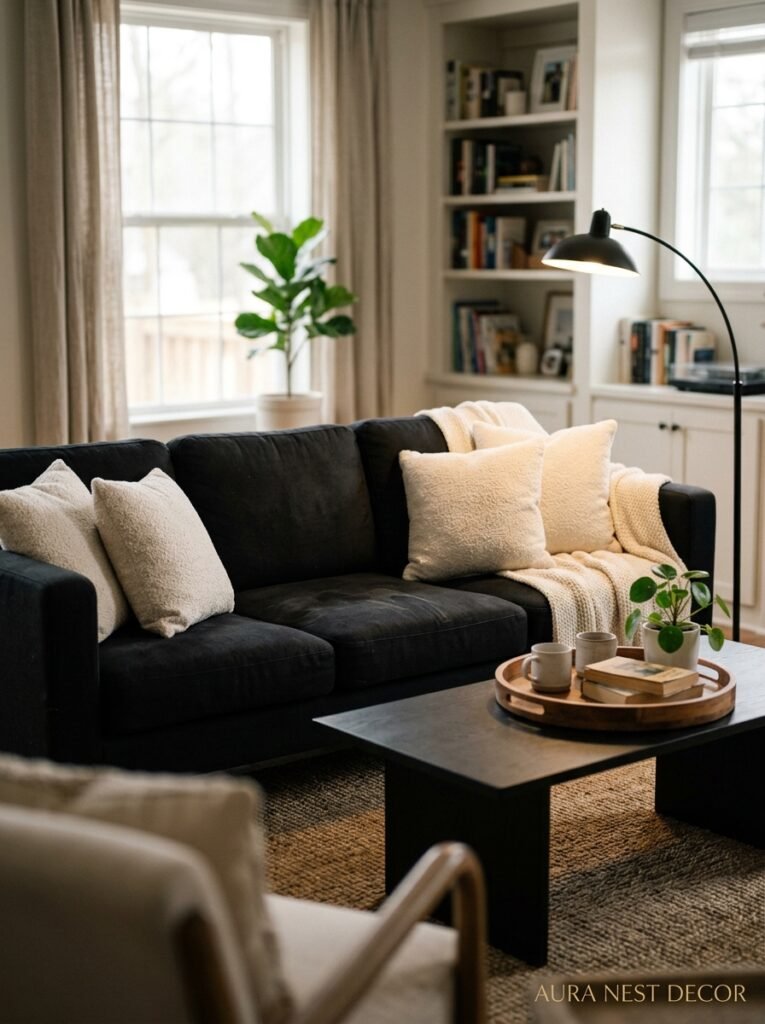
Black and natural wood together. That’s it. That’s the combination.
Not sleek black and chrome. Not black and white in some stark minimalist setup. Black lacquer or painted black furniture paired with raw or lightly finished natural wood — together in the same room, sometimes in the same piece.
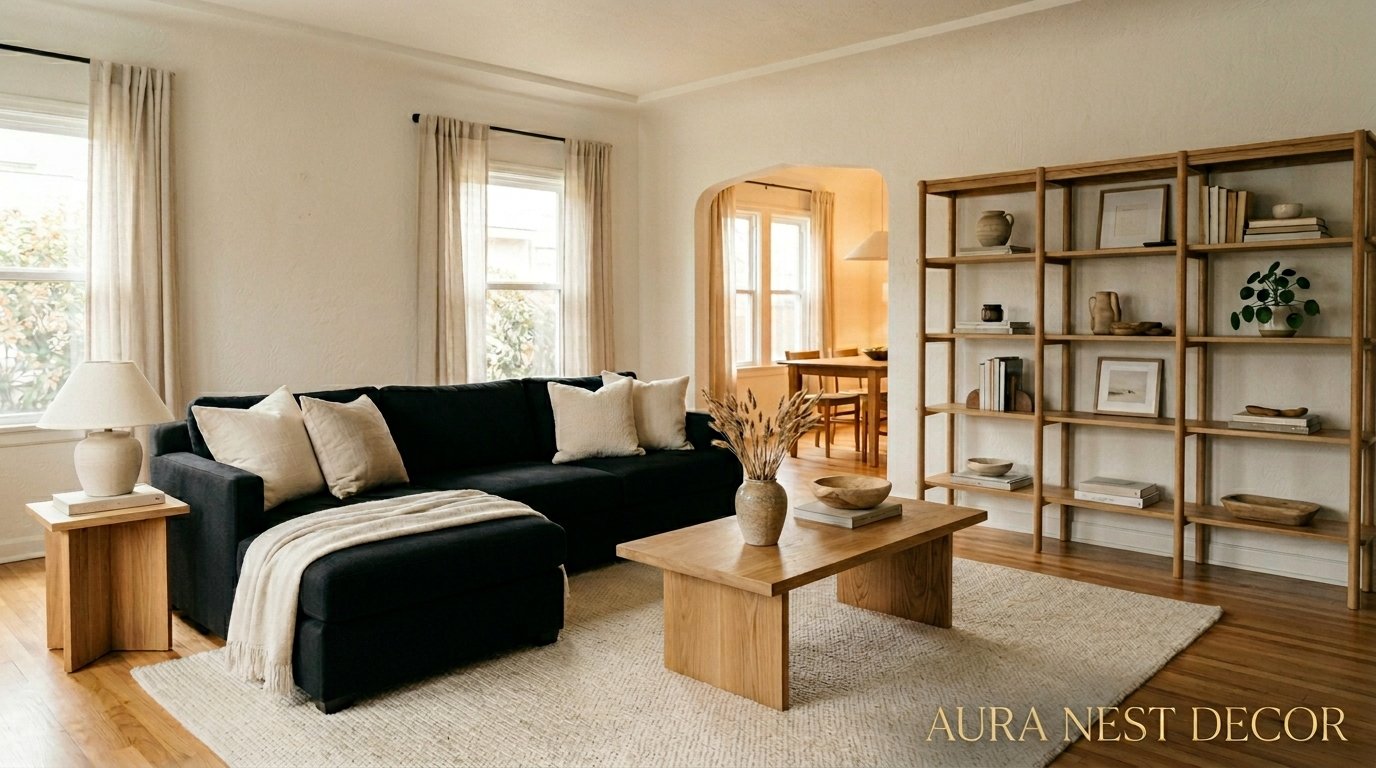
It’s everywhere right now. A black metal shelving frame with wooden shelves. A dark-stained oak coffee table with black powder-coated legs. A black TV unit with an open lower shelf in warm timber. The combination is warm AND graphic at the same time, which is genuinely hard to pull off.
What makes it feel current rather than just trendy is the honesty of the materials. The wood looks like wood. The black metal looks like metal. Nothing is pretending to be something it’s not. In a time when everything can look manufactured and interchangeable, that reads as incredibly satisfying.
And it works across totally different living room styles. Scandi minimalist. Country-meets-modern. Urban flat. Traditional British living room updated for 2025. It’s adaptable in a way not many design combinations are.
“Natural wood and matte black together is the combination that’s quietly dominating every beautiful living room right now.”
—
8. Sofas: Should Yours Be Black? Here’s the Real Answer
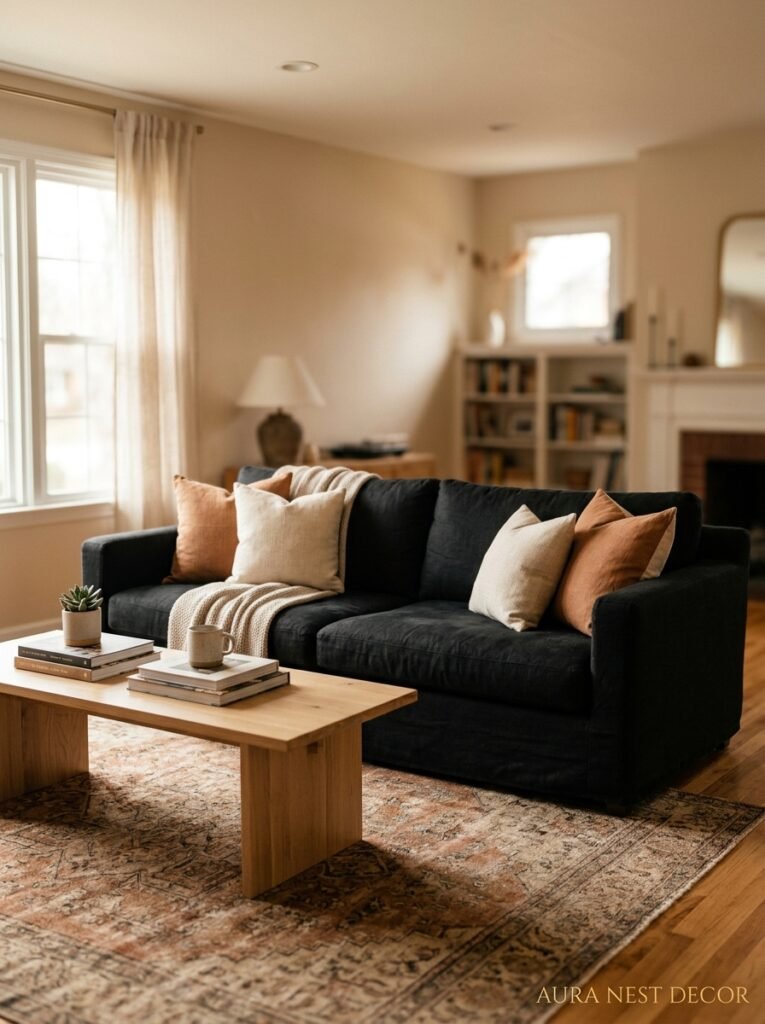
This is the question that makes people nervous. A black sofa is a commitment.
But I’d actually argue a black sofa is less of a commitment than people think, because it’s one of those things that literally goes with everything. No sofa is easier to style. Throw a warm terracotta blanket over it — looks great. Layer four different cushion prints in blue and cream — looks great. Go spare and minimal with just a couple of off-white linen cushions — REALLY looks great.
The thing to think about is fabric. A black velvet sofa reads formal and luxurious. A black linen sofa reads casual and unpretentious. Black boucle (and yes, there are black boucle sofas now) reads textural and modern. The color is the same, the vibe is completely different.
What I would not do is a shiny black leather sofa unless you’re fully committed to a very specific aesthetic. It can look incredible. It can also look like a 2003 bachelor pad. The line is thin. If in doubt, matte fabric.
For smaller living rooms, a black sofa can work but go low-profile. The visual weight lives in the height of the back more than the color, so a lower, sleeker silhouette keeps it from dominating.
—
9. The Lighting Trick That Makes Black Furniture Look Intentional and Not Gloomy
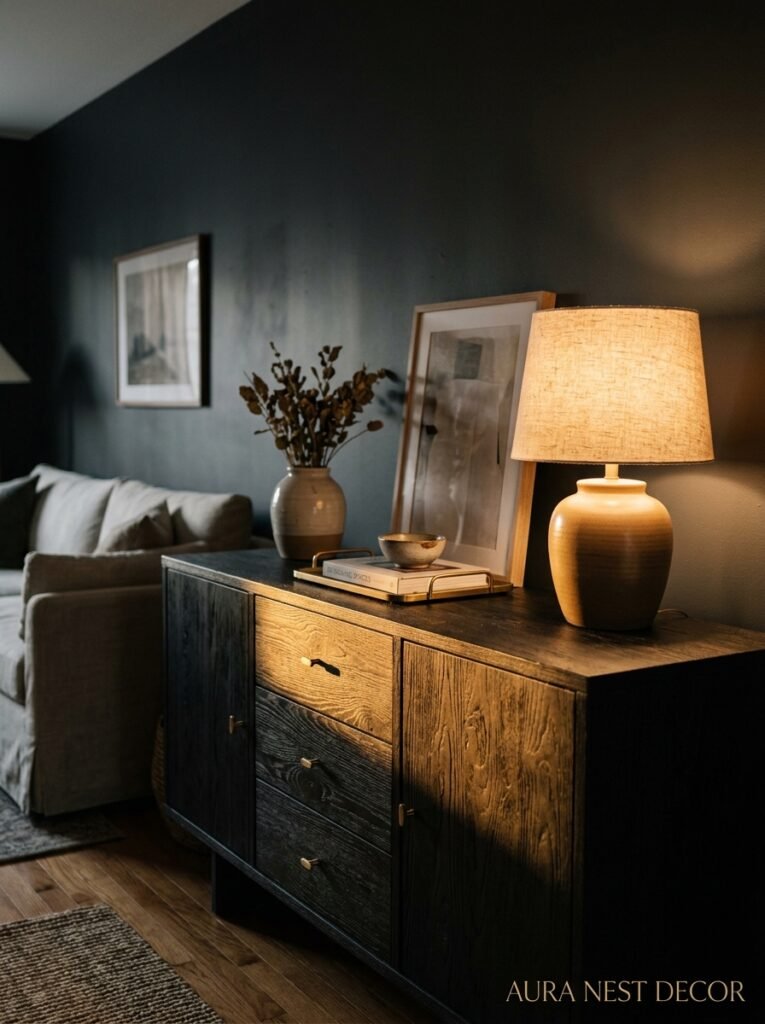
Warm bulbs. That’s the whole trick. Okay, not the WHOLE trick, but it’s about 80% of it.
Black furniture under cool white LED light looks harsh. Kind of clinical. Like a showroom that hasn’t quite figured itself out. The same piece under warm amber light — 2700K, if you’re buying bulbs and want to know the number — looks rich, considered, beautiful.
The amber glow of a table lamp at 7pm does more for black furniture than any styling trick. It pulls warmth from any wood grain, softens the contrast against light walls, and gives the room a sense of time and mood that overhead lighting simply cannot.
Layered lighting is the goal. Ceiling light on a dimmer if you have it, at least two table or floor lamps, maybe a small shelf light or a candle or two. Black furniture rewards this approach because each light source creates its own pocket of warmth and shadow, and the room starts to feel composed rather than just decorated.
Don’t underestimate candlelight near black furniture either. Even just a couple of pillar candles or a cluster of tea lights on a black coffee table changes the whole feeling of the room at night.
—
10. Common Mistakes People Make With Black Living Room Furniture
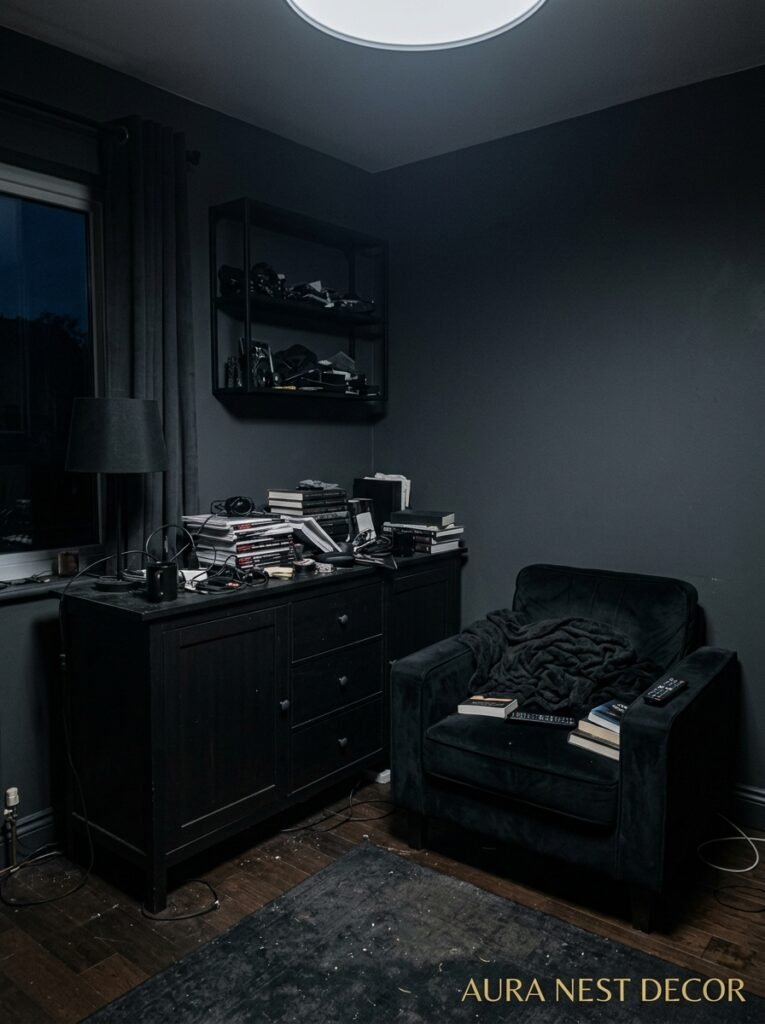
Going too matchy-matchy is probably the biggest one. Black furniture pieces that are all clearly from the same range, all the same finish, all the same style? It can feel very “purchased as a set” which, honestly, never looks as good as a room that’s been put together over time. Mix finishes. Mix styles slightly. A vintage black side table next to a clean-lined modern black shelving unit is more interesting than two things that match perfectly.
Not considering scale is another one. A black piece that’s too large for the room will dominate it in a way a lighter piece wouldn’t. Black commands attention. It doesn’t share space quietly. So if a coffee table in that size would already be pushing it, in black it’ll feel even bigger.
And ignoring natural light. I touched on this earlier but it’s worth saying plainly: if your living room gets almost no natural light, be careful about how much black you use and WHERE you put it. Reflective surfaces nearby — a mirror, metallic accessories, glass — help bounce what light there is around the room.
—
11. The Black Furniture Details That Are Worth Spending More On
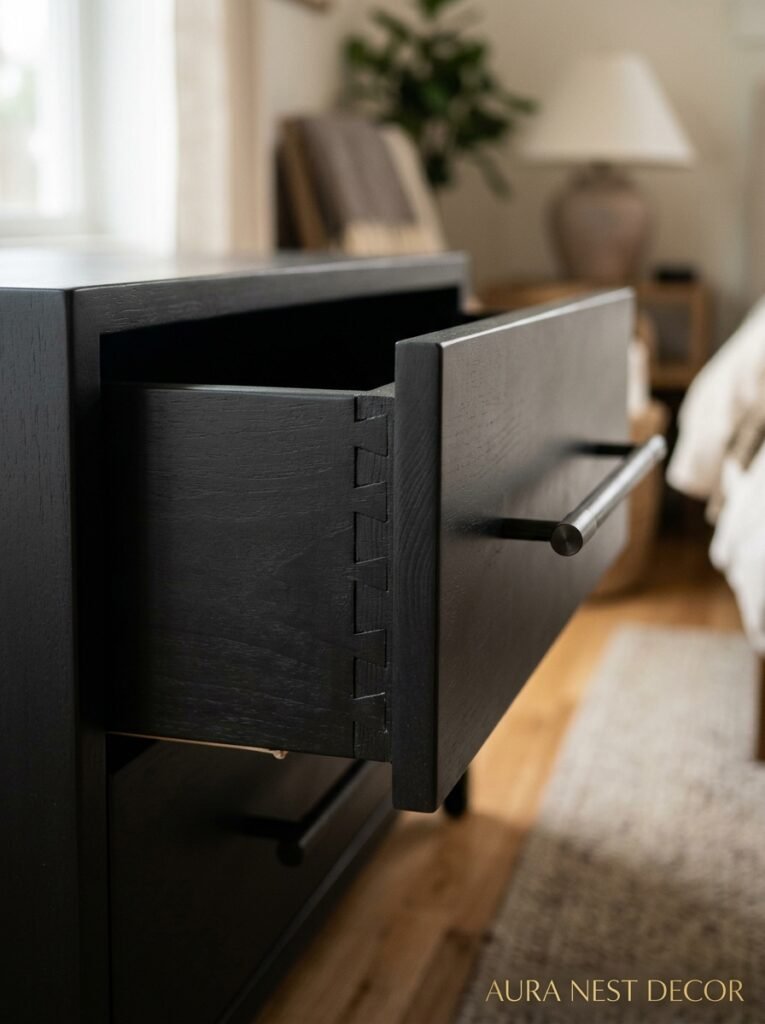
Not everything needs to be expensive. But there are specific things where the quality difference with black furniture is immediately visible.
Handles and hardware. On black painted furniture especially, cheap hardware stands out badly. Good solid brass handles, even just a small set, completely change what a black sideboard looks like. Worth it every time.
The paint finish on painted wood pieces. A really good satin or eggshell black on solid wood has a depth that flat-pack lacquer just doesn’t. If you’re painting existing furniture — and honestly, painting old furniture black is one of the best things you can do — invest in proper chalk paint or furniture paint and a finishing wax. The result is genuinely better and it doesn’t chip the same way.
Legs. Black furniture on bad quality tapered legs looks cheap. Black furniture on solid metal pin legs, or good quality turned wooden legs, looks like it costs three times what it did. It’s a small detail that carries a lot of weight.
—
12. Starting Small — the $50 to $200 Way to Test If Black Furniture Is Right for Your Living Room
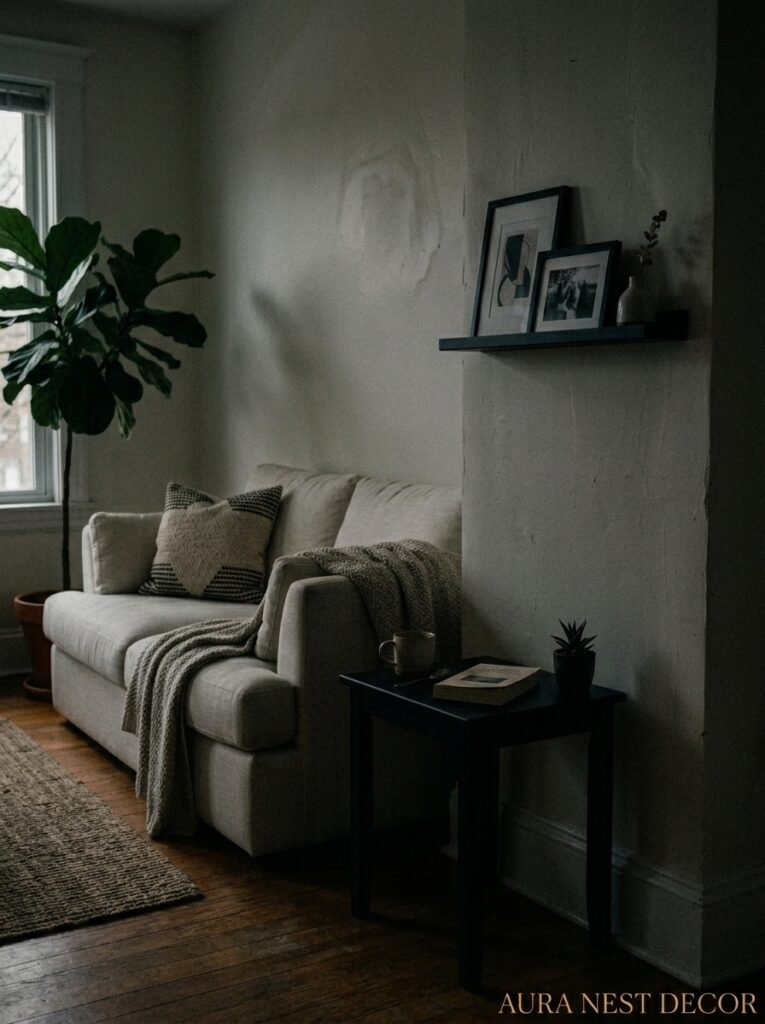
You don’t have to buy a sofa. You don’t have to buy a whole bookcase. There are ways in at every budget.
A black tray on your current coffee table. Instant grounding effect, zero commitment. A black picture frame or two on a gallery wall. Black candle holders — especially good grouped together on a mantelpiece. A small black side table for about $60-80 that you can move around and test in different spots.
These small things tell you something important: how does your eye react to black in this space? Does it feel settled and anchored, or does it feel like a hole? In most rooms it’ll be the first thing. But it’s worth knowing before you commit.
For UK readers, IKEA’s black Vittsjo shelving unit is about £55 and it’s honestly one of the best things to test with. It’s lightweight visually, the frame is thin, and it gives you a real sense of what black furniture does to your room without spending much.
If you buy one of these small pieces and your first reaction is relief — like the room finally looks done — that’s your answer.
—
❓ FAQ
Q: Will black furniture make my small living room look even smaller? A: Not necessarily — it depends on placement and scale. A low, slim-profile black coffee table or a floating black shelf won’t close the room in. What makes small rooms feel smaller is bulk, not color. Keep the silhouettes clean and light-footed (think visible legs rather than base-to-floor units) and black furniture actually adds depth rather than reducing it.
Q: How do I keep black furniture from looking dusty and covered in pet hair? A: Realistically, matte black surfaces do show dust and lighter pet hair more than mid-tones. A lint roller nearby and a weekly wipe with a slightly damp cloth keeps most pieces looking great. For sofas, a tightly woven fabric or velvet is easier to keep clean than loose weaves. Black painted wood wipes clean really easily, which is actually one of its advantages.
Q: Can black furniture work in a traditional or period-style British living room? A: Absolutely — and it often works better than you’d expect. Black furniture has a long history in traditional British interiors (think lacquered Chinese-influenced pieces, Edwardian painted furniture). In a room with period details like cornicing or a Victorian fireplace, black furniture adds weight and seriousness that feels appropriate. Just keep it classic in silhouette rather than ultra-modern, and you’re good.
—
💭 Final Thoughts

The rooms that stay with you — the ones you photograph on your phone and pin at midnight and think about weeks later — usually have something unexpected in them. Something that took a little nerve. Black furniture is one of those things: a choice that reads as confident rather than careful, like someone actually decided what they wanted and went for it. Maybe that’s the real reason people hesitate. Not because they don’t like it. But because committing to what you actually love is harder than staying safe. So — what are you still waiting for?