
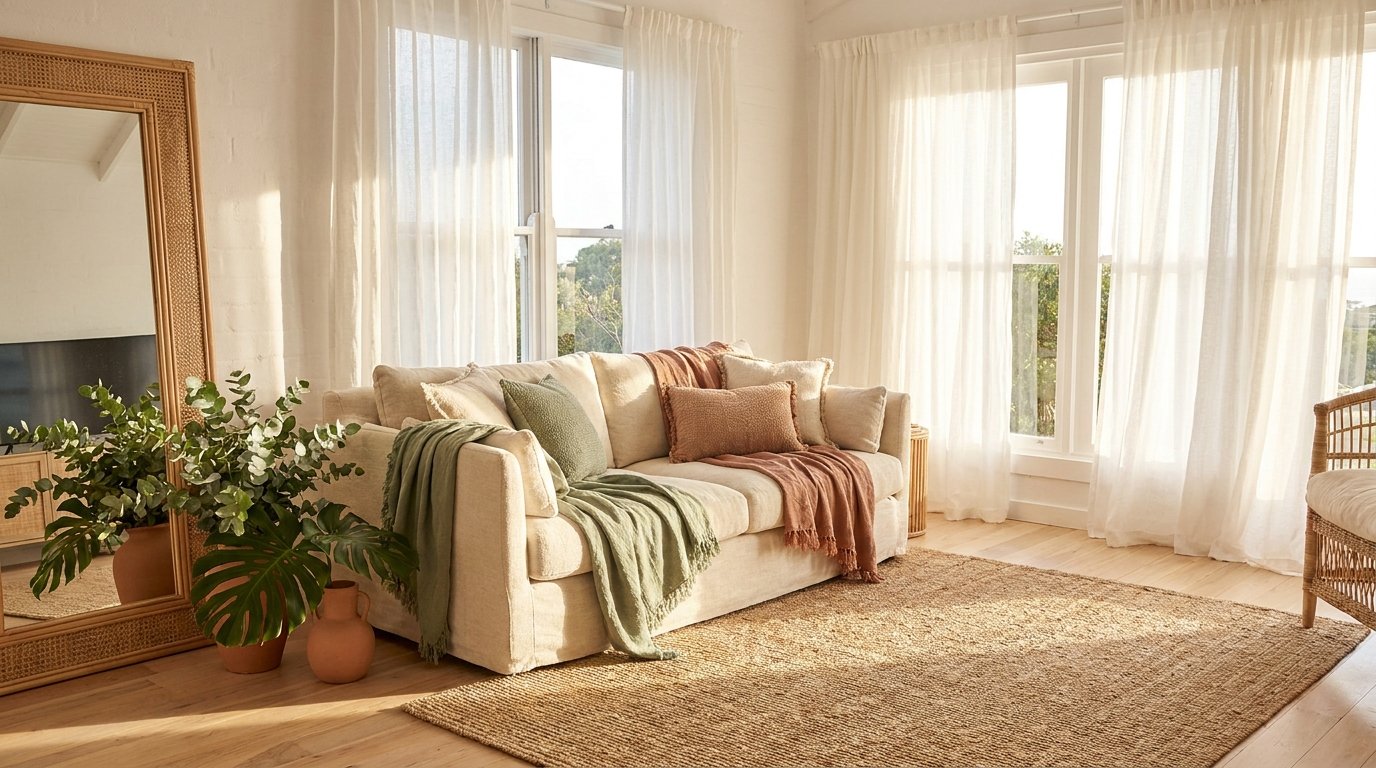
Summer House Ideas Interior: How to Create a Home That Feels Like a Perpetual Vacation
There’s a specific kind of magic that happens when you step inside a summer house done right — the light seems softer, the air feels easier to breathe, and every corner whispers slow down, you’re home. Whether you’re decorating a coastal cottage, a lakeside cabin, a sun-drenched apartment, or simply transforming your year-round home into something that captures that breezy, golden-hour feeling, the principles of summer interior design are the same: lightness, warmth, and an effortless sense of ease. This guide will walk you through twelve deeply considered ideas that will help you create an interior that doesn’t just look like summer — it feels like it.
—
1. Start With Light: The Single Most Powerful Design Element in Any Summer Interior
Before you buy a single throw pillow or hang one piece of art, think about light. Natural light is the backbone of every beautiful summer interior you’ve ever admired on Pinterest. It’s why those rooms look so impossibly good — not because of expensive furniture, but because someone understood how to let the sun in and make it dance.
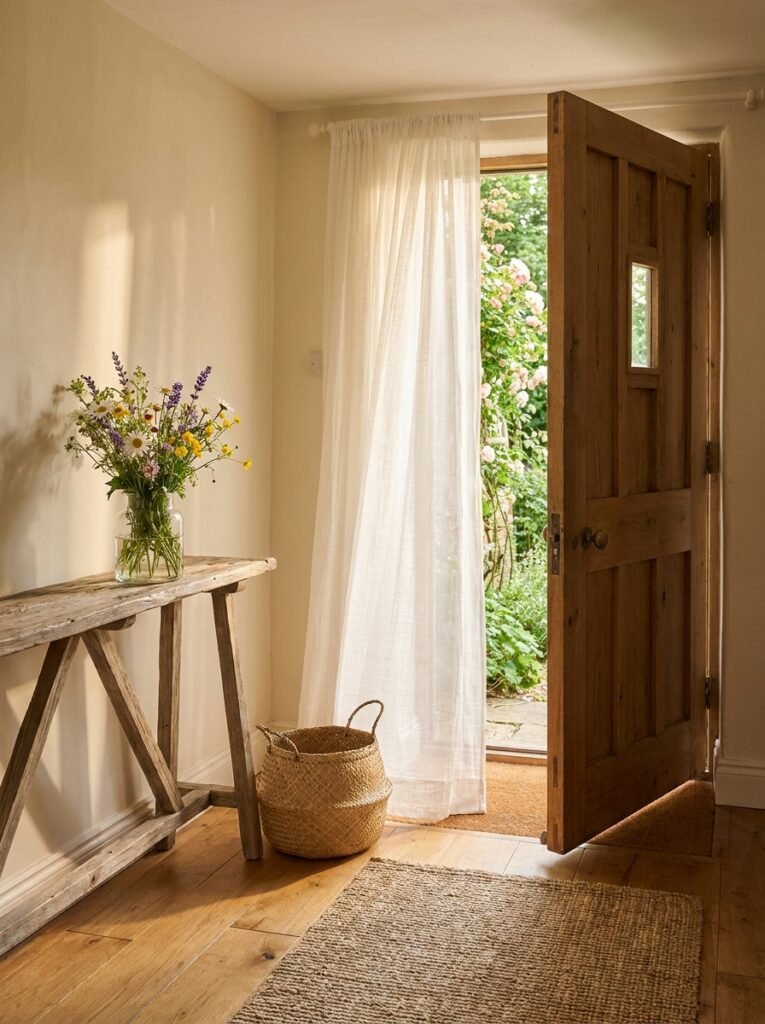
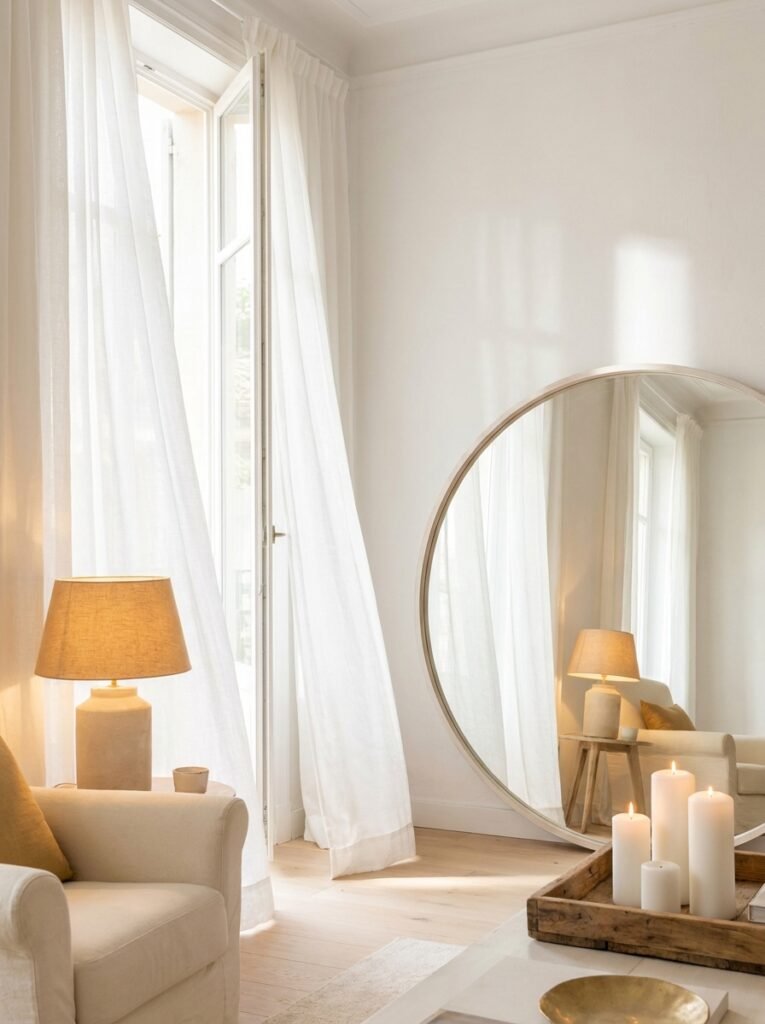
Start by auditing every window in your space. Are heavy curtains blocking the morning light? Are frosted blinds dulling the afternoon glow? In a summer house, the goal is to maximize natural light at every hour. Swap blackout curtains for sheer white linen panels that billow gently in the breeze. If privacy is a concern, choose light-filtering shades in natural bamboo or warm white cotton — they soften the light without killing it.
Mirrors are your secret weapon here. A large, simply framed mirror placed opposite a window can effectively double the perceived natural light in a room. Lean one against a wall in your living room, hang one above a console table in the entryway, or position one in a dim corner that needs lifting. The effect is immediate and genuinely transformative.
“A summer home doesn’t need more décor — it needs more light.”
Don’t overlook the role of artificial lighting either. Replace any harsh overhead bulbs with warm-toned LED lights (look for bulbs in the 2700K–3000K range). Add table lamps with linen or rattan shades. Use candles in the evenings — real ones, not battery-operated — because that warm, flickering glow is irreplaceable.
—
2. The Color Palette That Makes Every Room Feel Like a Summer Morning
Color is where most people either get summer interiors exactly right — or fall into the trap of going too literal. The goal is not to paint your entire home turquoise and hang anchors on the wall. The goal is to create a palette that evokes summer without screaming it.
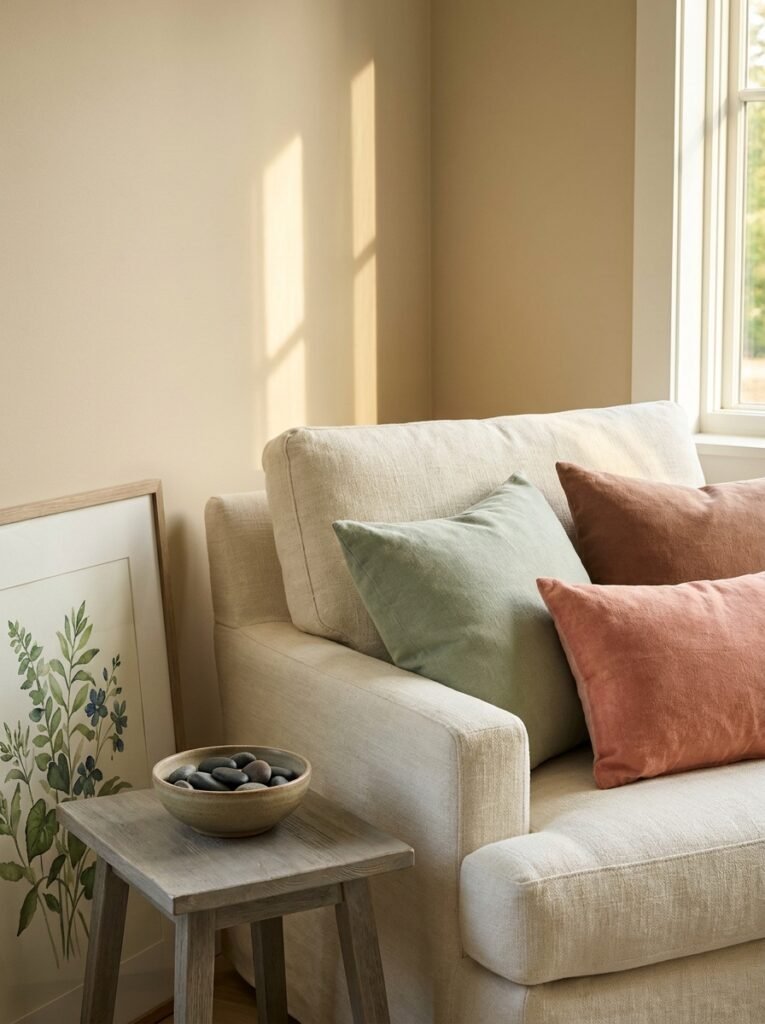
The most successful summer house color palettes are built on a neutral foundation. Think warm whites, soft creams, sandy beiges, and pale driftwood grays. These act as your walls, your large furniture pieces, your architectural backdrop. From there, you layer in accents — soft sage green, dusty terracotta, faded coral, ocean-washed blue, or sun-bleached yellow. These are colors you’d find in nature during summer: the inside of a seashell, a patch of sea grass, a weathered piece of driftwood.
What makes this approach powerful is restraint. Choose two or three accent colors and repeat them throughout the space in varying intensities. A sage green pillow in the living room might echo a set of sage green kitchen canisters and a single botanical print in the hallway. The repetition creates visual harmony without making the space feel theme-park predictable.
—
3. Natural Textures: Why Your Summer Home Should Feel as Good as It Looks
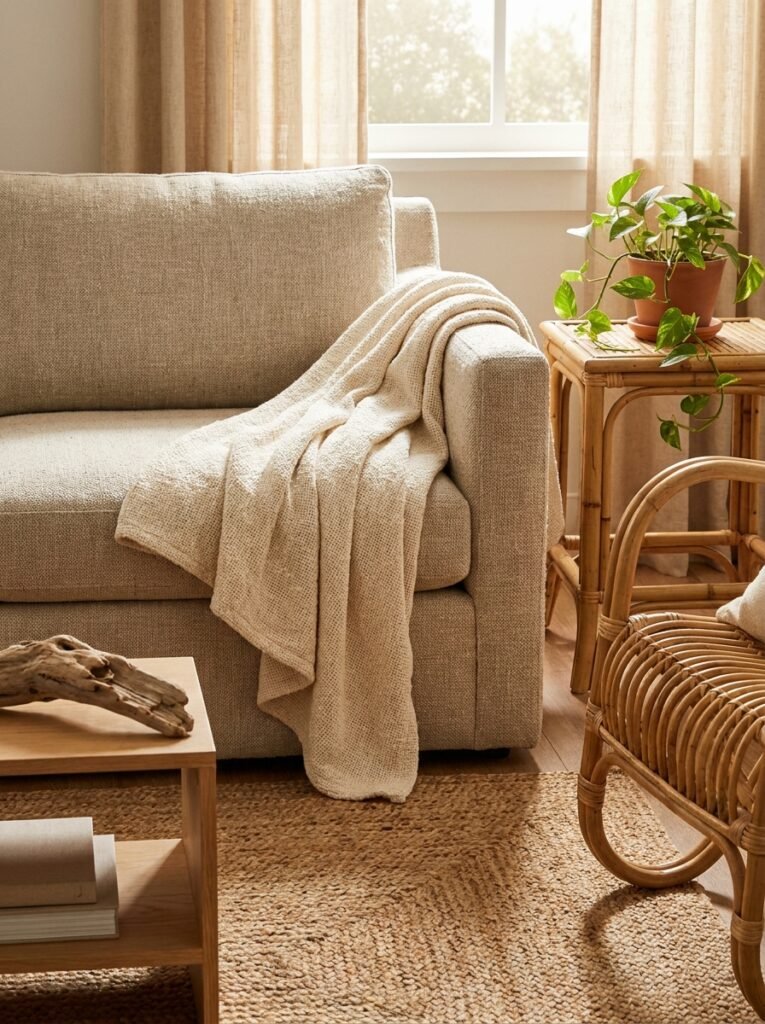
Close your eyes and picture the most inviting summer interior you’ve ever experienced. Chances are, it wasn’t just beautiful — it was touchable. There was probably a nubby linen sofa, a soft cotton throw, a jute rug underfoot, maybe a rattan chair in the corner. Texture is what separates a summer house that looks like a showroom from one that feels genuinely lived-in and loved.
The key natural textures for summer interiors are linen, cotton, jute, rattan, bamboo, seagrass, wood, and wicker. Each one brings something different — linen is effortlessly casual, rattan adds warmth and a handcrafted quality, jute grounds a room with an earthy, unpretentious energy. The trick is layering these textures together so they create depth without chaos.
A simple formula: natural rug (jute or seagrass) as the foundation, linen upholstery on your main seating, rattan or wicker accent furniture, wood tones throughout, and cotton textiles in your throws and cushions. This combination works in virtually any room and immediately communicates summer without relying on novelty prints or seasonal accessories.
—
4. Furniture Arrangement: Creating Flow That Invites You to Linger
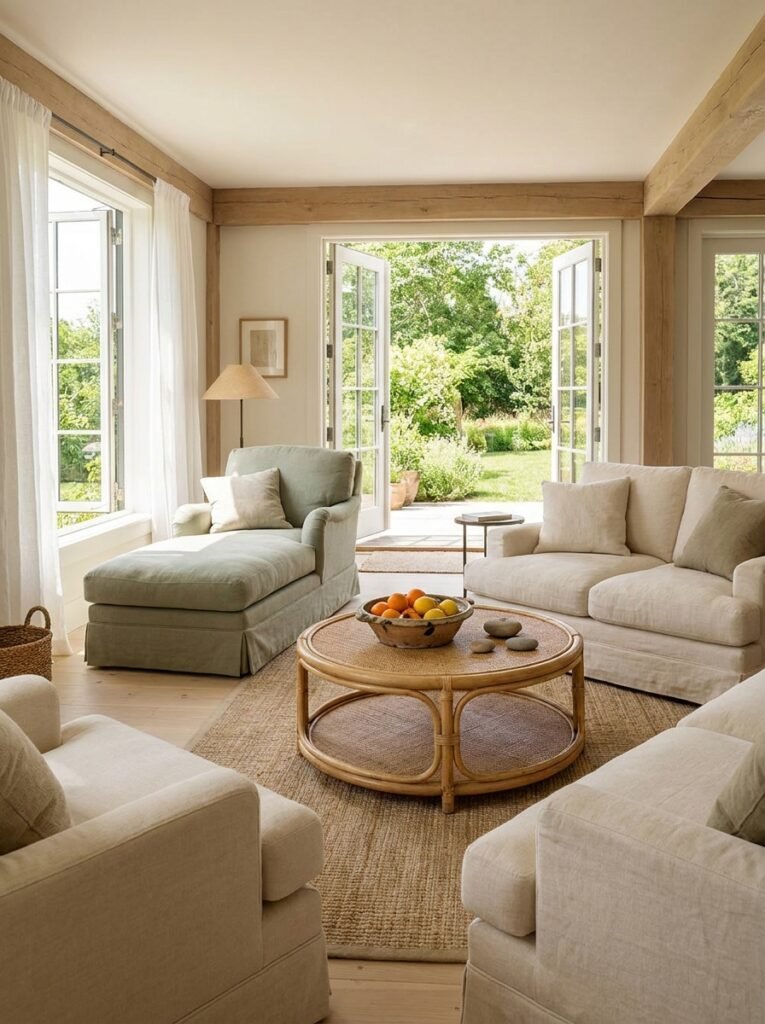
Summer living is slow living — and your furniture arrangement should support that. One of the most common mistakes in summer house interiors is arranging furniture the same way you would in a formal, year-round space: everything pushed against the walls, a coffee table acting as a barrier, nowhere to truly sink in and stay.
For a summer house, arrange seating in conversational clusters that face each other, not the television. Pull sofas and chairs slightly away from the walls — even six inches creates a sense of intention and intimacy. Leave clear pathways to doors and windows so the space feels airy and easy to move through. If you have an outdoor space, arrange your indoor furniture so that the transition between inside and outside feels natural, almost seamless.
Consider adding a daybed or a wide chaise lounge — something that invites horizontal rest. Summer is the season of afternoon naps and long, lazy evenings, and your furniture should make both feel like obvious, available choices.
—
5. The Open-Air Effect: Blurring the Line Between Inside and Outside
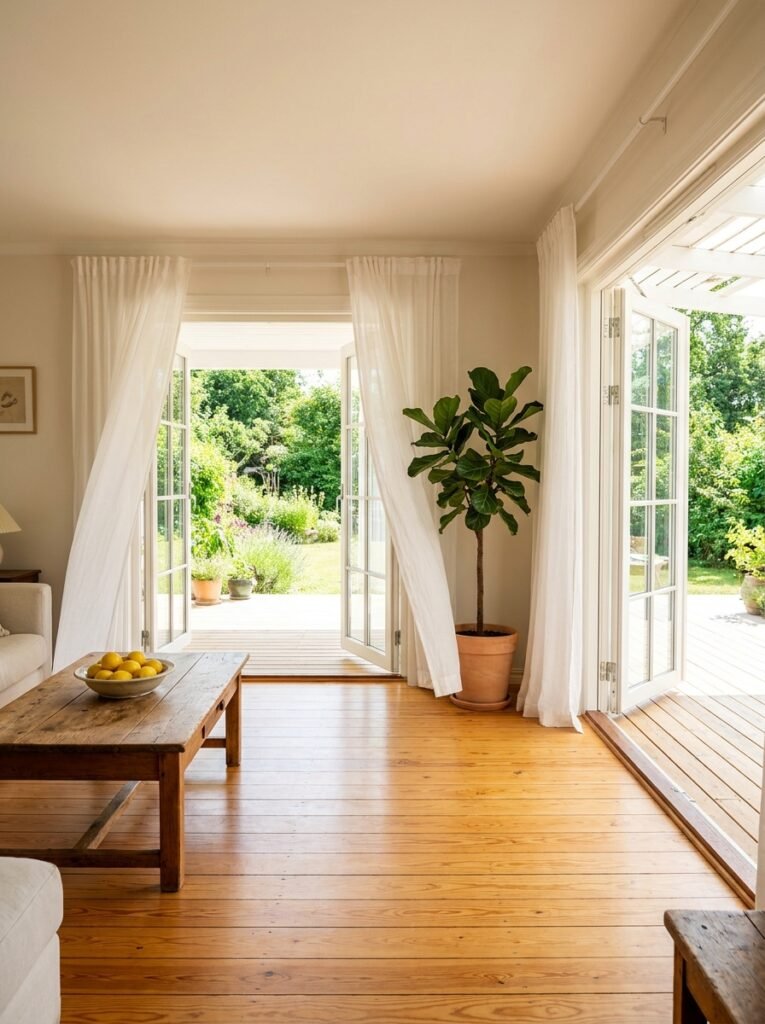
The most romantic thing about summer house interiors is how they play with the boundary between indoors and outdoors. When that line blurs — when you’re not sure if you’re inside or outside — something magical happens. The space feels bigger, freer, more alive.
You can create this effect even without a wraparound porch or floor-to-ceiling glass doors. Start by bringing outdoor-inspired elements inside: a large potted fiddle-leaf fig, a bowl of fresh citrus on the kitchen counter, a branch of eucalyptus in a simple vase, a cluster of river stones on the coffee table. These aren’t decorating clichés — they’re honest acknowledgments that nature belongs inside a summer home.
“The best summer interiors don’t just reference nature — they invite it in.”
On the practical side, if you have sliding or French doors, keep them open as often as possible. Hang lightweight curtains in the doorway that move with the breeze. Use the same flooring material (or a very similar tone) inside and on your covered patio or deck to visually extend the space. Paint an outdoor wall the same color as your interior accent wall. These small decisions accumulate into something that feels unified, intentional, and deeply relaxing.
—
6. The Summer Kitchen: Where Casual Meals Become Cherished Memories
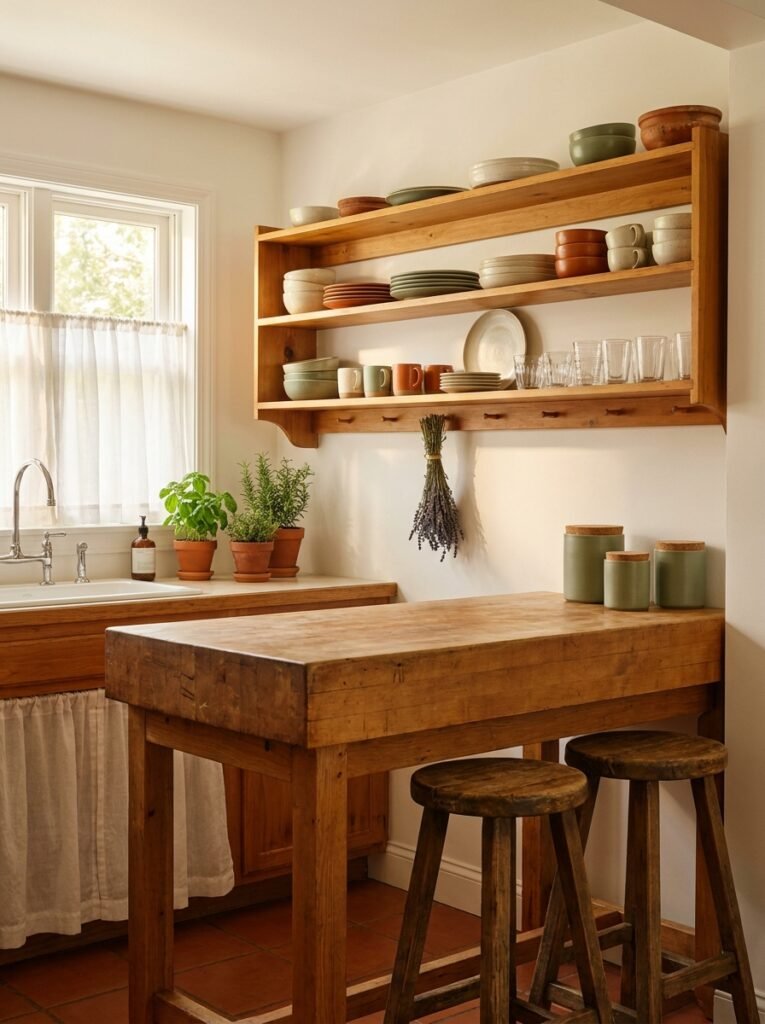
A summer kitchen is not just a room where you cook — it’s where the best conversations happen, where someone is always perched on a counter eating a peach, where the smell of grilled corn and cold watermelon mingles with morning coffee. Your summer kitchen should feel like the warm center of the whole home.
For summer kitchen interiors, prioritize openness and ease. If you have upper cabinets, consider removing a few doors to create open shelving — display your nicest dishes, a collection of mismatched glasses, some fresh herbs in terracotta pots. Use a simple butcher block or wooden cutting board as a countertop accessory that doubles as décor. Hang a bunch of dried lavender or eucalyptus from an open shelf.
Color-wise, warm whites, soft yellows, and sage greens work beautifully in summer kitchens. Add warmth through wood tones — a wooden island, wooden bar stools, wooden-handled utensils in a crock by the stove. Keep the counters as clear as possible; a summer kitchen breathes, it doesn’t clutch.
—
7. Bedroom Sanctuary: Designing Sleep That Feels Like a Dream
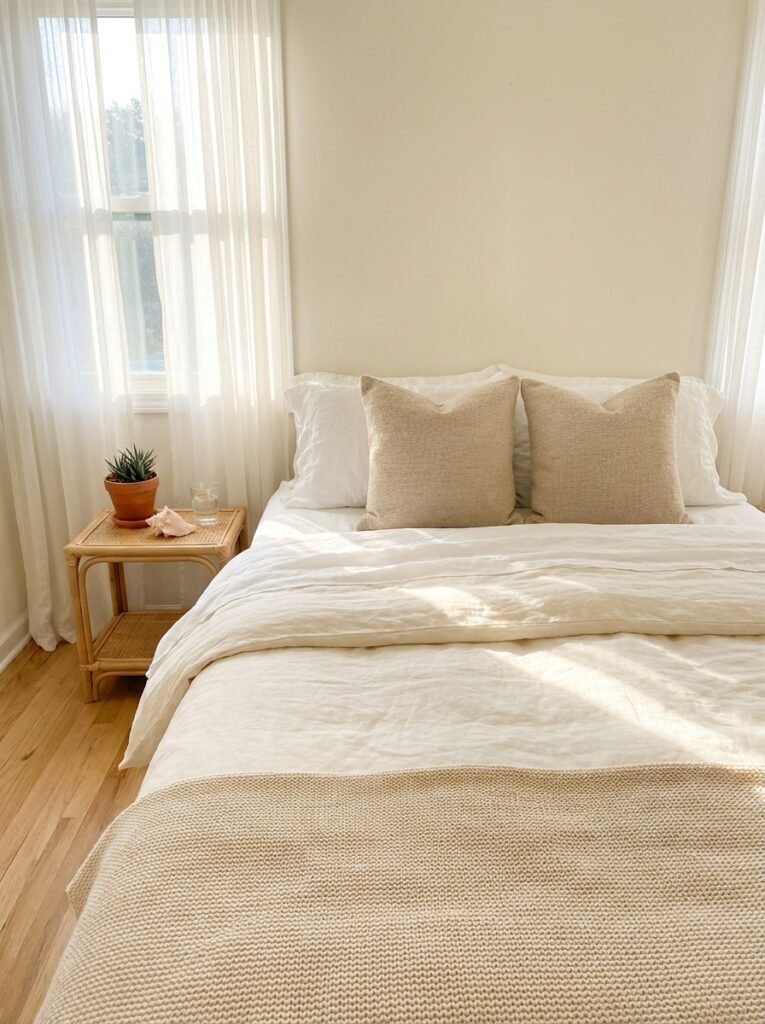
The summer bedroom should do one thing above all others: make you feel completely at rest. Not just sleepy — genuinely, deeply at peace. The kind of bedroom where you wake up slowly, where the morning light comes through sheer curtains and lands in soft pools on white bedding, where there’s always a gentle breeze even if it’s imagined.
Start with the bed. White or cream linen bedding is the foundation of almost every beautiful summer bedroom on Pinterest, and for good reason — it’s breathable, it looks effortlessly clean, and it gets better with washing and age. Layer with a lightweight cotton or linen duvet, a couple of textured throw pillows, and a soft knit blanket folded at the foot.
Keep the palette calm — soft whites, warm creams, very pale blues or greens, sandy neutrals. Avoid anything too saturated in the bedroom. On the walls, consider a single piece of simple botanical art, a woven wall hanging, or a collection of small watercolor prints. Nightstands should be kept simple: a lamp, a book, a glass of water, maybe a small plant or a shell found on a walk.
—
8. Bathroom Refresh: Turning a Functional Space Into a Spa-Like Retreat
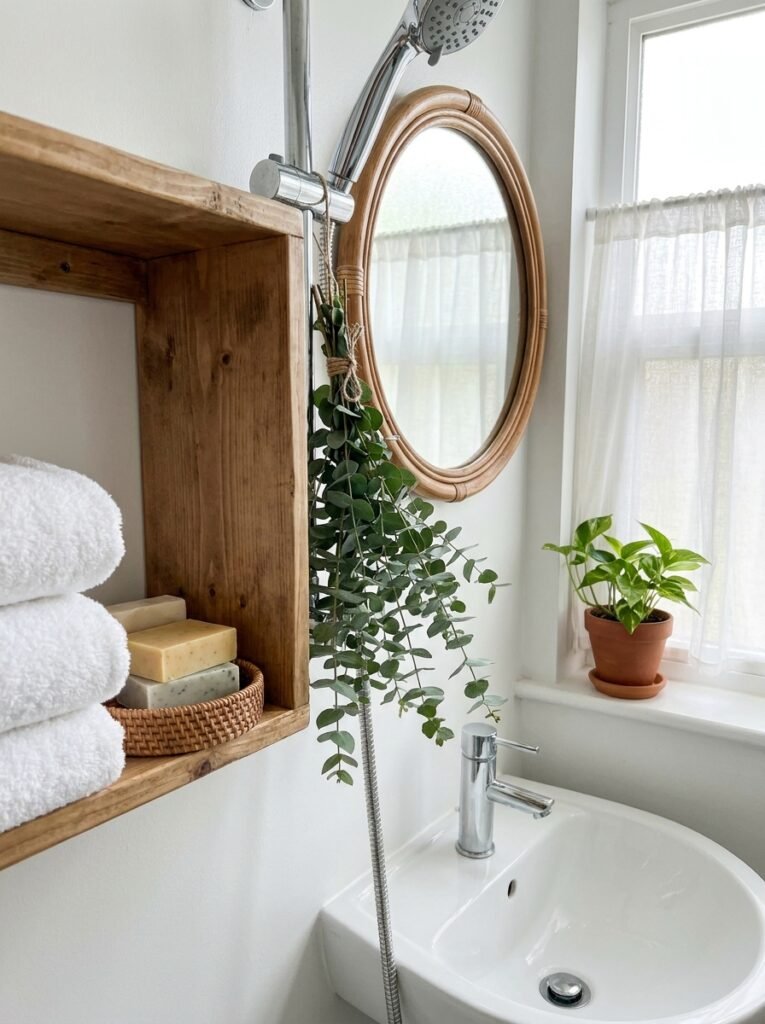
The summer bathroom often gets overlooked in favor of the more visually dramatic rooms, but it has enormous potential. Think about how you want to feel when you step in after a day in the sun — cooled, refreshed, restored. Your bathroom design should deliver exactly that feeling.
White towels, always. Not because of any rigid rule, but because a stack of fluffy white towels on an open wooden shelf signals luxury and cleanliness in a way nothing else quite matches. Add a small tray of summer-scented hand soaps — citrus, sea salt, eucalyptus. Hang a eucalyptus bundle from your showerhead; the steam activates the oils and fills the room with the most extraordinary scent.
For the broader design, keep surfaces clear and clean. Add a simple rattan or bamboo mirror if you don’t already have one. A low wooden stool or bench is practical and beautiful. If your bathroom gets any natural light, make the most of it — sheer café curtains instead of heavy blinds, a small windowsill plant that thrives in humidity like a pothos or a peace lily.
—
9. Small Space Summer Interiors: Making Every Square Foot Feel Generous
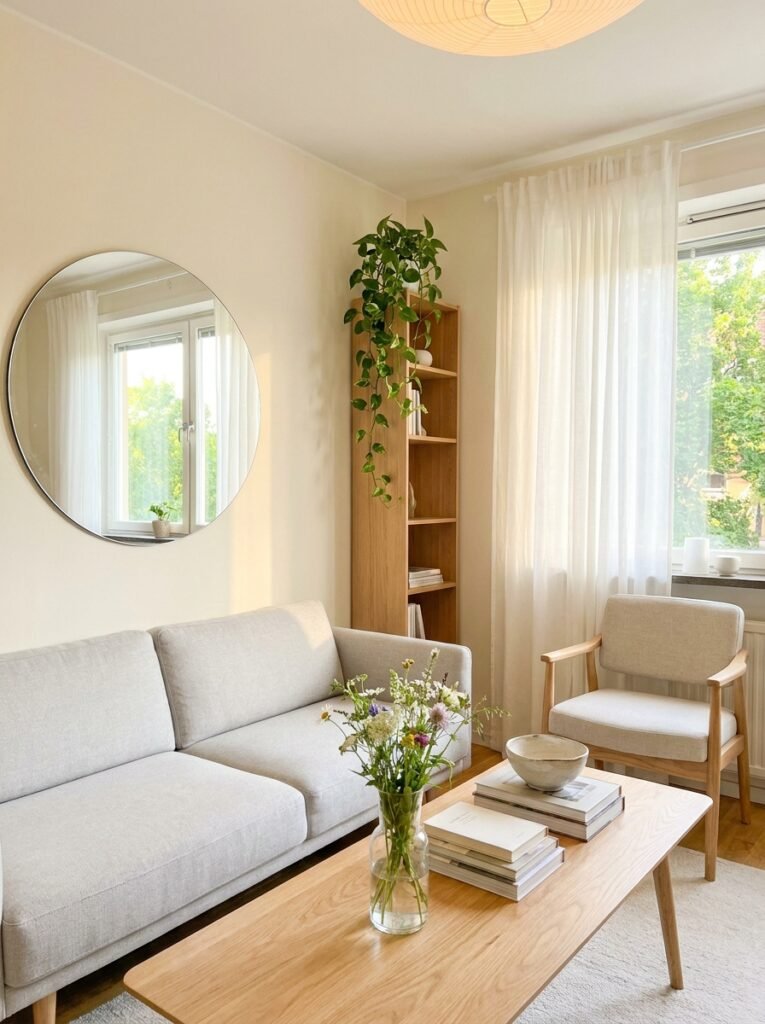
Not every summer house is a sprawling beach estate, and honestly, some of the most beautiful summer interiors exist in small, intimate spaces — a studio apartment flooded with light, a cozy cottage with low ceilings, a converted garage with character to spare. Small spaces don’t need to feel cramped; they need to feel curated.
The rules for small summer spaces are straightforward: keep the color palette light and cohesive, choose furniture with legs (visual breathing room underneath is crucial), use mirrors strategically, avoid heavy curtains, and resist the urge to fill every surface. In a small summer interior, every single object earns its place. There is no room for the merely decorative — everything must also be beautiful.
“In a small summer home, simplicity isn’t a compromise — it’s the whole point.”
Vertical space is your best friend. Tall, narrow bookshelves draw the eye upward and make ceilings feel higher. A tall floor lamp in a corner adds warmth without consuming floor space. Hanging plants bring life and greenery without cluttering surfaces.
—
10. Bringing in Botanicals: The Living Elements That Transform Any Room
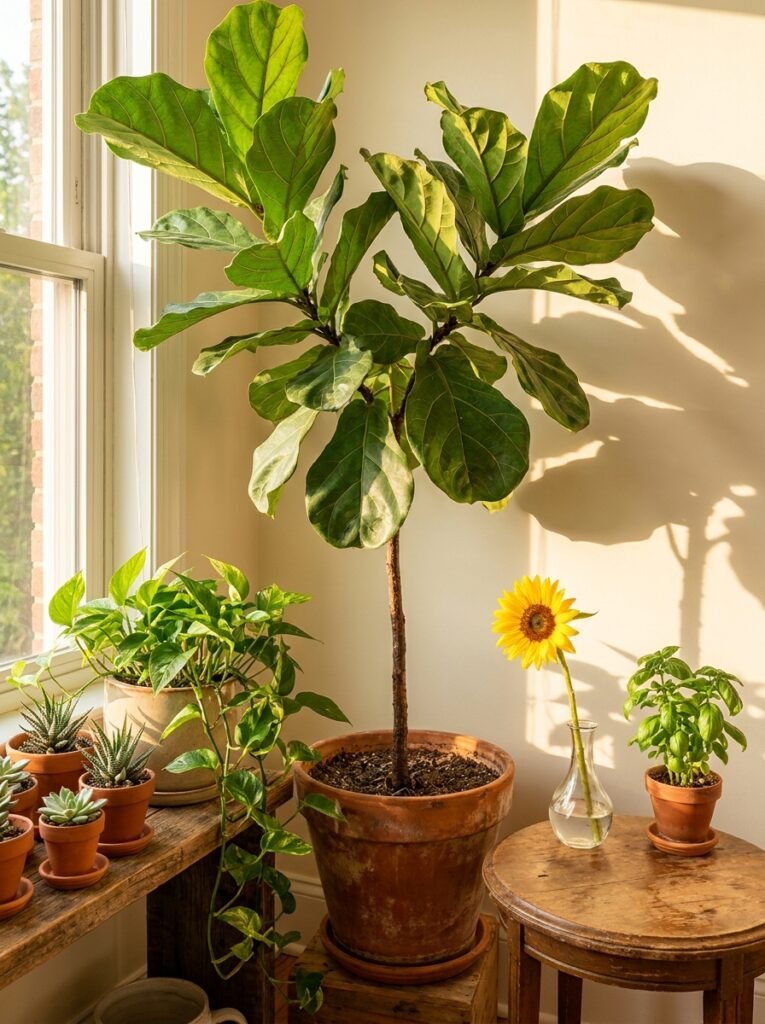
A summer interior without plants is like a summer without thunderstorms — technically fine, but missing something essential. Plants bring life, oxygen, color, and a kind of quiet energy that no other decorating element can replicate. They make a space feel inhabited, cared for, and alive.
For summer interiors, choose plants that communicate ease and abundance: a large fiddle-leaf fig or monstera for a dramatic focal point, trailing pothos or ivy on a bookshelf, a collection of succulents on a sunny windowsill, fresh herbs in the kitchen, a single stem of a seasonal flower in a simple bud vase on the dining table. You don’t need a lot of plants — you need the right ones in the right places.
Rotate your botanicals seasonally. In summer, lean into lush tropical leaves, fresh citrus, and vibrant blooms. Cut flowers from a farmer’s market — sunflowers, zinnias, dahlias — bring a burst of seasonal energy that changes weekly and keeps the interior feeling fresh and connected to the world outside.
—
11. The Art of Summer Entertaining: Designing Your Home for Gathering
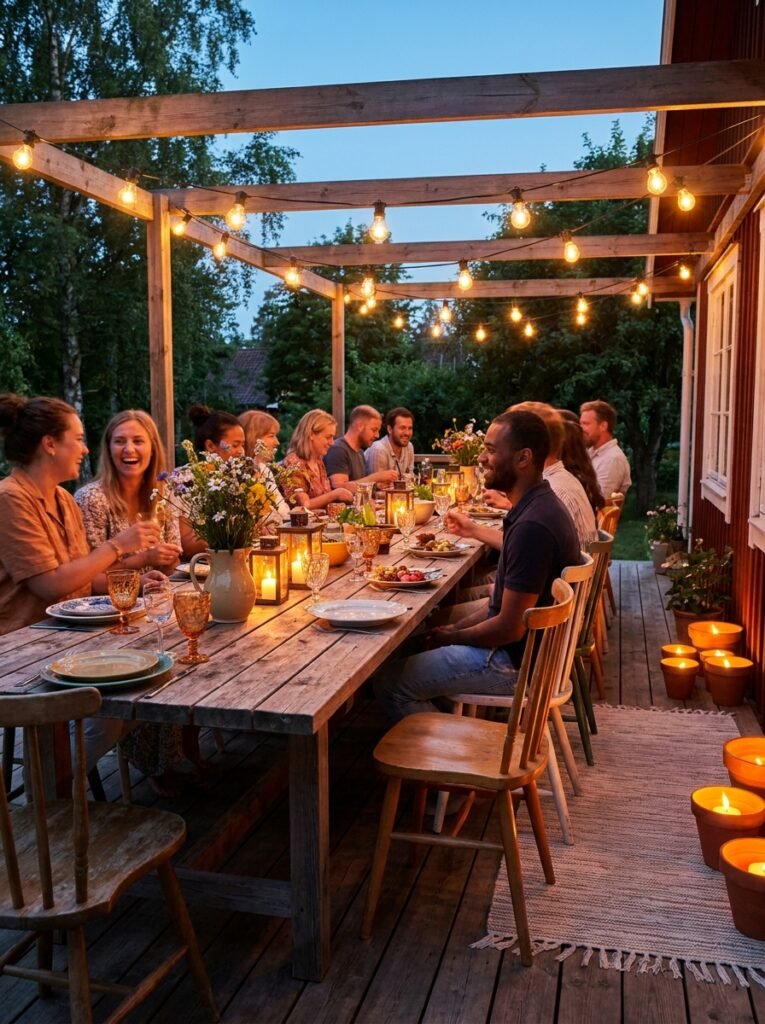
Summer homes are made for people. They’re made for the friends who arrive unannounced, the family dinners that stretch until midnight, the lazy Sunday brunches that turn into afternoon conversations. If your summer house feels like it’s designed for a magazine shoot rather than actual living, something has gone wrong.
Design for gathering intentionally. A large dining table — even a simple one — is one of the best investments a summer home can make. Add mismatched chairs for an eclectic, collected-over-time feel. Keep a collection of simple glassware accessible (not hidden in a cabinet). Create a small bar or drinks station that’s easy to navigate without getting in the way of conversation.
Outdoors, if you have the space, a string of warm lights over a patio table creates an atmosphere that no amount of indoor styling can match. A simple outdoor rug, a few lanterns, some citronella candles in terracotta pots — suddenly, your backyard becomes the room everyone wants to be in.
—
12. The Final Layer: Scent, Sound, and the Invisible Details That Make a House Feel Like Summer
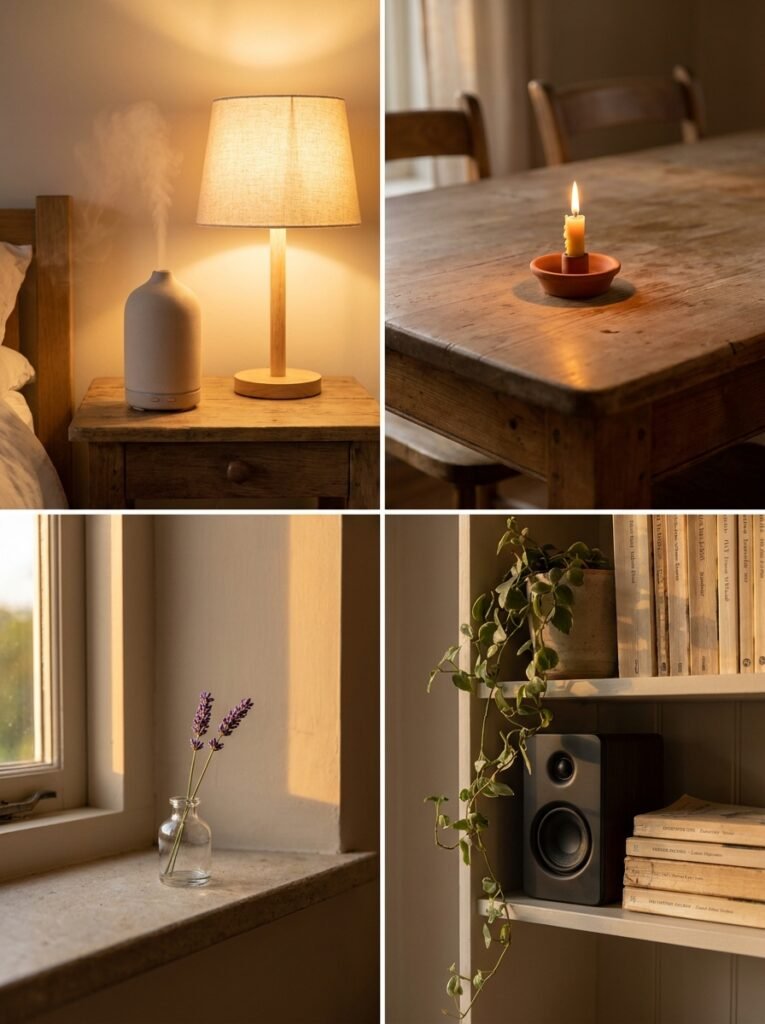
Here’s the secret that most interior design articles don’t tell you: the rooms that you remember — the ones that made you feel something — worked on more than just the visual level. They had a scent. They had a sound. They had an atmosphere that wrapped around you the moment you walked through the door.
For your summer house, think about scent deliberately. A diffuser with a blend of eucalyptus and lemon in the morning. A citrus-scented candle on the dining table for evening meals. Fresh lavender in a small vase on the bathroom windowsill. These are the details that bypass the brain and go straight to the emotional memory — they make your home feel like somewhere, and that somewhere feels like summer.
Sound matters too. A small Bluetooth speaker tucked discreetly on a shelf can fill a room with the right music — something easy and warm, something that doesn’t demand attention but rewards it. And finally, texture underfoot: a cool tile floor in the bathroom, a soft cotton rug in the bedroom, a smooth wooden floor in the living room. Summer is felt as much as it is seen.
—
🌿 How to Keep Your Summer Interior Feeling Fresh All Season Long
The work doesn’t end once you’ve decorated — the best summer interiors are maintained with small, consistent acts of care and attention. Here are five practices that will keep your space feeling genuinely alive and beautiful through every week of the season.
First, rotate your fresh elements weekly. Change out cut flowers, swap your herbs, move a plant that’s not thriving in one spot to another. These small adjustments keep the interior feeling dynamic rather than static.
Second, edit regularly. Summer interiors are at their best when they’re slightly underfurnished — when there’s always a little more space than you strictly need. Once a month, walk through your rooms with fresh eyes and remove one thing from every surface. You’ll be surprised how much better the space breathes.
Third, lean into the season’s materials. In early summer, go fresh and green. By late summer, shift toward warmer golds and richer terracottas. Let the space evolve with the season rather than staying frozen in one single interpretation of “summer.”
Fourth, clean your windows. It sounds mundane, but clean glass dramatically improves the quality of natural light in a room. Do it at the beginning of summer and again midway through — the difference is genuinely noticeable.
Fifth, make the most of morning and evening light. These are the golden hours when your summer interior will look its absolute best. Arrange your routine around them when you can — morning coffee by the window, evening meals where the last light falls.
—
❓ FAQ
Q: What are the best colors for a summer house interior? A: The most timeless summer house color palettes are built on warm whites, soft creams, and sandy neutrals as the primary backdrop, with accent colors drawn from nature — sage green, dusty terracotta, ocean blue, faded coral, or sun-bleached yellow. The key is to keep the palette cohesive and restrained — two or three accent colors, repeated throughout the space in varying tones and textures, create harmony without feeling predictable or overly themed.
Q: How do I make a small summer house feel bigger and more open? A: Light and simplicity are your two most powerful tools in a small summer interior. Keep the color palette light and cohesive throughout, choose furniture with visible legs to create a sense of visual breathing room, use large mirrors to reflect natural light and expand the perceived space, and be ruthless about editing — the fewer objects competing for attention, the more spacious and relaxed the space will feel. Sheer curtains instead of heavy drapes, and keeping floors as clear as possible, also make a significant difference.
Q: What plants work best in a summer house interior? A: The best plants for a summer house interior combine visual impact with practical ease. A fiddle-leaf fig or monstera makes a dramatic statement in a corner with good light. Pothos and trailing ivy are forgiving and beautiful on shelves. A collection of succulents thrives on sunny windowsills with minimal watering. In the kitchen, fresh herbs like basil, mint, and rosemary are both decorative and useful. And for something that changes weekly and keeps the interior connected to the season, fresh-cut flowers from a local market — sunflowers, zinnias, or dahlias — are simply unbeatable.
—
💭 Final Thought
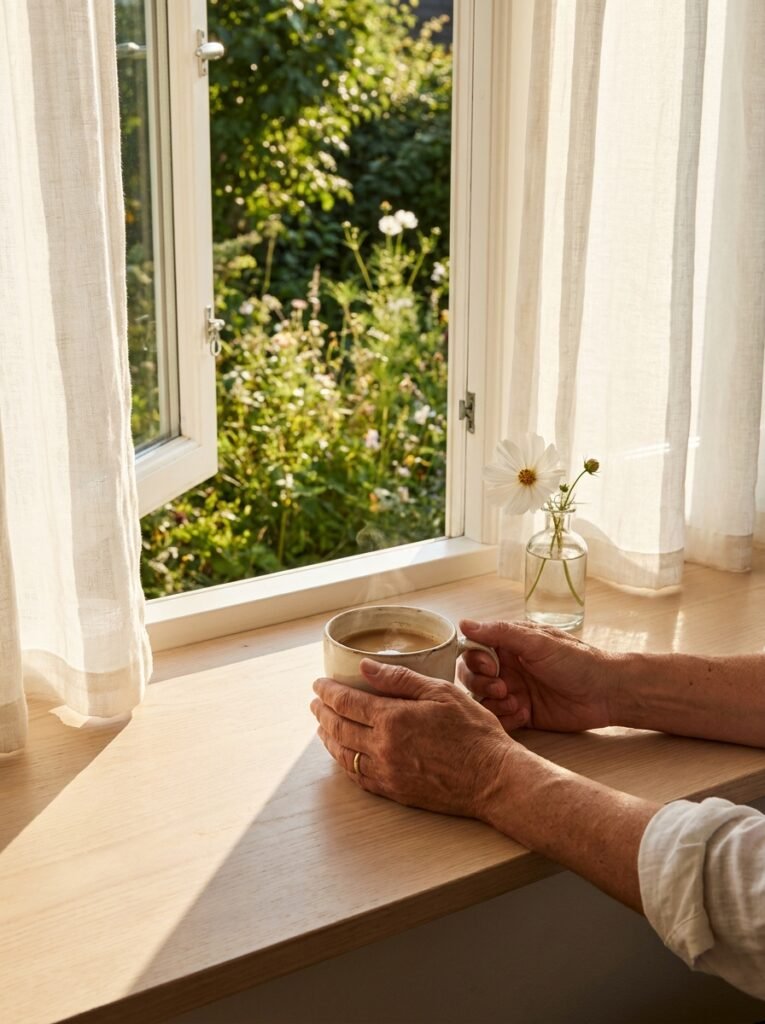
A summer house interior, at its very best, is not about perfection — it’s about presence. It’s about creating a space that slows you down long enough to notice the light changing on the wall, the smell of something good cooking, the sound of laughter drifting in from outside. The most beautiful summer home is not the most expensive or the most meticulously styled; it’s the one that makes everyone inside it feel genuinely, unhurriedly at home.
So as you think about your own space — whether it’s a cottage by the sea, an apartment in the city, or simply a corner of your living room you want to transform — ask yourself this: what would it feel like to live in a home that feels like summer every single day?