
Cool Interiors That Feel Like a Deep Breath: How to Design a Home That Actually Calms You Down
There’s a specific feeling you get when you walk into a beautifully cool interior — not cold, not sterile, but calm. Like the visual noise of the world outside just… stops. If you’ve been craving that feeling in your own home, this guide is for you.
—
1. What “Cool Interior” Actually Means (And It’s Not What You Think)
When most people hear “cool interior,” they picture stark white walls, chrome fixtures, and furniture that looks better in a magazine than in real life. But that’s a narrow interpretation — and honestly, a slightly exhausting one. A truly cool interior is about temperature of feeling, not temperature of color. It’s the visual equivalent of a glass of cold water on a warm afternoon.
Cool interiors are spaces that feel composed. They don’t shout. They don’t compete with your thoughts. Instead, they hold you — quietly, confidently, without a single unnecessary detail screaming for attention. Think muted blues, sage greens, soft grays, and crisp whites layered with natural textures like linen, stone, rattan, and raw wood. Think negative space used intentionally, like silence in a good conversation.
The emotional effect of a cool interior is deeply psychological. Research in color psychology consistently shows that blue and green tones lower heart rate and reduce feelings of anxiety. When your home carries that visual calm, your nervous system genuinely responds. You don’t just think the space feels peaceful — your body believes it.
“A cool interior isn’t about removing warmth — it’s about creating room to breathe.”
—
2. The Color Palette That Makes Any Room Feel Effortlessly Cool

Color is the single most powerful tool in your design arsenal, and for cool interiors, it’s everything. The secret isn’t picking one color and painting every wall — it’s about building a layered, tonal palette that feels cohesive without feeling monotonous.
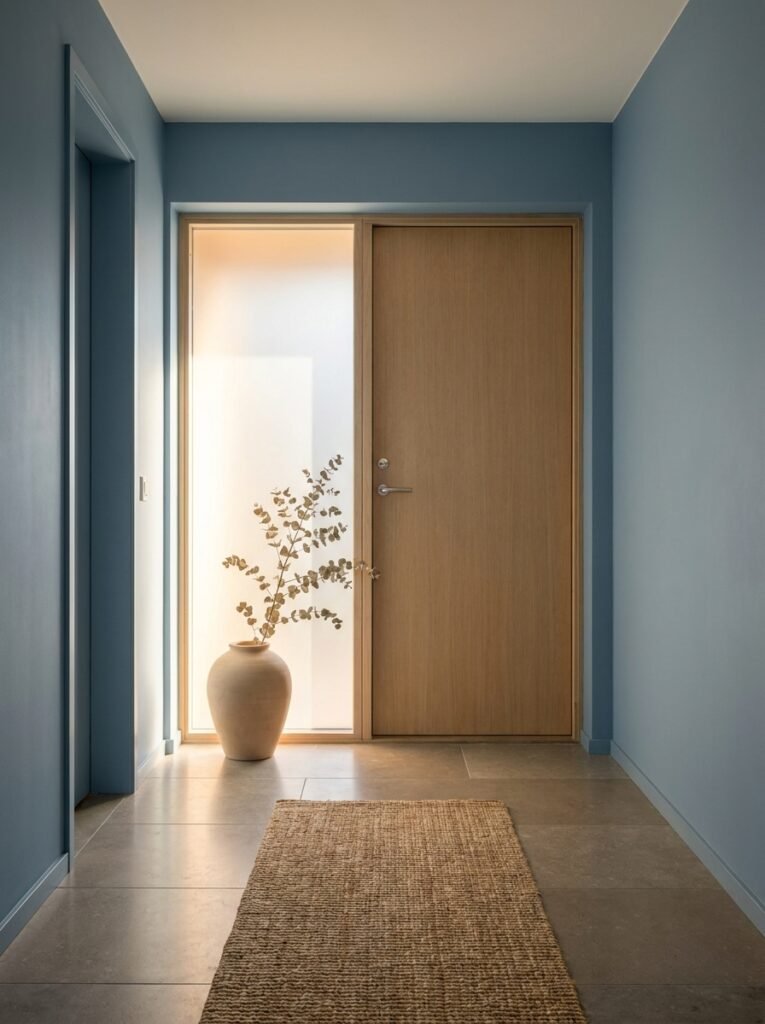
Start with a base of soft white or warm off-white. Not bright, blinding white — something like Benjamin Moore’s “White Dove” or Sherwin-Williams “Alabaster.” These shades carry warmth in their undertones so the cool colors you layer on top don’t tip into clinical territory. From there, pull in muted blues — dusty slate, faded denim, or the kind of blue-gray that reminds you of an overcast morning over the ocean.
Sage green is having its long-deserved moment, and for good reason. It reads cool and fresh without feeling stark, and it pairs beautifully with natural wood and terracotta accents. If you want to add depth, reach for charcoal or deep navy as accent colors rather than black. They carry the same grounding quality without the visual weight that full black sometimes imposes in a space.
The key is variation in value — having light, medium, and dark tones of your chosen cool hues represented somewhere in the room. A pale blue wall, a medium sage throw, a deep navy cushion. That layering is what makes a room feel designed rather than just decorated.
—
3. The Furniture Choices That Anchor a Cool, Calm Space
Furniture in a cool interior does a specific job — it grounds the room without overwhelming it. Think clean lines, low profiles, and natural materials. Overstuffed, heavily ornate pieces tend to fight against the visual calm you’re trying to build. That doesn’t mean minimalism is mandatory, but it does mean being intentional.
Sofas in soft linen or bouclé in shades of cream, oatmeal, or pale gray are a natural starting point. They’re inviting without being loud. Wooden furniture in light oak, ash, or bleached teak keeps things airy while adding the organic warmth that stops a cool palette from feeling too remote.
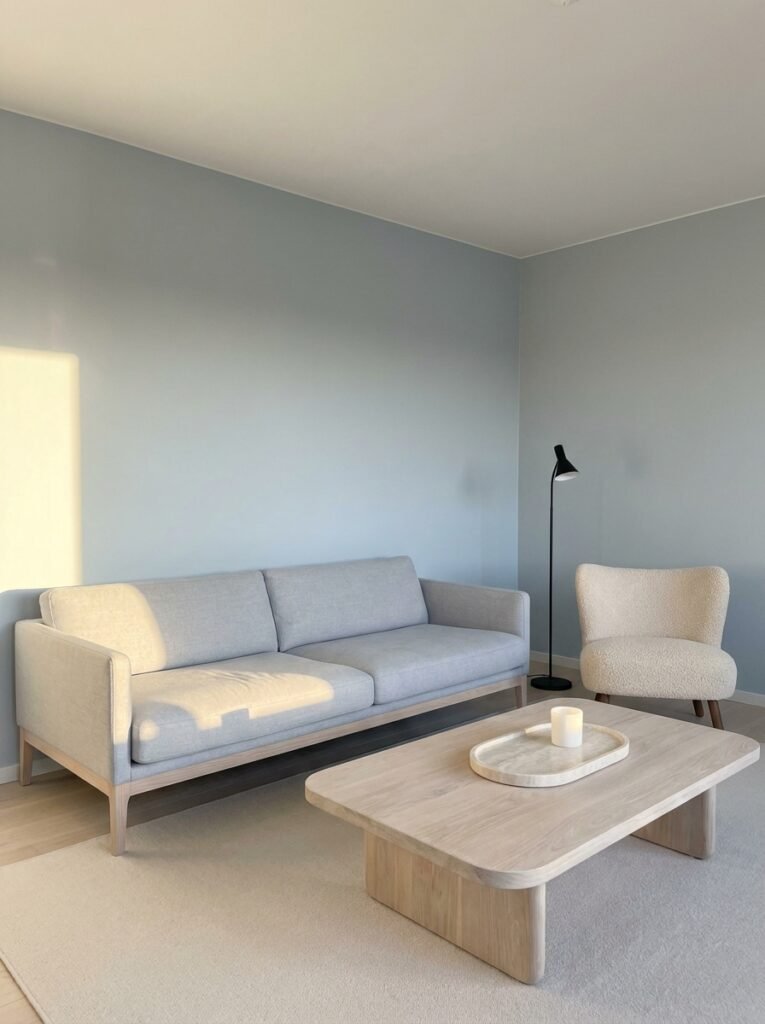
One piece of advice that changes everything: keep your largest furniture pieces close in tone to your walls. When your sofa and your walls are too contrasting, the eye jumps back and forth and the room feels busier than it is. A pale gray sofa against a soft blue-gray wall creates a seamless visual flow — and that flow is what gives a space its sense of calm.
—
4. The Magic of Natural Light in Cool Interiors
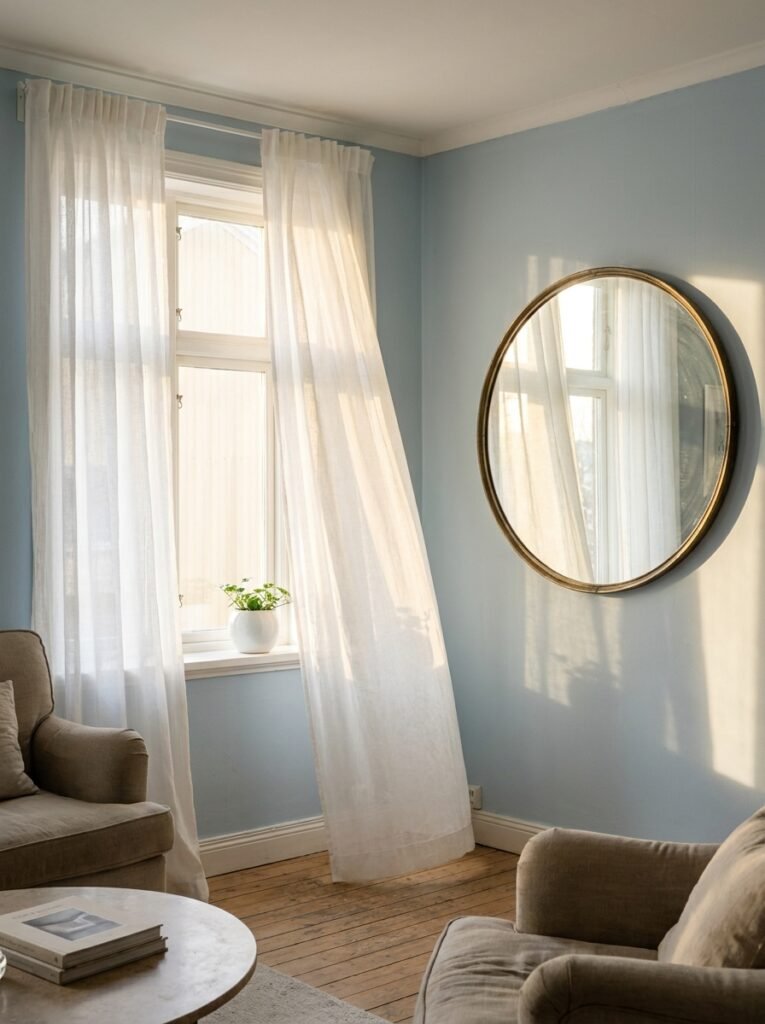
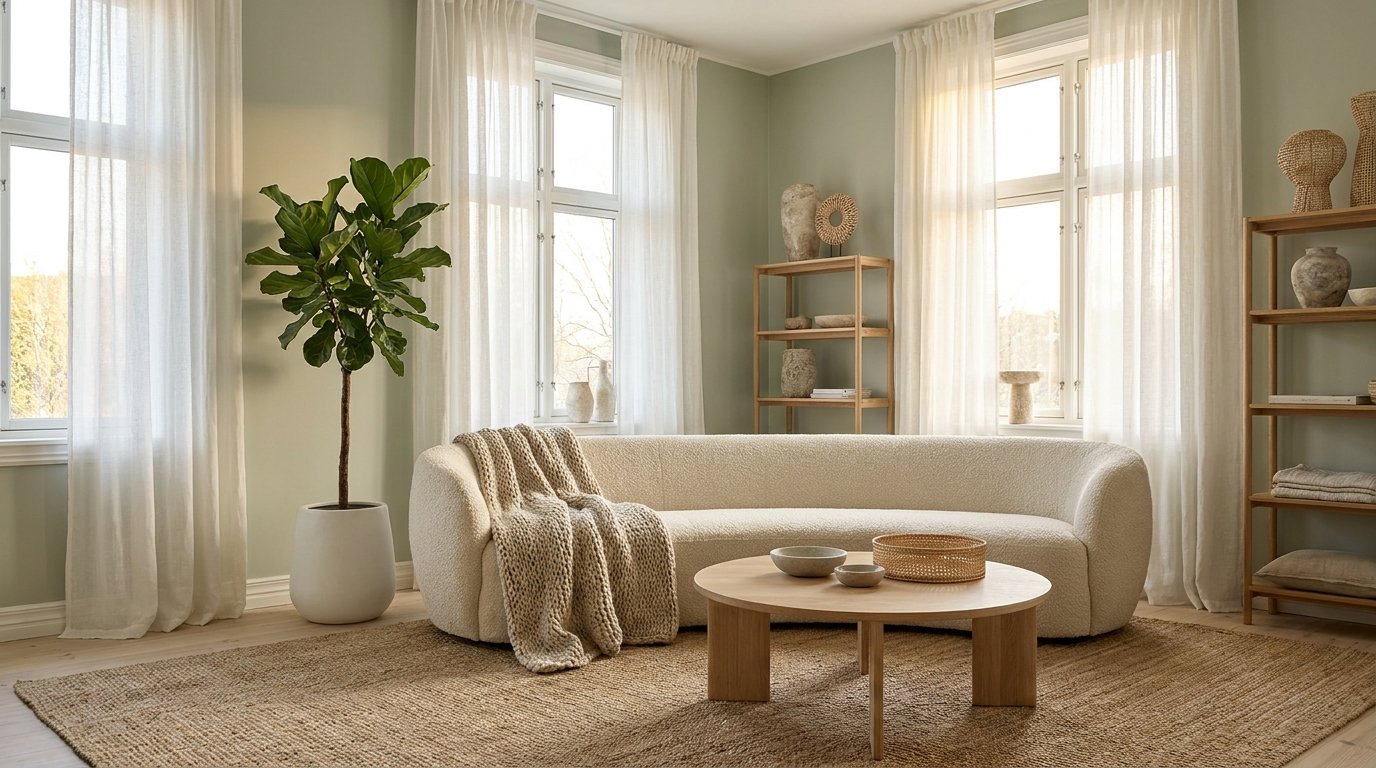
Imagine walking into your living room on a quiet Sunday morning. The curtains are light — gauzy white linen, slightly sheer — and the early sun is filtering through them in that golden, diffused way that makes everything look slightly unreal. That light hits your pale walls and bounces softly. The room feels cool and bright at the same time, like standing in a shaded garden on a summer day.
That is the intersection of natural light and a cool palette, and it’s one of the most beautiful things you can create in a home. Natural light doesn’t wash out cool colors — it elevates them. A dusty blue wall in a dim room looks heavy. That same wall with afternoon light pouring across it looks luminous.
To maximize this effect, opt for sheer window treatments over heavy drapes. Use mirrors strategically — a large mirror opposite a window essentially doubles your light source. And keep windowsills clear, not cluttered with objects that block light from reaching the walls.
—
5. Texture Is What Saves Cool Interiors From Feeling Cold
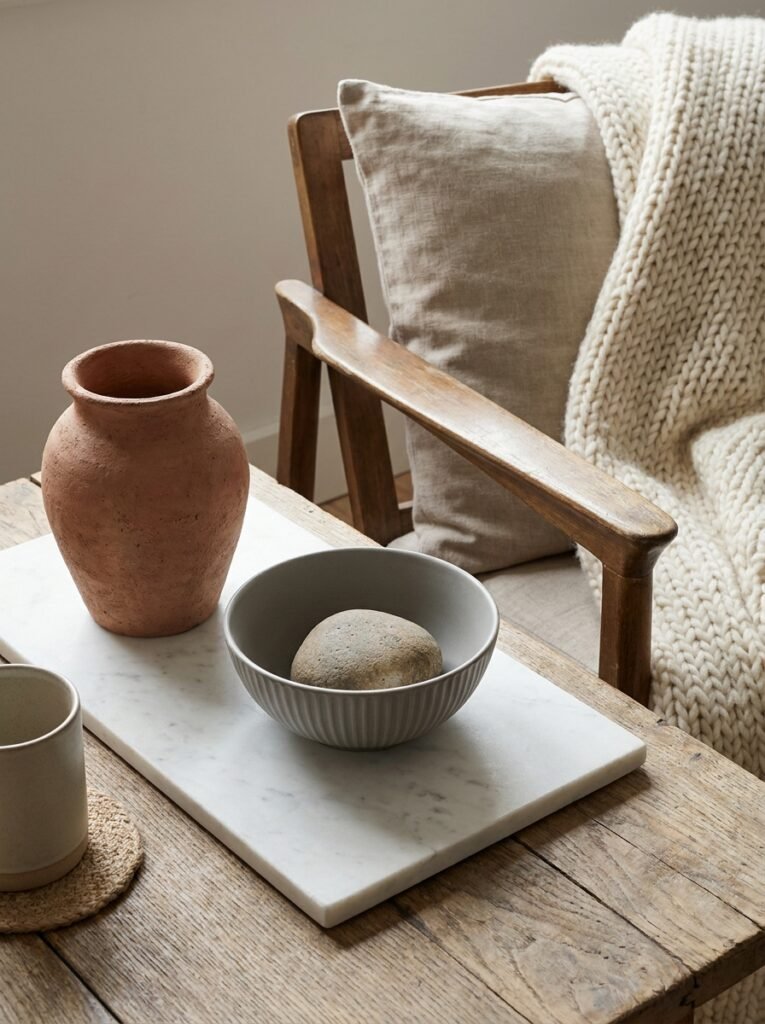
This is perhaps the most important design truth for anyone working with a cool palette: texture is your warmth. When you’re working with a restrained color scheme, the richness of the space has to come from how things feel rather than how bright they are.
Layer textures deliberately — rough and smooth, matte and sheen, hard and soft. A stone countertop next to a brushed linen cushion. A ribbed ceramic vase on a smooth marble shelf. A chunky knit throw draped over a sleek wooden chair. These contrasts create visual and tactile interest that keeps the room from reading as flat or cold.
Natural materials are especially important here. Rattan, cane, jute, raw linen, terracotta, unglazed ceramics — these materials carry an inherent warmth in their imperfection. They are nature’s answer to the perfectionism of cool tones. When you bring them in, the room breathes. It feels lived-in and intentional at the same time.
“Texture is the secret language of a well-designed room — it says everything color alone cannot.”
—
6. How Small Rooms Can Pull Off a Cool Interior Without Shrinking
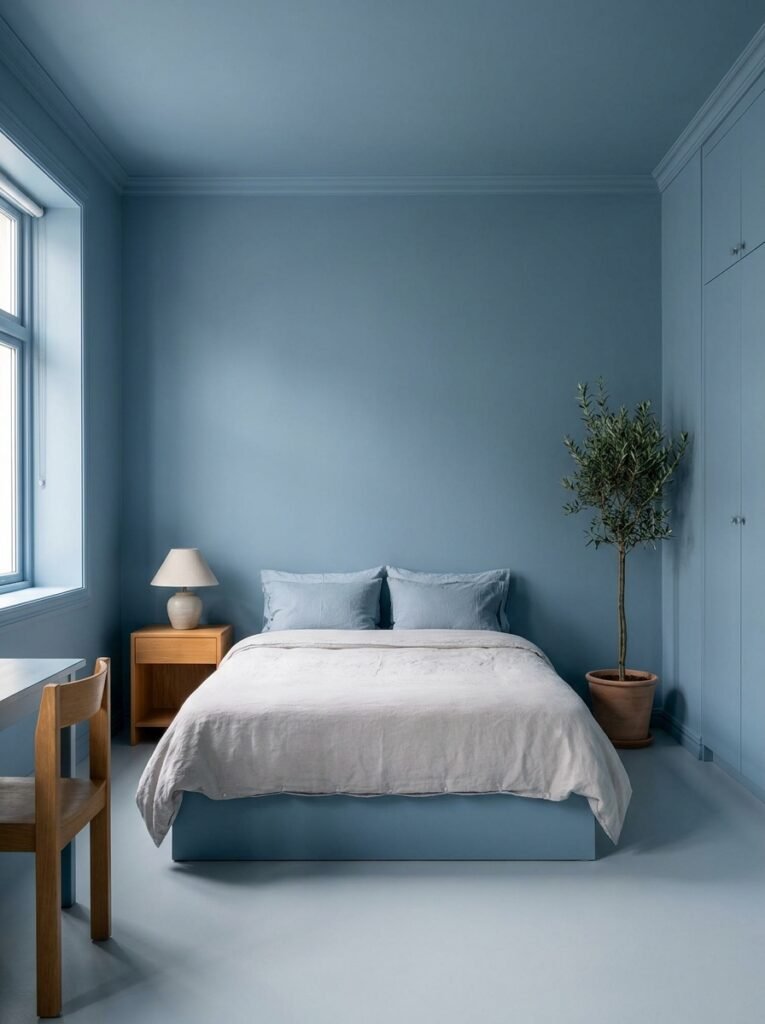
There’s a persistent myth that small rooms should avoid cool, dark, or deep tones because they’ll make the space feel smaller. In reality, the relationship between color and perceived space is far more nuanced than that. A small room with a cohesive cool palette — where walls, trim, and furnishings all exist in the same tonal family — can feel remarkably spacious.
The trick is tonal dressing. When everything in a small room exists within the same color family, the eye doesn’t have to work as hard to process contrasting elements. The space feels unified and — paradoxically — more expansive. A small bedroom painted in dusty blue, furnished with pale linen and light wood, with the trim in the same blue as the walls, will feel more serene and open than the same room with bright white walls and mismatched furniture.
Scale matters too. In a smaller room, choose furniture that’s appropriately scaled — pieces that leave breathing room between them. Negative space isn’t wasted space; it’s the pause that makes the room feel intentional.
—
7. The Art of Styling Shelves and Surfaces in a Cool Interior
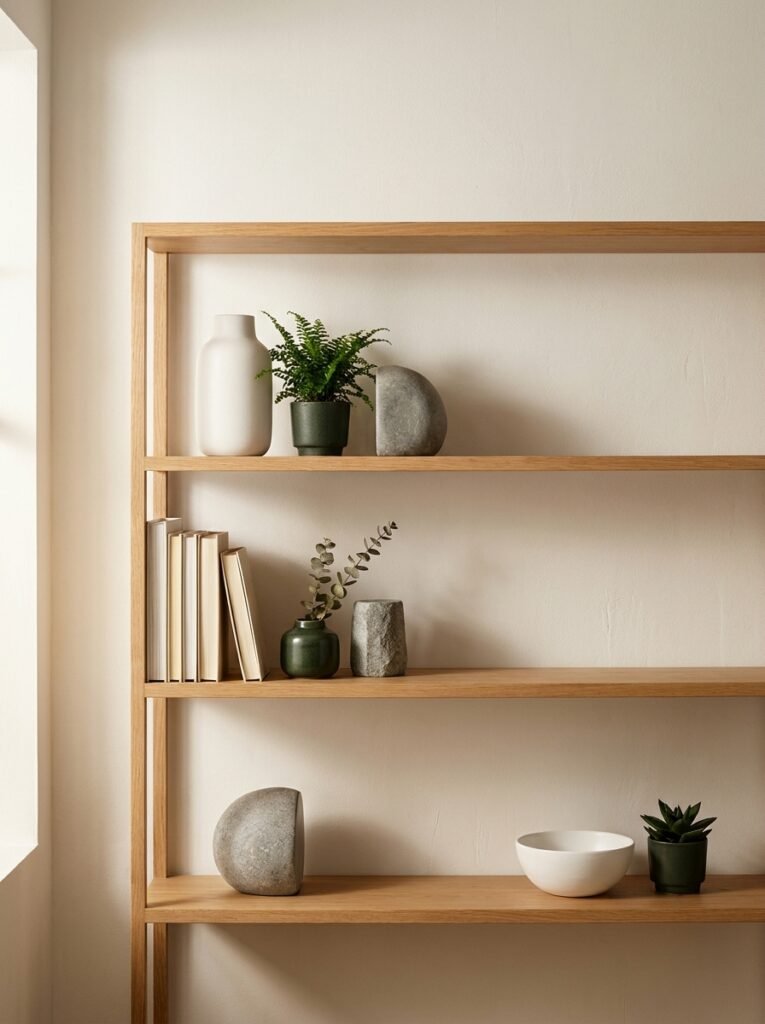
Shelves are where many cool interiors go wrong. They become cluttered, chaotic, and they undo all the careful work done with paint and furniture. Thoughtful shelf styling is an art form — and it’s worth learning.
In a cool interior, less is always more. Aim for groupings of three, varying in height. Choose objects in your cool palette — white ceramics, dark green plants, natural wood objects, stone bookends. Leave gaps of empty space between groupings. Those gaps are as important as the objects themselves; they let the eye rest.
Books, if you display them, can be turned spine-in for a more uniform look — a trick that’s particularly effective in a cool, composed space. Plants in muted terracotta or white pots add life without visual noise.
—
8. Lighting Layers That Transform a Cool Space After Dark
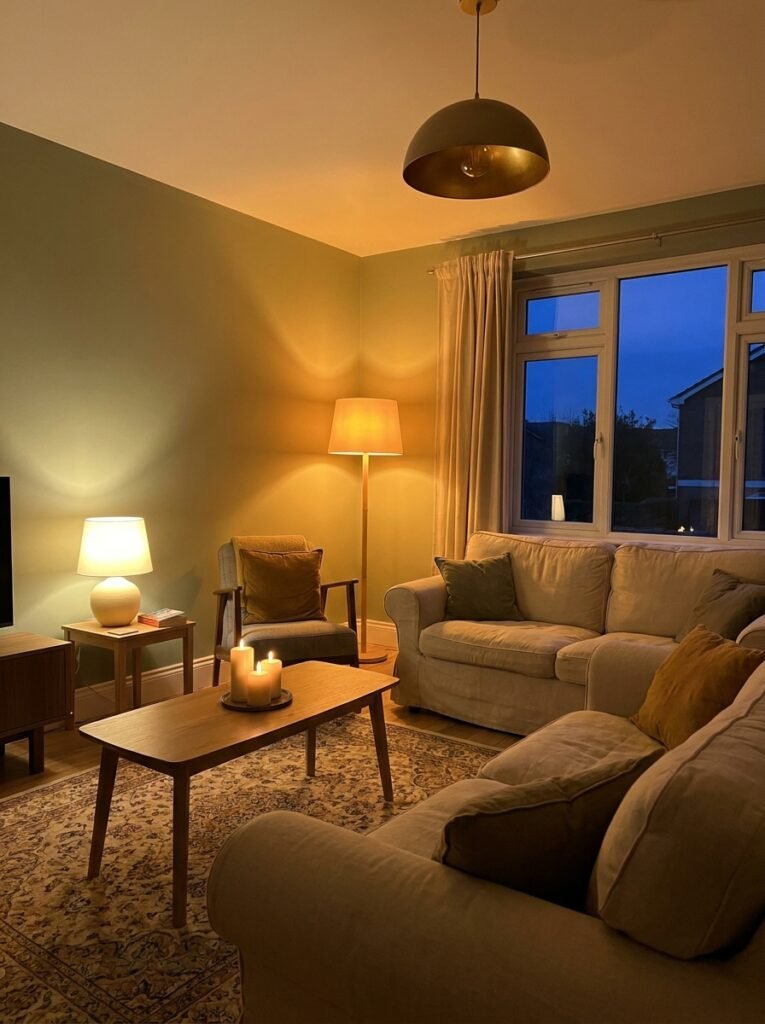
A cool interior in daylight is beautiful. But the real test of a well-designed space is how it feels after the sun goes down. Natural light is gone, and suddenly your lighting choices become the entire atmosphere of the room.
Cool interiors need warm-toned artificial light — this is non-negotiable. If your light bulbs are too cool or too bright, they strip the warmth from your palette entirely and the room starts to feel like an office or a hospital. Choose bulbs in the 2700K–3000K range (labeled “warm white” on the packaging). That golden light makes cool tones feel inhabitable and deeply inviting.
Layer your lighting: overhead for function, floor lamps for ambiance, table lamps for intimacy. Candles — real or LED — add a quality of warmth that no electric light fully replicates. A cool interior bathed in warm, layered lighting at night is one of the most genuinely beautiful things you can create in a home.
—
9. The Role of Plants and Botanicals in a Cool Interior
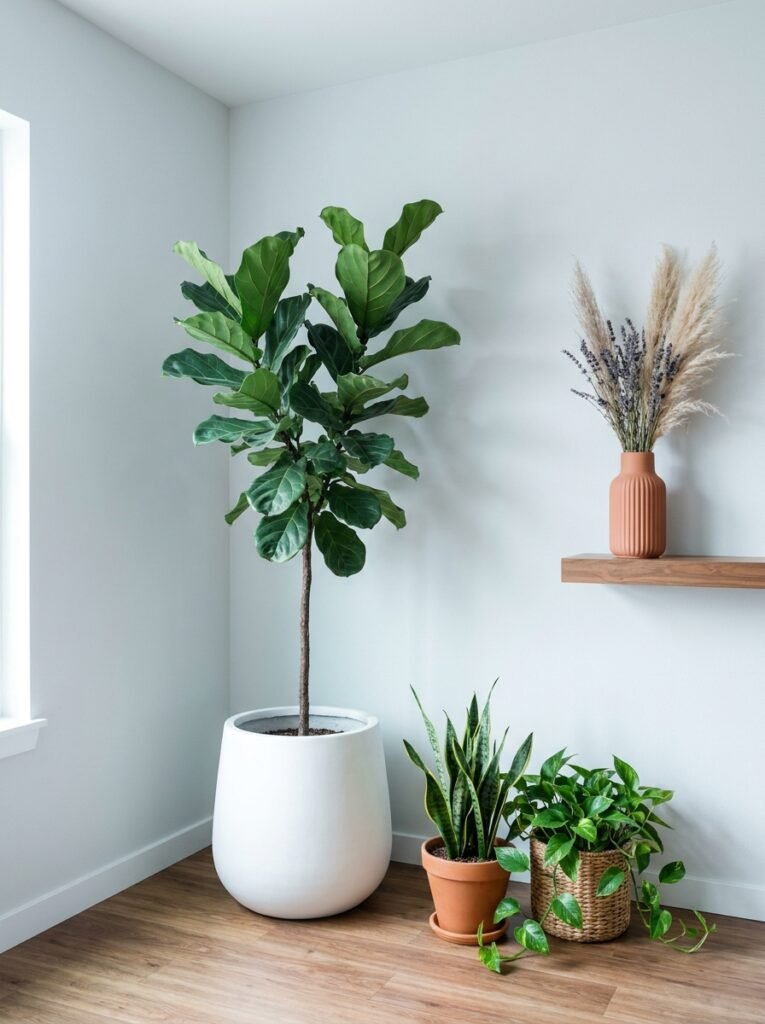
Plants are the living punctuation of an interior — and in cool-toned spaces, they provide something irreplaceable: the organic, unruly beauty of nature. A perfect, composed room without a single plant can tip into looking like a showroom. Plants bring in the element of life.
For cool interiors, choose plants with graphic, architectural quality. Fiddle leaf figs, olive trees, monstera, and snake plants all have a sculptural presence that suits composed, intentional spaces. Large statement plants in corners ground the room and draw the eye upward, making ceilings feel higher.
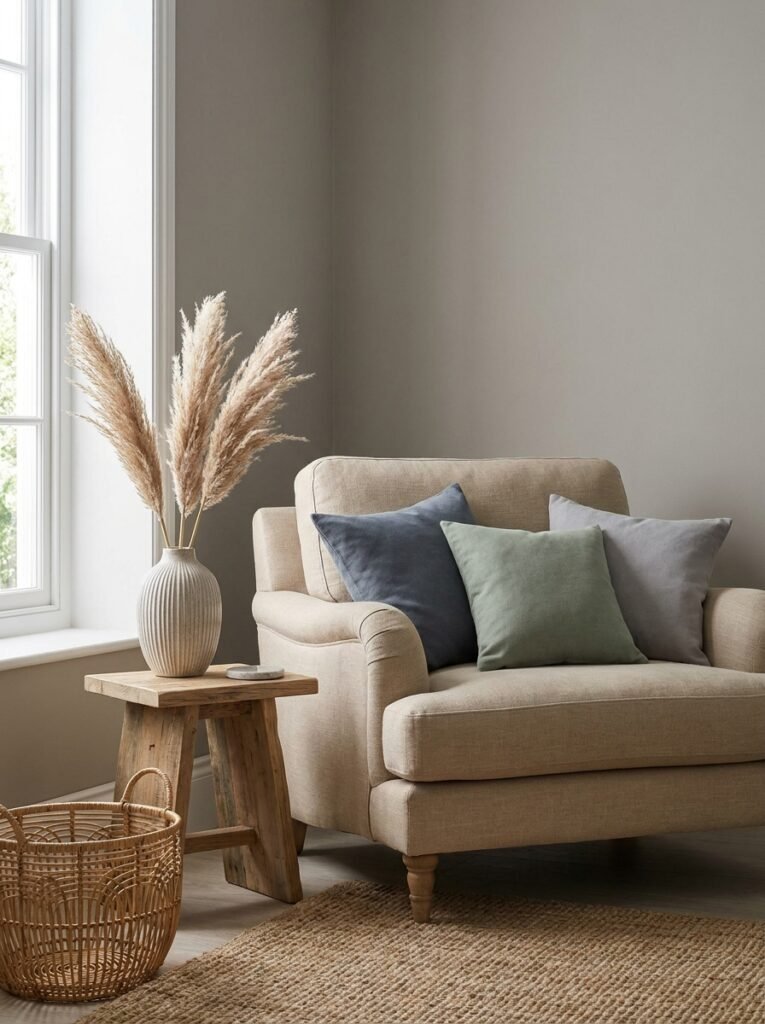
For smaller botanicals, clustering three or five together on a shelf or table creates more impact than dotting them individually around the room. Dried botanicals — pampas grass, eucalyptus, dried lavender — are particularly well-suited to cool interiors; their muted, dusty tones sit naturally within a restrained palette.
“A room with plants is a room that’s still alive — and that’s the difference between a space that’s designed and a space that’s felt.”
—
10. Cool Kitchen Interiors: Where Calm Meets Functionality
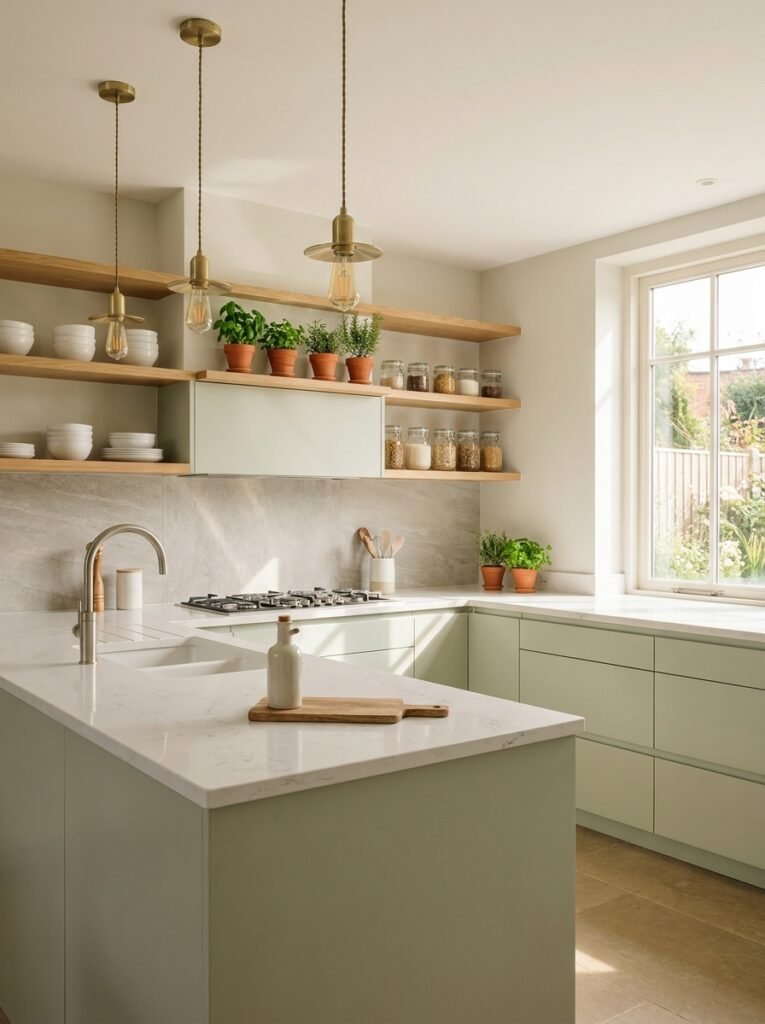
The kitchen is the heart of the home — which makes it one of the most rewarding and challenging rooms to design. A cool kitchen feels clean, functional, and deeply beautiful all at once. Imagine pale sage green cabinetry, white marble or quartz countertops, brushed brass or matte black hardware, and open shelving styled with white ceramics and small potted herbs.
Cool kitchens work beautifully with flat-front cabinetry — the clean, handle-free or minimal-handle style that reads as modern without being cold. Paired with natural stone backsplashes, warm wood open shelving, and pendant lighting in antique brass or aged bronze, this style achieves that rare thing: a kitchen that feels both effortlessly cool and genuinely warm.
Don’t underestimate the power of kitchen organization in maintaining the visual calm. Decant pantry staples into uniform glass or ceramic containers. Keep countertops clear of everything except the one or two items you use daily and love the look of. The restraint pays visual dividends every single time you walk into the room.
—
11. Cool Bedroom Design: Building a Space That Actually Lets You Rest
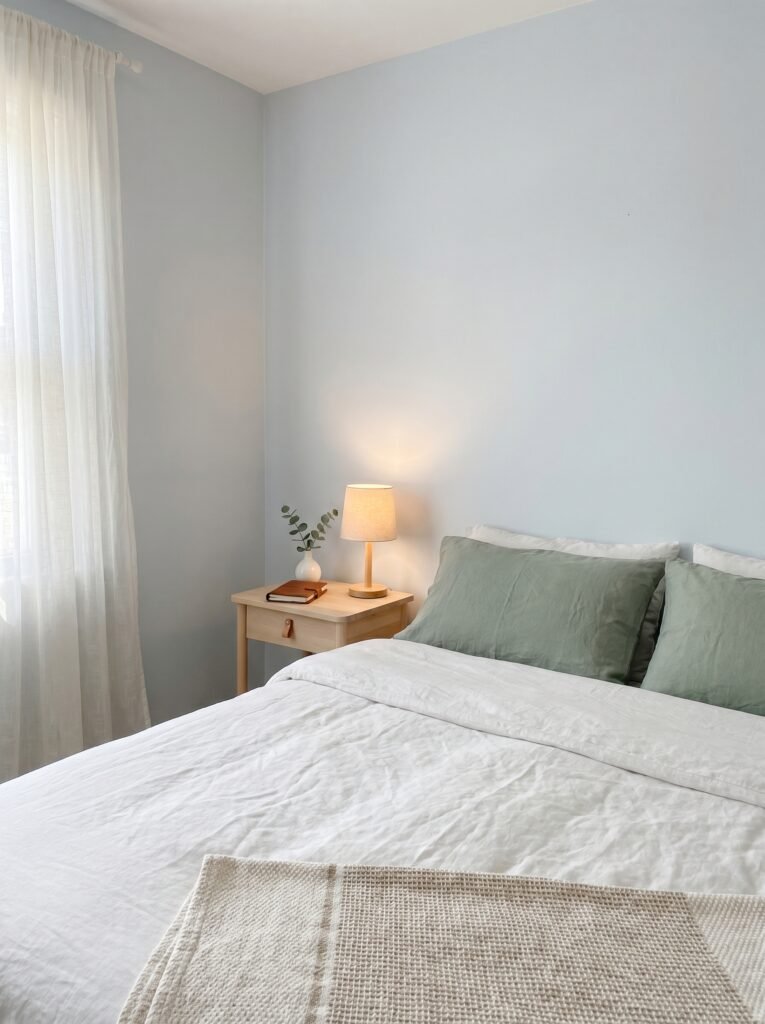
Your bedroom should be the most cool, calm room in your home — not just visually, but physiologically. Research suggests that sleeping in a room decorated with cool, muted tones can improve sleep quality, likely because the palette cues the nervous system toward a state of rest.
For cool bedroom design, start with bedding. This is your largest textile surface and carries enormous visual weight. Soft white or oatmeal linen duvet covers, layered with muted blue or sage pillowcases, create a bed that looks like an invitation. Layer a textured throw at the foot — chunky knit or woven cotton — for depth.
Keep nightstands simple and intentional. A lamp, a small plant or candle, one or two personal objects. The bedroom is not the place for clutter, even beautiful clutter. The goal is visual quiet — a space the brain registers as safe and calm the moment you enter.
—
12. Bringing It All Together: The Feeling a Cool Interior Creates
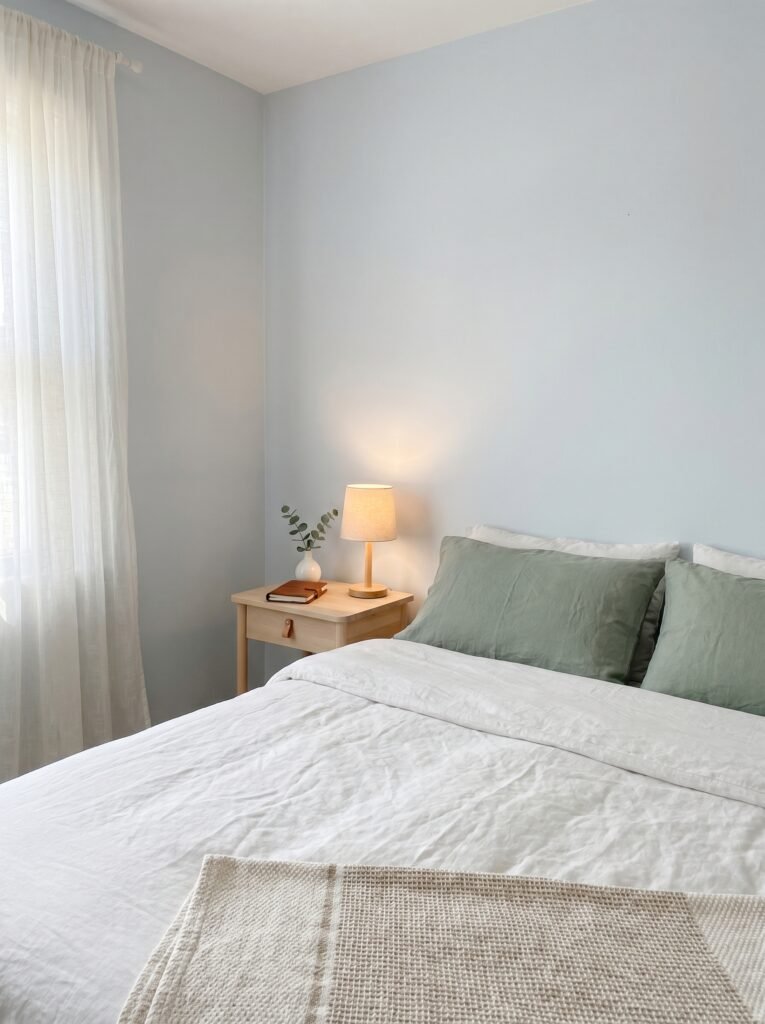
At the end of every design decision — every paint color chosen, every textile selected, every piece of furniture placed — what you’re really building is a feeling. Cool interiors, when done with intention, create a feeling that is increasingly rare in modern life: genuine calm.
We live in a world of visual overload. Screens, noise, stimulation at every turn. The home has the potential to be the antidote to all of that — a place where the visual temperature drops, the pace slows, and something in you unclenches. A cool interior isn’t about being trendy or Pinterest-worthy (though it certainly achieves both). It’s about creating a space that supports your actual life — your rest, your creativity, your relationships, your quiet moments.
Every decision in a cool interior is a decision in favor of calm. And that, more than any specific color or furniture choice, is what makes these spaces so profoundly compelling.
—
🌿 How to Take Care of Your Cool Interior
Maintaining the calm of a cool interior is an ongoing practice, not a one-time project. Think of it like tending a garden — small, consistent attention keeps it beautiful.
Declutter seasonally. Even the most beautifully designed space loses its visual calm when objects accumulate. Every few months, walk through each room with fresh eyes and remove anything that no longer serves the space’s intention.
Clean surfaces regularly and with care. Cool interiors rely on clean lines and uncluttered surfaces — a dusty marble shelf or fingerprinted mirror disrupts the visual peace immediately. A weekly wipe-down of key surfaces costs minutes and preserves everything.
Refresh textiles with the seasons. Swapping a heavier linen throw for a lighter one in summer, or changing cushion covers from pale blue to deeper sage in autumn, keeps the space feeling alive and intentional without requiring a full redesign.
Protect your light. Keep windows clean, keep sills clear, and periodically check that your light bulb temperatures are still in the warm range — they can be replaced over time with different bulbs that shift the room’s feel.
Trust your instincts. The best design advice is ultimately this: if you walk into a room and something feels slightly off, it probably is. Cool interiors are sensitive to imbalance — one object that’s too large, too bright, or too busy can disrupt the whole. Trust what your eye tells you.
—
❓ FAQ
Q: Can I create a cool interior on a budget? A: Absolutely. The most impactful change you can make is paint, which is relatively inexpensive and completely transforms a room. Beyond that, focus on textiles — new cushion covers, a linen throw, or sheer curtains in your palette can shift the mood of a space for very little money. Thrift stores and secondhand shops are excellent sources for the ceramic, woven, and wooden objects that populate cool interiors so naturally.
Q: Are cool interiors suitable for family homes with children? A: Yes — and perhaps more so than people expect. A calm, visually quiet space has a genuinely soothing effect on children too. The key is choosing durable, easy-clean materials (washable linen slipcovers, sealed stone surfaces, wipeable paint finishes) so the aesthetic can survive real family life without requiring constant maintenance.
Q: How do I keep a cool interior from feeling impersonal or cold? A: This is the most common concern, and the answer lies in layering warmth through texture and living elements. Ensure you have natural materials present — wood, stone, linen, rattan. Add real plants. Display a small selection of meaningful personal objects. Use warm-toned artificial lighting in the evenings. These elements work together to give the space a soul, and that’s what separates a cool interior that feels like a home from one that feels like a hotel lobby.
—
💭 Final Thought
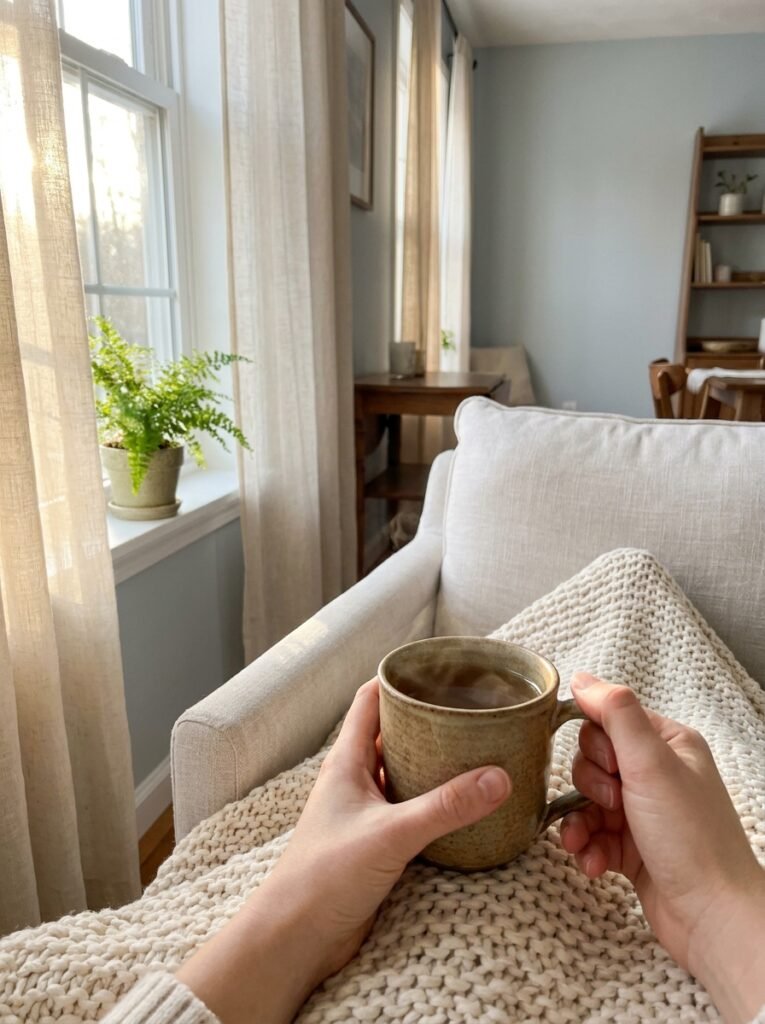
A cool interior is really a love letter to yourself — a daily reminder that your home can be a place of genuine rest in a world that rarely stops moving. It doesn’t require a big budget, a complete renovation, or a design degree. It requires intention, patience, and a willingness to choose calm over clutter, again and again.
So here’s the question worth sitting with: what would it feel like to walk into your home at the end of a hard day and have the space itself meet you with stillness?