
Goth House Interior: How to Design a Dark, Dramatic Home That Feels Like Pure Magic
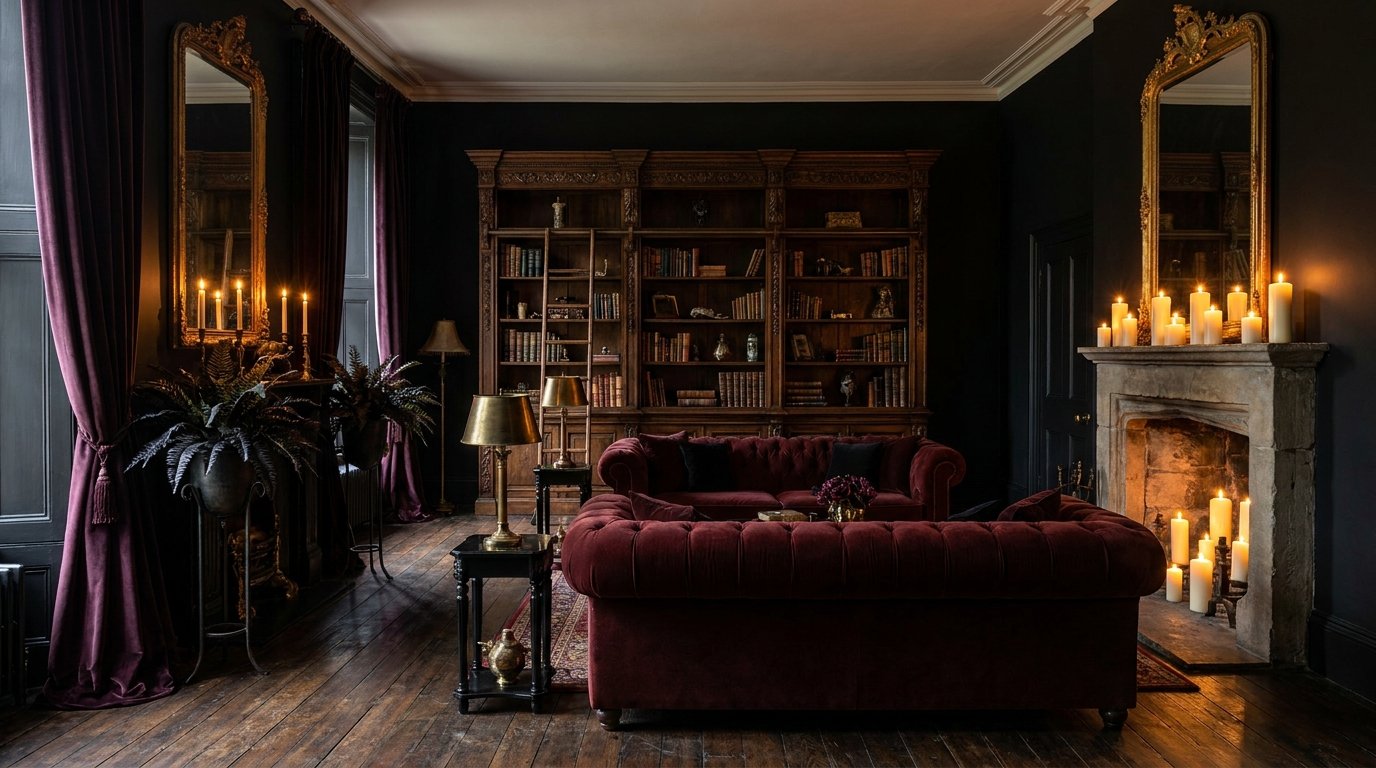
There’s a moment — maybe you’ve had it — when you walk into a room draped in deep velvet, lit by the warm flicker of candlelight, surrounded by dark wood and black iron accents, and you feel something unexpected: home. Goth house interior design isn’t about shock value or theatrical excess. It’s about creating a space that feels deeply intentional, emotionally layered, and unapologetically you.
—
1. What “Goth Interior Design” Actually Means (It’s Not What You Think)
Let’s clear something up right away. A goth house interior is not a Halloween store frozen in time. It’s not cheap plastic skulls and orange string lights left up past October. True goth interior design is rooted in a rich aesthetic tradition that borrows from Victorian architecture, Gothic revival art, Romantic era poetry, and even the quiet drama of Baroque painting.
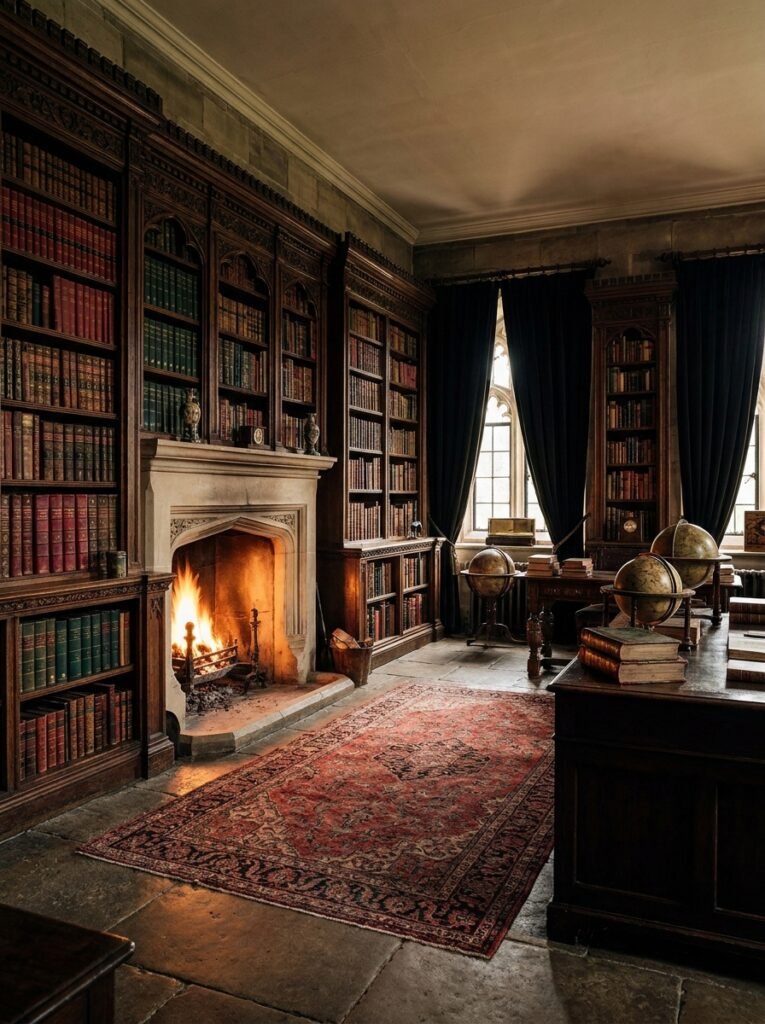
Think about the atmosphere of an old European library — carved wooden shelves, leather-bound books, heavy drapes pooling onto stone floors, a fire crackling somewhere nearby. That feeling of weight, history, and sanctuary? That’s goth design at its most sophisticated core.
The goth aesthetic in modern home design is really about atmosphere over décor. It’s about choosing elements that evoke mood — dark, dramatic, textured, and deeply personal. It’s a style for people who feel things deeply and want their living space to reflect that emotional richness.
“A goth interior isn’t dark because it’s sad — it’s dark because it’s deep.”
—
2. The Color Palette That Makes Everything Come Alive

Color is where every goth interior transformation begins, and it starts with black — but not just any black. The beauty of goth design is how it handles darkness with nuance. Rather than painting every surface a flat, lifeless black, skilled goth interiors layer shades of darkness.
Consider pairing matte black walls with glossy black crown molding. Add deep plum drapery that catches the light differently at noon versus midnight. Introduce charcoal gray on a built-in bookshelf, midnight navy on an accent ceiling, or oxblood red on a velvet chesterfield sofa. Each of these colors creates a different emotional temperature in the room.
Don’t fear the contrast, either. Aged brass hardware gleaming against a near-black wall creates a tension that feels genuinely luxurious. Ivory candles against obsidian surfaces glow like something out of a Pre-Raphaelite painting. White or bone-toned architectural details against dark walls actually amplify the drama rather than diluting it.
The goth color palette is not monochromatic darkness — it is a symphony of shadow, played in many registers.
—
3. The Furniture Choices That Define the Space
Furniture in a goth interior is where the tactile magic really happens. The goal is to find pieces that feel like they’ve lived — like they carry the memory of other rooms, other centuries, other stories. This doesn’t mean everything needs to be antique, but every piece should feel deliberate and significant.
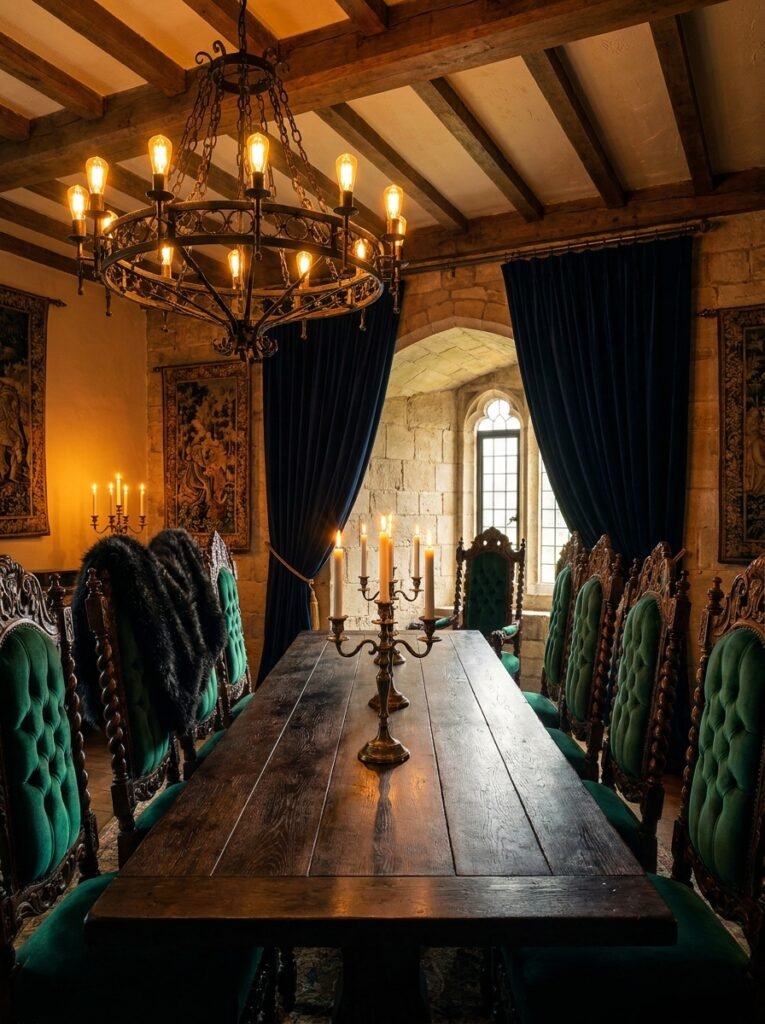
Carved wooden furniture is a cornerstone of gothic interior styling. Look for chairs with high, ornate backs — the kind that feel almost throne-like. Seek out dining tables with turned legs or claw feet. A four-poster bed with wrought iron posts can transform a plain bedroom into a chamber that feels like it belongs in a gothic novel.
Upholstery matters enormously. Velvet is non-negotiable in the goth interior world — it absorbs light in a way that creates that essential sense of depth and richness. Choose tufted velvet sofas in deep jewel tones: emerald, sapphire, wine, or midnight black. Layer leather and faux fur throws for textural contrast that invites you to sink in and never leave.
—
4. Lighting Is the Soul of a Goth Room
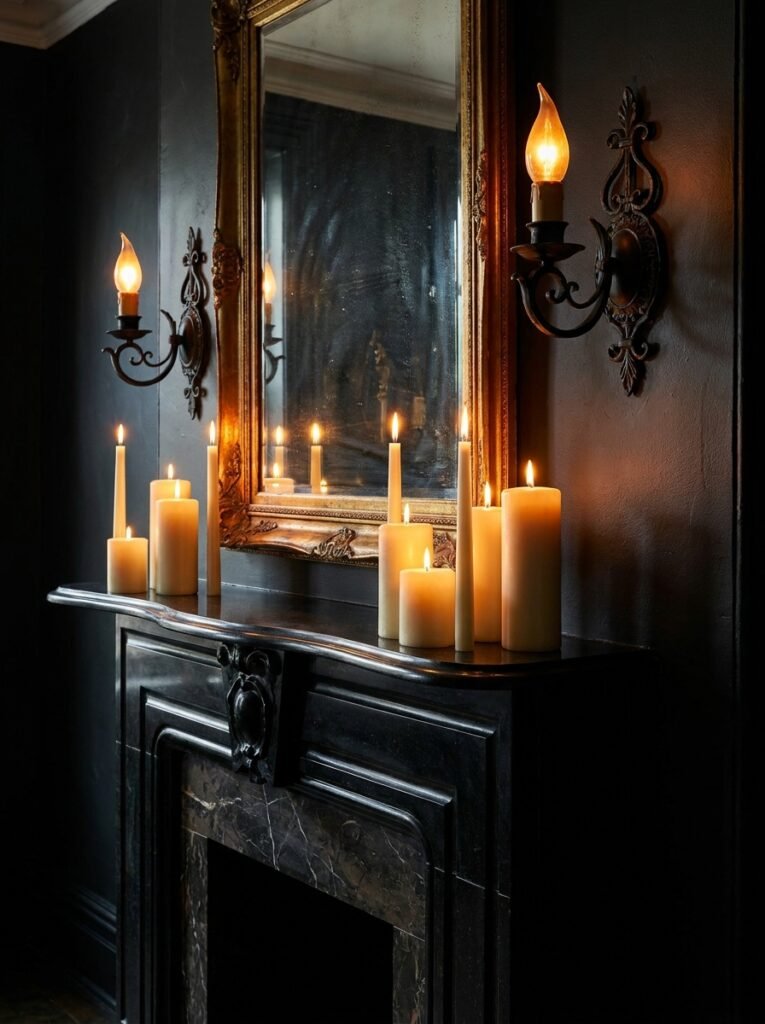
If color is the body of a goth interior, lighting is its soul — and nothing will make or break the atmosphere faster. The goal is to move completely away from flat, uniform overhead lighting and instead build a room lit by layers.
Candles are the obvious starting point — and for good reason. There is simply no artificial lighting that recreates the way a candle animates a room, making shadows dance and surfaces glow with an amber warmth that feels almost alive. Cluster pillar candles on a mantelpiece, line a windowsill with tapers, fill a tray with tea lights on a coffee table.
Beyond candles, look for light fixtures with dark, dramatic character. A black iron chandelier with visible bulbs creates a moody industrial edge. Antique-style Edison bulbs in amber tones are warmer and more atmospheric than standard bulbs. Wall sconces with aged brass or bronze finishes add the kind of layered, sourceless light that makes a room feel like it exists slightly outside of ordinary time.
“The right light doesn’t illuminate a goth room — it transforms it.”
—
5. Textiles That Wrap the Room in Atmosphere
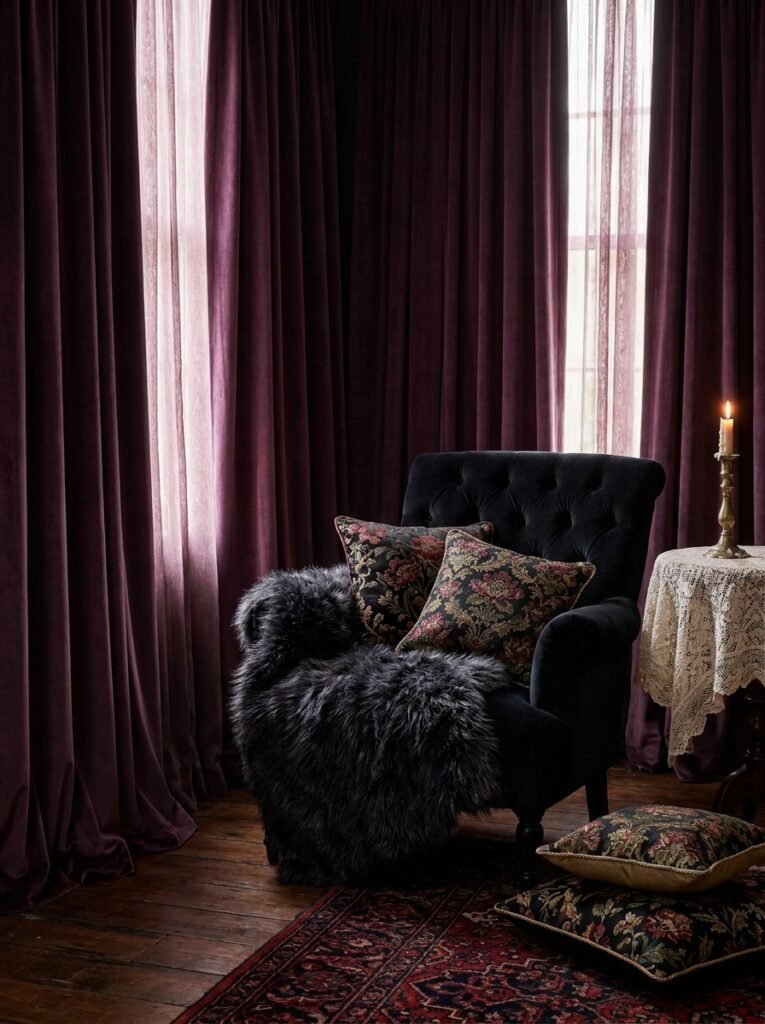
The way a goth interior feels to the touch is just as important as how it looks. Textiles are the sensory heartbeat of any room, and in goth design, they carry an enormous amount of atmospheric weight.
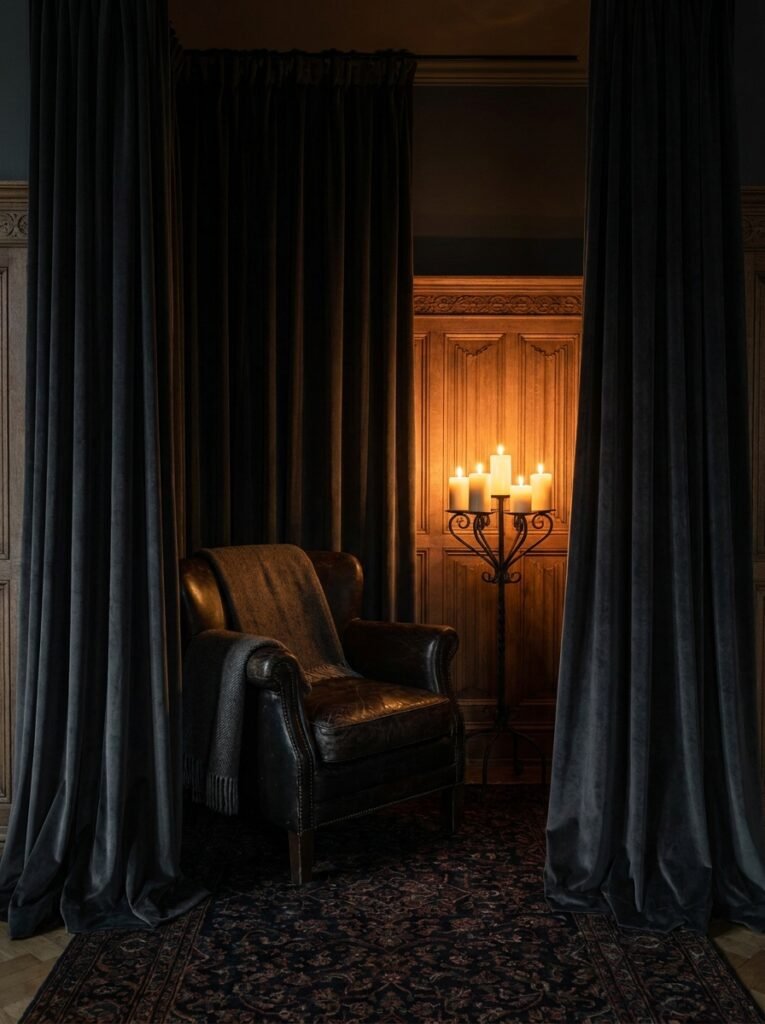
Drapes should be long — floor to ceiling, ideally pooling slightly onto the floor. Choose heavy fabrics: velvet, blackout linen in dark tones, or even theatrical voile in deep charcoal that filters light into something mysterious and diffused. The movement of heavy drapes in a light breeze adds a kinetic drama to the room that no piece of furniture can replicate.
Layer your textiles throughout the space. A faux fur throw on a velvet chair. A Persian rug in dark ruby and black tones covering worn hardwood floors. Embroidered or jacquard pillow covers with Gothic or floral motifs. Lace overlays on side tables that give a delicate, Victorian-era quality to what might otherwise feel heavy and stark.
These layered textiles don’t just add visual richness — they make the room feel inhabited, personal, and warm, which is often the most surprising thing people discover about a thoughtfully designed goth interior.
—
6. Art and Decor That Tells a Story
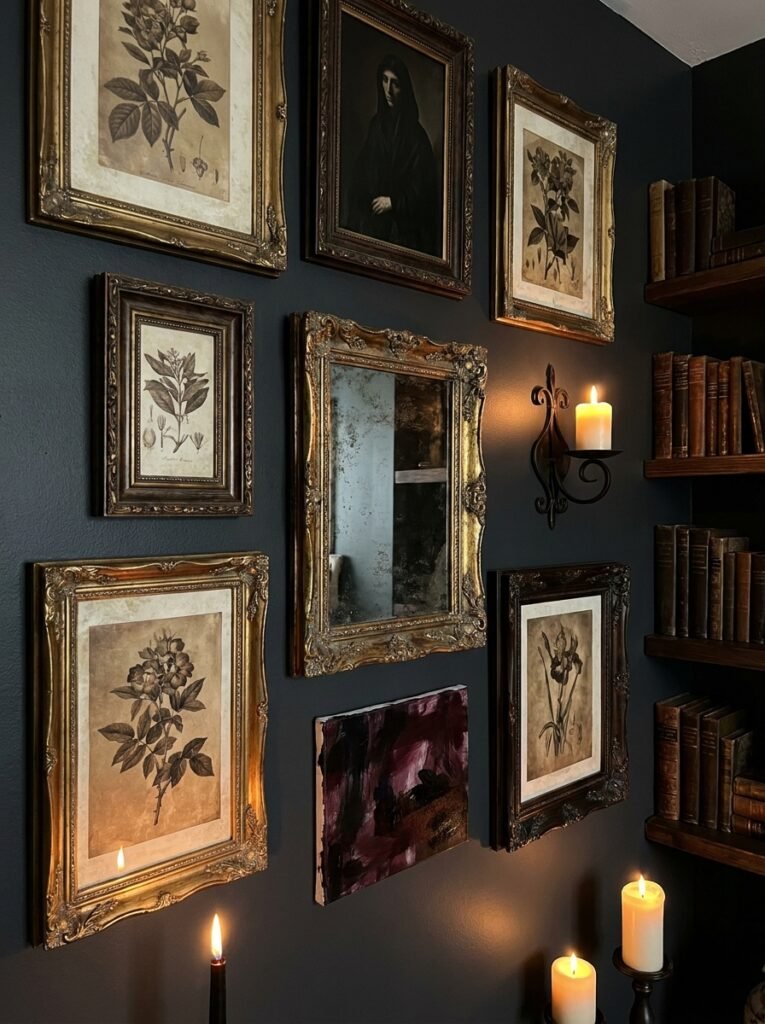
Every object in a goth interior should feel chosen with intent. This is not a style that tolerates impulsive impulse buys or generic retail décor. It rewards patience, curation, and the willingness to hunt for pieces that genuinely move you.
Framed artwork is central — think oil paintings or high-quality prints in the style of the Pre-Raphaelites, the Symbolists, or the Dutch Golden Age. Dark botanical illustrations in antique frames. Portraits of unknown subjects from another era. Abstract expressionist work in deep, brooding tones that hold up to long contemplation.
Mirrors are another powerful tool in the goth decorator’s repertoire. An ornate gilded mirror on a dark wall creates depth, amplifies candlelight, and adds a note of faded grandeur that feels absolutely right. Distressed or antiqued mirror surfaces feel more appropriate than bright, pristine ones.
Don’t overlook the decorative potential of books. A wall of dark-spined books is one of the most naturally beautiful elements you can bring into a goth interior — they add intellectual character, visual texture, and a sense that the room has a rich inner life.
—
7. The Role of Natural Elements: Plants, Wood, and Stone
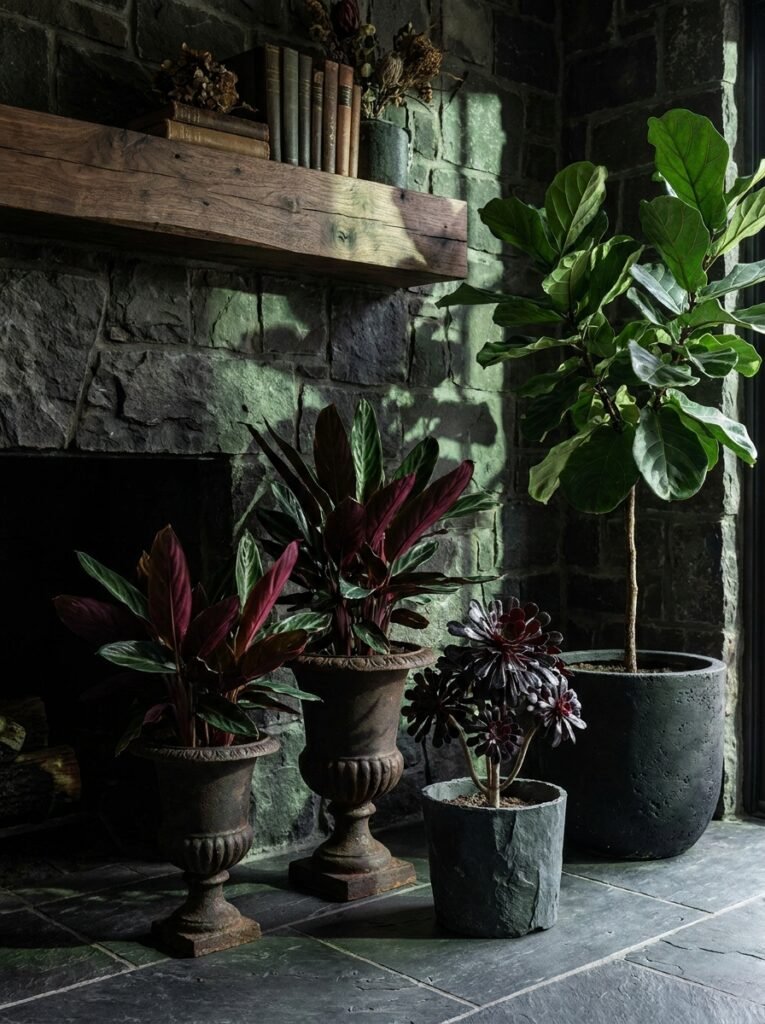
Here is the detail that surprises most people who are new to goth interior design: nature is a fundamental part of the aesthetic. Gothic architecture drew deeply from natural forms — pointed arches echo the shape of forest canopies, stone carvings feature botanical motifs, gargoyles reference the animal world in all its strange beauty.
In the modern goth home, this translates to a love of dark-leafed plants. Think black-stemmed Japanese maple in an interior planter, deep burgundy prayer plants, near-black aeoniums, dark coleus, or dramatic fiddle-leaf figs with their bold, architectural presence. These plants add life to a dark room without breaking the spell of the atmosphere.
Raw stone, rough-hewn wood, and slate tile are natural materials that integrate beautifully into the goth aesthetic. A stone fireplace surround, a reclaimed wood dining table, or a slate bathroom floor all bring a texture and earthiness that balances the velvet and iron and makes the space feel genuinely grounded.
“A goth home isn’t removed from nature — it’s nature at its most dramatic.”
—
8. The Goth Kitchen: Where Drama Meets Daily Life
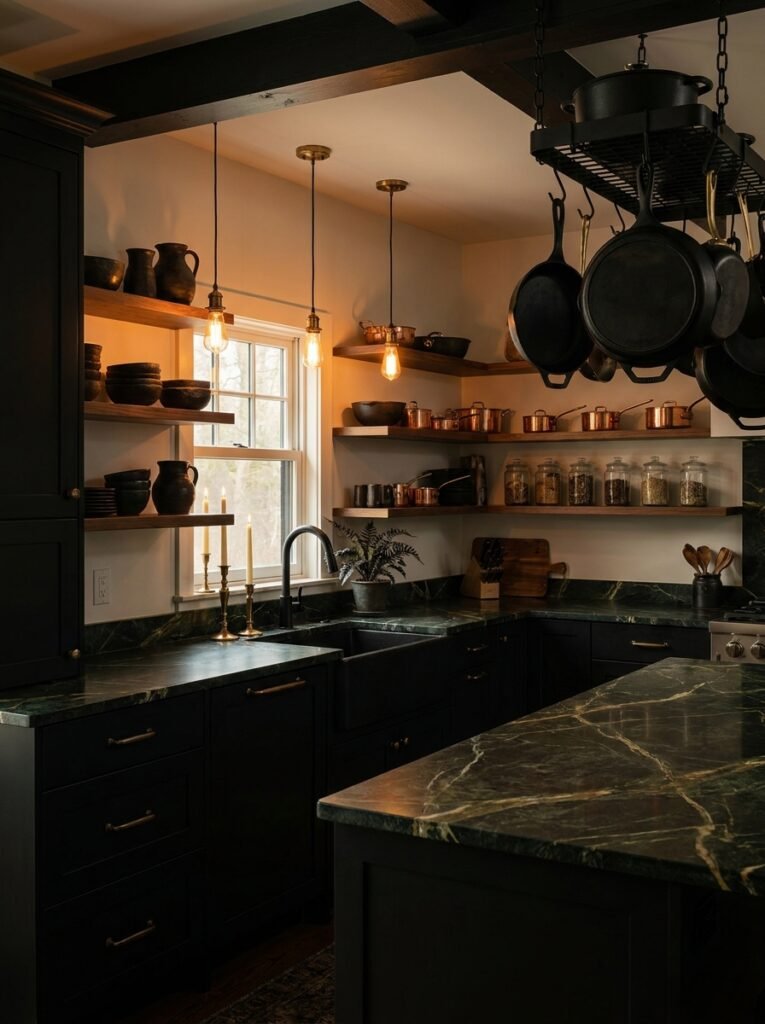
People often wonder how the goth aesthetic translates to functional rooms — and the kitchen is the perfect test case. The answer is that goth design adapts beautifully to any room when you approach it through the lens of atmosphere rather than decoration.
Dark cabinetry is the obvious starting point — matte black or deep navy cabinet fronts immediately transform a kitchen’s personality. Pair these with unlacquered brass or oil-rubbed bronze hardware for that patina of age and character. A marble countertop in dark gray or forest green veined with gold creates a surface that is as visually striking as any piece of art.
Open shelving lined with dark ceramic vessels, copper cookware, and glass apothecary jars creates a kitchen display that feels simultaneously functional and theatrical. Pendant lights with Edison bulbs over an island add the layered, warm lighting that is so essential to the goth aesthetic overall.
Even small goth kitchen touches make a difference — black cast iron cookware hanging from a ceiling rack, dark wood cutting boards, candlesticks on the windowsill above the sink. These are the details that turn a kitchen into a room you actually love to spend time in.
—
9. The Goth Bedroom: A Sanctuary for Deep Sleepers
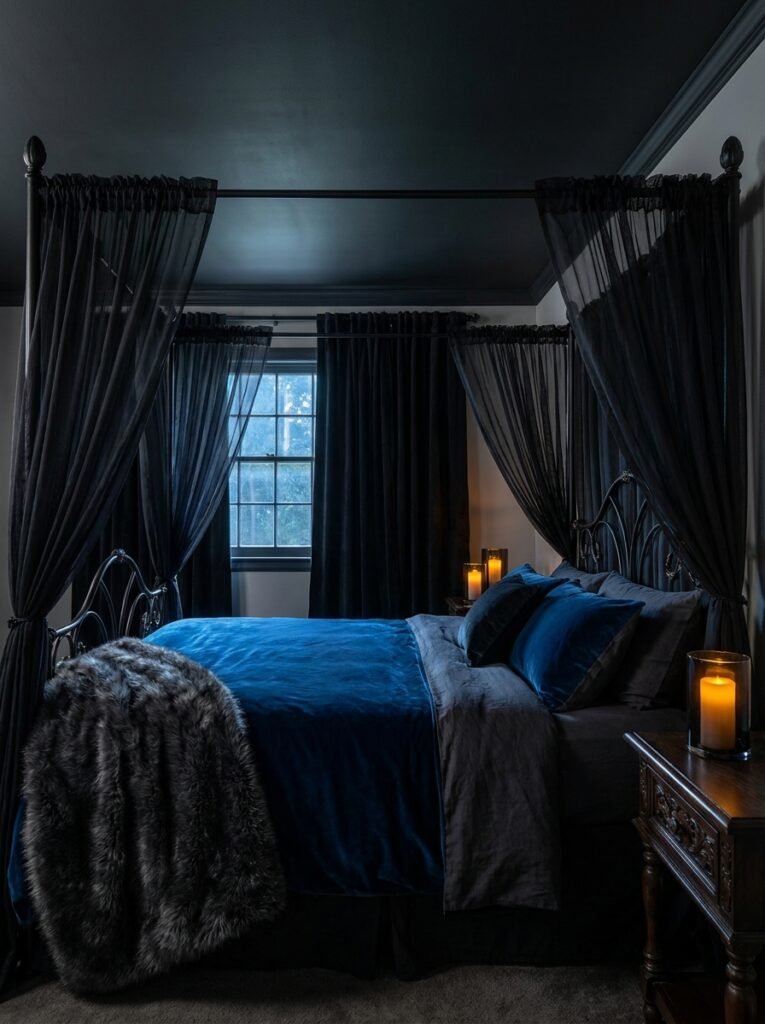
If there’s one room where the goth interior aesthetic truly comes into its own, it’s the bedroom. A goth bedroom is not just a place to sleep — it’s a full sensory sanctuary designed for rest, reflection, and the kind of deeply personal comfort that can only come from a space that feels truly yours.
Start with the bed. A four-poster frame in dark wood or wrought iron is the ultimate goth bedroom anchor. Layer bedding in dark, luxurious fabrics — silk or satin in deep jewel tones, velvet duvet covers, heavy linen in charcoal or midnight black. The goal is a bed that feels like a destination rather than just a piece of furniture.
Blackout curtains are both practical and atmospheric, ensuring that the room remains a cave of rest even in bright daylight. Bedside candles (flameless LED versions are perfectly safe for overnight use) recreate the warm, intimate light of an earlier era. A dark-painted ceiling creates the sensation of sleeping beneath a night sky — deeply restful and beautifully dramatic all at once.
—
10. Bathroom Drama: The Forgotten Goth Room
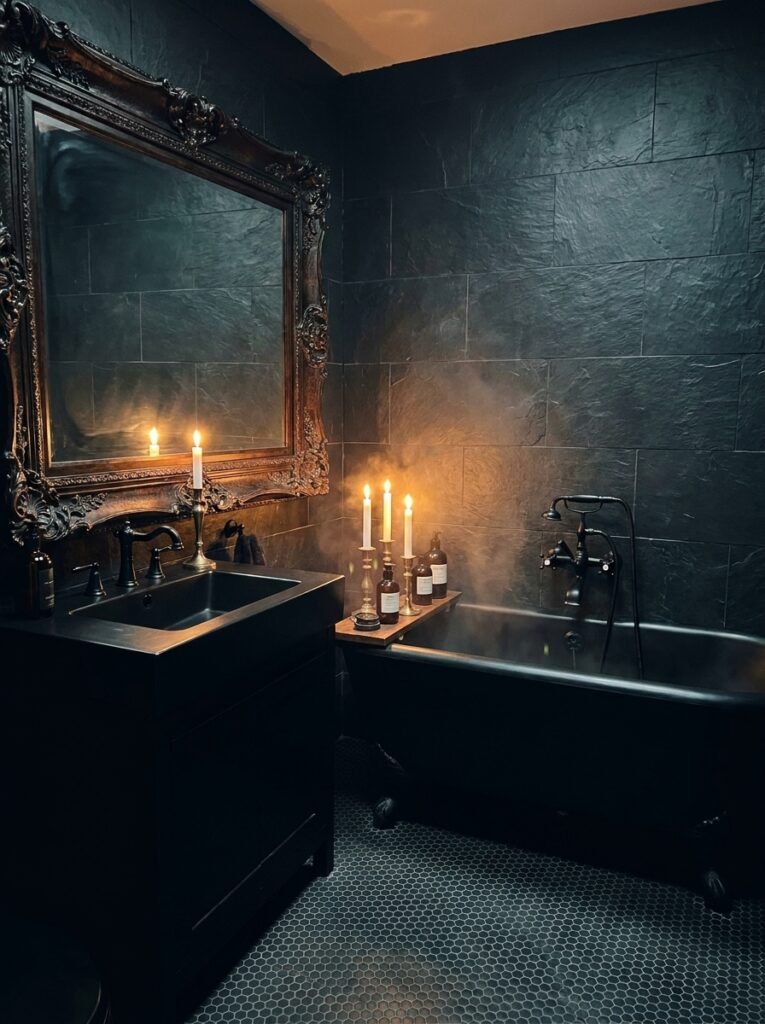
Bathrooms are often an afterthought in interior design discussions, but a goth-styled bathroom can become one of the most memorable rooms in the house. Because bathrooms are typically small, the impact of dark, atmospheric design choices is intensified — there’s no space for the drama to dissipate.
Matte black fixtures — faucets, showerheads, towel rails — immediately shift the bathroom into goth territory. Pair these with dark tile (charcoal hexagonal mosaic, deep forest green subway tile, or near-black slate) for a foundation that feels rich and intentional. A clawfoot bathtub in matte black or vintage white sitting against a dark-painted wall is genuinely one of the most beautiful design combinations in all of interior design.
Candles on a tray beside the tub, a dark-framed mirror above the vanity, black glass apothecary bottles holding bath salts and oils — these are the details that transform a bathroom into a ritual space, which is very much in keeping with the intentional, atmospheric spirit of goth design.
—
11. Small Space Goth: Dark Design in Apartments and Studios
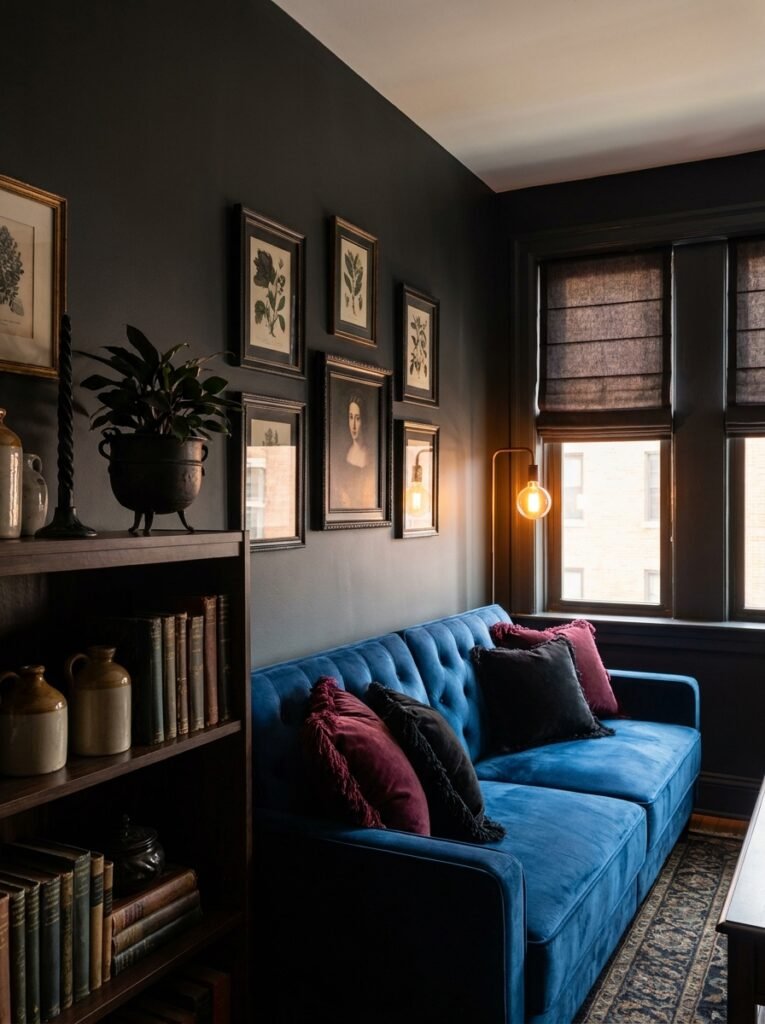
One of the most persistent myths about goth interior design is that it only works in large, dramatic Victorian spaces — that you need high ceilings, marble fireplaces, and Gothic arched windows for the aesthetic to land. This simply isn’t true.
Dark design in small spaces works beautifully when approached with intention. The key is to use darkness as a spatial tool. A small room with dark walls actually feels more cohesive and enveloping than the same room painted white — it removes the harsh visibility of every corner and imperfection, making the space feel like a deliberate cocoon rather than a compromise.
In a studio apartment, a velvet sofa in deep jewel tones, dark Roman shades, a gallery wall of atmospheric art, and a collection of meaningful objects on dark shelving can create a fully realized goth atmosphere in a single open-plan space. The trick is layer, curate, and light — those three principles work at any scale.
—
12. How to Start Your Goth Interior Transformation Today
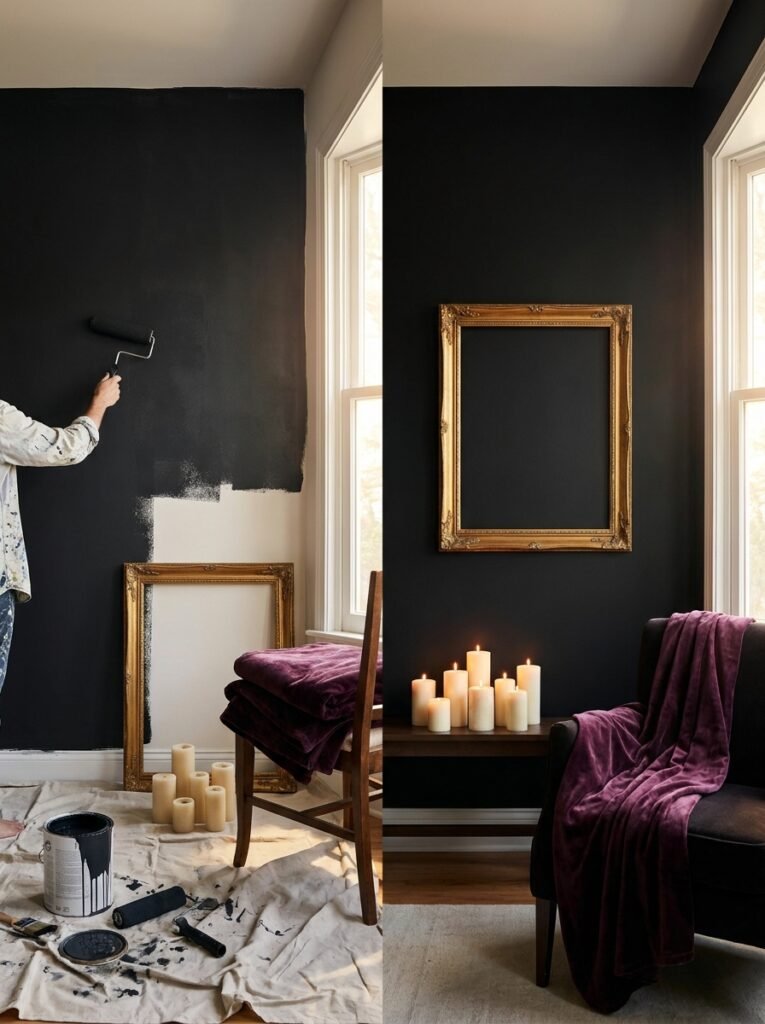
The most important thing to know about beginning a goth interior project is this: you don’t need to buy everything at once. In fact, the best goth interiors are built slowly — accumulated over time through thrift stores, estate sales, artisan markets, and patient searching for the pieces that genuinely speak to you.
Start with paint — it’s the highest-impact, most affordable change you can make. Choose one wall or one room and go dark. See how the space changes around you. Add candles next. Then layer in a textile. Then find one piece of art that makes you feel something. Let the room build organically, the way a gothic cathedral was built — stone by stone, over years, with complete commitment to a singular vision.
The goth interior rewards patience and intention above all else. It is not a style you install in a weekend — it is a space you grow into, and it grows with you.
—
🌿 How to Take Care of Your Goth Interior
Maintaining a goth interior is really about preserving the atmosphere you’ve worked to create — here are a few practical tips that feel genuinely useful rather than obvious.
Dust dark surfaces regularly, because dust shows dramatically on matte black and deep velvet. Use a soft microfiber cloth rather than sprays that can dull the finish of painted surfaces or damage fabric texture. For velvet upholstery, a soft-bristle brush or lint roller preserves the nap and prevents that flattened, tired look.
Keep candles trimmed — a candle wick longer than a quarter inch produces soot and uneven burning that can mark walls and diminish the clean, intentional look of your space. Snuff candles rather than blowing them out to avoid wax splatter on dark surfaces.
Rotate your plants regularly to ensure even light exposure, and remember that many dark-leafed plants are tropical varieties that prefer indirect light and consistent moisture. Finally, edit ruthlessly — the goth aesthetic is powerful partly because it is curated, not cluttered. If a piece doesn’t earn its place emotionally and visually, let it go.
—
❓ FAQ
Q: Will dark walls make my room feel smaller and more depressing? A: This is the most common concern people have, and the answer is surprisingly nuanced. Dark walls don’t shrink a room — they change how you perceive the room. A dark space feels enveloping and intimate rather than small and tight when properly lit with layered, warm-toned sources like candles, Edison bulbs, and sconces. The effect is closer to cozy than claustrophobic, and most people find that living with dark walls is far more comfortable than they expected.
Q: Can goth interior design work in a family home with children? A: Absolutely, and it’s a more common combination than you might think. The key is to apply the goth aesthetic strategically — perhaps in the master bedroom, a dedicated sitting room, or a home office — while keeping children’s spaces lighter and more age-appropriate. Many goth design elements, like dark wood furniture, dramatic lighting, and rich textiles, are also simply classic, high-quality choices that wear beautifully over years of family life.
Q: Where is the best place to find authentic goth interior pieces on a budget? A: Estate sales, antique markets, thrift stores, and online second-hand platforms are absolute goldmines for the kind of aged, characterful pieces that make a goth interior feel genuine rather than assembled from a catalog. Look for carved wooden furniture, ornate frames, old mirrors, and vintage ceramics. DIY plays a role too — dark paint, new hardware on thrifted furniture, and handmade textile elements can dramatically transform inexpensive finds into pieces that feel entirely intentional.
—
💭 Final Thought
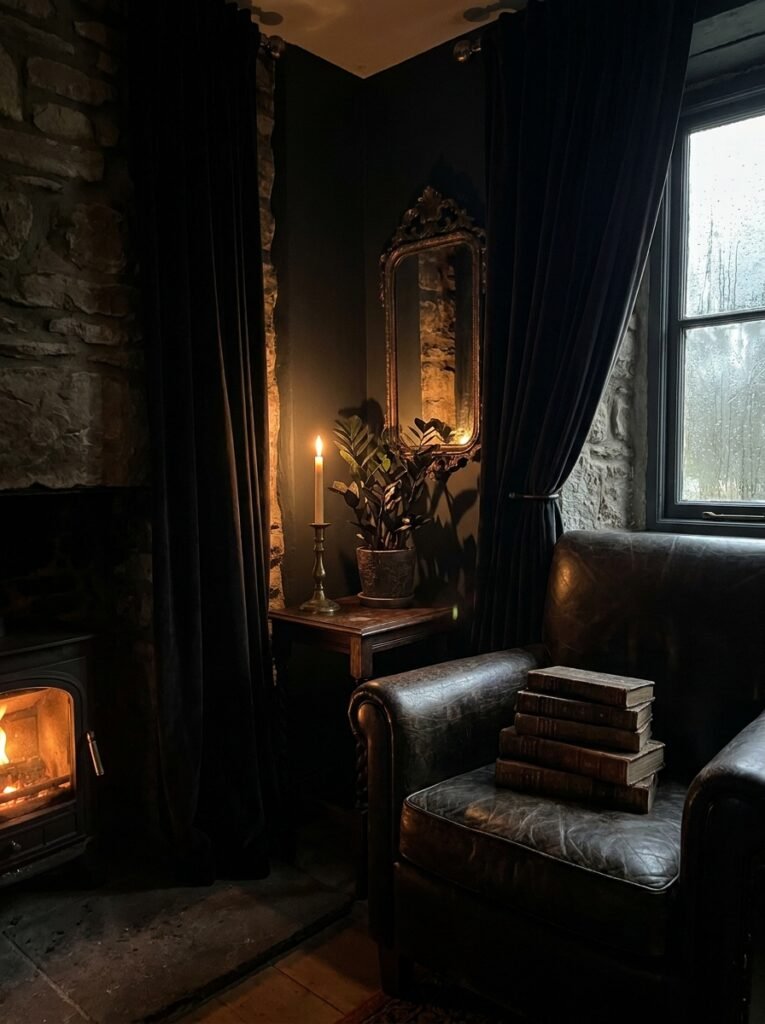
A goth house interior, at its heart, is a deeply personal act of self-expression — a refusal to make your home look like everyone else’s and a commitment to living inside an atmosphere that reflects the parts of yourself that feel most true. It is dramatic, yes, but it is also one of the warmest, most enveloping styles of interior design that exists, because it prioritizes mood, texture, and emotional resonance above trend.
The question worth sitting with is this: when you imagine a space that feels completely, unapologetically like you — what does it look like?