
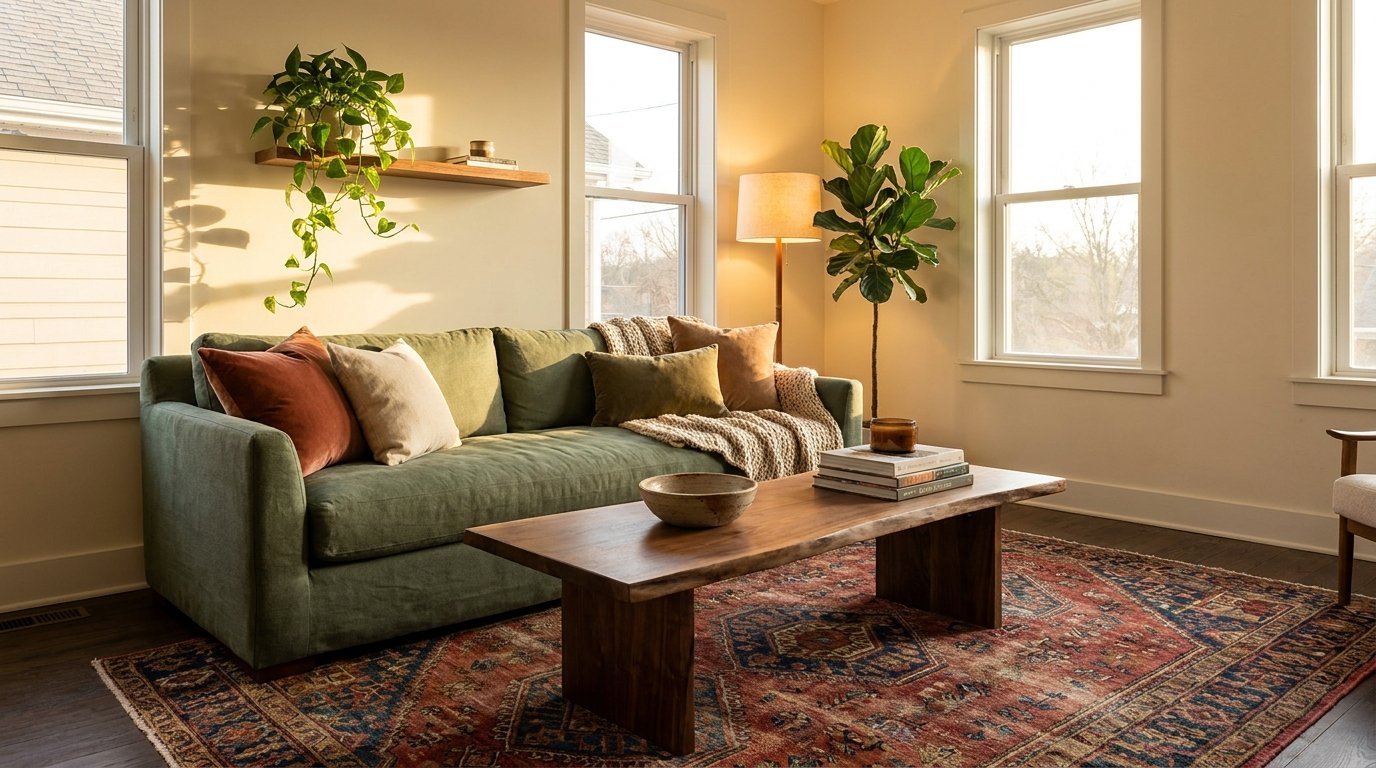
The Living Area Interior That Actually Makes You Feel at Home (Not Just Look Good on Instagram)
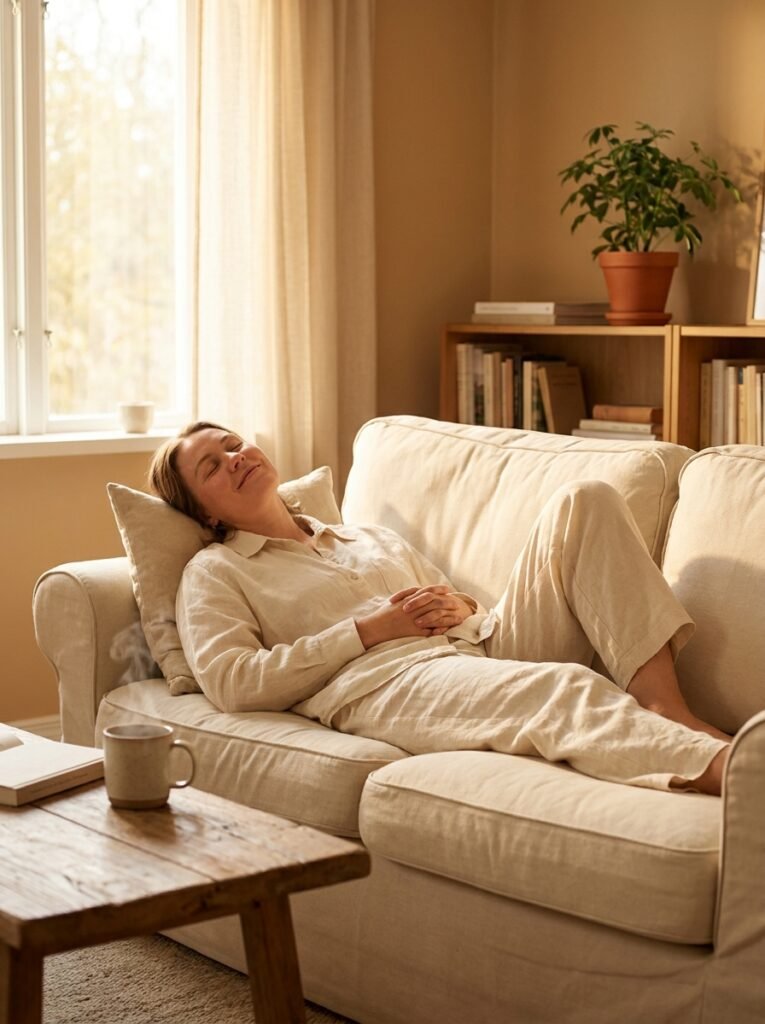
There’s a particular moment — maybe you know it — when you walk into someone’s living room and something shifts inside you. The light is soft, the furniture invites you to sink in, and for reasons you can’t quite explain, you feel calm. That’s not accident. That’s intention. And today, we’re going to talk about how to build exactly that feeling inside your own four walls.
—
1. Why Your Living Area Is the Emotional Heart of Your Home
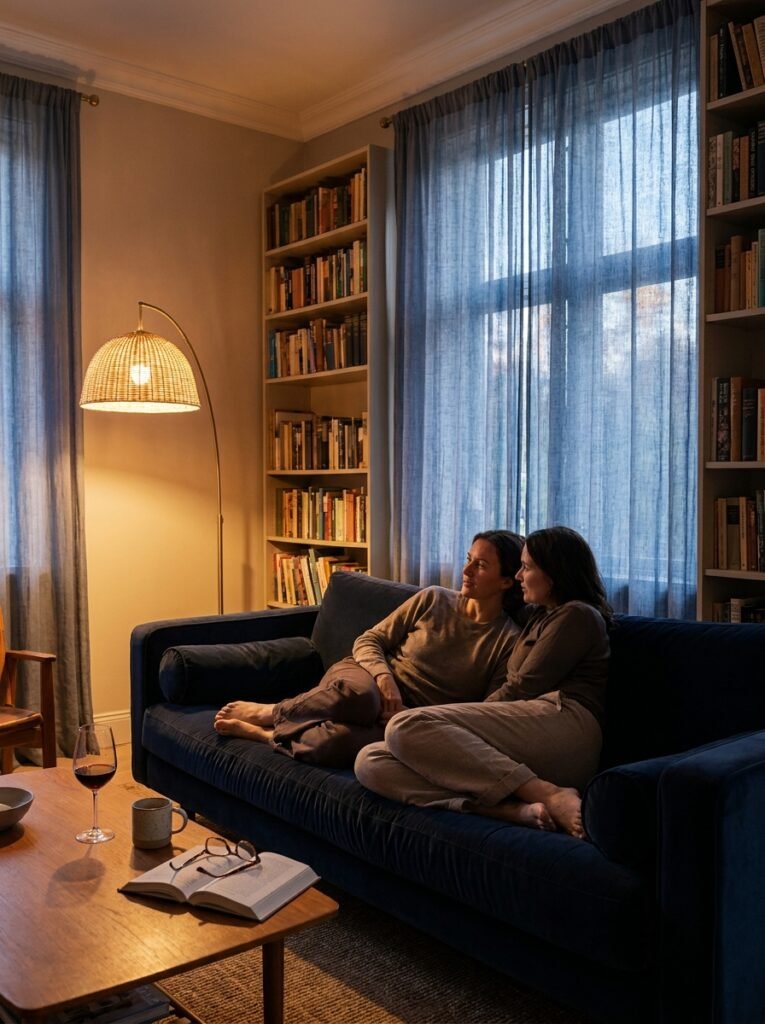
Before we talk about sofas and accent walls, let’s pause on something that often gets skipped in design conversations: your living area doesn’t just hold furniture — it holds life. It holds the Sunday mornings with coffee and nowhere to be, the late-night conversations that stretch past midnight, the quiet evenings when the world outside is loud and you need somewhere to exhale.
This is why getting your living area interior right matters so much more than it might seem on the surface. When this room feels wrong — cluttered, cold, disconnected — you feel it in your body. You avoid it. You scroll past it in your own home. But when it feels right, you’re drawn to it. You linger. You breathe differently there.
Interior design isn’t about impressing guests. It’s about building a space that genuinely, consistently restores you. Start there, and every decision that follows becomes clearer.
“A living area should feel like a deep breath — the moment you step in, something in your shoulders finally lets go.”
—
2. The Color Psychology Hidden in Your Living Room Walls

Color is the first thing your nervous system reads when you enter a room — faster than your conscious mind can form an opinion. Which is why choosing the right palette for your living area interior isn’t vanity. It’s science.
Warm whites and soft creams create a sense of expansiveness without sterility. They reflect natural light beautifully and pair with nearly everything, making them a perpetually safe and elegant choice. Earthy terracottas and warm taupes, meanwhile, have been dominating interior design boards for good reason — they evoke the kind of warmth you associate with late afternoon sun and slow, unhurried living.
Deeper tones — forest greens, navy blues, charcoal grays — are having a bold moment in living room design, and for good reason. Used thoughtfully, they create intimacy and depth, turning your living area into something that feels like a proper sanctuary rather than a hotel lobby. The key with dark walls is contrast: pair them with warm lighting, light-toned furniture, and plenty of natural materials to prevent the space from feeling heavy.
One underrated technique: paint only one wall a deeper hue and let the rest breathe in something lighter. This creates visual dimension without overwhelming the room — a small change with an outsized emotional impact.
—
3. Furniture Arrangement: The Invisible Architecture You’ve Been Ignoring
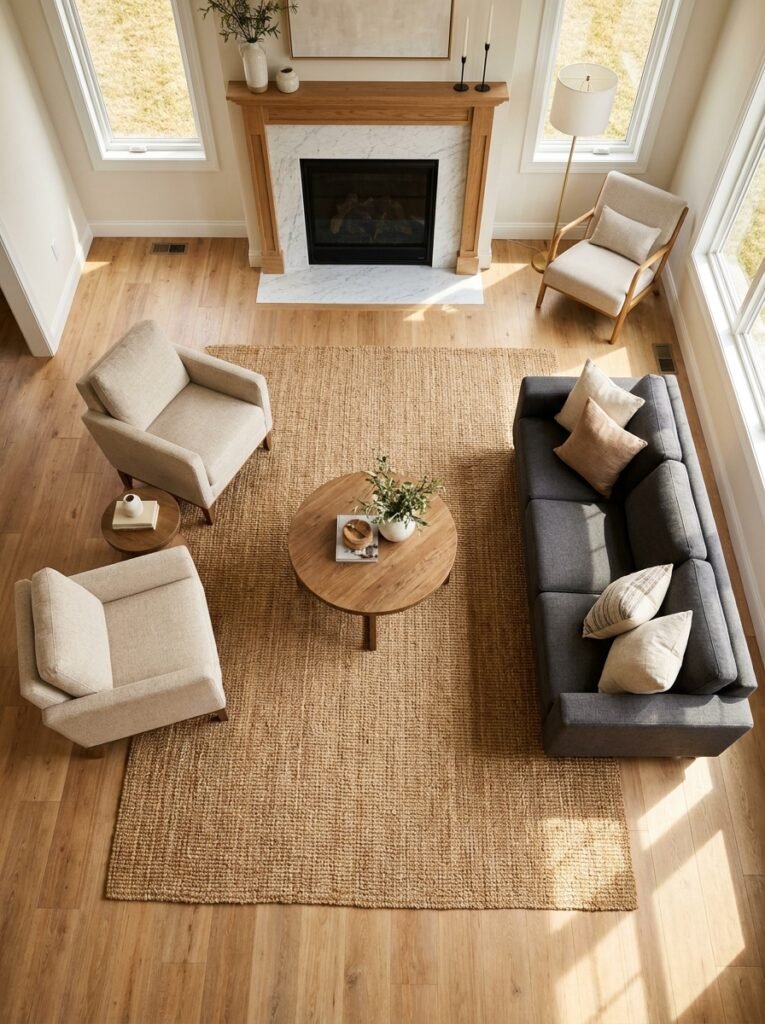
Here’s something most people get wrong on their first attempt: they push all their furniture against the walls. It feels logical — more floor space, right? But in practice, it creates a room that feels hollow, like everyone’s waiting for something to happen rather than being present in the moment.
The most inviting living area interiors pull furniture inward, creating a sense of conversation and closeness. Anchor everything around a focal point — a fireplace, a large window, a beautiful piece of art — and arrange your seating to face it. The sofa, two chairs, a coffee table: this classic grouping works because it mirrors the geometry of human conversation. It says, sit down, stay a while, we have things to talk about.
If your living area is large, don’t be afraid to create two separate seating zones. A larger conversation area near the focal point, and a smaller reading nook tucked near a window with a single armchair and a floor lamp — this layered approach makes a big room feel full of possibility rather than cavernous.
Leave breathing room between pieces, but not too much. About 18 inches between a sofa and coffee table is the sweet spot — close enough to rest a mug comfortably, far enough that people aren’t stepping over each other.
—
4. The Sofa Decision That Will Define Your Living Space for Years
If your living area interior were a sentence, your sofa would be the main verb. Everything else — the cushions, the rug, the side tables — conjugates around it. Which is why this is one decision worth taking your time on.
Sectionals are beloved for good reason: they maximize seating, define a zone in an open-plan space, and feel undeniably luxurious to sprawl across on a slow afternoon. But they demand space and commitment. In smaller living areas, a classic three-seater paired with one or two accent chairs gives you more flexibility and visual lightness.
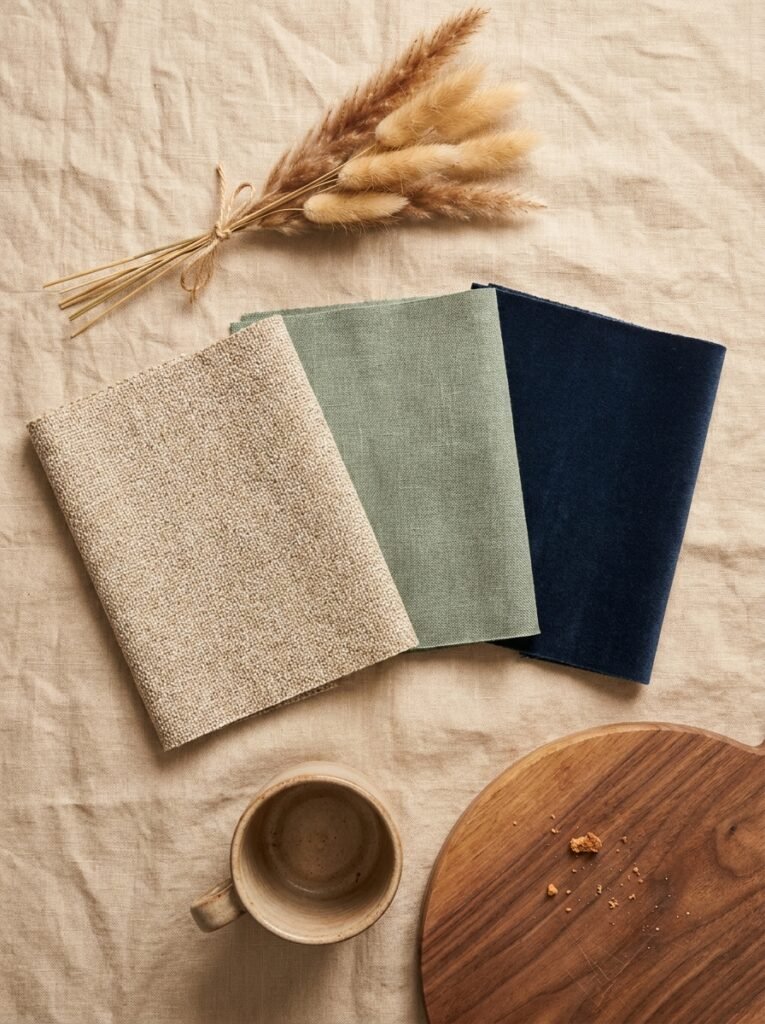
Material matters enormously — not just aesthetically, but practically. Linen and cotton weaves breathe well and lend a relaxed, lived-in quality. Performance fabrics have improved dramatically and are worth serious consideration if you have children, pets, or simply a life that happens in your living room. Leather, real or quality faux, ages beautifully and wipes clean, but can feel cool in winter and warm in summer.
Color-wise, consider how your sofa will age. A mid-tone warm gray, a classic navy, a soft sage, or a timeless oatmeal tend to wear better across seasons and style shifts than trend-driven colors that may feel dated in three years.
—
5. Lighting Layers: Why One Overhead Light Is Never Enough
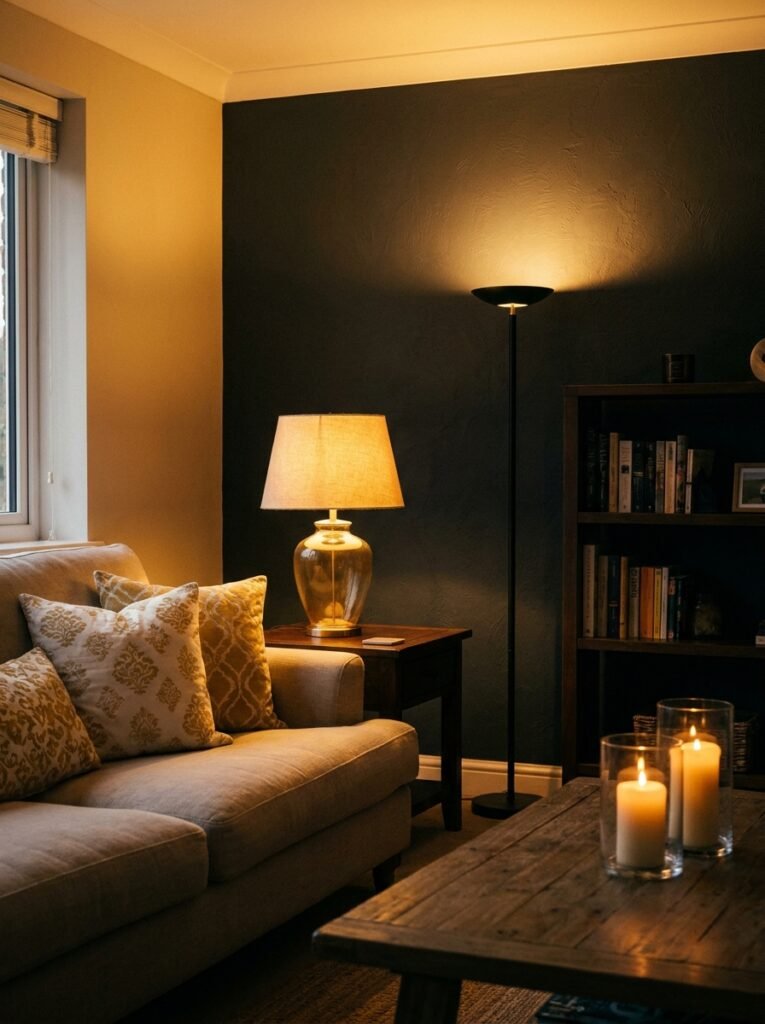
Imagine your favorite restaurant. Chances are, it isn’t lit by a single overhead bulb. It has layers — candles on tables, pendants casting warm pools of light, perhaps some soft uplighting near a feature wall. There’s a reason that level of lighting makes you feel relaxed and inclined to linger: it creates warmth, intimacy, and visual interest that flat overhead lighting simply can’t.
Your living area deserves the same thoughtfulness. Build your lighting across three layers: ambient (your main source of overall light), task (reading lamps, table lamps), and accent (picture lights, floor uplighters, candles). When all three work together, the room comes alive in a way that no single fixture can achieve alone.
The color temperature of your bulbs matters more than most people realize. Warm white bulbs (around 2700K–3000K) cast a golden, flattering glow that makes people look and feel good. Cooler, bluer light (above 4000K) tends to feel clinical and energizing — better suited for workspaces than living rooms.
“Lighting is the jewelry of interior design — it’s the last thing you put on, but it changes everything about how the whole look lands.”
Dimmer switches are one of the highest-value upgrades you can make to a living room. The ability to shift from bright afternoon light to a softer evening glow costs relatively little but transforms the atmosphere completely.
—
6. Rugs as the Foundation That Ties Everything Together
A rug in a living area does something structurally important that is easy to overlook: it defines the space. In an open-plan home especially, a well-chosen rug draws an invisible boundary around your seating area, telling both the eye and the mind, this is the living room — this is where we gather.
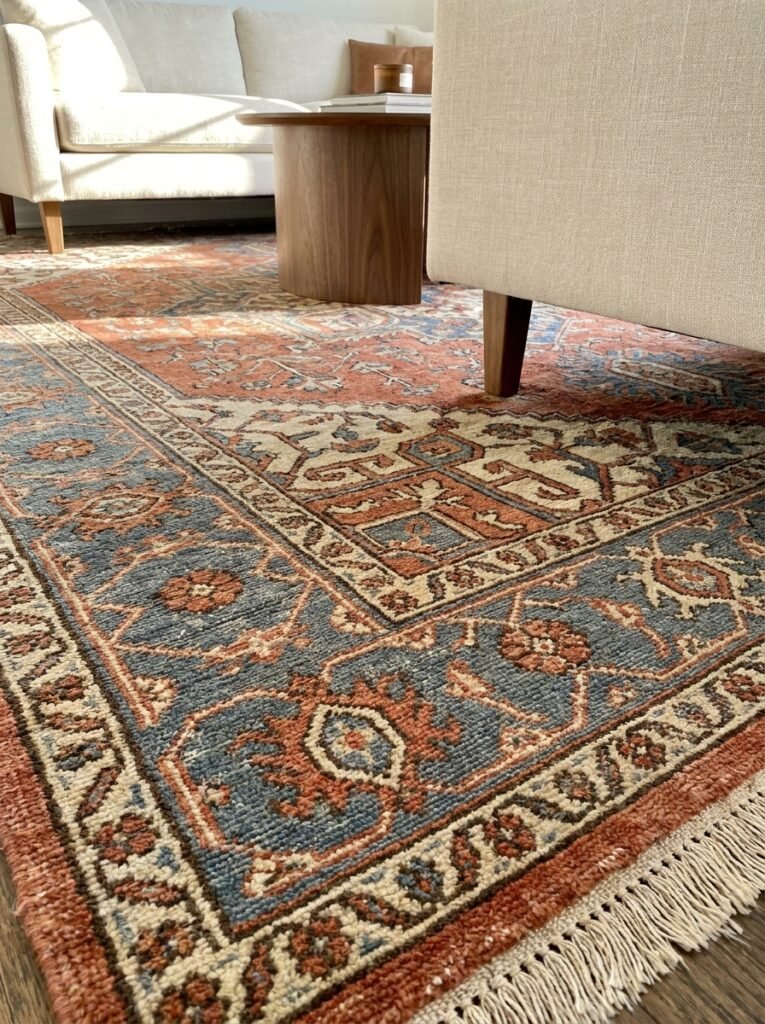
The most common rug mistake? Going too small. A rug that barely clears the edge of the coffee table makes the room feel disconnected and pinched. Ideally, all front legs of your furniture should sit on the rug, or if the rug is large enough, all four legs of each piece. This grounds the furniture as a cohesive group and makes the space feel intentionally designed rather than randomly assembled.
Pattern in a rug adds extraordinary visual richness without requiring you to invest in patterned furniture or wallpaper. A geometric Berber, a soft abstract watercolor print, a classic Persian — any of these can carry enormous visual interest and warmth underfoot.
Natural fiber rugs — jute, sisal, seagrass — bring an organic quality to a living area that works beautifully with both modern and traditional interiors. They’re durable, usually affordable, and layer wonderfully beneath a smaller, softer rug for added texture.
—
7. The Art of Layering Textures Without Creating Chaos
One of the most transformative things you can do to a living area interior doesn’t require a single large purchase. It requires instead a studied attention to texture — the tactile variety in your space that makes it feel rich, curated, and deeply livable.
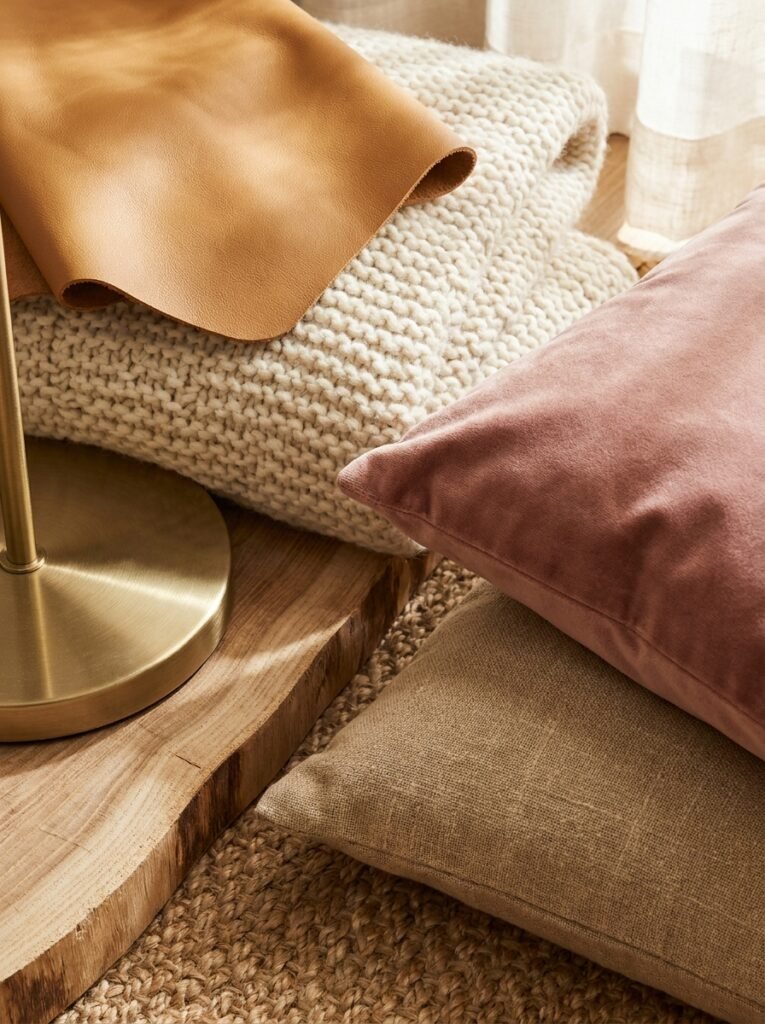
Think about what your eye and hand encounter as they move across the room. A smooth leather sofa. A chunky knit throw tossed casually over one arm. A linen cushion beside a velvet one. A raw wood coffee table against a sleek metal lamp base. A jute rug beneath bare feet. Each of these materials speaks a different visual language, and when they’re layered together with intention, they create a conversation that feels warm and interesting.
The guideline to hold onto: vary your textures, but hold a consistent color story. A room where everything is cream and beige can still feel vibrant and alive if the textures are diverse enough. The texture provides the visual movement; the consistent palette provides the coherence.
—
8. Bringing the Outdoors In: Plants, Wood, and Natural Light
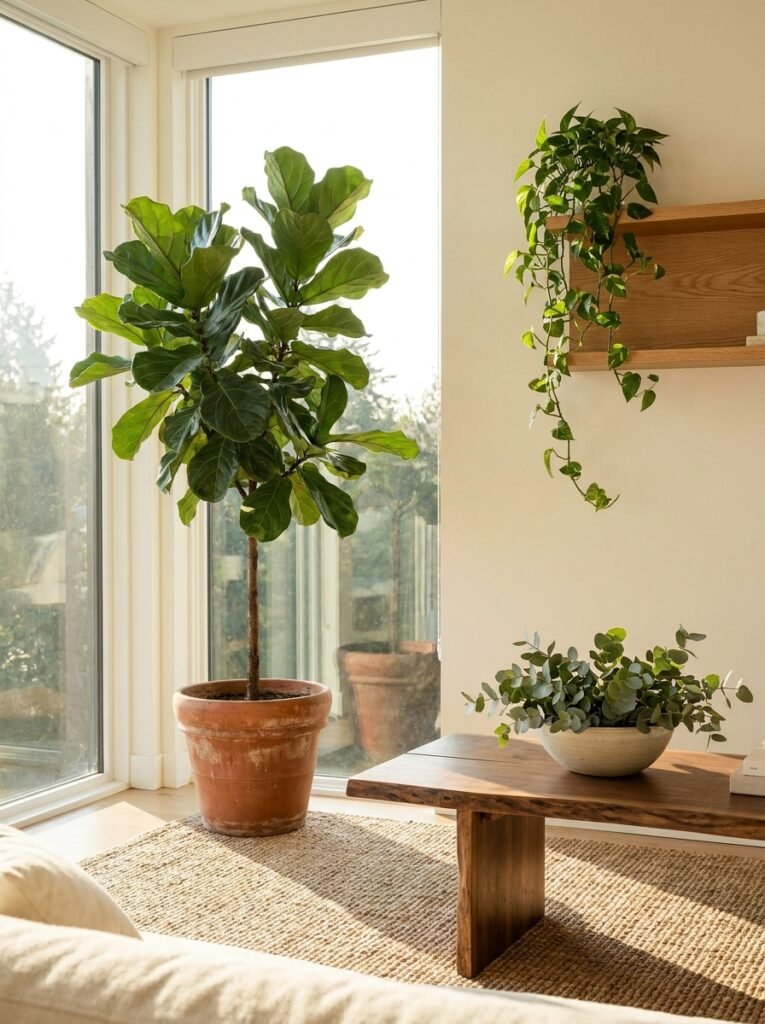
There is a growing body of research on what designers have known intuitively for decades: human beings feel better in spaces that connect them to the natural world. Biophilic design — the practice of incorporating natural elements into interiors — isn’t a trend. It’s a response to something deep in us.
In a living area, this can be as simple as positioning your sofa to face a window and keeping that window unobstructed by heavy drapes. It can mean choosing a coffee table in live-edge walnut or a bookshelf in warm oak. It can mean introducing a large fiddle leaf fig in the corner, or a cluster of trailing pothos on a shelf, or a low bowl of seasonal branches on the coffee table.
Plants in particular do something remarkable to a room — they soften hard lines, add color in a way that feels organic rather than decorative, and bring a sense of gentle life to a space. Even someone without a green thumb can manage low-maintenance varieties like snake plants, ZZ plants, or pothos, all of which thrive in typical living room conditions.
—
9. The Small Details That Make Visitors Stop and Say “I Love Your Home”
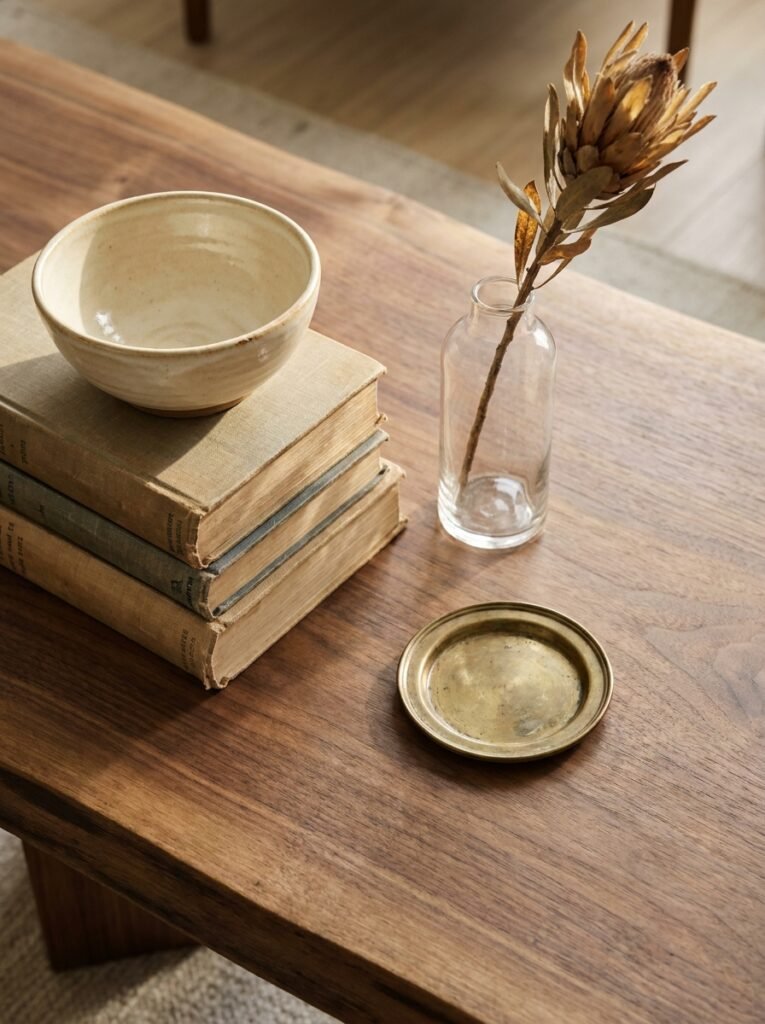
It’s almost never the sofa. It’s almost never the paint color. When people pause in your living area and say those words — I love your home — it’s usually something small that caught them: a stack of genuinely loved books on the coffee table, a vintage ceramic bowl you found at a market, a framed black and white photograph that tells a story, the way the afternoon light catches a glass vase at a certain angle.
These details are the difference between a room that looks designed and a room that feels lived in — and there is no higher compliment in interior design than the latter.
Curate rather than collect. A few meaningful objects displayed with intention read as personal and beautiful. A surface crowded with things reads as noise. Leave empty space. Empty space isn’t emptiness — it’s breathing room, and it’s what allows the objects you love to actually be seen.
“The most beautiful rooms aren’t decorated — they’re curated. Every object has a story, and together, they tell yours.”
—
10. Open-Plan Living Areas: How to Define Zones Without Walls
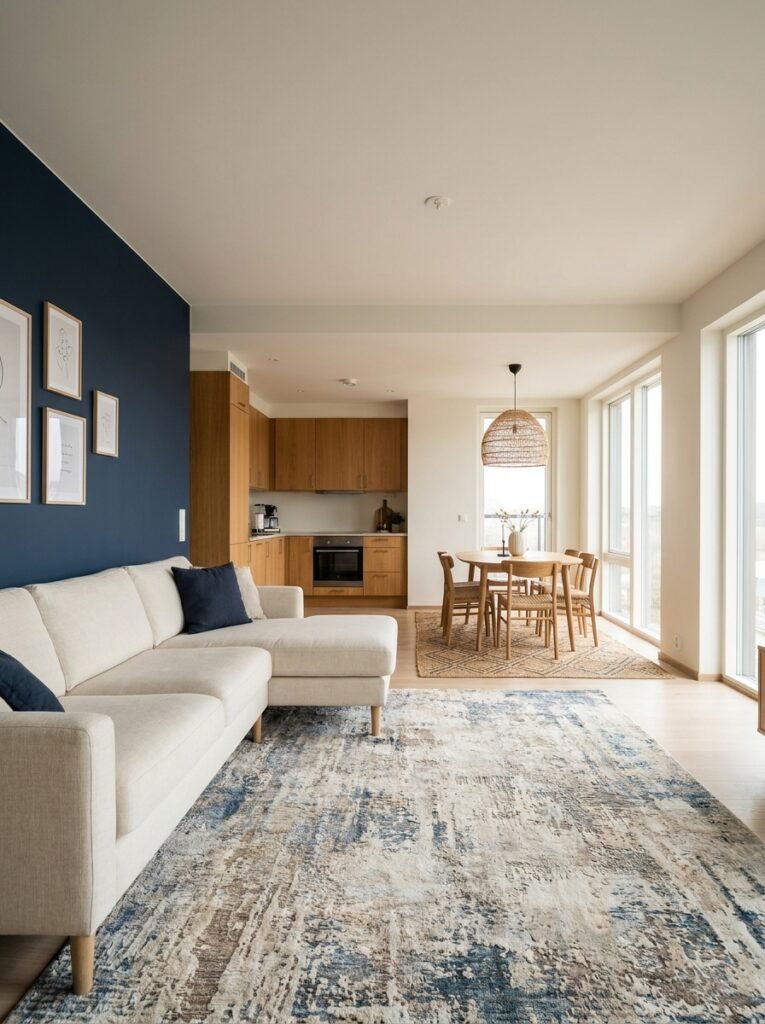
The open-plan living area is simultaneously beloved and misunderstood. People choose it for the sense of space and connection it offers, then find themselves frustrated by how difficult it is to make it feel cozy or defined.
The secret is zoning — creating distinct areas within the open space using furniture, rugs, lighting, and even ceiling treatments rather than walls. Your sofa, placed with its back to the kitchen or dining area, acts as a soft partition. A different rug under the dining table creates a separate “room.” A pendant light hung low over the dining table reinforces that this is a distinct eating area, separate from the lounging zone nearby.
Color can also do this work quietly. Painting a single accent wall behind the sofa or dining area signals — without a single wall being built — that this is a specific zone with its own purpose and identity.
—
11. Budget-Friendly Ways to Completely Transform Your Living Area

A complete living area renovation isn’t accessible to everyone, and that’s perfectly fine — because some of the most beautiful transformations happen without major spending. Rearranging your furniture costs nothing and can make a room feel entirely different. Swapping your cushion covers for the season, adding a throw, or introducing a new plant can shift the energy of a room for the price of a takeout dinner.
Secondhand and vintage sourcing is genuinely one of the best approaches to living area design — not just for the budget benefit, but because older pieces carry a patina and quality that new budget furniture rarely replicates. A solid wood side table found at an estate sale, a vintage mirror from a thrift store, a beautiful lamp from a secondhand market: these items add character that no flat-pack equivalent can manufacture.
Strategic investment matters here too. If you can only splurge on one or two pieces, let the sofa and the rug be those pieces. Everything else can be sourced affordably or thrifted, and the quality anchor pieces will carry the room.
—
12. The Living Area Interior Mistakes That Are Quietly Hurting Your Space
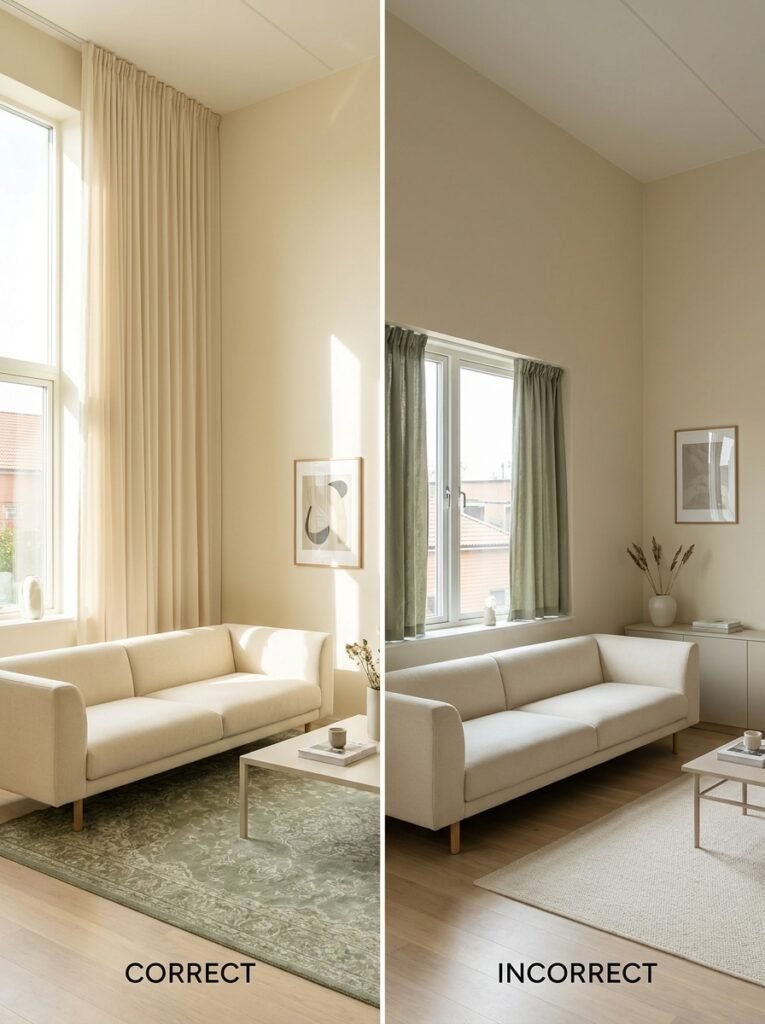
Every home has them — those small design decisions that made sense at the time but are quietly working against the room. Overhead lighting left on its own with no supplemental lamps. A rug that’s two sizes too small. A gallery wall hung too high, straining everyone’s neck upward. A television mounted over the fireplace at an angle that hurts to watch. Curtains that end at the windowsill instead of the ceiling, making the room feel lower and smaller than it is.
Awareness is the first step. Hang your curtains high — close to the ceiling line — and wide, extending several inches beyond the window frame on each side. This creates the illusion of taller ceilings and a larger window. Move your art down; the general rule is that the center of a piece should hang at eye level, around 57–60 inches from the floor. And please — get a bigger rug.
These adjustments are free or low-cost, and the visual difference they create is genuinely remarkable.
—
🌿 How to Take Care of Your Living Area Interior
Maintaining the feeling of a beautiful living area is less about big seasonal overhauls and more about consistent, gentle attention.
Do a weekly reset — not a deep clean, just a reset. Return objects to where they belong, plump the cushions, fold the throws. Five minutes is often enough to restore the room to the version of itself that you actually love.
Edit regularly. Every few months, look at your surfaces with fresh eyes and ask yourself which objects are still earning their place. Remove what no longer serves the room. Homes evolve as we do, and it’s healthy for our spaces to reflect that.
Tend to your textiles. Wash your cushion covers seasonally, launder throws regularly, and vacuum your rugs more often than you think necessary — they hold dust and debris that dulls their color and texture over time.
Swap seasonally in small ways. A summer linen throw traded for a chunky winter knit. Fresh flowers in spring. A warm-toned candle in autumn. These small shifts keep the room feeling alive and connected to the world outside.
Let natural light do its job. Keep windows clean and curtains open during daylight hours whenever possible. Natural light is the single most flattering and energizing element any room can have.
—
❓ FAQ
Q: What is the most important element of a living area interior? A: If we’re talking pure impact, lighting comes first — it affects how every other element looks and how the space feels emotionally. Beyond that, the scale and arrangement of your furniture determines whether the room functions comfortably, which is the foundation everything else builds on.
Q: How do I make a small living area feel larger? A: Use light, neutral colors on walls and keep the floor as visible as possible with furniture raised on legs rather than sitting flush to the ground. Hang mirrors strategically to reflect light, and choose a sofa that is appropriately scaled — an oversized sectional in a small room makes it feel significantly more cramped.
Q: How often should I redecorate my living area? A: There’s no fixed rule, but a good rhythm is to do small, seasonal refreshes — new textiles, rearranged objects, fresh plants — every few months, and a more considered update every three to five years. Design your room around pieces you genuinely love rather than pure trend-chasing, and it will feel relevant and personal for much longer.
—
💭 Final Thought
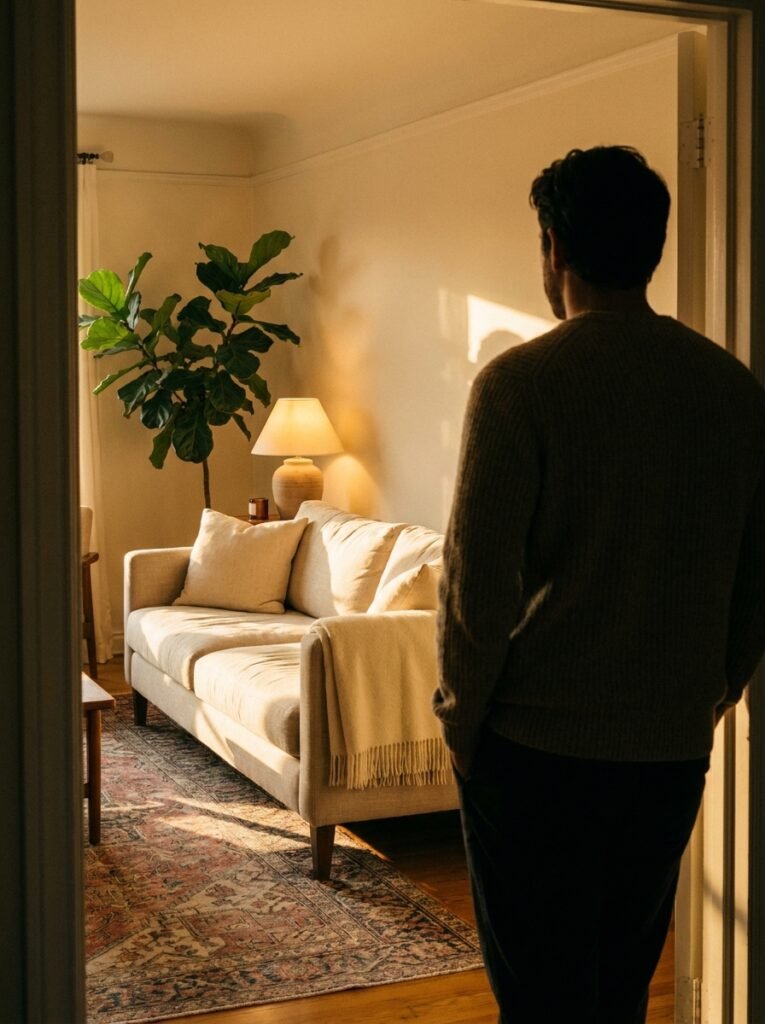
At its best, your living area is more than a room — it’s a daily reminder that the life you’re building is worth inhabiting with care. You don’t need a designer’s budget or a Pinterest-perfect home to create a space that genuinely moves you. You need intention, attention to what you actually love, and the willingness to edit out everything that doesn’t belong.
So here’s the question worth sitting with today: when you walk into your living room right now, how does it make you feel — and is that the feeling you want to come home to every day?