
Duplex Living Room Interior Design: How to Make Two Levels Feel Like One Beautiful, Breathtaking Home
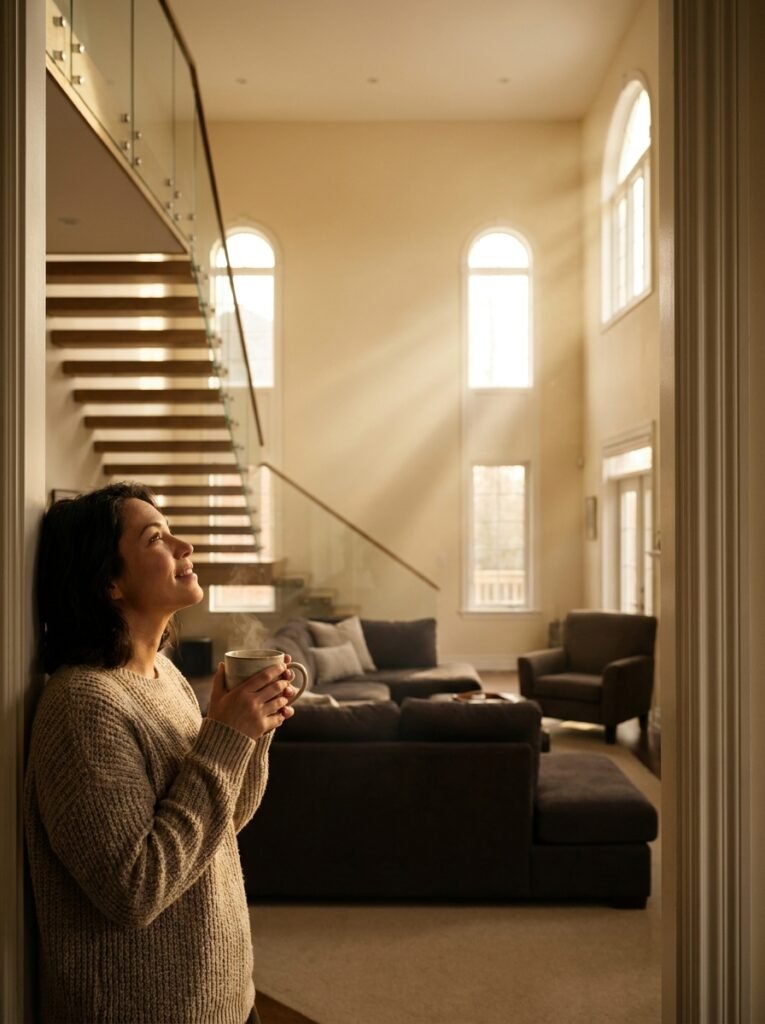
There’s something undeniably cinematic about a duplex living room — that moment you step inside and your eyes travel upward, following the soaring walls all the way to a ceiling that feels like it belongs in a dream. But once the awe settles, many homeowners find themselves asking the same quiet, slightly panicked question: How do I actually design this space so it feels warm, cohesive, and intentionally mine? This guide is for you — the person standing in the middle of a magnificent double-height space, coffee in hand, ready to make something truly extraordinary.
—
1. Understanding the Unique Architecture You’re Working With
Before you move a single piece of furniture or choose a single paint color, spend real time understanding your duplex living room. This is not a conventional space, and designing it like one is the fastest route to disappointment.
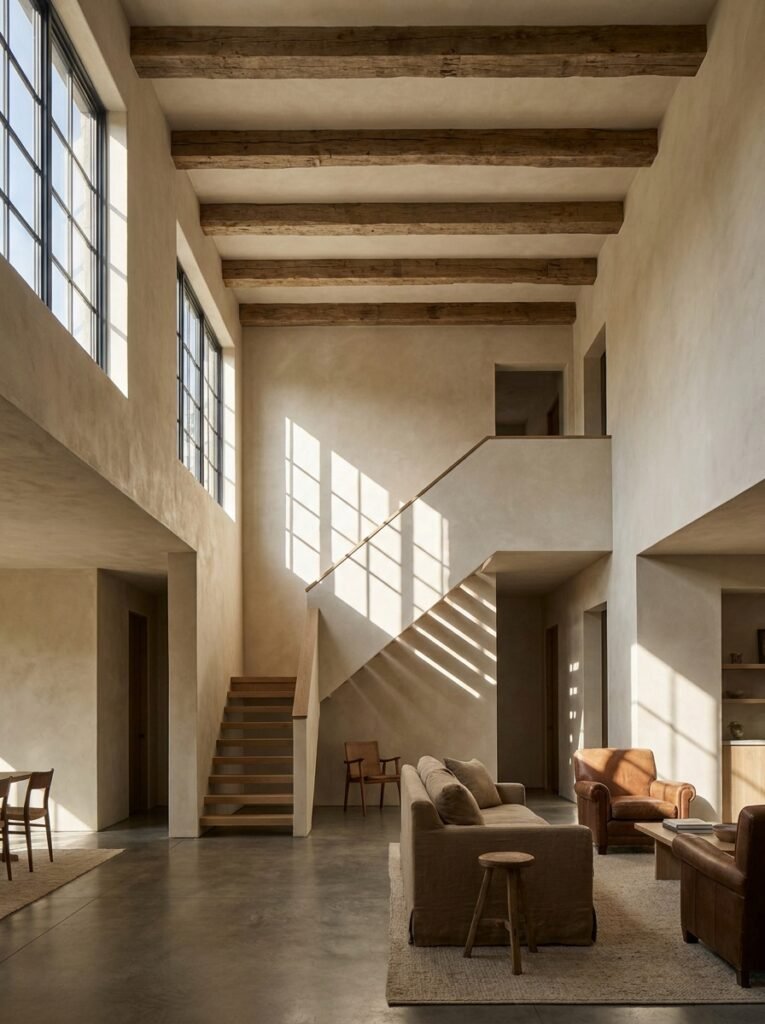
A duplex living room — sometimes called a double-height living room or a two-story living room — is defined by its verticality. One living space spans two full floor levels, creating walls that can reach anywhere from 16 to 30 feet high. That height is simultaneously your greatest design asset and your most challenging puzzle to solve.
Walk through the space at different times of day. Notice where natural light falls in the morning versus the afternoon. Notice which wall feels like a natural focal point. Notice how sound moves — double-height rooms can feel echoey and cavernous if not treated thoughtfully. Take note of where the staircase sits in relation to the main seating area, because that relationship will shape nearly every design decision that follows.
“A duplex living room doesn’t ask you to fill it — it asks you to honor it.”
Understanding your architecture means working with those tall walls, that open vertical space, and the natural sightlines between levels — not against them. Everything beautiful you’re about to create starts here.
—
2. The One Design Rule That Changes Everything in a Tall Space
Here is the single most important concept in duplex living room design: anchor the eye at every level.
In a conventional room, your design elements exist on a single horizontal plane — furniture, art, windows, all roughly at the same visual height. In a duplex living room, you have two planes to work with, and leaving the upper half of your space visually empty is the most common — and most costly — mistake homeowners make.
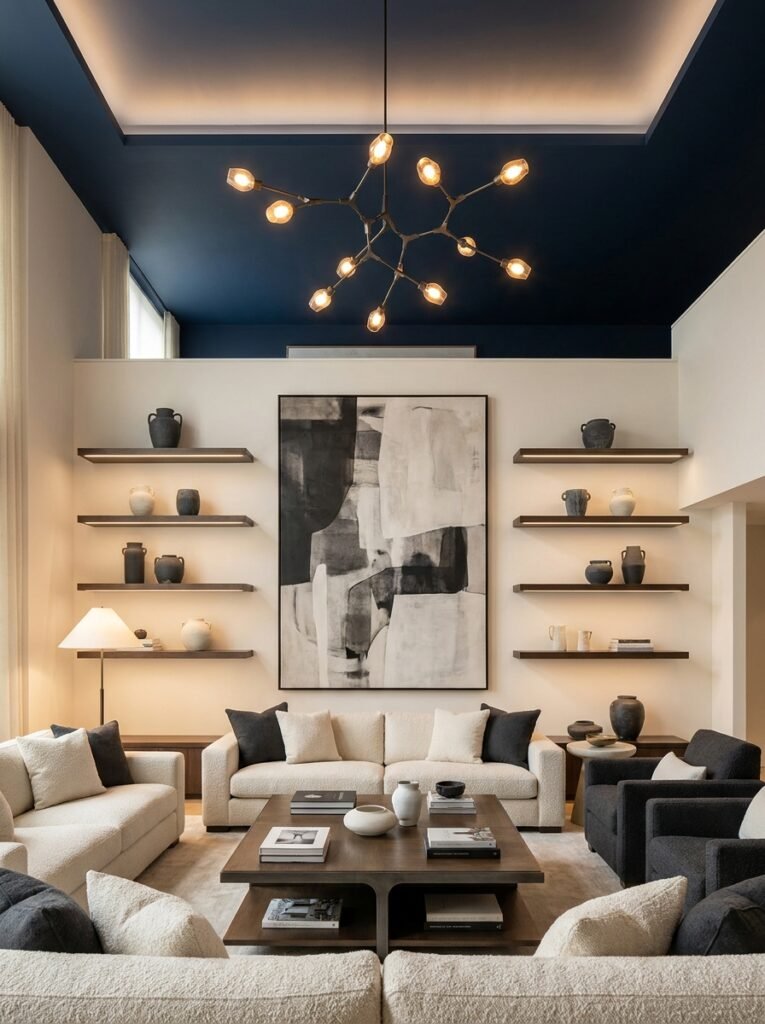
Think of your room in visual thirds. The lower third is your furniture zone: sofas, coffee tables, rugs, side tables. The middle third — roughly between 8 and 16 feet — is where you introduce art, shelving, decorative wall treatments, or architectural lighting. The upper third, near the ceiling, is where drama lives: statement light fixtures, a painted ceiling, exposed beams, or a gallery wall that climbs boldly upward.
When your eye has something interesting to follow at every level, the room feels intentional and full of life rather than overwhelming or unfinished. This is the foundation every stunning duplex living room is built upon.
—
3. Choosing a Color Palette That Unifies Rather Than Divides
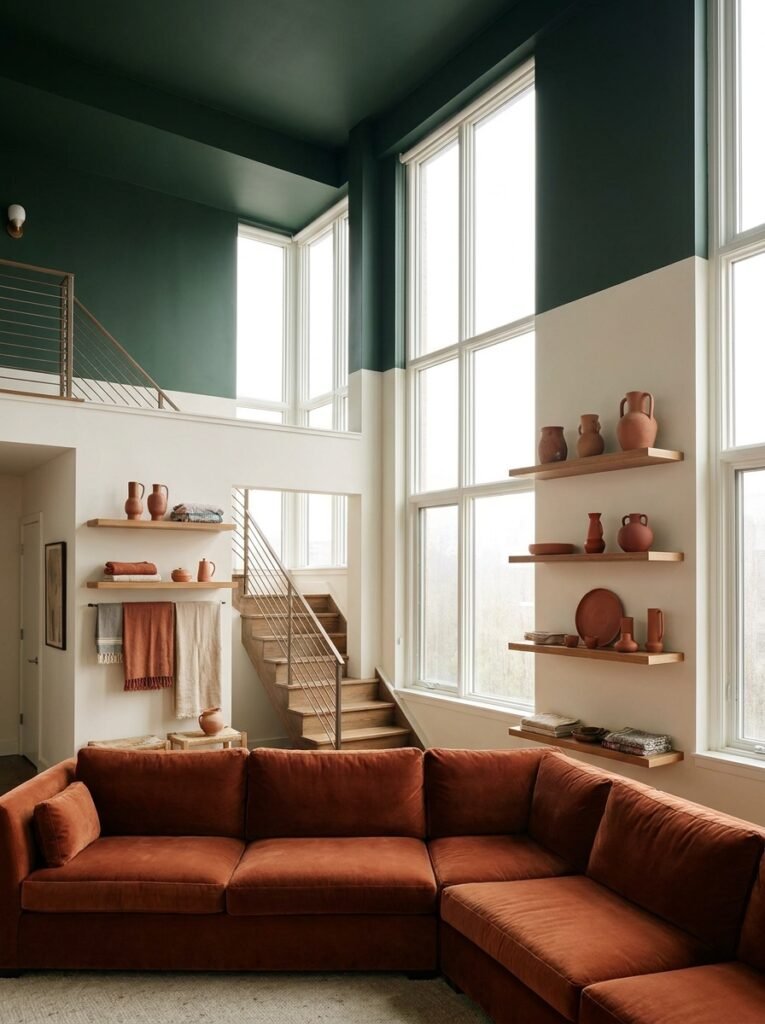
Color in a duplex living room does something it doesn’t do anywhere else in the home — it travels vertically. The way a color reads at floor level is entirely different from how it reads at 20 feet, and if you choose a palette without accounting for that, you’ll end up with a space that feels oddly disconnected from itself.
The most successful duplex living room palettes tend to be grounded in one or two dominant neutrals — warm whites, soft greiges, deep charcoals — that are used consistently across both levels. From there, you introduce accent colors through soft furnishings, art, and decorative objects on the lower level, where they can be changed seasonally without requiring a ladder and a professional painter.
If you’re drawn to bold color, consider using it as a single statement — a deeply saturated accent wall on the upper level, for instance, or a moody ceiling painted in a rich navy or forest green that makes the soaring height feel intentional rather than accidental. There’s something deeply satisfying about looking up and seeing a ceiling color that makes the entire room feel like it exhales.
Light colors will make your tall walls feel even taller and more expansive. Darker colors will bring those walls visually closer, creating a cozier, more enveloping atmosphere. Neither is wrong — but you need to choose deliberately.
—
4. Statement Lighting That Honors the Height (And Fills It Beautifully)
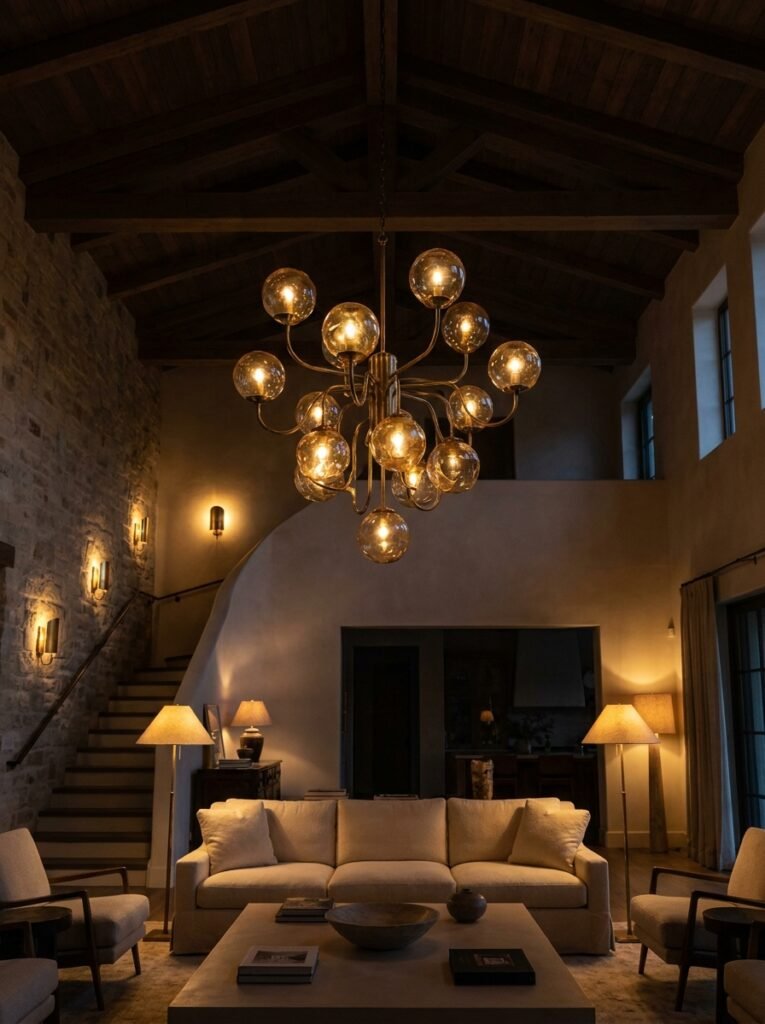
Lighting in a duplex living room is not a finishing touch — it is a structural design decision. And getting it right transforms the entire experience of being in the space.
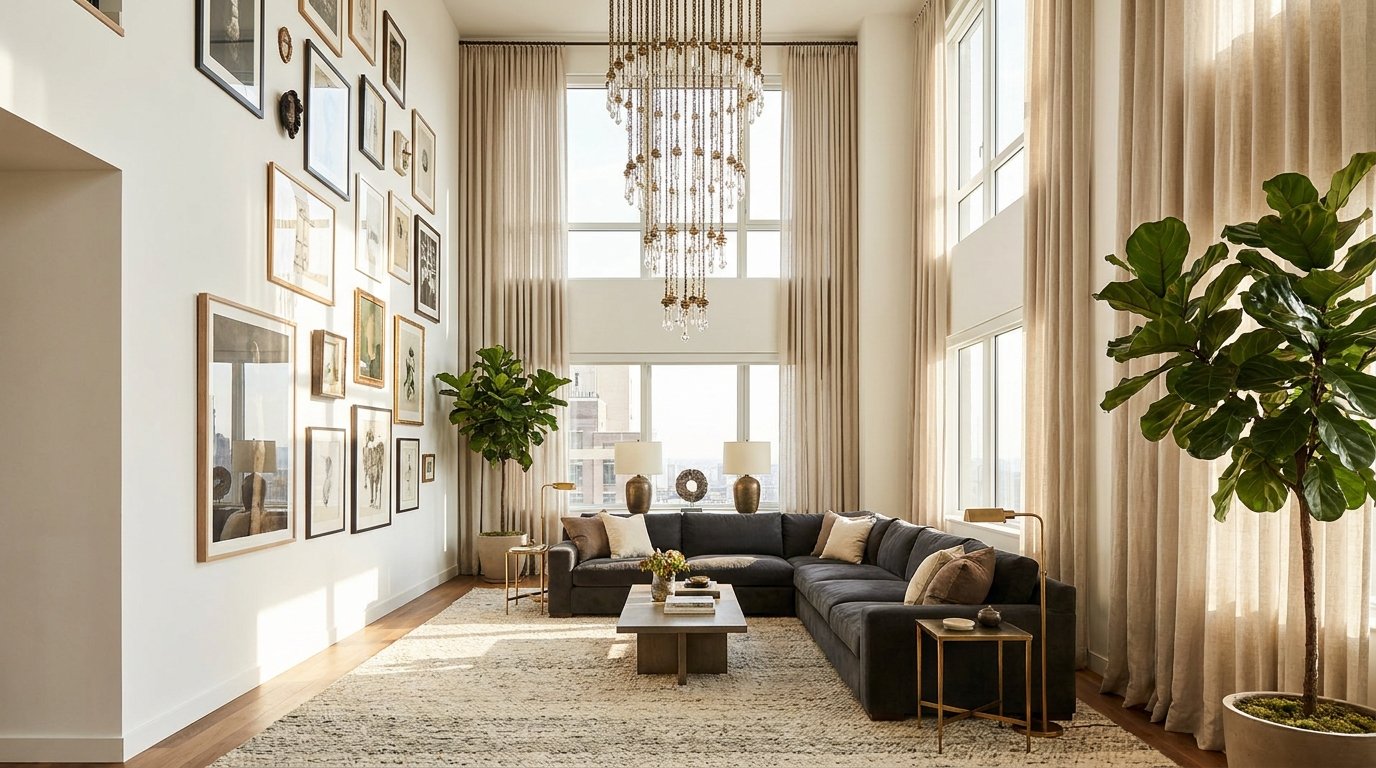
The most powerful move available to you is a large-scale chandelier or pendant light hung from the ceiling and allowed to cascade dramatically into the room. This does several things at once: it creates a visual anchor in that intimidating upper space, it draws the eye upward beautifully, and it provides the kind of ambient light that a tall room desperately needs.
Scale is everything here. A light fixture that would feel generous in a standard 9-foot-ceiling room will look timid and out-of-place in a 20-foot duplex space. Don’t be afraid of a chandelier that feels almost comically large in the showroom — in your double-height space, it will be exactly right.
Supplement your statement pendant with layered lighting throughout the lower living zone: table lamps for warmth, floor lamps for reading nooks, subtle LED strips along shelving or architectural details. Lighting should feel like it wraps the room in multiple layers of warmth, not blast it from a single source above.
“The right light fixture in a duplex living room isn’t decorative — it’s architectural.”
And if your staircase is visible from the living room? Light it. Each step gently illuminated, or a wall of sconces rising alongside the stair railing — these details create the kind of layered beauty that stops people in the doorway.
—
5. The Furniture Layout Conversation Nobody Tells You About
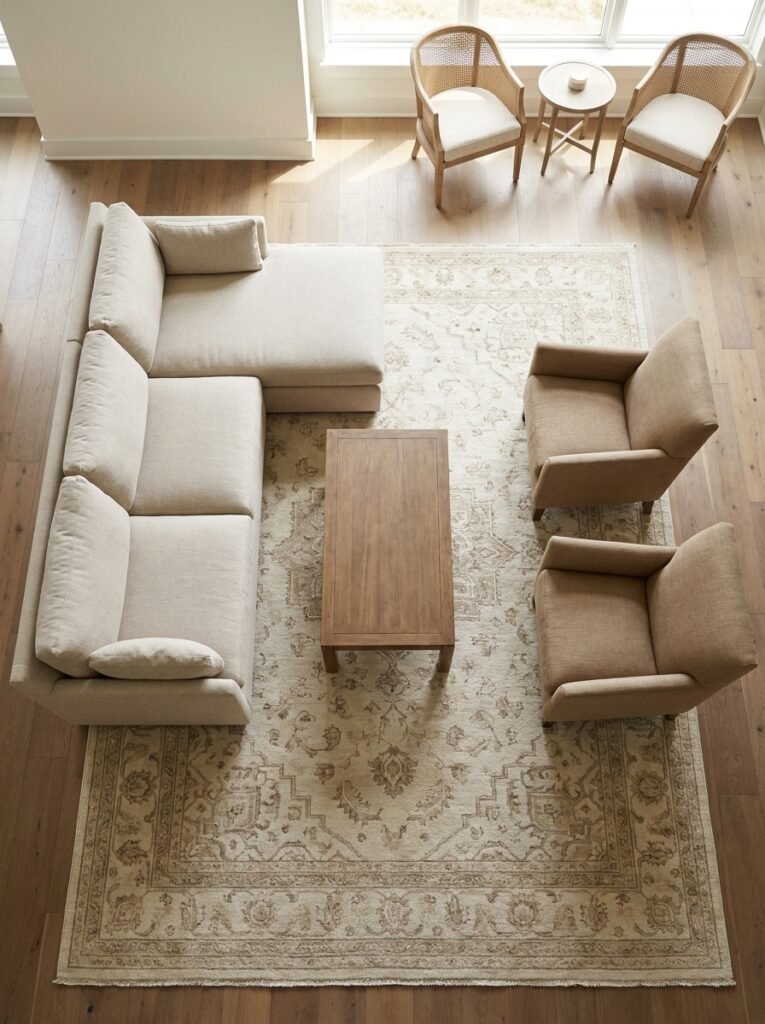
Furniture in a large, open, double-height space has a tendency to drift — sofas pushed against walls, chairs scattered without logic, the whole room feeling like a hotel lobby rather than someone’s home. The secret to avoiding this is intentional conversation groupings that create intimacy within the scale.
Choose one dominant seating area as the room’s living center. A large sectional sofa or a generous three-piece arrangement around a substantial coffee table becomes the room’s emotional core — the place where people naturally gather. Ground this grouping with a rug that is large enough to anchor all the furniture legs (a rug that’s too small makes even beautiful furniture look lost).
From there, consider a secondary seating moment near a window, a fireplace, or the base of the staircase. A pair of armchairs and a small side table become an invitation to a quieter conversation, a reading moment, a cup of tea in the afternoon light.
Resist the urge to fill every square foot. A duplex living room needs breathing room — negative space is part of the design.
—
6. Making Those Soaring Walls Your Greatest Asset
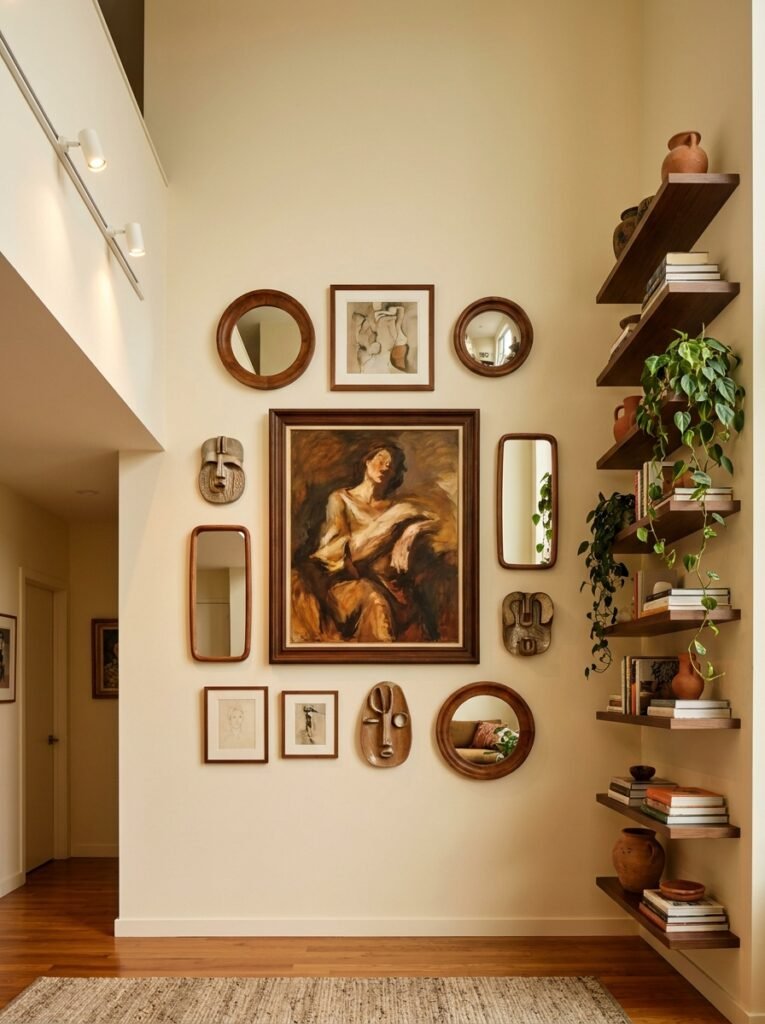
Those tall, beautiful, slightly terrifying walls are the defining feature of your duplex living room. The question is never whether to decorate them — of course you will — but how to do it in a way that feels purposeful and human rather than desperate.
A large-scale art installation or a single oversized painting is one of the most powerful things you can do. Something that spans 6 to 8 feet in height on a 20-foot wall reads beautifully and gives the lower portion of that wall a clear visual focal point.
An alternative that’s become increasingly popular in duplex spaces is the full-height gallery wall — an eclectic, carefully curated collection of art, mirrors, and objects that begins at eye level and climbs all the way toward the ceiling. When done well, this feels like an autobiography of the people who live there. When done carelessly, it feels chaotic. The key is maintaining consistent framing styles or a consistent color within the collection to create visual unity even within variety.
Floating shelves that extend upward — perhaps reaching the 12 or 14-foot mark — offer both function and beauty. Books, plants, ceramics, and curated objects at multiple heights create the kind of layered visual interest that a tall wall genuinely needs.
—
7. The Role of Texture in Softening a Grand Space
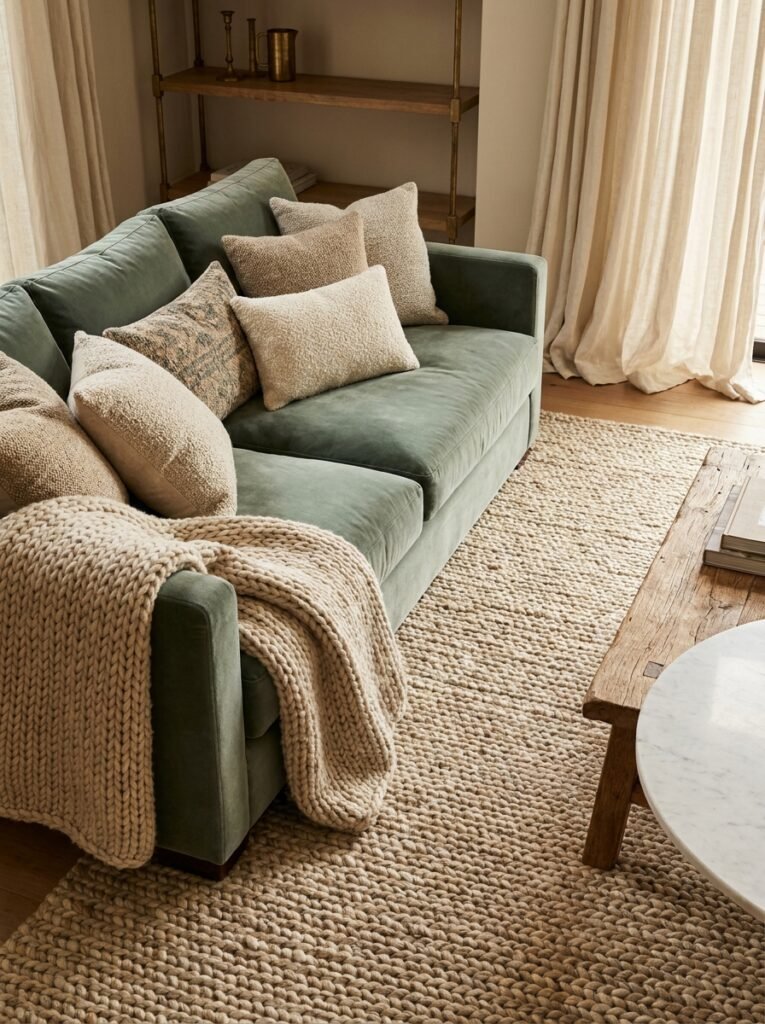
A duplex living room can feel cold — not in temperature, but in atmosphere — if texture isn’t brought in deliberately. And this is where so many otherwise beautiful spaces fall short.
Texture is what turns a visually impressive room into one that people actually want to stay in. A chunky knit throw draped over the arm of a sofa. A hand-knotted wool rug with depth and variation underfoot. Velvet cushions that catch the light differently depending on the angle. Linen curtains that puddle slightly at the floor. Aged brass hardware on a shelving unit. A rough-hewn wooden coffee table next to smooth marble.
In a double-height space, where hard architecture tends to dominate, textural softness is essential. Bring in as many tactile layers as you can in the lower third of the room — the zone where people actually spend their time — and let those textures create the cozy, lived-in warmth that makes an impressive space feel genuinely like a home.
—
8. Window Treatments for Two-Story Spaces (A Category of Their Own)
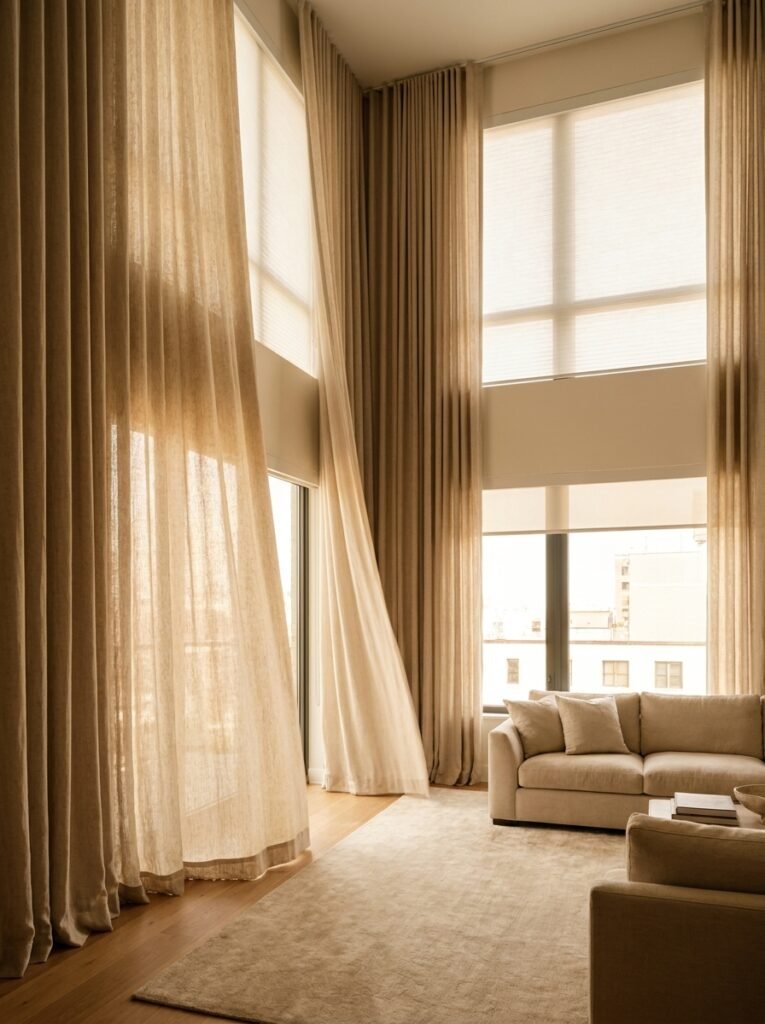
Windows in a duplex living room are often spectacular — floor-to-ceiling glazing, double-height windows, or dramatic architectural openings that let light pour in from above. They are also one of the most logistically challenging design elements you’ll encounter.
For windows that span both levels, floor-to-ceiling curtains hung from the highest point are almost always the right answer. They elongate the space, add softness to all that glass and architecture, and create the feeling of luxury that this kind of room deserves. Choose fabric that moves — lightweight linen, soft velvet, or a textured weave — because the gentle movement of floor-length curtains in a tall room is genuinely beautiful.
“Curtains hung from the ceiling don’t just dress a window — they dress an entire room.”
For windows on the upper level that are inaccessible, consider motorized shades — practical, clean, and increasingly affordable. A remote-controlled shading system on upper-level windows gives you light control without the architectural awkwardness of trying to install and access traditional treatments at 18 feet.
—
9. Incorporating the Staircase as a Design Feature, Not an Afterthought
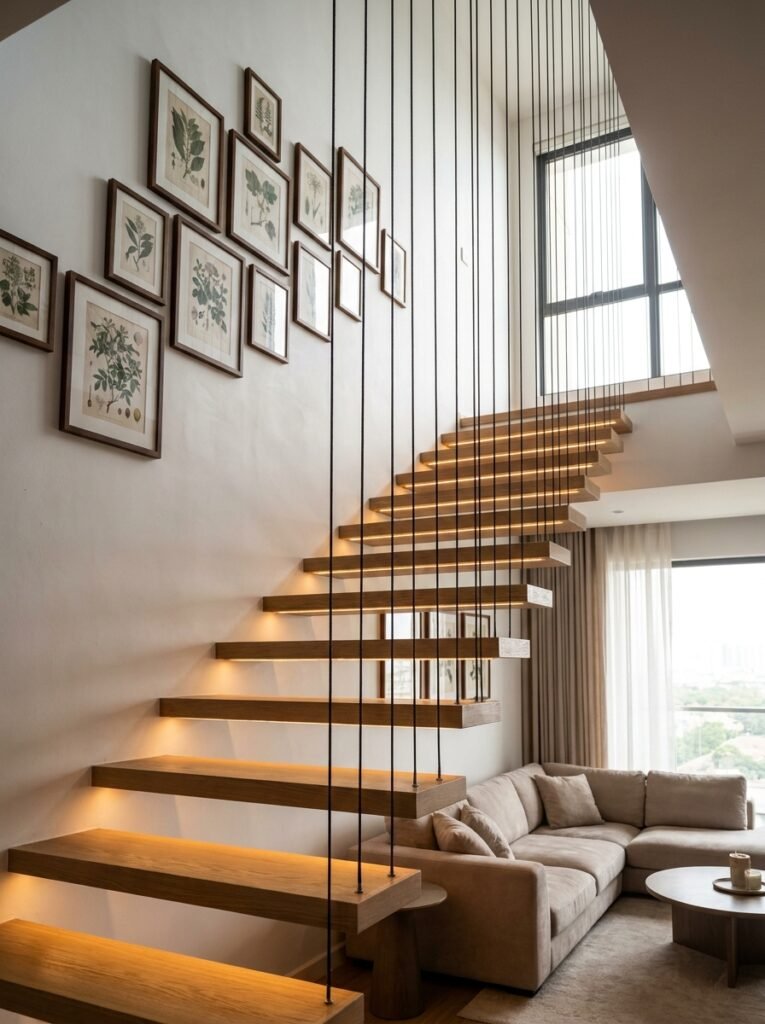
In a duplex living room, the staircase is rarely hidden. It’s right there — a structural feature that connects the two levels and, whether you like it or not, plays a significant visual role in the room’s overall character.
The homes that get this right treat the staircase not as a functional necessity to be minimized, but as a design feature to be celebrated. A floating staircase with open risers and a clean steel or glass railing creates an airy, modern feeling while maintaining sightlines between levels. A solid staircase with beautiful wooden treads and an elegant wrought-iron balustrade creates a more traditional, substantial feeling.
The wall alongside the staircase is prime real estate. A gallery of family photographs climbing upward. A single dramatic botanical illustration in a oversized frame. A collection of ceramic wall hangings arranged asymmetrically. Whatever you choose, treat this vertical run of wall with the same intentionality as any other significant surface in the room.
—
10. Plant Life That Scales Beautifully with the Space
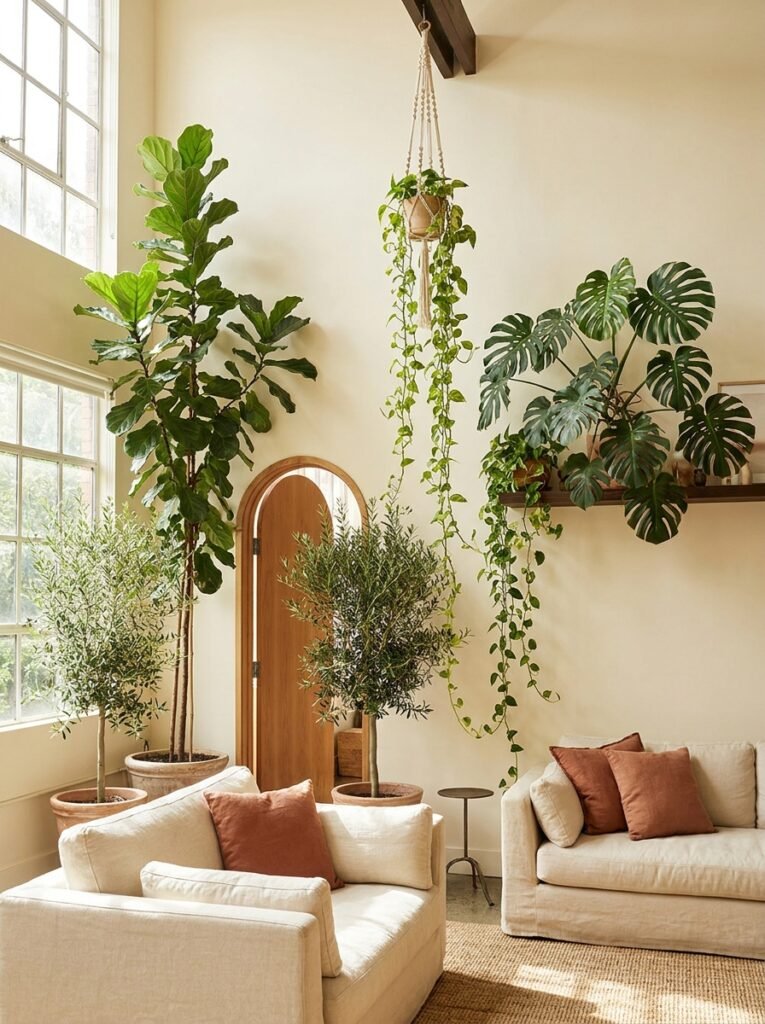
There is something about a large, living plant in a double-height room that no other design element can replicate. Plants bring organic warmth, biological scale, and a sense of life and movement that softens even the most architectural of spaces.
Think beyond the standard potted plant in the corner. A fiddle-leaf fig tree reaching six feet tall. A dramatic monstera that cascades across a shelf. Trailing pothos tumbling from a high ledge. A pair of olive trees flanking the main entrance to the living space.
In a duplex room, plants can also travel vertically — hanging from a ceiling hook at 12 feet, trailing long tendrils downward toward the furniture below, becomes a living design feature that bridges the vertical space between levels in a way no inanimate object can quite match.
—
11. The Cozy Corner Principle — Because Grandeur Needs Intimacy
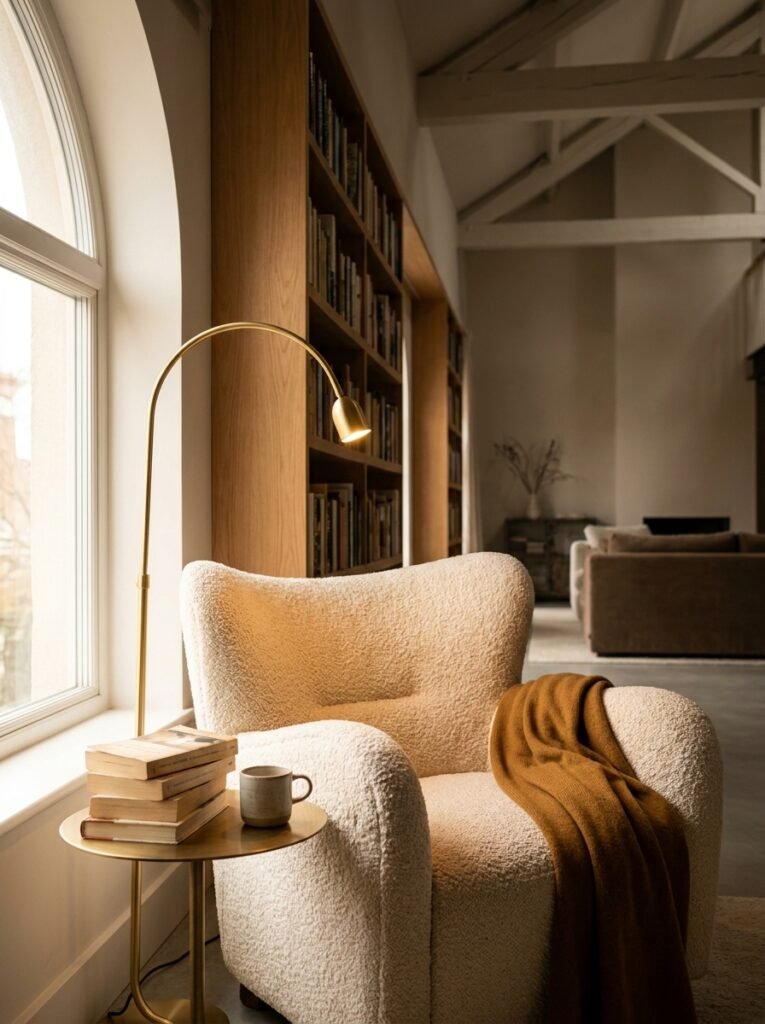
Here is a truth that every experienced interior designer knows: grand spaces need intimate moments. A duplex living room that is purely impressive and never intimate will always feel slightly exhausting to live in — beautiful to look at, but not genuinely comfortable to occupy.
Create at least one deliberate cozy corner in your duplex living room. A window seat with deep cushions and a built-in bookcase. An oversized reading chair with a floor lamp and a small side table within reach. A low banquette near the fireplace with soft cushions and a cashmere throw.
These small, human-scaled moments of comfort within a large space create the psychological safety that makes a grand room feel like a home. When guests arrive, they will naturally gravitate toward these corners — and that is exactly the point.
—
12. Personalizing the Space So It Tells Your Story
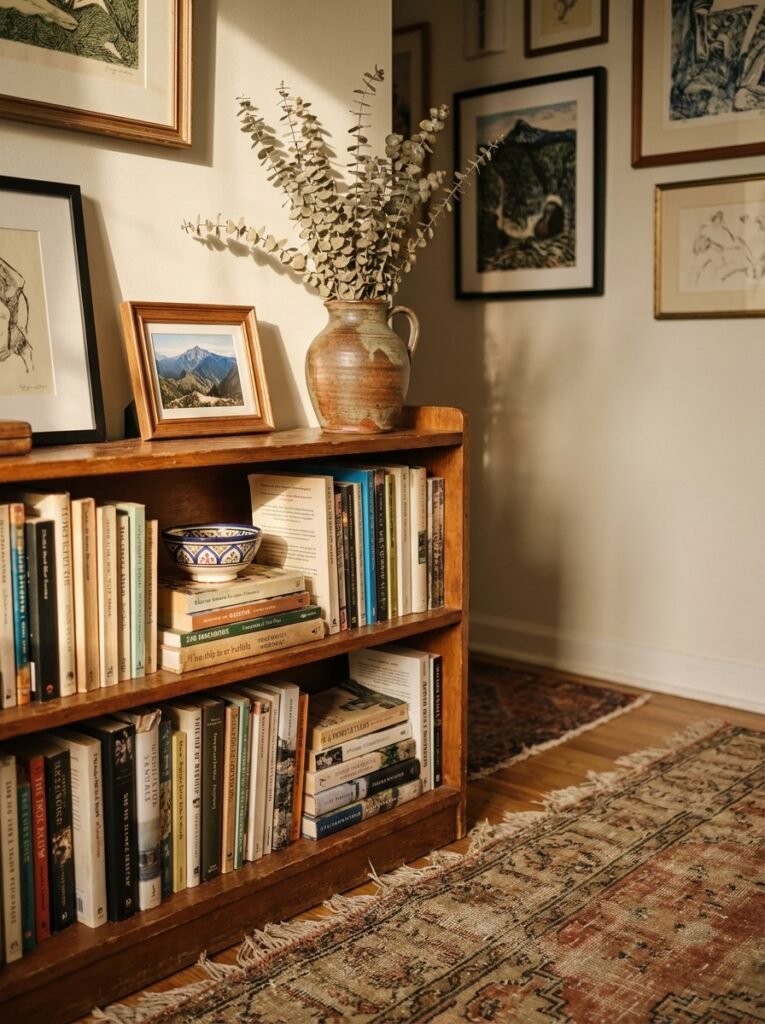
The most beautiful duplex living rooms — the ones that get saved thousands of times on Pinterest, the ones that stop people mid-scroll — are not the ones with the most expensive furniture or the most flawless design execution. They are the ones that feel unmistakably lived in by a real person with a real story.
Your bookshelves should hold books you’ve actually read. Your art should move you, not just match your sofa. Your ceramics should come from the market in Portugal or the small shop you found on that trip three years ago. Your rug might be imperfect, with a history and a character that a brand-new piece simply can’t have.
Personalization is what separates a showroom from a sanctuary. And in a duplex living room — where the scale is large enough to feel slightly impersonal by default — personality and specificity are your most powerful design tools. Use them generously, unapologetically, and with full trust in your own taste.
—
🌿 How to Take Care of Your Duplex Living Room Design
Maintaining the beauty of a double-height living space requires a little more intentionality than a conventional room — here’s how to keep it feeling fresh and cared-for over time.
Dust and refresh the upper zones seasonally. Those high shelves and ledges accumulate dust quickly, and neglected upper surfaces make the whole room feel forgotten. A long-handled duster and a scheduled seasonal refresh will keep the space feeling intentional at every level.
Rotate your accessories annually. Swapping cushions, throws, and decorative objects with the seasons keeps a large, investment-heavy room feeling dynamic and personal rather than static and museum-like.
Reassess your lighting as bulbs change and as seasons shift the quality of natural light. What felt perfectly balanced in summer may feel too dim in winter — add a floor lamp or swap shades to compensate.
Trim and tend your plants regularly. In a double-height room, overgrown or neglected plants read at a much larger scale than they would in a smaller space — a beautifully maintained plant is a design element; a struggling one is a distraction.
Trust the evolution. A duplex living room is never truly finished — it grows with you, with your family, with your taste. Give yourself permission to keep editing.
—
❓ FAQ
Q: How do I keep a duplex living room from feeling cold and cavernous? A: Layer in texture at the lower level — rugs, cushions, throws, linen curtains, and warm-toned lighting all work together to create intimacy within the scale. Creating defined conversation groupings with furniture, rather than scattering pieces around the room, also helps the space feel warm and intentional rather than vast and empty.
Q: What size rug works best in a double-height living room? A: Always err larger than you think you need. In a duplex living room, a rug should be substantial enough to anchor your entire primary seating group — ideally with all four legs of every piece of furniture resting on the rug. An 8×10 foot rug that would feel generous in a standard room will often look undersized in a double-height space; a 10×14 or larger is frequently the right choice.
Q: Can a duplex living room work with a traditional or classic interior design style? A: Absolutely — in fact, some of the most stunning duplex living rooms lean fully traditional, with coffered ceilings, rich wood paneling, plaster molding, and classic furniture arrangements. The key is to scale your traditional elements to the room’s generous proportions, choosing substantial, well-crafted pieces rather than delicate or light-scaled ones.
—
💭 Final Thought
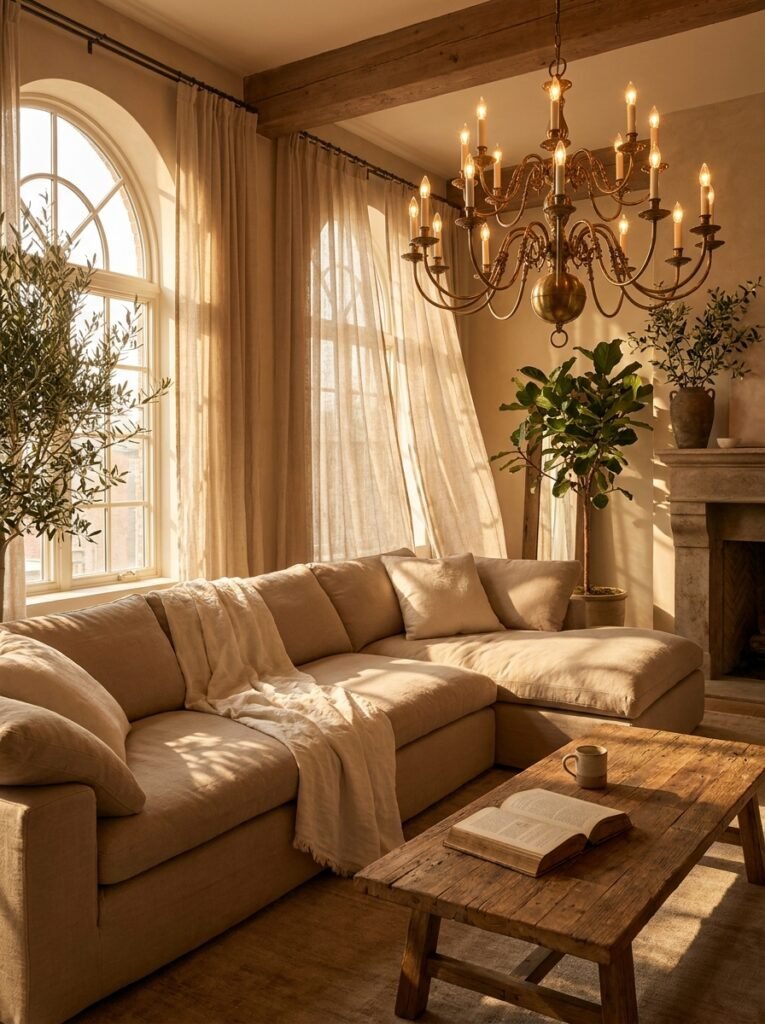
A duplex living room is one of the most extraordinary spaces a home can offer — a gift of height, light, and possibility that most rooms simply don’t have the architecture to provide. When you design it with intention, with layered warmth, with your own story woven through every surface, it becomes something that goes far beyond impressive: it becomes a place where people feel genuinely welcome, genuinely at ease, and genuinely reluctant to leave.
The grandeur and the intimacy, together — that is the goal. So tell me: which of these ideas feels most like the version of your duplex living room you’ve been quietly imagining all along?