The Boho Living Room That Made Me Fall in Love With My Home Again
There’s a moment — quiet, unexpected — when you walk into a room and feel like it finally gets you. That’s what a well-done boho living room does. It doesn’t demand perfection; it invites you to breathe, to linger, to belong.
—
1. What “Boho” Really Means — And Why It’s More Than Just a Trend
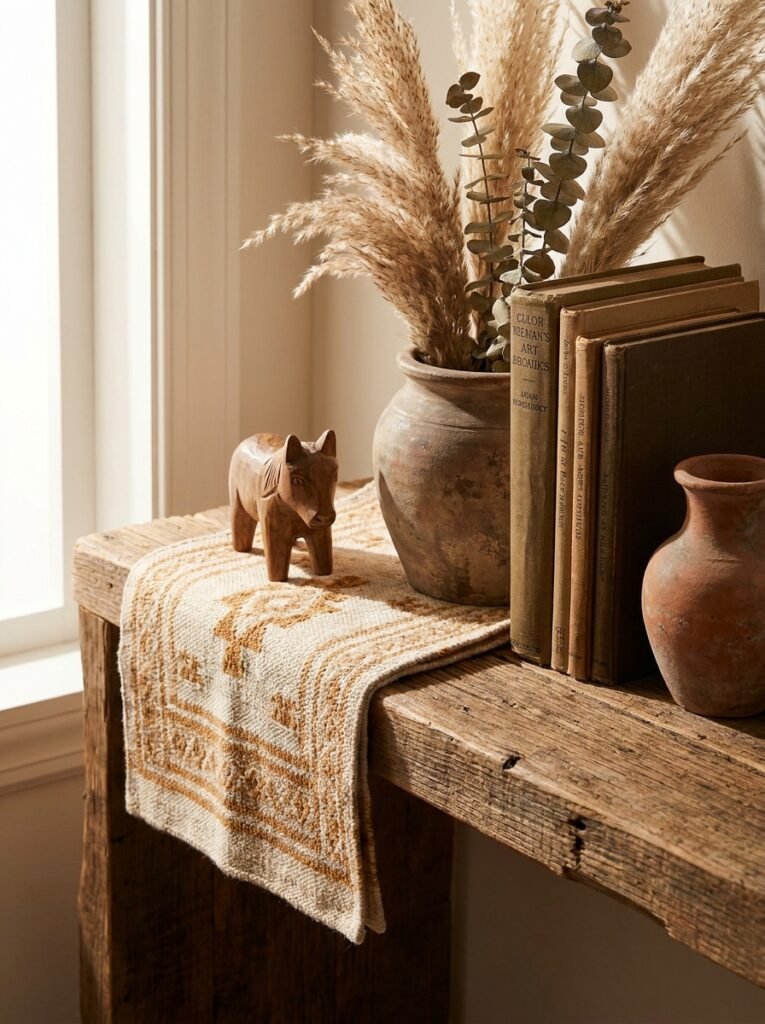
Bohemian style gets misunderstood all the time. People picture a chaotic jumble of patterns, trailing plants, and macramé wall hangings everywhere — and while those elements can absolutely be part of it, boho is fundamentally a philosophy before it’s an aesthetic.
The word “bohemian” traces back to 19th-century European artists and writers who rejected rigid social conventions and embraced a life centered on creativity, freedom, and meaning. That same spirit lives in modern boho interiors. A boho living room says: I value beauty, but not at the cost of comfort. I love color, but I follow my own rules about it. I collect things that mean something to me.
This is why boho resonates so deeply with so many people right now. In a world saturated with fast furniture and algorithm-perfect spaces, there’s something radical about a room that looks genuinely, warmly lived-in. Something that reflects a real human life — travels, tastes, textures collected over time.
“A boho living room isn’t decorated. It’s curated over a lifetime of living well.”
The practical implication here is important: you don’t need to buy a boho living room. You need to build one, slowly and intentionally, letting it evolve as you do.
—
2. The Color Palette That Feels Like a Warm Hug
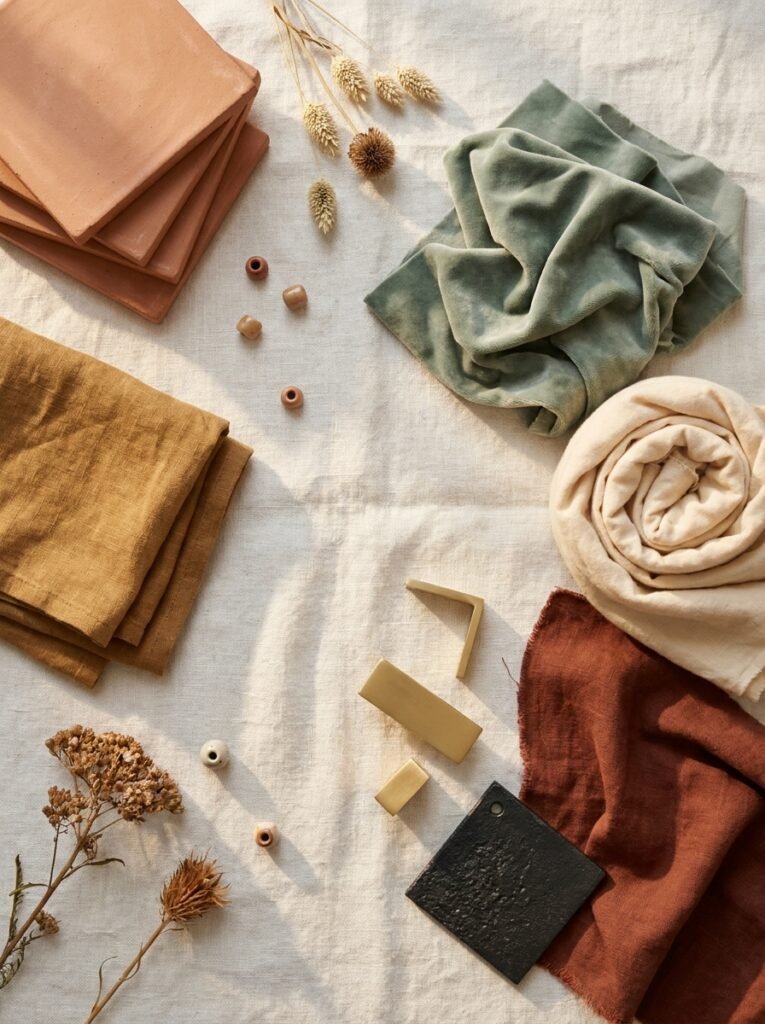
Color is where so many people hesitate when attempting boho decor, and that hesitation is understandable — the palette can feel intimidating because it’s so unlike the neutral minimalism that’s dominated design conversations for the past decade.
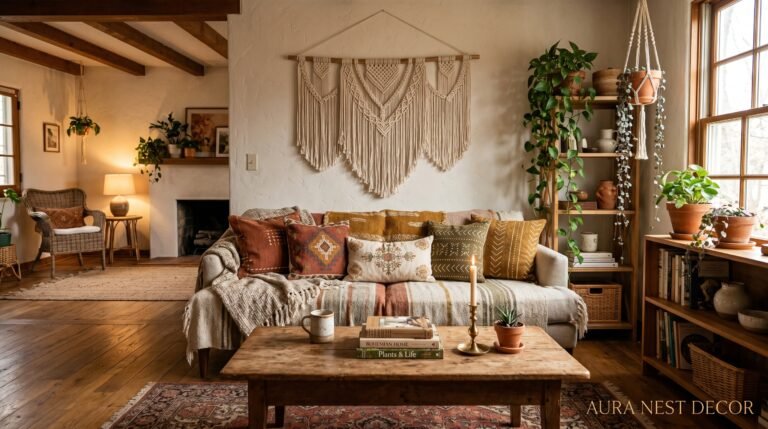
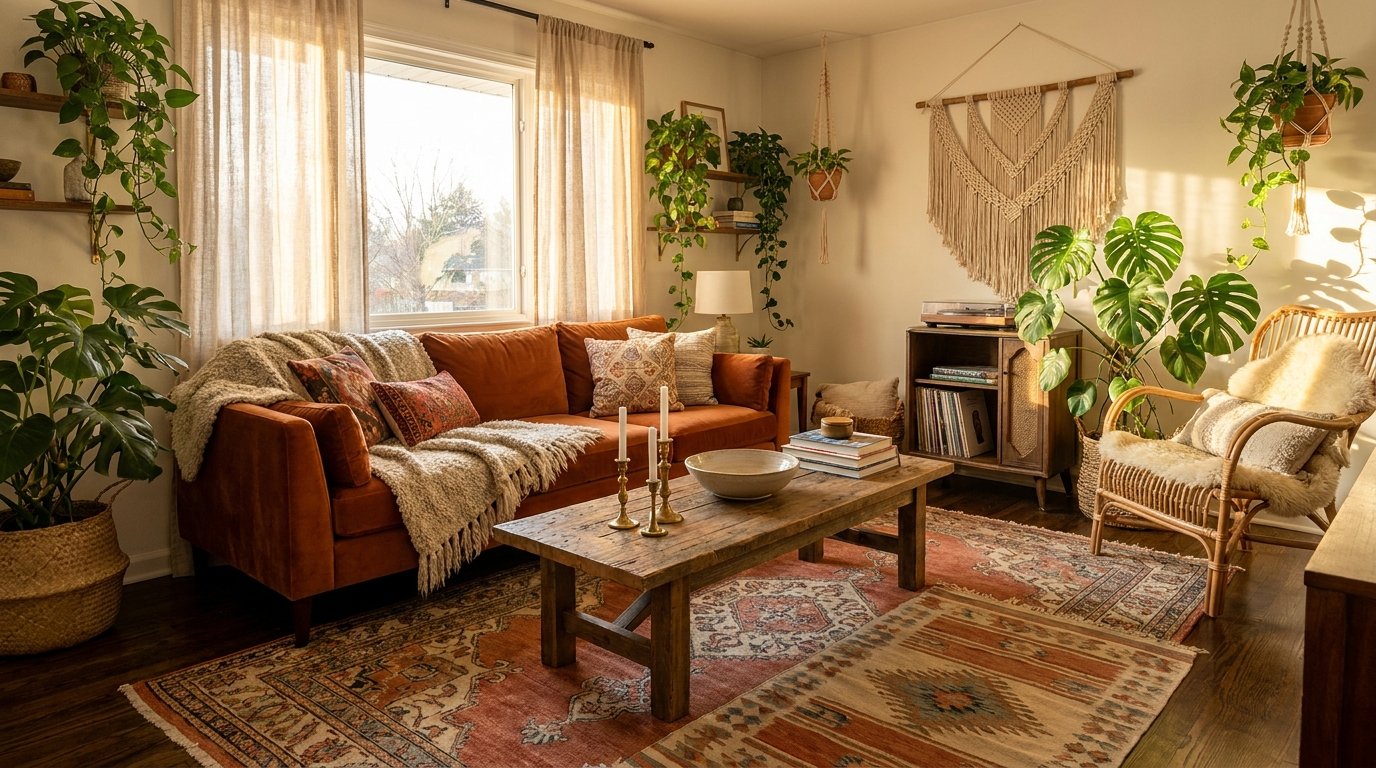
But here’s what makes boho color logic click: it’s nature-inspired at its core. Think terracotta, ochre, warm cream, dusty sage, deep rust, burnished gold, and rich burgundy. These are the colors of desert sunsets, dried botanicals, earthy clay pots, and aging wood. They all share an undertone — warmth — which is what makes them feel harmonious together despite their variety.
A reliable starting formula: choose one dominant warm neutral (cream, tan, warm white) for your walls and largest furniture pieces. Then layer in two or three accent colors drawn from that earthy palette — perhaps a terracotta throw, a rust-colored rug, and a few sage green cushions. Finally, let metallic accents in warm brass or antique gold tie everything together without making the space feel formal.
The secret weapon most boho designers swear by? Black. A few deliberate touches of matte black — a picture frame, a candle holder, an iron plant stand — ground all those warm tones and stop the room from feeling too sweet or uniform.
—
3. The Foundation Every Boho Room Needs: Layered Textiles
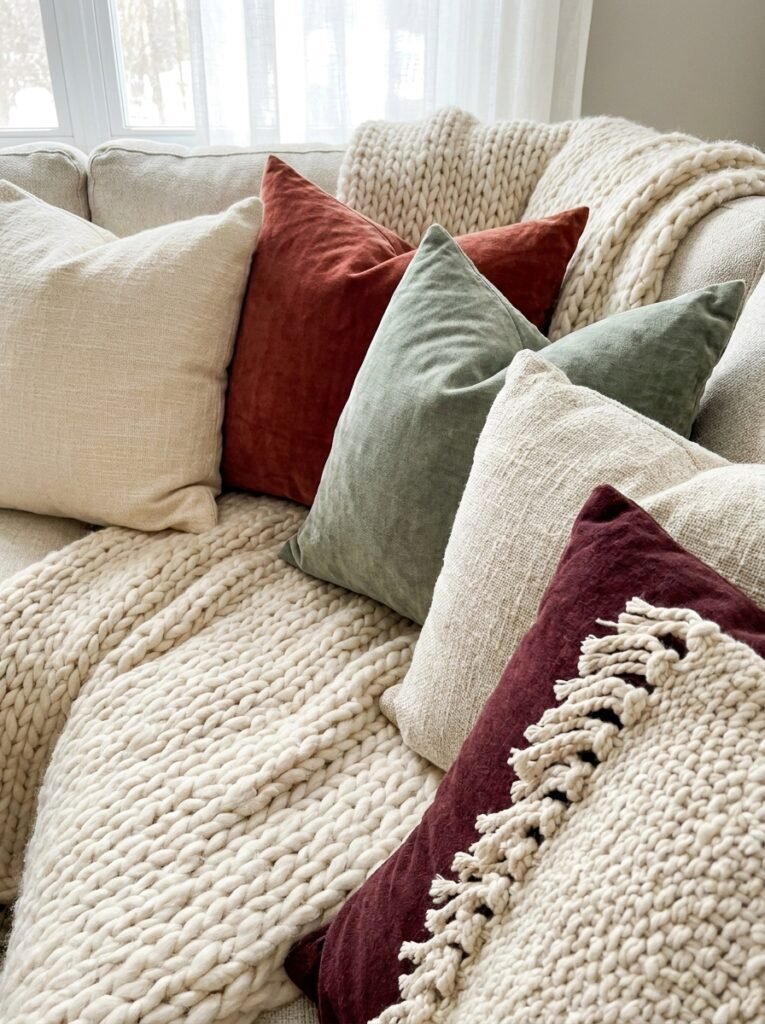
Imagine running your hand across a sofa stacked with cushions in varying textures — woven cotton, smooth velvet, nubby linen, a hand-knotted pillow cover with fringe edges. That tactile experience is the emotional heart of boho design.
Textiles do something in a living room that paint and furniture alone cannot: they create warmth you can feel. And layering them is an art form that anyone can learn.
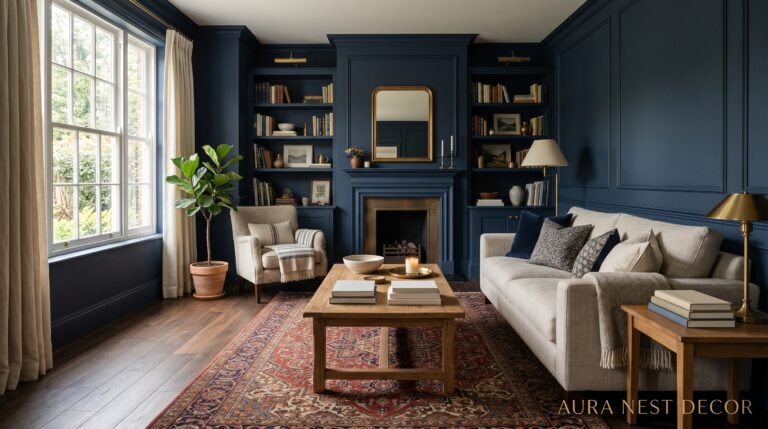
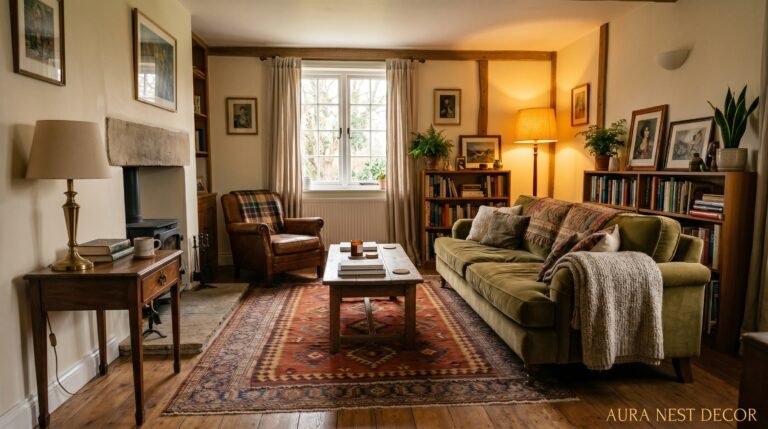
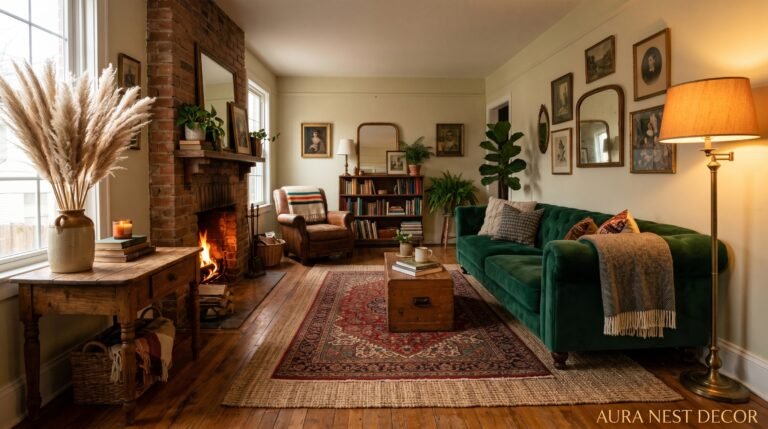
Start with your largest textile — usually the area rug. In a boho living room, the rug is often the star of the show. Look for a vintage-style Persian rug, a Moroccan beni ourain in cream and black, a hand-knotted kilim in warm tones, or even a braided jute rug if you’re working with a simpler palette. The rug sets the visual temperature of the entire room.
From there, layer throws over your sofa and armchairs — don’t fold them neatly, drape them casually over the armrest or let one pool slightly on the floor beside a reading chair. Add cushions in varying sizes and textures. And don’t be afraid to place a smaller rug on top of a larger one for an effortlessly layered look that’s become a signature boho move.
—
4. Furniture Choices That Feel Found, Not Purchased
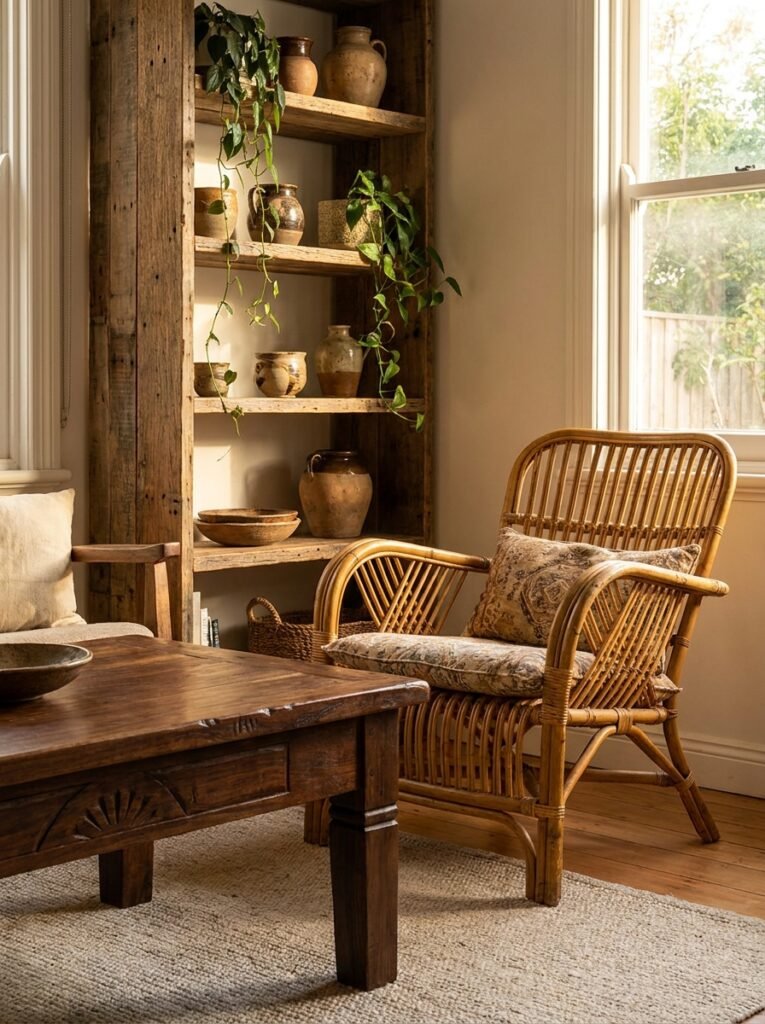
There’s a specific feeling that the best boho living rooms share — the sense that the furniture was discovered rather than ordered from a showroom. A carved wooden coffee table found at a flea market. A rattan armchair passed down from a grandmother. A reclaimed wood shelving unit that was someone else’s before it was yours.
This doesn’t mean you must shop secondhand (though thrift stores and estate sales are gold mines for boho pieces). It means choosing furniture with character — with the kind of craftsmanship and material honesty that makes a piece look better as it ages, not worse.
Rattan, wicker, and cane are boho staples for good reason: they’re lightweight, visually airy, and carry an unmistakable handcrafted quality. Pair them with solid wood pieces in darker tones — walnut, teak, or reclaimed pine — for balance. Avoid anything too sleek, too modular, or too obviously mass-produced. If it could be in an IKEA catalog with no modification, it might not carry the right energy for a boho space.
Low seating — floor cushions, poufs, low-profile sofas — is another boho hallmark. It creates a relaxed, casual atmosphere that quietly invites people to sit down, stay longer, and stop being formal.
—
5. Plants: The Living, Breathing Backbone of Boho Design
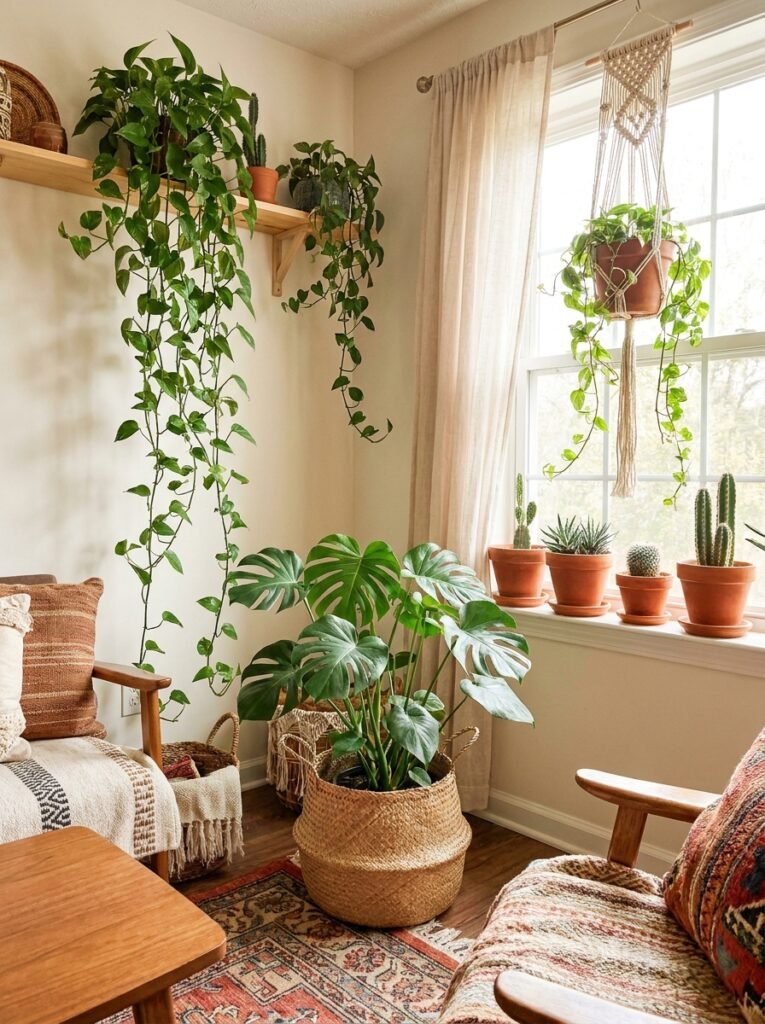
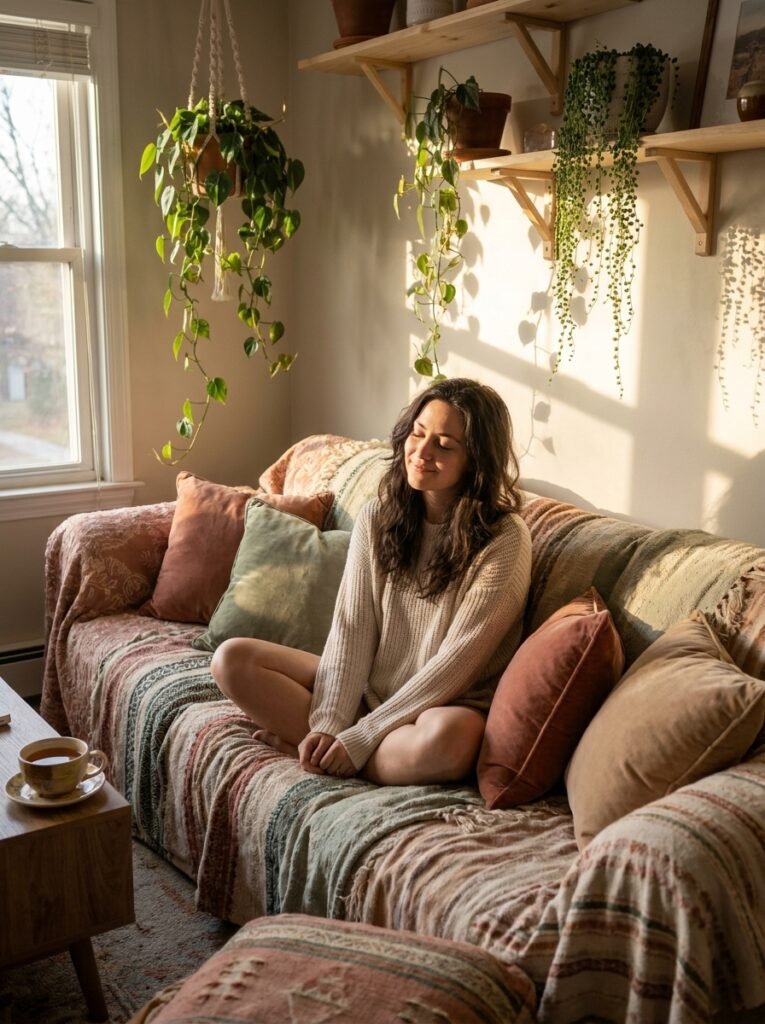
Walk into any truly magnificent boho living room and you’ll notice something almost immediately — it feels alive. That’s not an accident. Plants are arguably the single most important element in achieving an authentic bohemian atmosphere.
In boho design, plants aren’t accessories. They’re architecture. A trailing pothos cascading from a high shelf. A dramatic monstera in a woven basket planter. A cluster of terracotta pots on a window ledge holding succulents and small cacti. A fiddle leaf fig anchoring one corner of the room. Every plant adds not just visual richness but a sense of organic, breathing life that no manufactured decor element can replicate.
“The moment you bring plants into a room, it stops being a space and starts being a world.”
The good news is that you don’t need a green thumb to pull this off. Some of the most boho-friendly plants — pothos, snake plants, ZZ plants, spider plants — are nearly indestructible. They thrive on neglect, survive low light, and continue growing and trailing beautifully with minimal care.
The way you style plants matters as much as which plants you choose. Mix heights and textures. Use unexpected containers — vintage clay pots, woven baskets, painted ceramic vessels, even an old wooden crate. Hang plants from the ceiling with macramé hangers. Let climbers grow on a simple trellis against a wall. The more layered and wild the arrangement looks, the more authentically boho it becomes.
—
6. Lighting That Transforms a Room After Dark
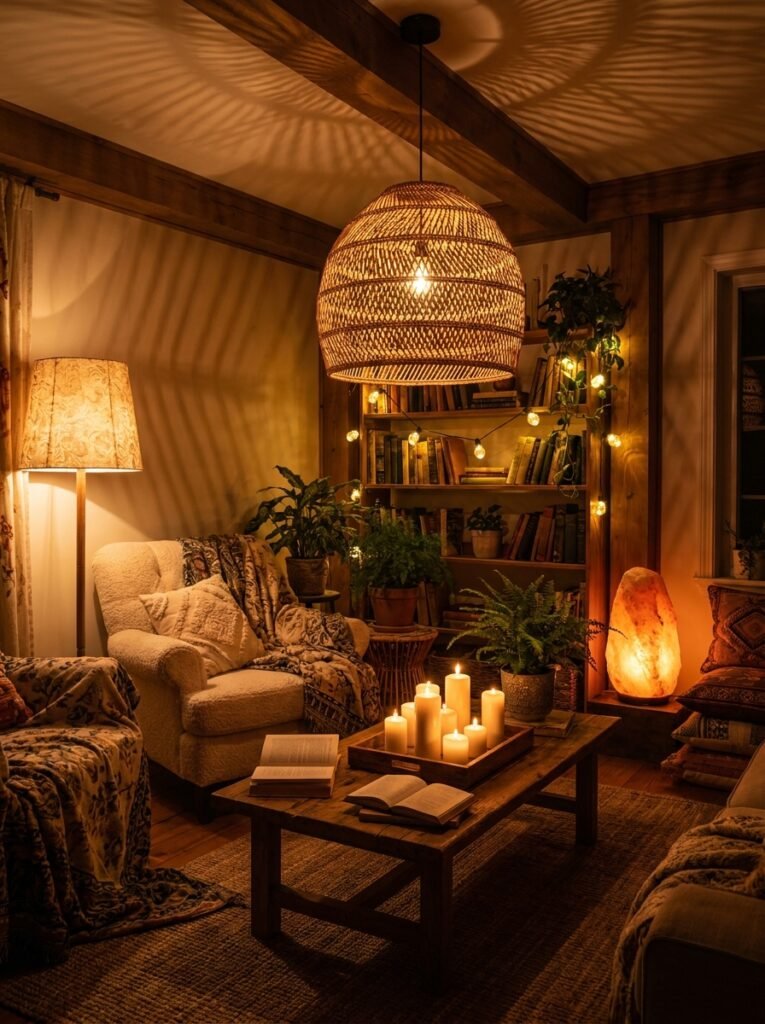
A boho living room that looks lovely in daylight should feel absolutely magical by night — and achieving that requires intentional, layered lighting rather than reliance on a single overhead fixture.
The goal is warmth. Always warmth. Think amber-toned bulbs (2700K or lower), dimmer switches wherever possible, and multiple light sources at varying heights. A single pendant light in rattan or woven seagrass immediately reads as boho. A floor lamp with a fabric shade adds soft ambient glow. Clusters of pillar candles on a wooden tray create an intimate, almost ceremonial atmosphere for evenings at home.
String lights are often dismissed as juvenile, but in the right context — woven through a bookshelf, draped along a window ledge, or curled into a large glass vase — they add a genuinely enchanting warmth. Salt lamps, too, cast a distinctly amber, almost otherworldly glow that suits boho spaces perfectly.
The rule is simple: the more lighting layers you have, the more control you have over the room’s mood, and mood is everything in boho design.
—
7. Gallery Walls That Tell a Story Instead of Decorating One
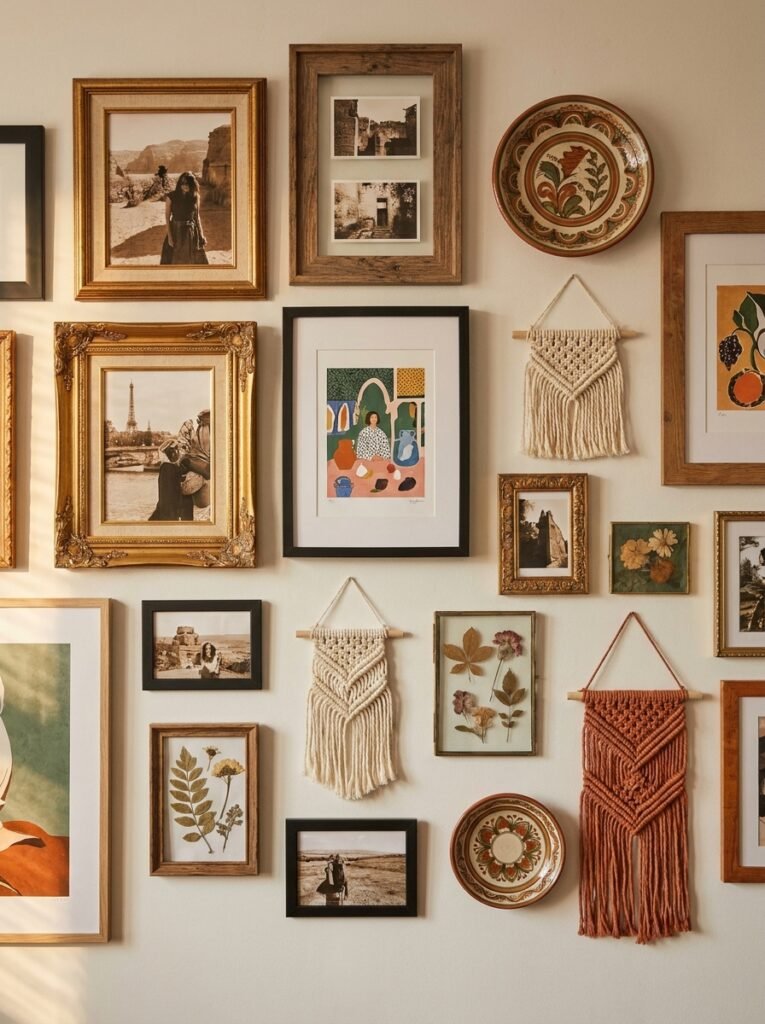
A gallery wall in a boho living room isn’t a grid of matching frames from the same store. It’s a slowly built collection of images, objects, and textures that together tell the story of who lives in this home.
Mix framed photographs — travel snapshots, candid family moments, images that capture places and people you love — with prints from independent artists, pages from vintage books, dried botanical specimens in simple frames, handwritten quotes, small woven wall hangings, and decorative plates. The variety is the point.
Frame sizes should vary dramatically. Some frames should be ornate; others simple. Mix wood finishes, metal frames, and simple black or white options. Hang them at different heights, cluster some close together and let others breathe with space around them.
The most memorable gallery walls grow over time. They’re not installed in a single afternoon — they expand, evolve, and deepen as new finds join them. That slow, intentional accumulation is exactly what boho design is about.
—
8. The Art of Intentional Clutter — Yes, That’s a Real Thing
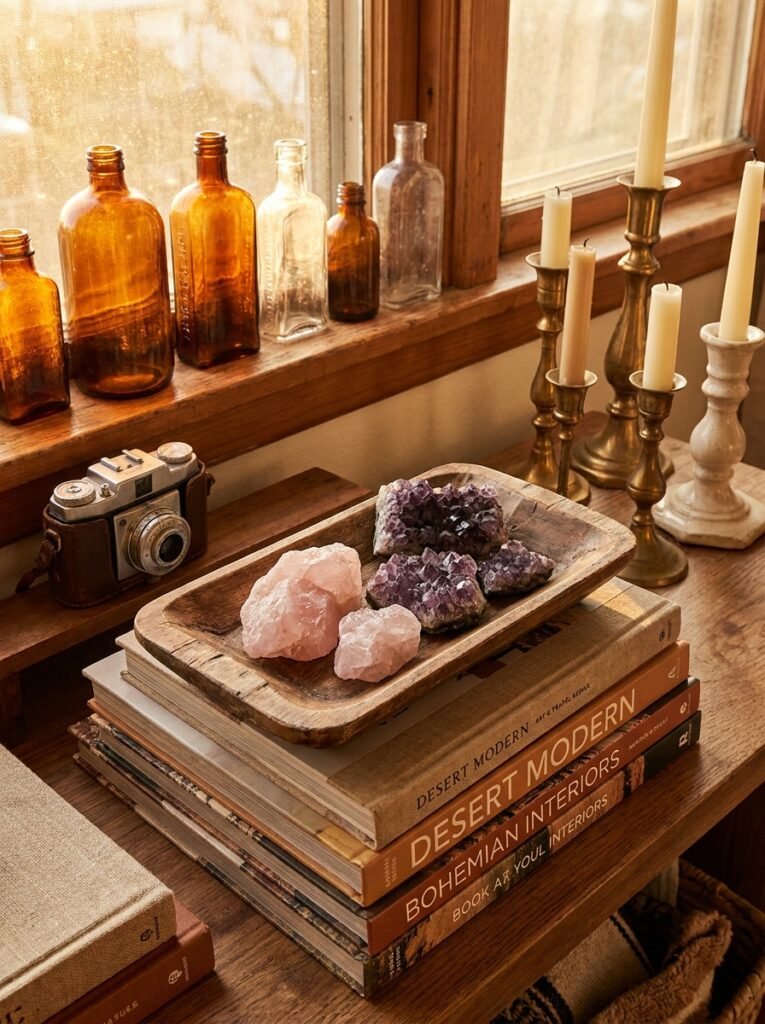
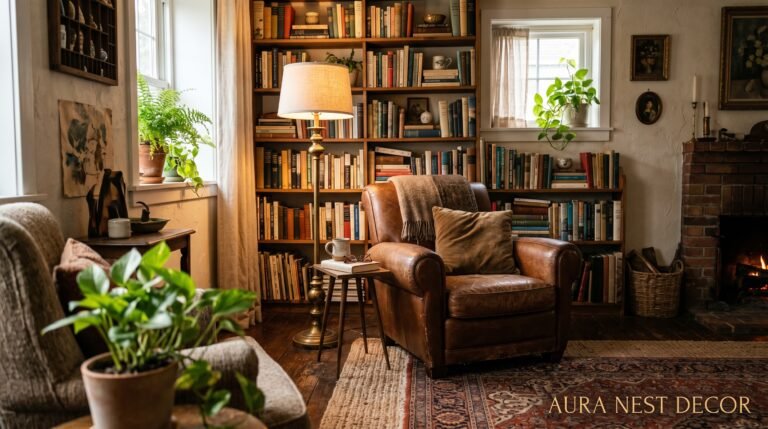
One of the most misunderstood aspects of boho style is the presence of what might look, at first glance, like clutter. Books stacked horizontally and vertically together. A collection of vintage glass bottles on a windowsill. Crystals and stones arranged on a wooden tray. A pile of interesting objects on a coffee table.
The difference between beautiful boho eclecticism and actual clutter comes down to intention and editing. Every object in a boho living room should either be beautiful, meaningful, or both. The vintage camera on the shelf isn’t random — it’s evidence of a passion. The stack of art books isn’t haphazard — it’s a curated collection. The collection of mismatched candlesticks isn’t careless — it’s deliberate.
The editing process is crucial. Walk through your space periodically and ask of each displayed object: does this bring me joy? Does it add to the story of this room? If the honest answer is no, it doesn’t belong — regardless of how bohemian it might seem in isolation.
“In boho design, nothing should be there just to fill space. Every object should be there because it fills the heart.”
—
9. Rugs on Rugs — The Layering Technique That Changes Everything
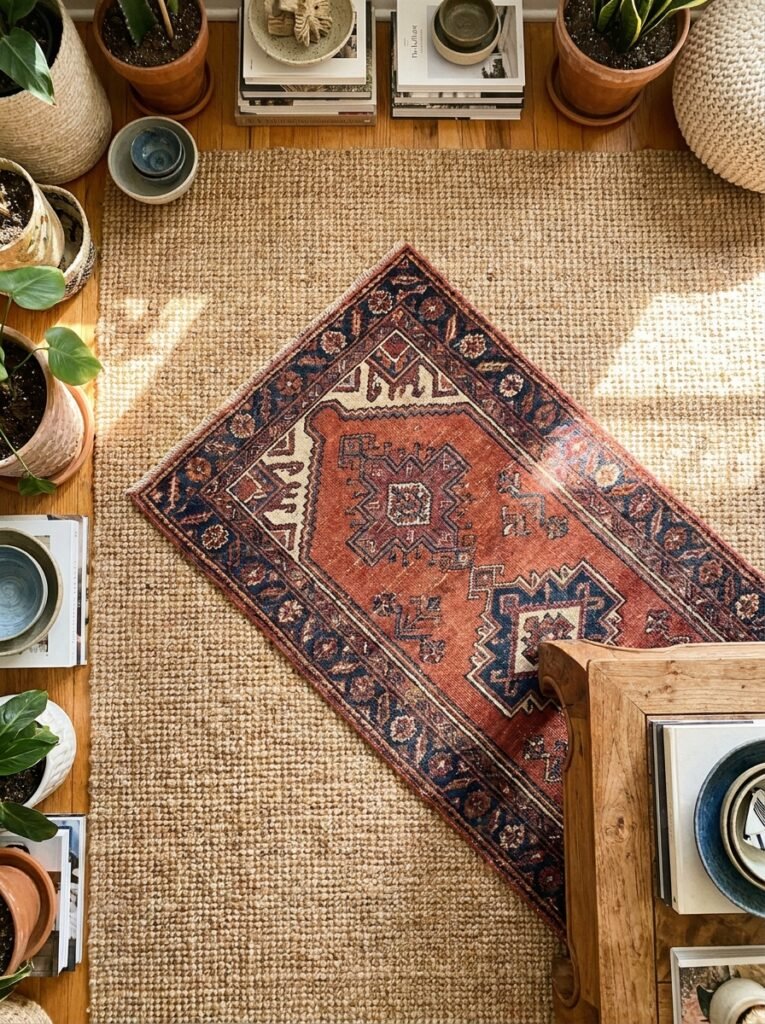
If there is one single design move that will transform a living room into a boho sanctuary faster than almost anything else, it’s layering rugs. This technique — placing a smaller, more pattern-rich rug on top of a larger, simpler base rug — creates instant visual depth, warmth, and that effortlessly collected look that defines the best boho spaces.
The base rug should be larger and relatively simple: a natural jute or sisal rug works beautifully, as does a neutral flatweave. The layered rug on top should bring personality — a vintage Persian runner, a kilim with geometric patterns, or a small Moroccan-style rug with bold contrast.
This technique works particularly well under a coffee table or in a conversation seating area. It anchors the space, defines zones in open-plan rooms, and adds the kind of textural richness that makes a room feel genuinely considered rather than simply furnished.
—
10. Boho on a Budget — Because Freedom Doesn’t Require a Fortune
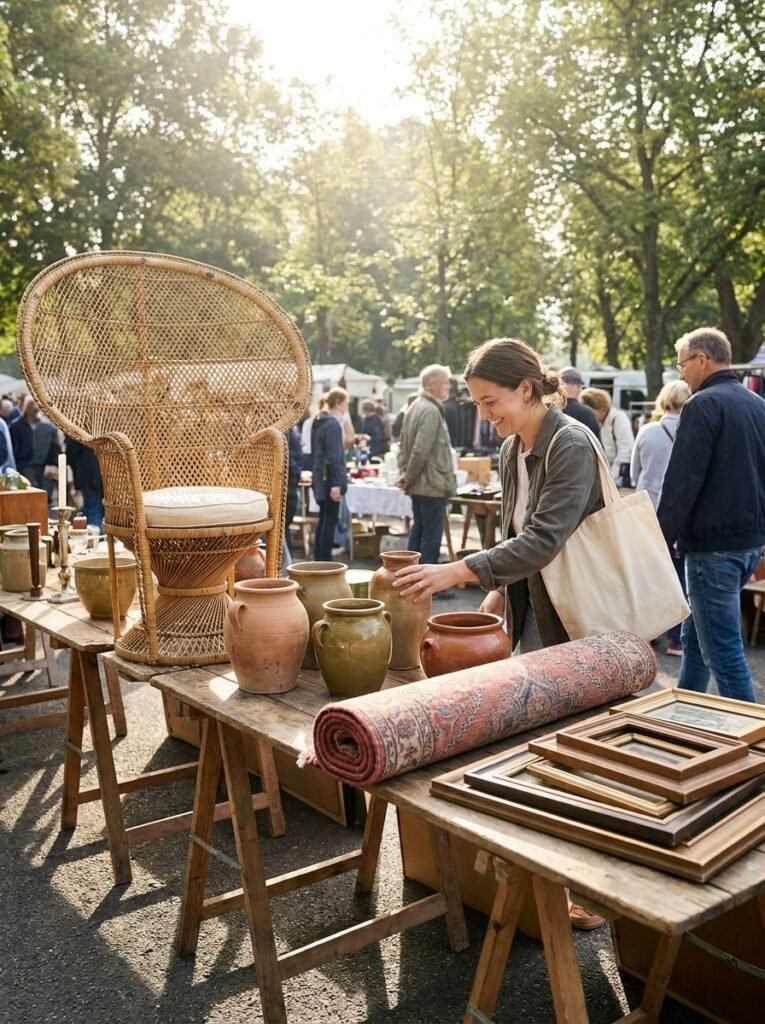
Here’s something that the design industry doesn’t always say loudly enough: boho is one of the most genuinely budget-friendly decorating styles that exists, because its entire philosophy is built on finding beauty in the handmade, the secondhand, and the unexpected.
Thrift stores, estate sales, garage sales, and online marketplaces like Facebook Marketplace or Craigslist are boho gold mines. A $15 wicker chair that needs new cushions. A $3 vintage ceramic pot that becomes the perfect planter. A beautiful Persian-style rug for a fraction of retail price because it has a small stain that ends up hidden under the coffee table.
DIY projects also fit naturally into boho culture. Macramé wall hangings are made from simple cotton rope and can be learned in an afternoon from online tutorials. Clay pots can be painted with geometric designs. Thrifted frames can be spray painted for a unified look while maintaining their varied shapes and sizes.
The boho approach to budget decorating isn’t about compromising your vision — it’s about trusting that the best version of your space will emerge through time, creativity, and a willingness to see potential in overlooked things.
—
11. Boho Style Meets Cozy Function — How to Make It Actually Livable
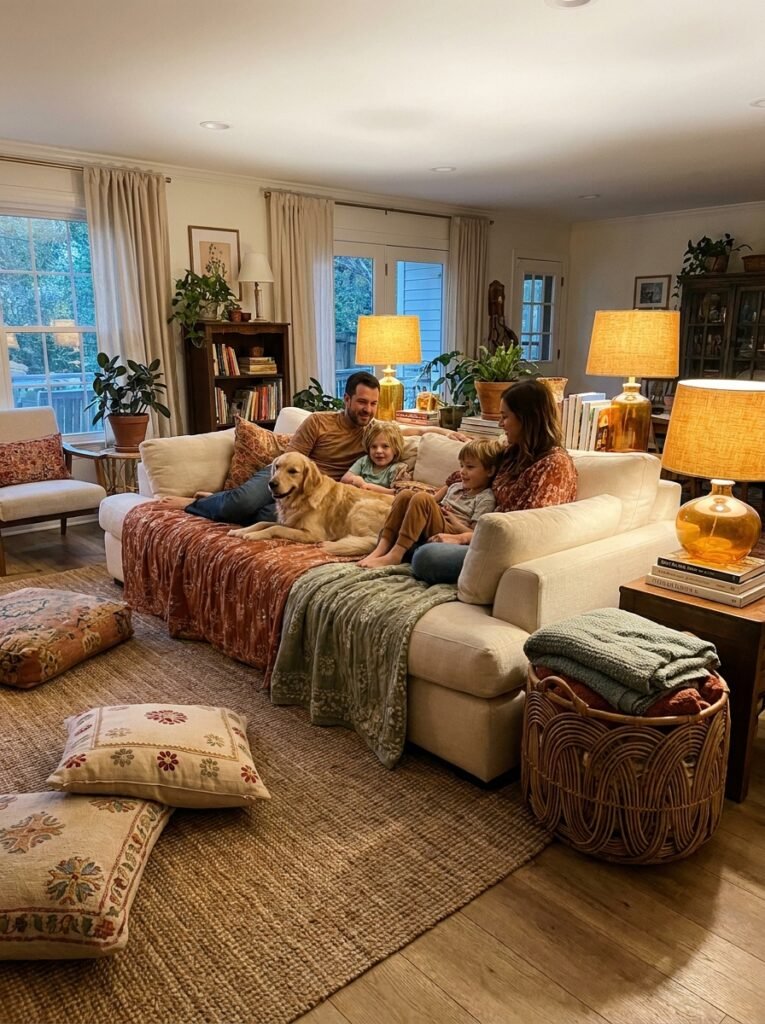
Beautiful is easy. Livable is harder. And a living room, more than any other space in the home, needs to function beautifully for real life — movie nights, lazy Sunday mornings, children playing on the floor, friends gathered for hours of conversation.
The good news is that boho style, more than almost any other aesthetic, is naturally suited to actual living. Its emphasis on soft textiles means the sofa is genuinely comfortable. Its preference for low seating and floor cushions means there’s always room for one more person. Its warmth and layered lighting make the room equally welcoming at 10am and 10pm.
Practical boho livability tips: choose performance or washable fabrics for your most-used cushion covers and throws. Use natural fiber rugs that clean easily and age gracefully. Keep a large woven basket beside the sofa for throw blanket storage — it’s both functional and deeply boho in its texture and purpose. Use coffee tables with drawers or lower shelves to keep remotes, coasters, and other everyday items accessible without cluttering the surface.
The goal is a room that looks like it belongs in a magazine but feels like it belongs to a real, joyfully imperfect human life.
—
12. How to Start Your Boho Living Room Transformation Today
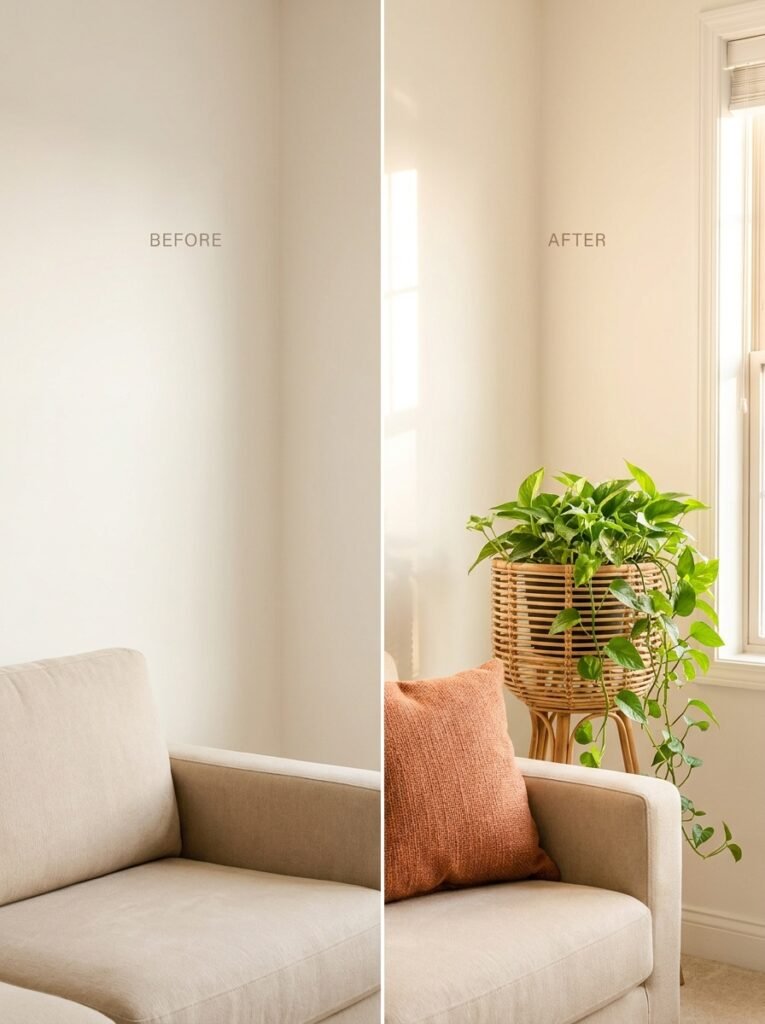
You don’t need to redo everything at once. In fact, the best boho living rooms are the ones that grow gradually — one intentional addition at a time, shaped by instinct rather than a single shopping trip.
Start with what you already have. Look at your current space through a boho lens: which pieces carry genuine character? Which have warmth and texture? Often, the bones of a boho room are already there, buried under too-matching accessories and safe color choices.
Then make one meaningful change. Buy a single rattan planter and your most dramatic houseplant. Or swap your current throw pillows for a set in warm, earthy tones with varied textures. Or hang a macramé wall hanging in the corner that’s felt empty for years. One meaningful change shifts the whole feeling of a room — and it shows you what wants to come next.
Trust your instincts. Boho design rewards the people who follow what draws them rather than what trend reports dictate. If a piece of furniture makes you feel something, that feeling is data. If a color combination stops you mid-scroll, that reaction is worth investigating. Your authentic aesthetic response is the most reliable design compass there is.
—
🌿 How to Take Care of Your Boho Living Room
A boho living room evolves beautifully when you tend to it — not like a museum display, but like a garden. Here’s how to keep it feeling fresh, intentional, and truly alive.
Rotate and refresh textiles seasonally. Swap out lighter linen throws for heavier woven blankets as the seasons change. Rotate cushion covers to give the room a different feeling without buying anything new. This keeps the space from feeling static.
Tend your plants consistently. The plant collection that makes your boho room breathe needs regular attention — weekly watering checks, occasional fertilizing, repotting when roots outgrow their containers. A neglected plant collection drags the whole room’s energy down; a thriving one lifts it dramatically.
Edit regularly. Every few months, walk through your space with fresh eyes and ask what’s earning its place. Boho style can tip toward genuine clutter if left unchecked. Editing keeps it intentional.
Dust your textiles and woven elements. Macramé, rattan, wicker, and woven baskets collect dust more readily than smooth surfaces. A regular gentle vacuum or soft brush wipe-down keeps them looking their warmest and best.
Let it change as you do. The greatest care you can give a boho living room is permission to evolve. Add pieces that reflect where you are now. Retire things that no longer resonate. Let the room grow up alongside you.
—
❓ FAQ
Q: Is boho living room style easy to achieve for beginners? A: Absolutely — and it might actually be the most forgiving decorating style for beginners precisely because it embraces imperfection, mixing, and personal expression. Start with a warm neutral base, add a statement rug, layer in some plants and textiles, and let it grow from there. There’s no single “right” way to do boho, which takes a lot of the pressure off.
Q: Can a small living room pull off boho style without feeling cramped? A: Yes, with a few adjustments. In a small boho living room, scale matters more than in larger spaces — choose a few statement pieces rather than filling every surface. Use vertical space deliberately: tall plants, high-hung wall art, and floating shelves draw the eye upward and make the room feel larger. Light colors on walls and larger furniture keep the space open while layered textiles and plants add the boho warmth.
Q: How do I keep a boho living room from looking messy rather than curated? A: The key is intentional editing and the principle that every displayed object should be either beautiful, meaningful, or both. Group objects in odd numbers, vary heights within collections, and use trays or baskets to corral smaller items into deliberate arrangements. Step back and look at the room from the doorway regularly — your eye will quickly distinguish between beautiful eclecticism and genuine clutter.
—
💭 Final Thought
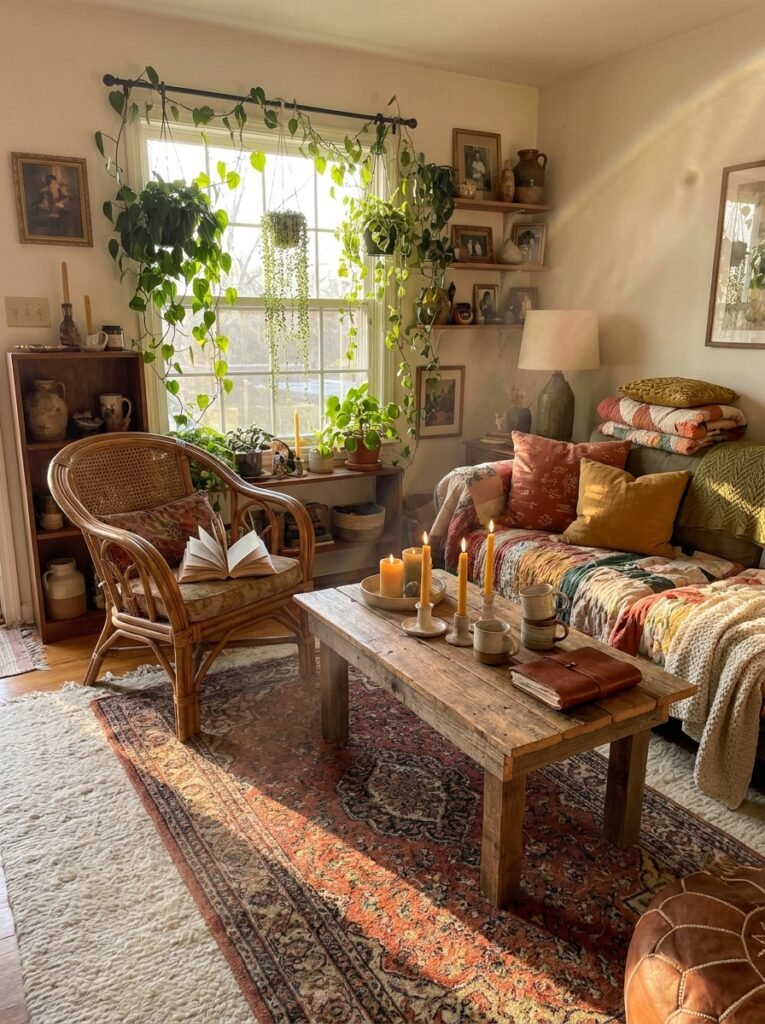
A boho living room is, at its truest, an act of self-expression — a quiet rebellion against the idea that our homes should look like showrooms rather than reflections of the beautifully complicated people who live in them. It takes courage to decorate with authenticity, to trust your own taste over trends, and to build slowly rather than all at once. But the room that results — warm, layered, alive, and utterly yours — is worth every patient, intentional step.
So tell me: what’s the one thing in your living room right now that feels most like you — and what would happen if you built the whole space around that piece?