The Moody Organic Modern Living Room: How to Create a Space That Feels Like a Deep Breath
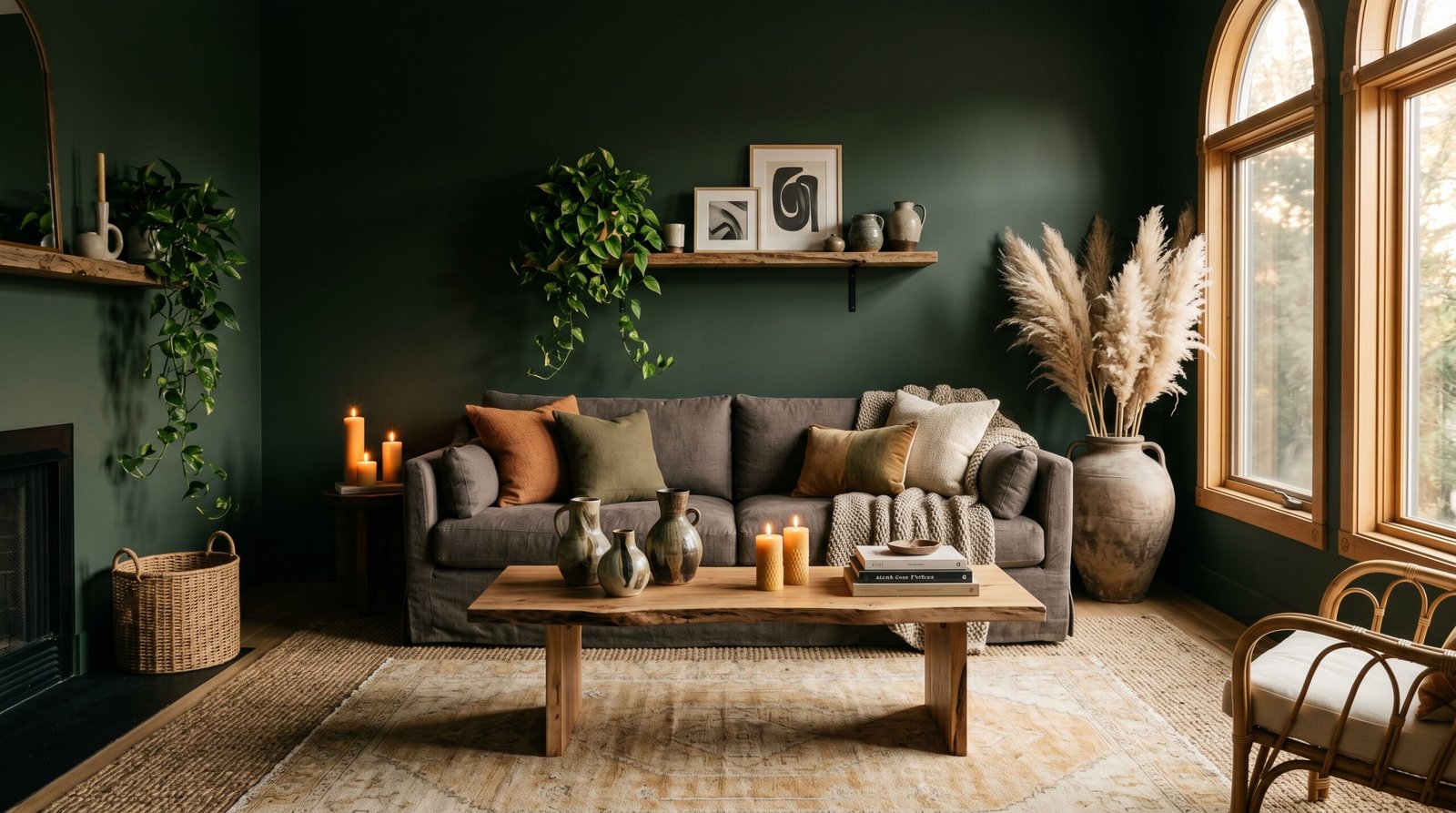
There’s a certain kind of room that stops you the moment you walk in — not because it’s loud or overly decorated, but because it feels like it has something to say. The moody organic modern living room is exactly that kind of space: layered, grounded, quietly dramatic, and undeniably alive.
—
1. What “Moody Organic Modern” Actually Means (And Why It’s More Than a Trend)
Before you start pinning dark velvet sofas and earthy ceramic vases, it’s worth understanding what this aesthetic is truly about — because it’s more than a visual style. It’s a philosophy of how a room should feel.
Moody organic modern sits at the intersection of three distinct design languages. “Moody” refers to depth — deep, saturated tones, dramatic shadow play, and a sense of intimate enclosure that makes a room feel like a sanctuary rather than a showroom. “Organic” speaks to the natural world: raw textures, imperfect forms, materials that breathe and age beautifully like linen, wood, stone, and rattan. “Modern” brings the edit — clean lines, intentional restraint, a refusal to clutter. Together, these three elements create spaces that feel simultaneously ancient and contemporary, wild and refined.
This isn’t a trend born from a single Instagram season. It’s a response to years of sterile, all-white interiors that looked gorgeous in photos but felt cold to actually live in. People began craving rooms that held warmth, rooms that told a story. The moody organic modern living room answers that craving directly.
“A beautiful room isn’t one that looks perfect — it’s one that feels like it was made for you.”
2. The Color Palette That Changes Everything
Color is where the “moody” part of this aesthetic truly lives, and getting it right is both the most exciting and most intimidating part of the design process. The good news? There are no rules — only principles.
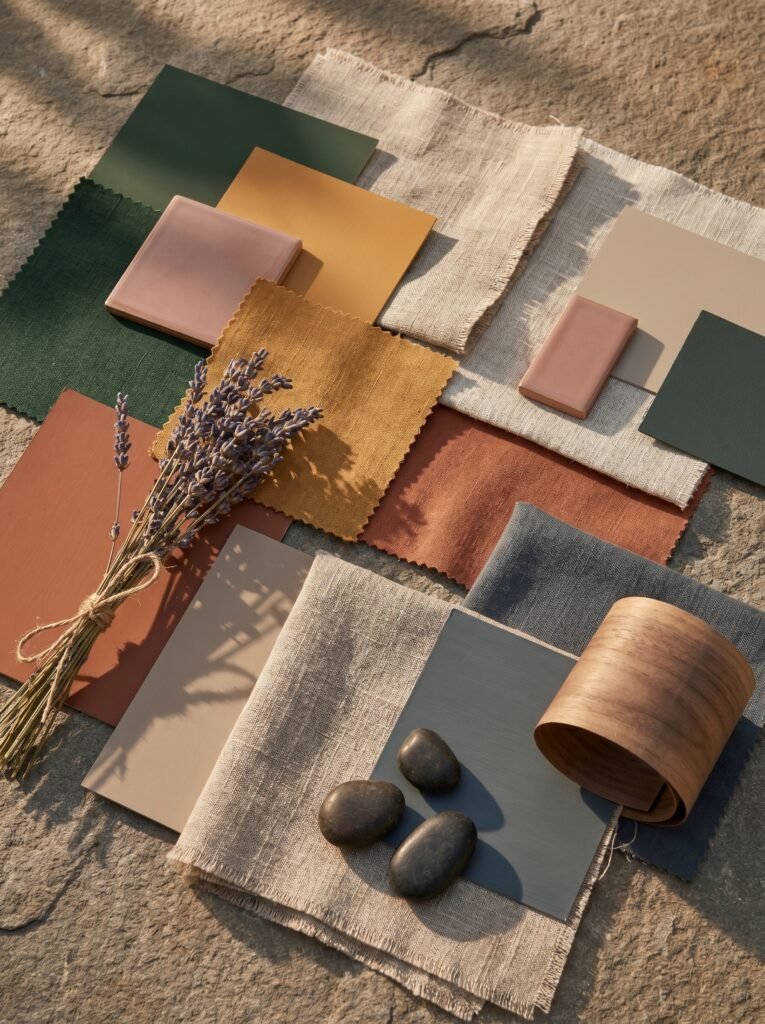
The moody organic modern palette gravitates toward colors borrowed from the natural world at its most dramatic moments: the deep green of a forest after rain, the warm brown of turned earth, the dusty rose of late evening light, the near-black of wet slate. Think of shades like warm charcoal, forest green, ochre, terracotta, mushroom beige, and deep teal. These are not bright, saturated hues — they’re complex colors with undertones that shift depending on the light in your room.
A practical starting point is to choose one dominant wall color — something deep and enveloping like Farrow & Ball’s “Mole’s Breath,” Benjamin Moore’s “Wrought Iron,” or Sherwin-Williams’ “Pewter Green.” This becomes the emotional anchor of the room. Then layer in two or three complementary tones through textiles, furniture, and accents. The key is to let the colors breathe against each other rather than compete.
Natural light transforms these shades throughout the day in ways that cheaper, brighter paints simply don’t. A deep olive wall looks almost golden at noon and shifts to a mysterious sage by evening. That dynamic quality is part of what makes these interiors feel so alive.
3. Why Texture Is the Secret Language of This Style
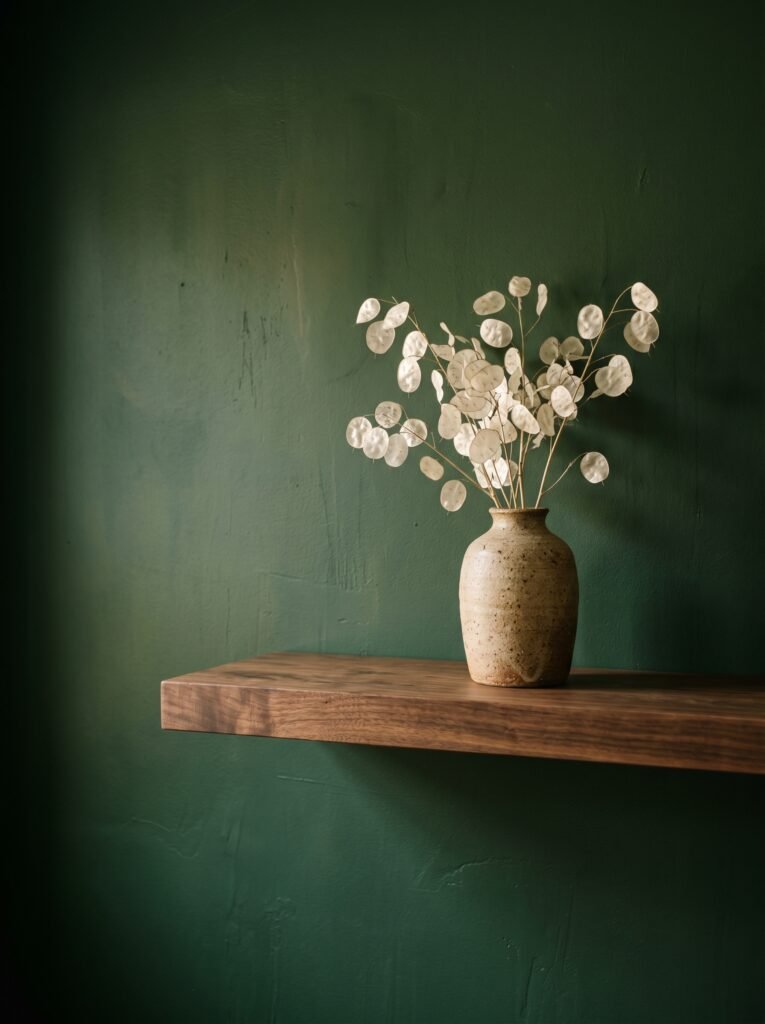
If color sets the mood, texture writes the story. In a moody organic modern living room, texture isn’t an afterthought — it’s the entire conversation. Strip away the textural layers and you’re left with a room that’s simply dark, which is the last thing anyone wants.
Think about it this way: imagine running your hand across a rough-hewn oak coffee table, sinking into a sofa upholstered in bouclé, feeling the cool smoothness of a ceramic lamp base. These tactile experiences aren’t accidental. They’re designed to make you want to be in the room, to make the space feel safe and sensory and real.
Layer textures deliberately. Start with a large-scale, foundational texture — perhaps a jute or wool area rug with visible weave. Add a sofa in a fabric with surface interest: bouclé, textured linen, or a subtle chenille. Bring in hard textures through coffee tables, shelving, and lamp bases — stone, blackened steel, rough-hewn wood. Then soften everything with throw pillows in velvet or lumpy knit, and a chunky woven throw draped casually over the armrest. That final layer of “casual softness” is what makes the room feel inhabited rather than staged.
4. Choosing the Right Furniture: Form Meets Function in the Most Beautiful Way
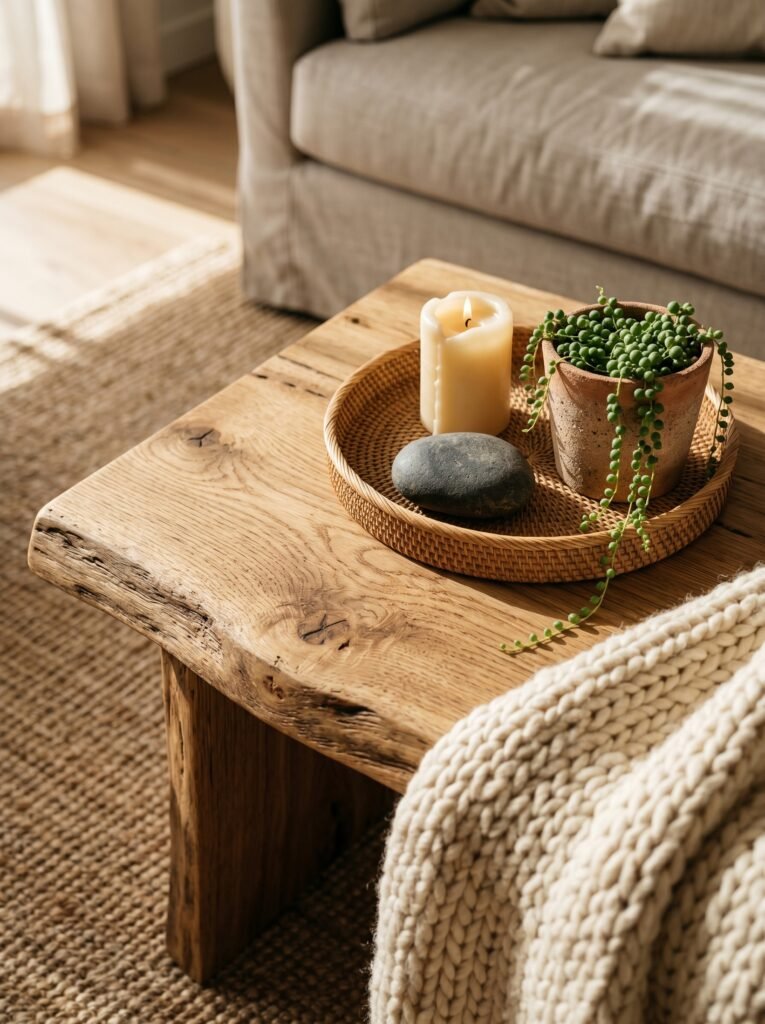
The furniture in a moody organic modern living room needs to do two seemingly contradictory things at once: it needs to feel substantial and grounding, and it needs to feel completely effortless. Heavy, ornate Victorian pieces feel too formal. Sleek, ultra-minimalist pieces feel too cold. The sweet spot is furniture with clean, architectural silhouettes made from natural or tactile materials.
Look for sofas with low, wide profiles and visible legs — a low-slung sofa in deep mushroom linen or forest green velvet anchors the room beautifully without dominating it. Pair this with a coffee table that has genuine material integrity: a live-edge walnut slab, a chunky travertine block, or a rough cast concrete piece. Accent chairs should bring personality — a curved, bouclé armchair or a rattan papasan adds organic softness against harder-lined pieces.
What to avoid: anything that feels mass-produced and plasticky, regardless of its color. Even a perfectly dark color palette cannot save furniture that lacks material quality. In this aesthetic, one beautiful, well-made piece is worth ten cheaper alternatives.
5. The Art of Layering Light in a Dark Room
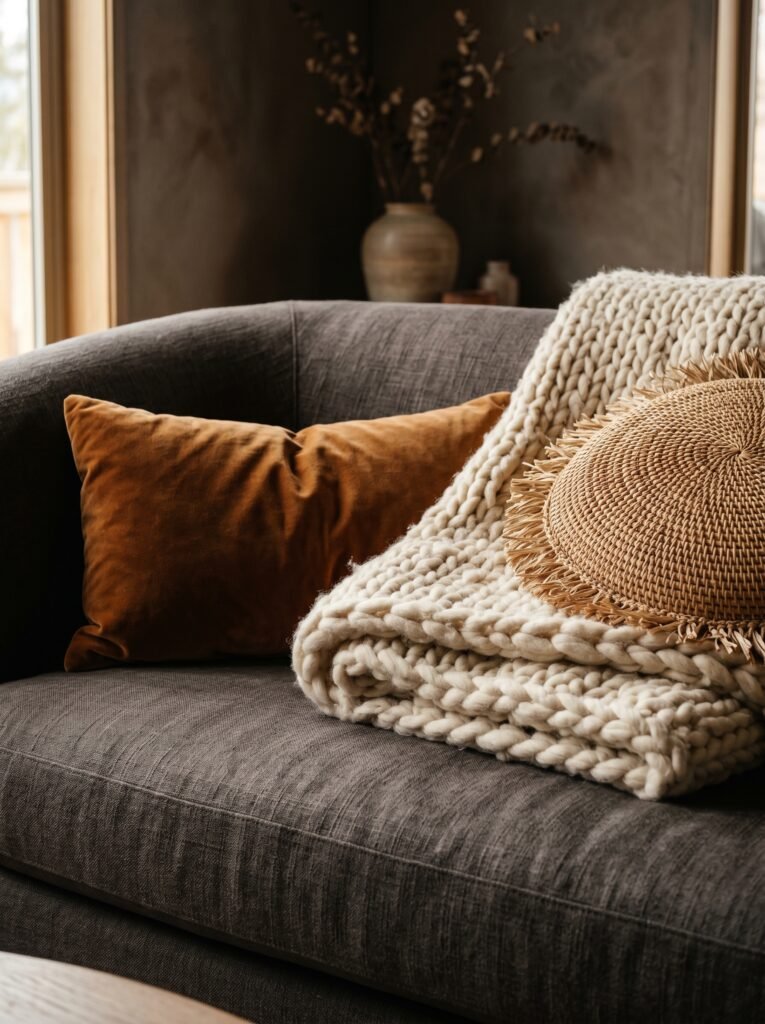
Here is the fear that stops most people from committing to the moody organic modern aesthetic: “Won’t it be too dark?” This is a completely understandable concern, and the answer depends entirely on how skillfully you layer your lighting.
The biggest mistake in any living room — but especially a moody one — is relying solely on overhead lighting. A single ceiling fixture in a dark room creates flat, unflattering light that makes the space feel oppressive rather than intimate. The solution is layered lighting: multiple light sources at varying heights, each serving a different purpose and creating its own warm pool of light.
Start with ambient light — perhaps a pendant or semi-flush ceiling fixture that provides overall illumination without being harsh. Add task lighting with table lamps on either side of the sofa, choosing bases in natural materials like ceramic, stone, or wood. Then bring in the magic with accent lighting: a small arc floor lamp in a reading corner, a candlelit cluster on the coffee table, or LED strip lights tucked behind open shelving.
“Moody doesn’t mean dark — it means intentional. Every shadow is placed with purpose.”
Warm-toned bulbs are non-negotiable here. Look for bulbs in the 2700K–3000K range, which cast the golden, amber-adjacent light that makes skin glow and deep wall colors sing. Cool daylight bulbs (5000K and above) will strip the warmth from everything you’ve worked to create.
6. Plants and Natural Elements: Bringing the Outside In
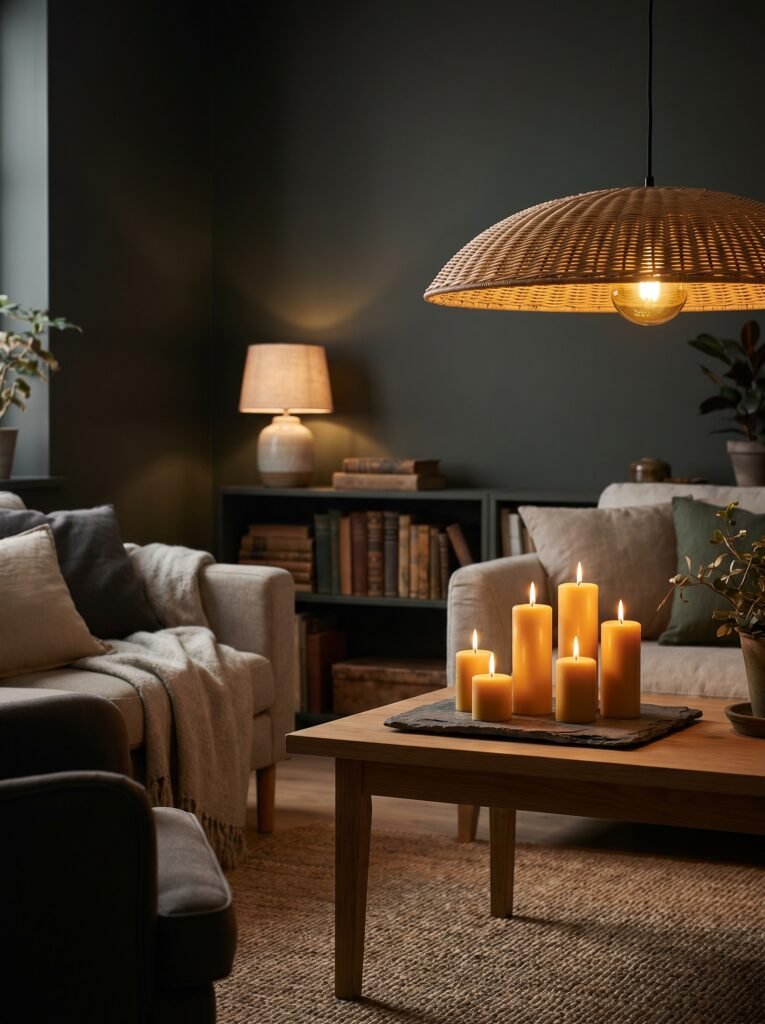
Organic design isn’t just about choosing natural materials — it’s about maintaining a living connection to the natural world. Plants are perhaps the most powerful way to do this, and in a moody organic modern living room, they don’t just decorate. They anchor.
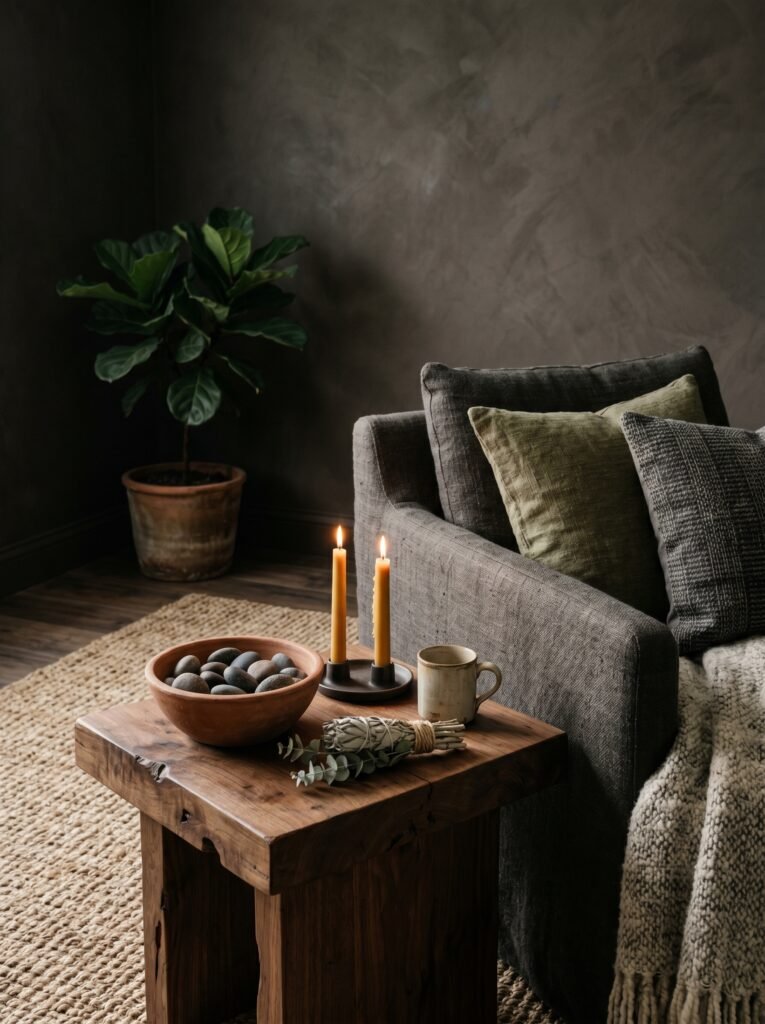
The right plants for this aesthetic are those with drama and structure: a large fiddle-leaf fig in a dark corner, a sculptural monstera deliciosa beside a window, a cluster of trailing pothos on a high shelf. Dark, leafy, architectural plants feel right at home against deep walls. Succulents and tiny cacti, while lovely in other settings, can feel too precise and neat for the organic quality this style demands.
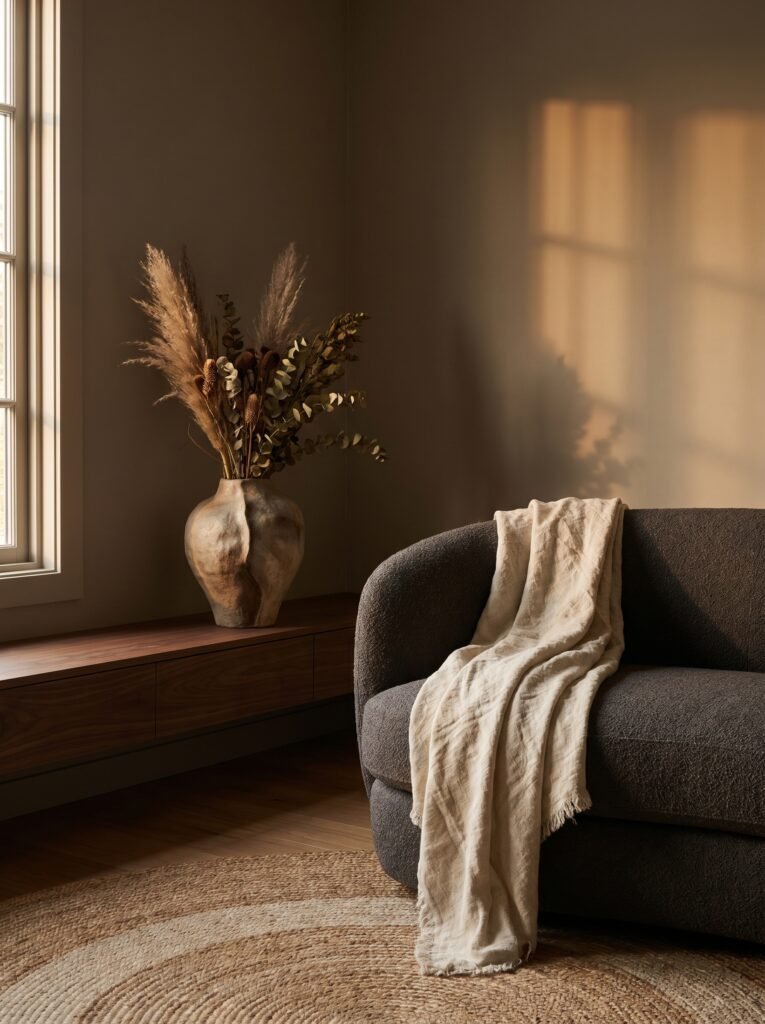
Beyond plants, bring in natural elements through objects: a bowl of smooth river stones on the coffee table, a piece of driftwood used as a sculptural accent, dried pampas grass or eucalyptus in a tall ceramic vase, a woven basket used for throw storage. These small organic details create a visual vocabulary that whispers of forests, coastlines, and open earth.
7. How to Style Shelves That Tell a Story
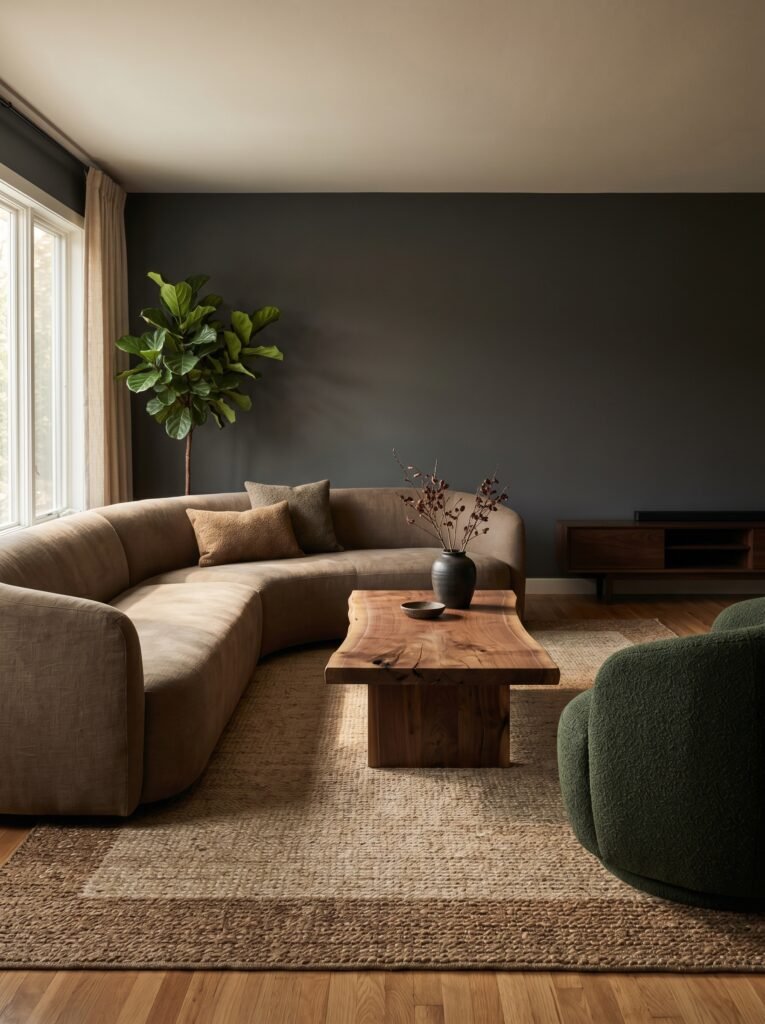
Open shelving in a moody organic modern living room is one of its most expressive elements — and one of the easiest to get wrong. The goal is curated intentionality: shelves that look collected and meaningful, not cluttered or matchy-matchy.
The foundation of good shelf styling in this aesthetic is restraint. Leave breathing room between objects. An over-stuffed shelf reads as chaotic no matter how beautiful the individual pieces are. Group items in odd numbers — threes and fives tend to feel more natural than even arrangements. Mix heights, shapes, and materials: a tall stack of design books alongside a small ceramic bowl and a single trailing plant reads beautifully.
Color-cohesion matters on shelves too. Stick to your room’s natural palette — terracotta pots, black and white book covers turned outward, wooden frames, dark glass vessels. The moment a bright-colored object lands on these shelves, it will pull the eye and disrupt the moody, layered feeling you’ve worked to create.
8. The Role of Art in Anchoring the Mood
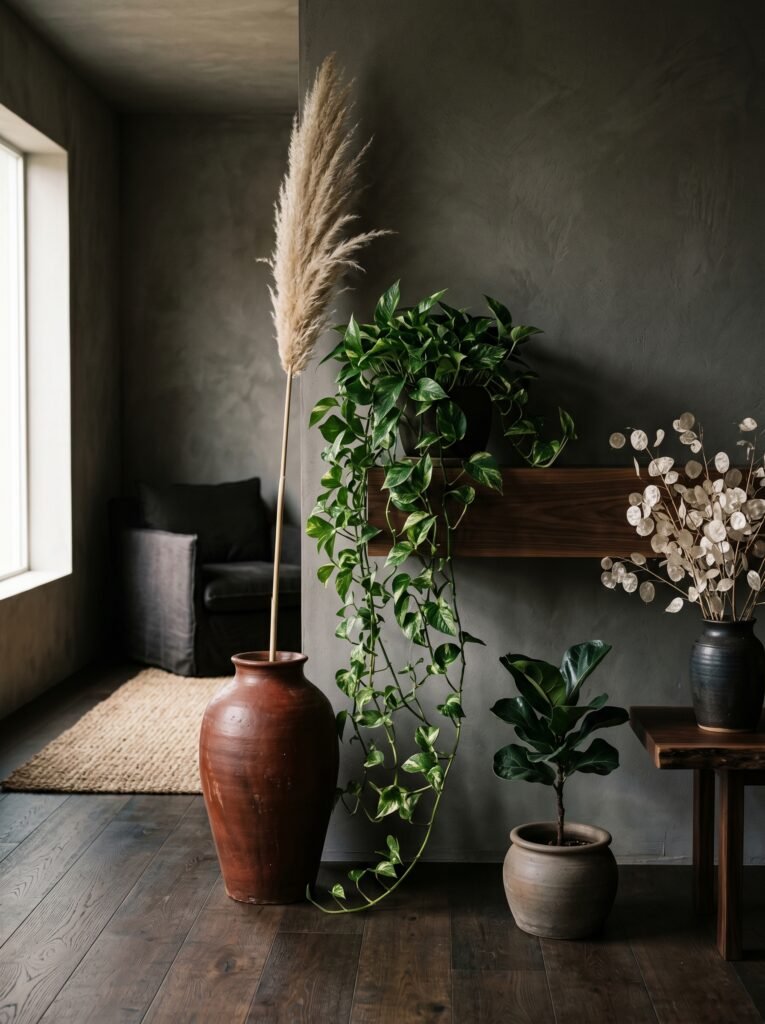
Artwork in the moody organic modern living room is its emotional center. It’s often the first thing guests notice and the thing they remember longest. Choosing the right art isn’t about finding something that “matches” — it’s about finding something that resonates.
Abstract art with earthy, muted tones works exceptionally well here: think brushstroke-heavy canvases in ochre, brown, forest green, and cream. Large-scale photography in black and white or muted natural tones — a misty forest, a raw coastal landscape, a close study of stone or bark — brings quiet drama. Botanical prints, particularly oversized ones with a vintage quality, add both organic texture and timeless sophistication.
Consider the framing as part of the art itself. Simple, wide matte frames in black, charcoal, or natural wood feel right for this aesthetic. Ornate gold frames can work in small doses as an unexpected contrast, but they need to earn their place.
9. Rugs: The Foundation That Ties It All Together
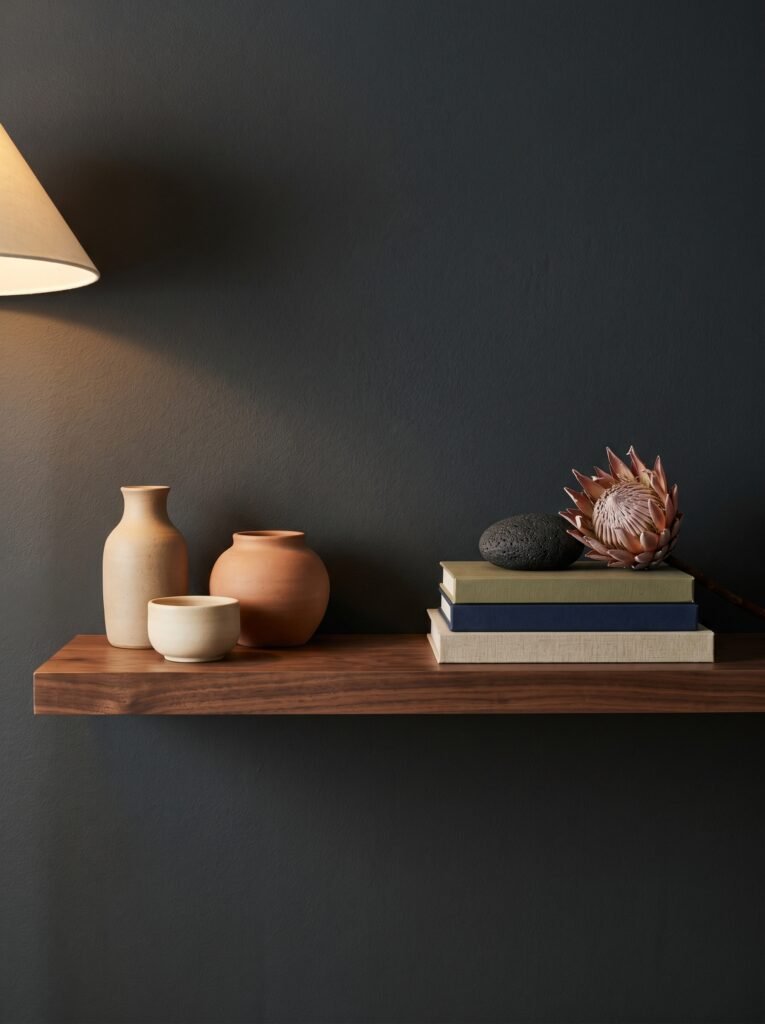
If furniture is the architecture of a living room, the rug is its earth. In the moody organic modern living room, the rug holds tremendous visual and textural weight — and choosing the wrong one can undo the entire composition.
The ideal rug for this aesthetic is large enough to anchor all major furniture pieces (at minimum, the front legs of the sofa and chairs should rest on it), and it should bring warmth, texture, and depth without introducing competing pattern or color. Natural fiber rugs — jute, sisal, wool, or a blend — are ideal. Their honest, imperfect texture speaks the same language as the rest of the room.
If you prefer a patterned rug, look for abstract or organic patterns in the room’s existing palette: muted stripes, subtle geometric prints, or vintage-style faded designs all work beautifully. A Moroccan Beni Ourain rug with its creamy white and dark brown geometric markings is a beloved classic in this aesthetic for good reason — it brings softness, pattern, and cultural depth without disrupting the palette.
“The right rug doesn’t just complete a room — it makes everything else make sense.”
10. Negative Space: The Design Element Nobody Talks About Enough
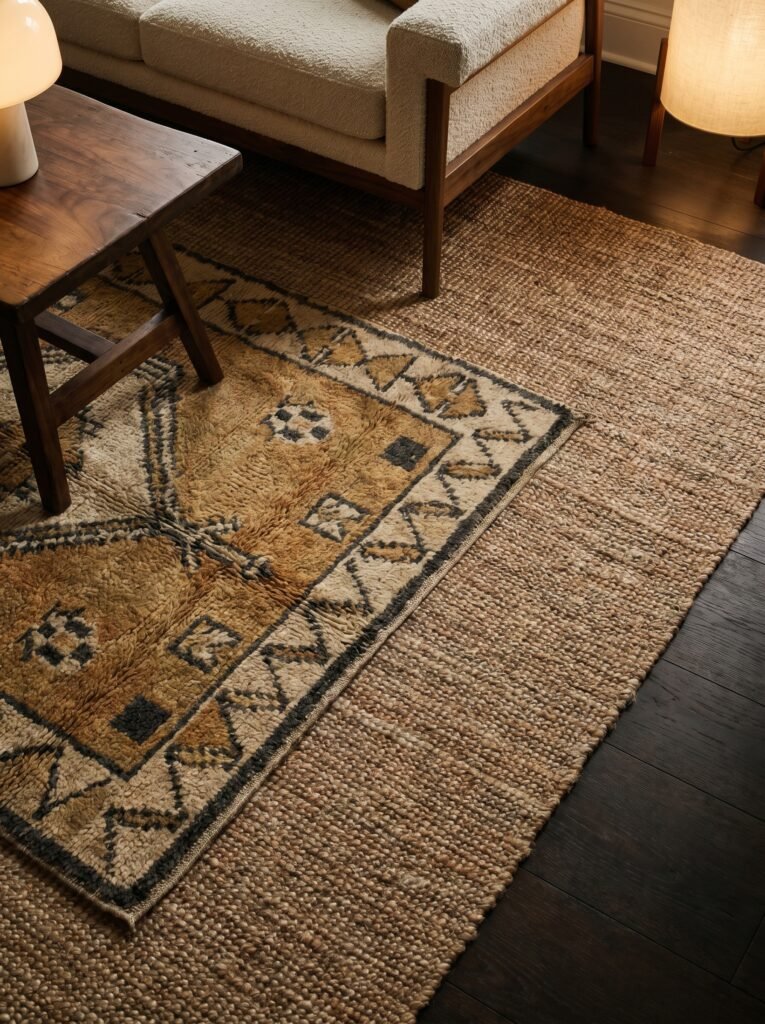
There is immense pressure — especially in the age of Pinterest and Instagram — to fill every surface, hang something on every wall, and make every corner “do something.” The moody organic modern aesthetic asks you to resist this impulse entirely.
Negative space — the intentional absence of objects — is what gives your carefully chosen pieces room to be seen and felt. A single beautiful ceramic vase on an otherwise bare console table makes a statement that twenty objects crowded together cannot. A large, empty wall beside a beautifully styled gallery grouping creates the visual rest that allows the eye to appreciate both.
This is especially true in darker rooms, where too many objects at different heights can feel visually overwhelming. Let the architecture of the room speak. Let the shadows do their work. Trust that less, placed with intention, will always feel more powerful than more.
11. Budget-Friendly Ways to Achieve This Look Without Starting From Scratch
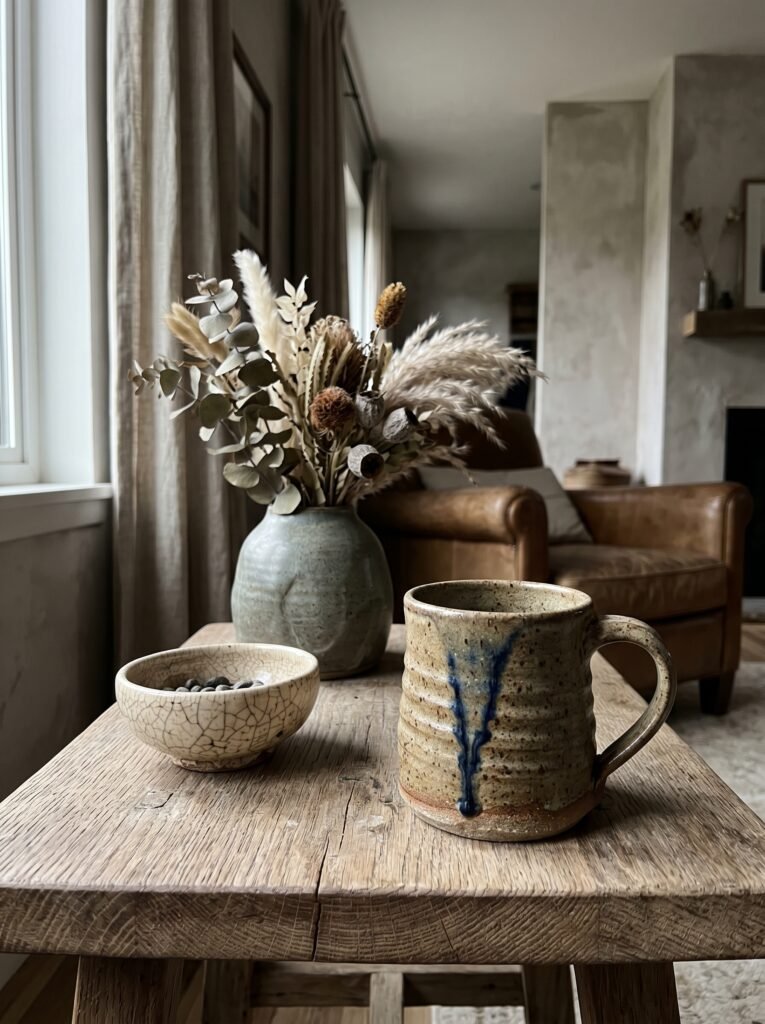
The moody organic modern look might seem like it requires an expensive renovation and a full furniture refresh — but some of its most impactful transformations cost very little. Paint is the most dramatic, affordable change you can make. A single wall painted in a deep forest green or warm charcoal can entirely shift the emotional energy of a room without touching a single piece of furniture.
Thrift stores and vintage shops are treasure troves for this aesthetic. The organic, weathered quality of used ceramics, wooden frames, woven baskets, and earthenware pottery is often more authentic and beautiful than brand-new equivalents. Swap out your existing throw pillows for linen or textured velvet options in earthy tones — this alone can significantly shift a room’s feeling. Add a large woven throw, a single dramatic plant, and a cluster of candles, and the transformation is genuinely surprising.
Lighting swaps are also remarkably impactful. Replacing a harsh overhead light fixture with a rattan pendant or a simple matte black alternative, combined with switching your bulbs to warm 2700K options, can make a room feel completely different — often in a single afternoon.
12. The Feeling You’re Really Designing For
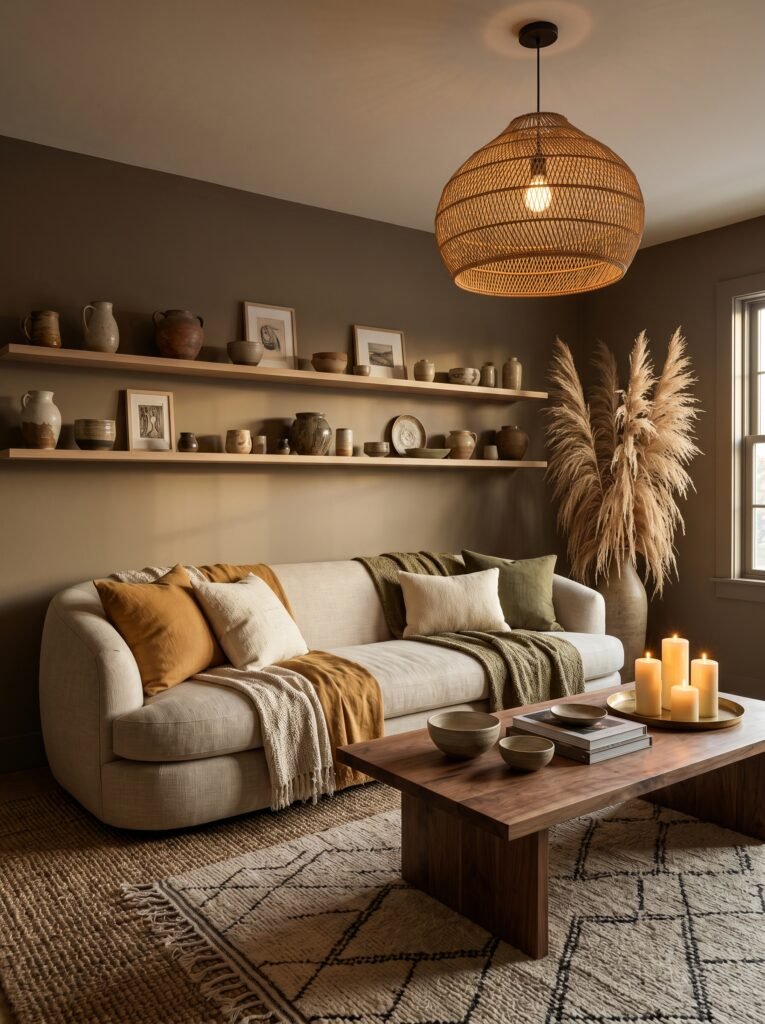
After all the color swatches and furniture measurements and styling decisions, there’s something more fundamental at the heart of every moody organic modern living room: a feeling. Not just “cozy” or “beautiful” — but held. Like the room itself is wrapping its arms around you.
This is what makes the aesthetic resonate so deeply at this particular cultural moment. We live in a world that feels increasingly fast, loud, and disjointed. Our homes have become the places where we actively seek the opposite of that — depth instead of brightness, texture instead of smoothness, intentionality instead of excess. The moody organic modern living room isn’t an interior design trend. It’s a small, daily act of resistance against overstimulation.
Every choice in this room — the deep olive wall, the bouclé sofa, the warm lamplight, the bowl of river stones — is a choice to slow down. To pay attention. To say: this is what peace looks like to me, and I choose to surround myself with it.
—
🌿 How to Care for Your Moody Organic Modern Living Room
Keeping this aesthetic looking and feeling its best is less about maintenance schedules and more about staying true to its values. First, resist the urge to add. When you see something you love, ask honestly whether it adds to the room’s story or simply fills space. Second, tend to your natural elements regularly — water your plants, refresh dried botanicals seasonally, replace burnt-out candles. These living elements are what keep the room from feeling like a static design exercise. Third, let the materials age. The beauty of natural wood, linen, and organic ceramics deepens over time, and fighting that aging with aggressive cleaning or replacements undermines everything the aesthetic stands for. Fourth, revisit your lighting seasonally — in winter, lean into more candlelight and fewer lamps; in summer, let more natural light in during the day and create cozy pools at night. The room should evolve with the seasons, not remain static year-round.
—
❓ FAQ
Q: Can a moody organic modern living room work in a small space? A: Absolutely — in fact, it often works better in smaller rooms because the deep colors and intimate lighting naturally create the enclosed, cozy feeling that larger rooms have to work harder to achieve. The key is to scale your furniture appropriately, keep negative space intentional rather than accidental, and prioritize a few quality pieces over many smaller ones.
Q: Will dark walls make my already dark living room feel cave-like? A: This is the most common concern, and the honest answer is: it depends on your lighting. If you rely solely on overhead lighting, yes, a dark room with dark walls can feel oppressive. But with multiple warm light sources at different heights — table lamps, floor lamps, candles — the effect transforms completely into something intimate and enveloping rather than dark and closed.
Q: What are the best paint colors to start with for this aesthetic? A: Some consistently beautiful starting points include Farrow & Ball’s “Mole’s Breath” (a warm, complex greige), Benjamin Moore’s “Wrought Iron” (a deep, sophisticated near-black), Sherwin-Williams’ “Pewter Green” (a dusty, muted green with incredible depth), and Behr’s “Cracked Pepper” (a versatile dark charcoal with warm undertones). Always sample paint on large swatches and observe them at different times of day before committing — these deep colors shift dramatically with changing light.
—
💭 Final Thought
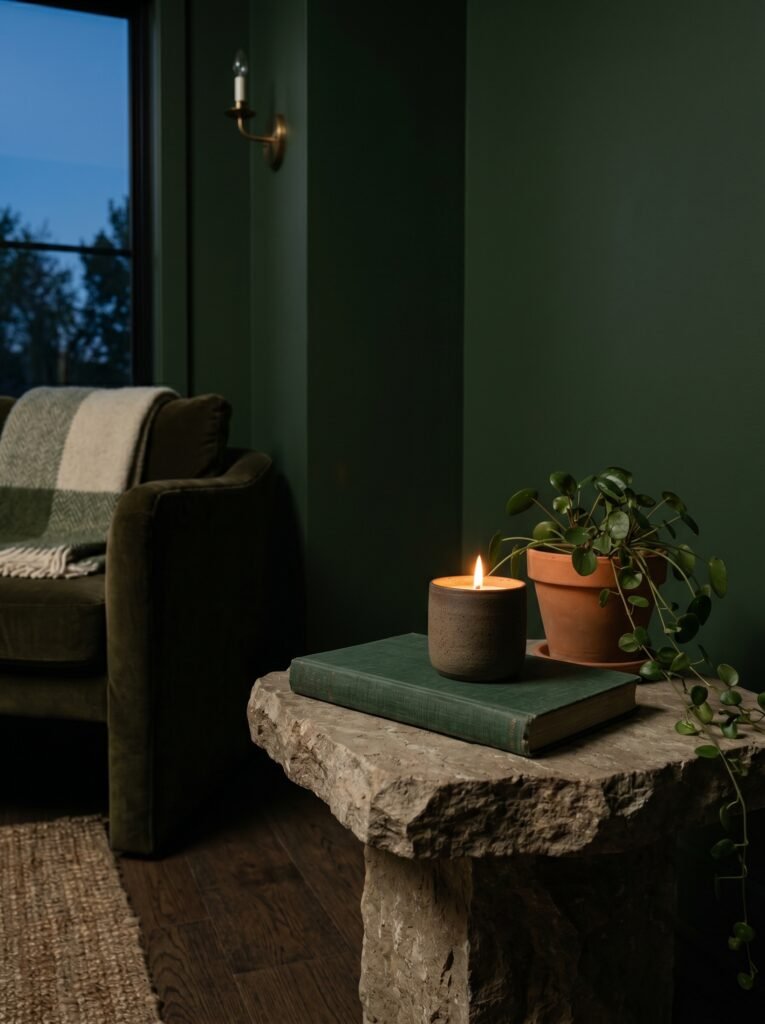
A moody organic modern living room isn’t something you build in an afternoon — it’s something you grow into over time, adding layers gradually, trusting your instincts about what feels right for your particular life. The most beautiful versions of this aesthetic aren’t the ones that look exactly like a design magazine spread; they’re the ones that look unmistakably like the person who lives there.
So here’s the question worth sitting with: when you close your eyes and imagine the room that would make you feel most like yourself, what does it look like?