The Comfy Living Room You’ve Always Dreamed Of — And Exactly How to Create It
There’s a moment — maybe you’ve felt it — when you walk into someone’s living room and something just exhales inside you. The cushions look worn in the best possible way, the light is soft and golden, and you immediately want to kick off your shoes and stay forever. That feeling isn’t magic. It’s design — and it’s entirely within your reach.
—
1. Why “Comfy” Is Actually the Hardest Thing to Design (And Why It Matters)
Most people assume that comfort just happens. You buy a sofa, toss down a rug, hang a few pictures, and voilà — cozy living room. But anyone who has ever sat in a beautiful room that felt strangely cold knows the truth: comfort is intentional. It’s layered. It’s personal.
The word “comfy” gets underestimated in interior design conversations dominated by words like “aesthetic” or “curated.” But here’s what no one tells you — a truly comfortable living room is one of the most emotionally intelligent spaces you can build. It tells your family and guests that they belong here. It tells you, at the end of a long and exhausting day, that you are finally home.
Research in environmental psychology consistently shows that our immediate surroundings affect our mood, stress levels, and even sleep quality. A cluttered, poorly lit, or stiff living room isn’t just visually uninspiring — it actively raises your cortisol levels. Comfort, on the other hand, is restorative. It’s a form of self-care that you create once and benefit from every single day.
“Your living room should feel like a long exhale — the kind your whole body takes when it finally feels safe.”
—
2. The Sofa Is Your Foundation — Choose It Like You Mean It
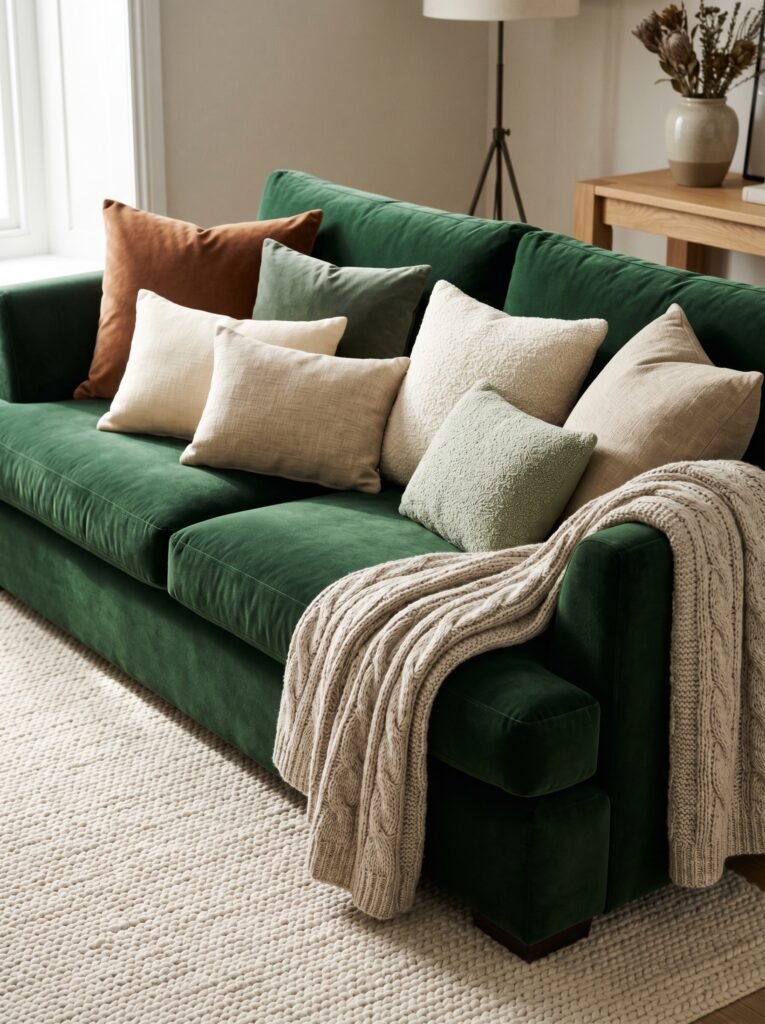
Everything in a comfy living room radiates outward from the sofa. It is the gravitational center of the space — the thing everyone moves toward, curls up on, naps on, and gathers around. Choosing the right one is one of the most important home decisions you’ll make, and it deserves far more than a quick scroll through a furniture website.
When you’re shopping for a sofa with comfort as the priority, look beyond upholstery color. Sink into it in the store — and stay there for a few minutes. Does the seat depth feel right for your height? If you’re petite, a very deep seat means your feet dangle while your lower back aches. If you’re tall, a shallow seat will have your knees practically at your chin. The cushion fill matters too: down and feather blends feel luxurious but require constant fluffing, while high-density foam holds its shape and provides firmer support that many people prefer for daily use.
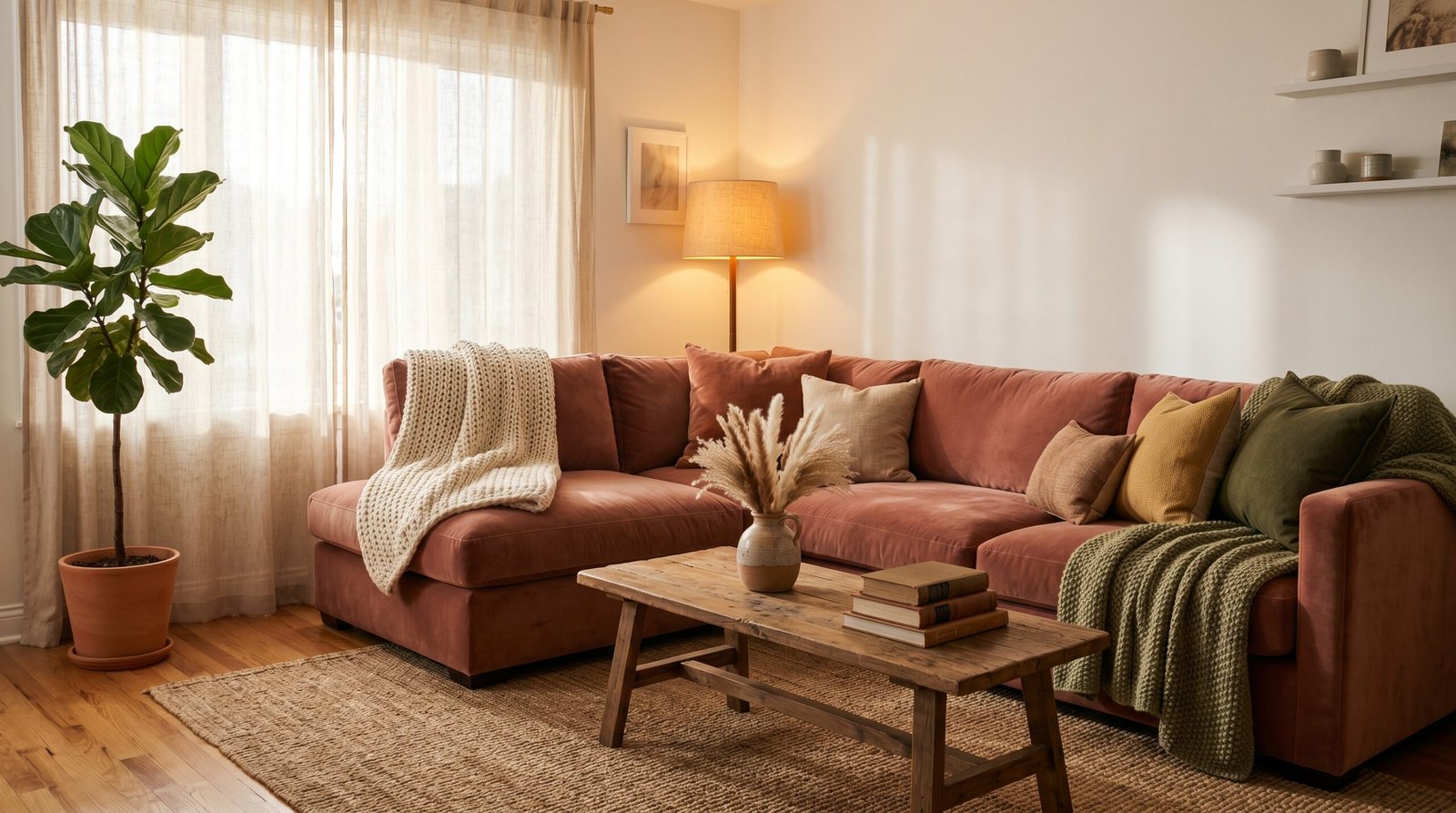
Fabrics like textured linen, soft velvet, and performance weaves (especially useful for households with kids or pets) each bring a different kind of warmth to the room. A warm-toned velvet in dusty rose or forest green signals coziness the moment someone lays eyes on it. And a sofa in a soft, earthy neutral — think warm taupe, creamy white, or mushroom gray — gives you the freedom to layer in personality through pillows and throws without ever feeling locked in.
—
3. Layering Textures Is the Secret Language of Cozy
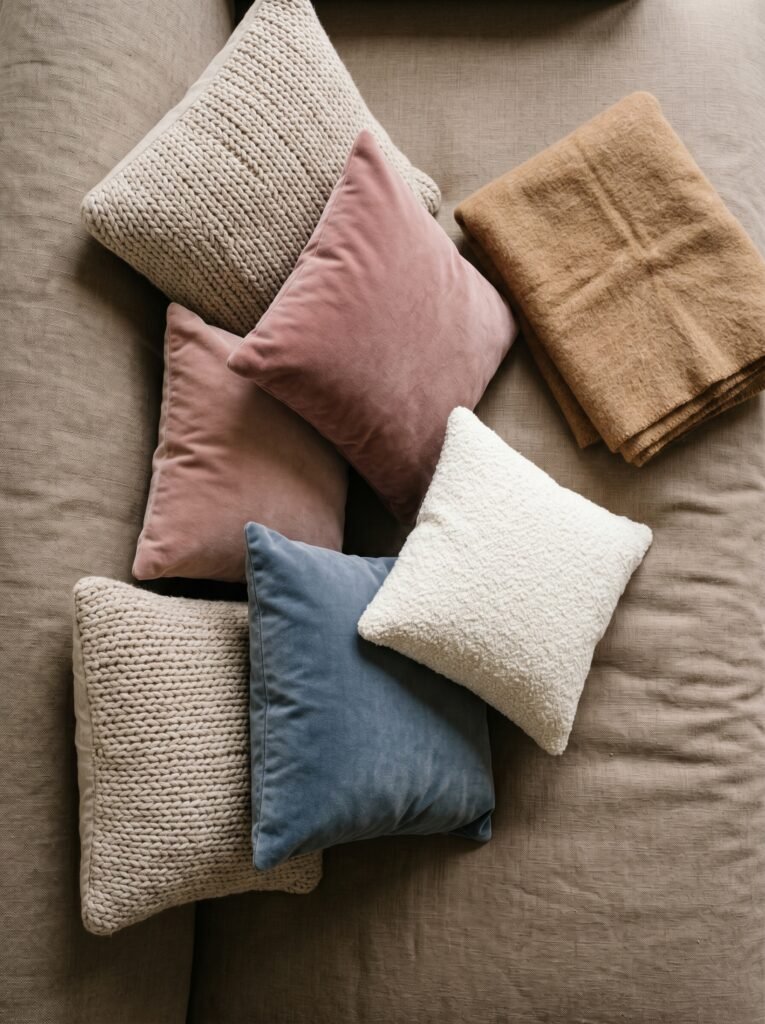
If you’ve ever looked at a gorgeous living room photo on Pinterest and thought “I don’t know what it is, but I just want to be in that room” — texture is almost certainly the answer. Texture speaks to us on a sensory and subconscious level. It suggests warmth before we ever touch a thing.
The formula is simpler than it sounds: mix at least four different textures across soft furnishings and surfaces. Think a chunky knit throw draped over the arm of your sofa, velvet cushions stacked against linen ones, a jute rug beneath a soft cotton area rug, and a wooden coffee table with a hammered metal tray on top. Each material communicates something different to the eye — roughness, softness, sheen, weight — and together they create a room that feels rich and dimensional without spending a fortune.
Don’t overlook curtains, either. Heavy linen or velvet curtains that fall from ceiling to floor don’t just look dramatic — they absorb sound and soften the acoustic quality of a room, making it feel quieter and more enveloping. That quietness is a huge, underrated component of comfort.
—
4. The Color Psychology Behind Rooms That Feel Like a Hug
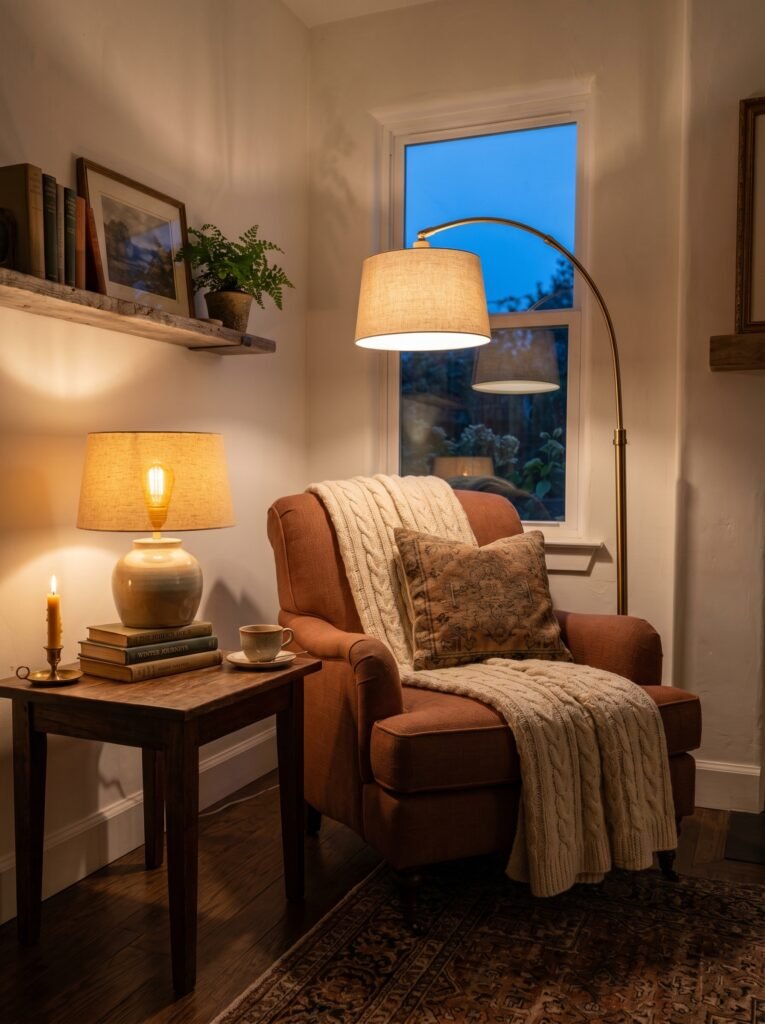
Color is not decoration. Color is emotion — and nowhere is that truer than in a living room. The palette you choose will determine whether the room feels alive or flat, anxious or serene, open or intimate.
For a genuinely comfy living room, warm neutrals and earth tones are your best allies. Warm whites (those with yellow or pink undertones, not stark cool whites), creamy beiges, terracotta, sage green, soft rust, and deep walnut browns are all scientifically shown to evoke feelings of warmth, groundedness, and safety. Cool grays and stark whites, by contrast, can look beautiful in magazines but often feel clinical and cold in real life — especially in low natural light.
One of the most transformative things you can do without renovating is to paint your walls a warm, saturated color on just one accent wall. A deep terracotta or moody sage instantly makes a room feel more intimate — like the walls are gently closing in around you in the best possible sense.
—
5. Lighting: The Most Overlooked Element of Living Room Comfort
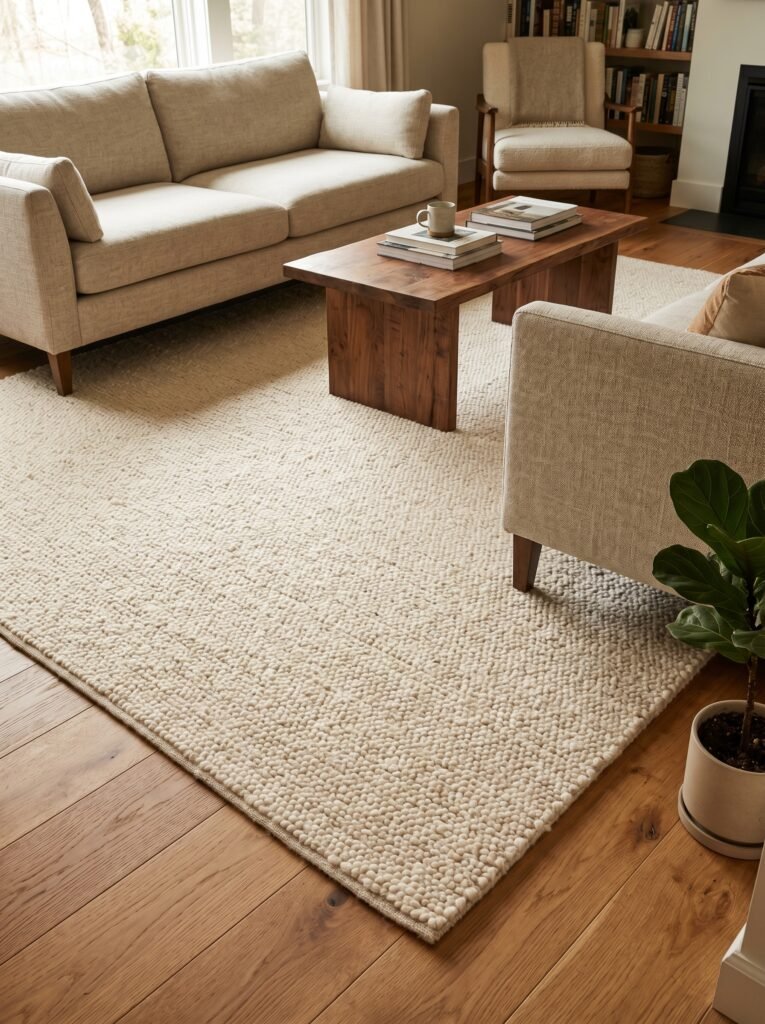
Ask any interior designer what single change makes the biggest difference to a living room’s comfort level, and nine times out of ten, they’ll say lighting. Not the furniture. Not the rug. Lighting.
Most living rooms default to one overhead light source — a ceiling fixture that floods the room with harsh, flat illumination. This is the fastest route to a space that looks like a waiting room. Comfort requires layers of light: ambient (general glow), task (for reading or working), and accent (for atmosphere and warmth).
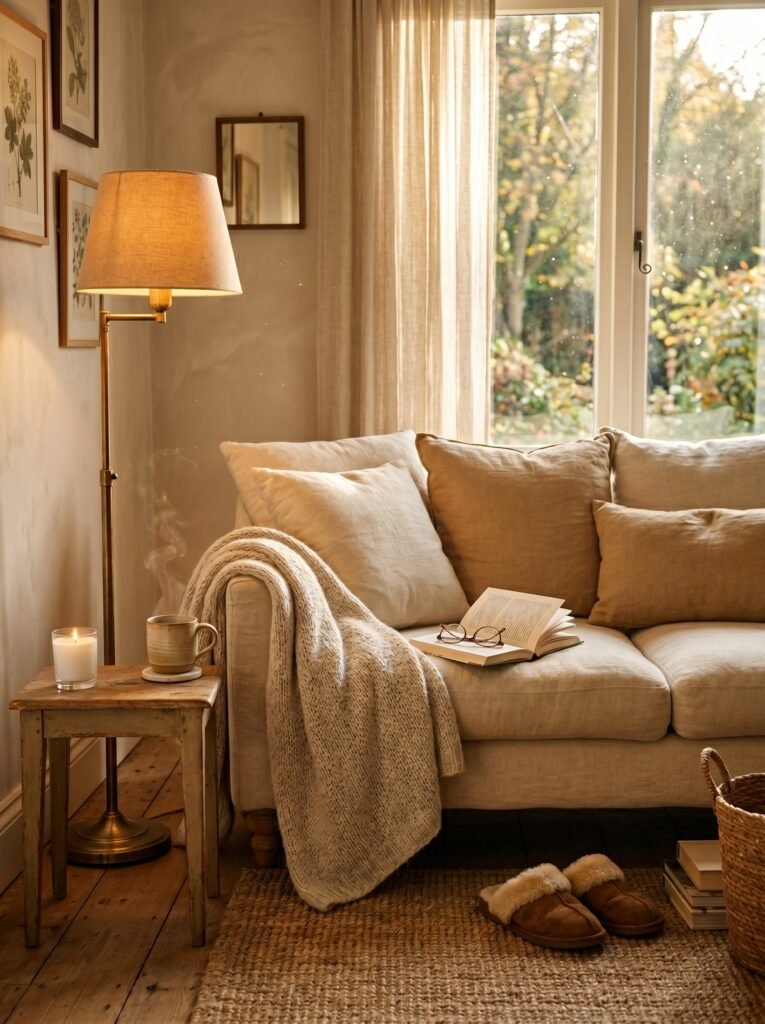
Invest in floor lamps with warm-toned bulbs (look for a color temperature of 2700K–3000K — this is the warm, golden range that mimics evening candlelight). Add table lamps at seated eye level on side tables and console surfaces. Scatter a few candles — real ones, or high-quality flameless LED candles — for those evenings when you want the room to feel like a sanctuary. The moment you stop relying on a single overhead light, your living room will transform.
“Lighting isn’t about seeing the room — it’s about feeling the room.”
—
6. Rugs That Anchor a Space and Warm Cold Floors
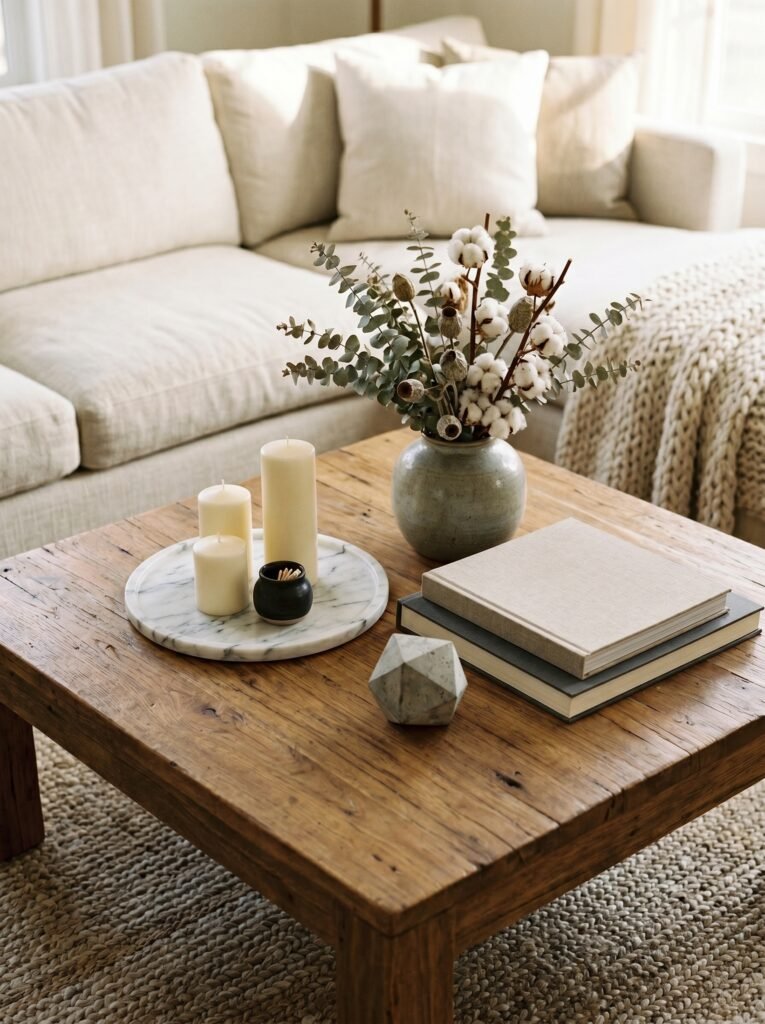
A living room without a rug can feel unfinished in ways that are hard to pinpoint — like a sentence that stops before it’s done. Rugs define the seating area, anchor furniture, add warmth underfoot, and bring color and pattern in a way that’s easy to swap out as your taste evolves.
The most common rug mistake is buying one that’s too small. A rug that fits only under the coffee table, with the sofa legs floating off its edge, makes the seating area feel disconnected and the room feel choppy. For maximum comfort and visual cohesion, choose a rug large enough for at least the front two legs of every sofa and chair to rest on. In most standard living rooms, that means going bigger than you think — often an 8×10 or 9×12 is the right call.
For texture and warmth, wool and cotton rugs are hard to beat. A chunky wool shag adds softness underfoot that makes barefoot mornings feel genuinely indulgent. A flat-weave cotton rug, by contrast, is easy to clean and works beautifully layered beneath a smaller sheepskin or faux-fur accent rug.
—
7. The Magic of Throw Pillows — Done Right, Not Overdone
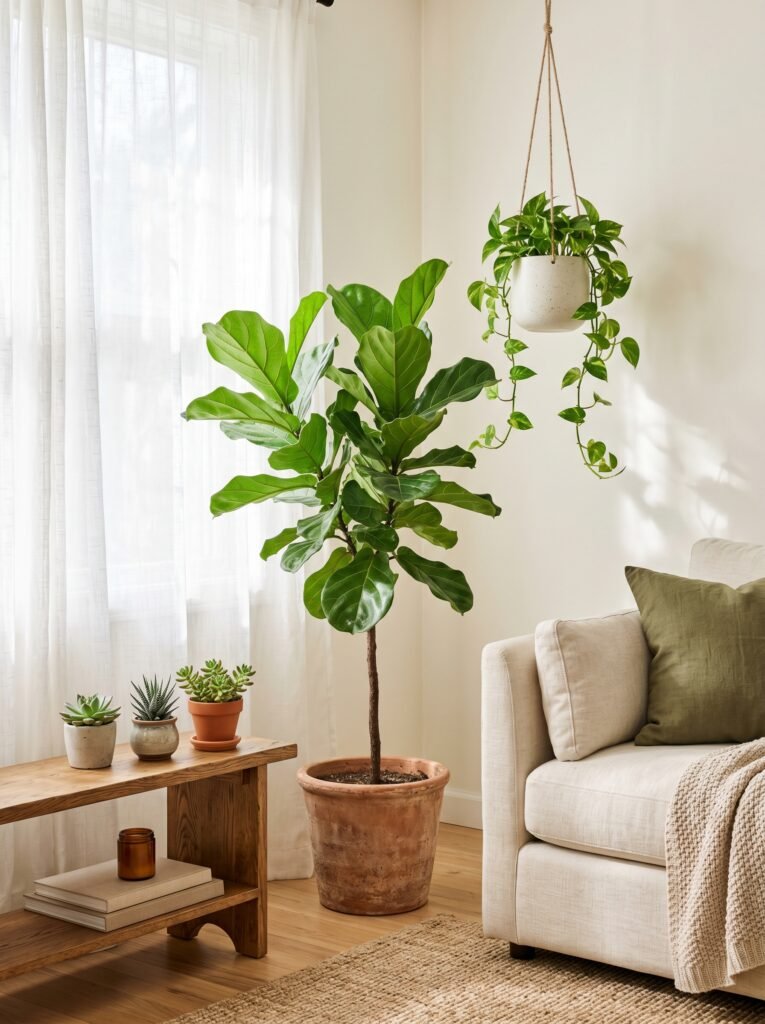
There is a difference between a sofa piled with forty decorative pillows you have to remove every time you sit down and a sofa thoughtfully adorned with pillows that invite you to sink in. The first is Pinterest theater. The second is genuine comfort.
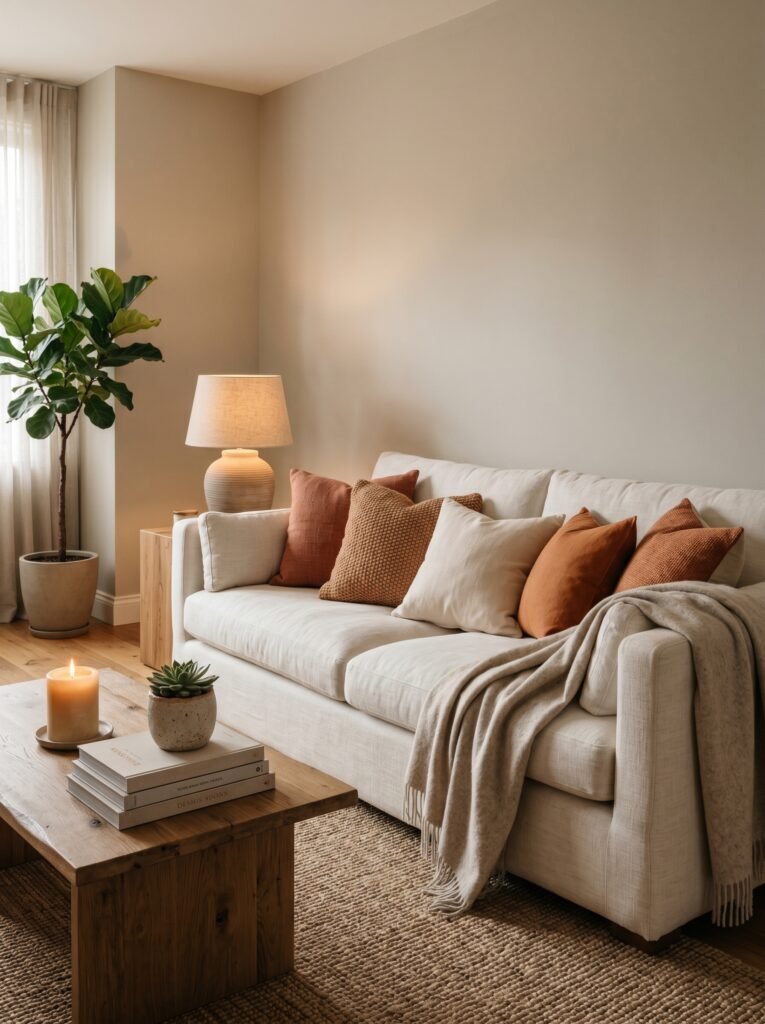
A good rule of thumb: for a standard three-seater sofa, four to six pillows is the sweet spot. Mix sizes — a couple of large square pillows (24″) at the back corners, a pair of medium ones (20″) in the middle, and perhaps one lumbar pillow across the front. Vary the fabric and pattern, but keep the color palette cohesive. A warm linen pillow beside a velvet one beside a subtly patterned woven one reads as layered and intentional rather than chaotic.
And then — leave room on the sofa. A sofa that looks like it has space for actual humans to sit on it is far more welcoming than one that’s been barricaded with cushions. Comfort, ultimately, is an invitation.
—
8. Furniture Arrangement: How Positioning Creates Intimacy
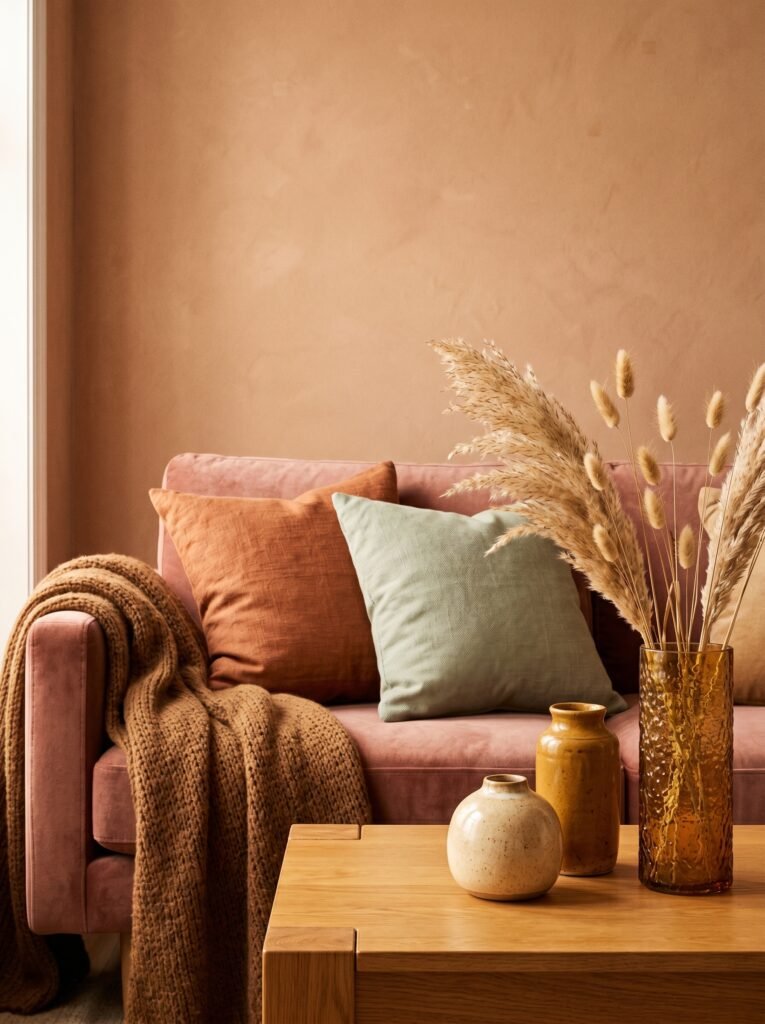
You can have all the right pieces and still end up with a room that doesn’t work — because the way furniture is arranged is just as important as what you put in the space. The classic mistake is pushing every piece of furniture flush against the walls in an attempt to maximize perceived space. This actually does the opposite: it creates a vast, empty center that makes the room feel cold and disconnected.
Pull your sofa away from the wall — even just a foot or two. Float your chairs into the conversation rather than pressing them against baseboards. Create a seating arrangement where everyone can see each other and speak without raising their voices. That geometry — that deliberate turning toward each other — is what makes a living room feel social and alive rather than like a furniture showroom.
A round or oval coffee table softens the arrangement visually and makes it easier to move around the space. And if you’re working with a small living room, remember that two loveseats facing each other across a coffee table can feel far more intimate and cozy than one large sectional that dominates every square inch.
—
9. Bringing Nature Indoors: Plants, Wood, and Natural Light
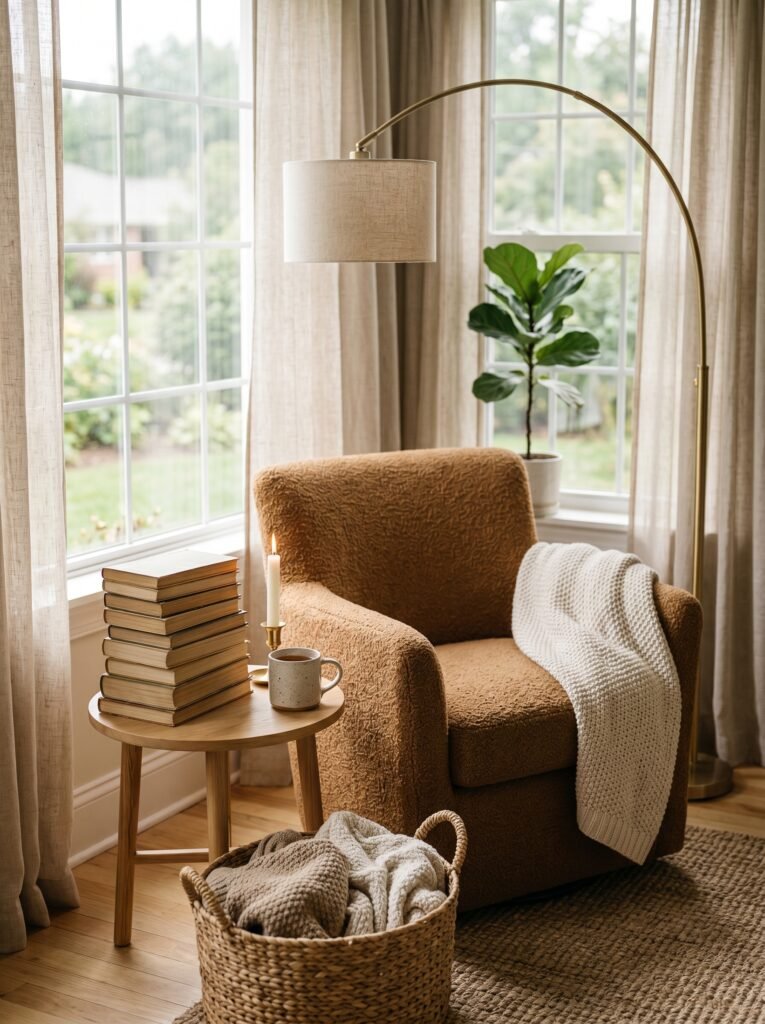
There is something deeply settling about the presence of natural elements in a room. Biophilic design — the practice of incorporating natural materials, light, and living plants into interior spaces — is backed by a growing body of research showing that it reduces stress, improves mood, and increases feelings of wellbeing. In a living room, this translates directly to comfort.
Start with what you have: if your living room has windows, make the most of them. Remove heavy, light-blocking blinds in favor of sheer linen curtains that let daylight filter softly into the space. Push furniture away from windows rather than in front of them, and keep window sills clear to allow maximum light in.
Then layer in warmth with wood — a reclaimed wooden coffee table, a live-edge side table, wooden picture frames, or even a simple wooden bowl on a shelf. Wood has a natural warmth and imperfection that man-made materials simply cannot replicate. Finally, add at least one or two plants. A large-leafed monstera in a terracotta pot, or a trailing pothos on a high shelf, brings life and oxygen into the room in the most literal sense.
“A room that breathes — with light, wood, and green — will always feel more alive than the most perfectly styled space.”
—
10. The Bookshelf Principle: Lived-In Is More Welcoming Than Perfect
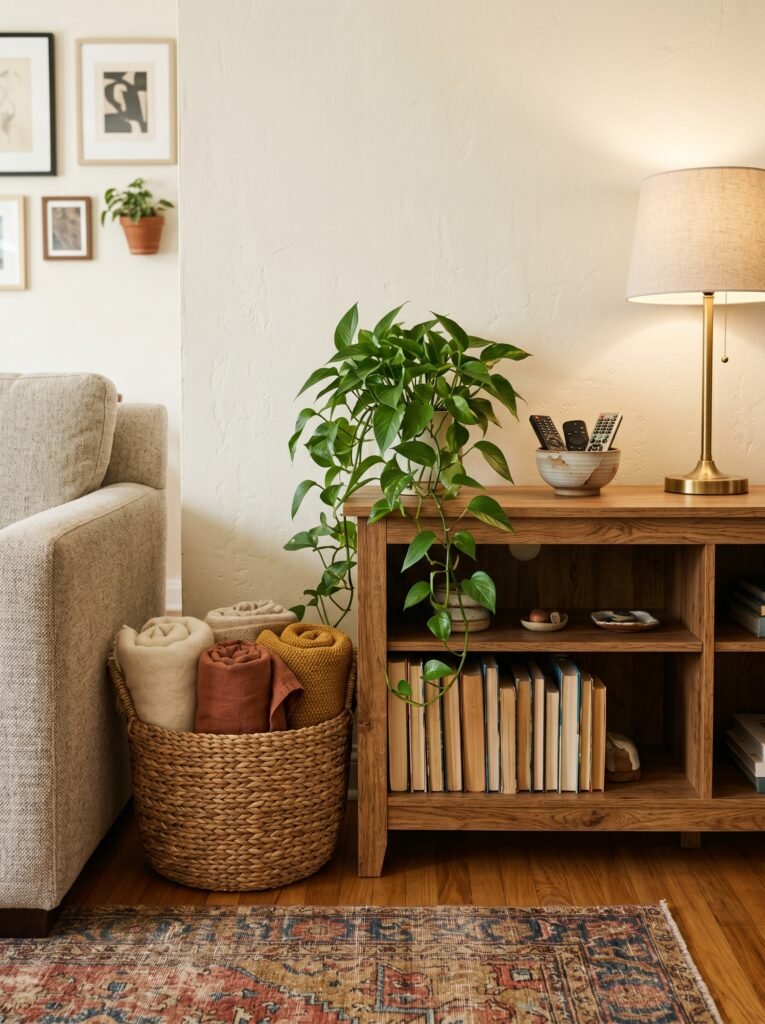
Somewhere along the line, interior design content convinced us that everything should look like it was just staged for a photo shoot. Books arranged by color. Objects placed in precise triangles. Every surface carefully cleared. And while there’s a place for that kind of editorial styling, it is the enemy of true coziness.
A genuinely comfy living room has books that look actually read — some upright, some horizontal, spines cracked with love. It has a candle that’s been burned down a quarter of the way. It has a coffee table with a real coaster stain from three Sundays ago. It has a small pile of current reads on the side table and a pair of glasses left casually on top.
This is not an invitation to live in clutter — it is a reminder that use is the highest form of appreciation a home can receive. Style your shelves with a mix of books, plants, meaningful objects, and a few empty spaces. The breathing room is part of the design.
—
11. Small Budget, Big Comfort: Cozy Upgrades That Cost Almost Nothing
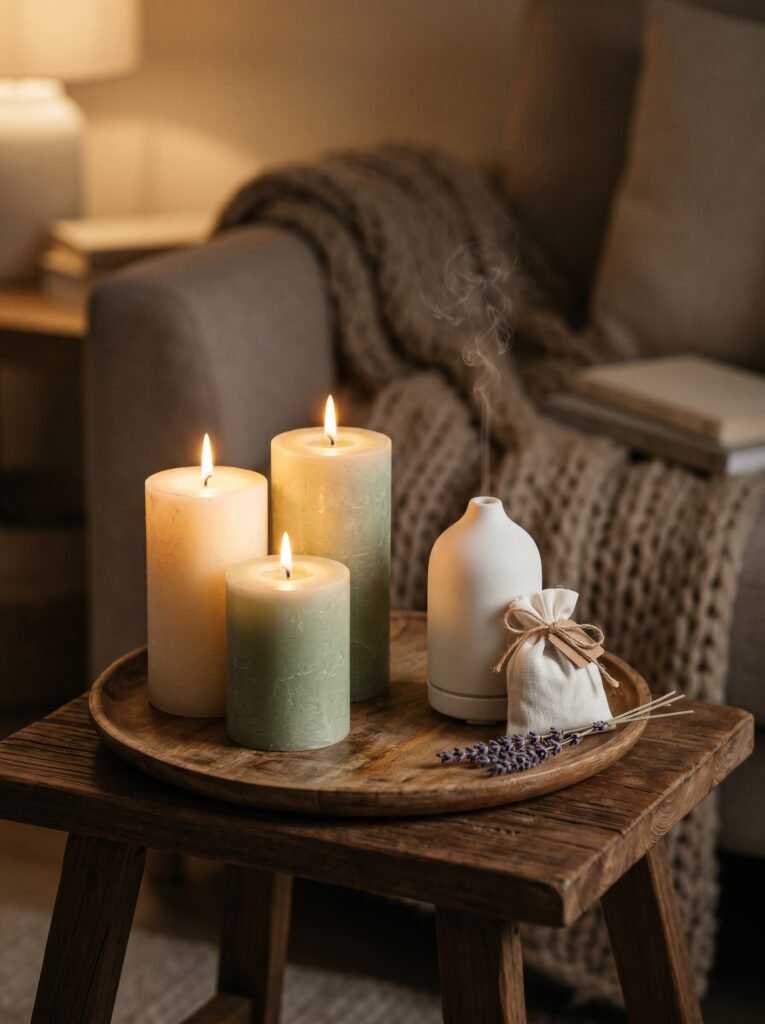
Comfort doesn’t require a renovation budget. Some of the most transformative changes you can make to a living room cost very little — they just require intentionality and a willingness to rethink what you already have.
Rearrange your existing furniture according to the principles above — pull it away from walls, create a defined conversation circle. Swap out cool-toned light bulbs for warm 2700K equivalents. Add a single large mirror to reflect natural light and make the room feel more spacious. Bring in a throw blanket you already own and drape it casually over the arm of your sofa.
Shop your own home, too. That terracotta pot in the garden? It might be perfect on a living room shelf. That vintage tray in a cupboard? It instantly elevates a coffee table. Before you spend a cent, walk through your home with fresh eyes and ask yourself what’s hiding in plain sight.
—
12. The Final Layer: Scent, Sound, and the Invisible Atmosphere of Home
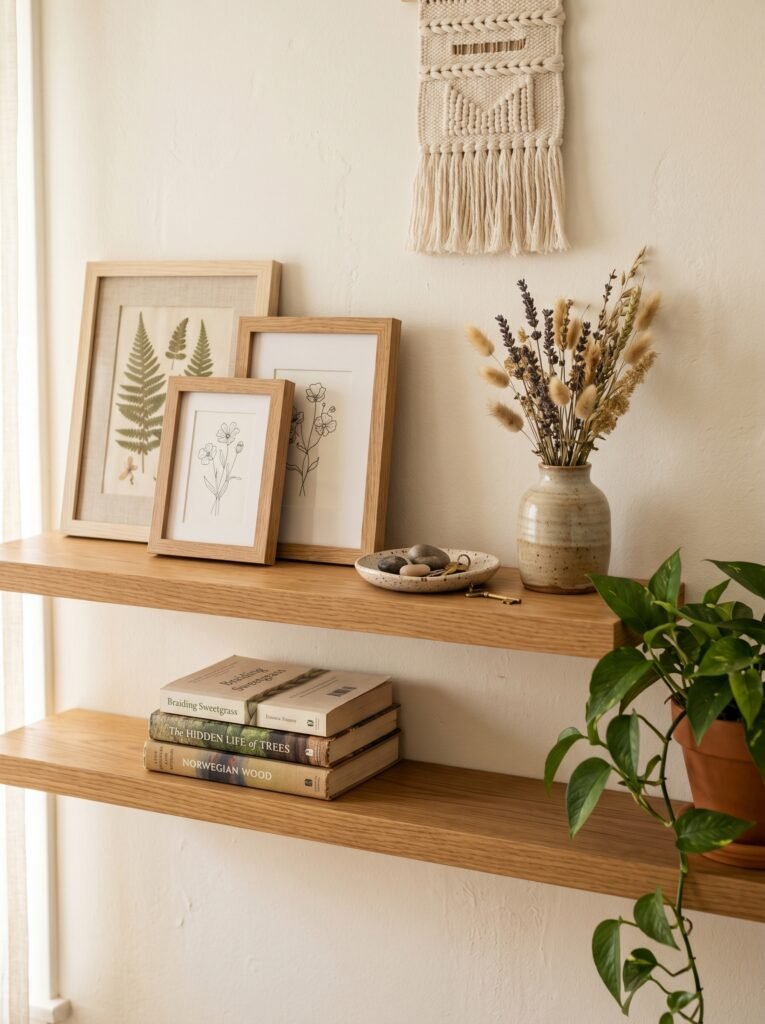
Here’s the thing that no one talks about in living room design articles: some of the most powerful elements of a cozy space cannot be photographed. You cannot pin scent to Pinterest. You cannot save a sound to a mood board. And yet these invisible sensory layers are often what make the deepest impression.
A living room that smells of warm vanilla or sandalwood — from a soy candle burning quietly on the coffee table — feels welcoming before a single cushion is noticed. Soft background music at a low volume makes a room feel inhabited in the best way. The weight of a good throw blanket across your lap on a cold evening is comfort you can feel in your bones — and no filter can capture it.
Build these into your routine: light a candle when you come home, put on a soft playlist when guests arrive, keep a basket of real throws within arm’s reach of every seat. These small rituals are the invisible architecture of a truly comfy home.
—
🌿 How to Maintain the Cozy Feel Long-Term
Creating a comfy living room is one thing — keeping it that way through the ordinary chaos of daily life is another. A few habits make all the difference.
Rotate your throws and cushion covers seasonally — heavier knits and deeper colors for autumn and winter, lighter linens and soft pastels for spring and summer. This keeps the room feeling fresh and intentional year-round without major purchases.
Do a quick “reset” each evening: fold the throw, fluff the cushions, clear the coffee table of dishes. This five-minute ritual means you always wake up to a room that feels ready to welcome you — and that matters more than most people realize.
Reassess your lighting at least once a year. Bulbs shift in color over time, and a lamp that once cast warm golden light may have been replaced with a cool-toned equivalent without you noticing. Small shifts in light temperature have an outsized effect on how comfortable a room feels.
Finally, trust your instincts over trends. Trends change every season on Pinterest, but your body knows what makes it feel at home. If a piece of furniture looks beautiful but never gets used, it might not actually be serving your comfort — and real comfort always comes first.
—
❓ FAQ
Q: What is the most important element in creating a comfy living room? A: Lighting is consistently cited by interior designers as the single most transformative element. Replacing harsh overhead lighting with layered, warm-toned light sources immediately changes how a room feels, making it more intimate and welcoming without moving a single piece of furniture.
Q: How do I make a small living room feel cozy rather than cramped? A: The key is in scale and layering. Choose furniture proportionate to your space — avoid oversized sectionals that eat up floor area — and layer texture and warmth through rugs, cushions, and soft lighting. Mirrors also help by reflecting light and giving the illusion of depth without physically expanding the room.
Q: What colors work best for a cozy living room? A: Warm earth tones consistently create the coziest atmosphere: warm whites, creamy beiges, terracotta, sage green, soft rust, and deep walnut. The key is choosing shades with warm undertones (yellow, red, or pink) rather than cool undertones (blue or green), as warm tones psychologically signal safety and warmth to the brain.
—
💭 Final Thought
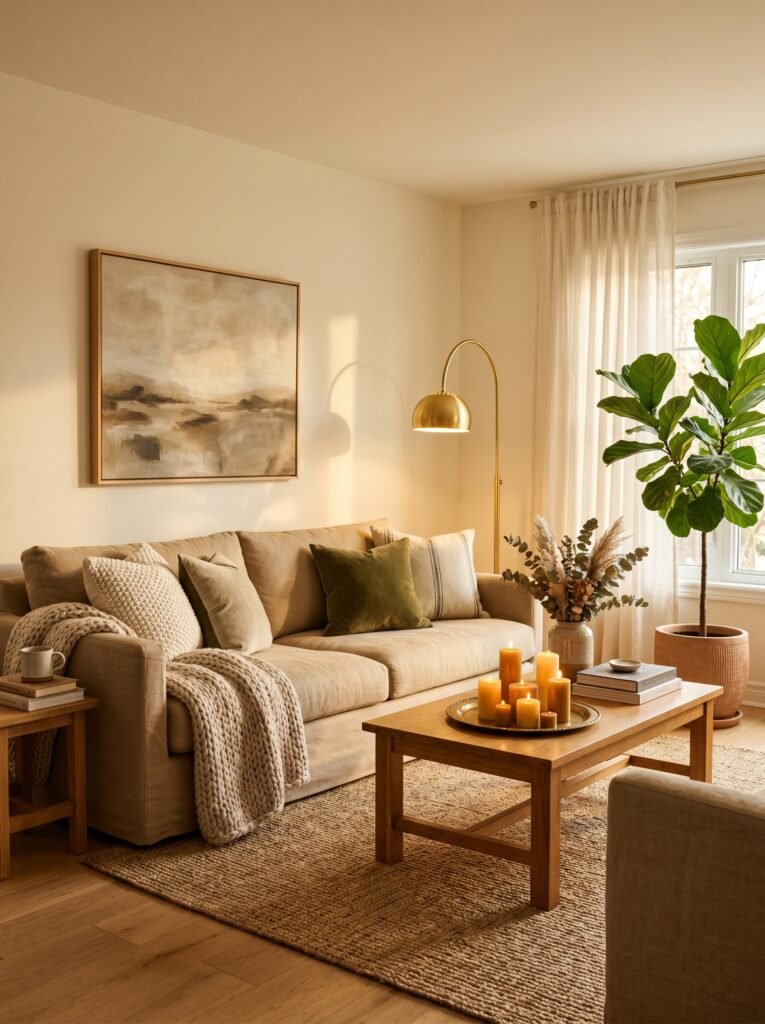
A comfy living room isn’t a destination you arrive at once everything is perfect — it’s something you build slowly, layer by layer, through the small daily choices to prioritize how a space makes you feel over how it looks in a photo. The most beautiful rooms are the ones that hold real life inside them — the laughter, the lazy Sunday mornings, the quiet evenings when all you need is a soft blanket and a warm light. So as you look around your own living space today, here’s the question worth sitting with: if this room were a feeling, what feeling would you want it to be?