The Living Room Wall Designs That Will Make You Fall in Love With Your Home All Over Again
There’s something quietly powerful about a wall. It holds your favorite photos, your most beloved colors, the textures that whisper this is home every time you walk through the door. If your living room walls have been staring back at you feeling blank and uninspired, this is your sign — and your roadmap — to change everything.
—
1. Why Your Living Room Walls Are the Most Underrated Design Element in Your Entire Home
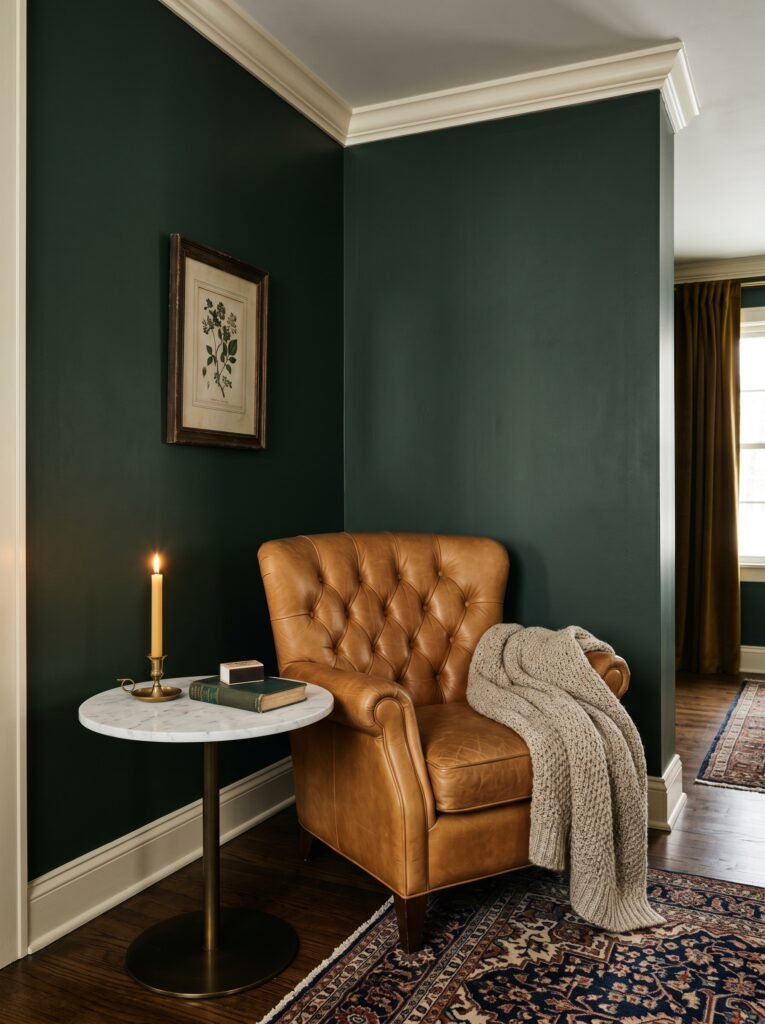
Most people spend hundreds of dollars on a sofa, agonize over the right rug, and then leave their walls as an afterthought. But here’s the truth that interior designers know well: walls are the largest surface area in any room. They set the emotional tone before anyone even sits down. They whisper cozy or sophisticated or playful before a single candle is lit or a throw pillow is fluffed.
Think about the last time you walked into someone’s home and immediately felt something — calm, warmth, a kind of quiet awe. Chances are, the walls had everything to do with it. Whether it was a deep, moody paint color that made the space feel like a hug, a gallery wall filled with family memories, or an unexpected architectural detail like shiplap or wainscoting, those walls were doing serious emotional work.
Your living room walls have enormous, untapped potential. The question isn’t whether to design them — it’s knowing exactly how.
“Your walls don’t just surround your life. They reflect it.”
—
2. The Psychology of Paint Color — What Your Walls Are Saying Without Words
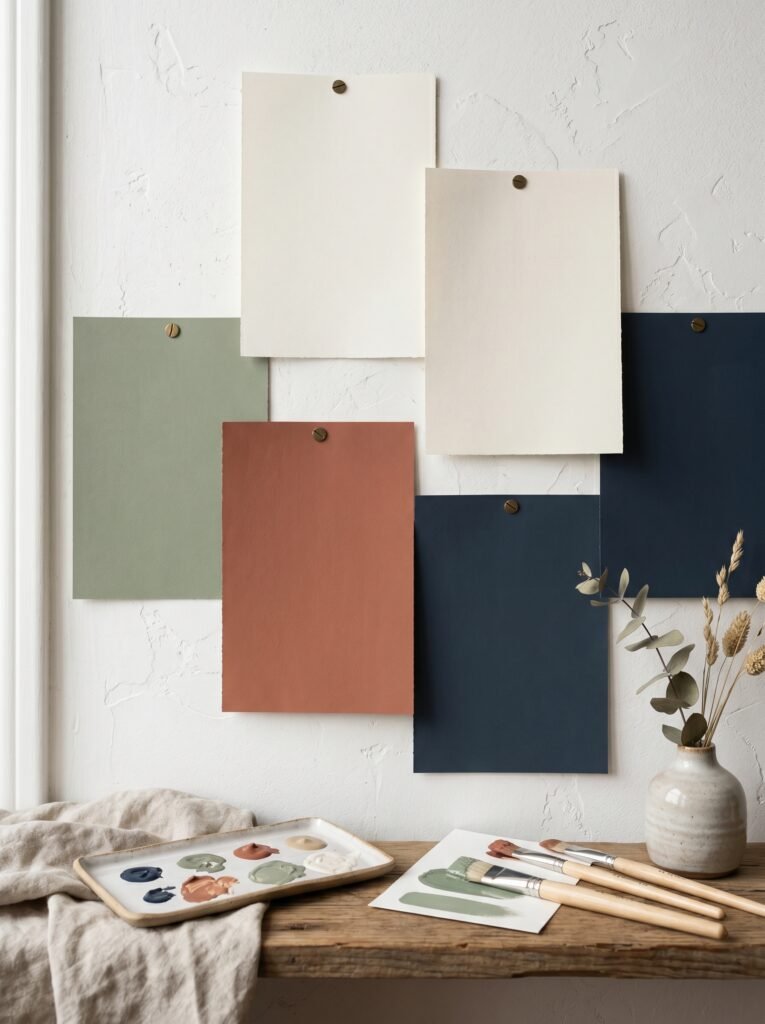
Color is not decoration. Color is communication. Before you pick up a paint swatch, it helps to understand what each family of colors actually does to a room — and more importantly, to the people inside it.
Warm whites and creamy off-whites like Benjamin Moore’s White Dove or Sherwin-Williams’ Alabaster create a sense of airiness and calm. They’re the design equivalent of a slow exhale. Earthy terracottas and warm taupes ground a space, making it feel rooted and inviting — like a Sunday morning that never has to end. Deep, saturated colors — forest green, navy blue, charcoal — add drama and intimacy, transforming a plain living room into something that feels genuinely curated and intentional.
The mistake most people make is choosing a color they love in isolation, without considering how the light in their specific room will transform it. A gorgeous sage green in a north-facing room can look dull and gray by midday. Always test your paint color with large swatches on the actual wall, observe it at different times of day, and let it live in the space for at least 48 hours before committing. Your future self will thank you.
—
3. The Gallery Wall Formula That Actually Works (No Design Degree Required)
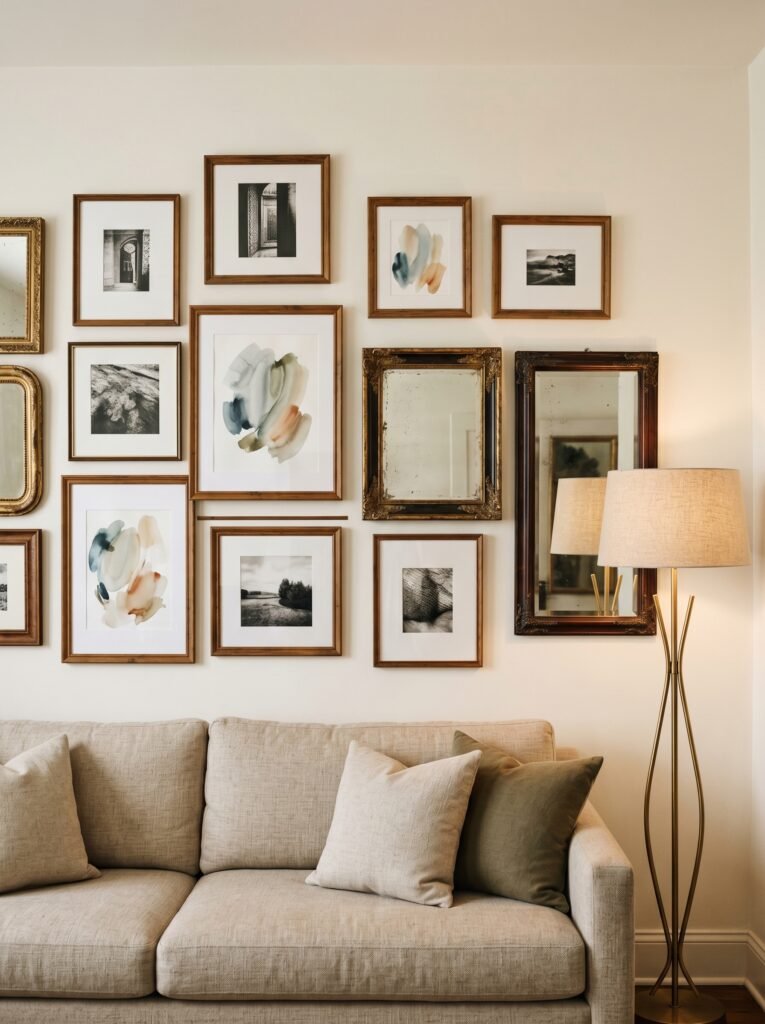
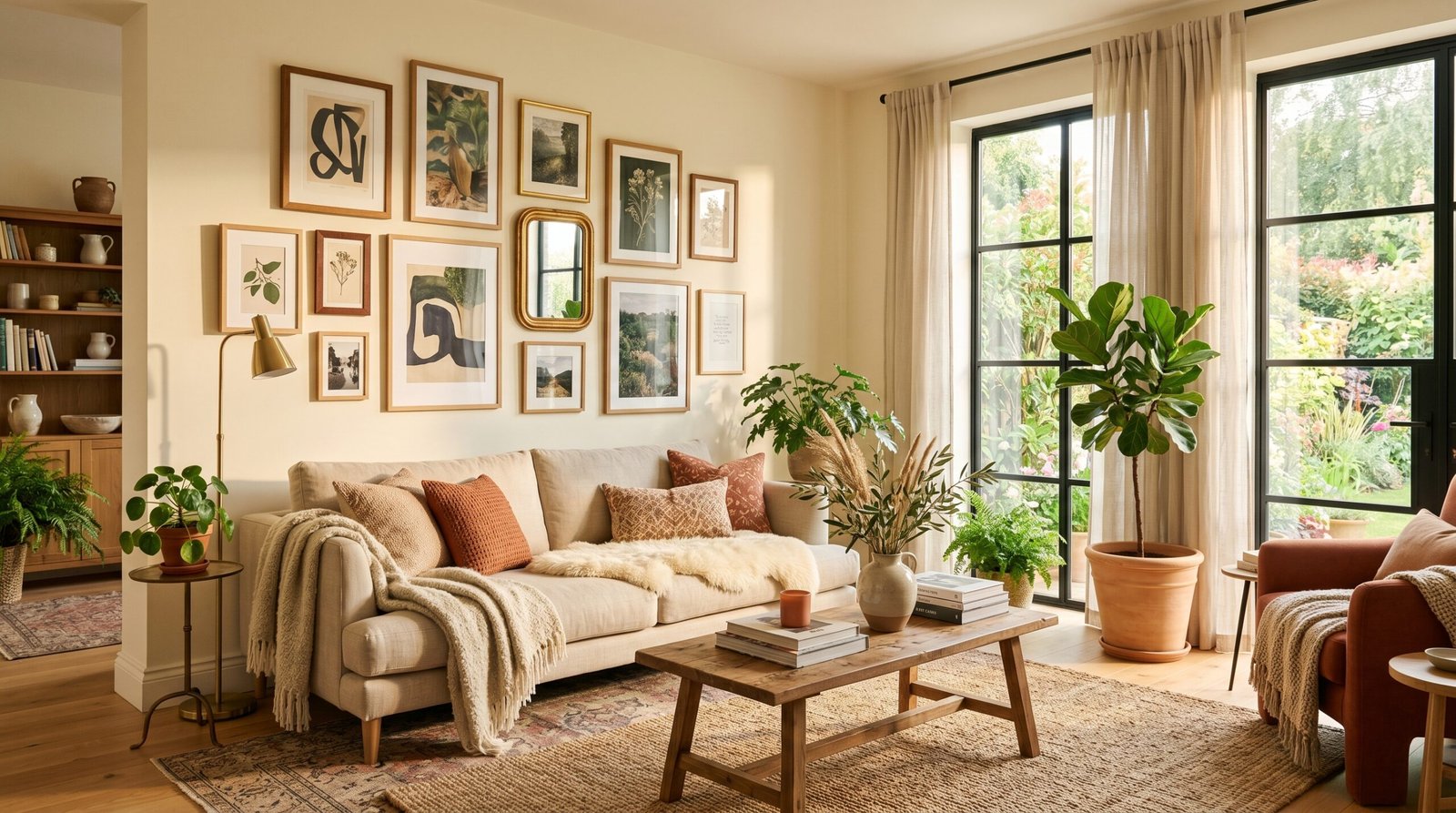
Few things in home design are as satisfying — or as potentially chaotic — as a gallery wall. Done right, it’s a living, breathing portrait of who you are. Done wrong, it looks like frames had a minor collision. The good news is that there’s a reliable formula that virtually anyone can follow.
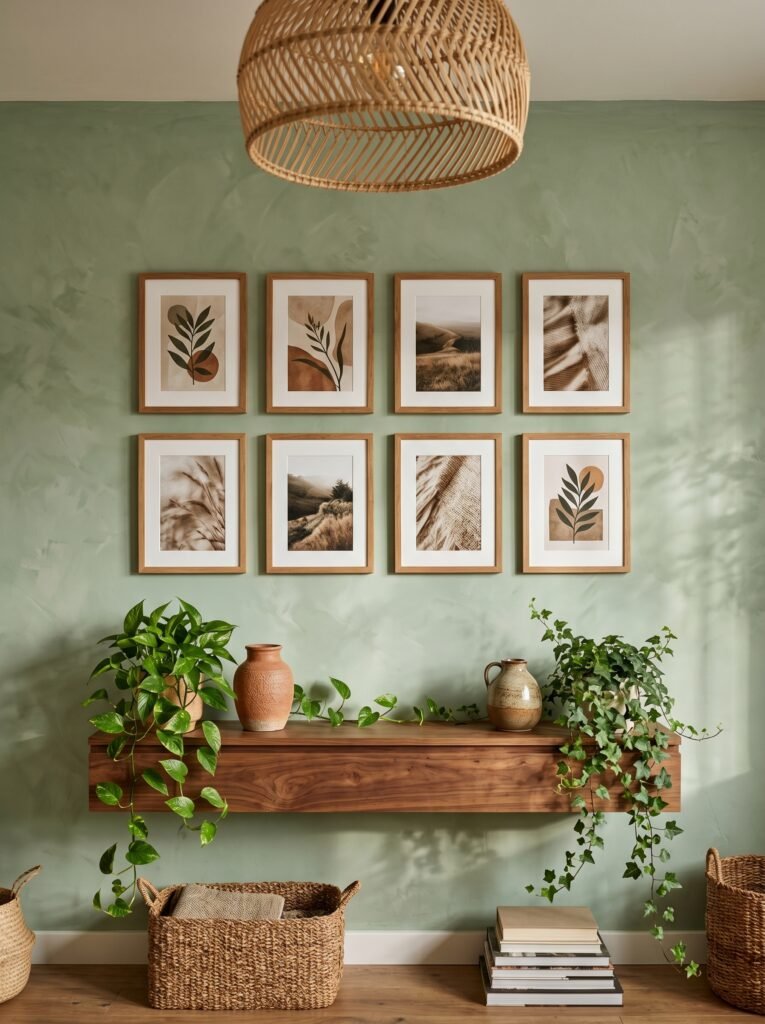
Start with a focal anchor piece — something larger, around 16×20 inches or bigger, that everything else will orbit around. From there, mix frame sizes intentionally: you want a balance of large, medium, and small without letting any single size dominate. Black frames give cohesion and a modern edge. Mixed metal and wood frames feel more eclectic and collected-over-time, which is often the most authentic look.
Lay your entire arrangement out on the floor first. Take a photo of it. Live with that image for a day. When you’re ready to hang, use painter’s tape to map out each frame on the wall before committing a single nail. This step alone saves most people from three rounds of unnecessary holes and frustration.
—
4. Textured Wall Treatments That Add Depth No Paint Can Replicate
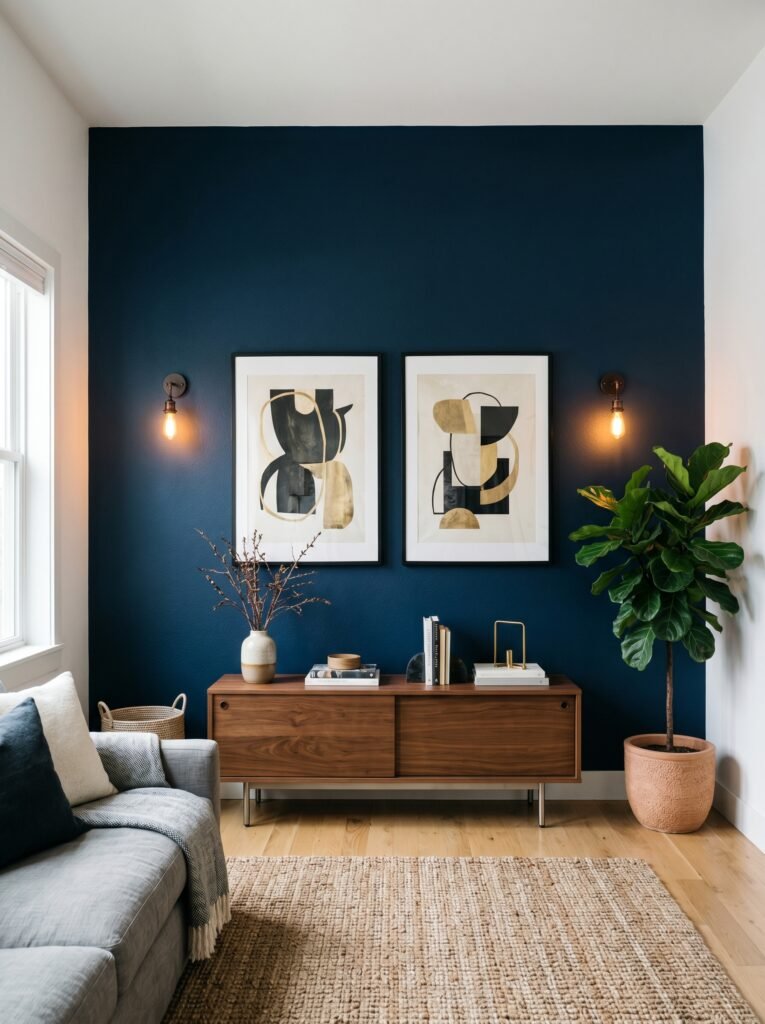
Paint changes color. Texture changes dimension — and that difference is everything. If your living room walls feel flat no matter what shade you choose, it may be because the surface itself is missing physical interest.
Limewash paint has made a breathtaking comeback in recent years, and for good reason. It creates an organic, slightly uneven finish that looks centuries-old and deeply artisan. No two walls look the same, which means your living room becomes uniquely yours by default. Venetian plaster takes this a step further, adding a polished, almost stone-like depth that photographs beautifully and feels even better in person.
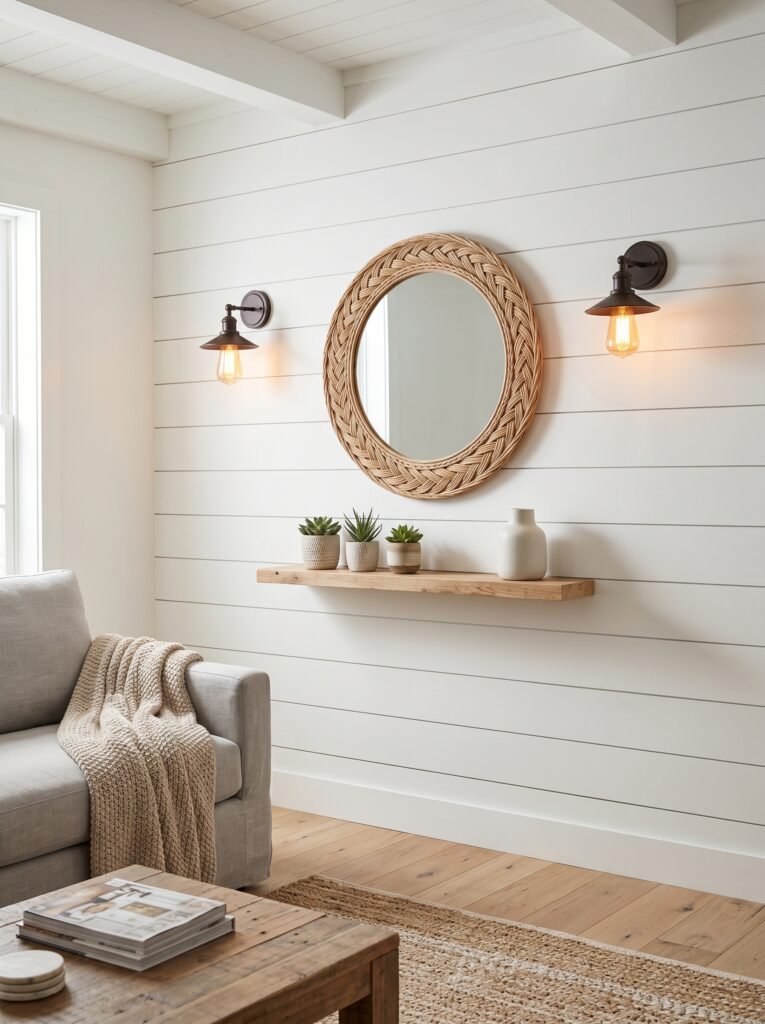
For a more architectural approach, wood paneling — whether it’s traditional wainscoting, board-and-batten, or full-height shiplap — adds warmth and structure simultaneously. It’s a particularly powerful technique in rental spaces or older homes where the walls themselves may lack character. Paint your paneling the same color as your walls for a tonal, elevated look, or go contrasting for bold definition.
—
5. Accent Walls Done Right — And the Common Mistakes to Avoid
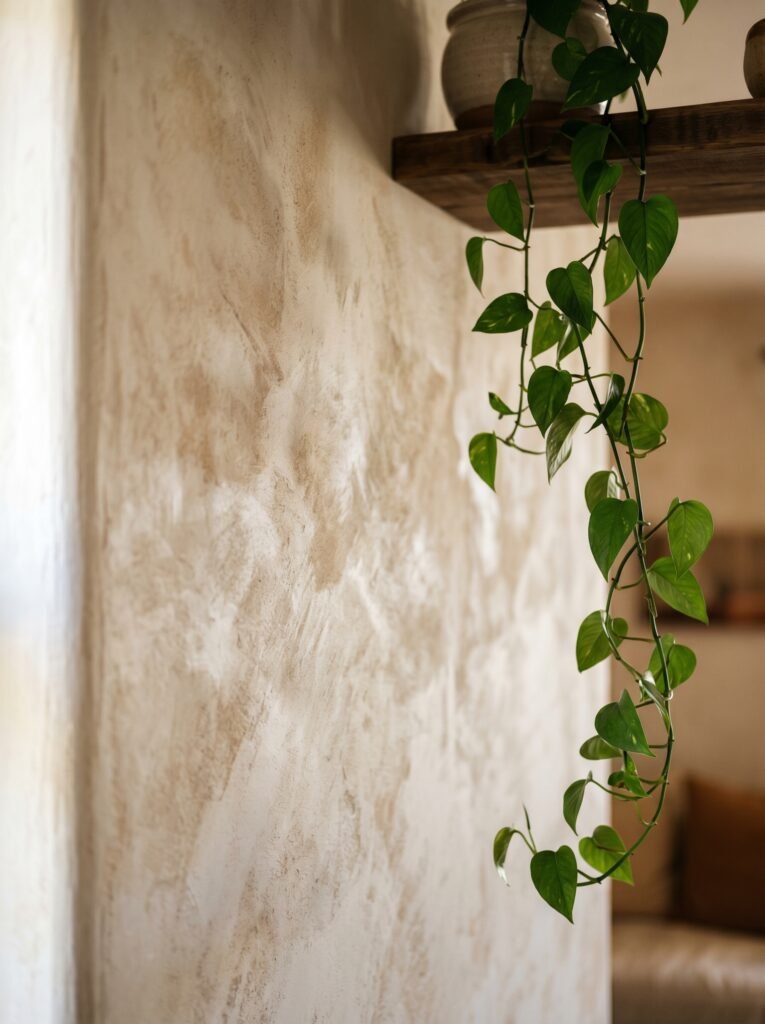
The accent wall has had something of a troubled reputation. For a while, every room had one — a single wall painted a contrasting color that often felt random rather than intentional. But when an accent wall is done thoughtfully, it’s genuinely transformative.
The key is choosing the right wall. The accent wall should be the one that draws your eye naturally when you enter the room — typically the wall your main seating faces, or the wall behind your sofa. This creates visual hierarchy, giving the space a clear focal point that anchors everything around it.
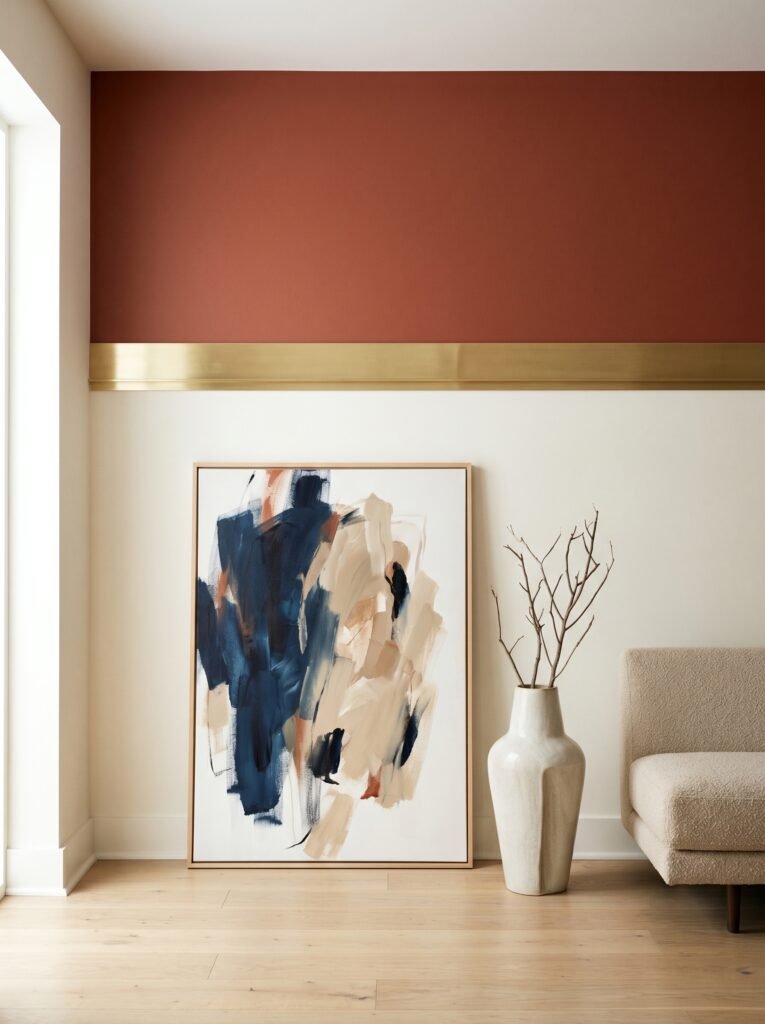
Where people go wrong is in choosing a color so dramatically different from the rest of the room that it feels disconnected rather than designed. Instead, try staying within the same color family but going two to three shades deeper. A room with warm white walls can absorb a rich caramel or dusty rose accent wall beautifully. It feels intentional rather than added-on.
“An accent wall isn’t about contrast — it’s about conversation between colors.”
—
6. Floating Shelves as Wall Design — Function Meets Beauty
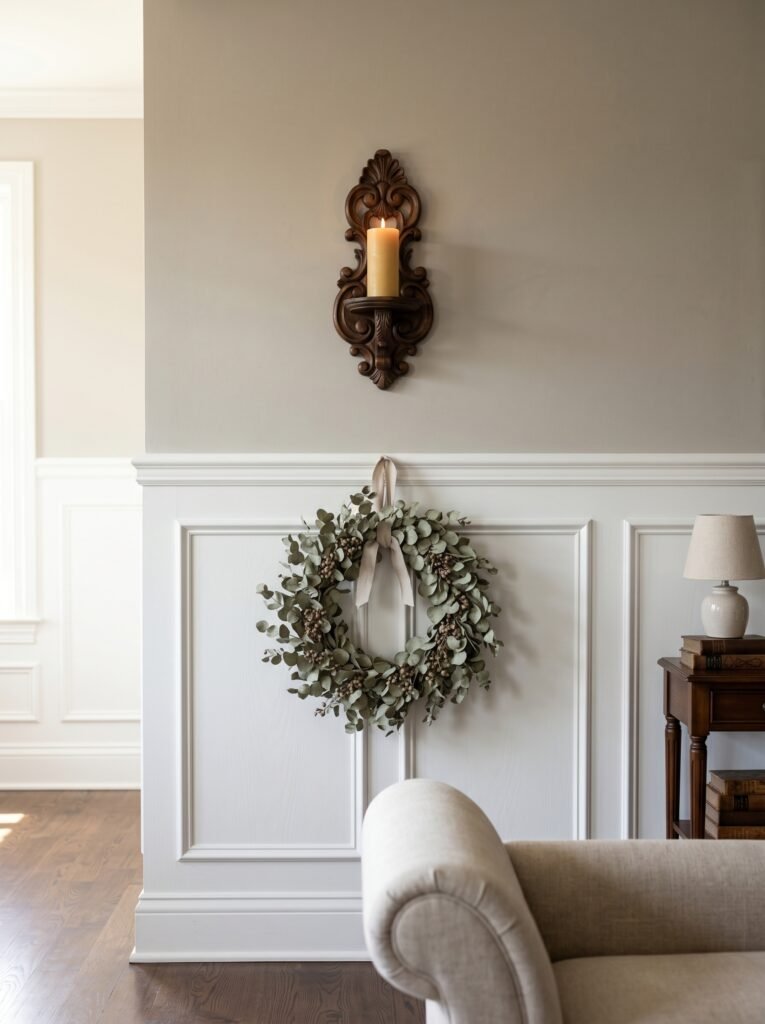
Here’s a design move that combines storage, style, and personality in one fell swoop: floating shelves used intentionally as wall design. Not just as a place to put things, but as a curated visual display that draws the eye and tells a story.
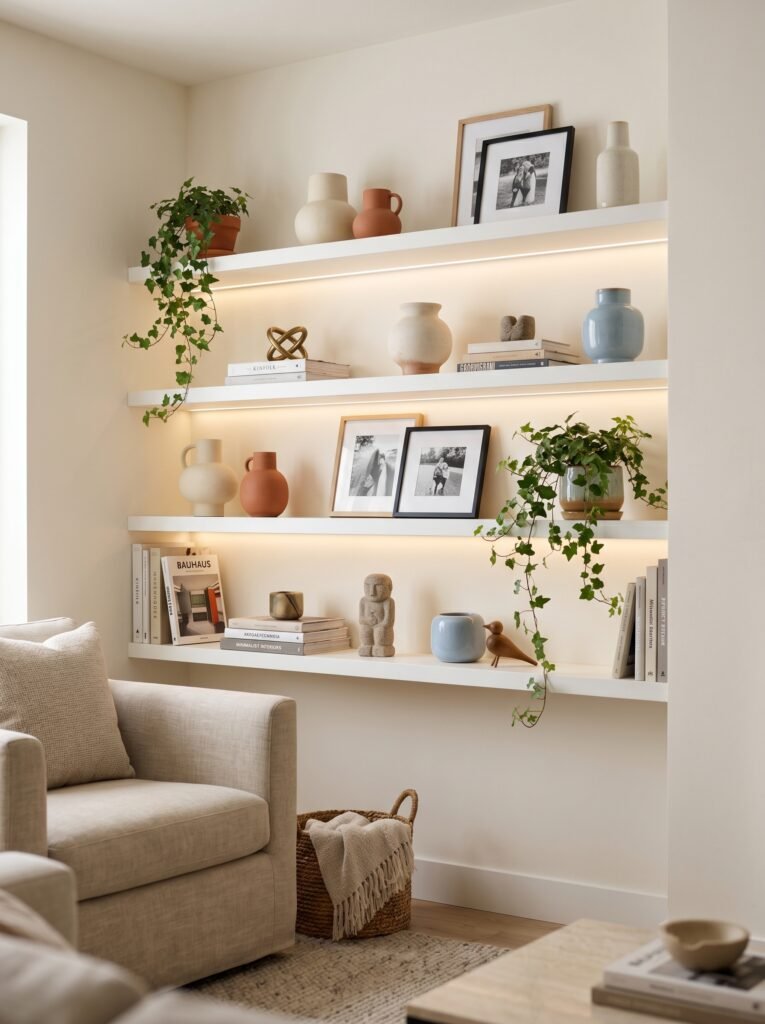
The rule of thumb for shelf styling is the rule of three — group objects in odd numbers, vary their height, and mix textures. A ceramic vase next to a small stack of hardcover books next to a trailing plant creates far more visual interest than a neat row of matching objects ever could. Leave breathing room between groupings. White space on a shelf is not wasted — it’s what makes the curated pieces actually pop.
For the shelves themselves, chunky solid wood brackets give a warm, substantial look. Minimalist thin metal floating shelves read modern and clean. The style you choose should feel like a natural extension of your overall room aesthetic rather than a separate design statement.
—
7. Wallpaper Is Back — And It’s Nothing Like What Your Grandma Had
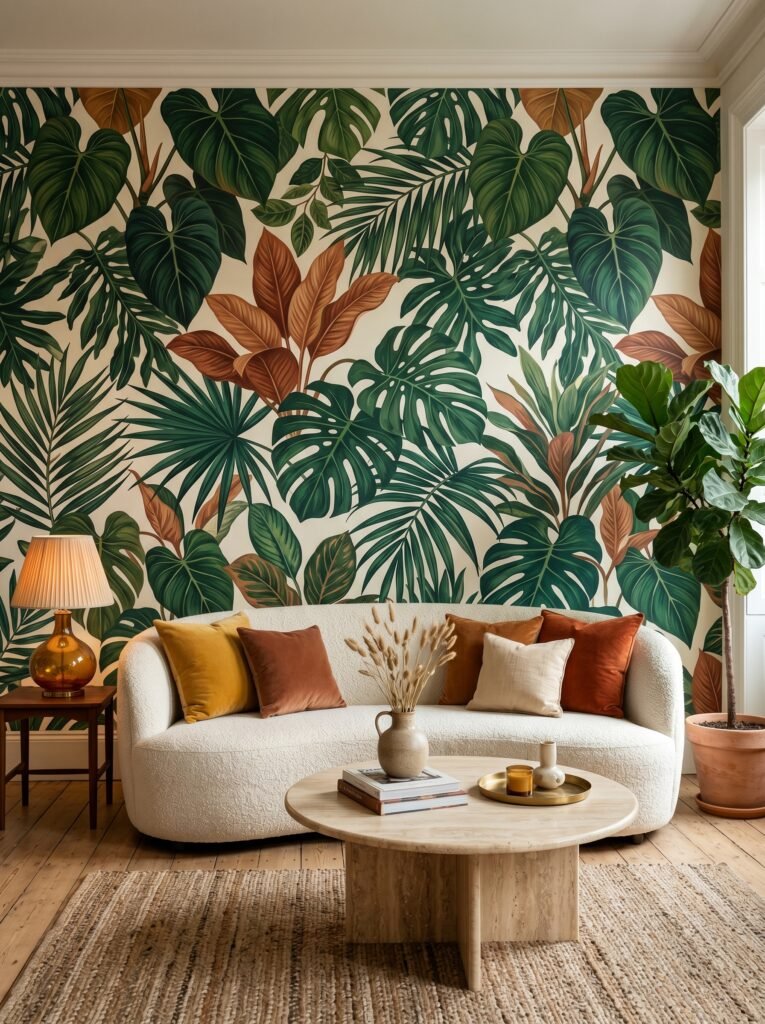
If the word “wallpaper” makes you think of faded florals and sticky paste, it’s time for a complete mental reset. Modern wallpaper — particularly peel-and-stick options — has become one of the most exciting tools in contemporary interior design, and it’s accessible to renters and homeowners alike.
Botanical prints in deep greens and blacks. Abstract watercolor washes in terracotta and cream. Subtle geometric patterns in dusty blues. Grasscloth textures that look like woven art. Today’s wallpaper options are extraordinary in their range, and a single wallpapered wall can become the most talked-about feature in your entire home.
Peel-and-stick versions have improved dramatically in quality and are now genuinely removable without wall damage — making them ideal for anyone who wants the impact without the permanence. If you’re new to wallpaper, start with one wall: the one behind your sofa or your media console. Let it be the room’s statement, and build everything else around it.
—
8. Mirrors as Wall Design — The Trick That Makes Every Room Feel Bigger
A well-placed mirror on a living room wall does something almost magical: it doubles the light, expands the perceived space, and adds a layer of visual interest that a piece of art simply can’t. And yet mirrors are wildly underused in most home designs.
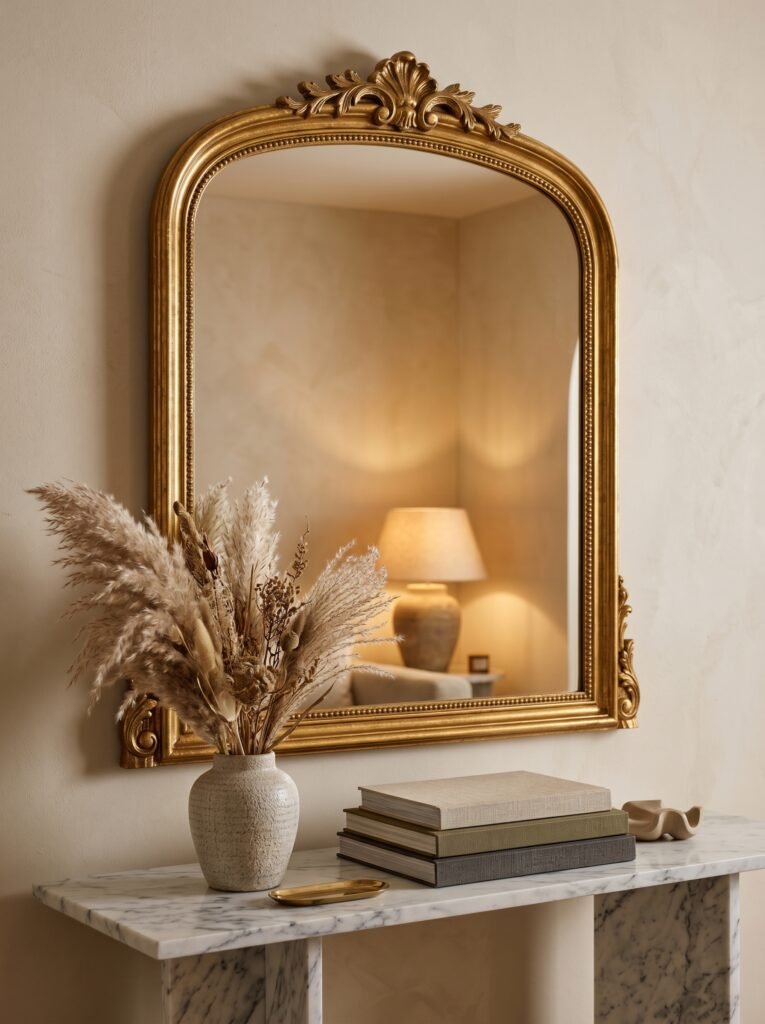
The most impactful approach is leaning a large, slightly oversized mirror against the wall rather than mounting it flush. This casual, effortless look is endlessly elegant and requires zero hardware. Arched mirrors in particular — whether rattan-framed, gold-leafed, or minimal black metal — have become defining pieces of the current design era.
Cluster multiple smaller mirrors for a maximalist, gallery-style effect, or use a single large statement mirror as your room’s focal point. Position mirrors across from windows to bounce natural light deeper into the room, making even the smallest, darkest living room feel genuinely open and alive.
—
9. Nature-Inspired Wall Designs — Bringing the Outside World In
There’s a growing movement in interior design called biophilic design — the intentional integration of natural elements into living spaces. And the living room wall is one of the most powerful places to express it.
Vertical living walls, whether real or preserved moss, are the dramatic end of this spectrum. A framed moss art piece — where preserved moss is arranged in geometric or organic patterns inside a shadow box frame — requires zero maintenance, looks extraordinary, and brings a sense of calm that’s difficult to achieve any other way. Preserved moss doesn’t need water, sunlight, or care. It simply exists in your space, green and quietly beautiful.
On a simpler scale, botanical prints — real pressed botanicals framed under glass, or high-quality printed reproductions — bring organic shape and color to any wall. Natural wood installations, woven fiber art, and ceramic wall hangings all fall under this same philosophy: the living room as a space that feels connected to the natural world, not insulated from it.
“The walls that make us feel most at home are the ones that remind us we belong to something larger than ourselves.”
—
10. The Budget Living Room Wall Transformation — Big Impact for Small Spend
You don’t need a designer budget to have a designer living room. Some of the most stunning wall transformations cost almost nothing — they just require creativity, intention, and a willingness to think differently about what “wall decor” can mean.
Tapestries and large fabric wall hangings are among the most affordable ways to add color, texture, and pattern to a wall in one single move. A beautiful woven tapestry from an independent maker or a vintage textile sourced from an antique market can cost less than a single framed print and deliver ten times the visual impact.
DIY paint techniques — color blocking, painted arches, simple geometric shapes applied with painter’s tape — are having a major cultural moment right now, and for good reason. A painted arch behind a sofa, framing it like a window into another world, costs nothing but paint and an afternoon. The result looks intentional, artistic, and completely original. No two arches are ever exactly alike.
—
11. Styling Your Living Room Walls for Every Season Without Redecorating
Here’s something the most seasonally aware home designers understand: your walls don’t have to be static. You don’t need to repaint or rehang everything to shift the feeling of a room as the seasons change. Strategic swapping of a few key elements can completely transform the emotional atmosphere.
In autumn, replace your light linen gallery prints with warm amber botanicals or earthy abstract art. Lean a cozy plaid blanket ladder against the wall. In winter, introduce metallic frames, candle sconces, and deep jewel-toned textiles. In spring, swap everything back toward green, white, and soft blush. In summer, let the walls breathe — pare down, let white space dominate, and let natural light do the heavy decorating.
The secret is having a small collection of seasonal “wall props” — lightweight mirrors, swappable art prints, a few choice wall hangings — that you rotate intentionally. It keeps your home feeling alive and responsive to the world outside, which is one of the most underrated forms of interior comfort.
—
12. The Living Room Wall Design Approach That Interior Designers Use Every Time
Professional interior designers don’t approach a living room wall by asking “what should I put on this wall?” They ask a more powerful question: “What do I want someone to feel when they stand in this room?”
That question changes everything. It means that every decision — the color, the texture, the art, the scale, the negative space — is working toward a single emotional intention. Cozy and intimate. Energizing and creative. Calm and restorative. Once you know the feeling you’re designing toward, the choices become dramatically clearer and more cohesive.
Start with your intention. Then choose your focal wall — the one that sets the tone for the entire space. Build from there with layers: base color, texture or treatment, large-scale art or a statement mirror, smaller complementary pieces, living elements like plants or moss art. Step back often. Edit ruthlessly. The most beautiful living room walls are almost always the ones where something was removed, not added.
—
🌿 How to Take Care of Your Living Room Wall Designs
Once you’ve invested time, creativity, and love into your walls, a little ongoing care keeps them looking their best for years.
Dust art frames and wall hangings monthly with a soft microfiber cloth — dust accumulates faster than you’d think and dulls even the most beautiful pieces. For painted walls, keep a small jar of your wall paint labeled and stored away. Touch-ups applied within a year of the original paint job are virtually invisible. For peel-and-stick wallpaper, avoid hanging it in direct sunlight for extended hours, as UV exposure can cause gradual fading over time. Clean wallpaper lightly with a barely damp cloth — never soaking wet. For shelves, re-style and reassess every few months — what felt curated in spring may feel cluttered by fall, and a fresh edit takes only twenty minutes but can make the room feel completely renewed.
—
❓ FAQ
Q: What is the most popular living room wall design trend right now? A: As of 2024 and into 2025, limewash paint, arched paint details, and nature-inspired wall art — particularly preserved moss installations and botanical prints — are dominating living room design. These trends prioritize organic texture and warmth over stark minimalism.
Q: How do I choose the right color for my living room accent wall? A: Start by identifying the undertones in your existing furniture and flooring, then choose an accent color that either complements those undertones or deepens them. Avoid colors that live in a completely different color family unless you have a clear design vision. Always test the color on the actual wall with a large swatch before committing.
Q: Can I do a gallery wall in a small living room without it feeling overwhelming? A: Absolutely. In a small living room, a gallery wall actually works in your favor — it draws the eye upward and creates a strong focal point that makes the space feel intentional rather than cramped. Keep frames in a cohesive palette (all black, all natural wood, or all white) and leave adequate breathing room between pieces to prevent visual clutter.
—
💭 Final Thought
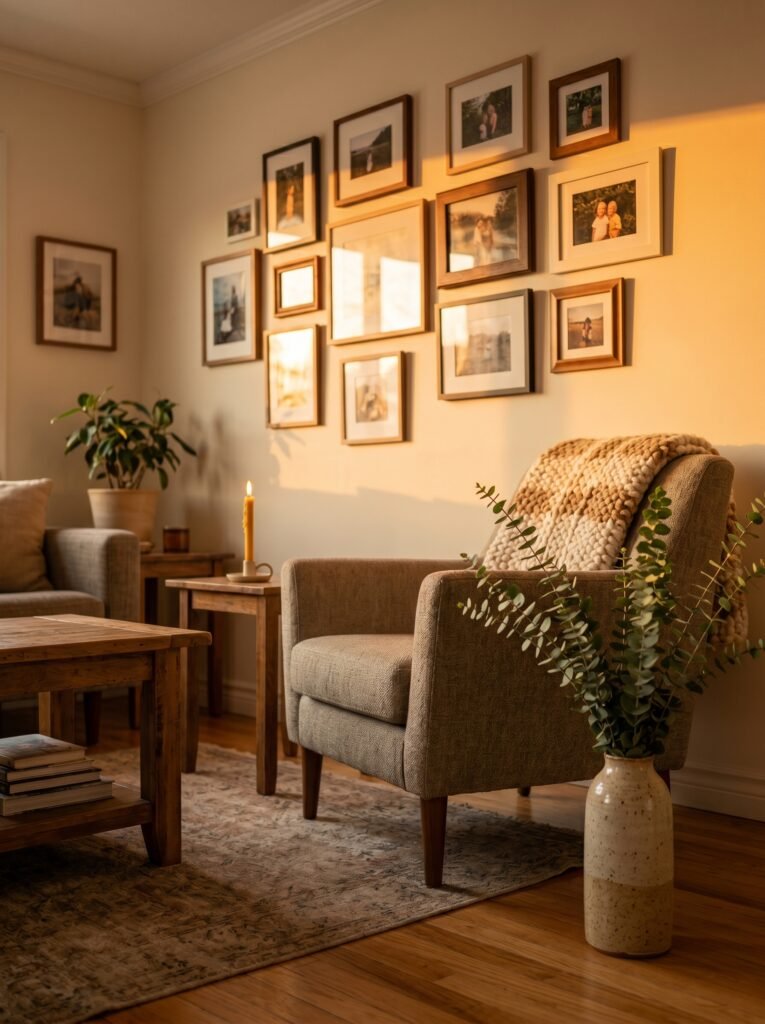
Your living room walls are not just surfaces waiting to be filled — they’re the quiet architecture of your daily emotional life. They hold your history, your taste, your sense of what home truly means. Whether you start with a single coat of a new paint color this weekend, or slowly build a gallery wall over months of collecting pieces you genuinely love, every intentional choice brings you closer to a space that feels unmistakably, completely yours.
So let me ask you this: if your living room walls could tell the story of who you are right now — would you love what they’d say?