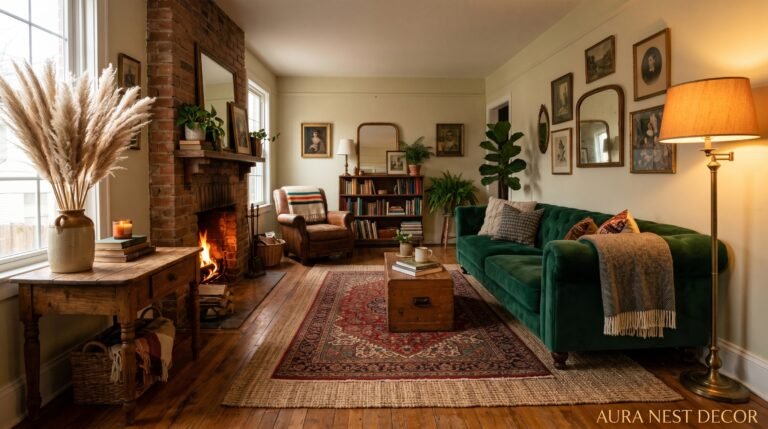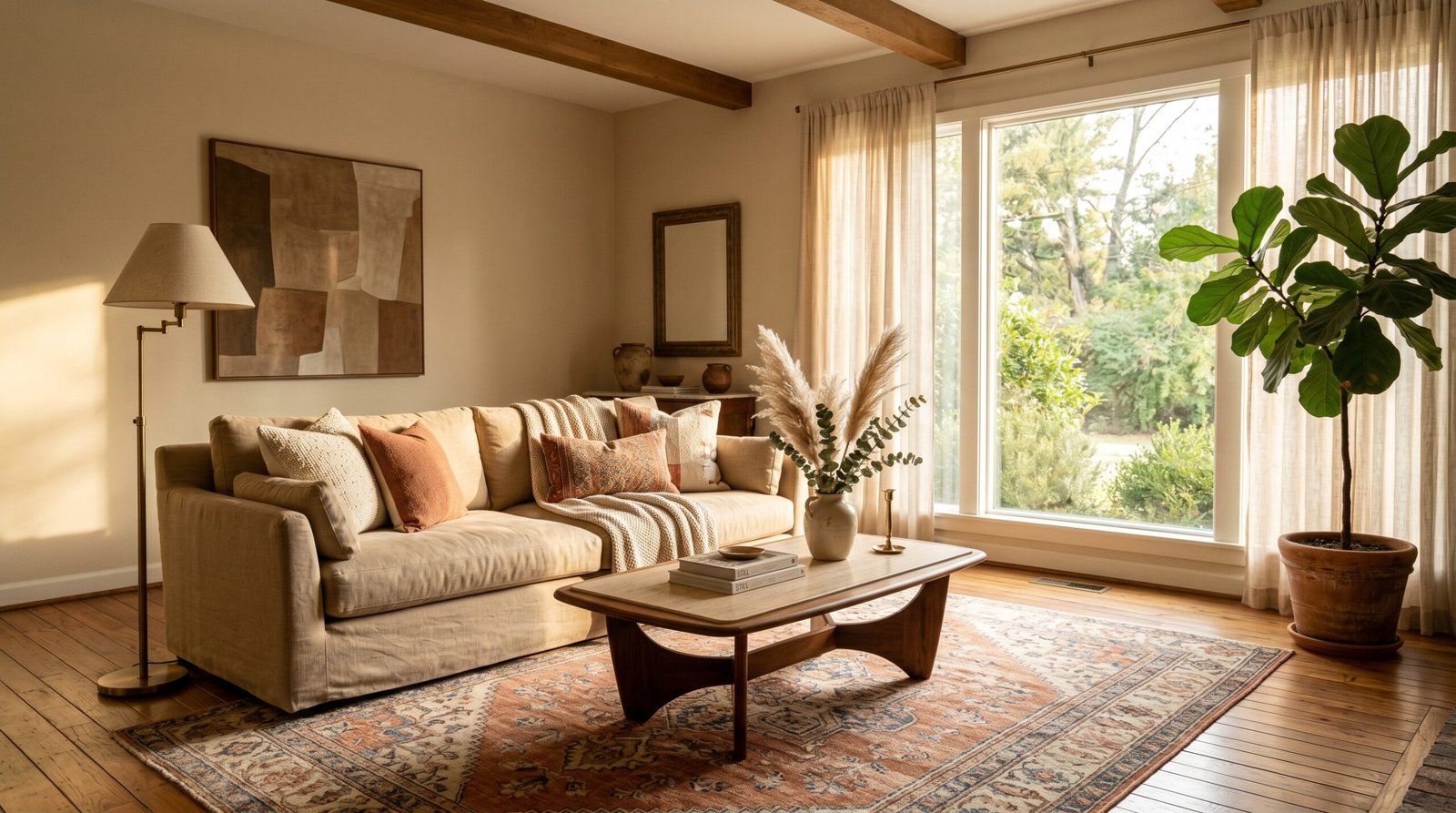
The Stylish Living Room You’ve Always Wanted: How to Create a Space That Feels Like You
There’s a particular kind of magic that happens when you walk into a living room and immediately feel at home — not just because it’s yours, but because every corner seems to understand you. That feeling isn’t accidental. It’s designed, piece by piece, choice by choice, with intention and heart.
—
1. Why Your Living Room Deserves More Than a Pinterest Scroll
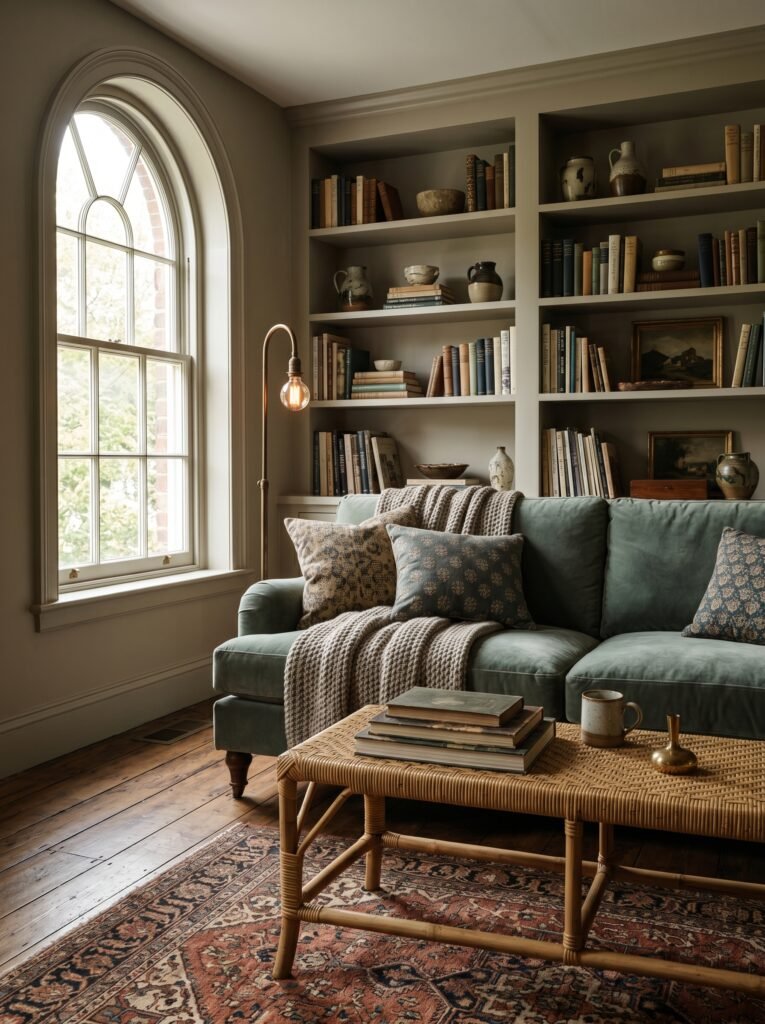
We’ve all done it — spent hours pinning beautiful living rooms, saving ideas into neatly labeled boards, then looking up at our own space and feeling vaguely defeated. The gap between inspiration and reality can feel enormous. But here’s what no one tells you: the most stylish living rooms you admire aren’t necessarily expensive or designer-curated. They’re thoughtful. They reflect a clear point of view, a confident use of color, and a deep understanding of how a room needs to feel — not just look — to the people who live in it.
Whether you’re working with a Victorian terrace in London, a ranch-style home in Texas, a modern apartment in Manchester, or a colonial house in New England, the principles of creating a stylish living room are the same. It starts with understanding your space before you start buying anything.
“A stylish living room isn’t about having the most — it’s about choosing the best.”
2. Start With the Feeling, Not the Furniture
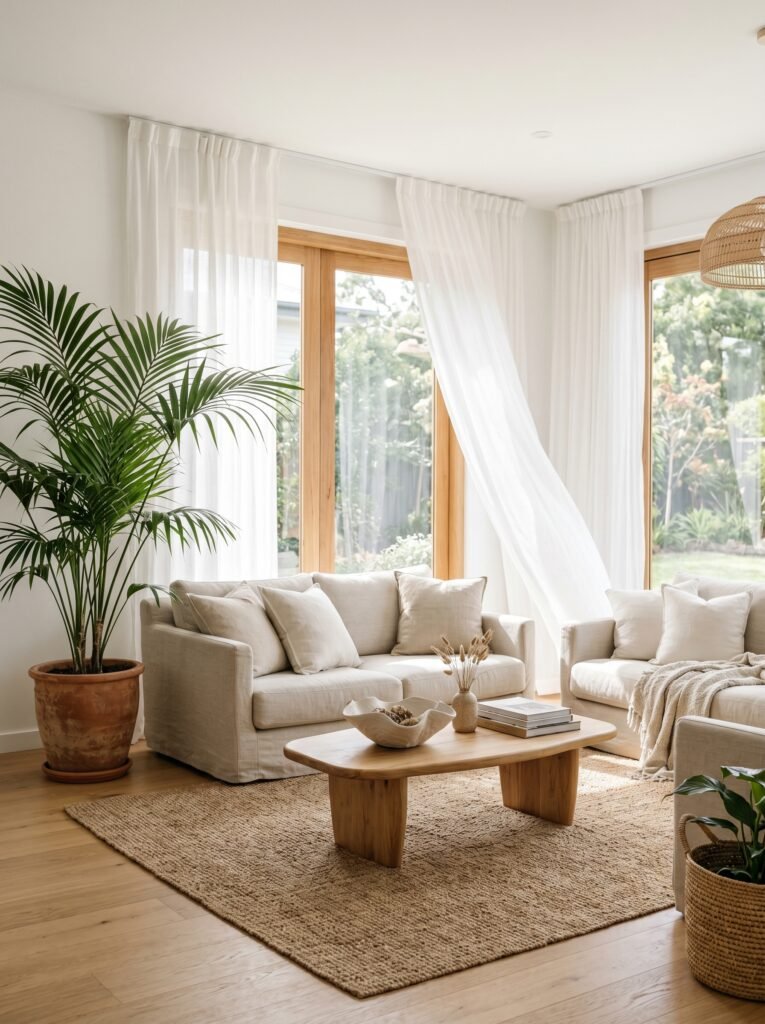
Before you measure a single wall or scroll another mood board, ask yourself: how do I want this room to feel? Cozy and enclosed, like a weekend in the Cotswolds? Open and airy, like a sun-drenched apartment in Charleston? Dramatic and moody, with deep jewel tones that make your guests lean in closer?
Most design mistakes happen because people start with objects — a sofa they love, a rug they can’t leave behind — and try to build backward. Starting with a feeling first gives you an emotional compass that guides every single decision. It keeps you from buying a pale linen sectional for a room that desperately wants to be dark and dramatic, or painting moody charcoal walls in a north-facing room that needs every lumen of light it can get.
Write it down: three words that describe how you want your living room to feel. Bold, welcoming, effortless. Or soft, layered, quiet. Those three words will save you thousands of dollars — or pounds — and months of second-guessing.
3. The Color Conversation Most People Get Wrong
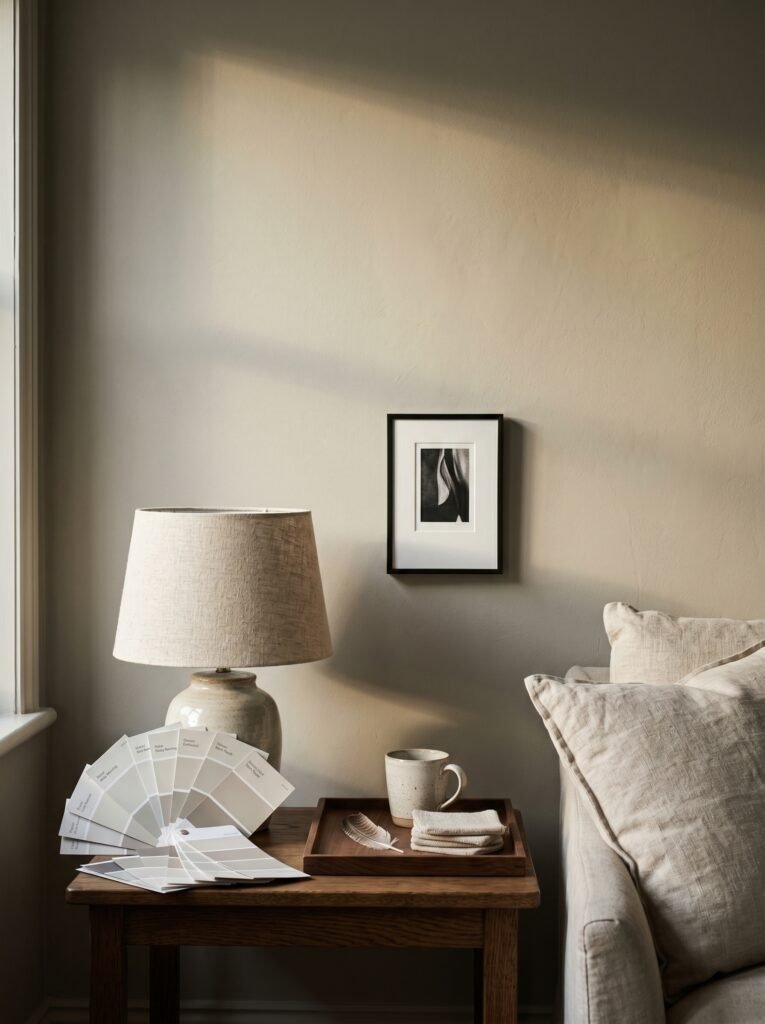
Color is the single most transformative tool available to you in interior design, and it’s also the one that causes the most paralysis. The truth about paint colors? They lie on the chip. They look completely different once they’re on your walls, under your specific light, next to your specific flooring.
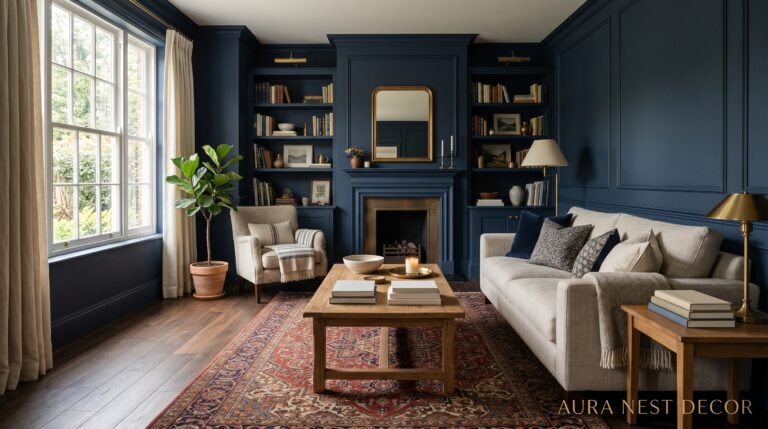
In the US and UK, some of the most enduring living room colors right now sit in the warm neutral and earthy tone family — think Farrow & Ball’s Elephant’s Breath, Benjamin Moore’s White Dove, or Sherwin-Williams’ Accessible Beige. These aren’t boring choices; they’re sophisticated ones. They create a canvas that lets your furniture, textiles, and art do the talking without competing with the walls for attention.
But don’t be afraid of deeper hues either. A living room painted in a rich terracotta, a dusty sage, or a moody slate blue can feel extraordinary — grounding and grown-up in a way that pale walls simply can’t achieve. The key is to consider your natural light. South-facing rooms in both the US and UK drink in warmth and can handle cooler or deeper tones beautifully. North-facing rooms — which is most of the UK’s living rooms, honestly — need warmer undertones to avoid feeling clinical or cold.
4. The Furniture Layout Principle That Changes Everything
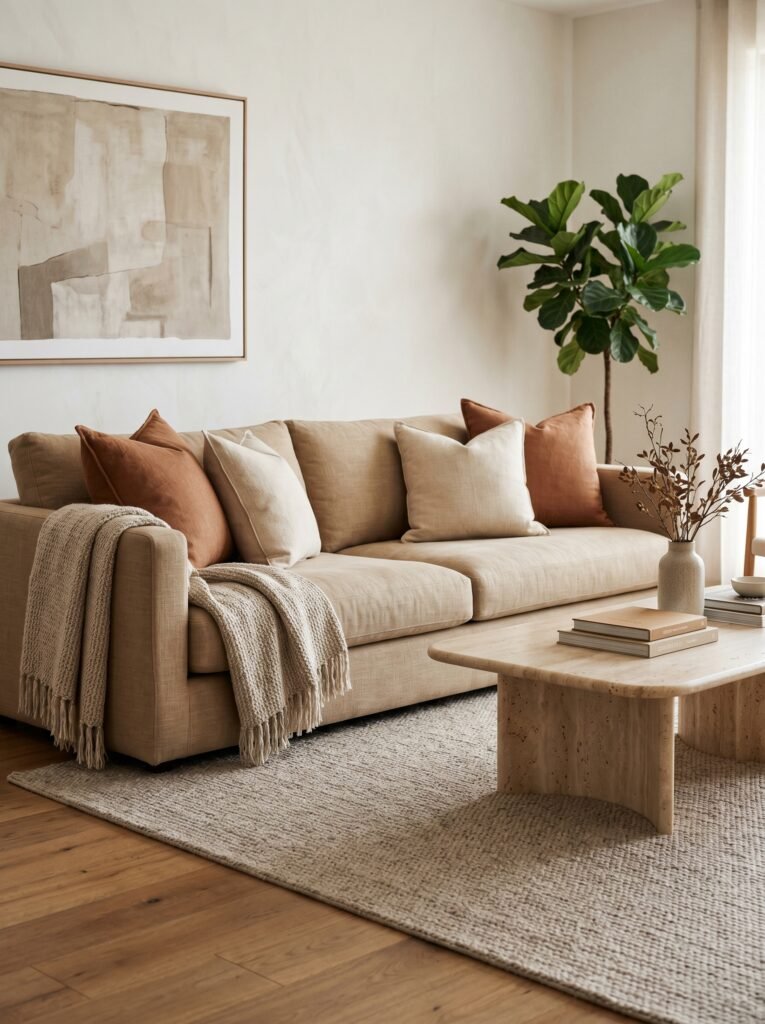
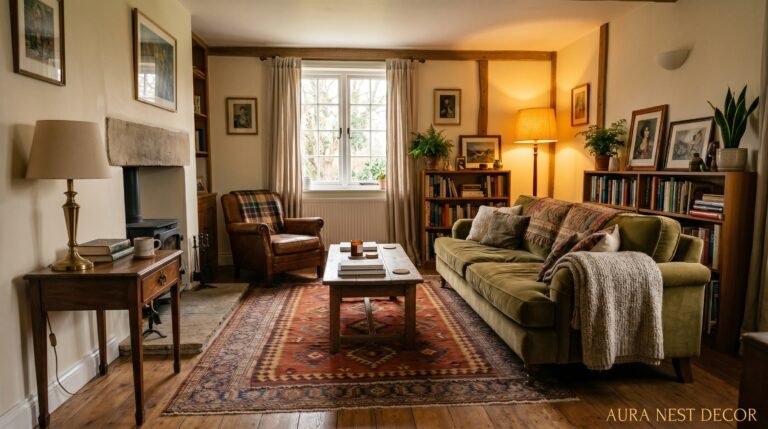
Here’s a fundamental truth about living room furniture that most people resist: everything should not be pushed against the walls. It feels counterintuitive — especially in smaller homes where every inch counts — but floating your sofa and chairs slightly away from the walls actually makes the room feel larger and more connected.
The reason is simple: when furniture hugs the perimeter, the center of the room becomes an awkward void, and seating feels isolated and formal. When pieces are grouped together — a sofa and two chairs arranged around a central coffee table, all close enough for actual conversation — the room gains intimacy, purpose, and scale.
In British terraced houses and American apartments, where square footage is precious, you don’t need to pull furniture far from the walls. Even six to twelve inches of breathing room creates enough of a visual shift to transform the atmosphere entirely. Try it. You’ll be astonished what a difference it makes.
“Float your furniture and watch the room find its soul.”
5. How to Choose a Sofa You’ll Still Love in Ten Years
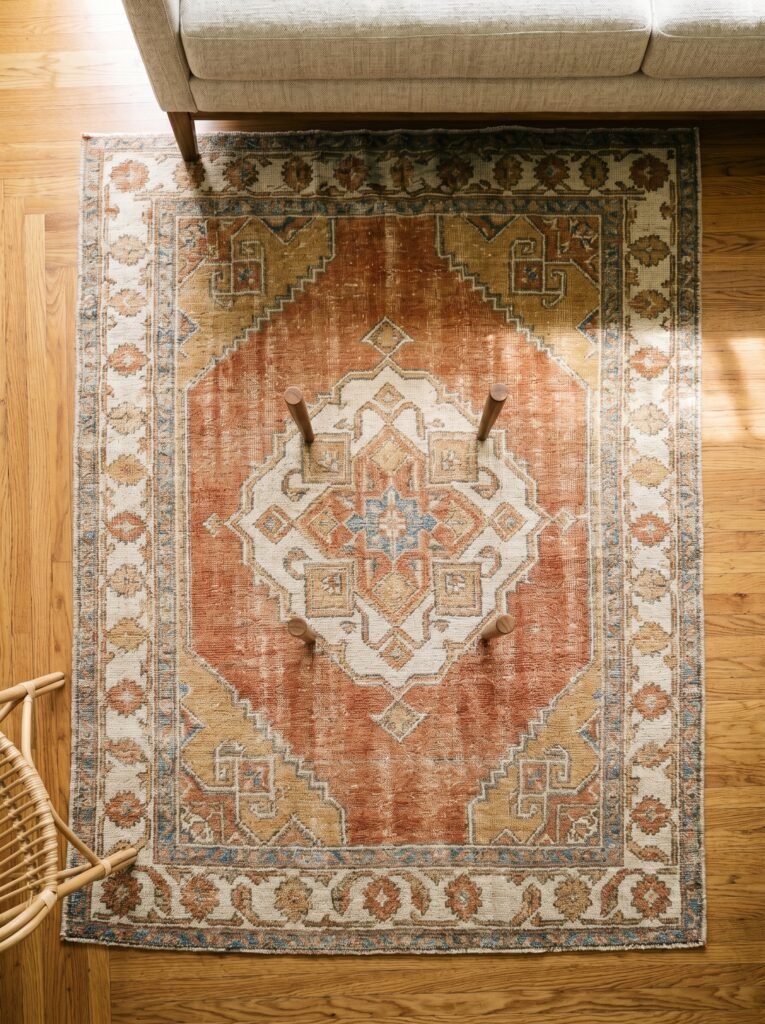
The sofa is the centerpiece of nearly every living room, which means it deserves your most careful attention — and a significant portion of your budget. A cheap sofa might feel like a win in the short term, but sagging cushions, pilling fabric, and creaking frames become exhausting very quickly.
When investing in a sofa, prioritize construction: look for kiln-dried hardwood frames, eight-way hand-tied spring systems (a gold standard in upholstery), and high-density foam cushions with a feather or fiber wrap for that plush-but-supportive feel. In the UK, brands like Neptune, Loaf, and Ercol offer genuine quality at various price points. In the US, Article, Pottery Barn, and Room & Board consistently deliver on longevity and style.
For style longevity, mid-century shapes — clean lines, tapered legs, modest profiles — and classic track-arm silhouettes tend to age beautifully and work across a wide range of interior styles. Trend-driven pieces with oversized proportions or ultra-specific design moments can feel dated within just a few years. Save the trend-led energy for accent chairs, which are far easier and cheaper to replace.
6. Rugs: The Design Element That Grounds (or Ruins) a Room
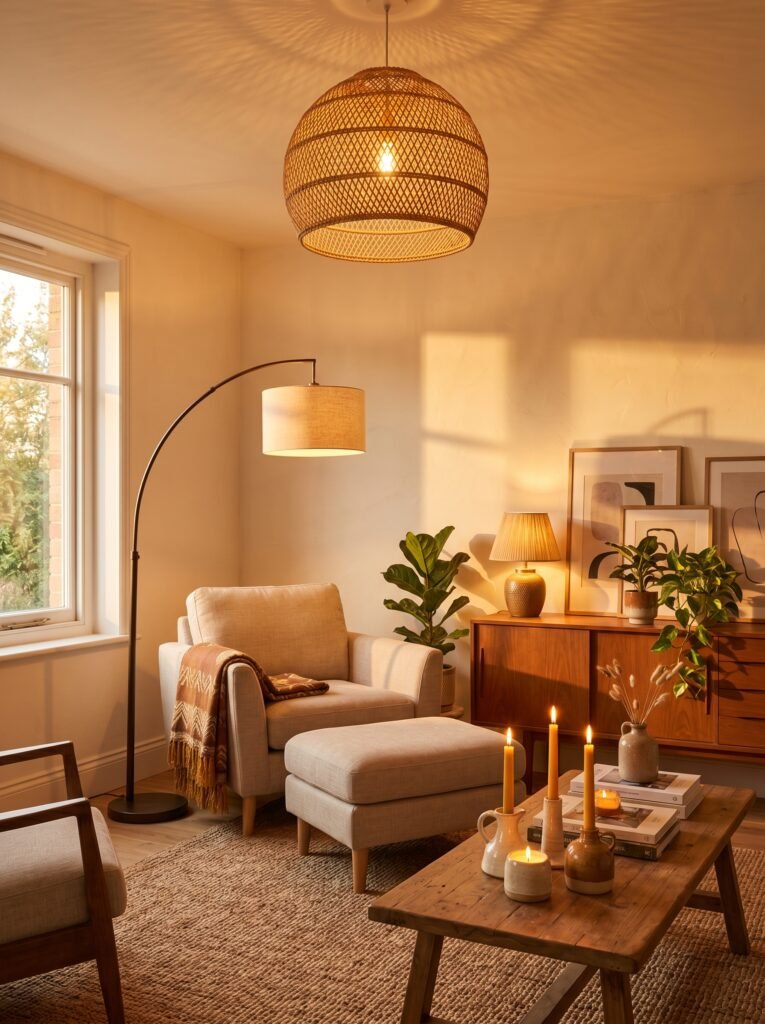
A rug that’s too small is arguably the most common mistake in living room design. It’s almost universal — you see it constantly in homes across the US and UK — and it makes even beautifully furnished rooms feel disconnected and amateur.
The rule is simple: your rug should be large enough that at least the front legs of every piece of seating in the conversation area sit on the rug. Ideally, all legs are on the rug. In practical terms, this usually means you need a 8×10 foot rug minimum in a standard living room, and often a 9×12. Yes, a larger rug costs more. But it ties the room together in a way that nothing else can replicate.
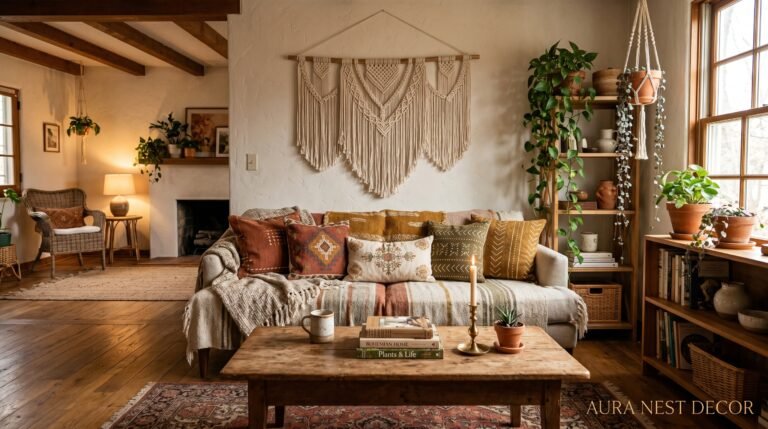
In terms of texture and material: natural fibers like jute and wool are enduringly popular in both British and American homes for good reason. They’re durable, tactile, and bring warmth underfoot. A vintage-style or Moroccan Beni Ourain-inspired rug adds character and depth without demanding a complete design overhaul. Layer a smaller, more decorative rug over a larger neutral base rug for an effortlessly collected look that works beautifully in boho, maximalist, or modern-traditional interiors.
7. Lighting: The Secret Ingredient Everyone Underestimates
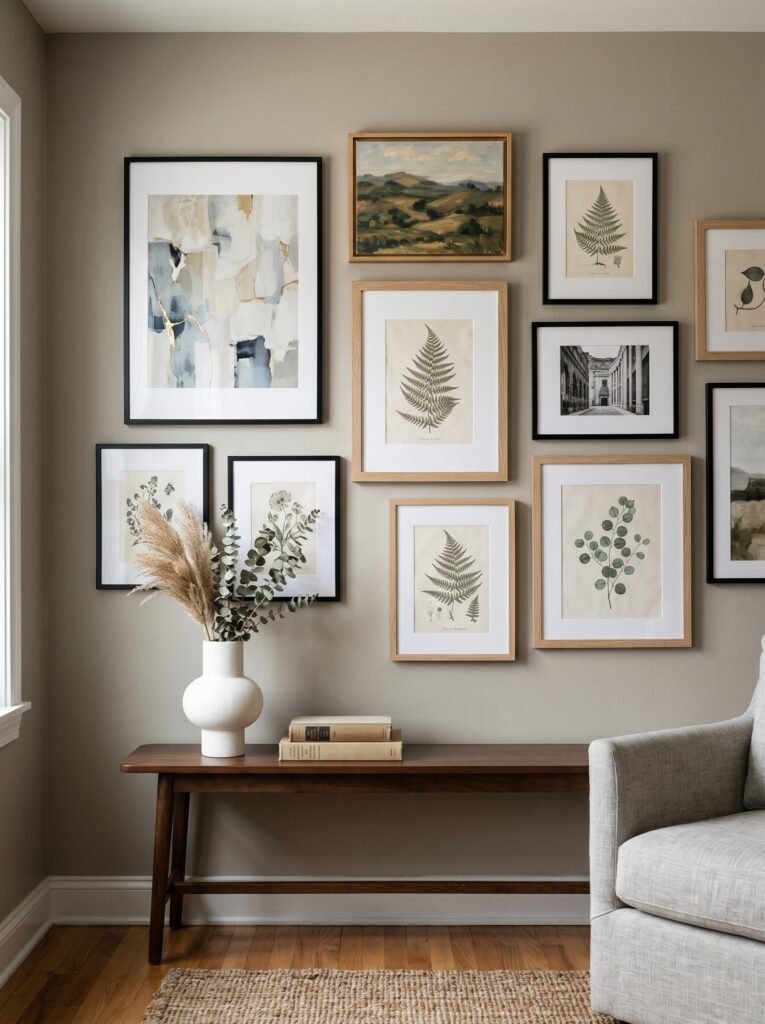
If there’s one area where living rooms universally fall short, it’s lighting. Most homes rely far too heavily on a single overhead fixture — a central ceiling light that floods the room with flat, unflattering illumination and kills any sense of atmosphere. Good lighting design layers three types of light: ambient (the overall room light), task (functional light for reading or working), and accent (the decorative lights that create warmth and visual interest).
Think: a statement pendant or chandelier for ambient light, a pair of table lamps flanking the sofa for warmth and symmetry, a floor lamp in a reading corner, and perhaps some LED strip lighting on shelves or behind a TV unit for that soft, indirect glow that makes a room feel genuinely luxurious. Use bulbs with a warm color temperature — around 2700K — to create the kind of golden, inviting light that makes everything look better.
In the UK, where overcast skies are a near-constant companion, layered lighting isn’t optional — it’s essential. American homes, particularly in the South and Southwest, can get away with less artificial warmth during the day, but evenings still call for that same layered, considered approach.
“Lighting isn’t a detail. It’s the difference between a room that photographs well and a room that lives beautifully.”
8. The Art of the Bookshelf: More Than Just Books
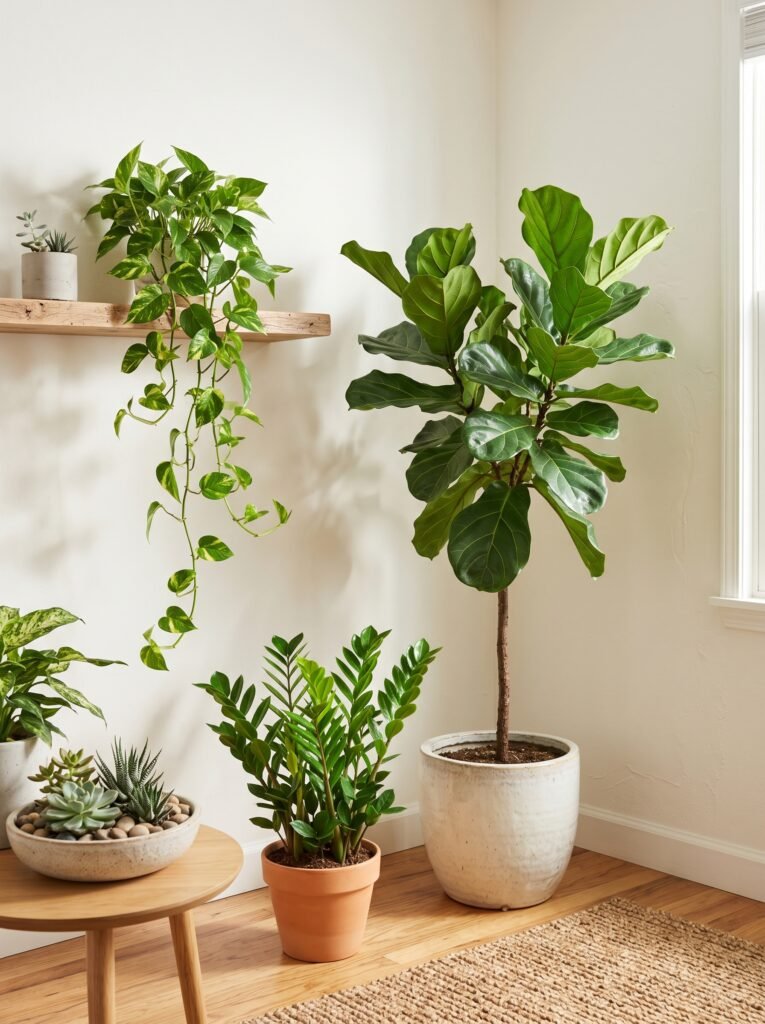
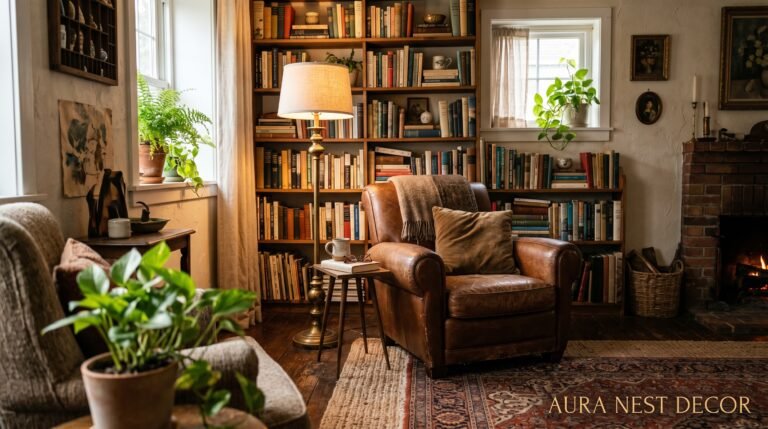
A well-styled bookshelf is one of the most personal and characterful things a living room can have. But there’s an art to it — the difference between a shelf that looks collected and curated versus one that looks cluttered and chaotic comes down to a few principles.
First, edit ruthlessly. Remove anything that doesn’t feel beautiful, meaningful, or genuinely interesting. What remains will automatically feel more intentional. Then, think in clusters: group books by color or size for visual rhythm, intersperse objects of varying heights — a small sculpture, a candle, a potted plant, a framed photo — to break up the horizontal repetition that rows of books alone create.
Leave breathing room. A slightly underfilled shelf looks far more stylish than one crammed to capacity. The space between objects is itself part of the composition. British interiors — particularly those in the Arts & Crafts and modern country style — tend toward a richly layered shelf aesthetic. American homes, particularly those with a clean, Californian sensibility, often lean toward a more restrained approach. Both can be beautiful. Choose what feels true to you.
9. Textiles and the Quiet Power of Layering
Nothing transforms a living room from looking like a showroom to feeling like a home faster than textiles. Cushions, throws, curtains — these soft furnishings bring texture, warmth, and color in a way that paint and furniture simply cannot.
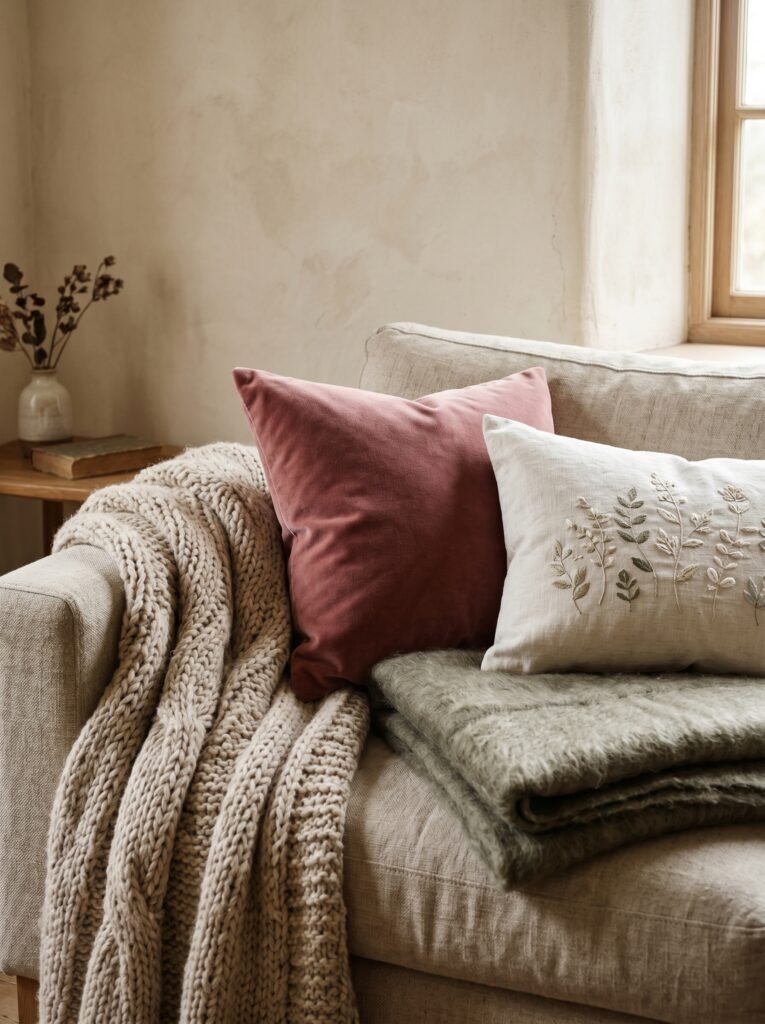
The golden rule of cushions: odd numbers almost always look better than even. A group of three or five creates visual energy and movement; a matching pair of two looks safe and forgettable. Mix textures freely — velvet next to linen, embroidered cotton next to chunky knit — and vary sizes, ideally using a combination of 18-inch, 20-inch, and 22-inch cushion inserts (45cm, 50cm, and 55cm for UK readers) for a relaxed, abundant feel.
Curtains, meanwhile, should always hang from as close to the ceiling as possible and fall just at, or slightly above, the floor. Low-hung curtains that barely clear the window frame are a common styling mistake that makes ceilings feel lower and windows feel smaller. Hang them high, hang them wide, and your room will feel taller and more elegant overnight.
10. Plants: Bringing Life Into the Room Literally
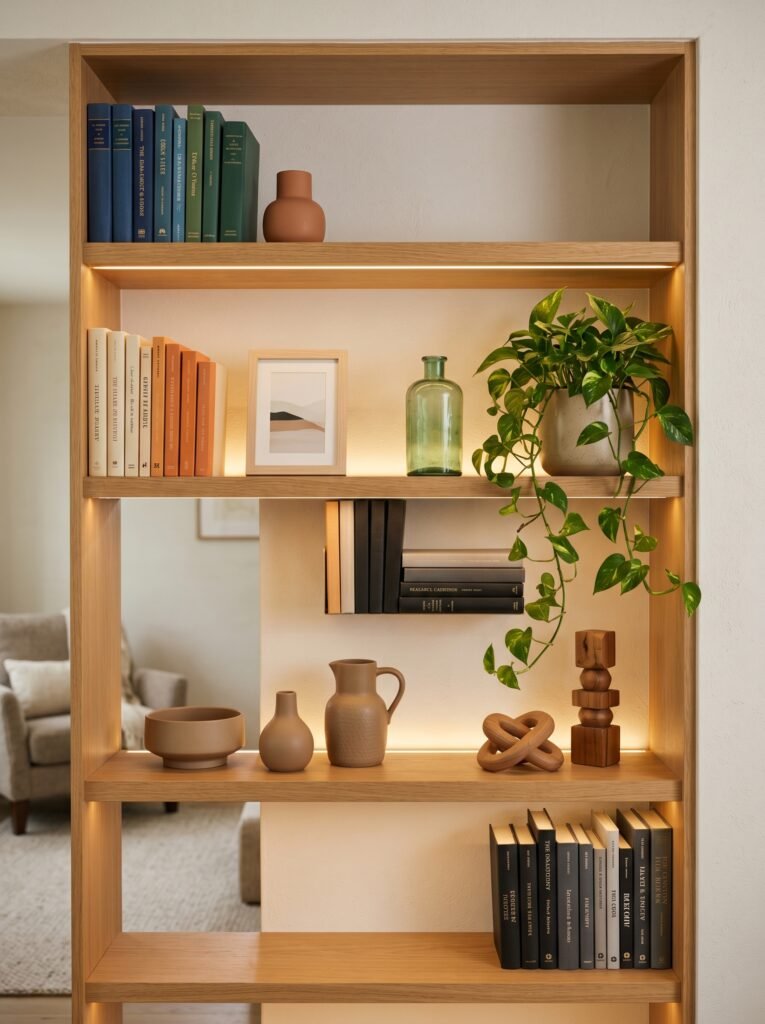
The integration of living plants into interior spaces has gone from decorating trend to genuine design principle — and for good reason. A living room without any greenery tends to feel slightly static, a little flat. Plants bring organic shape, scale, movement, and a sense of vitality that no printed botanical artwork can replicate.
You don’t need to become a dedicated plant parent to benefit from this. Low-maintenance options like the pothos, the ZZ plant, the rubber plant, and snake plants thrive in a range of light conditions and are genuinely forgiving of infrequent watering — a particular relief in the UK’s lower-light homes. A large fiddle-leaf fig or a trailing pothos on a high shelf adds drama and life in equal measure.
Place plants at different heights: a floor-standing fiddle-leaf fig in a corner, a trailing plant on a sideboard, a small succulent on a windowsill. This vertical variation draws the eye upward and makes the room feel more dynamic, more alive.
11. Personal Touches: The Things That Make It Yours
A truly stylish living room doesn’t look like it was assembled by a shopping algorithm or assembled from a single store’s display floor. It looks like it belongs to a real person with real tastes, real travels, and real memories. That’s the quality that makes people stop mid-tour and say, this room feels amazing.
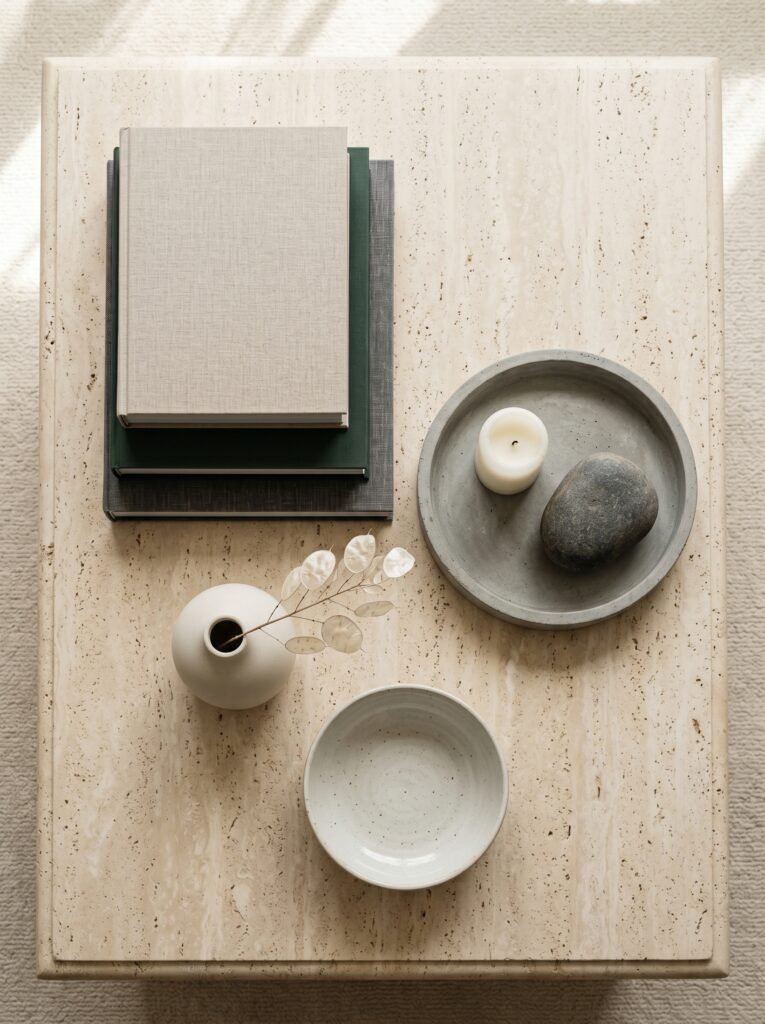
Your personal objects — the ceramics you brought back from a trip, your grandmother’s side table, the print you spotted at a Sunday market in Portobello Road or a flea market in Savannah — are not design problems to solve. They’re the soul of the room. The skill is in how you present them: with intention, with breathing room, with a sense of curation rather than accumulation.
Mix old and new freely. A contemporary sofa against a backdrop of Victorian architectural details feels extraordinary in a British home. A sleek, modern coffee table paired with a heirloom chest and family photographs does the same in an American one. The through-line is always your taste, your life, your story.
12. The Finishing Edit: When to Stop Adding and Start Subtracting
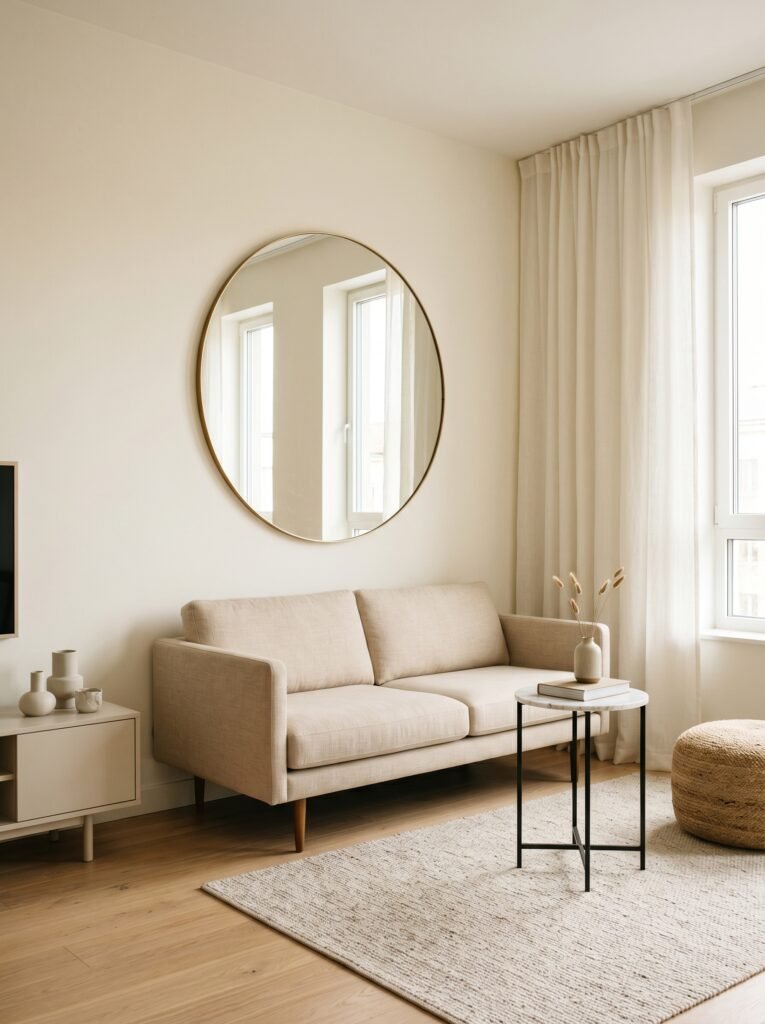
Every stylish room reaches a moment — and you’ll feel it — when the answer is not to add more but to take something away. This is the finishing edit, and it’s one of the most valuable skills in interior design. Step back from your room, squint slightly, and notice what your eye catches immediately. If it catches an awkward cluster of objects, a too-heavy grouping, or a piece that doesn’t quite belong — trust that instinct.
Remove it, live without it for a few days, and see how the room breathes. More often than not, subtraction feels better than addition. The most stylish spaces in both American and British interiors share a quality of restraint — not emptiness, but selectivity. Every object earned its place. Every piece contributes something. Nothing is there by accident or because it simply had nowhere else to go.
That editing eye takes practice, but it develops quickly once you start paying attention to how rooms feel rather than just how they look.
—
🌿 How to Keep Your Living Room Feeling Stylish Season After Season
Maintaining the style and freshness of your living room doesn’t require constant renovations. A few thoughtful habits go a long way toward keeping the space feeling intentional and alive throughout the year.
Rotate your cushions and throws with the seasons — warm, heavier textures in wool and velvet for autumn and winter; cooler linen and cotton blends in spring and summer. This single habit alone keeps the room feeling current without a penny spent on new furniture.
Do a quarterly edit of your surfaces — sideboards, coffee tables, shelves. Remove what’s accumulated without purpose and reset with intention. Surfaces tend to attract clutter the way windowsills attract dust; regular clearing brings the room back to its best.
Refresh with a single statement piece when the room starts feeling stagnant. A new cushion cover, a bold piece of art, a tall vase with seasonal branches or dried florals can shift the energy of a room without a full redesign.
Pay attention to scent. A living room that smells beautiful — whether from a candle, a diffuser, or fresh flowers — creates an immediate sense of warmth and welcome that elevates the entire experience of being there.
Finally, clean your windows and change your bulbs seasonally. This sounds mundanely practical, but clean glass and fresh, warm-toned lighting can make a room feel brand new in a way that surprises even seasoned decorators.
—
❓ FAQ
Q: How do I make a small living room look stylish without making it feel cramped? A: Prioritize furniture with slim profiles and visible legs, which creates the impression of more floor space. Use a large mirror on one wall to reflect light and visually double the room’s depth. Keep your color palette cohesive — three tones maximum — and resist the urge to fill every surface.
Q: What’s the most important thing to invest in for a living room refresh? A: If you can only invest in one thing, make it the sofa — it anchors the entire room and is the piece you interact with most. A quality sofa with good bones can be refreshed with cushion covers and throws for years. The second most impactful investment is usually lighting, specifically a pair of table lamps that bring warmth and atmosphere to the space.
Q: How do I mix different design styles without the room looking messy? A: The key to mixing styles successfully is finding a unifying element — it could be a consistent color palette, a shared material (like natural wood or brass hardware), or a consistent level of formality. When everything in the room shares at least one characteristic, even very different pieces find harmony together.
—
💭 Final Thought
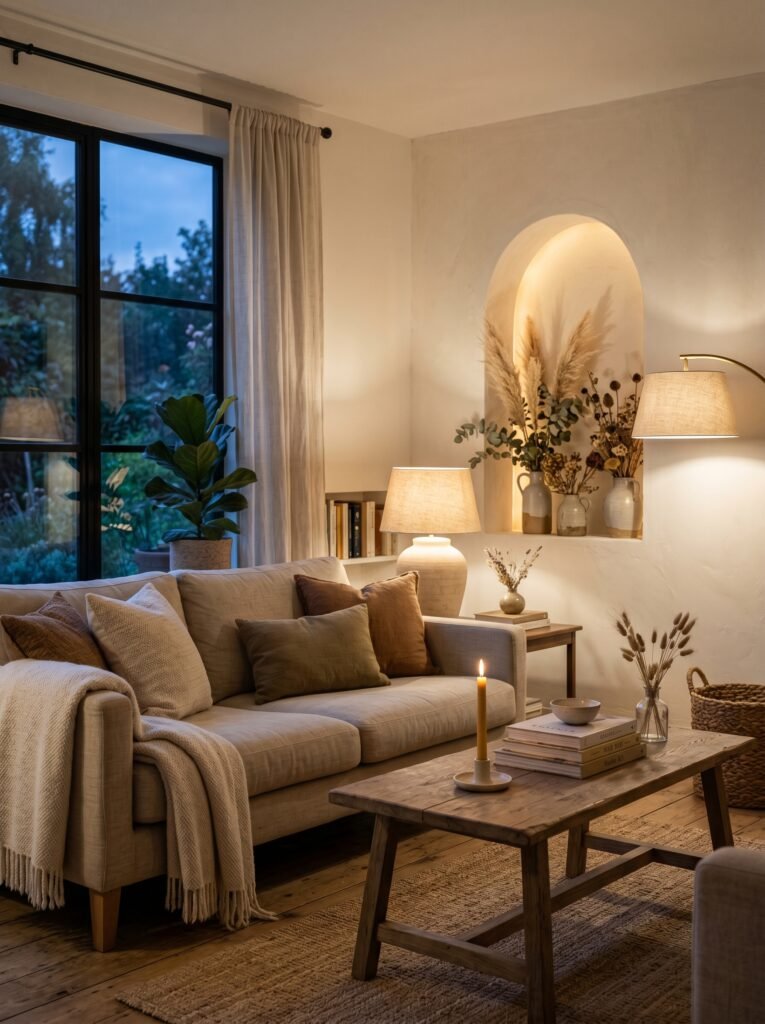
A stylish living room isn’t a destination you arrive at once and leave alone forever. It’s a living, breathing space that grows with you — that changes as your tastes deepen, your life shifts, and your confidence in your own eye grows stronger. The rooms we love most aren’t perfect. They’re personal, layered, a little brave, and completely genuine.
So, as you look at your own living room today — what’s the one thing that doesn’t quite belong, and what’s the one thing that feels most like you?