Living Room Decor Ideas for Your Apartment: How to Turn a Small Space Into the Home You’ve Always Dreamed Of
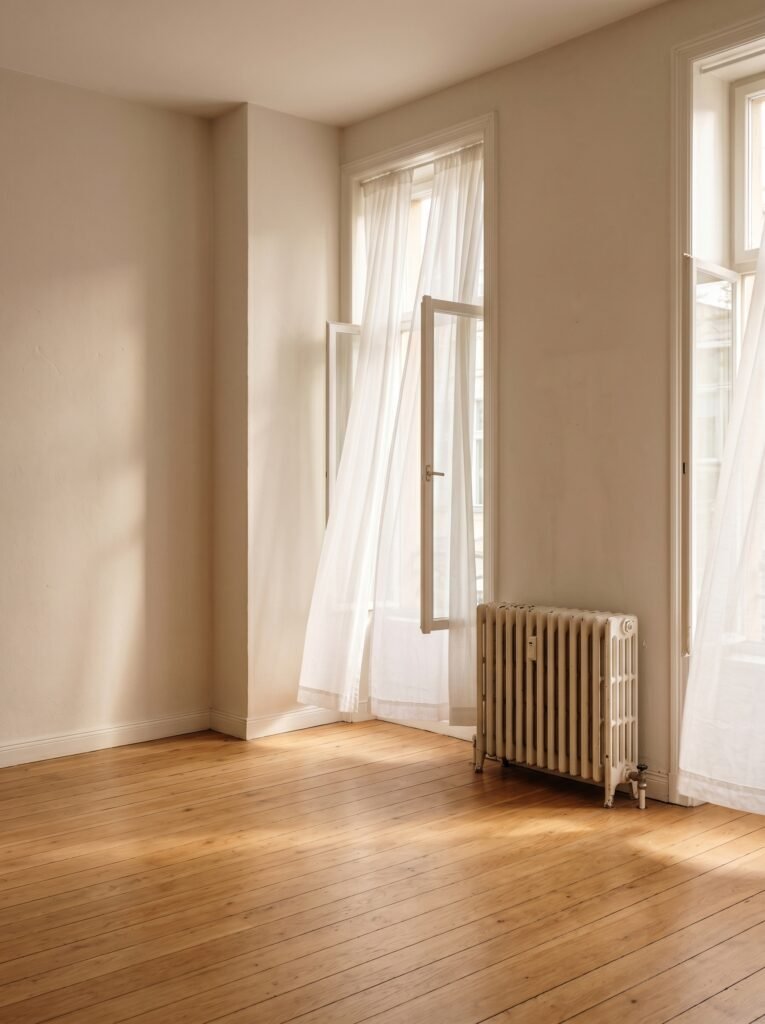
You moved into your apartment and stood in the middle of that living room, looked around at the blank magnolia walls, the awkward corner, and the strange radiator nobody asked for — and you thought, how am I going to make this feel like home? You’re not alone. Millions of renters and apartment dwellers across the US and UK ask themselves this exact question every single day. The good news? A beautiful, personality-filled living room has nothing to do with square footage, and everything to do with intention.
—
1. The First Thing You Should Do Before Buying a Single Piece of Furniture
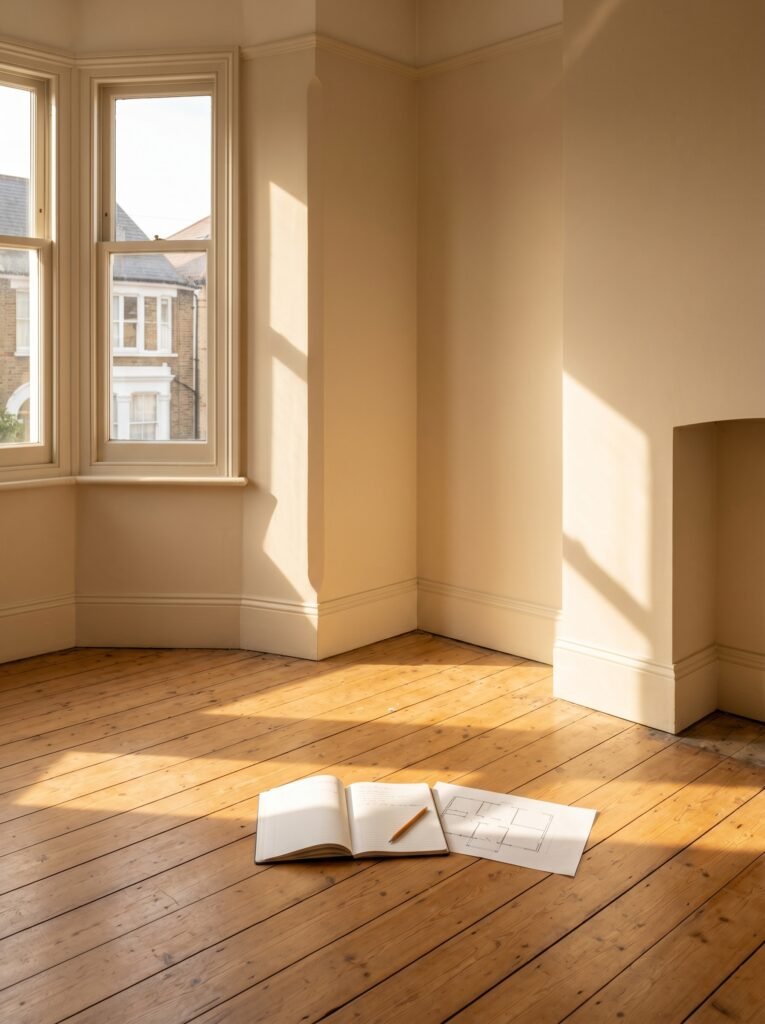
Before you order anything from IKEA, West Elm, or John Lewis, sit in your empty living room for fifteen minutes. No phone. No distractions. Just you and the space.
Notice where the light falls. Notice which corners feel heavy and which feel open. Notice where your eye naturally wants to rest — and where it gets lost. This quiet observation is something professional interior designers do before they spend a single dollar or pound of their client’s budget. Most of us skip it entirely, and then wonder why the sofa we loved in the showroom feels wrong in the room.
What you’re doing is reading your space. Every apartment has a personality of its own — awkward angles, unexpected alcoves, windows that flood the room with afternoon gold. Once you understand what you’re working with, you can work with it instead of against it.
“Your apartment doesn’t need to be transformed — it needs to be understood.”
Grab a notebook and sketch the rough layout. Mark where natural light comes from, where the plugs are, and which walls feel most prominent. This ten-minute exercise will save you hundreds in decorating mistakes.
—
2. Why Your Sofa Is the Most Important Design Decision You’ll Make
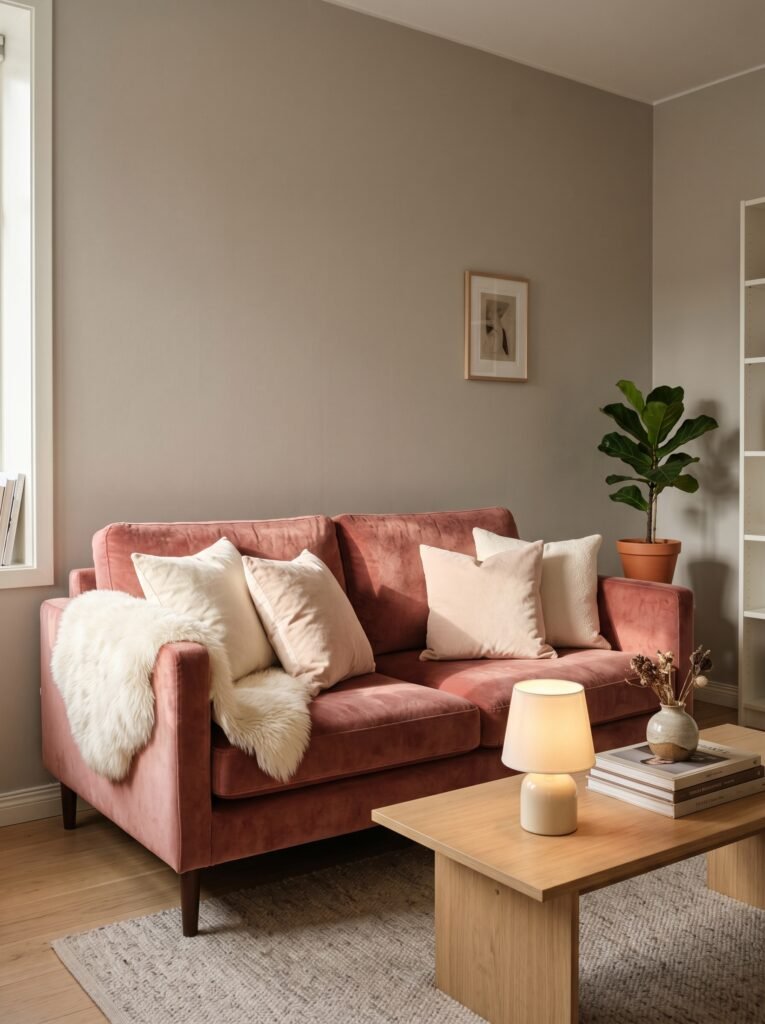
In any apartment living room, your sofa is doing the heavy lifting. It anchors the entire space, sets the color tone, and communicates your style before a single cushion is placed. Choose wrong, and every other beautiful piece you add will fight it.
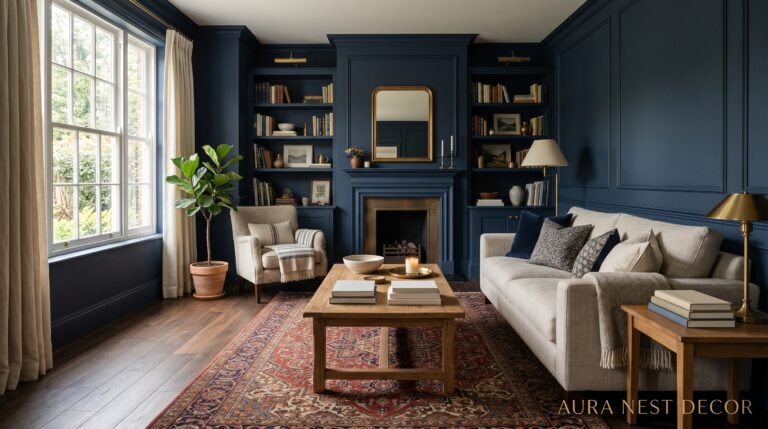
For smaller apartments, a two-seater or a compact three-seater in a neutral tone — warm grey, soft cream, deep navy — will always serve you better than an oversized sectional that swallows the room. British designers have long embraced the low-profile sofa for this reason: closer to the floor, it creates an illusion of more ceiling height and more air in the room.
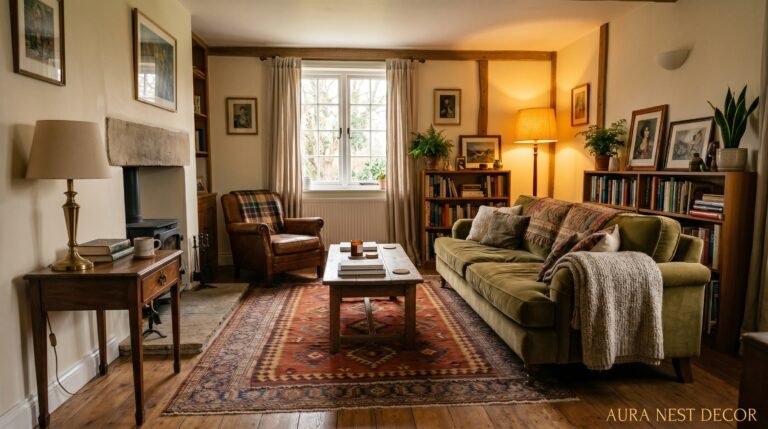
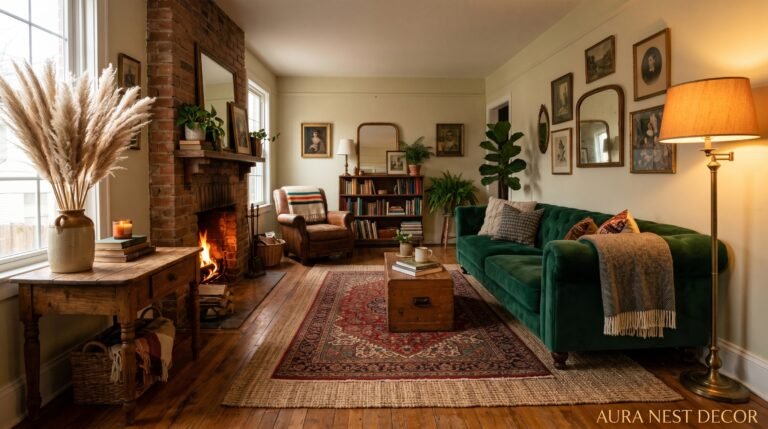
Consider the fabric, too. A velvet sofa in forest green or dusty rose is a cornerstone of the Pinterest aesthetic right now — it photographs beautifully and feels luxurious, but it’s also surprisingly practical in smaller homes because it becomes the statement piece, meaning you need less around it.
If you’re renting and cautious about committing to color, opt for a neutral sofa and layer in color through cushions and throws. This way, your sofa will transition beautifully if you ever move or if your taste evolves. IKEA’s KIVIK and SÖDERHAMN ranges are popular budget choices, while Dunelm and Next Home in the UK offer excellent mid-range options that feel far more expensive than they are.
—
3. The Rule of Three That Every Stylish Apartment Uses
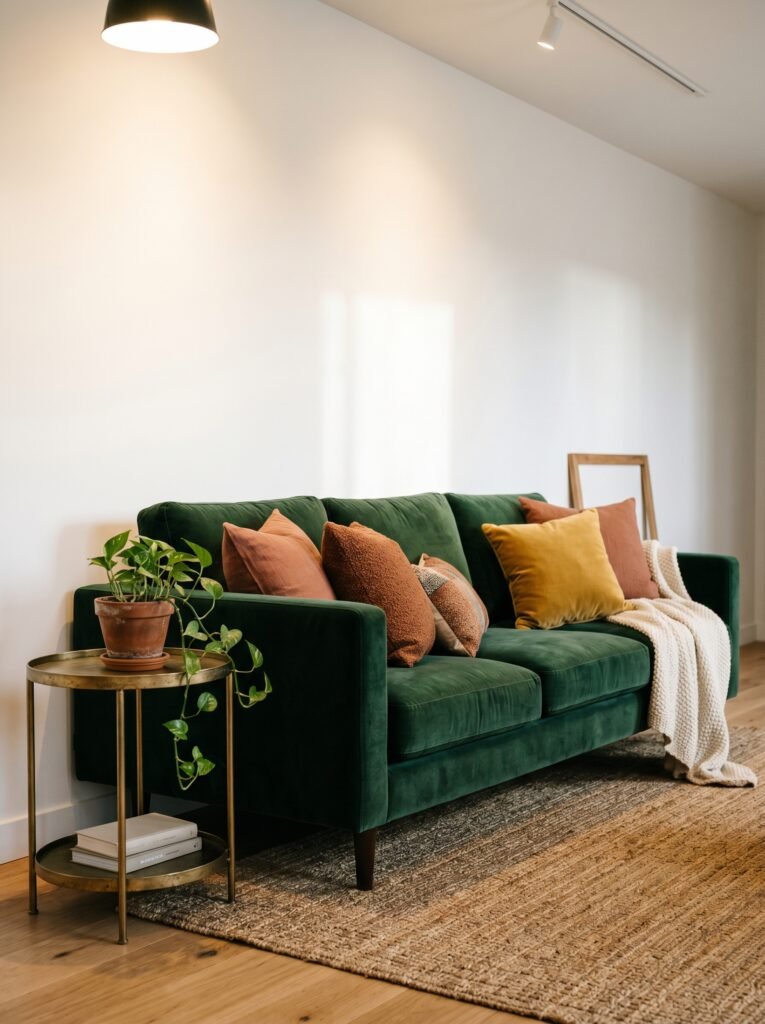
Designers call it the rule of three, and it’s the quiet secret behind every Pinterest living room that makes you stop, save, and sigh with envy. When styling surfaces — your coffee table, shelves, side tables — group objects in threes. One tall, one medium, one low. One natural texture, one reflective, one soft.
Picture a shelf: a tall glass vase with dried pampas grass, a medium-height candle, and a small stack of books. That’s the rule of three in action. It creates visual rhythm without feeling cluttered, and it tells the eye where to travel across the room.
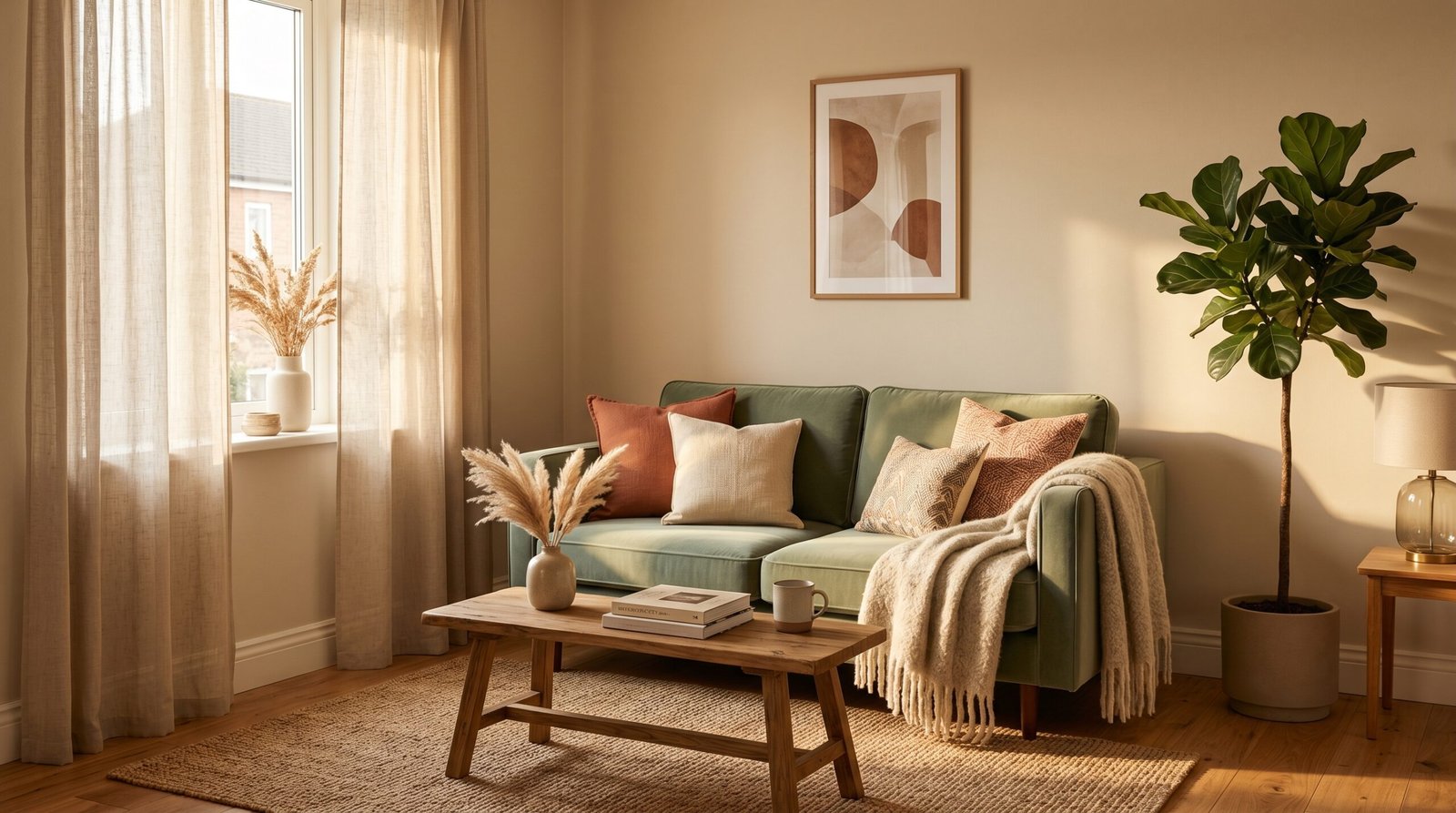
The same principle applies to your color palette. Choose three colors and repeat them throughout the space. A rust-toned cushion picks up the color in a framed print, which echoes the warm wood tones in your coffee table. This kind of intentional repetition is what makes a room feel designed rather than just decorated.
—
4. How to Use Rugs to Define Your Space and Add Instant Warmth
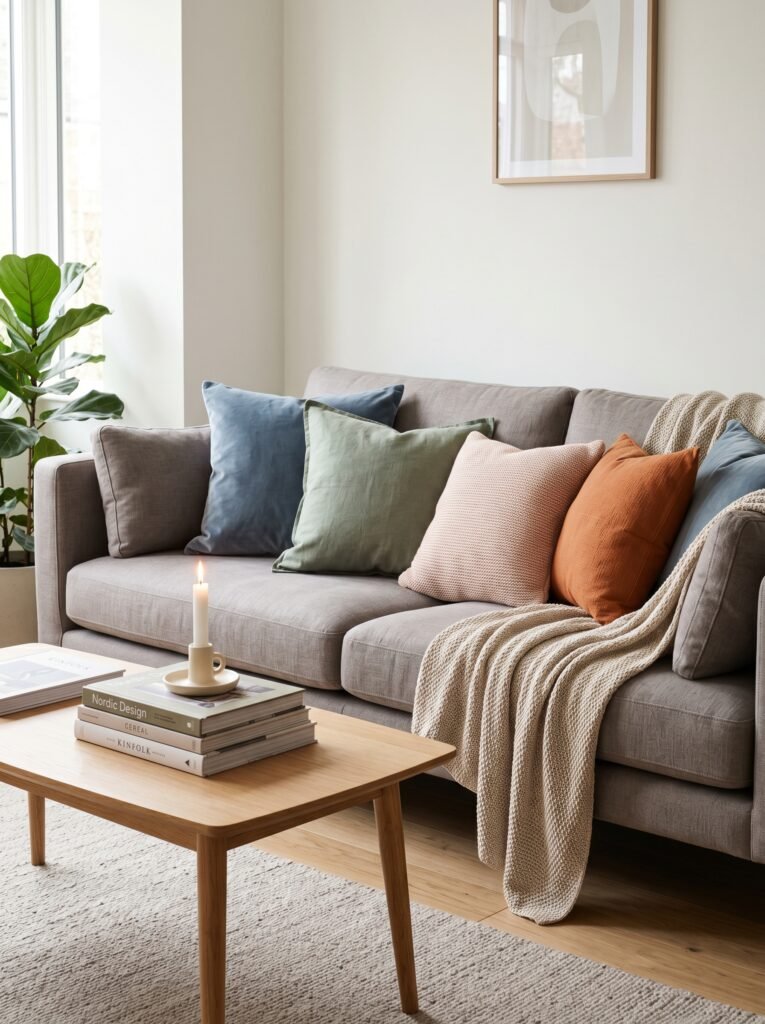
If walls are the canvas, rugs are the frame — and in an open-plan apartment or a multipurpose living room, a well-chosen rug is one of the most powerful tools you have. It does three things at once: it defines the seating area, adds warmth underfoot, and softens the acoustics of a hard-floored space.
The most common mistake? Buying a rug that’s too small. A rug should be large enough that all four legs of your sofa can sit on it, or at least the front two. In the US, a 8×10 foot rug is considered the standard for a typical apartment living room. In the UK, where rooms tend to be slightly smaller, a 200x290cm rug is a generous starting point.
In terms of material, a cotton flatweave is easy to clean and casual in feel — ideal for families or those with pets. A wool rug adds warmth and texture and will last decades if cared for well. Jute is a Pinterest favourite for its organic, natural look, though it can feel rough underfoot, so layer a softer rug on top for the best of both worlds.
—
5. The Lighting Trick That Will Transform Your Living Room Tonight
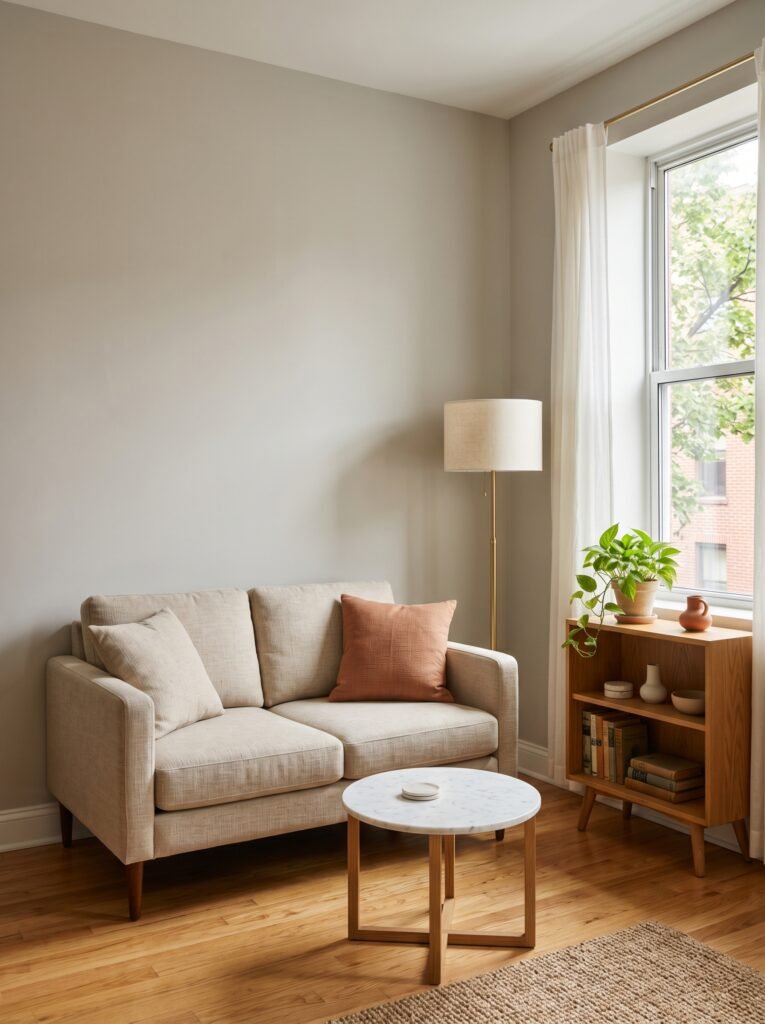
Here’s something that will change the way you see your apartment: your overhead light is probably ruining the atmosphere. The harsh, flat light that comes from a single ceiling bulb is the enemy of coziness — it flattens everything, eliminates shadows, and makes a room feel more like a waiting room than a sanctuary.
The solution is layered lighting, and it costs far less than you think. Add a floor lamp in a dim corner. Place a table lamp on your side table. Use a string of warm-white fairy lights on a shelf or around a mirror. Light candles in the evening.
“Lighting is not about seeing the room — it’s about feeling it.”
This layered approach creates what designers call “pools of light” — warm, inviting zones that make a room feel intimate and intentional. Aim for bulbs with a colour temperature around 2700K, which gives off that golden, honey-warm glow that makes everything look better, including you. In the UK, smart bulb brands like Philips Hue have become popular for renters who want flexibility without rewiring anything.
—
6. Small Apartment? Here’s How to Make Your Living Room Feel Twice as Big
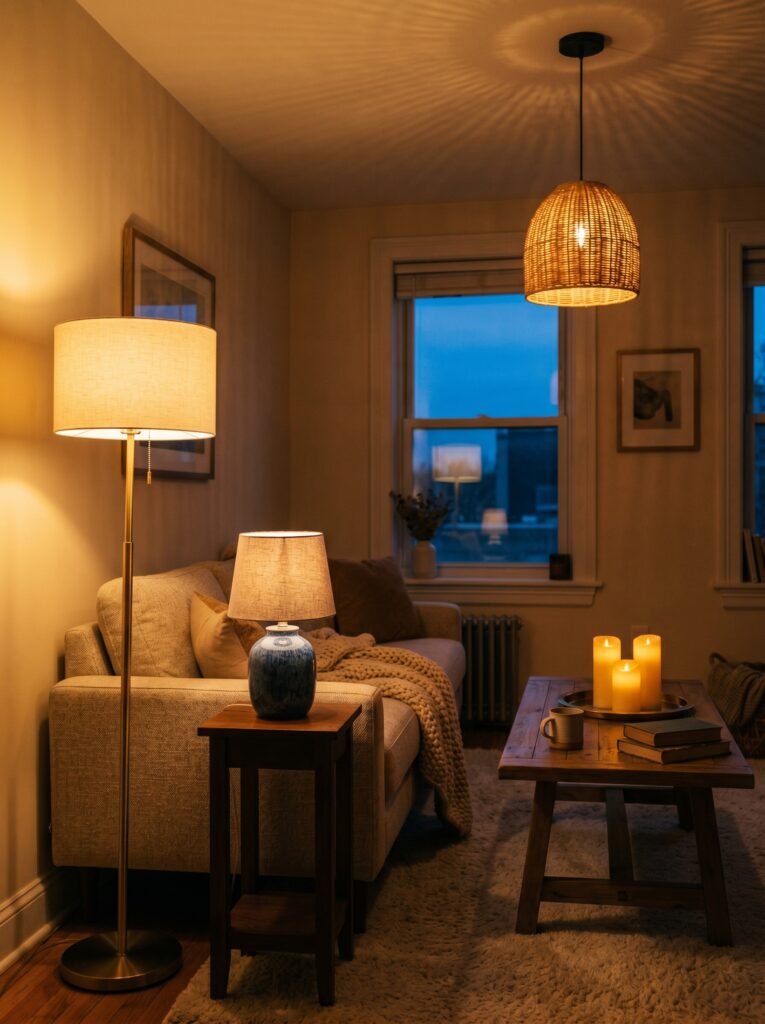
The perception of space is almost entirely psychological, and interior designers have spent decades learning how to hack it. First: mirrors. A large mirror on the wall opposite your window doubles the light in the room and creates an illusion of depth that feels almost magical. Don’t be timid — go big. A full-length leaning mirror, an ornate vintage find from a charity shop, or a gallery wall of smaller mirrors will all achieve the effect.
Second: lift your eye upward. Hanging curtains as close to the ceiling as possible — even if your window is much lower — draws the eye up and creates the impression of high ceilings. This is a trick used in both New York studio apartments and London flats to dramatic effect.
Third: choose furniture with legs. A coffee table with slender legs, a sofa raised off the floor, a console table that shows the floor beneath — all of this creates a sense of airiness because the eye can see through and under the furniture rather than hitting a solid visual wall.
—
7. Building a Gallery Wall That Looks Curated, Not Chaotic
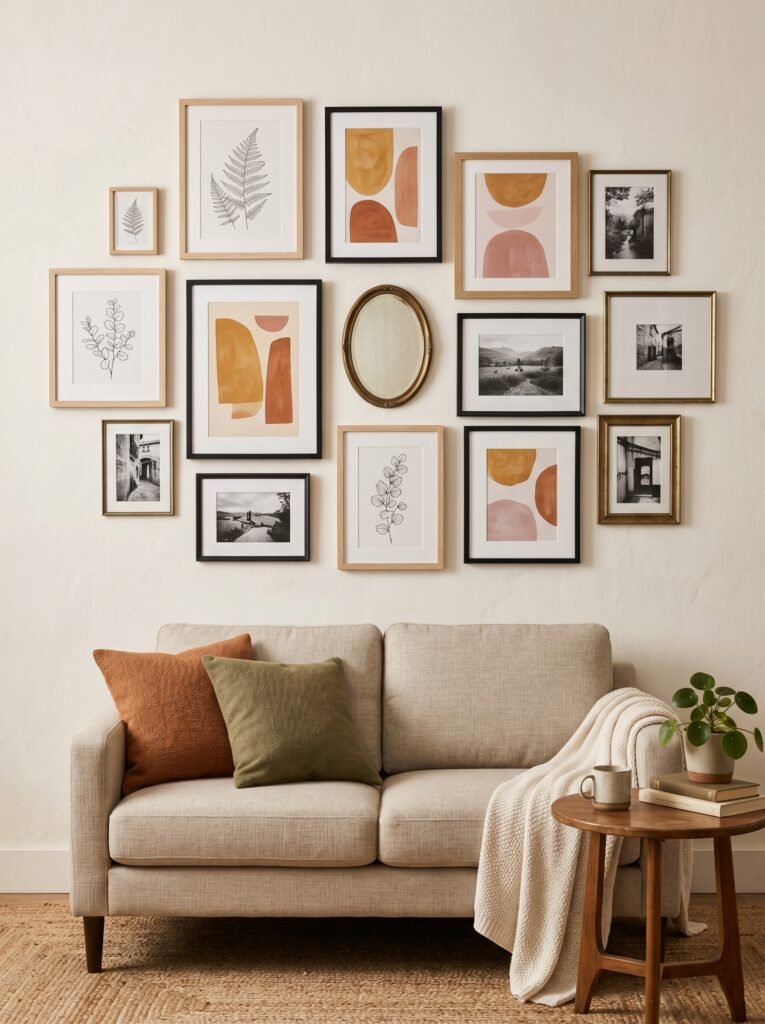
A gallery wall can be the making of an apartment living room — the thing that turns it from a rental into a home, that makes it feel layered, loved, and lived in. But a gallery wall gone wrong looks like a college dorm room. The difference is all in the approach.
Start with a theme. Not necessarily a subject matter — but a visual thread. Black frames only. Warm tones throughout. A mix of photography and botanical prints. When there’s a visual thread running through the collection, even the most eclectic pieces feel cohesive.
Plan your layout on the floor before a single nail goes in the wall. Lay your frames out, shuffle them around, photograph the arrangement from above. Then transfer it to the wall using paper templates — trace each frame onto paper, cut it out, tape the templates to the wall, and adjust until you’re happy. Only then do you hammer.
—
8. The Color Palette Strategy That Works for Every Apartment Style
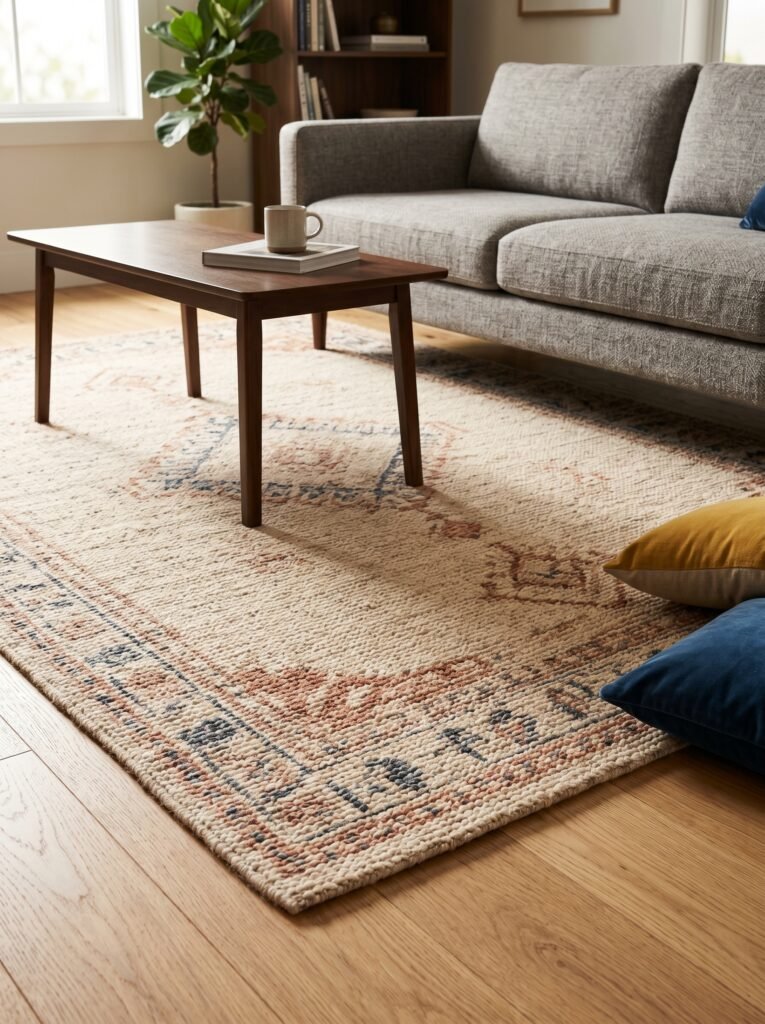
Whether your aesthetic leans Scandi-minimal, moody maximalist, cottagecore, or sleek urban — your color palette is the foundation everything else rests on. And in a rented apartment where painting the walls may not be an option, working with a color palette through soft furnishings is both powerful and practical.
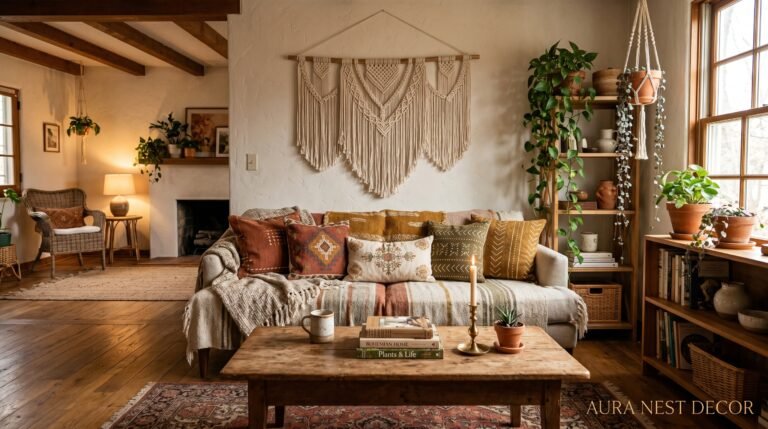
Neutral walls are actually a gift. Magnolia, off-white, and light grey are blank canvases that respond to the colors you introduce beautifully. Warm terracotta cushions against a white wall feel like a Tuscan afternoon. Deep teal throws on a cream sofa evoke a calm, seaside sophistication.
Right now in both US and UK design, the trending palette leans into warm earth tones — rust, ochre, warm brown, sage green — rather than the cooler greys that dominated the previous decade. These colors photograph warmly, feel grounding, and work across every season.
—
9. How Plants Can Do the Interior Design Work You Didn’t Know You Needed
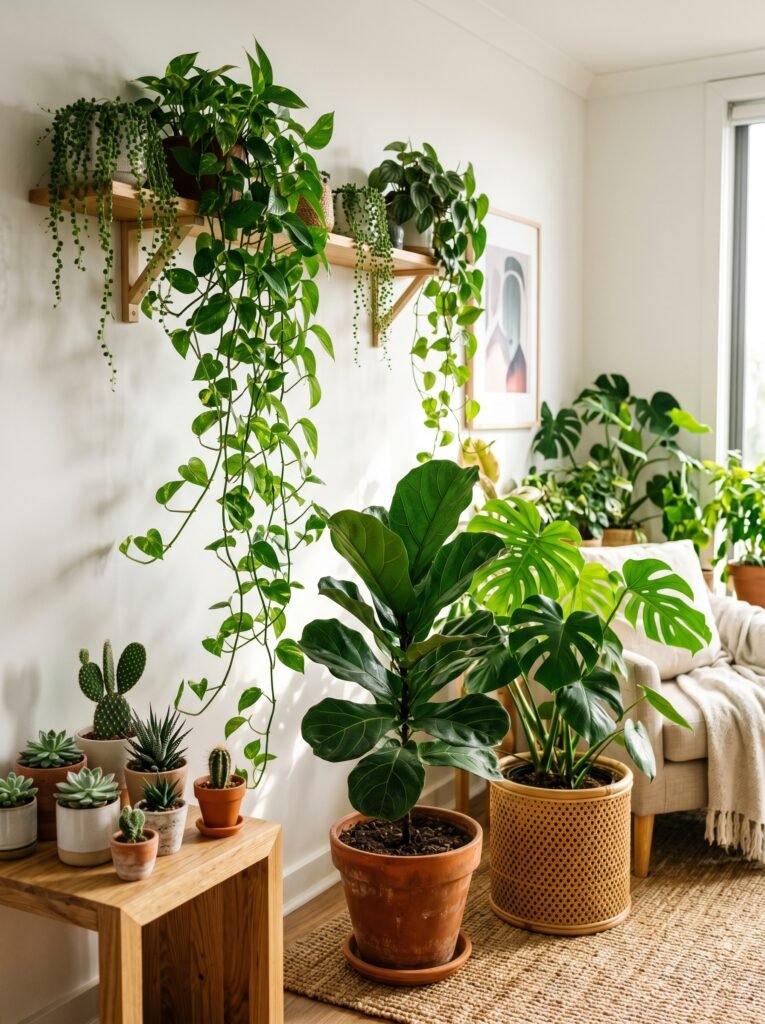
There is something undeniably transformative about the presence of living plants in a living room. Not because they’re trendy — though they absolutely are — but because they add something genuinely irreplaceable: life. Movement. Oxygen. A quality of naturalness that no candle or cushion can replicate.
For apartments with less-than-ideal light, pothos and snake plants are practically indestructible and thrive in low-light conditions. A trailing pothos on a high shelf creates that cascading, wild-garden effect that looks effortless on Pinterest but requires almost zero effort in reality.
“A room with plants is a room that breathes.”
Go for scale variation: one large, statement plant (a fiddle leaf fig, a monstera, or a tall olive tree in a terracotta pot) alongside smaller plants grouped at different heights. This creates a layered, lush look that fills a corner beautifully without requiring you to buy more furniture.
—
10. The Budget Decorating Hacks That Designers Actually Use
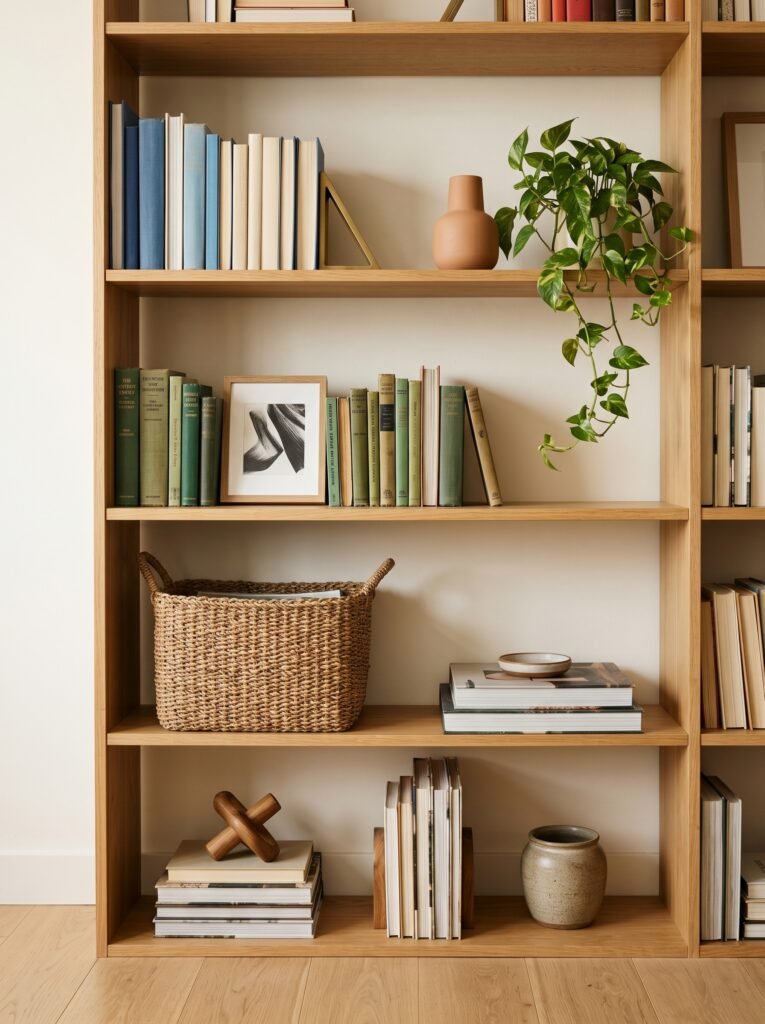
You don’t need a designer budget to have a designer-looking living room. Some of the most beautiful apartments in Brooklyn and Notting Hill are decorated almost entirely on a shoestring — it just requires knowing where to look and what to prioritise.
Charity shops, thrift stores, Facebook Marketplace, and eBay are treasure troves for vintage frames, ceramic vases, lamps, and side tables. A beat-up side table painted in a matte clay color looks genuinely expensive. A charity shop lamp with a new shade from a high-street homeware store is indistinguishable from one that costs three times more.
Spend money on: your sofa, your rug, and your lighting. These are the items that affect the feel of the room most dramatically and get the most daily use. Save money on: cushion covers (IKEA’s GURLI and H&M Home have beautiful, affordable options), decorative objects, and accent furniture.
—
11. Making Your Apartment Living Room Work for Every Occasion
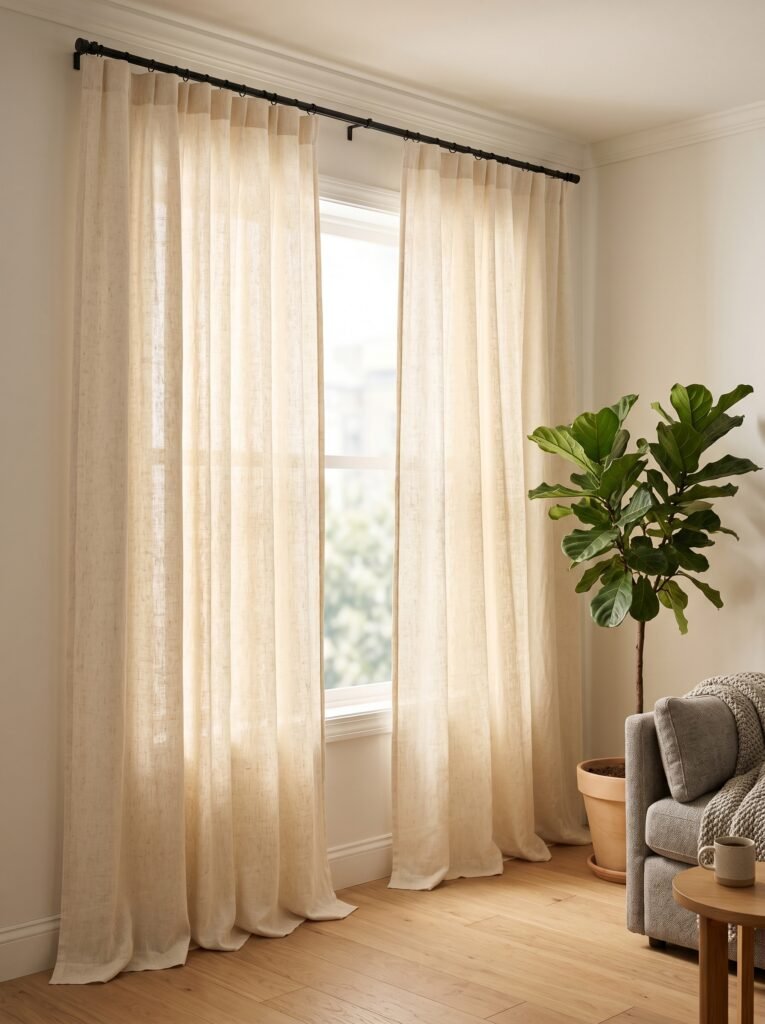
One of the unique challenges of apartment living is that your living room is rarely just a living room. It’s your workspace, your entertaining space, your quiet Sunday morning reading nook, and sometimes your dining room too. Designing it to flex gracefully between these different modes is one of the most practical things you can do.
Nesting tables are one of the most underrated pieces in small-space design. They tuck away to nothing and expand instantly when you need surface space for hosting. A compact bar cart adds sophistication to entertaining while keeping bottles and glassware organized and accessible.
If you work from home, consider a small desk that doubles as a console table when not in use. Styled with a plant, a lamp, and a frame, it looks entirely intentional as a decorative piece — but it’s ready to become a productive workspace in seconds.
—
12. The Personal Touches That Turn a Styled Room Into a Home
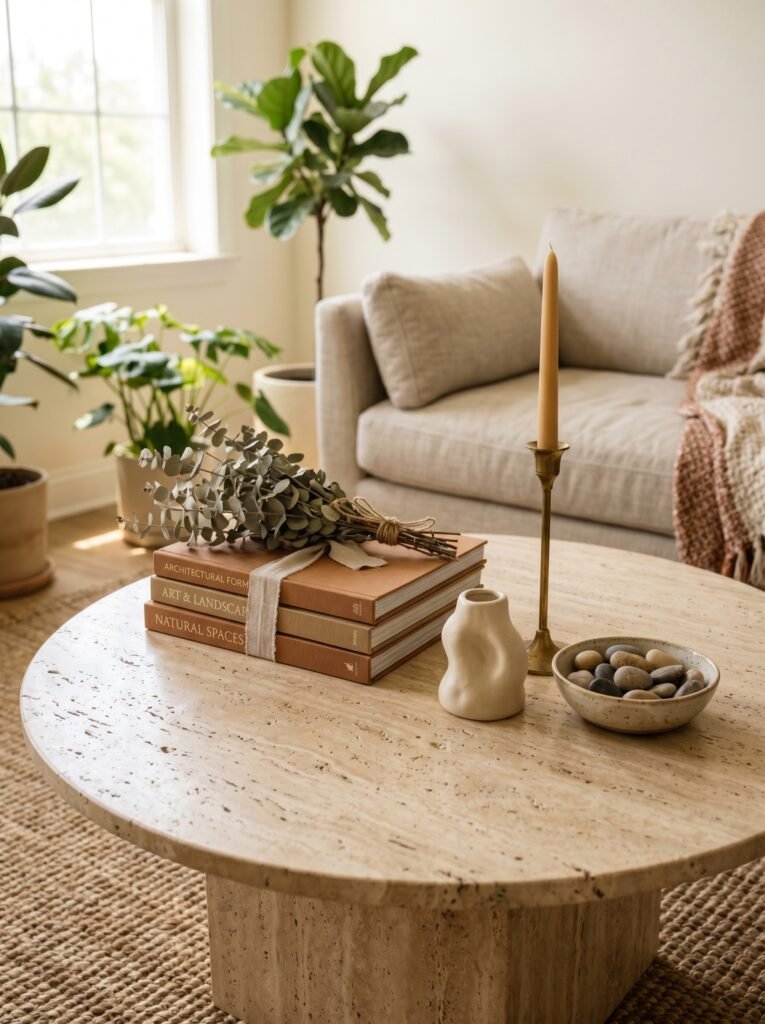
Everything we’ve talked about — the rugs, the lighting, the gallery walls, the plants — will make your apartment look beautiful. But there’s one final ingredient that no designer can provide for you, and that’s the presence of you in the space.
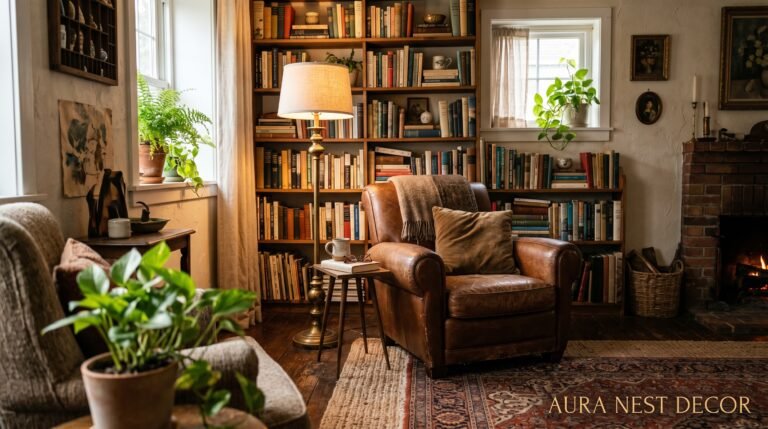
The books you actually read stacked on the coffee table. The mug from that weekend trip to Edinburgh or New Orleans. The slightly wonky ceramic bowl your friend made. The photo of your family laughing at a birthday that you love so much you printed it out and put it in a frame.
These are the things that make a room stop being a room and start being a home. They’re the reason someone walks into your apartment and says, without quite knowing why, this feels so warm and lovely in here. Style can be taught. But the life that fills the space — only you can bring that.
—
🌿 How to Maintain a Beautiful Apartment Living Room
Keeping a well-designed living room looking its best doesn’t require daily effort — just a few consistent habits. First, do a ten-minute tidy each evening rather than a weekly marathon: fluff cushions, clear surfaces, remove anything that doesn’t belong. A tidy room always looks better, even without any new decor additions.
Rotate your accessories seasonally — swap out cushion covers, change the throws, and update your shelf styling with something that reflects the time of year. This keeps the room feeling fresh and intentional without spending money.
Clean your mirrors and reflective surfaces weekly; they collect dust quickly and lose their light-amplifying power when dull. And water your plants on a consistent schedule — a healthy, thriving plant adds life to a room, while a struggling one does the opposite.
Finally, every few months, stand at the door to your living room and look at it as a guest would. You’ve become blind to it. This fresh perspective often reveals a small change — moving a lamp, rearranging a shelf — that makes a surprising difference.
—
❓ FAQ
Q: How can I decorate my apartment living room without being allowed to paint the walls? A: Focus on color through soft furnishings — cushions, throws, rugs, and curtains can introduce your chosen palette without touching a wall. Large-format art, tapestries, and removable wallpaper (popular brands like Tempaper and Graham & Brown both offer renter-friendly options) are also excellent ways to add visual interest and personality to neutral walls without risking your deposit.
Q: What’s the best way to make a small apartment living room feel bigger? A: Use mirrors strategically opposite windows to bounce light and create depth. Choose furniture with legs to keep the floor visible, hang curtains from ceiling height rather than window height, and keep your color palette light and cohesive throughout. Clutter is the enemy of perceived space — invest in smart storage solutions that keep surfaces clear and the room feeling open.
Q: How do I start decorating from scratch without overspending? A: Begin with the three anchor pieces: sofa, rug, and lighting. Get these right and everything else falls into place around them. Then add layers slowly — one or two cushions, a plant, a print — rather than buying everything at once. A considered, gradual approach almost always produces a more cohesive result than a one-day shopping spree, and it gives you time to understand what the room actually needs rather than what you think it needs before you’ve lived in it.
—
💭 Final Thought
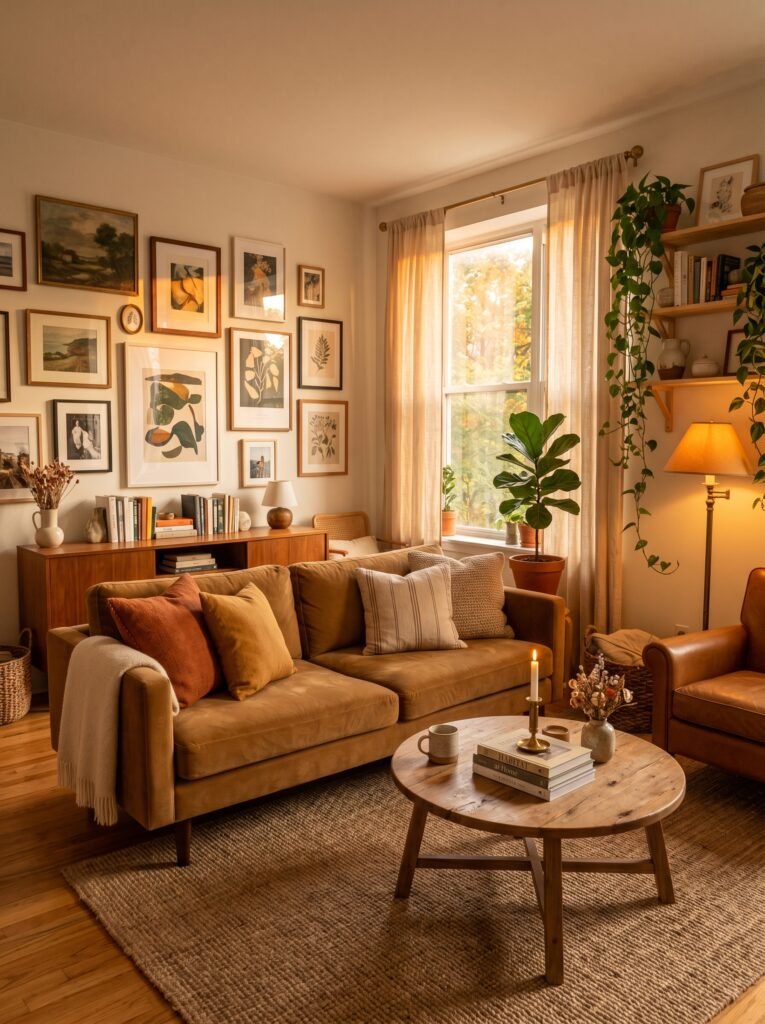
Your apartment living room is not a waiting room between where you are and where you want to be. It’s your life, right now — and it deserves to feel like it. The most beautiful homes aren’t the biggest or the most expensive; they’re the ones where someone clearly thought about what mattered and made every corner count.
So start small, start with intention, and don’t wait until you have the perfect budget, the perfect space, or the perfect furniture. Start now, with what you have.
What’s the one corner of your living room that’s been waiting for your attention?