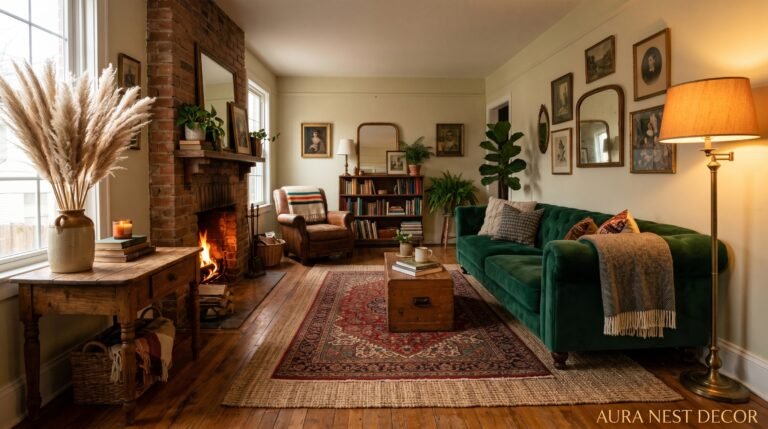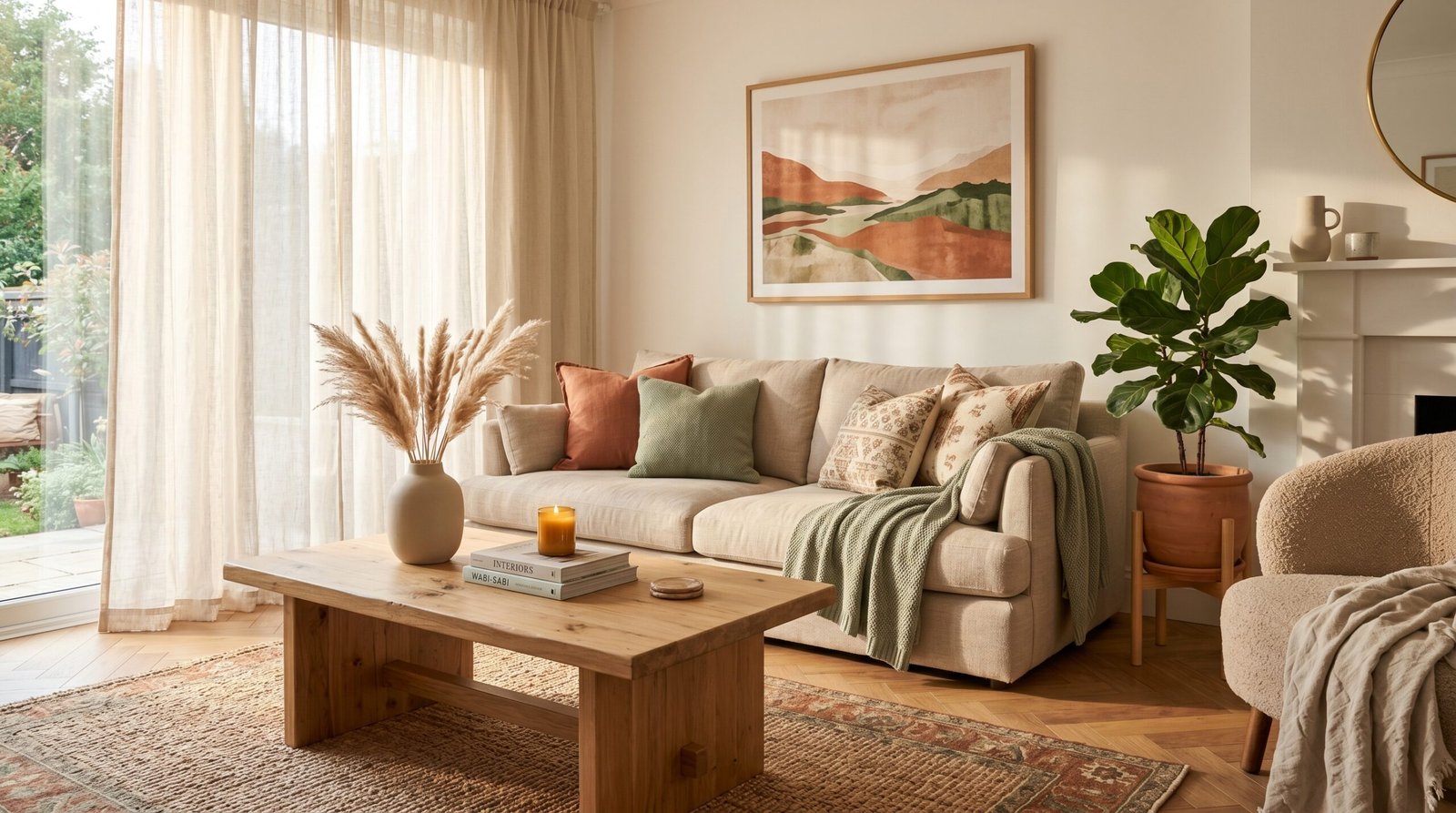
Living Room Decor Ideas Aesthetic: How to Create a Space That Actually Feels Like You
There’s a moment — you know the one — when you walk into someone’s living room and something just clicks. The light is soft, the colours feel intentional, and somehow every corner whispers “stay a while.” That feeling isn’t accidental. It’s designed. And the beautiful truth is, you can create it in your own home, regardless of your budget, your square footage, or whether you’re in a semi-detached in Surrey or a rented apartment in Chicago.
—
1. Why “Aesthetic” Is More Than Just a Pretty Instagram Filter
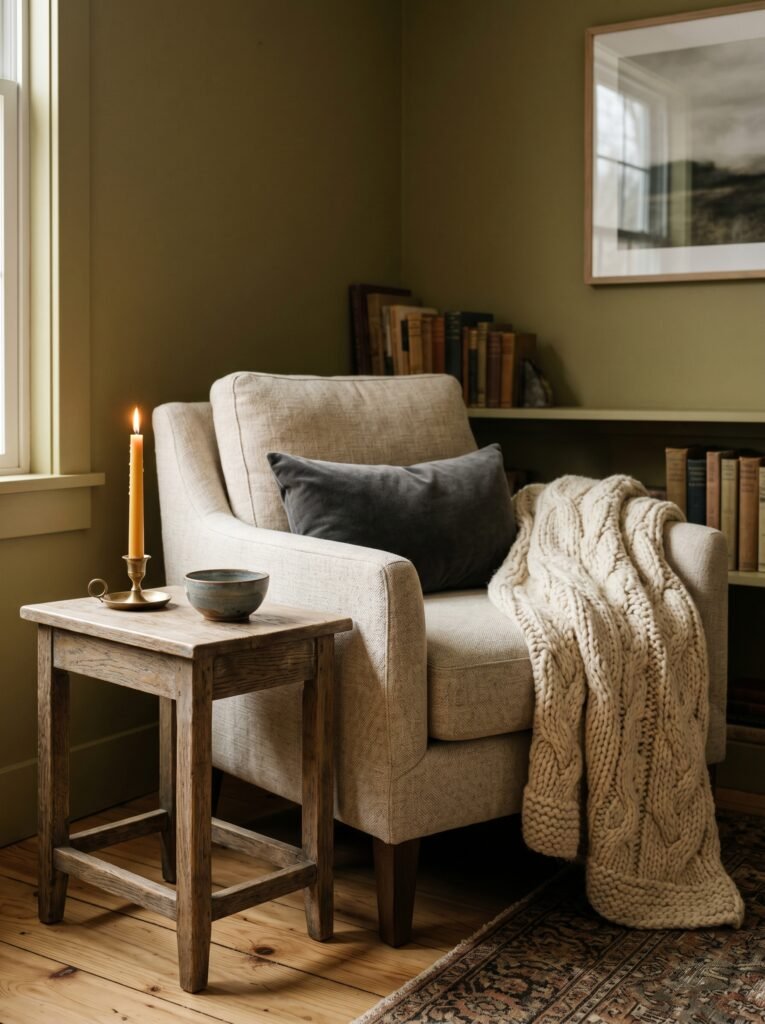
The word “aesthetic” gets thrown around so casually now that it’s easy to dismiss it as a trend word — something teenagers use on TikTok. But in interior design, aesthetic has always been the foundation of every meaningful space. It simply means: the way something feels when you experience it. And your living room, more than any other room in the house, is the place where feeling matters most.
It’s where you collapse after a long Tuesday. Where your family gathers on Christmas morning. Where your friends sit cross-legged on the floor with wine and laughter that goes on too late. The aesthetic of that room — its colours, textures, lighting, and layout — quietly shapes every single one of those moments. Get it right, and your living room becomes something that nourishes you every single day.
“Your living room isn’t just a room. It’s the emotional heartbeat of your home.”
The first step toward creating a space with genuine aesthetic appeal is understanding what you actually feel drawn to — not what’s trending on Pinterest this season, but what consistently stops your scroll and makes you think: I want to feel like that.
—
2. The Secret Language of Colour: Choosing a Palette That Doesn’t Feel Generic
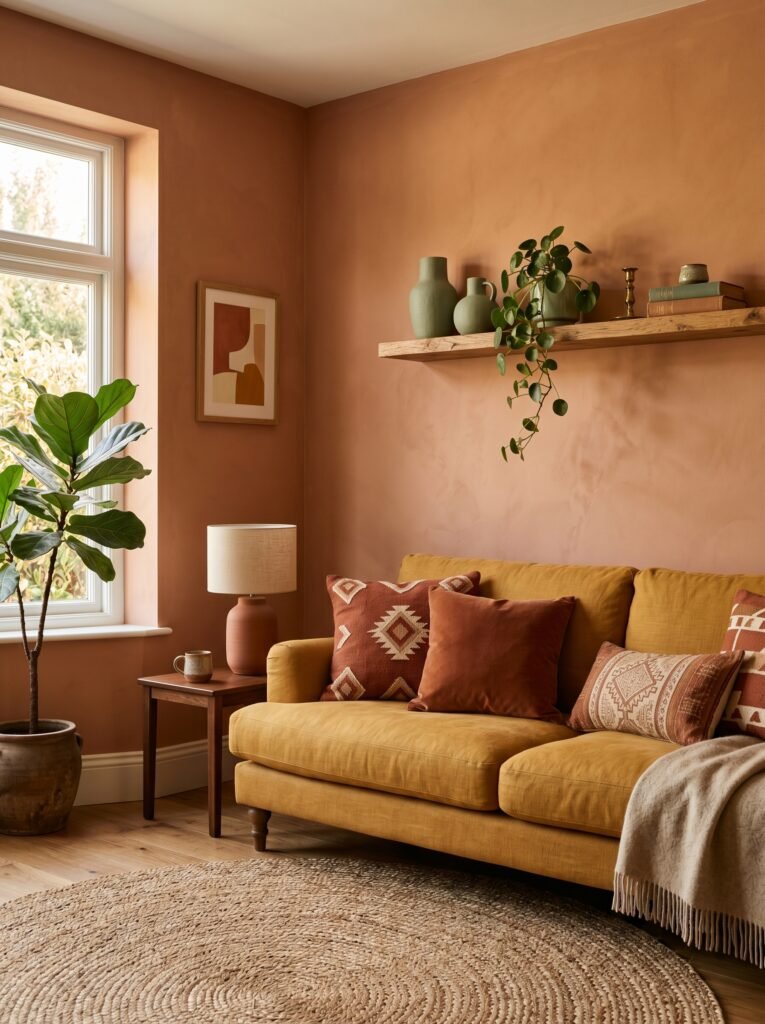
Colour is the single most powerful tool in any living room transformation, and yet it’s the decision most people agonise over the most. Here’s what the design world knows that most homeowners don’t: you don’t choose a colour — you choose a feeling.
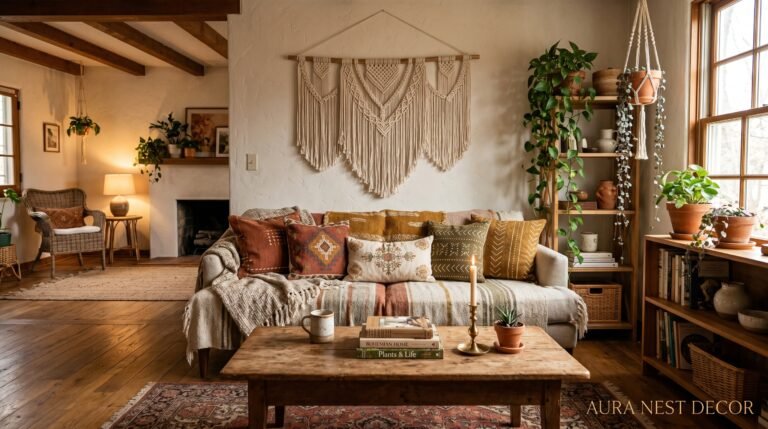
Warm terracotta, deep ochre, and burnt sienna tones are having a significant cultural moment in both the US and UK right now, and for good reason. These earthy pigments are psychologically grounding. They echo the colours of autumn walks through Hyde Park and golden hour drives along the Pacific Coast Highway — they make people feel held.
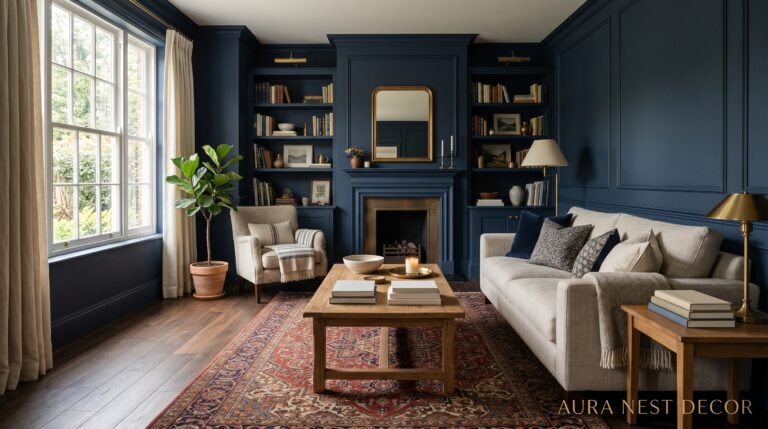
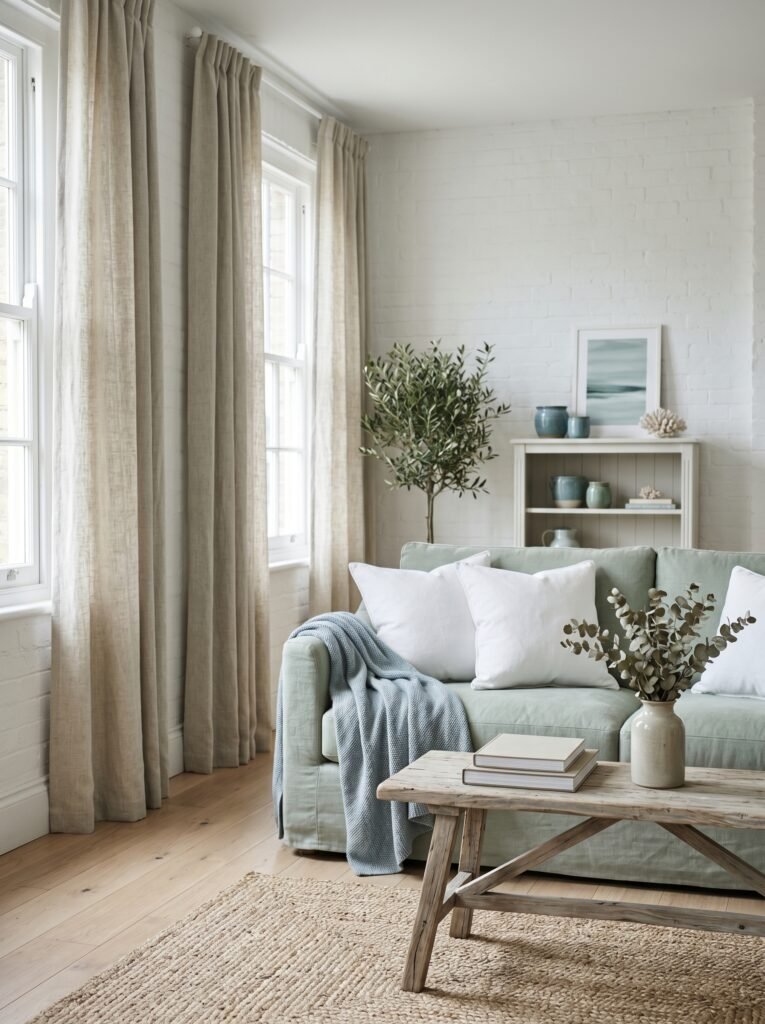
Cool sage greens and dusty blues, on the other hand, create a sense of calm that borders on the meditative. Think of the palette of a British country cottage or the airy, coastal-inspired living rooms you see throughout New England. These shades work particularly well in rooms with natural light, expanding the sense of space without erasing the warmth.
When building your palette, use the 60-30-10 rule: 60% of the room in your dominant colour (usually walls and large furniture), 30% in a secondary tone (textiles, curtains, accent chairs), and 10% in a pop colour (cushions, vases, artwork). It sounds simple. It genuinely works.
—
3. The Furniture Arrangement Mistake Almost Everyone Makes
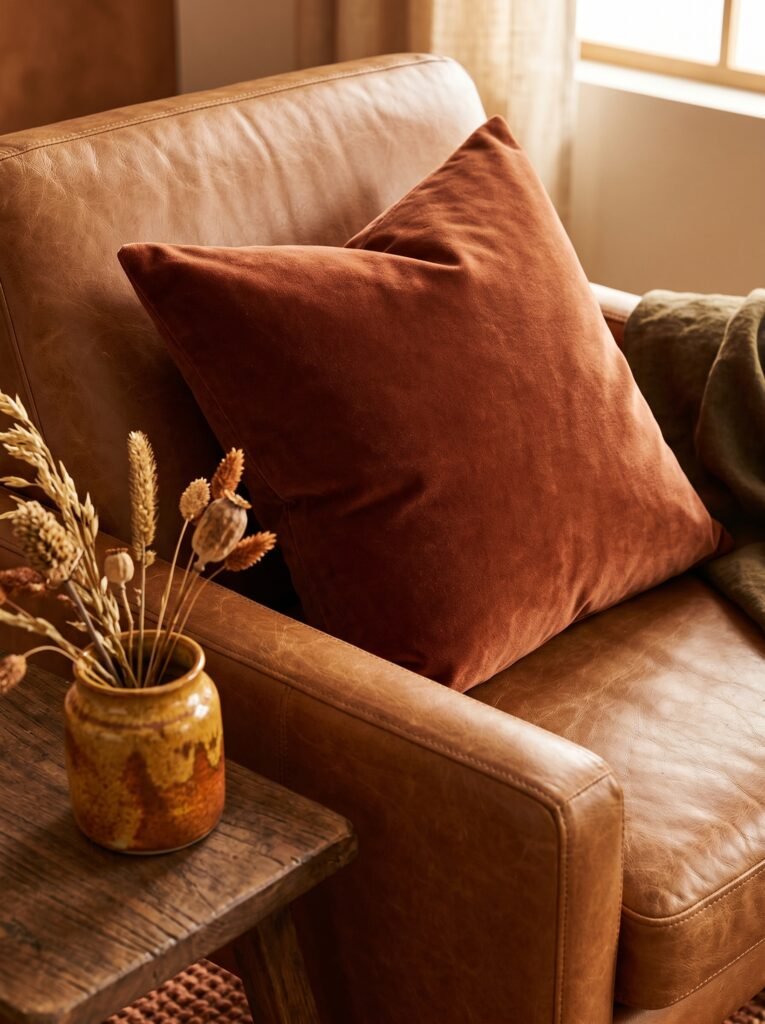
Most people push all their furniture against the walls — and it’s the number one reason living rooms feel awkward and cold rather than inviting. It seems logical: more space in the middle, right? But what it actually creates is a room that feels like a waiting area, not a home.
Pull your sofa and chairs away from the walls by at least 18 to 24 inches, and group your furniture around a central focal point — whether that’s a coffee table, a fireplace, or a stunning rug. This immediately creates what designers call a “conversation zone,” a layout that encourages people to face each other, to connect, to linger.
If you’re working with a smaller British terraced house living room or a compact city apartment in New York or Boston, use a single statement sofa rather than a full three-piece suite, and anchor the space with a rug that defines the seating area. A rug that’s too small is the second most common furniture mistake — it should be large enough that at least the front legs of every piece of furniture sit on it.
—
4. Lighting That Transforms a Room From Flat to Magical
There is no such thing as a beautifully aesthetic living room with harsh overhead lighting. If your only light source is a central ceiling fixture blazing away at full brightness — it doesn’t matter how gorgeous your sofa is or how carefully you’ve chosen your cushions — the room will feel flat, clinical, and exhausting.
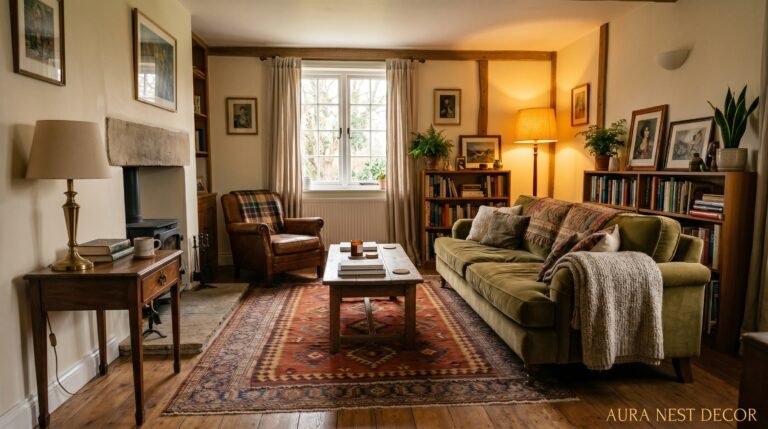
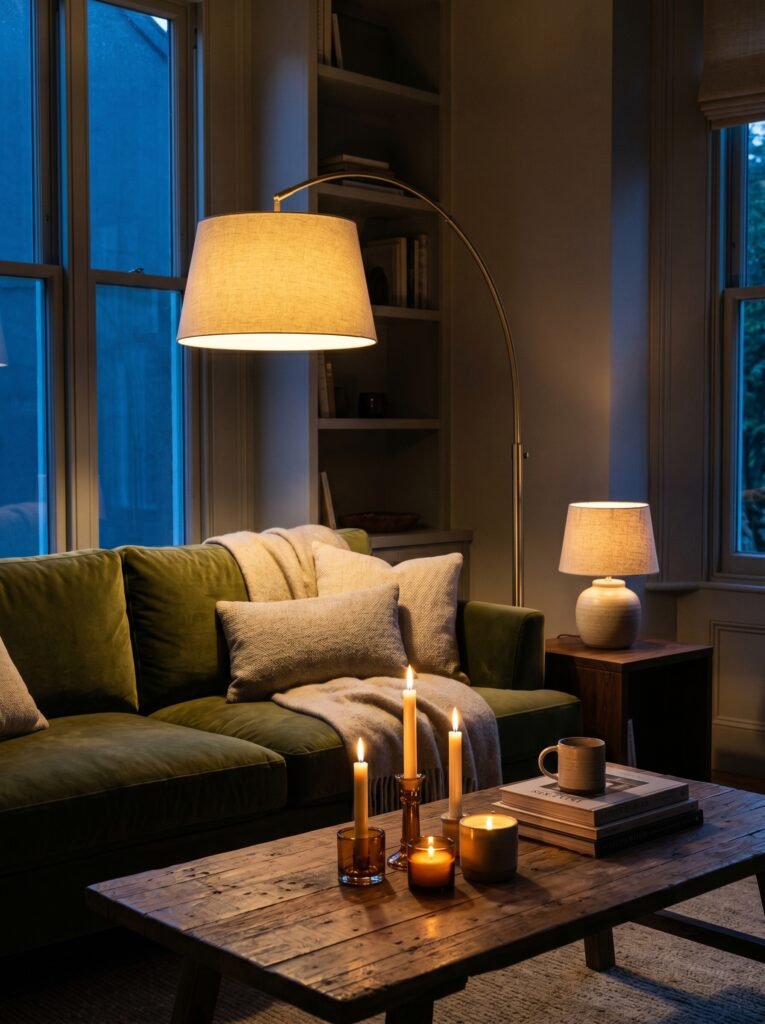
Layer your lighting across three levels: ambient (the general fill light — floor lamps, ceiling pendants on a dimmer), task (reading lamps beside chairs or sofas), and accent (candles, LED strip lighting, picture lights above artwork). When all three are working together at the right warmth — around 2700K to 3000K on the Kelvin scale — the room transforms. Shadows become soft. Textures come alive. Every surface looks deliberately chosen.
In the UK, where natural light is precious and winters are long and grey, warm interior lighting is especially important. In sunnier US climates, sheer linen curtains that diffuse afternoon sun can replicate that same golden softness throughout the day.
“The right lighting doesn’t just illuminate a room — it gives it a soul.”
—
5. Texture Layering: The Detail That Separates Good Rooms From Great Ones
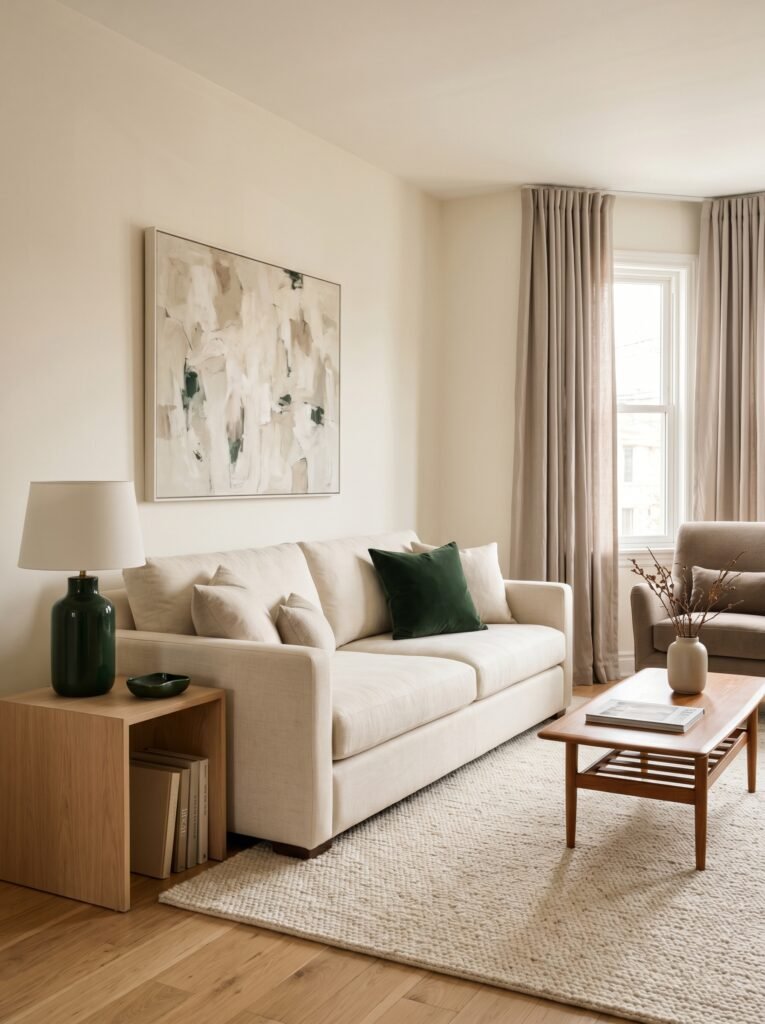
Imagine running your fingers across a living room that has a rough linen sofa, a chunky knit throw, a smooth marble coffee table, a woven jute rug, and a velvet cushion. Even before you consciously register the room, your body has already catalogued it as rich and layered. That’s texture doing its work.
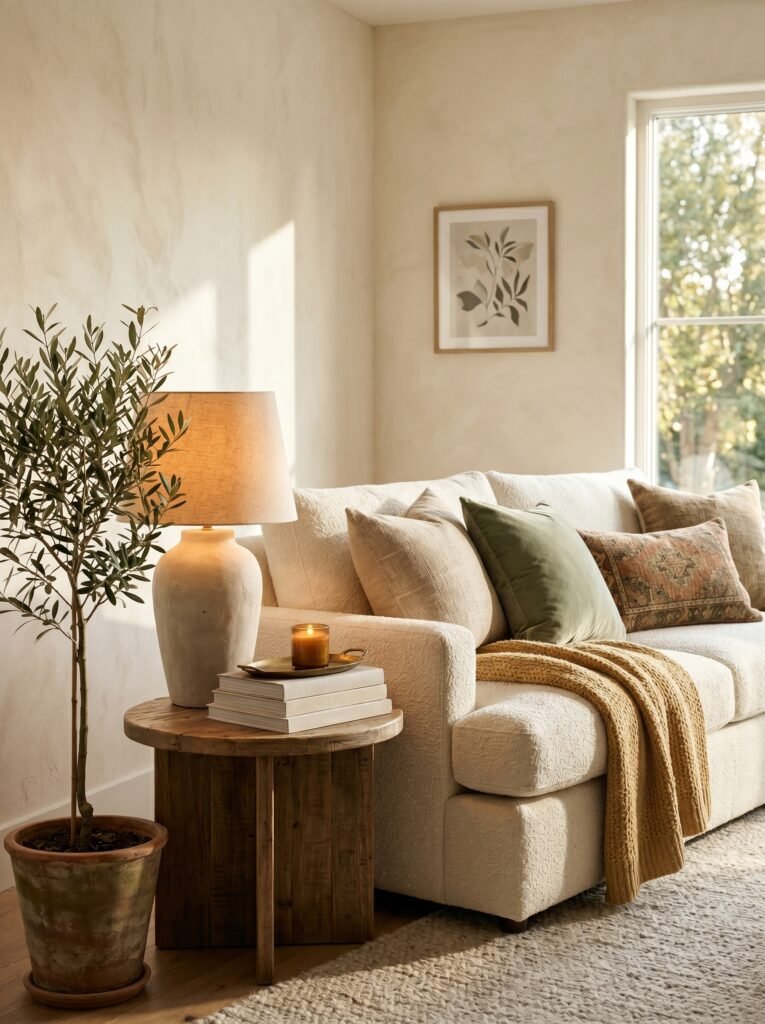
A room with only one or two textures — no matter how elegant those textures are — will always feel slightly sterile. The trick is contrast. Pair something soft with something hard. Something rough with something smooth. A rustic wooden side table beside a sleek modern lamp. A bouclé accent chair against a painted plaster wall.
In practical terms, this means investing in good-quality throws and cushions — a few well-chosen pieces from Zara Home, Anthropologie, or H&M Home can completely shift the warmth of a room without breaking the bank. Change your cushion covers seasonally: linen and cotton for spring and summer, velvet and wool for autumn and winter. Your room will feel curated and intentional all year round.
—
6. Bringing Nature Inside: The Power of Organic Elements
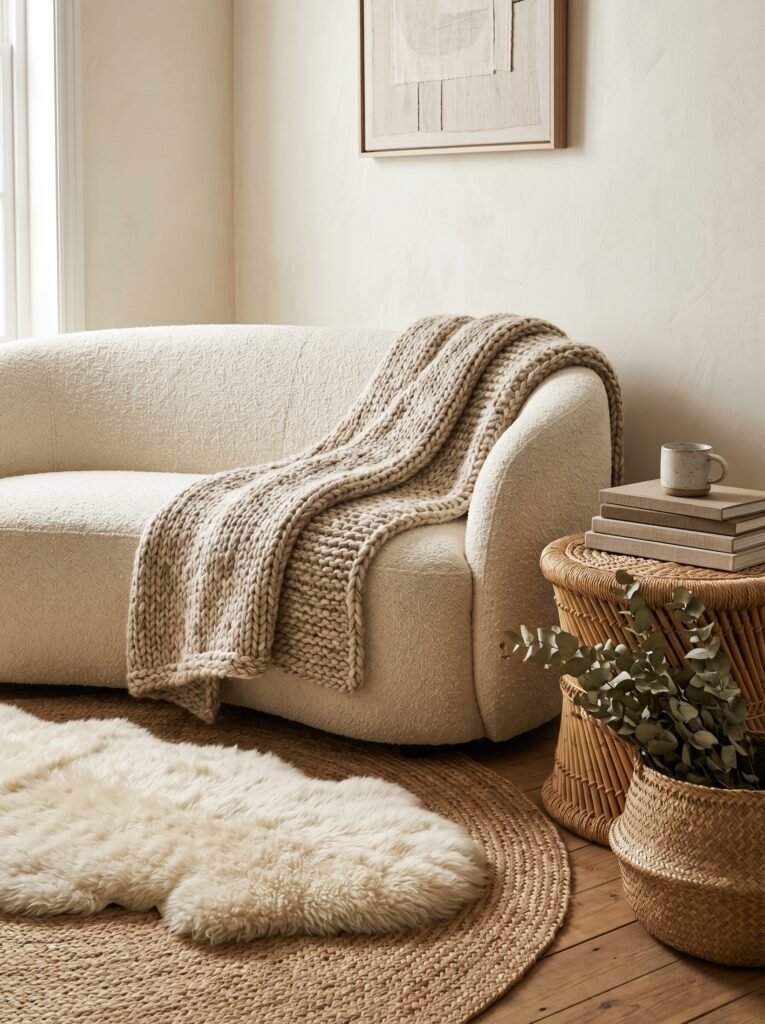
Something remarkable happens when you bring natural materials and living plants into a living room. The space exhales. It softens. Scientific research supports what our instincts have always told us: being near natural elements — wood, stone, plants, water — genuinely reduces stress and increases feelings of wellbeing.
A single large-leafed plant in the corner of a room — a monstera deliciosa, a fiddle-leaf fig, or a tall snake plant — adds visual drama and a sense of life that no piece of furniture can replicate. If you worry about keeping plants alive, pothos and ZZ plants are famously forgiving and thrive in lower-light British homes just as well as sun-drenched American living rooms.
Beyond plants, look for organic materials wherever you can: a driftwood coffee table, stone coasters, a hand-thrown ceramic vase, a woven basket for blanket storage. These details signal that your home is alive — that it evolves and breathes — and that is the very essence of an authentic aesthetic.
—
7. Gallery Walls and Artwork: Making Your Walls Tell a Story
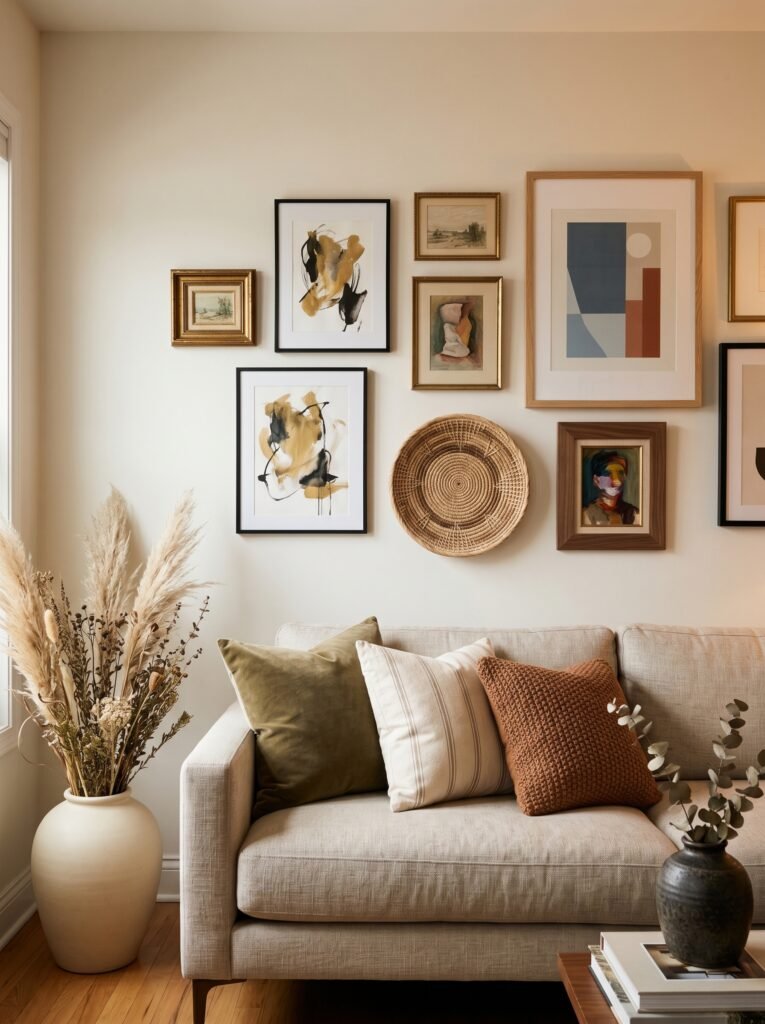
A blank wall is a missed opportunity. A poorly executed gallery wall is a visual headache. But a thoughtfully composed arrangement of artwork and personal photographs? That is a living room that speaks.
The key to a gallery wall that feels curated rather than chaotic is restraint and repetition. Choose a consistent frame colour — all black, all natural wood, or all white — even if the artwork inside varies wildly. This gives the eye a visual anchor. Mix scales confidently: one large central piece surrounded by smaller works, rather than a collection of uniformly sized frames.
In both the US and UK, the trend has moved firmly away from matching print sets toward a mix of personal photographs, thrifted prints, travel postcards, and original artwork — all within that unified frame palette. It tells the story of a real human being who has lived, travelled, and loved. That story is infinitely more interesting than any mass-produced wall set.
—
8. The Art of the Bookshelf: Where Function Meets Personality
Bookshelves are among the most personality-rich elements in any living room. They say: this person is curious, this person collects, this person has a life outside of what you can see. And yet so many people fill their shelves purely functionally — books spine-out, items crammed in — and miss the enormous aesthetic opportunity standing right in front of them.
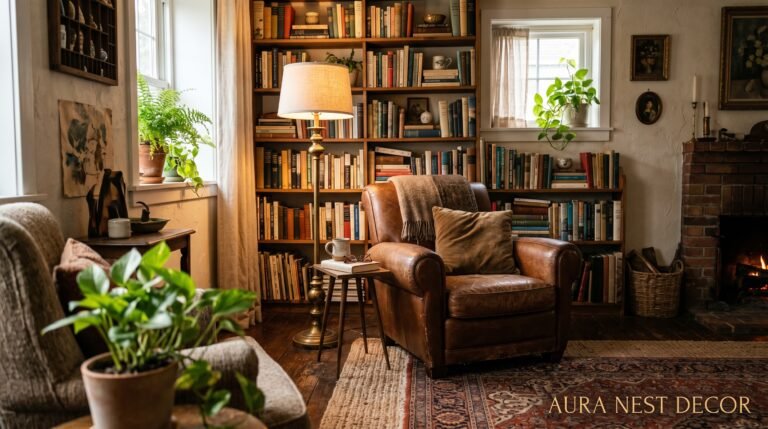
Style your shelves in thirds: one-third books, one-third decorative objects, one-third breathing space. Group books both vertically and horizontally — stacks of horizontal books create visual stepping stones. Place objects of varying heights, mixing tall candlesticks with small ceramic figures, a trailing plant with a framed photo. Use the spine colours of your books as part of your colour palette, grouping by colour rather than author if the aesthetic matters more to you than strict organisation.
“A well-styled bookshelf doesn’t just hold your things — it holds your whole personality.”
—
9. Rugs: The Most Underestimated Element in Living Room Design
A rug is the foundation of a living room — literally and figuratively. Get it right and the entire room clicks into place. Get it wrong and something will always feel slightly off, even if you can’t identify why.
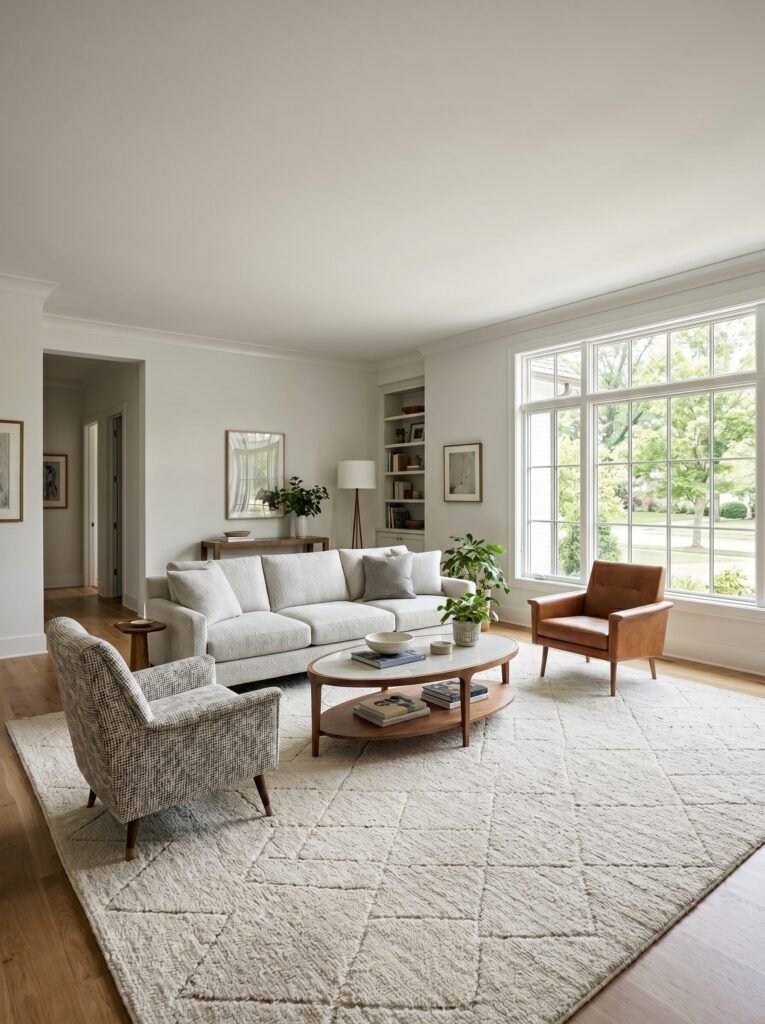
As a general sizing guide for US living rooms: in a larger space, a 9×12 foot rug is a confident choice. In a smaller or apartment living room, an 8×10 is the minimum to anchor a sofa-and-chairs arrangement. In British homes — where rooms in Victorian terraces and new builds can be more compact — a 160x230cm (roughly 5×7.5ft) rug is a reliable starting point, though larger is almost always better.
Material matters enormously. Wool rugs are soft, durable, and age beautifully — an investment worth making for a room you use every day. Jute and sisal rugs add natural texture and are budget-friendly, though they can feel rough underfoot. Layering a smaller, softer rug on top of a jute base rug is a designer trick that adds depth and works beautifully in both rustic and contemporary rooms.
—
10. Small Space Living Rooms: How to Make Compact Spaces Feel Expansive
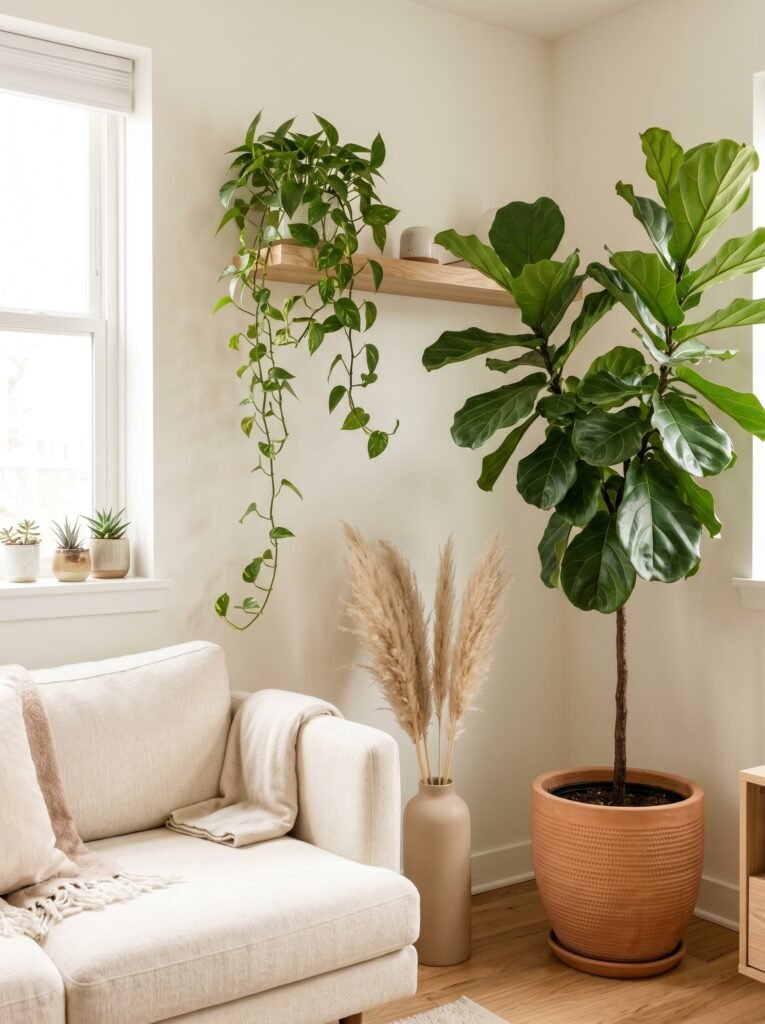
Whether you’re in a city flat in London or a studio apartment in Manhattan, a small living room is one of the most common design challenges people face — and one of the most solvable. The secret isn’t making things look bigger by using tricks and illusions. It’s about making the space feel intentional, so the size never feels like a limitation.
Use furniture with visible legs — sofas and chairs that sit off the floor create a sense of airiness because light passes beneath them. Choose a sofa in a lighter tone: a cream, warm grey, or camel rather than dark charcoal or navy in a small room. Use mirrors strategically — not necessarily the clichéd wall of mirrors, but one large, beautifully framed mirror in a position that reflects natural light.
Keep your colour palette cohesive — two or three tones maximum. And resist the urge to fill every surface. Negative space — empty, deliberate, uncluttered space — is not emptiness. It is the visual equivalent of a breath. In a small room, it creates calm.
—
11. Seasonal Styling: How to Refresh Your Living Room Without Redecorating
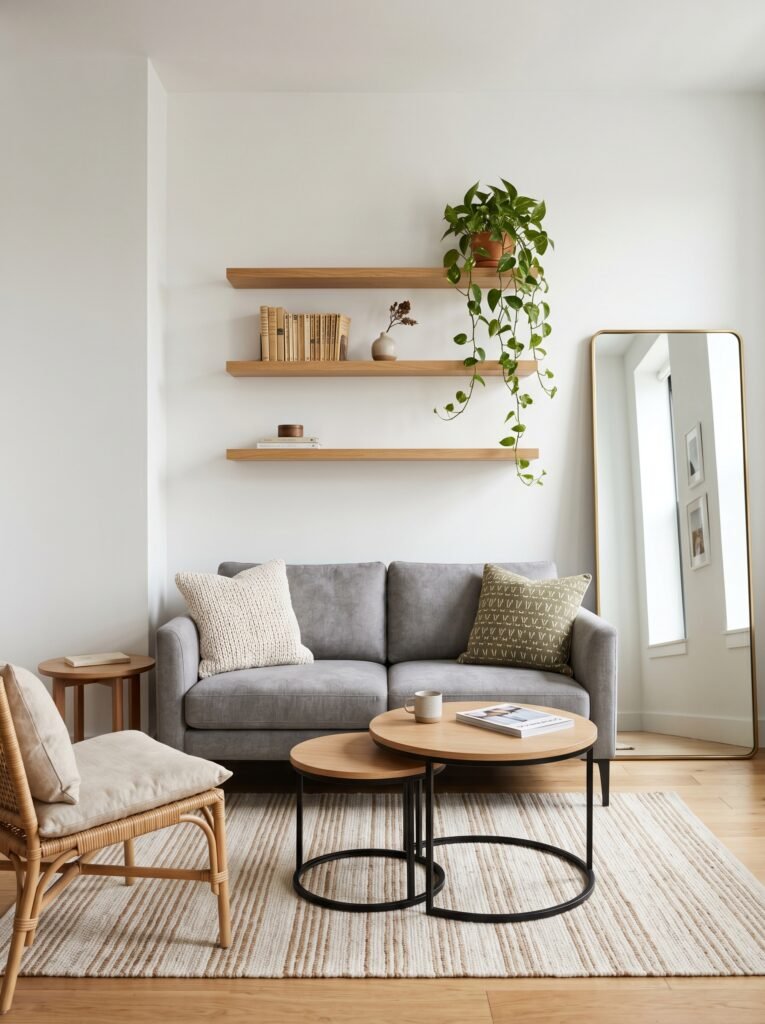
One of the most satisfying things about developing a strong living room aesthetic is discovering how much you can evolve it across the seasons without spending significant money or effort. The bones of the room — the furniture, the rugs, the paint — stay constant. What changes are the softer elements: the cushions, throws, candles, florals, and small decorative details.
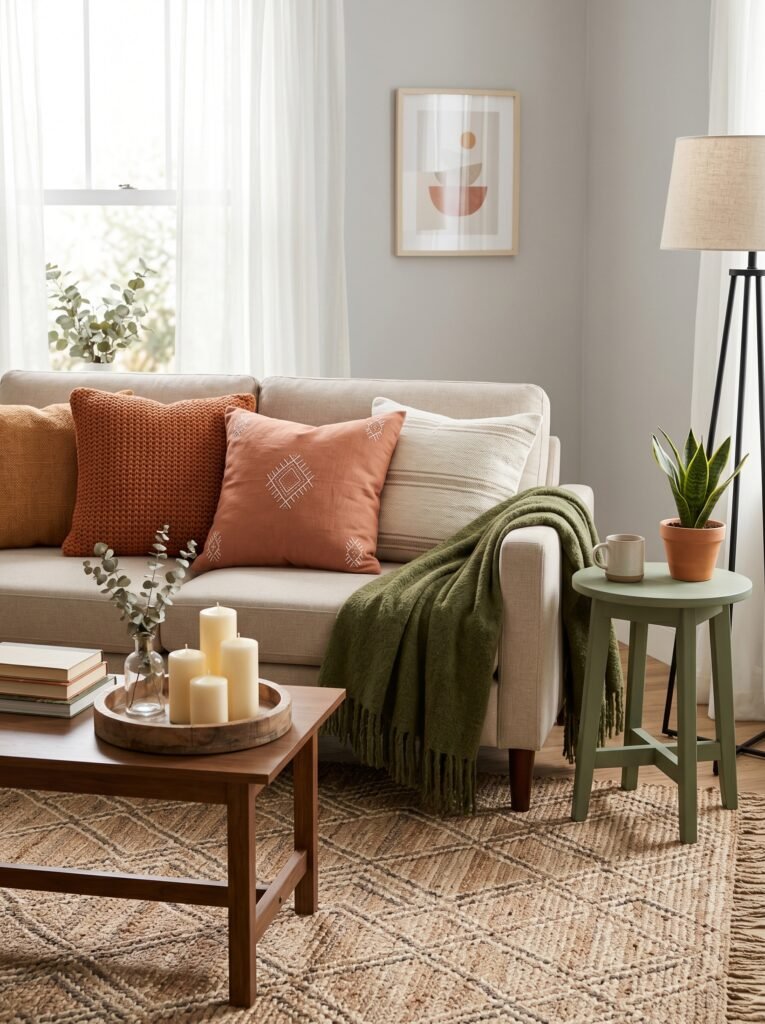
In autumn and winter, lean into warmth: bring in amber and rust cushions, add a heavyweight knitted throw over the sofa arm, fill a corner with pillar candles in varying heights, and swap out your summer flowers for dried pampas grass, preserved eucalyptus, or seasonal branches. In spring and summer, strip it back: linen cushion covers in sage or sand, fresh flowers in simple vases, lighter weight throws folded away or stored, and perhaps a bright pop of colour in a single statement vase.
This rhythm of seasonal change keeps your living room feeling fresh and alive, and it makes you genuinely look forward to each shift in the year.
—
12. The Most Important Design Rule You’ll Ever Learn
After everything — the colour palettes and furniture arrangements, the lighting layers and the gallery walls — there is one rule that supersedes every other in interior design, and it’s the one that most professionally decorated homes forget to follow. The rule is this: your living room must feel like you.
Not like the Pinterest board you’ve been saving to for three years. Not like the showroom you walked through at John Lewis or West Elm. Not like your friend’s beautifully decorated house that made you feel vaguely inadequate. You. Your textures, your memories, your colours, your stories.
The most aesthetically powerful living rooms are not the most expensive or the most perfectly coordinated. They’re the ones that feel completely inhabited — where every object has a reason to be there, every colour was chosen with intention, and every corner invites you to sit down and stay. That specificity, that humanness, is what makes a room truly beautiful. And no one but you can create it.
—
🌿 How to Take Care of Your Living Room Aesthetic Long-Term
Maintaining a beautiful living room isn’t about perfection — it’s about attention and small, regular habits that keep the space feeling intentional.
First, do a quarterly edit. Every three months, walk around your living room with fresh eyes and ask: does each item still earn its place? Clutter accumulates invisibly, and removing even a handful of things that no longer serve the space can be transformative.
Second, clean your textiles seasonally. Cushion covers, throws, and rugs absorb dust, pet hair, and the general life of a household. Washing or dry-cleaning them seasonally keeps the room smelling fresh and looking vibrant — and it’s one of those small tasks that makes a genuinely noticeable difference.
Third, rotate your decorative objects. Move your vases, books, and smaller decorative pieces around every few months. Something that’s been sitting in the same spot for a year becomes invisible to you — moving it somewhere new immediately catches the eye again and breathes new life into the room.
Fourth, keep one bud vase with a single fresh flower or stem on your coffee table. This tiny detail — which costs almost nothing — signals that the room is loved and tended. It changes the energy of a space in a way that’s difficult to articulate but immediately felt by everyone who enters.
—
❓ FAQ
Q: How do I find my personal living room aesthetic when I love too many different styles? A: Start by saving images that make you feel something, rather than just look pretty. After 20 or 30 saves, patterns will emerge in the colours, textures, and moods you’re drawn to. You don’t need to commit to one named style — most beautifully styled rooms are a blend of two or three aesthetics that share a common thread of feeling.
Q: What’s the biggest mistake people make when decorating their living room on a budget? A: Buying too many small, cheap items rather than saving for fewer, better-quality pieces. A single well-made sofa or a beautifully crafted wooden coffee table will anchor your room far more effectively than a dozen budget accessories. Invest in the large items, then accessorise thoughtfully and slowly over time.
Q: How do I make a rented living room feel like home without making permanent changes? A: Rugs, lighting, and textiles are your greatest allies — none require any alteration to the property. A large rug can completely transform a room, a plug-in floor lamp or table lamp changes the atmosphere entirely, and cushions and throws add enormous warmth without a single nail hole. Removable wallpaper panels or peel-and-stick tiles in a small accent area can also add personality without risking your deposit.
—
💭 Final Thought
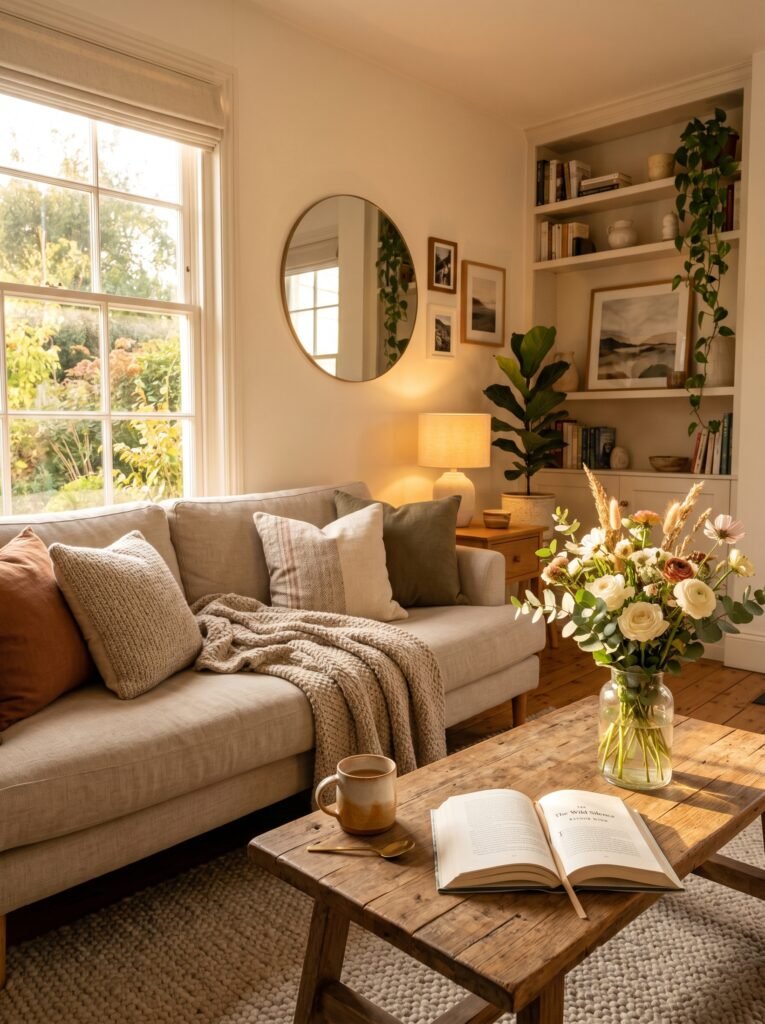
A living room that feels truly beautiful isn’t built in a weekend shopping trip or assembled from a single collection. It grows — slowly, thoughtfully, over seasons and years — as you learn more about what makes you feel at home. The most extraordinary living spaces in the world were created by people who paid attention to how they wanted to feel, and then made every small decision in service of that feeling. So here’s the question worth sitting with: if your living room could make you feel one single thing every time you walked into it, what would that feeling be?